“Fearfulness is one of the most basic physiological and behavioral responses we have,” says University of Wisconsin psychology professor Ned Kalin. Although we all have different fear thresholds, fear is a natural, evolved response to danger. Face it. We were born to be afraid of whitewater.
Good paddlers, however, have long distinguished between good fear and bad fear. Good fear tells you when you’re in over your head. Bad fear—debilitating, self-doubting fear— is the irrational funk that psyches you out before a drop when your paddling skills, experience and fitness are otherwise up to the challenge.
Psychologists say that these fear responses are ingrained through experience. Any negative or traumatic experiences that we have in whitewater are etched into the brain’s biochemical hard-drive to replay next time we face a similar situation.
Does this mean that we are all confined to a fixed level of mental comfort in paddling? Absolutely not! Through physical preparation and visualization, we can “reprogram” our fear response to match our paddling abilities and aspirations.
TAKE IT EASY
Physical reprogramming is the first step. Consistent time on the water is one of the best fear antidotes. Drop down to a grade of whitewater that’s comfortable for you or go back to flatwater to hone your technique and fitness. Take a course, invest in an instructional book or video, or go out with a friend who is technically better than you. Work on your bal- ance and your roll…on both sides. Create “class V moves” on class I and II. Creek boater Ed Poropat advises, “Above all, don’t be satisfied with ‘I got down OK.’ Strive for grace and excellence when practicing on the easy stuff. Soon, these difficult lines will seem easier, your confidence will soar, and you will know you can hit similar lines on tougher rivers when it really counts.”
GO TO YOUR HAPPY PLACE
The next stage of your transformation is mental reprogramming through visualization, a technique used by top athletes in all sports. Quebec open boater and creeker Gigi Rioux and big-drop performer Tao Berman both routinely use visualization. Visualization can actually change nerve pathways in your brain, altering your brain’s biochemical programming to produce new fear responses.
One of the best visualization techniques, developed for alpine skiers by Dr. Richard Suinn, is called Visual Motor Behavior Rehearsal (VMBR). Suinn says, “The VMBR technique combines relaxation and imagery in a format that allows individuals to desensitize themselves to a stressful situation.”
To conduct VMBR, find a quiet place and breathe deeply, in through your nose and out through your mouth. Calm and quiet your mind and body. Go to a scene in your mind that represents calm, and focus on that scene in full detail. Spend some time switching back and forth between an empty mind and the calming scene.
Next, imagine yourself getting ready to paddle the river, drop or hole that would normally inspire fear. Visualize every detail, from what you are wearing, to the temperature of the water, to every stroke you place. Visualize in real time or even slow motion—don’t skip a step. Keep breathing deeply. If fearful or self-doubting thoughts creep in, switch back to your calming scene and then start over. Intense fear may call for several visual- izations a day; mild fear may only require a visualization before you paddle.
AND WHEN I SNAP MY FINGERS…
Finally, introduce a verbal or physical cue to match the visualization of success. For example, choose a word that inspires strength and confidence and recite it several times after each visualization. Or hold your hands in a certain position while you are visualizing. I used to create a circle with my thumb and forefinger—a gesture easy to do while holding a paddle. As you visualize more using these cues, your brain will associate your word or hand position with images of confidence and success.
When it’s time to paddle the river or rapid that used to inspire fear, try your focused breathing and your verbal or physical cue. As you are scouting or contemplating the run, repeat your visualization. You will likely experience some of the physical aspects of a fear response, and you should—you want your body to be alert and responsive in a challenging situation—but you will also feel confident and focused.
If you’re still gripped, don’t be discouraged. You may need to take more time for physical and mental preparation. Eventually, you’ll get where you want to be, or you may decide that you can have a great paddling career without ever running that drop or going into that hole. Move on and have a good day on the water. In the big picture, being healthy and on the river with your friends is pretty much as good as it gets!
Dianna Townsend, a boater of 10 years, paddles in the Southern Sierra Nevada, visualizing and breathing deeply on every drop.
This article first appeared in the Summer 2003 issue of Rapid Magazine.
Open a northern tourism brochure and there they are, along with pictures, heights and distances to the nearest city hall. Eleven waterfalls just sitting by the road in the Northwest Territories. All within a five-hour drive of each other, complete with parking, camping, toilets and boardwalks to scenic overlooks. Drops ranging from three metres to 33 metres. And only three had ever been run.
That left eight first descents, something that my pal Stu and I were determined to change. Out of money and with nothing to paddle all winter, we hatched a plan: Run them all, smallest to largest, with me learning as we went. We would get famous bagging the first descents, maybe even make some money. It was a plan bred of desperation and boredom. By the time it collapsed around us, my good friend Stu would be forever one centimetre shorter.
I’d learned to paddle on the Slave and the Ottawa Rivers and was pretty comfortable with churning masses of foam and two-storey waves. My “local river hero” mentality got a bit of a shock, however, when I went to B.C. and paddled rapids that didn’t have ten-metre-wide lines down the middle or monster eddies at the bottom. It was then that I realized I couldn’t creek for balls and, much to my regret, had never run a waterfall. Fortunately, Stu was quite the opposite, a true B.C. paddler. He knew steep and he knew continuous and he was willing to teach me.
By June the water was running and we were on our way up north. Stu took the opportunity to bring me up to speed on the fundamentals. He explained that you can go at drops in two ways: boof them or pin-drop them. Boofing involves landing your kayak flat or at a slight angle to the water. The term “boof” comes from the sound that the bottom of your boat makes when it hits the water: “BOOF.” Pin dropping is just that, Stu said. Dropping over the edge bow-first and falling…just like a dropped pin.
What dictates which way you go is a combination of waterfall height and water depth at the bottom. “You don’t want to land anything flat that’s over nine metres high. Imagine strapping a door to your ass, jumping off the high board at the local pool and landing flat on the door. Vertebrae compress, disks pop, things twist, other things snap, crackle and pop—not a pretty thought!” Stu noted that one may even want to reduce that nine- metre rule of thumb if getting on in years or feeling particularly brittle that day.
So why boof at all, I wondered. Well, I learned that boofing requires a lot less bottom depth than does pin dropping. I also found out that it allows you to retain some of your forward speed and gives you more con- trol over where you wind up at the bottom—a good thing if there’s a nasty hole or some obstacle below that you want to avoid.
The first two waterfalls on our list were close to Fort Smith on the Slave River and a logical place to start. While the Slave is renowned for its big water, the east side of the river is laced with small channels and two three-metre waterfalls of note: Slop Drop and Patrice’s Falls. There are smaller falls on the Slave but, to paraphrase Nealy, a waterfall is defined as a vertical fall over 2.5 metres in height. Anything smaller is just a ledge.
Slop Drop and Patrice’s Falls provided a good training ground for Stu to teach me how to boof. I learned how in order to get your kayak to ramp off a waterfall, you need to throw in a strong forward stroke just as you reach the lip. This boof stroke, combined with an upward pull by your knees and a slight forward movement of your torso, causes your bow to leap for- ward and up and initiate the boof. I practiced this stroke on flat water and perfected it on small ledges before hitting the bigger stuff. I learned that the tendency of water to accelerate as it nears the lip of a waterfall will affect the timing of the stroke, and to be ready for this or be doomed to screw up.
BOUND FOR FIRST DESCENTS
After our successful practice runs on the Slave we set off from Fort Smith on a three-hour drive bound for some first descents. In the process we drove past Little Buffalo Falls on Highway 5, a 12-metre ogre that required technical expertise that I didn’t have, at least not yet.
The highways of southern N.W.T. traverse vast dis- tances between the minute enclaves of iconoclasts that comprise the culture of the North. In this otherwise tedious landscape of tortured spruce trees and mosquitoes, ancient glacial action has created a huge escarpment over which pretty much all the region’s water tumbles. Government engineers bulldozed Highway 1 along the escarpment’s periphery. Tourism marketers named it the Waterfall Route. The road provides easy access to six waterfalls: Louise Falls at 15 metres, Alexandra Falls at 33 metres, the twin falls of Escarpment Creek at eight metres and 12 metres, Lady Evelyn Falls at 15 metres, and McNally Creek. Only Lady Evelyn Falls had ever been run.
Mileposts every two kilometres along Highway 1 mark off the kilometres from the Alberta border. McNally Creek Falls, at kilometre 120, is a seven-metre straight shot only 100 metres from the road. McNally Creek had a lot less water in it than when we had looked at it a few months earlier, but after a dummy run with an empty kayak we deemed it safe and Stu took the first shot. Unfortunately, Stu didn’t take as nice a line as did the empty kayak. He wound up hitting the large flake of rock that dominates the lip of this waterfall and was kicked to the right and rotated onto his side. The landing was brutal and the impact of the water onto the side of his head knocked all the foam out of his helmet.
It was here in my short but dynamic waterfall running career that I learned it is sometimes harder to go second. Assembling all the nerve I could, I charged straight ahead and hit a perfect boof, landing flat on non-aerated water seven metres below. It was also at this point that I coined the term “nut slap” and added it to the list of reasons not to boof, somewhere between compressed vertebrae and popped disks. Insulted ‘nads aside, I was chuffed at having bagged the first in what we were determined was to be a long series of first descents.
We chose to leave the other, more intimidating falls of the Waterfall Route for the end of our tour and explored up Highway 1 toward the Trout River, which crosses the highway at a place called Somba Deh, a territorial campground at kilometre 320. Armed only with a handful of tourism pamphlets, we went in search of Coral Falls, Whittaker Falls and Wallace Creek.
Whittaker Falls is an ungodly maelstrom that unleashes all of its fury right below the highway bridge and makes one never want to enter the water again. This evil beast is more of a monster slide than a falls and is pumping into a hole at the bottom so big that it ejects jets of water vapour 15 metres into the air. Petrified, we scratched Whittaker off our list.
Fortunately, one kilometre upstream from the campground on a well-worn river-right trail is Coral Falls, a beautiful four-metre drop into a nice deep pool. We ran that puppy ever which way from Sunday, if only to purge our fear of Whittaker Falls by excessively boofing everything in sight.
DARK AND INTIMIDATING
Drunk on the victory of our second first descent, we headed to Wallace Creek at kilometre 290, parking at a small rest area located by the creek’s bridge. A trail on river left leads to the falls, but we opted to paddle the two kilometres downstream, a pleasant class II with two two-metre boofs along the way.
When we got to Wallace Creek Falls we were a little taken aback. On the surface it looked to be no problem, about an eight-metre drop into a deep pool below. But it was hard to judge the height, as the creek dropped from an 18-metre-deep canyon into a 30-metre-deep canyon with overhung walls. Dropped might not be the right word; dribbled was more appropriate. There was hardly any water in the creek and I was reminded of the Bugs Bunny episode with the intrepid cartoon hero jumping off an impossibly tall tower into a tiny bucket of water.
We fixed a rope into the canyon above and rappelled in with a throwbag to measure the height. Turns out that the falls were more like 12 metres high. Standing at the lip, that glassy, non-aerated water far below looked pretty dark and intimidating.
It’s after these pivotal moments of your life that you look back and wish that you’d properly answered the question, “Am I more afraid of the waterfall or of my friends thinking I’m chicken?” Beside me, Stu’s mind was churning through the same testosterone-laden thought process. We looked at each other. “I’ll go first,” I heard myself say. The idiocy had begun.
NOT AS FAMOUS AS PLANNED
We fixed a rope below the falls and Stu rappelled down to provide safety and take pic- tures. I gathered my courage, drove myself over the lip and hucked my weight forward, putting myself into the kayaking fetal position with my paddle at my side. I knew that I didn’t want to land this one flat and that not too much could go wrong as long as I went in pointy end first. Eyes closed, I hit the water slightly over-vertical and got immediately ejected from my craft when my boat slapped into the water upside down. I bobbed to the surface with my stomach in my throat, a roaring in my ears and the faint echoes of Stu’s laughter reverberating off the canyon walls. Later, when Stu got the film developed, there must have been ten shots of me swimming around the base of the falls, looking pissed off.
Now it was Stu’s turn. Not wanting to hang up at the lip or over-rotate like me, he put in a bit of a boof stroke at the top. In my slow-motion, frame-by-frame recollection of the carnage, his kayak floated off the lip of the falls, flattened out, turned sideways and proceeded to flutter 12 metres down to the base of the falls. The hull made a hollow “boof” sound when it landed, flat as a pancake onto the black water.
Two kilometres from the road, 250 kilometres from the nearest hospital, at the base of a 30-metre-deep, overhung canyon, Stu was floating around in his boat with a broken back. We would later learn that it was a compression fracture of the T-12 vertebra, but to Stu at this moment it was a world of hurt. Fortunately, very fortunately, the only damage was to the bone and not to the spinal cord inside.
Stu would have nothing to do with my intricate plans for spinal boards improvised from paddles and kayak bottoms, let alone let me haul him up a 30- metre cliff with jury-rigged harnesses and mechanical advantage systems. In fact, Stu was able to ascend up the rope 30 metres, walk the two kilometres to the truck and rattle down two and half hours of dirt road to the hospital in Hay River.
And to such ignoble ends come the dreams of men. We are not famous as planned (although perhaps infamous in some circles, especially with our girl- friends) and certainly not rich. But I know a lot more about waterfalls. Stu, although forevermore a little less than his original 6’ 8″, was leading 5.10c rock climbs on gear by October. And there are still five first descents to be bagged in the Northwest Territories, just sitting by the road.
Keith Morrison runs the Slave Kayak Lodge on the Slave River in Canada’s Northwest Territories and has spent the past 10 years exploring the nooks and crannies of the Far North.
This article first appeared in the Summer 2003 issue of Rapid Magazine.
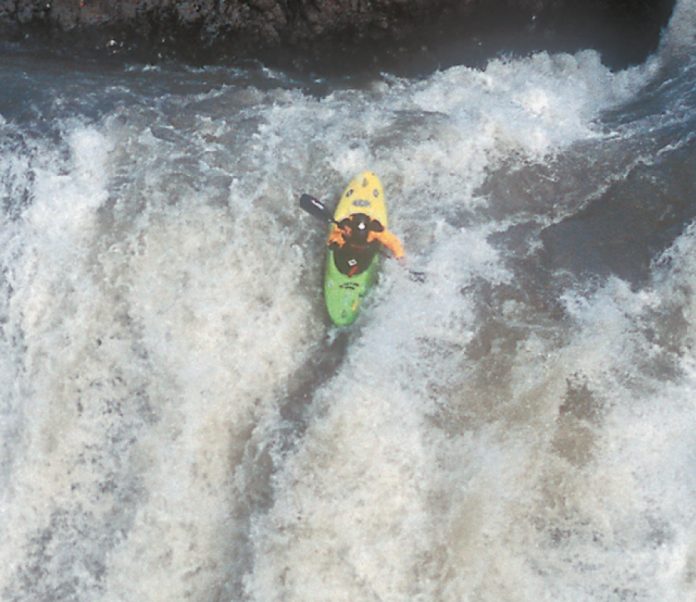
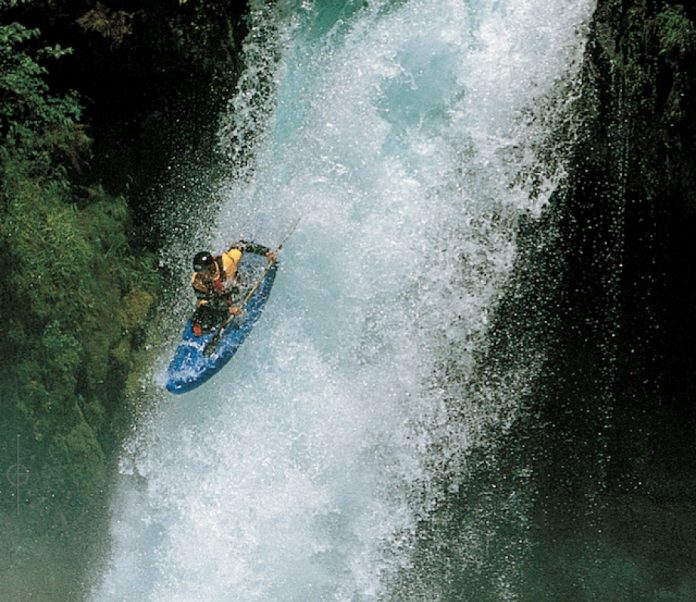
Your goal when running big drops is to find the entry angle that will keep your back and body safe from impact but not hit any submerged rocks or the river bottom. The best way to learn to run waterfalls is to start off on smaller, relatively safe drops and work up to harder and bigger. The higher the drop, the more likely you are to want to pencil.
Pencilling is when your boat pitch matches that of the falling curtain of water and you drop into the pool vertically, rather than flat like a boof. It will take time and practice to confidently line up, launch and safely land big drops, but what feels at first like a big blur will soon become familiar and slower. You’ll develop the consciousness to open your eyes, make fine adjustments and enjoy the ride.
SCOUTING THE DROP
You should be scouting and running safety for all big drops. Look through the whole drop to see if there is any one part that is obviously unrunnable. If this is the case, begin hiking around or decide if you can either put in just below or get out just above the nastiness.
Be sure of your landing zone and that you can hit it. A safe landing zone is often the reason a drop is runnable or not.
Generally, the more aerated the water the higher you can get away with landing flat. Is your landing big, foamy and soft or is flat, green and hard? Is it too high to boof?
How deep is the pool? Is it deep enough to pencil? The best way to find out is to actually go down and check with a pole or a big stick, or even get into the water and look around. However, this is not always realistic and is rarely necessary. With practice and experience you will be able to roughly gauge the pool depth and location of rocks by looking at the foam pile and boils. Another good way to know for sure is to check when the water’s not flowing and return the next season or, in some cases, the next day when the dam releases.
What other dangers are there? Often wood and other debris will collect in the pool below large waterfalls. On sheer drops the river may not only pound away and erode the base of the falls but also the wall behind it creating a cave hazard. Be sure that you can
either get out from behind the falls or be positive you will finish on the downstream side.
Consider the water depth at the lip of a drop. If you barely scrape over the lip of a sheer drop, it is very easy to get hung up and go over vertical, not so gracefully flopping your 30 footers onto your head.
Be sure you’ll see your intended line from your boat at river level. Use whatever landmarks are avail- able: bridge pilings, tiny breaking waves or even a friend standing by running safety. Many paddlers (even good ones) have, in the excitement, quickly scouted a drop from shore, hopped in their boat and totally lost sight of a perfect and relatively simple line.
OFF THE LIP
To pencil off a big drop, go off at roughly the same speed as the water using only smooth correction strokes to keep the boat on line. Carrying a lot of speed off a drop may launch you ahead of the water and free of the falls, and maybe over the hole or a rock at the bottom, but it makes setting your pitch far more difficult. You want your boat to fall off the brink,
match the pitch of the water and enter the pool at the same angle as the falls.
For the most part, your body position at the brink of the drop sets your angle for the rest of the ride. Keep your body relatively neutral, leaning neither too far forward or back. On the way down, pulling your legs to your chest will cause the bow to rise and your boat to flatten. Conversely, pushing your legs away will drop the bow or cause the boat’s pitch to steepen—become more vertical.
These sound like great tricks but in reality are very difficult and take lots of practice.
What to do with your paddle? You do not want your paddle at the same level as your face or neck when hitting the water. Some boaters put their paddles to the side, parallel to the boat, and tuck their heads at the last minute. Others simply keep their blades low around their hips. Avoid the ever-popular and danger- ous skull and crossbones. Throwing your arms above your head leads to: losing at least one hand from the paddle; getting slammed to the back deck; and likely damaging a shoulder.
TOUCHDOWN
Where there is even the slightest chance of hitting rock, using anything other than a creek boat is asking for trouble. Creek boats will by no means make you invincible but are far better equipped to protect you and make the lines you choose easier to hit.
Lean forward as you pencil into the pool. This helps stop the boat from back looping and sheds some of the impact of the fall from your body.
Accidentally landing too flat? Lean forward to help protect your back. And reach for a stroke upon landing to help you move downstream away from the curtain. When landing inadvertent big boofs, turn your head to help you steer clear of a broken nose compliments of your cockpit rim.
Be comfortable surfing in holes. Playing and practicing in holes makes for a fast and bomber roll, teaches you how to manoeuvre and more importantly how to get out if that’s where you end up.
PRACTICE AND JUDGEMENT
Running big drops is a lot of fun but takes practice and good judgement. There are as many ways to get into trouble as there are ways to run waterfalls. Take rescue courses and always paddle with like-minded boaters whom you trust.
If you cannot set up adequate safety for a big drop, don’t run it. Remember, there is no hurry. The waterfall you are so intent on running today will be there to run next season, or the next.
This article first appeared in the Summer 2003 issue of Rapid Magazine.
On my way home after a surprising low-water spring run on Ontario’s Upper Black, I stopped at the Sandman Inn and Restaurant for coffee. The only thing keeping me awake was thinking about how I was going to explain the fist-sized dent I put in the bow of Andrew’s new open boat. I suppose I could have been more to the right going over the drop, but where was the spring run-off that usually makes this class IV falls a clean run?
We ran out of water at our house this past winter. A dry fall and no mid-winter melt must have lowered the water table below the reach of our drilled well. Melting snow on the wood stove for tea is romantic at first, but after months of lugging around five-gallon jugs, the Little House on the Prairie feeling quickly dries up.
In North America we use an average of 1,400 gallons of water per capita per day. Industry and agriculture suck 90 percent of this, but still, each person carries 28 five-gallon jugs of river into their home each day. We didn’t require this many jugs of course because in Quadeville you can still slip into your Sorels and piss off your front porch. Not everyone is so lucky.
Back behind the wheel, coffee in one hand and dicta-phone in the other, I began brainstorming the framework for the next national environmental campaign: Stand Up and Save Our Rivers—the instal- lation of urinals in every household.
It might be slow to catch on, like Blue Box and composting, but soon urinals would make it into every home.
It would become a political issue of course and one sure to pass—what man would vote against mandatory urinal use?
My favourite: If “urinal” not part of the solution, you’re part of the problem.
No more “leave it up or down” domestics, and think of the water we’d save. Water that would flow in our rivers. Water that would have cushioned my landing and saved the bow of my borrowed boat. I was sure that I was onto something, but like all credible green movements I needed some statistical research to support my campaign.
There are roughly 330 million flushers in the United States and Canada and 50 percent of those are men using, on average, five gallons per flush and five flushes per day. North American men flush a grand total of 4.1 billion gallons per day. Now, let’s say that four out of five of these 4.1 billion gallons could be urinal-based. Using only one gallon per pull of the stainless handle, men alone would save 3.3 billion gallons of water per day.
Dividing per-day use by hours, minutes, seconds and converting gallons to cubic feet, it works out that by installing urinals in every home in North America we’d prevent a staggering 5,812 cubic feet of water per second from flushing into our sewers. That’s the equivalent of five Ocoees, one and half Frasers and six raging Upper Black Rivers flowing day and night, 365 days a year.
So you see Andrew, it’s not really my fault. If this urinal thing had caught on five years ago, there would have been plenty of water that day and I wouldn’t have dented your boat.
This article first appeared in the Summer 2003 issue of Rapid Magazine.
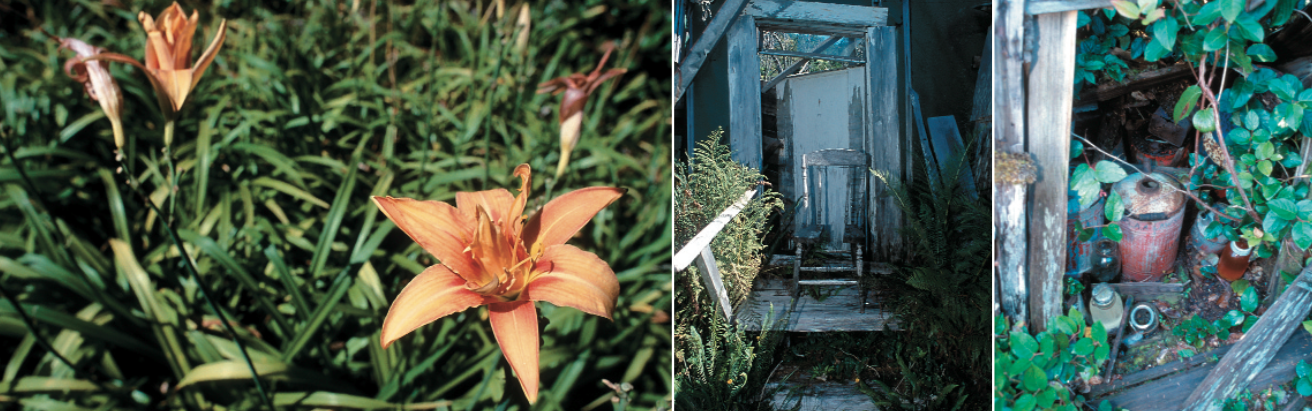
On Vancouver Island’s West Coast, stories grow as fast and tall as the fat red cedars and amazon Douglas firs they’re told under. The characters grow larger than life and their feats beyond human. Take the tales of Cougar Annie, who is rumoured to have shot a cougar one-handed, dealt with more than one husband by force, withstood the shelling from a Japanese subma- rine and cultivated a garden of exotic plants amidst the wild coastal rainforest. Tall tales indeed, except these stories are true. Cougar Lady really did earn her name from her ability to dispatch meddling big cats and black bears and she made a life and a horticultural career for herself far from civilization in an environment where it rains almost every day from October until April.
So says Margaret Horsfield in her book Cougar Annie’s Garden. By the time I finished reading the introduction I was inspired to visit the storied garden and see for myself if the rumours were true that after years of neglect, Annie’s exotics were blooming once more.
So I planned a seven-day kayak trip. Beginning in Gold River, a remote West Coast logging town deep in Vancouver Island’s Nootka Sound, I would make my way to the exposed outer coast, paddle south around the noto- rious headland of Estevan Point to Hesquiat Harbour and visit the famed garden at Boat Basin. Then I would zigzag my way further south through the forested islands of Clayoquot Sound to the resort town of Tofino. On the way would be plenty of solitude to give me a taste of Cougar Annie’s life on the edge.
At the docks in Gold River, I loaded my gear aboard the Uchuck III, a former World War II minesweeper that now runs goods and people out to the coast’s remote lodges, homes and camps. With my kayak on board, the Uchuck motored west through the channels leading to Vancouver Island’s outer coast. The forested mountain- sides opened up to reveal snowcapped peaks behind them, fishermen fighting salmon and the odd curious
gaze of a sea lion or seal. Nearing the Pacific, the boat began to roll on a light swell. The Nootka Lighthouse appeared, marking the southern tip of Nootka Island and the entrance to the mouth of the sound. The Uchuck docked nearby at the historic coastal village of Friendly Cove. Today the settlement contains little more than a church, a graveyard, a single house, derelict foundations and a fallen totem pole. It is the landing site of Captain James Cook, the first European to set foot in B.C., and once an important summer residence for the local Mowachaht people. That was back when there were thousands of First Nations spread along the coast in pros- perous communities, and the way it was in 1915 when a woman named Ada Annie Rae-Arthur arrived on the coast with her husband Willie for a clean start and a new life.
The drug problems of today’s Vancouver were problems 90 years ago, and Willie was addicted to the city’s opium dens. The community of Boat Basin, a full day’s travel from Tofino, was remote enough to be free from temptation. Like few others, Annie stayed long enough to witness the decline of the Mowachaht. Until 1986, long after her neighbours had dwindled to none and she had gone blind, Annie stayed at her garden, not leaving for years at a time. She spent 70 years out here; I would spend seven days.
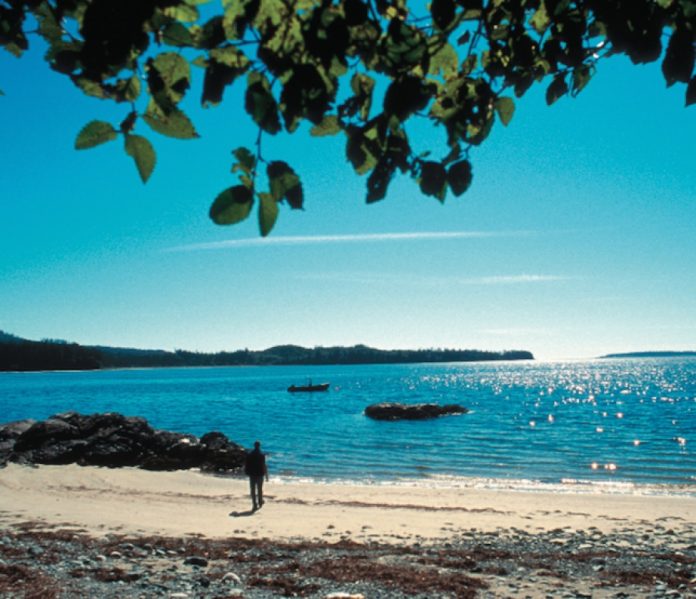
Icrossed the channel from Friendly Cove to the southern edge of Nootka Sound with the waves splashing at my side, glad to be alone on the ocean. I felt like a coastal explorer, with empty beaches, wave-washed cliffs, crashing surf and dense forest on one side, and open ocean, the odd sea otter, seals and sea birds on the other. I made camp at one of the many white sand beaches. Wolf, deer, and bear tracks dimpled the sand in lines that disap- peared into piles of bull kelp. I expected to see hand-sized cat-tracks too, here on Annie’s turf.
Cougar hunters were held in high regard amongst the pioneers of old, and Annie was the big-cat hunter’s queen. The animals were regular visitors to her garden, and she is reputed to have trapped and shot 70 to 80. Sometimes she would bait them with young goats; other times she would find them treed. She even shot them one-handed in the dark. When she heard the traps snap at night she would check them with a lamp in one hand and a gun in the other. Despite failing eyesight, she never missed a shot.
Annie’s cougar hunting was a profitable business— cougars earned bounties until the late ‘70s, plus there was always demand for hides. Annie was never one to miss a chance to make money—she also sold bulbs and plants from her garden and tended a store and post office. The exotic shrubs, bulbs, fruit trees and flowers Annie culti- vated were not adapted to this rainforest climate, yet her plants flourished and found buyers as far away as Manitoba.
The next stage of my journey took me around the headland of Estevan Point into the protected waters of Hesquiat Harbour and Boat Basin, Cougar Annie’s home. Estevan Point sticks out of Vancouver Island’s western profile like a pimple on a teenager’s face, bearing the brunt of every storm. It also bore the brunt of the only military attack on Canadian soil in recent history. One day during World War II, Annie spotted a submarine in Boat Basin. That night it opened fire on the Estevan Point Lighthouse. Shells were found all over the area for 30 years. Canadian military officials played down the attack, but everyone assumed it was a Japanese submarine.
Puzzling to many was, and is, why the Japanese would sail across the Pacific to attack a lighthouse in the middle of nowhere. Conspiracy theorists argued that it was actually an American submarine, that the States bombed their ally to keep Canada’s resolve firmly in the war.
Luckily I had calm conditions for paddling around this proboscis-shaped war zone into Hesquiat Harbour. Boat Basin lies at the harbour’s far end. I camped on a long, curving stretch of sand scooped out of the backside of Estevan Point, one hour’s paddle from the garden. I fell asleep that night trying to picture the garden and imagine what I would find the following day. I woke early with a nervous anticipation usually reserved for competitions and first dates. I packed, and tore up the four knots to Cougar Annie’s in record time.
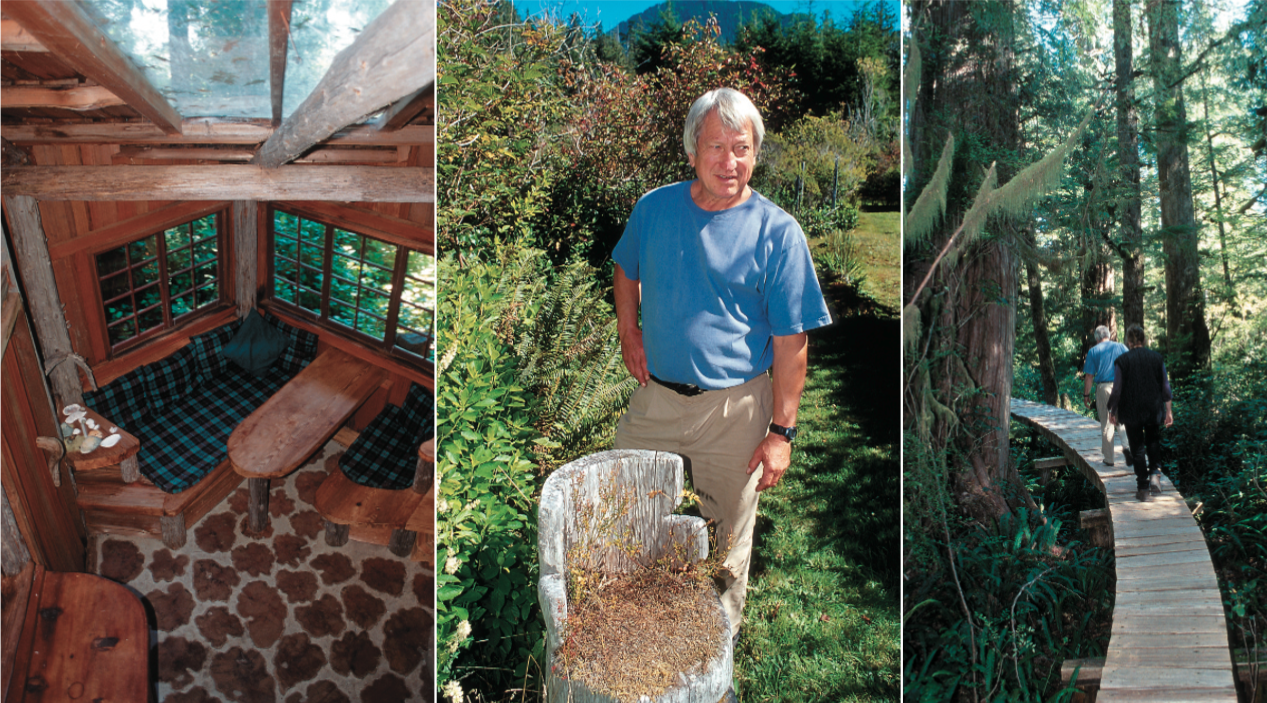
A new boardwalk leads from tidal water through a cedar swamp and up a short hill to the garden. Once only a rare few stopped here, but the garden is becoming famous. Float planes and sightseeing boats now drop in with tourists. But I was the only one around in the early morning hours this day.
I marvelled at the small room that was a post office and store. I walked down plant-lined boardwalks that beckoned me farther into the garden. I gazed in awe at the size of some of the old-growth beams and boards used for building. My eyes were distracted by the hundreds of exotic shrubs, trees and flowers blooming in pocket gardens. Wind whispered in the trees and bugs and birds hummed their tunes. And I was reminded of Annie’s reputation by the rusty traps hanging from trees.
One building, sinking into the ground, was obviously Annie’s home. I looked inside the one-room house. “Eleven kids,” I whispered. Over 70 years Annie raised 11 children and had four husbands come and go—either by death or desertion. After Willie died, Annie advertised for a husband alongside her nursery ads in two western- Canadian newspapers. George Campbell was one of those who replied and came to live at Boat Basin. Evidence suggests he beat Annie, and, not long after arriving, Campbell died suspiciously of a gunshot wound. Annie’s explanations varied between “it went off accidentally while he was cleaning it” to “it went off accidentally when he threatened to kill me.”
In Annie’s early days the area was busy with a thriving aboriginal, missionary and immigrant pioneer com- munity—enough to make a store and post office viable. Later on, Annie’s only customer was herself. Somehow she was impervious to the multiple forces that drew everyone else away. Today the only residents are a few Mowachaht at the remote reserve on Hesquiat Harbour’s northwest shore and Peter Buckland, who lives full-time at the garden.
Buckland was no stranger to life on the West Coast. He built a small prospector cabin close to Nootka Sound and spent his share of alone time there, whenever he could get away from his law profession in Vancouver. In Annie’s later years, he visited the garden to help out. He stayed for as long as he could spare before returning to his practice in the city.
In 1987, after Annie’s death, Buckland bought her homestead, moved in and began rescuing the garden from the encroaching forest. Partway through my visit I bumped into Buckland, a handsome grey-haired man of the woods. He was friendly and welcoming but not in a “tell all your friends to come here too” kind of way. He just seemed glad to have someone to chat with for a few minutes while pointing out the sights with his work- worn hands. I complimented him on the state of the gar- den, the flowers blooming, the orderly paths and under- control shrubs and trees.
“I practice what I call chainsaw gardening,” he said. Using a chainsaw, axe and machete as gardening tools, he has been reclaiming the former garden. Under the salmonberry and salal, he found the garden struggling to survive. He discovered the fruit trees still bore fruit and most of the shrubs, perennials and other flowers still bloomed despite the heavy cloak of the intruding forest. After 15 years of hard work he still turns up forgotten sections of garden and the plants hidden in them.
Buckland has built himself an incredible abode from the surrounding forest and he plans on being here for many years to come. He has built new cabins, constructed two kilometres of boardwalk and opened the garden to the public. He recently turned the garden over to the not-for-profit Boat Basin Society to ensure its preservation. For the cost of a $50 Society membership, anyone can come to the garden, wander through the oasis protected by towering stands of fir and cedar, and contemplate the tenacity of two modern-day pioneers.
What Cougar Annie and Peter Buckland had done inspired me. I had commitments back home and packed up to head for Tofino, but I was already working out a plan to come back and carve a living for myself out of the coastal rainforest. I paddled south and pulled up on a pocket beach for the last night of my trip, eyeing the forest for a spot to build a cabin and set up a garden as I unrolled my sleeping bag on the sand.
Sleep came easily but during the night I woke to the breaking-twig sounds of an animal hunting in the dark. I stayed awake nervously waiting for a cougar to pounce and shred the few layers of nylon that encased its next meal. A quote from Horsfield came to mind: “When you shoot a cougar, sight fast and aim for its chest. That way you’ll hit the giant cat’s heart,” Annie advised a newspaper reporter in 1957.
I didn’t have a gun but I did have a knife. In a sleep-deprived lunacy, I grabbed my headlamp and the knife, took a deep breath, and turned to face the cougar. Two red eyes flashed in the bush, then turned and ran. With a sharp dose of reality my fears dissolved, but so did my dreams of a life in the bush. Like many before me I realized that it takes a rare type of person to make it out here. I woke the next morning and, like the mouse that had disturbed my slumber, high-tailed it home.
When he’s not exploring the mountains and shores of Vancouver Island, Ryan Stuart lives, writes and enjoys human company in Courtenay, B.C.
This article first appeared in the Summer 2003 issue of Adventure Kayak Magazine. For more great content, subscribe to Adventure Kayak’s print and digital editions here.
Amidst Canada’s vast wilderness playground of trees, rocks and water, it seems incredible that our cozy, marshmallow-roasting campfires could have an impact. Unfortunately, campfires are among the most damaging practices in the ecosystems we escape to when we go camping. Fires deplete topsoil nutrients, scar the ground, pollute the air and introduce a risk of forest fires.
Campfires have a significant impact because there is very little topsoil on the scenic rocky coastlines of popular paddling areas such as Ontario’s Georgian Bay Islands. What little soil there is comes primarily from the decomposing wood of fallen trees, branches and leaves. The removal of deadwood for fires removes the nutrients available for plants.
Fires have also left scars on the rocks of many beautiful campsites. When I was a graduate student in archaeology, I learned that the signs of fire—be they carbon deposits on rocks, layers of ash in the soil or rock heat fractures—are among the longest-lasting markers on a campsite, remaining visible for thousands of years.
Sand will also hold a fire trail for future campers to find. Sand will melt or scar, and on popular beaches the sand is full of unburnt and partially burnt wood. Unless the fire is below the high-tide line, turning the sand under only hides the fire pit until someone tries to build a sandcastle there.
Fires also emit a lot of particulate matter. The air pollution from campfires mimics the smog of city air that so many of us are trying to escape when we head out on a kayak tour.
The risk of forest fires is almost too obvious to mention, but still a very important reason to forego the evening blaze. I recall paddling along a wilderness shoreline and smelling smoke—not directly from a camper’s fire, but pouring from the ground 50 metres away from an old fire pit. The fire had travelled through the tree roots below the fire pit. The firefighters who eventually subdued this blaze said such root fires were all too common.
Combine the potential impacts of fire with the increase in the number of people camping in an ever-shrinking wilderness and the results are obvious. In many parts of the world, fires have been banned due to limited wood supplies and heavy recre- ational use. In Canada, we are fortunate to be self-regulated with the exception of fire bans during extremely dry weather. To continue enjoying this freedom we must minimize or eliminate our fire use.
Doing without fires is simple. For cooking, camp stoves are easy to use, reasonably inexpensive and far easier to control than a campfire. Plus, your pots stay nice and shiny.
Once you get used to camping without fire, you’ll wonder why you ever bothered to spend hours of your precious vacation collecting deadwood. You’ll use that time for swimming or just relaxing. You’ll see the stars much more clearly and enjoy north- ern lights, sunsets and the serene change from dusk to dark. And when looking back at a campsite you’ve left, you’ll feel good to see no evidence, not even a fire ring or scar on the rock, to mark your stay. The next camper can enjoy the pleasure of feeling like they’ve discovered the place for the first time.
But if you must…
Use an existing fire pit if available.
Build beach fires in sand or gravel below the high-water mark.
Better yet, use a fire pan that you carry with you—essentially a piece of sheet metal with the edges turned up to contain the ashes. Place the pan over a bed of sand about 5 cm thick on top of solid rock, or perch it on top of smaller rocks.
Always keep your fires as small as possible—20 cm across for cooking.
Use small pieces of wood and use only dead, fallen wood.
Burn your fire completely so you have minimal ash and charcoal left over.
Jonathon Reynolds is co-author of Kayaking Georgian Bay and The Soft Paddling Guide. He and partner Heather Smith own and operate Nomadic Adventures.
This article first appeared in the Summer 2003 issue of Adventure Kayak Magazine. For more great content, subscribe to Adventure Kayak’s print and digital editions here.
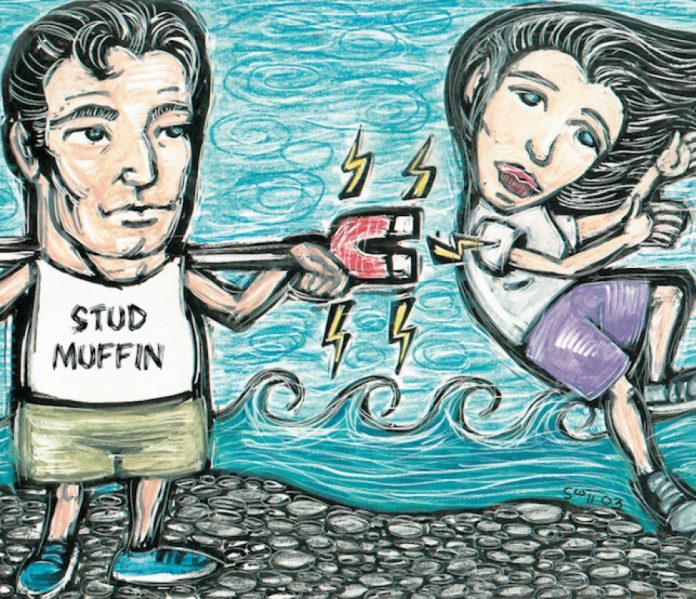
The primary goal of any guide worth his or her salt is to keep clients safe. The second goal is hooking up with someone on the trip. Most companies have strict policies regarding guides dating customers: generally it is mandatory to share all juicy details with the management and other guides in order to ensure an accurate tally of the season’s totals for each guide. As with safety procedures, it’s vital to document the best methods and pass them on for the professional development of our colleagues. Many varied strategies to score can be employed, some subtle, others less so:
1. Strive for consistency. If at all possible, you should try to kiss the girl for the first time in the same (geographical not anatomical) location on every trip. This way you’ll never have trouble remembering where that “perfect first kiss” hap- pened with every client over several seasons. What if she comes back next year? You may think that you’ll remember, or that it won’t come up, but the inability to accurately recall this salient detail can derail any possibility of repeat business.
2. Keep notes. Palm Pilots are excellent for this purpose, and they make you look professional and organized. It may appear as if you’re checking the guest list for any possibly dangerous food allergies in the group while you are actually seeing when Trish/Cindy/Whoever was born. This way you know you’ll be right when, on the first night beneath a spray of stars, you shyly ask her if she’s a Virgo. Yes? “Ah,” you smile ruefully and quietly say. “I knew it just by watching you.” Point out her constellation.
3. Increase your odds: eliminate competition. The greatest risk may appear to be getting “shot down.” Incorrect—the greatest risk is your guiding partner scoring while you remain solo. If you are working with another male guide, and he has a significant other, always go on and on about how much you like his mate. It doesn’t matter how briefly you met this person (if at all), or how little you know her, just keep nattering on about how special she is and how lucky your fellow guide is. Expand on how you would love to be able to be in a stable relationship like your coworker; how lucky they are and how you can’t wait to become best friends with his girlfriend. Do this in front of the group. Do it often. This will go a long way to dissuading your partner from hitting on anyone, leaving the field open to you, with the implicit threat that you would sing like a canary should he even flirt with a customer. It also sends the mes- sage that you are a sensitive guy looking for a relationship while he is a cheating, lying scumbag if he doesn’t appreciate the great girl that you have incessantly harped on about.
4. Play one romantic prospect against another. Once you have acquired your primary target, you will be surprised how flirting with one customer may egg another one on. You are the guide, and as such the alpha male in the group. Try to bag both. Don’t underestimate the power and illusion of alpha-maledom. It can gloss over otherwise glaring faults, like chronic emotional immaturity, insensitivity and low intelligence. Believe me, I know! And remember you only have to maintain the act for five to ten days, max. Anything beyond these performance limits virtually guarantees recognition of your real worth. This is bad.
5. Plan and then create an emergency. Staging your own crisis is the only way to ensure that you will be prepared, react swiftly and effectively, and impress everyone with your cool self-possession. This is a turn-on for women. If the company policy is for customers to share in the cooking while on the trip, wait until your target’s breakfast day. The night before, bleed all the propane from the camp stove. In the morning when Chrissy/Tracy/ Whoever tries to start her breakfast for the group, she will be horrified to find that the stove isn’t working. She will be stressing out big-time. Suddenly you are there. In seconds you seem to have somehow prepared pre-cut dry wood for a fire, the grill is in your hand. The crisis is manfully handled, the breakfast is cooked, she is indebted to you for saving her bacon, and she is impressed. You are so prepared!
Sabotaging the rudder on a boat is an easy way to spend a few minutes rescuing her. She’ll be thrilled with you having just the right-sized tool. If she is really hot, you may even consider putting a hole in her boat. Get swimsuit pictures and her panties and your boss will understand. It is a great system.
6. Stage a party for the night the trip ends. Guiding companies like to have guests all stay in a hotel in the nearest city on the final night of the trip. Let it slip that you and the other guides have planned a private party.
“Where’s the party?” someone will ask.
“Oh, sadly it’s not here in the little port town,” you lament, “but back in the city, in the lounge of hotel X.”
“But we’re staying at hotel X tonight! Your boss booked us all in there.”
“You’re kidding! We asked him to book us a place for the party. He must have done both at the same time.” Happy days! It was meant to be. Funny how life works out sometimes.
7. Get dressed up. When you get to the hotel, go from rugged outdoorsman to sleek well-groomed urbanite. Shave. You will be much better dressed than everyone on the trip. Be as confident and as in-control in this setting as you were on the water (it’s only one night, you can do it). Keep the lounge permanently booked. Christen it “Hotel L’Amour”….
Alex Matthews lives in Victoria with Rochelle Relyea, who picked him up on a kayak trip. He hadn’t had a date in years. She thinks that it’s adorably cute that he would even try to write an article about scoring with girls.
This article first appeared in the Summer 2003 issue of Adventure Kayak Magazine. For more great content, subscribe to Adventure Kayak’s print and digital editions here.
In the corner of my brother Craig’s bedroom there is a pile of outdoor gear growing by one item every year. From across the room it’s easy to spot the paddle propped against the windowsill and the PFD hanging from a nail. Dig a little deeper under the full set of raingear and you’ll find a throw bag, short wave radio, camera and an ice-fishing Tip Up. What bedroom would be complete without this handy spring-loaded device that sig- nals by popping up an orange flag when a fish has taken your minnow. Ideally you notice, put your beer in the snow, and dive across the ice to reel in dinner. I was so excited when he opened it. I had big plans for our annual ice fishing weekends. That was two Christmases ago.
Twelve years ago I left home bound for university and an eventual outdoor recreation, parks and tourism degree. Craig was turning 16 that fall and was busy changing the motor and doing the body work on his first pick-up truck. This spring when I called him on my cell phone he was still working. He was just finishing a brake job on a tractor-trailer, hands covered in grease and two knuckles bleeding because, he told me after, the wrench had slipped. After school, Craig stuck around home and now keeps my dad’s fleet of trucks rolling down the highway. He makes it to all the family functions.
“I’ll have to have a shower and get cleaned up a bit,” he said, “but I’ll be there for six.”
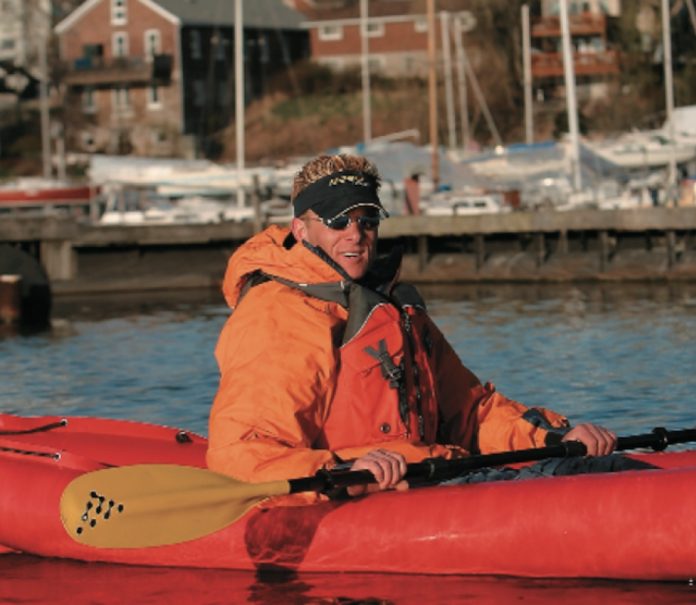
I was tumbleweeding through our hometown on my way to a paddling festival and called to ask if he’d come and paddle with me. I told him I needed to take some photos for the magazine. Part of this was true; I did need to get a couple folding kayaks on the water. But really, I just wanted to share an evening and a bit of my life with my little brother.
After the two of us and some guy in the park named Bicycle Earl assembled and pumped up our boats, I tossed Craig some paddling gear. We packed my camera and paddled into the setting sun. We floated, chatted and laughed. I taught him how to keep his boat straight. He told me about a new rap-metal band that he’d gone to see in Toronto. We even got around to taking the photos.
I often wondered if he knew the significance of the “Scott gifts.” I somehow thought that if he had the gear, our busy lives and 400 kilometres would come together more often. Instead of small talk over turkey, I always hoped we’d catch fish together or perhaps do a coastal paddling trip. He’d use the camera I gave him to record the memories.
Although too dark to stay out any longer, I reluctantly suggested we head in, break down the boats and pack them back in the truck.
Leaning against the tailgate shaking hands, I thanked him for coming out with me.
“These boats are pretty cool,” he said.
Checking one thing off my Christmas list, I thought to myself how nicely one of these folding boats will fit in the corner of his bedroom—right between the paddle and the short wave radio.
This article first appeared in the Summer 2003 issue of Adventure Kayak Magazine. For more great content, subscribe to Adventure Kayak’s print and digital editions here.
For 15 years and all of my canoe tripping life I’ve been renting, borrowing and using the canoes supplied by the various companies whose summer jobs managed to get me an education. With driver’s licence, degree, real job and wife all checked off my list, buying my own canoe seemed the last rite of passage left for this skinny Canadian man. Seasons spent kneeling on blue foamy sleep pads in boats whose only modifications were Kevlar patches inspired fantasies of one day building my Ultimate Tripping Canoe (UTC). I pitched the idea to wilderness river tripper and meticulous boat outfitter Brian Shields and late last fall the project began.
The basis of the ultimate tripping canoe is a good boat. I chose the Esquif Canyon for its generous rocker and depth, which make it both a big-water tripping boat and also one that likes to play the river. The Canyon will be slower and not track as well in flatwater but we were building our ultimate whitewater tripping canoe and were willing to make some sacrifices for river paddling performance.
The DIY guide to outfitting your canoe for whitewater
1 Where to start…
We began at the yoke, replacing the Esquif stock version with a laminated ash and cherry yoke by Madawaska Valley yoke builder SlipStream—an aesthetic touch with the highest benefit-to-cost ratio when it comes to slugging our fully outfitted 77-pound tripping boat.
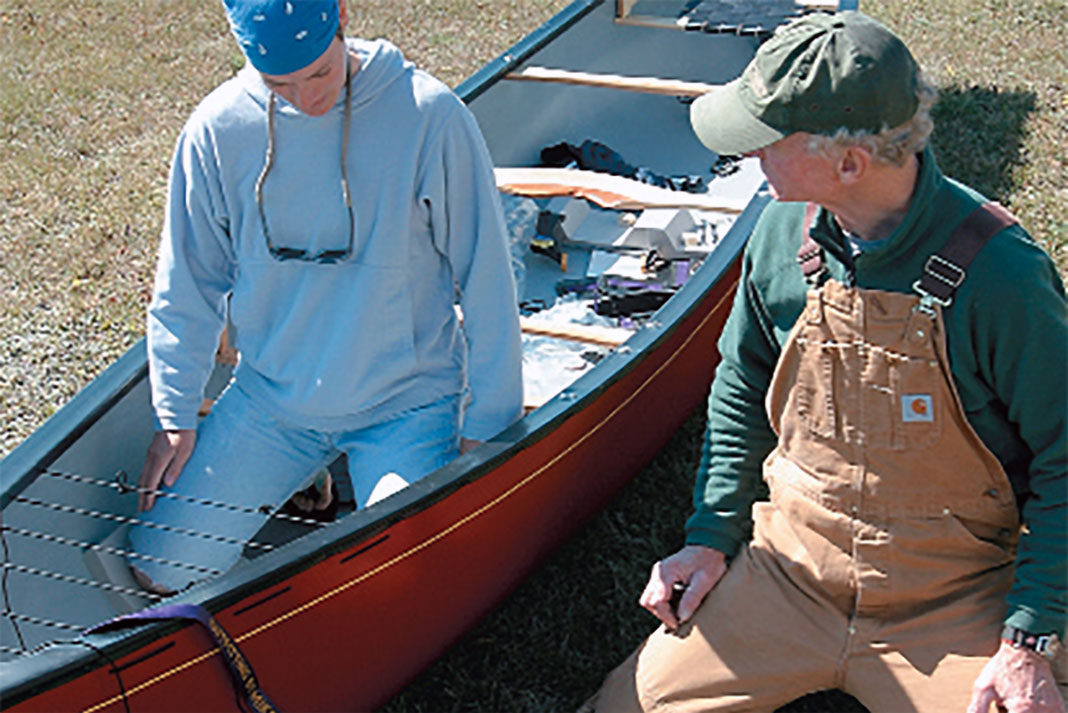
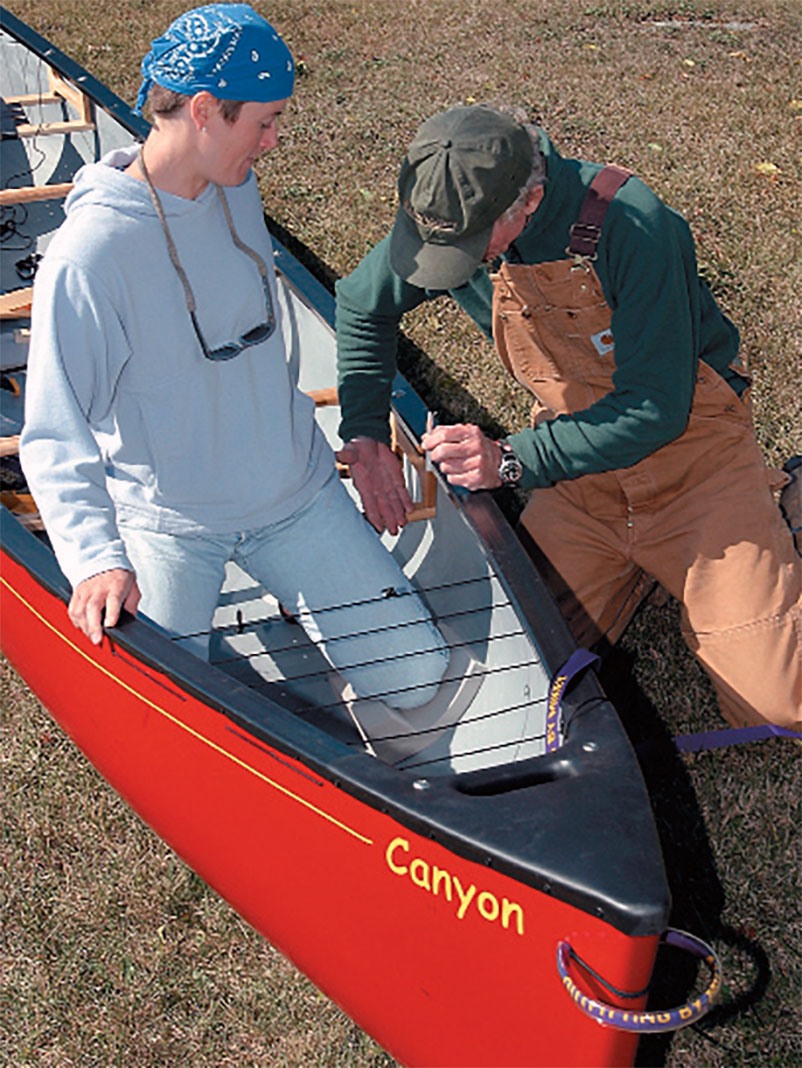
Tanya and I have fallen into the pleasant agreement that I’ll spend my time in the stern and she will enjoy the freedom and view from the bow. Locating our seats and thwart position to accommodate our typical tripping gear was the next and most important step, and one that affects the rest of the outfitting process. Having legs better for walking in deep snow than sitting comfortably on public transit, I made leg room my top priority. The Canyon comes set in a more aggressive and centred playboat-like seating position so we had to move the stern seat rearward to gain my stretching room and leave space ahead of the seat for camera gear. We know we will have to shift gear forward to weight the bow to compensate and trim the boat.
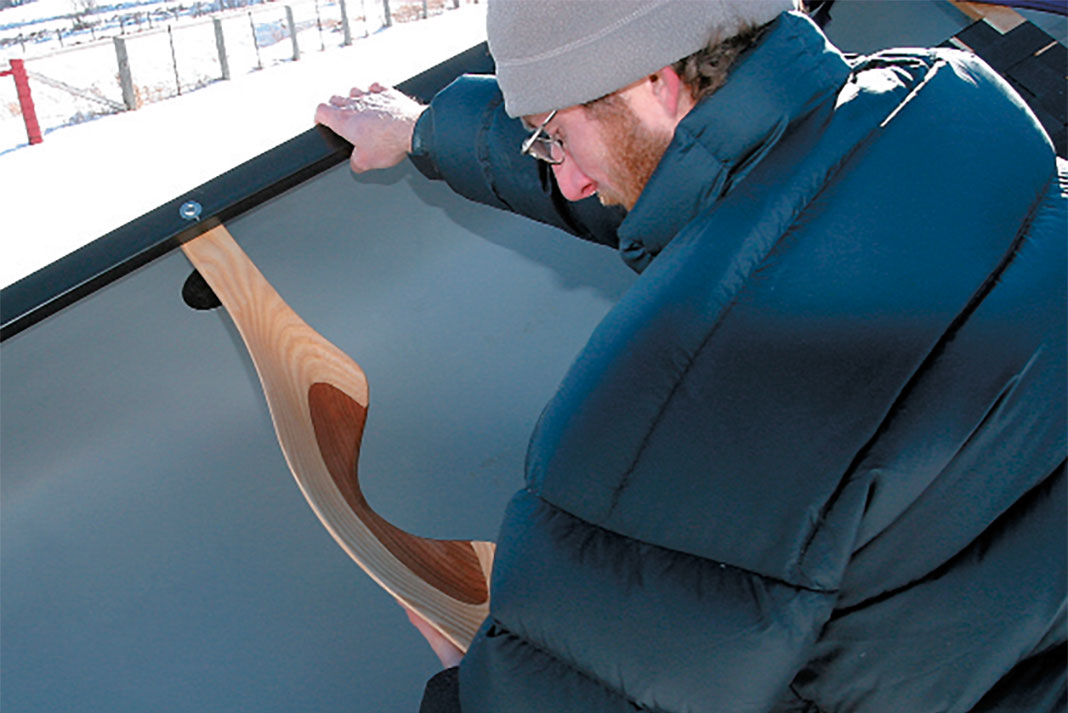
Adjusting seat height and angle are the easiest and cheapest modifications you can do to improve your paddling comfort. Moving my stern seat naturally raised the seat and increased the tilt due to the rise in the gunwales toward the stern. This was perfect for my larger feet and longer legs. The bow seat we lowered and tilted forward slightly so Tanya could reach a comfortable kneeling position without the nagging ache of a level seat bar eating into her legs. Add too much tilt without thigh straps, however, and you slide forward off the seat. Remember to be kneeling on a kneepad or piece of foam to ensure correct seat height and angle.
How to adjust yoke & stern seat
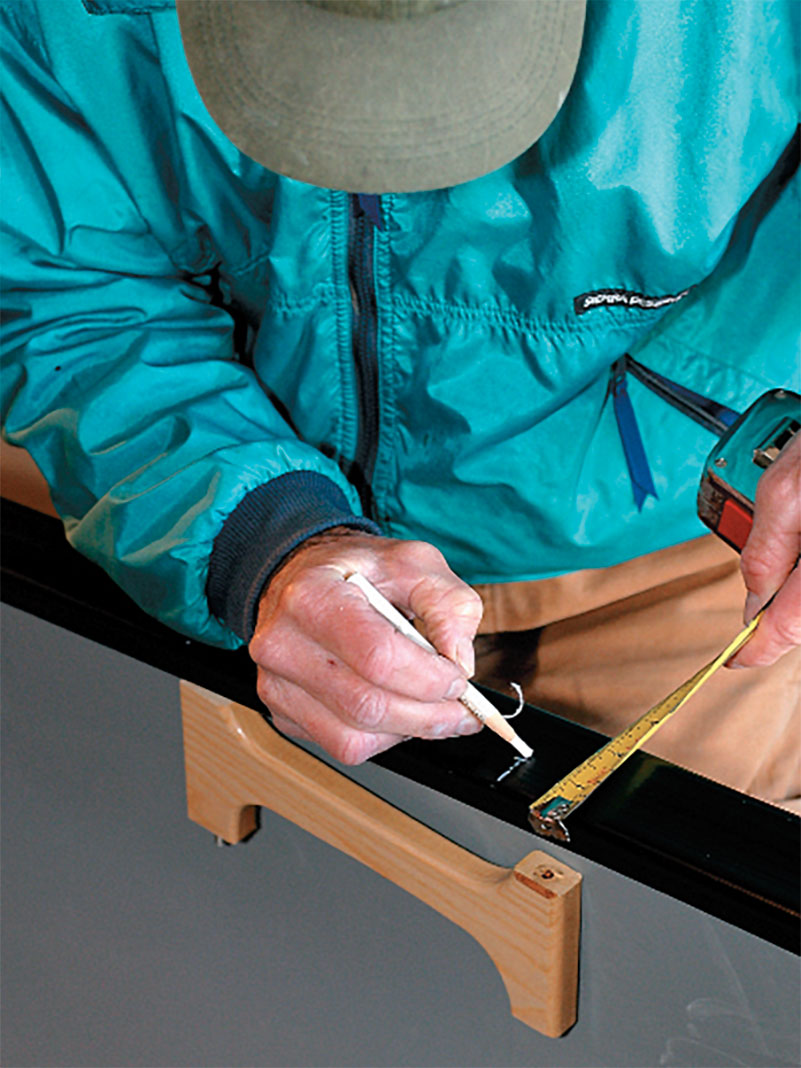
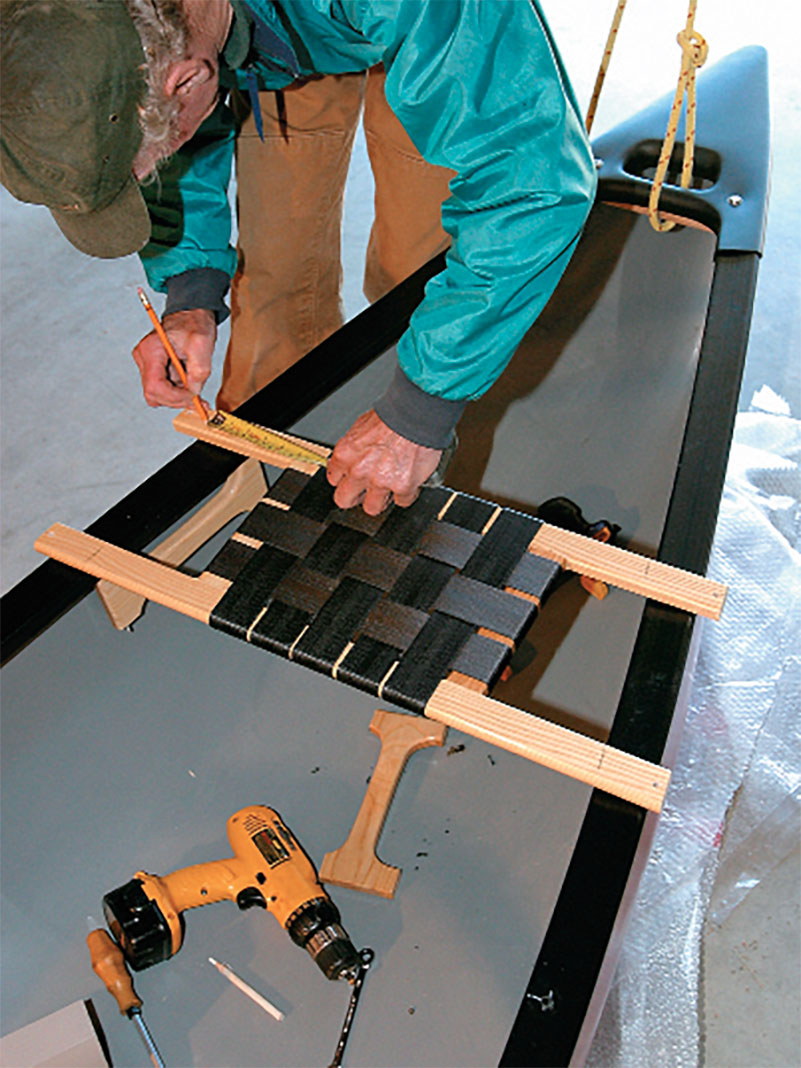
Installing the SlipStream yoke, we used the existing yoke as a guide for cutting to length, centring, marking and drilling the bolt holes. To allow two 60-litre barrels to fit snugly side by side yet still load and unload easily, we redrilled the gunwales and moved the rear thwart back to 24.5 inches from the yoke. Don’t inadvertently add flare or tumblehome to your canoe when moving thwarts—trim them to fit or replace them with longer ones.
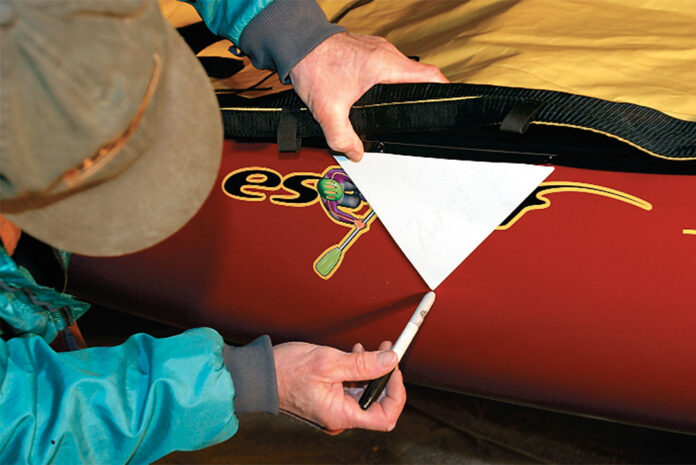
Think carefully about the compromises involved in moving the seats from the balanced standard positions. Balance, dryness, maneuverability and gear carrying capacity will be affected. White grease pencils, found at office supply and craft stores, are ideal for marking—measure twice, drill once.
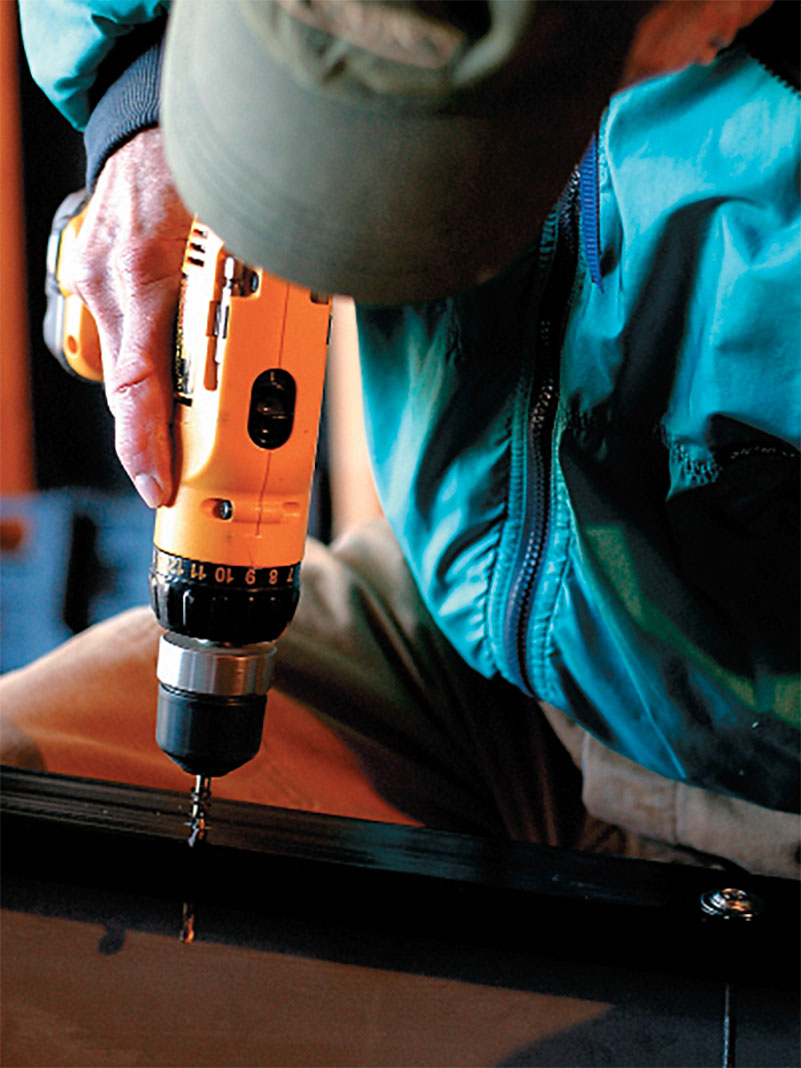
Vinyl-covered aluminum gunwales can easily be drilled without harm. Typically seat and thwart hardware is 3/16-inch diameter and stainless. Use a 3/16-inch drill bit so bolts fit snugly. Recessed washers tuck bolt heads inside and disperse the pressure on a larger surface area of the gunwale. Underneath use washers and nylon locknuts. Pack a Leatherman tool and a metre of farm fencing wire and you can fix anything on trip.
For legroom and working space we ended up moving the Canyon’s seat back a massive eight inches to a more traditional tripping measurement of 24 inches from stern. The seat had to be carefully narrowed to fit farther back in the tapering stern. Be sure to err on the side of too long when you are making your cuts and then trim and angle the seat bars for a perfect fit. A perfect installation has the seat just clear of the inside of the hull. Simply moving a seat forward or back affects the seat height and angle following the shear or gunwale lines of the canoe. Adjust seat height and angle using longer seat bolts and new seat pillars, or cut and drill wooden spacers for between the seat and pillars. We drilled the holes and loosely bolted the seat in place, tweaking height and angle after we installed the outfitting.
2 Float bags
Perhaps the best insurance policy you can buy for your whitewater canoe is a set of float bags and properly installed bag cages. Float bags come in both nylon and vinyl. Vinyl bags are worth the extra money. They are lighter, easier to work with, especially in the cold, and far more durable. Voyageur 36-inch end bags are the perfect length for tandem tripping boats, tucking just ahead of the bow paddler’s knees and behind the stern seat.
[ Paddling Buyer’s Guide: View all floatation and cage materials ]
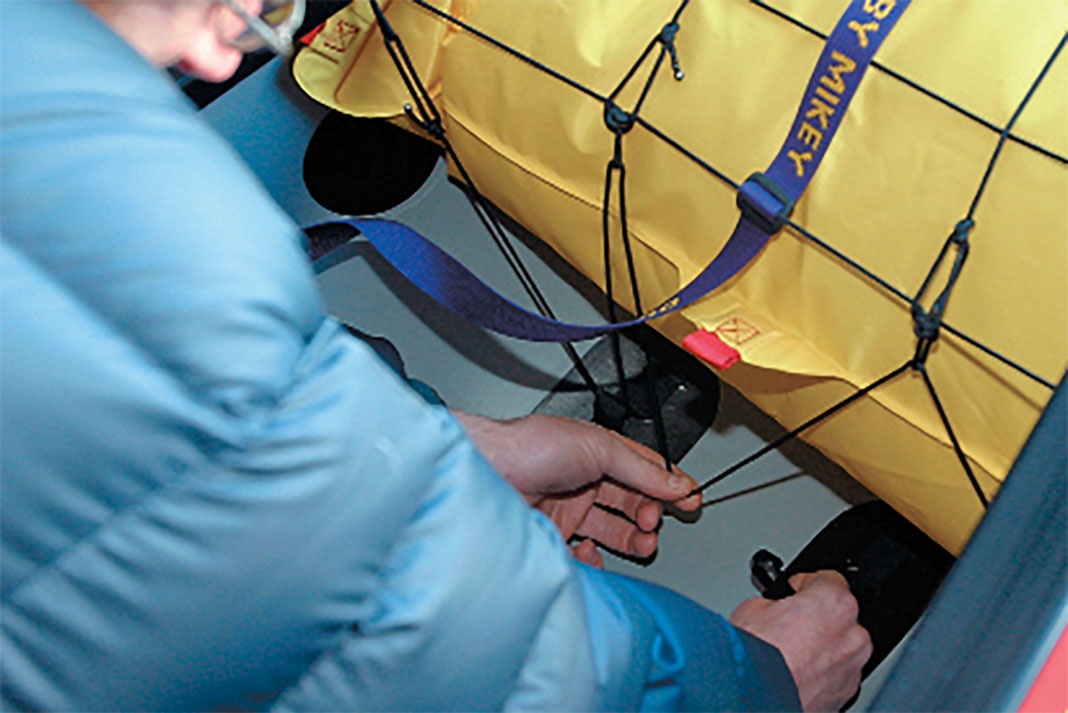
The Mike Yee Outfitting bag cage system is far superior to tying bags into the boat. Although all float bags have sewn tabs, tying bags into your canoe isn’t enough to keep them down. An upright boat full of water floats the bags, focusing all the stress at the sewn tabs. The water will displace the bag above the gunwales, rather than the bag displacing the water in the hull.
As we installed the stern bag cage, we realized the combination of moving the seat back and me having long legs meant that my feet were going to interfere with the anchors. This was aggravating, and dangerous if my river shoes caught when I needed out of the boat. We simply moved the anchors back, shortening the cage area by a couple of inches.
By necessity, the copious leg room usually enjoyed by the bow paddler gets filled by the face of the bow cage; however, we were sure to lay out our kneepads and eye things up before we drilled the cage holes to set their location. We wanted to ensure there was still enough space in front of the bow seat for Tanya to sit up and stretch a little.
How to install float bags
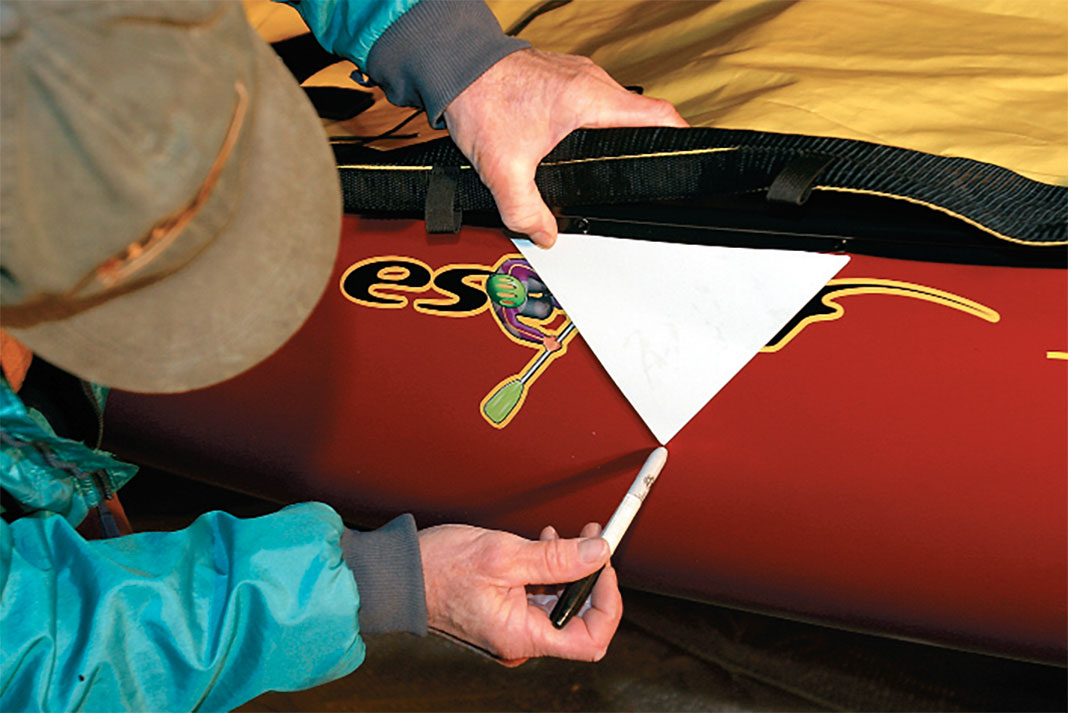
Use a paper, cardboard or plastic jig to mark the float bag cage holes so they are aligned with the holes on the other side of the boat. Mark the 3/16-inch holes every four inches starting at the end of the deck plates and continuing for as far as you want the bags to extend. Drilling holes in a new hull feels wrong, but the holes will be filled when laced with nylon cord. Be gentle with the drill, even the dullest of drill bits can tear through Royalex with ease.
To install a bow or stern grab loop and another anchor point for the cages, drill a larger 7/16-inch hole. We checked first to ensure the holes wouldn’t interfere with the spray deck we will install later. Tie a single loop of 3mm nylon cord through the holes with the ends inside the boat. Pick up some 5/8-inch OC clear vinyl tubing and a metre of webbing at a hardware store. Force the webbing through the tube, into the holes and tie it on the inside of the canoe for a cheap, comfortable and easy-to-use handle.
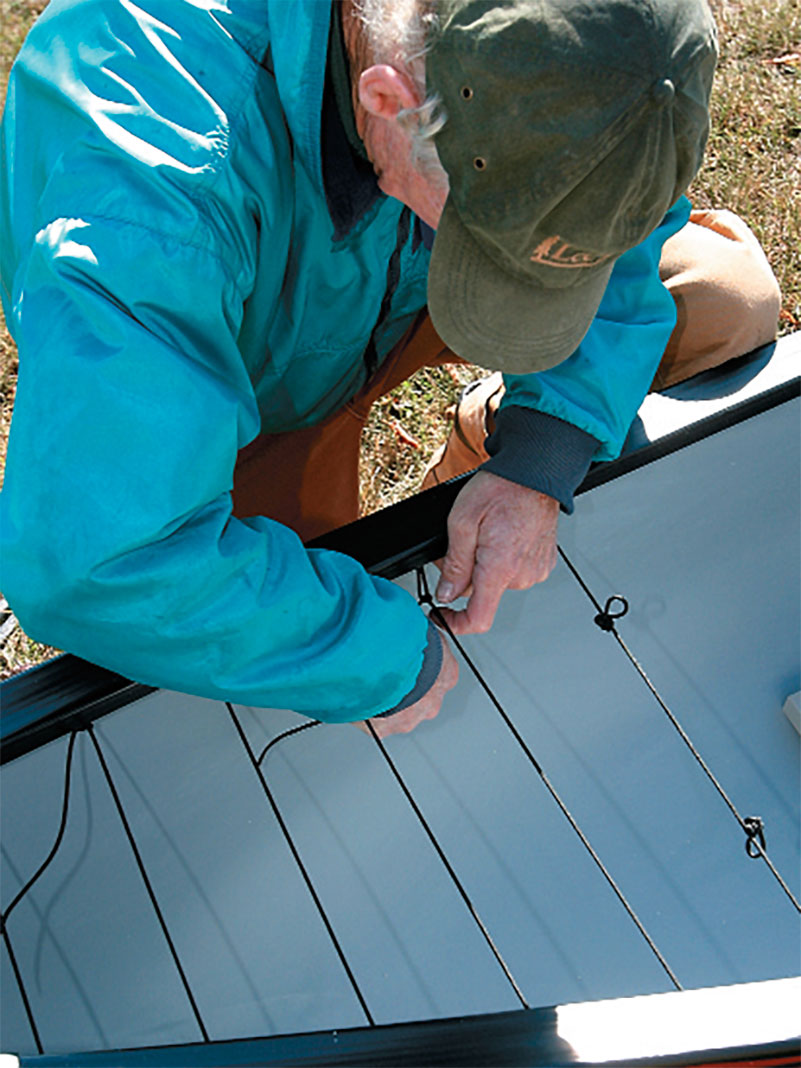
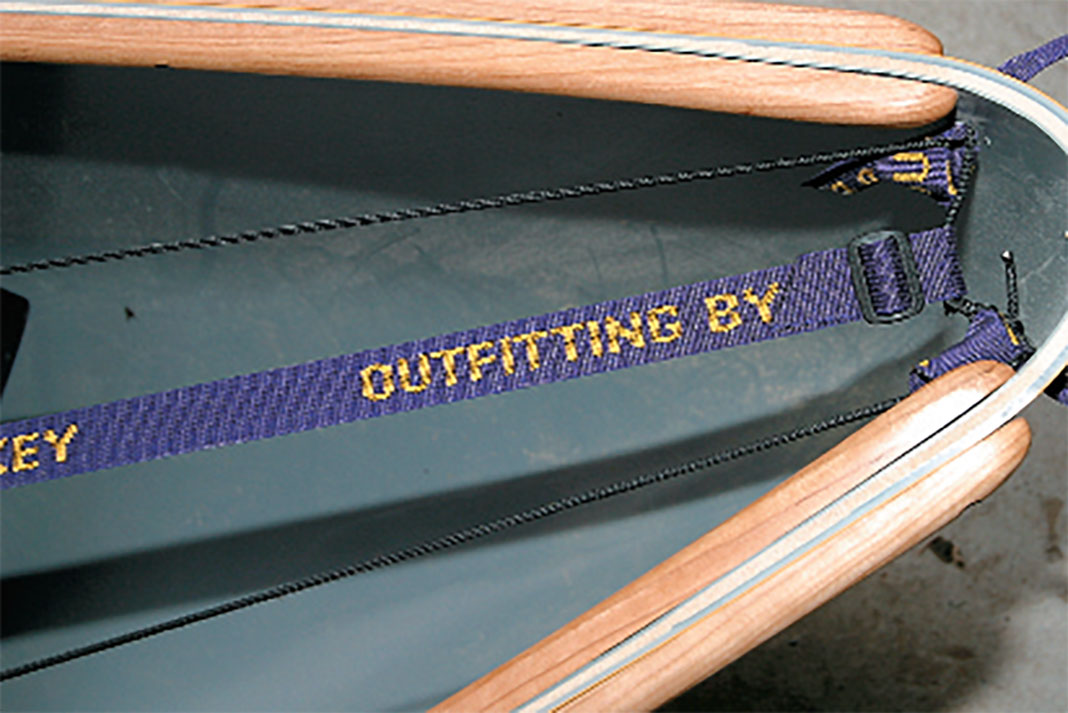
Weave the nylon cord through the 3/16-inch holes starting from the bow or stern. On the last crossing on the inside of the hull tie a loop as a stopper using a figure eight on a bight. Then tension the cord backward through all the holes until you’re back at the first end. Thread the first end back through one of the holes and tie it off with a few half hitches on the inside of the boat. Go back to the last crossing and tie three additional evenly spaced figure-eight loops. Tension this end, threading it back through one hole to tie it off on the inside of the hull with half hitches. The result is a snug cage in which the last strand has two evenly spaced loops in the middle and two stopper knots against sides of the boat so they can’t slide off centre.
Without the deck plates on this playboat you can see how the webbing grab lop and single loop of nylon cord are attache.d The nylon cord loop is the anchor for a piece of webbing running down the centre of the bag cage. The two nylon cords run from the grab loop holes to the figure-eight loops, underneath the nylon cords that go across the canoe to form a grid with gaps small enough to keep the bag from rising and escaping under water pressure.
Directly below the line below the figure-eight knots, place three evenly spaced vinyl patch anchors. Mark the outlines of the patches with a grease pencil and glue them in place. Let the glue dry for 24 hours, then thread the cord through the figure-eight knots and anchors in a “W” pattern at the end of the cage. Using a centre anchor with a clip allows you to easily unclip the cord and webbing to access the float bag area.
3 Comfort and security
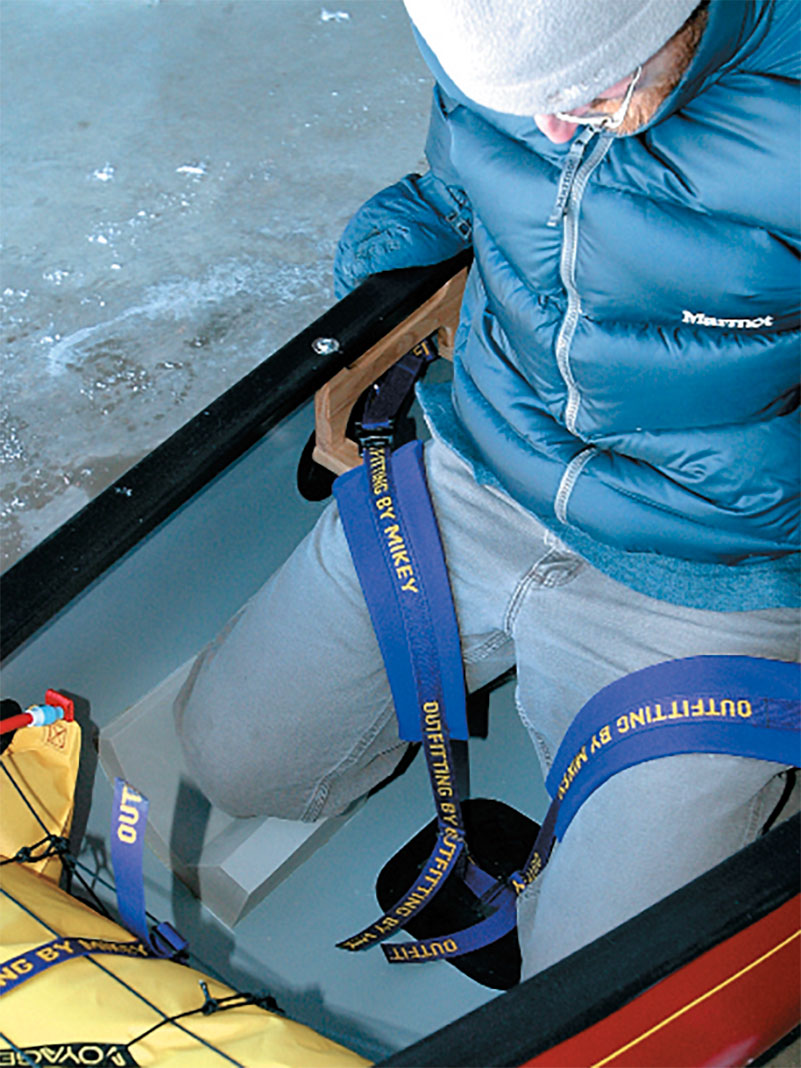
Thin pieces of blue foam offer some comfort to the knees, but proper outfitting has so much more to offer. Contoured knee pads and thigh straps stop your knees and butt from sliding around and connect you to the boat. Coming from a tripping and playboating background, we wanted the comfort and security of quality, well-placed kneepads and outfitting in our ultimate tripping boat. If the bow and stern positions will be shared, the kneepads have to be located to fit both short and tall paddlers. A tip from Brian was to be sure to space the kneepads far enough apart that you can drag a bailer between them. We also wanted this gap between the kneepads for stepping in and out of the boat.
We anchored our thigh straps on the sidewall of the boat, centred between the seat supports. Some canoe tripping outfitting loops around the seat pillar or around the seat itself but the ultra-fine stainless steel bolts used as seat hangers are not suited for the lateral forces exerted by the thigh straps. The bolts bend, work loose and can break under your body weight if the canoe happens to ram and stop on a rock. Having the anchor between the seat support brings the thigh straps into an aggressive, secure position.
How to install kneepads & thigh straps
Position the kneepads widely enough for differential balance of the canoe with pressure on either knee. Get comfortable, you shouldn’t be stretching to reach the kneepads. When you’re sure of their placement, mark the position. Now, run around the yard and get back in to ensure it feels natural. Then, glue them in using contact cement.
With the kneepads held in the correct position, we lowered the seat and tilted it forward slightly so that Tanya’s shorter legs could reach a comfortable kneeling position. Esquif’s solid, one-piece seat hangers allowed us to cut wooden spacers to lower the seat. You might need to buy longer seat bolts. Adjusting seat height and angle are the easiest and cheapest modifications you can do to improve your paddling comfort.
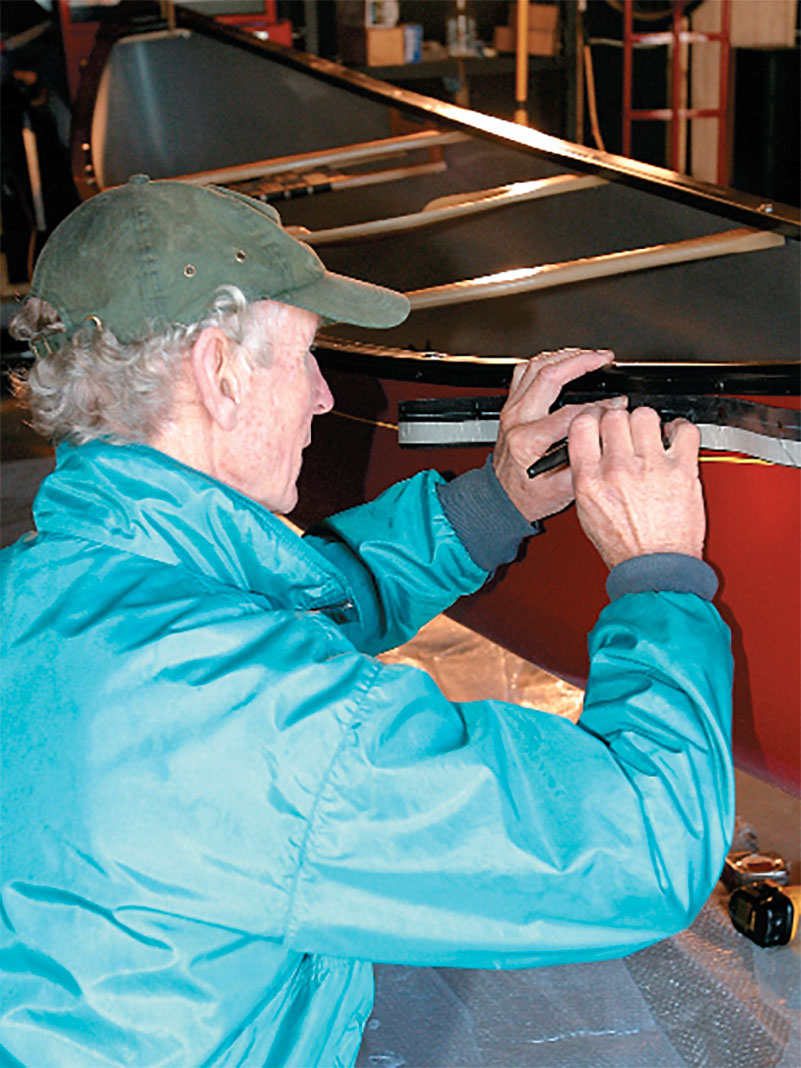
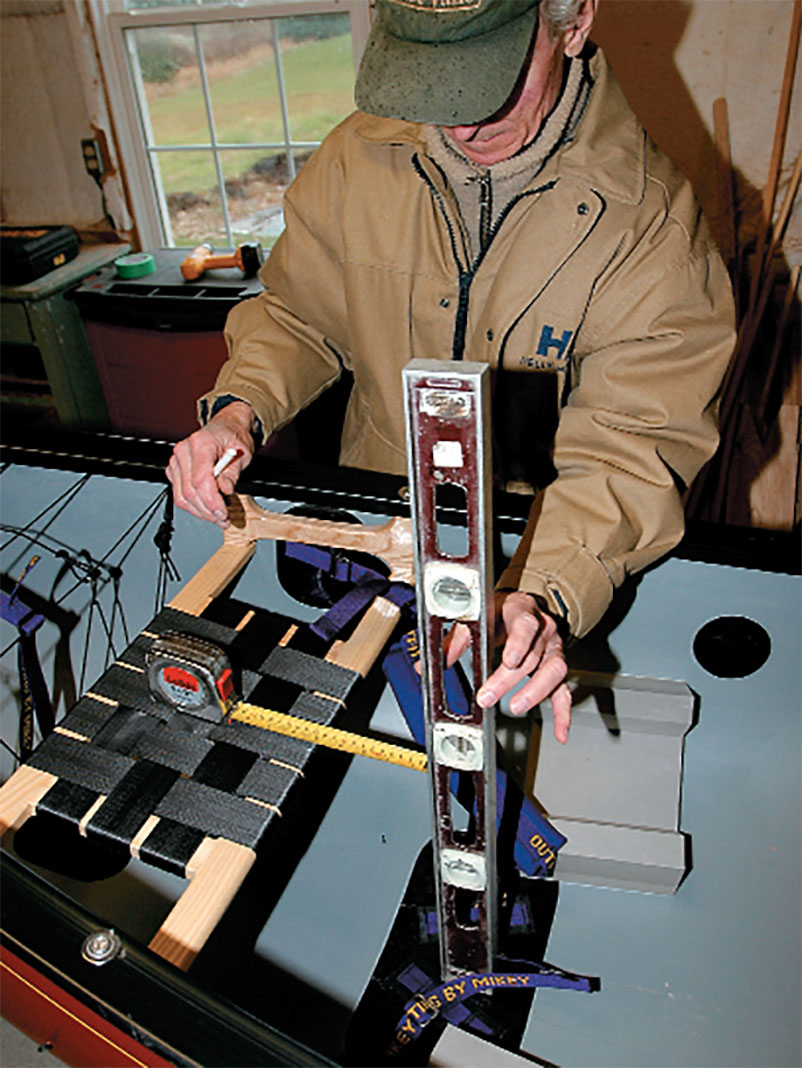
Both bow and stern anchors for the Mike Yee Outfitting thigh straps are centred in the boat five inches forward of the seat bar. Find the centre of the boat with the centre of the seat webbing and use a level to measure up from where the anchor loops leave the floor. Locate the wall anchors centred between the seat supports, with the tops near the gunwales. Mark outlines, location slashes and orientation arrows for the anchors on the hull so you know their placement and which way is forward.
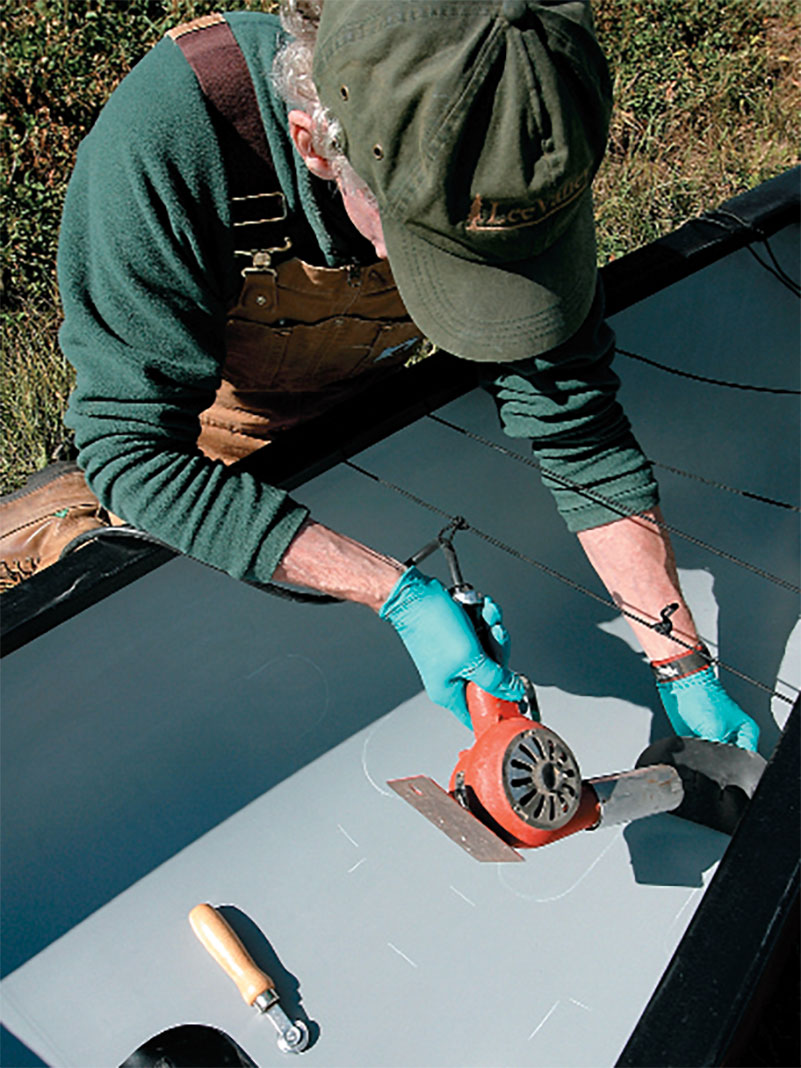
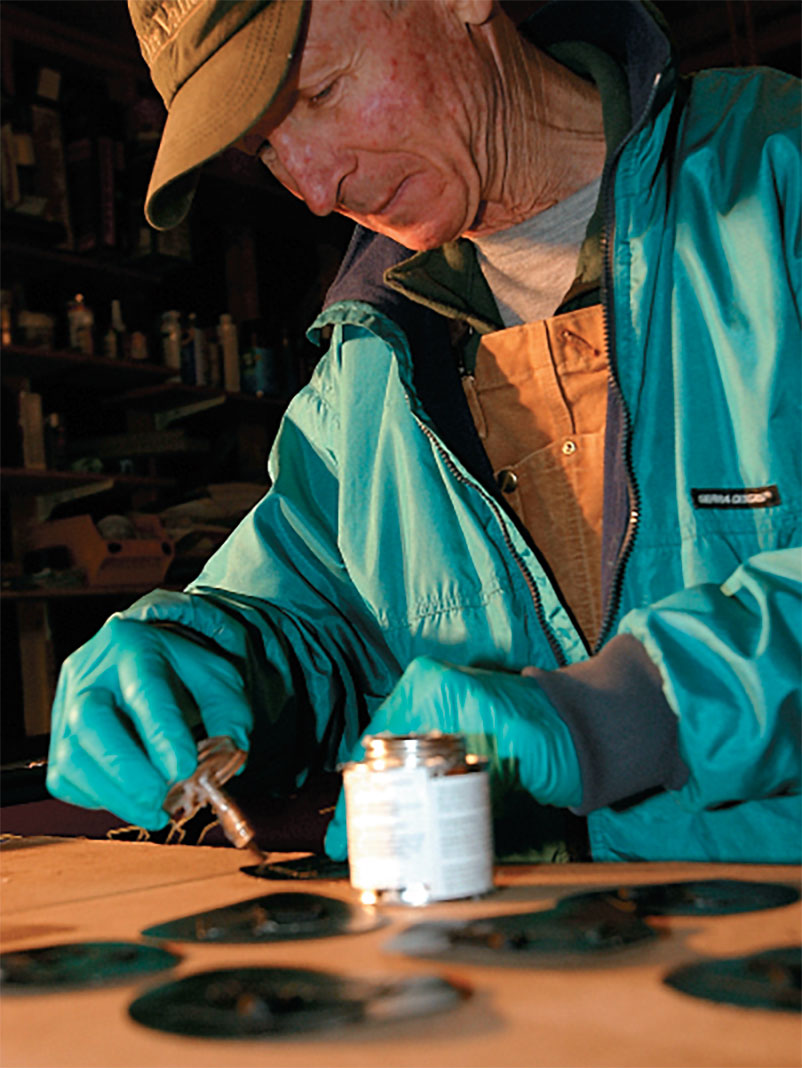
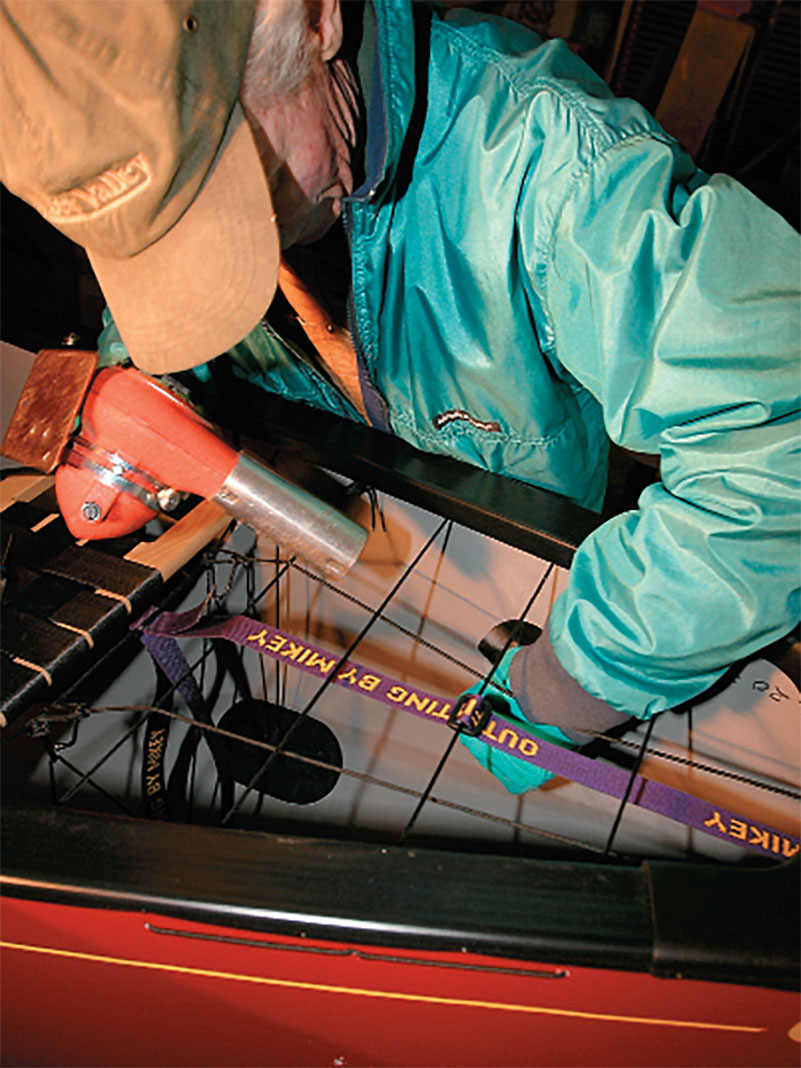
The secret to installing secure vinyl anchors is to keep everything clean. Wipe the hull and anchors sparingly with acetone. Wearing gloves, apply vinyl glue to both surfaces; be sure to go right to the edges. Let dry 15-20 minutes. Reactivate the glue with a heat gun, align and stick. Roll out with lots of pressure using a screen door roller tool.
Be sure to let it dry for 24 hours before you thread your thigh straps and haul on the anchors.
Although some paddlers may say we’ve gone overboard on the outfitting for wilderness river trips, the sporty Canyon with fully rigged outfitting bridges the gap to tandem playboat.
But, we didn’t stop there.
4 Getting northern-river ready
With dreams of traveling north to explore the massive rivers draining the Hudson Bay watershed—the Harricanaw, Rupert and Moose—I placed a call to Morgan Goldie at North Water to order our Expedition Spray Deck. I found myself in the garage with a tape measure and the cordless phone.
I hadn’t thought about it, but all canoe covers are custom-made. Any modification from the canoe builder’s specs affects the cut of the deck. I had moved my stern seat eight inches back, so North Water had to cut my cockpit opening to line up with my seat—it’s imperative to have your seats set before you order your deck.
How to install a spray deck
The first step to installing the North Water Expedition Spray Deck is laying it out and using the included jig to mark where you will drill the 12 anchor holes down each side of the canoe. Yes, holes! Some canoe spray covers are attached with Velcro or clasps, and some lash to a strip of webbing riveted from bow to stern. The North Water laces in place with nylon cord weaved through tabs on the deck and tiny loops poking out of the holes. Confused? Read on.
Once we drilled the 3/16-inch holes, we poked the loops through and traced the vinyl patches on the inside of the hull. Apply the supplied vinyl adhesive to both the patch and the hull. The secret is to let it dry, reactivate it with a heat gun and then carefully stick it in place.
Working around our existing bag cages and outfitting was a little awkward but doable. Before beginning the project, we checked that the North Water was compatible with our Mike Yee outfitting. The grab loops and outfitting anchors don’t interfere with the spray cover. Setting the deck anchors in place is a one-shot deal. We installed the first few patches in places hidden by the deck plates or float bags in case they weren’t too pretty. Be sure to rub firmly (especially the edges) with a blunt object such as a screwdriver handle or ideally a screen door roller tool to secure the bond.
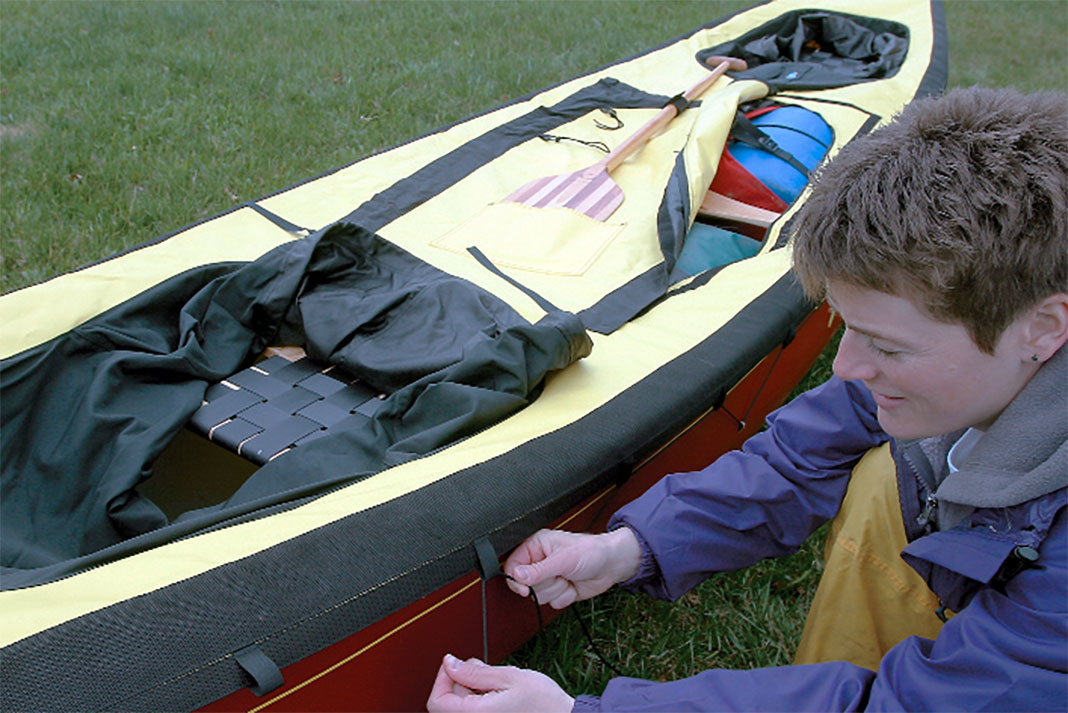
See why the North Water system is so clever? The drilled holes are filled with nylon loops and patched on the inside. No sharp edges. The boat is completely watertight. And you only see little black dots on the outside of the hull. The deck laces in place using nylon cord and secures around the bow and stern with webbing and ladderlock buckles. The Expedition Spray Deck covers most of the deck plates, so North Water has sewn on Velcro loops for painter storage. The deck comes with one paddle pocket and we added tabs to hold a map case. The large cargo access option is key for easy access to barrels and packs.
5 Getting ramming-speed ready
There is no doubt in my mind that Captain Kirk had a quality set of Voyageur skid plates protecting the bow and stern of the Enterprise. Low-water weekend trips grinding down the Petawawa, Dumoine, Coulonge and Madawaska take their toll, even on ABS boats. And “ramming speed” is the ABS canoeist’s answer to shallow sections and keeping feet dry at portages. When you wear the skid plates out, simply grind them down and slap on another set. Remember this isn’t a cedar dock decoration. This is our whitewater UTC.
How to install a skid plate
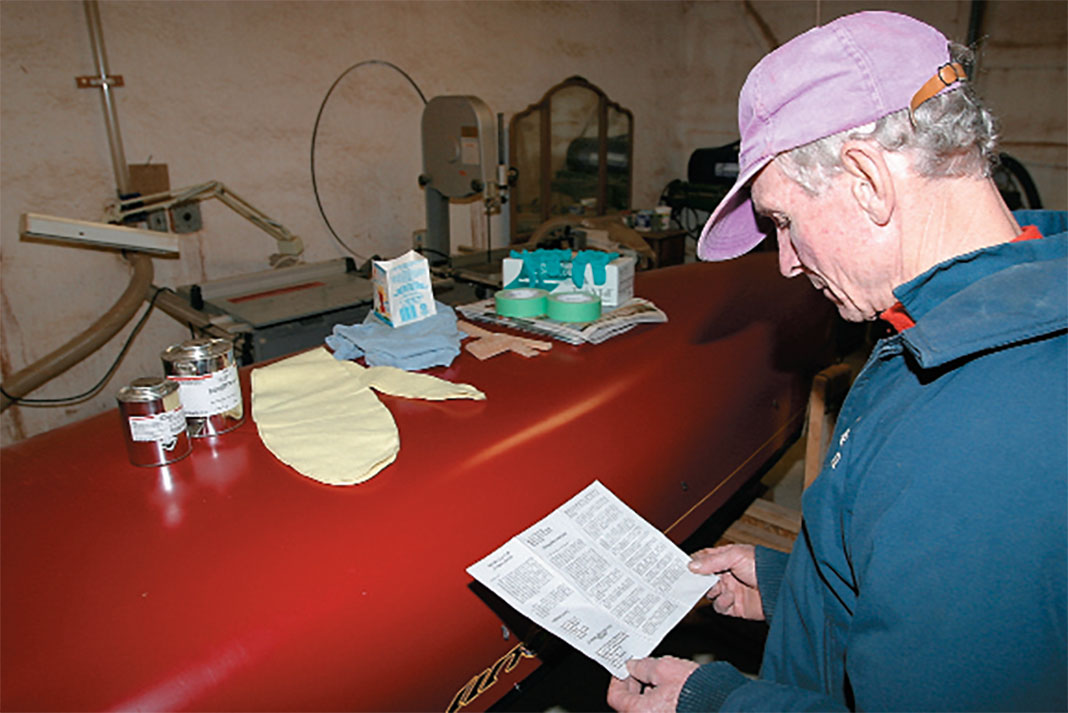
Step one: Collect and organize all necessary items. The Voyageur skid plate kit comes with almost everything you’ll need: Kevlar felts; resins; sandpaper and sanding blocks; gloves and (yes, we read them) instructions. You’ll need to round up a mixing container, masking tape, stir sticks and a disposable surface for apply the resin to the felts.
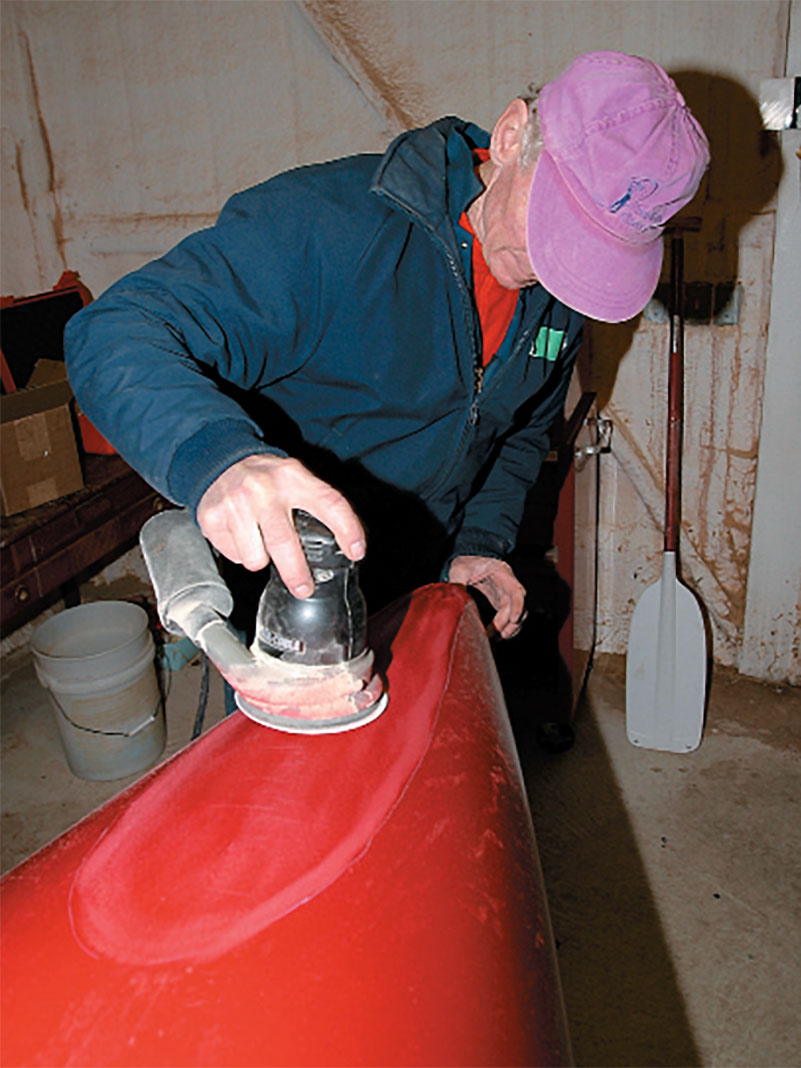
Whether you’re building your UTC from scratch or souping up your existing boat, you’ll need to roughen up (or maybe smooth out) the Royalex. Trace the felts and sand a half-inch or so past your outline—we found the patches tend to expand when wet with resin. Use the included sandpaper or speed up the process with power tools. CAUTION: sand gingerly, just roughing up the surface, not removing it. Brian took over the sanding.
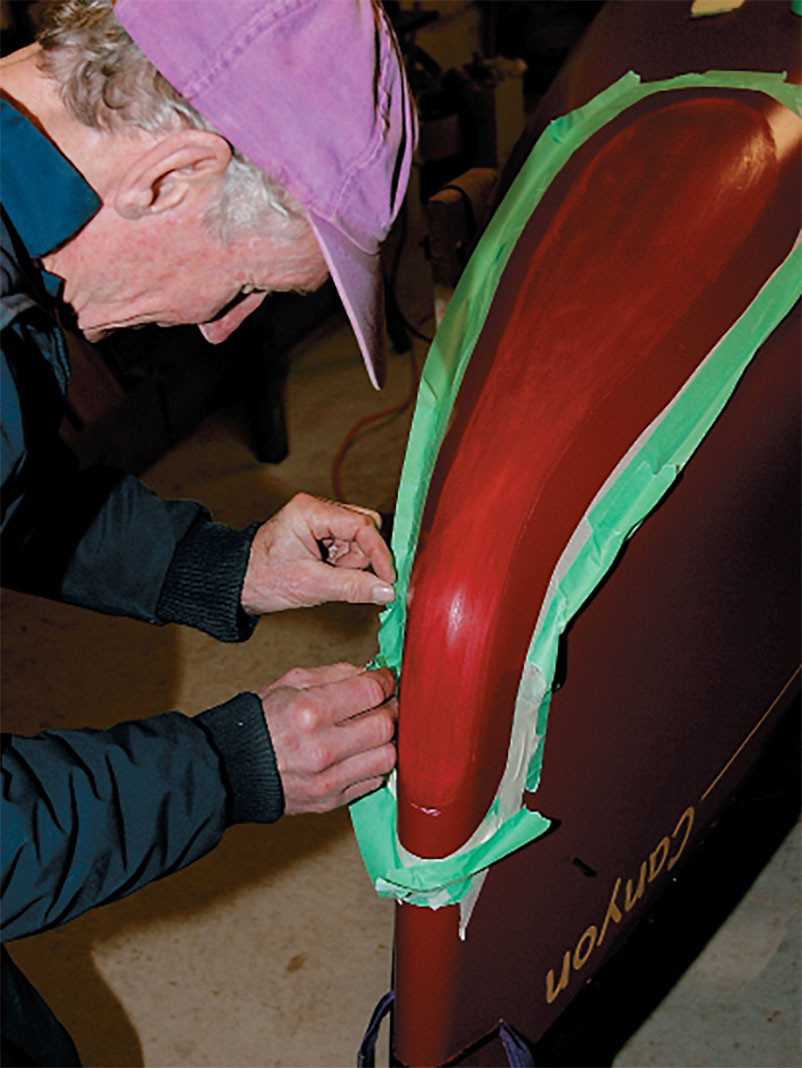
Not only did Brian mask out the area. He created a rain gutter border to channel any excess resin. He masked an inch outside of where we expected the skid plates to be and then painted the entire area with resin for a clean-looking finish.
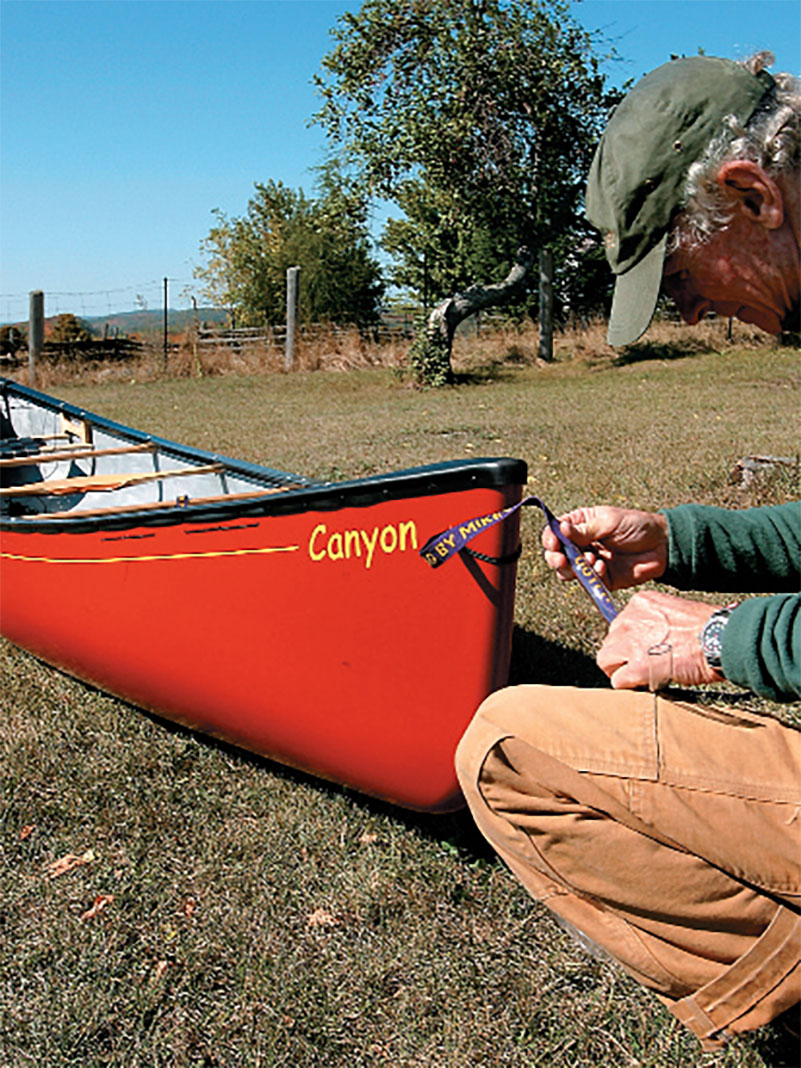
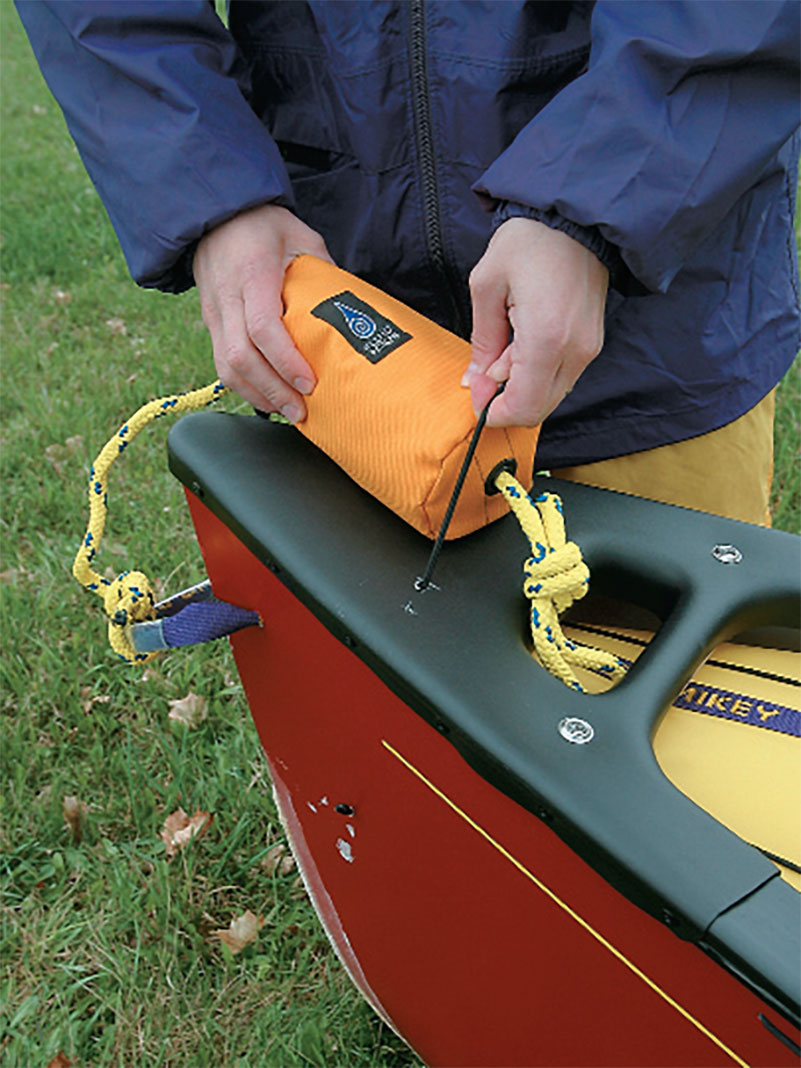
Ropes on your canoe need to be accessible when needed and otherwise out of the way. Brian’s bungee cord on the deck is cheap, easy to install and works like a charm. The secret is to ensure it is perpendicular to the boat. The Fluid Designs painter bags hide the standard 30 feet of bow and stern rope and are easily re-rigged for self-rescue or lining.
6 Finishing touches
“You’ll thank me later,” Brian said as his Black and Decker augered holes in the Canyon’s plastic deck plates. I’d sourced a pair of Fluid Designs’ nacho-coloured Painter Bags. These babies are the bomb for keeping your ropes from looking like bowls of spaghetti. They come with 30 feet of floating 3/8-inch rope stuffed inside. Through his new holes, Brian tied short pieces of 1/8-inch bungie cord and snapped my painter bags in place on the decks—very clever. With age comes wisdom.
How to install a deck bungee
Too cheap to smash the celebratory bottle of Blue Nun on her bow, we slid our UTC quietly into the river—no marching band or confetti. Feeling like we’d just walked into a honky tonk in graduation tuxes we ferried our fully rigged and decked northern river tripper into the crowded eddy of Class II weekend canoeists. My whitewater adolescence paddling in beat-to-a-pulp rental canoes is over.
This two-part article was first published in the Early Summer 2003 and Summer 2003 issues of Rapid Magazine. It was republished in part in the Spring 2008 issue of Canoeroots Magazine. Subscribe to Paddling Magazine’s print and digital editions, or browse the archives.
The helix is the latest move on the pallete of freestyle paddlers. This new move is a 180-degree upside down flat-spin that resembles the rotation of a helicopter rotor. That’s right, it is not a 360 rotation as most people think. The helix is just a bounce and an elaborate roll like the donkey flip, roll-X or the pan am. The boat slides sideways down the face of a wave and when the upstream edge pops up in the air, the stern gets pushed, upside down, toward where the bow just was. The move, when airborne, is really cool to watch and punishing to learn. The first person to actually land and name the move was Steve Fisher, longtime paddler of the Zambezi River. There were variations of the helix before His Holiness published the name helix on the Internet, but he, unlike everyone else, stomped the landing.
Step 1
Find the top of a nice big green wave face with a big foam pile. The foam pile will help catch you when you inevitably land on your head. Slide down the face of the wave sideways and let the upstream edge drop flat with the face of the wave. When the boat picks up speed, pull up the upstream knee and hop the boat sideways. Be sure to lean your head downstream for the hopping. The idea is to get the boat to hop as high as you can without flipping upstream. Practice this for awhile, the more height the better for the helix. You’ll need to lean a little more upstream for better height but you’ll likely crash a bunch learning.
Step 2
Just as the boat leaves the water for the first bounce, punch the downstream hand and its non-power face forward in a reverse sweep while dropping your head back on the same side. Throwing your head leads the move, and begins the spin movement by pushing the stern upstream and sends the bow downstream. If you don’t push the stern hard enough the edge drops and the cockpit rim is going to catch you in the ribs, and it really smarts.
Step 3
As the boat flips over on top of you, the paddle blade you pushed with will become open to the water upstream. Keeping the pad- dle engaged will swing your legs frighteningly fast over your head. You don’t need to pull on it, but some people do. Try both methods to find out what works best at your play spot.
Step 4
Your body needs to tuck under your boat by pulling your legs on top of you. Think of touching your toes while throwing your legs over your head. Once your legs have swung past your face, the stern will engage and the boat will want to flip back upright.
Step 5
You are now on your other edge and on your other paddle blade. On a big wave this is when you want to low brace. The low brace will, with the energy of the water, flip you right side up. On smaller waves this last part of the helix is a very fast roll. Either way, your automatic response will be a hip flick, so let it happen.
Billy Harris will be teaching intermediate and advanced freestyle clinics for Madawaska Kanu Centre.
This article first appeared in the Spring 2003 issue of Rapid Magazine.


 This article first appeared in the Summer 2003 issue of Rapid Magazine.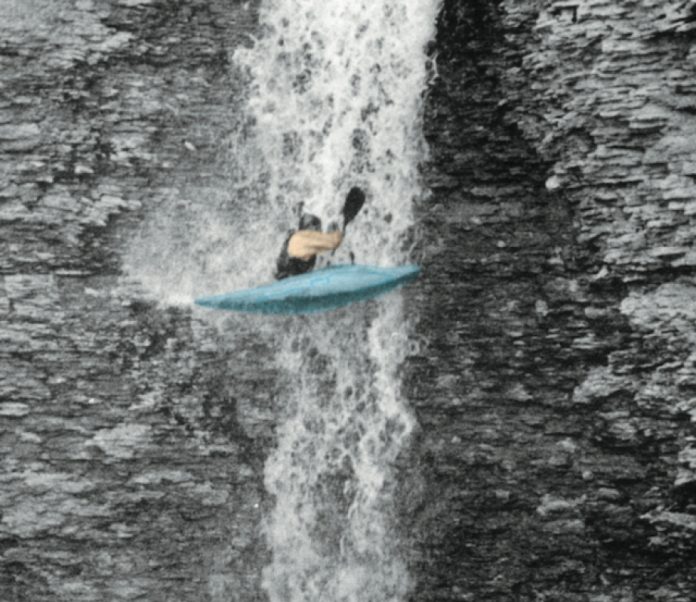
 This article first appeared in the Summer 2003 issue of Adventure Kayak Magazine. For more great content, subscribe to Adventure Kayak’s print and digital editions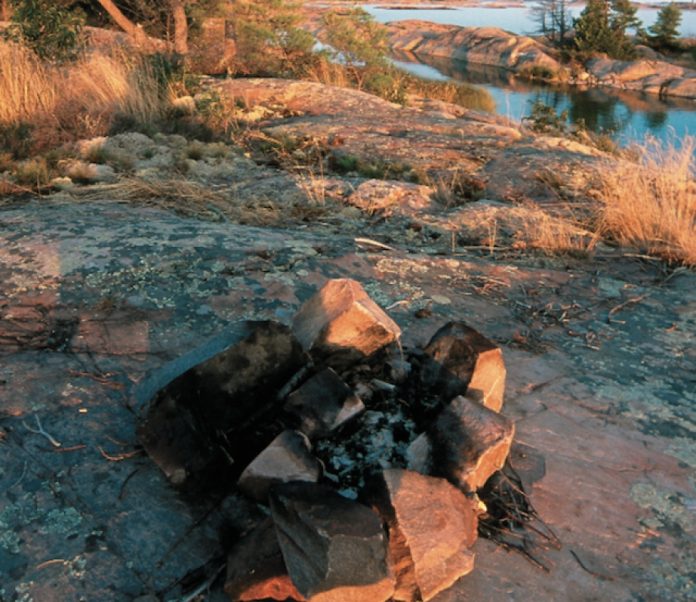
 This two-part article was first published in the Early Summer 2003 and Summer 2003 issues of Rapid Magazine. It was republished in part in the Spring 2008 issue of Canoeroots Magazine.




