

On the first day of a six-week solo expedition through the Canadian subarctic, Stephan Kesting capsized. The spill soaked his gear. It wasn’t until the next day he discovered the water damage done to his maps. It was an inauspicious start to a journey that would take him from the boreal forest of northern Saskatchewan into Nunavut’s tundra over 42 days.
“It was a disaster,” Kesting says of the trip’s beginning. Ahead lay 1,000 miles of rapids, portages and upstream travel, and his maps lay in tatters. No more mistakes became his mantra.
“It was a really useful experience to be knocked down a peg or three right at the beginning of the trip, because it made me super cautious. I was mortified. It really forced me to refocus.”
Expedition canoeist Stephan Kesting is giving death the finger
For Kesting, a firefighter with more than 25 years of experience, author of several jiu-jitsu instructional books and a veteran of northern expeditions, the trip was more than just another wilderness challenge. It was a return to a way of life he thought he might lose.
A decade of polycystic kidney disease had left him winded after short walks, relentlessly fatigued and struggling through mental fog. At his worst, he had just 12 percent kidney function. “It was like a musician losing his hearing, or a painter losing the use of his hands,” Kesting says.
“There was a ton of fear, because I didn’t know if I would survive and what I would recover. It was terrifying.”
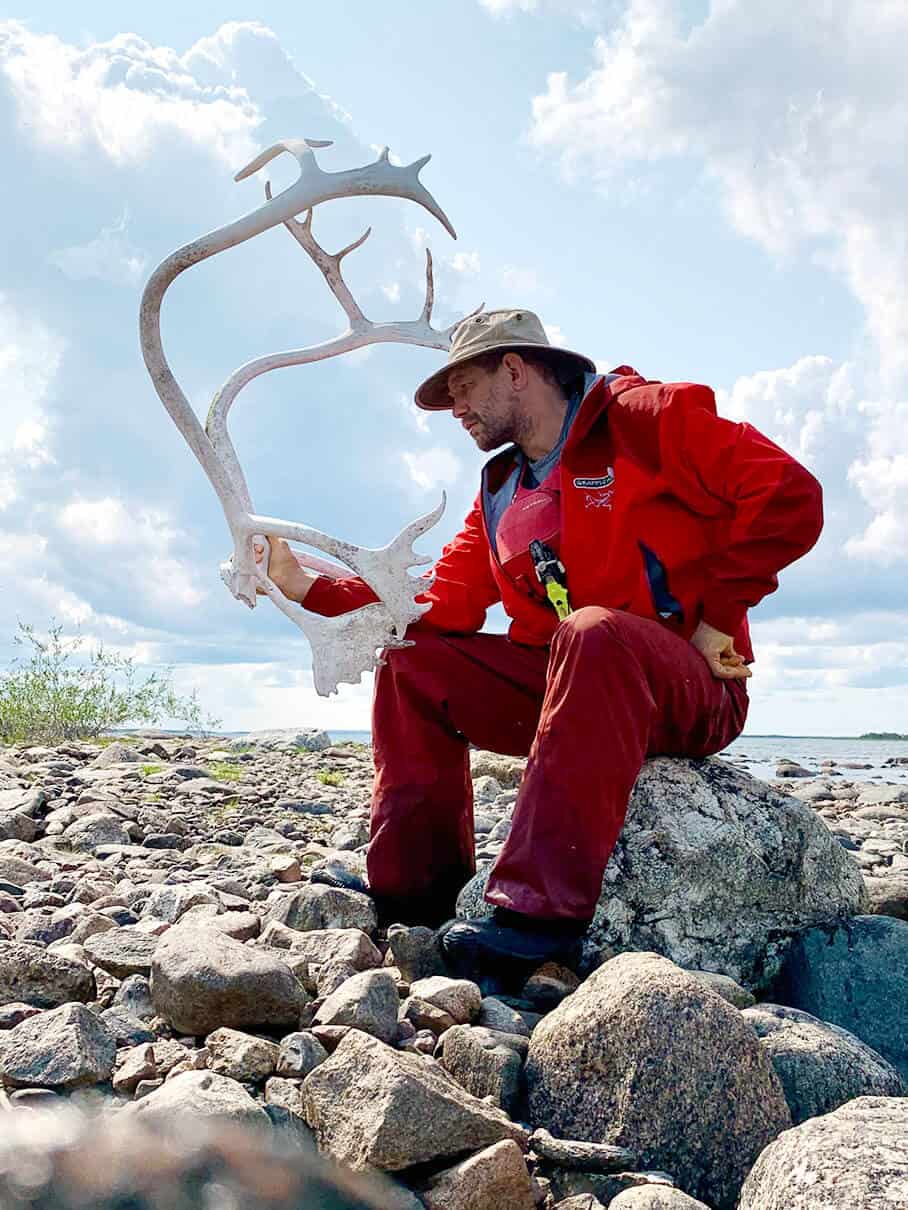
In 2019, Kesting received a kidney from his brother. In the minutes before surgery, as the anesthesiologist approached with the face mask, his mind wandered to the North.
“I had some of my most formative experiences in that landscape, but it had retreated beyond my grasp these last few years as my life had become a blur of doctor’s appointments and medical interventions,” he writes in his book about the expedition, Perseverance, released last year. “At the edge of a procedure that I might not resurface from, the North had emerged as a mirage I was reaching toward.”
Facing his own mortality clarified what was important for Kesting. “One of those things was to finally make good on that trip I’d been thinking about for decades,” he says, “kind of like a big middle finger to death—assuming I survived.”
During the long recovery, the expedition became his focus: “How would I need to train? How am I going to get better? How am I going to regain what I lost during those years of illness?”
Four years later, he pushed off on the river. For a 26-day stretch of the journey, he saw no other people. And all that solitude helped him process what he had survived.
“It’s not like you’re sitting there thinking lofty thoughts about the meaning of life 24 hours a day,” Kesting says. “You’re thinking: Are the waves getting a bit more choppy? Should I go left or right here? What’s happening with those clouds over there? I’m hungry. I need sunscreen.”
Being hyperaware of the present and focused on the details of daily life on the water allowed other feelings to surface. “If there was a larger goal of the expedition that I didn’t expect, it was processing the experience of mortality that had been driven home so emphatically,” Kesting says. If his kidney function had dropped another five percentage points, “I would have been dead.”
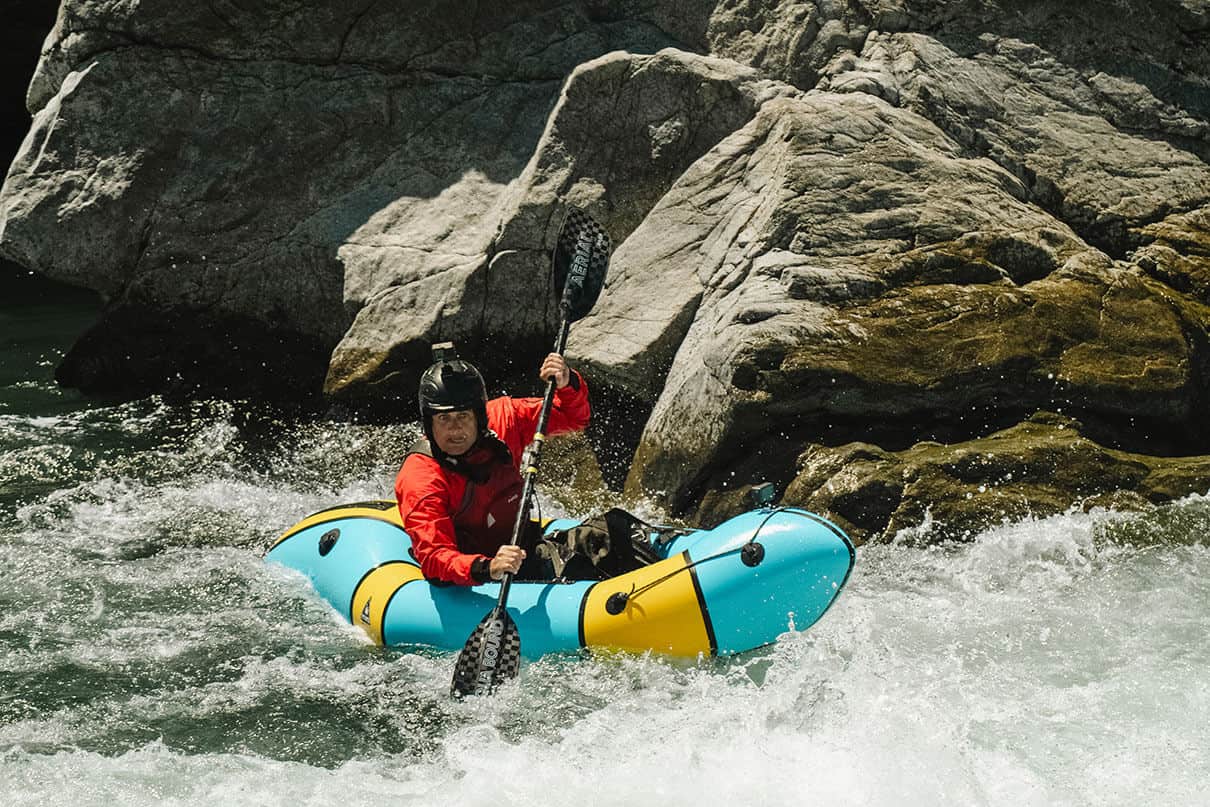
In such a remote landscape, a wrong decision or carelessness can have deadly consequences, and the wilderness provided no shortage of reminders of how fragile life can be. During the 1,000-mile journey, he raced wildfires, was almost trampled in his tent by a panicked caribou and had a way-too-close bear encounter. But one surprising lesson stood out above the rest: even a solo expedition is never truly solitary.
“There was me out in the bush, but who’s enabling that?” he says of this revelation. “My brother, who gave me a kidney, first of all. My current wife and ex-wife are making sure my kids aren’t running feral. I’m relying on search-and-rescue infrastructure if I hit the emergency button. And I’m indebted to the explorers and the Native people who developed these routes.”
“You can do a solo trip, but you’re not really solo. It connects you to the wider world,” he says.
Forty-two days after setting out, Kesting reached the end of the expedition nearly 20 pounds lighter. Upon returning, people often tell him they could never do something like it.
“They’re right in the moment, but they’re wrong at the scale of years,” he says. Skills like campcraft, river reading, first aid, navigation and natural history aren’t learned overnight.
“It’s a long checklist. You just gradually work at checking it off,” he says. “It’s totally possible for people to do this. It just needs to be accumulated a little bit at a time.”
 This article was published in Issue 75 of Paddling Magazine.
 Alone in the Barren Lands. | Feature photo: Stephan Kesting






“It was like a musician losing his hearing, or a painter losing the use of his hands,” Kesting says.
Ludwig van Beethoven wrote some of his most profound and revolutionary masterpieces after he was completely deaf during his late creative period. Major Works Written While Completely Deaf:
Symphony No. 9 in D minor, Op. 125 (“Choral”): Completed in 1824, his final complete symphony famously integrated vocal soloists and a choir singing Friedrich Schiller’s “Ode to Joy” in the final movement.
Missa Solemnis in D major, Op. 123: A monumental setting of the Catholic mass composed between 1819 and 1823, considered by Beethoven himself to be his finest achievement.
The Late Piano Sonatas: This group includes Sonatas Op. 101, 106 (“Hammerklavier”), 109, 110, and 111, written between 1816 and 1822.
The Late String Quartets: Comprising String Quartets Nos. 12–16 (Op. 127, 130, 131, 132, and 135).
Große Fuge, Op. 133: A fiercely complex and modern single-movement string fugue originally written as the finale for the String Quartet No. 13.
Diabelli Variations, Op. 120: A vast and brilliant set of thirty-three variations for piano on a waltz by Anton Diabelli, composed between 1819 and 1823.
Bagatelles, Op. 126: A set of six short piano pieces written in 1823.