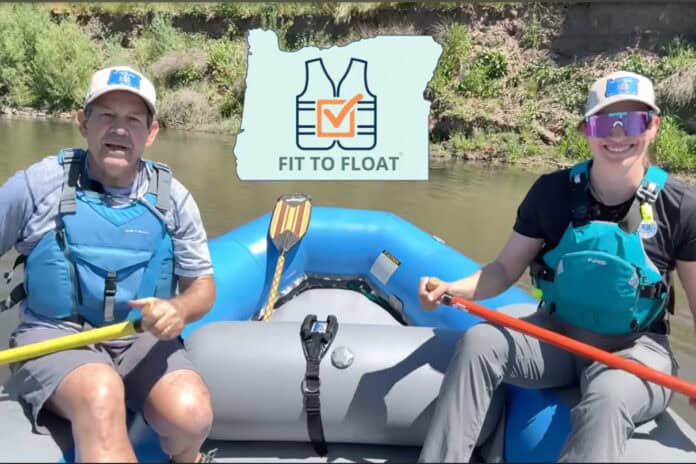
A new program is bringing an often overlooked safety concept to the forefront of Oregon lakes and rivers. On May 15, 2026, the Fit to Float life jacket fitting event will take place at multiple paddlesports retailers and outfitters from Portland to Medford. Part of National Safe Boating Week, the event is focused on educating new paddlers on proper life jacket fit and the importance of wearing a properly fitted personal floatation device (PFD) and will run from three to six in the afternoon.
Oregon paddlesports at the helm of new Fit to Float safety initiative
The Fit to Float program began with a discussion between the Oregon State Marine Board and Zac Kauffman from Sawyer Paddles & Oars about a push for broader life jacket education, a conversation that took place on the Sawyer Paddles & Oars on-water podcast. When Kauffman later met with American Canoe Association (ACA) representatives, the idea materialized into the dream of a statewide life jacket fitting day.
Together with support of the Oregon State Marine Board, the ACA and the US Coast Guard Auxiliary, Sawyer Paddles & Oars has created a replicable model of a statewide Fit to Float life jacket fitting and awareness day. Any prospective paddler or family of paddlers can show up at a participating location, try on a variety of life jackets and learn about proper fit and the importance of life jackets when paddling. The event is for all, but particularly created with families in mind to help parents find a life jacket that their children can wear both comfortably and safely.
“The whole concept is if the kids have a life jacket that fits and fits well, they’ll want to wear it,” shared Kauffman.
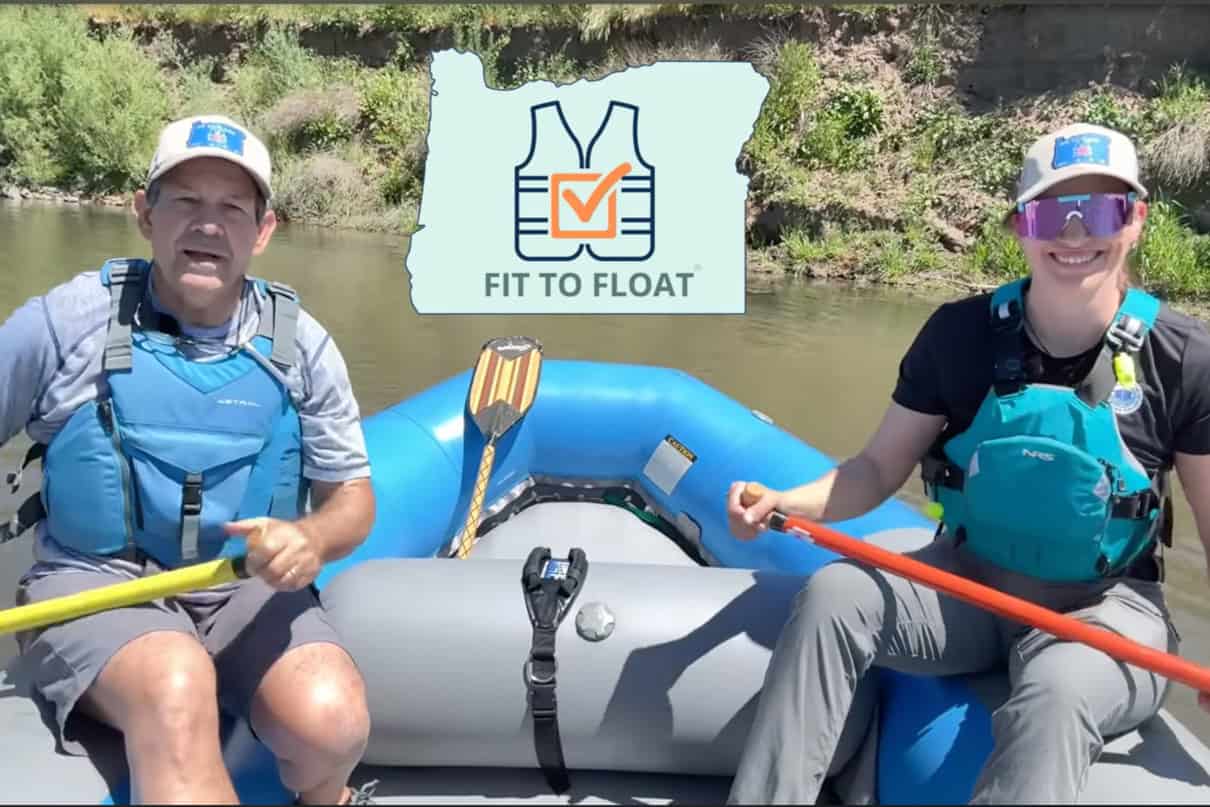
Fitting life jackets for kids can be an extra challenge for parents as children are constantly growing. It might seem economical for parents to size up, but in a life jacket this comes with high risk and high stakes as a life jacket that doesn’t fit properly can slide off a child’s body.
In Oregon, it’s required by law that children 12 and under wear a life jacket on all underway boats including paddle craft. Kauffman explained that culturally, kids stop wearing a life jacket after that age as a badge of honor. Part of the goal of the program is to meet some of these kids and instill a more positive association with life jackets so they continue to wear them beyond what is required by law.
A well-fitted life jacket serves as the first step towards becoming an avid paddler
While for many avid paddlers life jacket and PFD use is standard, many newer or recreational paddlers may elect not to use them. According to the ACA, 88% percent of fatal canoeing accidents, 60% of kayak fatalities, and 93% of SUP fatalities involve people who weren’t wearing a lifejacket.
“I would say getting a life jacket on and getting a life jacket that fits is the first step as an avid paddler and river enthusiast,” said Kauffman. “If you have a PFD that fits, it’s more likely to stay on you. It should feel like it’s part of your body.”
For padders who have not yet tested their life jacket or been professionally fitted, Kauffman had two key recommendations.
“On a nice hot day, just put your life jacket on and roll out of your boat, float around, see how it floats you,” said Kauffman.
Using a life jacket in the water will give a paddler a solid understanding of how the life jacket will function in an actual capsize scenario and a gauge of how tight a life jacket should be fastened to be effective in the water.
Kauffman also recommended paddlers visit an in-person store that sells life jackets, whether that store is a specialty retailer able to give personalized advice or a big box store. From here, paddlers can try on multiple life jackets, adjust the fit and ask for help if needed.
“If you’re curious, if there’s an outfitter in your area, go on a river trip,” added Kauffman. “That professional guide might be 19, but I guarantee you they don’t want you coming out of your life jacket.”
For seasoned paddlers, Kauffman had some advice as well.
“Help someone new get that life jacket fitting and get them on the water so that they can find the rivers, lakes and oceans like the rest of us,” shared Kauffman. “The rivers are magical places and a lot of us have known it all our lives.”