Home Blog

Best Touring Kayaks For 2026

woman paddles the Current Designs Karla touring kayak on a calm, somewhat cloudy day
Feature photo: Kaydi Pyette

Originating in the tidal waters of the Far North, the first kayaks were both works of creative ingenuity and tools of surgical precision. Fast forward a few thousand years and it seems not much has changed. Indigenous people used these sleek, enclosed boats for hunting and travel through icy seas. Today’s paddlers seek out a wide variety of waters on which to challenge themselves and their agile craft—from sheltered passages to rocky, wave-tossed coasts and everything in between.

Kayak design and materials have continued to evolve, with many different niches branching out of those early vessels. This means kayak touring has never been more diverse or accessible, but it also means we’ve never had more options to choose from. In North America, there are fine models available from both domestic and imported brands. Selecting a shortlist of the best kayaks for touring is no easy task. My goal with these top picks is to not only share what I believe are some of the finest options out there, but also provide you with some key considerations when making your choice.

Our top picks for best touring kayaks


Best expedition kayak

Nigel Dennis Explorer
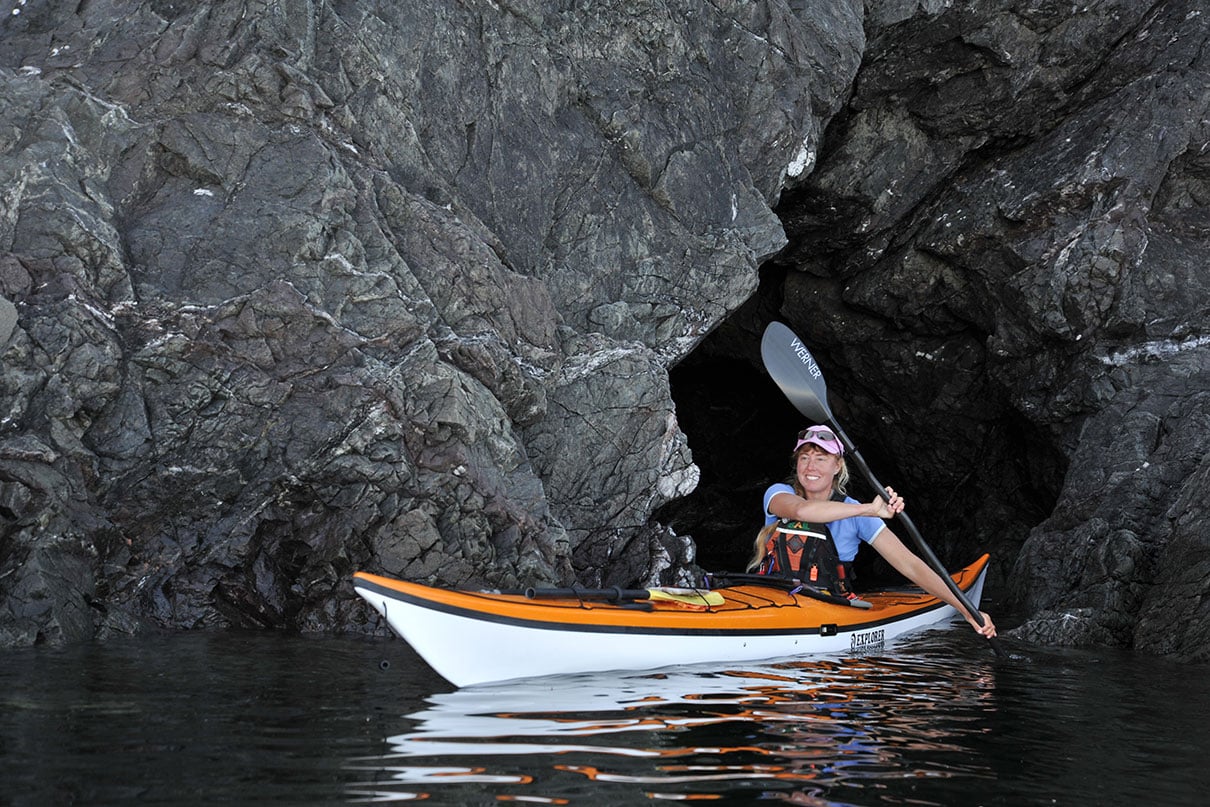
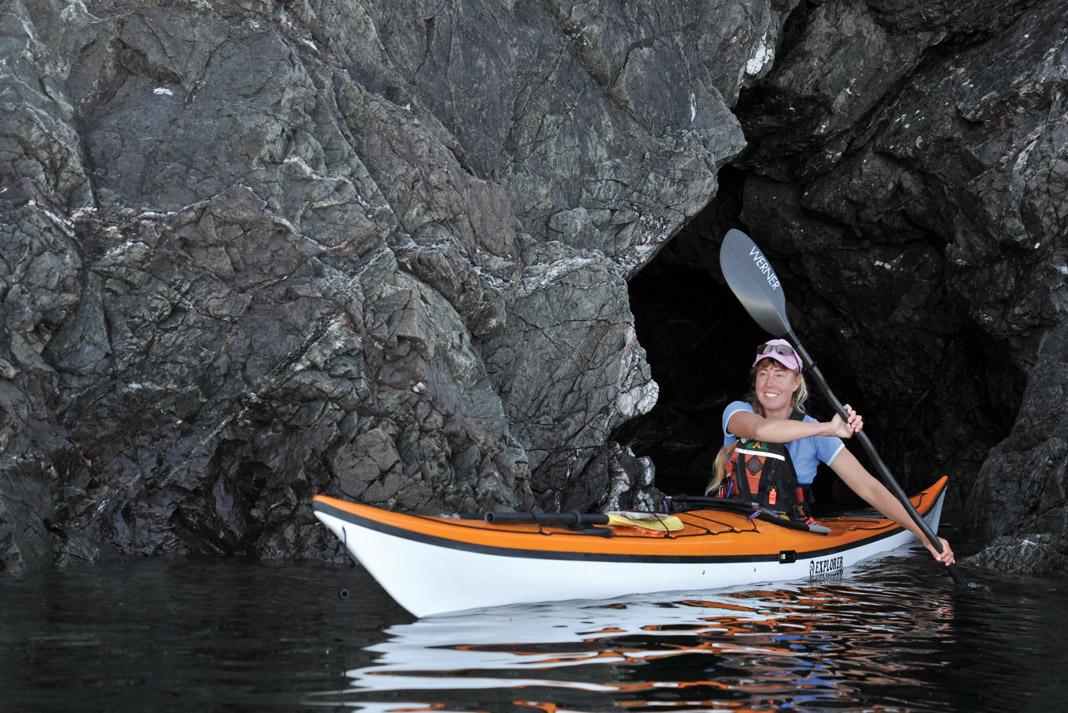
woman paddles the Nigel Dennis Explorer touring kayak near a rock face
The Explorer is a dependable companion in rougher waters. | Photo: Autumn Lachine
Nigel Dennis Kayaks Explorer Specs
Length: 17’6”
Width: 21”
Weight: 58 lbs
Recommended Paddler Weight: 150–220 lbs
Price: $4,585 USD
Why I love it

When it comes to elite expedition kayaking, few boats rival the Nigel Dennis Explorer for proven performance, endurance and pedigree. When the going gets tough, the tough get this NDK classic.

The Explorer’s upswept bow and stern, narrow beam and clean, functional deck layout are informed by the classic British interpretation of traditional Greenland hunting kayaks. From this base DNA, designer and renowned expedition paddler, Nigel Dennis, refined the shape and layup to address the unique challenges of extended journeys on remote, exposed coastlines. The Explorer has been the kayak of choice for circumnavigations in some of the roughest and least accessible waters in the world: Britain, Ireland, Iceland, New Zealand, Antarctica, South Georgia Island and the Aleutian Islands. The boats are handmade in North Wales, using a resin-rich, field-repairable composite construction that’s built to withstand the abuse of expedition paddling. But the real reason I love the Explorer is this isn’t a one-trick pony—I’ve spent weeks in the saddle on self-supported kayak camping journeys on open waters, surfed heavy currents and overhead waves, and danced lightly among rock gardens on countless day trips. Whether I was out for an hour or a week, the boat felt responsive to my inputs, carving graceful turns and remaining speedy and stable in sloppy conditions.

Twenty-five years after it was first introduced, the Explorer continues to embody the spirit of venturing into the wild unknown. Its intuitive handling and composure in any conditions ensure all paddlers feel like great explorers.

Reasons to buy
  •  You want a kayak that’s expedition-ready but still fun to paddle on shorter trips.
  •  A hull and rocker profile made to maximize touring efficiency in rough waters.
  •  Custom colors, hatches and layups, including weight-saving carbon/Kevlar.
Consider another if
  •  Your camping kit includes items like a suitcase stove, barrel bag and multiple Dutch oven options.
  •  You prefer a highly adjustable seat system to a minimalist cockpit.
Bottom line

Whether you are planning an expedition of your own, or just looking to cover some miles and play along the way, the Explorer is a dependable companion as you paddle into rougher waters. See the Explorer again on Paddling Mag’s list of the best kayaks.

Best light touring kayak

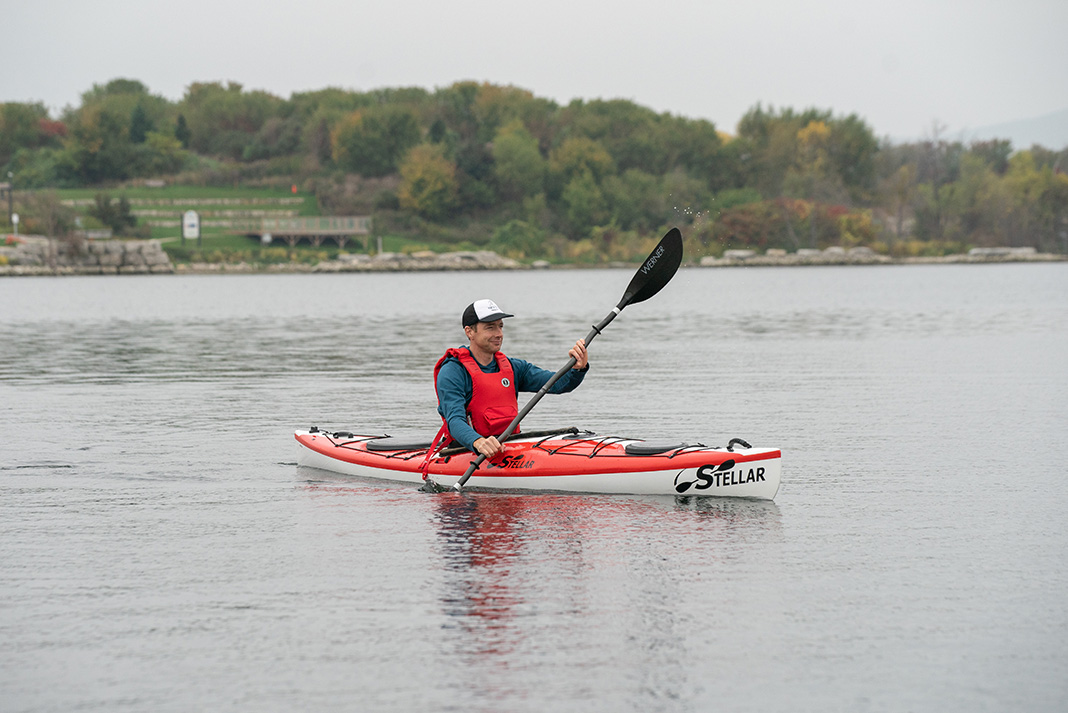
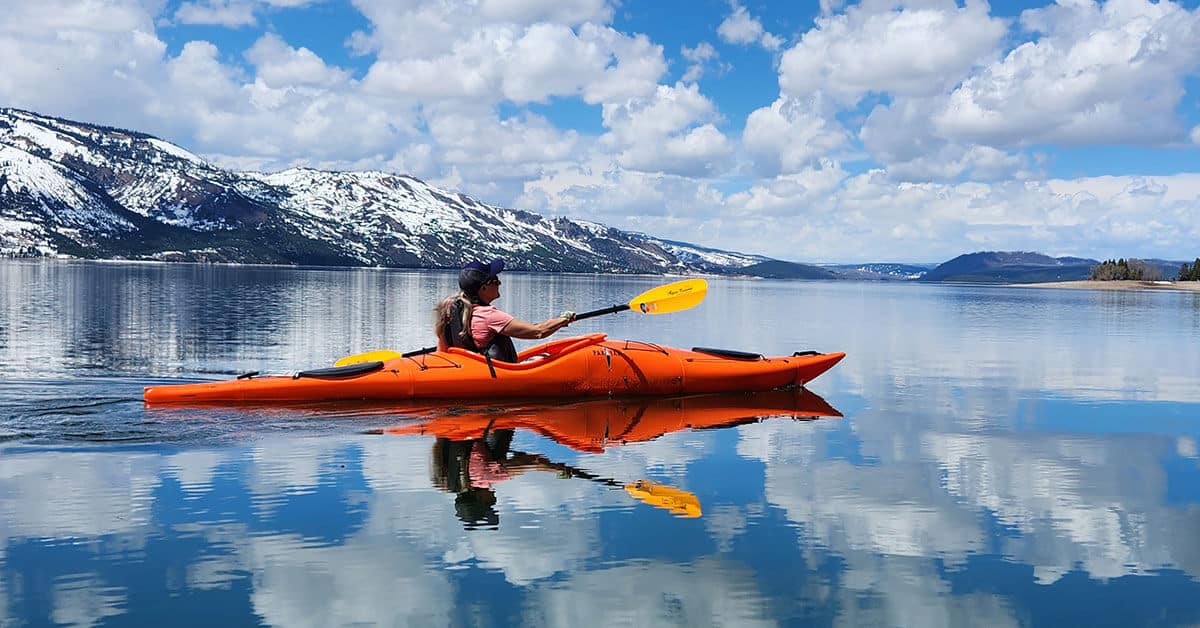
Stellar S14 G2
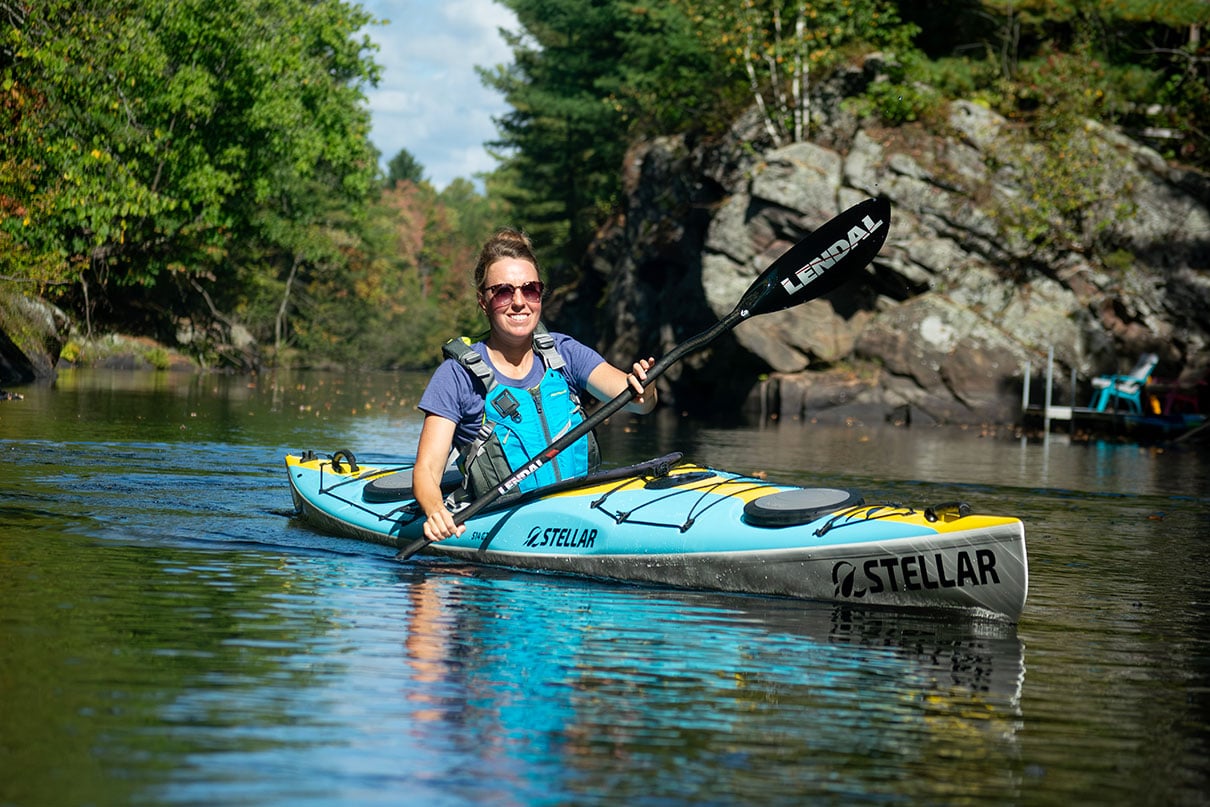
woman paddles the Stellar S14 G2 touring kayak near rocks and trees
The Stellar S14 G2’s versatile combo of speed, light weight, premium materials and tour-ability is hard to rival in the 14-foot class. | Photo: Kaydi Pyette
Stellar S14 G2 Specs
Length: 14’
Width: 24.4”
Depth: 13.6”
Weight: 38 lbs (Advantage)
Capacity: 342 lbs
MSRP: $3,195 USD (Advantage)
Why I love it

With all the performance and safety features of a full-size sea kayak finessed into a compact package, light touring kayaks excel at spontaneous day trips and weekend adventures on any waters. Awesome, right? The Stellar S14 G2 takes a great thing and makes it even better—a lightweight light touring kayak. Because anything “light” should be, well, light.

Stellar’s background in building Olympic rowing shells and fast surfskis is evident in the construction, design and speed of the S14. Available in three sizes and four sleek and stiff composite material options—ranging from 40 pounds to just 30 pounds—the S14 trims up to 30 percent off the weight of its lightest rivals. The shallow-V hull is optimized for speed and quick acceleration with a narrow, knife-like bow and minimal rocker to maximize waterline. Soft chines reduce drag and have a smooth, continuous feel, making it easy to initiate gentle edged turns. The S14 is unquestionably among the fastest 14-foot kayaks on the water, cruising at a steady four or five knots and easily keeping pace with longer touring kayaks. The cockpit is comfortably appointed for all-day tours and there’s ample space in the watertight hatches for packing camping essentials.

Fast and light doesn’t mean experts only. Stellar moved the widest part of the hull behind the cockpit for added volume and stability, making the S14 G2 a beginner-friendly light touring bullet.

Reasons to buy
  •  You want an ultralight compact touring kayak you can solo carry and transport with ease.
  •  Surf ski-inspired hull makes this 14-footer as fast as the average 16-foot touring kayak.
  •  Adjustable skeg and wider beam for user-friendly tracking and stability.
Consider another if
  •  Advanced composite construction is out of your budget.
  •  You want a boat you can drag, drop and generally abuse (check out rotomolded plastic options instead).
  •  Your idea of the perfect day tour involves heavy surf and rock gardens.
Bottom line

The Stellar S14 G2’s versatile combo of speed, light weight, premium materials and tour-ability is hard to rival in the 14-foot class.
Best touring kayak for beginners

Wilderness Systems Tsunami
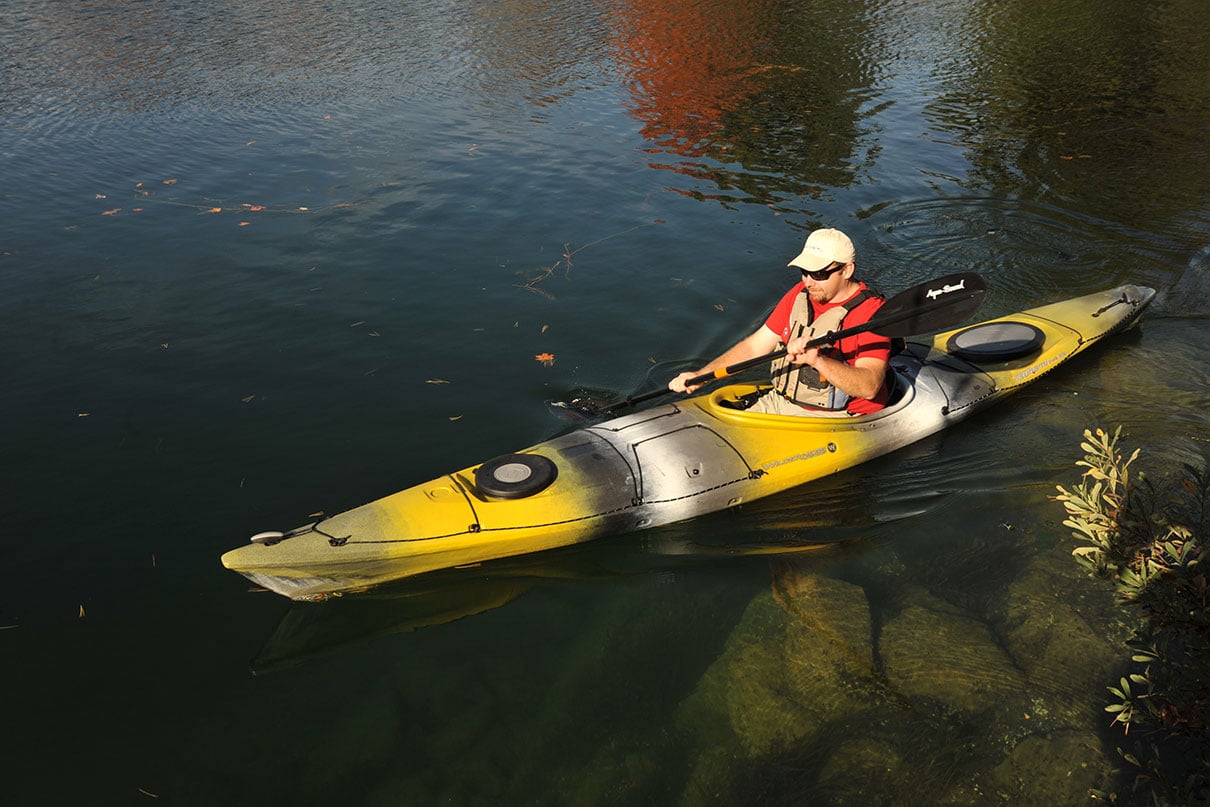
man paddles the Wilderness Systems Tsunami touring kayak
The Wilderness Systems Tsunami remains popular 20 years after its launch thanks to features that meet new paddlers where they are without limiting where they can go. | Photo: Virginia Marshall
Wilderness Systems Tsunami Specs
Length: 12.5’
Height: 15”
Width: 26”
Weight: 54 lbs
Max Weight Capacity: 300 lbs
MSRP: $1,349 USD

Buy from:

DICK’S AMAZON ECO FISHING WILDERNESS SYSTEMS

Why I love it

In 2004, Wilderness Systems released what has become one of the most well-traveled and best-selling touring kayak designs of all time, the Tsunami. Over 20 years—and numerous updates—later, the user-friendly Wilderness Systems Tsunami continues to be a top choice for those starting out in this sport.

This is a kayak that makes you feel capable and at ease from the moment you sit in it. Why is that special? Plenty of kayaks in the recreational touring market are designed to optimize stability, but many do so by simply offering wider and flatter hulls. The Tsunami pairs a shallow V hull with flared sidewalls for fearless stability without sabotaging touring efficiency. In other words, it feels very secure without feeling like a barge. The boat’s multi-chine hull profile has two defined edges in each chine that act like secondary and tertiary keels, lending the Tsunami its trademark tracking and predictable handling. New paddlers can point the kayak where they want to go, and it gets there.

That feeling is vital for first-timers, but just as valuable is the kayak’s capacity to grow with your skills. The Tsunami is a refreshing beginner kayak—one that inspires instant confidence while promoting more advanced skills like edging and bracing.

Reasons to buy
  •  Plenty of stability to inspire confidence without limiting skill development.
  •  Three sizes to choose from, with fully customizable outfitting.
  •  Burly rotomolded polyethylene construction holds up to heavy use.
Consider another if
  •  You are looking for a lightweight kayak that is easy to solo lift and carry.
  •  Hull speed outweighs stability and predictability.
  •  You feel more comfortable with the open deck of a sit-on-top kayak.
Bottom line

Beginner doesn’t mean basic; the Wilderness Systems Tsunami remains popular 20 years after its launch thanks to features that meet new paddlers where they are without limiting where they can go.

Best value touring kayak

Delta 14
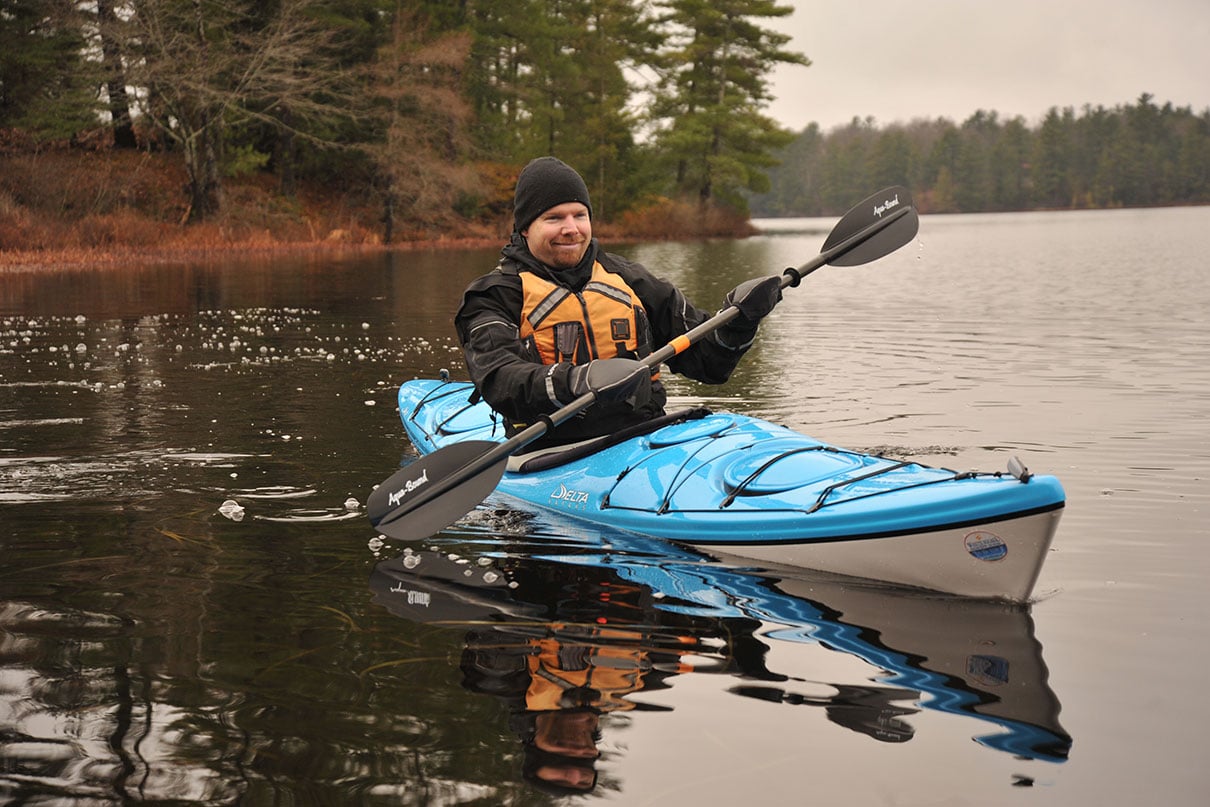
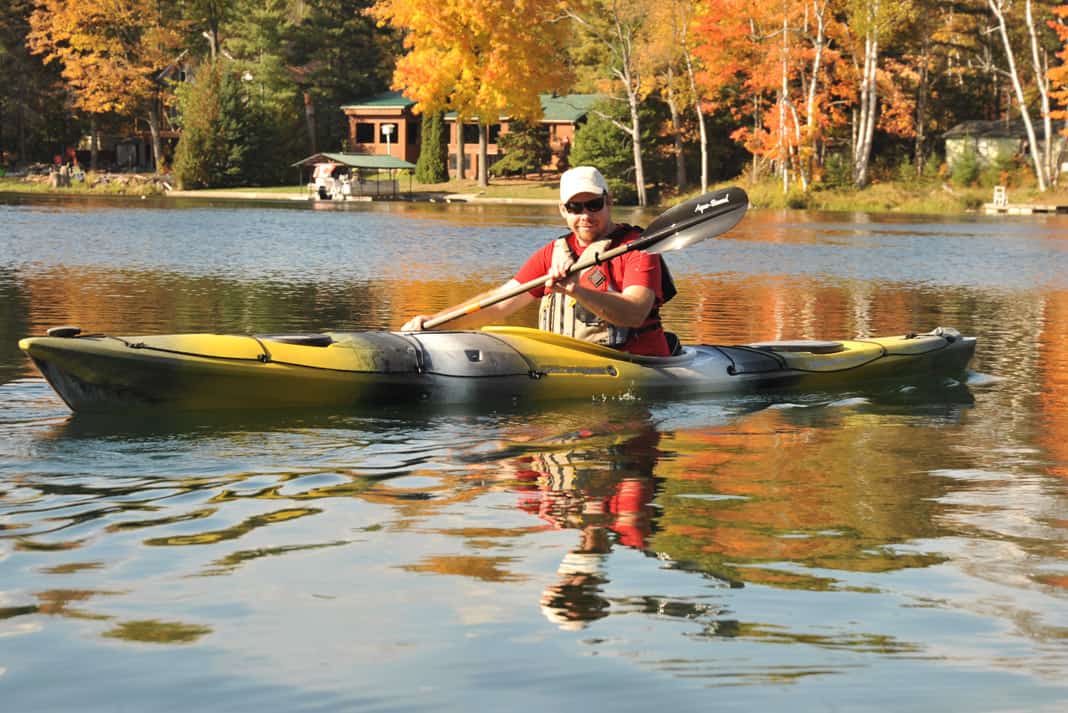
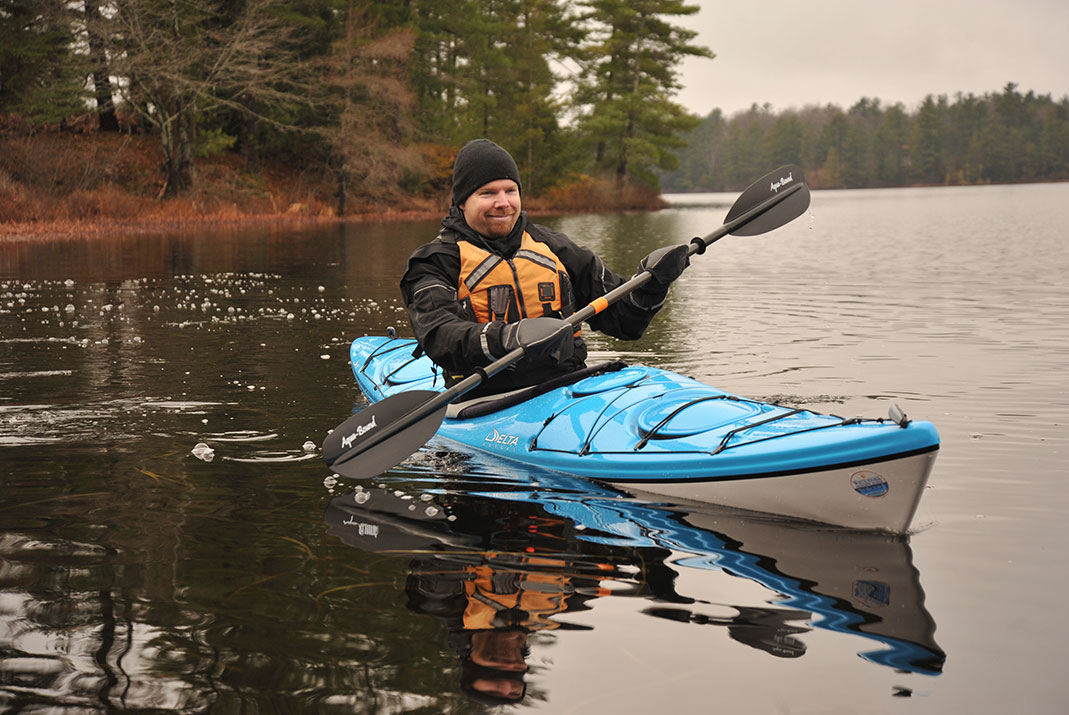
man paddles the Delta 14 touring kayak in chilly fall weather while wearing hat and gloves
The Delta 14 is a downsized touring design that offers the look and feel of a composite boat at a fraction of the cost. | Photo: Virginia Marshall
Delta Kayaks 14 Specs
Length: 14’
Width: 23.5”
Depth: 13”
Weight: 45 lbs
Capacity: 340 lbs
MSRP: $1,995 USD

Buy from:

AQ OUTDOORS REI

Why I love it

The shortest and lightest of Delta’s touring kayaks at 14 feet and just 45 pounds, it’s positioned as the easiest to own for paddlers balancing space, weight and cost. If you are looking for a compact touring kayak that can handle diverse waters and won’t break the bank, the Delta 14 is a superb solution at an exceptional value.

Available with a skeg or rudder, the 14 embraces Delta’s West Coast touring design ethos: user-friendly, efficient and more than capable of hauling all your gear. This diminutive kayak delivers crazy capacity—over 200 liters—and the large hatches make it dead easy to pack in the luxuries. The relatively long waterline assists with tracking and efficiency, making for satisfying cruising capabilities. Delta’s outfitting focuses on personalized comfort with a fore- and aft-adjustable seat. This ability to fine-tune the seating position means the 14 fits a wide range of paddlers well. While there’s inherent value in a kayak that’s versatile and easy to paddle (you’ll use it more), even more persuasive is Delta’s expertise in plastics thermoforming. Delta has been working with acrylic–ABS laminates for nearly 40 years—refining their designs and shaping process to optimize strength, weight and aesthetics.

Reasons to buy
  •  You want to fool your friends into thinking you splurged on a composite kayak.
  •  Moderate V-shaped hull and well-defined chines are beginner-friendly with good stability and predictable edging.
  •  Less than two-thirds the cost as compared to other touring kayaks of a similar size and weight.
Consider another if
  •  Rock-bottom pricing takes priority over comfort, performance and durability.
  •  You are looking for a packable folding or inflatable kayak.

Bottom line

The Delta 14 is a downsized touring design that offers the look and feel of a composite boat at a fraction of the cost. Simply put, you won’t find a lighter, better-looking kayak at this price point.

Best packable touring kayak

TRAK 2.0
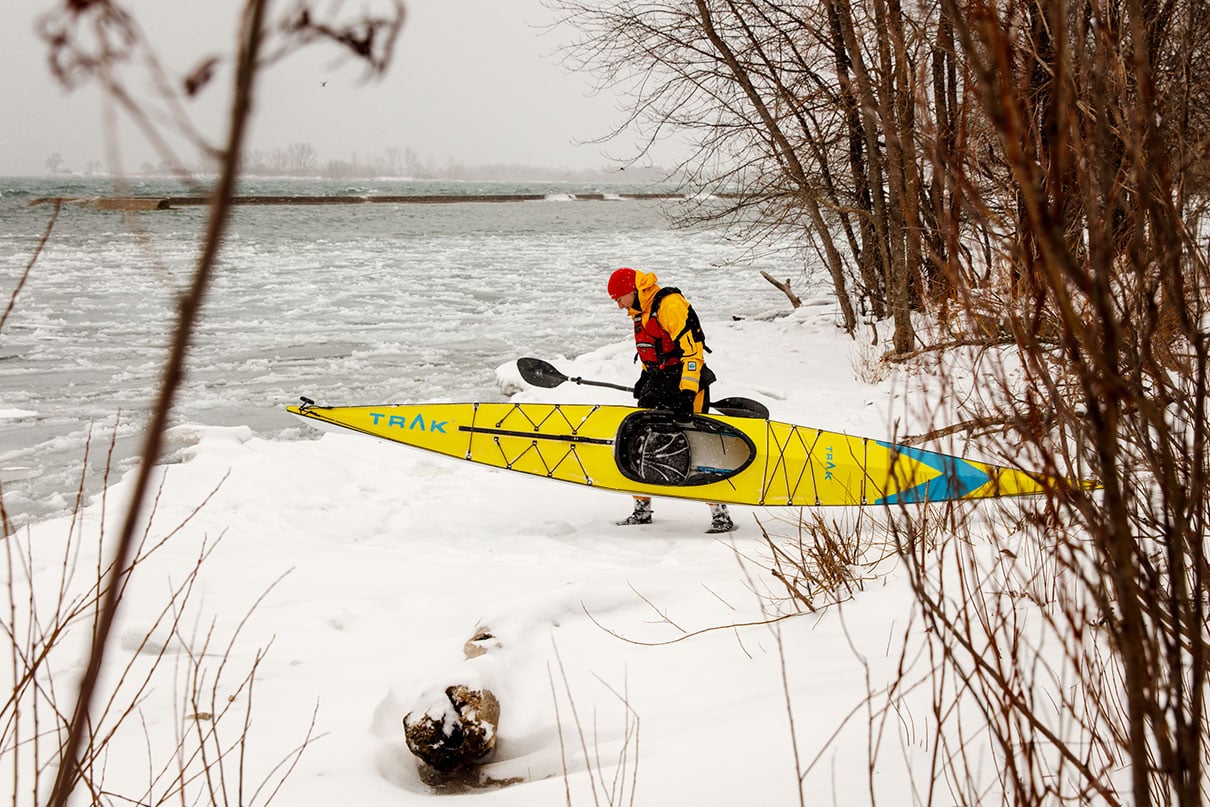
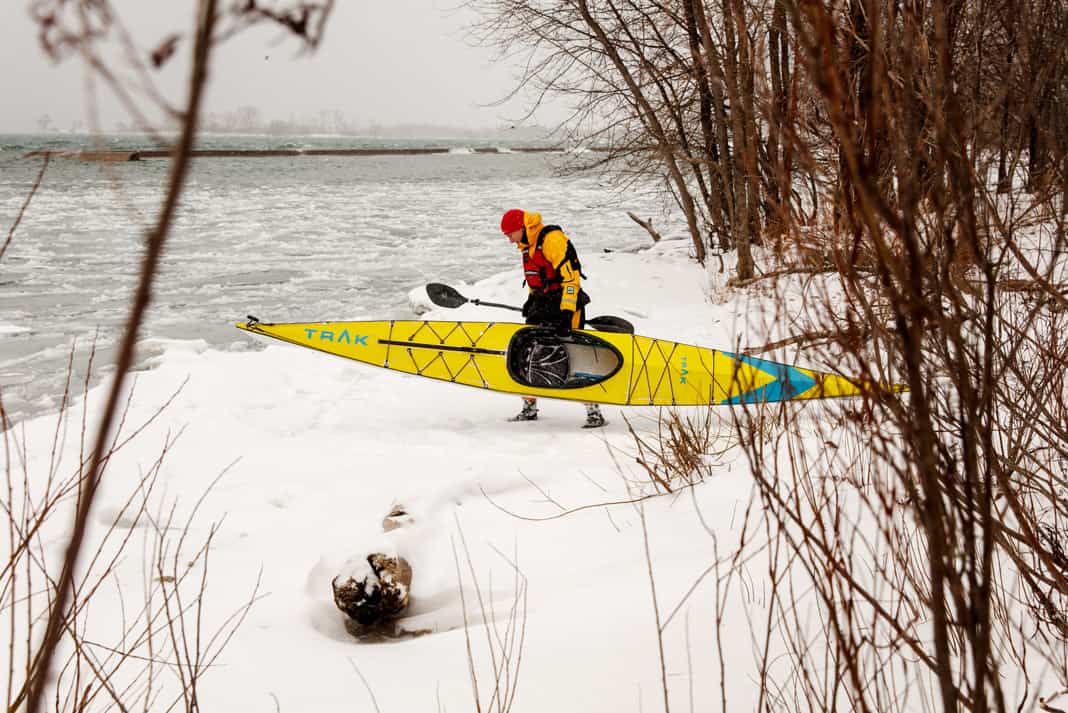
man carries the TRAK 2.0 touring kayak to the water's edge through snow in winter
Equally suited to world travelers and urban dwellers, the TRAK 2.0 epitomizes go-anywhere versatility. | Photo: Joel Clifton
TRAK 2.0 Specs
Length: 16’
Width: 22.5”
Weight: 44 lbs
Cockpit: 16.5” × 30.5”
Packed: 56 lbs
Size Packed: 41” × 19” × 9”
Payload Capacity: 350 lbs
MSRP: $4,250 USD
Why I love it

How can a folding boat that resembles an ultralight plane crash out of the bag and goes together in just 10 minutes look and paddle like a high-performance sea kayak? In a genre plagued by head-scratching assembly rituals and lacklustre paddling, the TRAK 2.0 is a slick and sporty standout.

The TRAK 2.0’s bow and stern frames use shock-corded aluminum poles and snap-in carbon fiber ribs for intuitive assembly. If you’ve ever pitched a tent, this step is simple. Next, the frames are fitted into the burly polyurethane skin. Every folding kayak requires some technique for tensioning the skin around the frame, and TRAK’s clever hydraulic jacks are the easiest system I’ve tested. The jacks also allow you to change on-water performance on the fly: pump the keel lever to adjust rocker for playful maneuverability or straight tracking; use the two side jacks to compensate for weathercocking by adding a slight side-to-side curve to the waterline. Once assembled, the TRAK 2.0’s drum-tight skin, full deck rigging and graceful lines mean it’s all but indistinguishable from a hard-shell kayak. The boat feels inspired by traditional skin-on-frame Greenland designs, with hard chines and a shallow-V hull that prioritizes carving and glide over initial stability.

TRAK 2.0’s rolling travel bag makes short work of international terminals and exotic ports, but it’s not a package you can simply throw over your shoulder when it suits. There are unquestionably lighter—and certainly cheaper—packable kayaks to choose from. But for go-anywhere capability that performs like a hard-shell kayak, there’s the TRAK 2.0.

Reasons to buy
  •  You want a packable kayak that is also a superb general-purpose touring and ocean play kayak.
  •  Expedition-ready bow and stern floats can be packed with tripping gear for multi-week adventures.
  •  Comfort and capability rivalling your favorite hard-shell kayak.
Consider another if
  •  Ultralight portability outweighs on-water performance.
  •  Simplicity and affordability are top priority—look to an inflatable kayak.
  •  You’ll be using your packable kayak for more recreational purposes.
Bottom line

Equally suited to world travelers and urban dwellers, the TRAK 2.0 epitomizes go-anywhere versatility.


Best plastic touring kayak

P&H Scorpio MK II
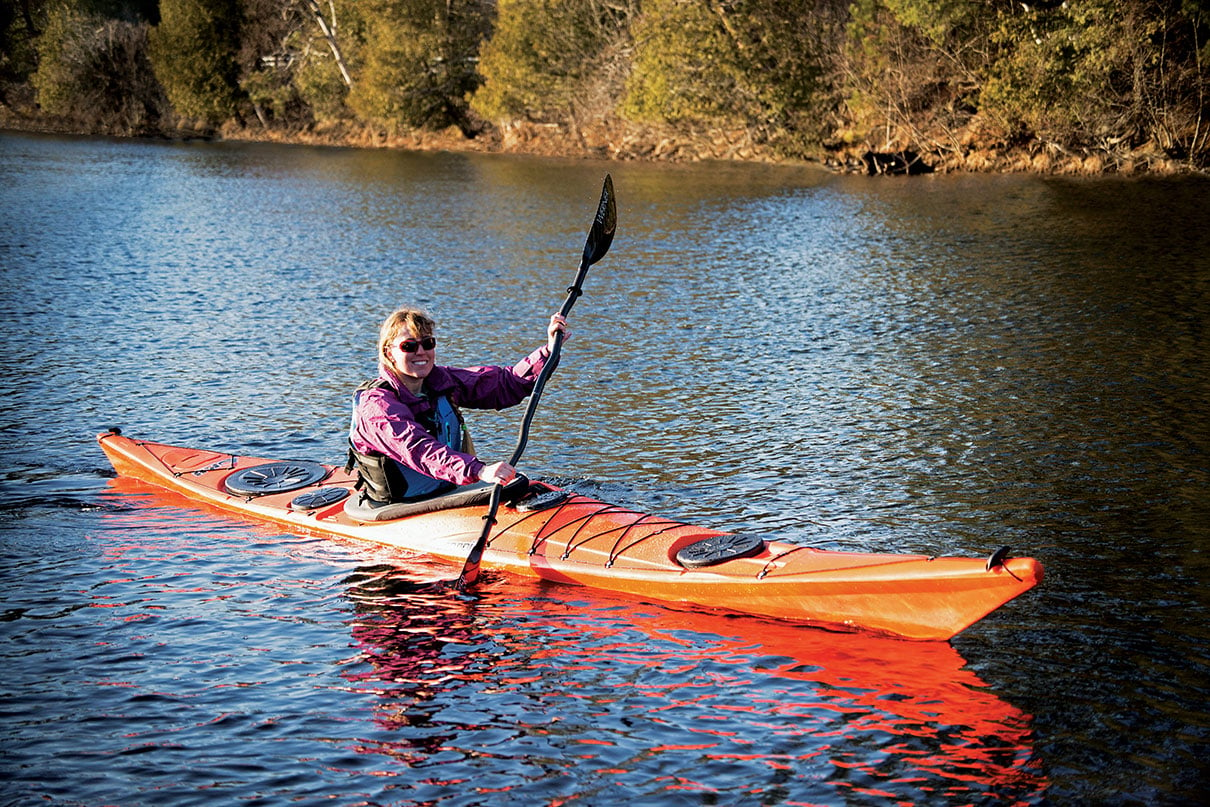
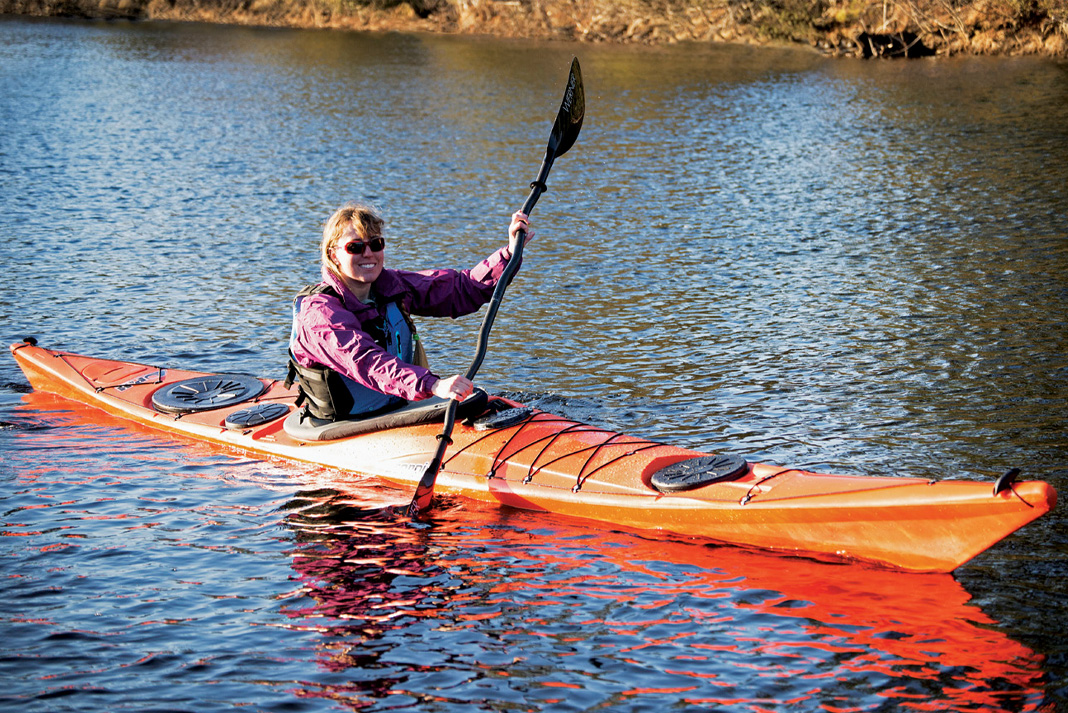
woman paddles the P&H Sea Kayaks Scorpio II touring kayak in front of autumn shoreline
The P&H Scorpio is a do-it-all, plastic touring and expedition kayak that’s built to last. | Photo: Adventure Kayak Staff
P&H Scorpio Specs
Models: LV | MV | HV
Length: 16’8” | 17’2” | 17’6”
Width: 20” | 23” | 24”
Weight: 60 | 64 | 68 lbs (CoreLite X)
MSRP: $2,599 USD
Why I love it

One of P&H Kayaks’ classic designs, the P&H Scorpio is a high-performance, full-size touring kayak with bombproof polyethylene construction and an affordable price tag. What’s not to love?

Manufactured at P&H’s factory in Great Britain, the Scorpio comes in two different types of construction: the brand’s proprietary CoreLite triple-layer polyethylene and a lighter and stiffer CoreLite X option. Both make for a heavy-duty kayak with much better rigidity and durability (i.e. it won’t dent on your roof rack or warp on a hot day) than standard PE plastics, with CoreLite X rivalling composites for overall stiffness. The Scorpio is also available in three sizes to fit a wide range of paddlers—a svelte LV option for smaller folks, standard MV and spacious HV that can accommodate paddlers up to 6’6”. The Scorpio combines a speedy, 17-foot shallow-V hull with rounded chines for responsive edging and superb secondary stability. Intermediate paddlers can expertly hold a deep edge for faster turns, while novice kayakers can feel confident easing the Scorpio into more challenging waters. P&H’s sturdy and adjustable outfitting makes it simple to dial in cockpit fit for even more dynamic handling and all-day comfort.

A quality plastic touring kayak is one that still looks and feels great 10 or even 20 years after you purchase it. That’s the difference between a well-made boat like the P&H Scorpio and other cheaper, lower spec plastic kayaks.

Reasons to buy
  •  Premium P&H CoreLite X construction for a top-of-its-class rotomolded plastic kayak.
  •  Expedition-ready with four watertight hatches and keyhole cockpit for a drier-sealing spray deck.
  •  You dream of harnessing the wind and sailing your kayak. The Scorpio deck features a reinforced footing for P&H’s Code Zero sail system. A nifty Skudder—or skeg-rudder hybrid that aids steering control and crosswind sailing—comes standard.
Consider another if
  •  A 17-foot sea kayak is too much boat for your needs—the P&H Virgo is a compact touring model for easy handling on short to medium journeys.
  •  You need a lighter kayak for solo lifting and loading on your vehicle (consider thermoform plastic construction).
  •  Low cost outweighs longevity and performance.
Bottom line

For a small premium, the P&H Scorpio is a do-it-all, plastic touring and expedition kayak that’s built to last.

Best ocean play kayak

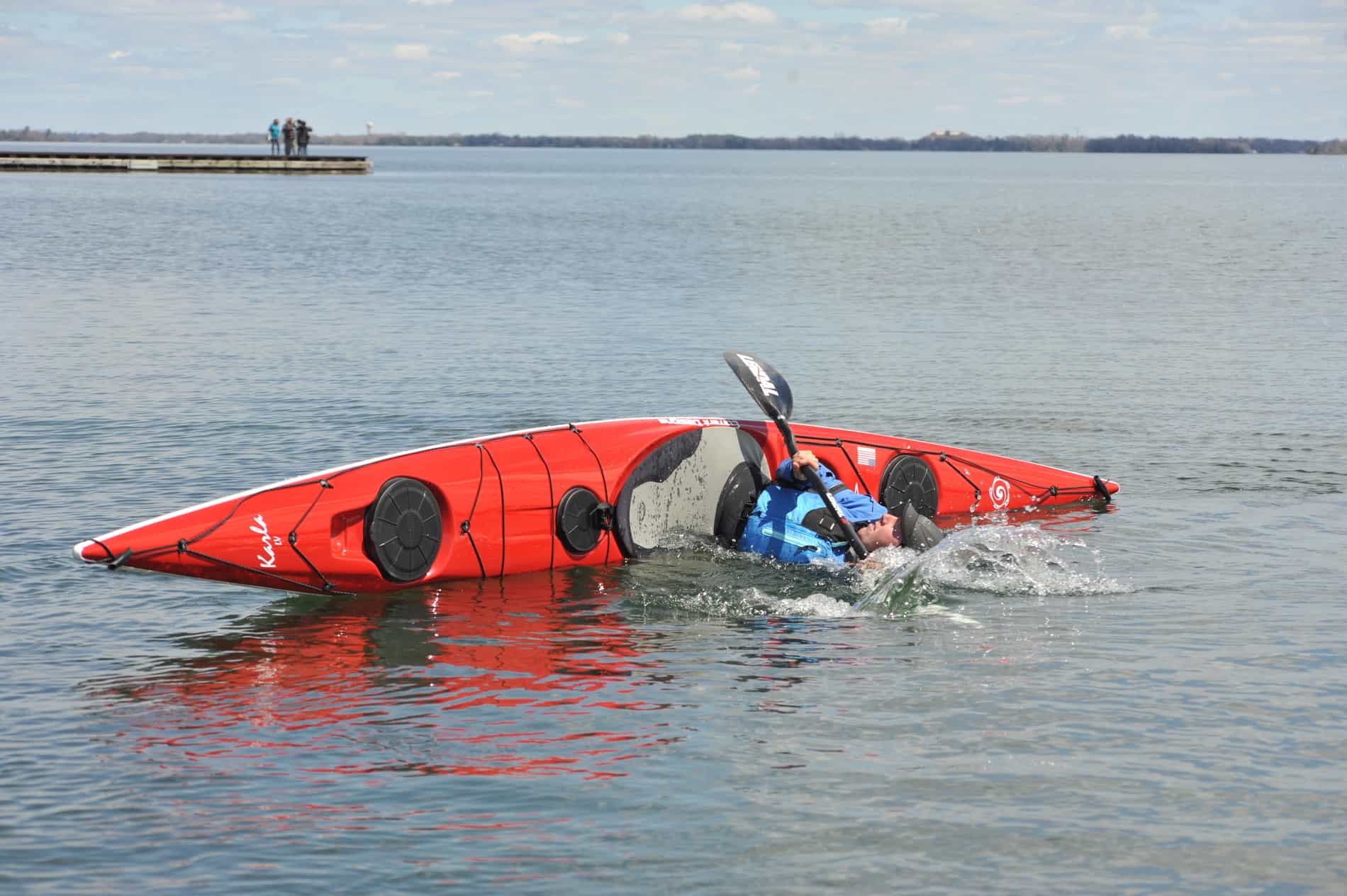
Current Designs Karla
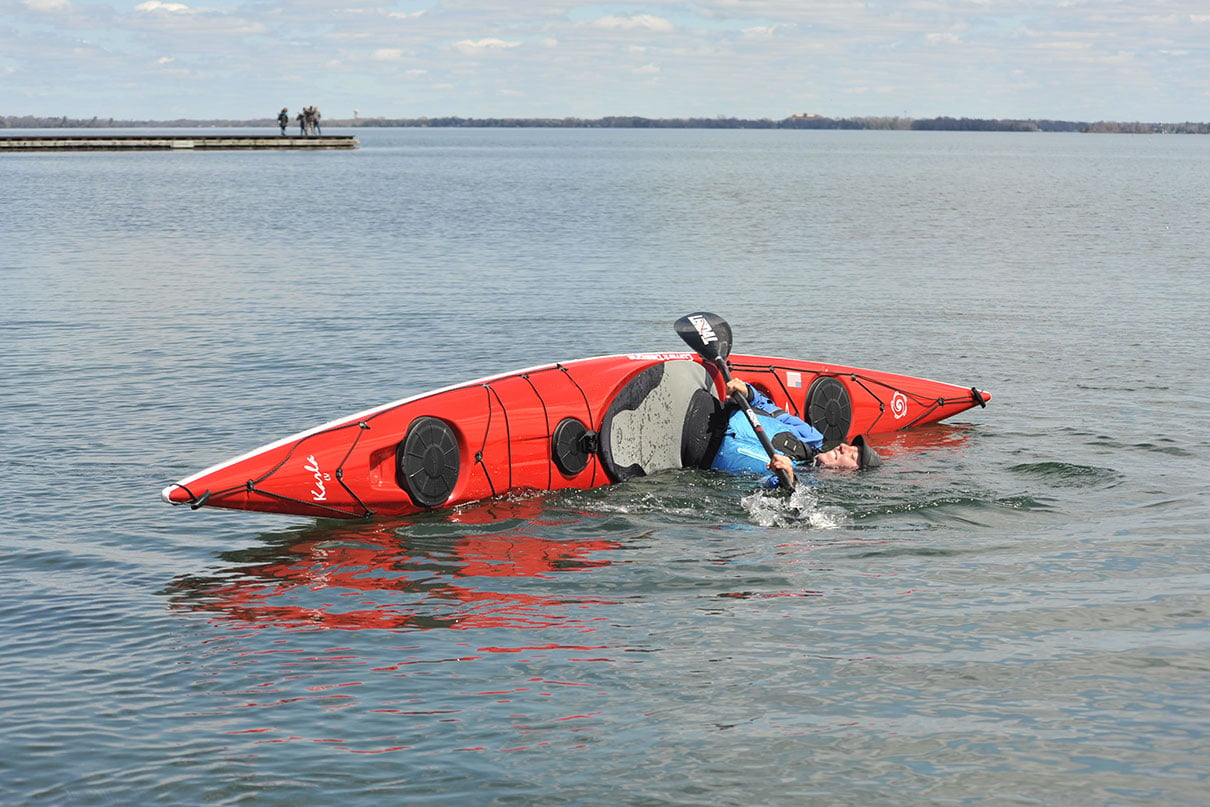
woman smiles while performing a roll in the Current Designs Karla touring kayak
Innovative design meets stylish personal expression in the Karla. | Photo: Owen Marshall
Current Designs Karla Specs
Length: 15’3”
Width: 21.5”
Depth: 11.5”
Weight: 52 lbs
MSRP: $3,995 USD

Buy from:

CURRENT DESIGNS

Why I love it

The Current Designs Karla is hands-down one of the most maneuverable and lively touring kayaks I’ve ever paddled. Her creator, Danish designer Jesper Kromann-Andersen, believes a kayak should respond as a natural extension of paddler input. I couldn’t agree more.

Intermediate and advanced paddlers would be hard-pressed to find a more intuitive kayak. Want to scribe turns and carve wave faces? Stay loose and avoid purling while surfing? Slalom through rock gardens and thread currents with graceful agility? Unlock more challenging rolls and balance braces? With her narrow beam, the most rocker of any Current Designs kayak and generous volume in the bow, Karla gives you the keys. And what’s more, she does so while remaining surprisingly efficient. Unlike some dedicated ocean play kayaks, Karla’s shallow-V hull is actually fun to paddle on day tours and quickly covers the distance between you and the waves. Current Designs enhances the boat’s wide-ranging appeal with a variety of composite lay-ups blending lightweight stiffness and strength. On bumpy waters, where a kayak’s secondary stability is what keeps it right side up, Karla feels rock-solid. Her hard chines are at home with any degree of edging.

Innovative design meets stylish personal expression in the Karla. Like Kromann-Andersen, I think kayak touring should always feel playful. That’s why I love this boat, and why it’s the kayak that spends the least time on my rack.

Reasons to buy
  •  Generous rocker and bow volume surfs like a dream.
  •  Three hatches, a deck pod, compass recess, skeg and surprising hull speed add versatility for touring.
  •  Robust, well-placed cockpit elements create a positive fit for edging, bracing and rolling.
Consider another if
  •  You want to slide over rocks and barnacles with a second thought (consider a plastic playboat instead).
  •  Your local waters don’t offer rough water exposure and a more touring-focused kayak would better serve your need for speed (check out Karla’s big sisters, the Current Designs Prana and Sisu).
Bottom line

Karla puts a smile on your face, whether gaining confidence in the surf or messing about on calm water.


Best high-volume touring kayak

BorealDesign Storm 17 Ultralight
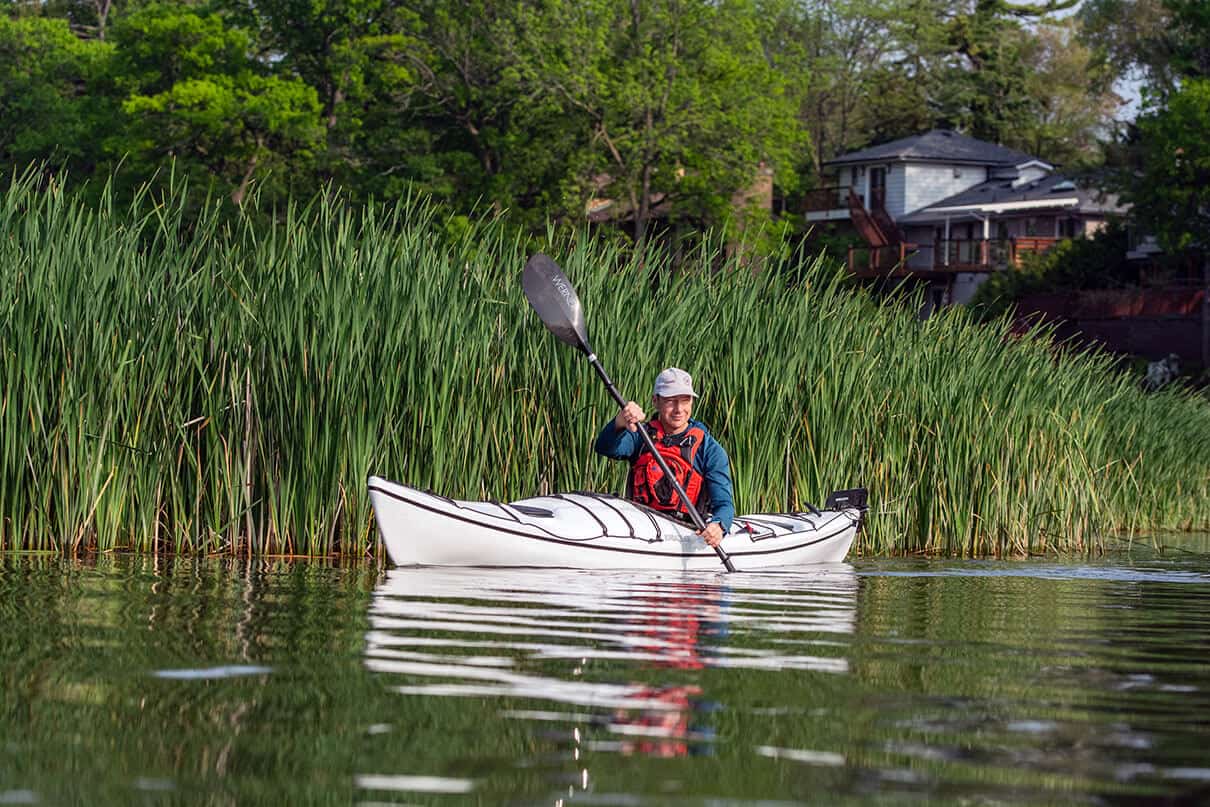
man paddles the Boreal Design Storm 17 thermoformed touring kayak in front of cattails with a house in the background
Beginner-friendly stability. Check. Easy packability. Check. Expedition-worthy performance. Check. The whole package in one touring kayak. | Feature photo: Kaydi Pyette
BoréalDesign Storm 17 Specs
Length: 17’0″
Width: 24”
Depth: 14”
Weight: 59 lbs
MSRP: $2,499 USD

Buy from:

BorealDesign

Why I love it

A boat that is approachable to paddle, lightweight, relatively affordable, and offers plenty of volume for storage sounds like a unicorn kayak for long-distance touring paddlers and outfitters, and yet this is exactly what the BoréalDesign Storm 17 offers.

Contributor Tim Shuff reviewed the Storm 17 for Paddling Magazine in 2025 and said the Storm 17 reminded him of paddling Current Designs’ long-running Solstice series of composite kayaks, especially the Solstice GT Titan, the highest volume of the bunch for “big and tall” paddlers. The reason being that the Storm 17 and Titan share a similar, approachable, versatile West Coast-style ruddered touring kayak design that a beginner or intermediate sea kayaker can jump into and head off on a multi-day voyage.

Composite kayaks, however, are expensive, and traditionally rotomolded polyethylene plastic kayaks are heavy and clumsy to repair. This is where the Storm 17 stands out. Thermoformed ABS plastic is incredibly lightweight, yet maintains a lower cost while providing premium performance. This gives paddlers and outfitters the opportunity to get a high-volume touring kayak at a reasonable cost and use the remaining funds to stock up on expedition gear or build a fleet.

Reasons to buy
  • Space for gear or “big and tall” paddlers
  • Ease of paddling for beginner and intermediate kayakers
  • Comfortable for long tours
  • Lightweight material and low cost
Consider another if
  • High rocker and maneuverability or ocean play are a priority
Bottom line

The Storm 17 has the volume and approachability to paddle for days on end in a lightweight, lower-than-composite-cost thermoformed package.

What to consider when choosing a touring kayak

Kayak touring can look very different depending on where and how you paddle, but if you can only own one kayak, buy the boat that you will enjoy on the waters you paddle most of the time. For example, an expedition kayak probably isn’t the best choice if you mostly enjoy after-work jaunts on your local river. You also want a kayak design that you feel comfortable in, but doesn’t limit your ability to progress your skills.

If your local waters consist of sheltered bays, quiet rivers and inland lakes, look to a compact light touring kayak that is easy to store and transport and encourages you to get out more often. If you’re progressing into more exposed waters and currents, or dream of exploring wilderness coastlines, it may be time to invest in an ocean play design to develop your rough water skills or an expedition kayak capable of making those extended journeys. If you are new to the sport and staying upright and feeling stable are your priorities while you get the basics down, consider one of the many user-friendly kayaks geared more towards beginners. And if you want to travel with your kayak to exotic or hard-to-access locales—or simply need a boat that you can store in your closet—a packable or inflatable is going to be the best fit for your lifestyle and aspirations.

As you spend more time kayak touring, you are going to gain a better appreciation of where you want to go with the sport. What types of waters call to you? What parts of the experience of being in a kayak do you most enjoy? Just as your responses to these questions may change over time, your sense of the type of kayak you want to paddle may evolve as well.


Best touring kayak brands


How we tested

The kayaks in this article were chosen through years of accumulated experience with numerous touring designs, as well as the input of our contributors and longtime editors through our extensive boat reviews.


Virginia Marshall
Former Adventure Kayak editor Virginia Marshall.

Why trust us

Longtime Paddling contributor and former Adventure Kayak editor Virginia Marshall has paddled touring kayaks for 20 years, exploring coastlines on the Great Lakes, Atlantic and Pacific oceans and Tasman Sea. When she’s not writing about kayaking, she works as a sea kayak instructor trainer and wilderness guide.


Writer Virginia Marshall paddles the Current Designs Karla during a 20-day personal trip on Lake Superior. | Feature photo: Kaydi Pyette
 

Celebrate Go Paddle Day

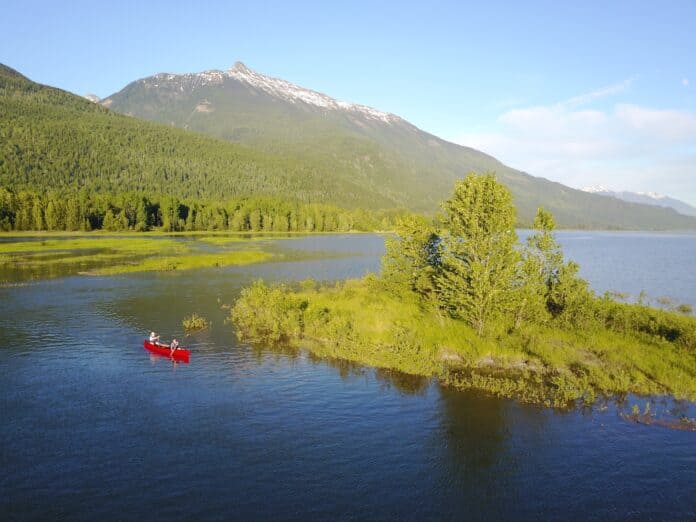
a tandem canoe on a lake

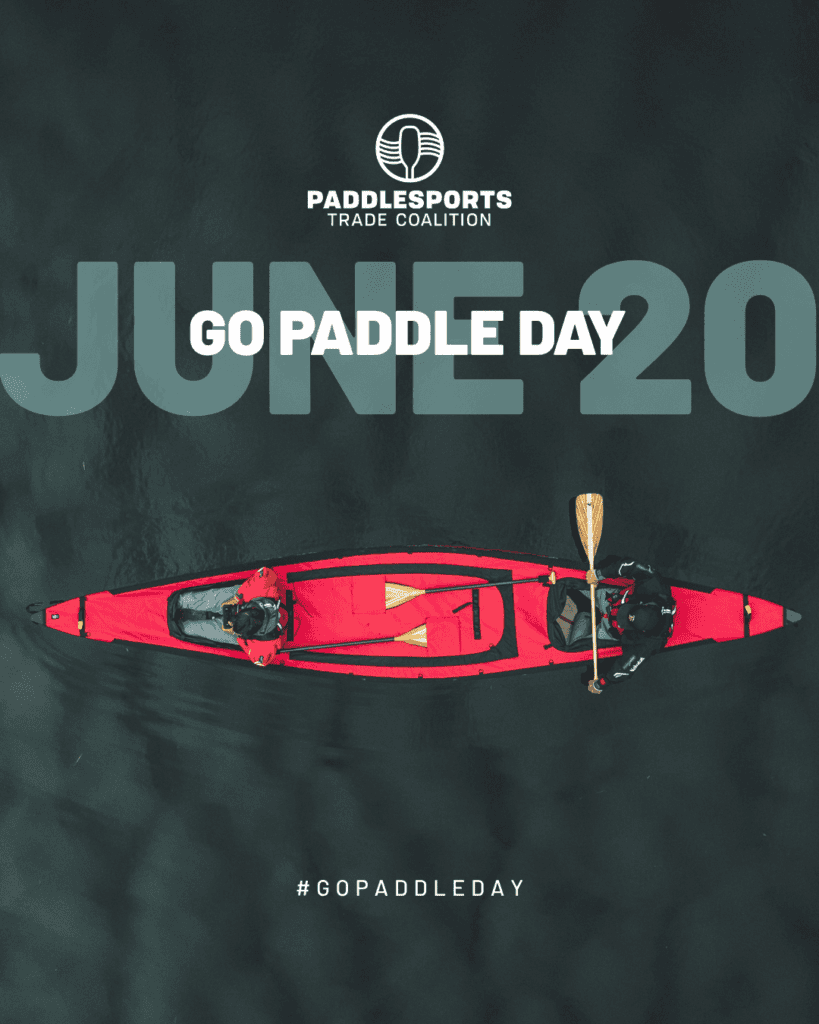
On June 20, 2026, join thousands of paddlers across the U.S. and Canada in celebrating Go Paddle Day. The nationwide event is spearheaded by the Paddlesports Trade Coalition (PTC) to inspire more people to get outside and on the water.

Whether kayaking, canoeing, paddleboarding or rafting, paddlers are all connected by the same thing: a love for time spent on the water. Go Paddle Day aims to help more people experience paddlesports by making participation feel approachable and welcoming. The PTC’s goal is simple: get more people on the water and create positive experiences that make them want to paddle again, with the hope of inspiring a new generation of paddlers and growing the community.

Get involved this Go Paddle Day and meet new paddling friends, exploring new places and making a lasting impact on your local paddling community.

Go Paddle Day Poster

Here’s how you can participate:

Join The Celebration: Whether you’re organizing an event or attending one, every paddle counts. Find or host a local event in your area.

Get On The Water: June 20 is your day to paddle. Whether it’s a solo mission or a group adventure, get out there and enjoy the water.

Share Your Experience: Share how you’re celebrating. Post photos and videos using #GoPaddleDay and tag @ptcpaddlesports. Your posts will help inspire others to get outside, and you could win great gear from PTC partners.

To see events, register your own or join a local event go to gopaddleday.com/event-list. Hosting your own event? Use Go Paddle Day’s downloadable tools for event planning, event checklists, safety checklists and more.

Behind The Rescue: Kayakers Save Family After Car Plunges Into River

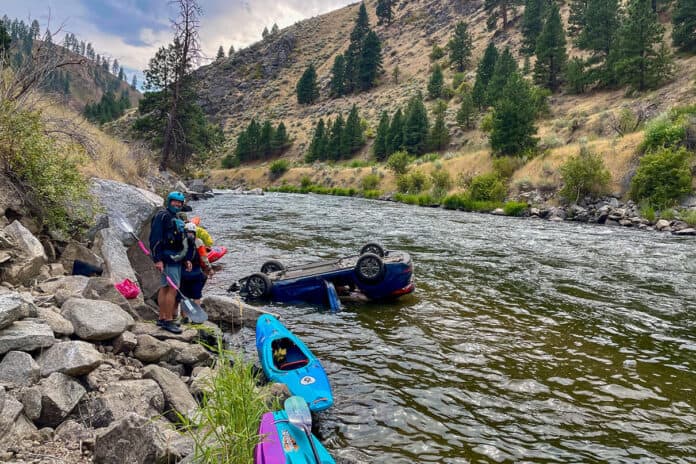
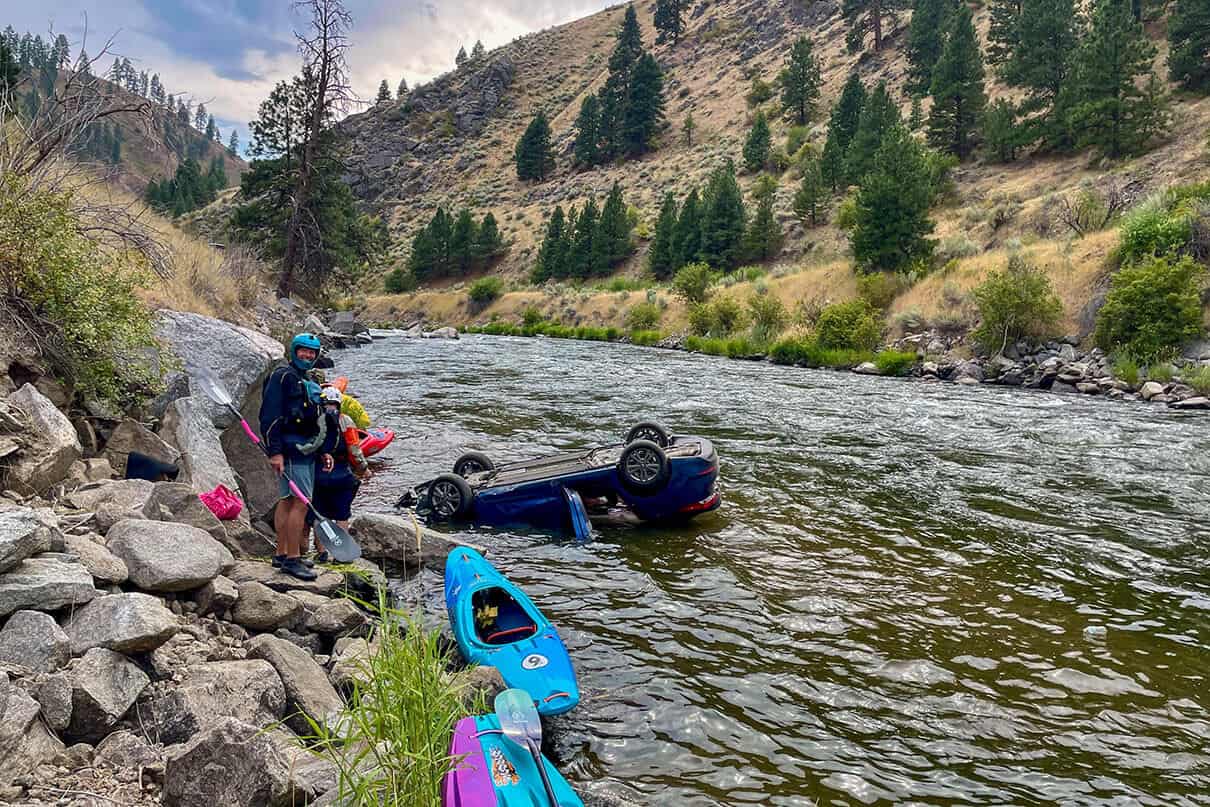
Boaters jumped into action to rescue two occupants when this vehicle flew off-road into the North Fork Payette River
Boaters jumped into action to rescue two occupants when this vehicle flew off-road into the North Fork Payette River. | Feature photo: Josh King

It was a miracle Jeff Landers was there at all. He’d just finished a slicey lap on the South Fork Payette River when Micah Barker caught up to him late that August afternoon, and that was on top of two sections of the North Fork he’d run earlier in the day. He was bushed, but despite a 30-year age difference—Jeff is 58, Micah is 28—Micah is his all-time favorite paddling partner.

“I told Micah I’ll go get on any section of the North Fork you want,” Jeff says. As Micah weighed the options, Jeff’s wife, Sarah, spoke up in favor of the fastest. Just do a Lower Five, she said. I’ll run shuttle and we’ll go eat at the Dirty Shame, she said, name-checking a boater bar almost as legendary as the North Fork itself.

Behind the rescue: Kayakers save family after car plunges into river

The Lower Five miles of the North Fork Payette is a slightly tamer version of the class V test piece just upstream. Jeff and Micah had run it together hundreds of times, but in all their years paddling the stretch, Micah had never once surfed the little wave between Juicer and Crunch. This time he did.

As Micah windmilled to catch the wave, Jeff looked for a spot to wait. Most boaters would have chosen the broad, calm eddy on the left, but traffic was bumper to bumper on Idaho State Highway 55, the slender two-lane road that snakes for miles along the North Fork, and Jeff likes to be seen. He whipped into a smaller eddy on river right.

Moments later he heard a sound like a train crashing and glanced up to see a line of brake lights and a blue sedan skidding out of control. It slid off the road, smashed squarely into a massive boulder and landed upside down barely 25 feet from him. “I almost got splashed by the car.” If he’d chosen the big river-left eddy, the car very well could have landed on him.

Jeff immediately ferried to the car, which had come to a stop in thigh-deep water. The horn was blaring, wheels still spinning. Jeff couldn’t see a thing through the car’s dark-tinted windows but he could hear someone pounding inside, trying to get out.

He scrambled out of his boat and tried the front driver-side door but it wouldn’t budge. Then he gripped the back door and “just yarded it open” through the soft sand bottom.

“The car is just full of smoke from the airbags going off, so I can’t see anything inside the car,” he says. “I’m just reaching around and I feel a hand grab my hand, and I pull this 250- or 300-pound guy out the back door. And that’s when he tells me that his disabled partner is in the other side of the vehicle.”

Sonya Valenzuela, 55, and her partner Will Flores were returning from Horsethief Reservoir, where they’d spent the day with family spreading her mother’s ashes at a favorite campground.

Sonya’s six daughters worried about their mother making the two-hour trip from her home near Boise due to a stroke that had left her completely paralyzed on the left side of her body. The ceremony had gone smoothly, but on the drive back along Highway 55 Sonya’s seatbelt began to bind. She unlatched it, and Will reached across to help. That’s when he lost control of the car. In an instant they were upside down in the river, surrounded by smoke and airbags.

Some of Sonya’s family were in the line of traffic that backed up for miles but none of them knew their mother was in the car that had hurtled off the embankment, or that her life now depended on the actions of the kayakers, raft guides and bystanders who rushed to help.

Micah was finishing his surf when the car’s movement flashed across the corner of his eye. He glanced up in time to see the sedan launch from the roadside, strike the boulder head-on, and tumble end-over-end into the river right eddy. He charged downstream wondering what he would find when he arrived.

“Your mind just starts spiraling with all these thoughts,” Micah says. “Is it a full family in there? Are there kids in the car?”

Micah scrambled out of his boat as Jeff, who arrived a few seconds earlier, heaved the rear door open and pulled a big man out of the car. The man was conscious and talking, seemingly uninjured, Micah recalls. “Jeff asks if there’s anyone else in the car, and he answers, yes, a disabled woman. And you know, in my mind I’m like, f**k.” As a raft guide with 10 years on the Middle Fork, Micah has seen things go sideways on the river plenty of times. But he’d never experienced anything like this.

Boaters jumped into action to rescue two occupants when this vehicle flew off-road into the North Fork Payette River
Boaters jumped into action to rescue two occupants when this vehicle flew off-road into the North Fork Payette River. | Feature photo: Josh King

Micah clambered out of his boat and reached the front passenger door just as Jeff yanked open the rear. Inside they found Sonya trapped upside down, her nostrils just inches above the water. Jeff grabbed her gently by the chin and lifted her head out of the water so she could breathe.

“I thought she was blind because she was looking straight through me, just yelling, ‘Help! Help me! Help me!’” Jeff says.

Jeff reassured Sonya as he worked out how to free her from the car. Sonya is a big woman and completely paralyzed on the left side of her body.

Inside they found Sonya trapped upside down, her nostrils just inches above the water. Jeff grabbed her gently by the chin and lifted her head out of the water so she could breathe.

Her injuries were severe, including a broken femur and tibia on her good leg, a fractured T-4 vertebra in her upper spine and a broken nose. The immediate problem, however, was the seatback holding much of her head underwater. Jeff asked Micah to find the seat back lever and release it. When Micah pulled the handle, Jeff lifted the seatback, giving Sonya critical breathing room and a way out of the vehicle. Now Micah took her legs as Jeff guided her torso out of the car—a maneuver that required him to briefly push her head under the water. They pulled Sonya to shore and reclined her on a rock, legs dangling in the water.

Jeff estimates about 90 seconds passed from the time the car left the road until both victims were on shore. By now, bystanders on the road had joined the rescue effort. Micah scrambled up the bank, where a woman handed him a first aid kit and said she’d already sent someone to call 911. Micah told her to send more people. There’s no cell service on the North Fork, and if someone didn’t know to stop at Bear Valley River Company—maybe the only place in Banks (pop. 22) to call from a landline—it could take them half an hour just to sound the alarm.

As it happened, reinforcements arrived by river. A group of 10 paddlers had put on just behind Micah and Jeff, including Dr. Raleigh Anderson, a traveling anesthesiologist who splits time between river running hotbeds in Colorado and Washington. Raleigh quickly assessed the difficulty of the situation and the timeframe they were working with: A partially paralyzed and severely injured woman at the bottom of a steep scree slope. Given the spotty cell service and distance from the nearest trauma center, local boaters told Raleigh it could take 45 minutes for first responders to arrive. Sonya was already complaining of difficulty breathing, and Raleigh could see that she had injured her cervical spine. She could lose her airway at any moment.

“Jeff and Micah were clutch in getting her out of the car,” Raleigh says. “And then the question was, what do we do? It was pretty clear to me the state she was in and how long an ambulance was going to take. So I just made the decision: We’re going to move.”

By now there were a dozen experienced whitewater paddlers on scene, and more willing helpers on the road. While Micah, Jeff and Raleigh tended to Sonya, other paddlers began clearing a path up the 45-degree embankment, pushing aside loose gravel and shoring up unstable rocks.

“There was no arguing or talking over each other,” Micah recalls. “It was just all these people with two hands ready to help.”

The crew’s seamless reaction was a testament to their whitewater experience. The river regularly serves up tests that require cool heads, teamwork and personal initiative, all at once. Those situations also demand that each boater recognize their own strengths and weaknesses. And so, with barely a word, the boaters sorted themselves into their most useful roles. As the only physician on the team, Raleigh provided leadership and a welcome dose of confidence.

“She showed up and said, ‘Okay, I’ve seen somebody like this before and this is what we need to do,’” Micah says. “It was really good to have that kind of energy come onto the scene, because we were definitely feeling the holy-s**t factor.”

As Raleigh worked to stabilize Sonya, Micah noticed some familiar faces scrambling down the slope. A group of guides from Middle Fork River Expeditions had seen the commotion on the road and hustled to help. They brought with them the final piece of the extraction puzzle, a folding raft table. It would serve as a makeshift backboard, providing the stability to safely move Sonya up to the road.

As they carefully positioned Sonya on the table and secured her with NRS straps, Jeff remembers wondering how they were going to get the unwieldy package up to the road about 20 vertical feet above the river. That’s when a local paddler named Brant Smith shouted, “Form a bucket brigade!”

It was as if 20 light bulbs went off at once. All those who had gathered to help—a dozen kayakers, the raft guides, a few passersby and even Sonya’s partner Will—formed a fire line along the makeshift path. Slowly, the litter carrying Sonya passed from hand to hand toward the road.

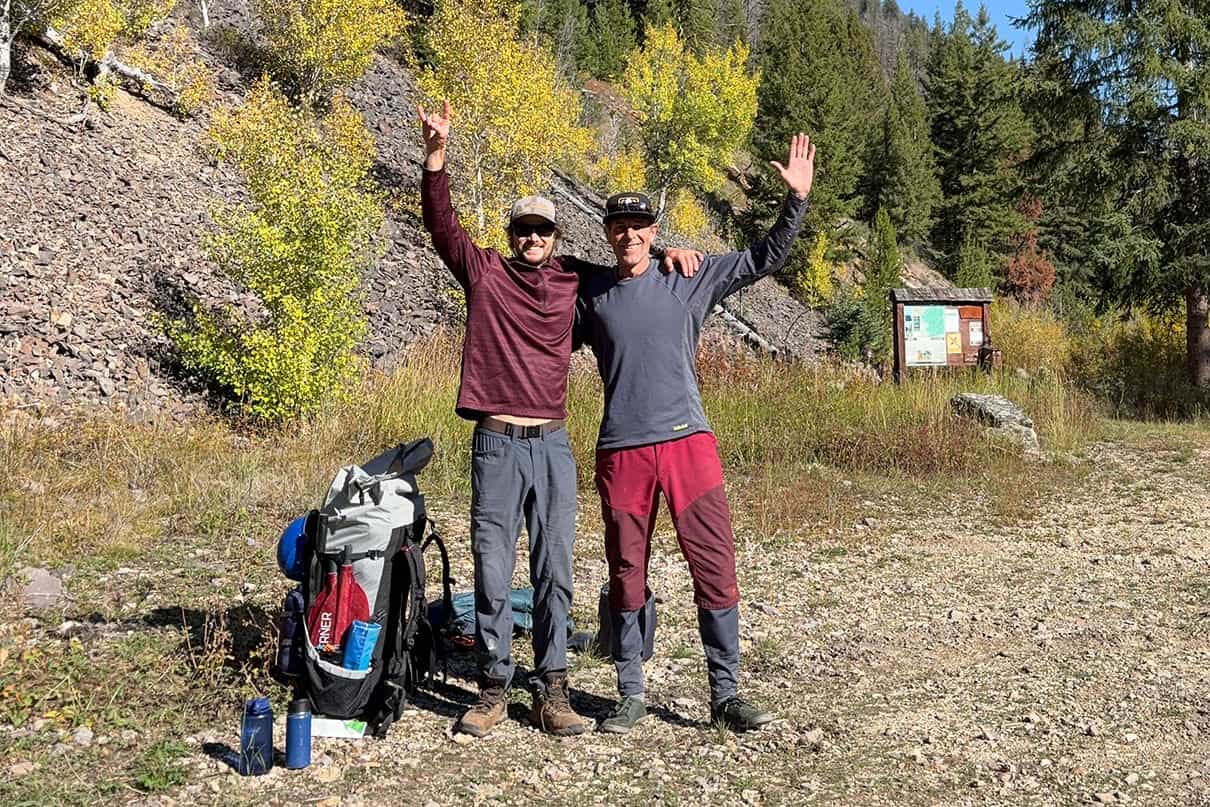
Kayakers Micah Barker and Jeff Landers stand and wave with outdoor gear at a trailhead
The right place at the right time. Kayakers Micah Barker and Jeff Landers were first on the scene. | Photo: Jeff Landers

The crux of the extraction came at the edge of the roadway, where the last five feet of elevation gain came in a 60-degree pitch, with nothing but loose scree underfoot. Years ago, before he started paddling, Jeff had put up some of the hardest rock climbing routes in Idaho. This was his terrain. He identified the one bit of solid purchase around—a corrugated drainpipe protruding from the roadbed—and scrambled onto it.

A law enforcement officer had just arrived on scene, a big man in a reflective vest who, in Micah’s estimation, wasn’t quite sure what to do. Jeff handed him the tether attached to his life jacket and told him, “When I say pull, pull!”

With that, Jeff squatted on the pipe, gripped the edge of the table and, with the officer pulling and boaters pushing from below, managed to get Sonya onto the road. The ambulance was just arriving. Jeff reckons the entire operation had taken no more than 15 or 20 minutes.

Sonya was transported to a hospital in Boise to begin a long and difficult recovery. A few days later she recorded a video to share with Jeff and Micah. “She just said thank you so much for saving my life. And you know, that hits hard.”

“I felt blessed,” he says. “I mean, I was placed there for a reason.”

Lessons learned

Like most successful days on whitewater, this North Fork rescue was all about teamwork. More than 20 people pitched in, each contributing their own strengths. Jeff got to the car before the wheels stopped spinning, and Micah was right behind him. Their swift action undoubtably saved Sonya’s life, and likely saved Will’s.

Critically, there was no clash of egos, says Dr. Raleigh Anderson, whose medical experience made her the de facto leader. “I’ve been in trauma bays with a lot more arguing,” she says. Of course, we can’t all count on a doctor being nearby when we get into a pickle, so Raleigh’s first piece of advice is to take a Wilderness First Responder course.

The best whitewater is found in the bottom of canyons, far from the hustle and bustle of so-called civilizations. Even roadside runs like the North Fork can be far from cell service. That’s why Raleigh recommends everyone keep a communication device such as a Garmin inReach in their life jacket for backcountry emergencies and, far more often, reassuring texts to loved ones: “Great day on the river, home soon!”

Jeff Moag is the former editor of Canoe & Kayak magazine and editor of Rapid Media’s trade publication, Paddling Business.

Cover of Issue 75 of Paddling MagazineThis article was published in Issue 75 of Paddling Magazine. Subscribe to Paddling Magazine’s print and digital editions, or browse the archives.
Boaters jumped into action to rescue two occupants when this vehicle flew off-road into the North Fork Payette River. | Feature photo: Josh King


Kayak Review: Melker Värmdö

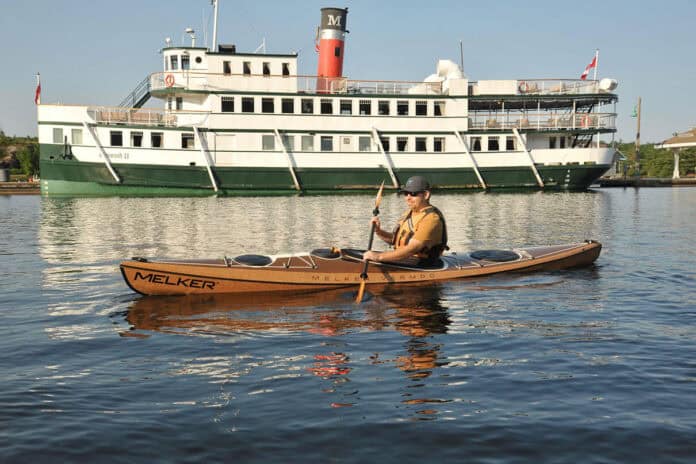
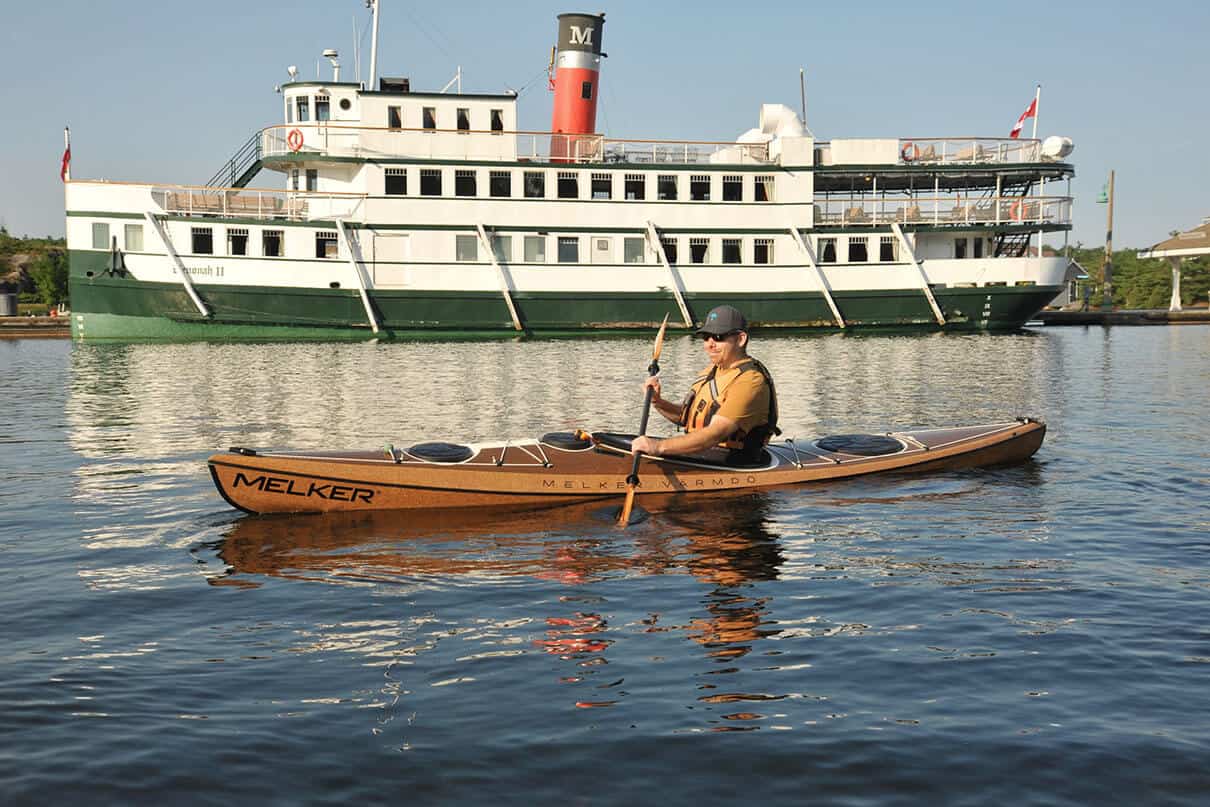
man paddling Melker’s Värmdö kayak with a riverboat in the background
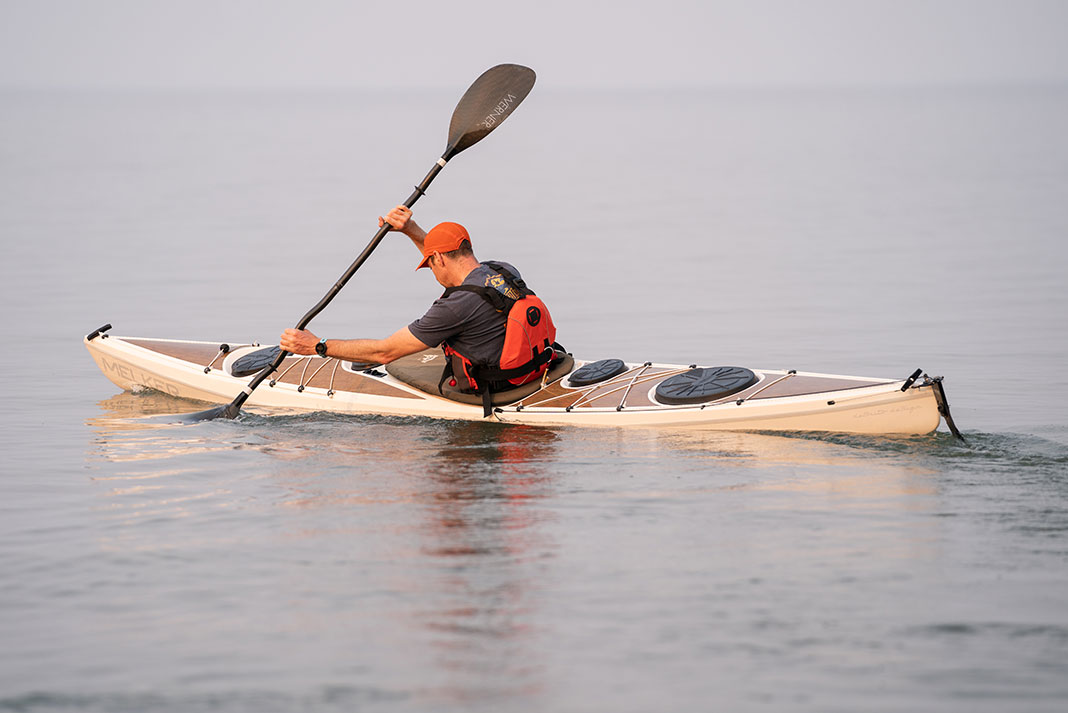
Melker’s Värmdö combines head-turning design with confidence-inspiring handling. | Feature photo: Virginia Marshall

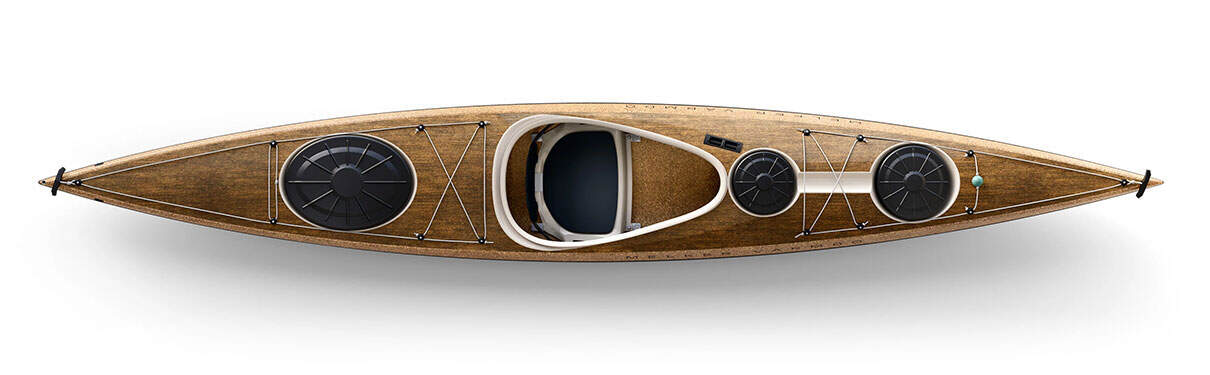
Fair warning: This Melker kayak may not be for you if your preference is to get to the launch and slip into the water without a word. This kayak turns heads. Every passerby has a compliment, then a question—or two, or three.

Simply standing beside this Swedish beauty elevates your status from mere paddler to something between brand ambassador and fine art curator. You’ll find yourself discussing the sustainability of bio-based composites and the aesthetics of Scandinavian design before taking your first stroke.

Intrigued? Consider this review your CliffsNotes.

Kayak Review: Melker Värmdö

Melker Värmdö HV Cork-Core Specs
Length: 14’6”
Width: 24.5”
Weight: 42 lbs
Optimal Paddler Weight: 165-265 lbs
MSRP: $6,999 CAD
melkerofsweden.se

Founded in 2015, Melker of Sweden draws inspiration from the country’s Stockholm Archipelago, where world-class kayak touring—and an appetite for handcrafted, performance-driven touring kayaks—is alive and well.

The Värmdö is Melker’s entry into the light touring and recreational market. Debuting the company’s latest innovations in plant-based construction, the Värmdö earned Paddling Magazine’s Industry Award for best touring kayak in 2024, as voted on by more than 26,000 paddlers. It also took home the sea kayaking Product of the Year Award at the 2025 Paddle Sports Show in France. It’s available in two sizes—a 13.5-foot LV for smaller paddlers, and a 14.5-foot HV for midsized and larger paddlers.

Eco-conscious materials

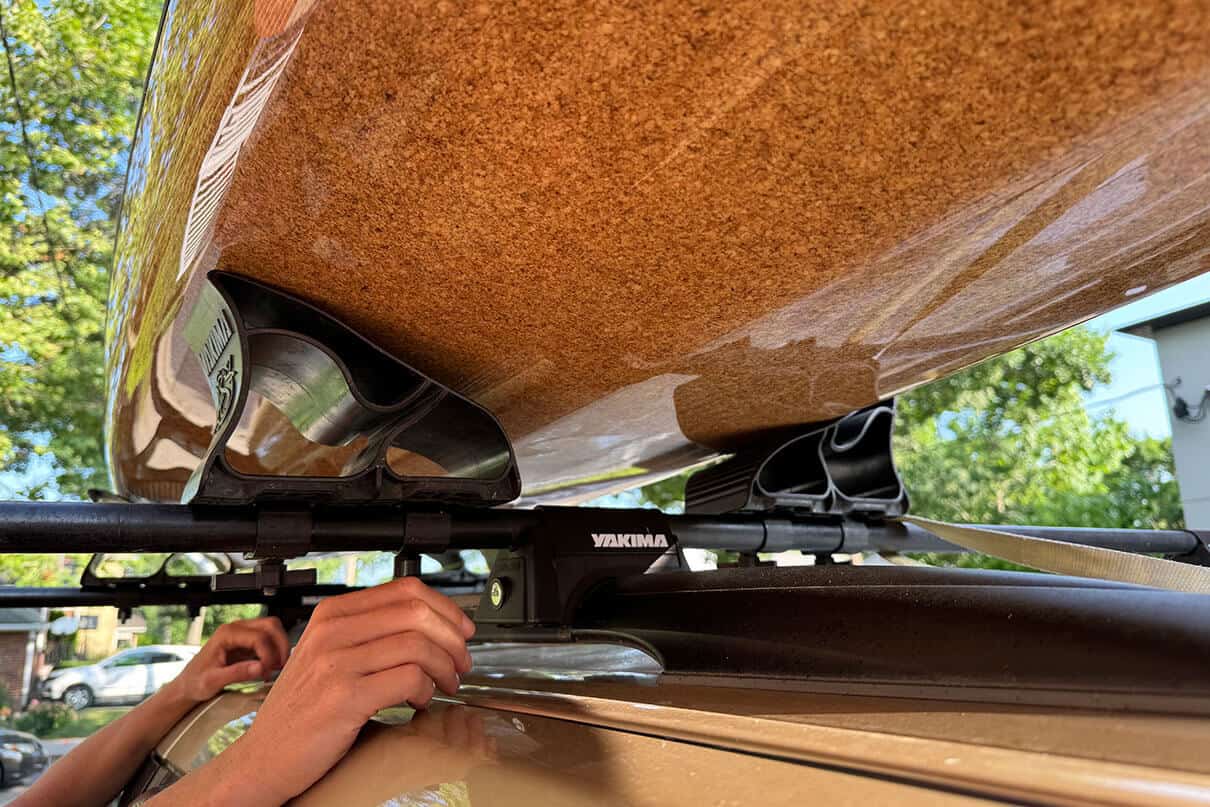
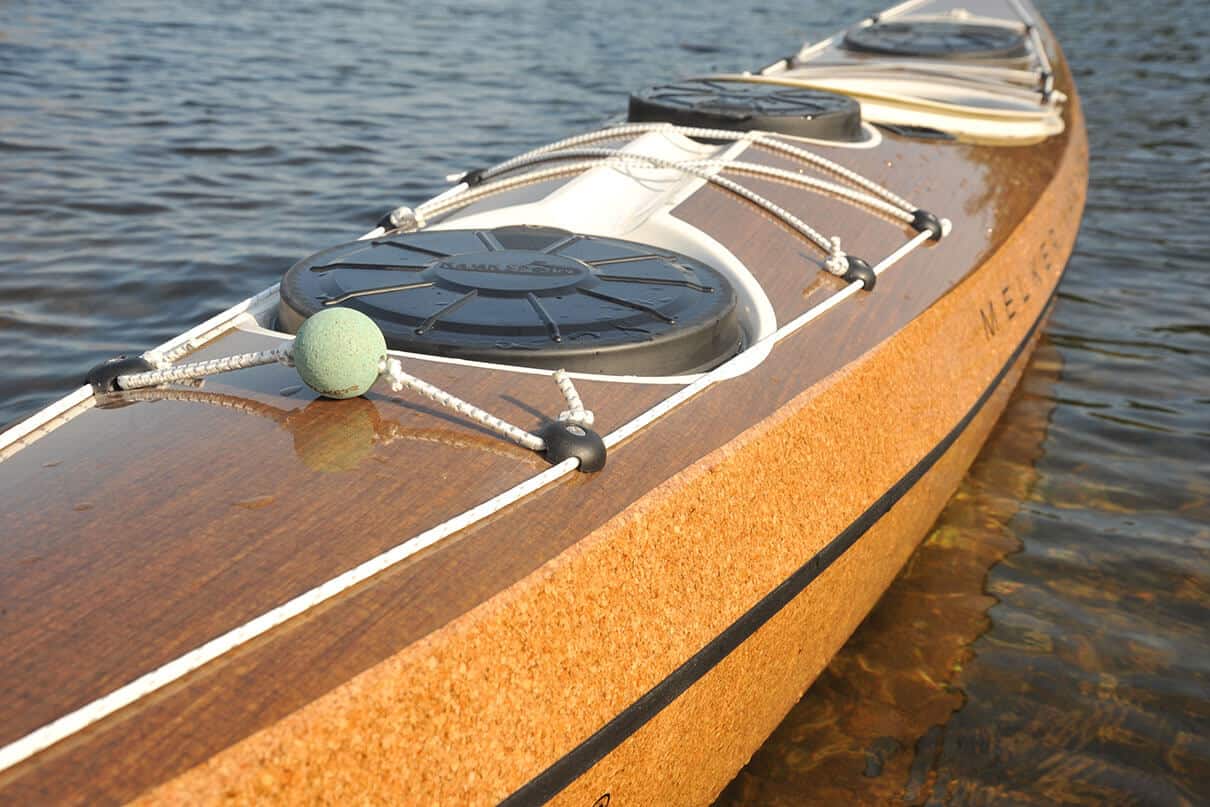
Melker offers the Värmdö in two layup options. Trad-Core sandwiches recycled PET plastic bottles and a flax-fiber deck that resembles teak between traditional epoxy and gelcoat. Cork-Core is a premium ultralight layup produced with sustainably harvested bark of cork oak trees, a flax deck, and plant-based resins and clear coat. Both layups are infusion-molded at Melker’s partner facility in Sri Lanka (the same factory where Norse Kayaks are built), producing kayaks that are lightweight yet stiff and durable.

When I unwrap Paddling Magazine’s demo Värmdö HV Cork-Core kayak, I’m entranced by the deep lustre and warm woodiness of the natural fibers. There’s no doubt it’s an exquisitely beautiful kayak. For many, that reason alone will be enough to justify the price (Cork-Core commands a $1,200 premium compared to Trad-Core).

Melker’s Värmdö combines head-turning design with confidence-inspiring handling. | Feature photo: Virginia Marshall

But there’s also the satisfaction that comes from spending your money on a kayak that aligns with your values. As paddlers, we care about the environment—healthy waters, wetlands and forests are vital to our collective future. Developing sustainable materials and environmentally conscious production practices are at the core of Melker’s mission. 

Sustainable design considers the product’s lifecycle. According to Melker, the Cork-Core construction is as durable as traditional composites and readily repairable if an impact causes damage. At the end of its useful life, the kayak can be converted into biofuel or compost.

On the water

When Paddling Magazine editor-at-large Tim Shuff reviewed Melker’s sister kayaks—the performance touring Ulvön and expedition-ready Rödlöga—he was surprised by their playful versatility. At 17’4” and 16’7”, respectively, these svelte boats are built for speed and distance.

“I learned Northern Europe has become a hotbed of kayak innovation,” writes Shuff, “where the stubby recreational kayak trend never blitzed the market like it did here and 80 percent of kayaks sold for exploring those brisk boreal coastlines are still serious, full-size touring boats.”

Enter the Värmdö. Recognizing the demand from international paddlers for a scaled-down, featherweight performance kayak for day touring, Melker positions the Värmdö as “a really comfy and playful light touring and recreational kayak.” It’s an apt description for a compact yet spacious kayak that welcomes newer paddlers with inviting initial stability and rewards more experienced pilots with playful agility on edge.

After reading that the Värmdö was “sleek, forgiving and stable for new paddlers to learn,” with “endless play time for surf, rolling, carving and rock gardening,” I’ll admit to being skeptical. On paper, the specifications align with a comfortable beginner boat, not something you’d expect to find zipping between rocks and bongo-sliding beach breaks. But after excusing myself from the aforementioned admirers and pulling away into open water, I quickly discovered the well-mannered Värmdö is more than it seems. It takes some coaxing to get there, but edging the Värmdö onto its moderately hard chine unlocks playful pivots, carved turns and predictable bracing and rolling.

Flatwater paddling is a pleasure, with quick acceleration and glide for all-day touring. The adjustable skeg makes it easy to fine-tune tracking, and the Värmdö comes rudder-ready, although it handles waves and wind just fine without one.

Melker Varmdo

Tripping capacity

When it comes to trip-worthiness, Melker says the Värmdö “packs well enough for your light overnight adventures.” With 200 liters of dry storage, I have to echo Shuff, who wrote of the Rödlöga, “The Swedes must be more into glamping, because I packed for an overnight and had loads of room to spare… you could easily check out of civilization for a week.”

For any paddler looking for a composite light touring kayak that is easy to maneuver on and off the water, the Värmdö is a playful all-arounder that’s capable in all conditions. It’s also one of the most beautiful and eco-friendly kayaks ever built. As you’ll become accustomed to explaining to your many admirers, should you make one yours.

Watch Melker Värmdö first look:

Cover of Issue 75 of Paddling MagazineThis article was published in Issue 75 of Paddling Magazine. Subscribe to Paddling Magazine’s print and digital editions, or browse the archives.
Melker’s Värmdö combines head-turning design with confidence-inspiring handling. | Feature photo: Virginia Marshall


Cover More Water With This Budget-Friendly Inflatable Touring Paddleboard

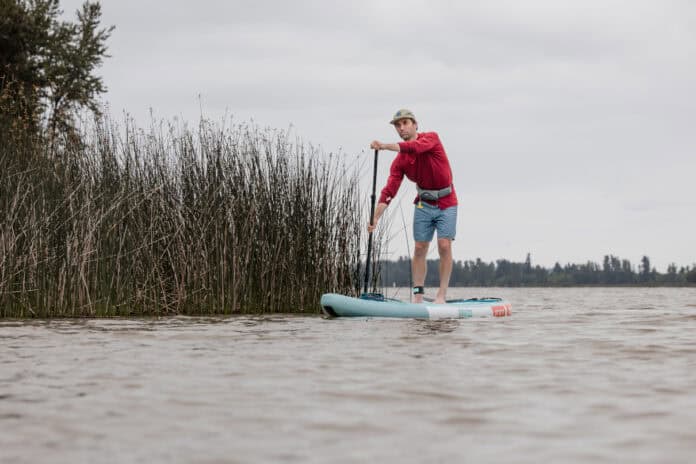
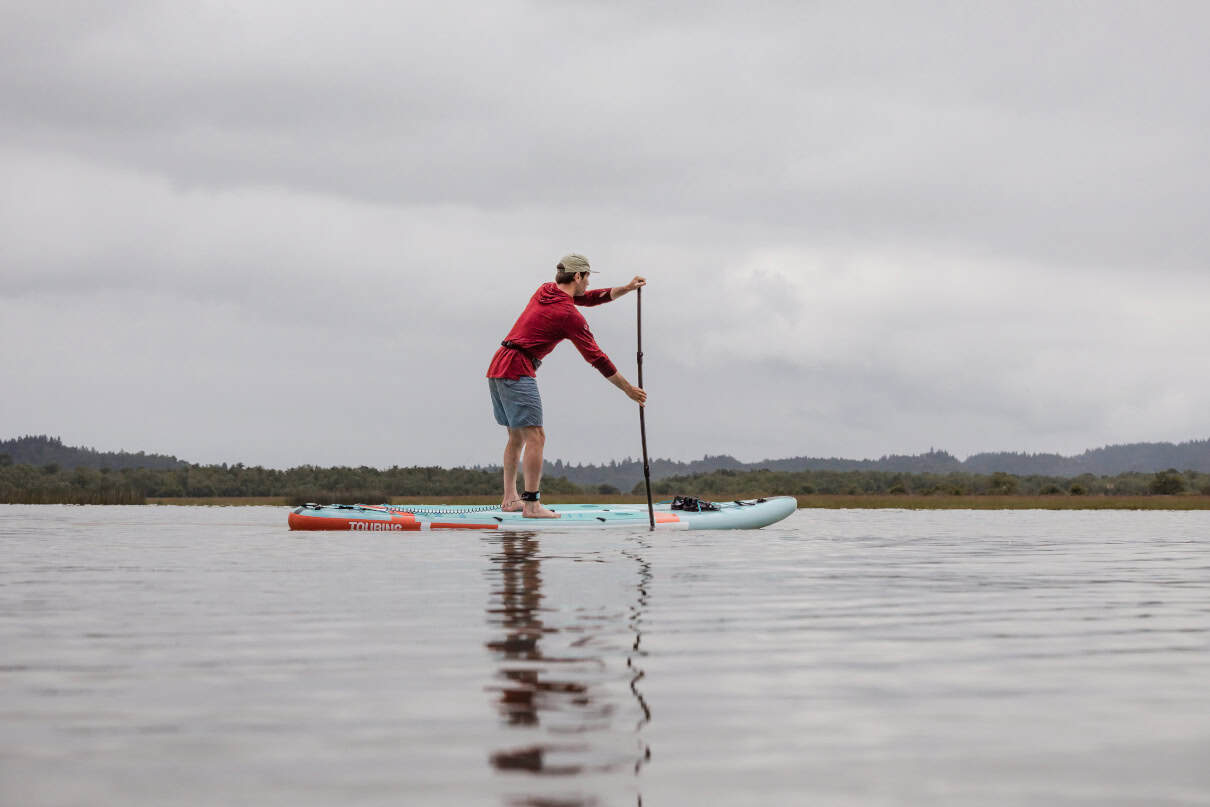
Niphean Pro Touring 12 foot long inflatable standup paddleboard on lake.
Image: Owen Roth

Not everyone is programmed to chill when the time comes to slip out on the water. Some of us are on the hunt to cover miles or get our heart rate up. Personally, I have a difficult time going paddleboarding across a lake and not taking off into a full-on sprint, which is why most days I prefer a touring-style standup paddleboard over an all-around board.

Touring boards, though, can be pricey, and high-performance boards can feel unstable for a beginner. But newcomers with a limited budget shouldn’t be excluded from this style of paddling. For these two reasons, I set out to a local afterwork spot, a reservoir in the southern Willamette Valley, to test paddle the reasonably-priced 12’6” Niphean Pro Touring inflatable standup paddleboard and see where it falls on the scale of SUPs made for cruising speed.

Niphean Pro Touring 12 foot long inflatable standup paddleboard on lake.
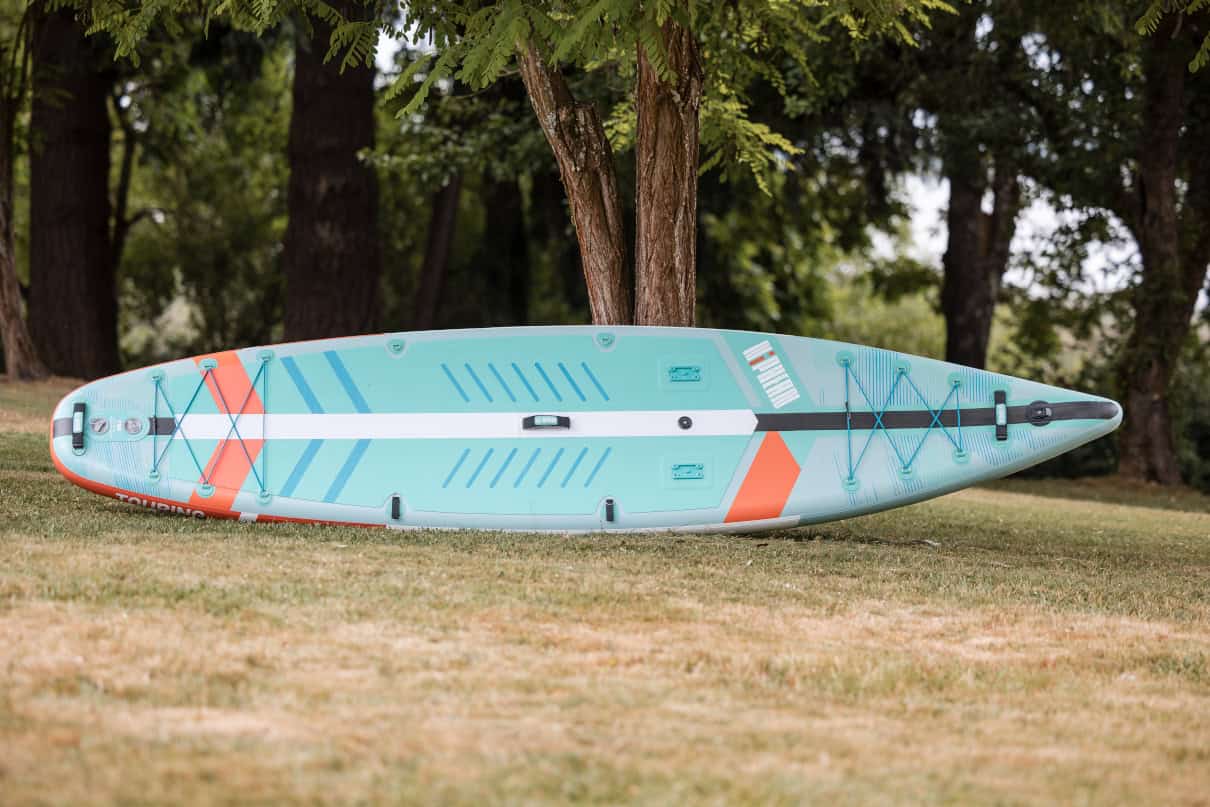
The Niphean Pro Touring 12’6″ inflatable paddleboard. | Image: Owen Roth

Review of the Budget-Friendly Niphean Pro Touring Inflatable Paddleboard

Niphean Pro Touring 12’^’ Specs
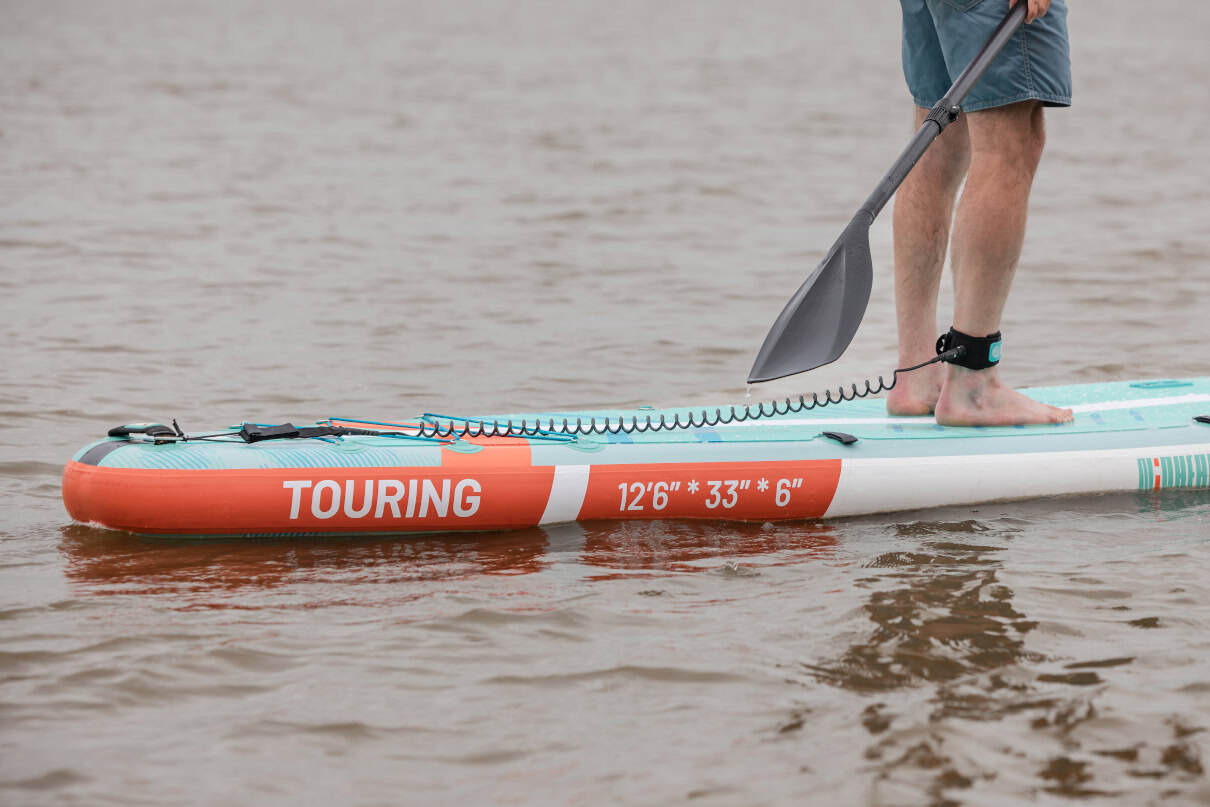
Length: 12’6”
Width: 33”
Thickness: 6”
MSRP: $699 USD
niphean.com

Last summer, I had a chance to test out the Niphean Classic all-around board. For this year, the brand sent us an upgrade to try—their more performance and fitness-minded inflatable touring paddleboard. As expected, the Pro Touring has a slightly higher price tag than the Classic, at $699 USD compared to $269.99 for the Classic. At this cost, the Pro Touring includes a large number of accessories just as the Classic does, plus a few more design points, and ultimately provides a board with a different intention.

What’s Included With the Pro Touring

The Pro Touring includes not just the board, but also a nice-sized travel bag that can carry all of its accessories. There is a paddle that can be converted for SUP or kayak use and has a widely adjustable length. There is also a high-pressure manual pump in order to get the board up to the desired pressure—between 12 and 15 PSI.

Among other items are a repair kit, two fin options for the tail, and an attachable kayak seat to convert the board into a sit-on-top kayak. The kayak seat is a nice option for windy days or when loaning the board to someone who prefers to sit-down paddle. Another essential in the box is the coil leash, which, like a paddle, is nice to have right out of the gate instead of shopping for one. Similarly, I appreciate that the Niphean board comes with a waterproof phone pouch. I think this is an overlooked accessory for paddleboarding. Just because today’s iPhones are waterproof doesn’t mean they won’t sink straight to the bottom.

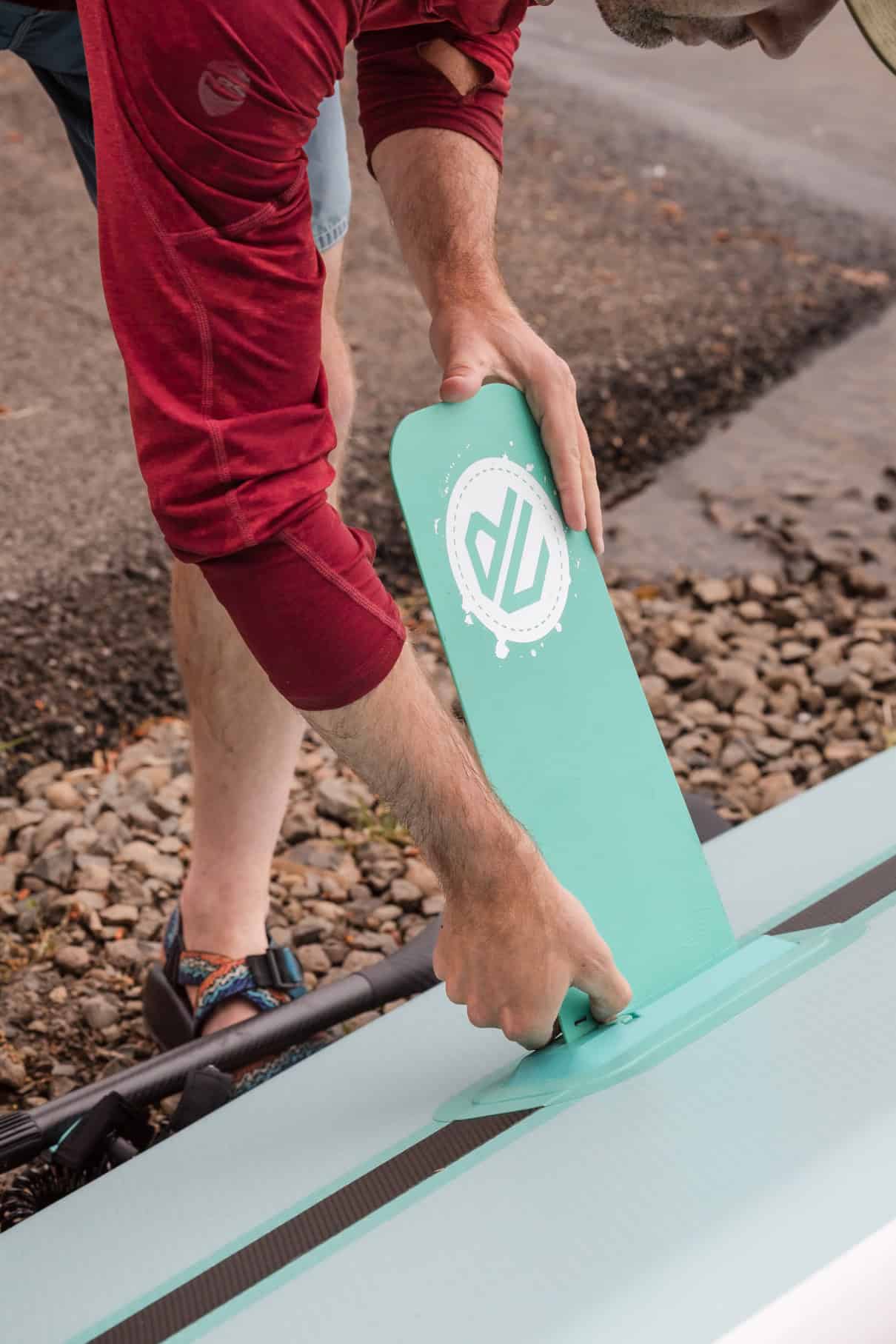
Inserting the StabilTrac fin system.
StabilTrac center fin. | Image: Owen Roth

Lastly, the Pro Touring includes Niphean’s StabilTrac fin, which attaches to the center of the hull and acts in a similar way to a keel under a sailboat. As I shared in the review of the Classic, the concept is interesting, but ultimately I personally don’t find any need or interest in the StabilTrac fin. If you purchase a Niphean board and find it helps with stability, it is then a great bonus for you. However, I’d rather not have such a long fin protruding under the board or creating resistance for turns.

Pro Touring Board Features

The board itself is also packed with essential and bonus components.

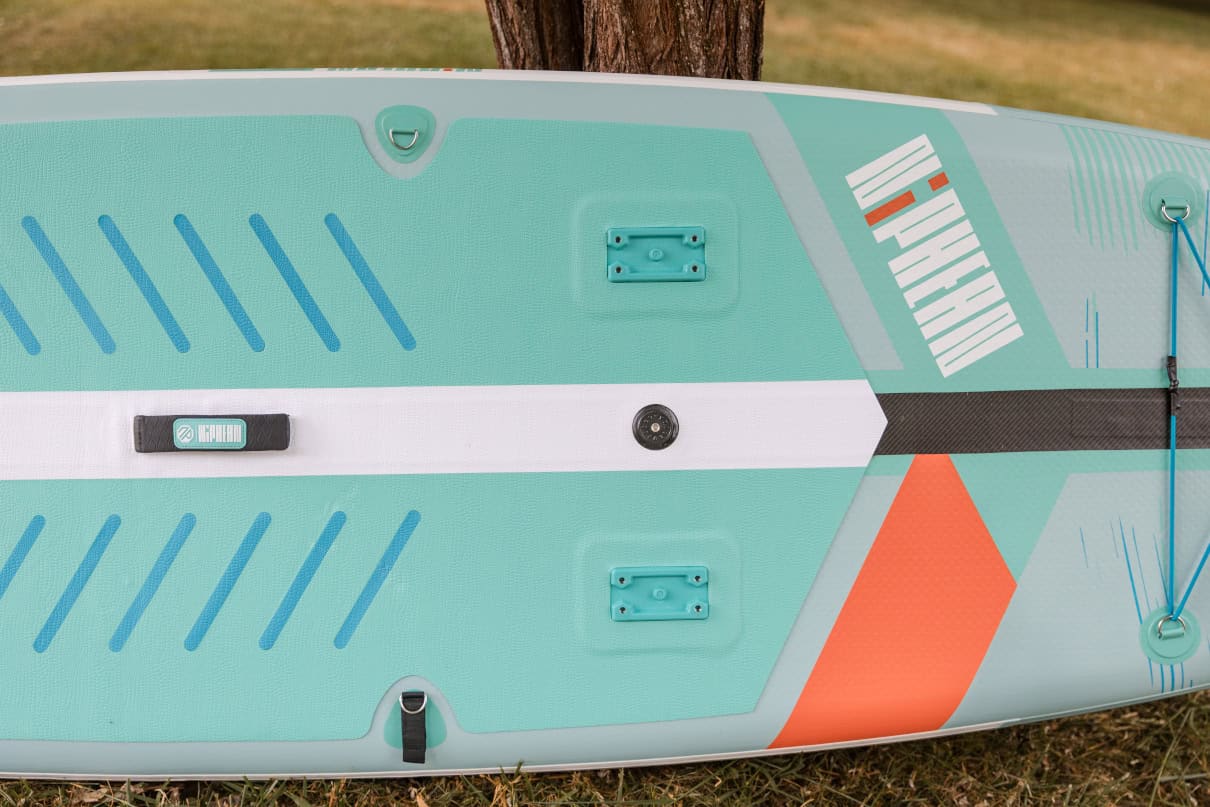
First is the deck padding, where your feet will be spending their time. I found the deck padding to be comfortable, and Niphean has marked an area with diagonal lines for foot placement as a helpful index.

At the nose and tail, there are two areas of deck storage under sets of bungees. These provide lots of space for dry bags, water bottles, shoes, and anything else you’d like to pack along for miles on the water.

There are also D-ring attachments to anchor the kayak seat, and to one side of these there are fastener tabs to store your paddle when you decide to jump in for a swim.

Accessory Deck Mounts

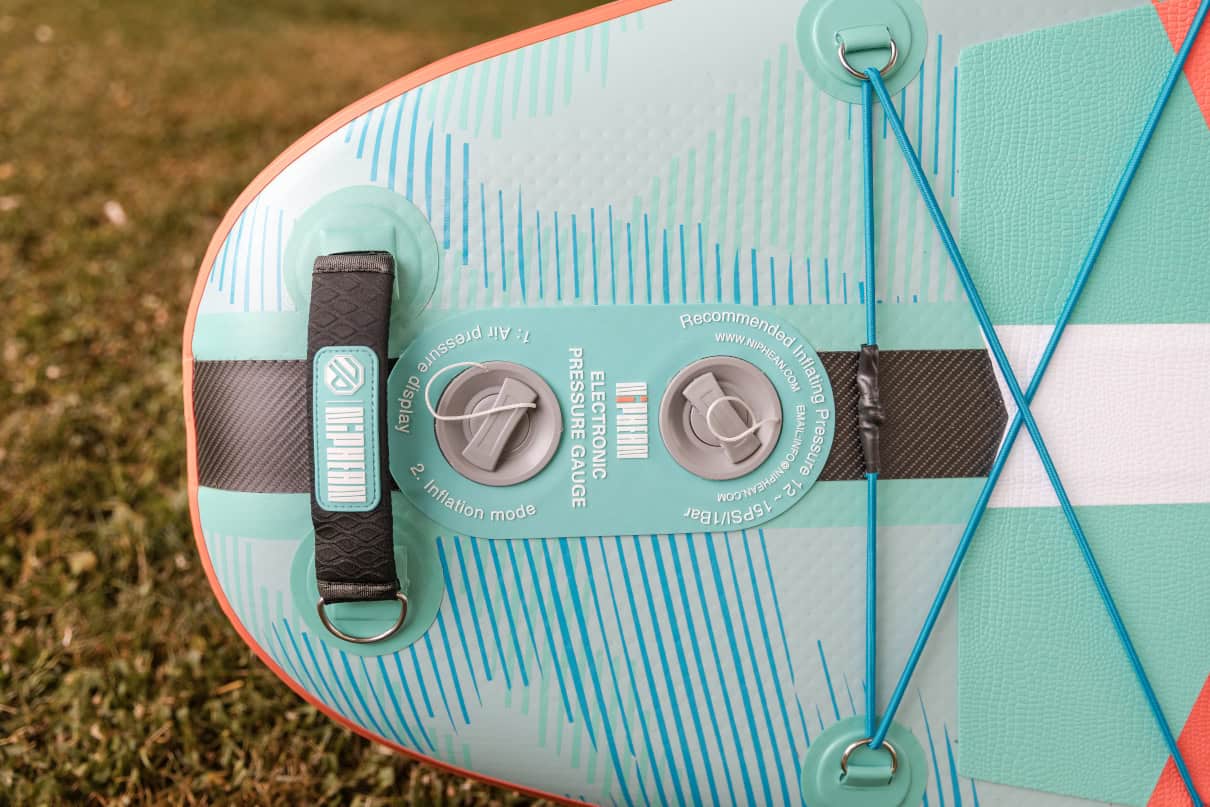
Two of the more interesting features I found on the deck of the board are the accessory mounts in front of the paddler and the dual air valves at the tail.

The accessory mounts let a paddler attach gadgetry or turn the touring SUP into a fishing vessel. You can add some electronics like a fishfinder, GPS, a fishing rod holder, or even a camera.

Twin Valves

Now the dual air valves at the tail are even more interesting. You only need one valve to inflate and deflate a board. The second on the Pro Touring is present where Niphean’s electronic air pressure display can be inserted. When I was researching the board before having it on hand, I saw Niphean included these with certain models. A digital gauge reads your board’s current PSI.

The board I received did not ultimately include one of these displays; however the text surrounding the valve placements still mentioned it. Reading more on the Niphean site, not all boards were sent out with the display due to elements to address. The digital gauges are available to purchase on the site and can be added to the board by using the valve wrench to swap it out.

Personally, I don’t think there is a need for an electronic air pressure display on a paddleboard. Every air pump shows the PSI the board is currently at, and the idea of needing to charge or replace a battery for something on the board doesn’t seem necessary. Every seam and valve is also a potential failure point no matter the board, and the less of those the better in my opinion. Like the StabilTrac fin though, some people may find the digital readout helpful.

Overall shape of Niphean inflatable touring board.
Image: Owen Roth

Pro Touring Design and On-Water Performance

The board itself is designed as what’s been referred to as a touring board. These touring boards are meant to be more efficient at traveling through the water, both in potential speed and tracking in straight lines better than an all-around board. Generally, this means a compromise of a few components of a beginner-friendly board, namely stability and ease of turning. The Niphean Pro Touring is a nice middle ground for someone looking for a bit of the former without losing the latter.

Touring Board Design

Overly simplified, one of the ways a touring board becomes faster compared to an all-around board is by elongating and narrowing its shape. The Pro Touring is 12’6” long, a popular length for a touring board. However, it is also 33” wide, which is on the wider side compared to many other touring boards.

Another factor in the speed or efficiency of a touring board that relates to length and width is the shape of the nose and how that shape transitions through the board, or said another way, the angle at which the board is entering the water in front of it. If you were to look at the Classic, it has a spoon-shaped nose, maintaining the width of the board through the front and creating more stability—great for hanging out on the water. The Pro-Touring, however, has a nose that tapers sharply to a near point. This narrowed shape is intended to pierce the water ahead of it and produce less wake to overcome. The Pro touring does this to a degree, but it also maintains width around the paddler’s stance, and so remains relatively stable.

This width also increases the volume of the board giving it a higher weight capacity to fit a range of paddlers and let you load up more gear for say an overnight trip on the lake.

Shot showing specs of touring SUP.
Image: Owen Roth

On-Water Feel

While testing the Pro Touring, I was fortunate to have a breeze and some moderate, short-period choppy waves to paddle against. I felt like the board handled these fine, and I was able to cover ground with reasonable effort. Overall, I found the Pro Touring pretty stable when I paddled it. The board also felt like it carried a line well, and the single fin setup in the back helps with this. The longer hull and big single fin do mean the board will turn slower than a shorter paddleboard, or require you to step back to lift the nose and pivot it, which can take a little time to adjust to.

As a budget-friendly inflatable, something the Niphean hull does not have is a complex shape. The easiest inflatable boards to produce are perhaps boards with a flat hull, and this is fine overall for recreational use. Especially on the nose of fiberglass boards, and now in some inflatables, manufacturers may provide touring boards with V and displacement shapes to be more effective and efficient through the water. There are various styles of touring hull designs depending on what a board wants to accomplish. The Niphean board remains flat under the nose and throughout the bottom. A distinction that keeps the board entry-level and cost-effective as a touring board.

Where to Buy the Niphean Pro Touring Paddleboard

Overall, I found the Niphean Pro Touring easy to paddle with specific gains over an all-around shape for those seeking an inflatable paddleboard that provides more on-deck storage and can cover some miles with more efficiency. Perhaps best of all is Niphean’s ability to produce boards for paddlers at a low cost, providing more people the opportunity to find different ways to enjoy paddleboarding.

The Pro Touring is available now online from Niphean and on Amazon.


Feature Image: Owen Roth

How To Thread A Quick-Release Rescue Belt

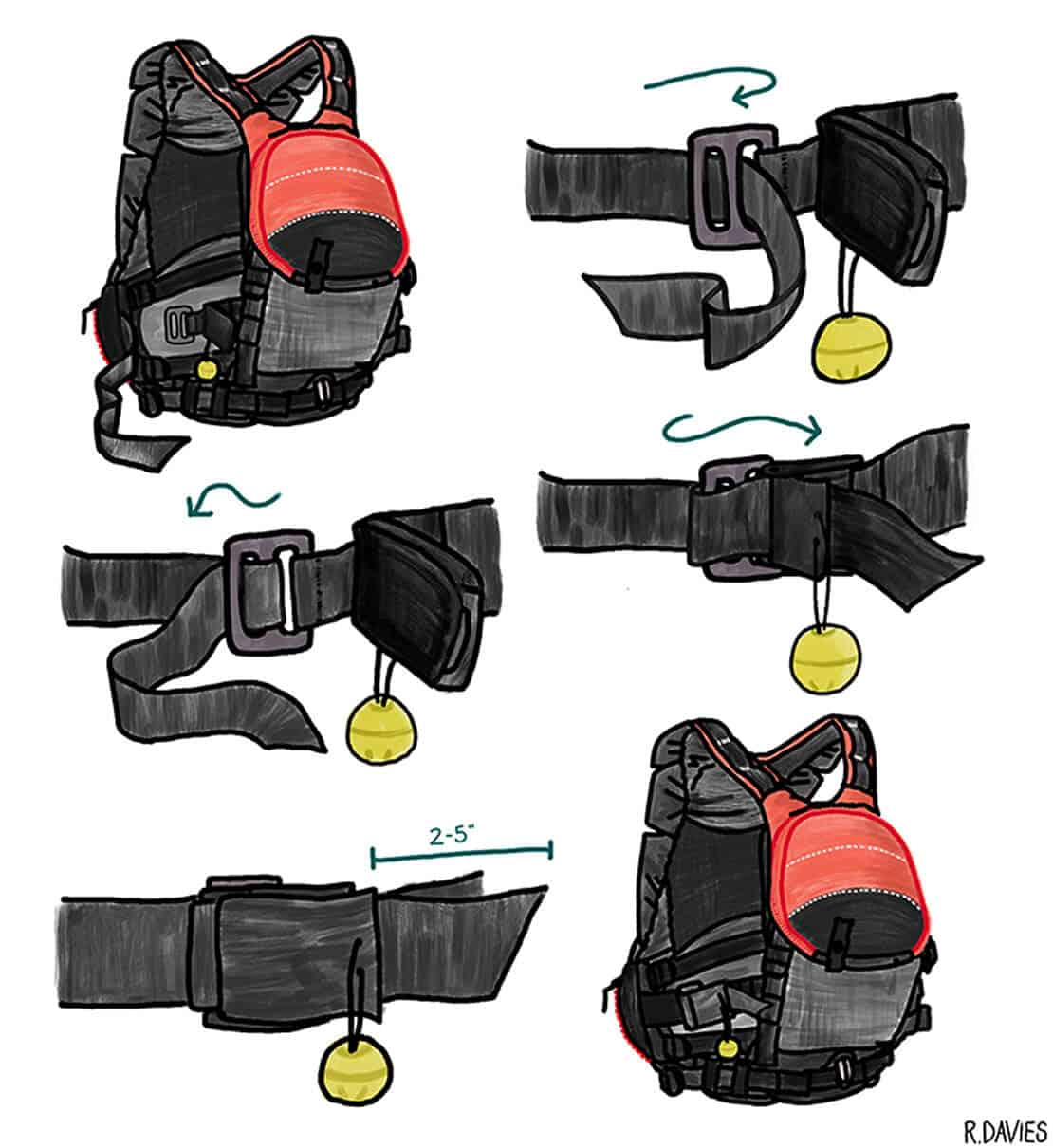
illustration showing the steps to thread a quick release rescue belt
Feature illustration: Rachel Davies

As a whitewater rescue instructor, I have seen both the power and the dangers of attaching to a rope with a quick-release harness. When used effectively, it can be an essential part of a whitewater rescue toolkit. Without proper training, practice, setup and application, it can turn into an entrapment hazard.

One danger I see every season is paddlers using the quick-release harness improperly. If you have a rescue PFD with a quick-release harness, it’s essential to learn how to use it and practice releasing it multiple times on land each season to develop muscle memory. Practice releasing in the water, in a controlled environment, with others there to back you up. Practice with your eyes closed, with both hands, and with and without tension on the line. A whitewater rescue course is a great starting point for this work.

How to thread a quick-release rescue belt

Harness setup

To set up your harness, start with the manufacturer’s instructions for your specific PFD. I recommend using only a PFD with a sewn-in quick-release harness. Make sure all components are in good condition. A properly fitted PFD should have the release mechanism at chest height, within reach of either hand.

Tighten your PFD straps before setting up the harness so that if you need to release, the PFD will still be secure.

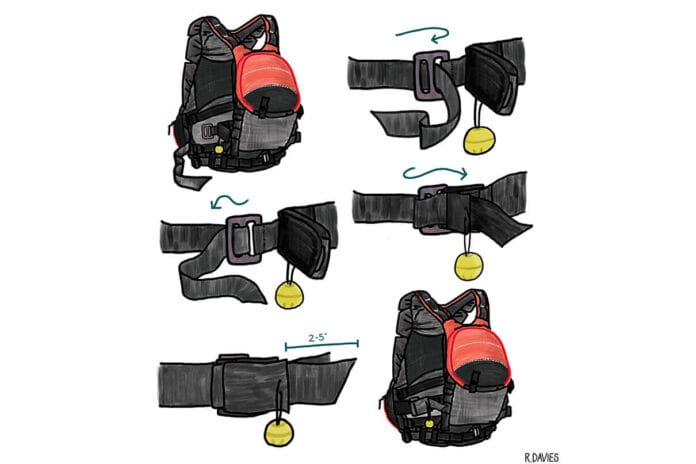
Threading a quick-release harness is simple, but many paddlers get it wrong.

illustration showing the steps to thread a quick release rescue belt
Feature illustration: Rachel Davies

1

First, feed the webbing through all intended loops on the PFD.

2

Weave the webbing through the metal triglide. First, through the hole closer to the chest, then back through the hole farther from the chest. The triglide helps insulate the plastic buckle from sudden forces, helping avoid accidental release under tension. The triglide also keeps the webbing flat as it releases.

3

Next, feed the webbing through the plastic buckle and close it firmly. Make sure the harness and toggle cord aren’t folded into the mechanism.

4

Keep the webbing tail short, between two and five inches. A short tail allows the paddler to pull the webbing free with their release motion, preventing the webbing from twisting and getting caught in the buckle.

Some PFDs now have an extra buckle to adjust webbing length to maintain a two-inch tail. If your PFD does not allow for this, you may need to cut the webbing shorter and burn the end. Take care to leave a clean-cut end without a bump. Make sure to leave enough tail to accommodate different layers.

Releasing the harness

Practice a two-phase release motion: pull the release toggle, then push your hand forward. As long as the tail is short, this should pull the webbing out of the buckle, allowing release even without tension on the harness.

Finally, make sure you use this tool in the right context and with the right team. Using a quick-release harness requires not only proper use of the harness but also training in all aspects of river rescue, especially water reading and rope management.

Rescue belt demonstration

Watch a demonstration and discover the best practices to minimize entrapment risk with your quick-release harness setup.

Jamie Orfald-Clarke is a whitewater rescue instructor with Boreal River Rescue. Danny Peled is the founder of Boreal River Rescue.

Cover of Issue 75 of Paddling MagazineThis article was published in Issue 75 of Paddling Magazine. Subscribe to Paddling Magazine’s print and digital editions, or browse the archives.
Feature illustration: Rachel Davies


Kayakers Have Orca Encounter Of A Lifetime

A group of kayakers in the Vancouver area found themselves surrounded by a pod of orcas in an up-close and awe-inspiring encounter.

An exciting return trip

On May 1, a group of high school students were on a tour with Deep Cove Kayak in the Vancouver area. They were on their way home from an overnight trip to Granite Falls in Buntzen Bay, when one of the guides spotted whale spouts in the distance, identifying the activity as a pod of orcas. At the instruction of the guides, the group quickly got into a raft formation to give the orcas space to pass. However, instead of simply passing by, the orcas came up to the kayakers, swimming several feet in front of the group, with a couple even making their way underneath the boats. Deep Cove Kayak guide Rhiannon Henley managed to film the moment, capturing the closeness of the whales and the group’s excited reactions.

Face to face with orcas

Vancouver is a known destination for orca sightings, although such close encounters are uncommon. Bigg’s (Transient) orcas and Resident orcas are two types commonly found in the area. Their size and “killer whale” moniker may make meeting an orca an intimidating experience, but there have been no reported instances of orcas hurting humans in the wild. Though they may not be a risk to people, they still need to be respected.

If you encounter orcas while paddling, it’s recommended that you stop your movement and allow the whales to move around or underneath you. Don’t try to chase them or engage in any activity that will disrupt their behavior. Stay where you are, don’t panic and enjoy the moment. If you spot orcas at a distance, maintain space and try not to get too close.

“Holy shoot!”

Vancouverite and guide Rhiannon Henley filmed the group’s now-viral meeting with the pod and it’s her voice exclaiming “holy shoot!” that can be heard in the background of the video. In an interview with CBC News British Columbia, Henley described her reaction to the sighting as pure amazement and awe.

It wasn’t a totally unique experience for her, but certainly the most special.

“I was doing my Paddle Canada 2 certification course in Howe Sound by Gambier Island and a similar thing happened,” she told CBC. “We were actually practicing rescues, so some of us were in the water. And maybe 50 meters away a couple orcas popped up. But what happened on the weekend is the closest I have been to a whale.”

The group assembled into a raft formation, grouping their kayaks together to form a single mass. Rafting up keeps paddlers together and makes it easier for whales to navigate around, as opposed to maneuvering around scattered individual boats. Henley’s video picks up once the group was in their raft and several orcas glide in and out of the water mere feet in front of them. One orca is even visible passing underneath the boats. Henley explained to CBC that some participants were scared, but most were excited by the sight.

When asked if this type of encounter with nature ever gets old as a professional guide, Henley expressed that the wonder never goes away.

“We are so lucky at Deep Cove Kayak and other people paddling around the Inlet to see these beautiful whales,” she continued. “They’ve been coming up definitely more frequently. So I think the most important thing is to keep protecting them and keep allowing those moments and those viewings of the orcas to occur in the best way possible for them and for us.”


Myth Of The Bombproof Roll

underwater photo of a sea kayaker mid-roll
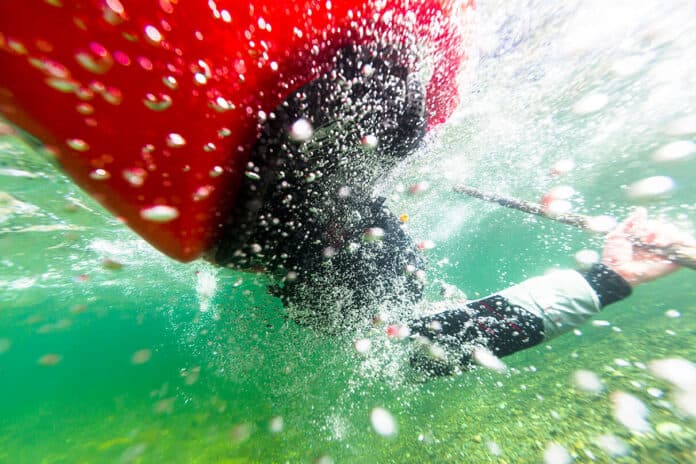
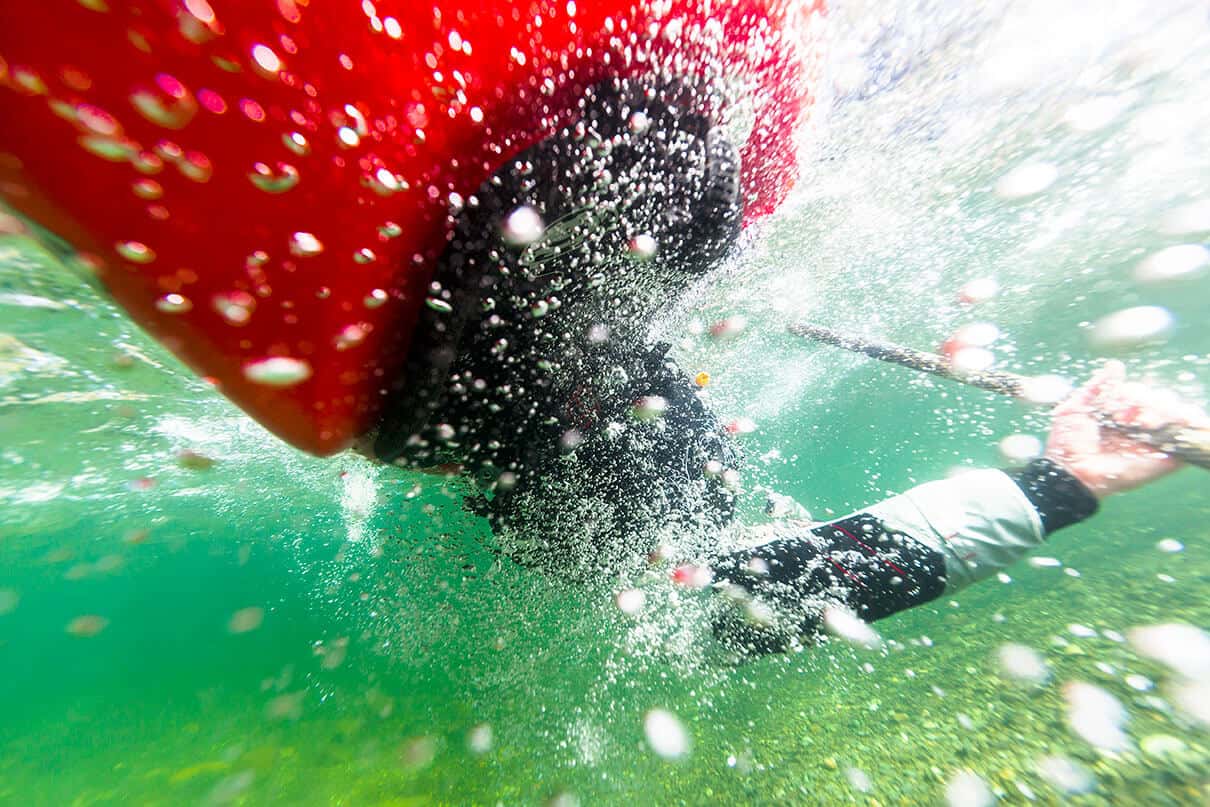
Failure can be instructive. | Feature photo: Boomer Jerritt

When I bought my first kayak, on the West Coast back in the early aughts, I was encouraged to get one of those inflatable paddle floats you stick on your paddle blade as an outrigger if you flip. These reassuring safety devices were everywhere then, spreading the tacit message not to worry, knowing how to roll wasn’t really expected or necessary. I immediately went out in a raging storm to practice with mine and discovered that it was impossible to get back in my kayak and pump it out in rough water without re-capsizing.

Nonetheless, like hikers wearing bells in grizzly country, kayakers would carry these floaty things like a sort of talisman to ward off the fear of flipping. I continued to hang onto mine just in case, but I also resolved that I must develop, per the bro-speak of the kayaking fraternity, a “bombproof roll.” A badge of honor that determines who is a real sea kayaker.

Myth of the bombproof roll

I sort of figured out the roll, but since I was terrified of what would happen if I swam—and had to rely on that infernal paddle float—I always paddled within my limits. And the more I got away with not flipping, the more the fear of swimming loomed in my imagination, the better I got at my panic brace, and the less confident I was to try rolling in real life.

I eventually mustered the courage to try rolling my fully loaded Current Designs Expedition and immediately bobbed back upright before I could even get my hair wet. My friend sat on the shore laughing hysterically. My hull was so crammed full of canned food, fresh water and books for the expedition we were on that it was as unflippable as the toy canoe with the lead keel in the movie Paddle to the Sea. We paddled all the way from Alaska to Victoria, and I can proudly say my roll never failed—but only because it was never put to the test.

underwater photo of a sea kayaker mid-roll
Failure can be instructive. | Feature photo: Boomer Jerritt

So, I watched with puzzlement as an online debate blew up about the importance of having a bombproof roll. The debate started when Belgian kayaker Dimitri Vandepoele posted a YouTube video of himself and Hugo Germonpre playing in a tidal rapid at Pointe du Raz, Brittany (paddlingmag.com/0200). Vandepoele paddles and rolls deftly but Germonpre capsizes twice and swims. Vandepoele cooly rescues him—at one point flipping mid-rescue and rolling back up—and the pair carry on.

“What are you guys doing in this situation without a combat roll?” was one of the first comments. A long debate ensued, with a raft of people piling on to assert that “there is no such thing as a bombproof roll.”

I actually did have a bombproof roll once. It was on a Saturday. Playing at the Gales of November gathering on Lake Superior, I was not hit by any aerial bombardment, but I did capsize in heavy surf and break a paddle. I rolled up on my offside with the other blade and surfed back into shore. That was the mic-drop moment of my rolling career. But it was a long time coming. And I never did master the hand roll, or any of those specialized Greenland rolls, like that one where you pass a lit cigarette around the boat as you do it. As a non-smoker, I never saw the point.

I don’t think anyone else seriously believes in the bombproof roll either—except one commenter on Facebook who suggested that the people who don’t have one are just too lazy to practice. But that didn’t stop a flotilla of commenters. The typical post began with a humblebrag about the gnarliness of the writer’s own years of rough water experience, as if to say that if anyone had a bombproof roll, it would be them, so they can attest there is no such thing.

“I settle for a roll that works 95 to 99 percent of the time,” said one.

“My own roll hasn’t failed since 1976,” said another, “but I definitely don’t believe that I’m immune.”

A refreshing comment was from a humble Andrew, who wrote, “My roll isn’t great, so I don’t go out in my sea kayak when it’s ridiculously rough like that. I don’t focus on practicing my roll anyway, as my back is messed up.”

A long debate ensued, with a raft of people piling on to assert that “there is no such thing as a bombproof roll.”

This is how most normal humans approach kayaking—as a fun activity and not an analog for war. Why are we using the words “bombproof” and “combat” anyway? In the future, I propose we leave the bombproof and dynamite rolls to the sushi menu and switch to a more reasonable term suggested by another commenter—“reliable roll.”

The thing is, the original question of what Vandepoele and Germonpre were doing in Brittany without a, ahem, “reliable” roll (and Vandepoele clearly does have one), is clear: they were having fun practicing skills. Rather than being shocked at the pair’s boldness, I was impressed by their competence and humility.

My years of problem-free paddling, the fear that my roll won’t be good enough, and a lack of confidence about what to do if I swim, have grown to keep me from testing my limits. The video reminded me we can transcend such fears, not by being rolling combat heroes but by having a broad repertoire of rescue skills that makes it perfectly okay to swim, just as Germonpre does twice.

With the right safety systems and paddling partners, the scenario in the video is not one to avoid. Paradoxically, it might be exactly where a reliable roll, to whatever extent it’s possible, is most likely to be learned and practiced. But first you have to be comfortable swimming and getting back into your kayak.

“We find self-rescue more important than rolling,” explains Vandepoele. “There’s absolutely no excuse” not to practice it every time you paddle.

That’s exactly what I’m going to do next time I go out—but this time without the paddle float.

Tim Shuff is a former editor of Adventure Kayak magazine.

Cover of Issue 75 of Paddling MagazineThis article was published in Issue 75 of Paddling Magazine. Subscribe to Paddling Magazine’s print and digital editions, or browse the archives.
Failure can be instructive. | Feature photo: Boomer Jerritt


A New Class Of PFD Has Arrived—Here’s What To Know

Paddling Magazine Publisher Cristin Plaice wearing a Level 50 life jacket.
Level 50 PFDs, like the Mustang Podium shown, aren't yet available in North America, but are already being used in other countries. | Image: Cristin Plaice

There’s a glaring statistic in recreational boating: According to the U.S. Coast Guard, in 87 percent of boating-related drownings in 2024, the victim wasn’t wearing a personal flotation device. That number has been consistent within one or two percentage points for decades. Each year, paddlers account for one-quarter to one-third of those drownings.

Even with these hard numbers, it remains an upstream battle for agencies to convince every paddler on the water to wear their PFD. Anecdotally, lack of wearing a PFD appears especially common for activities including standup paddleboarding, flatwater kayaking and kayak fishing, where freedom of movement and even the lifestyle image of these sports has led to cumbersome PFDs being tucked under a bungee. The U.S. Coast Guard and Transport Canada are wagering they can change bad safety habits and dangerous figures with the recent approval of a class of PFD called Level 50.

What are Level 50 life jackets?

The Mustang Podium is an example of a Level 50 life jacket is available in the U.S. but not yet Coast Guard approved.
The Mustang Podium 50N is an example of a Level 50 PFD. It is available in the U.S. and is ISO-approved and meets the ISO12402-5 international standards; however, it is not yet Coast Guard approved, and requires carrying a second approved device. | Image: Cristin Plaice

Level 50 buoyancy aids are just like your traditional PFD, the only major difference being they are meant to provide a lower profile to be more comfortable and entice more paddlers to wear them. That means they have less flotation than your traditional Level 70, Type III or Type V life jackets. These Level 50 PFDs are also already used internationally for specific applications and will now meet Coast Guard requirements for certain uses and conditions.

It’s also important to start a conversation around these devices by saying that while the term “life jacket” gets thrown around often, most of the buoyancy devices paddlers use are not technically life jackets, since they are not designed to turn a person face up, regardless of their physical condition. They are instead buoyancy aids, which, along with life jackets, are all forms of personal flotation devices.

As the name hints, Level 50 jackets are performance-rated personal flotation devices that provide at least 50 newtons of buoyancy, which is around 11 pounds of flotation. For comparison, most recreational PFDs for adults are currently rated at 70 newtons or around 16 pounds worth of flotation.

If you’re wondering where something called Level 50 fits into the traditional Coast Guard rating system of Type I, II, III, IV and V, that’s a great question. Whether you’ve noticed or not, the U.S. Coast Guard started integrating the performance-based newton system alongside the established “Type” system back in 2014. The idea is to make selecting a PFD more intuitive and to align U.S. standards with Canada and other countries.

The Level 50 standard was approved and added to the list in 2025. And now the rankings are standardized from a minimum newton performance to a high end in the order of: Level 50, 70, 100, 150, 275.

There is just one other catch with the usage of a Level 50 PFD: with the lower flotation amount built in, a paddler needs to be actively wearing the jacket for it to meet legal carriage requirements. That means if you buy a Level 50, you can’t just bungie it to the deck of your kayak or SUP. You have to wear it.

Where to find a Level 50 buoyancy aid

While Level 50 aids were approved as acceptable flotation by the U.S. Coast Guard back in 2025, no products have been manufactured or tested yet for approval in the U.S. or Canada. However, Level 50 PFDs have already been in production for international use by brands including Mustang Survival, allowing U.S. paddlers to catch a glimpse of what these buoyancy aids look like in use. The current Level 50 options are ISO-approved and meets the ISO12402-5 international standards. However, when using one of these current products in North America, boaters must also have a Transport Canada or U.S. Coast Guard approved device with them.

Who should wear a Level 50 PFD

If you’re deciding whether a Level 50 PFD is a good option for you, there are a few other factors to consider. First, Level 50 devices are an option recommended for active watersports near shore or in areas where you are comfortable and prepared to self-rescue quickly. For paddlers, this looks like kayaking and canoeing on sheltered waters, SUPing near shore or kayak fishing on similar waters to the previously mentioned.

Also, Level 50 PFDs are recommended only for good swimmers in protected waters, and are not recommended for poor swimmers, non-swimmers, or situations where help is far away.

Even with the approval of these new Level 50 PFDs, paddlers will still ultimately need to decide if these devices or higher flotation PFDs are the right fit for their abilities and the water conditions. The hope, though, from officials and water safety advocates is that with this new classification, more paddlers will find a device they feel comfortable actually wearing on the water.

Paddling Magazine Publisher Cristin Plaice wearing a Level 50 life jacket.
Level 50 PFDs offer a new buoyancy aid option in North America for good swimmers participating in certain paddlesports. | Image: Cristin Plaice

FAQ – Level 50 life jackets

With the approval of Level 50 PFDs, U.S. paddlers will soon have another option to keep themselves safe on the water. Here’s more info about the latest class of buoyancy aids.

What is a Level 50 life jacket?

A Level 50 buoyancy aid, sometimes called a Level 50 life jacket, is a lower-profile personal flotation device designed for comfort and freedom of movement for certain water activities that meets the U.S. Coast Guard’s new standards.

Do Level 50 PFDs count as my required flotation device on a boat or paddle craft?

Yes, but only if you’re wearing it.

Who are Level 50 PFDs for?

Level 50 PFDs are recommended for good swimmers taking part in paddling activities in protected waters where help is accessible.

Can kids wear Level 50 PFDs?

Yes, children can use Level 50 buoyancy aids, as long as they are also good swimmers and in protected waters.

Are Level 50 life jackets available now?

No Coast Guard-approved Level 50 PFDs are available yet in the United States. Level 50 buoyancy aids are expected to reach U.S. stores in 2027.

Why is it called a Level 50 buoyancy aid?

The name comes from the amount of flotation measured in newtons. A Level 50 PFD has 50 newtons or about 11 pounds of buoyancy. By contrast, many recreational PFDs available currently have 70 newtons or about 16 pounds of flotation.

Is a Level 50 buoyancy aid as safe as a Level 70 life jacket?

Any PFD is only safe if you wear it. A Level 70 has more buoyancy than a Level 50 buoyancy aid, but either provides adequate buoyancy for its intended use by good swimmers in protected waters.

I have a 50-newton life jacket from abroad. Do I need to replace it with a U.S. Coast Guard approved Level 50?

Yes. To comply with U.S. requirements, you must have a U.S. Coast Guard approved flotation device.

Do I need to replace my old Type III life jacket to meet the new Level standards?

If your current life jacket is U.S. Coast Guard approved and in good condition, there is no legal requirement to replace it.

Learn more about the new Level 50 life jacket U.S. Coast Guard standards by visiting the Water Sports Foundation.


Feature Image: Cristin Plaice