An eight-year-old helped save his grandfather after the pair capsized while kayaking on the Vale coastline in South Wales. As strong currents swept Marley Jones and his grandfather David ‘Dai’ Jones away from shore, Marley remained calm and called for help.
“When I called my Nan, I told her I was okay, but Granscha looked like he was drowning and we needed help,” Marley told rescuers after the incident.
Dangerous conditions
Marley and his grandfather were kayaking on a vacation in May when they capsized. While the weather was warm and sunny, the outing quickly turned into an emergency when the pair found themselves in the freezing sea, unable to get back on board.
“I was getting tired and cold, and there was a point where I wasn’t sure I’d make it. But I was trying to stay positive and keep calm for Marley because I didn’t want him to be frightened,” Dai told the Barry Dock Lifeboat Station after the incident.
Dai helped Marley climb back onto the kayak but was still unable to do so himself. He held onto the boat as they were swept further away by the powerful Bristol Channel currents.
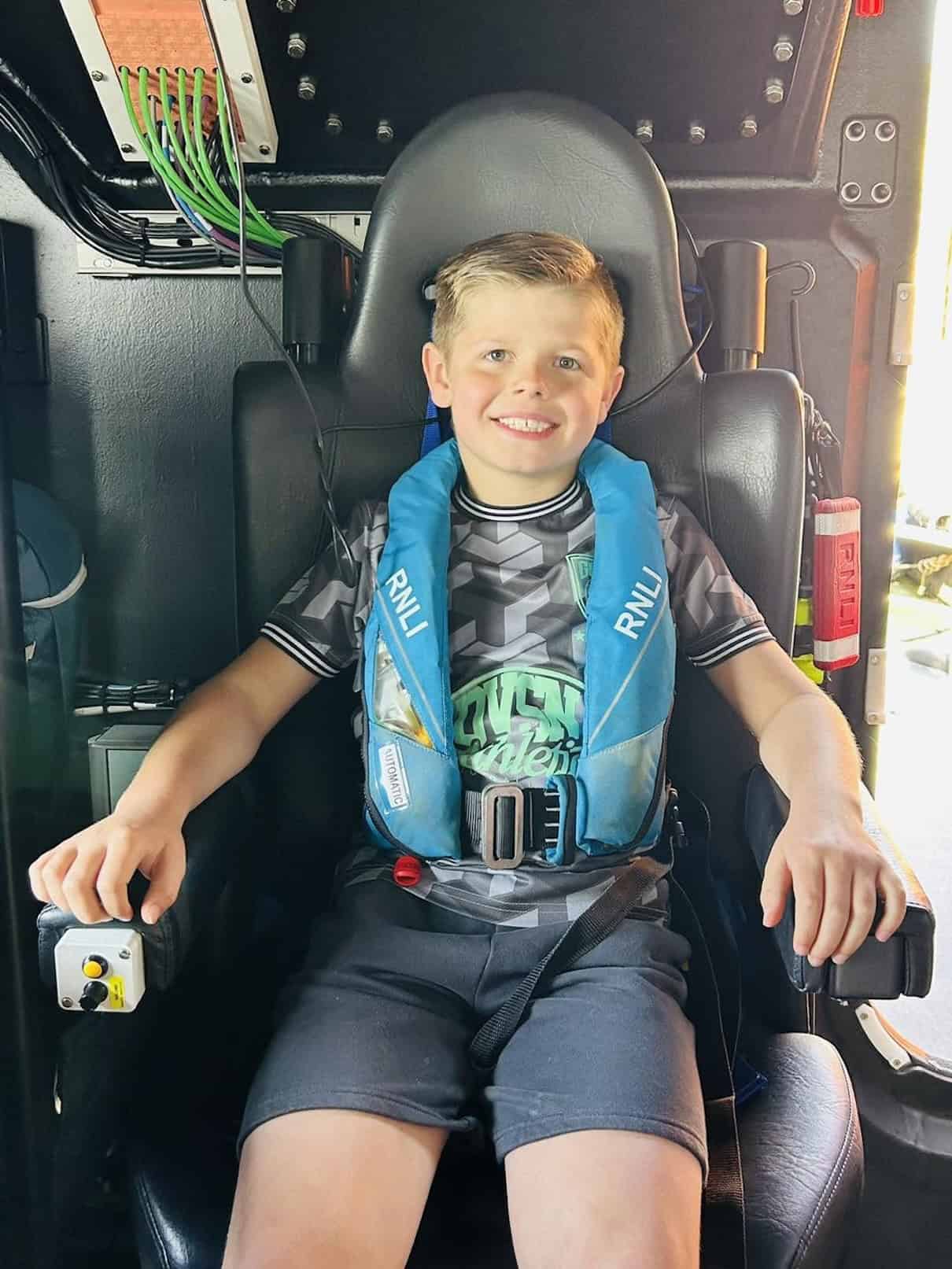
Despite the terrifying situation, Marley remained calm and used a phone the pair had stored in a waterproof pouch to call his grandmother who was back on shore. She then called the coast guard, and a lifeboat was launched.
When a crew from the Barry Dock RNLI arrived to rescue the pair, Dai had spent about 25 minutes in the water, which was hovering around 11°C/52°F.
“The crew were absolutely brilliant and looked after both of us from start to finish. To be honest, I genuinely don’t think I’d be here today without them,” Dai shared in an interview.
In the 25 minutes Dai spent in the water, he and Marley drifted roughly 4 km (2.5 miles) from where they’d entered. Rescuers say the incident highlights both the risks of powerful tides and currents and how quickly cold water can affect even experienced paddlers.
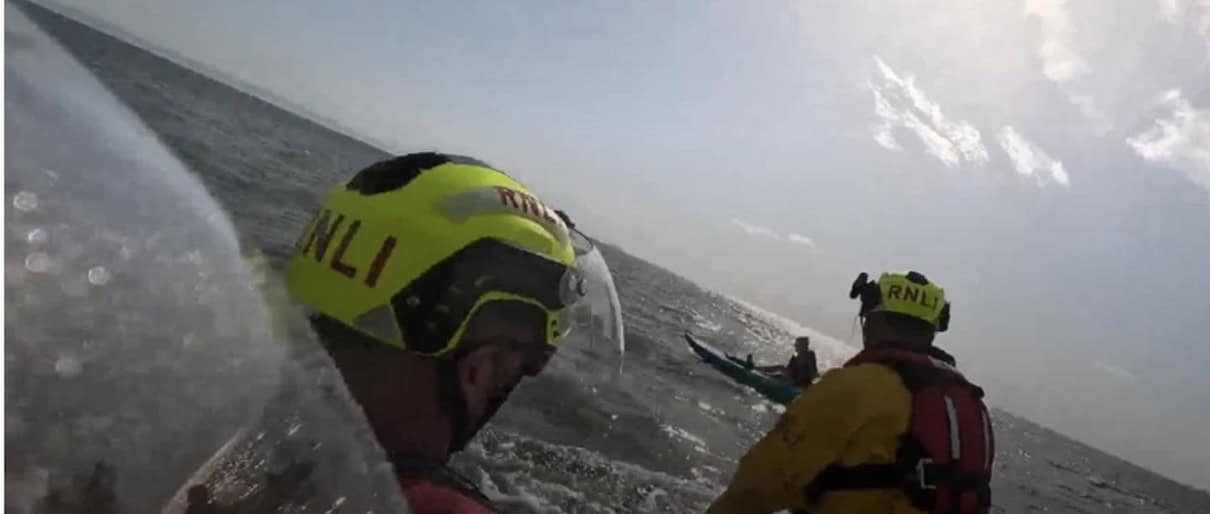
“Even when people are experienced and prepared, things can go wrong very quickly at sea, particularly in the Bristol Channel where the tides and currents are extremely powerful,” rescuer Andy Gavan shared in a Barry Dock RNLI Facebook post.
Paddlers praised for doing ‘exactly the right thing’
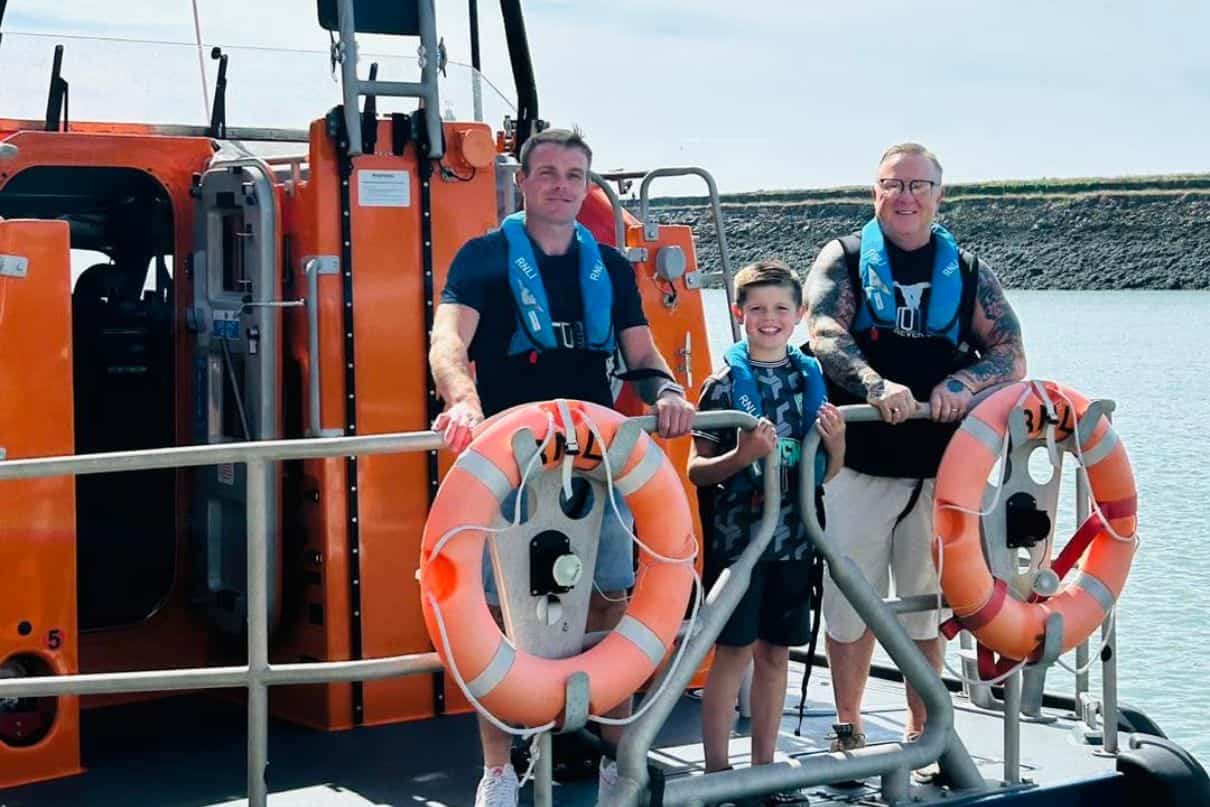
A few days after the incident, Marley and Dai were invited to visit the Barry Dock RNLI Lifeboat Station where the rescue crew presented Marley with a special medal to recognize his calmness and courage.
“I’d particularly like to praise Marley. He remained incredibly calm throughout the incident, contacted his Nan, shared his location and helped raise the alarm while keeping an eye on his Granscha in what must have been a frightening situation. He showed real maturity and stayed level-headed throughout,” Gavan told Barry Dock RNLI.
Beyond Marley’s courageous actions, the crew also praised Dai for helping Marley back onto the kayak and for remaining with the boat, which helped the rescue crew to find the two.
“Marley and Dai did exactly the right things when they found themselves in difficulty,” Gavan said. “They were both wearing life jackets, they had a mobile phone in a waterproof pouch, they called for help when they realized they were unable to get safely back to shore and they stayed with the kayak.”
The incident also highlights the importance of always being prepared for immersion. Bodies lose heat quickly in cold water, so even on warm days, paddlers should dress for immersion. That means choosing synthetic fabrics or wool and avoiding cotton clothing, which retains water and speeds up cooling when wet. If the water is less than 21°C/70°F, it’s a good idea to wear thermal protection, like a wetsuit or drysuit.
While Marley and Dai were able to call for help using their phone, phones might not always work in an emergency situation. A waterproof VHF radio is a more reliable means of communicating with the Coast Guard and other boat traffic. Cell phones are a great backup.