When I ask Lili Colby to recommend the best PFD for me, her answer of a belt pack inflatable catches me off guard. I’ve been paddling for over 30 years, in just about all disciplines—sea kayaking, canoeing, whitewater boating and a bit of standup paddleboarding. I’ve had a series of paddling-specific foam PFDs with pockets, quick-release towboats, and other bells and whistles. Over the past decade I’ve focused mostly on canoe tripping: multi-week journeys with a mix of lakes and down- and upstream travel, and many portages.
Colby is the industry and outreach representative at Mustang Survival and a longtime paddling professional. She also attends many industry events where she puts on presentations about inflatable life jacket operations and maintenance.
I made a confession to her: I appreciate the margin of safety my PFD affords on big water, but its bulk is an uncomfortable nuisance on hot, calm days and long portages, where it simply gets in the way. It’s a relief when Colby doesn’t pass judgment when I hesitantly tell her that on the usual flatwater day in midsummer, my PFD serves as a sunshade for the food duffel in the middle of my canoe.
“You’re not alone in doing that,” she intones. “But there’s a better solution.”

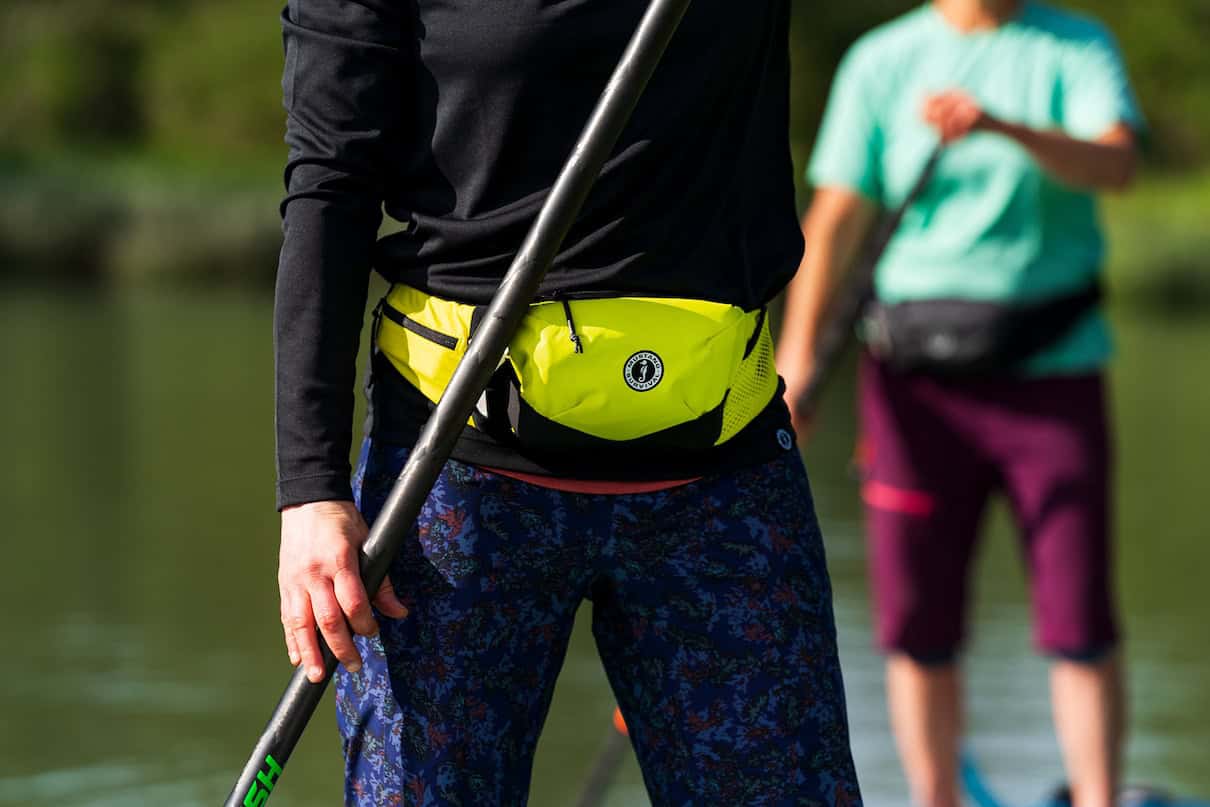
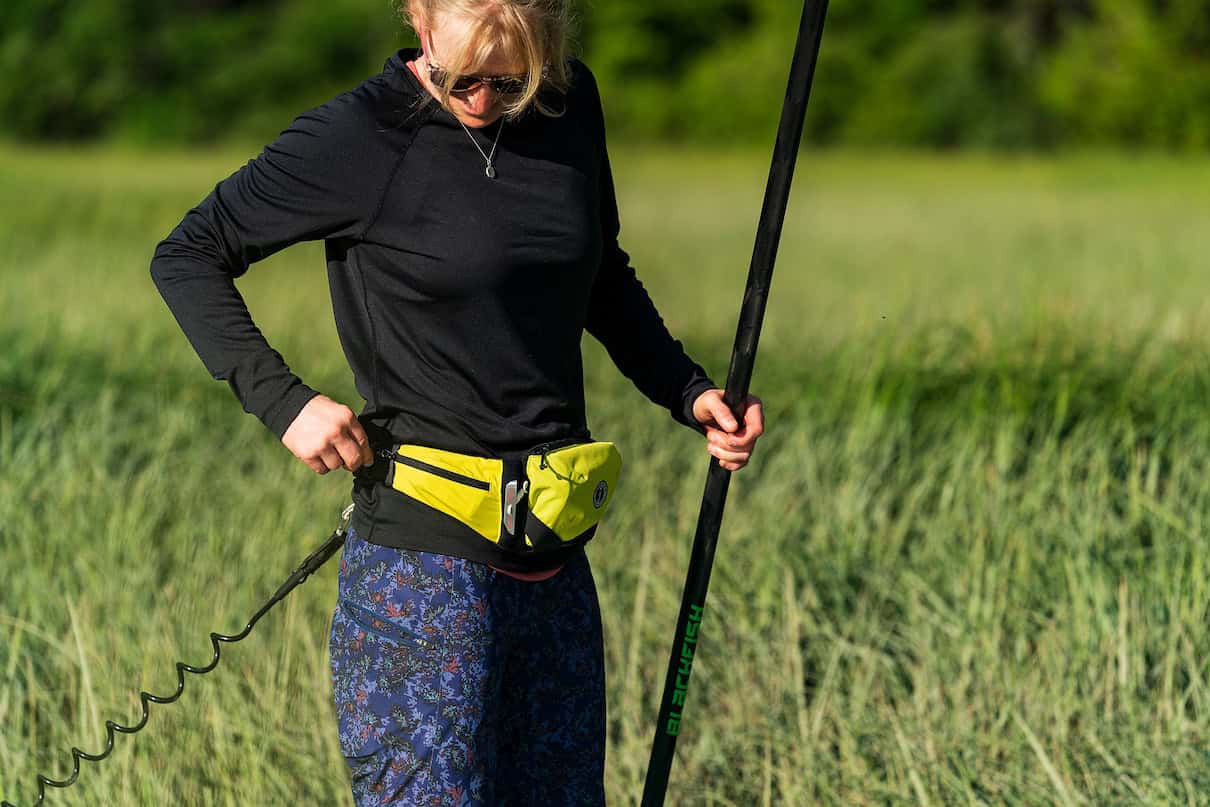
Colby suggests the Minimalist Inflatable Belt Pack, a waist-mounted inflatable PFD that’s barely bigger than my wallet, yet complies with U.S. Coast Guard and Transport Canada regulations when used in the right context. “It’s all you need on a flatwater trip in warm weather,” she insists. “You’re legal and you’ll have plenty of flotation in the unlikely case that you swim.
The Minimalist is among nine inflatable PFDs Mustang Survival offers, including belt packs, yoke-style and hybrid foam. Once you’ve selected a style, the next big decision is whether to go with automatic or manual inflation, or a convertible that allows you to switch between the two. Here, we’ll help you know which is right for you according to your paddling habits.
Of choosing any of their inflatable offerings, Colby says, “Easy, breezy.”
I start imagining the freedom—and the points I’ll score with my partner, who is always chastising me to wear my life jacket—in shedding my hot and bulky PFD and wearing a simple inflatable belt pack. “Of course, you’ll need to wear a foam PFD if your trip has moving water,” Colby adds, “but on those days you can easily stuff the inflatable in your pack.”
The origins of inflatable PFDs
Inflatable PFDs have been around for years, yet paddlers have been slow to appreciate their benefits. In fact, the concept of air-based flotation dates back over a century, Colby says. The technology came into its own in World War II, when Allied airmen relied on yellow inflatable vests known as Mae West life preservers, a nod to a bosomy American actress and performer.
Decades later, in the 1990s, Mustang Survival was the first to manufacture a contemporary inflatable life jacket—collaborating with Billabong, a popular surfing brand, to create inflatable flotation bladders to help Hawaiian big wave surfer Shane Dorian survive epic wipeouts.
Mustang technological advancements like durable radio-frequency welded seams trickled down into Mustang’s first-generation inflatable belt pack. The U.S. Navy promptly made this model standard-issue across its fleet, speaking to the brand’s long-standing relationship with professional users, including the Canadian and U.S. Coast Guard, Navy SEALs, law enforcement and NASA.
Standup paddleboarders eventually discovered inflatable belt packs as an extra measure of safety on the water. Mustang’s stake in the recreational market expanded as more paddlers recognized the attributes of inflatable PFDs.

In particular, the innovative Khimera Dual Flotation PFD, a foam/inflatable hybrid launched in 2019, was a game-changer, for its streamlined fit and high buoyancy. As a rule, inflatables are cool, comfortable and lightweight; there’s no excuse not to wear one, no matter how hot and benign the conditions, says Colby, who is a board member of the Canadian Safe Boating Council. The key is choosing the right model for your application.
Inflatable PFD styles
Many inflatable PFDs sport a “Harmonized Level 70” label, explains Colby. This reflects a binational Canada-U.S. certification for inflatable PFDs with a minimum of 70 Newtons (about 15.7 pounds) of buoyancy. The certification stipulates that these PFDs are designed for people who weigh more than 88 pounds, are 16 years of age or older and are good swimmers. They are not meant for use in moving water or whitewater, where their straps present a risk of entanglement.
You can read more about new changes to PFD regulations in the U.S. and Canada here.
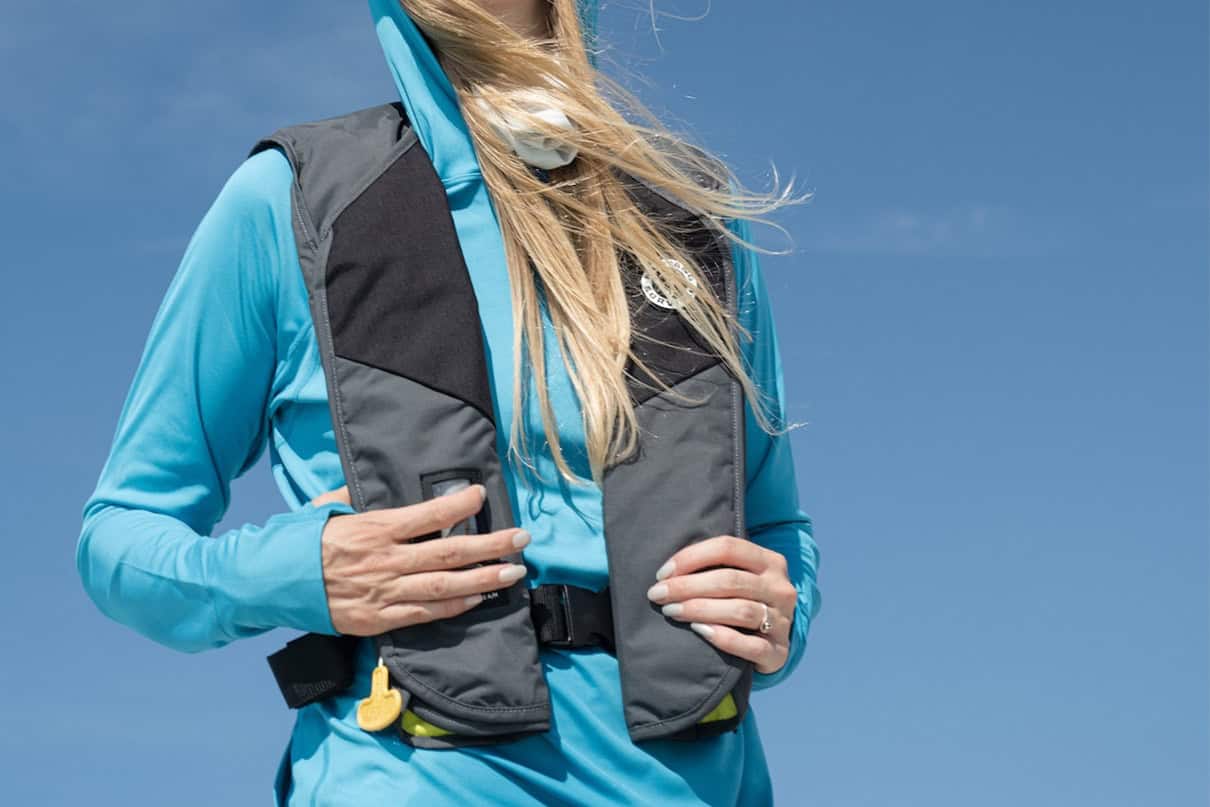
Besides the Khimera, which looks like a typical foam PFD, inflatables generally come in two styles: belt packs and yoke-style, which fit over the shoulders like a vest, such as the popular MIT inflatable range.
Manual vs automatic inflatable PFDs
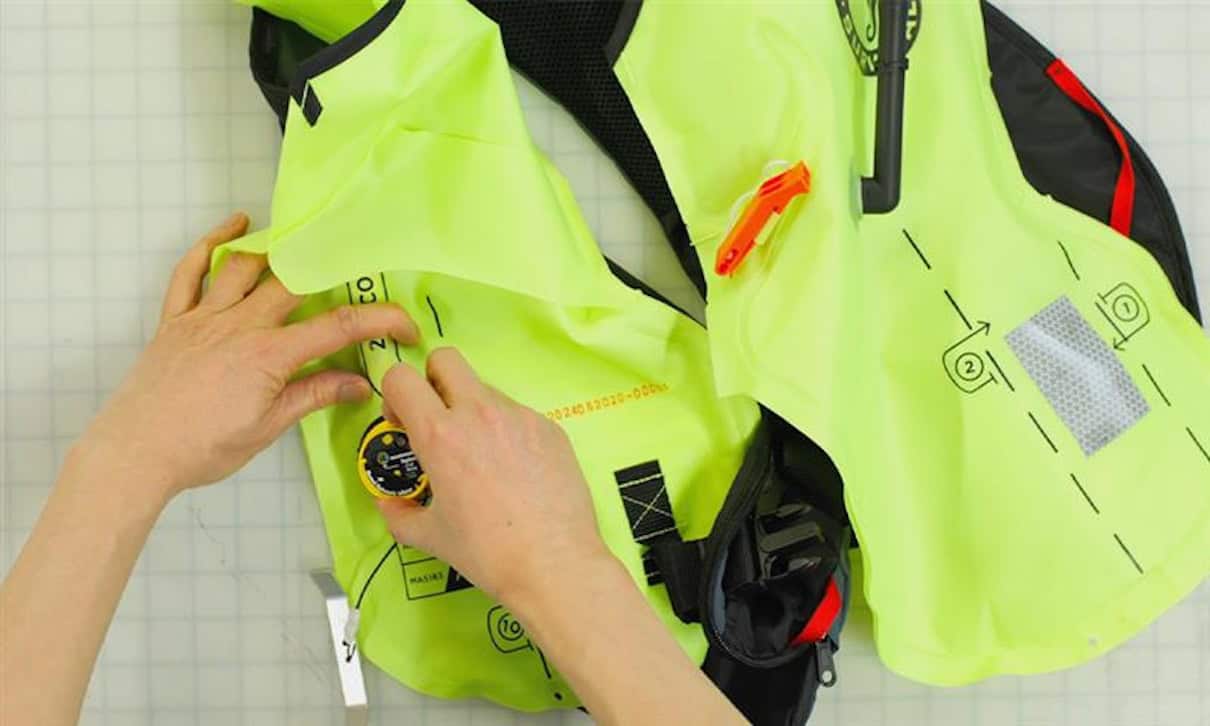
Colby says there are three main parts to an inflatable PFD: the “lungs,” or air bladders; the “muscle,” or inflator; and the “brain,” which is the mechanism to activate the inflator. The “muscle” of all inflatable PFDs is a CO2 cartridge for rapid inflation, as well as a backup oral tube to inflate by mouth. In “manual” models like the MIT 70, the user is the “brain,” with the CO2 inflator activated by pull-tab. These are generally the preferred option for paddlers, Colby says.
“Automatic” models come with different types of inflators, and are all triggered to inflate when submerged in water. This makes them unsuitable for people who are paddling in scenarios where falling in the water isn’t a problem, such as when paddling close to shore or in the shallows where they can stand up safely. “You don’t want your PFD to inflate when not needed,” Colby adds.
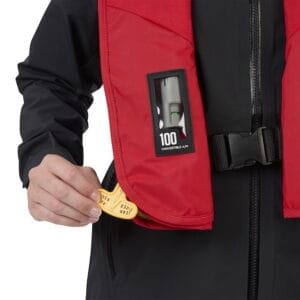
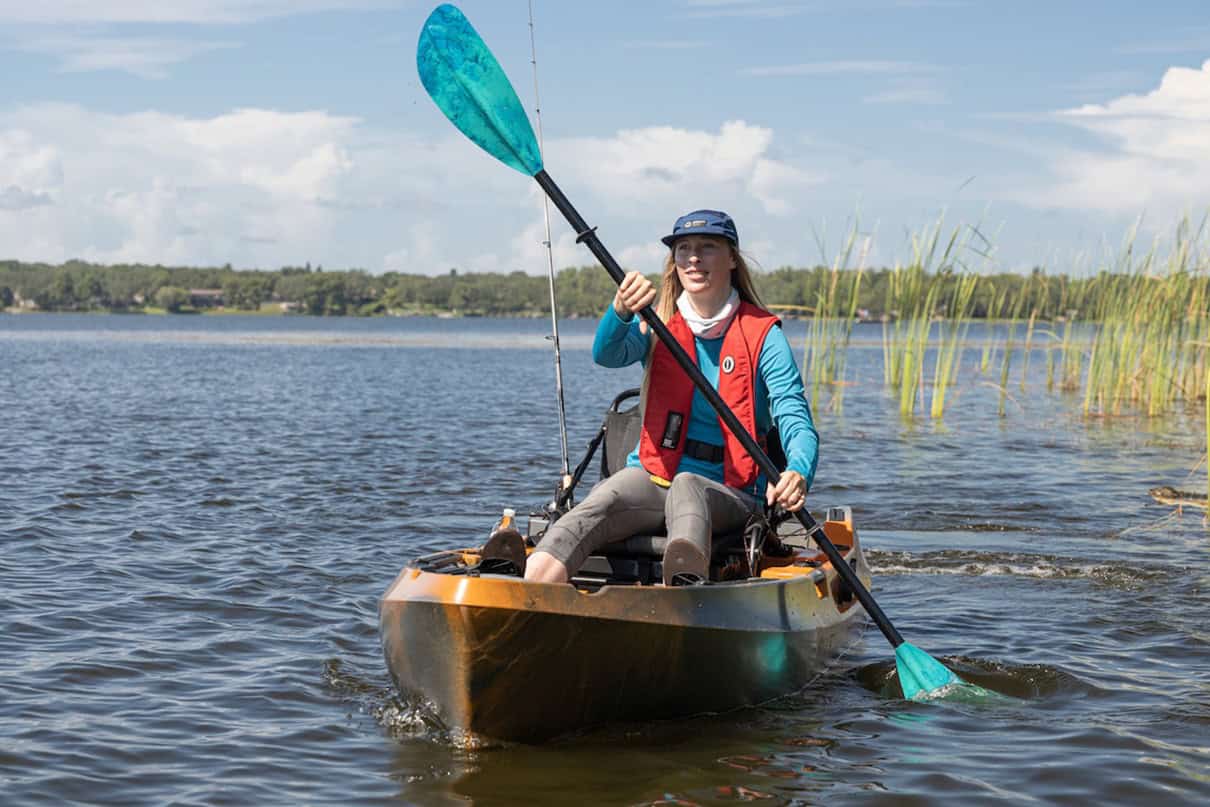
However, a PFD with an automatic inflator (such as the MIT 100 A/M Convertible Inflatable PFD, which can be set in either automatic or manual modes) could be a key safety feature for offshore kayak anglers.
“[Kayak fishing] boats are top-heavy and they are loaded with gear,” says Colby. “[Kayak anglers have] their hands full, they are often out there by themselves—and then they hook a fish of a lifetime. An automatic inflatable PFD could save their life.”
Inflatable PFD maintenance
Along with an awareness of the regulations around inflatable PFDs, users must also commit to the responsibilities of using them. “You need to make sure you are armed and ready,” Colby says. That means making sure the inflator mechanism is in good shape (components of a CO2 cartridge will corrode over time) and ensuring the air bladders do not have leaks. Colby suggests inspecting these elements at least once per year.
A CO2 cartridge that’s been deployed or worn out is easy to replace by purchasing the appropriate rearm kit for the model from the manufacturer, and following the instructions, for a fraction of the cost of a new PFD.
Colby’s description of inflatable PFDs could be a game-changer for me. I was lucky to get a one-on-one consultation, but Mustang’s new online PFD Finder is a good alternative.
“It takes more thought to choose an inflatable PFD, especially when you’re used to the simplicity of foam,” she says. “But it can be such a great choice because it’s just so much more comfortable, and you’re more likely to wear it.”