Backcountry travel used to mean disappearing off-grid for days or weeks at a time. Not anymore. I’ve tested satellite communicators on long paddling trips, bikepacking journeys and remote international travel, and today’s devices are ultra-tough, small enough to fit in your PFD, can pair with your smartphone, and keep you in touch with home.
For adventures beyond cell service, a satellite communicator is the best way to gain peace of mind, both for yourself in case of emergency and for loved ones following your breadcrumb trail back home.
Best Satellite Communicators: Our Top Picks
- Best overall: Garmin inReach Mini 3
- Most lightweight: ACR Bivy Stick
- Best for day trips: iPhone Satellite Messaging
- Best for single-device functionality: SPOT X
- Best for internet: Starlink Mini
Best Overall Satellite Communicator
Garmin inReach Mini 3
$449 USD
Buy from:
Why I love it
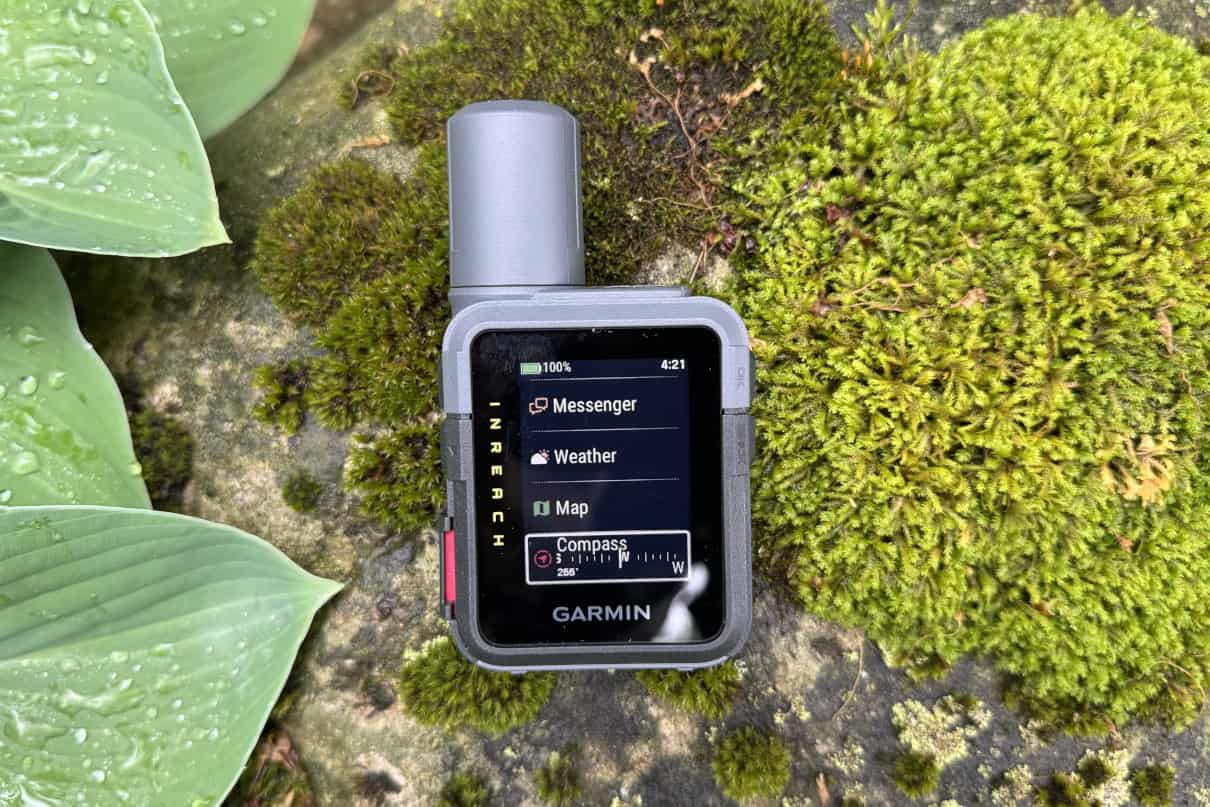
The Garmin inReach Mini 2 has been my most-used satellite communicator since 2022, so I was excited to test the Mini 3.
What I love about the Mini 2: its compact size, reliable connectivity and excellent battery life. On a multi-month cycling trip, I set the device to update my location every hour so family 5,000 miles away could follow my route. I needed to recharge it just once a week.
The next-generation Mini 3 improves on the above with a touchscreen, color display and better battery life, Garmin claims up to 350 hours at 10-minute tracking intervals. It keeps the same formula of two-way messaging, SOS capability and weather reports in a palm-sized package that weighs just a fifth of a pound (4.3 ounces).
All the core features of the Mini 3 work whether or not it’s paired to your phone—you can even peck out messages from the device directly, circa a 2005-era cell phone. For an additional $50, it makes sense to upgrade to the Mini 3 Plus for the ability to send images and voice messages via Bluetooth connection with your smartphone. That said, bargain hunters will be tempted to wait for a sale on the Mini 2, which drops down to $249 a couple times a year, for most of the same core functionality at close to half the price.
Garmin data plans start at $7.99 a month, and there is a one-time $39 activation fee. As of June 2026, most service plans can be suspended for up to 12 months at a time while maintaining the SOS function.
Reasons to buy
- Reliable Iridium satellite coverage for SOS and two-way messaging
- Excellent battery life
- Compact, lightweight and ultra-tough
Consider another if
- Your adventures rarely take you beyond cell service
Bottom line
With reliable SOS and two-way texting capability in a tough little package, the Garmin inReach Mini series is hard to beat.
Most Lightweight Satellite Messenger
ACR Bivy Stick
$199.95 USD
Buy from:
Why I love it
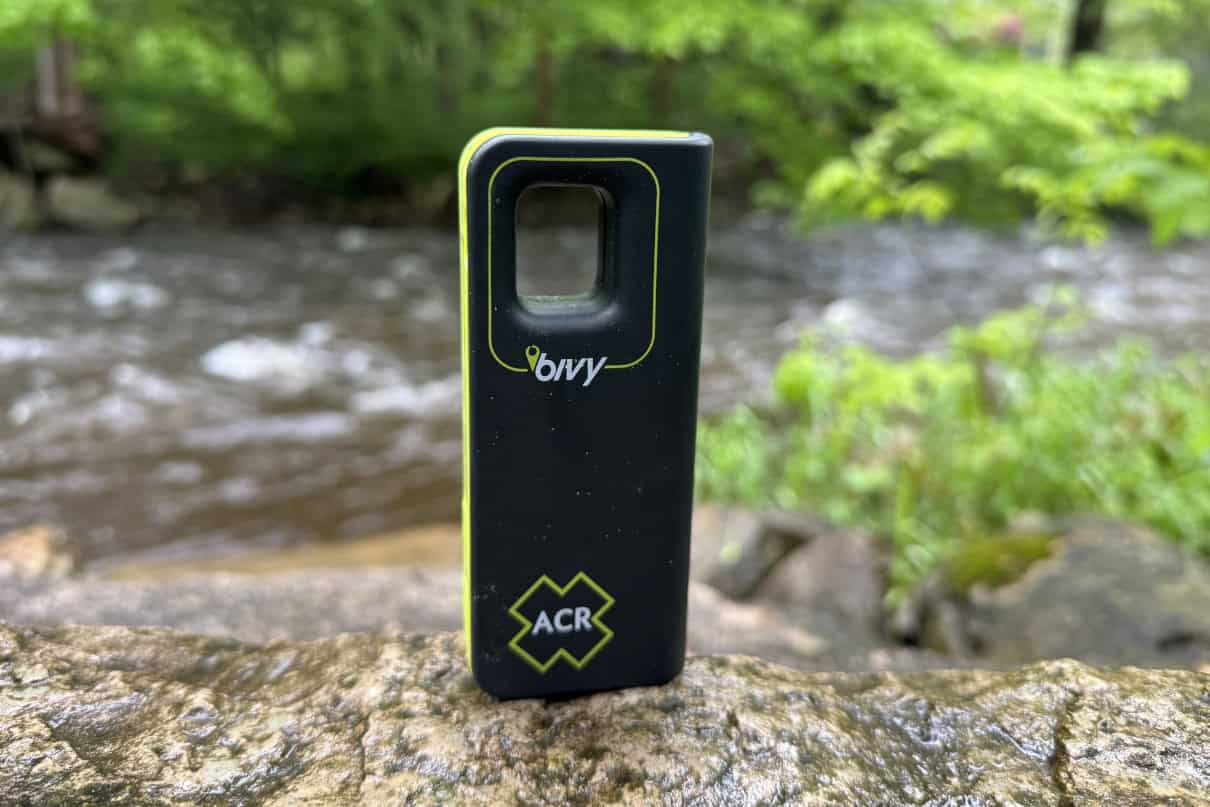
A favorite around the Paddling Mag office, this is a fellow editor’s go-to because it’s reliable, easy to use and ultralight. It’s also the lightest device we tested at 3.3 ounces. The ACR Bivy Stick is best used when paired with your cell phone, though you can use it as a standalone device to signal SOS, send a preset check-in message and start/stop tracking. The app offers user-friendly functionality, though not everyone likes having to use a second device for full functionality.
Multisport adventurers who like analyzing their activity data will also appreciate that the Bivy Stick can label tracked adventures with activity type and access stats including time, distance, vertical, calories burned, average speed and top speed.
The Bivy Stick is also the most budget-friendly device featured here. Its data plans start at $14.99 per month for an annual plan or $19.99 for a month-to-month plan, and there is a one-time $29.99 activation fee. For those who only need a satellite communicator for part of the year, the Bivy Stick has no deactivation fees after the initial three-month commitment.
Reasons to buy
- Lightweight
- Intuitive smartphone app with detailed trip stats
Consider another if
- You don’t want to rely on your smartphone for full functionality
Bottom line
The ACR Bivy Stick combines top-of-the-line features in one compact package.
Best For Day Trips
iPhone Satellite Messaging
Free
Buy from:
Why I love it
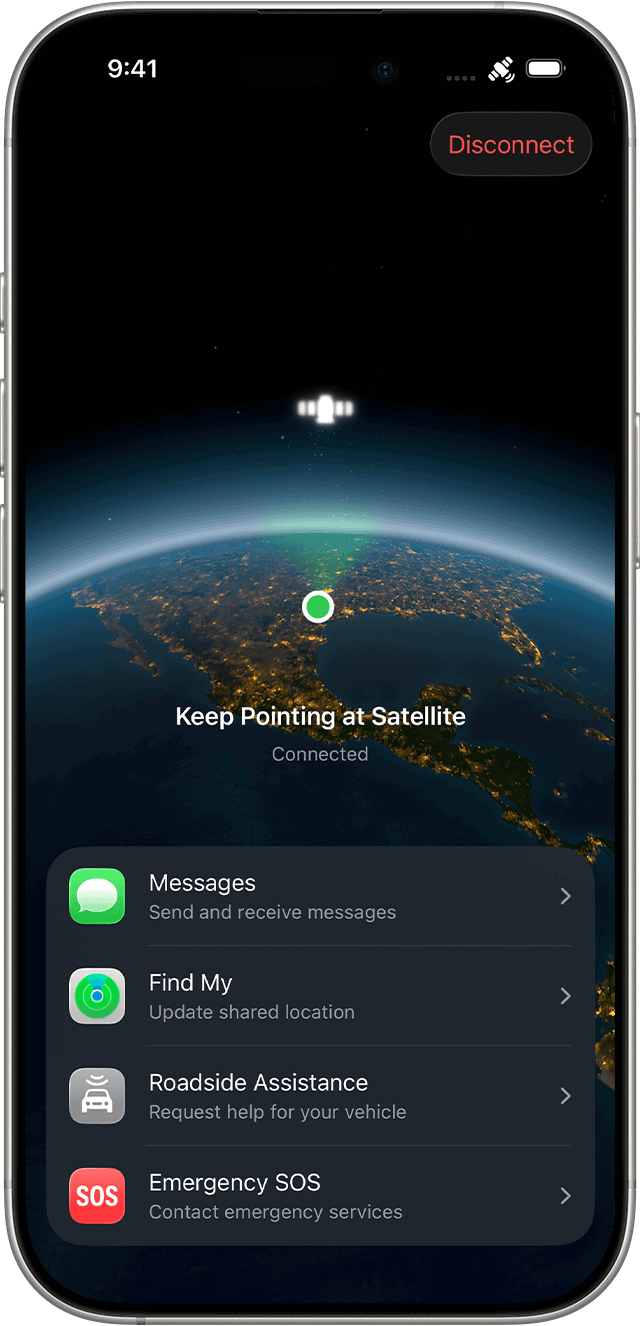
If you’re running iOS 18 on an iPhone 14 or newer, great news: you already have a satellite communicator in your pocket. Lose cellular service and a small satellite icon will pop up in the top-right corner of your iPhone. Open the iMessages app and your phone will prompt you to turn left or right toward the nearest satellite and alert you once connected.
On an open lake, messages take about 30 seconds to a minute to send, and you can text individuals, but not groups. You do need an open sky to connect. The biggest advantage is that this service is currently free. There’s no subscription or additional device to buy or download, and most iPhone users are probably already carrying their phone into the wilderness as a camera. Messaging via satellite is a bit of a suck on the battery life of the phone, but that’s not unexpected—the messages are going to space, after all.
Some online chatter claims this feature will make dedicated satellite communicators obsolete, but I’m skeptical. Compared to these other devices, my iPhone is delicate. Sub-zero temps or being left out in the sun can render it a brick. Shattering the screen can make it unusable. And I’ve been locked out of my phone for an hour after it rattled around in a pocket and initiated too many passcode attempts.
That said, smartphone satellite messaging is a genuinely cool communication option. For wilderness travel, I’m still packing a dedicated satellite communicator in case SHTF.
Reasons to buy
- It’s free! No additional device or subscription required
- No extra weight or device to pack
Consider another if
- You need a rugged device
- Long battery life is essential for longer trips
- You want dedicated SOS, tracking or communication without relying on your phone
Bottom line
Best for casual adventurers who don’t need a bombproof device.
Best For Single-Device Functionality
SPOT X
$249 USD
Buy from:
Why I love it
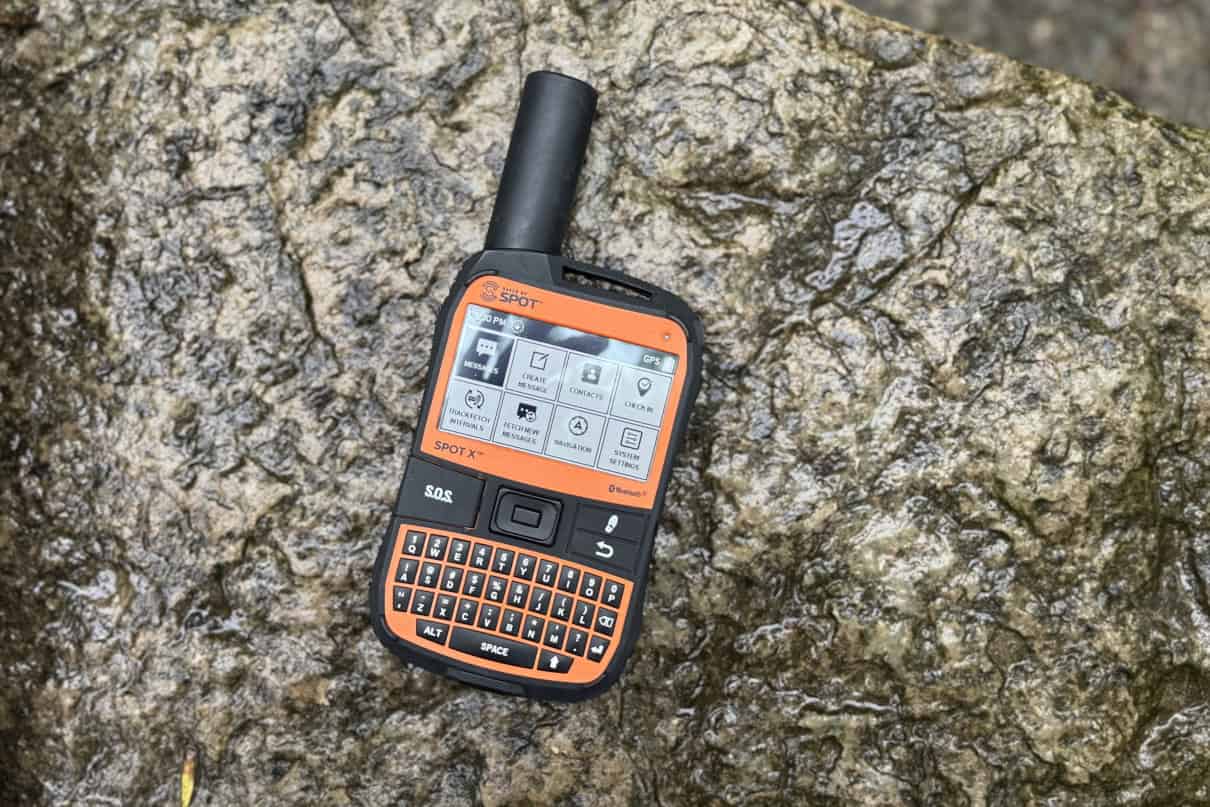
As more and more satellite communicators require pairing with smartphones for optimal functionality, there is something refreshingly vintage about this standalone device. Die-hard Blackberry fans—hi, Dad!—are still thrilled with the SPOT X thanks to its handy QWERTY keyboard that makes writing custom messages easy. The trade-off is that this device weighs twice as much as most handheld devices featured here.
First released in 2018, the SPOT X features Bluetooth connectivity so you can pair it with your phone. SPOT offers contract plans (starting at $11.95 a month) and month-to-month plans (starting at $14.95 a month).
In April 2026, Amazon bought SPOT’s parent company, satellite operator Globalstar, for $11.6 billion. According to the press release, “The acquisition will fold Globalstar’s existing and forthcoming low Earth orbit satellites into Amazon Leo, enabling direct-to-device services that extend cellular voice, text and data coverage.” SPOT devices continue to operate as normal.
Reasons to buy
- Full QWERTY keyboard makes composing messages easy
- Works as a true standalone device, no smartphone required
Consider another if
- You aren’t specifically looking for a physical keyboard. Newer satellite communicators are smaller, lighter
- You want a more modern interface
- You need broader satellite coverage offered by Iridium network
Bottom line
If typing messages on the device itself is your priority, the SPOT X still stands apart.
Best For Internet
Starlink Mini

$250 USD
Buy from:
Why I love it
The first time I fired up the Starlink Mini from a wilderness campsite, it felt vaguely dystopian. One minute, I was listening to loons and watching the sun set with no cell service. Sixty seconds later, my phone exploded with notifications as the Mini ushered the entire internet into the backcountry.
Weighing two pounds, the Mini is roughly the size of a MacBook Air and fully weatherproof. Activation is simple: Sign up for a Roam data plan ($50 for 100 GB per month) and connect your iPhone to its Wi-Fi. Easy.
The Mini needs roughly 110 degrees of open sky to lock onto satellites, so large lakes offered quick connectivity, while river valleys sometimes prevented connection.
The catch is the Mini needs a battery to power it. I brought along the Jackery 300 Plus Explorer—a portable power station better suited to car camping or off-grid cabin weekends—which powered the Mini once a day for two weeks. The battery unit added eight pounds and is about the size of a four-slice toaster.
Since I was testing this setup on a river trip, both the Mini and its battery were housed in waterproof cases. All this tech and its protection required an extra backpack and weighed about 16 pounds. Yikes.
Reasons to buy
- High-speed internet virtually anywhere with a clear view of the sky
- Portable enough for road trips, van life, remote cabins and really stubborn canoe trippers
Consider another if
- You only need SOS and satellite messaging
- You’re traveling by human power
Bottom line
For road trippers and digital nomads needing reliable and portable connectivity beyond the grid, the Starlink Mini is in a league of its own. For everyone else, it’s overkill.
What To Consider When Buying A Satellite Communicator
A handful of factors are worth weighing before buying a satellite communicator.
Features
Some devices offer only SOS and two-way messaging, while others add weather forecasts, navigation and activity tracking. Communicators might also rely on a smartphone companion app for easier texting, location sharing, photo sharing and voice messages, while others offer a full keyboard and screen, or just the SOS and preset messages essentials. Decide what type of features are indispensable to you, and whether you want a standalone device or one that pairs with your smartphone.
Subscriptions
Subscription costs are another important consideration. In addition to the device itself, most satellite communicators require a subscription plan, so compare monthly fees, activation costs and whether you can suspend service during the off-season without having to pay a deactivation fee.
Battery life
Longer trips need longer battery life, as will paddlers who want to message more frequently, so consider whether you’ll be sending a single daily check-in or tracking your route every 10, 30 or 60 minutes. Tracking frequency will dramatically affect how much battery is used.
While weight is a consideration, aside from the Starlink Mini, the satellite communicators featured here are light enough that a couple extra ounces will not make or break the decision for all but the most ultralight adventurers.
Best Satellite Communicator Brands
How We Tested
We tested these satellite communicators on paddling trips and bikepacking adventures beyond cell service. To test these devices, our editors evaluated setup, user-friendliness, battery life, cost, portability and reliability.
Our testing included everything from double-carrying the Starlink Mini and its beefy battery along a canoe route with 20 kilometers of portaging to using the Garmin inReach Mini 2 for months of bicycle touring. These recommendations also draw on years of field experience and the collective expertise of Paddling Magazine’s longtime contributors who have relied on satellite communicators across thousands of kilometers of wilderness travel.
 This article was published in Issue 75 of Paddling Magazine.
 Feature Image: Kaydi Pyette