

Level Six is entering the life jacket market in a big way. The Ottawa-based brand has certified 24 new models, 10 of which will ship to retailers in March 2027. The collection will include the first low-profile 50 newton buoyancy aids approved for the North American market by the U.S. Coast Guard and Transport Canada.
The company will introduce the remaining 14 designs over the next few years, Level Six founder and CEO Stig Larsson said in a wide-ranging interview on the Paddling Business Talks podcast, with host Jeff Moag and Scott Szczepaniak, former owner of Sea Kayak Carolina turned recreational boating safety specialist with the U.S. Coast Guard.
“We knew we couldn’t enter this market with just one or two models,” Larsson said. “We had to enter as a real contender and offer a wide assortment.”
The launch brings an established paddlesports apparel brand into a highly regulated category. It also arrives as the new Level 50 standard opens the door to slimmer, lighter buoyancy aids for paddling and other types of boating.
Level 50 buoyancy aids provide at least 50 newtons, or approximately 11 pounds, of flotation—a step down from the 15-plus pounds in the Level 70 or Type III life jackets most paddlers are familiar with. The reduced volume allows manufacturers to build lower-profile products with greater mobility and less heat retention.
Szczepaniak said that comfort was a key element in the U.S. Coast Guard’s decision to certify the Level 50 standard.
“Fit and comfort are two of the top things a paddler looks for in a life jacket,” Szczepaniak said. “If you have an orange Type II horse-collar from a big box store, it’s going to float you. But you’re not going to wear it. It’s just not comfortable.”
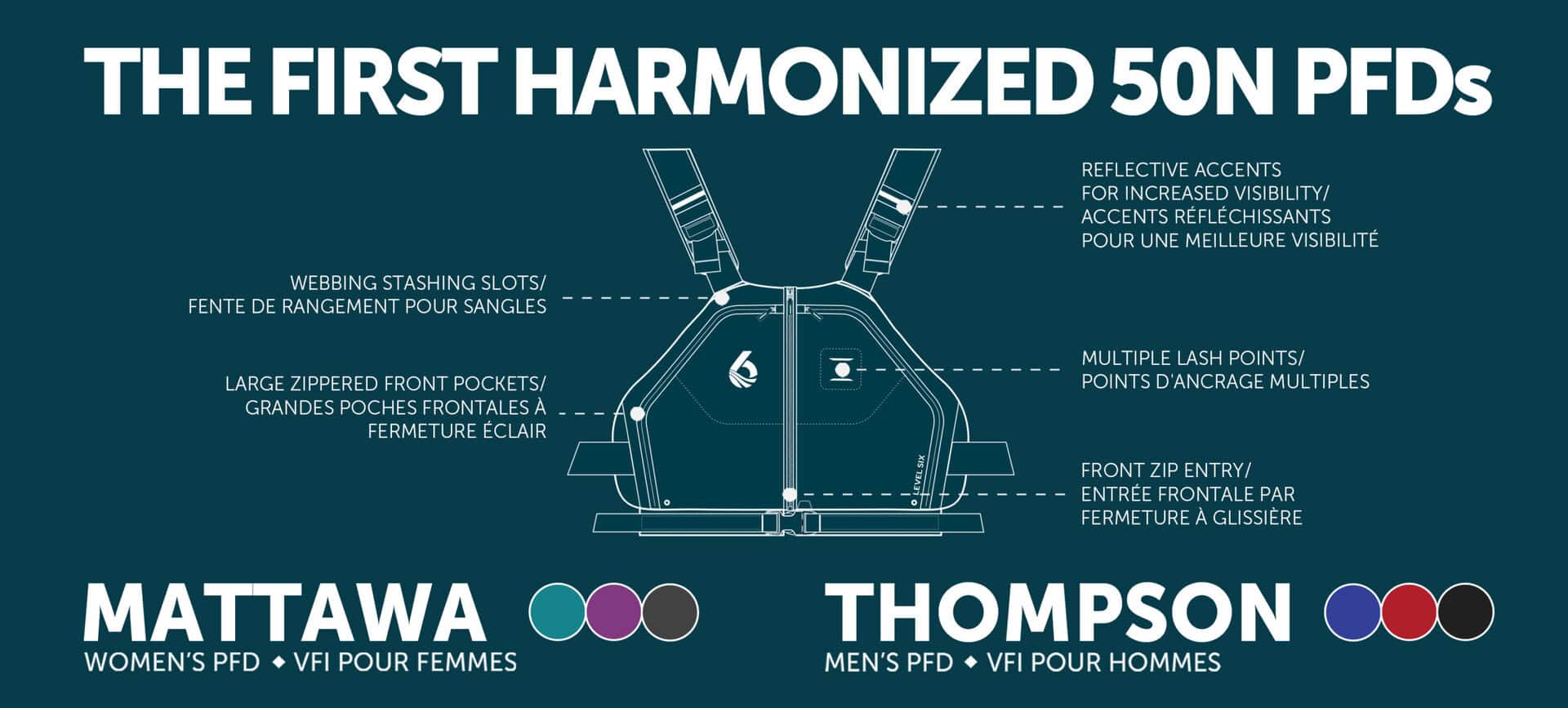
That gets to the grand bargain behind the Level 50 harmonized standard agreed to by regulators in both the United States and Canada. The U.S. Coast Guard and Transport Canada accepted less buoyancy in exchange for designs people are more likely to wear. As Szczepaniak puts it, “Eleven pounds of buoyancy on your body is better than 16 pounds of buoyancy clipped to your seat.”
That’s where the new standard’s key stipulation comes in: Level 50 buoyancy aids must be worn to count toward U.S. carriage requirements. Slipping one under the deck bungy doesn’t count. Szczepaniak notes the new PFDs are intended for competent swimmers in relatively protected waters where help is nearby. They are not recommended for poor swimmers, non-swimmers or remote and extreme conditions.
For paddlesports dealers, the new class of buoyancy aids create both a sales opportunity and an educational responsibility. Retailers must help customers choose the right performance level while emphasizing that comfort only helps if they wear the jacket.
A founder’s bet
Larsson said that he has wanted to enter the life jacket category for more than a decade. Level Six nearly submitted designs for Coast Guard approval before the pandemic, but supply-chain challenges interrupted the effort.
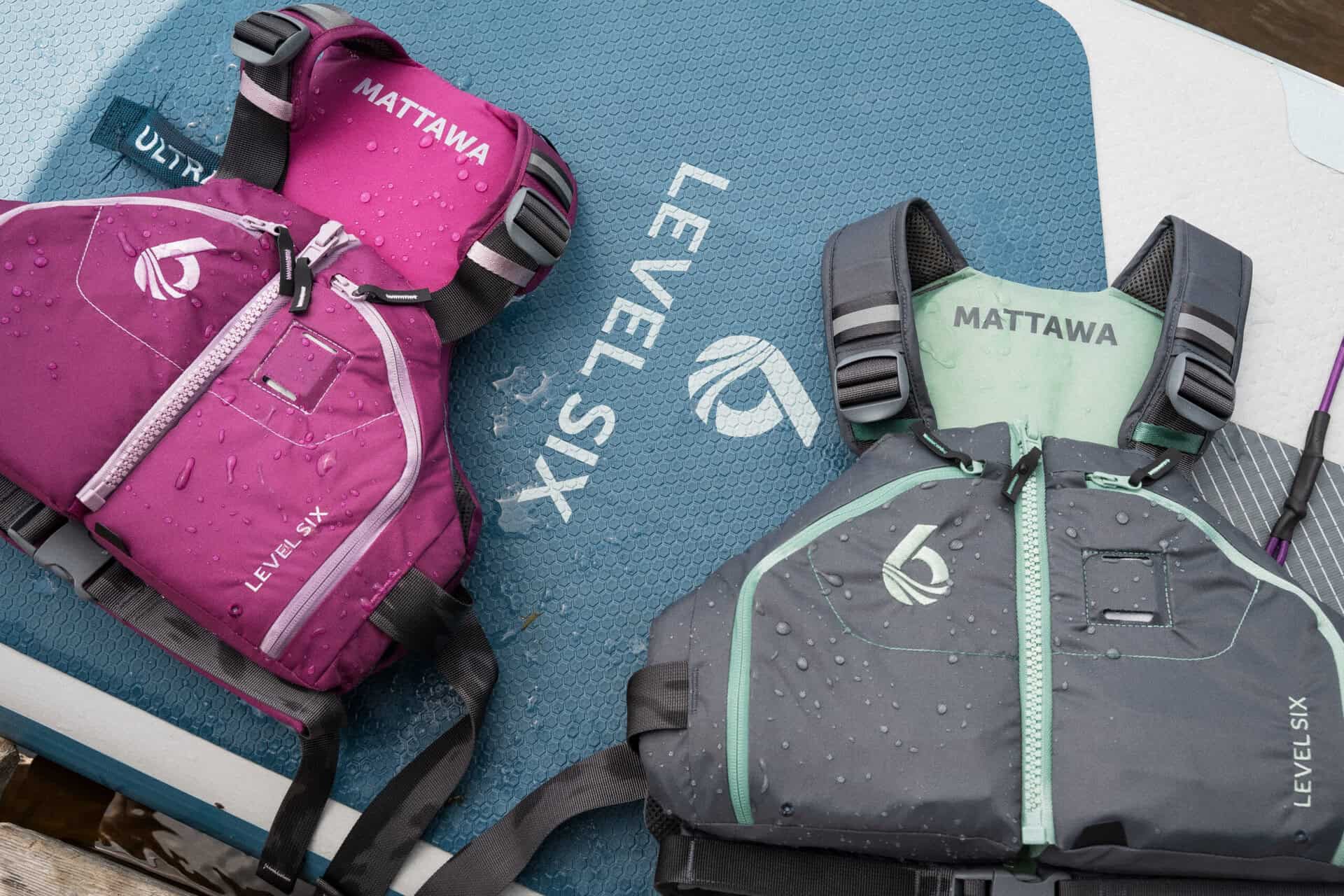
The delay gave the company time to reconsider the scale and direction of the project. Female paddling participation was growing, and Larsson saw an opportunity to create a women-specific counterpart for every men’s model.
Then, in characteristic fashion, the former World Cup slalom racer charged straight into the meat.
“I think if Level Six were owned by a private equity firm, we would never have done it,” Larsson said. The expense and regulatory risk of certifying two dozen new PFDs doesn’t pencil out on a spreadsheet, especially before proving the market. But as a founder, Larsson had the freedom to trust his instincts.
“There is nobody I need to get approval from on some of these riskier or crazier ideas,” said Larsson, who founded Level Six 30 years ago while representing Canada on the World Cup circuit.
During a training trip to Costa Rica in the winter of 1997, he decided paddlesports apparel lacked the kind of style he saw when visiting local surf breaks. Back home in Ottawa that spring, he began designing rash guards, board shorts and lightweight paddling garments, then selling them from the back of his van at races. That grew into a few retail accounts in Ottawa. Today, Level Six products are carried in more than 450 stores worldwide. The company will mark its 30th anniversary in 2027.
Read and run
Slalom racing is a game of calculated risk. Getting down the river is easy, but if you want to win you have to commit to the fastest line – one that risks a costly gate touch or even a 50-second penalty for missing a gate altogether. Go big or go home.
That mindset explains Larsson’s leadership last year. The U.S. Coast Guard had approved the Level 50 standard, but Travel Canada had not. Corporate risk assessors would have tapped the brakes; Larsson stepped on the gas.
Level Six kept working, focusing design work on the tried-and-true Level 70 standard. Then, when those designs were completed, they dived into the Level 50 work, creating a suite of designs and samples based on the standard it expected Transport Canada to adopt. This approach is standard procedure in whitewater: You make your best assessment of what the crux will look like when you get there, and then you commit.
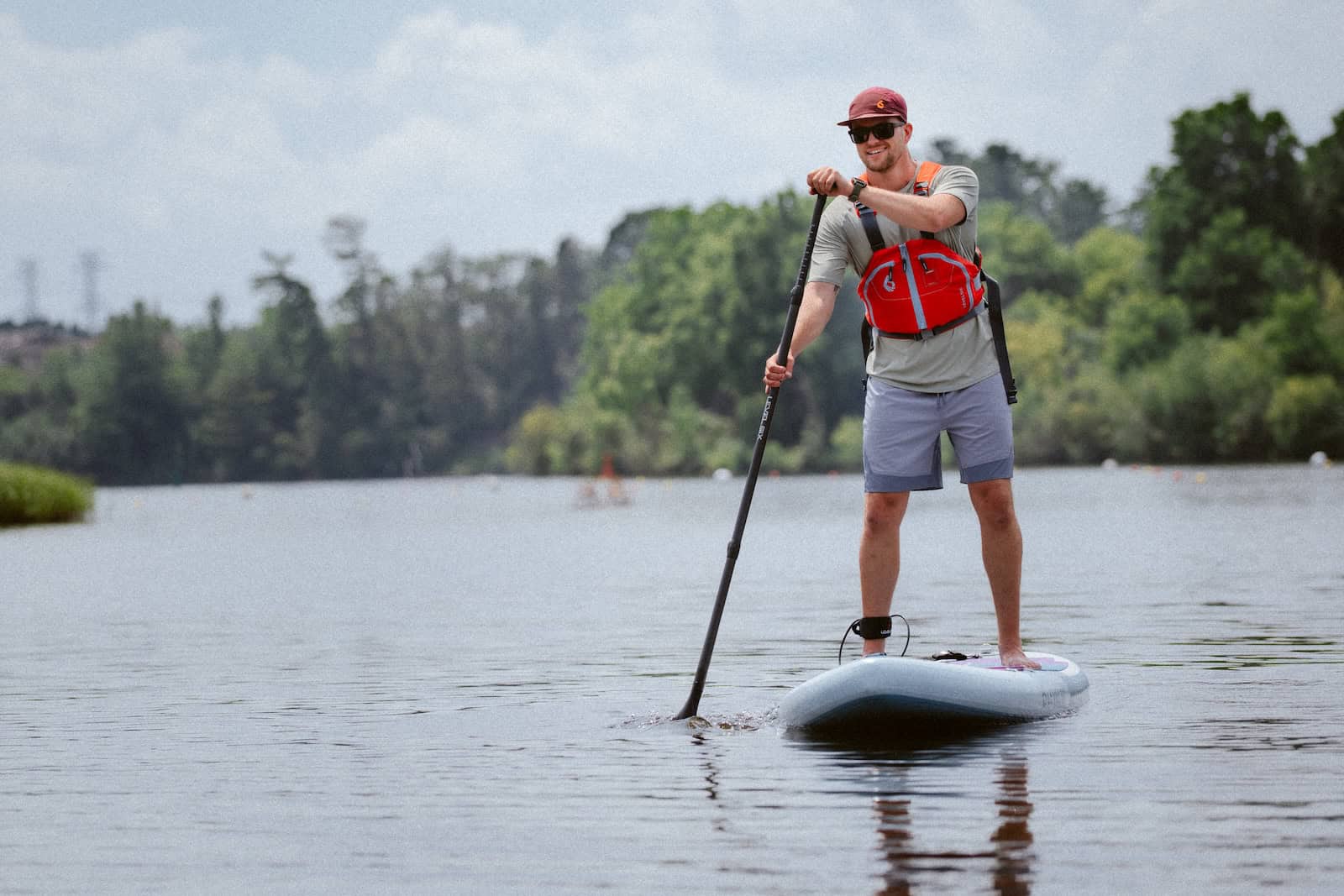
When Canadian approval arrived in early March 2026, the company was about eight months ahead. That positions Level Six to be the first out of the gate in North America. It also illustrates the scale of Larsson’s wager. Certification is expensive, and once a foam package is approved, designers have little freedom to change it.
Two of Level Six’s three full-time industrial designers worked almost exclusively on the life jacket project. They shaped and tested foam at the company’s Ottawa headquarters, adding or removing a sliver at a time to improve the way a jacket wrapped around the ribs or over the shoulder.
“Across the whole range, we wanted to go for comfort and full range of movement first,” Larsson said. “You’ve got to want to wear it.”
Every model will come in men’s and women’s versions. Although the names are different, the jackets are made with comparable materials, features and quality. “We’re not shrinking and pinking it,” Larsson said.
The Level 50 designs take the low-profile concept furthest. Larsson compares their feel with the minimalist racing vests he wore on the slalom course.
“You can barely feel it when you’re paddling,” he said.
Level Six also plans to use recycled materials, PFC-free fabrics and PVC-free foam across the range. The company will pursue international certifications alongside its North American approvals.
The result is more than a category extension. It is a founder-led company betting that better fit, less bulk and paddlesports credibility can persuade more customers to wear their life jackets—and give specialty retailers a compelling reason to put Level Six on the PFD wall.







The “eleven pounds of buoyancy on your body is better than 16 pounds clipped to your seat” line is the whole argument in one sentence. I’ve paddled the Ottawa for years, and the guests who stowed a jacket under a bungee never had it on when it mattered. Designing a women-specific counterpart for every men’s model is the right call too — fit is the reason most people leave a PFD in the dry bag.
The retailer education piece matters just as much. Plenty of customers hear “Level 50” and assume inferior, when it’s really a different use case for competent swimmers in protected water. I’ve been turning points like wear-to-count into short explainer videos for our club’s safety briefings with makeaivideo.app (https://makeaivideo.app) — one prompt box over several AI video models, easy enough that a non-filmer like me can produce something people actually watch. Video carries that message better than a stack of brochures ever did.
I wear an MTI Headwater PFD with 26 pounds 5 ounces of flotation – enough to float a 395 pound (about twice my weight) person. It is completely comfortable, even in blazing hot temperatures, and it never gets in the way of my canoe paddle strokes. I am a whitewater boater, which means that occasionally I go for an unplanned swim. Since I bought my first Headwater in 2014, I have not had my head underwater for more than 3-4 seconds. Before my Headwater, I wore a Rio Grande, first made by Lotus, and then later by Patagonia. It had 18 pounds 6 ounces of flotation, and as good as it was, it sometimes let me stay underwater for a longer period of time.
I value breathing air over wearing a light PFD with limited ability to bring my head out of the water. MTI no longer makes the Headwater, but they have a new design with the same flotation. Flotation is GOOD! It saves lives!