Home Blog Page 114

The Social Media Dilemma For Paddlers

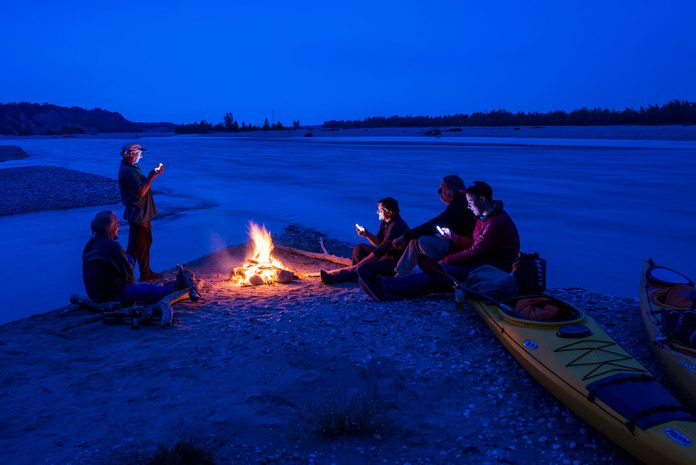
Five people sitting around campfire with sea kayaks pulled up on shore and river in background.
Every time his Strava pings, a Luddite gets his wings. | Photo: Michael Neumann

I can’t figure out what’s going on unless I go on Facebook. It’s nearly impossible these days to find anyone to go paddling with, discover local events or buy or sell a used piece of gear without it.

Even the paddling coaching service I subscribe to, which built a great little app for its members to communicate with each other, has seen most of its users switch to posting on Facebook since seeding its own demise by starting a public group there. Facebook effectively poached the app’s entire membership base and took over most of its communications. It was like watching a boutique try to compete with the big box stores and then reluctantly list their products on Amazon.

I’m left with the choice of being in the dark, disconnected from my outdoor communities, or logging on.

“This webpage is using significant energy,” warns the browser on my geriatric MacBook, its cooling fans whirring in protest with what I’ve come to think of as the sound of Mark Zuckerberg sucking away and selling my private data. Then I descend into what New York Times writer Charlie Warzel recently called “an information hellscape.”

I’m sure I don’t have to tell you there are all kinds of problems with opening our lives to a company currently being sued by 46 states for illegal competition. Not the least of which is that every piece of information shared to a Facebook group becomes siloed off and unsearchable to the rest of us. The route information and trip reports once commonly shared on public websites and forums were visible to the half of humanity with a data connection but now are limited only to the members of the Facebook group where they’re posted.

Facebook has devoured online paddling communities. I don’t understand why we let it happen. Why did so many groups outsource all their communications to this fractious medium? Why don’t we collectively stop using it? It’s not as if we don’t already have an array of other technological means to connect.

Like a good luddite, I dropped out of social media ages ago. The price is generally being out of the loop with what’s going on in my community—outdoors and otherwise. I figured there must be some people who aren’t online. But I can’t find them. Heck, I just read an article about a couple of hermits who operate a social network for hermits. If that’s not the sign of a lost battle, I don’t know what is.

There’s a digital overlay to real life. In my neighborhood, businesses pop up with almost no visible presence in the concrete world—not so much as a sign—save the snaking lineup of customers who discovered them on Instagram. Someday we won’t need road signs anymore because everybody will be navigating by app or Google Glass; all information stored online, like the Pokémon Go characters people hunt in real-world places but are only visible through a smartphone screen.

This augmented reality layer on top of the one we’re living in is now part of our common language. Without technology, I lose the ability to see, connect and understand. It’s the same feeling I have in an unfamiliar wilderness—lost without the context of natural history, local lore, or even the plants and animals’ names.
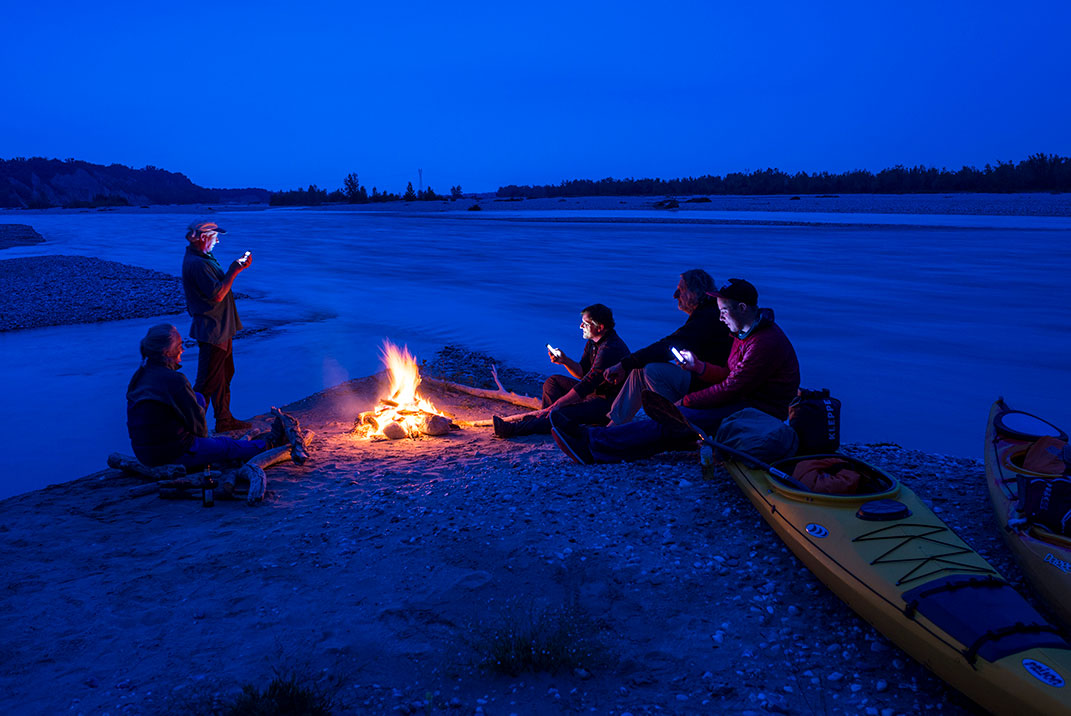
Five people sitting around campfire with sea kayaks pulled up on shore and river in background.
Every time his Strava pings, a Luddite gets his wings. | Photo: Michael Neumann

Craving for connection isn’t new. To live within a worldwide web of stories is a human habit older than time. The wonderful new biography Raven’s Witness by Hank Lentfer about the anthropologist Richard Nelson describes his fascination with the lore of Alaska’s Koyukon people, whose stories overlayed the entire physical world with a complex layer of culture.

“The rituals and sensitivities and stories of the Koyukon people comprise what I believe to be humanity’s greatest religious tradition,” Nelson writes. Everything had a relationship to everything else. Every animal sighting or birdsong or place name was a hyperlink to its own remembered story, an ageless lore—the original Internet.

“Their worldview holds the greatest potential for humanity’s future on this planet,” Nelson concluded.

Lost is this web of stories connecting us to the land. But our digital love affair has the potential to fill our landscape with more than Pokemon characters and conspiracy theories. Couldn’t it also help stitch our lost connections back together?

I finally saw this potential when I recently moved to a new town, a place closer to the water and the woods where I could afford a double garage to store my boats and skis. I started out thinking I would explore the area using paper maps and my wits, only to realize it was far easier to follow the routes of local strangers who’ve been generous enough to post their tracks on Strava.

GPS-based route-sharing apps provide the social media connection I’ve been looking for all along, I realized. I can explore freely—always alone but in the footsteps of various like-minded locals, frequently falling back on the GPS to find my way back to the car.

I so enjoy following other people’s adventures, I’ve felt obliged to share my own. So now I’m posting my tracks for all the world to see. No political views or photos of my cats. Just I went there and did that.

“For the good of the community,” I tell myself. Admittedly, I’m also showing off.

I enjoy the creative self-expression of etching a route on the landscape. “For the good of the community,” I tell myself. Admittedly, I’m also showing off, seeking the dopamine gratification of gathering virtual trophies and kudos for my outdoor exploits as much as any teenager counting likes on Instagram.

Maybe I’ve sold my soul. But I’d like to think the problem isn’t social media itself, but the particular agendas of the corporate entities gathering and controlling my data. Strava, at least, seems committed to using its power for good. Last September, the company offered its aggregated user data free to any organization working to “make cities better for anyone on foot or a bike.” The largest collection of human-powered transport information globally, based on 4 billion activities uploaded by 68 million users in 195 countries, revealed that bike travel increased 80 percent in New York City during the pandemic—a powerful, data-driven justification for urban investments, like bike lanes.

Maybe Strava or a similar app can do the same with user data to protect and improve the wild areas we love for all manner of forest trails and paddling put-ins.

Instead of forswearing social media entirely, I can embrace it to the extent that it can be rooted in some bedrock of reality and truth, in geography, in nature itself. Technology has the potential to enhance our vision and illuminate what we hadn’t noticed before, in the same way apps can help us identify new birdsongs, unknown plants or the names of the stars and faint constellations when a smartphone is held up to the sky.

As I paddle or run or ski alone and feed my breadcrumb trail of data points into some cloud-computing server farm, a software engineer in San Francisco could probably identify every tree where I stop to pee or when I duck under a no trespassing sign. But I like to think I’m voting with my feet and my paddle, adding a voice to the places I care about, and will eventually connect with other people who feel similarly the old-fashioned way.

And maybe, over time, we can integrate our routes with other forms of place-based knowledge and rebuild something akin to the Koyukon’s sense of place and shared culture, like the stories once shared around the campfire.

Paddling Magazine Issue 63 | 2021 Paddling Trip Guide Cover

This article was first published in Paddling Magazine Issue 64. Subscribe to Paddling Magazine’s print and digital editions here, or download the Paddling Magazine app and browse the digital archives here.


A luddite in recovery and a former editor of Adventure Kayak magazine, Tim Shuff writes and paddles from the shores of Lake Huron.

Every time his Strava pings, a Luddite gets his wings. | Photo: Michael Neumann
Kevin Callan’s Real-Life Superheroes

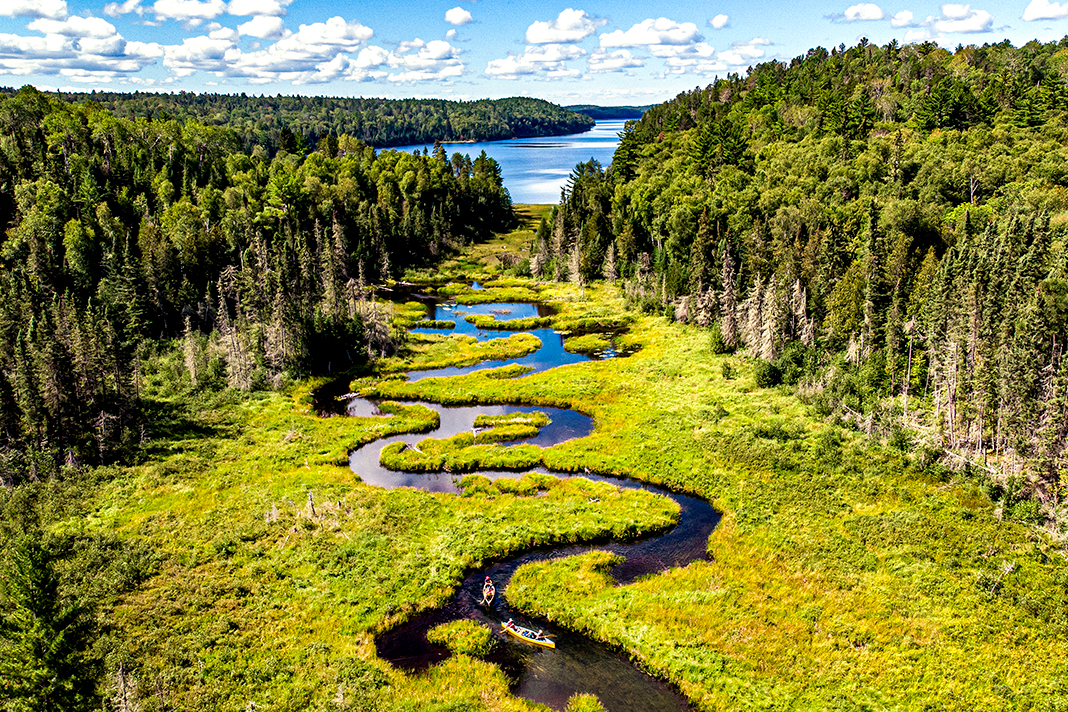
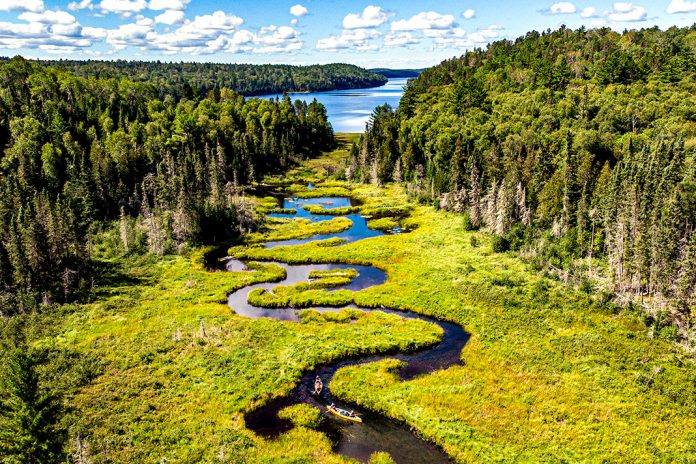
Creek running through a wetland with lake in the background.
Protected through the work of dedicated individuals like you and me. | Photo: David Jackson

The Oxford Dictionary defines a superhero as someone with abilities beyond those of ordinary people, and who uses his or her powers to help the world become a better place. My superheroes growing up weren’t the ones on television or in comic books. Spider-Man’s costume kind of freaked me out. The Green Hornet got way more attention than Kato. I was a tad shocked when Wonder Woman’s Lynda Carter became a Playboy centerfold.

By the time the Man of Steel first appeared in Action Comics #1 in June 1938, many of my superheroes were already young adults paddling into prolific—if not necessarily profitable—careers. It was outdoor writers, from paddlers to preservationists, who I admired growing up.

[ Plan your next outdoor adventure with the Paddling Trip Guide ]

My early readings were from author Farley Mowat. His classic books captivated generations of school children with outdoorsy tales such as The Dog Who Wouldn’t Be, The Boat Who Wouldn’t Float and Owls In The Family. Those novels turned me into a dreamer and a storyteller. His later books, A Whale For The Killing, Sea of Slaughter and No Man’s River, honed my focus to protecting the natural world.

Creek running through a wetland with lake in the background.
Protected through the work of dedicated individuals like you and me. | Photo: David Jackson

Author R.D. Lawrence was the next big influencer for me. His books Paddy, The North Runner, and Secret Go The Wolves introduced me to the quiet life of contemplation and observation during his multi-month wildlife studies. His book The Zoo That Never Was—which details caring for orphaned bears, otters, skunks, raccoons, lynx, geese, ducks, turtles and porcupines—became the reason I chose to work at a wildlife center in the 1980s.

And of course, Bill Mason’s books Path of the Paddle and Song of the Paddle taught me and countless others how to canoe. As a preteen, I’d take them out of the public library and practice my paddling skills on the local millpond with a 14-foot fiberglass canoe I reclaimed from the local dump.

When I started to take more remote canoe trips, I wore the ink off the pages of Cliff Jacobson’s how-to book, Canoeing Wild Rivers, and environmentalist Hap Wilson’s Temagami canoe guide.

Sigurd Olson’s writings put me into a trance; his written words are sheer poetry. He was influential in the protection of the Boundary Waters Canoe Area Wilderness and helped establish Voyageurs National Park in northern Minnesota, Alaska’s Arctic National Wildlife Refuge and Point Reyes National Seashore in California. I felt inspired to do my part after reading his work.

In my early twenties, working as an outdoor educator, my influences became more refined. My top reads were Ernest Thompson Seton’s Wild Animals I Have Known, Edward Abbey’s Desert Solitaire: A Season in the Wilderness, John A. Livingston’s Fallacy of Conservation, and Barry Lopez’s River Notes: The Dance of Herons. Aldo Leopold’s A Sand County Almanac was like a bible to me. All of them became writers who mobilized movements for good through their passion and dedication.

Of course, even though I’m still more inclined to crack a book and read about the joy of paddling a wild river and the solace of a forest campsite, I can’t ignore the power of a good superhero movie. And since nine of the 25 top-grossing films of all time are Marvel flicks, I think it’s safe to say most of us do.

Pop culture researchers hypothesize so many of us enjoy superhero movies because these stories show us how a single person can make the world a better place. Superheroes protect the voiceless and inspire us to do better. That sounds a lot like what my favorite wilderness authors have done in real life. The only difference with the Oxford definition is that these outdoor writers are regular people, like you and me. Their superpower was spending a lifetime dedicated to making a difference, rather than 120 popcorn-filled minutes.

Paddling Magazine Issue 63 | 2021 Paddling Trip Guide Cover

This article was first published in Paddling Magazine Issue 64. Subscribe to Paddling Magazine’s print and digital editions here, or download the Paddling Magazine app and browse the digital archives here.


Kevin Callan is the author of 18 paddling books and guides, including his bestselling Happy Camper series.

Protected through the work of dedicated individuals like you and me. | Photo: David Jackson

Divers Discover A 1,200-Year-Old Canoe (Video)

In a historic moment for the state of Wisconsin, a team of divers and archaeologists recently extracted a 1200-year-old dugout canoe from Madison’s Lake Mendota.

The canoe was carefully extracted from lake sediment 27 feet underwater. The artifact was then pulled to a beach in the city’s Spring Harbor neighborhood and greeted by ecstatic residents and historians.

[ View all Canoes in the Paddling Buyer’s Guide ]

Tamara Thomsen, the maritime archeologist and master scuba instructor for the Professional Association of Diving Instructors, spotted the canoe underwater back in June. “I’ve never seen this underwater (before) and I don’t think I’ll ever get to again in my career,” she said in an interview with USA Today.

The canoe discovery marks a monumental moment for Wisconsin, as it is the oldest fully intact dugout canoe in the state.

Olympic Boatercross Announcement Meets Choppy Reception—Find Out Why Here

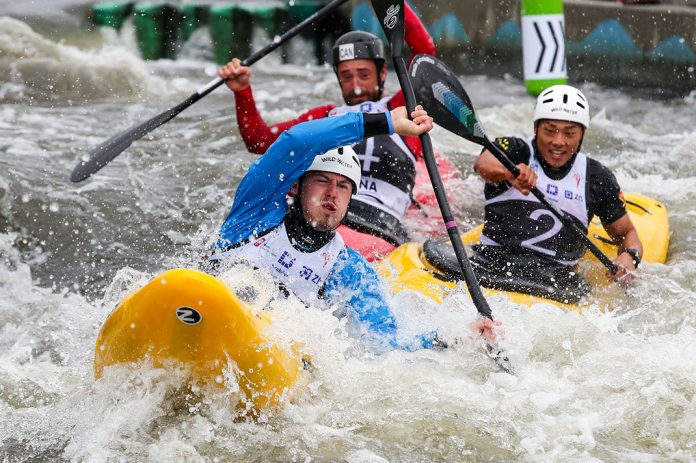
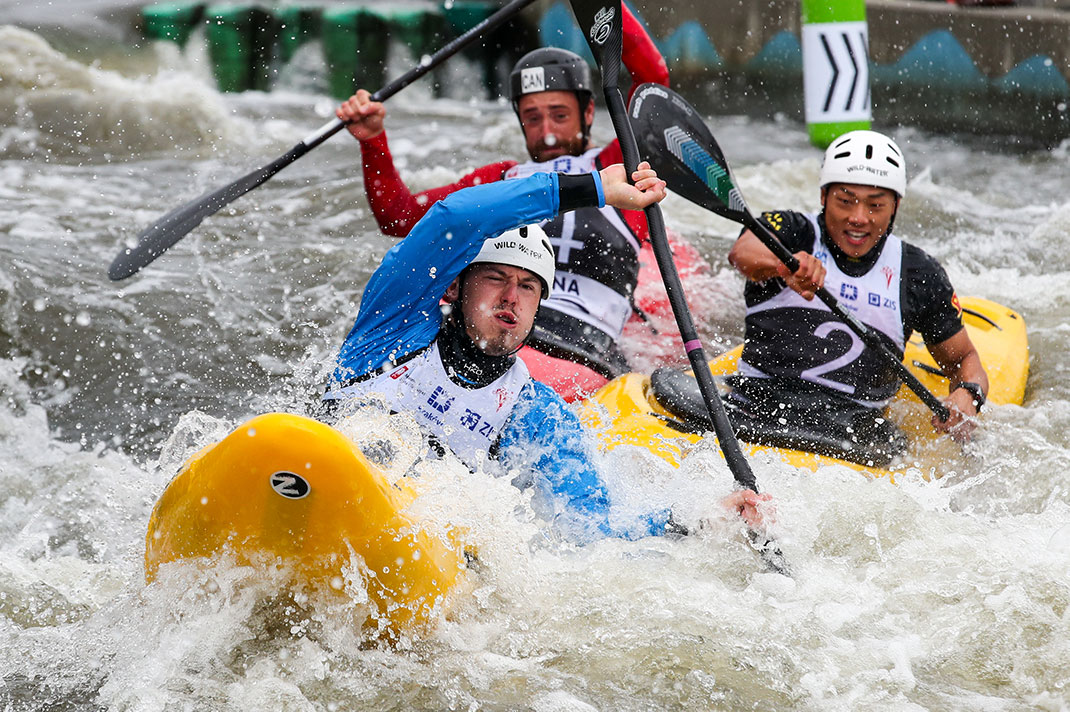
Three whitewater kayaks jostling for position in the waves.
Extreme slalom makes its Olympic debut in 2024. Why? It’s fast, popular with athletes and spectators alike, and makes for good TV. | Photo: Balint Vekassy

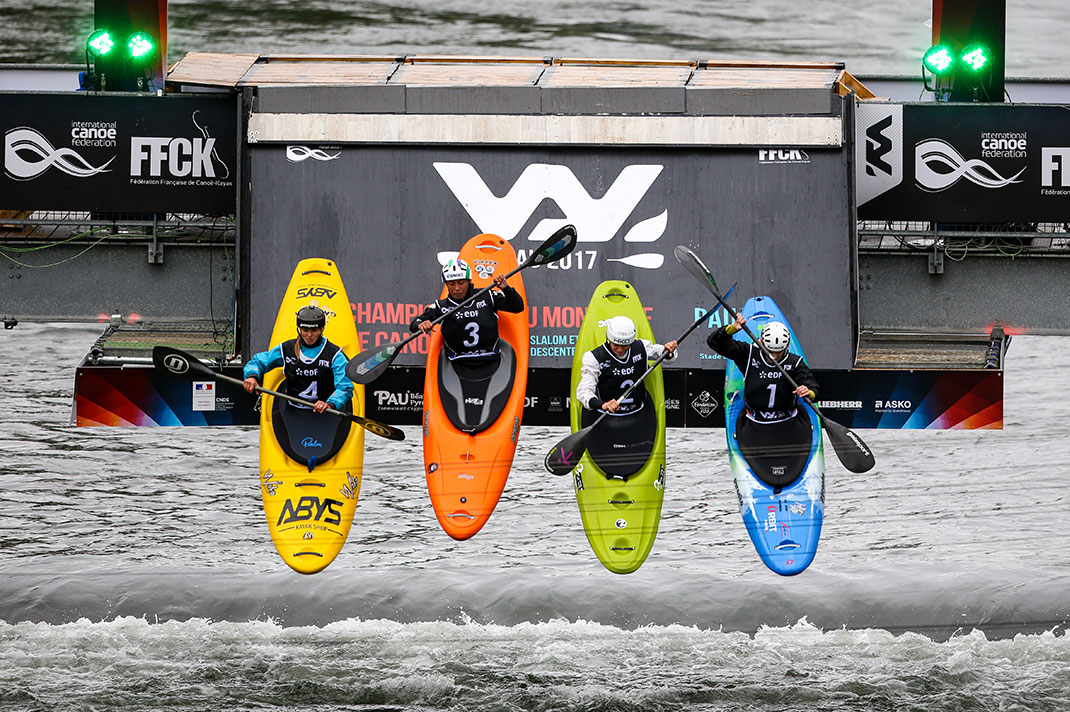
Four whitewater kayakers sit side-by-side on a platform over the lead-in to a set of rapids. When the starter gives the go-ahead, the kayakers lunge their boats forward, sliding down a ramp and catch air for 10 feet before hitting the water and taking off in a dead sprint.

They launch off a four-foot ledge at the first rapid, trying to stay right of a green gate without being spun out in a surging eddy. Their plastic creek boats crash into one another, jockeying for position. They swing through eddies on each side of the course, choosing which red upstream gate works to their advantage. Partway through the race, they interrupt their paddling cadence to complete a mandatory roll. They come up, weave through more waves, slide down drops and punch churning holes. At the last upstream gate they collide; a leader fights through the scrum and toward the finish. It’s all over in just about a minute.

[ Paddling Buyer’s Guide: View all creek boats ]

This chaotic scene sounds like a boatercross race in the Rockies or the Alps, but this boisterous event is going for gold. The International Canoe Federation’s (ICF) extreme canoe slalom event will make its Olympic debut at the 2024 games in Paris.

“Extreme slalom is as challenging as any boatercross I’ve been in. There is a lot of jostling and strategy, and it’s happening fast,” says Tren Long, a U.S. paddler in both traditional and extreme canoe slalom. Long has reached the podium multiple times in the ICF-style boatercross events and finished 11th in point standing during the 2019 world cup circuit, the last full calendar before the COVID-19 pandemic.

Extreme canoe slalom has met mixed reception since it first came on the ICF scene in 2015. Critics of the event tend to fall into two camps: Some in the slalom scene see it as a sideshow, without the technical mastery traditional slalom highlights. Other whitewater paddlers get hung up on calling the artificial river event “extreme,” which conjures thoughts of class V downriver races.

Adding to the controversy, the new event is expected to garnish medals from the Olympic sprint program. But whitewater slalom, and Olympic paddlesports more broadly, need to evolve or risk extinction, according to the ICF. “Stagnate and you will die,” reads the announcement regarding the decision on their website.

Three whitewater kayaks jostling for position in the waves.
Extreme slalom makes its Olympic debut in 2024. Why? It’s fast, popular with athletes and spectators alike, and makes for good TV. | Photo: Balint Vekassy

“[Extreme slalom] is fast, popular with athletes and spectators alike, and comes across very well on television. It sits nicely inside the International Olympic Committee brief to introduce new, adrenalin-charged events that appeal to younger audiences,” said ICF President Jose Perurena in a written statement.

Extreme slalom is spectator-friendly. The head-to-head style promises mayhem and makes for an engaged audience. It’s not unlike other extreme sports like BMX, or mainstream events like track or swimming, where anyone at home can tune in and instantly follow along. Even the aspects of the sport a paddler may deem basic, like a roll, are riveting to non-kayakers. And once a time trial for seeding is complete, the whole event, from heats through finals of men’s and women’s, can be wrapped up roughly around an hour.

Tren Long’s view on extreme canoe slalom may still be seen as unconventional in the racing circle, in that he is already preparing for it. “A group of us get together every Wednesday evening at the Gutter Rapid on the Payette, and race in heats of four until we puke, or it gets dark on us,” he says. “The time you spend training in heats is invaluable. Everything you do is based on reaction and instinct, and you get those through experience.”

Long is a crossover athlete—he races in ICF events and in whitewater races like the North Fork Championship and King of the Alps. He’s not alone.

Four whitewater kayakers launching off a platform into the water.
Photo: Balint Vekassy

Other whitewater athletes known for competing in both the slalom and plastic worlds have been successful in the format, including international standouts Martina Wegman, Vavřinec Hradilek, and Long’s American teammate Ashley Nee, who was the extreme canoe slalom world cup point leader for the 2019 season.

The inclusion of extreme slalom highlights another hope. That the event will converge the Olympic realm with the larger recreational scope of whitewater, a relationship that has drifted apart over the years as traditional slalom takes place on artificial courses and in carbon boats, inaccessible to many paddlers.

Whether extreme slalom in the Olympics will provide a boost to recreational whitewater remains to be seen. However, one thing is certain. In 2024, whitewater paddlers will watch an Olympic sport taking place in the plastic kayaks they paddle and in a format resembling something they could replicate at any rapid. Charging downriver in a plastic kayak is an Olympic paddlesport that finally feels relatable.

Paddling Magazine Issue 63 | 2021 Paddling Trip Guide Cover

This article was first published in Paddling Magazine Issue 64. Subscribe to Paddling Magazine’s print and digital editions here, or download the Paddling Magazine app and browse the digital archives here.


Joseph Potoczak is a freelance writer and competitive kayaker based in eastern Pennsylvania. His work has appeared in Men’s Journal, Blue Ridge Outdoors and Outside.

Extreme slalom makes its Olympic debut in 2024. Why? It’s fast, popular with athletes and spectators alike, and makes for good TV. | Photo: Balint Vekassy

Tracking Down The Canoes From The World’s Longest Paddling Race

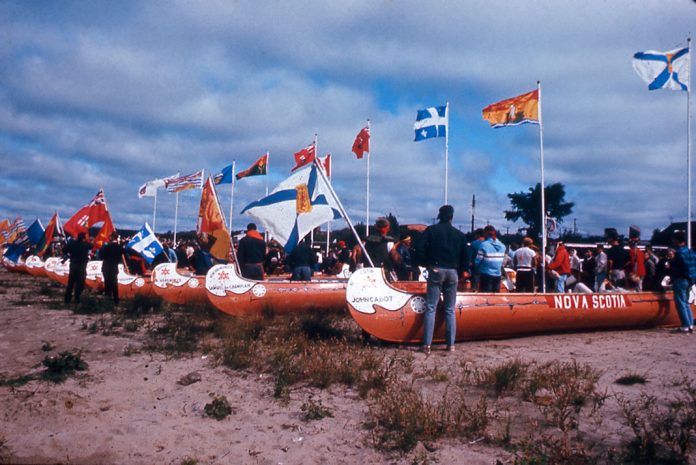
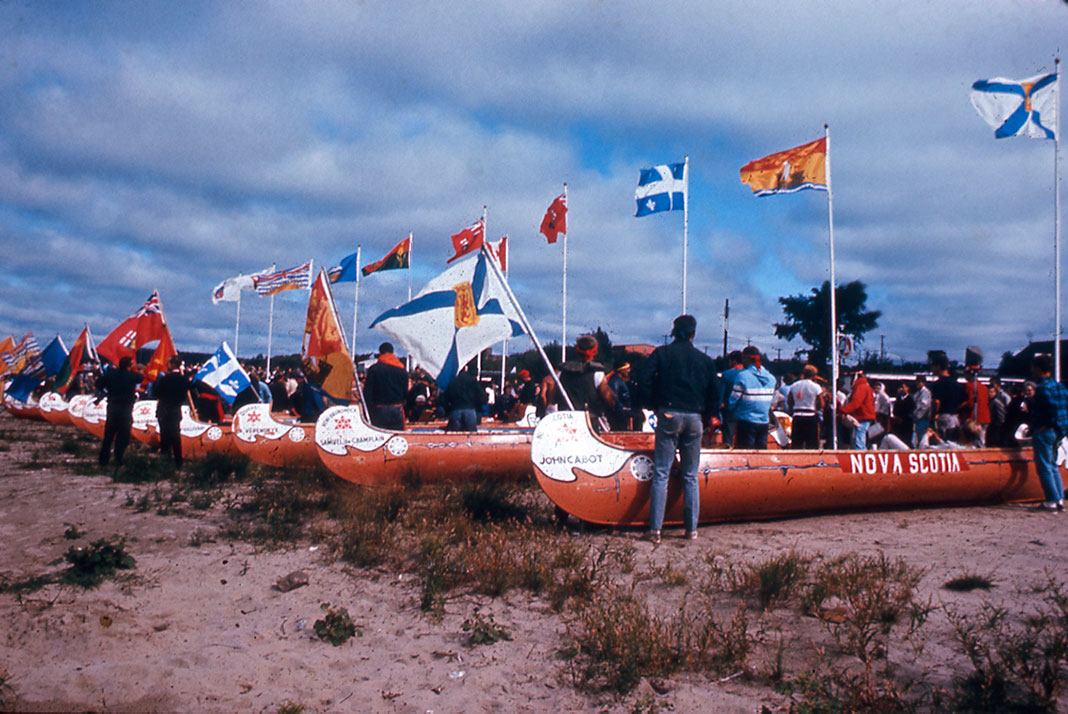
Voyageur canoes waiting on shore amid crowd of people and provincial flags.
Childhood canoe pageant celebrities. Where are they now? | Photo: Glenn Fallis

Recently, I came across a grainy black and white TV snippet documenting the last strokes of the world’s longest canoe race. The 1967 Centennial Voyageur Canoe Pageant involved 10 teams in 25-foot voyageur canoes, hustling from Rocky Mountain House, Alberta, to Expo ‘67 in Montreal. That’s 3,283 miles on the water and 60 miles of portaging over 104 days. And, if that wasn’t enough, the race ended with a three-mile aerobic sprint on Regatta Lake.

At the time, this voyage—part pageant, part race—was one of the most successful national events to mark 100 years of Canadian confederation. It caught the attention of hundreds of thousands of people in communities along the route, and never more engagingly than for the throngs of people on the shores of Regatta Lake, who saw already buff and experienced marathon canoe racers put three grueling months of conditioning to the ultimate test.

[ Paddling Trip Guide: View all canoe trips in Canada ]

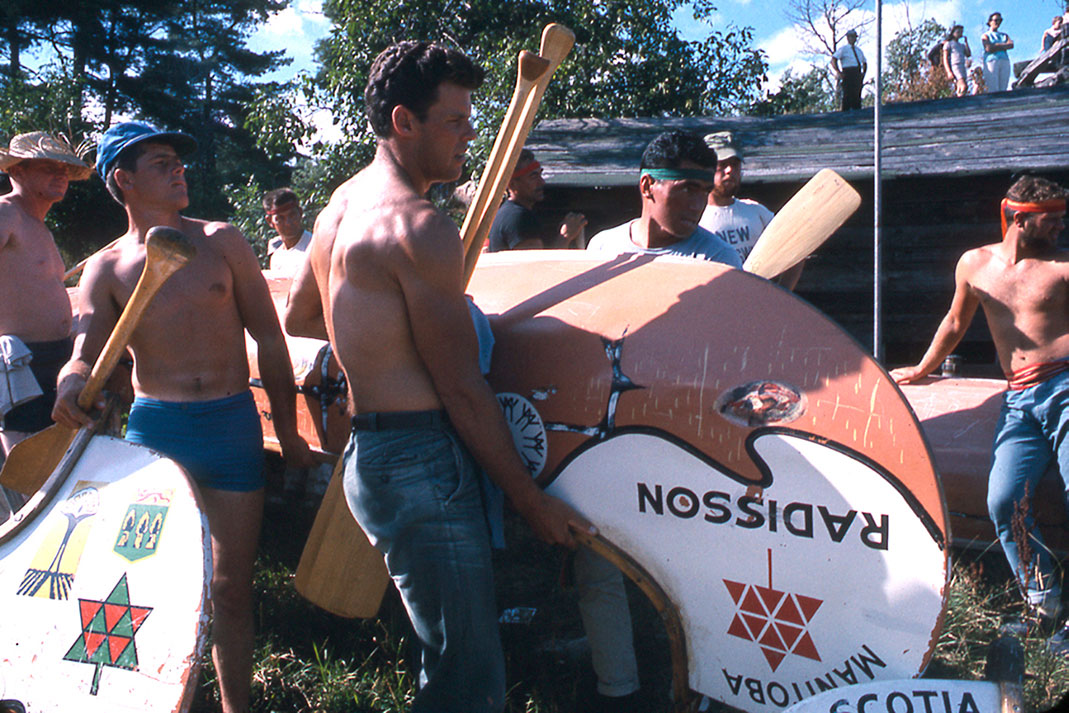
With the crack of a shotgun, the team captains ran from positions off the beach, jumped into waiting canoes with teammates at the ready, and started digging—most crews at 90 to 100 strokes per minute. First across the line was the Pierre Radisson canoe from Manitoba, sterned by 27-year-old Flin Flon native Norm Crerar.

Men carrying voyageur canoe on shore.
Manitoba team members: Norm Crerar with straw hat, Wayne ’Salty’ Soltys and Gib McEachern holding two paddles. | Photo: Glenn Fallis

The Manitoba crew’s winning time for the entire race was 531 hours, six minutes and sixteen seconds, through waves, storms, winds, navigational hiccups, logistical snafus, and everything else the old voyageur route could throw at them as they traversed six provinces. It put their average sustained speed at just over six miles per hour and yet they were only a scant two hours ahead of the next team, even over all that time and distance.

I caught up by phone with with Crerar at his home in Vernon, B.C. He has since written a book about the race called Journals of the New Voyageurs. In 2010 he and his team—Blair Harvey, Gib McEachern, Joe Michelle, John Norman, Jim Rheaume, Wayne Soltys, Don Starkell (yes, that Don Starkell) and David Wells—were inducted in the Manitoba Sports Hall of Fame. About a third of the 100 paddlers from the pageant gathered at Rocky Mountain House in 1992 to mark the 25th anniversary of the race. And in 2017, on the 50th anniversary of their achievement, 22 of the old voyageurs joined a celebration at the nation’s capital.

“But what are you doing now?” I asked Crerar.

“Besides trying to organize a military tattoo in a pandemic and establishing a new international cross country ski classic, I’ve been tracking down where all the canoes are,” he replied. “After all, this was the mother of all canoe races. We’re in the Guinness Book of World Records, and this was one of the greatest spectacles the country has ever seen.”

“So… where are they?” I asked. And on he went, as full of verve and energy at 81 years old as he was on that day on Regatta Lake 54 years before.

Of the 10 canoes, three have gone to dust. Of the seven remaining, the William McGillivray is with the family of one of the paddlers from the Ontario brigade near Thunder Bay and is in serious need of a refit. The Saskatchewan crew’s Henry Kelsey is at the Western Development Museum in Saskatoon, and New Brunswick’s Samuel de Champlain is at the Woodsman’s Museum in Boisetown, on the Miramichi River.

Voyageur canoes waiting on shore amid crowd of people and provincial flags.
Childhood canoe pageant celebrities. Where are they now? | Photo: Glenn Fallis

Interestingly, he continued, his voice brightening, the Yukon and Northwest Territories canoes are still in service for the big canoe program at a British Columbia middle school. And Alberta’s David Thompson canoe got installed in a ceremonial roadside shelter in Rocky Mountain House on the 25th anniversary of the pageant.

As for Crerar’s canoe—the Pierre Radisson—after a period of benign neglect at a Manitoba museum, it was acquired by the Fort Dauphin Museum, where it was totally refurbished and is now used ceremonially for fundraising canoe-a-thons.

“I’m happy about that,” he adds. “Except when they repainted the hull, after fixing the seats and gunwales, they used the color schemes and markings of the canvas-covered wooden North canoes from Fredericton used in the test races in 1964 and 1965. Which explains why a clunky 400-pound Cadorette voyageur canoe from Shawinigan, Quebec—which is what everyone had in ’67 because the prototype wooden canoes just didn’t stand up to race treatment—now says Chestnut on the side.”

“But other than that, it’s nice she’s still on the water and still going strong,” he adds.

Just like the man himself.

Paddling Magazine Issue 63 | 2021 Paddling Trip Guide Cover

This article was first published in Paddling Magazine Issue 64. Subscribe to Paddling Magazine’s print and digital editions here, or download the Paddling Magazine app and browse the digital archives here.


James Raffan is an author, explorer and Director of External Relations at the Canadian Canoe Museum.

Childhood canoe pageant celebrities. Where are they now? | Photo: Glenn Fallis

What Readers’ Favorite Photo Says About The Mindset Of Paddlers

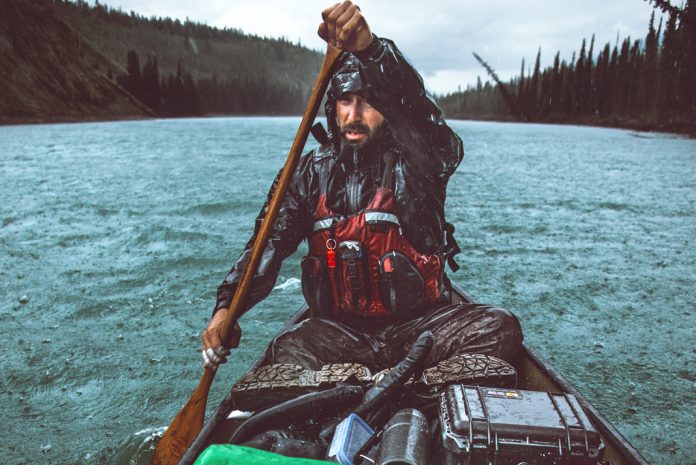
Man paddling canoe in the pouring rain.
Your most favorite photo of all time. You already know why. | Photo: Jay Kolsch

It’s not easy deciding on the cover photo for the Trip Guide special issue of Paddling Magazine. What’s the one photograph that will inspire the greatest number of people to buy this magazine and ultimately book one of the 107 adventures listed inside? So much pressure.

[ Paddling Trip Guide: Find paddling adventures near you ]

EHL Education Group is a hospitality school with campuses in Switzerland and Asia. They have a corporate training and consultancy side hustle offering a range of business solutions, including research projects. Dr. Meng-Mei Maggie Chen is the Assistant Professor of Marketing and she recently conducted a study and produced the paper, Destination Marketing: How to Use Images to Promote a Destination.

Just what we needed, I thought. Dr. Chen’s scientific research would end the debate and help us choose the most inspirational and commercially successful image for the front of this magazine.

In the first stage of her study, Dr. Chen conducted qualitative research to identify photos associated with Switzerland. In stage two, respondents in four different countries were presented with the 65 photos and asked if they had positive or negative attitudes toward the images.

Based on these responses, Dr. Chen and her team developed the Imagery Diagnosis Model.

Take out a blank piece of paper and divide it into four quadrants with a pencil. The top right is what Dr. Chen calls the Treasures, which are images strongly identified with Switzerland that inspired positive feelings in respondents. Think the cozy village of Zermatt at the foot of the majestic Matterhorn.

The bottom right quadrant is the Hidden Gems, including photos weakly identified with Switzerland but with positive associations. Picture a handsome couple sharing a bottle of wine by the outdoor pool of some mountain spa.

Top left quadrant is Roadblocks. These images are strongly associated with Switzerland but kinda meh. These are the tired and cliché images, like Swiss chocolates, cheese trays and St. Bernards with brandy barrels around their necks.

And the bottom left quadrant, Dr. Chen says, are the least effective and should be avoided. These images were weakly associated with Switzerland and inspired negative feelings. I’ll come back to quadrant four.

I’m sure you can see where I’m going with this.

I thought we could use the Imagery Diagnosis Model to determine which of the potential photo options would scientifically produce the best magazine cover. Which photographs would be our Treasures?

According to Dr. Chen’s research, the high-adventure images of alpine skiing, ice climbing and mountaineering fell into least desirable quadrant four—the Traps. Oh wait, I forgot to mention, Dr. Chen and her team collected the data from an online survey sent to users of BBC Travel and Lonely Planet websites and followers of the Visit Switzerland Instagram account. Not exactly a niche outdoor adventure enthusiast audience, like the readers of Paddling Magazine.

The Goldilocks Effect marketing phenomenon comes from the Brothers Grimm story of the Three Bears. You remember. Goldilocks is confronted with the choice between three bowls of breakfast porridge. The Goldilocks Effect principle is utilized by marketers selling just about everything.

When buying cloud software, like say Adobe Photoshop, you’re often presented with the choice of bronze, silver or gold packages.

We sell one-year, two-year and three-year subscriptions to Paddling Magazine.

Bike shops bring in a few $10,000 mountain bikes along with the $1,000 bikes because it helps sell more $5,000 bikes.

This marketing technique is incredibly effective. The vast majority of travelers are like Goldilocks. They will go for the silvery middle option that is “just right.” The Goldilocks Effect plays on the natural psychological impulse to avoid extremes.

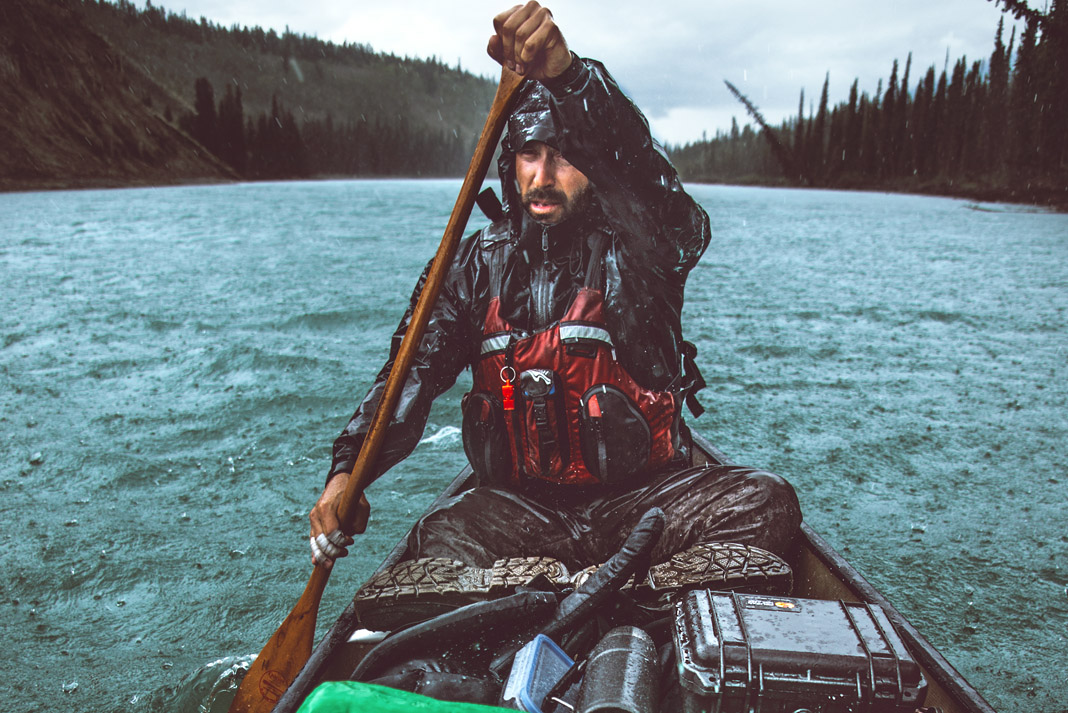
This photograph of canoeist Martin Trahan on a 2,000-mile Yukon River expedition is a Paddling Magazine fan favorite. We’ve posted it on Instagram several times since it originally appeared in the 2018 Summer issue. Each time it has received a record number of likes and more shares than almost any other post. But why?

Man paddling canoe in the pouring rain.
Your most favorite photo of all time. You already know why. | Photo: Jay Kolsch

Paddling Magazine readers are not the majority of travelers. Even the most pampered paddling adventures are far from the chalet-to-chalet air-conditioned coach tours popular in the Swiss Alps.

[ Paddling Trip Guide: Find paddling courses and skills clinics near you ]

If you needed the perfect porridge, best fit rocking chair or a bed that’s neither too soft or too hard, you wouldn’t be reading this editorial. You wouldn’t be planning your next canoe, kayak or paddleboard trip in the first place. You already know it could be too damn hot or finger-numbingly cold. In our minds, photos of adverse conditions are strongly associated with paddling trips. Sure, sometimes it sucks at the time, but we tend to look back on those experiences positively.

Wood smoke stinging our eyes after a day of mosquitos, headwinds, waves or boggy portages isn’t too extreme. It’s what makes paddling trips different and awesome, Goldilocks.

It’s just right.

Paddling Magazine Issue 63 | 2021 Paddling Trip Guide Cover

This article was first published in Paddling Magazine Issue 64. Subscribe to Paddling Magazine’s print and digital editions here, or download the Paddling Magazine app and browse the digital archives here.


Scott MacGregor is the founder and publisher of Paddling Magazine.

Your most favorite photo of all time. You already know why. |  Photo: Jay Kolsch

Wilderness Expedition: Gamsby River (Video)

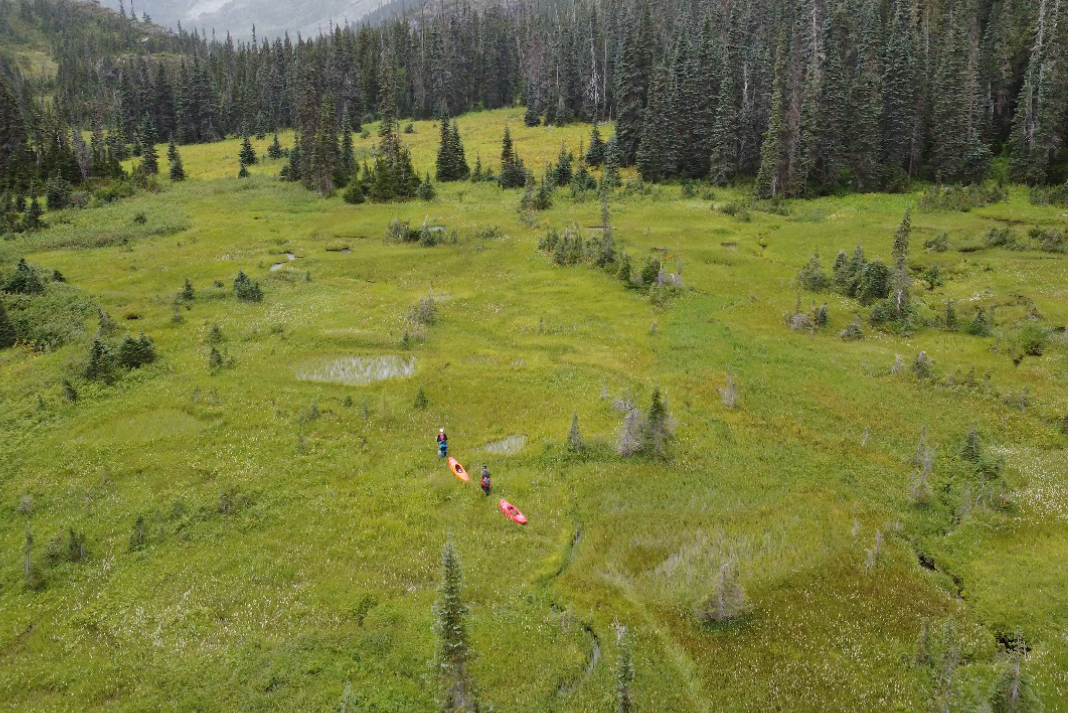
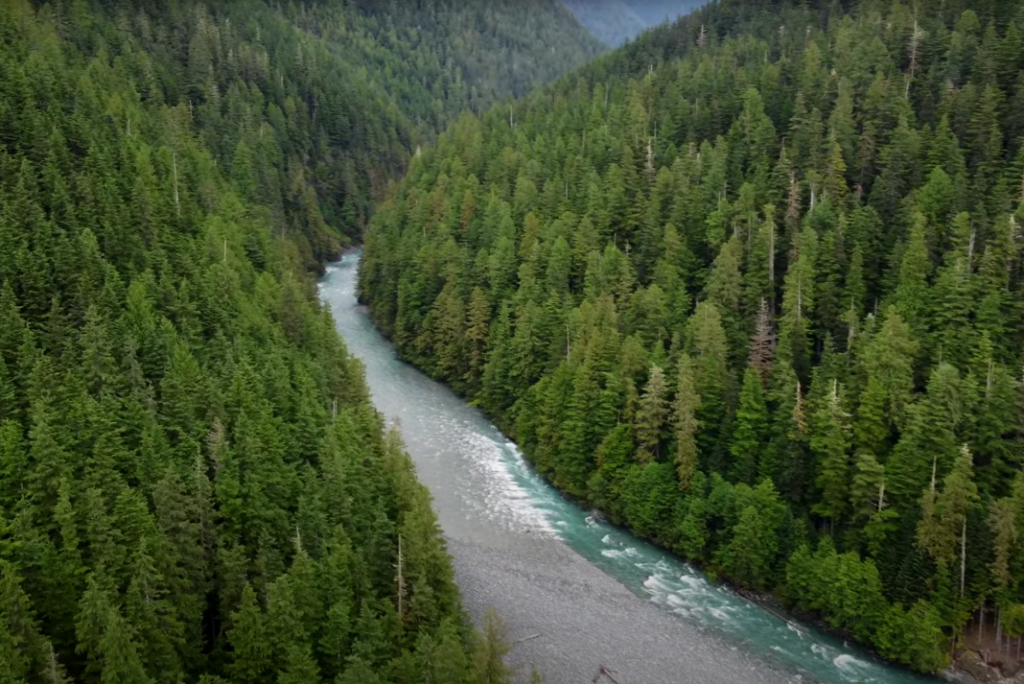
In September of this year, kayakers Bretton Beisel and Tristan Oluper embarked on a 5-day expedition through the rugged wilderness of the Kitlope Conservancy protected lands—home to the world’s largest continuous tract of coastal temperate rainforests. The goal? To descend one of British Columbia’s best kept secrets: the Gamsby River.

The Expedition

Words by Tristan Oluper:

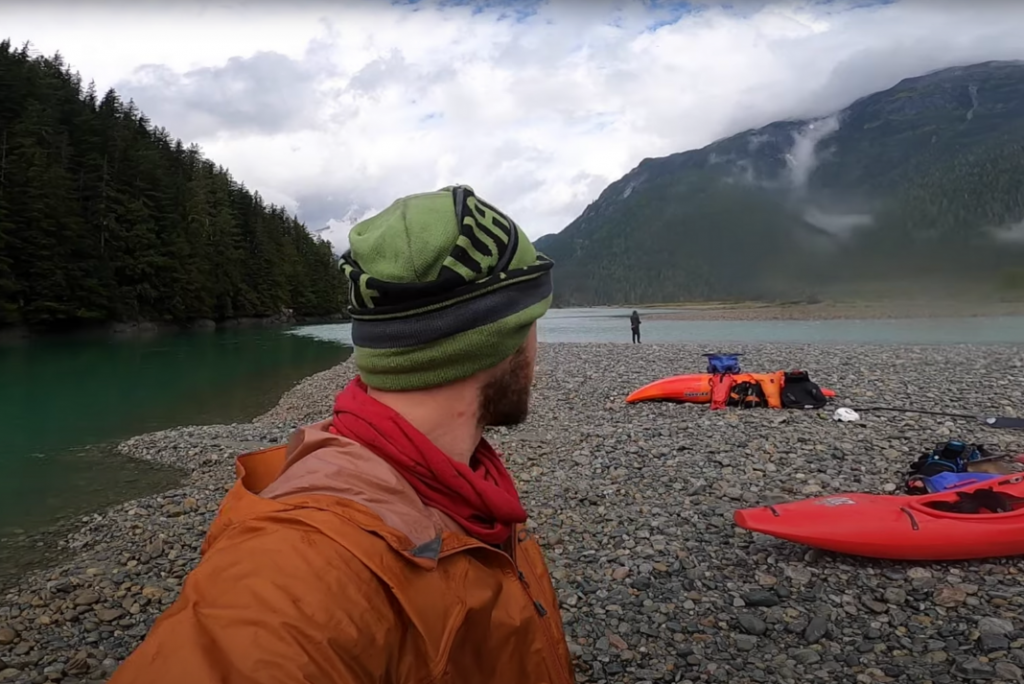
The Gamsby river flows through the Kitlope Conservancy protected area and is home to an array of wildlife and some of the most remarkable canyons I have ever been in. My paddling partner and I spent 5-days bushwhacking–and then whitewater kayaking–from the base of the glacier out to the Ocean.

drone footage of gamsby river wilderness
The Kitlope Conservancy is home to vast wilderness and old-growth forest. Photo” Bretton Beisel

Previous groups have flown into Coles lake, paddled to the ocean, then have taken a boat ride back to Kitimat along the coast. Since we only had one vehicle and a slight time constriction, we opted for two flights. Both flights were booked through Lake District Air (LDA) and they did a fantastic job helping with logistics and setting us up for success.

At the put-in, we encountered unexpected low water. This meant we had more hiking to do with loaded boats, on top of the four kilometers we had already navigated.

The two kayakers paddled from source to sea, encountering native wildlife–grizzly bears, black bears and wild salmon–along the way. Photo: Tristan Oluper

Once on the water, there were various micro canyons and two notable canyon sections which posed challenges and risks. In one canyon section (after a short portage and upon re-entering the river), my paddling partner broke his paddle and slightly altered his boat during a seal launch (launching into the river off the rocks). It was a tense moment during our trip but level heads and preparedness won the moment.

After the canyons had tapered off the excitement continued with various visits to camp from grizzly and black bears in the area. Fortunately, these bears had seen few or no humans before. Therefore, they did not associate us with food remaining cautious rather than too curious.

We managed to catch a few salmon and had our minds blown around each corner. A truly remarkable place.


View this post on Instagram


A post shared by Tristan Oluper (@tristy023)

Go The Extra Inch

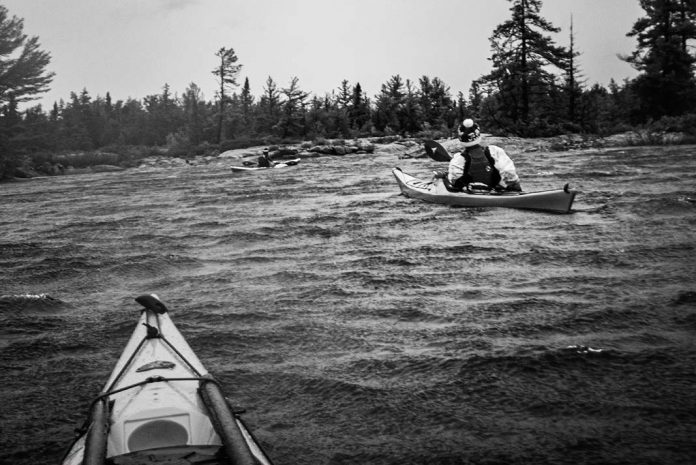
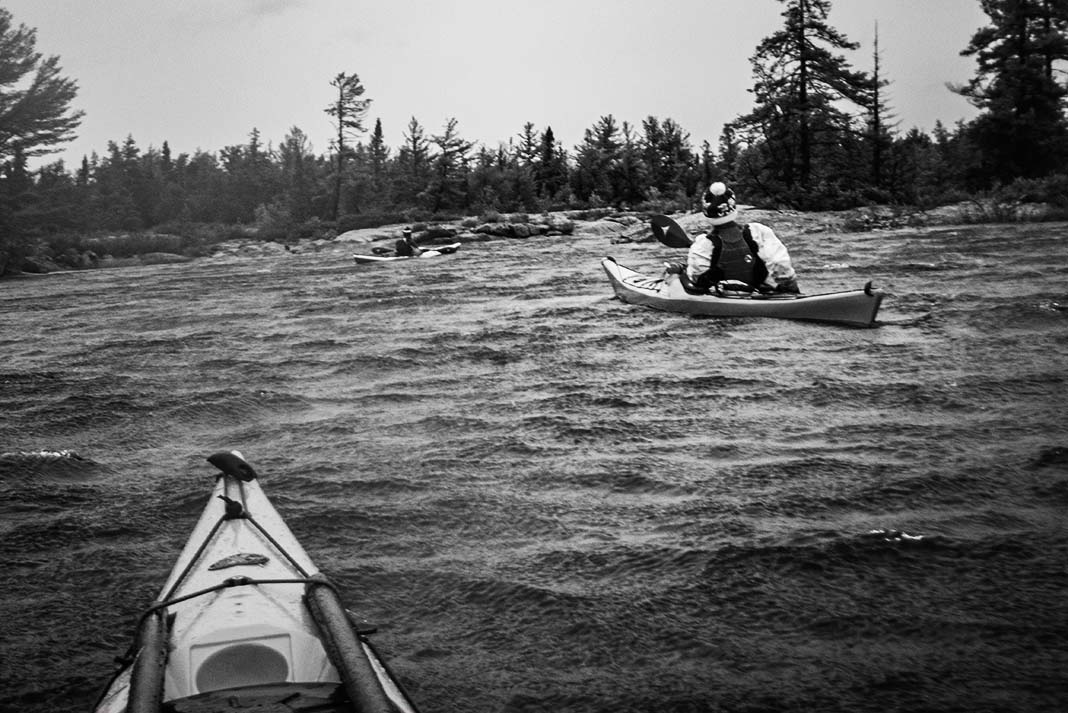
The most important six inches to getting anywhere is between your ears. | Photo: Scott MacGregor

If you’re reading this, you’ve been there. You’ve probably received the speech and given it. For us paddlers, we get it or give it at the top of rapids, halfway through Godforsaken portages, or maybe, like in the photo above, wet and cold and tucked out of a gale behind the last bit of shelter before an exposed stretch of unforgiving shoreline.

“I don’t know what to say, really. Three minutes to the biggest battle of our professional lives. All comes down to today, and either we heal as a team, or we’re gonna crumble. Inch by inch, play by play, until we’re finished. We’re in hell right now, gentlemen. Believe me. And, we can stay here, get the shit kicked out of us, or we can fight our way back into the light. We can climb outta hell… one inch at a time.”

That’s Al Pacino as Tony D’Amato, the head coach of a fictional professional football team in Oliver Stone’s 1999 classic American sports film, Any Given Sunday. In my opinion, it’s the most inspirational pre-game speech of all time.

D’Amota is present and honest. He speaks to his players directly, looking them in the eyes. He cuts ties from the past; what’s happened before doesn’t matter now. D’Amota reminds his players they will only be remembered for the way they play today.

“On this team, we fight for that inch. On this team, we tear ourselves and everyone else around us to pieces for that inch. We claw with our fingernails for that inch. Because we know when we add up all those inches, that’s gonna make the f***ing difference between winning and losing, between living and dying!”

“On this team, we fight for that inch. On this team, we tear ourselves and everyone else around us to pieces for that inch. We claw with our fingernails for that inch. Because we know when we add up all those inches, that’s gonna make the f***ing difference between winning and losing, between living and dying!”

The last 18 months have been crazy for businesses everywhere. The difference between living and dying was measured in inches. Paddlesports manufacturers, shops, schools, outfitters and media have struggled through parts and raw material supply issues, increased demand, staffing challenges, travel bans, and shutdowns. And, let’s face it, the printing of magazines about canoes, kayaks and paddleboards isn’t exactly an essential service during a global pandemic.

For anyone running a management, production, customer services or sales team, every day has been game day for more than a year. Here at Paddling Magazine, I’ve made my fair share of pre-game speeches, but I’m no Pacino.

The most important six inches to getting anywhere is between your ears. | Photo: Scott MacGregor

Nineteen business days ago, we stared at our FUBAR annual production calendar. We had four weeks to publish this issue and get ourselves back on a regular schedule heading into 2022. It felt like an impossibly short timeline to create a regular issue of Paddling Magazine, essentially from scratch. There were too many inches between us and the metaphorical end zone we call print day.

“I’ll tell you this, in any fight, it’s the guy who’s willing to die who’s gonna win that inch. And I know, if I’m gonna have any life anymore, it’s because I’m still willing to fight and die for that inch because that’s what living is—the six inches in front of your face,” said D’Amota to his team.

“Now I can’t make you do it. You’ve got to look at the guy next to you, look into his eyes. Now I think you are gonna see a guy who will go that inch with you. You’re gonna see a guy who will sacrifice himself for this team because he knows, when it comes down to it, you’re gonna do the same for him. That’s a team, gentlemen, and either we heal, now, as a team, or we will die as individuals. That’s football guys, that’s all it is. Now, what are you gonna do?”

Shrug. It wasn’t exactly like that. But the team of media professionals whose names you see in the masthead on the opposite page dug in hard.

Inch by column inch, they raced the clock and pulled it together. Before the final whistle, they created our first-ever, cover-to-cover, special how-to issue.

For the next 18 months, on any given Sunday, you don’t have to watch football. Instead, you can learn to roll, manage a blister, survive a moose attack, perfect your forward stroke, brainwash your children, avoid hypothermia, become a legend… whatever.

Scott MacGregor is the founder and publisher of Paddling Magazine. Watch Al Pacino deliver the full Any Given

Sunday Inch by Inch speech here, paddlingmag.com/0110. Then, paddle on.


Paddling Magazine Issue 65 | Fall 2021

This article originally appeared in Paddling Magazine Issue 65. Subscribe to Paddling Magazine’s print and digital editions here, or download the Paddling Magazine app and browse the digital archives here.


Q&A With Legendary Kayaker Justine Curgenven

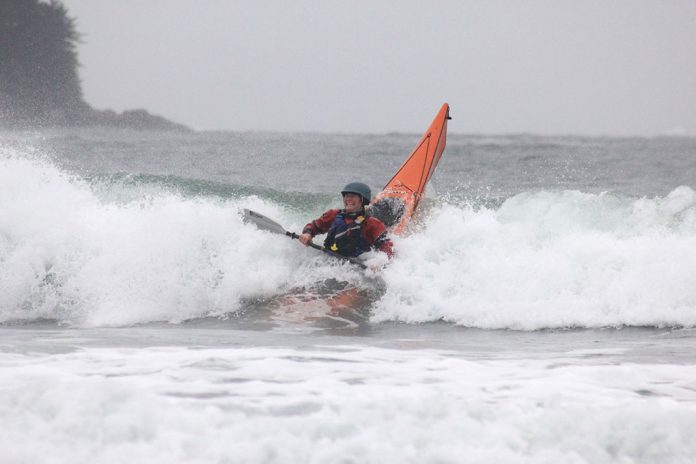
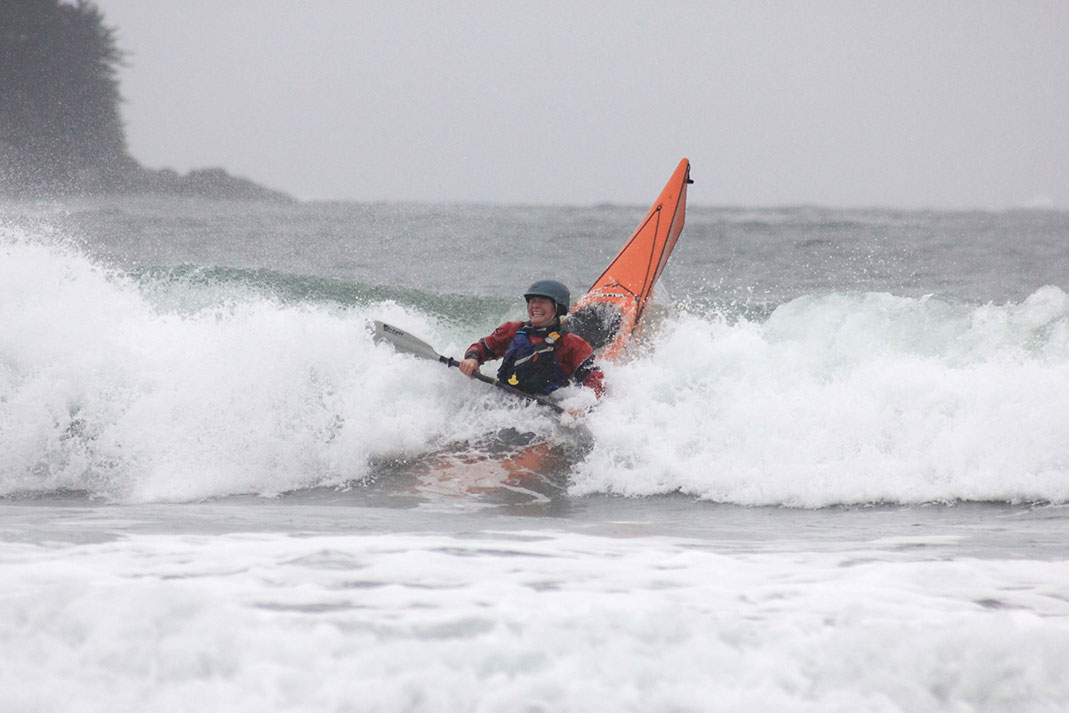
Woman smiling as her sea kayak plunges into the surf
Definitely cackling right now. | Photo: Dan Cullen

After decades of exploring, where do the boldest sea kayakers, whitewater boaters and canoe trippers fantasize about paddling? That’s the question that inspired Paddling Magazine to query some of our long-time contributors and favorite nomadic aquaphiles to ask after their dream destinations, most challenging expeditions and what a life of exploration really means anyways.

In this series of profiles, these exceptional water-wanderers share their top trips, best advice and biggest blunders. And whether their ambitious journeys were taken in the name of discovery, education, environment or glory, these legends affirm what we already know: There’s far more to explore by paddle than anyone could fit in a lifetime—but don’t let that stop you from trying.

[Check back in the coming weeks for the remaining profiles in this series.]


Sea kayaking’s most prolific filmmaker from the pre-YouTube era, Justine Curgenven is the creator of the award-winning This Is The Sea series. She’s completed expeditions and films in New Zealand, Kamchatka, Patagonia and Alaska to name just a few, and made forays into paddling with a single blade for This is Canoeing and Greenland-style for This is the Roll. She’s swept the field with six category wins at the Paddling Film Festival.

Paddler: Justine Curgenven
Location: Ucluelet, British Columbia
Occupation: Adventure filmmaker, kayak guide
Latest Project: Paddling Magazine reached Justine the day before she left on a three-week trip, collecting garbage from the beaches of the Great Bear Rainforest.


Woman smiling as her sea kayak plunges into the surf
Definitely cackling right now. | Photo: Dan Cullen

Q & A with Justine Curgenven

1 One paddling destination I dream of returning to is..

Iceland. This location still captivates me because Iceland is a great size with stunning scenery, hot springs and big challenge on its surf-ridden East coast.

2One place I dream of paddling but haven’t yet is…

the Kuril Island chain between Japan and Russia. This trip excites me because I love journeying in beautiful, remote areas with strong currents and challenging conditions.

3My biggest pet peeve is…

piles of used toilet paper in the wilderness.

4One thing I can’t live without on trip is…

challenge.

5The greatest advice I ever got was…

“just ask the girl if you can have a turn on the swing,” and that was from my dad.

6The kayaks I’m paddling most right now are…

Valley Avocet for surfing and Valley Etain for longer trips.

7The best paddling companions are…

my partner or friends but that’s true only when we have the same goals and expectations.

8My biggest blunder was…

not redistributing drybags into my back hatch once I’d eaten all the heavy food for a 30-kilometer crossing. I learned always to be slightly stern heavy to help avoid weather cocking.

9The hardest part about making that dream trip happen is…

finding like-minded companions with the time and money.

10Happiness is…

most likely to be found when doing the things you love with people you love.

11My most challenging expedition was…

kayaking 1,550 miles along the Aleutian Islands. It taught me it’s possible to make an 85-kilometer crossing with no information about the currents if you do as much research as possible, trust your instincts and are prepared to paddle until you get there.

The award-winning follow-up film, Kayaking The Aleutians, traces Curgenven’s 101-day journey with novice paddling partner Sarah Outen. The two battle winds, swells, currents and massive crossings to become the first to paddle the remote and stormy archipelago in modern times.

12What scares me most is…

losing my health or ability to get out there.

13My favorite camp meal is…

freshly caught and battered fish and tacos with guacamole, homemade coleslaw, grated cheese and salsa.

14The true gift of big trips is…

perspective.

Paddling Magazine Issue 63 | 2021 Paddling Trip Guide Cover

This article was first published in Paddling Magazine Issue 64. Subscribe to Paddling Magazine’s print and digital editions here, or download the Paddling Magazine app and browse the digital archives here.


Definitely cackling right now. | Photo: Dan Cullen

The Most Compelling Reason To Plan Your Dream Trips Today

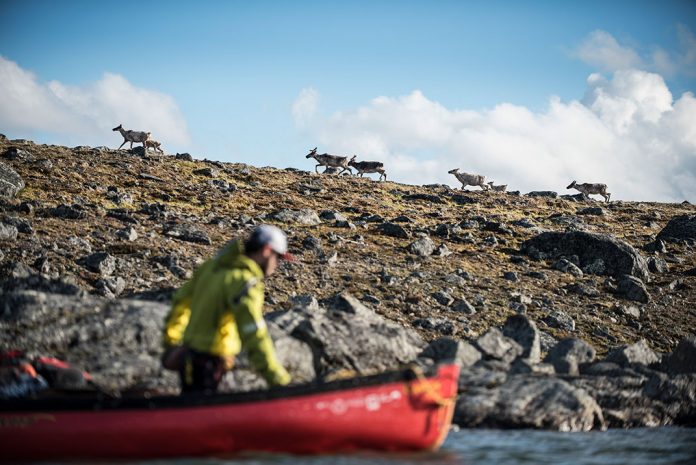
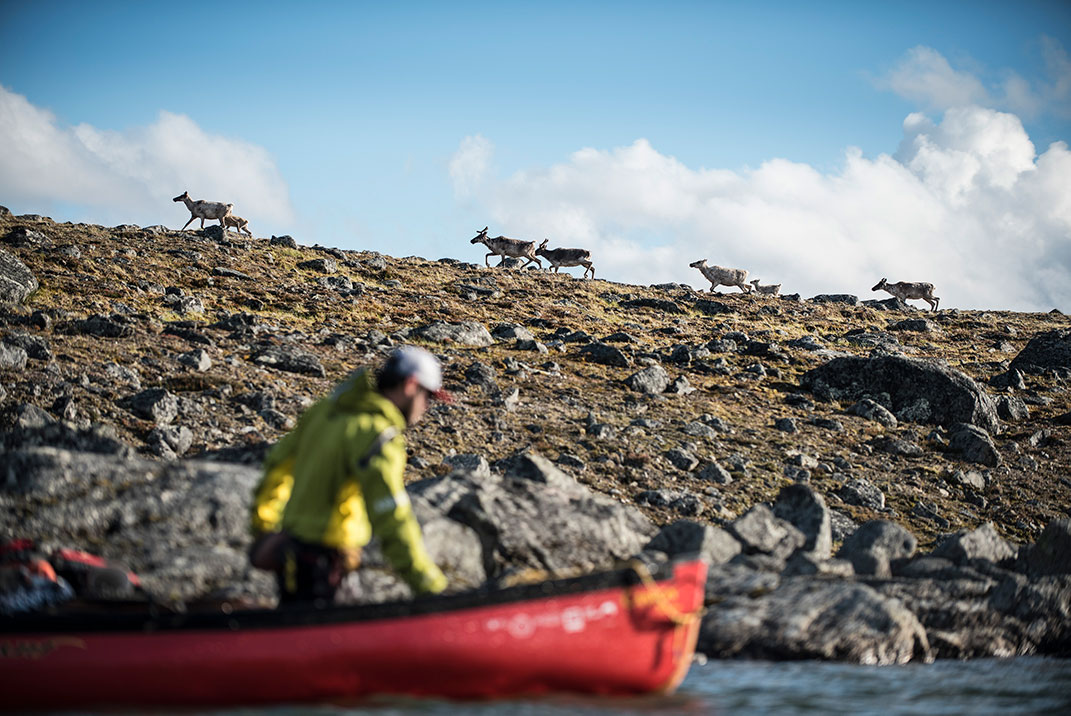
Person lining canoe with caribou walking onshore.
Not your typical safari. Caribou along the Lestage River in northern Quebec. | Photo: Francois Leger-Savard

According to research reported in Forbes, 95 percent of people claim to have a bucket list. Travel is on 77 percent of them. Australia, Italy and Ireland are the three countries most fantasized about. Skydiving, an African safari, and seeing the northern lights are three of the top 10 most desirable activities.

A 15-day canoe trip on the Yukon’s Wind River and a week of packrafting in Belize were absent from the random sample group’s bucket lists. But they sure make mine.

There are so many fantastic trips in our Trip Guide, you’ll have trouble deciding which ones to bookmark. But choose something. According to the same researchers, the average adventure traveler takes a self-described “big trip” only once every five years. No matter your definition of big—a three-week Grand Canyon float or basecamping in the Boundary Waters Canoe Area—it still means the average adventure traveler takes only a dozen or so big trips over a lifetime.

Quantifying the number of life list trips reminds me of a favorite blog post from 2014. Yes, I remember a blog post from seven years ago. Here’s why.

Wait But Why uses poorly drawn stick figures to dispense musings on everything from choosing a life partner to being insufferable on Facebook. Its creator, Tim Urban, popularized a calendar he calls, Your Life In Weeks.

Your Life in Weeks is a simple concept. Imagine 90 rows of 52 small boxes lined up. That’s 4,680 boxes, each box representing a week in a 90-year human lifespan. Even a person lucky enough to live nine decades will have no problem fitting every week of her life on one sheet of paper—or a smartphone screen. You can even purchase Urban’s calendar for the refrigerator door if a side of existential angst with breakfast is your sort of thing.

“It feels like our lives are made up of a countless number of weeks. But there they are—fully countable—staring you in the face,” Urban writes. “There are trillions upon trillions of weeks in eternity, and these are your tiny handful.” The only word for them is precious.

Urban wants his readers to reflect on how we spend our finite number of weeks. For example, we know the average American and Canadian will spend 2,000 of those weeks between the ages of 25 and 65 working, with 120 weeks of vacation spread thinly throughout. Hopefully, you like your job.

According to the Outdoor Industry Association (OIA), we also know the average American canoeist—there are 9.1 million of you—will paddle just six days a year, or 240 days during the same 40-year period, which doesn’t seem like very much.

OIA research also reports the average American camper goes on three camping trips a year for an average of 2.7 nights each. With this in mind, an average 35-year-old camper would be looking forward to another 165 camping trips and another 445 nights under the stars if she kept camping at the same rate until the age of 90. If you’re already 55 and only camp until you’re 70… I’ll let you do the math.

Person lining canoe with caribou walking onshore.
Not your typical safari. Caribou along the Lestage River in northern Quebec. | Photo: Francois Leger-Savard

Of course, more important than all the things we do are the people we do them with.

As a kid, I went camping with my parents a few times each summer. Now, thanks to busy schedules, family camping trips happen every other year, maybe. At this rate, with my folks in their 60s, we’ll be fortunate to have a dozen more camping trips together.

Recognizing our limited remaining time together makes going on these trips feel more important and urgent—especially following a year where we spent so much time apart.

I think we should make a point of going every year.

[ Pick out your next adventures using the Paddling Trip Guide ]

Which is, of course, the point of Urban’s silly stick figure charts. How do we make the best use of what remains of our 4,680 weeks? Urban’s takeaway: How you spend your time and who you spend it with should be set by your priorities—not unconscious inertia and routine, he says.

After 16 months of stay-close-to-home orders, many of us are dreaming of farther-away, if not far-away, destinations. And spending more time with the people we love. So, here’s my takeaway: Whatever bucket list adventure you’ve been idly fantasizing about, plan it. Invite your important people. Repeat as often as possible, while there is still time. 

Paddling Magazine Issue 63 | 2021 Paddling Trip Guide Cover

This article was first published in Paddling Magazine Issue 64. Subscribe to Paddling Magazine’s print and digital editions here, or download the Paddling Magazine app and browse the digital archives here.


Not your typical safari. Caribou along the Lestage River in northern Quebec. | Photo: Francois Leger-Savard