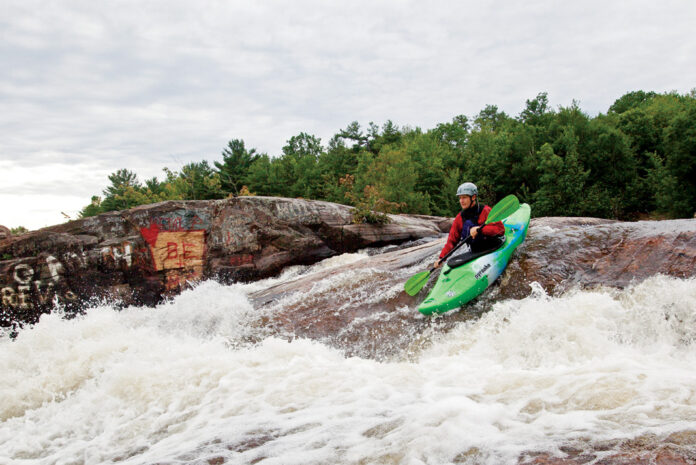
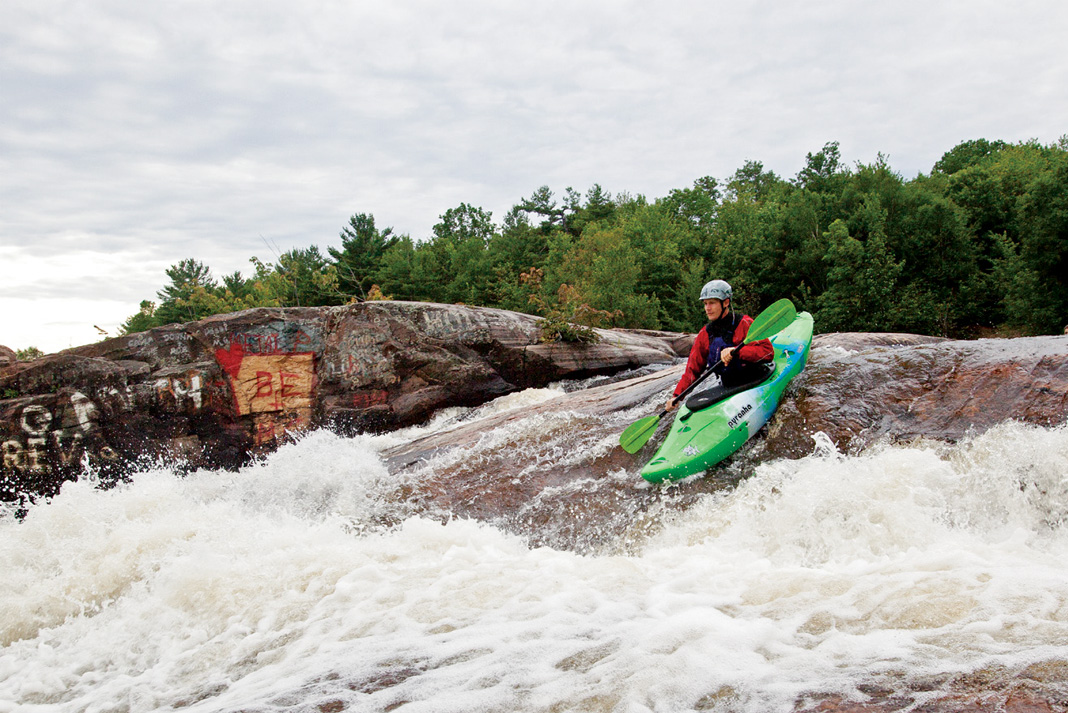
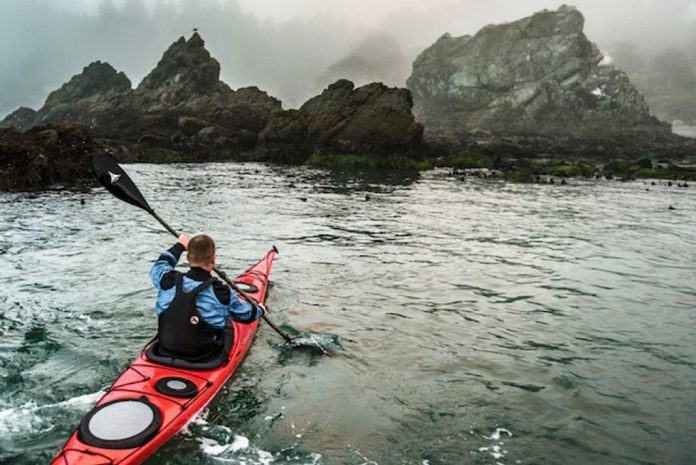
Feeling cheeky. | Feature Photo: Virginia Marshall
No wilderness experience is complete without casting off that final thread of civilization: the swimsuit. Reminiscing on the times I’ve gone skinny dipping takes me back to the core of my wilderness trips, to the very reasons I went in the first place.
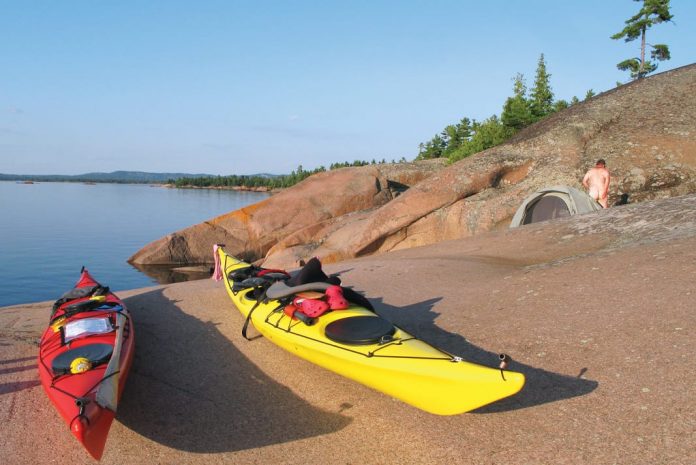
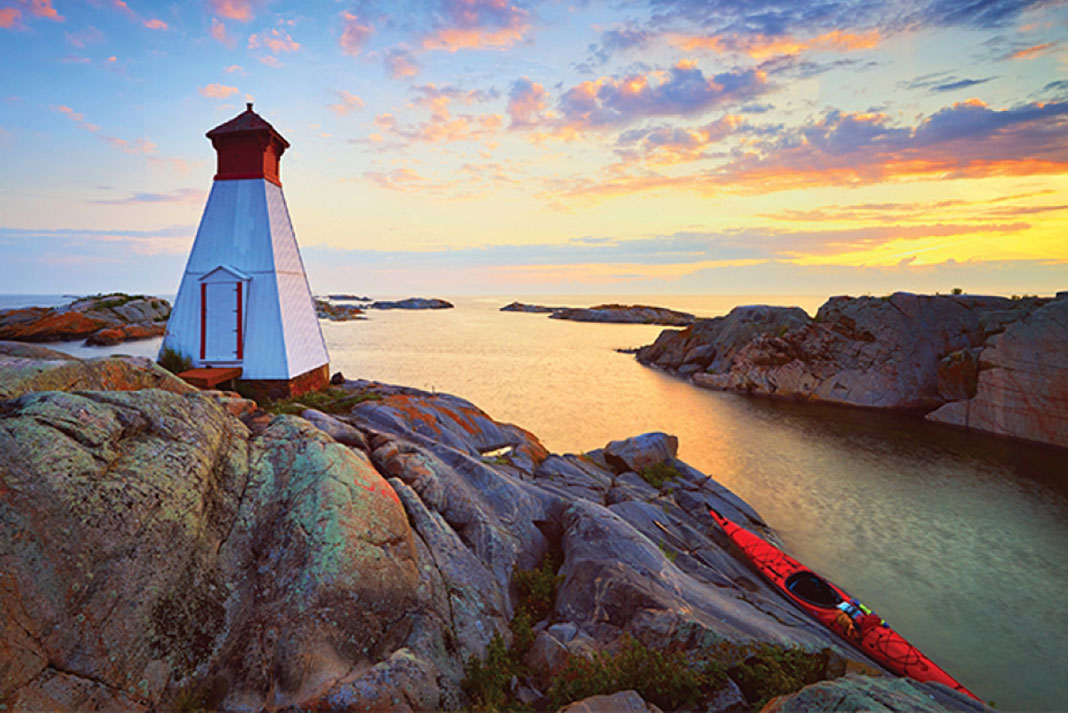
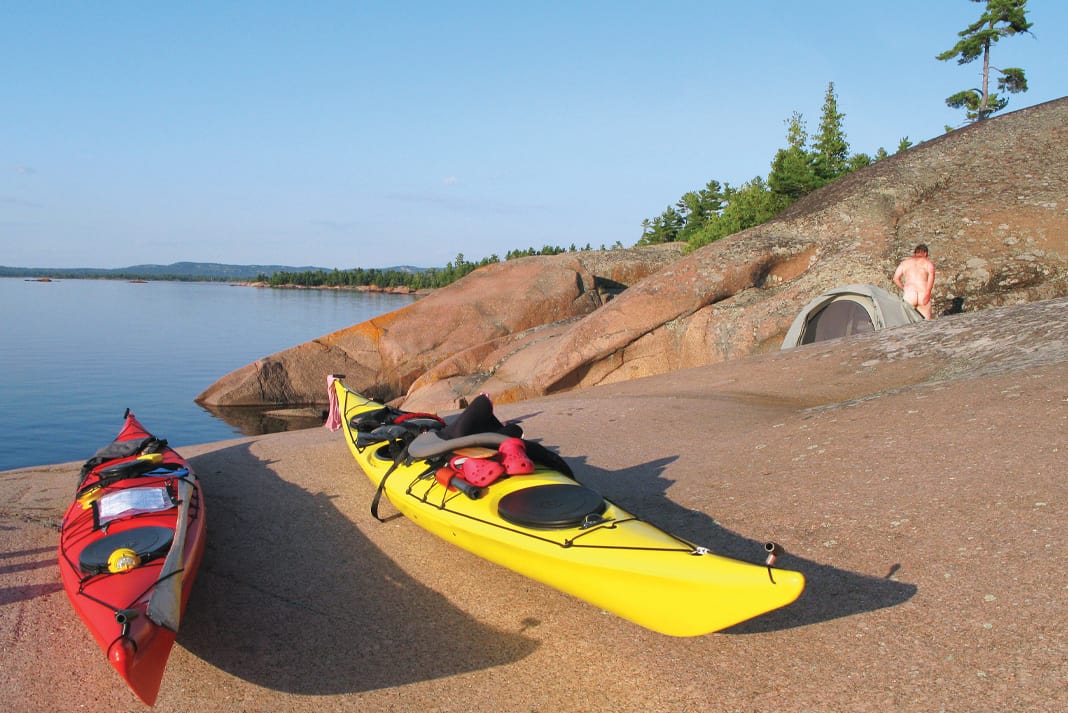
Floating naked in Indian Arm on a perfect summer night, surrounded by green phosphorescence, watching seals’ shimmering tracks like underwater comets. Or wind drying on Georgian Bay granite at sunrise, getting goose bumps on body parts rarely feeling the open air.
Why not go skinny dipping on your next paddling trip?
Blame modern civilization for the swimsuit—Victorian England outlawed naked swimming in 1860. In pre-industrial times everyone skinny dipped. Who would bother getting clothes wet? Especially before the days of fast-drying Lycra.
Early swimsuits favored prudishness over practicality. Made from hideous stiff canvas or flannel, they were cut for maximum concealment. Women’s bathing gowns had lead weights sewn into the hem to keep them from floating (the gowns, not the women, though one wonders how many drownings resulted). A wet swimsuit weighed 30 pounds.
[ Paddling Buyer’s Guide: See all paddling apparel ]
Thankfully, by the 1930s, North America had begun turfing its beach censors, whose job it had been to enforce “neck to knees” coverage.
Feeling cheeky. | Feature Photo: Virginia Marshall
Skinny dipping flirts with the mainstream
Receding tan lines have since closely followed the flourishing of liberal democracy. Under Franco, Spain’s fascists shut down nude beaches. At the height of the fight against Hitler, people went bananas for the bikini in America. Scandinavia, that paragon of liberalism, is the world capital of nudism.
Naked swimming even transcends the culture wars: Democrat president Lyndon Johnson once skinny dipped with evangelist Billy Graham.
[ Plan your next paddling adventure with the Paddling Trip Guide ]
Swimming in the buff continues to gain popularity. In 1981 Pope John Paul II (who was a kayaker first) issued a statement about morality and nakedness that effectively gave it the okay. The 2009 television series The Skinny Dip featured young, hot Newfoundlander Eve Kelly getting naked at a remote swimming hole in every episode. And at the end of 2012, a herd of New Zealanders stripped and dipped to break the group skinny dipping record of 413.
Yet fully freeing ourselves from the convention to cover up still requires escape. That’s why every nude beach is a mini wilderness: Vancouver’s legendary Wreck Beach, 473 steps down to the sea at the outer edge of an urban forest. Toronto’s Hanlan’s Point, which only became legal in 1999, separated from downtown by an island. Or San Diego’s Black’s Beach, a hike below 300-foot cliffs.
Myself, I prefer to kayak to more private skinny dipping spots. I hadn’t considered myself a nudist—that political “ism” associated with the brazenly unclothed—until I learned how much the term’s definition sounds like why I paddle: “becoming one with the natural world” and “a feeling of liberation as you shed your status, pretensions and fears.”
For me, the freedom to skinny dip is not just a sign I’ve gotten away. It’s the final ritual of getting there, a baptism.
This article was first published in the Spring 2013 issue of Adventure Kayak Magazine and was republished in Issue 58 of Paddling Magazine. Subscribe to Paddling Magazine’s print and digital editions, or browse the archives.
Feeling cheeky. | Feature Photo: Virginia Marshall
Few places in the United States inspire visions of subtropical paradise like the Florida Keys do. With practically perfect weather year-round, clear blue water, and plenty of beautiful beaches to explore, kayaking Key West is a dream. It’s no wonder more than 2 million tourists visit the Keys each year.
With the ocean as your playground, the Keys offer an abundance of water recreation opportunities, including kayaking and canoeing. If exploring the local scenery and wildlife by paddle is your thing, you’ll want to plan your next getaway for Key West.
The southernmost point of the contiguous United States offers everything an ocean lover could want: Guided kayak and canoe tours, boat rentals, saltwater fishing, and snorkeling, just to name a few. In this guide to kayaking Key West, we’ll explore the best of the above and much more to take the guesswork out of your next kayaking trip to the Keys.
[ Get all the gear essentials for your kayaking trip in the Paddling Buyer’s Guide ]
Must-sees / top places to kayak
With so many interesting places to explore around Key West, it’s hard to decide where to begin. Check out our list of must-see places to get you started on your own personal tour of the island.
If exploring mangrove forests at your leisure is what you seek, Saddlebunch Keys is a great place to start. These keys are a chain of mangrove islands located 7 miles east of Key West. There are tons of places to pull off the highway and launch your kayak or canoe, as well as a boat ramp at mile marker 11 on US 1. This is said to be one of the most scenic areas in the Lower Keys, Saddlebunch Keys will not disappoint!
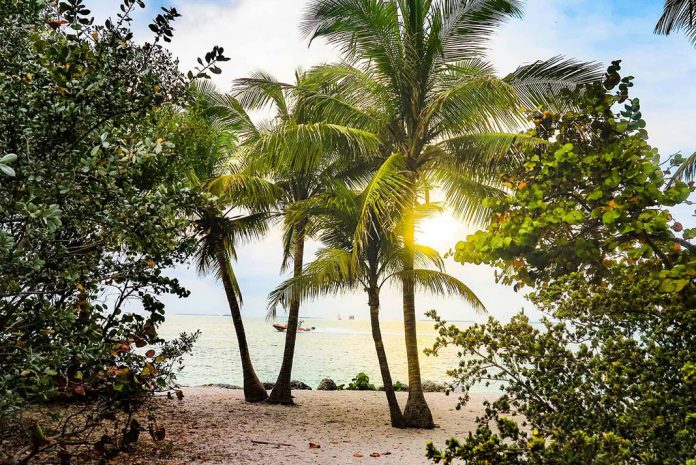
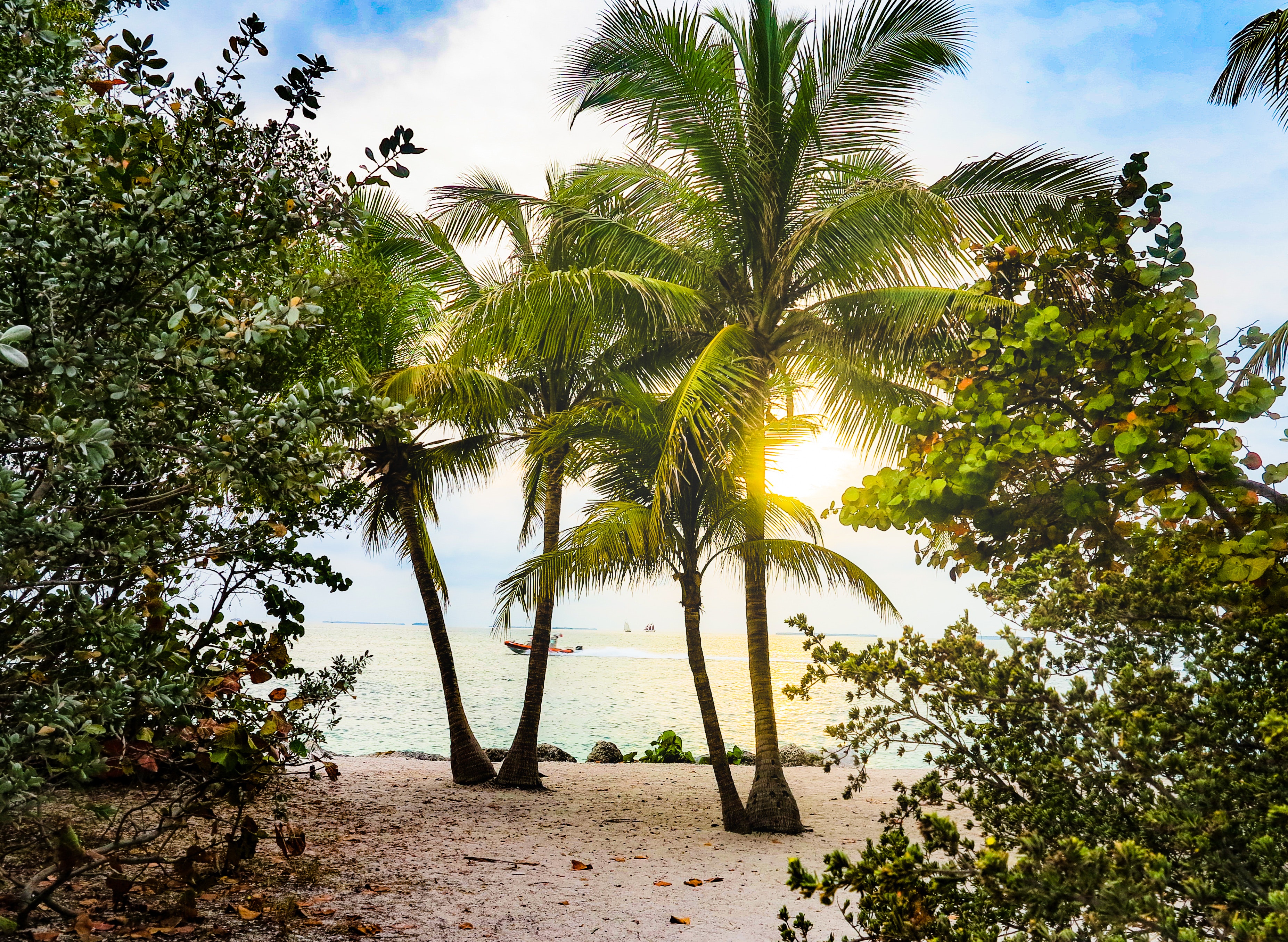
Although only half a mile in length, Smathers Beach is the largest public beach on the island. 150,000 visitors come to swim, kayak, paddleboard, and relax here annually. Located on the south side of Key West, you’ll find beautiful views of the Atlantic Ocean as well as endless palm trees and white sands.
Geiger Key is most notable for its large, combined marina, restaurant and RV park. If you’re not into the hustle and bustle of marinas, there is also a public launching area nearby. If you’re looking to do some fishing on your trip, be sure to give Geiger Key a go. Even if you’re not, there are plenty of small islands to explore and the Naval Air Station is nearby as well, so there is a good chance you’ll get to view some military planes and helicopters on your paddle.
Launch your boat from the southernmost state park in the lower 48 states. Fort Zachary Taylor Historic State Park boasts one of the most popular beaches in the area. While you’re out paddling here, take a break to bird watch or snorkel too. And, of course, it’s not a bad idea to visit the fort itself while you’re already there.
PHOTO: Pexels
Top-rated kayak rentals
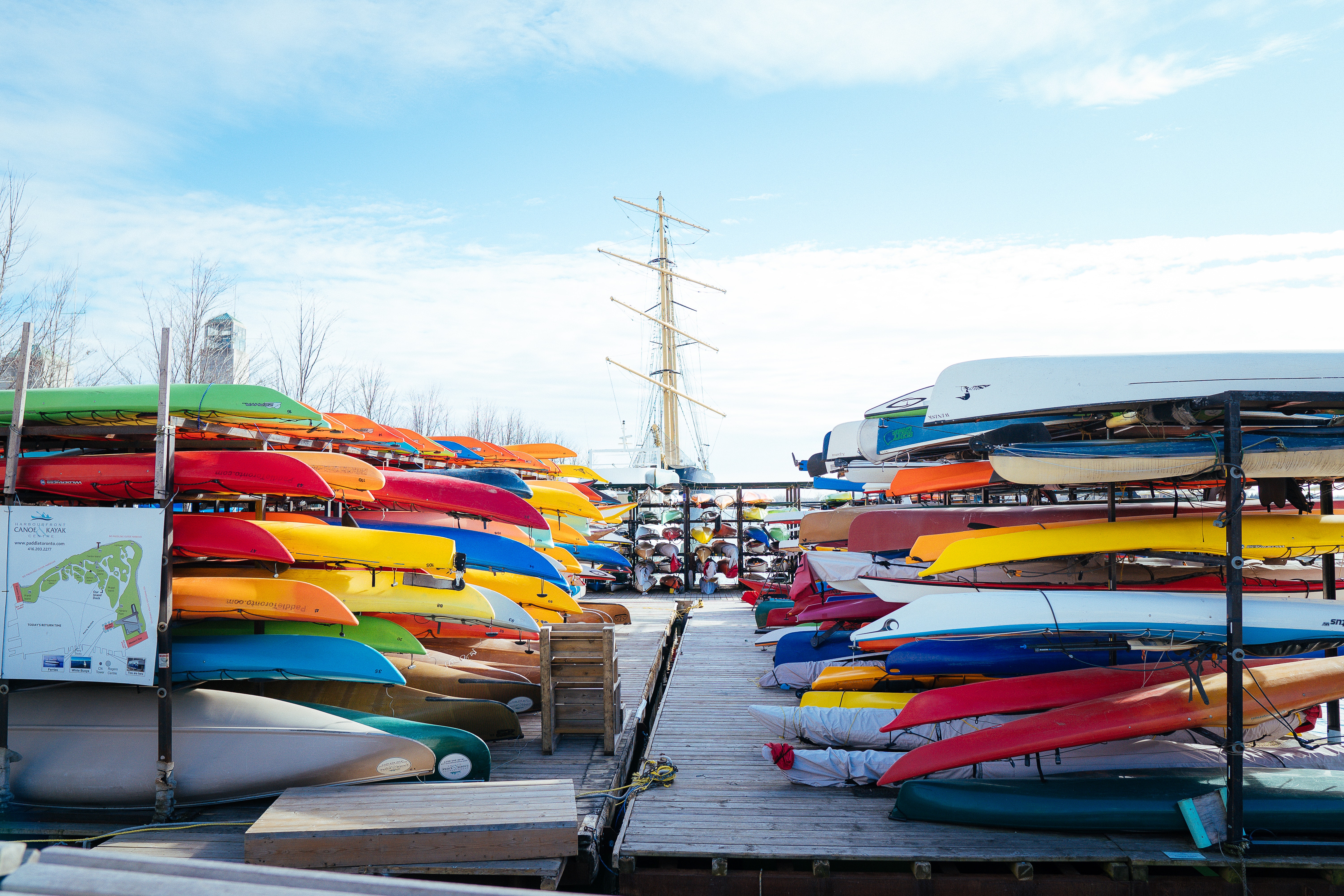
If you don’t have your own kayak or simply don’t feel like hauling it with you on your trip to Key West, never fear. There is no shortage of boat rental businesses here. Most offer guided tours as well.
Lazy Dog Adventures
Lazy Dog Adventures is one of the most highly rated kayak rental and tour businesses in Key West. They have earned a 5-star rating on TripAdvisor with over 1,000 reviews. Single and double kayaks are available. You can rent your boat by half a day at $25, or a full day at $45.
If you are heading out by yourself, Lazy Dog will offer you a map of the local waterways and points of interest. As you might imagine from their name, they also offer tours, which we’ll talk about more below in our Key West kayak guide.
Kayak Kings of Key West
Kayak Kings of Key West has the best rental rate around, offers several different types of kayaks to borrow, and is very accommodating with special requests. Standard singles and doubles are available at a flat-rate fee of $25/day. It doesn’t matter if you’re only out there an hour, half a day, or all day; it’s $25.
Kayak Kings also have explorer and fishing kayaks available for a bit more as well as ocean kayaks for experienced kayakers only.
Aside from the plethora of kayaks they offer, Kayak Kings also have dry bags, coolers, kayak anchors, and snorkeling gear available for rent. They also provide drop off services for locations up to 15 miles away and will allow you to take their boats on the ferry if you’re planning to visit the Dry Tortugas while you’re there.
[ Get all the gear essentials for your kayaking trip in the Paddling Buyer’s Guide ]
Night kayak Key West
For an extra unique experience while kayaking Key West, check out the clear bottom single and double kayaks available at Night Kayak. A single boat will run you $20 for 1 hour or $30 for half a day. Double kayaks are $30 for 1 hour or $40 for half a day.
Night Kayak Key West is fully licensed and insured. They also offer night paddling tours and rent out snorkeling and fishing gear
PHOTO: Old Town & Ocean Kayak
Where to go kayak fishing
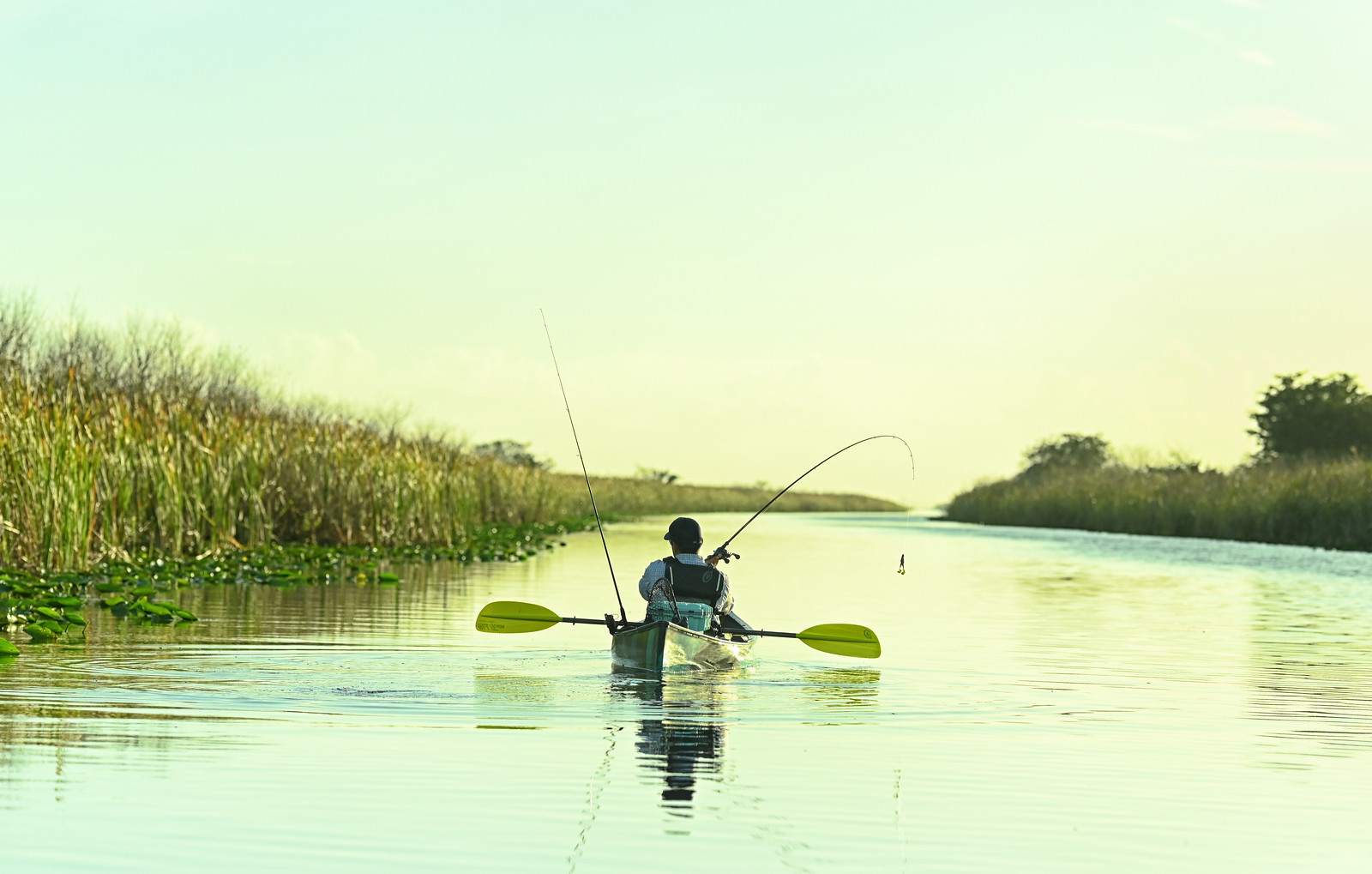
Whether you’re an experienced saltwater angler or first-time fisher, you’ll have no trouble finding the perfect kayak fishing spot for you around Key West. It’s a great place to try out saltwater fishing since most of the waters surrounding the key are calm and shallow.
Fishermen are notoriously secretive about giving away information on their best spots. With that said, here’s some general areas around Key West to get you started. And, if all else fails and you really want to catch some fish, you can always find a guided kayak fishing tour or private guide to take you out.
Don’t forget your Florida saltwater fishing license!
Fleming Key
Located just north of Key West, Fleming Key is close enough that you won’t have to do much driving to find a launch spot. You can find red grouper, jack crevalle, and snapper here, to name a few.
PHOTO: pexels.com
PHOTO: pexels.com
PHOTO: pexels.com
Key West National Wildlife Refuge
According to the Key West National Wildlife Refuge, this backcountry area offers one of the best saltwater fishing areas in North America with over 200,000 acres to fish! (It is worth noting some areas are off-limits to protect nesting bird and sea turtle habitats.) You can find lobster, bonefish, tarpon, grouper, and snapper, amongst others, here.
As mentioned earlier, Geiger Key is a great place to try your hand at saltwater fishing too. Head back up the highway about 20 minutes for a chance to catch mahi mahi, blue runners, snapper, bar jack, cobia, and more.
If you’re already in the Geiger Key area, head northeast a little further to the Saddlebunch Keys. With plenty of mangrove areas and bridge connections to explore under, cast out for a chance to catch mangrove snapper, yellowtail, jack crevalle and tarpon.
6 best Key West kayak tours
Whether you’re looking for the best eco tour, mangrove sight-seeing, or combining two of the best warm water activities by kayaking and snorkeling, Key West, Florida has you covered! No matter which tour below interests you, always make sure to check for departure times on their respective websites as these can change depending on weather and tidal conditions.
PHOTO: pexels.com
Eco tours
Key West Eco Tours
If you’re ready to get away from the hustle and bustle of shore and explore the vast natural area the backcountry has to offer, Key West Eco Tours is your ticket. They offer a couple of tour options of varying lengths that wind through mangrove islands, sunny sandbars, and the Key West National Wildlife Refuge.
Backcountry Tour: 2 hours starting at $65 for adults.
Sail, Kayak, and Snorkel Tour: All-inclusive, half a day (4 hours) tour starting at $115 for all ages.
Honest Eco Tours
For some extra authentic eco-friendliness, Honest Eco Tours is true to their name. Other than their rave-reviewed tours exploring the mangrove islands of the Key West National Wildlife Refuge, dolphin watching, and snorkeling amongst coral, sponges, and sea life galore, Honest Eco also offers organic fruits and veggies from a local retailer, use an electric boat for chartering out to the refuge, and take pride in their informational tours about the local ecosystem and wildlife, actively promoting conservation in a fun way.
Kayak & Snorkel Tour: 4 ½ hours at $124/person
“All of the Above” Tour (Kayak, Snorkel, and Watch Dolphins): 5 hours at $145/person
With two tour options, Lazy Dog Adventures promises up-close exploration of the mangrove creeks of the backcountry. “Lazy Dog” is not just a name, either. Your four-legged friends are welcome to come too.
Join the Kayak Kings on their signature tour: The Mangrove Maze! You’ll wind your way through the narrow water channels of the mangrove forest, where your boat is about the only thing that can fit! Other than the wide variety of creatures living in the waters here, this tour is a great opportunity for bird watching as well.
Mangrove Maze: 2 hours at $45/person; 3 hours at $65/person
Another highly rated tour company with 5 stars and almost 5,000 reviews on TripAdvisor, you’re sure to have a top-notch experience on Danger Charters’ Sail, Snorkel, and Kayak trip. It doesn’t get much better than sailing the ocean blue in a schooner, discovering underwater wildlife, and kayaking through mangrove tunnels.
Clearly Unique is just that and offers the only guided tours in clear bottom kayaks in the area! Once you get to your destination in the Great White Heron National Wildlife Refuge by powerboat, spend some time exploring the calm waters in your kayak before taking the plunge with your snorkel gear. Other than coral reefs, sponge gardens, and wildlife viewing, you’ll also get to check out some shipwrecks.
Kayak and Snorkeling Tour: 3 hours at $109/person
PHOTO: pexels.com
PHOTO: pexels.com | Dariusz Grosa
What wildlife might you see?
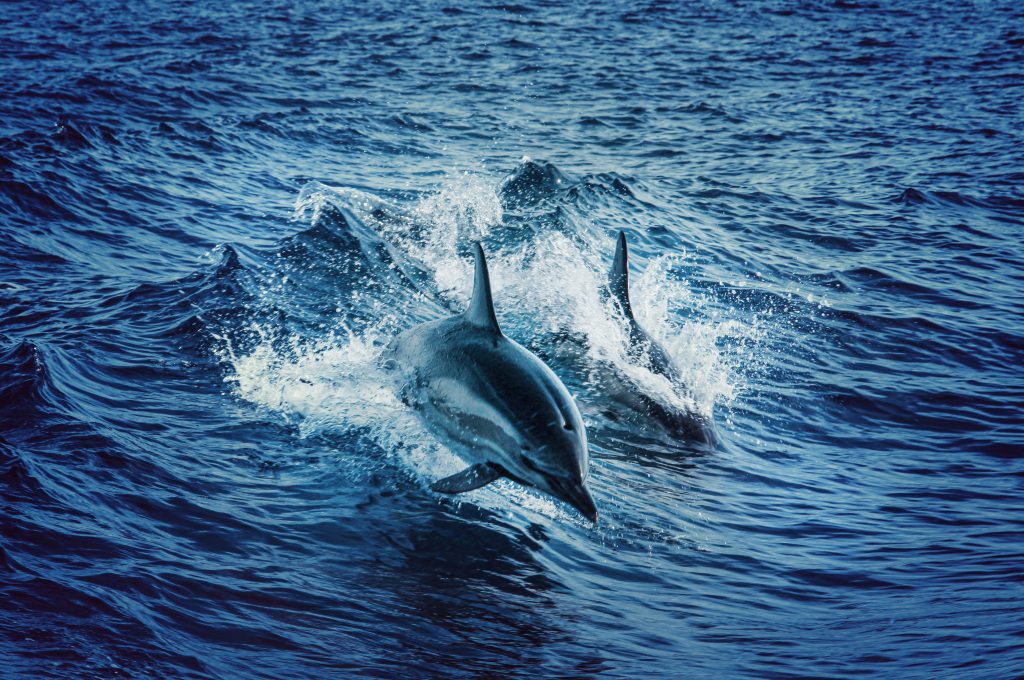
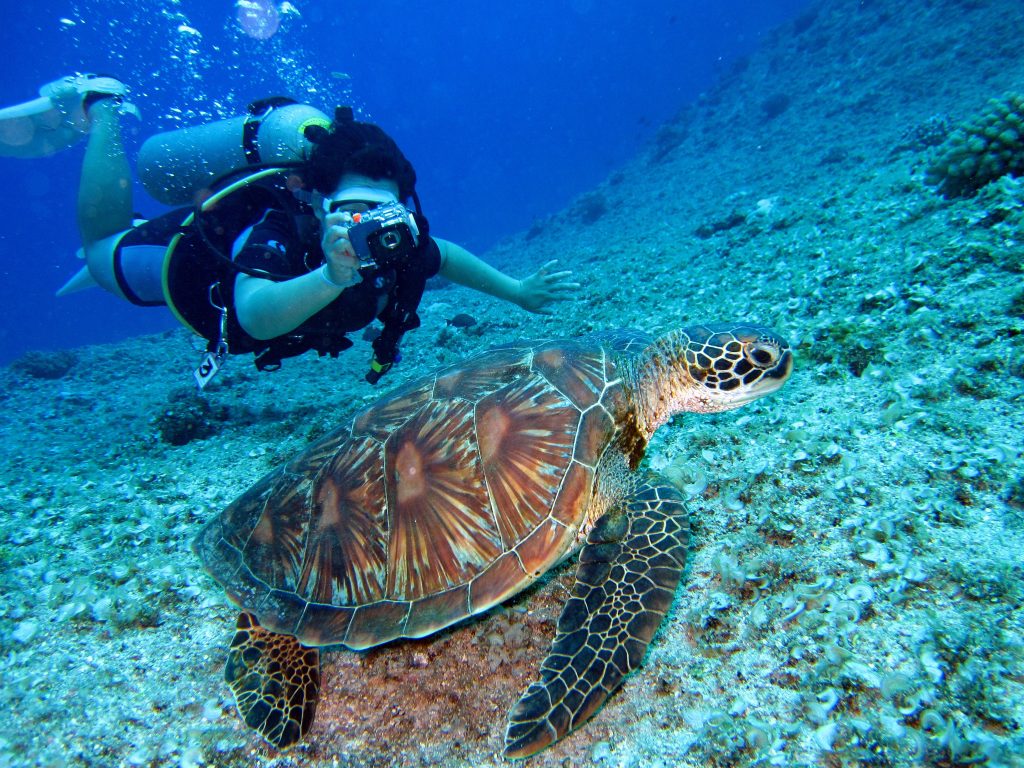
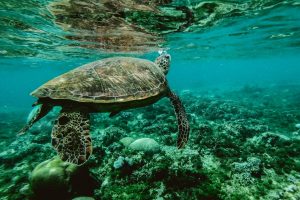
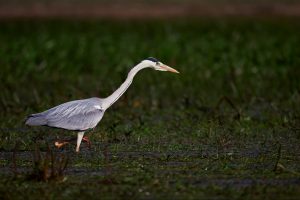
Needless to say, you can find a wide assortment of creatures, on land, in the sea, or the air, around Key West. Here are just a few of the interesting birds, mammals, and more to look for on your excursion.
[ Get all the gear essentials for your kayaking trip in the Paddling Buyer’s Guide ]
What you’ll need to go kayaking
PHOTO: pexels.com | Wendy Wei
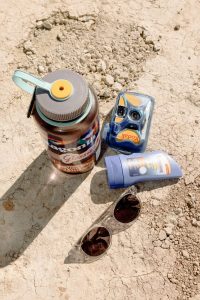
One of the draws of kayaking and canoeing is that you don’t need to take a whole lot of gear with you. If it’s your first time kayaking Key West, or if you just need a refresher, here is a list of recommended items to take to ensure you have the most pleasant experience possible:
Polarized sunglasses
Sunscreen
Drinking water
Snacks
Bathing suit or light clothing (light both in style—such as shorts and a t-shirt—and color)
Waterproof bags are a good idea for valuables (wallet, phone, keys, etc.)
Camera
A wide-brimmed hat
Valid Florida saltwater fishing license and other fishing gear such as poles, line, bait, hooks, etc.
[ Get all the gear essentials for your kayaking trip in the Paddling Buyer’s Guide ]
PHOTO: pexels.com | Nextvoyage
What’s the weather like in Key West?
Other than, perhaps, hurricane season, there’s never really a bad time of year to visit Key West. The average highs and lows remain reasonable year-round with highs around 85°F and lows at 65°F.
If you’re wanting to avoid summer crowds while still enjoying the terrific weather, winter and spring are both great times to visit. December through March is the driest time of year. The average low during winter is 65° with an average high at about 73°.
There is also a surprisingly low number of tourists during spring as well. Key West receives average lows around 73° and average highs of 83° during this time.
If you happen to get a rain shower on your visit, don’t stress too much. They are usually short-lived and pass quickly.
Although it may be disappointing to know that hurricane season lasts for half of the year, from the beginning of June through the end of November, it might be reassuring to know that the most active time for hurricanes in the Keys is only from August through October.
No matter what kind of adventure you’re looking for in Key West, Florida, you’re sure to find the perfect trip in our kayak guide. With so many options, from a relaxing, sight-seeing trip aboard a clear bottom kayak, an exciting fishing trip at sea, or exploring the twists and turns of a mangrove forest, kayaking Key West will keep you busy for hours… or your entire trip!
[ Get all the gear essentials for your kayaking trip in the Paddling Buyer’s Guide ]
When Hollywood has a hit movie it’s almost expected that a trilogy will follow. It’s a risky strategy that doesn’t always work—remember Pirates of the Caribbean: On Stranger Tides and Transformers: Age of Extinction? But sometimes the results are fantastic, like with the Pyranha Burn III, the latest incarnation of Pyranha’s popular river runner.
[ Paddling Buyer’s Guide: See all Pyranha boats ]
Try the Burn III on for size
The first, and maybe most important, change is that the Burn III comes in four sizes. “After the medium, large and extra large were in production, we realized the medium was too large for smaller paddlers. We needed to add a fourth size so that the Burn would fit a wider range of paddlers,” explains designer Robert Peerson.
If you were in the medium Burn II but found you were on the high end of the paddler weight range, you will now likely fit perfectly in a large Burn III.
A boat that follows your cues
In the nine years since this river runner was first released, its hull and waterline have been lengthened for greater speed and tracking. This, coupled with its flat bottom, allowed me to surf small waves and move around the river quickly, easily maintaining my line.
The edges of the Burn III have also been given a facelift. There’s a sharp and pronounced edge from just behind the cockpit all the way to my feet and less prominent lines in the stern. This means I can lean forward to ensure a hard aggressive carve or keep my weight back for longer arcing turns.
Interestingly, if you lean really far forward you can actually spin into tiny eddies as the rails in the front dig in and the stern, clear of the water, is free to spin. The Pyranha Burn III is a boat that reacts very differently depending on driver input (shifting your weight fore and aft), which is fun once you figure it out and forgiving in the meantime.
[ Plan your next river running adventure with the Paddling Trip Guide ]
BETTER TO BURN OUT THAN FADE AWAY. | PHOTO: SCOTT MACGREGOR
Run the river in style and comfort
When running boney creeks, hard edges aren’t usually a good thing as they can easily catch rocks. Pyranha has solved this problem by placing the edges quite high above the waterline. In order to engage them, I needed to tilt the Burn III quite aggressively. While beginners might feel a bit uneasy at first tilting so far over, confidence-inspiring secondary stability makes this a non-issue. Some beginners may never even know the rails are there.
The rocker profile has also been adjusted from previous Burns—there’s now more in the bow, and less in the stern as compared to the Burn II—which translates into riding up and over waves, skipping over holes and nice, satisfying boofs off of rocky ledges or from the peak of a wave.
The new Burn is equipped with Pyranha’s upgraded C4S outfitting, which means a larger, more comfortable seat. It’s fully adjustable to ensure I can trim the boat so it handles how I want it to. Keep in mind it does take some time to get all the adjustments just right, so don’t show up late to the put-in and expect to be able to just get in and go.
Pyranha has taken the ideas and concepts from the Burn and Burn II and improved on the design, producing a boat that can perform well in all conditions, from big water to steep creeks. It’s also a boat that can take beginner and intermediate paddlers to the next level with confidence. Unlike Alien 3, the Pyranha Burn III is certainly worth the price of admission.
This article first appeared in the Fall 2015 issue of Rapid Magazine.
Subscribe to Paddling Magazine and get 25 years of digital magazine archives including our legacy titles: Rapid, Adventure Kayak and Canoeroots.
The new Tempest 170 from Wilderness Systems is the brainchild of Steve Sherre of Alder Creek Canoe and Kayak in Oregon, shaper/designer Bob McDonough and the Wilderness Systems design team. What they’ve created is an appealing combination of “Brit boat” design with the high volume and plush outfitting of the North American tradition. You could call it a “Romany for the West Coast.”
[ Paddling Buyer’s Guide: See all Wilderness Systems boats ]
The Tempest 170 has the best of both worlds
British performance
The NDK Romany series, designed by U.K. expedition paddler Nigel Dennis, is a line of classic Brit boats with a distinctive Greenland-inspired hard-chine hull and fairly low volume. The result—a sporty and very seaworthy kayak with a good blend of tracking and manoeuvrability—is very popular in the U.K. and on the East Coast of North America.
The classic Brit traits include: no rudder (although a skeg is optional), three fibreglass bulkheads sealed with rubber hatches, low windage, a snug fit and good performance. The Brit boats have been designed for the U.K.’s typically rough seas and the skilled paddlers who venture out in them. The downside is often poor comfort, sometimes less than stellar workmanship and heavy weight.
North American comfort
The kayaks that have evolved in the Pacific Northwest tend to sport novice-friendly rudders and have much higher volume. They are Cadillacs of the sea—great for comfort and long-distance tripping in the sheltered Inside Passage—but not necessarily good for performance. These kayaks have two hatches with a variety of often leaky closure systems and luxurious seats that aspire to being little aquatic armchairs.
[ Plan your next adventure with the Paddling Trip Guide ]
The Wilderness Systems Tempest 170 combines the best of both worlds. It has the look of a Brit boat, but pumped up and pimped out. The hard-chine hull shape is extremely reminiscent of the Romany. In true Brit style, the hatch covers are tight-sealing rubber and the three bulkheads are moulded fibreglass.
The Tempest 170 has room to spare
Where the Tempest radically departs from its Old World roots is the realm of comfort. The hull is considerably deeper than a Brit boat. At the expense of increased windage, there is a lot of volume, ample cargo space for multi-day trips and no lack of legroom.
The most notable feature is the Phase3 Outfitting, a high-performance seat and thigh-brace system derived from the “FAT 3.0” outfitting that Wilderness Systems’ sister company, WaveSport, puts in its whitewater boats. The foam-padded seat is adjustable with a tilting leg support, backband and very comfortable, adjustable hip pads. Wilderness Systems is to be congratulated for creating the most Mac Daddy piece of furniture ever to grace a sea kayak. Our only complaint is that when you tilt the boat, there is some lateral flex and creaking in the seat’s plastic shell that you don’t get in other boats whose seats are made of more rigid materials or glued directly to the hull. Glued foam inserts can easily solve this.
Rounding out the fit are contoured, padded thigh braces that can be easily unscrewed and moved to match different body types. Overall, the Phase3 system provides a snug, performance fit that was previously only available with custom outfitting.
Mix play and performance with the Tempest
The Tempest 170 is a nimble cruiser capable of holding its own at a touring pace. With a 22” beam, it’s a half inch wider than its British cousins. Intermediate and advanced paddlers will find it has plenty of initial stability and tracks will on an even keel. The Tempest tends to be a bit unsteady in transition from edge to edge, but once on edge its stable and cranks nice tight turns.
The Wilderness Systems Tempest 170 has a performance hull with outfitting to match and a volume that’s hard to find in a boat of its type. It’s a great choice for intermediate to advanced paddlers looking for a playful British design that performs well in surf and rough water but also has a comfortable cockpit and expedition-capacity volume. Available in polyethylene, fibreglass or Kevlar, as well as a smaller 16’6” version.
The Boréal Design Baffin first came on the scene in 2008 as a plastic version of the popular Greenland-style Ellesmere and promptly ran away as Boréal’s top seller. The touring kayak follows the smart trend of replacing a dog’s breakfast of models with a simple flow: 1) choose a design that suits your paddling style; 2) choose a size; 3) choose from poly or composite. Brilliantly easy, like buying shoes, and retailers and customers loved it.
In 2009, Boréal’s multipurpose touring kayak, the Epsilon, was their first to offer three sizes to accommodate paddlers from 90 to 280 pounds. With the success of the Epsilon, it only made sense to add a larger and smaller version to the Baffin’s 2011 redesign, and to also offer it in composite. So if you like the Baffin, Boréal has your size and material.
If you like a snug-fitting, sporty, close-to-the-water feel; if you like hard chines that let you use super-subtle edging to steer; if you like skin-on-frame-inspired lines that gracefully accommodate low-angle, Greenland-style strokes and laybacks, then the answer is yes.
I tested the smallest size, P1 (“P” for plastic). I found the initial stability to be comfortably moderate yet it took no effort at all to edge the trademark, down-curving “reverse hard chine,” which carves like a shaped ski, only in the opposite direction.
No surprises
With high secondary stability and predictable edging, the Baffin has the even-tempered personality you want in a foul-weather friend—a solid blend of soft-chine predictability and hard-chine turning characteristics.
The Baffin P1 has a long, flat keel with low rocker—perhaps to give its shorter hull a speed boost. It tracks surprisingly well, yet it’s easy enough to steer by throwing in some of the effortless edging while carrying speed.
Dial up the skeg for rough weather and you’re on rails. We love the smooth, precise operation and bomber spectra-cord construction of Boréal’s signature dial skeg, placed up front for easy reach and neatly recessed into the deck. These are perfect sporty touring traits.
This is a low-volume boat, so pack accordingly. The cockpit has enough length for just about any paddler within the P1’s weight range and a slim fit that’s fantastic for boat control—aided by an aggressively contoured bucket seat, adjustable thigh braces and sturdy metal foot braces. Stand warned that the streamlined decks strictly limit capacity.
Hatch covers are wickedly supple and the easiest we’ve found to get on and off, while also being dry thanks to the fit of the hard plastic hatch rims.
[ Paddling Buyer’s Guide: See all Touring Kayaks ]
The Boréal Design Baffin is a trusty touring boat
Boréal rightly pegs the Baffin as “an extremely fun and stable kayak for athletic paddlers from intermediate to advanced, suited for day and weekend trips.” And now with more sizes, Boréal’s sprightly bestseller will have an even bigger (and smaller) audience.
This article was first published in the Summer/Fall 2011 issue of Adventure Kayak Magazine. Subscribe to Paddling Magazine’s print and digital editions, or browse the archives.
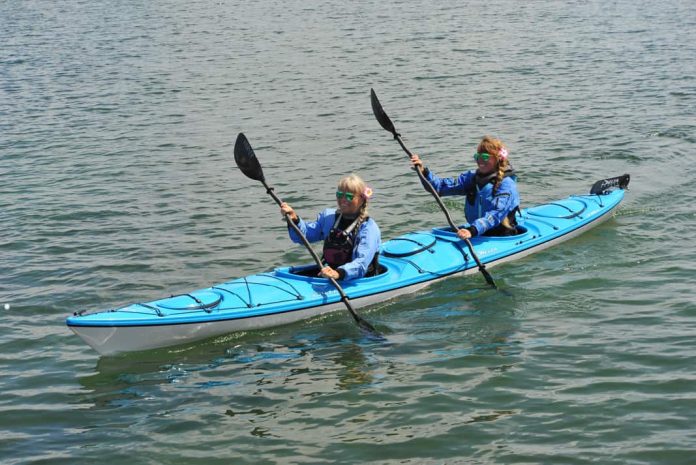
Double your fun with Delta Kayak’s Traverse 17.5T. | Photo: Owen Marshall
I’m a big fan of tandem kayaks. A fleet of doubles halves the number of boats on the water, making it easier to keep the group together, and they provide opportunities to pair stronger paddlers with those who are fatigued, seasick or otherwise struggling. Even a single tandem can be a huge asset to a group—think of it like an insurance policy. Enter the Delta Traverse 17.5 T, a new compact tandem embodying the new light touring ethos in a double design.
Delta Traverse 17.5 T Specs
Length: 17’ 6”
Width: 27.25”
Weight: 70 lbs
Max Capacity: 560 lbs
MSRP: $2,750 USD
Despite their many benefits, some paddlers still have reservations regarding doubles. For starters, there’s the stigma of the “divorce boat.” It’s true, paddling tandem does take more coordination and communication than piloting solo, but I’ve seen a great many more pairs flourish rather than flounder.
At a time when most paddling trips are just a couple of hours to a couple of days long and kayak sales are dominated by shorter, lighter boats, the biggest hurdle for tandems may be, well, their size.
Many traditional tandems were designed for—and excel at—expedition-style journeying. But casual paddling partners out for an afternoon or weekend don’t need cargo ship capacity. Add waterlines that project nine feet beyond the bars of a hatchback’s roof rack and 80 to 105-pound hull weights, and the honeymoon is over before it’s even hit the water.
The Delta Kayaks’ Traverse 17.5T is not merely a downsized version of Delta’s other tandem offering, the 20 T; it’s a fresh take informed by the brand’s spectrum of popular single kayaks.
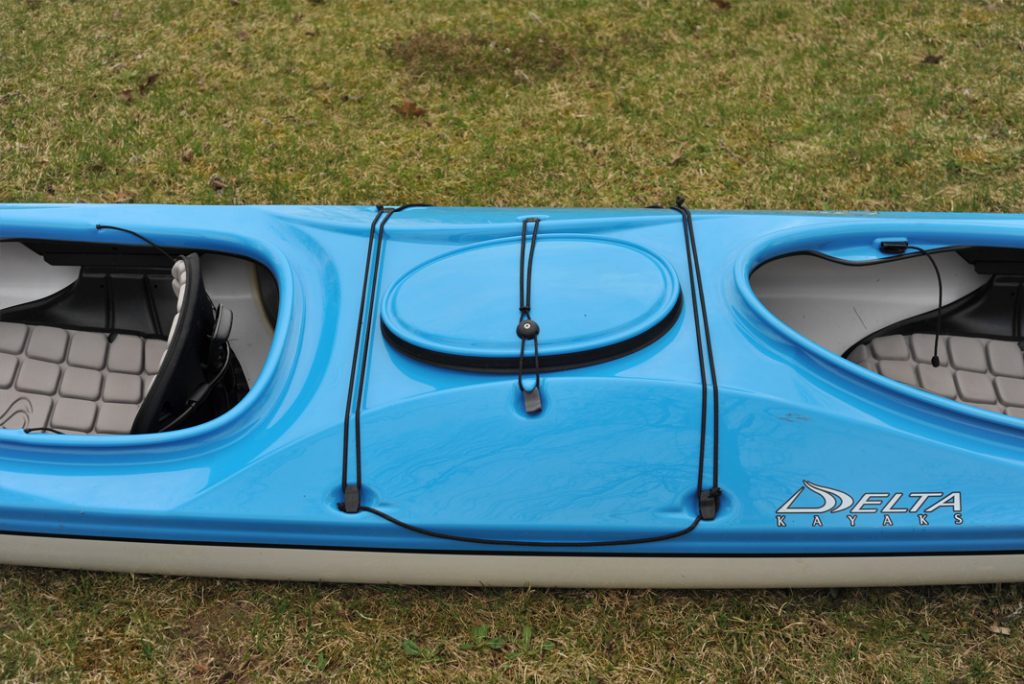
Delta’s generously sized Press-Lock hatches access 190 liters of dry gear storage, and the gasketed lids are easy on and off. | Photos: Virginia Marshall
We pick up our demo 17.5 T at White Squall, a Parry Sound, Ontario, paddling center whose racks are piled high with spring inventory of Delta kayaks. For budget-conscious paddlers seeking a boat that’s capable, attractive, user-friendly and lightweight, Delta’s thermoform plastic offerings tick all the right boxes. The finish of their durable vacuum-molded, ABS-acrylic laminate kayaks is flawless—and our Traverse is no exception.
[ Paddling Buyer’s Guide: See all Delta Kayaks Products ]
A weight off your shoulders
The first thing anyone who has ever paddled tandem will notice about this double is the weight—or lack thereof. Historically, wrangling a touring tandem onto and off of your vehicle’s roof was a feat requiring near-Herculean strength—and ideally a footstool. The Traverse tips the scales at a modest 70 pounds; that’s just a chubby housecat more than my 16-foot single.
Delta’s designers finessed two cockpits into the Traverse’s 17-and-a-half feet—a length more typical of solo sea kayaks than tandems. As veterans of tandem bicycles and boats know (and the uninitiated soon discover), cockpit proximity is one of the finer points of double design. Too close together and unsynchronized paddle strokes amount to a jousting match. The 17.5 T, we are relieved to report, gets paddler positioning just right.
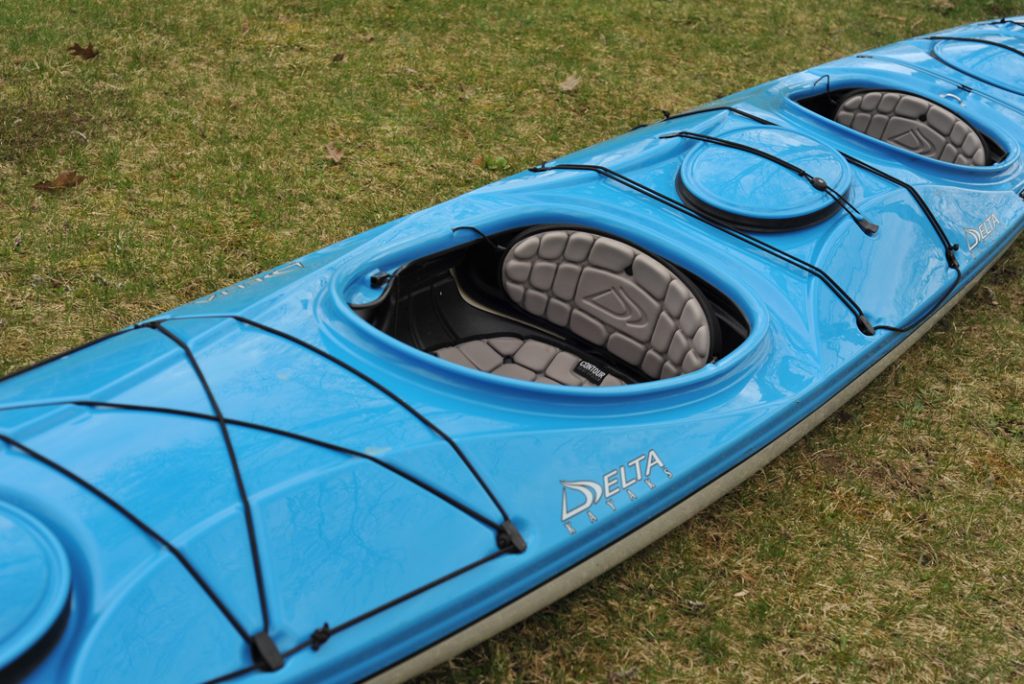
Sleek deck cutaways slim the Traverse’s topside profile, promoting improved stroke efficiency. Paddling the 17.5 T feels a lot like helming a Delta single. | Photos: Virginia Marshall
A comfortable fit for two
In-cockpit adjustments are a breeze thanks to Delta’s straightforward outfitting. The foot braces and multi-height backrest are accessible while seated, and fine-tuning backrest tilt and fore-aft positioning of the sliding seats can be accomplished with one hand. The latter is especially helpful for paddling partners of different heights and weights. For example, rather than adding ballast in the bow hatch to offset a heavier stern paddler, the bow paddler can simply slide his or her seat forward to trim the boat.
While the beamier dimensions of some tandems can hinder their fit for smaller paddlers, this is not the case with the 17.5 T. The thigh braces and other contact points feel secure at both bow and stern cockpits. Stylishly sculpted deck cutaways at both paddler stations reduce interference and enhance stroke efficiency. In fact, working from either seat feels uncannily like paddling Delta’s single kayaks.
[ Paddling Trip Guide: Plan your next paddling adventure ]
Delta is known for accessible designs, and the Traverse is perfectly suited for introducing a friend, partner or family member to kayaking. The boxy hull profile offers outstanding primary stability—it took a considerable, coordinated effort for our test paddlers to achieve a capsize on calm waters. A full-length keel ensures hassle-free tracking; drop the rudder to improve maneuverability in tight quarters. Hull speed is another advantage: two paddlers working together are faster than two single paddlers putting in the same effort.
The Traverse’s full chines and pronounced keel deliver superb stability and tracking. | Photo: Virginia Marshall
Ready to try kayak camping? The spacious bow and stern hatches still have ample combined capacity for a pair of weekend adventurers. The center hatch accesses an oversized deck pod with 14 liters of dry storage—handy for snacks, camera, repair kit, spare layers, paddle jackets, and more. Even better, it’s within reach of both paddlers, functionally serving as a shared day hatch, and doesn’t impede foot room for the stern paddler.
Double your fun in the Traverse 17.5 T
Since the earliest kayaks appeared on Arctic waters, tandems—and even triples—have been indispensable—from family freighters to hunting vessels for highly skilled teams. Fast-forward to today’s recreational paddlers and a double still makes a lot of sense. Delta’s Traverse 17.5 T gets two people on the water with less storage and transportation hassles—not to mention less cost—than two comparable singles. Still skeptical? Just grab a friend and take the Traverse for a spin.
This article was first published in Issue 58 of Paddling Magazine. Subscribe to Paddling Magazine’s print and digital editions, or browse the archives.
Double your fun with Delta’s Traverse 17.5 T. | Feature Photo: Owen Marshall
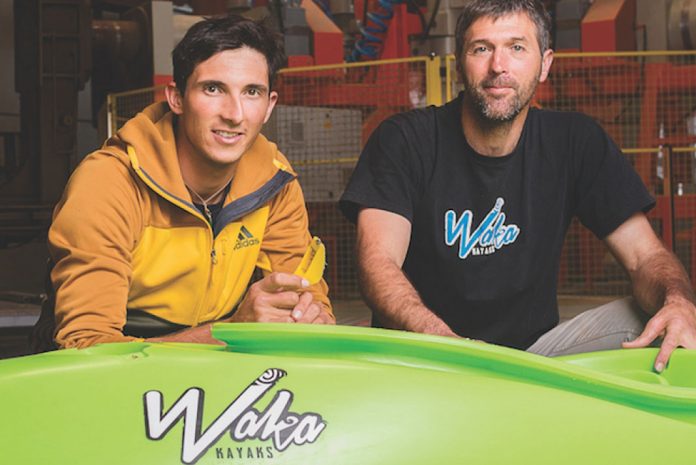
Sam Sutton and Kenny Mutton of Waka Kayaks in Italy. | Photo: Luigi Mazzucchi
The sun is barely up. Soft light touches the green water of the Kaituna River, making it sparkle. Giant fern trees, straight out of Jurassic Park, hang over the river as boat shaper Kenny Mutton and decorated freestyle athlete Sam Sutton slide from the riverbank into the water. A terrestrial bystander might think this is just a leisurely paddle, but it’s also a business meeting for Waka Kayaks.
Good friends, good connections and good timing led to the creation of Waka Kayaks in 2013. Back then, Mutton and Sutton were discussing the idea of buying the Tuna mold from Bliss-Stick Kayaks and starting their own production.
“Both of us were a little out of money,” says Sutton. “I had enough to buy the mold, and Kenny paid for the set-up costs and airfreighting the mold. We both went in halves.” Mutton was the shaper of the original Bliss-Stick Tuna and Sutton helped with design and testing, so it felt right that they were reunited with the design.
“Waka means canoe in Maori,” says Sutton. “We wanted to keep our Kiwi roots, even though we weren’t going to manufacture the boats in New Zealand.”
In search of a home base
Designed and tested on the warm water of the Kaituna, Waka’s rotomolded boats were manufactured for three years in the cold north of the Czech Republic. The two paddlers had contacts in the Czech making the start-up easier and knew it was close to their largest market, which meant saving money on shipping costs.
At that rural Czech factory, the building was camouflaged with no signs for Waka Kayaks out front. The houses butted up against each other along the street, giving way to a massive roller-style garage door that opened up into what used to be an old pig farm.
In May 2016, the factory moved to Italy, 40 kilometers south of Milan. “We had a bit of a supply issue at the old location when it came to production—the move has been an awesome step forward for Waka and its future,” says Sutton. “Plus, the food is really great in Italy.”
“We have only just figured out how much running a business costs, and it’s more in buying materials for full-scale production. Some things you need to buy three years supply,” says Sutton. “That makes a big impact on balancing cash and at the end of the day you are still unsure you will get a single dollar from the year.”
[ Paddling Buyer’s Guide: See All Rotomolded Plastic Kayaks ]
Using a third party for manufacturing means Mutton and Sutton have less control of production times and supply. The biggest challenge Waka Kayaks has faced is keeping up with the demand of boats, says Sutton. “People knew who I was in Europe and Kenny was the man at shaping so it was easy to market the boat straight away,” he says.
Helping paddlers to level up
When Sutton is paddling and racing around the world, it’s satisfying for him to turn up at a river and see a fleet of Waka kayaks at the put-in. It’s even more rewarding when he hears that his boats help paddlers progress their ability. He talks about a 50-year-old Waka Tutea paddler who fired up a run she’d only done once in her life. “She said it took her a grade above her previous ability,” says Sutton. “Giving her the chance to paddle harder whitewater again was cool.”
A handful of professional kayakers, including Aniol Serrasolses and Evan Garcia, have turned down money from other companies to paddle for Waka for free, says Sutton. “As soon as they tried it, they didn’t want to paddle anything else,” he adds. “We just want to make a boat that we love racing down in the morning and that makes you feel like a gangsta.”
Made in Canada. Paddled everywhere. | Feature Photo: Steve Ruskay
Feathercraft ended 40 years of production in 2016, marking the end of an era in the sea kayaking world. Fortunately, many Feathercraft kayaks continue to thrive on the expedition scene because the unique folding design allows them to be transported to places hardshell boats simply can’t go.
Light—and sturdy—as a feather
Doug Simpson, Feathercraft founder and designer, invented the skin-on-frame foldable kayak design while working as a prospector and pilot in the remote wilderness of Canada’s Northwest Territories.
He wanted a lightweight, packable boat to load into float planes, that was quick to assemble and disassemble, and durable enough to last in the remote Canadian wilderness.
His patented his first design in 1977. He chose the name Feathercraft as an ode to a feather’s sturdy, hollow vane, like the tubes used in the frame.
The most popular Feathercraft design was the K2 Expedition tandem kayak. The K2 weighed 87 pounds and had a capacity of 700 pounds, making it ideal for extended expeditions with extensive food and gear requirements.
[ Plan your next adventure with the Paddling Trip Guide ]
The early years of Feathercraft
During his early design years, Simpson rented a small shack on Granville Island in Vancouver, British Columbia. The space was 19 feet and three inches in length, which determined the maximum length of kayak he could build. To work on the opposite side of the boat, Simpson had to take the kayak outside, turn it around and squeeze it back into this shop.
Simpson chose T-6 anodized aluminum for the frame material, a common material for airplane parts. It has a high strength to weight ratio, and most importantly, is resistant to pitting and corrosion by salt water. The hypalon and urethane skin was all hand-cut and sewn. Thanks to high-quality components, Feathercraft kayaks regularly lasted for 30 years or more with proper maintenance.
Feathercraft kayaks are at home in the Arctic
I have been paddling Feathercrafts for many years in the Arctic. There certainly are tricks and quirks about building them, maintaining them on an expedition, and storing them. The manual suggests a 45-minute time for assembly.
In the field, with sometimes damaged or missing parts or in bad weather, this process can take quite a bit longer, and cost a few skinned knuckles along the way. Yet, as expedition boats, they are user-friendly—easy for packing and ideal for large cargo volumes. I have landed them in the surf, bashed through thick brash ice, and felt them flex in the large ocean swell.
I have also had a few mishaps. Luckily, field repairs are easy, and often permanent. The old saying holds true: take care of your boat, and your boat will take care of you.
With the high price of air cargo, most Feathercrafts still in service are cached high in the Arctic, or in holds of expedition cruise ships.
Salute to Pinky
This past summer, I took a moment to salute one of the Feathercrafts in our long-standing East Greenland fleet. Pinky, as it was aptly named in recent years, was a first-generation K2 Expedition kayak with a woven nylon skin. It had seen many sea days over its years of service, and its once deep red hull is now a sun-faded and salt-stained pink.
Pinky’s last trip was in the Ammassalik Fjord on the East Coast of Greenland. It was transported from Ittoqqortoormiit, Greenland, further north, where it previously served as an expedition fleet boat for more than two decades years.
During the long voyage, which included a snowmobile trek through two mountain passes, Pinky sustained two injuries to critical frame components. Even with careful hands and a delicate touch, these components failed while it was being dismantled. A short service was held for Pinky beside the sea, and a salute made to the many miles traveled, and many amazing things seen from its cockpit. Most of Pinky’s parts were donated to other Feathercrafts, so in a way, it will live on as a part of the fleet. At sea, where it was meant to be.
This article was first published in Issue 56 of Paddling Magazine. Subscribe to Paddling Magazine’s print and digital editions, or browse the archives.
Made in Canada. Paddled everywhere. | Feature Photo: Steve Ruskay
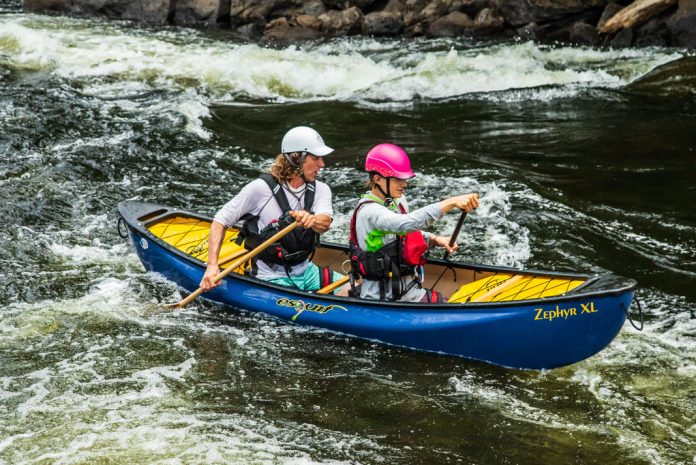
Just the two of us, we can make it if we try. | Photo: Michael Hewis
I dug through the Rapid archives all the way back to 2006 to find my original review of the revolutionary Esquif Zephyr.
Esquif Zephyr 2.0 XL
Material: T-Formex Length: 11 ft 3 in Width: 30 in Depth: 16 in Capacity: 325 lbs Price: Solo $2,020 USD // $2,230 CAD ||
Tandem $2,340 USD // $2,580 CAD
Fourteen years ago, Jacques Chassé, the founder and owner of Esquif Canoes, was on a tear, collaborating with the who’s who of solo open boating. Chassé and his team were cranking out new models almost every spring. As Quebec rivers melted, we came to expect new, progressively shorter and more aggressive whitewater canoes from Esquif’s Frampton factory. The Nitro, Detonator and then Andrew Westwood’s Zoom—one of my favorite boats of all-time. They were followed by the Chassé, Westwood, Paul Mason, Joe Langman and Mark Scriver creation, the Taureau. Then, all of a sudden, scratch the needle off the vinyl record, Chassé released the full-bodied, 11-foot, three-inch Zephyr.
Esquif took the speed, stability and dryness offered by a larger hull and added advances Chassé and his team had made in areas such as chine and flare developed for the smaller boats to produce the Zephyr.
People said the Zephyr was Esquif’s answer to the popular Dagger Rival. A younger, sassier version of me wrote the Zephyr was a Zoom with training wheels. Whatever it is, 14 years later, the Zephyr has proven to be one of Esquif’s top-selling solo canoes.
Just the two of us, we can make it if we try. | Photo: Michael Hewis
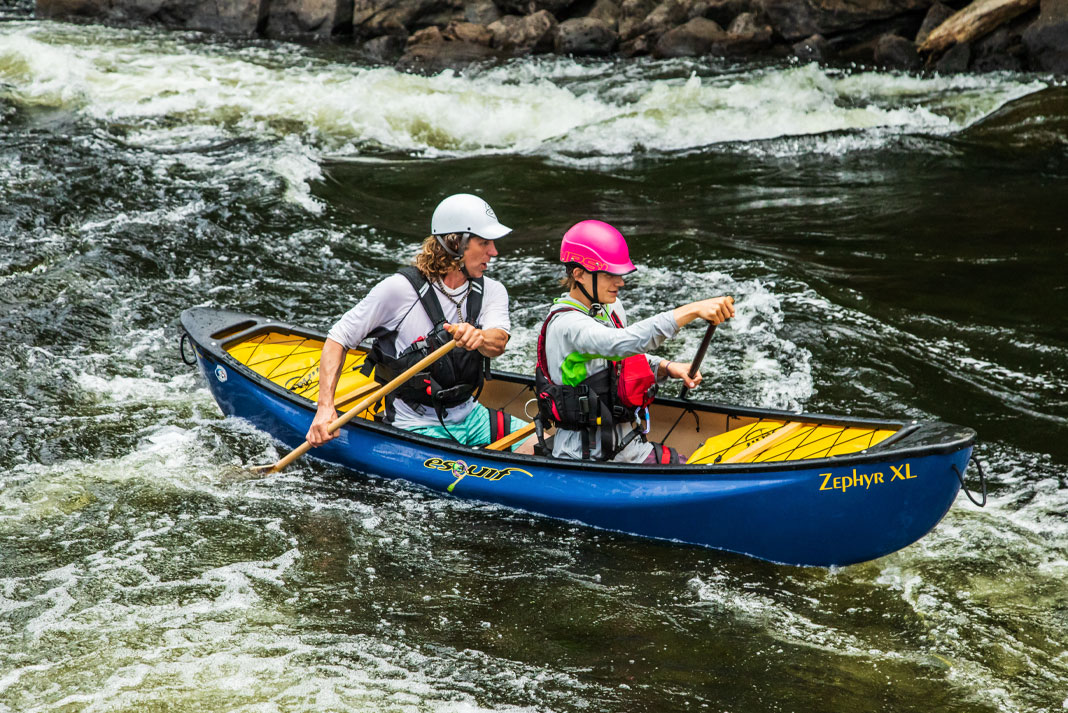
The Esquif Zepher 2.0 XL is slightly bigger. For bigger dudes. For bigger water. For bigger fun.
Usually, an XL version of something is extra, larger. And usually, a 2.0 version is a complete update. The Zepher 2.0 XL is neither, really. So, what gives?
[Paddling Buyer’s Guide: See All Esquif Whitewater Canoes]
The XL is the same length, 11 feet and three inches long. Same as the original Zephyr. However, the XL is an inch wider. An inch doesn’t seem like much, but it ups the capacity from 220 to 325 pounds. It means the XL feels to a 200-plus paddler like the Zephyr does to someone smaller than me. Or it means I can pack a weekend of gear for a solo backcountry mission.
Esquif’s tandem pedestal outfitting. Also available with tandem bulkhead. It’s cozy in there. | Photo: Michael Hewis
The original Zephyr was available only in Esquif’s proprietary Twin-Tex material. Twin-Tex is a matte black woven material marrying together fiberglass fabric with melted polypropylene plastic instead of resin. It was lighter than Royalex, but it is a pain in the ass to outfit—anchors always seemed to peel. And Twin-Tex is harder to fix.
The 2.0 in the new Zephyr 2.0 and 2.0 XL represents the big switch from Twin-Tex to T-Formex, Esquif’s own version of a plastic laminate now used in most of their whitewater solo canoe line-up. Due to material supply issues as a result of COVID-19, the Zephyr in Twin-Tex was not available in 2020. But it will be back.
While Esquif sells more 2.0s than XLs, and more solo set-ups than tandem, for testing I borrowed a 2.0 XL already outfitted with tandem foam pedestals. Just to be different.
It’s cozy in the cockpit with two paddlers.
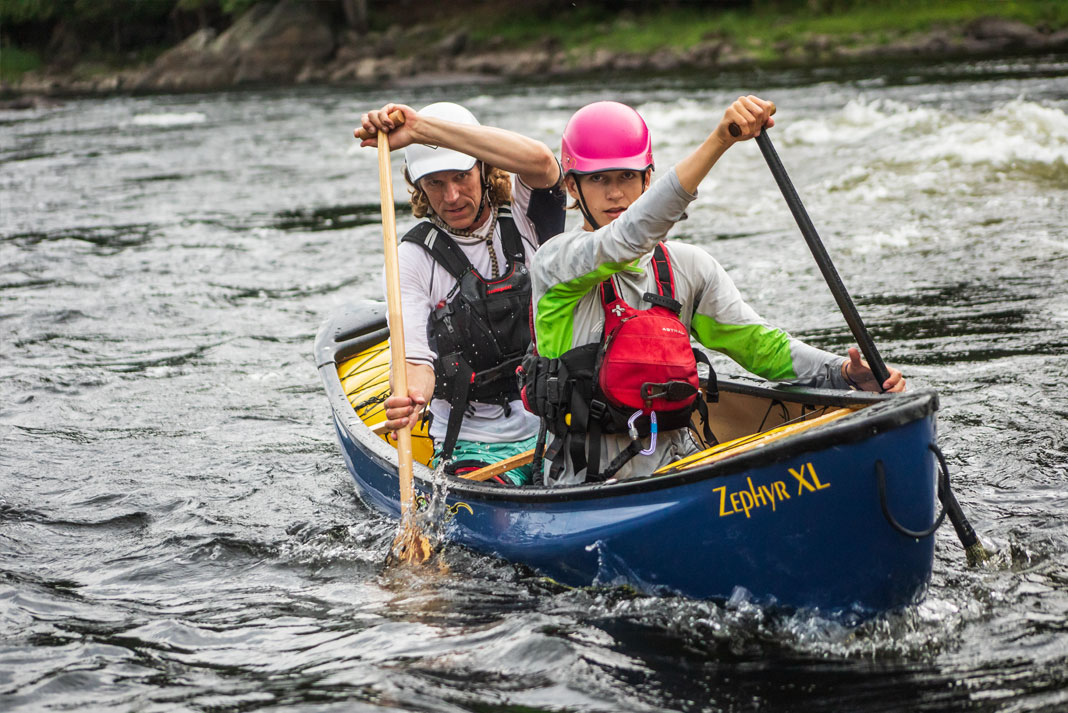
My son Doug and I are so close I could give him wet willies without leaning forward. I had to shorten my forward stroke and there was no chance of sneaking stern cross-draws or cross-forwards without clipping him upside the head on the way over. My 175 pounds and Doug’s 130 pounds placed us perfectly within the maximum listed capacity.
Lots of flair and lots of tumblehome. Stability and easy to paddle. We’re almost at the 325-pound max capacity. | Photo: Michael Hewis
Bow partners have accused me of trying to stuff big boats into small eddies. Too small of eddies, in fact.
“Think we can hit that one?” I ask, already on my way charging for it.
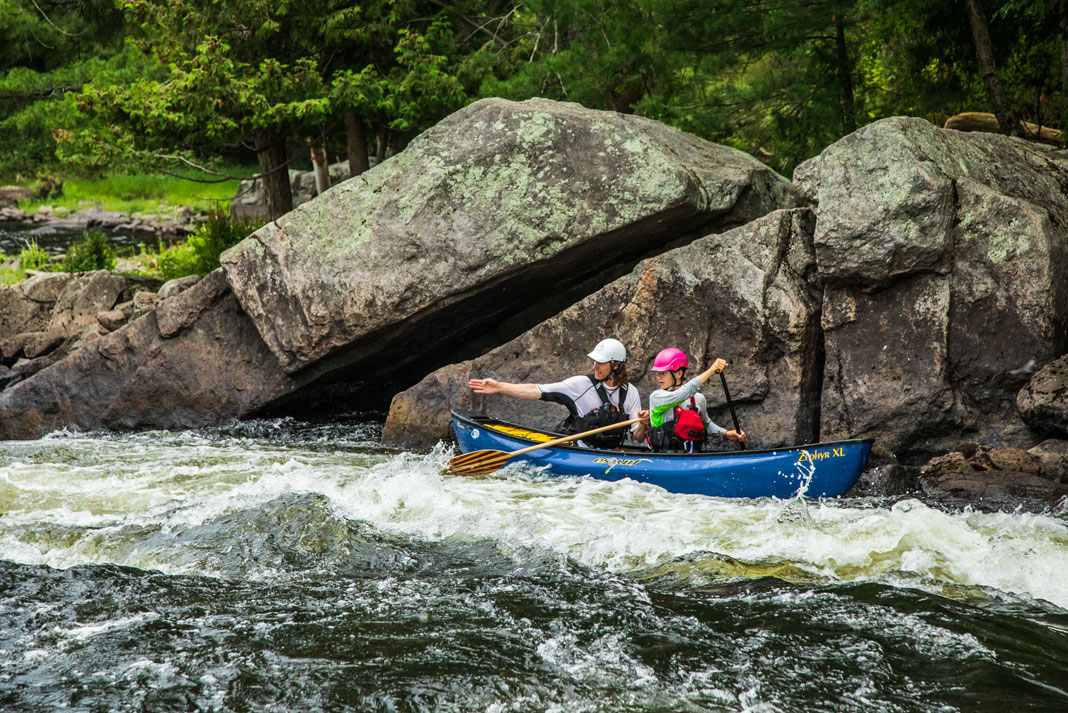
There’s something magical about a well-synchronized tandem team and 11 feet of plastic snapping into 12 feet of calm water between a rock wall and raging current. It’s not for everyone, I’ve learned. But if it’s for you, buy yourself the Esquif Zepher 2.0 XL with two foam saddles and a spiderweb of straps. Doug and I had a blast in this boat—not to be confused with Esquif’s actual 13-foot tandem, the Blast.
Years ago, Jacques Chassé told me he wanted to impart the responsiveness of his Zoom into a hull with the stability demanded by intermediate paddlers. The chines, though softer than those on the Zoom, still allow for effective carves and off-side tilts. The Zephyr is not a pig to paddle because the narrow bow of the asymmetrical hull and the dramatic tumblehome of the gunwales mean you don’t have to reach out over the boat to get your paddle in the water.
The sharper bow entry point, longer waterline and slightly rounded hull—as opposed to the truly flat hulls of the Nitro or Detonator—combine to create a boat that accelerates with only a stroke or two and carries speed deep into eddies, especially with a tandem team driving it.
One of the shortest tandem canoe set-ups—perfect for snapping into tight spots.| Photo: Michael Hewis
To achieve a cushy secondary stability that stops the boat dead when the gunwales are about six inches above the waterline, Chassé kept the dramatic mix of flare and tumblehome. The mid-ship flare gives you something to rest on while the boat is carving or pivoting. The tumblehome brings the gunwales safely back from the water to produce a reasonably dry ride.
Sometimes you don’t need to reinvent things. Sometimes you can just make them bigger and better. And that’s the Zephyr 2.0 XL.
Paddle the XL solo or tandem. Load it with gear for wilderness river solo adventures. Dress it up with wood trim. Paddle it for another 14 years. So many options.
If you think a Zephyr re-release is Chassé getting lazy in the R&D department, don’t forget about Esquif’s nine-foot Extasy creeker, a collaboration with Sabrina Bram, the world’s first female whitewater open boat designer. And then the larger boy version, the Excite, a year later.
Chassé is not getting lazy; he’s doing what he’s always done at Esquif—giving discerning paddlers like Scriver, Mason, Westwood, Bram and you and me exactly what we want.
This article was first published in Paddling Magazine Issue 62. Subscribe to Paddling Magazine’s print and digital editions here, or browse the archives here.
Just the two of us, we can make it if we try. | Photo: Michael Hewis
Three sizes to choose from means there's a Castine for every fit | Feature Photo: Vince Paquot
Last June, fans of Necky Kayaks’ touring designs were disappointed to learn Johnson Outdoors, which acquired Necky in 1998 from company founder Mike Neckar, was discontinuing the iconic brand. Now, Johnson flagship Old Town Canoe & Kayak carries the torch with a new light touring design, the Old Town Castine series.
Old Town Castine 140 Specs
Length: 14’
Width: 25”
Weight: 33 lbs
Max Capacity: 375 lbs
MSRP: $1,349 USD / $1,499 CAD
Getting to know the Old Town Castine
Given its pedigree, the Castine should tick all the boxes on a day-tripper’s wish list. Along with a venerable 120-year history in the U.S. market, Maine-based Old Town benefits from the expertise of Johnson’s director of research and development, Bob McDonough. An industry veteran with numerous top-selling designs to his credit—first at Perception Kayaks and later as a senior designer at Confluence Outdoor—McDonough knows what recreational paddlers want.
Stable? Check. Responsive? Check. Comfortable? Check. If market research is about giving people what they want, innovation is about giving them what they don’t yet know they desire. McDonough and his team have succeeded on both fronts: blending the tried and trusted with a dash of the unexpected.
Our demo Castine 140 (the middle sibling of the 135 and 145) arrives a few weeks into one of the coldest Decembers on record. I wait another month for a brief reprieve from the glacial temperatures: a comparatively mild, just-above-zero day. Leads of pewter water open up where currents tug at the lake narrows. The ice shelf stubbornly gripping rocks and docks since before Christmas recedes to a few hundred yards offshore.
[ Plan your next paddling adventure with the Paddling Trip Guide ]
I toss the Castine onto my roof rack and race eagerly to the village launch, where I find I am not the only hydrophilic creature drawn to the open water. Slipping quietly away from shore, my passage startles a raft of common goldeneyes. As the crisp black-and-white ducks lift into the air, I pause my stroke to listen to the distinctive whistling sound of their flight.
The Old Town Castine checks all the boxes
My first impression of the Castine is that it’s responsive without compromising stability. The rounded chines encourage confident edging with no twitchiness between initial and secondary stability. Whether I’m plying the calm lake, negotiating a shallow, winding river or picking my way through swifts and swirling currents, the Castine holds the course I set for it.
The hull shape places the beam’s widest point at the paddler’s hips, allowing for an efficient forward stroke and good acceleration. Day-trippers who prefer a relaxed, low-angle touring stroke will also appreciate the Castine’s relatively low deck and cockpit coaming.
The Castine comes equipped to accept an optional rudder, however, I find the integrated keel is sufficient to produce fine tracking in most conditions.
[ Paddling Buyer’s Guide: View all boats and gear ]
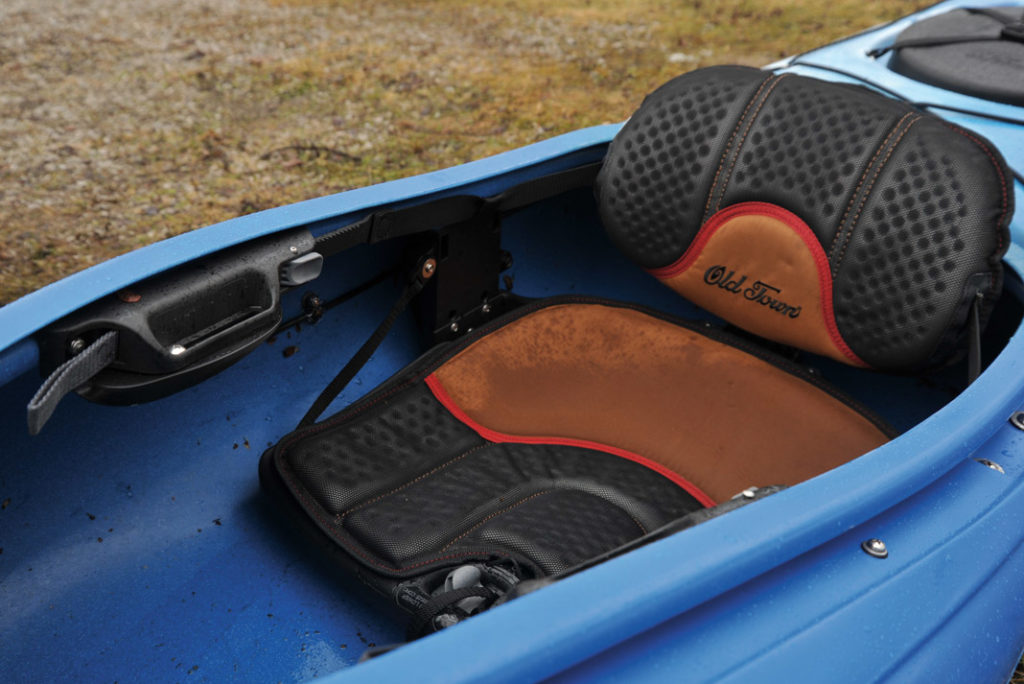
Build quality has the same sturdy feel as Necky’s rotomolded polyethylene kayaks, and the similarities don’t end there. The Castine also shares Necky’s user-friendly CrossLock hatch covers and an updated version of the popular ACS2 seat system.
While the Castine’s back rest sits higher than my personal preference—the lowest position is proud of the coaming by three inches—it offers superb lumbar support.
The back rest ratchets and the thigh riser handle are easy to reach and fine-tune. Ditto the sliding foot rests, which are new for 2018 and feature a nifty pull loop making on-the-fly adjustments a breeze. The foot rests are also angled forward for an ergonomic ankle position, with a slightly cushy texture that’s bliss for bare feet—this I had to confirm in my basement, in front of the wood stove.
Innovative under-deck outfitting
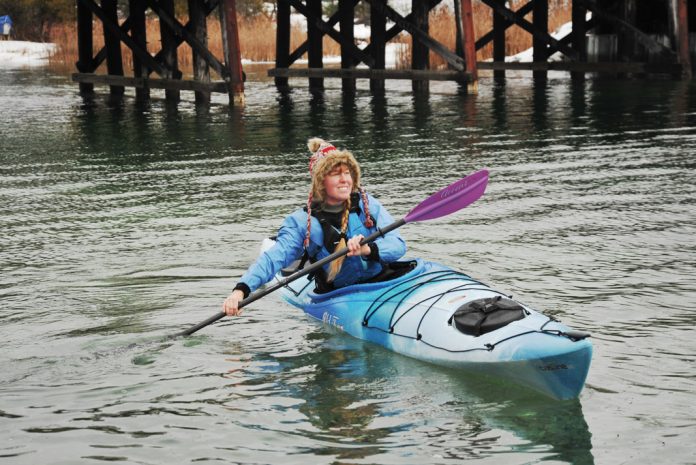
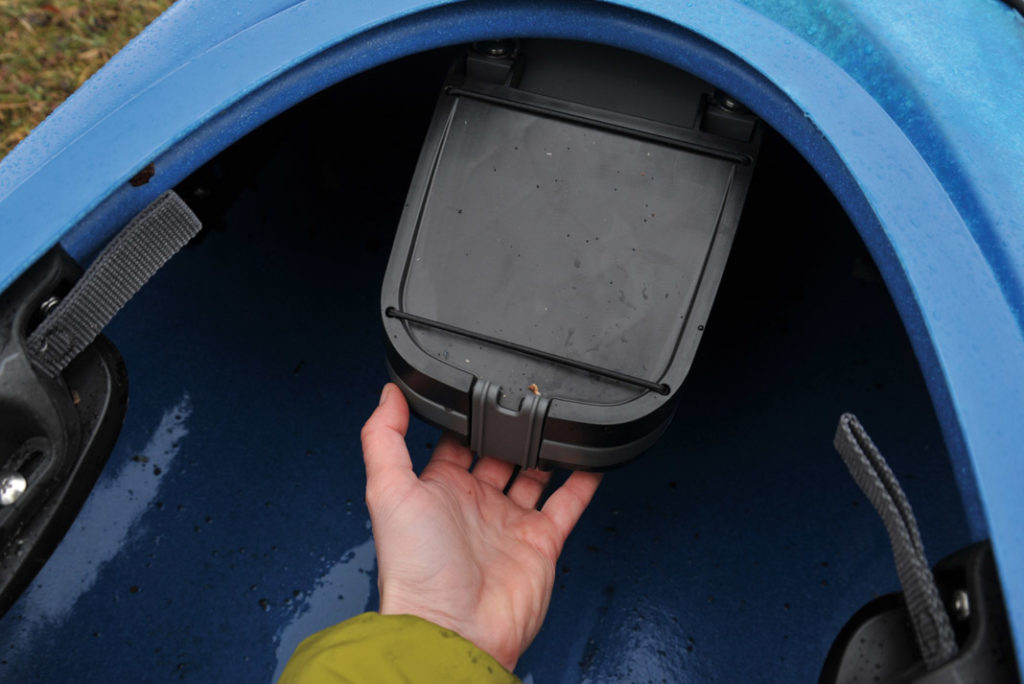
The most innovative feature of the Castine’s outfitting is a removable, under-deck day storage compartment.
The Castine offers an ingenious solution to accessible-on-the-water storage—a roomy retractable under-deck compartment with a dry-sealing lid. | Photo: Virginia Marshall
With a look that’s distinctly old town, the ACS2 seat system features an adjustable thigh riser and secure knee braces for maximum comfort and confident edging inputs. | Photo: Virginia Marshall
Traditional deck pod design places an integrated storage cubby in front of the cockpit, accessed through a hatch in the deck. While this is convenient when a spraydeck is fitted, these hatches can be prone to leaks and difficult for smaller folks to reach.
Old Town’s research and design team concealed the Castine’s clever compartment under the deck, where it is sheltered from splashes and drips. Aluminum tracks allow the box to slide out towards the paddler’s lap for easy access to cameras, communication devices or lunch. The gasketed lid includes bungees for securing a smartphone for one-handed use on the water—not a feature I’ve been personally craving while kayaking, but one many recreational paddlers will doubtless appreciate.
Beyond the gusty expanse of the icy lake, I follow the flow into a quiet back channel edged by the skeletal limbs of birch trees and the muted green brush strokes of white pines. A bald eagle soars overhead. It isn’t easy, but I finally bring my focus back to the kayak I am paddling. The Old Town Castine makes it awfully easy to lose oneself in the moment.
This article was first published in Issue 53 of Paddling Magazine. Subscribe to Paddling Magazine’s print and digital editions, or browse the archives.
Three sizes to choose from means there’s a Castine for every fit. | Feature Photo: Vince Paquot


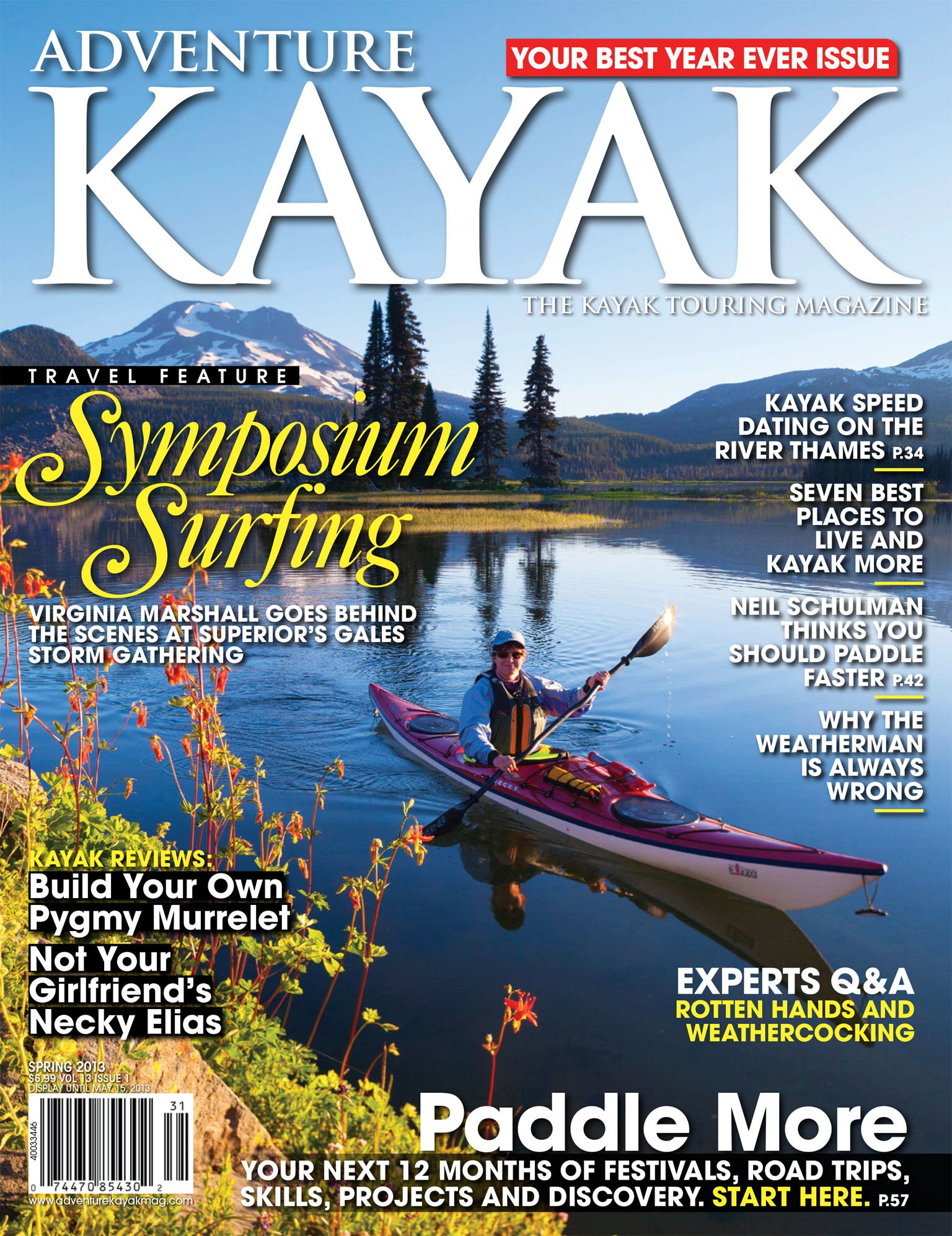 This article was first published in the Spring 2013 issue of Adventure Kayak Magazine and was republished in Issue 58 of Paddling Magazine.