Ready to tack?” came the call from the helm. “Ready, ready, ready,” yelled out the others on the sailboat. “Ready,” I muttered, reaching for the jib sheet that was tangled around my foot and realizing that I was anything but ready. I quickly untangled it, released one jib sheet, took up the other and crossed over the centerboard, slamming my shin painfully into its casing.
Pulling the slack out of the jib sheet, I became aware that it was hung up on something (likely some part of me). It was much longer than I remembered it being, but I was finally able to tighten it up and cleat it. For the first time in a while, I was a student, and an awkward one at that.
[Expand your paddling skills on your next vacation with one of the offerings in the Paddling Trip Guide.]
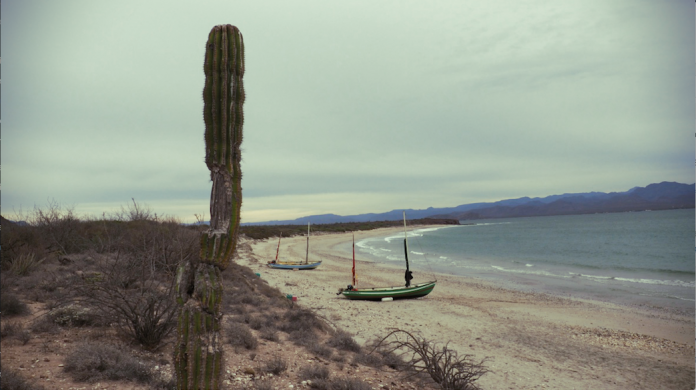
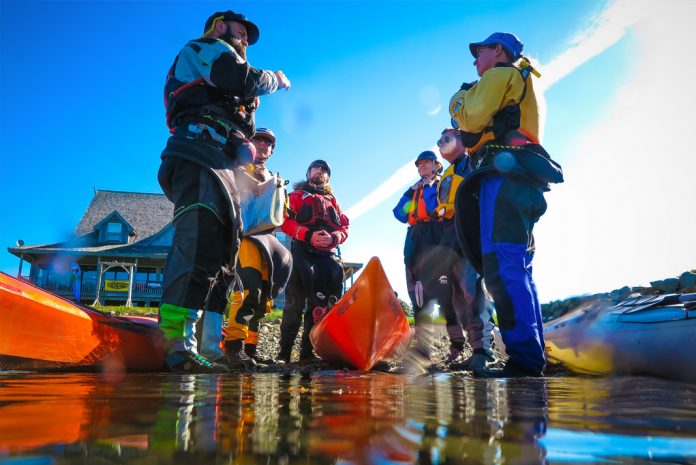
I was in Baja, and over the next 25 days I’d be learning to sail on a National Outdoor Leadership School Sailing Seminar and Clinic, a course specifically designed for current NOLS instructors who are certified in another discipline. As a sea kayak instructor, sailing seemed an obvious transition, as I assumed many skills would transfer nicely: seapersonship, navigation, wind, and tides and current, just to name a few. While it’s true these are indeed useful skills to possess when learning to sail, I quickly realized that the sailing-specific technical skills I didn’t have far outnumbered the skills that I already had.
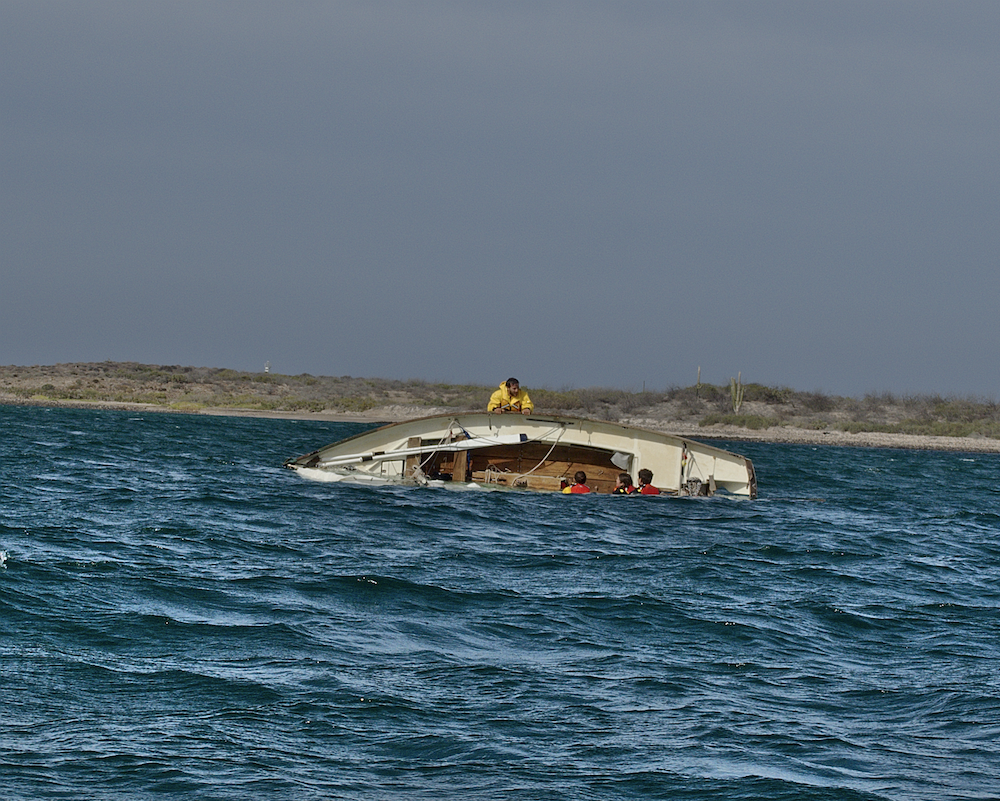
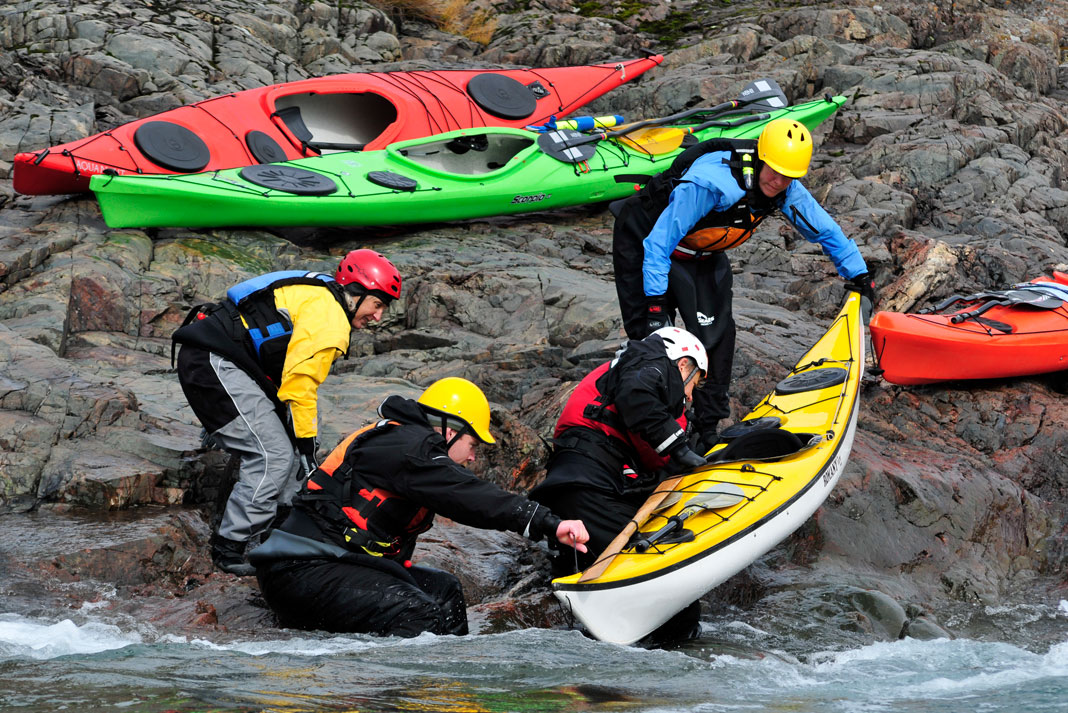
Learning to recover after capsize. | Photo: Meg Lavery
I was an absolute beginner.
I found this quite humbling and reflected on how my students likely have similar feelings of awkwardness.
Throughout the course we worked on technical skills and rotated through the roles; controlling the jib and main sheets (sheets are, simply put, ropes attached to sails, and the jib and main are types of sails) and steering at the helm. We learned how to travel from a shallow-water anchor to a deep-water anchor and how to set up the sailboat for sailing. We also learned how to recover after a capsize and how to land in surf (both of which are a blast).
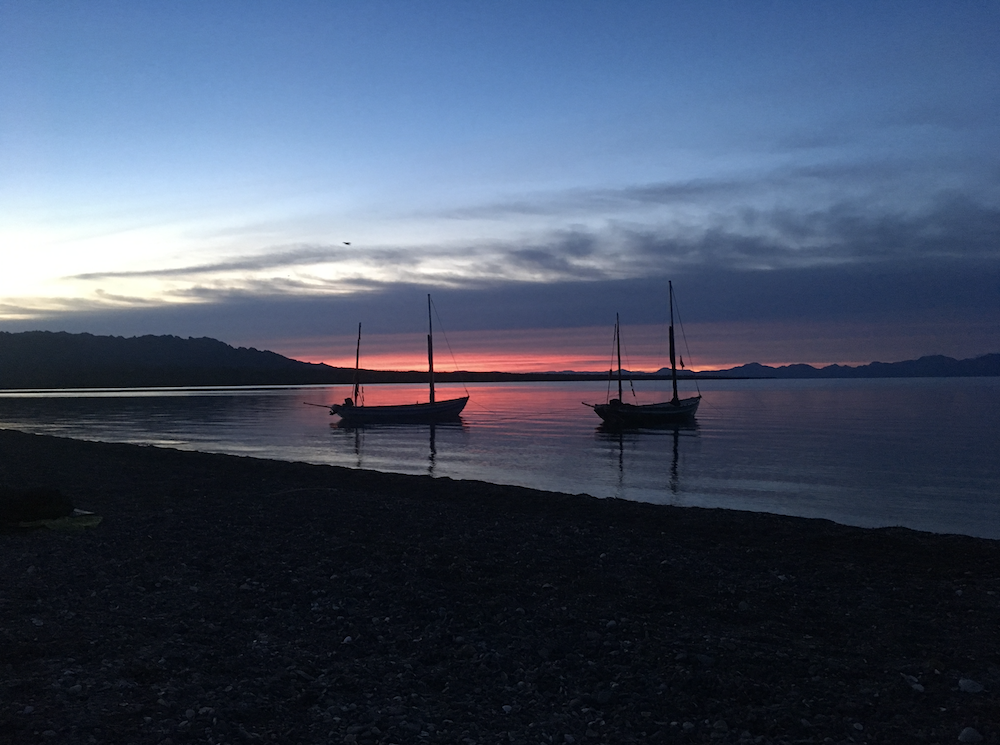
Peaceful nights along the Baja coast. | Photo: Meg Lavery
Every night I’d curl up in my sleeping bag under the stars and think of all of the things that I’d learned. Questions would come to me, and I’d make a mental note to remember to ask them in the morning or to look them up in one of the reading resources that we had with us. Usually though, my brain was so full that these thoughts would dissipate overnight.
It’s very easy to forget what it’s like to be a student, and putting myself in this role pushed me to experience the frustrations, trials, successes and emotions that go along with the learning process. I find this important because it allows me to empathize with my students, and empathy, paired with a fine-tuned class, creates the best learning environment possible.
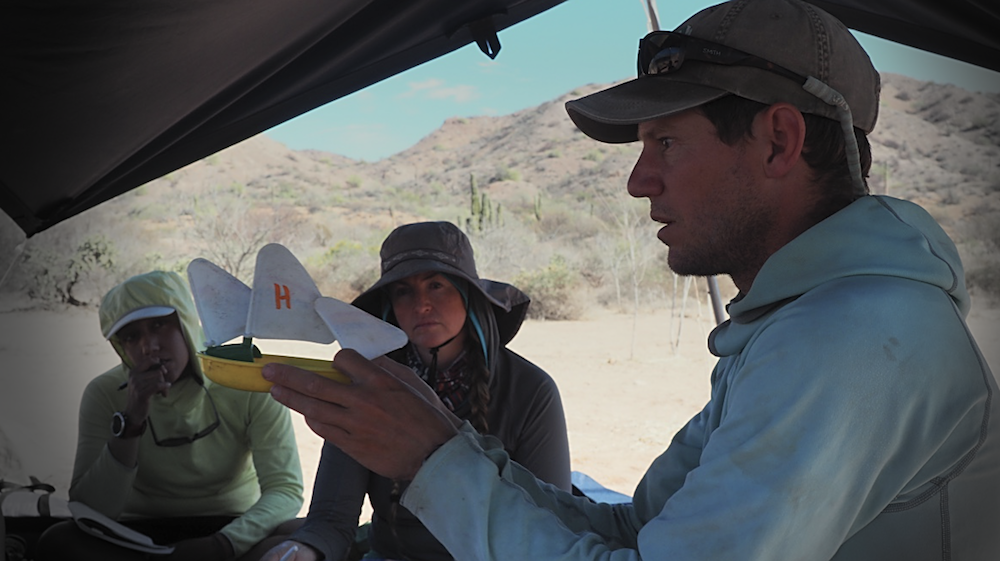
Learning theory on the beach in Baja. | Photo: Meg Lavery
The final day on the water we had calm seas and a slight breeze. At one point we jumped out of the sailboat for a swim. Later in the day a Dorado (mahi mahi) leapt out of the water, seemingly mocking our extended handlines. The day on the water had been carefree and beautiful, and the things that we had learned over the past 25 days were settling in to a point in both our brains and our bodies where we didn’t have to try quite so hard. My bruises had faded to yellow, and I felt a soothing connection to the boat, its parts and the way that it gently rocked on the water. I had moved through the learning progression, and I smiled to myself as I realized that I was now (almost) “ready to tack.”
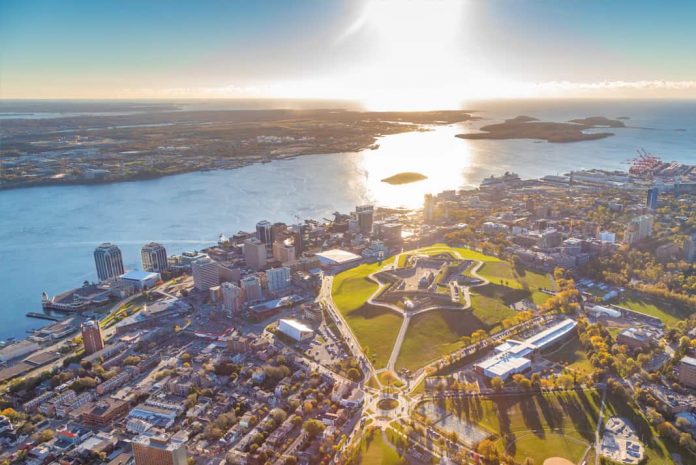
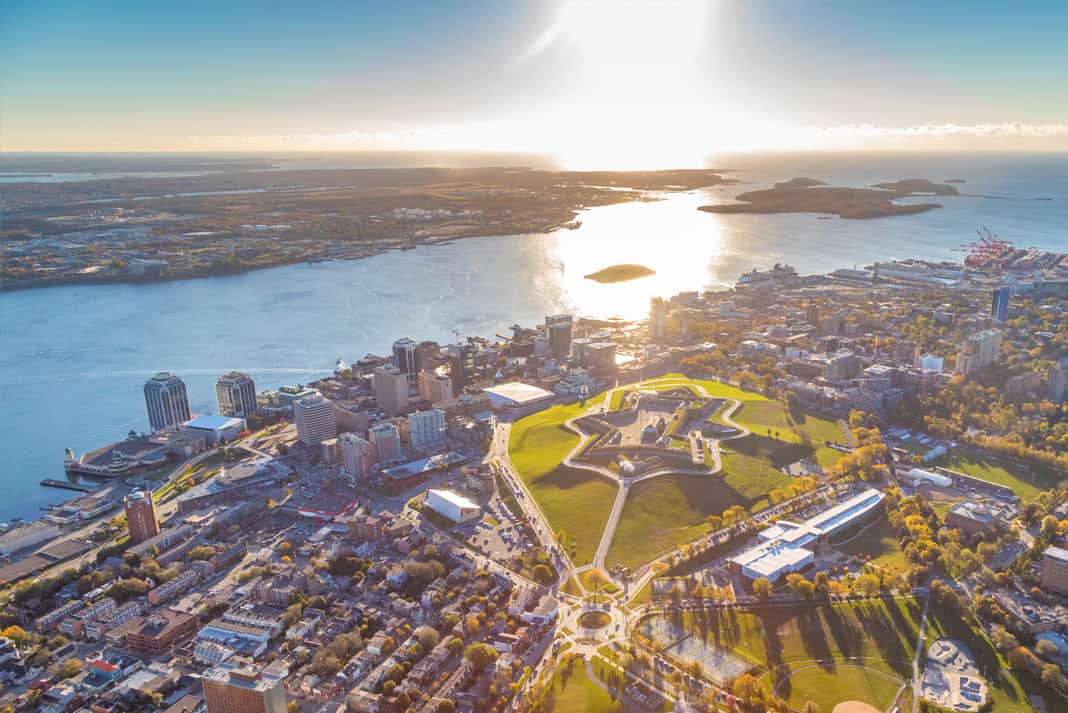
Historic waterfront and East coast charm await paddlers in Halifax.
| Photo: Tourism Nova Scotia/Acorn Art Photography
Halifax may be the largest urban center in Atlantic Canada, but it still offers some of the best sea kayaking in Nova Scotia. East Coast hospitality and an abundance of guided and self-guided kayak tours welcome visitors to explore the city’s many islands, parks, and cultural attractions.
In Halifax Harbour, modern glass towers rise above century-old schooners and quaint waterfront boutiques contrast with 19th-century fortifications. “A tour of the harbor is a journey through more than two hundred years of Nova Scotia’s past,” writes paddling guidebook author and Coastal Adventures founder, Scott Cunningham.
[ Find all Nova Scotia paddling adventures in the Paddling Trip Guide ]
In the outer harbor, osprey and blue heron nest amid tangled forest and forgotten fortifications on McNabs and Lawlor Islands Provincial Park. Further out, barren Devils Island is home to a lonely lighthouse (and a legendary ghost).
These lightly visited outposts make for a fascinating day trip away from the bustle of the city.
Kayak rentals near Halifax
East Coast Outiftters
Long Lake Adventure Company
St. Mary’s Boat Club
Where to go kayaking in Halifax
Captivating sea kayaking tours and convenient kayak rentals await paddlers in Halifax. | Photo: Tourism Nova Scotia/Acorn Art Photography
Guided kayak tours in Halifax, Nova Scotia
Join a two-hour, half-day or overnight glamping tour of Halifax Harbour with local outfitter Kayak Halifax. Leaving from the downtown waterfront, you’ll get up-close views of the tall ships and restored Victorian warehouses at Halifax Historic Properties, and the iconic lighthouse and Fort Charlotte on tiny Georges Island.
Kayak day trips in Halifax, Nova Scotia
Take a jaunt on the Northwest Arm, a sheltered finger of ocean that harbors the historic St. Mary’s Boat Club. Haligonians head to this grand, old boathouse in Conrose Park for recreation programs, free canoe and paddleboard rentals on weekends, and evening kayak tours. For a commanding view of the Arm, pull ashore in Sir Sandford Fleming Park and climb the ironstone Dingle Tower. Beyond the Arm, self-guided harbor paddlers launch from Black Rock Beach in sprawling Point Pleasant Park.
Adventurous kayaking in Halifax, Nova Scotia
Just a 20-minute drive from downtown, launch from the Dartmouth side of the harbor at colorful Fisherman’s Cove, a restored 200-year-old fishing village. It’s a quick crossing from here to Lawlor Island, from where you can spend the day circling larger McNabs Island.
Expect pastoral scenery, abundant wildlife, grassy trails, sweeping beaches, great skyline views and amazing sunsets. For a guided islands tour with gourmet cuisine, check out Kattuk Expeditions.
Explore sea kayaking near Halifax, Nova Scotia
Nova Scotia’s Islands Of Enchantment
Explore Lunenburg, Nova Scotia By Kayak
This article was first published in Issue 59 of Paddling Magazine. Subscribe to Paddling Magazine’s print and digital editions, or browse the archives.
Historic waterfront and East coast charm await paddlers in Halifax.| Feature Photo: Tourism Nova Scotia/Acorn Art Photography
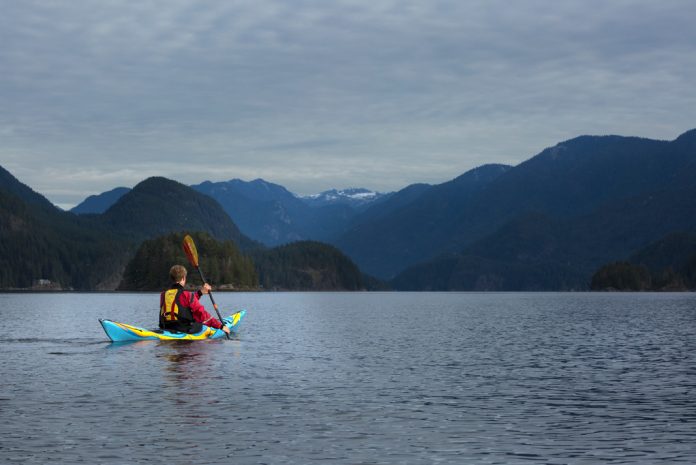
So close to Vancouver and a million miles away. | Photo: Dustin Silvey
Sprawled between the Pacific Ocean and the North Shore Mountains, Vancouver is the biggest city in the province of British Columbia. It’s also one of Canada’s most popular tourist destinations with more than 10.3 million visitors a year. Fortunately, you don’t have to venture far from Vancouver’s downtown core to find great camping and kayaking in Deep Cove.
Spot seals, jellyfish and orcas. And keep your eye out for Hank The Heron, who has been known to take short rests on paddlers’ boards and boats.
When To Go
Though always uncrowded, Deep Cove is popular with kayakers in the summer months. For extra peace and quiet, explore during the shoulder season when the tourists have all returned home.
Outfitters
There are several outfitters in the area, but local paddleshop Deep Cove Kayak Center has the largest fleet of kayaks and paddleboards, and also runs guided trips.
Exposure
Expect the wind to gain in the early afternoon and push north into Indian Arm. Paddlers will need solid skills in reading tides and currents and rescue techniques to venture beyond protected waters.
Diversion
Hike up Quarry Rock, located at the north end of town. The view from the top of this former quarry area stretches out across the cove and can be reached in 45 breathless minutes.
Deep Cove is a Mecca for Paddlers
Just a 30-minute drive from downtown, Deep Cove is an oasis hidden from the bustling city. Tucked along the sheltered, 25-kilometer reach of the Indian Arm fjord, this captivating coastline wows paddlers with magnificent mountains, deserted beaches and idyllic islands.
Located at the base of Mount Seymour, the cove was once the traditional fishing area of the Tsleil-Waututh First Nation. Today, tiny Deep Cove is popular with tourists and locals alike for its excellent kayaking, paddleboarding and camping. In the last three years, this hidden gem has exploded in popularity, but you can still jump in a kayak and paddle away to explore in search of seals and orcas.
[ Plan your next paddling adventure in British Columbia with the Paddling Trip Guide ]
Kayak Excursions from Deep Cove
If you have half a day:
Launch from the town and paddle to the south, crossing the channel near Hamber Island. Be wary of boat traffic in this short crossing. Then turn north and paddle toward Jug Island. From here, you’ll have an excellent view of the fjord with the mountains behind it.
If you have a full day:
Follow the directions above and stop for a picnic at picturesque Jug Island Beach. After lunch, continue into quiet Bedwell Bay to look for wildlife before making the return journey.
If you have a weekend:
Head north and paddle the length of Indian Arm. The round trip from Deep Cove is 38 kilometers, with overnight camping at beautiful Granite Falls and Berg’s Landing. View the historic Wigwam Inn, open only to members of the Royal Vancouver Yacht Club. Extend your trip by a day to paddle the Indian River Estuary alongside seals and an array of bird life.
The coastline of British Columbia offers limitless opportunity for exploration. However, to access more remote shores, Deep Cove paddlers would need to cross Vancouver’s busy shipping corridor. Instead, launch your kayak from nearby Horseshoe Bay and explore the bucket-list-worthy Sea To Sky Marine Trail, which hugs the mountainous coast of Howe Sound for 40 kilometers, all the way to Squamish.
This article was first published in Issue 60 of Paddling Magazine. Subscribe to Paddling Magazine’s print and digital editions, or browse the archives.
So close to Vancouver and a million miles away. | Feature photo: Dustin Silvey
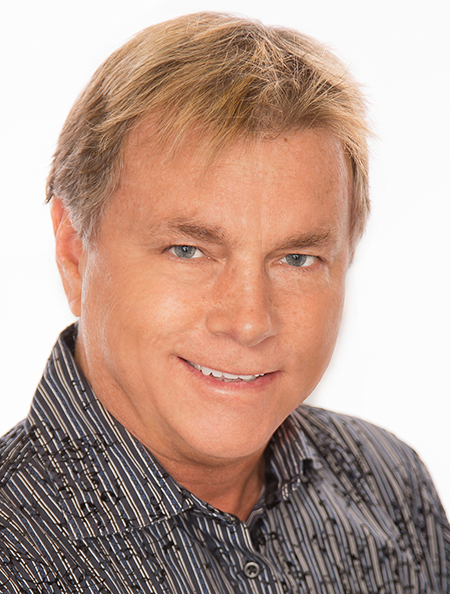
Jim Emmons, a 31-year career marine industry veteran and current non-profit outreach grants director for the Water Sports Foundation, Inc.—a division of the Water Sports Industry Association—was recently appointed as the U.S. Coast Guard National Boating Safety Advisory Committee (NBSAC) Chairman by Coast Guard Captain David C. Barata, Director, Inspections and Compliance.
In this senior leadership capacity, Emmons now serves as the key communications conduit between the U. S. Coast Guard and its NBSAC members.
Jim Emmons appointed as the U.S. Coast Guard National Boating Safety Advisory Committee (NBSAC) Chairman. Photo: Courtesy Jim Emmons
“Jim has served actively and admirably on NBSAC since the Spring of 2016 and brings a wealth of experience and enthusiasm to this important role,” said Verne Gifford, U. S. Coast Guard Chief, Boating Safety Division. “We are very pleased by his appointment and his willingness to contribute his time and considerable talent to furthering boating safety efforts within the recreational marine sector.”
Emmons’ first assignment came at the onset of Covid-19 and involved planning and conducting the NSBAC’s first-ever online virtual meeting, condensing a full two-day session into a four-hour digital conference involving more than 70 participants.
“I’m appreciative of the confidence extended to me by the U. S. Coast Guard and NBSAC administrators and look forward to continued service,” said Emmons. “Boating safety is a major area of my professional focus, so I’m especially grateful to work closely with such a highly committed organization including dedicated council members in furthering important and ongoing boating safety initiatives.”
The Middle Fork of the Salmon River was named the River of No Return by settlers, who traveled downriver but could not get back up through its numerous rapids. For for the people of the Shoshone-Bannock tribes, the Middle Fork is a place to come back to, after a long absence, to reconnect with the land and their culture.
In River Of Return, join Jessica and Sammy as they guide a journey with their Newe people, reintroducing Indigenous youth to the river. Learn more and support their organization, River Newe, at rivernewe.org.
For the Shoshone-Bannock Tribes, the Middle Fork of the Salmon River has been home since time immemorial. Its people remain inextricably linked with the waters even after a history of forced removal from the landscape and generations of disconnection and trauma.
[ Paddling Buyer’s Guide: View all rafting gear ]
River of Return was directed by Skip Armstrong and screened as part of NRS’ Just Add Water Project webinar series, aimed at making outdoor recreation welcoming and accessible to all. The Just Add Water Project holds at its core that representation matters in outdoor adventure and lack of representation is a symptom of the deep roots of injustice. Watch a recording of the post-screening discussion hosted by Just Add Water guides Faith Briggs and Adam Edwards and featuring Sammy and Jessica Matsaw of River Newe, Mark Deming of NRS and Amy Kober of American Rivers. Discussion starts at 35 minutes in.
P olyOne Corporation (NYSE: POL), a leading global provider of specialized polymer materials, services and sustainable solutions, has completed its purchase of the color masterbatch businesses of Clariant and Clariant Chemicals India Ltd. PolyOne also announced that it has changed its name and will now be called Avient.
“We proudly welcome our newest associates and valued customers from Clariant Masterbatch. They are joining us on Day 1 of this new era for our company, which as of today will be named Avient,” said Robert M. Patterson, Chairman, President and Chief Executive Officer, Avient.
Mr. Patterson continued, “Under this new brand, we bring two global leaders together to create a specialty company focused on sustainable solutions for our customers, being a Great Place to Work for our associates, and creating value for all stakeholders.”
The entry into the agreement to acquire the Clariant Masterbatch business was originally announced in December 2019. The Clariant Masterbatch business includes 46 manufacturing operations and technology centers in 29 countries and approximately 3,500 employees, who will join Avient’s Color, Additives and Inks segment.
The combined net purchase price is $1.44 billion (see Attachment 1), representing a 10.8x multiple of 2019 adjusted EBITDA, or 7.5x including anticipated synergies.
“With this acquisition, Avient now expects over 85% of adjusted EBITDA to be generated from specialty applications,” said Mr. Patterson. “This is up from less than 10% when our specialty journey began over a decade ago. While we honor the legacies of our past organizations, under our new name Avient, we come together and look to the future as a world-class sustainable organization.”
The company outlined key priorities for the new organization:
Keeping Safety First – PolyOne and Clariant are both ACC Responsible Care® companies, and nothing is more important than the health, safety and well-being of our people.
Being a Great Place to Work – We listen to feedback from our associates then take action in building our high-performance culture and being a global employer of choice.
Advancing Inclusion and Diversity – All associates are valued and encouraged to bring their true selves to work every day.
Leading in Sustainability – PolyOne and Clariant are both founding members of the Alliance to End Plastic Waste. Through our four Ps of Sustainability (People, Products, Planet and Performance) we commit to meeting the needs of the present without compromising the ability of future generations to do the same.
Investing in Innovation – Specialty companies invest to grow, so we ensure our resources are concentrated on material science for high-growth end markets, poised for value creation in the long term.
Operating Globally, Serving Locally – As a truly global company, we have operations and technical expertise around the world to efficiently serve our customers…wherever they may need us.
Leveraging Service as Our Timeless Differentiator – We serve our customers with excellence to build trusting, lasting and collaborative relationships.
Delivering Financially for All Stakeholders – Performance is inextricably linked to the investments we make in People, Products and Planet. Capturing acquisition synergies and solidifying Avient as a specialty growth company ensures ongoing longevity and value creation for our associates, customers, communities and shareholders.
Mr. Patterson concluded, “These endeavors are made possible by the joining of our businesses. We are better together.”
In conjunction with its rebranding and new name, the company’s ticker symbol will change from “POL” to “AVNT,” effective at the start of trading on July 13, 2020. As of that date, the “POL” trading symbol will no longer be active.
About Avient
Avient Corporation, with 2019 revenues of $2.9 billion, provides specialized and sustainable material solutions that transform customer challenges into opportunities, bringing new products to life for a better world. Examples include:
Barrier technologies that preserve the shelf-life and quality of food, beverages, medicine and other perishable goods through high-performance materials that require less plastic
Light-weighting solutions that replace heavier traditional materials like metal, glass and wood, which can improve fuel efficiency in all modes of transportation
Breakthrough technologies that minimize wastewater and improve the recyclability of materials and packaging across a spectrum of end uses
Avient employs approximately 9,100 associates and is certified ACC Responsible Care® and a founding member of the Alliance to End Plastic Waste. For more information, visit avient.com.
T orqeedo, the market leader for marine electric drives, is announcing a reconfiguration of its management team, which in future will comprise Dr. Ralf Plieninger and Dr. Michael Rummel. Founder and CEO Dr. Christoph Ballin is moving to the Advisory Board where he and Dr. Frank Hiller, Chief Executive Officer of DEUTZ AG, will continue to advise and support the company.
“As the founder of Torqeedo, Christoph Ballin has been a pioneer in the field of electric drive systems. He built up Torqeedo and played a major role in the integration of the company into the DEUTZ Group following its acquisition in 2017. We would like to thank him for everything he has done for Torqeedo and, consequently, for DEUTZ. We are delighted that he will continue to assist us in his capacity as a member of the Advisory Board,” says Dr. Frank Hiller.
Dr. Ballin’s move to the Advisory Board means that he will be able to devote time to new roles outside Torqeedo in the future. “I would like to thank everyone who has helped to make Torqeedo what it is today: the market leader for marine electric drives. I would also like to thank all the members of the Torqeedo team and all of our external partners who have helped us to achieve this success,” says Christoph Ballin. “The most exciting times for electric-powered transport lie ahead of us. As part of the DEUTZ Group, Torqeedo is ideally positioned for rapid growth.”
Dr. Ralf Plieninger has been with Torqeedo since 2012. His role within the new Torqeedo management team will involve taking charge of all technical matters, including research & development, procurement, quality, and production. He will also oversee Torqeedo’s operational structures and processes and be responsible for their continuous optimization.
Dr. Michael Rummel joined Torqeedo as a managing director in November 2019 and is responsible for finance, reporting, and business performance, with a focus on improving profitability. Going forward, he will also take charge of sales, service, marketing, human resources, information technology, and the international subsidiaries.
Torqeedo currently offers electric and hybrid drives with power outputs of between 0.5 and 100 kW for commercial applications and leisure use. All Torqeedo drives share an uncompromising focus on high-tech, maximum efficiency, and full systems integration.
In 2020, Torqeedo celebrated its 15th anniversary and the fact that 100,000 boat owners have chosen a Torqeedo system over a higher-emission alternative.
About Torqeedo:
Torqeedo is the market leader for electric mobility on the water. Founded in 2005 in Starnberg, the company develops and manufactures electric and hybrid drives from 0.5 to 100 kW for commercial applications and recreational use. Torqeedo products are characterized by an uncompromising high-tech focus, maximum efficiency and complete system integration. Torqeedo is part of DEUTZ Group, one of the world’s leading manufacturers of innovative drive systems.
C hris Rath, President of Nova Craft Canoe, purchased a majority stake in The Complete Paddler on July 15, 2020.
As North America’s largest paddlesports retailer in Canada’s largest city, The Complete Paddler has been uniquely positioned for the past 15 years to get tens of thousands of paddling enthusiasts out on the water. Nova Craft Canoe has been an industry leader in Canadian canoe manufacturing for over 50 years. Through this acquisition, the bond between manufacturer and dealer is strengthened, giving consumers a direct link between the boats they love and the store they love to shop at.
The Complete Paddler’s Kelly McDowell will remain in his role as president and shareholder.
“These are exciting times for The Complete Paddler and we are looking forward to having Chris onboard to help facilitate new growth for us,” McDowell said.
Though primarily a canoe manufacturer, Nova Craft Canoe is no stranger to the retail business. They own and operate their own retail store, London’s Paddle Shop, in London, ON, which sells kayaks, paddles and accessories in addition to its own line of high-quality, Canadian-made canoes. Nova Craft Canoe has been under the ownership of Chris Rath since Jan. 31, 2019.
“Our canoes are enjoyed by paddlers around the world but some of our biggest fans are right here in the GTA. This is an exciting time to be in the paddlesports industry as more and more people head to the great outdoors. There is no better way to showcase our products than with The Complete Paddler, a market leader in paddlesports,” Rath said.
Rath and McDowell believe this new partnership will assist in their continued devotion to providing the highest quality gear and customer service to both new and experienced paddlers alike. The store’s offerings won’t change – it will remain as a dealer for all manner of paddlesports equipment from a multitude of manufacturers. Now it will be able to do so from a place of stability in an ever-changing market which has seen enormous shifts in trends over the past few decades.
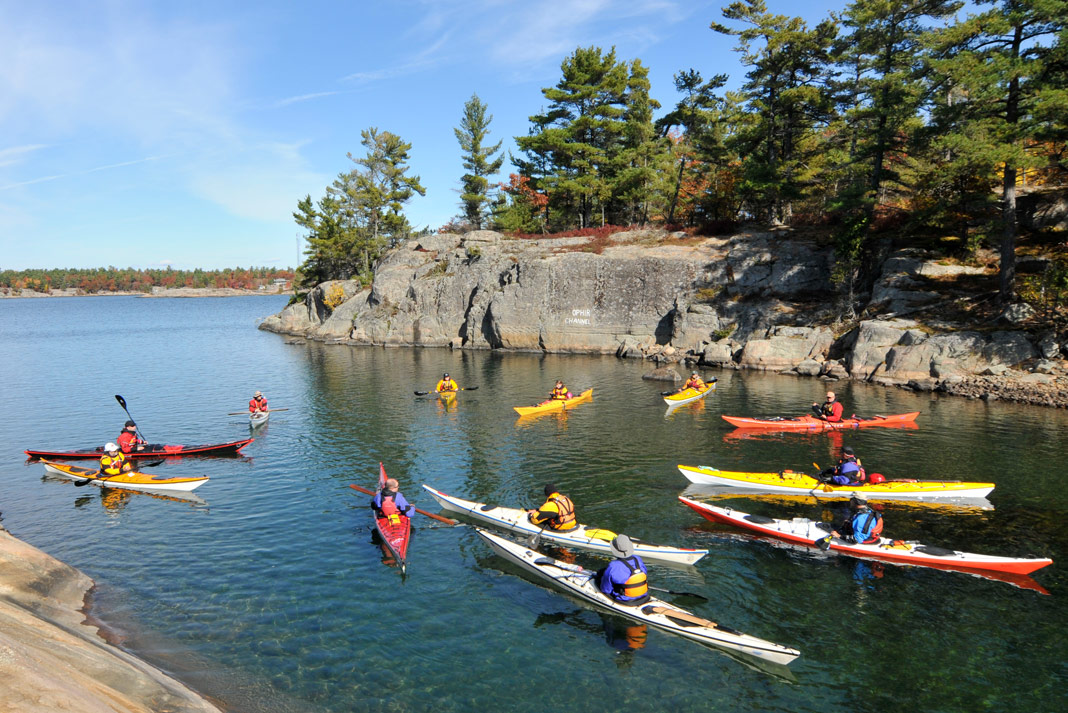
Students today, leaders tomorrow. | Photo: John Rathwell
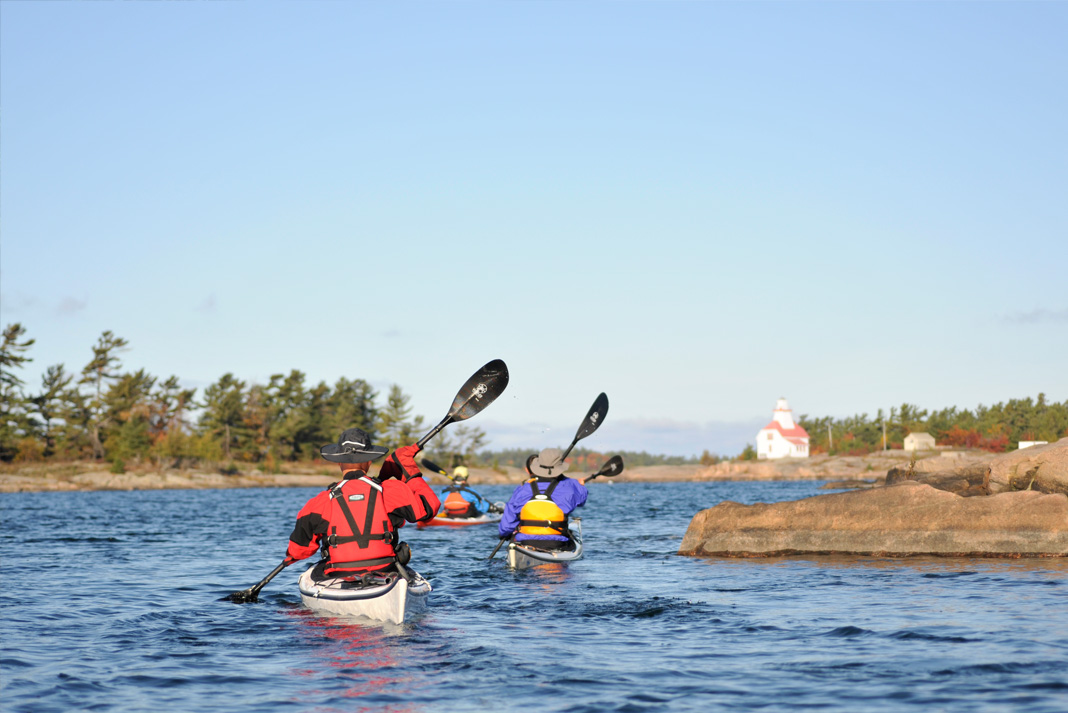
A generation ago, aspiring sea kayakers traveled vast distances to seek out the sport’s leading lights at cultish gatherings they called symposiums.
Today, paddlers who are keen to develop their kayaking skills have myriad options to do so. Access to mentors and coaching is increasingly widespread—there’s a profusion of qualified regional instructors, thanks to the efforts of energetic local paddling shops and clubs as well as national paddling organizations. Social media has made it easier to connect with other local paddlers. And, yes, YouTube pupils can watch just about every skill demonstrated online. Think of it as the democratization of sea kayaking.
What does this mean for symposia? More competition for paddlers’ attention and smaller captive audiences.
Little wonder the average size of sea kayaking events has dwindled more than five-fold, from chaotic gatherings of 500 or 600 paddlers in symposia’s heyday, to intimate clutches of 40 to 100 participants today. But while some in the industry believe we’ve already heard the death knell for these events, most are cautiously optimistic about the future of symposia.
Where they’re headed, why some have gone away, and what role they play in shaping our sport depends on who you ask.
Learning and exploring local waters? Yes, please. | Photo: Virginia Marshall
Great Lakes
If you map all of the kayak symposia across the U.S. and Canada, the highest concentration is clustered around the Great Lakes.
“We’re really fortunate, there are more symposiums here than anywhere else,” confirms Keith Wikle, founder of Go Kayak Now coaching in Kalamazoo, Michigan, and the Gales Storm Gathering, a rough-water event held annually on the Upper Peninsula.
“We have events catering to all levels, run by amazing and diverse shops, with incredible variety offering something for all niches. Paddlers on the coasts don’t have access to this many events or choices.”
To understand why the epicenter of North American sea kayaking lies in the Midwest, you have to reach back 40 years to the early days of our sport.
Lake Superior’s Gales of November Rendezvous, circa late 1980s. | Photo: Stan Chladek
The originators
In 1979, world-class whitewater slalom paddler, Stan Chladek, founded Great River Outfitters in the Detroit area and set about shaping the nascent North American sea kayaking scene. Chladek’s shop was the first to import British-built kayaks designed for playing and expeditioning in rough waters, and the first to bring in BCU (British Canoe Union) coaches to lead training. He also established the Great Lakes Sea Kayaking Club and, in 1984, created two pivotal events: the infamous Gales of November Rendezvous, and one of the original granddaddies of sea kayak symposia, the Great Lakes Sea Kayak Symposium.
“Starting in the late ‘80s, Chladek made Gales the place to be—paddlers flew in from all over for the event,” recounts David Johnston, an instructor and hobby paddling historian based in Toronto, Ontario. For several years, the event drew upwards of 50 kayakers to the Canadian shore of Lake Superior, including the likes of Welsh expedition paddler Nigel Dennis, British kayak design pioneer Frank Goodman, and members of California’s notorious Tsunami Rangers.
“It was mayhem,” says Johnston. “There wasn’t anything like it happening on the coasts at that time. It formed the basis of sea kayaking as we know it today.”
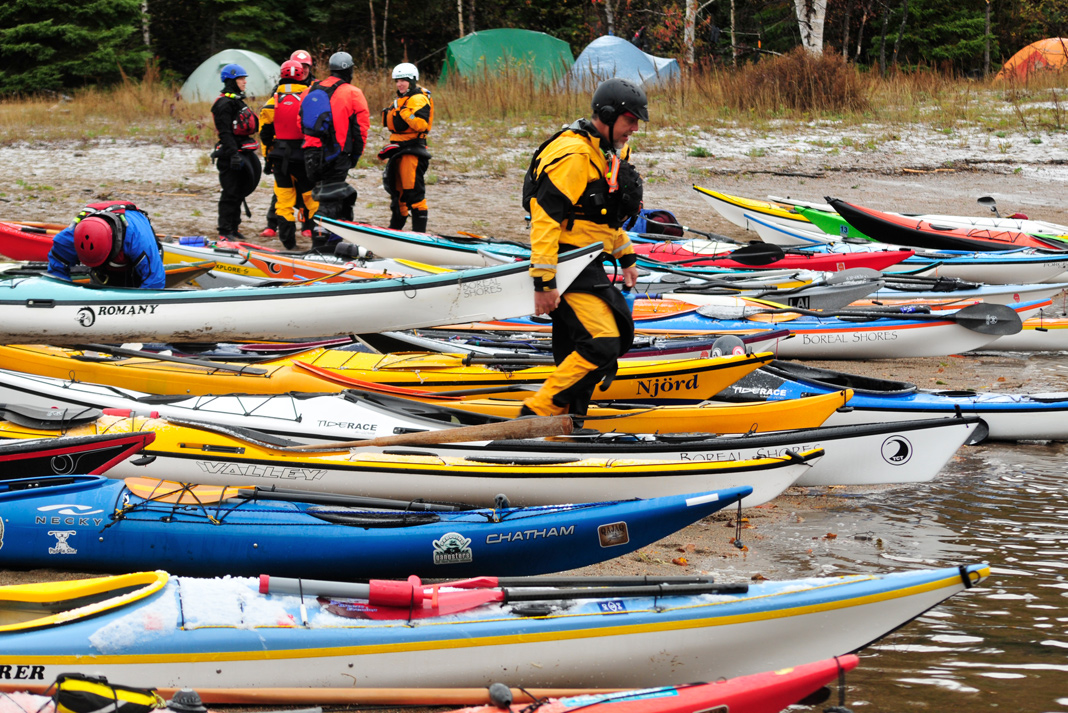
Held the first weekend of November at Lake Superior Provincial Park, about an hour north of Sault Ste. Marie, Ontario, the Gales Rendezvous was an invitation-only event for the hardest of the hardcore. The weather was severe, and shattered composite kayaks and harrowing swims were not uncommon.
“It was a long way to go if you weren’t willing to paddle in eight-foot pounding surf,” remembers Al Anderson, who founded the considerably tamer West Michigan Coastal Kayakers Association (WMCKA) symposium in 1990 as a counterpoint to Chladek’s events. “Just showing up to camp in the frigid conditions earned one the distinction of being a truly macho paddler.”
Meanwhile, the more mainstream Great Lakes Sea Kayak Symposium—based on Lake Superior’s south shore in the town of Grand Marais, Michigan—established the template laying the foundation for nearly every other event to follow over the next 20 years.
Photo: Virginia Marshall
Delivering a combination of tours along the stunning Pictured Rocks coastline and instruction with top-level coaches, the Great Lakes Symposium became an annual pilgrimage for hundreds of Midwest paddlers.
Despite the event’s popularity, some former attendees recall an air of elitism from those early days. David Wells, the owner of Lake Superior kayaking center Naturally Superior Adventures, remembers showing up to a mid-‘90s Great Lakes Symposium with a North American-style sea kayak. The famously opinionated (and uncensored) Chladek paddled over and told Wells his ruddered kayak was a “coffin.”
By the early 2000s, a handful of grassroots, seat-of-the-pants kayak gatherings had snowballed into an array of symposia pulling hundreds of paddlers apiece—all before the dawn of social media.
The original Big Three—Great Lakes, Florida’s Sweetwater Symposium, and the once-1,700-strong West Coast Sea Kayak Symposium (more on this later)—were destinations enthusiasts cleared their calendars and drove through the night to attend. Sea kayak sales were booming, teal-and-purple paddling suits were still hot, and both diehards and those just catching the stoke looked to these symposia for their annual dose of instruction and kayaker camaraderie.
Sleepy Bayfield, Wisconsin, hosted celebrity speakers, coaches and an overflowing campground’s worth of kayakers at the Inland Sea Symposium. Organized by the non-profit Inland Sea Society since 1988, the June event raised support for Lake Superior conservation and kicked off the Apostle Islands guiding season for event partner, Living Adventures Inc.
Twelve wise men, Georgian Bay Storm Gathering. | Photo: Virginia Marshall
Near Parry Sound, Ontario, White Squall Paddling Center welcomed winter-weary paddlers and festival-goers to the annual Georgian Bay Kayak & Canoe Festival in early May. What started in 1989 as an informal open house for White Squall owners Tim and Kathy Dyer evolved in a few short years into a weekend-long symposium drawing as many as 325 people.
“We packed in a different session every hour, with six sessions per day,” Tim Dyer remembers with a laugh. The temperamental spring weather didn’t seem to dampen enthusiasm. “We gave people 10 minutes between sessions to grab a coffee and warm up by the bonfire. It was pretty frenetic—they’d be sprinting from session to session trying to squeeze it all in.”
An eclectic mix of on-land sessions—from woodcarving and wild edible hikes, to fire lighting with Survivorman’s Les Stroud—kept non-paddlers equally busy.
After the workshops and boat demos came the event’s famous cardboard kayak race, presided over by White Squall’s own “Captain Jack” Elliot. Finally, participants piled into an enormous tent erected on-site to watch paddling films and hear iconic Canadian folk artists and musical comedy acts like Fred Eaglesmith and The Arrogant Worms.
“We didn’t take ourselves too seriously,” offers Dyer when pressed for the secret to the event’s success. “It wasn’t a symposium you normally imagine—it was full-on but done in a folk festival atmosphere. There was something for everybody, not just the hardcore sea kayakers.”
But this kind of success takes tremendous time and energy to maintain. In 2009, the Dyers announced their 25th-anniversary bash would be the event’s last. “It wasn’t that interest went away,” Dyer explains. “We just felt like we played ourselves out and it was getting too big for us.”
In Wisconsin, the Inland Sea Society pulled the plug in 2011. Meanwhile, in Grand Marais, Chladek stepped away from the Great Lakes Sea Kayak Symposium and participation dwindled, with the event changing hands several times.
“We’re in a period now where there’s a changing of the guard,” says David Johnston. “In some places, no one has stepped up to take the torch. It takes a certain type of person—you have to be about community building to make it worthwhile. Otherwise, why would you take on a symposium?”
What gives a symposium longevity?
In 2003, Madison, Wisconsin-based paddlesports shop, Rutabaga, hosted its first annual Door County Sea Kayak Symposium targeting new and developing paddlers. Registration is capped at 150 to 160 participants, and the event sells out every year, says Rutabaga owner Darren Bush. He attributes Door County’s longevity to its focus on fostering a welcoming and robust paddling community.
“The extent symposia create community is the extent to which they succeed,” Bush states. “If you’re not creating a community, what are you doing? You’re teaching a bunch of classes in a row.”
Door County participants share meals and celebrate the day’s accomplishments together each evening, while an ice cream social, dedicated kids’ classes and all-ages guided tours ensure the event is family-friendly.
“The quality of instruction at most symposia is really good. That isn’t hurting the events,” Bush continues. “But if you’re not set up to create a sense of community, that’s where you lose people.”
West Michigan Coastal Kayak Association (WMCKA) symposium chair, Lynn Dominguez, a paddler and professor of outdoor studies at Central Michigan University, says it’s not that simple. While she agrees inclusivity, community and consistency of vision are key to symposia’s sustainability, a host of other factors—from market forces to geography and organizational factors—challenge event longevity.
Launching and landing in tricky places is a universal skill. | Photo: Virginia Marshall
“All events have sustainability issues, and to be honest, all events have a life span,” Dominguez admits.
WMCKA has run its symposium as a club event for 30 years, but the board has watched annual attendance nosedive from over 200 members to just 60 or so in recent years. As original members age out of the sport, the club struggles to attract a younger and more diverse audience.
Last year, WMCKA partnered with two Chicago-area organizations, Chicago Adventure Therapy and REACH, to sponsor 18 at-risk youth to attend the symposium. For the club, which relies on the goodwill and hard work of its donors and all-volunteer staff, it was an immense undertaking—and one that nudged the event’s break-even strategy toward the red.
WMCKA has also tried appealing to rec boat paddlers by offering a dedicated recreational instruction track—an effort met with disappointing results, says Dominguez.
Bush compares targeting recreational kayakers at the symposium level to “offering a high-performance driving school to a commuter in a Kia.” Rec boaters, he says, are more interested in merely cruising from A to B than in developing skills like edging and open-water rescues. “You don’t need a self-rescue class if you paddle a 12-foot, open cockpit kayak.”
[ Paddling Trip Guide: View all sea kayaking trips ]
The next wave
Beginning 10 years ago, a very different crop of events is redefining the symposium experience.
Keith Wikle says these events offer a more intimate, student-centric experience and steer away from the tired, skill-isolated format of earlier symposia.
“You can’t expect 300 people to show up anymore,” he says. “For example, the Great Lakes Symposium is now designed to work with 65 to 100 participants, and it had a great year [in 2019].”
“Events need to specialize to succeed—you can’t try to be everything to everybody,” agrees Johnston. “Who is your market? What do they want?”
The targeted approach seems to be working for the Ontario Sea Kayak Center (OSKC). Rather than a single catchall event, the Parry Sound-based center has filled the vacuum left by White Squall’s festival with a trio of symposia: Paddlepalooza, Ontario Greenland Camp and Women on Water, a female-exclusive introduction to paddlesports.
The hardest of the hardcore, with Gales founder Stan Chladek (second from right). | Photo: Stan Chladek
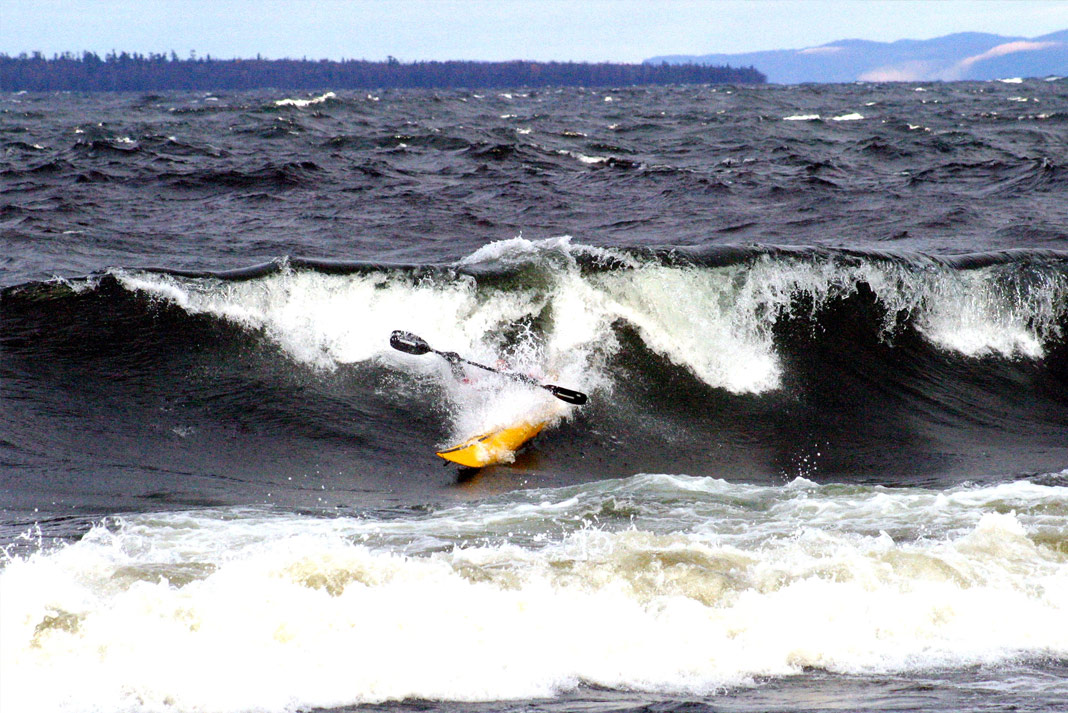
On Lake Superior, Wikle’s Gales Storm Gathering is reviving the rough water tradition of Stan Chladek’s original Gales—with some important updates.
Today’s Gales is held in October and attracts a small number of serious enthusiasts—registration is capped at 35 for the 2020 event. Wikle and co-founder Ryan Rushton looked across the Atlantic to the esteemed Anglesey Sea Kayak Symposium in Wales as inspiration for Gales’ curriculum format. Participants undertake full-day outings with situational coaching based on environment, conditions and the students’ skills and desires.
Since founding the event in 2011, Wikle says he’s seen complete turnover amongst participants every three years—a number he believes is healthy for both the Gales, and the sport.
“Ten years down the road, symposium numbers may not be any bigger than what we see now, but it will be a new group of people,” he predicts.
“It’s better to play than do nothing,” according to Confucious. | Photo: Virginia Marshall
West Coast
Out west, the scene has shifted radically since the days when 1,700-plus paddlers flooded into Port Townsend, Washington’s Fort Worden State Park each September for the West Coast Sea Kayak Symposium (WCSKS). In 2003, when participation peaked, the event was celebrating nearly 20 years.
Despite those numbers, some industry insiders voiced concern about the symposium’s sustainability and its role in growing sea kayaking. Five years later, participation had plummeted to 600. By 2010, the Trade Association of Paddlesports (TAPS) announced their marquee event would not return for a 27th year. What happened?
Mark Hall, director of Kayak Distribution, which manufactures Boreal Design and Riot Kayaks, says working a booth at the event put him on the front line. He believes its collapse was due to what he calls “Greenlander Gore-Tex disease.” Focusing exclusively on those already invested in the sport comes at the expense of enticing new paddlers, he argues.
“In the last days of the symposium, all you saw on the beach were the same Gore-Tex drysuit and Greenland paddle groupies, with signs and schedules highlighting rolling clinics and advanced techniques.”
As far back as 2004, a reporter for online news source SNEWS observed WCSKS’s advanced level workshops were booked solid, while more entry-level courses had weak participation. Then-executive director for TAPS and event organizer, Chris Mitchell, told SNEWS that seeing more enthusiasts than beginners is what they hoped for. “Simply putting ‘butts in boats’ has a very poor conversion,” asserted Mitchell, “enthusiasts drive sales.”
But with boat sales slowing and fresh faces conspicuously absent, Hall wasn’t alone in questioning the industry association’s strategy.
“While Fort Worden State Park is extremely spacious, it could barely contain the egos present,” chided SNEWS. “Many of the highly opinionated have formed camps with themselves as the pied piper leading their merry band of paddlers—and quite small bands at that.”
Rough water on the rise
Around the same time WCSKS was flatlining, the visibility of rough water kayaking was on the uptick. This was in part due to two new events: the Lumpy Waters Symposium in Pacific City, Oregon, and California’s Golden Gate Symposium under the iconic bridge in San Francisco Bay.
“There’s a big gap between the average flatwater club or event and getting out in rough water,” says Paul Kuthe, former program director for Alder Creek Kayak & Canoe, which runs Lumpy Waters. “There’s only so much you can learn from watching a video.”
Outside the safety net offered by symposia, says Kuthe, many paddlers don’t have access to the skill development or peer network to explore those more exposed and dynamic environments.
Kuthe and his fellow Lumpy Waters coaches have shepherded more than 1,300 “alumpni” in the past 10 years. Like Gales’ Wikle, he credits the event’s continued success to its adaptability and student-centered approach.
As original members age out of the sport, symposiums are working to attract a younger audience. | Photo: Virginia Marshall
“We build the schedule around the actual students each year,” Kuthe explains. “If their energy level changes, if the weather changes, if they drink too much keg beer the night before—then the schedule adapts to suit those changes.”
This makes rough water events especially challenging for both coaches and organizers. “You need to have incredibly flexible, experienced, confident, agreeable coaches,” says Kuthe. This kind of talent doesn’t come cheap.
With local paddling shops like Alder Creek feeling the pressure of online competitors and big box stores, the symposium experience has to translate into direct sales for brick-and-mortar retailers.
“We’re there because we want to sell boats,” echoes Chris Hipgrave, sales manager for P&H Kayaks, which supports Lumpy Waters along with 15 or so other sea kayaking events from coast to coast.
When I catch up with Hipgrave, he is preparing to kick off P&H’s event season at February’s Paddle Golden Gate.
From a manufacturer’s perspective, Hipgrave says symposia are moving in the right direction. “Rather than having exhausted kayakers stumble over to a demo beach at the end of a long day, when all they want is a beer and some Mexican food, they’re paddling the boats in conditions and seeing what they’re capable of.”
Hipgrave praises symposia’s ability to strengthen connections with participants, coaches, retailers and communities, but cautions there’s plenty of room for improvement.
“It’s very much a 50-and-up sport; we need to do a better job of getting younger people involved. We also need to widen the diversity—it’s still a very white beach.”
Sean Morley, a veteran paddlesports coach and co-founder of the Golden Gate Sea Kayak Symposium, agrees there’s work to be done on making events more accessible and affordable to new and developing paddlers. He says while symposia provide a valuable snapshot of the wants and needs of participants for coaches and industry representatives, intermediate events don’t paint a complete picture.
“The folks attending rough water symposiums are already hooked,” Morley maintains. “Those events just need decent conditions to be successful. The challenge is to create sustainable larger, entry-level events.”
In an ideal world, he argues, novice-friendly events should be free or almost free to attendees. To make this happen, the industry needs to show more significant support in helping with marketing and managing costs.
“So long as we focus on growing the base of the pyramid—getting folks out of their rec boats and into sea kayaks—there is a strong community ready and willing to embrace them.”
The demise of the West Coast Sea Kayak Symposium left a hole in the Pacific Northwest kayaking community. Into that void stepped Janette Galan, a Vancouver Island paddler, coach and professional event coordinator whose extensive project résumé includes tradeshows and outdoor concerts.
“Many of us missed what WCSKS represented in the way of a yearly reunion,” Galan starts, recalling the origin story of Victoria, British Columbia’s Pacific Paddling Symposium (PPS), which enters its eighth year this May.
Using the WCSKS as a starting point “for what we wanted and didn’t want,” Galan and her team envisioned an all-inclusive “adult kayak camp” theme event with the simple mandate: learn, connect, play.
Whether on the east coast, west coast, or somewhere in-between, symposiums goers join to improve their skills but its the community that keeps them coming back. | Photo: Virginia Marshall
With the inaugural Pacific Paddling Symposium in 2013, Galan says, “We were holding our breath, hoping that our sense of things was correct, and that our kayaking community wanted this event.”
The response from PNW paddlers was both surprising and vindicating, says Galan.
The first PPS sold out in one week, and the event has reached registration capacity more quickly each year since—selling out in just one hour for the past four years. New participants account for between 35 to 45 percent of attendance each year.
Meanwhile, in California, David Santaniello has spent more than a year preparing for the updated and reorganized Paddle Golden Gate symposium. The event is held biannually out of San Francisco’s Marin Headlands, a spectacular location that helps lure an international entourage of coaches and garner the support of major industry players like P&H and Current Designs.
It’s an expensive venue, however, and the first-time event director is keenly aware of the task ahead. Balancing the budget while keeping the bar set high is “the most stressful challenge for me,” he admits.
Teamwork makes the dream work. | Photo: Jillian Brown
East Coast
I
f there is one element paramount to a symposium’s success nearly everyone agrees upon, it is the location. Whether sheltered, inviting waters for novice participants, or bumps and current to challenge those with more experience. Hit upon a superlative spot, and rest is (relatively) straightforward.
In Charleston, South Carolina, the city’s historic districts and Kodachrome streets provide a colorful backdrop to the East Coast Paddlesports Symposium, which celebrates 30 years in March.
Want to paddle with dolphins or learn to surf? Quiet estuaries and consistent waves offer something for everyone at the Sea Kayak Georgia Skills Symposium on Tybee Island.
[ Paddling Buyer’s Guide: View all sea kayaking gear ]
Combine fall colors with a dynamic coastline? Check out the Midcoast Sea Kayak Rendezvous, held mid-October on Maine’s Georgetown Peninsula.
How about catching some mid-winter sunshine and outstanding wildlife sightings? Florida’s Gulf Coast hosts the 25th annual Sweetwater Symposium in February.
North of the border, the Bay of Fundy Sea Kayak Symposium (BOFSKS) combines warm Maritime hospitality with an authentic East Coast vibe (think lobster pots and lighthouses), tremendous tides and vast, empty surf beaches. The superb location has helped make this biannual event one of the most prestigious on any coast.
A decade ago, BOFSKS executive director Christopher Lockyer was helping run the Atlantic Paddling Symposium—an all-disciplines paddlesports event migrating between different Atlantic provinces each year. With its ever-changing venues, however, the event fell short as a community-building catalyst.
Lockyer dreamed of a symposium that would stay put and better foster a local ocean kayaking community around his home waters—Nova Scotia’s Bay of Fundy. He organized the first BOFSKS in 2013 and was delighted by the number of enthusiasts, especially Maritimers, who materialized.
Lower Argyle, Nova Scotia—BOFSKS’s home port—offers a windfall of outstanding paddling, but for Lockyer, the location is essential for another reason. He sees the event as a way to inject much-needed tourism dollars into the region’s lean economy.
“You are 130 stones sending your ripples far into the pond,” Lockyer told the paddlers who gathered for the inaugural BOFSKS, “spread the word, tell your friends.”
While there’s a natural ebb and flow of organized events, the state of symposia parallels the state of sea kayaking. As the old guard ages out of the sport, some events also fade into the sunset. For others, the torch is passed.
A new generation of boaters is showing they too have the commitment, vision and creativity it takes to orchestrate these dynamic events.
Today’s symposia may be smaller, but there is plenty to challenge paddlers of every description—from families and first-timers to aspiring intermediates and rough water aficionados. Want to build a Greenland kayak? There’s a traditional skills symposium near you. Can’t get enough of longboat surfing? Take your pick from wave-chasing events coast to coast. Clinics for kids? Women’s weekends? Check and check.
According to the Outdoor Foundation’s 2019 Outdoor Participation Report, nearly three million people identify as sea kayakers, while recreational paddlers now number more than 10.5 million. That’s a lot of folks searching for quick, easy ways to connect with members of the kayaking community, and maybe squeeze in some skill development as well. More important than learning the techniques, however, is the role these events play in shepherding something timeless: a sense of community and belonging.
Virginia Marshall is a former editor of Adventure Kayak magazine.
Students today, leaders tomorrow. | Photo: John Rathwell
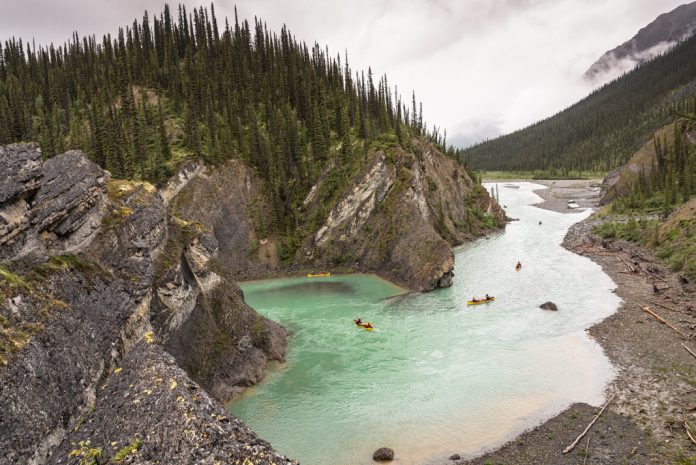
Day four, or was it five, we paddle between the walls of Mini Gate. | Photo by: Scott MacGregor
This Broken Skull River northern adventure story begins below the marquee lights, outside an 80-year-old downtown theater on a windy, snow-covered sidewalk. Awaiting a taxi, my 12-year-old son, Doug, asks me to guess his favorite film of the night. Often in this situation, I’ll make stupid guesses to prolong the game, killing time to distract Doug from the cold. But tonight, I took my best shot at it and named the high-adrenaline whitewater kayaking film. Nope. I pick the short, funny film of best kayaking fails. Nope. Oh, I know, the one about the quirky birchbark canoe builder? Doug likes building things. Nope.
Noatak: Return to the Arctic is an awarding-winning adventure film about Jim and Tip, two dudes in their 70s returning to the Noatak River, perhaps their last northern canoe trip after 40 summers spent on rivers together.
The Alaskan Brooks Range is spectacular, the cinematography superb and the men’s narrative on the power of exploration and coming of a certain age thoughtful. I screened this touching film dozens of times as part of the Paddling Film Festival World Tour. It was a contender for the People’s Choice Award. As unlikely as it seems, it is Doug’s favorite film.
“Can we do a northern canoe trip next summer?” Doug asked.
Before I’d had a chance to look at our summer schedules or make any calls, he’d shown a pre-screening copy of Noatak to his favorite 70-something-year-old dude, David Hamber—his grandad, my father-in-law.
Six months later, Doug and I find ourselves rendezvousing with David in Edmonton, Alberta, before our next leg to Norman Wells, home of Black Feather’s northern base and the airbase of North-Wright Airways.
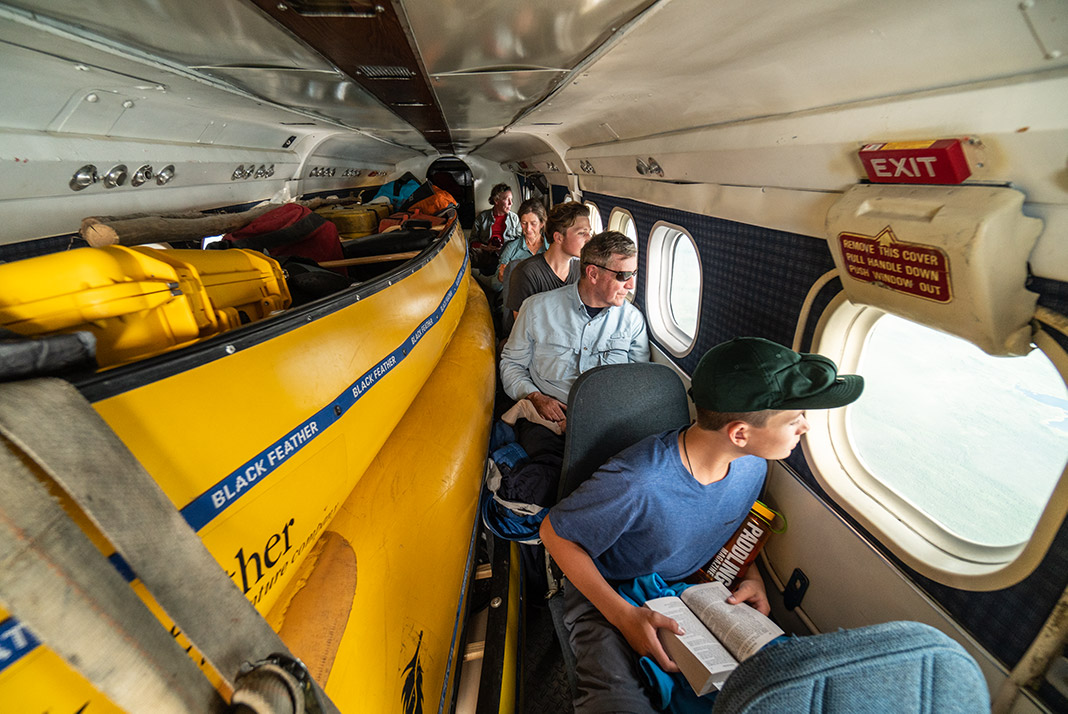
Here in the North, prospectors travel first-class aboard North-Wright’s Twin Otter. | Photo by: Scott MacGregor
I’d just finished a grueling magazine deadline. Doug had two short rest and repack days after a month at summer camp. David Hamber is a retired insurance broker, hobby gardener and backyard putterer. He’d packed, repacked, double-checked everything on Black Feather’s recommended packing list—twice—and was ready weeks ago.
The criteria for choosing our northern river had checkboxes: less than two weeks, but longer than one to make the travel time worth it; whitewater, but not too hard, said my mother-in-law; hikes with mountain views; and pitching this to Paddling Magazine, I needed a river with a fresh story to tell.
[ Paddling Trip Guide: View all Black Feather trips ]
And so, on the first day of August, from the oil pipeline town of Norman Wells, three generations of men and our group of strangers and Black Feather river guides flew to Divide Lake, the drop-off point for the seldom-traveled Broken Skull River flowing through the newly established Nááts’ihch’oh National Park Reserve in Northwest Territories.
I knew of the Broken Skull River only because I’d been invited a few years earlier on an exploratory trip organized by then Parks Canada’s visitor experience team leader, Lyn Elliot. The crew included professional photographer-writer and regular Paddling Magazine contributor, Colin Field, and a who’s-who cast of top northern guides from companies operating on surrounding rivers in the Nahanni and Sahtu regions.
Elliot knew she needed accurate river beta and breathtaking photographs to create a new northern river tripping classic. She was only able to find one guy who’d paddled the Broken Skull, and that was in the early ‘90s, and it was his honeymoon—he likely had more important things on his mind.
According to Elliot’s official Parks Canada Broken Skull Trip Planner produced after this scouting trip, Mike Fischeser thought his matrimonial celebration was a first descent until a year later when he met a polio survivor who’d paddled it the year before.
The Trip Planner was produced in 2015, and the first guided clients experienced the Broken Skull River in the summer of 2016. Our group proudly counted themselves in the first 100 to have paddled the Broken Skull in modern times. Doug and his grandad being the youngest and the oldest.
In five short years, the Broken Skull has gone from a virtually unknown river flowing under the radar to a new northern gem, considered one of the best in the North.
Divide Lake is not the true headwaters of the Broken Skull River. Our trip begins here because it is the largest body of water farthest upstream that allows North-Wright’s de Havilland Twin Otter safe access. We set up camp on the pebbled shore of Divide Lake.
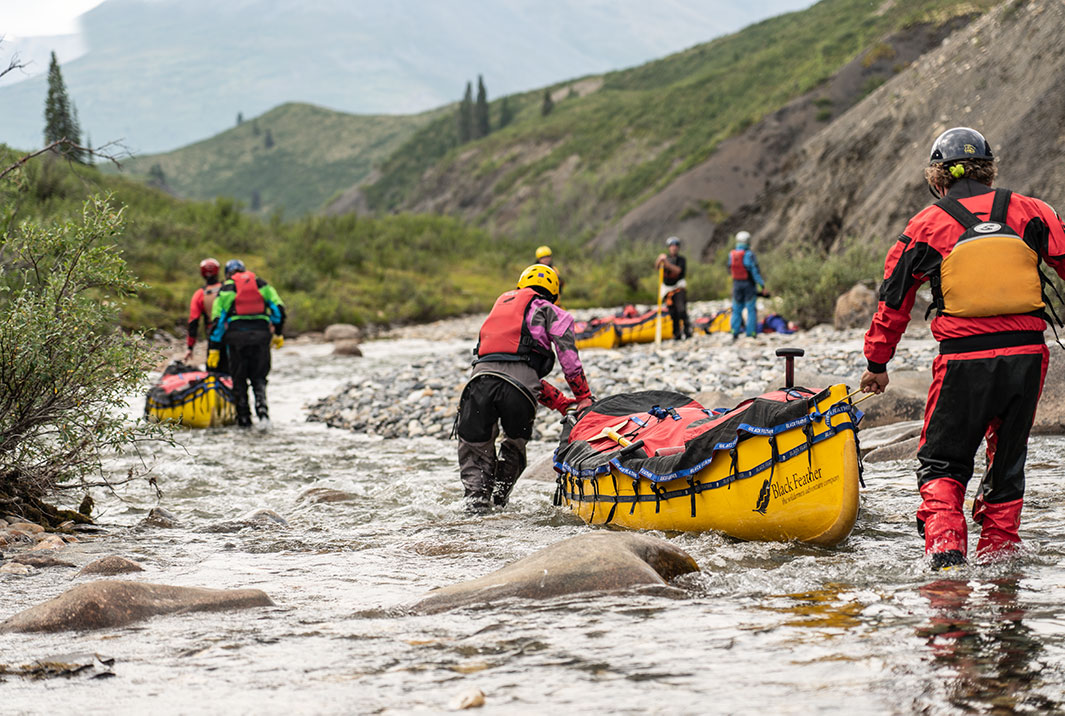
After a morning hike up a ridge and on-water strokes tune-up, we wade, line and paddle our canoes down Divide Lake Creek, aptly nicknamed Cold Feet Creek.
All of us are in drysuits with sewn-in feet and spend the afternoon jumping in and out of boats, nudging over gravel bars and floating when we can. It’s work, but good work. Teamwork. The kind of work that quickly brings family and strangers closer together.
Headwaters river tripping, we like to call it team building, down Cold Feet Creek. | Photo by: Scott MacGregor
We all agree, dragging canoes over shallow gravel bars is better than carrying 10 days of food and gear on our backs. We shout the evening’s menu of Thai chicken, noodles and fresh salad down the line as encouragement to keep moving toward our second campsite on the gravel bar at the confluence of Swallow Creek, just above Swallow Falls.
In the morning, we have what we hope is our only portage of the entire trip—150 meters along a game trail—around Swallow Falls.
With the added water after Swallow Creek, we ride the current to a tight canyon where we paddle and line the technical Thank You Rapid just above the confluence where we are dumped into the cloudy blue waters of the Broken Skull proper.
Bordering the northern edge of the Nahanni National Park Reserve and reaching west to the Yukon border, Nááts’įhch’oh is Canada’s 44th national park. The 4,850-square-kilometer park is named for the looming 2,245-meter-tall mountain at the northern end of the park, part of the Mackenzie Mountain range.
The reserve was created to protect the land from encroaching industrialization and resource exploration, and was first meant to be an extension of Nahanni National Park Reserve. However, the Dene people in the Sahtu region lobbied Parks Canada to recognize their area of land differently from Nahanni, claimed by the Dene of the Dehcho region to the south.
Combined with the adjacent Nahanni National Park Reserve, the size of the two parks totals almost 35,000 square kilometers, making it the third-largest protected area in Parks Canada’s system. Together the two parks protect 86 percent of the South Nahanni Watershed.
“Ever since I was a young boy I played the silver ball… Feeling all the bumpers, always playing clean.” Scott and Doug on Pinball Rapid. | Photo by: Martin Ray
Doug has been canoeing whitewater rivers his entire life. Dave, his grandad, has not. The rest of our group is a friendly cast of Black Feather trip alumni; all of them have done at least one other northern river, some had been on many whitewater canoe trips together. Listening to them sharing stories of adventures on the Mountain, Keele, Snake, Wind and Nahanni rivers is like opening a Black Feather brochure at a family reunion. They know all the same guides, have mutual friendships with other guests and remember the same favorite campsites and rapids.
It’s not every day a new wilderness river in the Canadian North opens for business, and so for some of these group members, they chose the Broken Skull simply because it was the one up here they hadn’t yet paddled. And it is another chance to be on a trip with their friend and Black Feather owner, Wendy Grater.
As the Broken Skull River becomes more popular and its reputation better known, I believe it will become one of the first rivers for new paddlers in the north, not the last.
Three rivers feed the South Nahanni River: Moose Ponds, Little Nahanni and the Broken Skull. An estimated 750 paddlers, between commercial and private trips, travel the Nahanni each year.
So, how did the Broken Skull go unnoticed for so long? It’s a combination of being relatively unheard of and being overshadowed by the iconic Nahanni, according to Black Feather’s Grater.
“Paddling past the confluence many times, I thought the Broken Skull would be really fun, but with the notoriety of the Nahanni, people hadn’t heard about it,” she says.
It wasn’t until Nááts’įhch’oh was officially designated a national park reserve in 2014 and the media coverage following the exploratory trip that any real hype developed about the secret tributary.
Black Feather now runs three to four trips a year on the Broken Skull with eight to 10 paddlers each. Nahanni River Adventures runs another commercial trip or two. Parks Canada is considering additional National Parks operator licenses for 2021. Even still, counting the occasional private trip, only 60 to 70 paddlers will likely ever descend the Broken Skull each year.
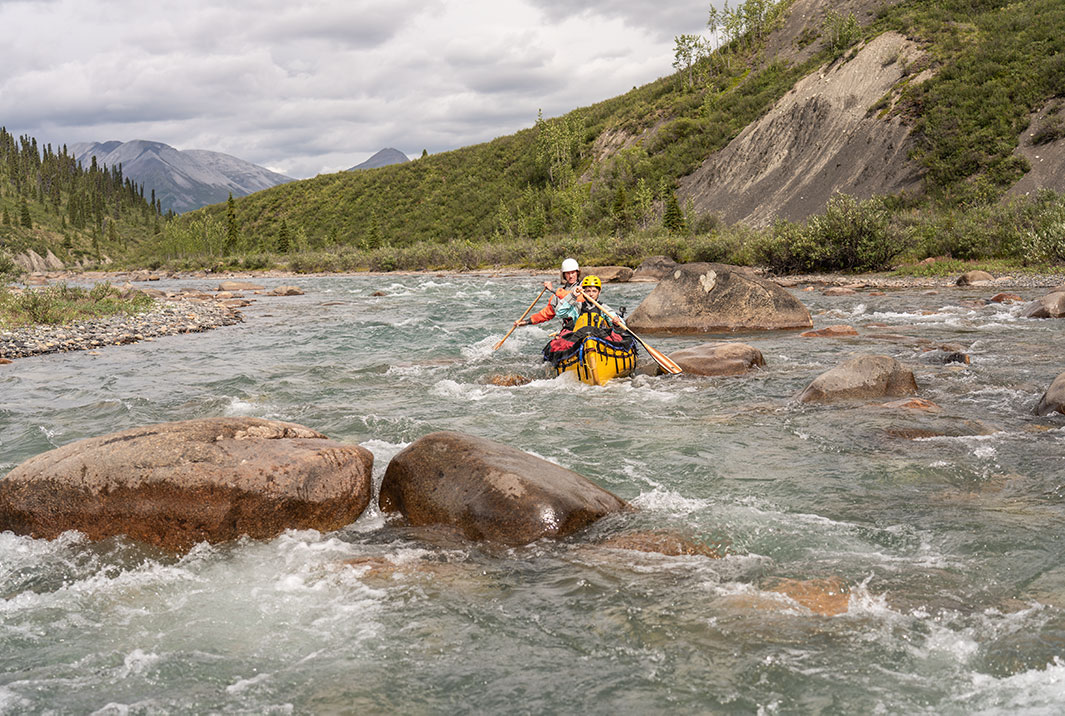
From the confluence of Swallow Creek, the Broken Skull is a swiftly moving river with only one marked class II+ rapid on the topographic maps. Let me say that differently. There is only one marked rapid, period. And it happens to be one of only two class II+ rapids. The rest of the Broken Skull is the perfect combination of swifts, class I and class II rapids meandering past braided inlets from feeder creeks, steep canyon walls and mountain scenery.
The whitewater on the Broken Skull is frequent, fun and not too freaking scary. Our group traded paddling partners taking turns in the bows and sterns of different canoes.
On the last day, Doug took to the stern to paddle his grandad the final section where the Broken Skull joins the South Nahanni River crossing from Nááts’įhch’oh National Park Reserve in the Sahtu Settlement Area to the Nahanni National Park Reserve.
Black Feather runs the 150-kilometer Broken Skull on a relaxing 11-day itinerary. The Parks Canada trip planner suggests a minimum of six days, which you could do, but why?
From our fourth campsite at the mouth of White Water Creek, we ferried across the Broken Skull for our second hike, a two-hour scramble to the top of Singing Water Mountain.
Before a mountain mid-summer storm of freezing rain forced us into our rain gear and back down the way we came, we took turns performing our silliest yoga poses for the cameras and marveled at being able to see Divide Lake still, three days back in the distance.
Black Feather’s recommended packing list for the August Broken Skull trip includes both a mandatory drysuit and a bathing suit. Despite being summer, the mountain-feed rivers still feel icy cold. While air temperatures can be as warm as 30 degrees Celsius, lows dip to freezing.
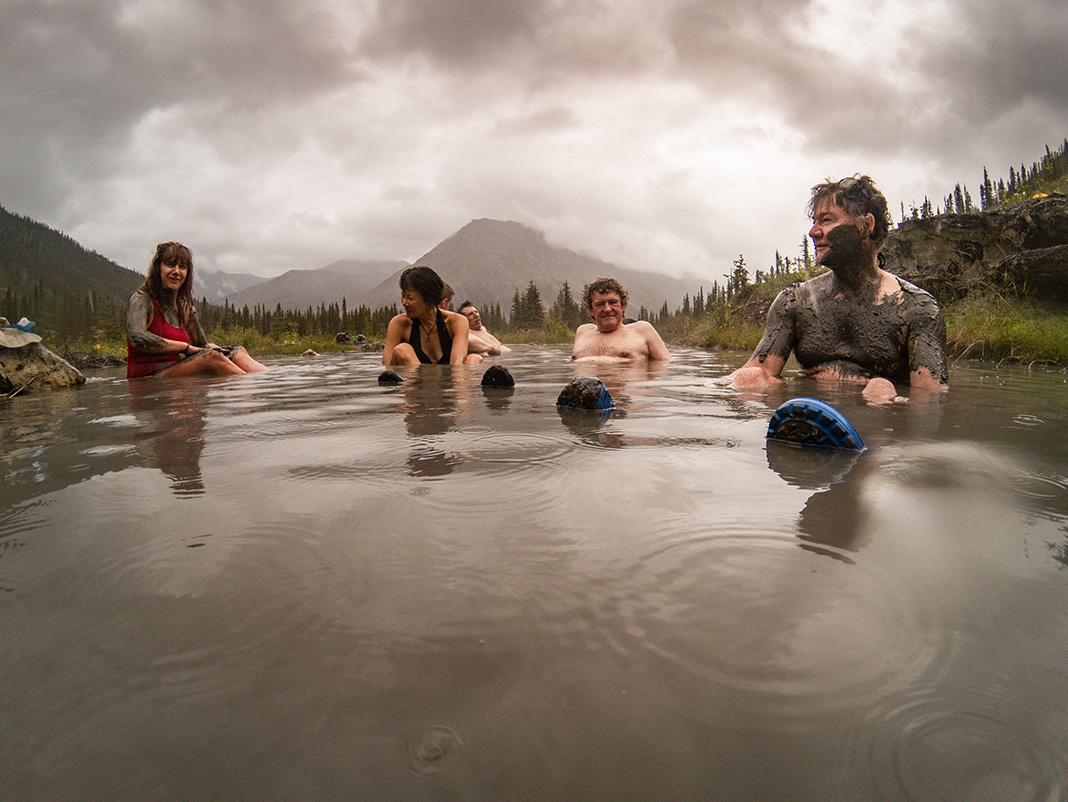
A geologist ascending the river in the 1960s found a cracked moose skull and submitted the name to the Geographic Place Names Board. Cool, but he probably didn’t play paddleball or mud himself at the spa. | Photo by: Scott MacGregor
Our trip was cool and wet. Our bathing suits we reserved for the Broken Skull Hot Springs. And here lies one of the pure pleasures of guided wilderness travel.
At an unmarked and unremarkable gravel bar, lead guide Robbie Norton tied up our canoes and led us blindly 2.5 kilometers through dense, boggy boreal forest. No trail. Just the sweet promise of a remote arctic spa, three pools of varying temperatures and cleansing sulphuric mud.
Hot springs are sacred. These places of healing, they can lose their powers if they are not treated with respect. Elders tasked Parks Canada with learning more about the hot springs, so in 2017 Parks installed a wildlife camera and temperature gauges. Just FYI, in case you don’t think you need to pack a bathing suit. They say they delete all visitor photos.
What effect can you expect a northern river trip to have on you?
For Noatak’s Tip and Jim, after a lifetime of paddling rivers together, 74-year-old Tip said, “I don’t consider my life over yet. I have so many things I want to do, it would take me another whole lifetime to do them and then that probably wouldn’t be long enough.”
The 77-year-old Jim quotes a Vincent Millay poem, “My candle burns at both ends; it will not last the night; but ah, my foes, and oh, my friends—it gives a lovely light!”
For Dr. Martin Ray on the Broken Skull with his daughter, “It is the people who shared this trip with us that are the greatest gift and will leave lasting memories of compassion, humility, teamwork and the importance of family. Certainly, the best part of this trip for me was spending this precious time with Lauren.”
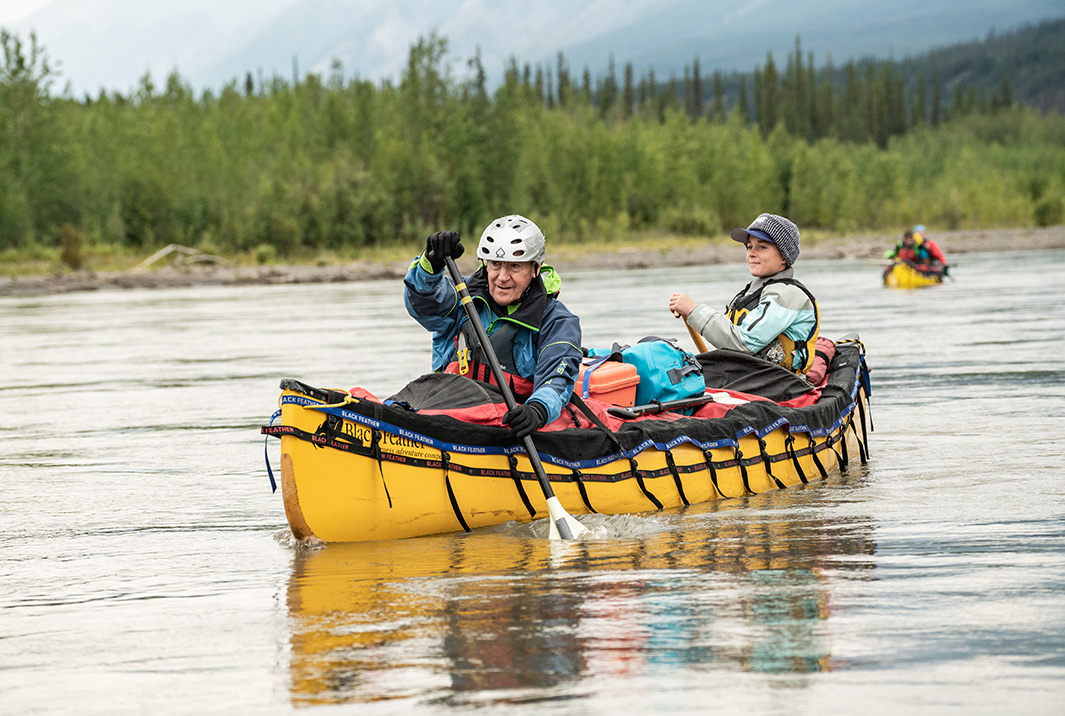
Grandad and Doug. Changing lives one class II rapid after another. | Photo by: Scott MacGregor
For Doug’s 74-year-old grandfather, Dave, it too was about the people, “My greatest joy is being here on this mountain river in this vast, beautiful land with my son-in-law and wonderful grandson. What could be better for an old guy like me?”
After Doug’s 11 days on the Broken Skull River in the Northwest Territories, like the rest of us, he was reluctant to go to sleep. Nobody wants the trip to end.
[ Paddling Trip Guide: View all northern canoe trips ]
As our driftwood campfire on Rabbitkettle Lake crackles low, Doug asks if we think he should be a summer camp counselor, whitewater kayak instructor or wilderness canoe guide for Black Feather.
I tell him, “Yes.”
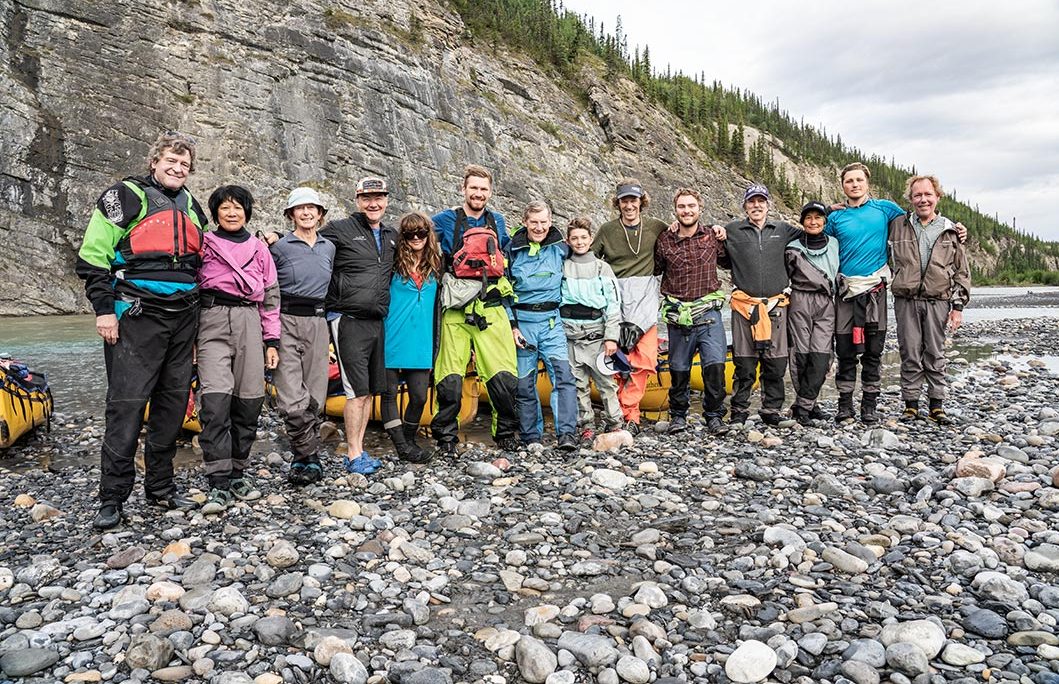
Fourteen of the happiest 100 canoeists down the Broken Skull in modern times. | PHOTO: Scott MacGregor
The group laughs and wonders how our lives would have turned out differently if we’d paddled the Broken Skull when we were 13 years old. No one speaks for a while. We are all wondering how our lives will turn out now, having been down the Broken Skull at this age.
Scott MacGregor is the publisher of Padding Magazine. This summer, Doug is enrolled in the Black Feather Apprentice Guide Training Program, he is a student counselor at Camp Wanakita, and he will be assistant teaching whitewater kayak courses at a local paddling school. His grandad is still telling anyone who will listen about his adventures with Doug on the Broken Skull.
Day four, or was it five, we paddle between the walls of Mini Gate. | Photo by: Scott MacGregor