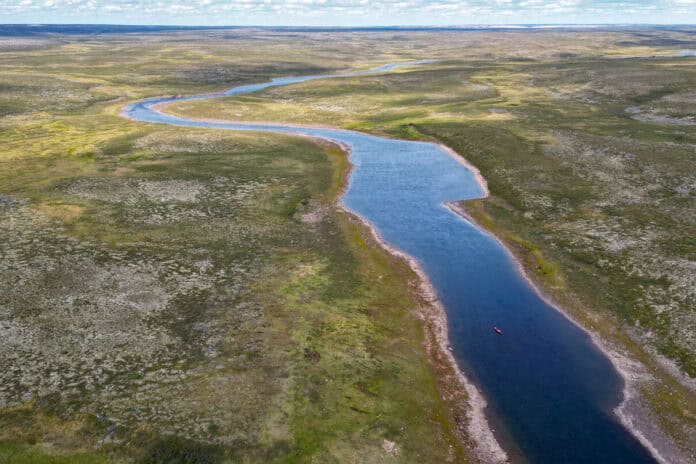
Dubbed the Barren Lands by early European explorers, the treeless region is rich with wildlife and has sustained Indigenous communities for thousands of years. | Feature photo: Michal Lukaszewicz
When a husband-and-wife paddling team set out on a 1,000-mile, 64-day unsupported canoe trip through Canada’s northern Barren Lands to solve a century-old mystery, they knew success would be like finding a needle in a haystack.
One hundred years prior, John “Hermit of the North” Hornby and British financier John Critchell Bullock set out on a bold expedition. Their goal was to paddle into the Barren Lands and capture the first motion picture footage of muskoxen, believed to be extinct back then.
By the expedition’s second summer in 1925, their trip had turned into a fight for survival. The men were exhausted, starving and still 500 kilometers from the nearest outpost. In desperation, they decided to lighten their load.
“On a small island in the middle of the Hanbury River, we dumped 10,000 feet of unused motion picture film and a £1,000 movie camera,” Bullock wrote. “We were too starved to carry it.” He snapped a photo of the cache: a mound of rocks against a barren landscape.
Then his journal disappeared for 85 years.
The needle in a haystack. | Photo: Archives of J.C. Critchell Bullock
In 2015, a school clerk in England found Bullock’s writings tucked in a drawer. Two years later, they were published in the book Letters from the Barren Lands.
“For us, it was a fantastic Indiana Jones puzzle to solve after 100 years,” says Polish paddler Michal Lukaszewicz. He and his wife, Karolina Gawonicz, were captivated by the idea of finding the cache. “We thought, how hard could it be?”
The couple pored over Bullock’s journals, satellite imagery and maps. They cross-referenced their research with other canoeists who had paddled the same route. One location emerged as the cache’s most likely hiding spot.
In 2023, Michal and Karolina launched their expedition to unearth the cache: a two-month-long self-supported canoe trip from Yellowknife to Baker Lake, following Hornby and Bullock’s path through the tundra.
“It was amazing but punishing as well,” Michal said. “When we read Bullock’s letters, we felt his pain and dilemmas. And when we traveled through the Barren Lands, we experienced them firsthand.”
On day 42, the couple reached Grove Rapids on the Hanbury River, the suspected cache site. Most paddlers portage past this area, which could explain why the cache had remained undiscovered. They climbed to the highest point for a panoramic view and scanned the landscape.
Dubbed the Barren Lands by early European explorers, the treeless region is rich with wildlife and has sustained Indigenous communities for thousands of years. | Feature photo: Michal Lukaszewicz
What would not have changed in 100 years? In the blurred background of the photo, they noticed a cube-shaped erratic boulder. Behind it, a small lake matched Bullock’s photograph.
“When I looked through my binoculars, I saw this massive cube-shaped erratic boulder,” says Michal. “I thought, come on, this is probably it.”
Thirty minutes later: “There it was. A mound of boulders human hands hadn’t touched since Bullock and Hornby laid it down,” says Michal. “The entire scene matched Bullock’s photograph 99 percent—we felt chills rushing down our spines.”
Beneath the boulders, they found rusted metal, a piece of wood and the lid of a film canister; proof this was the cache Hornby and Bullock had built a century earlier. But the camera was gone.
Hornby had returned to the region with two companions on a famously ill-fated journey (all three died of starvation on the Thelon River in 1927). Michal and Karolina now believe Hornby retrieved the camera during that trip, likely hoping to sell it.
Though disappointed the camera was missing, Michal and Karolina say the real reward was the connection they felt across time, terrain and human experience. “By reaching the cache site, we felt that strong connection with Bollock and Hornby through the land,” says Michal.
This article was published in Issue 74 of Paddling Magazine. Subscribe to Paddling Magazine’s print and digital editions, or browse the archives.
Dubbed the Barren Lands by early European explorers, the treeless region is rich with wildlife and has sustained Indigenous communities for thousands of years. | Feature photo: Michal Lukaszewicz
For the next three weeks we’re sharing the finalists from the Paddling Kids Story Contest. Read their stories and vote for your favorites to crown a winner! Comment below, or like and comment on Facebook and Instagram to register your support (maximum one comment each week per platform per user). Voting for “Iron Ring Rapid” is open from now until 5pm ET on Thursday, October 23.
Iron Ring Rapid
By Tove Curtis Lind, age 10, from Beachburg, Ontario
I always hear my dad say that kayaking can be fun and scary at the same time. After another summer playing in the rapids, I think he’s right.
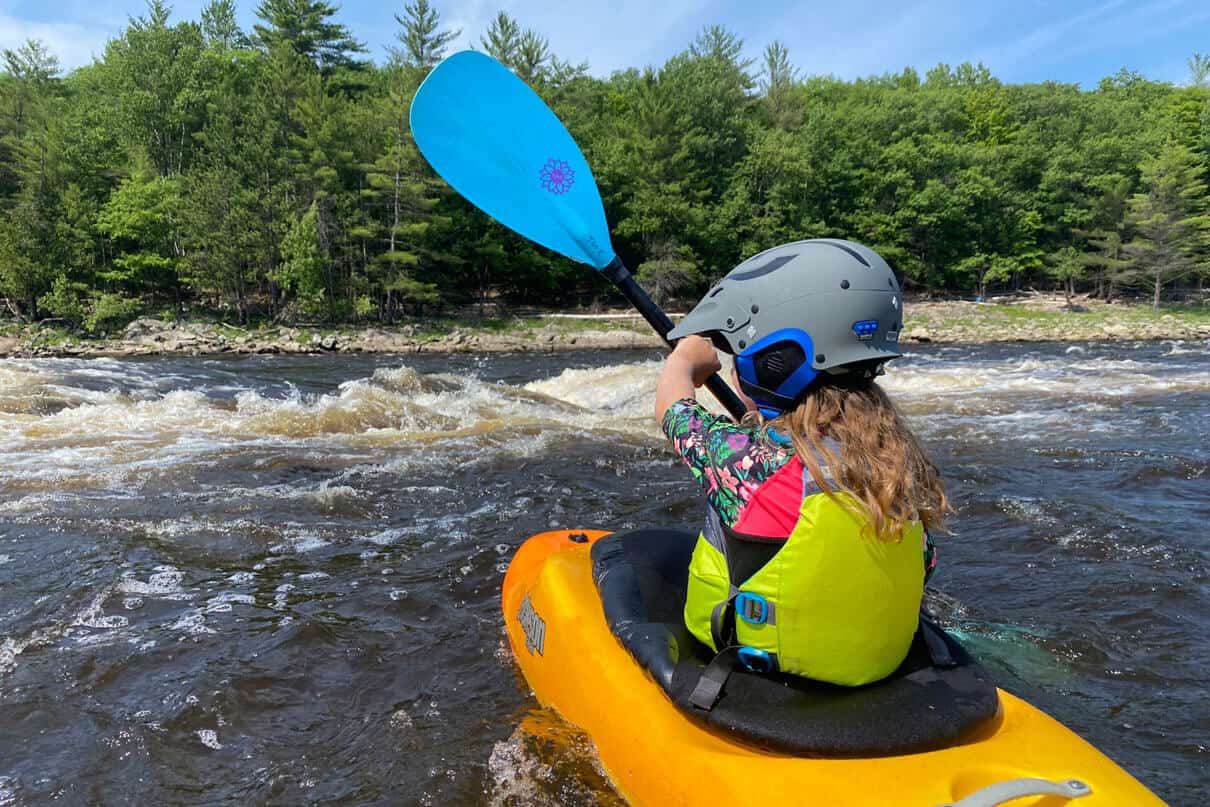
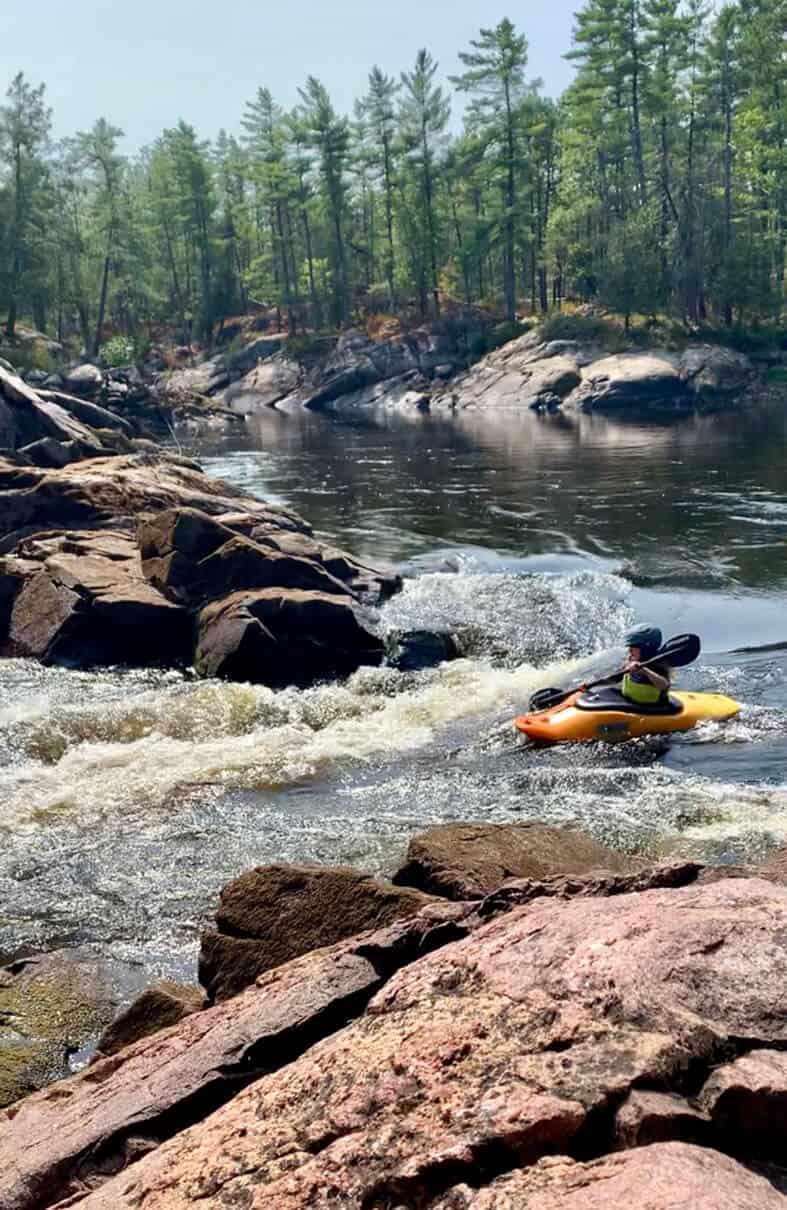
My name is Tove and I’m 10 years old and I kayak. I’m lucky because I get to spend my summers on the Ottawa River. If you haven’t been here, you should come. It’s awesome. In the summer the water is warm and there are kayakers everywhere. I get to kayak almost every day. The best part is I can practice in small rapids during the week and on weekends I can paddle down the river with my family.
Photo: Courtesy Tove Curtis Lind
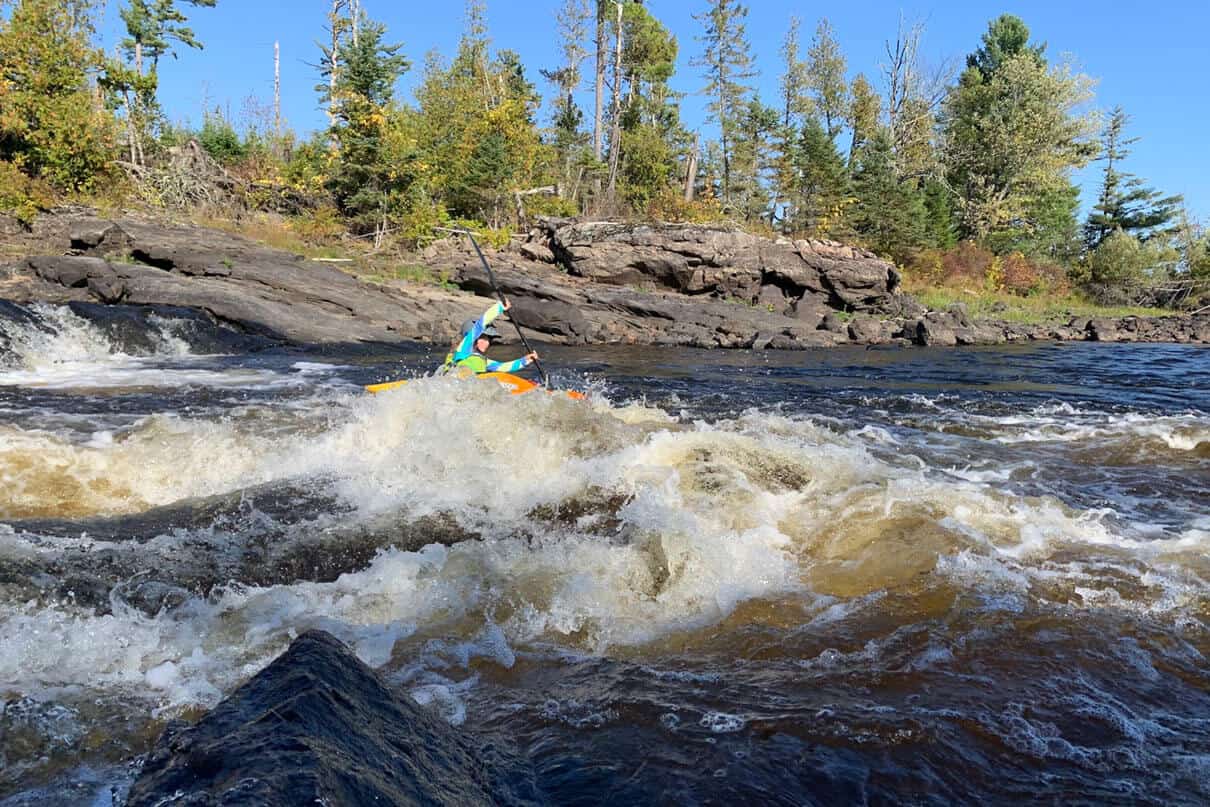
My most memorable kayak moment this summer was when I finally ran Iron Ring rapid. Iron Ring is the first rapid on the Middle Channel, and I was always too scared to do it. Every time my dad asked me what I thought, I got nervous and sometimes even cried. I don’t really know why I cried. I think it was because part of me wanted to run it, but the other part didn’t. It just looked too scary. So every time we got there, I walked around it. That made me feel frustrated.
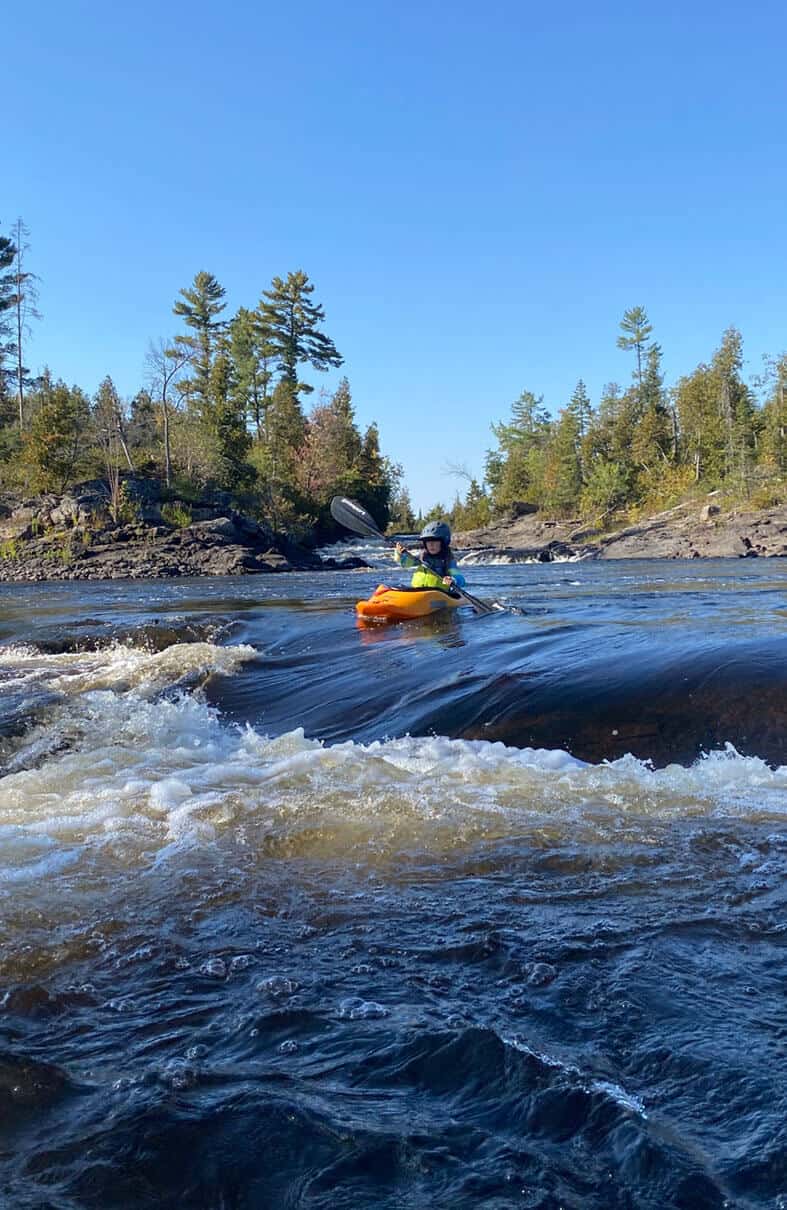
Sometimes when I played in the small rapid near my house, I felt the same way. I was scared to paddle into the mini surf wave. I knew I could do it, but I was afraid to flip over. I did not know what it would be like. I was afraid to fail. Then I realized that feeling bad about not trying was worse than trying and messing up. So one day I took a deep breath and paddled into the wave. Water splashed in my face and I surfed the wave with a big smile. I DID IT!
Photo: Courtesy Tove Curtis Lind
Photo: Courtesy Tove Curtis Lind
That gave me courage for Iron Ring. In August, we went to the middle channel again. This time I didn’t say I would walk around it. I got out of my kayak and looked at the rapid. At first, I was scared again. The water spinning on the right side looked really bad. But on the left side there was calm water, and the middle looked smaller than I remembered. I told myself that even if I flipped, the water was deep and I could get out or maybe even try to roll. My dad gave me a high five, and I got back in my kayak.
I paddled toward the rapid, nice and steady. The first wave splashed my face, but I kept going. My family cheered as I paddled through. I was SO happy. I finally ran Iron Ring!
This summer I learned more about kayaking, but I also learned about being scared. Messing up or flipping over is how we learn and get better. The hardest part is the mental game. Now Iron Ring is my favourite rapid, and I can say for sure: kayaking is both fun and scary at the same time.
Photo: Courtesy Tove Curtis Lind
Vote for your favorite Paddling Kids finalists to crown a winner! Comment below, or like and comment on Facebook and Instagram to register your support (maximum one comment each week per platform per user). Voting for “Iron Ring Rapid” is open from now until 5pm ET on Thursday, October 23.
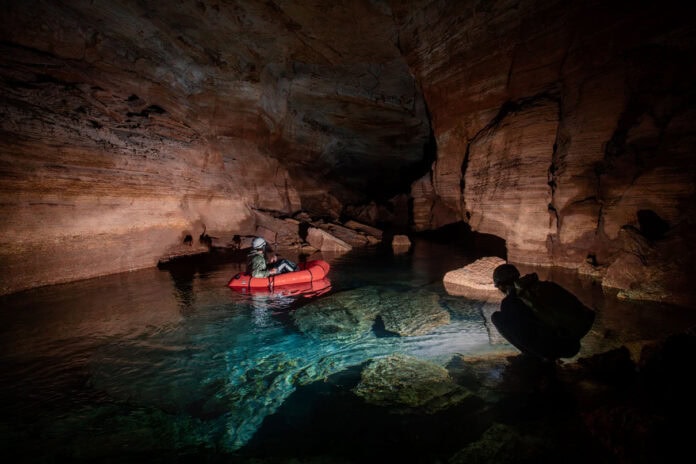
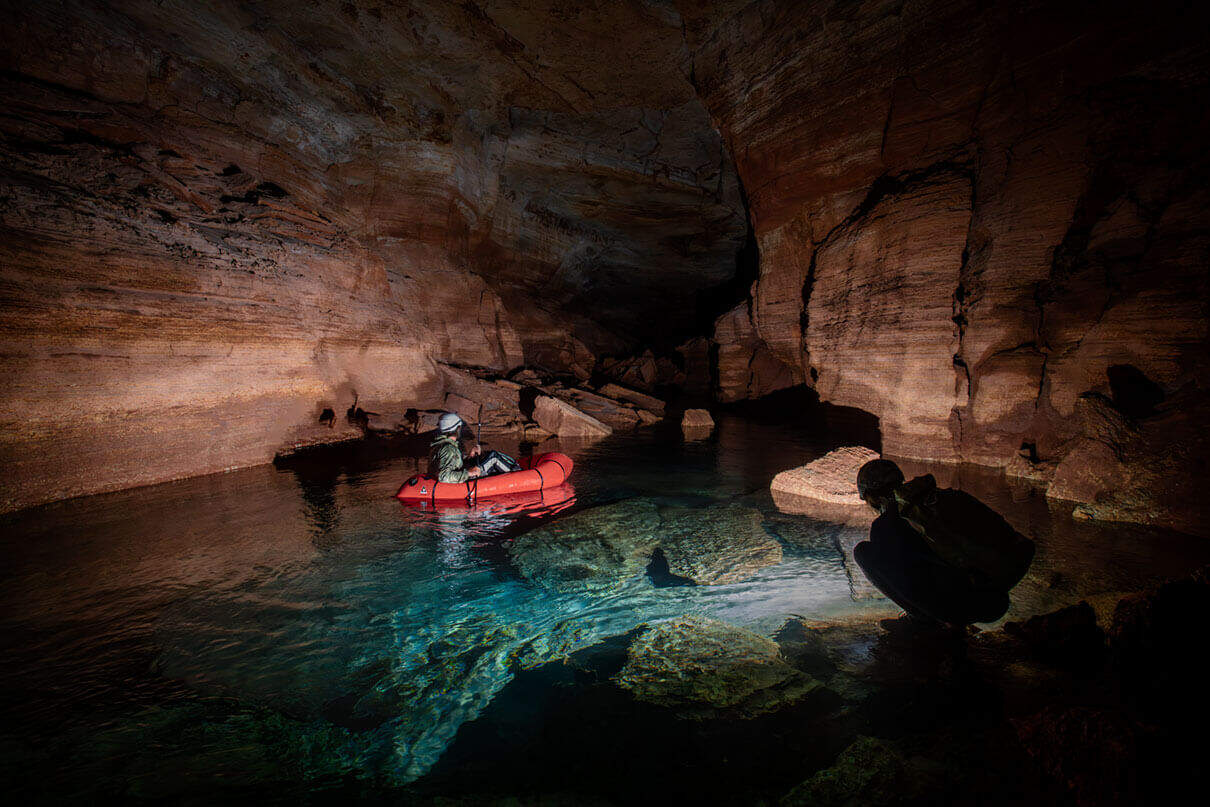
Packrafts have a way of showing up where you’d least expect—like ferrying researchers across underground rivers for climate-critical aquifer data. For safety, data collectors wear neoprene wetsuits and belt-pack PFDs. |
Feature photo: Stephen Eginoire
It’s a brilliant November morning in the heart of the Grand Canyon, and the ribbon of cold, clear sky framed by mile-high walls is growing bluer by the minute. A gentle breeze moves upstream along the Colorado River, rustling through camp. The temptation to kick back and enjoy the canyon’s finest hour is strong. But today we have a different agenda, one that takes us deep underground into a mysterious aquifer system to photograph and record data from what is among the least understood and last explored environments in the Grand Canyon.
Packrafting beneath the Grand Canyon
As the first beams of direct sunlight radiate into the river corridor, illuminating the exact spot on our camp table where a pot of hot coffee would normally be brewing, we’re already marching away from the comforts of river life toward a literal blank spot on the map.
Traversing into an enormous limestone enclosure at the head of a perched valley, we locate an inconspicuous natural opening that leads underground. One by one, we leave our familiar surroundings behind and enter a hidden and puzzling realm that exists in total darkness. We set the beams of our headlamps to high and follow a meandering passage that leads us straight to the water table—a location easily identified by the presence of a river flowing through a majestic subterranean canyon.
Packrafts have a way of showing up where you’d least expect—like ferrying researchers across underground rivers for climate-critical aquifer data. For safety, data collectors wear neoprene wetsuits and belt-pack PFDs. | Feature photo: Stephen Eginoire
This waterway, along with the voluminous chambers it courses through, is only part of a vast and complex karst aquifer system with hundreds of groundwater springs interconnected throughout the Grand Canyon. Known as the Redwall-Muav aquifer, it is arguably the most important source of freshwater in the Grand Canyon.
Thanks to the proliferation of the packraft, this subterranean waterway is somewhat navigable. Once I’ve unfurled the ultralight packraft from my backpack and inflated it, I paddle across the underground river to a cluster of highly sensitive instruments logging data from within the system—flow rate, depth, volume, mineral content, temperature, relative humidity, barometric pressure and more. Cut off from GPS and the internet, the array must be checked manually, as the only way to retrieve the information is in person.
Of the hundreds of springs connected to this system, roughly two dozen are actively monitored by researchers, providing critical data that inform water management strategies amid ongoing drought and a changing climate. In a region where every drop counts, these remote monitoring efforts play a vital role in protecting fragile groundwater resources and ensuring long-term sustainability of both ecosystems in the Grand Canyon and human communities downstream.
With data from the loggers collected and carefully stowed, we follow the river deeper underground, using our raft to protect the delicate camera equipment for documenting the inside of this cave. At the far end of a hall the size of New York’s Grand Central Station, the river disappears beneath a mountain of boulders that block the passage entirely—the result of a collapsed ceiling. It’s clear that the cave and the river continue on the other side of the breakdown, but finding a way through—and into the great unknown—will be a whole expedition of its own.
Stephen Eginoire is a journalist and photographer rooted in southwestern Colorado. See more of his images from the vast, hidden cave systems beneath the Grand Canyon at stepheneginoire.com.
This article was published in Issue 74 of Paddling Magazine. Subscribe to Paddling Magazine’s print and digital editions, or browse the archives.
Packrafts have a way of showing up where you’d least expect—like ferrying researchers across underground rivers for climate-critical aquifer data. For safety, data collectors wear neoprene wetsuits and belt-pack PFDs. | Feature photo: Stephen Eginoire
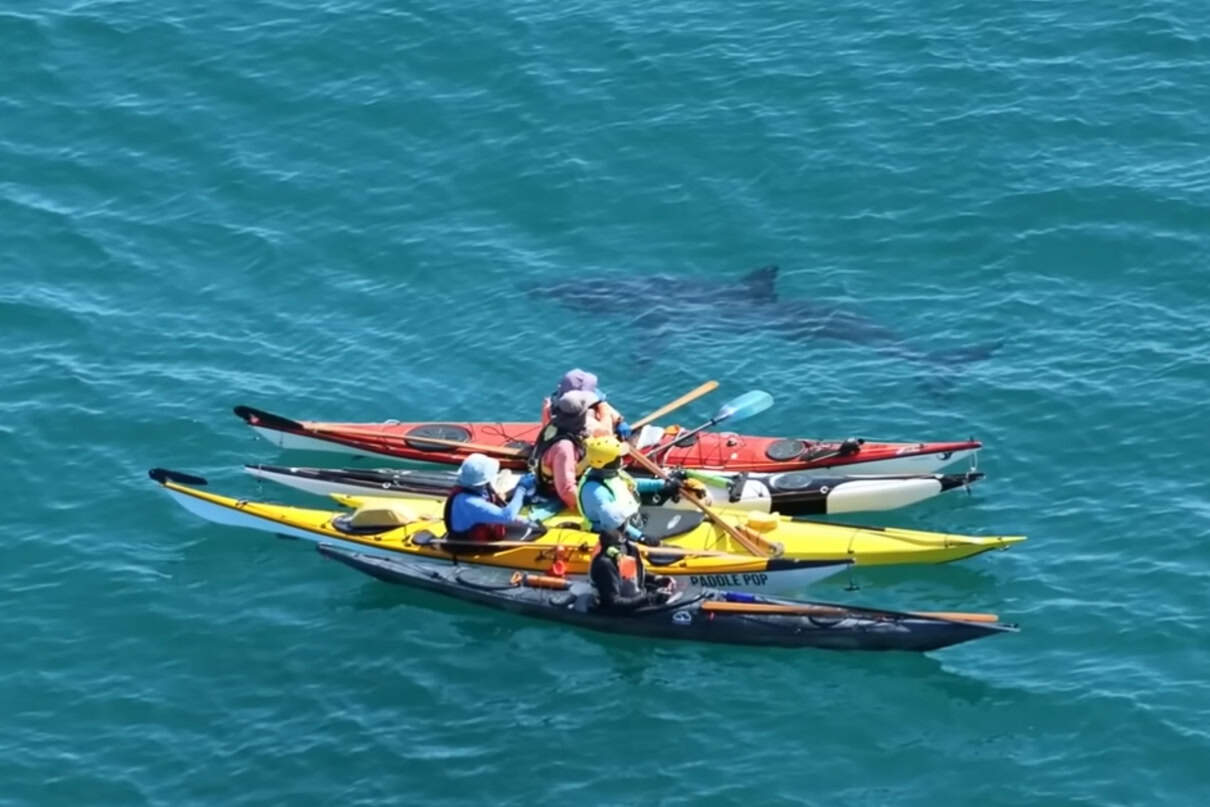
A kilometer off the coast of Perth in Western Australia (WA), a group of five sea kayakers found themselves surrounded by a white shark for the second time in just a few days. Estimated to be five meters (16 feet) in length, the shark circled the group for 15 minutes.
Richard Lailey, one of the kayakers in the group, told 9 News Australia that despite this being his second shark encounter while kayaking that week, he was sure that it was a different shark as one of the sharks was tagged.
“I just said… oh no, not again,” Lailey shared in an interview with 9 News Australia.
Inside five kayaker’s dramatic encounter with a five meter white shark off the Perth coast
Footage from a rescue chopper above as well as footage shot by the kayakers themselves shows the large white shark circling beneath the water.
“We did wonder whether I was towing a string of sausages behind my kayak,” Lailey shared in a second interview with 9 News Australia. “But I can assure you that was not the case. I’ve been kayaking off the WA coast here in Perth for over ten years and some friends of mine in the sea kayak club have been paddling for longer than that and we’ve never experienced anything like this before… for it to happen twice in four days is just incredible, just unheard of.”
Lailey also shared that while in both experiences with the sharks the group was frightened, he was more scared in the second encounter.
“One of the things that we do with the club is training,” explained Lailey in the interview. “We have been trained to respond when this sort of thing happens, and the first thing you do if there’s a group of you is you raft up. So you all group up and hang on to each other for dear life.”
Lailey explained that the second thing the group was trained to do was put out a mayday or pan-pan call on a VHF marine radio and wait calmly until help arrives.
“We were just in awe of this fish swimming around us,” said Lailey. “And I think we were kind of semi-mesmerized by it. It’s a surreal experience.”
Experts warn kayaks don’t offer protection from sharks
Lailey shared that some of the group took photos and filmed while waiting for help to arrive, and for the most part the group sat in silence.
A rescue chopper as well as nearby boats responded to the sea kayakers’ distress call. The shark left shortly after, possibly deterred by the motors on the boats, and the kayakers were guided to shore. The site of the incident, Hillarys Dog Beach, was temporarily closed after the encounter. Experts told 9 News Australia that kayaks offer very little protection from sharks.
Kayakers circled by Great White Shark in Perth, Western Australia. Feature Image: 9 News Australia | YouTube
While shark attacks on kayakers are rare, sea kayakers can occasionally be mistaken for a seal or sea lion from below.
The sea kayaking group plans to hit the water again soon, unfazed by the encounters.
In a dramatic video a canoe tour group in Botswana’s Okavango Delta was charged by an angry elephant, with one tourist held underwater by the elephant’s truck. Now, tourists are sharing their stories with more footage of the close encounter.
New footage of dramatic elephant charge on canoe tour surfaces as survivors share their stories
In the new footage, the elephant is seen charging the cameraman’s canoe and flips it with his trunk. Lifejackets (PFDs) are seen scattered in the water. From here, the elephant continues to charge as the camera dips in and out of the murky waters.
“The first thought that came to my mind was ‘this is the end of me,’” Jeff Melvin, a participant on the canoe safari, told ABC News. “We could tell that they were getting a little annoyed at our presence and then just in the blink of an eye things kind of changed.”
“What we did not see was the mom with the two babies,” Jeff Unrein, another canoe safari participant travelling with Melvin shared with ABC News. “They were hidden in some tall grass but out of sight.”
The new tourist footage also shows a different angle of the woman held underwater by the elephant.
“That patron was incredibly lucky that this happened in the water,” Ron Magill, Zoo Miami, told ABC News, adding that elephants literally try to mash people into the ground in an attack and the water likely cushioned her.
Magill also explained that there is little more dangerous in the wild than an elephant mother with young calves.
Elephant charges canoe tour group in Botswana. Feature Image: ABC 11 | Larry Unrein @salmonmoose
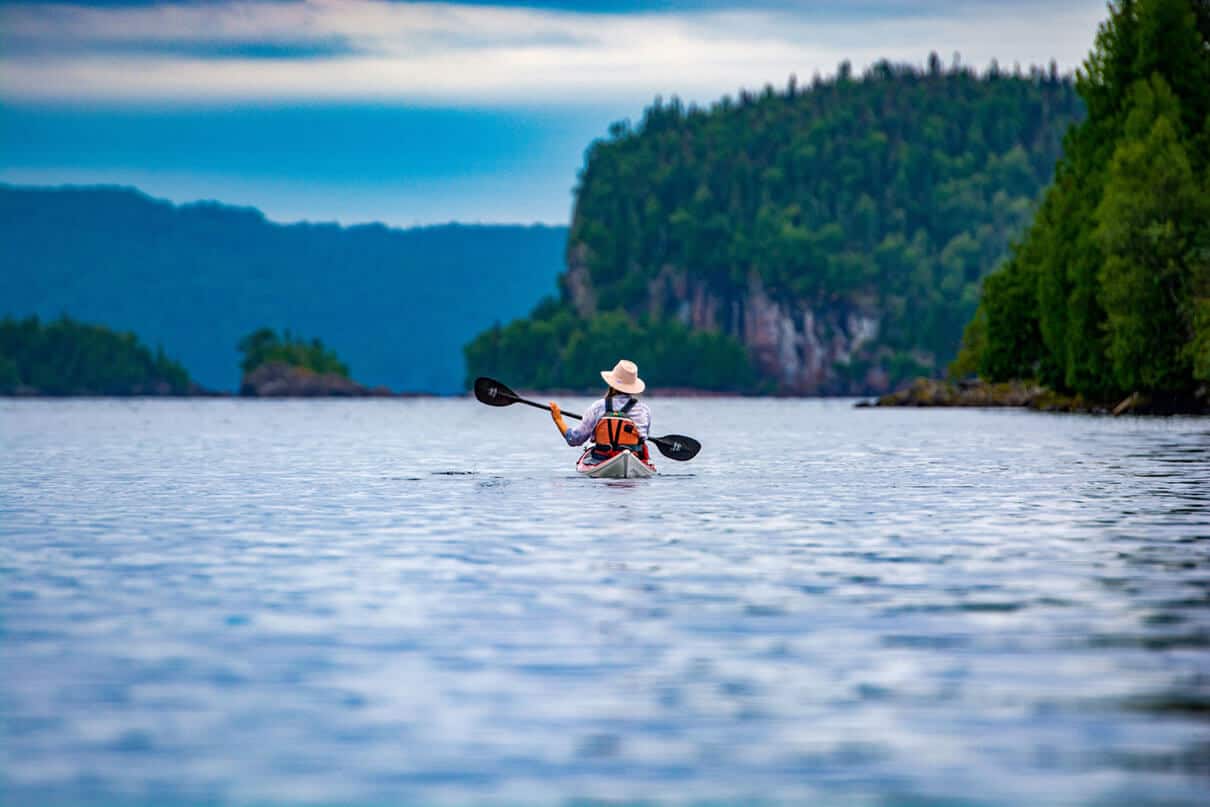
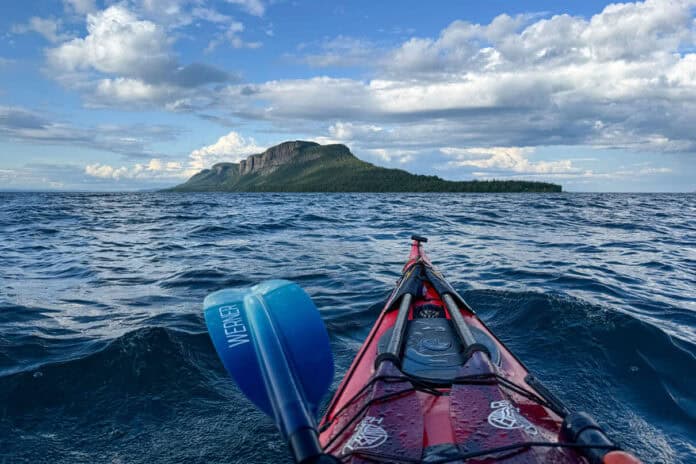
Lake Superior’s Thunder Cape looms in the background on a 10-kilometer crossing from Pie Island. | Feature photo: Kaydi Pyette
When paddling in crosswinds or crossing currents, it can be difficult to stay on a straight-line course from the point of departure to the destination. The direction you point your bow is not necessarily the direction you’re moving, so it’s easy to paddle a long arcing route without even realizing it.
While taking the scenic route isn’t necessarily a huge mistake, on long exposed crossings, it’s usually preferable to minimize distance. As we all remember from math class, the shortest distance between two points is a straight line.
How to paddle in a straight line in wind and current
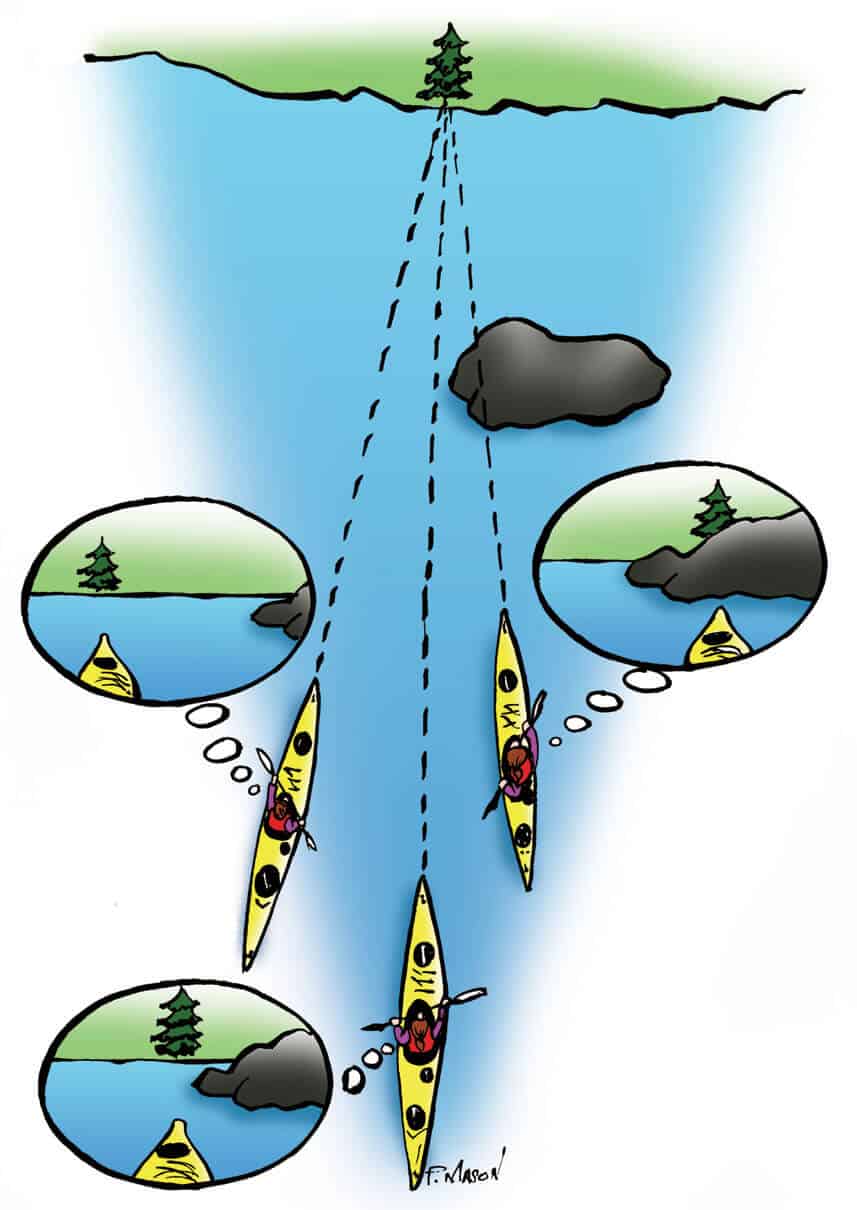
A range—also known as a transit—gives a paddler easily interpreted, “on the fly” visual feedback on course headings relative to drift. That might sound complicated, but it’s really easy. It’s a very useful tool to prevent drifting off-course due to current or wind on longer crossings—and handy for short ones, too. It is easier than reading a compass or GPS while paddling, and far less likely to make you motion sick.
Illustration: Paul Mason
To establish a range, pick two stationary reference points that are in line (the distance and roughly on your course heading). Your two points need to be some distance apart, with one closer and one farther away from your position. But they must be in line with your direction of travel. By watching how these two reference points move relative to one another, you can instantly gauge if you are drifting off course.
Say you pick a mountain peak in the far distance and a distinctively red tree on the shoreline as your reference points. If the mountain is moving left relative to the tree, then you are drifting off course to the left. If the mountain is moving right relative to the tree, then you are drifting right. If the two reference points stay aligned, then you are on course and traveling in a straight line.
By adjusting your steering and paddling to keep your range reference points aligned, you are effectively setting a ferry angle that will counteract the effects of current and wind so you can travel efficiently in a straight line on your goal. Even if the effects of current and wind change drastically during the crossing, you can adapt as needed to maintain your course.
This editorial was first published in Issue 73 of Paddling Magazine. Subscribe to Paddling Magazine’s print and digital editions, or browse the archives.
Lake Superior’s Thunder Cape looms in the background on a 10-kilometer crossing from Pie Island. | Feature photo: Kaydi Pyette
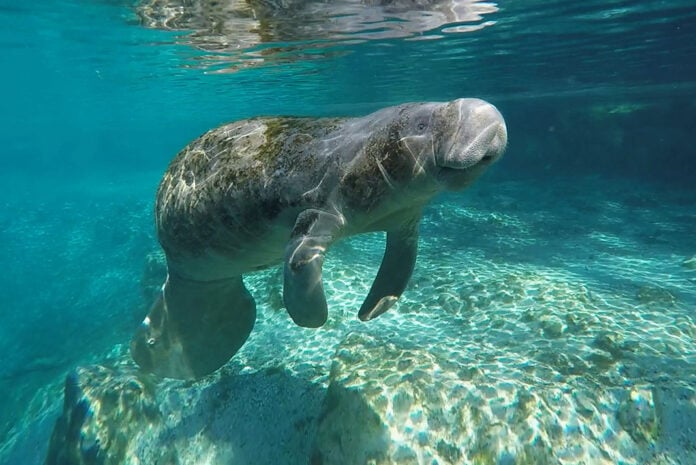
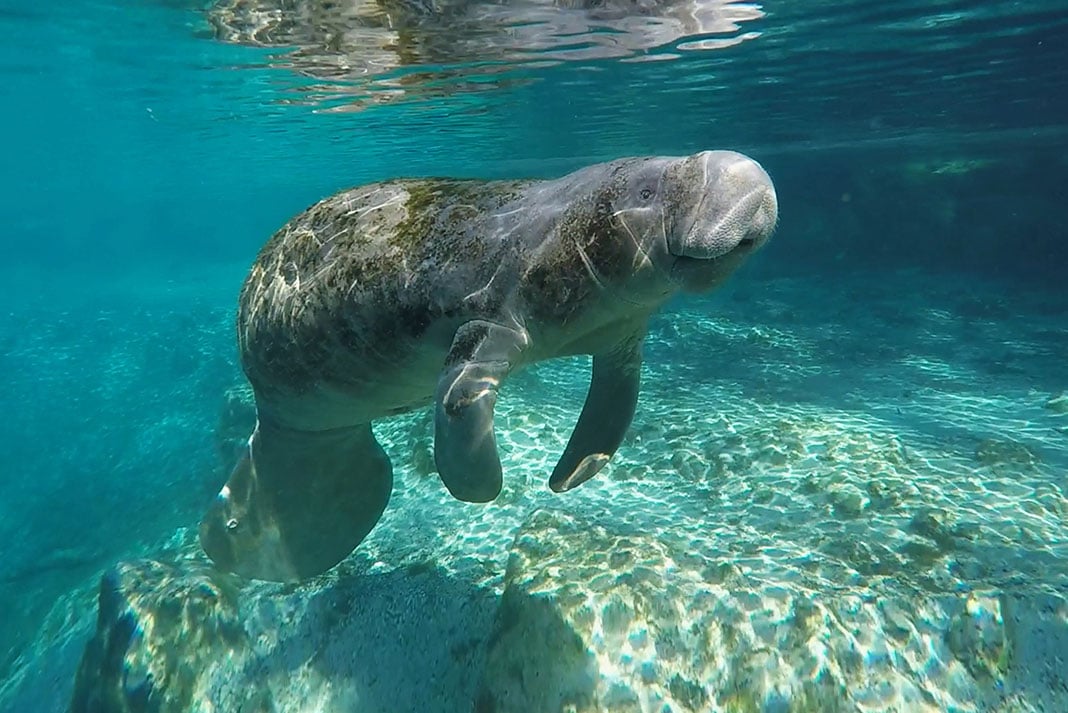
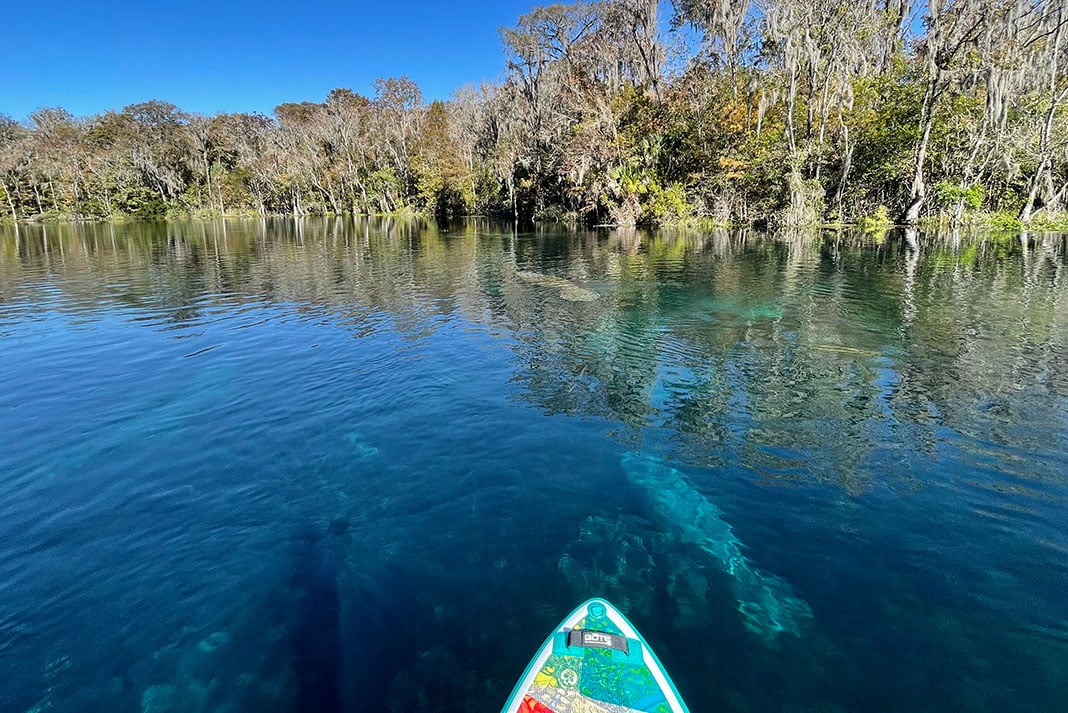
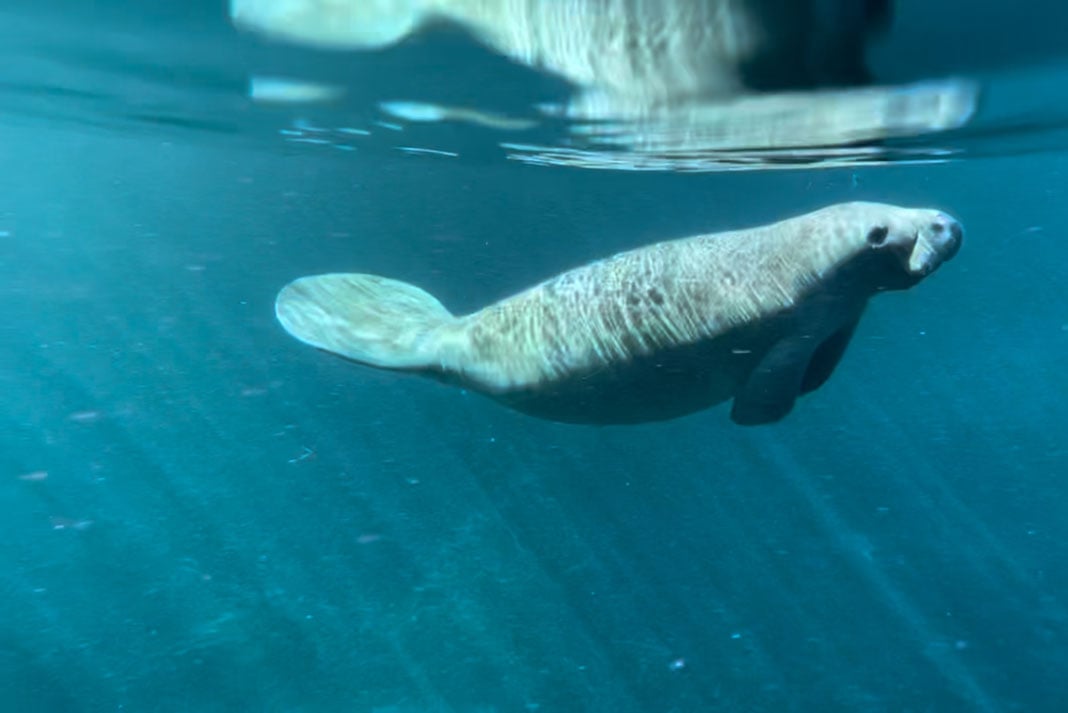
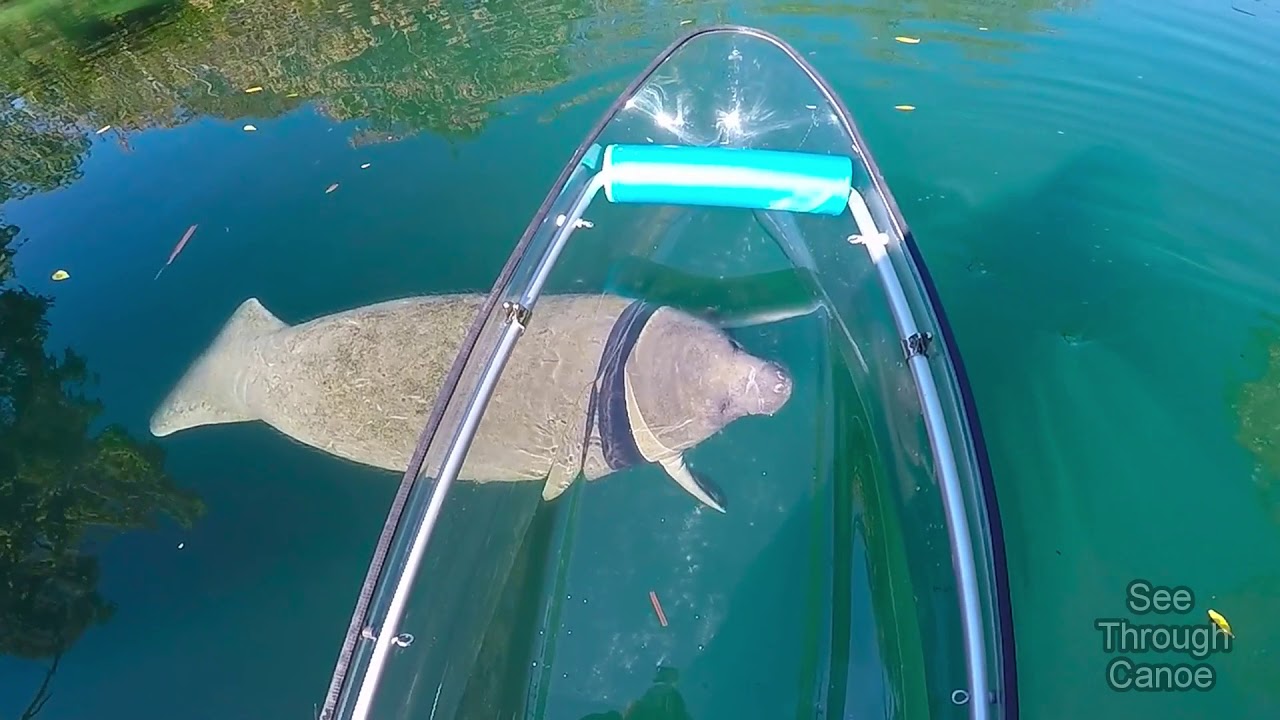
Imagine this: You’re paddling a clear and calm river, when suddenly, you see a large, gray shape ahead of you. As you get closer, you realize it’s a manatee. It comes up for air, dives down and continues under your kayak. You lean over to get a good look at it passing several feet below.
Drifting in search of manatees on the Weeki Wachee River. | Photo: Sarah Phinney
Seeing a manatee from a kayak, or atop a paddleboard, can be a humbling experience. Manatees can be, on average, 10 feet long and weigh up to 1,200 pounds. While their size is intimidating at first, they are beloved for their gentle demeanor, playfulness and curiosity.
Globally, manatees can be found in the Gulf of Mexico, Caribbean Sea, Amazon basin, and West Africa. No matter where you are in the world, it’s important to keep a few safety tips in mind:
1. Space is key
If a manatee starts to change its behavior because of your presence, you’re too close. Surfacing manatees are capable of flipping kayaks and paddleboards.
2. No sharing
Do not give manatees food or water. It may encourage them to swim closer to people or boats and it can change the way they forage.
3. Research local rules
Manatees are protected to some extent in every country they inhabit. Familiarize yourself with local laws. Violations in some places are punishable by jail time.
Florida has some of the most extensive protections for manatees, and for good reason.
Manatees inhabit the state’s coastal waters, rivers and springs. In the winter, manatees flock to warm-water sites, including springs and even power plant discharge canals.
While federal and state agencies continue to investigate a high level of manatee mortalities on the Atlantic coast, the most recent population estimates in the state range from 8,000 to just shy of 12,000. Because of that, you have a high chance of seeing manatees in the wild, especially if you visit the following places. These destinations are also highly accessible to paddlers, with outfitters providing rentals and guided tours and designated launches.
A manatee just hanging at Three Sisters Springs. | Feature photo: Maurice Rivenbark/Visit Florida
1 Crystal River, Florida
Citrus County, Florida, known as the Manatee Capital of the World, has some of the best opportunities globally to kayak with manatees. In fact, it’s one of the only places in Florida where you can respectfully swim with them too.
The Crystal River National Wildlife Refuge, established in 1983, protects Three Sisters Springs where hundreds of manatees congregate in the winter to stay warm in the spring water that remains 72 degrees year-round.
Kayak tours are available in the area, but the Three Sisters Springs can be closed off to swimmers and kayakers during the winter for the safety of the manatees gathering there. However, you’ll still see plenty coming and going from the springs in nearby canals.
Visitors who have their own kayaks can launch from nearby Hunter Springs Park. There is a small fee to park. Arriving early is best because the number of spots is limited. Plus, manatees are known to be more active and playful in the morning.
Exploring Silver Springs. | Photo: Sarah Phinney
2 Silver Springs State Park in Ocala, Florida
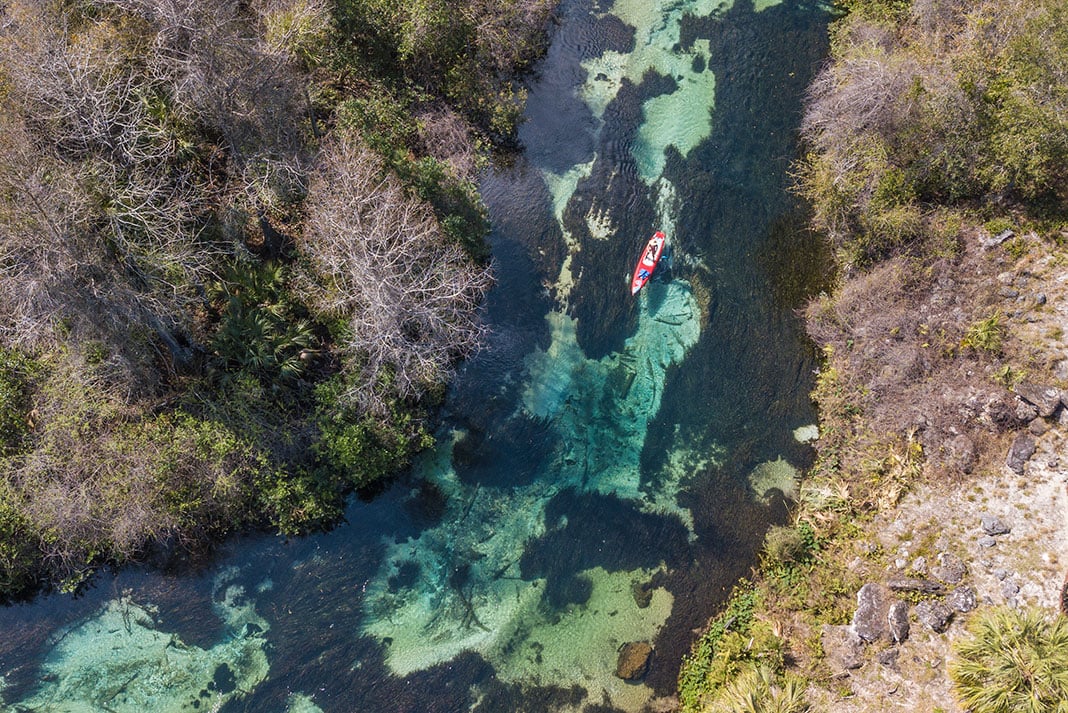
Silver Springs State Park in Ocala is a top spot for seeing manatees no matter the season because some are year-round residents.
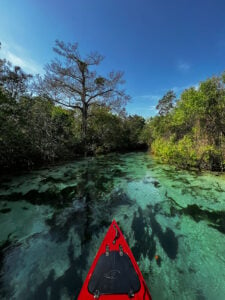
If you visit, you’ll quickly understand why humans have been drawn to the Silver River for at least 10,000 years. The stunning scenery and crystal clear water are mesmerizing. In fact, more than 30 springs have been documented in the upper part of the Silver River.
Kayaking tours are available through multiple vendors, including clear kayaking tours, that help paddlers see the depths of the springs where manatees, fish, turtles and alligators may be swimming below.
Those who have their own kayaks can launch inside the state park for a small fee and arrange for transportation back upriver after a five-mile run. It’s relatively slow moving water for novice kayakers or beginner paddleboarders Whether you’re on a tour or paddling independently, be sure to keep your distance from the Glass Bottom Boat Tours that run daily inside the state park.
The manatees are an added bonus to an already incredible paddle on the Weeki Wachee River. | Photo: The Rodriguez Group/Visit Florida
3 Weeki Wachee River in Weeki Wachee, Florida
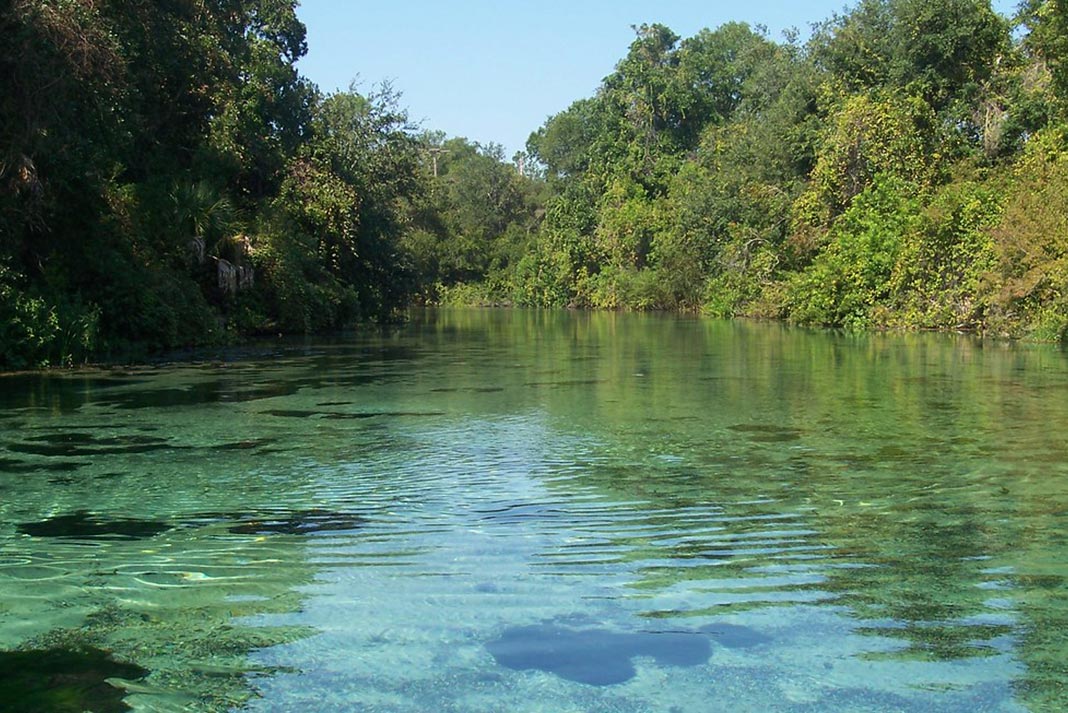
The Weeki Wachee River is known for mermaids, manatees and magnificent surroundings. The head spring of the river is inside Weeki Wachee Springs State Park, where you can also catch a world-famous mermaid show.
Paddlers who want to begin their journey near the head spring can rent from inside the state park or reserve a spot to launch privately. Only a certain number of rentals and private launches are allowed per hour so it’s very important to reserve in advance, especially on weekends.
Manatees can sometimes be spotted swimming upriver during cooler months. There’s also a good chance of seeing them at a spot called Hospital Hole, just before Rogers Park. However, those who rent through the state park will not pass Hospital Hole because the exit for renters is just shy of three miles downriver, whereas Rogers Park is about 5.5 to six miles downstream.
4 Manatee Springs in Chiefland, Florida
Manatee Springs State Park, along the Suwannee River in north Florida, is home to one of Florida’s largest freshwater springs. A staggering 35 to 150 million gallons of crystal clear water flows from the first magnitude spring every day.
The area serves as an important refuge for the marine mammal, especially from November to April when many are regular visitors to the spring. Tours that center around manatee education are offered at the park. A launch is available for public use for those who want to explore this wondrous waterway on their own.
Image: Lee County Parks
5Manatee Park in Fort Myers, Florida
Aptly named, Manatee Park provides paddlers an excellent chance to spot manatees—especially from January through March. The gentle giants gather in the warm water released by the nearby Florida Power & Light power plant into the Orange River, which connects to the Caloosahatchee River.
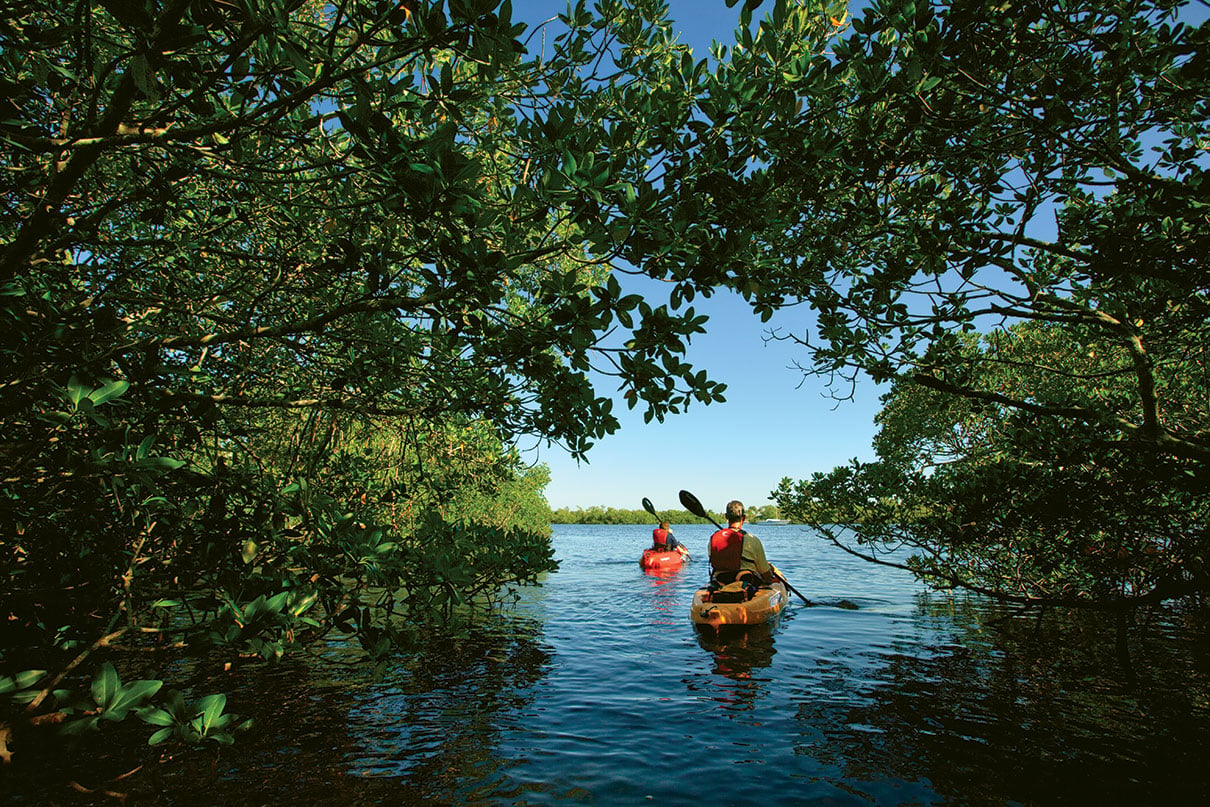
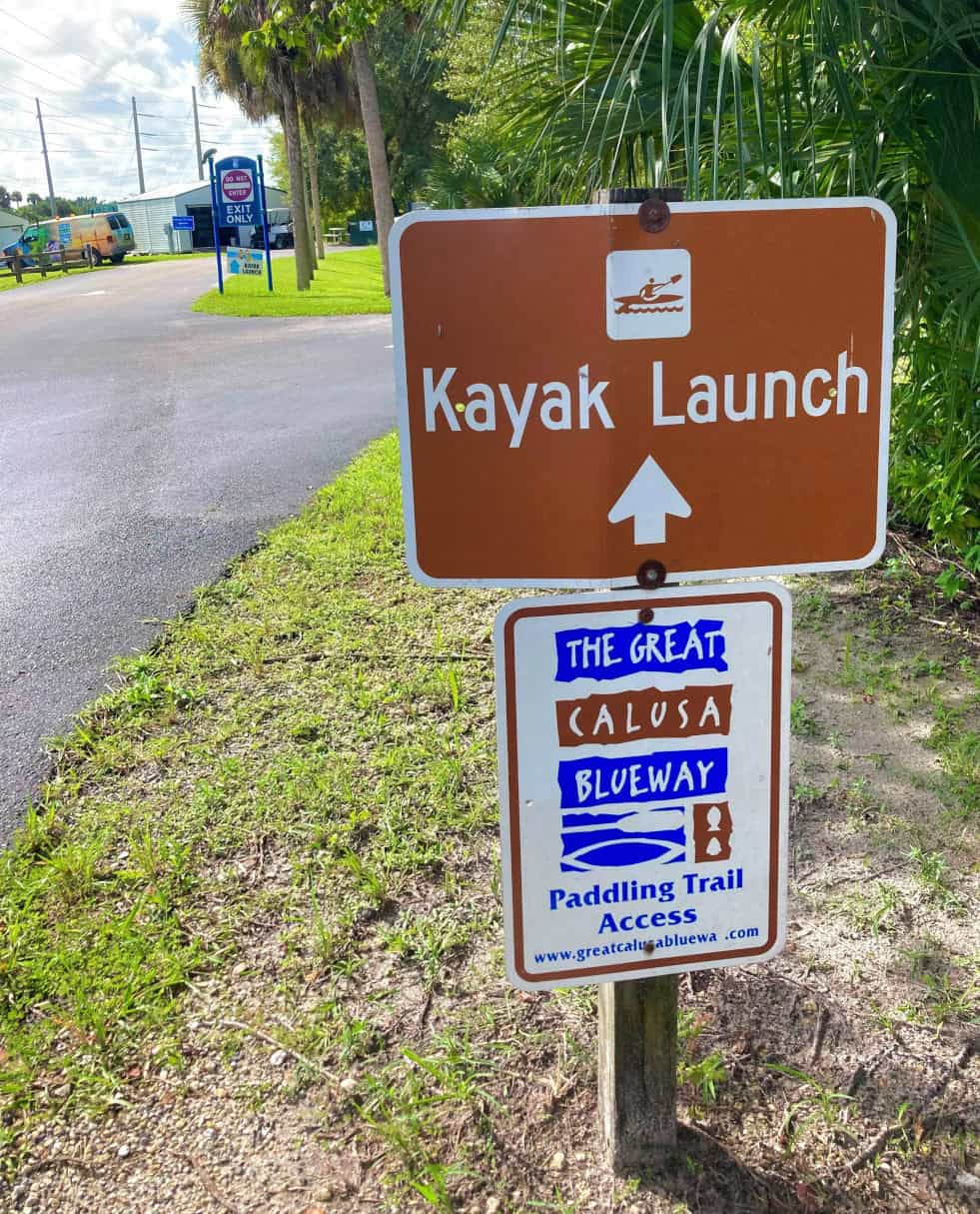
Manatee Park is also part of the Great Calusa Blueway, a 190-mile paddling trail that highlights the best of Southwest Florida’s natural beauty. The trail includes everything from mangrove tunnels to open bays, white sand beaches, and historic rivers, like the Caloosahatchee.
There’s a kayak rental outfitter on-site at Manatee Park, or visitors are welcome to launch their own to explore this iconic segment of the Blueway.
6 Indian River Lagoon in Titusville, Florida
Manatees can be spotted all throughout the year at the Indian River Lagoon. While it stretches 156 miles long, one of the best places to look for manatees is by visiting the Haulover Canal Kayak Launch at Merritt Island National Wildlife Refuge.
There are a number of tour operators in the area and you can also launch your own kayak. It can be quite popular, especially between July and September, when many are out on the water into the evening hours to experience the bioluminescence.
The phenomenon occurs when dinoflagellates illuminate a green-blue color when the water is disturbed by kayaks, paddles, boats, manatees, and more. It’s one of the coolest ways to see these gentle giants.
If you’re causing a manatee to change its behavior, you’re too close. | Photo: Sarah Phinney
Where else to see manatees
While the Sunshine State is considered to be the top spot to kayak with manatees, the marine mammals can also be spotted as far west as Texas and even as far north as Massachusetts during the warmer months of the year, according to the Florida Fish and Wildlife Conservation Commission. However, sightings here are less predictable than in Florida.
Travel Belize suggests visiting Swallow Caye, an island a few miles off the coast of Belize City where manatees are sometimes spotted on the seagrass beds inside the wildlife sanctuary. While Belize is said to have the largest population density of manatees in Central America, the population estimates are still a fraction of the numbers found in Florida.
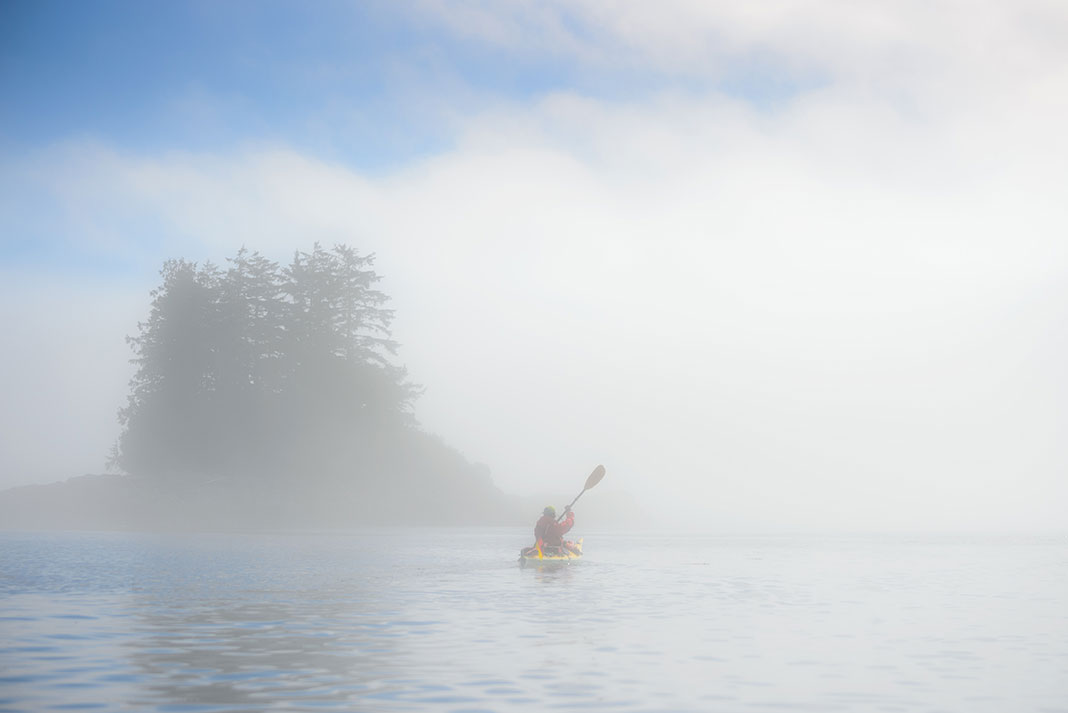
More of what we need. | Feature photo: Kaydi Pyette
I hit power on my phone and braced myself. After a dreamy week paddling the north shore of Lake Superior (spent eating oats on pebble beaches, sleeping under the stars, and living by the rhythm of the wind) I was met with 107 message notifications. Between agate hunting and misty lighthouse sightings, I’d almost forgotten I was a person with a job, bills and a group chat that never stops.
I eyed the notifications with equal parts curiosity and dread. What texts were waiting? What world events erupted while I’d been off-grid?
In uncertain times, relief is closer than you think
That return to signal is always jarring. A reminder of how much we carry and how gloriously little of it fits in our hatches.
If the world feels heavy, it’s not just you. Multiple studies show nearly half of North Americans reported feeling increased anxiety in 2025, thanks to a cocktail of rising living costs, global unrest, polarization and trade tensions.
More of what we need. | Feature photo: Kaydi Pyette
No matter where you fall on the map, this pressure is a shared experience. We’re more connected than ever, yet our brains struggle with the constant onslaught of news, posts and pings. What used to arrive once a day with the newspaper now pours in by the nanosecond.
And t’s not just individuals who are feeling squeezed. After five tumultuous years, the outdoor industry is still finding its footing. After the pandemic boom came the bust. Shelves that were once bare overflowed. Retailers went from scrambling for inventory to slashing prices. Interest rates climbed, margins shrank and demand cooled. Some shops shut their doors for good. The ripple effects from 2020, renewed trade uncertainties and changing consumer priorities, like surging international travel, reverberate through the outdoor industry.
Of course, any challenge presents an opportunity.
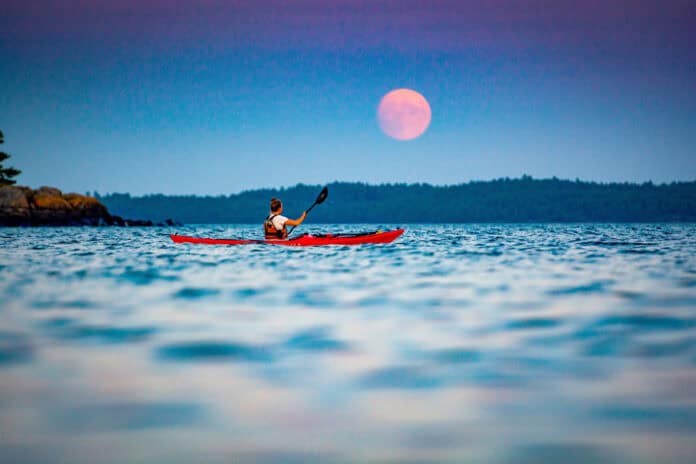
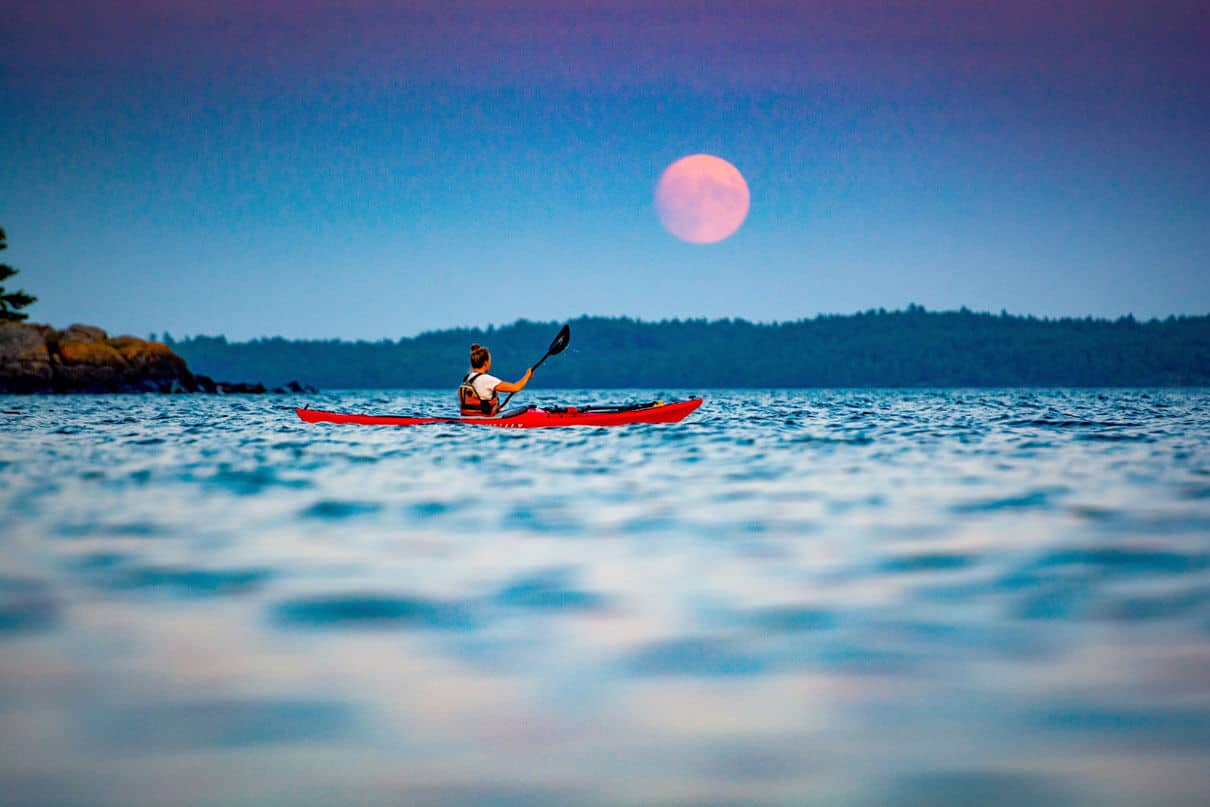
In the face of uncertainty, psychologists say the key is to focus on what you can control: Your body. Your breath. Your bow. We can’t solve everything. But we can choose where we put ourselves. On a lake at dawn. In the spray of a wilderness rapid. Beneath the halo of the rising Harvest Moon.
Water, as they say, is the great equalizer. Out there, we’re not consumers or commodities. Just good folks in small boats beneath wild skies, stripped down to the essentials.
For all those adventures and more, Issue 73 of Paddling Magazine has got you covered. Flip to page 94 in the digital edition for our most requested story, ever—The Ultimate Skills Guide, Part II. Plus, Paddling Mag’s annual buying guide begins on page 112, featuring the hottest items this year to get you on your way.
When you’re ready, pick up your paddle and head out on the water. We’ll figure out the rest from there.
Kaydi Pyette is the editor-in-chief of Paddling Magazine.
This editorial was first published in Issue 73 of Paddling Magazine. Subscribe to Paddling Magazine’s print and digital editions, or browse the archives.
More of what we need. | Feature photo: Kaydi Pyette
Too often, no matter whether on a big play wave in a spring creek, beginner and even quite seasoned paddlers run straight-ahead-Fred green runs down very uninteresting sections of river. Even if you’re not a super hot river runner, there is usually a smoother, dryer, cleaner and sometimes even safer line than blasting down the middle. Finding these lines makes paddling more fun and improves your skills.
5 expert tips to improve your river running
1 Scout for fun, not function
Standing above a set of rapids, you often hear paddlers talking about the line. Not a line, or their line, but the line, as if there is only one possible choice. In some extreme cases, this is true, but for rivers most often paddled, there are hundreds—maybe even thousands—of possible combinations. Start by identifying hazards, like wood or nasty holes. So long as you don’t paddle (or swim) into them, the rest is fair game. Pick out a few cool moves at the beginning and you can line them up from above. Make note of your exit strategy, which is the tongue line you would have paddled anyway.
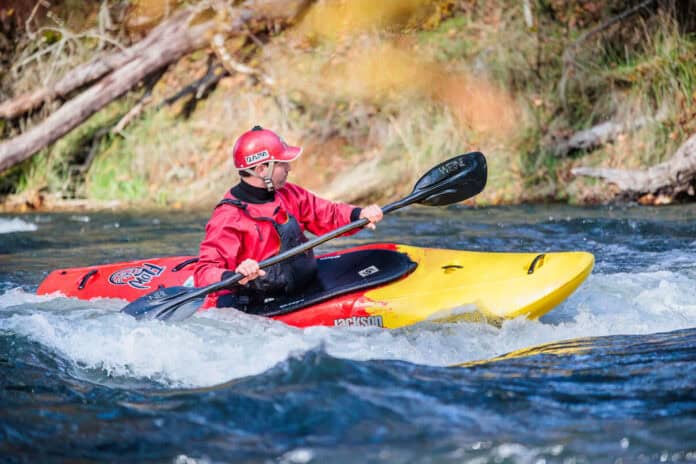
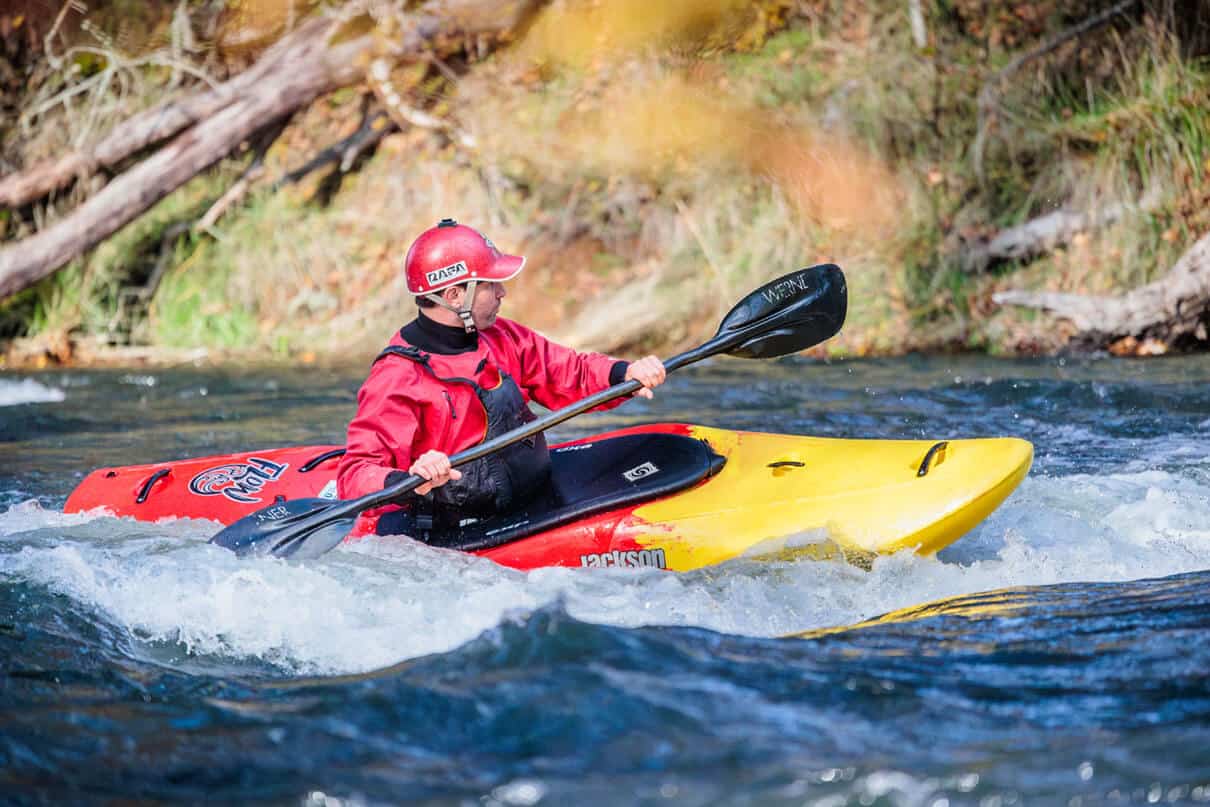
Play the river. | Feature photo: Owen Roth
2 Nail it and rail it
There’s nothing more satisfying than nailing a tiny eddy up against a canyon wall—and an eddy just small enough to snap your boat into and feed you back into the current, railing a jet ferry across to the other side. Practicing tiny eddy moves and ferries on class II adds value to an otherwise cruisy run and builds real river-running skills.
3 Boofs
Boofing the first eddy of the run is one of the most fun moves on the river, not to mention an incredibly valuable skill. This is almost certainly a smooth and dry line—whether you launch off the edge of the rock or just cut across the very top of the eddyline—with an eddy waiting below. Angle, momentum and timing work together; if one is off, just compensate with the others. Practice hitting the same boof or eddy super high from different approaches until you can nail it from anywhere above.
Not every perfect surf wave is eddy accessible at the bottom of a set. Look for them while scouting and work them into your run. Catching surfs on the fly is easier than it looks. While floating down to a wave, spin your boat around so you’re facing upstream and paddle forward to slow your approach. Look over your shoulder and hit the steepest part of the wave to let it catch your boat.
5 Work it, baby
I’m usually the first person down a set of rapids and the last to finish. Most think it’s because I’m in an open boat, but it’s usually because I’m picking my way down, working each little feature along the way. Don’t rush to the bottom unless you’re in it for the shuttle.
This article was published in Issue 73 of Paddling Magazine. Subscribe to Paddling Magazine’s print and digital editions, or browse the archives.
In a harrowing incident caught on video a canoe tour group in Botswana’s Okavango Delta was charged by an angry bull elephant after coming too close to elephant calves.
Elephant charges canoe and holds tourist underwater in Botswana’s Okavango Delta
The video shows an elephant charging through the water as guides manning dugout canoes with tourists rapidly attempted to retreat. The bull elephant then rammed into two of the canoes, knocking several people into the murky water. The tourists were not wearing life jackets or personal floatation devices (PFDs) in the video.
The elephant then continued to charge at the tourists, four of whom were now out of their canoes and in the water, and held a woman under water with its trunk. Meanwhile, other canoes retreated. Eventually, the elephant gathered with its young and left. The woman who was held underwater was helped out of the water.
Daily Mail reported the incident was triggered by the tourist canoes venturing too close to a mother elephant and her calves, resulting in the bull’s charge. Additionally, Daily Mail reported that a former South African game ranger commented that the four tourists were lucky to escape with their lives, noting that the guides apparently misjudged the safe distance they usually work to maintain from elephants. All three companies that run trips in traditional dugout Makoro canoes declined to provide a comment to Daily Mail on which of the companies ran the trip, though one receptionist shared that the tourists were British and American.
How often do elephants attack?
This isn’t the first instance of an elephant charging a canoe. In 2016, National Geographic Explorer-in-Residence Beverly Joubert shared with Canoeroots (now Paddling Magazine) that while filming Soul of the Elephant, Joubert and her husband Dereck faced bluff charges from an elephant while working from a canoe. Joubert shared that later they discovered elephant bodies butchered to remove the ivory which the couple believed had agitated the elephant. In the film, Dereck shared that elephants are known to grieve their dead and lead rich emotional lives.
According to BBC Discover Wildlife elephants are the eighth deadliest animals to humans, responsible for as many as 500 deaths per year. While elephants are known as gentle creatures, the article cites habitat loss as humans encroach into elephant territory leading to increased human-elephant conflict.
Elephant charges tourist canoes, sending them into the water in Botswana. Feature Image: Conservation National Parks – CNP Facebook, York Post YouTube




 This article was published in Issue 74 of Paddling Magazine.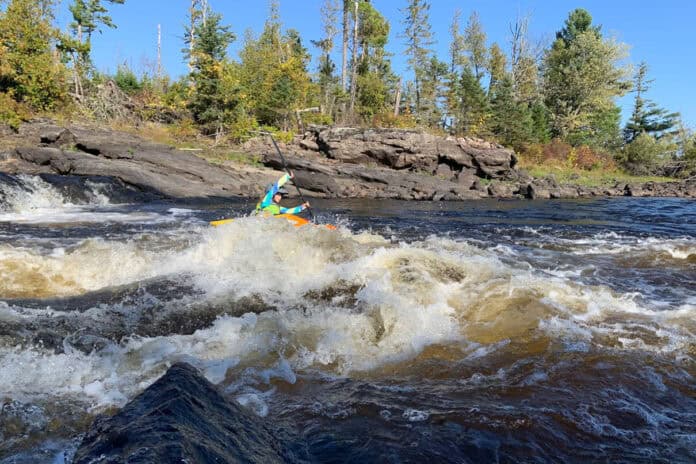


 This editorial was first published in Issue 73 of Paddling Magazine.