Home Blog Page 175

Explore The Coast, Mangrove Forests, Springs & More: How To Plan A Florida Kayaking Trip

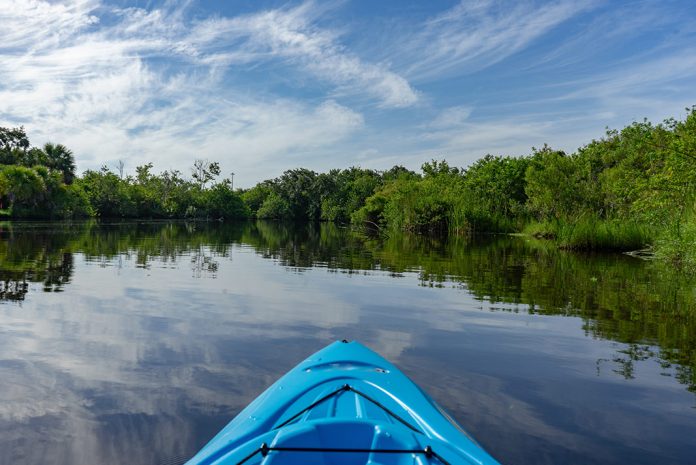
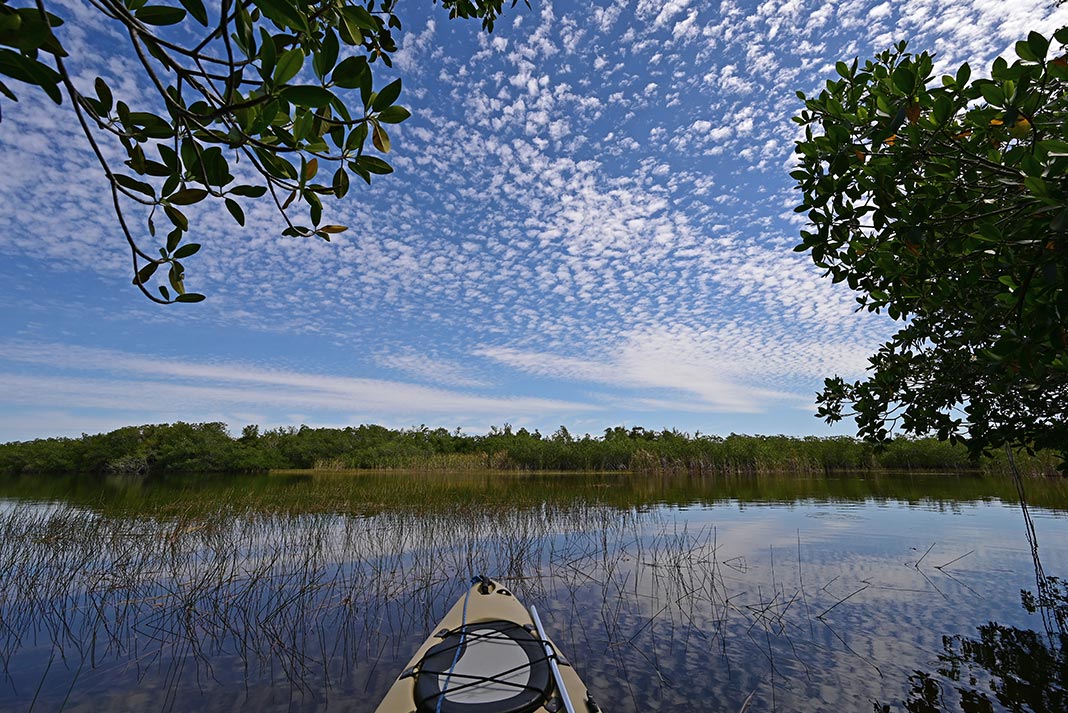
The front of a kayak pointing into a pond with reeds and trees
The Everglades are just one example of the incredible paddling opportunities on offer all over Florida. | Photo by: Adobe Stock // Francisco

Eight thousand four hundred and thirty-six miles of coastline. 68 water trails. 33 natural springs. 7,800 square miles of Everglades. With so many water sources, it goes without saying that the state of Florida is a haven for veteran paddlers and novices alike. From the crystal-clear springs inland to the Atlantic Ocean on the east coast, kayaking in Florida offers something for everyone.
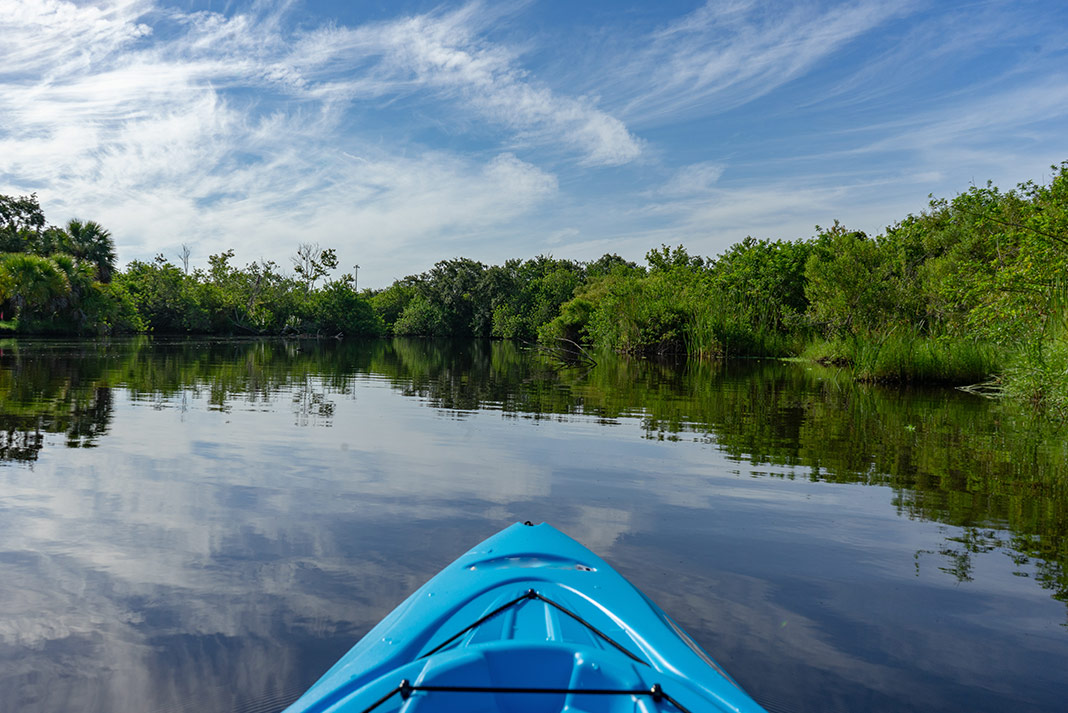
The front of a kayak pointing into a pond with reeds and trees
The Everglades are just one example of the incredible paddling opportunities on offer all over Florida. | Photo by: Adobe Stock // Francisco

Best kayaking in Florida

With such a variety of areas to kayak, from lakes and ponds to saltwater trails, you’re sure to find great paddling points anywhere in the state. Here are a few of the best places across the state to get you started.

North Florida

Cedar Key

If you’re looking for a laid-back paddle on the Gulf Coast, head to Cedar Key. Explore the 13 barrier islands, float by grass flats, or enjoy some open-sea kayaking on the Gulf. Cedar Key is touted to be what Key West was half a century ago before it became the bustling vacation spot it is now. This island is perfect for beginner and intermediate paddlers.

Amelia Island

Heading across the state to the east coast you’ll find Amelia Island. Located in the popular vacation destination county of Nassau, there are tons of places to paddle around this barrier island, including the Amelia River or Cumberland Island National Seashore. Whether you are in the mood for something leisurely or something more adventurous, you’re sure to have a good time on the water here.

Central Florida

Orlando

Even if you’re not planning on taking a trip to Disney World, you can still have a lot of fun on the water in the Orlando area. With trips perfect for beginners, get up close and personal with manatees at Blue Springs State Park, enjoy even more wildlife viewing of alligators, waterfowl, manatees, and more on the Wekiva River, or head out for a night-time bioluminescence trip on the Indian River.

St. Petersburg

Said to be one of the top spots for paddling the Gulf Coast, St. Petersburg has no shortage of water adventures. If you’re an experienced kayaker with good navigational skills, check out the winding maze called 17 Runs on the Hillsborough River. For beginners wanting to try out a local river, the Little Manatee River offers a 10-mile paddling trail with great kayak fishing opportunities as well. Head up and out to Caladesi Island for a short, novice-friendly paddle in the Gulf of Mexico.

South Florida

The Florida Keys

The Keys are one of Florida’s most popular vacation spots and it’s easy to see why. You don’t have to be an expert paddler to enjoy any number of the area’s most popular tours, including mangrove sightseeing, moonlight paddles, or even taking a charter out to the backcountry for some kayaking and snorkelling fun.

Everglades National Park

No trip to South Florida would be complete without a stop in the Everglades. Known for its alligators, swampy terrain, and huge surface area, the Everglades has just about any kind of kayaking tour you can dream of—including a beginner-friendly trip through mangrove forests and an overnight camping trip in the 10,000 Islands Natinoal Wildlife Refuge for the truly adventurous. There are also around 12 water trails throughout the park to explore.

[ Paddling Trip Guide: View all paddling trips in Florida ]

Best springs to kayak in Florida

Florida’s freshwater springs are truly a natural wonder. Fed from underground aquifers, most of these springs average 72°F water temperatures year-round and can be so clear that you can see the bottom of them perfectly, even at 20+ feet down! Read on for some of the state’s best natural springs to check out by kayak.

Weeki Wachee

Just an hour north of Tampa lies Weeki Wachee Springs and River. Begin your journey down this ultra-clear waterway in the identically named state park; you can paddle for 5.5 miles in the shade of palms and cypress as you scout for manatees, otters, pelicans and more spring-dwelling creatures. You can bring your own vessel or rent one within the park for up to four hours on these calm, beginner-friendly waters.

Rainbow River

Near Dunnellon, Florida, you will find the state’s fourth-largest “first magnitude” spring: Rainbow Springs. Paddle the crystal-clear, six-mile section of river through the center of town before reaching the Withlacoochee River south of Highway 484. Rainbow Springs State Park can be quite busy during the summer months, so plan accordingly for your best chance to see turtles, hawks, alligators and more.

Ichetucknee Springs

Begin your leisurely paddle down the Ichetucknee River within the boundaries of the similarly named state park. You will feel like you’re paddling through an oasis on your six-mile journey along blue-green waters fed by not one, but eight different springs. Cool off in the shade of oaks, cypress and pines as you search for beaver, gar, wood ducks and more along the way.

Mangrove kayaking in Florida

Perhaps one of Florida’s most well-known natural highlights, other than beaches, is its mangrove forests. It is estimated that 469,000 acres of mangrove forest occupy the southern portion of Florida. These unique forests will have you feeling like you’re paddling through a secluded woodland maze. Best of all, they are the perfect place to explore no matter your skill level.

John Pennekamp Coral Reef State Park

The Keys are arguably one of the best spots in the state for mangrove tours. Rent a kayak at John Pennekamp Coral Reef State Park and explore 50 miles worth of mangrove trails. Their kayak rentals are amazingly inexpensive at $30 for four hours.

Lido Key

Escape the bustling Sarasota area and head down to Ted Sperling Park at the southeastern edge of Lido Key. This area features the red mangroves, the roots of which sprawl above the waterline, creating an important ecosystem for many water-dwelling animals as well as birds. The west Indian manatee and dolphins are common visitors to this area.

Don Pedro State Park

If you find you really enjoy paddling through the mangrove tunnels of Florida, head about an hour and 20 minutes south to Don Pedro State Park in Placida. This park boasts all four of the different types of mangrove trees the state offers and tons of marine life. The passageway at Don Pedro is especially neat because it leads to a secluded lagoon in the middle of the island. This trip may be slightly better suited to intermediate paddlers as the tunnel gets pretty narrow. It is also important to check the tides before you go (you will want to avoid going at low tide).

Kayak camping in Florida

With so many water trails and as such a paddler friendly state, it should come as no surprise that there are plenty of backcountry paddle camping trips to be had. Whether you choose to plan your own route or go with a guide, here are several of the most popular and exciting spots to kayak camp in Florida.

Suwannee River Wilderness Trail

Although this trail technically begins in the Okefenokee Swamp of Southern Georgia and runs across the state until it empties into the Gulf, you’ll find some particularly nice accommodations at the camps along the river in the Mayo area. These sites can only be reached by paddlers and camping is free. You can even take a hot shower and cool off under a ceiling fan in the screened-in platform at some of these sites! The Suwannee River is one of the largest in the state and its slow-moving waters make it acceptable for beginner trips.

Everglades National Park

For a truly immersive experience in the Everglades, check into one of the several overnight kayaking tours Florida Outdoor Adventures offers. There is one for every skill level and desired trip length. Experiences range from exploring the Gulf and 10,000 Islands area on the western side of the Everglades to paddling the entire 99-mile length of the Wilderness Waterway.

Peace River

For an easy paddling trip perfect for the novice kayak camper, the Peace River in Central Florida is the place to go. The river itself runs for 106 miles north to south with 67 miles of designated water trail from Bartow to Arcadia. You’ll drift past cypress swamps and hardwood forests as you make your way down. Kayak fishermen will love this trip too.

Manatee kayaking in Florida

If you haven’t gathered by now, running into a manatee or two while on the water is a staple of any great paddling trip in Florida. If you’re ready for your own encounter with these gentle giants, check out some of the following places.

Little Manatee River

With a name like that, you know you’ll have a high chance of getting up close and personal with some “sea cows.” Head to Little Manatee River State Park and start off in the swampy, narrow area of the river in the north and make your way down to the wider, sunnier blackwater portion in the south of the park. A visit during the summer will afford you the best chance to view manatees.

Manatee Park

Manatee Park, located in Fort Myers, serves as a non-captive refuge for the manatees during the cooler winter months. You can rent a kayak within the park and head out for hours at a time on their waterways in search of these creatures. Be sure to go in December, January or February for your best chance to view them at this park.

Merritt Island National Wildlife Refuge

Head to Merritt Island National Wildlife Refuge on the east coast, near Kennedy Space Center, and explore the waters of this 140,000-acre park. The best place to look for manatees here is near the Haulover Canal and Bairs Cove area. The gentle giants frequent the area year-round, but spring and fall are your best bets.

Bioluminescence kayaking in Florida

For a truly unique night-paddling experience, you won’t want to miss out on a bioluminescence tour while you’re kayaking in Florida!

BK Adventure Tours

Head out on the “Bioluminescent Bay” with BK Adventure. They offer several different bio tours in the Indian River Lagoon, including a sunset and bioluminescence tour for a romantic night on the water, and clear kayak tours.

Get Up and Go Kayaking

For another fun adventure in the Merritt Island Wildlife Refuge, take one of the popular bioluminescence tours with Get Up and Go Kayaking. Their clear kayaks make this experience even more enjoyable. Tours fill up fast, especially during new moons, during which time viewing is optimal, so be sure to book in advance.

Blue Planet Kayak Eco-Tours

For a bioluminescence paddle in the Florida Keys, you can’t beat Blue Planet. Located in Key West, their Sunset and Starlight tour will give you amazing views of the bioluminescence in the mysterious mangroves. Tours are offered seven days a week.

Clear kayak in Florida

Clear kayaks are becoming all the rage, especially among popular vacation spots, such as Florida. They offer great views of marine life and, as mentioned above, bioluminescence on night paddles. Here are some particularly fun spots to hit up around the state in a clear kayak.

Hunter Springs Kayak

To enjoy the beautiful blue waters of yet another popular Florida spring, head out on an eco-tour with Hunter Springs Kayak to the Three Sisters Springs. Their clear kayaks will give you great peaks at the manatees and other marine life swimming beneath the surface.

Get Up and Go Kayaking

Even if you’re not taking a bioluminescence tour with Get Up and Go Kayaking, you can still enjoy their clear kayaks. Depending on what you’re in the mood for, you can paddle the clear waters of Rock Springs or meander through the tree-lined tunnels of Winter Park Chain of Lakes.

Clearly Unique Charters

For a daytime eco-tour of Key West, check out the island’s only guided clear kayak tour providers, Clearly Unique Charters. This tour is great if you want to do some snorkelling as well. Once their powerboat takes you to the Great White Heron National Refuge, you’ll have time to do just that as well as paddle around to explore the coral reefs, marine life and even shipwrecks.

Sea kayaking in Florida

What Florida kayaking trip would be complete without at least a little bit of sea kayaking? Whether you want to stay close to shore and paddle for a couple of hours or go on an epic quest along the entire coastline, you’re sure to find a sea kayaking excursion for you below.

Marathon

For a leisurely introduction to Florida’s sea kayaking in the Keys, check out the plethora of trips offered by Marathon Kayak. You can paddle just about anywhere, from mangrove forests to isolated beaches off the coast. Half-day and full-day tours are offered.

Big Bend Saltwater Trail

If you are already experienced with sea kayaking, taking a trip along the Big Bend Saltwater Trail may be just the adventure you’re looking for. On this 153-mile route, you will pass by and through state parks, Fish and Wildlife areas, and national wildlife refuges, before finally ending up at the mouth of the Withlacoochee River.

Vero Beach

Vero Beach, on the Atlantic side, is another great place for beginners to “get their feet wet” with sea kayaking. Take one of Paddles by the Sea’s kayaks out to the Breconshire shipwreck or go sea turtle spotting as they love this area, especially in the spring.

Florida kayak trails

With 68 water trails, it’s hard to know where to begin if you are visiting or new to the state. Here are a few of the best ones to get you started.

Florida Circumnavigational Saltwater Trail

Perhaps the state’s most well-known water trail, this circumnavigational trail is waiting for the truly adventurous. It flows for 1,515 miles from Big Lagoon State Park in the panhandle to Fort Clinch State Park on the Atlantic coast. If you want to take in all of the diverse natural areas Florida has to offer, you’ll love this trip.

Calusa Blueway

If you’re looking for something a little less intense than a months-long paddling trip around the entire state, check out the Calusa Blueway. It’s composed of several different waterways, but the slow-moving waters and mile markers along the way make it much more beginner-friendly.

Blackwater River

Beginning north of Okaloosa in the Blackwater River State Forest and winding its way to Blackwater River State Park, this 56-mile trail will take you through secluded backwoods. There are plenty of access points along the way and the calm waters make it the perfect trip for a novice.

Florida kayak tours

Let’s face it—we all have our own definition of “fun,” but some guided tours are just more fun than others. Here are some of the most interesting kayak tours you can find in the state, regardless of your paddling skills.

Manatee Encounter

Head to Blue Springs State Park with Adventures in Florida for one of the best guided manatee-viewing trips in the state. Home to one of the largest populations of manatees in the state, you are sure to see plenty of these amazing creatures as they head from the refuge in the morning in search of breakfast. You will also learn a lot about the flora and fauna of the area from the Master Naturalist on your trip.

Bugeye Backcountry Adventure Eco Tour

Set sail on a schooner to the Key West National Wildlife Refuge with Sebago Watersports. There you will be able to explore the mangrove islands via kayak before diving in for some snorkelling. Keep an eye out for sea turtles, dolphins, rays and more.

Full Moon Kayak and Paddleboard Tours

For a truly illuminating experience on the coastal waters of Florida, head out with the Virginia Key Outdoor Center for a moonlight paddle and spectacular views of the Miami skyline.

Florida kayak laws

Due to some of its unique marine residents and aquatic habitats, there are a few special laws to be aware of while kayaking in Florida.

  • Since manatee populations are on the decline, they are protected by state and federal law. If you do anything to “disrupt a manatee’s normal behavior” you can be fined up to $50,000 or even spend a year in jail.
  • Seagrass beds are also protected by Florida state law in some areas. Be sure to avoid these areas at all costs so as not to damage them, or you may be fined up to $1,000.
  • It is also worth noting that all children age 6 and under must wear a PFD at all times while in a kayak (though of course we recommend everyone always wear one while paddling). It is not necessary to register kayaks in the state of Florida.

Whether you’re looking for an adventurous paddle on the ocean or a relaxing float down a spring-fed river, Florida has a kayaking trip for everyone from beginners to experts.
Paddle The Coast: Guide To Kayaking In San Francisco

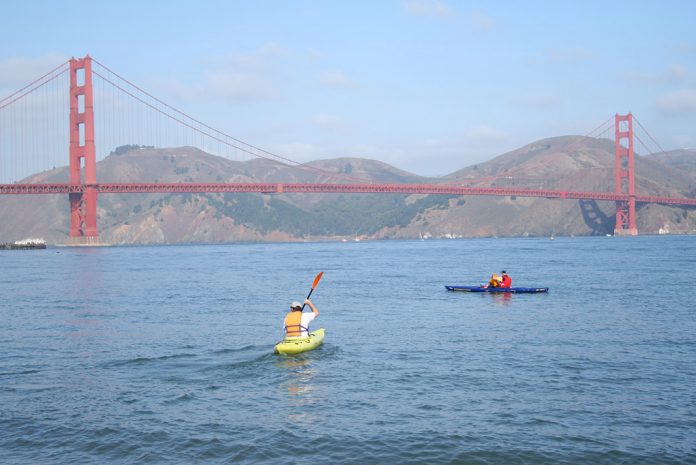
Two kayakers in front of the Golden Gate Bridge
Sea kayaking opportunities abound in the Bay Area. | Photo by: Adobe Stock // Stephen Finn

San Francisco, California is a well-known city across the globe for many reasons: the Golden Gate Bridge, foggy summers, cable car rides up steep hillsides and unique architecture, to name a few. The City by the Bay also offers an interesting and varied coastal life. From calm rivers to rocky island skimming, peaceful wildlife sanctuaries to bustling wharves, San Francisco offers paddling opportunities to kayakers of all skill levels.

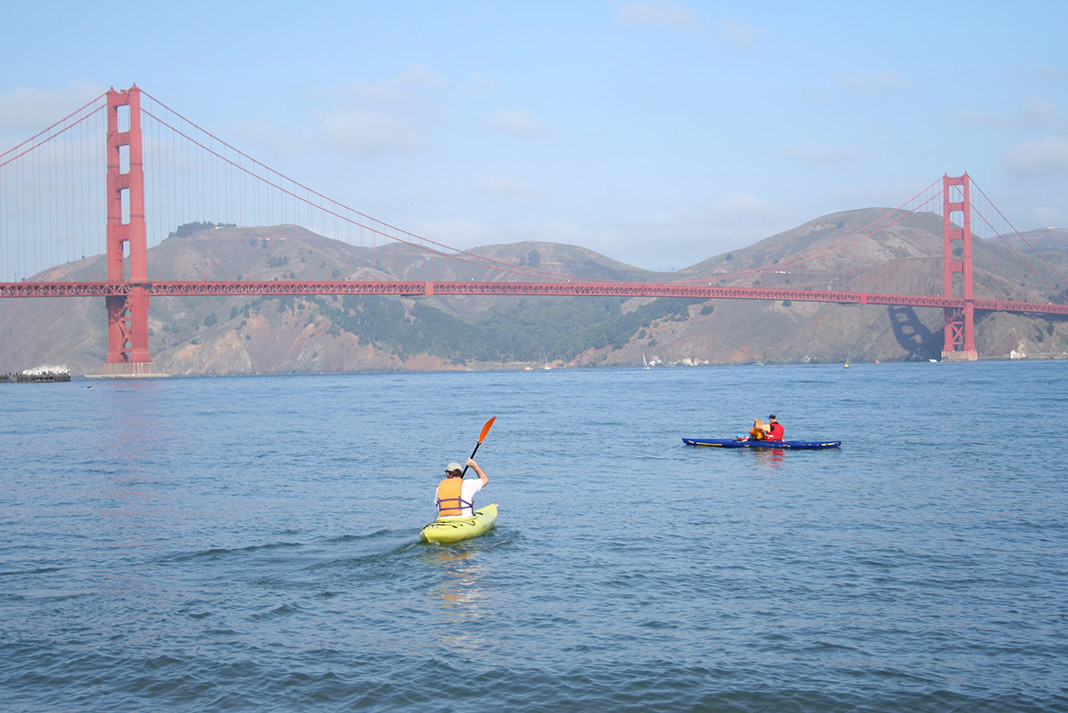
Two kayakers in front of the Golden Gate Bridge
Sea kayaking opportunities abound in the Bay Area. | Feature photo: Stephen Finn/Adobe Stock

Kayak rentals in San Francisco

Being situated next to the ocean, kayak rental companies abound in the area. Here are a few of the top companies to check out.

City Kayak

City Kayak rents a variety of types of kayaks, including single and double open top and touring kayaks, polymer and carbon surfskis, and take away single and double inflatable kayaks (as well as roof racks). All of the above are priced by how many hours or days you plan on taking them out and range from $35 to $424.

Sea Trek

If you are planning a trip during the winter and don’t want to worry about limited business hours, Sea Trek may be the right rental company for you. They are open daily, excluding Mondays, from early December to March. You can find both single and double sit-on-top and sit-inside kayaks ranging from $25 to $45 per hour. These are one-hour minimums and fees are prorated on each additional 15 minutes.

California Canoe & Kayak

California Canoe & Kayak also offers hourly and take away rentals. Their hourly rentals range from $25 for a single to $50 for a double Hobie Mirage. One-day take away rentals of single sit-on-top kayaks start at $75 per day. Be sure to check out their plethora of classes as well, including kayak rolling and whitewater.

Kayak tours in San Francisco

With so many different sights to see in and out of the water, San Francisco offers an interesting range of guided kayak tours. Here are some of the best ones to check into, regardless of your skill level.

San Francisco Kayak & Adventures

SF Kayak offers a variety of sea-going adventures, including the popular Sausalito Waterfront, McCovey Cove, and Sunset/Moonlight paddles. Group tours range from $80 to $150 (not including private tour group rates). Note that all of their guided tours are held in tandem sit-inside kayaks to ensure the comfort and safety of participants. Solo sit-inside kayaks are only an option for those who have wet exit and re-entry certification in a traditional sit-in style kayak.

Half Moon Bay Kayak Co.

No matter what time of day you’re looking to take a guided tour, Half Moon Bay has you covered. Go for a morning paddle through Fitzgerald Marine Reserve ($160), spend the afternoon in Pillar Point Harbor ($95), or enjoy the calm waters of the harbor on a sunset paddle ($95). Bringing the family? They have the perfect trip for you too! After a short safety briefing and period of time getting accustomed to your boat, you and your family will explore the calm waters of a protected harbor and possibly check out some tide pools, depending on tidal conditions. This three-hour tour runs $95 per adult and $60 per child (under 14).

Blue Waters Kayaking

BWK offers an assortment of unique tours you won’t want to miss out on. These include a Tomales Bay morning paddle ($88), Birding by Kayak tour ($128), and even a Lake Sonoma Full Moon camping trip ($175). If you’re into night paddling, another fun tour to check out is their bioluminescence night paddle (prices range from $98 to $118 depending on the season)—you can enjoy the underwater light show as tiny, bioluminescent dinoflagellates flicker when disturbed and schools of fish create phosphorescent trails behind them.

Places to kayak near San Francisco

With roughly 1,600 square miles of bay to explore, it goes without saying that there is no shortage of places to kayak San Francisco. Let’s take a look at some of the must-see areas to explore by kayak.

The Golden Gate Bridge

No kayaking trip in San Francisco would be complete without venturing under the Golden Gate Bridge. Enjoy views of the Sausalito coastline as well as the Marin Headlands on your paddle out.

Elkhorn Slough

If you’re looking for something a little more laid-back and quiet, take a two-hour drive down the coast to Elkhorn Slough. This estuary offers calm waters—perfect for families with young kayakers—as well as wildlife viewing opportunities. Expect to find sea otters, seals and waterfowl aplenty.

Tomales Bay

If you’re not looking for full-on sea kayaking, Tomales Bay may be the place for you. This popular 15-mile-long inlet is located about 1.5 hours north of downtown SF. Be sure to visit the bay during the summer for the best chance to view the bioluminescent plankton.

Oakland Estuary

Close to the hustle and bustle of the main city, Oakland Estuary provides easy access to city dwellers for a quick trip on the water. Though you will initially view many of the restaurants along the waterfront, if you head about 10 minutes south you will find a much calmer area with more chances to view local marine life, such as bat rays, leopard sharks and seals.

McCovey Cove

Located a short 10 minutes from downtown San Francisco, McCovey Cove is also easy to access and a local favorite. In fact, Giants baseball fans have been known to kayak into the cove during games, hoping to catch a runaway home-run ball.

Russian River

More accustomed to river kayaking? No problem! A bit out of the way at two hours north of the city, the Russian River is a local favorite for river kayaking. Enjoy a relaxing day paddling the lazy waters, the quality of which makes it great for stopping for a swim or to cast a line out. Be sure to pack a picnic lunch to replenish your energy along the tree-lined shore.

Special considerations when kayaking in the Bay Area

Whether you are an experienced sea kayaker or have never seen the coast, keep the following in mind when planning a kayaking trip to the Bay Area:

  • Some areas receive big tidal swings and strong currents. Check online or with locals before heading out on the water.
  • It can become very windy in certain areas, especially in the early afternoon, so it’s important to pay attention to which way the wind is blowing from and take note of changes.
  • Fog, which is particularly abundant during the summer months, can hinder bigger boats from seeing you, so use caution. The fog can also be very disorienting out on the water.
  • Water temperature averages range from 52 to 61°F year-round. It may be prudent to wear a wet or drysuit. Always wear your PFD.
  • BASK, or Bay Area Sea Kayakers, offers a list of off-limits areas.

Kayak fishing in San Francisco

Several types of fish can be caught regularly near San Francisco, including striped bass, sturgeon, halibut, salmon, rockfish, sharks (leopards are the most common) and sea trout (some people also enjoy crabbing in the area). Fishing near SF can be tricky as fish activity is based on tides. Naturally, each type of fish prefers certain areas at certain times of year.

Here is a general list of places to cast out according to fish species:

  • Halibut: Crissy Field, Paradise Beach, Angel Island | Spring
  • Sturgeon: San Pablo Bay, China Camp, Alameda | Winter
  • Striped bass: Suisun Slough, Bakers Beach | Summer
  • Salmon: Marin Coast, Dillons Beach | Fall
  • Piers are said to be great places to find perch and rock crab

Safety considerations

In conjunction with the general safety precautions to consider listed previously, here are some special ones to keep in mind when kayak fishing in the area.

  • Be sure to check regulations on what you are allowed to catch, how many, legal size, etc. and have an appropriate fishing license, tags, and more for the type of fishing you will be doing.
  • Consider attaching a safety light to your rig to make yourself more visible to larger boats.
  • Consider bringing an anchor.

Wildlife you might see

From sea to sky, there is a diverse mix of wildlife you may find on your San Francisco Bay adventures.

  • Aquatic animals: Harbor seals, California sea lions, sea otters, bat rays, bottlenose dolphins, harbor porpoises, sharks and crabs. If you’re lucky, you may also spot migrating humpback or gray whales at the right times of year.
  • Birds: Gulls, great blue herons, egrets, cormorants, terns, pelicans, grebes, killdeer, osprey, American coot, Ridgeway’s rail and common goldeneye.

Check out Bay Wildlife on the San Francisco Bay Area Water Trail website for more information.

Best time of year to kayak in San Francisco

With its temperate year-round climate, pretty much any time of the year is a good time to go. In terms of temperature, high averages range between 58°F and 71°F from the coolest month (January) to the warmest (September). Fall and spring are arguably the best times to visit if you are looking to avoid the peak of tourist season (July and August) and prefer to avoid the rainy winter months as well. Plus, fall is a great time to visit if you are into bird-watching since many migratory species pass through the area.

What to pack

Here is a basic packing list of what you’ll need and several things that will come in handy for your Bay Area kayaking excursions:

  • Sunscreen and sunglasses
  • Wide-brimmed hat
  • Warm hat (for cool months)
  • Water shoes (warm months) or tennis shoes, and wool or synthetic socks (cool months)
  • Wet or drysuit
  • Layers: Wool or synthetic blends for under layers, a sweater, fleece jacket, or rain-resistant jacket (and possibly pants) for outer layers
  • Waterproof camera
  • Dry bag to secure valuables
  • Lightweight gloves (think bicyclist gloves) to prevent blisters from paddling

Important things to know

Again, checking the winds, tides and weather before heading out in the Bay Area is vitally important. These factors can mean the difference between a pleasant, easy outing and a bad time trying to fight currents and wind conditions to get back to your launch point.

If you’re unaccustomed to sea kayaking, it may be prudent to go on a tour first or take a class to learn any important information for the areas you will be paddling, or skills you may need to know to stay safe.

With so many bays, coastlines, estuaries and more to explore, it’s no wonder locals and tourists alike flock to kayak San Francisco.


Sea kayaking opportunities abound in the Bay Area. | Feature photo: Stephen Finn/Adobe Stock


15 Of The Best Places To Paddle In Georgia, USA

River flowing through woods.
Unwind from city sightseeing at Sweetwater Creek State Park. | Photo by: Flickr // Jeff Gunn

If you’re looking for a place in the United States with numerous paddling locales for kayakers of any skill level, look no further than Georgia. The Peach State offers rivers ranging from calm flatwater to raging class V rapids, coastal salt marshes, serene lakes and reservoirs, and secluded swamps. There are at least 18 water trails currently in existence with more in development.

With so many options from state parks to popular Atlantic coastal destinations, you’re sure to find the perfect place for kayaking in Georgia.

River flowing through woods.
Unwind from city sightseeing at Sweetwater Creek State Park. | Photo by: Flickr // Jeff Gunn

Best places to kayak

Chattahoochee River

If you’re looking for a relaxing solo trip or leisurely family paddle, Chattahoochee River kayaking is a good option. The river is located on the Alabama-Georgia state line near Columbus and is home to a 48-mile water trail. The trail is mostly made up of calm, slow-moving waters, but there are a few spots with class I rapids and one class II rapid located at the northern end of the river.

The Chattahoochee River National Water Trail is easy to navigate with its mile markers along the banks. With 17 access points, you can make your trip as long or short as you like. However, don’t plan for any overnight trips here as camping is not allowed anywhere along the NPS-controlled river. As far as interruptions, it should also be noted that you will need to portage your boat around Morgan Falls at mile marker 312.5.

Broad River

The Broad River in Georgia, located near Athens in the northern part of the state, has similar waters to that of the Chattahoochee. You’ll find mostly easy-going waters along this 70-mile stretch; however, like any river, there are some faster-paced areas as well (up to class II rapids, though during high water times these can get as high as class III or IV). Other than around possible downed trees, you shouldn’t need to portage anywhere as it is one of the few free-flowing rivers left in Georgia.

Even if you don’t want to practice whitewater techniques in the quick areas of the river, the Broad is also a great place to visit if you enjoy kayak fishing and wildlife viewing. You can expect to find blue herons, kingfishers, osprey, bald eagles, numerous species of turtles, beavers and otters. For fishing, bring your gear for bass, catfish and redhorse. If you just enjoy taking in nature in general on your paddling trips, one particularly scenic section you may wish to check out runs for 6.5 miles, starting at SR 281 and ending a half-mile south of SR 172.

[ Paddling Trip Guide: View all paddling trips in the Southern U.S. ]

Toccoa River

At 13.8 miles, Toccoa River kayaking makes for a great weekend paddle and camp trip. The river is rated with class I to II rapids, with a small class III near the midpoint of the trail. Many people report the entire length taking five to six hours to paddle, but there are plenty of opportunities to shorten your trip.

This is another fun trip if you enjoy fishing, wildlife viewing and some fun rapids mixed in to keep things interesting. Float past thick forests and pastoral lands while you try to catch some mountain trout for dinner. You might consider bringing extra provisions if you’re planning on paddling the entire way as there is no access for five miles between Margaret and Butt Bridge.

Altamaha River

For the ultimate Georgia kayaking trip, you can’t beat the 138 miles of the Altamaha River. Known as “Georgia’s Amazon” or the “Little Amazon,” the Altamaha is one of Georgia’s other undammed rivers and houses the second-largest watershed on the east coast of the United States.

Being such a large river, there are no rapid areas to note, so you can truly enjoy the wildlife viewing along the way. You may catch glimpses of bald eagles, mink, otters and even the endangered west Indian manatee as you paddle through tidal swamps and bottomland forests on your Altamaha River kayaking trip. If you care to do some kayak fishing, you may have some luck catching catfish, sunfish, crappie, bluegill and bass.

Access points are available in each county along the water trail, making it easy to plan the perfect length of trip for you. If you plan on fishing, you will be happy to know there are bait and tackle shops along the way. You can also stop for a picnic at numerous sites and even go for a hike in some spots on marked trails.

Savannah

Being located on the coast of the Atlantic and near the confluence of several rivers, it comes as no surprise that there are plenty of places for kayaking in Savannah, Georgia.

Tybee Island

A popular tourist spot, Tybee Island offers three miles of beaches and salt marshes for kayakers to explore. Be sure to get an early start to catch a beautiful sunrise.

Skidaway River

Part of the Atlantic Intracoastal Highway, this 8.4-mile tidal river begins at the southern end of the Wilmington River and passes by Skidaway, Dutch Islands and the Isle of Hope.

Ebenezer Creek

Located 40 minutes north of Savannah in Effingham county, Ebenezer Creek offers a unique look at the swamps of the south. Paddle through a cypress- and Spanish moss-lined waterway that flows slow enough to be paddled both ways.

South Georgia

For some remote paddles through the wilderness or challenging sea adventures, head downstate for kayaking in South Georgia.

George L. Smith State Park

For something slow-paced, but scenic, check out George L. Smith State Park. Take in the signature Spanish moss-covered cypress and tupelo trees, covered bridge, and gristmill while angling bass and bream.

Ocmulgee River

Looking to put in at any spot that strikes your fancy? The 200-mile Ocmulgee River Water Trail should suit. This river is great if you’re planning an overnight trip as it has several spots to stop for the night (no reservations or fees required). The Ocmulgee is mostly flatwater with some class I rapids to keep your attention.

Okefenokee Wilderness Canoe Trail System

This canoe trail system provides multiple paths for kayakers of all skill levels and options for one- to five-day trips through the cypress swamps of Southern Georgia. If you’re really into remote wilderness, this is the trip for you with the chance to view alligators, black bears, sandhill cranes and more.

Georgia Coast Saltwater Paddling Trail

Intermediate and advanced paddlers with sea kayaking experience won’t want to miss out on sections of the Georgia Coast Saltwater Paddling Trail. Here, you can enjoy paddling through plenty of salt marshes and past wild barrier islands. It is worth mentioning, though, that Georgia experiences the greatest tidal amplitudes along the east coast, so be aware of tidal changes and take your charts.

North Georgia

If your idea of the perfect vacation involves sightseeing and paddling, stick to the Atlanta/Augusta area for some kayaking in North Georgia.

Savannah River

For something a little more fun, check into a Savannah River trip from the Savannah Rapids Park to the North Augusta Boat Landing for some class II and III rapids. Rentals can be had at Savannah Rapids Kayak Rental.

Sweetwater Creek State Park

If you’re interested in doing some sightseeing in Atlanta as well as spending time in nature, head over to Sweetwater Creek State Park. Located just 15 miles from downtown, here you can unwind from the city scene and set out for a relaxed paddle or some fishing on the 215-acre lake.

Chattooga River

Head to the Chattooga River Gorge, near Clayton, for some excitement. Ranging from class II to IV rapids with features such as Seven Foot Falls and Five Falls, you know you’re in for a fun whitewater time. For guided rafting trips, check out Wildwater White Water Rafting.

Lake Sinclair

Located between Atlanta and Augusta, this 15,000-plus-acre man-made reservoir offers a peaceful place to do some kayak fishing and calm waters to get your family accustomed to kayaking.

Kayak rentals

Don’t feel like bringing your kayak along or don’t have your own? Not to worry. Here are just some of the kayak rentals in Georgia to get you started on your Southern paddling adventure.

Sea Kayak Georgia

  • Tybee Island
  • 912-786-8732

Broad River Outpost

  • Danielsville
  • 706-795-3242

Savannah Rapids Kayak Rental

  • Martinez
  • 706-832-5323

Blue Ridge Mountain Kayaking

  • Morganton (Toccoa River)
  • 706-258-2411

Three Rivers Outdoors

  • Uvalda (Altamaha River)
  • 912-594-8379

Shoot the Hooch

  • Roswell (Chattahoochee River)
  • 770-650-1008

Altamaha Coastal Tours

  • Carlton (Southeast coast)
  • 912-437-6010

Kayak fishing

Kayak fishing has become very popular in Georgia over the past several years. There are even several kayak-only bass fishing tournaments held around the state each year.

Having a multitude of lakes and rivers to choose from as well as over 100 miles of coastline, you can catch an array of both fresh and saltwater fish on your Georgia kayak fishing trip. Whether you’re into the thrill of the catch or more focused on catching a tasty dinner, here are some great angling spots around the state to try out and what you can expect to catch there.

  • Jekyll Island: redfish and trout
  • Tybee Island: flounder, Jack Crevalle, tarpon, trout, Spanish mackerel
  • Ocmulgee River: striped bass, channel and flathead catfish, sunfish
  • Chattahoochee River: bass, trout, perch, pike

Kayak laws

Georgia kayak laws are pretty standard as far as laws in the United States go:

  • Children age 13 years and younger must wear a PFD at all times.
  • Although you don’t have to wear it, people age 14 and older must have a Coast Guard-approved PFD on their vessel at all times (though we still recommend wearing a PFD at all times on the water).
  • A marine whistle (or any sound-making device) is required for travel on federally regulated waters.
  • You must use a light at night.
  • While it does state that you can be charged with BUI (Boating Under the Influence) in Georgia while helming a motorized boat, including personal watercrafts, it doesn’t explicitly state anything about smaller, non-motorized boats, such as canoes and kayaks. Regardless, it is always wise to err on the side of caution and use good judgment.

No matter what you enjoy—offshore kayak fishing, calm lake paddles or whitewater adventures—you are guaranteed to find a kayaking trip you’ll love in Georgia.

Beauty Around Every Corner: Top Paddling Experiences In Orlando

Front of a kayak looking out over calm lake lined with trees
Take your pick from a plethora of magical experiences. | Photo by: Adobe Stock // Stephen

The home of Disney World has more to offer than just theme parks. With so many lakes, springs and rivers nearby and with the best spot in Florida for bioluminescent paddling being within driving distance, it’s no wonder kayaking is such a popular past-time for locals and vacationers alike in Orlando.

Colorful wildlife, warm temperatures, and your choice of technical or relaxing paddling is all on offer here. If you’re looking to do some kayaking in Orlando, check out our guide for the best spots to paddle and trusted outfitters in the area to get you on the water.

Front of a kayak looking out over calm lake lined with trees
Take your pick from a plethora of magical experiences. | Photo by: Adobe Stock // Stephen

Where to kayak in Orlando

Orlando springs

There are dozens of first magnitude springs within a 2.5-hour drive of Orlando. Florida boasts the most freshwater springs in not only the United States, but the entire world! Some nearby springs that are popular for paddling include Silver Springs State Park, Three Sisters Spring and Alexander Spring. All of these provide easy kayaking that is perfect for first-timers. You can find rental and launch site information at the links above.

Located about an hour north of Orlando, De Leon Springs State Park is another great place to launch your kayak. Beginning at the springs, head out for an easy four-mile paddle down Spring Garden Creek to Lake Woodruff. The park itself is full of rich cultural history and hosts a well-loved swimming area you can take a dip in before heading down the creek.

[ Paddling Trip Guide: View all paddling trips in Florida ]

Wekiwa Springs

A mere 24 minutes away, the gorgeous emerald waters of Wekiwa Springs State Park offer a great place to view wildlife near the city. Wekiwa Springs feeds the Wekiva River, where there are plenty of kayaking trip lengths to choose from, ranging from an easy one-mile float to an all-day 10-mile trip to Katie’s Landing. (It should be noted that a significant number of portages will be required if beginning from the springs.) For more details, you can check out the paddling section on the park’s website.

Kayak rentals are available within the park as well as at nearby Paddleboard Orlando, located at Wekiva Island. Prices begin at $30 per four hours for single kayaks.

Wekiva River

As you may have gathered from above, the nearby Wekiva River is a popular paddling destination, with Wekiva Island providing a good launch point. Enjoy some quiet time away from the city on this calm waterway that’s perfect for beginners or those just looking to relax. The tree-lined shores and marshy, water lily-filled areas will have you feeling rejuvenated in no time.

There are several outfitters to choose from if you need to borrow a kayak for the afternoon, including Wekiva Outfitters ($30 for a half-day, single rental; $40 for a full-day, single rental) and Wekiva Island ($30 for a half-day, single rental; $35 for a full-day, single rental). Renting from King’s Landing ($50 per single kayak, shuttle included) will allow you to paddle their River Run Adventure route—8.5 miles spanning Kings Landing to the marina at Wekiva Island.

The Econlockhatchee River

Located a short half-hour drive from downtown Orlando, the Econ River is another paddler’s dream. Suitable for beginner and intermediate yakkers, the 19-mile-long designated paddling trail offers tons of wildlife viewing opportunities, including sandhill cranes, roseate spoonbills, deer, and possibly even some black bears along its cypress and sabal palm-lined shores.

Check out Econ Outfitters’ page for some great information on the river, trip ideas (including put-in and take-out locations), and maps of the paddling trail.

Bioluminescent kayaking in Orlando

The “Space Coast,” located about an hour east of Orlando, is the best area in the state for doing some nighttime bioluminescent kayaking. Watch as the water lights up bluish-white (thanks to the bioluminescent microorganisms dinoflagellates) as you paddle across the calm bays and inlets of the Indian River near Canaveral National Seashore.

There are plenty of local outfitters that will guide you to the best spots for viewing the bioluminescence. (You could try finding an outfitter that offers overnight rentals and go out on your own, but this is only a good idea if you are familiar with the areas during the day that you plan to paddle.)

Adventures in Florida

  • $45 per person
  • Open seven nights week, May through October (peak season)

BK Adventure

  • $55 per person
  • Trips are available in clear kayaks

Florida-Adventurer

  • $50 per person
  • Single and tandem kayaks available

Manatee kayak tours in Orlando

Getting up close and personal with manatees is another popular Florida activity. Whether you want to take a guided tour or go out on your own, there are a few options in the Orlando area.

Head down the Haulover Canal (part of the Indian River where many of the bioluminescence tours above are held) near Titusville with BK Adventure. Their Kayaking with Florida Manatees tour is perfect for novice paddlers and families alike (ages 6+ welcome) who want to get a firsthand look at (and possible splash from) these gentle giants. Prices are $48 per person and tour times depend on the season, so be sure to check ahead.

Planning a trip during winter, but still want to see some manatees? Not a problem! These mammals love swimming up rivers and hanging out in the warm spring waters during winter, including nearby Blue Springs State Park. Take a sightseeing tour with The Paddling Center at Shingle Creek here to view not only manateesin their natural habitat, but also otters, gators, wading birds and more. Prices start at $65 for a single kayak.

Clear kayaks in Orlando

Unfortunately, clear kayak rentals have not yet gained the same popularity in the Orlando area as they have down in the Keys. However, there are a couple of interesting tours nearby that you can enjoy from a see-through kayak.

For a really cool way to experience the crystal-clear waters of a local spring, head to Rock Springs (34 minutes from downtown Orlando) near Kelly Park with Get Up and Go Kayaking. Although you won’t find any manatees here, you may spot some alligators and sea turtles as you paddle the surreally beautiful waters of the spring. Tours start at $59 per person.

For another once-in-a-lifetime experience, head out with A Day Away Kayak Tours for a bioluminescence paddle in a clear-bottom kayak. Bioluminescent kayaking is cool enough on its own, but you’ll be awestruck when you see the ripples of color right underneath you as the dinoflagellates light up the night. You might even spy a manatee or dolphin along the way! Tours are $65 per person.

Kayak rentals Orlando

With so many waterways to explore, you can rest assured there are plenty of kayak rentals in the Orlando area.

If you’re looking for an extended rental, Peace of Mind Kayak Tours & Rentals has you covered. They offer free delivery and pick-up in the Winter Park area. Prices begin at $35 for a single half-day rental and go up to $215 for a weekly rental.

Never been kayaking and want to stick close to town? Head out on BV Watersports’ private Lake Bryan for an introduction to kayaking on their spring-fed waters. Rentals start at $25 for one hour.

If you want to spend more time on a lake, check out Lake Conway in nearby Belle Isle. Spend a few hours in one of Lake Life Paddle’s sit-in kayaks and do some wildlife viewing near the shore, or just get the hang of kayaking on calm waters. Prices start at $25 for three hours. If you are paddling with a buddy, they do offer tandem clear kayaks as well for only $10 extra.

Whether you’re a vacationer looking for a unique Florida experience or a local wanting a relaxing way to explore all of the lakes, springs and rivers you frequently drive by, you’re sure to have a memorable time kayaking in Orlando.

Paddle Lazy Rivers & Serene Lakes: Guide To Kayaking In Nashville

Overhead view of the Cumberland River running through Nashville.
The Cumberland River is one of the many leisurely paddles in the Nashville area. | Photo by: Adobe Stock // Kevin Ruck

Nashville has been steadily increasing in popularity with tourists over the past decade, and for good reason. There is plenty to do on land in the capital of country music, but the fun doesn’t end there. Music City and the surrounding area hosts an abundance of opportunities for water lovers. From serene lakes with island camping to city skyline tours on the Cumberland River, you are sure to have an enjoyable time kayaking Nashville.

Overhead view of the Cumberland River running through Nashville.
The Cumberland River is one of the many leisurely paddles in the Nashville area. | Feature photo: Kevin Ruck/Adobe Stock

Kayak rentals

If you’re looking to rent a kayak around Nashville, there is no shortage of rental companies, both in town and at nearby lakes and rivers. Here are a few of the top-rated ones to get you started.

Nashville Paddle Company

Although they specialize in standup paddleboard rentals and classes, you can also rent single and tandem kayaks from Nashville Paddle Company. Explore over 22 square miles of nearby Percy Priest Lake and try your hand at some bass fishing. Be sure to book online to save $5 on your rental.

  • One-hour single kayak: $25
  • 1.5-hour single kayak: $35
  • One-hour tandem kayak: $30
  • 1.5-hour tandem kayak: $40

Stones River Kayak & Canoe Rentals

Stones River Kayak & Canoe Rentals has several routes for you to choose from, varying in length from two to seven hours. All of the routes are rated as either flatwater or class I, with some getting as high as class II under certain circumstances. Be sure to check the calendar on their website for their currently available trips.

Single and tandem kayaks are available. Prices start at $26 for the 2.5-mile route and $40 and up for the six-mile route.

Broken Paddle Outfitters

If you’re heading to the popular Harpeth River area to the southwest of the city, check out the services of Broken Paddle Outfitters. They offer a slew of options, including shuttle service, round-trip service from any address within the 37221 zip code, and custom trips. If you have your heart set on an overnight trip, you can rent a vessel from Broken Paddle for that too. Kayaks start at $40.

There are several exceptions, but it’s worth noting that operations for this business are mostly weekend-only from April through October.

Kayak tours

Whether you’re looking for something in the city or a bit farther out for some seclusion, there are tons of self-guided kayak tour options in the area. Here are a few to check out from some of the most highly recommended kayak rental and guide businesses around Nashville.

Foggy Bottom Canoe

If you are looking for a family-friendly kayak outing at one of the favorite rivers in the region, Foggy Bottom Canoe has you covered. FBC offers several different trips on the scenic Harpeth River, including a “Kid Trip,” which takes about one hour and covers 1.5 miles. Their other trips range from five to 11 river miles. Kayaks are available for rent at $29.95, regardless of which trip option you choose.

Cumberland Kayak

If you’re wanting to stick close to the city for your paddling excursion, check out Cumberland Kayak‘s skyline tours for a different look at Nashville. One-hour routes start at $32 and three-hour routes begin at $60. Single and tandem kayaks are available for both.

Want something a little more nature-based, but don’t want to drive far from downtown? Look into their Shelby Park Nature Paddle ($42 for two hours) or their Stones River Paddle (2.5 hours for $35).

River Rat Canoe Rental

For another peaceful paddle down an easy-going river, look into River Rat Canoe Rental‘s trip options. For $30, enjoy a 3.5-hour trip from Milltown back to the River Rat’s base. Looking for an extended trip? Paddle past rocky outcroppings along the river’s edge from River Rat to Carpenter Bridge on a nine-mile, five-hour trip that will give you plenty of time to truly enjoy the Duck River as you paddle, picnic and swim away the afternoon.

Best places to kayak

If you are looking for whitewater kayaking opportunities, Nashville, unfortunately, is not the place (look into the eastern part of the state on the Ocoee River, Pigeon River and parts of the Great Smoky Mountains). However, if you are looking for a relaxing or family-friendly trip down a slowly meandering river or around a calm lake, you will have a great time kayaking Nashville. Here are some of the most popular leisure paddling spots to check out.

Downtown

Escape the bustling city life after a long day of sightseeing on the Cumberland riverfront. The great thing about this section of the river is that it is so slow-moving that you can paddle back to your original starting point if you don’t mind a little extra work.

Duck River

The Duck River is said to afford good canoe and camping opportunities. As usual, be sure to check along your route ahead of time and make sure you are not trespassing on private property.

There are several campgrounds along the river that offer kayak rentals and shuttle services back to their camp as well if you prefer overnight accommodations that are a little less wild.

Old Hickory Lake

With 35 square miles to explore and plenty of put-in spots, you can’t go wrong with Old Hickory Lake, located 30 minutes northeast of Nashville. The Burton Road lake access is one of the easier spots to get your boat on the lake. Plus, it is a short paddle from there to the more secluded Spencer Creek, where you are likely to view more wildlife.

Percy Priest Lake

Another favorite kayaking spot in the area, Percy Priest Lake has many islands popping out of its waters, making it the perfect destination for an overnight trip. Check out this article for some great tips on camping on Percy Priest Lake. If you would feel more comfortable with a guided tour, call Beyond the Banks Kayak Rental.

Wildlife you might see

With so many abundant and clean water sources, Nashville area kayaking affords a plethora of wildlife viewing opportunities. Among many other critters, you might encounter:

  • Great blue herons
  • River otters
  • Beaver
  • Muskrat
  • Northern watersnakes
  • Kingfishers
  • Wood ducks
  • Snapping turtles
  • River cooters
  • Softshell turtles

If you are thinking about doing some kayak fishing, here are some of the more common species you can find in the area:

  • Crappie
  • Flathead catfish
  • Redhorse
  • Bluegill
  • Several types of bass

Best time of year to kayak in Nashville

In general, April through October is the best time to plan a kayaking trip in Nashville, though March and November might be acceptable as well depending on temperatures for the year (March and November highs average around 62°F).

It is worth mentioning that summer months can become unbearably hot, especially July and August, so keep that in mind when you’re planning your trip. Of course, if you plan on kayaking somewhere you can easily take a dip you won’t have to worry about this as much.

Tourism numbers have been increasing steadily over the past decade. If you are hoping to avoid the peak of tourist season, spring and fall may be your best bets.

What to pack/wear

Not sure what to pack for your Nashville kayaking trip? Here is a list of essentials and handy-to-have items below:

  • Drybag
  • Light clothing, both in style (i.e shorts and t-shirt) and color (i.e. nothing dark, like black or gray)
  • Wide-brimmed hat
  • Sunglasses
  • Sunscreen
  • Snacks and water
  • Water shoes or tennis shoes
  • Camera (even better if you have a waterproof one)
  • Bathing suit
  • Bug spray
  • Change of clothes

Important things to know

Many rental and tour companies in the area operate seasonally during the busiest times of the year, which is generally from April to October. If you are planning a trip during a month outside of this range, be sure to look up business hours/months in advance or contact the company you are interested in directly.

If paddling the Cumberland River around Nashville’s city center, be aware of large boat traffic, such as barges and riverboats.

If you are looking for a laid-back, relaxing float trip in the south, kayaking Nashville will not disappoint.


The Cumberland River is one of the many leisurely paddles in the Nashville area. | Feature photo: Kevin Ruck/Adobe Stock


There’s A Whitewater Rafting Experience For Everyone In North Carolina

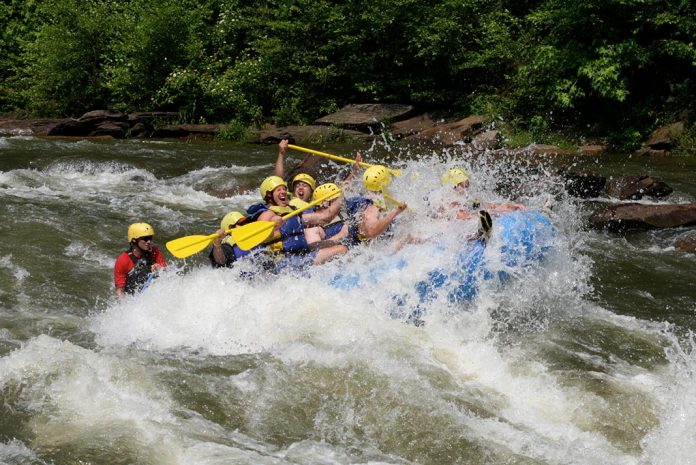
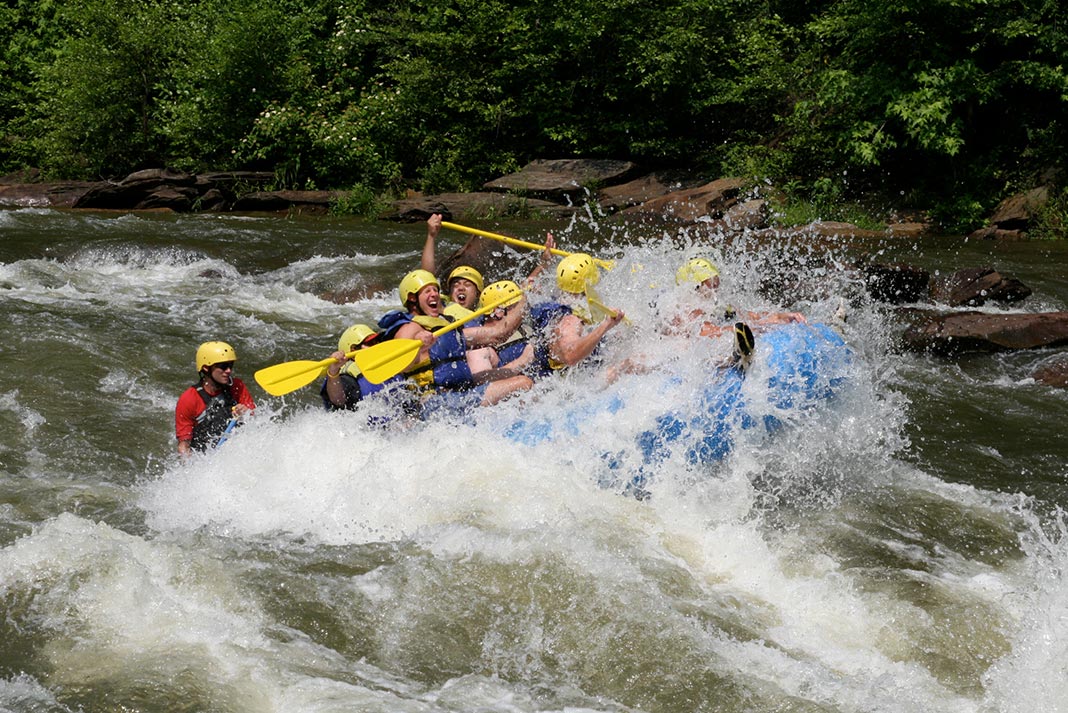
Group of people in a raft going off a wave
North Carolina's rivers are ripe for whitewater adventures. | Photo by: Flickr // Torrey Wiley

Rushing, bubbling rapids probably aren’t the first things that come to mind when thinking of North Carolina. The Tar Heel State is most notable as the location for the Wright brothers’ first flight, its sprawling Atlantic beaches, and Great Smoky Mountains National Park. In an already scenic state full of outdoor recreation opportunities such as hiking and tubing, whitewater rafting ranks as one of the most thrilling.

Read on for the best spots for whitewater rafting NC, trusted outfitters, and more.

Group of people in a raft going off a wave
North Carolina’s rivers are ripe for whitewater adventures. | Feature photo: Torrey Wiley/Flickr

Best whitewater rafting in North Carolina

Asheville

The most popular rafting river near the tourist-laden city of Asheville is the French Broad. Running 218 miles from the southern part of the state north into Tennessee, the class II and III rapids accessible within a short driving distance of the city provide a fun trip for beginners and intermediate whitewater rafters alike.

If you’re looking for a guided trip along the French Broad, here are a couple of the top outfitters in the area.

Nantahala Outdoor Center

NOC is a short 30-minute drive from Asheville and boasts being the longest-running outfitter on the French Broad. Try their half-day tour out if you’re bringing the family and enjoy class II and III rapids as you paddle through the beautiful Pisgah National Forest. This tour lasts between 3.5 to five hours, includes lunch, and begins at $65 (age 8+).

French Broad Adventures

This local outfitter located just 25 minutes from the city also offers a couple of fun tour options on the French Broad. Choose from a five-mile, three- to four-hour trip (one option includes lunch) along calm class I to III rapids, or a nine-mile, five- to six-hour trip that runs along some class IV rapids as well. The minimum age for all trips is 8 years old and prices start at $53.

Charlotte

Although this major North Carolina city in the southern part of the state has some great museums to visit, there is not much in the way of whitewater rafting in the area. Charlotte lies in the Piedmont portion of the state, mostly consisting of small, rolling hills and plateau.

However, funnily enough, the city is home to the U.S. National Whitewater Center. Whether you’re looking for a comfortable introduction to whitewater rafting or wanting to practice some techniques for tackling more technical rapids, you can do so here on the world’s largest manmade river consisting of class II to V sections. People ages 8+ can try out the Family Rafting experience or super thrill-seekers the Big Water Rafting (age 16+). This is a great place to do some whitewater rafting in an area where it is otherwise unavailable, as well as try it out under controlled conditions.

Boone

Rafting opportunities abound near Boone, NC with the Nolichucky River and Watauga River. Nolichucky typically offers class III and IV rapids, making it a better option for older kids and adrenaline junkies. If you’re looking for something a little tamer or more appropriate to take younger kids on, the Watauga River is the way to go with its class I to III rapids.

High Mountain Expeditions

For a trip down either of these local rivers, check into the trips offered by High Mountain Expeditions. Choose from an 11-mile, full-day adventure on the Nolichucky and experience class III and IV rapids on the deepest river gorge east of the Mississippi. Or, for a true wilderness immersion trip, take the two-day trip and enjoy some hiking as well on day two of your trip or take a dip in Devils Creek. Prices start at $85 and $249, respectively. The minimum age is 9 for both options.

Edge of the World

For those with younger children or who are looking for something less intense, take a trip down the Watauga River with Edge of the World. Traverse fun, splashy class I to III rapids with a trusted outfitter that has been in business for 38 years. Ages 4+ are welcome on this three- to four-hour trip. You’ll have the option to rerun the biggest rapid as many times as you want, and you can enjoy delicious home-cooked meals for lunch! Prices depend on group size. Groups ranging from one to nine people are $64 for kids, $74 for adults.

Bryson City

Bryson City in the southwestern corner of North Carolina is arguably one of the most popular areas in the state for whitewater rafting. The Tuckasegee River offers mild class I to III rapids in the area, making it the perfect location for families and beginners.

If you don’t mind a little extra driving, there is also the Ocoee River in Southeastern Tennessee, offering a little more excitement for adventure-seekers with its numerous class III and IV rapids. The 1996 Olympic whitewater events were held along this river, so you know it will be a good time!

Rolling Thunder River Company

For a challenging half- or full-day trip on the Ocoee, head out with Rolling Thunder River Company. One of the premier whitewater rafting locations in Tennessee due to its popularity gained with the Olympics and boasting the longest continuous stretch of class III and IV rapids, these trips are described as “exciting but not extreme.” Beginners are welcome, but you must be 12 or older. Prices range from $36 to $96 per person.

Tuckaseegee Outfitters

For ages 4+, Tuckaseegee Outfitters offers families and novices a milder, but enjoyable, ride in the area. Take in the views of the scenic mountain valley as you paddle across such rapids as the Double Drop, Slingshot and Sharkstooth. This is a fun way to cool off on a hot summer day and trips generally last two to three hours, making it perfect for groups with young kids.

Cherokee

Located just 16 minutes from Bryson City, the enchanting town of Cherokee also hosts a number of rafting trips along the Tuckasegee River. Rapids are even milder here, ranging around class I and II, making for another beginner- and family-friendly river.

Smoky Mountain River Adventures

The 2.5-hour guided trip down “The Tuck” offers not only 5.5 miles of alternating calm waters and rapids, but jumping rocks, pool swimming and wildlife viewing along the way as well. With the docile nature of the river here, ages 4+ are welcome and prices begin at $30 per child (12 and under) and $35 per adult. If you have prior whitewater rafting experience, you can opt to rent your own raft instead for $20 per adult and $15 per child.

Dillsboro River Company

This outfitter offers two family-friendly trip options down the Tuckasegee. If you’d like to experience some tame rapids, but aren’t really up for doing a lot of the work, look into the Fully Guided tour. This one is great for first-time rafters and those with young kids (4+). Tour starts at $27 per child (12 and under) and $37 per adult.

If your group thinks it’s ready to take the next step to rafting alone, check out the Guide Assisted option. A guide will still be with you on the water to lead you and help you with proper paddling and steering techniques, but they will be in their own craft. Prices begin at $22 per child (12 and under) and $32 per adult.

Nantahala River

One of the most popular whitewater rafting NC destinations is the Nantahala River, located in the southeastern part of the state near Bryson City and Cherokee. Like many other whitewater rivers in the state, the Nantahala offers novice-friendly class II and III rapids.

Nantahala Outdoor Center

Head down an eight-mile section of the Nantahala with one of, if not the, most trusted outfitter for the river. This fully-guided tour lasts about three hours altogether and is acceptable for ages 7+. You’ll enjoy getting wet on these splashy rapids, learning a little about the area from your knowledgeable guide, and soaking in the calming mountain and forest scenery in slower spots on the river. Prices range between $54 and $59.

If you have previous experience, you can also rent your own raft to navigate the same section of river. Prices begin at $30 for non-peak days.

Paddle Inn Rafting Company

If you seek a more customizable rafting trip, check out Paddle Inn Rafting Company. They offer fully-guided, guide-assisted, and “Be Your Own Boss” rental or self-guided trips. Once you’ve figured out which of these options is best for you, you can choose to do their 8.5-mile Full River trip, 7.5-mile Top to Campground trip, or four-mile Ferebee Park to Campground trip. As if that weren’t enough, Paddle Inn offers a wide array of boat sizes, ranging from two- or three-person to seven or eight.

What to wear whitewater rafting in North Carolina

As with any outdoor activity, what is best to wear depends on the weather. Here are some items to consider for both warm and cool weather whitewater rafting in NC.

Warm

  • Bathing suit
  • Quick-drying shorts and t-shirt or tank top (cotton is never advisable as it holds on to moisture)
  • Water shoes, strap-on sandals or old tennis shoes you don’t mind getting wet
  • Hat, sunscreen and sunglasses (with strap)

Cool

  • Wool, fleece and synthetic clothing, in general, is recommended
  • Some places will offer splash gear and diving booties for rent or sale, but you might want to bring a rain suit or coat
  • A wet or drysuit may be the best gear if temperatures are particularly chilly
  • A towel and a change of clothes for after your trip are a great idea for any season

When to go whitewater rafting in North Carolina

Rafting season in North Carolina generally runs from April to October. Average highs range between 68° and 85°F during these months. As far as avoiding crowds goes, it depends on what area you will be visiting, especially if it is a particularly popular vacation destination by itself. In general, though, tourism is highest from June through August. It can become very humid in North Carolina during these months, so if you must plan your trip during the summer, at least you will get cooled off on your rafting trip.

May, June, September and October are the best times to plan your trip as far as weather goes. However, the fall months are also prime “leaf peeping” time.

The rivers of North Carolina provide the perfect place for first-timers and families to try out whitewater rafting with the beautiful backdrop of rolling hills, mountains and dense forests. Where will you plan your whitewater rafting NC adventure?


North Carolina’s rivers are ripe for whitewater adventures. | Feature photo: Torrey Wiley/Flickr


How Kayaking Can Improve Your Physical Health

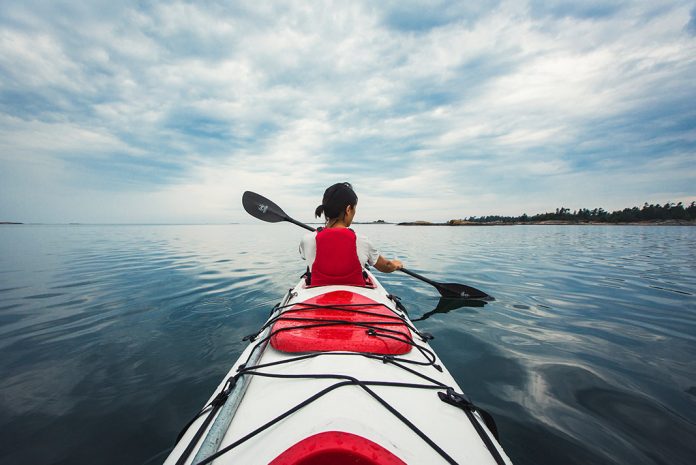
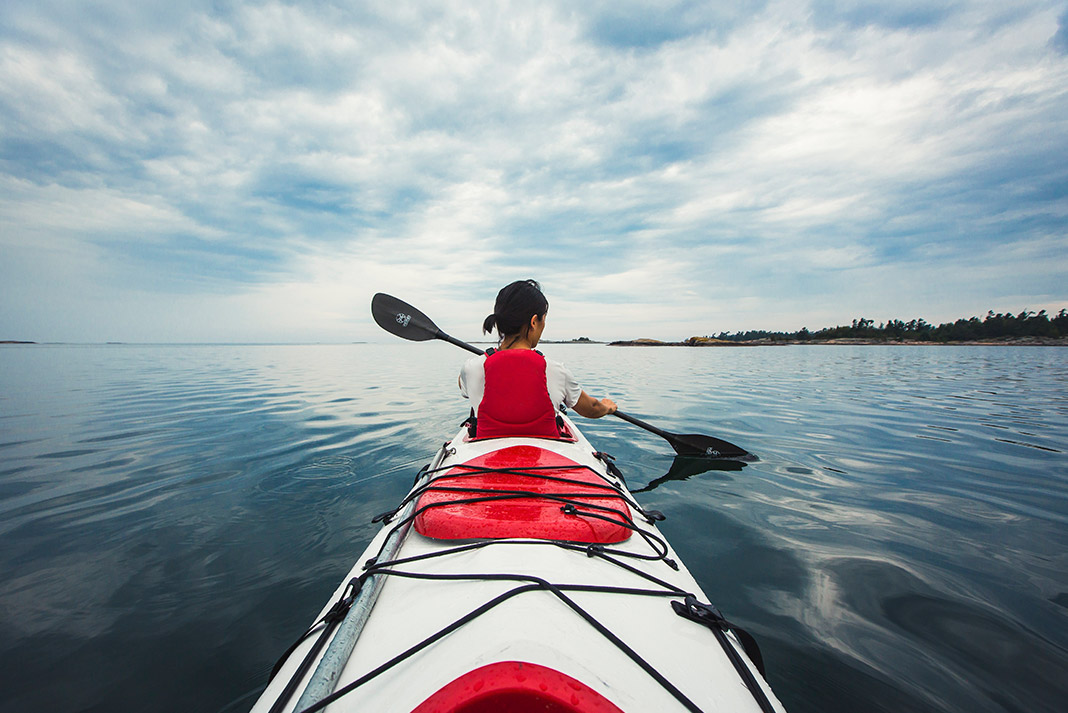
Shot from back of a kayak of a woman paddling
Kayaking is so much fun you won't even realize you're exercising. | Photo by: Image Ontario

One of the keys to developing a healthier lifestyle is finding a physical activity you enjoy doing. Fun and excitement help mask unpleasant feelings you may experience as a result of the activity, and will make you more likely to participate in it more frequently. Can you say the same for spin class?

Getting moving even a little bit is beneficial for your health, but even better if you can elevate your heart rate, strengthen your muscles, and challenge your mind as you learn new skills. According to these parameters, is kayaking a good workout? The answer is, yes! Kayaking works your core through torso rotation movement. It works your upper body when you take paddle strokes. It works your cardio through fast-paced, heart-pumping movement. And it works your mental state as it requires you to puzzle out different movements in whitewater, take on your fears, and overcome doubts about your abilities.

Best of all, you’ll reap all of these benefits and more while having fun. Still not convinced? We’ll go over all your questions and doubts about kayaking and exercise below.


Is kayaking good exercise?

If done properly, kayaking can be very good exercise. However, if you simply float down the river without taking any paddle strokes, you are just sitting on your bum and won’t get any exercise.

If you are using kayaking as a workout, you need to treat it as a workout.

If you are kayaking on flatwater, the best way to get a workout is by doing sprints. Paddle at full “race pace” for one minute, rest for 20 seconds, then paddle at “race pace” for another minute. Rest one minute, then repeat this exercise until your core feels fatigued.

If you are kayaking downriver in a creek boat, the best way to get a workout is to catch as many eddies as you can, do as many ferries as you can, and surf as many waves as you can. If you are paddling class II, you should try to find moves in every rapid that makes it feel like class III. If you are paddling class III, try to find moves that make it more difficult and similar to class IV. Challenge yourself as much as you can every time you are on the water and not only will your skill improve, but so will your endurance and strength.

If you are kayaking in a playboat on a standing wave, you will more than likely get a workout no matter what you do. Freestyle kayaking is an incredible workout for your core, as you will need to keep your core engaged while surfing waves in order to stay stable.

The best way to get strong from kayaking is to kayak as much as possible. The more time you spend in your boat taking strokes, doing sprints and surfing waves, the faster you will progress in both strength and skill.


Can kayaking build muscle?

Kayaking is a workout that will build muscle, but not in mass. Since kayaking is such a fast-paced sport with a large portion of the workout being cardio, you will build a good base of strength, but most likely will not bulk up. Kayaking is good for toning muscles and strengthening them from within.

What muscles does kayaking work?

The main muscles used in kayaking are your abdominals, lats, biceps and forearms. Essentially, kayaking works all the muscles in your shoulders and back. After several months of kayaking multiple times a week, you will begin to see muscle development in your lats. After a few more months, you’ll see muscle development in your biceps and forearms. And after a year, you may even have a six-pack!


Shot from back of a kayak of a woman paddling
Kayaking is so much fun you won’t even realize you’re exercising. | Photo by: Image Ontario

Is kayaking good cardio?

Kayaking can be good cardio if you make it good cardio. What this means is that if you simply float down the river, not taking any strokes and not challenging yourself, you won’t get a cardio workout at all. One the other hand, if you really challenge yourself on the water, taking race laps, doing sprints and trying freestyle tricks, you will get an incredible cardio workout. You get out of it what you put into it.


Calories burned kayaking

The number of calories you will burn while kayaking is entirely dependent on both your body and how hard you are paddling. If you are paddling hard and making kayaking into a good workout, you can burn upward of 400 calories per hour. If you are leisurely floating down the river, you will have trouble burning even 50 calories. Once again, you get out of it what you put into it.


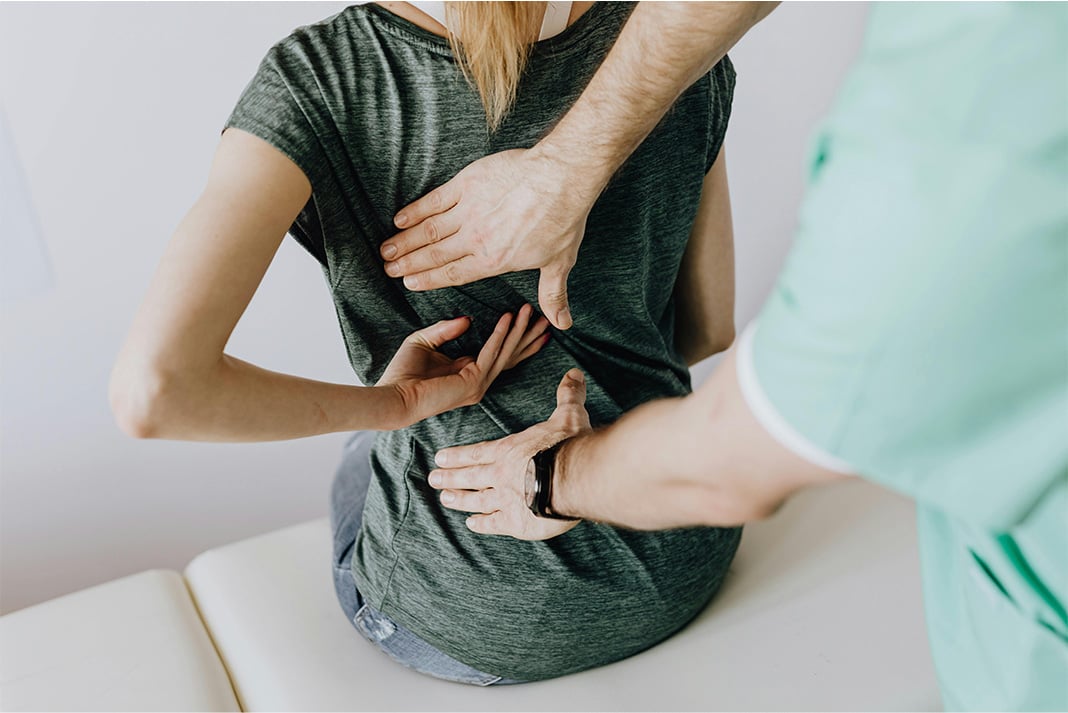
Is kayaking good exercise for back pain? | Photo: Karolina Grabowska
Karolina Grabowska

Is kayaking good exercise for back pain?

Depending on the type and severity of back pain you are living with, kayaking can be a good way of helping relieve it. Kayaking works the muscles in your core and lower back through a torso twisting motion. This strengthens the smaller muscles around your spine, thus providing more strength and stability in your back and core.

Before attempting kayaking as back pain relief, make sure to check with your doctor to ensure you won’t be doing any more damage. Once you have been given the okay by your doctor, try to test out as many kayak designs as you can, so you can find one that feels the most comfortable for your back while you are sitting in it. You can also adjust the outfitting in any kayak to provide more back support by adding straps, foam and backrests.

[ Paddling Buyer’s Guide: View all rigging and outfitting options ]

The best advice for using kayaking as back pain relief is to start out small, and slowly build up from there. Start by taking slow strokes in flatwater and then wait two days to make sure you haven’t aggravated your back. If your back feels okay, next time you kayak you can slowly push a bit more. Hopefully in time you will be able to build up the muscles surrounding your spine to provide more stability and pain relief.


Is kayaking a good way to lose weight?

Kayaking is a great form of exercise for anyone looking to lose weight. You will receive the benefits of both cardio and strength training, while not even noticing you are exercising because of how much fun you’re having! The best forms of exercise are the ones where you challenge yourself both physically and mentally, and thus distract your brain from the pain of the exercise, making it more fun and more likely you will stick with it. Kayaking does just that.

However, while kayaking is a great workout and may assist you on your weight loss journey, it can’t do it all. It is a good form of exercise, but if you are looking to lose weight, you will also have to work with a physician or dietician to adjust your diet and lifestyle.

5 Risks Of Sun Exposure All Paddlers Should Take Seriously

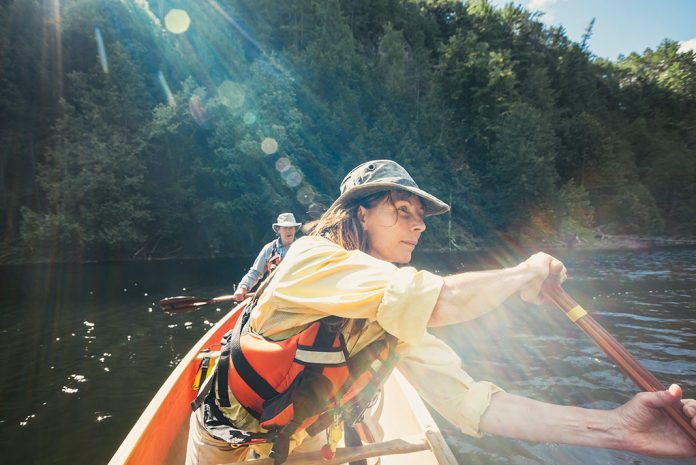
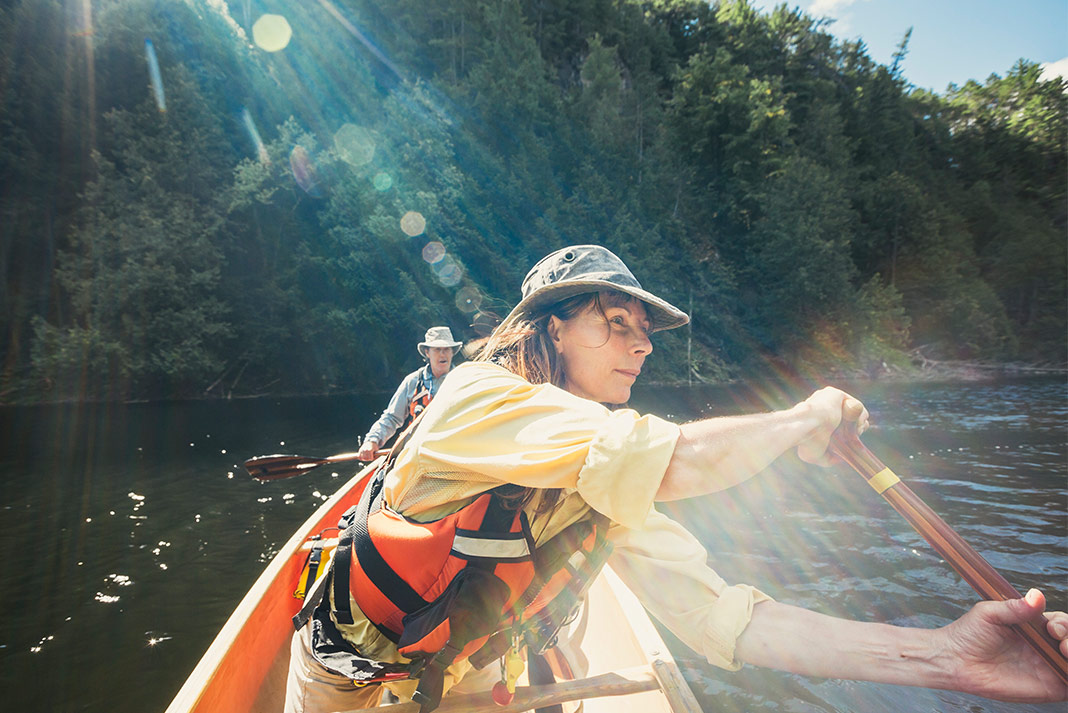
Woman and man wearing hats and long-sleeve shirts in a canoe with sun flare
Protect yourself from the dangers presented by sun exposure, especially while spending time on the water. | Photo by: Image Ontario

Often overlooked, sun and heat exposure present some of the biggest risks in paddling. While in or on the water, your body may not feel dehydration coming on until it’s too late. Similarly, you might not feel a sunburn happening until you are burnt to a crisp. There are also many issues that can crop up in the long-term as a result of repeated sun damage.

Fortunately, there are simple steps that can be taken to ensure safety in the sun. Read here about the risks you should keep top of mind, the preventative measures you can take to combat the risks, and the care necessary if you do slip up.

Risks

Dehydration

Dehydration is a condition that sneaks up on you quickly. If you are playing in or around the water, you may not feel dehydrated even if your body is needing water. For this reason, it’s best to play it safe and keep track of your water intake as you are paddling.

Sunburn

The most obvious of all sun-related risks, sunburn is one we all know too well. Too much time in the sun without protective clothing, and your skin will burn, peel, and become sun-damaged. Sunburn can happen even on cloudy days, so make sure to cover up even if there is cloud cover. Similarly, the temperature doesn’t dictate what the UV index reading is for a given day. It may be a chilly, cloud-covered day, and you can still get a sunburn.

Eye damage

Too much sunlight exposure to your eyes can cause ultraviolet keratitis, which is inflammation of the cornea. This is essentially a sunburn on your eyeballs. This risk is especially prevalent in water-related activities due to the sun’s reflection from the water back to your eyes. Not only are you exposed to the sun itself, but also its reflection.

Heat stroke

Heat stroke is a condition you develop when your body overheats. It is most commonly caused by physical exertion in high temperatures. Heat stroke is very serious and requires emergency medical treatment. Symptoms include, but are not limited to, high body temperature, altered state of mind, nausea and vomiting, flushed skin, rapid breathing, racing heart rate, and heachache. Keep heat stroke in mind as something to consider with sun safety.

Skin cancer

Most skin cancers are caused by large amounts of exposure to ultraviolet (UV) radiation from the sun. There are three types of UV radiation: UVA, UVB and UVC. All three types cause skin cancer. Factors affecting UV radiation exposure are proximity to the equator, altitude, reflectiveness of the water, time of year, time of day and cloud cover.

Woman and man wearing hats and long-sleeve shirts in a canoe with sun flare
Protect yourself from the dangers presented by sun exposure, especially while spending time on the water. | Photo by: Image Ontario

Prevention

Avoid the hottest part of the day

Between 1 p.m. and 4 p.m. is the hottest part of the day in the summer months. If possible, plan to paddle in the morning or evening to avoid the risks associated with hot temperatures. If you’re out paddling in the afternoon, make sure to stay covered up, stay hydrated and take dips in the water to keep your body temperature down.

Stick to the shade

Less sun exposure = less risk. It’s as simple as that.

Wear sun-protective clothing

Many paddling companies now sell UV-resistant clothing. Sun-protective shirts are often lightweight and equipped with a hood and long sleeves. Wearing one means you’ll never have to worry about remembering to reapply sunscreen to your neck and arms, making this a much more convenient option.

Check out some of our favorite UV-resistant clothing options here:

  • NRS H20zone Sun Sleeves
  • NRS H2Core Silkweight Hoodie
  • NRS Women’s Silkweight Hoodie Dress 
[ Browse all sun-protective clothing here ]

Wear a hat

Protect your face and eyes from the sun’s harmful UV rays with a wide-brimmed sun hat! A buff or neck gaiter is also a good idea to protect your neck and face from UV rays.

Our favorite neck gaiter:

  • NRS H2Ozone Neck Gaiter 

Or subscribe to Paddling Magazine to receive a complimentary neck gaiter!

Wear sunglasses (with UV protection)

Sunglasses are one piece of sun safety gear you shouldn’t skimp on. Make sure you are purchasing sunglasses with full UV protection. Without proper UV protection, they are just masking the symptoms of sun exposure, which may allow you to look into the sun without pain, but will still cause damage to your eyes.

Wear (and reapply) sunscreen

The sunscreen you use must be a broad-spectrum, water-resistant sunscreen of SPF 30 or more. Sunscreen in combination with sun-protective clothing, a hat, and sunglasses will be your best bet for safety in the sun. Make sure to apply sunscreen to your whole body 20 minutes before going outside, then reapply at least every two hours, or after every swim.

For the best possible sunscreen, find one with zinc oxide in it. These sunscreens often come in stick form, and are meant to be used on your face. Apply it liberally to your nose and cheeks, embrace the inability to rub it in, and enjoy the many colors zinc sunscreen comes in!

Stay hydrated

Health officials recommend drinking 2 liters of water per day, but if you are active in the sun, you may need more. A good way to keep up with water intake is to take a drink each time your paddling crew catches an eddy on the river. An easy way to track your water intake is to use a 1-liter Nalgene water bottle, and try to finish two to three of them each day.

Care

How to treat a sunburn

If you do get sunburnt, the best thing you can do is rest, drink LOTS of water and stay out of the sun to avoid further damage. Aloe vera gels and lotions, as well as over-the-counter anti-inflammatories, may help with the pain and peeling, but unfortunately, you will still just need to wait for it to heal.

Make sure to wear protective clothing over the sunburnt area, and keep it as clean as possible to avoid infection. If the sunburn starts to blister, avoid picking at it or touching it. Leave it alone, keep it clean, and wait for it to heal.

Explore Sea Caves & Wild Islands: Guide To Kayaking The Apostle Islands

Person kayaking near shore in Apostle Islands
Whether day trip or overnight excursion, the Apostle Islands have plenty to offer kayakers. | Photo by: Flickr // Tim Wilson

Northern Wisconsin hosts a hidden gem that’s located on the largest freshwater lake (by surface area) in the world: The Apostle Islands National Lakeshore. This area didn’t receive much attention until recent years when tours of the beautiful winter ice caves along the shore became available. While these ice caves obviously can’t be reached by boat, come summer, these same sea caves can be explored by kayak. Apostle Islands kayaking also provides the opportunity to hop between 22 wild and beautiful islands, whether on a day trip or multi-day camping excursion.

Read on to learn how you can experience this Northern Wisconsin wonder.

Person kayaking near shore in Apostle Islands
Whether day trip or overnight excursion, the Apostle Islands have plenty to offer kayakers. | Photo by: Flickr // Tim Wilson

Best tours

With its growing popularity over the past five years, there are ample tours of the sea caves and islands in the area available. In fact, if you are unaccustomed to sea kayaking and/or the harsh maiden that Lake Superior can be, it is an especially good idea to head out with a knowledgeable guide. Here are a few of the best tours in the Apostle Islands to get you started.

White Cap Kayak

One of the top-rated guide services in the area, White Cap Kayak offers an array of day and overnight trips. You can explore the sea caves near Meyers Beach or visit some of the area’s lighthouses before spending the night on one of the numerous isles. Explore a more secluded area with rocky cliff faces and waterfalls galore on their Canyons, Cliffs, and Waterfalls tour. Prices are $90 per adult.

Poseidon Kayak

If you’re looking for a cultural experience on your kayaking trip, you can’t beat the Mawikwe Bay Kayak Tour ($85 per person). This guided tour takes you to the Meyers Beach Sea Caves, an important area to the Chippewa people, where you’ll learn more about the history of the caves and people from a member of the Red Cliff Tribe.

Apostle Islands Cruises

For an all-day excursion exploring some of the more remote islands of the Apostles, head out on the Kayak and Cruise Adventure Tour ($149 per adult, $109 per child). Their 50-foot powered vessel will take you out to the best area for kayaking that day (selected based on weather and lake conditions); then you’ll be afforded two hours of paddling before heading back.

Rentals

While most guide companies in the area only provide tours, there are a few that do offer kayak rentals and packages (including wet or drysuits, spray skirts, etc.) if you’d prefer to do some self-guided Apostle Islands kayaking.

Trek & Trail

Trek & Trail offers plastic and fiberglass sea kayaks in both single and tandem models for rent. Prices start at $40 for six hours for a plastic single. You can also rent each model for additional days with prices ranging from $40 to $60 per day, depending on the model. It should also be noted that you must first pass their Basic Safety Course ($55) before being allowed to rent a kayak. Trek & Trail operates from Memorial Day to early-October, 8 a.m. to 6 p.m.

Rustic Makwa Den

Whether you want to paddle close to shore to explore the mainland’s sea caves or go on an extended trip through the islands, Rustic Makwa Den has you covered with both sit-on-top kayaks and sit-inside sea kayaks. Single sit-on-top kayaks, single sea kayaks and tandem sea kayaks are priced at $45 per day. Tandem sit-on-top kayaks are priced at $55 per day. You must pass a free safety test to rent a sea kayak. Rentals and sea cave tours are available from June through October.

Lost Creek Adventures

Lost Creek Adventures offers not only single and tandem sea and sit-on-top kayaks, but camping gear as well if you’re planning an overnight trip in the islands. Single sea kayaks start at $40 per day, single sit-on-top kayaks at $15 for the first hour, double sea kayaks at $60 per day, and double sit-on-tops at $20 for the first hour. You will also need to pass an Introductory Safety Class ($50 per person). Lost Creek Adventures has open availability during summer months and by appointment during spring and fall.

[ Paddling Trip Guide: View all paddling trips in the United States ]

How to explore the sea caves

As mentioned above, if you plan on renting a sea kayak from a local outfitter, you will be expected to pass some form of introductory safety course. However, sit-on-top kayaks are perfectly acceptable for paddling close to shore where the mainland sea caves are.

There are two launching points along the coast, one located at Meyers Beach and the other at Little Sand Beach. Both of these areas are popular spots for tours and novice kayakers to explore the sea caves.

Being such a large body of water, Lake Superior tends to make its own weather, making air and water conditions unpredictable oftentimes. A sunny day can turn into a raging thunderstorm in the afternoon, if not sooner. Be sure to check weather reports and water conditions before heading out.

If you do find yourself caught in less-than-desirable water conditions, it is very important that you do not approach the sea caves. As noted across numerous websites, the rebounding waves can make them nearly, if not completely, impossible to navigate.

Check out these maps from the National Park Service for island locations and to plan your route.

Popular routes to take

From beginner-friendly shoreline paddles to strenuous overnight trips, the Apostle Islands offer routes for any kayaker.

Meyers Beach

As stated above, the Meyers Beach area is quite popular for viewing the mainland sea caves. Take a leisurely five-mile (round-trip) paddle along the shoreline to not only view but pass through some of the arches and sea caves (calm waters permitting, of course). It takes about two miles to get to the sea caves from the launch point and you can always extend your paddle if desired.

Madeline Island

Paddling around Madeline Island, the park’s only permanently inhabited island, is also a great option for beginners. Head out from the boat launch at Big Bay Town Park or the beach at Big Bay State Park and spend an afternoon exploring the Big Bay Lagoon and sea caves along the point.

Outer Island Loop

For die-hard yakkers with plenty of sea kayaking experience and a thirst for adventure, the 75-mile Outer Island Loop of the Apostles is a fun choice. This trip will take roughly a week to complete, allowing you to stop and explore 11 of the islands along the way. You’ll be able to view more sea caves and old lighthouses as well as find hiking trails on some of the bigger islands. The trip around Devils Island is notorious for being rough, especially in strong winds, so this trip is definitely recommended for seasoned sea kayakers.

Kayak camping spots

The Apostle Islands National Lakeshore consists of 69,372 acres, providing plenty of primitive kayak camping sites among the islands. Over 30 spots are available, though they fill up quickly, so be sure to get your permit and reserve a spot in advance. You can find more specific camping information on the NPS website.

With its close proximity to the mainland, Sand Island is a popular place to camp. There is a campground located on the island and the island itself is a short 3/4-mile paddle from Little Sand Bay. Be sure to check out several sea caves located around the island before setting up camp for the night.

For intermediate and advanced paddlers looking for an extended trip, but not something as lengthy as the Outer Island Loop, plan for a 23-mile trip extending from Little Sand Bay to Sand Island, then heading to York, Raspberry and Oak Island, and then back to shore. All but Raspberry Island host campsites, and water crossings between each island do not surpass 2.5 miles.

Time of year to go

Northern Wisconsin winters can be harsh and it’s not out of the question for them to extend into springtime, so summer is your best bet for Apostle Islands kayaking. Weather-wise, July and August are best but can become quite busy with other visitors. If you’re looking to avoid the crowds, try for September and October, during which time you can enjoy the beautiful Wisconsin fall foliage. Be warned, though, that the weather becomes more unpredictable this time of year with the possibility of early winter storms.

Kayaking the Apostle Islands of Wisconsin offers a unique look at one of North America’s coolest geological wonders, whether you’re an experienced sea kayaker or just beginning.

KL Outdoor Takes On New Ownership

KL Outdoors logo

We are pleased to announce that substantially all the assets of KLO Holdings LLC, including the various trademarks of that company have been acquired by The KL Companies, Inc., a newly formed company based in Muskegon, Michigan. This acquisition allows The KL Companies, Inc. to focus on the personal watercraft market and recapture our leadership position in this popular and growing business. The company provides a full line-up of kayaks, canoes, fishing boats and pedal boats that are 100% designed, developed and manufactured in the USA.

“The KL Companies, Inc. will continue the business of the original company under the iconic name KL Outdoors, which is a registered trademark of The KL Companies, Inc. This includes the complete family of well-known brands that have played a major role in the development and growth of this category”, said Bob Farber, President of The KL Companies, Inc. “This new company brings together a unique combination of production capabilities, product assortment, and in-depth industry knowledge that places KL Outdoors in a position to lead the industry. We look forward to and are committed to working with our valued customers to make this category an increasingly important part of their business”. Our clear and unwavering objective is to use our design prowess, production capabilities and industry knowledge to serve all distribution channels within this industry”, continued Farber.

Operations are expected to commence on June 1st, 2020. This is date could be subject to change due to the Covid-19 pandemic and the shelter in place orders that are in effect in Michigan.