Home Blog Page 207

What’s More To Life Than Paddling?

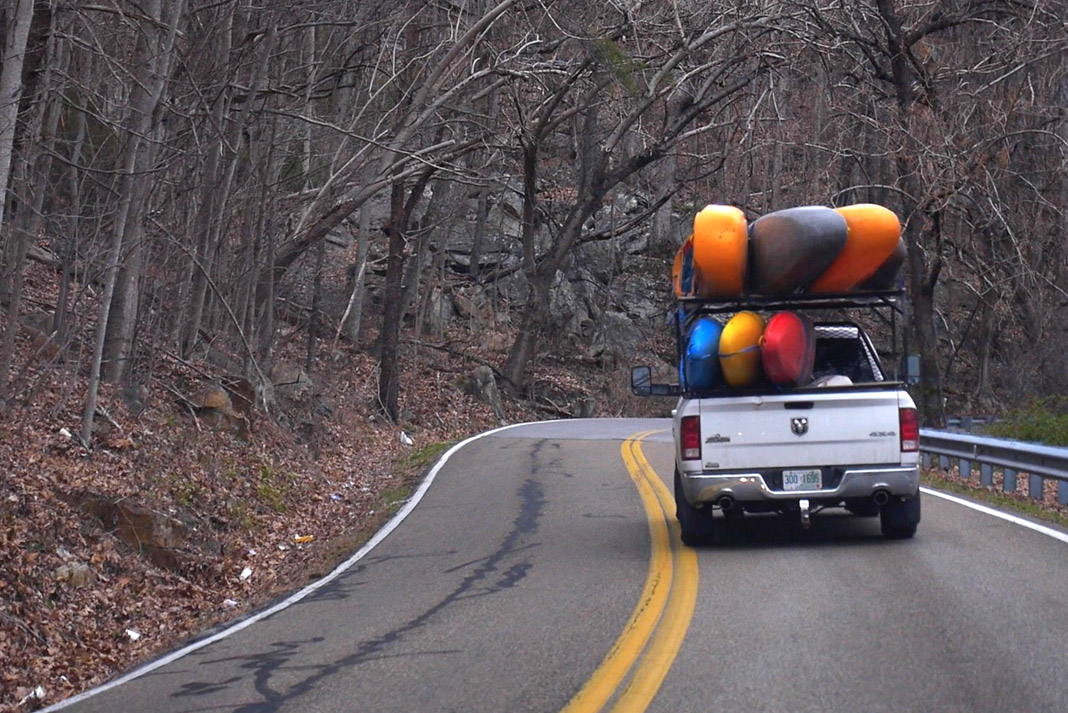
car driving down highway with kayaks

Living in this day and age with a passion for moving water, many people assume this nomadic lifestyle is the ultimate goal. They feel like it feeds their spirit and nourishes their soul. If that’s what you feel, enjoy the ride.

Like anyone captured by whitewater kayaking early on, I loved the sport with a passion. Probably every person reading this magazine has had the same experience. The river once unknown is now suddenly alive. The freedom, challenge and fun seem infinite. Exciting friendships are made and flourish. There’s a sense of authenticity to it all, as if we have grasped the very core of reality.

Quite a few paddlers chase this feeling for years. They become raft guides, video kayakers, instructors or swampers on the Grand Canyon or the Ocoee, from the White Salmon to the Penobscot. Some chase the flows or the competition circuit like bands of gypsies on road trips to Colorado and California, British Columbia, Quebec and Ontario, New Zealand, South America, Nepal and anywhere in between.

Working the rivers gives a sense of status, even superiority for some, and a little money on the dashboard to fuel another road trip or buy another case of PBR. Others find part-time or seasonal jobs or have trust funds allowing them to live the dream for years, even decades.

The secret, if you’re reading this as a how-to column, is minimizing commitments and avoiding responsibilities except when it comes to pursuing the adventure lifestyle.

It is a fact our modern western culture is one of the wealthiest and most free in the history of all civilizations. If you are reading this magazine you are most likely white, upper middle class and a graduate of at least one post-secondary institution, or are on your way to be. You can do almost anything and go almost any place, having the financial freedom to float along following the sun, water, surf, or snow.

Living in this day and age with a passion for moving water, many people assume this nomadic lifestyle is the ultimate goal. They feel like it feeds their spirit and nourishes their soul. If that’s what you feel, enjoy the ride.

As you go, keep in mind that paddling from river to river is easy, without real responsibilities. Sometimes it feels hard and it feels like what you are doing is important, especially if the rivers are difficult. The river life provides challenging, vivid experiences and we feel vibrant, alive and happy. We are surrounded by fun people playing together in beautiful places. These friendships feel more real than anything we have ever experienced.

Over time however you may find some of these friendships are actually more partnerships of convenience. Many of them may disappear when shit hits the fan. The gypsy wagon still leaves town even when you’re broke, injured, pregnant or a family member is diagnosed with cancer. Suddenly your life stops being a fantasy and in the rear-view mirror this nomadic period starts looking like a halfway house, a glorious substitute for a meaningful life with real commitments.

As whitewater paddlers we’re fortunate to be able to enjoy this transition period in life. While chasing something fun but indefinite, there comes a time when we realize that commitment is actually something we want. In some cases it is thrust upon us whether we want it or not.

There are plenty of reasons for change and sometimes no reason at all, just a feeling. One day you wake up in your van and realize there’s more to life than rivers.

Some hold on longer. Others hold on so long the excitement doesn’t seem like the center of the world anymore and by then they don’t know what else to do.

The river doesn’t change. We do. When we start making that transition, living the dream becomes something different than we could ever have imagined at the beginning of the journey, because the dream changes. Don’t worry this is normal and natural. You may someday be nostalgic about your river days of freedom, but you’ll never regret moving on.

The dream changes because through the exploration of rivers and ultimately ourselves we grow to understand better what creates a real life.

If you seek true authenticity you must understand commitment to other people, not unattached freedom, is what creates it. The bonds that come with new dreams are ones we can believe in, bonds that we can trust with our lives.

If you don’t believe me just keep wandering and exploring free flowing rivers, but be ready. Around the next bend you may encounter other feelings that turn out to be even more rewarding. And don’t be surprised if they appear from the very world you’ve been trying to avoid.

Doug Ammons has been paddling rivers for over 40 years, making over 50 first descents from steep creeks to big water in the US, Canada, Mexico, South America and Nepal. His 1992 solo of the Grand Canyon of the Stikine River was equated by Outside Magazine to Himalayan climber Reinhold Messner’s epic solo of Mt. Everest. He lives in Missoula, Montana with his wife, their five children and their grandchildren.

Restoring A War Canoe

the rib cage of a canoe

It’s mid-April and I turn off Hwy 60 in the heart of Algonquin Provincial Park and begin navigating the deep ruts of the still wintery access road towards the Taylor Statten Camps on Canoe Lake. I’m greeted by Leon Turcotte, the camp’s carpenter. Turcotte invites me down to the canoe shop to see the progress he and Dave Standfield have made on their latest project. Standfield is the camp’s head of maintenance and has been the resident canoe expert for the last 37 years.

Inside The Canoe Shop Rests This 42-Foot-Long Canvas Covered Cedarstrip Canoe

It is the largest canoe of its kind in the world and the Taylor Statten camps own two of them. They are still used by campers as they have been for 90 years as transportation between Camp Ahmek for boys and Camp Wapomeo for girls.

Originally constructed in 1926 by the Peterborough Canoe Company for Taylor Statten I. Back then the canoes cost $450 to build. These monsters of the lake can hold up to 30 paddlers and required a custom canoe form to build.

“Their last restoration was the first year I worked on canoes with Bill Statten. That was in 1979,” explains Dave Standfield. “That was the first restoration for them. The canvas had rotted away and needed to be replaced, but the main inside keel was still intact.”

Although The War Canoes Are Stored Out Of The Elements From September To June, The Summers Can Be Tough On Them

“We need to replace more ribs in the Wapomeo canoe. We’re probably going to end up putting 300 ribs in this one,” explained Dave. With between 500 to 600 ribs per canoe, there’s no shortage of work to complete.

“I’ve been holding the clinching iron from underneath the canoe, it is back-breaking work,” describes Leon. The clinching iron is a five-pound piece of metal used for bending over brass tacks as they are hammered into the cedar planks from above. With approximately ten thousand tacks used per canoe, it’s no easy task.

The First Canoe Restoration Was Finished On July 25, 2016

As I photograph their work, I’m aware the pressure is on for Dave and Leon. They are to have this canoe completed for the beginning of this year’s summer camp season.

The war canoes definitely hold a special place for me,” Dave remarks. “I’ve always got that feeling hanging over my head that I’m trying to get this thing done for the summer. I also say to myself, ‘If it doesn’t get into the lake until later in the summer, well, it’s a small price to pay to know it won’t have to go through this process for a while.’

Mike Last is a professional photographer and digital marketer living in Toronto, ON. 

Paddling Alone Across the Arctic

man pulling canoe behind him standing in a river

Sometime after his last Facebook post on May 13th Adam Shoalts headed out on a 4000-kilometer adventure across Canada’s Arctic.

He left the international border town of Old Crow, Yukon and if all goes as planned five months later he will canoe into the saltwater of Hudson Bay at Baker Lake, Nunavut.

The journey will take him over mountains, up rivers, across tundra, through subarctic forest, and down wild waterways. Over the last 14 years Shoalts has knocked out a couple dozen smaller expeditions, he’s a speaker and author of Alone Against the North, which enjoyed 26 weeks on the national best-seller list. We caught up with Shoalts as he was making final travel arrangements.

Other than celebrating Canada’s 150th birthday, are there any other causes for this journey?

I hope to encourage Canadians, especially younger Canadians, to take an interest in Canada’s wilderness and to think more about what kind of future it’s going to have over the next 150 years. Canada is blessed to have more wilderness than any other country. But if we don’t take drastic measures to protect and preserve it, it won’t last.

You literally wrote the book on it, but why go alone against the north?

Ideally, I’d rather not do it alone. I’d prefer to do it with a couple of old friends. But they all have family or work commitments that rule out five-month-long wilderness expeditions. I figured I might as well go alone.

As far as your expeditions go, is this your largest?

Yes. I’m always trying to up the stakes. With 2017 rolling around and Canada’s 150th, this seemed like a unique chance to raise the bar.

Are you hoping to make any new discoveries on this route?

No, I’m just hoping to make the crossing. There are so many variables beyond my control like ice, wind and weather. Of course, as an archaeologist, I’ll note any archaeological sites, but the reality is I’ll be pushing myself all day every day and won’t have much time or energy left over for much else.

How are you planning this expedition? What support will you have along the way?

I’m trying to be as self-sufficient as possible and keep airdrops to a minimum. This helps keep costs down and simplifies logistics. I’ll supplement my diet with fish and wild edibles. I’ll re-supply at a couple strategic points along the way. That’s it.

What’s your biggest concern of this expedition, or all of your expeditions?

That my appendix ruptures in the middle of nowhere and I die.

What are you most looking forward to?

Just being immersed in nature. I love it. Two of my most cherished memories happened in the Arctic. One was crossing paths with a beautiful white wolf on a river in Nunavut. The other was seeing a wolverine. Experiences like these motivate me to keep going.

What is unique to my journey is trying to stitch the individual waterways all together in one gigantic route across the Arctic

Are you trying to set a record or are you allowing yourself plenty of time to cover the distance?

Since the canoeing season is short in the Arctic, time is a luxury I don’t have. Most of the individual waterways I’ll be traveling are relatively well known and paddled. What is unique to my journey is trying to stitch them all together in one gigantic route across the Arctic. If I don’t try to make it, that would be something I’d always regret. Since there is no indication of anyone ever having previously attempted this, I guess if I make it that will be the record.

Approximately how many kilometers of this trip will be done in a canoe?

Roughly 3,000 kilometers. Much of that will be across large lakes like Great Bear, where the wind will be a serious factor. About roughly equal parts will be upstream and downstream travel.

I’ll be fighting against the flow of some pretty swift rivers like the Coppermine, rather than paddling downstream. I’ll be traveling mostly through a mix of polling, lining, and wading. The other sections will be done on foot.

Will you be staying in touch with followers along the way?

I’ll have limited communications via satellite messenger. I have to conserve battery life as much as possible. Hopefully, I’ll be able to relay updates to someone who can update my Facebook page for people who are curious about how I’m doing.

On Friday June 23, about a month into the trip, Shoalts’ family posted on facebook.com/shoalts “The bugs have been pretty bad as Adam lines, poles, wades, paddles, and bushwhacks his way to Great Bear Lake.”

The Axe: Outdated Or Valuable Paddlers Tool?

an axe in a log

The pop culture world of urban bearded men reclaiming their masculinity by dressing like lumberjacks has made the axe cool again

In the backcountry however roars a great fireside debate as to whether the axe is indeed an outdated tool or a valuable asset if proper technique can be taught to the next generation.

At Camp Temagami in Northeastern Ontario, axes have always been seen as an assets. They are an essential tool used for keeping portages open, improving campsites, repairing canoes and for gathering wood to fuel the fires they use to cook camp meals for large groups.

Their axe and saw section of their handbook, written by Neil McDonald, states,

Axes are the most integral part of a traditional approach to tripping. No other tool better illustrates the gap that exists between camping for a few weeks in the summer and acquiring the skills to live outside.

Priorities at Camp Temagami include teaching good axe care, but also good axe chopping, as inevitably, campers want to use the classic backcountry tool.

Much like canoes and paddles, axes have differentiating features, purposes and designs.

Balancing an axe with two fingers below its throat, right behind the axe head on the handle you can tell if your axe is bit heavy, when the axe head pulls down, or poll heavy, when the handle end drops down. Bit heavy axes are most common, however they have a tendency to dive towards your shins if you strike a glancing blow.

Conventional logic states a longer handle is safer to use by giving more space between the target and the subject. However, a lighter head on a small handle will give most campers a better connection with the axe. It will also be easier to use with one hand. The average adult prefers an axe head weighing one-and-a-half to two-and-a-half pounds with a handle 24 to 28 inches long.

“Good axe work is a thing of beauty: the pleasure of using one well compares with the inherent grace of any other elegant physical activity,” writes McDonald.

Beauty is in the eye of the beholder of the axe.

There are different methods for splitting firewood with an axe. 

Some sources like Cliff Jacobson in his book, Camping’s Top Secrets, suggest splitting rounds by placing a hatchet or axe blade in the piece of wood and using a log to tap the blade in.

McDonald however, suggests, “Hatchets and axes have handles because they are designed to be swung.” McDonald adds that, “A hatchet’s short handle does make it dangerous to swing hard, and someone could easily cut themselves badly.” He would rather give campers the proper tool and teach them to use it well.

Use a chopping block to ensure your axe head isn’t damaged by being lodged in the dirt or by hitting rock if you strike a glancing blow. Blocks also increase your own safety, making it less likely the head will continue toward your leg or feet.

Since perfect upright chopping blocks are hard to come by in the backcountry, finding a sturdy log or piece of driftwood about six feet long is ideal for resting log rounds against for chopping.

Standing on the opposite side of the log, positioning yourself like a batter to home plate, slowly do a test swing to see if you are the appropriate distance from the round. We could debate the over-the-head-straight-down motion or the side-and-down motion as being more accurate or safe, but we’ll leave that for the lumbersexuals and their cinnamon-flavored cappuccinos.

“Trying to muscle the swing or simply swinging harder, usually decreases accuracy. Staying loose, breathing regularly and focusing on the end point will help you strike where you want,” says McDonald.

If there are noticeable cracks in the log round, place them face down. The force from hitting the other side of the round is more likely to split the wood than your aim being perfect enough to hit and expand the cracks.

As you would imagine, axe angles and sharpness have the greatest effect on their performance.

Splitting axes have wide bevels, while cutting axes have fine bevels to slice into trees with ease. Having one or the other will not be as helpful as having a well-rounded axe in the backcountry. McDonald suggests anywhere between a 15-degree to a 20-degree bevel will get you through your canoe trips with ease.

Using an axe takes you into the forest in the way that traveling without one doesn’t,” writes McDonald. “You begin to pay attention to tree species and distribution and to notice characteristics that add value to the tripping experience.

8 Expert Tips For A Fly-In Canoe Adventure

view of a river from a planes cockpit

The pilot maneuvers into position, points the prop into the wind and opens the throttle. For canoeists, there aren’t many moments as exciting as the takeoff of fly-in trips.

Of course, when the altitude rises, so do the stakes. As you plan your first private fly-in adventure, keep these expert tips in mind to avoid common mistakes.

1. Only one weatherman counts

Daryl Vaillancourt, president and pilot at Air Kipawa, flew canoeists into the Dumoine River area in Quebec before relocating north to James Bay. He says the biggest mistake his clients make is assuming they know what sort of weather is safe for flying.

“They’ll try to pressure pilots, saying, ‘Looks good to me’,” says Vaillancourt. They may have forgotten that the landing strip, meaning a remote lake, doesn’t have an air traffic control tower. “It’s a visual flight,” says Vaillancourt.

2. Lighten up about weight

Vaillancourt says excessive weight is an often overblown concern. His single engine de Havilland Beaver floatplane can haul up to a thousand pounds, enough to handle two canoeists, one canoe and corresponding gear.

Larger single-engine planes like the Otter can take four people and two canoes. The Twin Otter can handle six people and three canoes. Don’t expect to save money by nesting two canoes and tying them on together. “Those days are over,” says Vaillancourt.

3. Consider the straight and narrow

It’s not true that floatplanes land only on lakes, not rivers. “I’ve landed planes in pretty tight places,” says Vaillancourt, estimating that a waterway twice the width of the Beaver’s 50-foot wingspan ought to be enough room. Discretion rests with the pilot, of course, but don’t be afraid to ask the air service about river takeoffs and landings.

4. Arrive early and then proceed immediately to the gate

Lin Ward of Canoe North Adventures sends dozens of fly-in trips a year from their lodge in Norman Wells, Northwest Territories. She recommends you plan to arrive at or near the airbase the day before you are scheduled to depart.

“You don’t want to arrive and scramble to do all that last-minute packing while the charter pilot is waiting at the dock,” says Ward. “I’ve seen groups have meltdowns. It’s no way to begin a trip.”

5. Coffee and Kevin

If your drop-off involves multiple trips from the base, remember that the second trip might be delayed by weather. “Whatever plane goes in first, that group should have everything it needs to stay out,” says Ward. This means food, shelter, fire and a person capable of putting all those things together should get priority loading.

6. Declare your bear spray

For 15 years Jonathan Friesen has been flying canoeists into the Barrens, Bloodvein and Pigeon rivers for Bluewater Aviation in Bisset, Manitoba. He says most clients don’t know that bear spray is forbidden inside any aircraft. Declare it to your pilot and he or she can duct tape it to a thwart of the canoe riding outside.

7. Research and relax

Some canoeists simply don’t do enough research when scheduling their routes. One thing that affects rate of travel is river water levels. Read trip reports carefully and Friesen suggests checking levels as the trip approaches. He also recommends scheduling rest days that can be used to make up time if you get wind bound. “I never understood the ‘test yourself’ mentality,” says Friesen. “Why not plan a day off and enjoy it?”

8. No need to get a CB handle

Friesen says VHF radios are cumbersome, complicated and not a practical way to communicate with pilots. Instead, buy or rent a satellite phone—some even have text capability. Or carry a SPOT satellite locator device with the air base’s email address programmed so they can keep abreast of your progress, or lack of. If you do need to contact a pilot to change your pickup location, you may need to provide coordinates. Make sure you have proper topographic maps with intact margins.

LOOK FOR A PILOT WITH AN IFR RATING — I FLY RIVERS

8 Facts You Didn’t Know About Echoes

man standing next to his car with a canoe strapped on top

1. In 2014, acoustic scientist Trevor Cox shattered the world record for longest ever echo. As an acoustic engineering at the University of Salford in Manchester, he recorded the sound of a gunshot echo in an oil tank. It lasted a full 75 seconds.

2. Martha and Muffins’ single “Echo Beach” released in 1979 made Q magazine’s list of 1001 top songs of all time. Craving pantsuits and turtlenecks? Google the video and dance around.

3. You only hear echoes if they come back more than .1 seconds after the original holler. Sound travels 34 meters in .1 seconds. So this means you only hear echoes from surfaces at least 17 meters away.

4. Concert halls want a little echo to soften the sounds but not too much to avoid confusing the new sounds. Then came the ‘60s and the introduction of reverberation into rock and roll.

5. You’d assume that yodeling’s natural origins lie in the phenomenon of the echo. However, yodel composer Heinrich Leuthold says the yodel is also indigenous to regions that have no natural yodel conditions, like the open plains. While this may be true, Hank Williams’ classic “Long Gone Lonesome Blues” sounds better floating through a canyon than it does in a wheat field.

6. The ECHO power tool brand manufacturers products that include leaf blowers, brush cutters, pruners, hedge trimmers and weed wackers, just to name a few handy items banned in all wilderness areas.

7. About half of the 900 species of bats use a little echo trick to navigate the night. Echolocation is a type of SONAR—sound navigation and ranging. Think of it as a very highly evolved game of Marco Polo. Toothed whales, dolphins and shrews also use echolocation.

8. By 2005, sales of Toyota’s sub-compact Echo had fallen and this utilitarian marshmallow was discontinued and replaced by the equally ugly Prius. Meanwhile, Tom Robson (shown here) just scrapped his long-loved 2004 Echo and bought another with fewer miles. The rest of the automotive world hopes this is one echo we will never hear from again.

Tom Thomson’s Limited Edition Canoes

painted paddle sitting across canoe

Tom Thomson was just 39 years old when his body was found in Algonquin Provincial Park’s Canoe Lake

Though he’s now arguably Canada’s most celebrated painter, he was then only five years into a new style of painting that would change how a country thought about itself and its wilderness. His career may have been cut short, but his legacy has endured. To celebrate, Langford Canoe is marking the centenary of his death with a limited run of just eight special edition Tom Thomson canoes.

Brent Statten Of Langford Canoes Says The Actual Canoe That Thomson Owned Has Been Lost To Time, Although Photographs Suggest It Was A 16-Foot Chestnut Guide Cruiser

Langford’s modern incarnation is intended to approximate and improve upon the canoe Thomson would have paddled on his sketching trips in the 1910s. The materials will be true to the period, including red cedar planking, ash gunwales and rawhide seats. Statten says Langford designers haven’t tried to mimic the lines precisely, but instead have called on the company’s 77 years of experience to improve performance.

“We think of it as taking artistic license,” says Statten.

Two aesthetic aspects that remain are re-curved stems and paint color. Langford mixed marine grey and cobalt blue to recreate the dove grey that Thomson had painted his canoe.

And of course there’s no fiberglass or carbon on the hull, only a layer of waterproofed canvas. Statten says the canvas adds 10 to 15 pounds compared to a cedar and composite shell, but given the commemorative nature of the model, canvas was the only way to go.

“For aficionados, canvas makes it a true canoe,” says Statten. “Canvas creates a functional piece of art. It’s a quieter, softer canoe. When you paddle canvas you feel more connected to the water.”

Langford Will Make Up To Eight Of These Canoes, Each One Taking About 100 Hours To Build

The first one out of the shop has been reserved for an end-ofsummer fundraising raffle at the Huntsville Hospital Foundation. Langford Canoe is based in Dwight, Ontario, between the Town of Huntsville and the main western access point to Algonquin Park.

“We didn’t want to just ride the coattails of the anniversary,” explains Statten. “The Huntsville hospital serves Algonquin Park, so it’s a good fit. Thomson remains an ambassador for canoeing and the wilderness. We want to help perpetuate his legacy of drawing eyes toward the wilderness and paddling.”

That ability to draw eyes toward the wilderness had only just begun by the time Thomson died in 1917. He didn’t start to spend seasons in Algonquin until 1912, working as a guide and ranger in the summer and taking solo sketching trips in the spring and fall.

To explain Thomson’s approach, David Huff, curator at the Tom Thomson Art Gallery in Thomson’s hometown of Owen Sound, cites a letter from A.Y. Jackson, a painting partner and future member of the Group of Seven. Jackson wrote: “Not knowing all the conventional definitions of beauty, he found it all beautiful: Muskeg, burnt and drowned land, log chutes, beaver dams, creeks, wild rivers and placid lakes, wild flowers, northern lights, the flight of wild geese and the changing seasons.”

Roy MacGregor, born at the eastern gate of Algonquin Park, is the author of 40 books including, Northern Light: The Enduring Mystery of Tom Thomson

As MacGregor sees it, a commemorative canoe is fitting for a man that canoeists owe a great debt too.

Tom Thomson had a great deal to do with the romance of the canoe,” says MacGregor. “When he began painting around Algonquin Park he was ridiculed and dismissed. But eventually Canadians began seeing how true the paintings were to the landscape. Once trains, steamships and crude roads opened up the North, they began to use the canoe to get to those places that were now a part of their imagination. Thomson made us fall in love with the country’s most dominant feature—the wilderness.

To explore the wilderness in a Tom Thomson commemorative canoe get one of only 1,000 tickets for the Tom Thomson Commemorative Canoe Raffle at huntsvillehospitalfoundation.ca. Or pick up one of the other seven for $6,300, $2,743,200 less than what was paid in 2009 for Thomson’s 1917 painting, Early Spring, Canoe Lake.

Ian Merringer is a freelance writer and former editor of Canoeroots magazine. He lives with his family 295 kilometres south of Canoe Lake. 

3 Canoeing Couture Essentials

Mina Hubbard

Sooner or later, any collector of canoe ephemera or anyone who has lately lamented the collapsing of gender-specific outdoor gear into one same-sex trousseau of space-age polymers will collide with the rarest of woodland creatures, the sporty pin-up girl.

As You May Have Heard, Everything Old Is New Again

And with so many of us embracing our postmodern, post-plaid fashion choices, I thought it useful to offer outdoor fashion seekers some other time-tested options for ladies’ haute retro canoeing couture.

I’d like to propose a few more thoroughly expedition tested outfits in lieu of the perhaps sexy but impractical pink smalls, garter belt, nylon stockings and high heels shown here in the lily pond of Gil Elvgren’s famous “We’ve had a little falling out” pinup calendar canoe queen from July 1952.

The First Of My Three Retro Wild Wear Options Is The All-Purpose Mina Benson Hubbard Backwoods Skirt

Like any sensible outfit of the day, this ensemble—which may have been inspired by American sharpshooter Annie Oakley, except without pleats—begins with cotton bloomers, woolen leggings and calf-length lace up boots. Over this is a three-quarter length woven wool wraparound skirt with bosem pockets for snacks, small knives and fire irons.

This, in a pinch, would have doubled as a shawl or blanket. On top is the wash and wear camisole under a high-necked cotton cap-sleeved blouse which, depending on circumstances, can be layered with a oneor two-ply knitted turtleneck pullover. For an outer shell, a sensible tailored tweed topcoat. And, of course, completing the outfit is a peach basket hat.

I think Audrey Hepburn rocked this Full Mina look in her 1951 film, The African Queen. Mina Hubbard, on the other hand, was the first white person to cross the wilds of Labrador and she did so way back in 1905.

Attempting a wilderness journey that killed her husband was impressive. Returning with answers about his death was amazing. Writing the book, A Woman’s Way Through Unknown Labrador and going on to lecture about the trip was unheard of. The outfit she wore, timeless.

Second, Is The Lillian Alling Skirtless Option

It’s what you’re thinking. The determined and secretive Ms. Alling was an Estonian immigrant to North America. In the 1920s, Alling and her dog walked from New York City to Alaska in an attempt to find her way home on the cheap.

Playwright John Murrell discovered the Alling’s story while he was leafing through an old paperback called Wild West Women and, rather ironically created a $1.6 million eponymous opera about her astonishing story.

Alling, who may not have been trying to set fashion trends at the time, had the wide-brimmed hat but opted for a more rakish turn up at the front. Below she wore a more décolletage open-necked cotton shirt and woolen cardigan.

For bottoms she wore leggings under thick tin pan woolen trousers. The trousers were, for effect and bug interdiction, tucked into her calf-length lace up leather miners’ boots. Rounding out the getup was a raffish colored silk scarf that doubled as a belt.

Lilling Alling’s transcontinental trek is something that has never been repeated. Apparently she was last seen on the coast of Alaska negotiating with the coastal Inuit about a ride across the Bering Strait where she was to continue her odyssey back to central Europe on the other side.

If the Latin sage who said “vestis verum reddit” meaning clothes make the woman was right, it would seen that dressing retro for outdoor pursuits is where one should begin when creating memorable expeditions.

Which Brings Us To My Third And Final Alternative To Skivvies On The Lily Pond. This, Of Course, Is No Couture At All

Could Eve have been wrong in the Garden of Eden? There is certainly much to say on this topic.

To get started, one only needs to Google search, the Paddling Bares Canoe Club. Here is a paddling club with a strict dress code that is about both fashion and function. This group of adventure enthusiasts puts emphasis on quality trips in areas where participants can skinny dip without legal hassles. Perhaps this is a subject better left to campfire conversation. Just watch out for sparks.

Why Buying A Kayak Is The Smartest Investment You’ll Ever Make

Saving for retirement? Here’s the best piece of financial advice: buy a kayak! “What?” you say. “A new composite kayak and gear costs about $4,000, and I lose $500 as soon as I take it from the dealer’s showroom!”

Why buying a kayak is the smartest investment you’ll ever make

A kayak is not a short-term investment. Nor is it a high-priced piece of frivolous technology that’s obsolete within a year or two. It’s an asset that will give you a positive return on investment to rival any high-yield bond or blue-chip stock market play. If you do the math you’ll see that a kayak pays for itself and then some. Plus, a kayak yields immeasurable rewards that no financial advisor can even dream of offering.

First, let’s stick with the numbers

In our society, leisure activities invariably cost money. To watch movies, see a sports game, catch a play or buy a magazine, we have to spend money. Have you ever calculated what these pleasures cost you an hour?

For the purpose of comparisons, let’s assume an average entertainment cost at about $12 per hour. That’s on par with movie going. And it’s a low figure given that hourly kayak rentals are in the range of $15 per hour.

At $12 per hour, it takes 333 hours of paddling to recover a $4,000 kayak investment. If you paddle 333 hours in the first year, you’ll recover the cost of your kayak. That’s what financial analysts call a 100-percent return on investment.

Paddling the equivalent of 41 eight-hour days in one year is unrealistic for most people

But imagine you use your kayak one weekend a month for six months of the year—the warm months—and for just six hours a day. That amounts to 12 hours a month, 72 hours a year. With leisure costs averaging $12 per hour, you’re getting $864 in value out of your $4,000 kayak investment each year. That’s a yield of 20 percent— an impressive rate of return! Keep this up for five years— 360 hours of paddling—and your kayak will more than pay for itself.

Just ask your financial advisor if there’s a bond or stock that’s as likely to yield 20 percent. If you’re lucky you might find one, but these investments tend to be risky. Stocks often drop in value, but I’ve sold 10-year-old kayaks for more than the original purchaser paid.

If you do a little market research you’ll see that kayaks are manufactured with products from the petrochemical industry and energy prices have risen dramatically in the last 10 years.

In the next decade or so, with the world’s known oil reserves diminishing, the upward pressure on energy prices is guaranteed to increase. Therefore the price of kayaks will increase. Over the medium- to long-term, kayaks are as good as gold. It may even be worth buying a warehouse full of them.

The financial data is solid, but the major benefits of owning a kayak are the intangibles that your accountant will never itemize. All your other investments take the form of investment account numbers or slips of paper in a safe deposit box—hardly any fun at all. And with all the stress of watching your fortunes rise and fall in the markets, you may not even live long enough to cash in. You’re much better off riding the ups and downs of waves and tides.

Every hour of paddling provides physical activity and extends your life

You don’t have to take my word for it. Reports from the U.S. Surgeon General and Health Canada indicate that being active reduces the risk of heart disease, obesity, high blood pressure, adult onset diabetes, stroke and colon cancer.

Physical activity like kayaking also reduces symptoms of anxiety and depression, which is more than you can say about day trading. In other words, kayaking will recharge both your physical and mental batteries. Now that’s a solid return on investment.

Owning and using a kayak is a healthy lifestyle choice and a solid addition to any portfolio

Kayakers don’t have to pay money to sit in a darkened movie theater and be spoon-fed second-rate commercial creativity. They invest the price of admission in themselves and get into the environment and enjoy it.

And if you’re still not satisfied with all the health benefits and the straight 20-percent return, you might calculate how much the sight of bald eagles and harbor seals is worth. In my mind, that’s priceless.

At the time of publication, Chris Banner was doing sales for Seaward Kayaks and managing The Island Outdoor Center. Today, he’s a freelance writer, novelist and the publisher, designer and editor at Diamond River Books in Shawnigan Lake, British Columbia.


This piece originally appeared in the Summer/Fall 2004 issue of Adventure Kayak. Recirc is a new column reintroducing some of our favorite stuff from the first 20 years of Rapid, Adventure Kayak and Canoeroots.


Record-Setter Joanne Hamilton-Vale Shares Her SUP Secrets To Success

Joanne Hamilton paddling on an open lake
"I had to dig deep to get here," said Joanne Hamilton-Vale after setting two new records in the 2017 Yukon River Quest. | Photo: Marissa Tiel

In the seven short years since she was introduced to paddleboarding, Joanne Hamilton-Vale has blazed a trail for SUP endurance athletes.

Her highlights from 2017 include becoming the first U.K. paddler to cross the finish line of the M2O World Championships, guiding a blind racer during the 11 City Tour, winning the title of U.K. Ultra Endurance SUP Champion and setting two new records at the Yukon River Quest.

She also relocated to Australia and turned 50. “I decided my 50th year would be a big one,” said Hamilton-Vale, who grew up on the west coast of Scotland. “I’m not a professional athlete, and I wanted to show people if you put your mind to something, nothing can beat you.”

A lifelong water lover, and former sailor and rower, Hamilton-Vale was inspired by endurance athlete Bart de Zwart to enter her first SUP endurance race. The 220-kilometer 11 City Tour in Holland hooked her—she loved the challenge and the camaraderie the difficulty of the race cultivated between paddlers.

she set a new female Yukon River Quest SUP record

By the time de Zwart and Hamilton-Vale entered the 715-kilometer Yukon River Quest in 2016, the two had become good friends. De Zwart won the race in the SUP category that year, but Hamilton-Vale had a tough race.

Unable to keep any food down, she scratched. Within hours of pulling out, she gave her wedding band to a race volunteer along with strict instructions not to return it until she crossed the finish line the following year. “I wanted to make sure I came back to the Yukon, so I gave someone the only thing I could never replace,” she says.

Her second attempt at the Yukon River Quest wasn’t without challenges. She swam twice, faced a fierce headwind and difficult navigation.

Yet, she set a new female Yukon River Quest SUP record. Finishing the race in 59 hours, 28 minutes and six seconds. She also set a new 24-hour female SUP moving water record of 283.32 kilometers.

“I’m just praying someone beats my world record so it gives me the motivation to try again, I know I can improve,” she says. At the awards ceremony, Hamilton-Vale was called up to receive her award and was reunited with her wedding band, which she slipped over a blistered finger.

“I keep pushing because I want to see what breaks me,” says Hamilton-Vale

Hamilton-Vale often paddles for breast cancer awareness charity, Standup For The Cure.

During the Yukon River Quest she wrote the names of cancer survivors and victims on her shirt, taking them on the journey with her. “I took their strength with me and their strength got me through,” she says.

It was her own battles with breast cancer at the ages of 29 and 31 that helped shape her life, inspiring her to ditch a math degree and strike out for a life of adventure, first becoming a flight attendant and then working in hospitality before intently pursuing the podium the last four years.

Now living in Sydney, Australia, she plans to let record breaking take a backseat for 2018. This hasn’t stopped her from being in the gym, on the water or on a bike five or six days a week. “If something comes up next week, I want to be ready to go,” she says.

Last fall Hamilton-Vale entered Australia’s five stage, 404-kilometer Murray Marathon because organizers didn’t believe a paddleboarder could complete it.

[ Paddling Trip Guide: View all paddleboarding adventures ]

She came in fifth overall. She plans to race the same marathon nonstop this year.

“I keep pushing because I want to see what breaks me,” says Hamilton-Vale. “Winning is good for my ego, but it doesn’t define me—I’m equally inspired by those who come in last place because they keep pushing. You don’t have to win, you just need to achieve your goals—and that’s what I want to keep doing.”

This article originally appeared in Issue 54 of Paddling Magazine.Subscribe to Paddling Magazine’s print and digital editions here, or browse the archives here.


“I had to dig deep to get here,” said Joanne Hamilton-Vale after setting two new records in the 2017 Yukon River Quest. | Photo: Marissa Tiel