Home Blog Page 208

Solo Canoe Review: Esquif Canoes’ Extasy Creek Boat

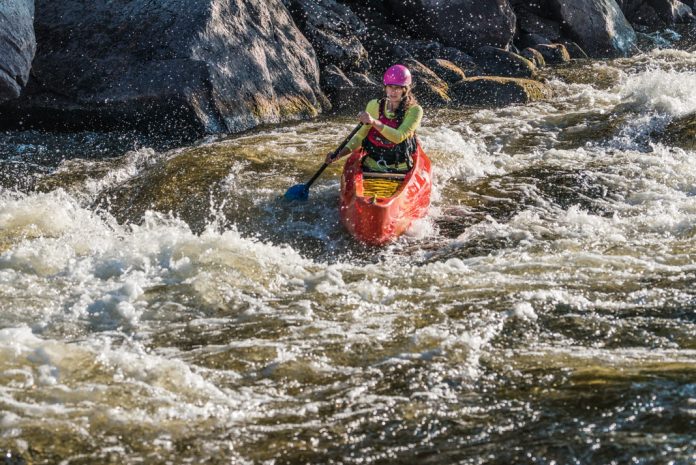
Mel Lindsay paddling Esquif Canoe's OC1 canoe down a rapid
Fast and precise, but only if you pretend it’s not there. Paddle the river, not the boat. | Photo: Scott MacGregor

Esquif Canoes founder and owner Jacques Chasse has never been one to shy away from a new project. In fact, he’s built his brand and his whole canoe building business around chasing dreams.

Esquif Canoe’s Extasy OC1 Specs:
Length: 9 ft
Width: 26 in
Weight: 41 lbs
Gunwales: Integrated
Price: $2,150 USD/$2,150 CAD
esquif.com

Long before Chasse added his Prospector series of tripping canoes to his line up—now his top-selling models, as you might expect—he built his reputation on creating innovative, yet very specialty whitewater solo canoes.

[ Paddling Buyer’s Guide: View all of Esquif solo canoe’s ]

Even today, Esquif offers 12 different OC1 models, not to mention the tandem Blast and the Vertige X, which can be either outfitted solo or tandem. Over the last 20 years we’ve reviewed the Detonator, Nitro, Prelude, Spanish Fly, Zoom, Zepher, Raven, Taureau, L’Edge Lite and Superlite and Spark, a trip down memory lane for any longtime open boater.

What all these boats have in common is the slim chance for even mediocre commercial success, but it didn’t stop Chasse and his team of enthusiasts and designers from cranking out boat after boat they themselves wanted to paddle.

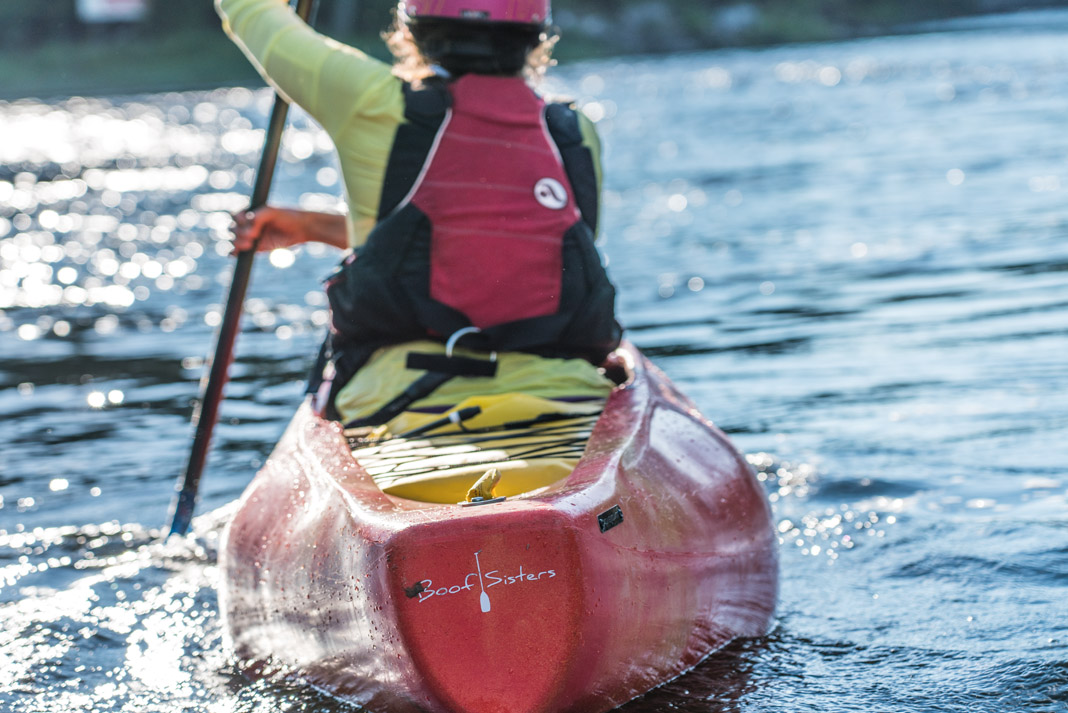
Canoeist Sabrina Barm’s creek boat design for smaller paddler’s

The men behind these designs are a who’s who list of top-level canoeists including Andrew Westwood, Mark Scriver, Dooley Tombras and John Kazimierczyk, just to name a few. An impressive roster of talent, but not one woman.

The Extasy canoe is so radically different than anything we’ve ever tested.

It should be of no surprise Chasse agreed when Sabrina Barm approached him. About building a polyethylene creeking and river running canoe specifically designed for smaller paddlers, namely women.

Barm is the first female canoeist to compete in North Carolina’s infamous Green River Race and has competed in two Adidas Sickline Extreme Kayak World Championships paddling OC1 against a field of kayakers. Let’s just say she’s a badass open boater.

Barm is also an automotive engineer with a background in boat design with a few theories on acceleration, precision, hull speed and ergonomics.

With a shoestring budget, she crunched her numbers in mathematical models and manually shaped two foam prototypes before sending Esquif the final version to produce the mold.

A radically different solo canoe by Esquif

The Extasy canoe is so radically different than anything we’ve ever tested. But let’s begin the review by not calling it a girl canoe. However, finding test pilots for the OC1 Extasy wasn’t as easy as you’d think. We were looking for intermediate to advanced open canoeists between 110 and 150 pounds.

Mel Lindsay is a Head open canoe instructor the Paddler Co-op with time paddling the Ocoee, L’Edge, Blackfly Octane and Ion and had jumped in the Extasy at Ain’t Louis Fest, just long enough to be excited about helping write this review.

“I’m a bit shaky, wobbly, unstable, and it’s hard to find my balance,” Lindsay told me after her second swim in the first few minutes in the Extasy. Soon she was able to feel out her tilt and discover how the boats round bottom allows for quick tilts. She had to build up some trust up in the secondary stability and stop fighting it.

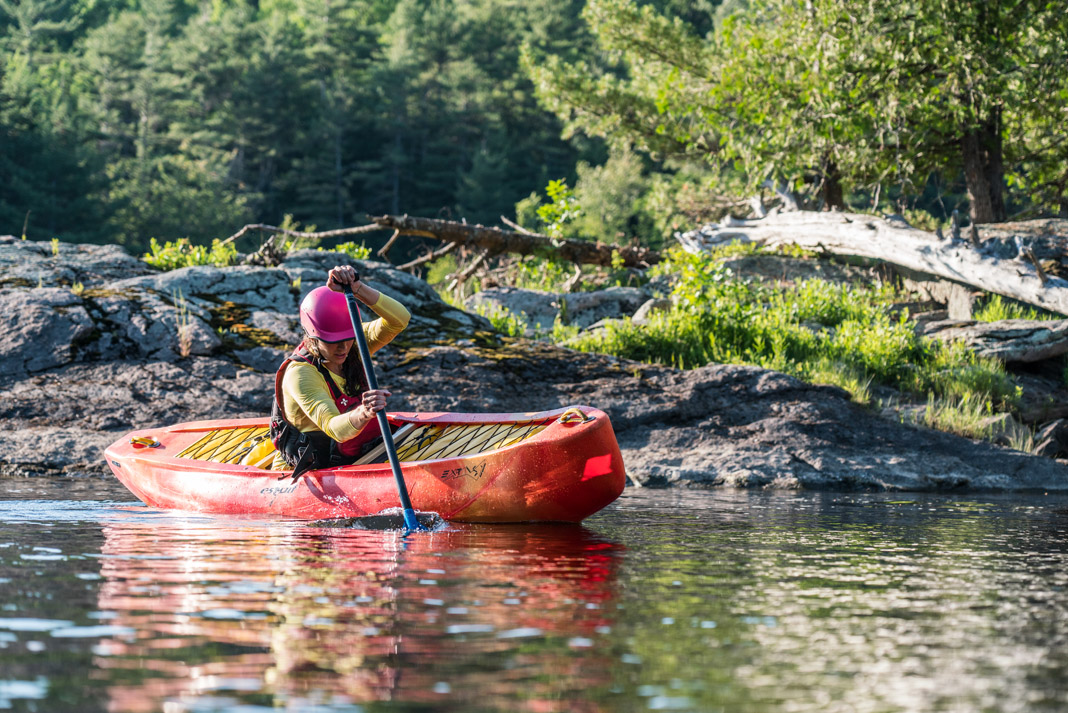
Esquif’s small canoe is 26 inches wide

The key to enjoying the Extasy is to stop looking at it. Let me explain. When you first get in the Extasy you feel like you’re paddling a lawn dart. It’s asymmetrical and barely wide enough for my hips to fit between the plastic gunwales and it keeps getting narrower.

At the bow, it is only four inches wide, the same width as a Dagger Axiom 8.5 kayak. Just behind the saddle it’s wider, 26 inches, an inch wider than my Ocoee. So the secret is to stop looking at it and get out of your head the Extasy is tippy. Paddle it like you’d paddle an Ocoee.

[ View all of Dagger Kayak’s kayaks in our Paddling Buyer’s Guide ]

Why an Ocoee? According to Lindsay, “Similar to the Ocoee, it was really easy to get the boat where I wanted it to go. Once I felt smooth in it, I just had to look where I wanted to go and use my lower body to point it there with a few mindful strokes. It took me until the third day to really feel and trust it.”

I can’t get over how easy this solo canoe is to pivot. Being neutral or slightly back you can drop the slightest outside edge and change direction anywhere, it’s crazy. An offside tilt frees the pointy bow and it snaps around. This is critical for running tight rivers; even more fun surfing steep waves pinning the bow.

Cruise into an eddy and be a bit forward on a draw or cross-bow draw and the Extasy carves like an electric knife through hot butter. The secret again is not to look at the bow, just look where you want to go and paddle it like you stole it.

What do paddlers like best about Esquif Canoe’s Extasy creek boat?

I asked Lindsay what she liked most about the Extasy. She couldn’t pick just one thing. Her list reads like the wish list of every female open canoeist I’ve ever met.

“With the beefy, heavy and slower creek boats, I struggle to generate enough speed and maintain momentum. The Extasy allows me to gain speed and maintain momentum with ease, allowing me to enjoy the river and focus on my lines and moves.”

“In wider boats such as the Option and the L’Edge, I struggle to roll. But the Extasy is narrow enough to harness my hip flick and effective core motion. To top it off, the Extasy is the lightest solo boat I’ve ever paddled and portaged. Loading the car is a dream.”

So why shouldn’t we call the Extasy a women’s solo canoe? Because dudes are going to paddle it. I loved it. Mel’s boyfriend loved it. By the numbers, we’re both too big for it and barely fit between the gunwales, but we still loved paddling it.

So I called Chasse and asked the obvious question. The answer? The project Extasy X is already in the works. Gentlemen, we can expect to see a larger thermoformed T-Formex version of Sabrina Barm’s rapturous delight sometime soon.

Fast and precise, but only if you pretend it’s not there. Paddle the river, not the boat. Feature Photo: Scott MacGregor


Protected: Formatting test

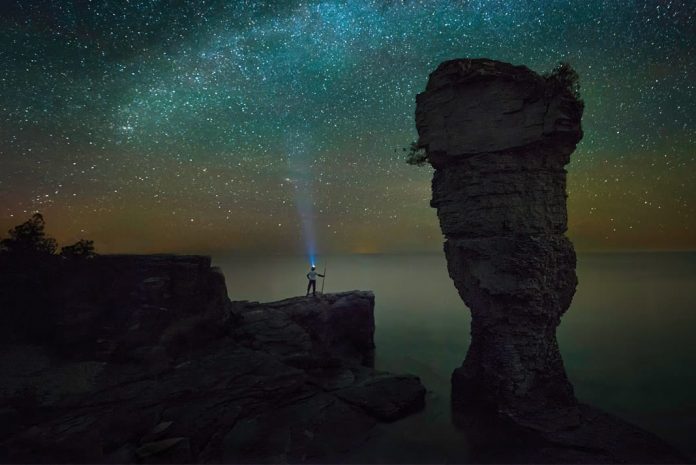
    person gazing up at a sea of stars with a headlamp
    Guardian of the galaxy, people from the edges of things bring understandings back from the forest to the kingdom. | Photo: Henry Liu

    This content is password-protected. To view it, please enter the password below.

    Inside The Car Of A Kayaker

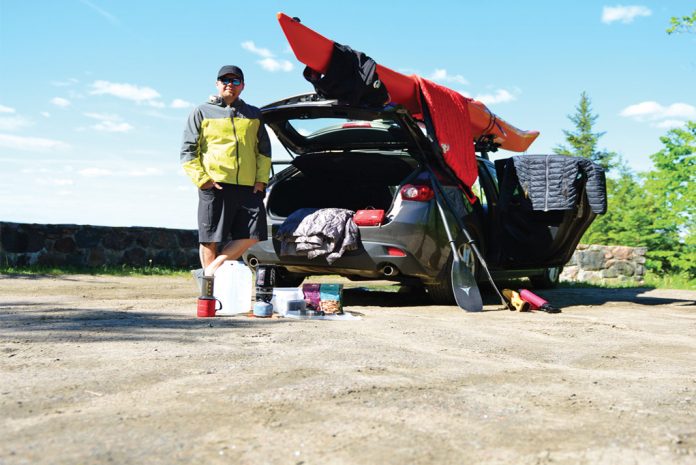
    man standing next to his hatchback surrounded by paddling gear

    What’s The Junk In A Paddler’s Trunk?

    If you believe what you see on social media you probably already know that vans are ubiquitous with freedom. Maybe, maybe not, but what they do represent well is the transitory stages in modern life. I don’t own a van. Chances are, I never will. For almost seven years I lived out of a 70-liter backpack. Then everything I owned would fit in a pickup truck. Turns out, with ingenuity and a minimalist’s compromise on comfort, one can be satisfied with the #vanlife in a hatchback. 

    First Aid Is A Thing 

    As a certified wilderness first responder and ski patroller, I accept the responsibility of pulling over at any time to assist in an emergency situation. I can grab numerous parts of this kit to stuff in my SealLine drybag and cover the majority of situations one can reasonably expect. Other essentials packed away in my car include toilet paper, hand sanitizer, headlamp and spare batteries. I assembled my own kit after years of trial and error, but companies such as Adventure Medical Kits offer packs for most conceivable adventure activities, including road trips. What can’t be stuffed in your trunk however is good first aid training and years of experience.

    Down-Dry Hugs

    Temperature fluctuations catch even the best of outdoor enthusiasts off-guard. Depending on your geographic location, hypothermia is a legitimate concern. My go-to synthetic down stuffy puffy is the Sierra Designs Tuolumne. I have been testing this jacket all winter and it’s due to hit shelves this fall for under $100. Along with this, I pack the Eddie Bauer Men’s Cloud Cap Flex rain jacket. Both of these scrunch up small beside my first aid kit. I’m prepared for any unexpected weather changes—two quality jackets for less than $250. What’s not to love?

    Shiver-No-More

    Finding a $29 Double Black Diamond down duvet at Costco cemented its inclusion in my four-wheeled kit. It is also perfect to stuff inside your kayak—as well as for picnic cover, a shivering friend or waiting for help in the wintertime. I have used it as a sleeping pad along with the First Ascent Flying Squirrel 40. This sleeping bag’s unique design is zipper less and originally intended as a bag liner for chillier evenings. The Squirrel 40 is perfect for emergency situations. The 850-fill StormDown and tough ripstop nylon helped earn this sleeping bag the Active Junkie 2016 Badass Gear Award. 

    Caffeine Fix

    My morning rituals are pretty much the same no matter where I go. And I love coffee. The AeroPress Coffee Maker and GSI Javamill coffee grinder live year-round in my Mazda. I also have a JetBoil Flash, which holds 1.1 liters of water and boasts a boil time of roughly three minutes. If you use your kayak or tires as a windbreaker, chances are your coffee water will be ready even faster. I keep a gallon jug of fresh water to fill hydration packs or Nalgenes.

    Nutritional Pick-Me-Ups

    Have you strolled around the dehydrated food block in your local adventure gear shop lately? With brands like MaryJaneFarm, Harmony House, Good To-Go and of course Backpackers Pantry there are a myriad of options for your gluten free, vegan, organically-sourced, lactose-free diet. Along with an assortment of granola bars well past their expiry dates, I also carry a few Clif bars and bags of AlpineAire Foods with me. AlpineAire’s unique meal and snack options have quickly become a favorite staple for day or weekend trips. Their Chicken Gumbo, Mountain Chilli and Himalayan Lentils & Rice meals are very reasonably priced and remarkably delicious. As with all pre-packaged, dehydrated foods, remove the moisture pack and just add water. These are easy to store, access, eat and share on tailgates anywhere. 

    Why You Need to Kayak Newfoundland’s Northern Peninsula

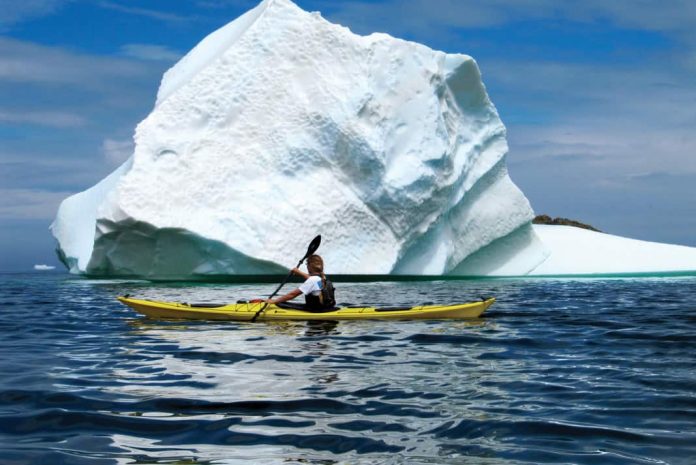
    woman sea kayaking beside an iceberg

    “The huge island stands, with its sheer, beetling cliffs, out of the ocean…like a strange thing from the bottom of the great deep, lifted up, suddenly, into sunshine and storm, but belonging to the watery darkness out of which it has been reared.” —R.T.S. Lowell

    Nearly Two Centuries After American Novelist Robert Traill Spence Lowell Penned This Arresting Description Of Newfoundland, The Island’s Remote, Rugged Beauty Still Inspires Awe

    Thousands of years of human history, from ancient Innu cultures to Viking settlers and Basque whalers, can be felt and observed while exploring the province’s diverse coastal and inland waters—yet it remains remarkably unspoiled.

    Wildlife enthusiasts are rewarded with the world’s largest concentration of humpback whales, as well as seabird colonies whose residents—including graceful gannets and clumsy puffins—number in the millions. Moose, caribou, lynx and black bear roam the dense forests that cling to the island’s scant soil.

    Newfoundland’s west coast is dominated by the Long Range, an ancient extension of the Appalachian Mountains, running some 450 kilometers from Corner Brook to the tip of the Great Northern Peninsula. The exposed rocks serve as a kind of Rosetta Stone for geologists studying plate tectonics and mountain building, making Gros Morne National Park—the jewel in Newfoundland’s rich parks system—a UNESCO World Heritage Site.

    For Paddlers

    These worn and weathered giants provide a majestic backdrop for coastal trips along the peninsula’s exposed western and roadless eastern shores, as well as explorations of Gros Morne’s famed fiords and ponds.

    If You Have A Half-Day

    Paddle out of the pretty village of Norris Point into the sheltered arms of Bonne Bay. Watch for whales as you cross to the artists’ sheds in the community of Woody Point. Return by water taxi to buy you more time.  

    If You Have A Day

    Put in on Trout River Pond near the southern edge of Gros Morne National Park. Head east into this 15-kilometer-long gash through the rust-colored Tablelands. This barren landscape is one of the world’s finest and most accessible examples of exposed mantle. Park your kayak at the campsite located in the Narrows, and hike into the hills for a closer look.

    If You Have A Weekend 

    Explore the fiord-like arms that reach inland from the Bay of Islands. Launch from Cox’s Cove and tour up 12-kilometer-long Goose Arm and 8-kilometer-long Penguin Arm, with views north to the 2,450-foot mountains. Campsites are found at the head of both arms.

    If You Have A Week 

    Make the committing journey north along the peninsula’s eastern shore from Jackson’s Arm to Englee—the next road-accessible point, nearly 200 kilometres distant. En route, discover abandoned outports and encounter towering icebergs. Few landings, distance and isolation make this a challenging route for experienced paddlers.

    5 Things To Know:

    Wildlife

    Black bear, lynx, otter, red fox, beaver, woodland caribou, moose, 22 whale species, seals, wild Atlantic salmon, bald eagle, 350 seabird species.

    Exposure

    The island is famous for its unpredictable winds, icy waters, sunkers (offshore rocks and reefs) and highly changeable weather. 

    Treasure

    Hunting Hidden gems abound in Newfoundland’s network of ecological reserves. At the tip of the peninsula, watch for icebergs.

    Diversion

    Visit the 1,000-year-old Viking encampment at L’Anse aux Meadows National Historic Site, with recreated timber-and-sod buildings.

    Outfitters

    Coastal Adventures

    Gros Morne Adventure

    Committed 2 The Core

    John Connelly’s 75-Day Solo Paddling Expedition

    John Connelly became the first person to link the Northern Forest Canoe Trail with the Maine Island Trail during a 1,500 mile, 75-day solo expedition. Paddle Quest 1500 began as an “expedition to inspire outdoor desire.” He wanted to encourage people to spend more time outdoors, get involved with conservation efforts and decrease time in front of computer screens. Followers were able to track his progress in real time and now Connelly has completed the first draft of a book about the expedition. He was just packing for another kayak trip when I caught up with him to ask him about his adventure of a lifetime.

    WHY CONNECT A CANOE AND A KAYAK WATER TRAIL?

    I was encouraged to do something special for my 60th birthday and I knew nobody had canoed the entire Northern Forest Canoe Trail and also kayaked the Maine Island Trail. Doing both of those would have been pretty big, but it wouldn’t have been epic. Connecting them, I thought, would be epic. It took me months to plan this trip. I wanted to go light enough that I could do all of my portages and carries making one trip. I got the lightest equipment that I could find, including my boats. My Wenonah Voyager canoe is 17.5 feet long and weighs only 32 pounds and my Stellar S18R kayak is 18 feet long and weighs just 38 pounds. I didn’t cut the handle off my toothbrush, but I came pretty darn close.

    WHAT STANDS OUT THE MOST FROM THIS TRIP?

    I paddled in more days of small craft warnings than you can believe. When I went around the gap between Cushing Island and Peak’s Island in Casco Bay, Maine, NOAA was wrong. The waves were already at four feet and starting to jack up. The wind had to be 20 to 25 mph and it was actually pretty gnarly. I realized that if one little thing went wrong, I’d be okay, but if two little things went wrong… not so sure. To say it was bumpy is an understatement. As it turns out, it really was a deadly storm. There was another sea kayaking party further back up the coast that ran into trouble. The guide and the two guests all went over and came out of their boats. Two of them died, including the guide.

    WHO SAW THE IRONY OF USING TRACKING TECHNOLOGY?

    I had a VHF radio, my iPhone 6S, my iPad Air 2 and I had my InReach Explorer. I would just set the tracking and forget about it. For me it was like it wasn’t happening. I didn’t interact with my devices except for navigation each day. I really enjoyed sharing the journey, inspiring people to get outdoors. I hoped that people would want to get out and paddle the waterways near them and get to know them. I had an interesting phenomenon on this trip and I call it the, Are You John Connelly Phenomenon. I ran into people in absolutely the middle of nowhere, people I knew. I learned that if I want to drop out of sight and be reclusive, I better not go to the woods.

    WHEN DID YOU DECIDE TO GO SOLO?

    From the beginning I thought it would be easier and be faster. Even when I’m recreational paddling, it’s just shy of race pace. And it was easier to plan for just one person. The only support team I had was my wife, Nicole. She actually met me nine times along the way. She brought me all my re-provisions and my supplies, for the most part. She was really my trail angel in that way, making sure I got my stuff. I really didn’t enjoy a lot of time away from Nicole, so I’m kind of thinking I want to do more expeditions, but I want her to come along. It’s got to be the right expedition in the right place. She doesn’t want to experience polar bears or crocodiles.

    WHERE DO YOU GO AFTER COMPLETING THE TRIP OF A LIFETIME?

    The next really big trip is our 16-day Colorado River trip in September. When I was dating Nicole, I promised that I’d take her down the Grand Canyon on a raft, and it’s time to make good on that promise, especially after abandoning her for 75 days on my expedition. I’d also really like to get to New Zealand, which of course has neither crocodiles nor polar bears. No matter where we go, I really loved being able to choose where I spent the night, having the freedom to live out of my boat and camp where I wanted to camp. There’s nothing better than living out of your boat for days and days at a time. I felt alone out there, but I never felt lonely.

    Crazy Paddling Photography (And How It Was Taken)

    kayaker paddling through logs
    Photo by Kevin Light

    Jordan River is located on the west coast of British Columbia, 70 kilometers west of downtown Victoria on Vancouver Island.

    It was established back in the 1880s as a logging camp but I was there with James Manke and the Stohlquist WaterWare team because it is now more commonly known for challenging surf.

    Unfortunately, the exciting surf that we anticipated for the shoot did not materialize that day. We looked for other ideas.

    One option was to shoot down from a bridge looking for graphic shots of colorful kayaks and gear against dark blue water.

    Between the bridge and a hydroelectric powerhouse is a raw log sorting facility. With the logs grouped tightly together they provided an interesting design. I asked Lee Richardson, not expecting that he would agree, to paddle through the gaps in the logs. Lee paddled toward the gap and upon reaching the opening lifted his paddle letting his momentum carry him deep into the pile.

    Neither of us realized he wouldn’t be able to paddle his way out. The aisle was not wide enough between the side of his kayak and the logs to get a solid purchase on the water. Instead he was able to safely shuffle his way out gripping the logs with his hands.

    Meanwhile, I had to keep an eye out for the full loaded logging trucks rumbling toward the bridge as there was not much of a shoulder from which to shoot.

    I had with me a 600mm lens on a Canon EOS-1D X and a 50mm f/1.2 lens on another Canon ESO-1D Mark IV body. I chose to shoot with the 50mm to show more of the environment, which I think is the most interesting part. I did however go with more depth of field because of the distance to the subject and because of the advice from Canadian Press photographer Darryl Dyck who suggests in these types of scenarios I give myself a little more room and shoot at an aperture between f/5.6 and f/11.

    Over the past year I have learned much more about shooting kayaking but the lesson I learned here is: If you think something is impossible and you don’t ask, it is.

    What’s Next For Whitewater

    Photo by: NICK GOTTLIEB

    What’s on the horizon line?

    The art of river running is coming back strong. This is love of running rivers of a wide spectrum of difficulty and making the most of attaining, squirting, splatting, surfing all in the same boat with a renewed focus on better style and technique. Boats like the Braaap and the new Pyranha Ripper are the perfect crafts for this kind of paddling, and it’s something we haven’t had since the heyday of the Dagger RPM and Prijon Hurricane. Flat spinning a Hurricane, even on a class II breaking wave, is way harder, cooler, and more accessible than the same move in a playboat on Garburator. As a result, I think I would not be investing heavily in dedicated playboat or creek boat futures right now.

    —John Weld, co-founder, Immersion Research

    You are seeing younger paddlers who missed the whole evolution of the kayak in the ’90s and 2000s wanting to experience the older shapes. Older boaters reminisce and want to paddle what they paddled years ago to enjoy some of the things the new boats are not good for. Racing keeps growing again. It died off a while ago and is now resurging. Freestyle is stagnant but healthy, with some events getting bigger and others getting smaller.

    —Eric Jackson, founder, Jackson Kayak

    Playboating and creeking have peaks and dips, but in my opinion expedition kayaking is the backbone of the whitewater industry. We are seeing more expeditions combining challenging whitewater and big distances. And we are seeing this more now because social media is so popular and useful in promoting trips. The stories are being told through stunning photography and video.

    —Erik Boomer, pro athlete

    I witnessed the first descent of the Upper Gatineau in a paddleboat, and I don’t think this trend will catch on. We are seeing a return to user-friendly whitewater open boats with an emphasis on lighter hull weights. Paddlers appreciate the improved performance of a lighter boat, as well as the ease of carrying it.

    —Paul Mason, instructor trainer

    What are you most excited about?

    I think the growing recreational market is really exciting. These are the people that paddlesports really needs to foster and convert into paddling enthusiasts. We have all these new unconventional channels where people are being introduced to paddlesports. There are duck hunters buying kayaks right now that’s a new paddling enthusiast waiting to happen

    —Ryan Lightbody, Marketing Manager, Stohlquist

    We are stoked to see more whitewater events evolving out of what were originally races for elite paddlers.

    I think creating community, and not exclusivity, around these events will go a long way to consolidating our sport. Another thing is the focus on youth programming. We are seeing a bunch of organizations, ours included, really focusing on getting kids and families into whitewater boats. What is really exciting is the amount of requests we’re getting for kids gear right now. This can only make our sport more healthy in years to come.

    —Simon Coward, owner, Aquabatics

    Source-to-sea river trips, and the gear being developed to run class V whitewater and then descend all the way to the river’s mouth excites me. Longer designs have been created to incorporate speed, comfort and increased room for storing gear for weeks and months worth of downriver travel. As opposed to kayaking trips that were once planned to descend lots of short sections of rivers, there are more and more trips being planned to accomplish a single long stretch of river encompassing the entire range of classification from flatwater to hard whitewater.

    —Ben Stookesberry, explorer

    I see some open boaters realizing the benefits open canoe slalom has for their overall skill level. I’m certifying approximately the same number of canoe instructors each year, but notice they tend to have a higher level of safety skills. I think it would now be an exception for one of my paddling buddies to not have river rescue certification.

    — Paul Mason, instructor trainer

    What’s the next big innovation?

    When I see what’s happening in other watersports, I’m pretty sure we will see some foils under kayaks really soon.

    —Nouria Newman, pro athlete

    Internet of Things paddling gear. Smart paddles fully connected via Bluetooth to your smartphone to capture every second on the river and allow constant updates of your social media feeds, along with weather updates and information regarding the river you’re paddling. Drysuits keeping track of how many strokes you’ve taken, your heart rate and let you know when you need to eat or rest. Ambient sensors detect if you are, in fact, running the shit, and letting friends and family know in realtime. HUDs showing claw alerts so you know when it’s okay to throw the brown claw and when to just cool it. Also, we’re really excited about what’s happening in virtual reality. Virtual kayaking will prove to be much safer and more comfortable than actual kayaking. The additional revenue generated by targeted, relevant ads to the particular customer will also be quite exciting.

    —John Weld, cofounder, Immersion Research

    If there was a way to bombproof a sprayskirt that would be it. Most of my major swims have come from decks coming loose. If there could be a way of locking a skirt for certain rapids that would make me relax a bit more.

    —Mariann Sæther, pro athlete

    I’m anticipating Esquif ’s Extasy open canoe—it is the first canoe designed for women, and also the first OC to be designed by a woman. I look forward to seeing my daughter play in a boat built for someone her size.

    —Eli Helbert, “The Canoe Guru”

    We are at a unique time when there is almost no such thing as too remote in terms of access. Our overland route across Greenland became a way to establish a carbon neutral route into one of the most remote rivers ever descended. More than that, we utilized the icecap crossing to describe the river’s entire system, including the second largest chunk of ice on earth that is rapidly melting. In other places, like equatorial Colombia, paddling vast stretches of flatwater to access a remote gorge not only cuts down on expensive motorized transport, but allows the paddler to take in the rich culture and histories of a river that gives birth to an exploding river canyon in the middle of nowhere. There are so many more stories for us to tell beyond just bravery and the impressive whitewater that results from these expeditions. By taking the longer, slower and often times cheaper routes to the whitewater we are in the unique position to tell those stories.

    —Ben Stookesberry, explorer

    Top 3 Solo-Plus Stoves For Hungry Paddlers

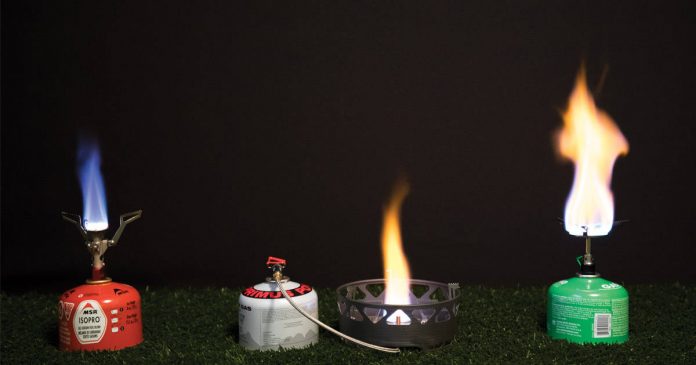
    3 small stoves in a row

    There are a dizzying array of stoves and pot-sets on the market. Integrated systems, solo, two-person, three-person, minimalist stoves, gas, liquid—you get the idea. We rounded up a few lightweight gas options that will certainly fit your go-fast adventurous culinary needs. Whether you are soloing the new Nova Craft Fox (see page 85) or counting ounces for a bike-in paddle-out packraft (see page 59) first descent one of these kitchen combos will wet your appetite and warm your belly.

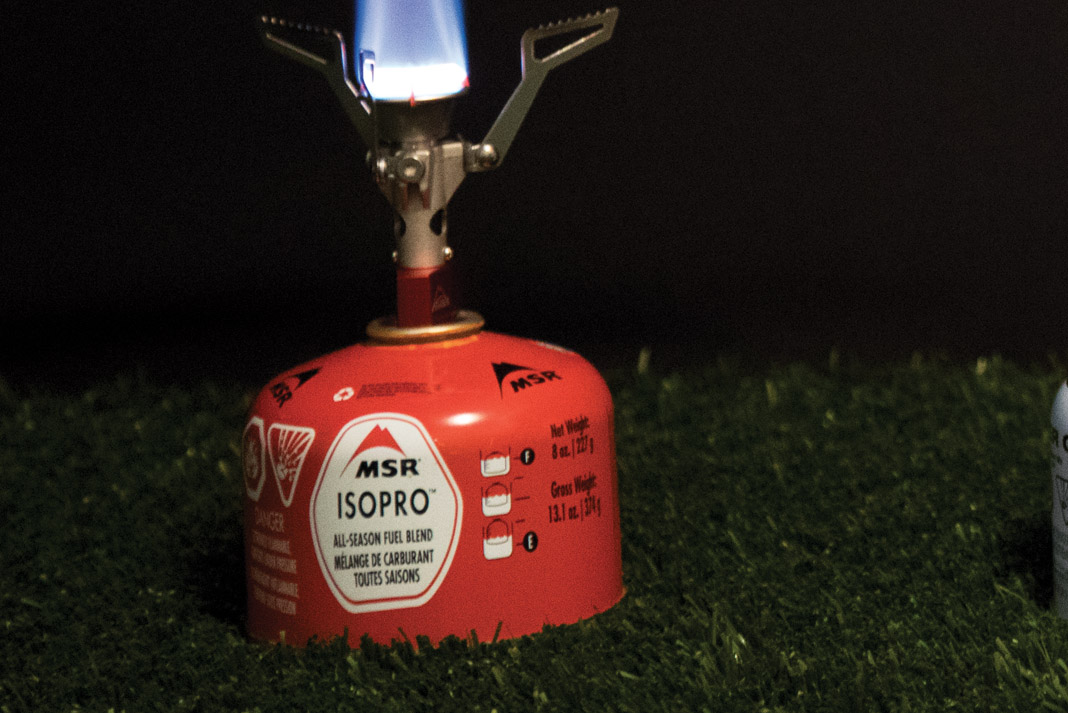
    red solo stove
    MSR PocketRocket 2. |Photo: Gabriel Rivett-Carnac

    1. MSR PocketRocket 2 And Ceramic 2 Pot Set

    $50 / $95 | WWW.MSRGEAR.COM

    I have owned the original MSR PocketRocket for over four years. Not a company to rest on its laurels, MSR decided to tweak the popular design to make the new PocketRocket 2 lighter, smaller and equally as powerful. It does everything just like the original.

    It’s certainly not enough to convince me to replace my trusty minimalist gas top—but if you are new to the market, it’s a great choice. MSR gave the PocketRocket 2 precision flame control, shaved off .4 ounces of weight and changed the cradle design for more compact storage.

    For a solo tripper with a voracious appetite or for going tandem, MSR has introduced to their kitchen pot set line the Ceramic 2 Pot Set. At a compact 460 grams, the ceramic non-stick lining on both pots reduces the need for cooking oil. The nesting pot design will accommodate the PocketRocket 2 and a MSR gas canister up to 230 grams.

    The pot handle can be switched from one pot to the other by way of a push-release button. This handle folds over top of the lid, which doubles as a serving plate and strainer and fits both pots. The hardened aluminum is durable and ready for the abuse your adventures will undoubtedly bring.

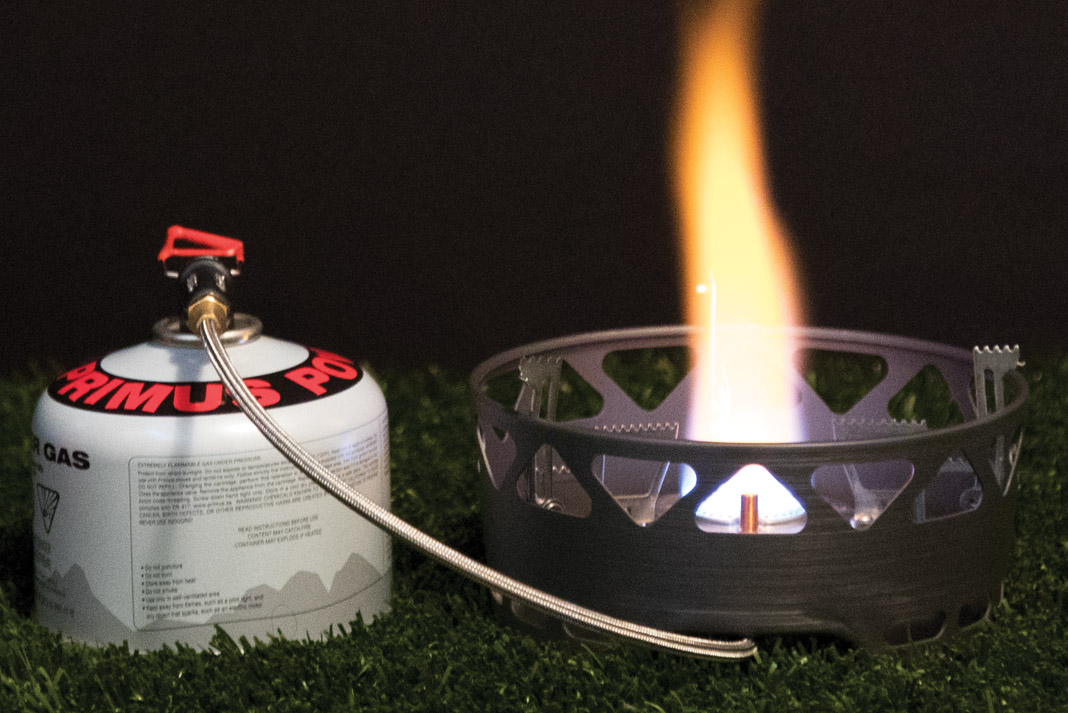
    white and red solo stove
    Primus PrimeTech Stove. |Photo: Gabriel Rivett-Carnac

    2. Primus PrimeTech Stove Set 1.3L

    $75 | WWW.PRIMUS.US

    I’ve wanted to visit Estonia for over a decade. When I found out that Primus originated and continues to manufacture there, well let’s just say travel plans are heating up quickly. The new PrimeTech Stove Set has more harder, more industrial lines than other pot sets I am accustomed to. But in the unpacking of this 1.3-liter, 342-gram double pot kitchen, the stove really surprised me.

    And the surprise was a good one. We all know the precarious instability that comes with liquid-stove legs or trying to balance pots on stoves on gas canisters on rock beaches or upturned canoe hulls? The Primus PrimeTech stove uses a gas line to connect outside of the shell to a gas canister size of your choosing. This leaves you with a very stable stove base of 18 centimeters across.

    Small folding braces inside allow for perfect integration of the Primus anodized aluminum pots or accommodate frying pans and pot sets of other brands. The PrimeTech pots are non-stick and features heat-dispersal rings for a faster boil and even heat.

    This will reduce cook time and the dreaded carcinogen ring to scrap off. Both pots have strainer lids that fit with the included pot gripper that is easily attached and removed.

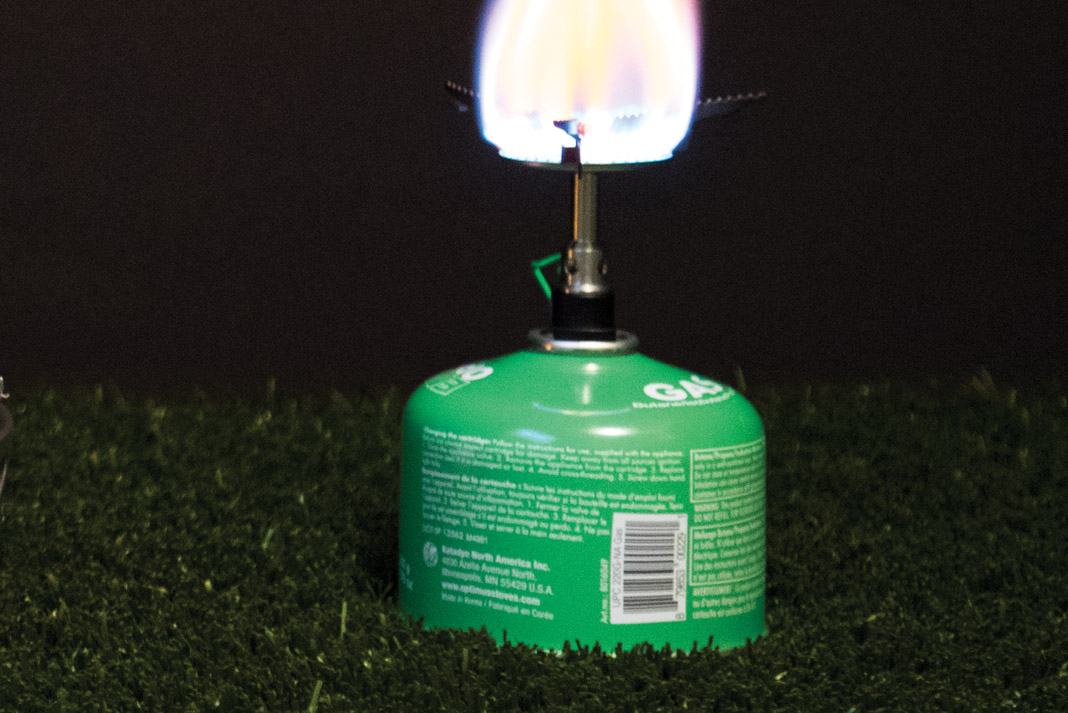
    green solo stove
    Optimus Crux Lite. |Photo: Gabriel Rivett-Carnac

    3. Optimus Crux Lite And Terra Weekend HE Cookset 0.95L

    $58 / $37 | WWW.OPTIMUSSTOVES.COM

    The Crux Lite gas stove is the younger, lighter brother of the original Crux. Optimus eliminated 11 grams with the Crux Lite, pairing it down to only 72 grams. This 3000-watt gas burner advertises a 90-minute burn time for each Optimus 220-gram gas canister.

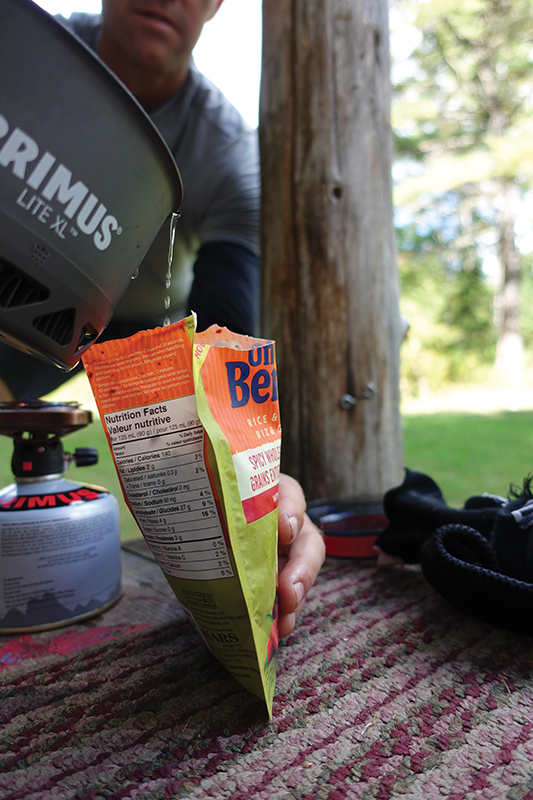
    When you need Uncle Ben’s right now, dependent on the season and altitude, the Crux Lite averages three-minutes per one-liter of boiling water. We paired the Crux Lite with the Optimus Terra Weekend HE. This .95 liter pot set is a generous solo or fast-and-light double kitchen option.

    The lid doubles as a high-walled frying pan—made from the same hardened aluminum as the pot. Both feature folding handles for easy and compact storage. The heat exchanger in the base of the pot fits around the stove channelling the heat for efficient and even distribution. We love the way these heat exchanger pots fit around the stove rather than just resting precariously on top.

    The internal dimensions allow for storage of a standardsized canister and the Crux Lite compact stove. The Terra Weekend HE comes in a mesh bag to protect it inside a canoe pack or dry bag.

    How To Irritate And Annoy The Happy Camper

    man in woods with a fake moustache

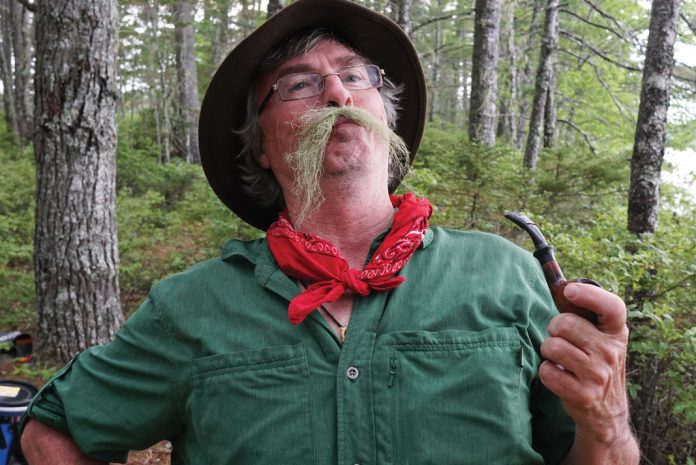
    The release of my book, The Happy Camper: The Essential Guide to Life Outdoors back in 2005 is what probably kicked it all off. Now my Facebook handle is @thehappycamper. My YouTube channel is KCHappyCamper. I’m introduced at public speaking engagements as The Happy Camper. For the most part being The Happy Camper is really great.

    I’m Generally A Happy Person And The Happiest When Out In The Woods Camping

    So the stage name makes sense, right? Except when I’m not happy. It’s true. I have a dark side that shows its demonic face now and then.

    I’m not unhappy when I’m trudging up long, rocky and buggy portages. I’m not unhappy eating porridge for the fifth morning in a row. I don’t even mind being chased off lakes by lightning. These are unavoidable circumstances. These and the other elements of outdoor adventure like them are the challenges we enjoy overcoming and without these adversities we would not have as many fond memories.

    What does make me an unhappy camper is when a campmate does something immoral. I’m sure I’m not alone here. Call these behavioural faux pas, pet peeves, personal vexations, disgruntlements or whatever. But here, in rough order of magnitude, are a few ways to piss off The Happy Camper.

    Let’s Begin With The Mild Irritants

    Having a paddling partner arrive late at the access point. Doing so without good reason or apology bumps this up a level. Not paying an equal share of trip costs. Not doing one’s fair share of camp chores. And at the top of this list, constantly complaining about the unalterable weather.

    Then There’s The Moderately Annoying Tendencies

    Which include, in no particular order: yelling “There’s a moose” and watching it run away before anyone can get a camera out; carrying less than me but complaining about the weight; constantly comparing gear choices and extolling the virtues of theirs over mine.

    I’m also not a big fan of people sneaking into my supply of gummy worms and eating the Smarties from my stash. I don’t like it when someone borrows my toothbrush and doesn’t tell me about it until the last day. Or when you run out of toilet paper then use my supply, in outrageously generous amounts. Or when you critique how I run rapids, start fires, hang-the-food and make and clean up meals.

    Going Poop Too Close To Camp Is Just Wrong

    Not digging a deep enough hole is gross and lazy. Singing the same song over and over again is okay if you’re Johnny Van Zant of Lynyrd Skynyrd, otherwise annoying.

    Why would you use a sharp metal knife to cut the cake I baked in my non-stick coated Outback Oven? And then there is showing off, getting hurt and whining about it while I have to take care of you.

    The Absolute Worst

    Worse than littering and blocking the put-in of a portage; worse than dog owners who don’t control their dogs; even more bothersome than having the camp cook not wash his hands—is being obsessed about completing the planned route sooner than expected.

    It makes me a really, really unhappy camper being with a person who is determined to rush through a canoe trip that took us weeks to plan and sleepless nights wondering about route choices and gear options. With days, weeks and months spent waiting to escape from the crazed normality of day-to-day life, it makes no sense to race through the wilderness and finish a trip early. A seven-day canoe trip is a seven-day canoe trip. Why turn a seven-day trip into a five-day trip? So you can go back to the rat race you were trying to escape in the first place?

    I’ll be sleep deprived and grumpy if you snore. I’ll become irritable if you drink all my whisky. But I’ll be the extremely unhappy camper if you shorten our time in the woods.

    BONUS IRRITANT: SEEKING CELLULAR SERVICE INSTEAD OF CHATTING AND EATING S’MORES AROUND THE CAMPFIRE

    Fat Biking and Packrafting On The Black River

    Scott MacGregor
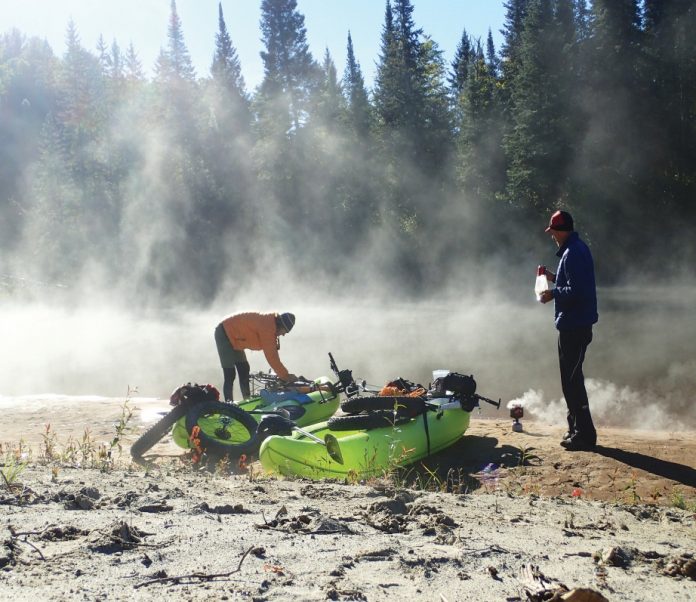
    Scott MacGregor and Cam Dube pack their packrafts during a morning on the Noire River.

    I arrive after dark on Friday evening to find Cam in his basement bike shop gear room making last minute adjustments to our menu. A leftover box of Halloween candy bars sits on his workbench beside mesh bags full of one pot Uncle Ben’s instant rice and foil wrapped strawberry Pop-Tarts.

    I’m new to bikepacking. In fact, I haven’t even been backpacking since freshman year at university. I remember thinking even then that backpacking felt like a four-day-long portage.

    I’ve just come off a multi-day river trip where three families shared two 120-liter coolers of food and a two-burner propane range lashed to raft frames. We’d grilled fresh steaks, baked cakes in cast iron Dutch ovens and the parents enjoyed tall-boys of local microbrews.

    Cam handed me a mesh bag smaller than the lunch box I take to the office. He clearly misunderstood the look on my face, because he said, “I know, I packed us extra meals in case we have to spend another night.”

    Realizing this was my food for the entire trip, I reached for the box of bite-sized Snickers and Mars bars and filled my pockets.

    Cameron Dubé pitched a bikepacking packrafting story to Rapid. I’d just returned from a tradeshow where AIRE had revealed their new BAKraft Expedition packraft. Norco Bicycles had just sent out preproduction information on their new Ithaqua fatbike. And because my dad died in the spring, I’d gotten to only a few of the river trips on the list beside my bed. I needed an adventure.

    Before any of the other editors could respond to Cam’s query, I wrote to tell him I was interested and that I’d source boats if he’d organize the food. I received a thumbs up emoji and one word: “Where?”
    Muddy Waters 2

    The criteria we set for the trip seemed reasonable. The whitewater couldn’t be lame. It also couldn’t be over the top hard either—we hadn’t test paddled or even inflated the boats. It also had to be real adventure. The idea of bobbing down and sleeping over on a popular run that could be shuttled in a Civic and knocked off in an afternoon seemed silly. Why bother with fat bikes and camping gear?

    As autumn crept toward winter we added one more criteria. We had the same window that most other dudes with jobs have—Friday after work to Monday morning.

    Hidden in the woods between Grant Settlement Road and the river right bank of the whitewater section of the Ottawa River there is a spider web of purpose-built singletrack mountain biking trails. Cam will say dozens of dedicated volunteers cleaned up trash, cut and shoveled sections of rocky and root-filled trails and donated sweet treats for bake sale fundraisers. Those of us who ride these trails know that Cam has been the driving force behind creating a local mountain bike scene in a farming and rafting town.

    Cam and I have an hour to chat about the early days of the Beachburg Off Road Cycling Association while we drive from his home in Beachburg, Ontario to Rivière Noire on the Quebec side of the Ottawa River where we decided our weekend adventure would begin.

    The Noire River is a staple weekend to seven-day whitewater canoe trip. Black Feather has been operating here since the 1980s.

    Depending on the time of year, the Noire is roughly 240 kilometers of runnable class I-III wilderness river. The Noire is the lesser-known sister to the Coulonge and Dumoine rivers that Black Feather describes as, “The longest distance of runnable whitewater, the shortest distance that must be portaged, the best chance of seeing wildlife, and the smallest possibility of encountering other paddlers.”

    Perfect.

    We arrive at the Black River Inn where we park beside only one other car and begin unloading. John Perron wanders down to check out our fat bikes and collect the $20 fee for parking.

    “As far as I know there is only one other group on the river. You’ll probably be the last until spring,” he tells us while the contents of my pickup truck get stuffed and strapped to our bikes.

    The Black River Inn and the bridge we use to cross the river were built 100 years ago in the boom of the lumber industry that opened this entire region. The Inn looks abandoned, or at least like it’s taking a nap in the quiet time between canoe shuttles and the upcoming frenzy of deer hunting season.
    Muddy Waters 3

    Cam has his bike packing systems down to a science.

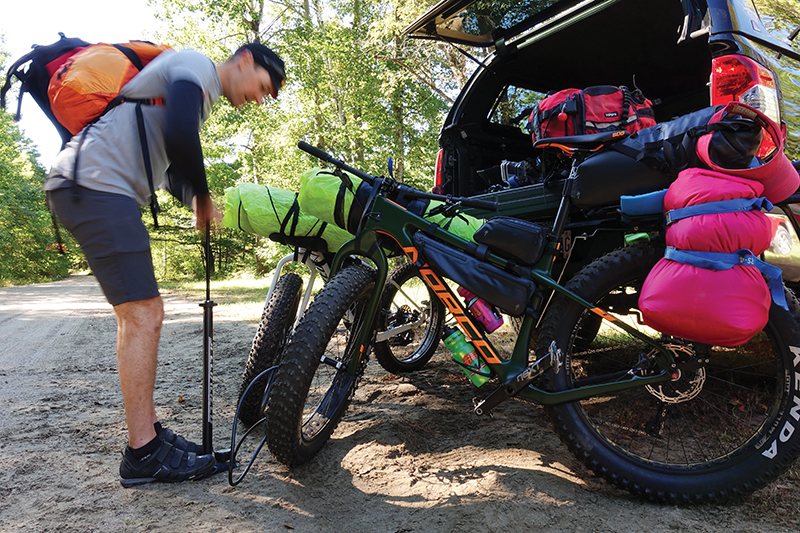
    Serious bikepackers these days are doing away with the traditional rack and panniers system used for road touring in favor of keeping everything in-line. Bags are shaped to fill all the nooks and crannies created by the frame, handlebars and seat. Cam uses a custom-made frame bag lashed in the main triangle of the bike to stow all the heavy things.

    “You want to keep as much weight as you can low and center on the bike,” he tells me. The bag swallows our one-burner propane stove, fuel canisters, cook set and his small bundle of food.

    Beneath our seats hangs another 18 liters of storage we use for our sleep systems, which would normally hang across the front of the handlebars. Except on this trip that’s where we carry the packrafts. On the top tube at Cam’s handlebar stem is a snack pouch full of trick-or-treat candy bars. We shoulder daypacks to carry our PFDs and other odds and ends.

    When it comes to paddling and biking gear, we realize some things have to work double duty. Our bike helmets will be fine as paddling helmets. Our sticky rubber bike shoes will make do as river shoes. Paddling jackets become riding shells. There isn’t room for both.

    The logistics of the river trip are remarkably simple. Park at the take-out. Ride some 35 kilometers up the river. Paddle back to the truck. What we hadn’t considered is that roads are created as the shortest distance between two points. Rivers find the windiest route of least resistance. And bikes roll faster than kayaks can be paddled.

    By lunchtime, and after three stops to pick up gear rattling off my bike, we nail our packing systems and are rocketing long gravel descents, popping off rollers, splashing through puddles and crawling over beaver dams like on any Saturday afternoon ride.

    The whole fat bike bikepacking thing is relatively new. While the first Iditabike backcountry race in Alaska was way back in 1987, fat bikes lived in relative obscurity, like telemark skis and squirt boats, until 2010 when a couple boutique bike brands released complete models to mainstream bike shop distribution channels.

    Finally in 2014, Specialized released their Fatboy. What was once thought a fad or niche was being picked up by the major bike manufacturers. That fall I jumped on Norco’s new Big Foot and declared “I will never buy a fat bike.”
    Muddy Waters 4

    The first fat bikes were heavy and pokey. The geometry was weird. I couldn’t have imagined riding two kilometers of singletrack let alone 1,000 miles through frigid God’s country, Alaska. Cam on the other hand, was an early adopter.

    “I just found the fat bike to be the perfect all-round mountain and, year-round bike,” he tells me. “If I want to race there are fat bike categories. I can be fast on trail rides. And if I want to go on adventures like this I can do it all on one bike.”

    Granted, technology has come a long way in the last few years. The new Norco Ithaqua is a full carbon-fiber 26-pound fat bike, as is Cam’s Fatboy. Cam also has carbon wheels on his, which drops his fat bike to about the same weight as most cross country race bikes. Fat bikes are now, dare I say, sexy.

    I was too busy with deadlines so I left the route planning all to Cam.

    He figured if we kept the river on our right-hand side we couldn’t get lost. Whatever trails we use will eventually feed into a main logging road that crosses another bridge over the Noire. Once on the river, we will paddle until we come to the bridge at the Black River Inn. Seemed reasonable.

    The original plan was to ride one day and paddle back the next. We arrive at the put-in mid-afternoon and are excited to try the boats, so decide to put on the river. It was a good thing we did.

    I didn’t know Cam hadn’t packed a map until we began inflating the boats and disassembling our bikes.

    “So, how far is it back down to the truck?” I ask.

    He said he couldn’t remember the exact number of river miles, “But it’s all downhill.”

    I smile and squeeze another bag of air into the boat.

    To keep the pack weight to a minimum, AIRE’s storage bag comes with a hose and doubles as an inflater. Fill the bag with air and squeeze it through the hose into the raft. It’s a clever but tedious system. Cam and I decide on the next trip we’ll pack a small hand pump, in which we’ll also store the repair kit, bike tools and spare parts.

    All told, in less than an hour we completely change sports and shove off from our sandbar and spend the last couple hours of daylight munching on Snickers bars meandering past beachy sandbars and log jams left by the last spring flood.

    “How much further do you think we should go today?” I ask Cam for the second or third time as we float past another exotic white sandbar

    “We can probably stop anytime,” he says.

    Without a map, he really doesn’t know. And I really don’t care. We are enjoying the trip and only have to set out our sleeping bags and boil water for our one-pot dinners. And so we shrug at each other and keep paddling.

    Hap Wilson’s book, Rivers of the Upper Ottawa Valley, is the go-to river guide for the Dumoine, Coulonge and Noire rivers. Wilson’s hand-drawn maps have inspired and guided thousand of canoeists down these rivers. Originally published in 1993, Wilson’s guide predates the new logging road and bridge now at his Rapid #43, the access point we used to begin our trip. Even if we’d brought his book we wouldn’t really know how high up the river we started.

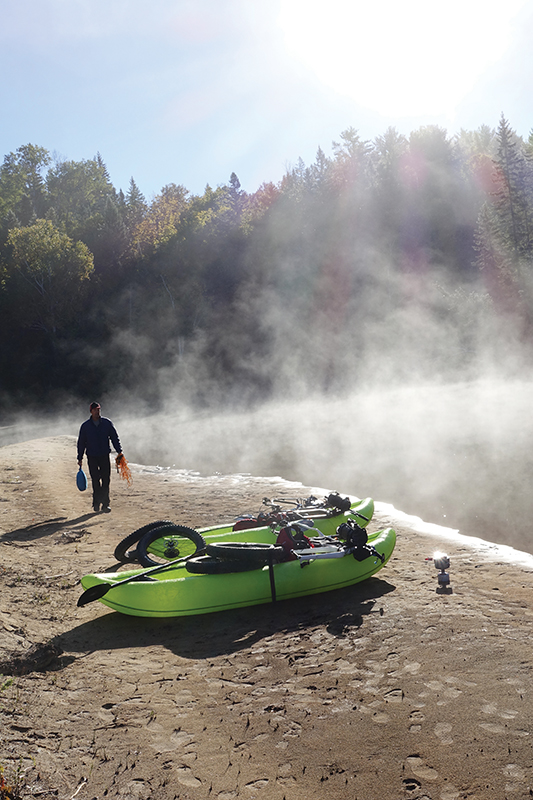
    As the warmth of the afternoon sun dips below the autumn trees, we scrub the bows of our packrafts on the sand and reach for our wooly hats and puffy down sweaters.

    One thing I learn about bikepacking and packrafting is that it doesn’t take long for meals.

    Cam has an Excel spreadsheet charting the caloric value of food to weight ratio. When you’re winter endurance racing it is about lots of calories fast to stay warm while carrying as little as possible. Dinnertime goes something like this: Boil water. Pour water into bags and seal. Put bags of boiling food in inside jacket pockets like Ziploc hot water bottles. Enjoy warmth for three to five minutes until ready to serve.

    After pasta we build a fire with bits of driftwood we find on the beach. The stars are out and it is dark by 6:30 p.m.

    We guess we traveled five or six of the estimated 40 kilometers and we’ll soon catch up to the faster moving water and rapids that make the Noire such a popular whitewater run.

    Soon after the Second World War inflatable packable rafts used as survival equipment in airplanes began to appear in army surplus stores. Legend has it that in 1952, Dick and Isabelle Griffith did the first recorded whitewater packraft river run when they descended Copper Canyon in Mexico.

    Sixty-five years later, packrafting seems like it’s the new big thing. Companies like Alpacka, Kokapelli and AIRE all making whitewater-specific lightweight inflatables that you can carry up rivers and paddle back down.

    Packrafts fall into two categories. Ones you’d take into whitewater and ones you wouldn’t, or at least shouldn’t. While materials continue to improve, there will always be a compromise between weight savings, durability and size.

    In the morning, Cam and I rig our boats like we would whitewater rafts—we rig to flip. The wheels off and stacked on the bike frames, we strap everything down tightly and independently of the bags below. We move our seats one loop more forward and lash a dry bag at our feet to better level the trim. Typically in packrafts the bikes would be laying across the bow over top of our legs. We are happy to have opted for AIRE’s new 10-foot-long BAKraft Expedition. The extra room to put the bikes behind us makes for easier paddling and seeing our lines down the rapids ahead.

    We approach each set like early explorers traveling in Kermit the Frog-green space-age crafts. We boat scout everything we can see from the river. We stretch our legs and look at what we’d later learn were 50:50 Rapids, Manitou Rapids and Rapid #46, the slightly more technical class IIIs.

    After the first few rapids we had all but forgotten about being in packrafts. If we didn’t once in a while bump our elbows on pedals and crank arms, we’d forget about the bikes too. We run the river like in any other kayak looking for the fun deep tongue lines and eddies along the way.

    We’d been paddling a solid seven hours when it starts to get dark. The fading light isn’t enough for us to distinguish deep water from the shallow pillows in the boogie water swifts.

    “How much abrasion do you think these floors will take,” I shout over to Cam. We are both scrubbed up on the rocks hidden just below the inky surface. I feel like we are kids at a birthday party knocking around balloons, our parents waiting for them to pop but never they do.

    Three hours after dark, and two hours after I’d told my wife I’d be back home, we round another lazy bend and can see what would be the lights of the Black River Inn. Two hours ago we made satellite phone calls home. We’d inventoried our food that included two Clif bars, a half bag of hot cereal and four mini Snickers between us. Enough for a late dinner and breakfast, or so we said on the phone.

    When we arrive at the crumbling concrete steps below the timber frame bridge of the Black River Inn, the light rain that has been falling turns to snow. We wet and melt the frozen cam straps holding our bikes in place. We are surely the last travelers down the Noire for the year and likely the first self-supported fat bike packraft trip the river has ever seen.

    In silence we deflate and roll our boats. We assemble and load the bikes on the racks. And then crawl into the cab of the warm truck for the ride home.

    “Well, that was super fun. We should do more of those,” I say finally as the truck tires roll from gravel to the tarmac two-lane secondary highway.

    Cam gives me a real thumbs-up and asks, “Where?”

    Scott MacGregor is the founder and publisher of Rapid. He lives in the Ottawa Valley with his wife, two children and his new carbon-fiber fat bike.