Home Blog Page 213

How To Learn To Love Bad Trips

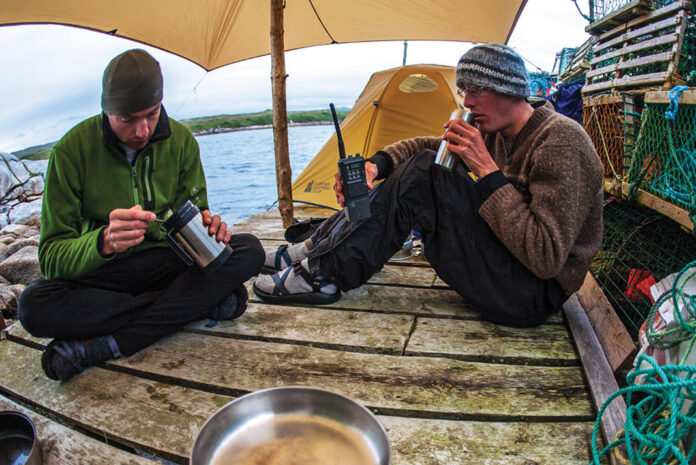
THE STRANGE AND UNLIKELY REWARDS OF BAD TRIPS AND MISERABLE CONDITIONS | PHOTO BY RYAN CREARY

I’m sitting under a tarp in the pouring rain, just smiling. I’m lit up with a pure spontaneous happiness I can’t really explain. Except I’m ecstatic to be right here, under my tarp that’s capably keeping the rain off my head, looking out at the water drops dancing on the lake, feeling more alive than I do 90 percent of the time back home.

My wife is just scowling. “I don’t like camping in rain,” she says. “I would rather be at home, warm and dry.”

How To Stay Happy In Bad Weather

She wants to know how, exactly, I can be so happy. It would seem there is something fundamentally different about me, or some magic Kool-Aid I drank. And it’s ironic, too, because at home I can be a miserable cuss for no reason at all. But when things get really nasty outdoors, the wind ripping the whitecaps off the wave tops, I light up like the proverbial pig in you-know-what.

I had originally intended to argue here my pet theory that enduring bad weather days is like a kind of investment. You put in your time, and maybe there is some kind of cosmic scorecard paying off in spectacular rainbows. Or in winter, as I like to muse to my companions on miserable chairlift rides, if we put in our time skiing mashed potatoes or ballistic windblown crust—because we are stupid or stubborn or committed enough to be out in this crap—the universe will have our backs.

It’s a kind of stubborn optimism, and not a bad life philosophy. An argument can indeed be made about the natural world rewarding those who put up with its ugly side. However, arguing that it’s purely a numbers game doesn’t do justice to the deeper truth going on.

It’s not so much about the weather outside, as what’s inside.

Attitude.

Discomfort changes your mindset. First, it contradicts your expectations of how the experience is supposed to be. The calm waters and blue skies of your imagination. There’s usually a period of disgruntlement, but that is followed by an acceptance of the way things are.

Bit by bit you’re forced to exit your head and confront the actual reality of the present moment and what it is asking of you—usually some form of engagement or response. This puts you in a state of receptivity. And also gives you the bizarrely empowering realization that in an environment that is totally out of your control, you are still in control of your own mind, which is its own kind of awakening.

Next thing you know you are fully there. Fully present.

This phenomenon of tuning in to the now has been described by countless mystics, philosophers and psychologists as openness, receptiveness, letting go, or what the philosopher Heidegger called turn to the senses Thoreau and the other so-called nature writers—who are really explorers of the mind—are always going on about.

It’s a universal prerequisite to peak experience, self-actualization and, if you’re so inclined, encounters with God. In this attitude, to quote nature writer Annie Dillard, “you catch grace as a man fills his cup under a waterfall.”
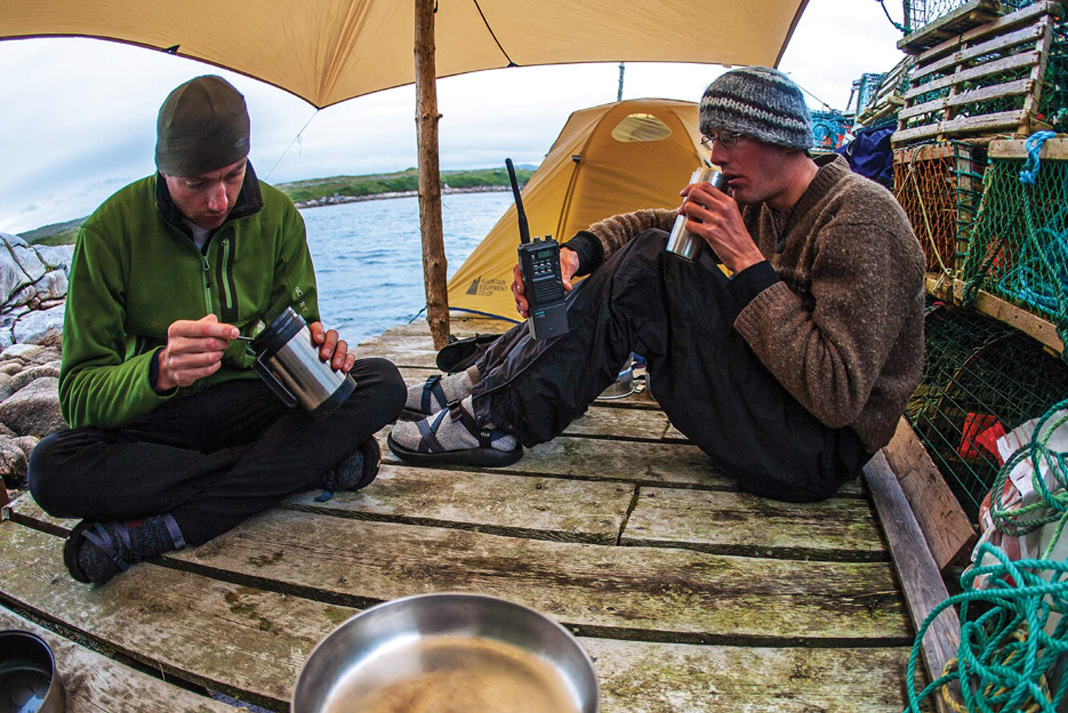
THE STRANGE AND UNLIKELY REWARDS OF BAD TRIPS AND MISERABLE CONDITIONS | PHOTO BY RYAN CREARY

How The Good Comes With The Bad And Ugly

In this way, enduring hardship—bad weather or other forms of suffering—actually creates good experiences. It’s the mechanism by which some of the most powerful moments of my life were seared into memory.

The backpacking trip I did at summer camp as a frail kid who nearly fainted from exertion, but then proudly earned an award plaque still hanging in my dining room: “Ten miles in full pack, not one complaint!”

The winter sea kayaking trip to the Broken Group Islands where it rained and blew every day and nearly soaked us in our sleep, but for the final morning when we paddled under brilliant sun in a gently rolling five-meter swell.

A gorgeous sunset rock climb in Yosemite Valley where I wound up sick with fear because the only thing separating me from a long, messy fall were a few hairline fissures in a glacier-polished slab as smooth as a kitchen countertop, but I topped out feeling more alive than ever.

And that day on our recent family trip, sitting in the rain under the tarp, trying to explain why it made me happy. After 45 years on this beautiful planet, I could go on and on.

It’s these razor-edged experiences more than the brochure-worthy paradisiacal ones that keep me hooked. It’s what I want my kids to experience when the going gets tough. I want them to see their dear old dad isn’t some sadomasochist who likes to jump into cold water every morning and walk about with a loopy grin on his face when it pours because he perversely enjoys suffering. I want them to see the deeper truth that through life’s challenges is the path to true joy. And carry into their everyday lives this ethos, that, as the Barry Lopez writes in Arctic Dreams, “… a tolerance for the unconverted things of the earth is intertwined with the substance of a truly rich life.”

This is the problem I have with the so-called glamping trend of recent years. It entirely misses the point of camping as an attitude of approaching the world as given, rather than trying to mold the world to fit your idea of luxury. Which is the very core of what makes camping enjoyable. It’s what separates the so-called outdoorsy people from everyone else, with their stories about how they went camping once and hated it, because it was brutally uncomfortable, and so why suffer when you can just stay at home and sleep in a comfy bed?

I probably shouldn’t sound so self-righteous. I know sometimes miserable weather is just that. I’ve bailed on trips early to drive home in a warm car and loved it. But I think the argument still applies.

A warm car never felt so good, and I was never so happy to be home.

I still need constant reminders about this basic wilderness lesson. My paddle racing coach has even coined a hashtag for it: #lovetheconditions.

We need such reminders not only for outdoor pursuits but for life in general, because it can be hard to accept what you’re given. Sometimes the conditions do suck. And in those moments you forget it’s possible to love anything. You remember past wilderness experiences as wonderful. You go out expecting to find ecstasy and are instead surprised to find discomfort, and then endure discomfort to be surprised all over again by ecstasy. Life is a roller coaster and I’m always amazed by my need to learn its lessons over and over again.

Camping in the rain isn’t just some bizarre personal preference—it’s philosophy. Often we have to weather storms. The point is not that things will be easy, but to become better at adapting, to persist, as a matter of faith and principle. The outdoors teaches us that for whatever you can endure, you will be rewarded.

Tim Shuff is a writer and firefighter whose long-suffering wife finds his romantic idealism tiresome, and who, at this moment, is sipping coffee in his cozy house in Toronto wondering if it’s too cold and rainy to go paddling.

This article first appeared in the 2015 Paddling Buyer’s Guide. Subscribe to Paddling Magazine and get 25 years of digital magazine archives including our legacy titles: Rapid, Adventure Kayak and Canoeroots.
The Future Of SUP

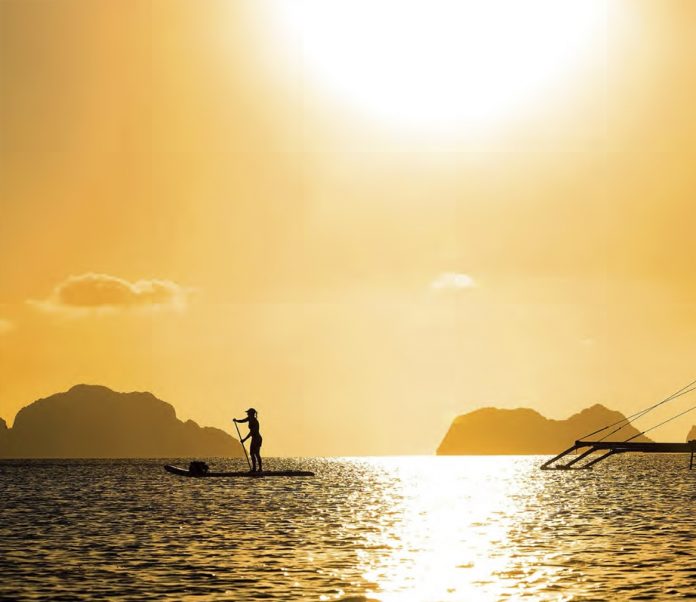
Photo by Chris Christie
A person paddling a standup paddleboard as the sun goes down

Is the Hydrofoil Revolution real?

It’s highly technical, so it may be here to stay but only among a small crowd of expert athletes. As to its appeal to the mass market, that’s tough to see. Even though the thought of higher gliding speeds and no chop resonate with nearly every paddler, the fine-tuning of equipment and the hours required to become competent will likely halt growth.
—Andre Niemeyer, Publisher, Supconnect

The addition of the hydrofoil is the SUP innovation I’m most excited about. It opens up conditions that weren’t previously possible or that weren’t as fun. It adds another dimension to an already multidimensional sport.
—Kai Lenny, Athlete

Most people will say they are most excited about foils at the moment. I am more skeptical. Of course it is cool, but it is also unwise to encourage such an accessible sport to become less so.
—Bart de Zwart, Ultra-distance athlete

What will be the next big innovation?

Internal storage—finally—for camping and expeditions. Paddlers are already doing extensive trips with gear strapped on top. Internal storage means less wind drag, a lower center of gravity for stability and less shifting gear. It’s also easier to right the board and keeps gear dry.
—Rob Casey, Owner, Salmon Bay Paddle

Offering packages for purchasing a board, PFD and leash together. It’s something that retailers can do working with manufacturers of paddleboards and lifejackets to provide incentive to buyers and make sure people get the necessary safety equipment. It’s one less person who may end up dead.
—Trey Knight, ACA Instructor Trainer

It seems the inflatable market holds the most promise, not just in the United States, but worldwide. It takes almost no space. It’s more affordable; and it’s always improving in performance. Given how technology is quickly revolutionizing board construction, we may see unthinkable markets embracing the sport and rounding the world with inflatables in backpacks.
—Andre Niemeyer, Publisher, Supconnect

What are you most excited about?

Athletes are pushing the sport to new levels of performance. It’s really incredible to watch as a spectator and fascinating as an athletic pursuit. I think it might have the potential to be an Olympic sport down the road, and it will add another dimension to Olympic paddling. I think this decade will be looked at as the pioneer years.
—Lili Colby, PFDiva at MTI Adventurewear

Standup racers train as hard as Olympians. To compete for bigger prize purses not only helps the athletes massively, it justifies how hard everyone works. I hope to see more events like Red Bull HeavyWater. Twenty thousand dollars was by far the biggest prize purse I have ever competed for in standup paddling
—Kai Lenny, Athlete

The quality of teaching. The instructional curriculum has only been around five or six years at a national level. People had words on paper before, but since 2011 we’ve really refined our teaching approach. We started by taking concepts from kayaking, surfing and canoeing, and asked what does this look like when applied to paddleboarding. We understand the physics of paddle and paddler, board design and rail control, and stances from surfing. It’s been combined to create unique techniques and methods and this is how we are teaching SUP now.
—Trey Knight, ACA Instructor Trainer

Has SUP peaked?

Not according to some of the data out there. The Outdoor Industry Association and the Standup Paddle Industry Association (SUPIA) both continue to show rising numbers in participation for 2016 and 2017. Google Trends seem to track that trend as well. The SUPIA data indicates the industry could still have 50 percent of its participants yet to enter the market, though coming from a lower income-bracket, driving further pressure on price point and margins.
—Andre Niemeyer, Publisher, Supconnect

What’s the biggest challenge facing SUP?

Too many brands and not enough profit margins have created a stagnant industry. Major leading brands with great quality and designs are flush with inventory because of all the flyby- night, quick-start discount brands. The bulk of the consumers are recreational and looking for the best deal and not interested in quality or design. When a sport or industry’s products are seen in Costco, it is a sign the market has hit its peak and saturated. This is unfortunate as the pioneers leading the industry brands and supporting the marketing and growth of the industry with quality designs and product now suffer. This leads to less profits to support events, ambassadors, trade shows, magazines and industry marketing. It also means dealers must discount and don’t have the margins they need to support stocking products.
—Todd Bradley, Co-Founder of C4 Watermen

Right now the industry is facing Armageddon. Every new industry quickly attracts hundreds or thousands of entrepreneurs, all hoping to ride on the explosive growth. Over time, the number of brands reduce to about five main players, with lots of casualties along the way. The casualties are taking place right now. What’s worse, many snake oil salesmen have entered the space, selling terrible products that deliver awful experiences. Some examples: Cheap boards with intermediate or advanced board designs, so it targets the beginner on price point but beginners will struggle to paddle on those boards. New retailers with no commitment to the sport sending people out without leashes and without life jackets, with little concern for safety and good experiences. Brands setting up fake websites to rank their products as #1, even though their products are sub-par and have no retail or community support system.
—Andre Niemeyer, Publisher, Supconnect

Is SUP getting safer?

Finally, yes. It took Andre Pumbo’s death to wake up the industry. We’re seeing and hearing of more experienced paddlers using leashes and PFDs, especially vest PFDs. Yet, we still see many new and summer recreational users paddling in open water without skills and any safety equipment. They tend to be the ones in the news.
—Rob Casey, Owner, Salmon Bay Paddle

The Paddle Responsibly project launched last year brought industry manufacturers together to work to try to educate the consumer about SUP and Paddlesports safety before they make a purchase through point-of-sale material and online videos.
—Lili Colby, PFDiva at MTI Adventurewear

While quality educational opportunities are at their highest, unfortunately, many have not taken steps to get basic education to improve their experience on the water. From 2015 to 2016 the mortality rate nearly doubled. As the sport is perceived to be fairly simple and accessible, people are often finding themselves outside of their comfort zone and in conditions and situations beyond their abilities.
— Josh Hall, ACA Instructor Trainer

It’s getting safer, but not as fast as it should be. There is a long way ahead. We need more safety instruction and fewer topless pictures in magazines.
—Raphael Kuner, Instructor Trainer

Making Paddling Safer

Photo: Courtesy Water Sports Foundation
Water Sports Foundation Safety

Paddlesports has a safety problem. The number of paddling related deaths in the United States has increased every year for more than a decade — from 98 in 2004 to 167 in 2016. Though paddling is not a particularly hazardous sport relative to other activities — it falls modestly between hiking and bicycling on the danger scale — it does have inherent risks. And while your social media feed may be full of extreme races, rough seas and waterfalls, the research shows that most paddling accidents take place on flatwater involving participants who are inexperienced and poorly equipped.

In other words, most paddling tragedies can be averted. We can agree that making paddling safer is in the best interests of manufacturers, retailers and outfitters. The question then is always: How can paddlesports, as an industry, best share this message?

Jim Emmons thinks he has the answer. The president of the Water Sports Foundation, Emmons has run a boating safety education program since 2011, initially focused on powerboats. The effort is funded through the Sport Fish Restoration and Boating Trust Fund, which generates about $650 million annually from taxes on motorboat fuel and fishing equipment as well as import duties on pleasure yachts and fishing tackle produced overseas. About $5.3 million of this revenue is earmarked for nonprofit grants and administered by the U.S. Coast Guard.

In 2014, Emmons attended a meeting of a federal advisory panel where lifejacket guru Dr. Dan Maxim made a presentation. As Maxim parsed boating safety statistics, Emmons had a come-to-Jesus realization: Paddlesports had a higher per capita accident rate than powerboating.

“I realized these numbers are going in the wrong direction and we’ve got to turn them around,” Emmons says.

Until that point, Emmons had been spending all his grant money on powerboat safety education, mostly through the Bonnier Corporation, a publishing house with a large portfolio of boating magazines and websites.

After studying the statistics to confirm that paddlesports was in fact contributing a disproportionate number of boating accidents, Emmons redirected about $64,000 from his powerboat campaign to put toward paddlesports safety. He then set about devising a plan and building an industry coalition to get behind it.

“Most of the deaths were coming from paddlers who were beginners to the sport,” Emmons says. “They were people with very little paddling experience and they somehow got themselves into a paddle craft and got in trouble and either got killed or injured.”

Emmons realized that readers of paddling magazines and websites typically know and follow safe paddling guidelines. He needed to connect with newcomers and saw manufacturers as the best way to reach them.

Working with The Enthusiast Network, he convened a meeting at the 2015 Outdoor Retailer show. Senior executives from six of the largest manufacturers of entry-level kayaks attended. They agreed to put their marketing muscle behind a series of educational videos featuring ACA-certified instructors Paul and Kate Kuthe. The companies—Confluence, Johnson, Pelican, Emotion, Sea Eagle and Advanced Elements—also provided boats and gear featured in the videos, which rolled out during the 2016 paddling season. The brands promoted the videos on their social channels, as did three major paddlesports media outlets: Rapid Media, Paddling.com and TEN.

It was an impressive show of unity in the paddling industry. Emmons followed it up this year with a similar program focused on SUP and kayak fishing. The new series uses humor to drive home basic safety messages—always wear a lifejacket, dress for immersion, don’t drink and paddle. Six of videos feature SUP and two focus on kayak fishing.

If you use social media, you’ve probably seen them. The videos are distributed to about 150 brands, which are encouraged to share them on their websites and social platforms. Emmons says the adoption of the safety coalition is gaining momentum. Industry leaders will meet again Outdoor Retailer 2017 and Surf Expo, as well as at the new Paddlesports Retailer.

Though Emmons does not yet have the numbers to prove it, he’s convinced that the need for paddlesports safety education is stronger now than ever. So far, the Coast Guard is inclined to agree. The agency renewed the paddlesports safety grant for 2017.

The future is less certain. Remember that the grant money ultimately comes from taxes on powerboat fuel and fishing equipment. There is no comparable levy on paddlecraft and some state administrators are asking why paddling is getting a free ride.


This article was first published in Paddling Business 2017. Read it here.


Editorial: I Gave At The Office

Photo: John Webster
Photo: John Webster

There are things we do every business day that don’t directly add to our companies’ bottom lines.

Things like shipping out swag to events too small to matter, loaning pop-up tents to public school barbeques and sitting on boards of directors. I once spent five years building a whitewater festival only to hand it over to a non-profit paddling school. My accountant thought I was crazy. My accountant doesn’t paddle.

We do these extra things for many different reasons. Very few come with any form of recognition or charitable receipts. You probably don’t even mention them around the dinner table after a long day. Doing good deeds is not in your job description or on your list of key deliverables.

In this special issue of Paddling Business, 16 industry leaders took the time to reply to dozens of our questions. They didn’t have to do that. You can read a sampling of their responses in Signals on page nine.

The last two years, decision-makers of leading paddlesports brands have been getting up early before the Outdoor Retailer show floor opens to meet with the Water Sports Foundation and the U.S. Coast Guard. The coffee is free and the Danishes are fresh, but they’re really donating their time and ultimately the resources of their companies to collectively influence change by creating and disseminating a paddling safety campaign.

Inserting safety information in new boats and distributing videos takes time, and time is money. It’s hard to put a dollar value on this type of giving-back to a community. You can calculate work-hours, but you can’t quantify the return on that investment.

It’s these extra efforts, not written in our job descriptions, that make this industry so special. Putting ink on paper, sewing fabric, layering fiberglass cloth or whatever, let’s face it, we could do it all elsewhere for twice the money.

Instead we produce media, gear and boats in a friendly world where direct competitors drink beer together in the aisles of tradeshows. We support grassroots. We save rivers. We return calls to college students with dreams.

We take this time because we remember calling on CEOs when we were in school. We do it because it’s magical to see 500 paddlers dancing together after a day on the water. But mostly, I think we give at the office because that’s just who we are. And despite deadlines, shrinking margins and whatever else is on our desks, we will keep contributing in meaningful ways to this fantastic community in which we live and do our business.

Scott MacGregor is the founder and publisher at Rapid Media. This article was first published in the 2017 issue of Paddling Business. Read it here.


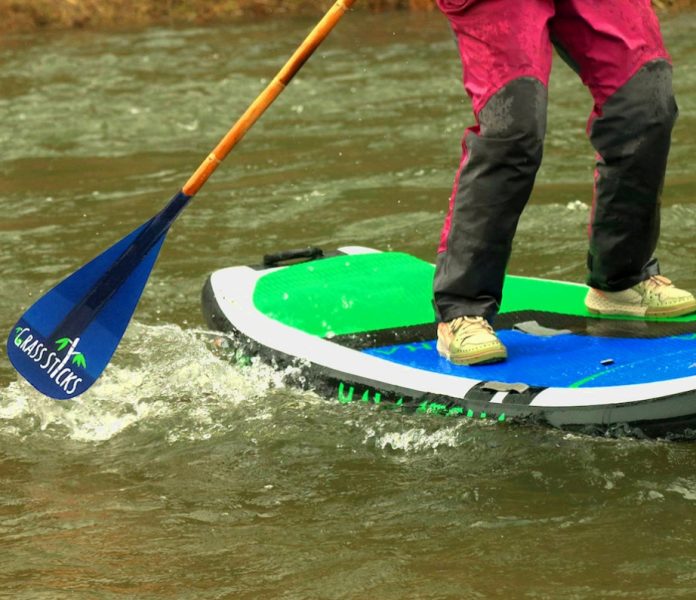
Grass Sticks Debuts All Bamboo SUP Paddle

Photo: Grass Sticks
Grass Sticks' all-new grass paddle for SUP

The following is a press release from Grass Sticks.

If it works so great for ski poles, why not SUP paddles?

That’s the theory behind the SUP Stick, a new line of performance bamboo SUP paddles by Grass Sticks, the Steamboat Springs, Colorado-based cast behind the award-winning custom bamboo ski poles. Sturdy and durable for the rugged whitewater of the Rocky Mountains, yet light enough for a day of touring or surfing, SUP Sticks bring a natural look and feel to the fastest growing sport in the outdoor industry.

“We are super stoked to introduce such a cool and unique new option for SUP paddlers,” said Grass Sticks chief designer Andrew Beckler. “This material feels great in your hand and its natural flex delivers really intuitive action.”

For Grass Sticks, performance is key, but it is also about being environmentally friendly. Industrially manufactured composite and aluminum shafts use an incredible amount of energy and place a burden on our environment. Per acre harvested, bamboo produces three times as much lumber as trees, absorbs more CO2, and produces more oxygen than any other plant.

SUP Stick shafts are made from kiln-dried Calcutta bamboo that has an incredible strength-to-weight ratio. Its long, continuous fibers deliver an ideal medium-stiff flex that transfers energy to the water seamlessly, making braces, draws, and other strokes feel smooth and responsive. Unlike carbon, fiberglass, and other materials that thin the shaft wall to reduce weight, bamboo’s thick walls provide an incredibly strong yet lightweight tool for paddling harder and longer. The manufacturing process also includes handsanding and applying multiple layers of marine-grade coating, giving the shaft a durable, beautiful finish that stays soft and grippy when wet.

SUP Stick shafts are made from kiln-dried Calcutta bamboo that has an incredible strength-to-weight ratio. Its long, continuous fibers deliver an ideal medium-stiff flex that transfers energy to the water seamlessly, making braces, draws, and other strokes feel smooth and responsive. Unlike carbon, fiberglass, and other materials that thin the shaft wall to reduce weight, bamboo’s thick walls provide an incredibly strong yet lightweight tool for paddling harder and longer. The manufacturing process also includes handsanding and applying multiple layers of marine-grade coating, giving the shaft a durable, beautiful finish that stays soft and grippy when wet.

SUP Stick blades are designed with an 11-degree offset and extra-thick reinforcement at the blade end for durability. Fiberglass blades come in Green Grass, Midnight Blue, and Burgundy, in both 88- and 100-square-inch options. A lighter carbon fiber blade is available featuring a beautiful bamboo veneer top sheet. Paddle grips are made with carbon fiber and are available in a traditional T-grip or triangular palm.

Each SUP Stick paddle is handmade-to-order, so the one-piece, custom fit means there’s no play in the shaft or messing with finicky locking mechanisms.

Like all Grass Sticks’ products, the SUP Stick comes with an unlimited two-year warranty. No matter what happens to the paddle, Grass Sticks will replace it within two years with free shipping. The SUP Stick bamboo paddle is available online at www.grasssticks.com for $219.00.

About Grass Sticks: Grass Sticks makes beautifully handcrafted, high-performing, ecofriendly gear for the outdoor enthusiast. It uses the best bamboo in the world to take essential outdoor products to the next level of performance, all while improving durability and strength. All products are handmade with custom options in Steamboat Springs, Colorado. Each custom paddle is cut and handmade to order and can be made to any length via an online custom size calculator. Everything we build is backed by a 2-year unlimited warranty and 30-day return period, no questions asked. Learn more at www.grasssticks.com.

How Two Canoeists Won $500,000 On Reality TV

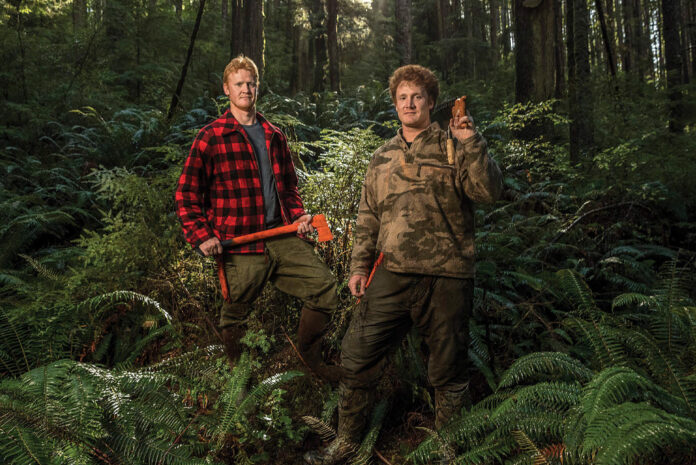
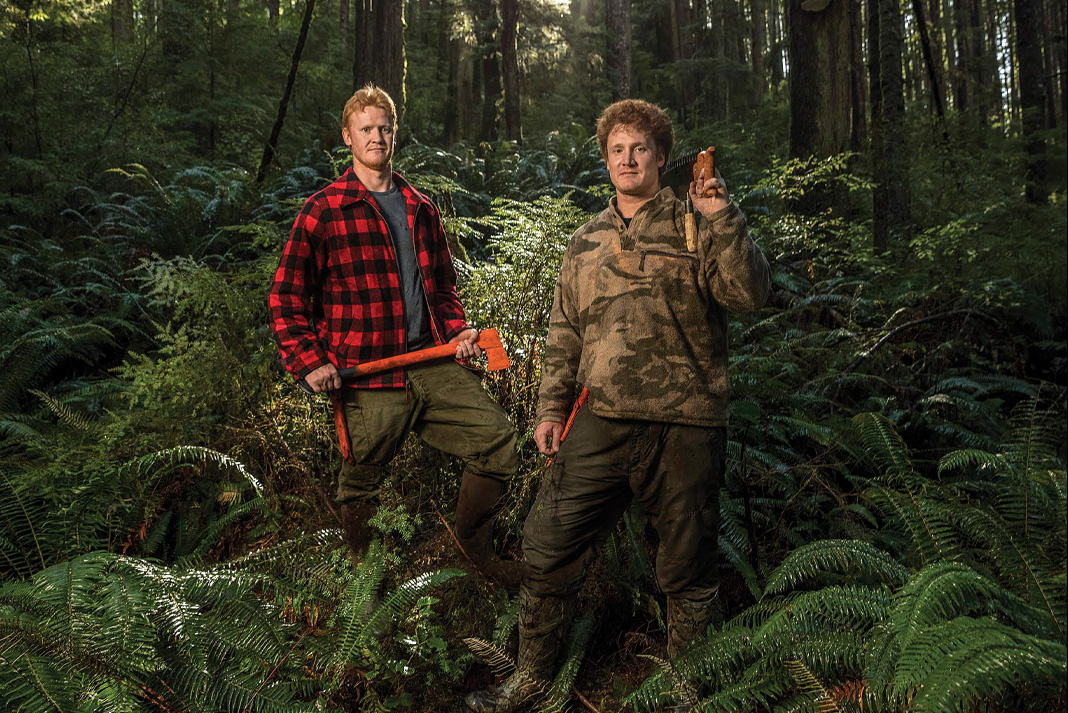
Jim and Ted Baird standing in the woods. | Photo courtesy of HISTORY

In the spring of 2017, Canadian brothers Jim and Ted Baird emerged from the wilds of Vancouver Island. For more than two months, they’d survived off the land, sustaining themselves on a wriggling supply of eels, limpets and slugs. Stranger still, they’d signed-up for the experience. As contestants on History’s reality TV show ALONE, the brothers were competing to out-survive six other teams. After 75 days alone in the wild, they won, walking out of the bush $500,000 richer. Jim Baird answers our top questions.

WHERE DID YOU LEARN THE SURVIVAL SKILLS YOU USED ON ALONE?

We’ve done canoe trips in the Arctic, northern parts of British Columbia and northern Saskatchewan. Those experiences helped us deal with the most brutal winter they’ve had on Vancouver Island in 30 years.

As an expedition canoeist, you get real bush time. You have to light a fire when it’s hammering rain; you can’t just go home. Even though I might not be knapping arrowheads on those trips, I still have to rig a tight camp and sometimes even find food.

Survival, at the end of the day, is not really fun. It’s not just a physical pursuit, but a mental game—and that horizon keeps expanding the more you push on. The more you persevere, the easier it gets. You extend your breaking point further, and I think this can apply to any part of life.

YOU WERE ALLOWED TO TAKE 10 ITEMS WITH YOU. WHAT DO YOU WISH YOU BROUGHT? AND WHAT DO YOU WISH YOU LEFT AT HOME?

We didn’t have anywhere to launch our bush-made boat—which Ted made from wire, sticks and a tarp—where there weren’t a million razor-sharp barnacles. It was impossible to get in and out without stabbing holes in the boat. A roll of duct tape to patch it would have been good. A case of Moosehead beer would have been better.

We did wonder if our gill net was worth the effort; it got us food, but it was so much energy to set up. It’s hard because you never know the hand you’ll be dealt in terms of a site. There could be a river with a salmon run and then you’d feel like a total idiot if you didn’t bring a net. Hindsight is twenty-twenty.

Jim and Ted Baird standing in the woods. | Photo courtesy of HISTORY

WHEN DID YOU WISH YOU WERE TRULY ALONE?

Apart from the eight days at the start when I was hiking to find Ted, we were never separated. It drives you crazy. Think about it—couples snap at each other if they have lunch late. So imagine being hungry for 75 days and in close quarters, sleeping in the same shelter. Everything is miserable, you want to go home, and then you have a difference in opinion.

People always ask Ted and I how we get along. The truth is that we don’t, but we decide, “Do you want to be angry? Or do you want to have a good trip?” We’re always able to get it out and move on.

WHY WAS RETURNING TO CIVILIZATION HARD?

It’s double torture when you get home because you can’t eat all the food you’ve been dreaming of. One bite and you’re full and want to puke. Even starting to eat all these carbs and sugars can have horrible effects. I dealt with autoimmune issues; I felt sick for three months as I was going back onto normal food. I lost 60 pounds—a quarter of my body weight—during the filming of the show.

WHAT DO YOU PLAN ON DOING WITH YOUR ALONE WINNINGS?

My wife, Tori, and I are thinking about building a house in northern Ontario. Ted bought a cigarette boat with a cheeseburger dispenser.


This article first appeared in the 2015 Paddling Buyer’s Guide. Subscribe to Paddling Magazine and get 25 years of digital magazine archives including our legacy titles: Rapid, Adventure Kayak and Canoeroots.
Red Bull Heavy Water Competition Sparks Firestorm Of Debate About Women In Sup And Sport

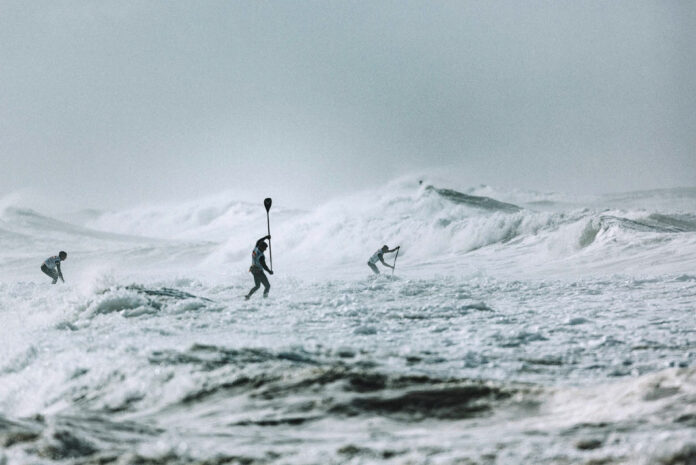
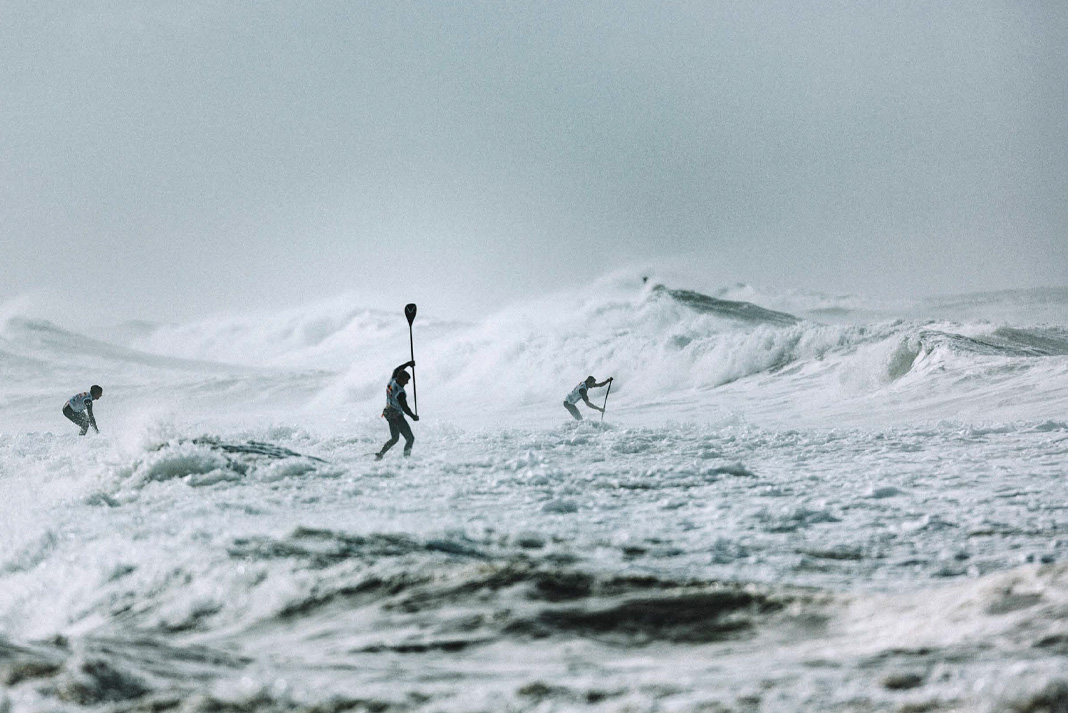
RED BULL HEAVY WATER’S 15-FOOT SWELL MAY HAVE BEEN THE MOST EXCITING EVER SEEN IN A SUP RACE, BUT ELITE FEMALE PADDLERS FELT LIKE THEY’D GOTTEN THE BUTT-END OF THE STICK WHEN THEY WEREN’T INVITED TO THE PARTY. | PHOTO: BALAZS GARDI // RED BULL CONTENT POOL

Organizers billed it as the most intense standup paddling event in the world. Thirty-two of the world’s best paddlers, 15- foot swell, and $50,000 in prize money.

On October 20, 2017, SUP’s top athletes battled for the largest purse in the sport at the second edition of the extreme Red Bull Heavy Water, part of the 2017 APP World Tour circuit, at Ocean Beach in San Francisco. For the second consecutive year, female athletes were not invited to compete.

Fighting For Rights

World champion Annabel Anderson led the charge in response, starting the #Ipaddleforequality hashtag and making waves in the paddleboarding community as big as the ones the women weren’t invited to ride at Ocean Beach.

“It is not a question of skill or performance, I have personally proven every year a female is capable of delivering a performance equal to those of the top men,” Anderson wrote on Instagram. Anderson’s claims to fame include five consecutive Carolina Cup victories, 2017 ISA Long Distance and Long Technical World Champion, and 2017 Pacific Paddle Games long distance, technical, and overall champion.

The Goal

“My goal is clear: to support equality, transparency and equal opportunity to set a path of success for the future of our sport and its athletes,” she added.

The SUP community rallied in support, with re-posts, multiweek discussion and online op-eds.

Fiona Wylde, Candice Appleby and Jenny Kalmbach were among some of the most distinguished names in pro paddling to voice their support for the #Ipaddleforequality hashtag, calling out not just Heavy Water, but the state of equality in sport.

“It’s just a shame to think if I have a son he can make a career out of just about any sport he chooses, but if I have a daughter she will be limited to making a sport a hobby,” wrote Kalmbach.

“True equality is a long way off in paddling, as well as in numerous other sports.”

“True equality is a long way off in paddling, as well as in numerous other sports,” added pro paddleboarder April Zilg. “Women are not given equal pay or media coverage in the majority of sporting disciplines.”

Gender disparities are no secret in competitive sports, including SUP, where there are currently 598 elite men and 205 elite women competing in the SUP Racer World Rankings events. It’s not uncommon to see an uneven number of male and female entries being granted, an unequal pay-out between genders and significantly less sponsorship and media coverage for women. Women’s sports get just two percent of the airtime on ESPN, and in 2016 only two of the hundred highest paid athletes in the world were women.

Not cool.

The Facts Of Inequality

While slamming the decision to make Heavy Water a male-only event, female athletes were quick to note that SUP racing has seen consistent forward progress in the last decade. For example, in 2013 at the Lost Mills International SUP Race in Germany, men were taking home double the winnings of the women. As of 2016, the men and women competing for the Fastest Paddlers on Earth title are now racing for equivalent earnings.

In the 2008, at the inaugural Battle of the Paddle the men’s champion, Chuck Patterson, walked away with a $10,000 prize, while the women’s champion, Jenny Kalmbach, only received $2,500 for racing on the same board size, course and conditions. When Battle of the Paddle was cancelled in 2015, the Pacific Paddle Games were created and with it came huge gains for women in SUP—prize purse equality, improved media coverage, and in 2016 the women’s surf race was given the headline time slot.

Just one year ago, the ISA World Championships hosted two men for every one woman competing per event. In 2017 the organization equalized the gender split, allowing each nation to field the same number of competitors per discipline for each gender.

RED BULL HEAVY WATER’S 15-FOOT SWELL MAY HAVE BEEN THE MOST EXCITING EVER SEEN IN A SUP RACE, BUT ELITE FEMALE PADDLERS FELT LIKE THEY’D GOTTEN THE BUTT-END OF THE STICK WHEN THEY WEREN’T INVITED TO THE PARTY. | PHOTO: BALAZS GARDI // RED BULL CONTENT POOL

The general trend towards equality in SUP only highlights the regressive decision to keep Heavy Water a male-only field. Neither Red Bull, the title sponsor, nor the Association of Paddlesurf Professionals Pro Tour, the organizer, publicly took responsibility. Our request for comments were politely met with a reiteration of the joint statement released shortly following the event, saying they “hope they will see female participation in the Red Bull Heavy Water in 2018 and subsequent years.”

Yeah, we hope so too.

In the hundreds of #Ipaddleforequality posts on Instagram there was minimal support and contribution from one key group—top male athletes. Equality in sport, at all levels, is the responsibility of governing bodies, race directors, media, industry brands, sponsors, event organizers, athletes and consumers. It was everyone’s responsibility to ask at some point during the lead up to Red Bull Heavy Water, “Hey man, where are the ladies at?”

What true equality in SUP racing looks like remains a bigger discussion—what elite women are united on is that equality at the Red Bull Heavy Water event starts with an invitation to compete.

“At the base of the movement was a call to have women invited to all events—not to have an event excluding women,” says April Zilg. “If a woman wants to, and is capable of entering an event and competing safely, then I feel she has a right. This is equality at a bare minimum. I feel like ‘what now?’ is really up to the industry as a whole.”

Courtney Sinclair is an Ontario-based paddleboarder who raced in the 140-kilometer Muskoka River X last fall, and was awarded the 2017 Ontario Ultra Paddling Champ title. She is a Paddle Canada Advanced Flatwater Stand Up Paddle Instructor. 


This article first appeared in the 2015 Paddling Buyer’s Guide. Subscribe to Paddling Magazine and get 25 years of digital magazine archives including our legacy titles: Rapid, Adventure Kayak and Canoeroots.
Angle Oar’s New Paddle Holder Eliminates Joint Stress

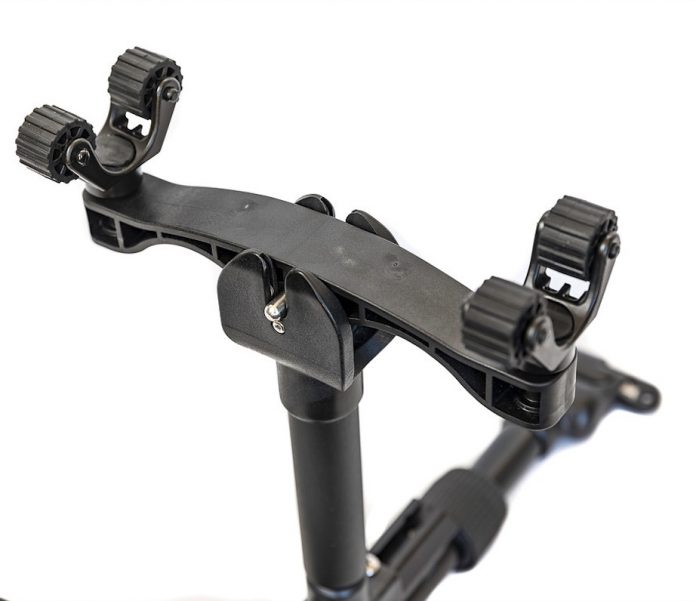
New Gamut paddle holder from Angle Oar.

The following is a press release from Angle Oar.

Following in the footsteps of its flagship product, the Versa paddling system, Angle Oar LLC has officially released a new product: the Gamut Paddle Holder.  Gamut attaches to most sit-in kayaks and some sit-on-tops using a patented mounting system that supports the weight of the paddle and allows it to pivot upon a post. By eliminating the weight of the paddle and shortening the range of motion required to stroke the paddle, kayakers with shoulder injuries, back problems or limited strength can get out and kayak.

Twenty-eight percent of the US population, or 92 million people, are between the ages of 50 and 74. “This is a group that increasingly wants to stay active and independent as long as possible, but sometimes an injury or arthritis prompts them to give up a sport they’ve loved all their lives, or possibly never thought of trying, like kayaking,” said Meg McCall, CEO of Angle Oar. “We designed Gamut with them in mind—keeping veteran paddlers in the game and opening up a new outdoor activity for others.”

Gamut incorporates YakAttack’s innovative RotoGrips to hold the paddle in place between two soft rollers.  The system is perfect for paddlers who want to enjoy the fluid, energy-efficient benefits of a supported paddle but want to keep using their own preferred paddle. John Lee, Assistive Technology Specialist at Cal Polytechnic State University, was one of the first to try Gamut. “By the time we got back in (from our ocean paddle) I still felt like I could paddle even longer, whereas in the past I’d get back to shore and be pretty much spent,” he said.

The device has also proven to be an affordable alternative for anglers who don’t want to shell out big bucks for an expensive pedal kayak.  Gamut enables anglers to fish with one hand and paddle with the other, or troll to a new spot, without the hassle of re-securing the paddle each time. The user simply “lets go” as they reel in that big catch. There’s no need for paddle leashes, wet laps or balancing acts, and Gamut can be used with the person’s favorite fishing paddle. The support mount also doubles as a camera or rod holder.

“Since we launched Versa a year ago, we received dozens of calls from people all over country about other ways to use it – on paddleboards, canoes and even rafts. Our new product, Gamut, is in response to those requests and the next natural evolution of our paddling system,” said McCall.  The unit retails for $170 at www.angleoar.com and can be purchased at an increasing number of kayak retailers and rental shops. 

 See Angle Oar in the online Paddling Buyer’s Guide. 

Canyon Coolers’ New Spray Promises To De-funkify

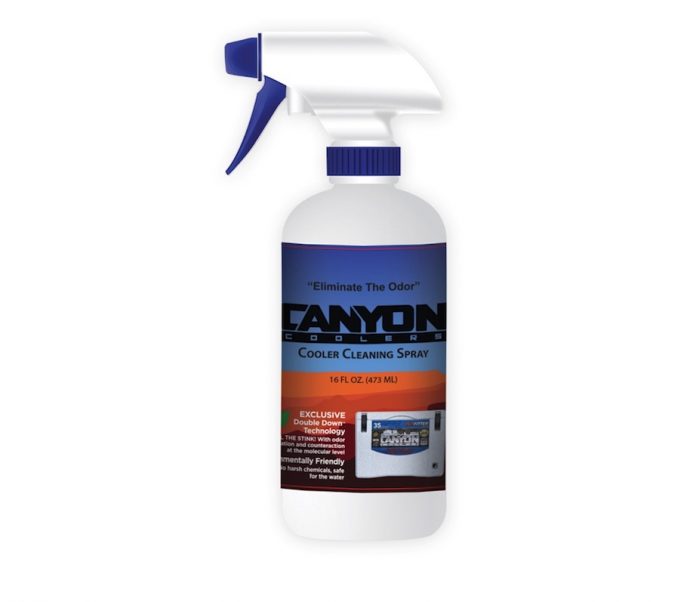
Photo: Canyon Coolers
New Canyon Coolers cleaning spray.

The following is a press release from Canyon Coolers.

Nothing tells the story of an epic adventure like a well-used cooler. And let’s be honest, after your multi-day excursion comes to a close, the last task you want to take on is cleaning your ice chest immediately upon your arrival home. It’s a good reason why most of us don’t, and against our inner voice of reason, leave the daunting task for another day. The result is not just a hard to clean cooler, but a hard to deodorize one with an odor so strong it’ll keep even the hungriest of bears at bay. That’s why high-performance cooler manufacturer, Canyon Coolers has introduced the ultimate cleaning/deodorizing spray that’ll take on any stench with stride: the new Canyon Coolers D-Funk Cooler Cleaning Spray. 

Canyon Coolers are seriously rugged and while they can certainly take on any beating the Great Outdoors can dish out, taking great care of your cooler on the inside will ensure it’s always fresh and ready for your next big adventure. Whether you spent the weekend fishing, camping or just returned from your hunt of a lifetime, Canyon’s D-Funk Cooler Cleaning Spray will erase the presence of any odor accumulated from the likes of meat blood, fish slime, spilled beverages or spoiled food. How does it do it? Canyon Coolers’ new D-Funk incorporates Double Down Technology, which works at a molecular level, neutralizing and virtually eliminating the most stubborn odors as well as mold and mildew.

Not only is the D-Funk cooler cleaner effective, its natural formula contains no bleach or harsh chemicals and rinses clean with no residue.  This means it’s environmentally safe so you can use it anywhere from the boat dock to the cabin without concern. In fact, D-Funk is up for cleaning challenges beyond the ice chest where using harsh chemicals around food can be an issue like refrigerators, deodorizing plastic containers, and more.  

MSRP for the D-Funk Cooler Cleaning Spray is $14.99.

Canyon Coolers manufactures ridiculously cold, seriously tough coolers to keep food and beverages cold for not just days, but weeks. Ultra-tough in design from the drain plugs, latches, and handles these coolers are designed to take a beating from the hot sun in stride. Canyon Coolers are used by hunters, anglers, rafters, outdoor enthusiasts —and anyone else whose adventures are fueled by seriously cold refreshments. To learn more about Canyon Coolers’ full-line of premium, ridiculously cold and seriously tough coolers.


Alpacka Raft Launches The Caribou

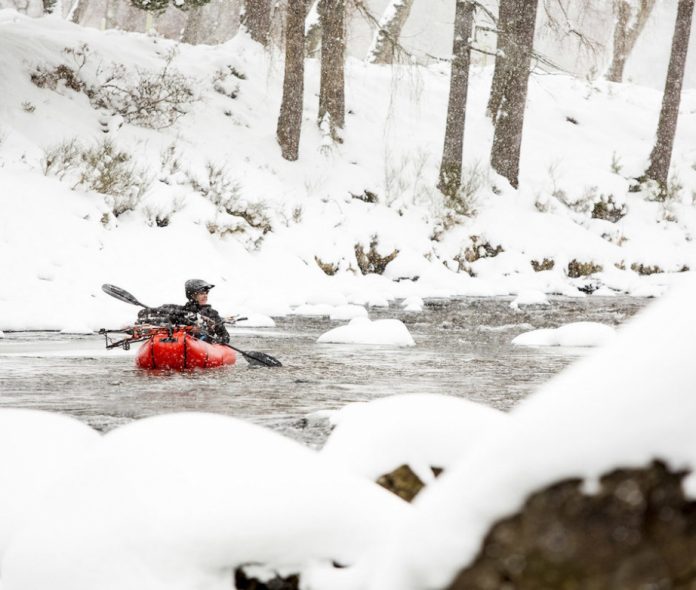
Photo: Alpacka Raft
New raft from Alpacka Raft new available.

The following is a press release from Alpacka Raft.

Alpacka Raft, the industry leader in research and development of modern packrafting, today announced the launch of its new Caribou packraft, a front-end loading and ultralight packraft that offers a modern take on an original classic.

The Caribou is the lightest and most packable full-size packraft on the market. A new and innovative bow design at the front of the boat means the boat is built to carry bikes, full-sized packs, big game, and other heavy loads, while keeping the boat balanced on and off water. The Caribou weighs in at only four pounds and 12 ounces.

9W7A6143.jpg

“By bringing the Caribou to market, we wanted to provide a better boat for specific uses,” said Thor Tingey, Apacka Raft CEO. “The Caribou, coupled with our new Late Rise Bow, is the ideal packraft for ultralight solo hunting, backpacking, and bikerafting. We’re excited to see what adventures our customers choose to take the Caribou on in the coming months and years.”

Additional features of the Caribou include:

  • Handmade in Mancos, Colorado
  • Single valve that provides high pressure one-way inflation and easy deflation with a quick twist of the valve core
  • Full-size standard seat
  • 210d High Count Nylon lightweight polyurethane coated tubes
  • 840d Nylon Floor
  • Handle on bow for easy dragging and portaging with gear on the bow
  • 4 bow strap plates oriented for optimal bike attachment, 2 stern grab loops, and a floor loop to attach the seat
  • Optional Cargo Fly (for internal storage in the tubes of the boat)
  • Optional custom Titan-Straps bike strap kit
  • Includes: inflation bag, seat stuff sack, and repair kit

The Caribou packraft is available for purchase at select international retailers and on the Alpacka Raft website. Available in Persimmon and Mallard Green colors, the Caribou retails for $795 without the Cargo Fly and $945 with.

About Alpacka Raft

Alpacka Raft started in the fall of 2000 as a collaboration between Sheri Tingey, the designer behind the products, and her son Thor, who had just completed a 600-mile packrafting traverse of Alaska’s Brooks Range and had some ideas for how to make a better performing packraft.

Alpacka Raft seeks to design and hand craft the most innovative, premium packrafts available. They strive for a legacy of leadership, stewardship, and support that allows their community of diverse boaters a lifetime of use and adventure-driven fun. Every Alpacka Raft, from cutting the fabric to putting the final touches on a spray deck, is made by hand and shipped to customers from the Alpacka factory in Mancos, Colorado, under the Made in USA standard. Alpacka Raft is one of the largest employers in town.