Home Blog Page 218

How To Ferry Your Kayak In Current

Ferrying is a way to cross a river with current. It is an important skill to learn because it gives you the ability to move from eddy to eddy without moving too far downstream. This makes moving downstream safely a lot easier.
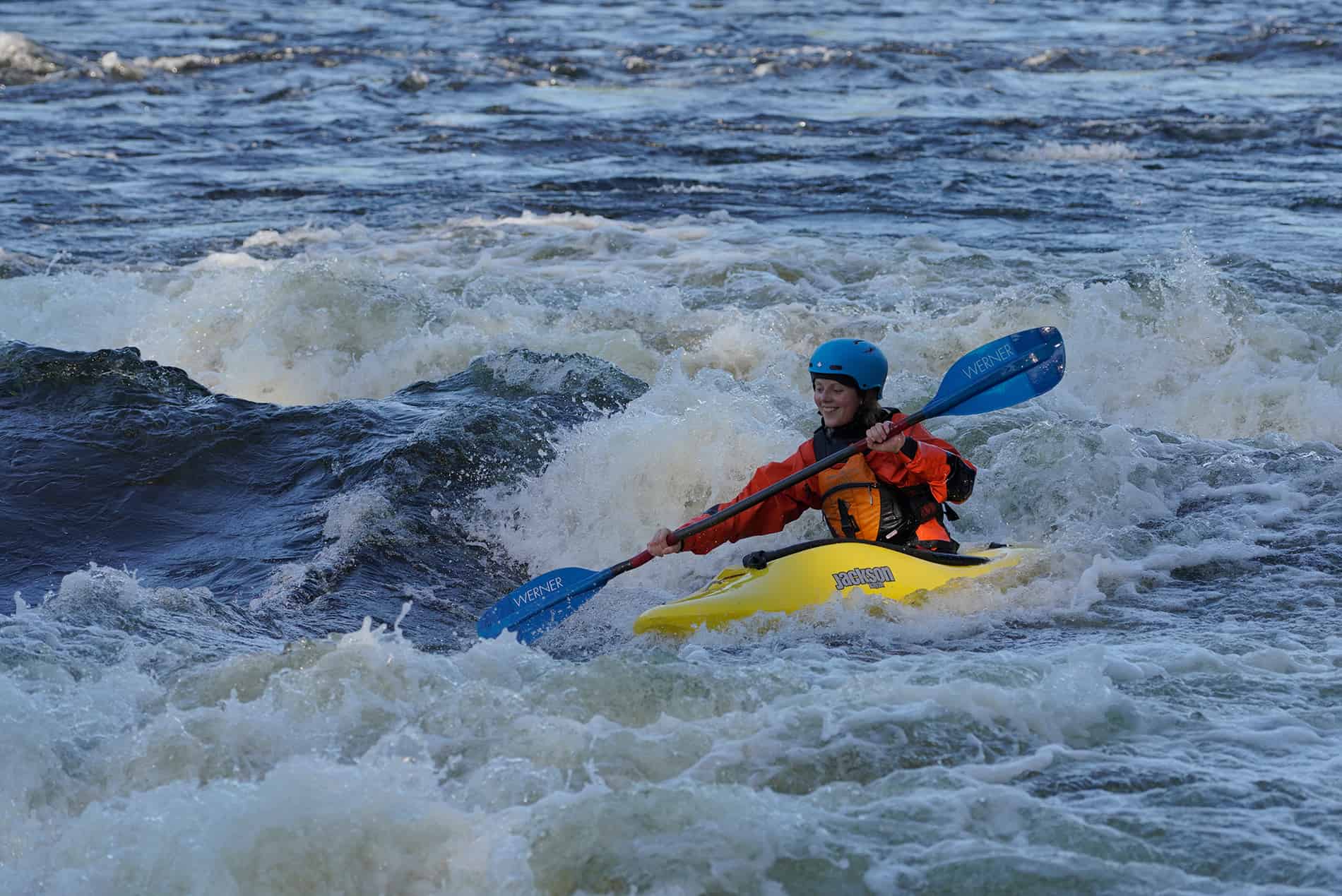
How To Ferry Your Kayak In Current

How To Ferry Your Kayak In Current

First, you need to look where you want to go. You need an exact spot that you are paddling toward.

Next, you need to choose your boat angle for crossing the eddyline. Factors like water-speed and the distance between two eddys will play a role in this decision. You also need to decide what speed you will use when approaching the eddy.

Once you get into the current, it is all about paddling. Smooth, strong strokes are your friend. The ferry isn’t over until you have reached the eddy on the other side.

You must consider the speed of the water and the power of the eddyline. These are the two main factors, they influence your boat angle and the edge as you enter the eddy.
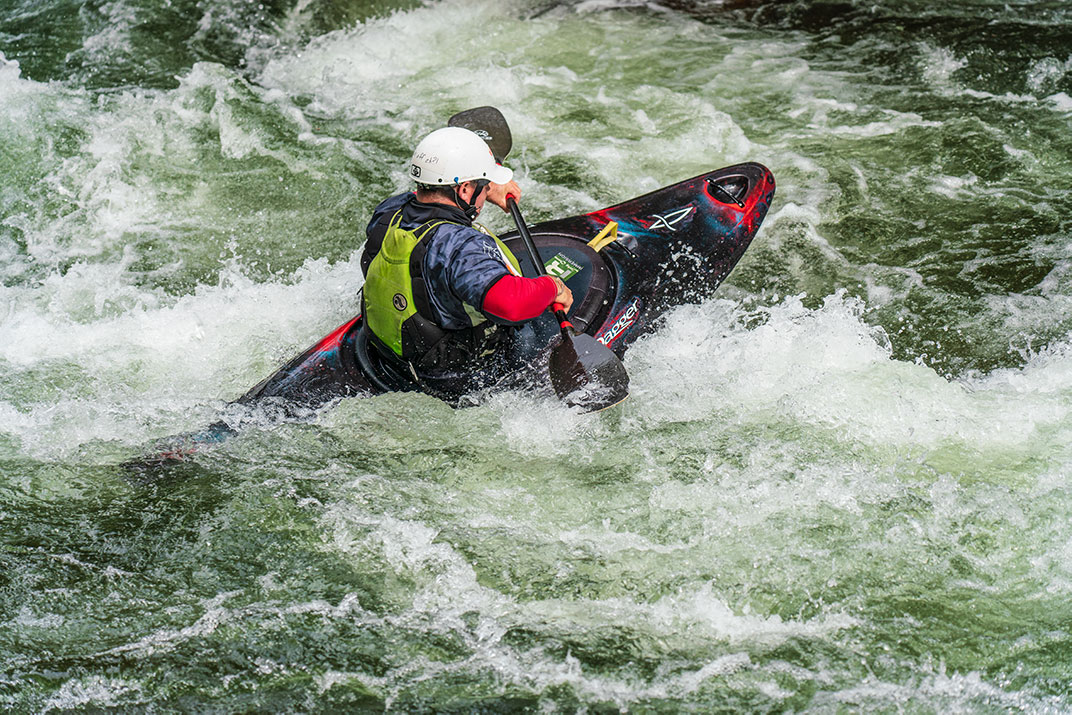
Watch the video below for more in-depth directions on how to ferry in current here.

For more top picks and expert reviews, check out Paddling Magazine’s guide to the best whitewater kayaks here.
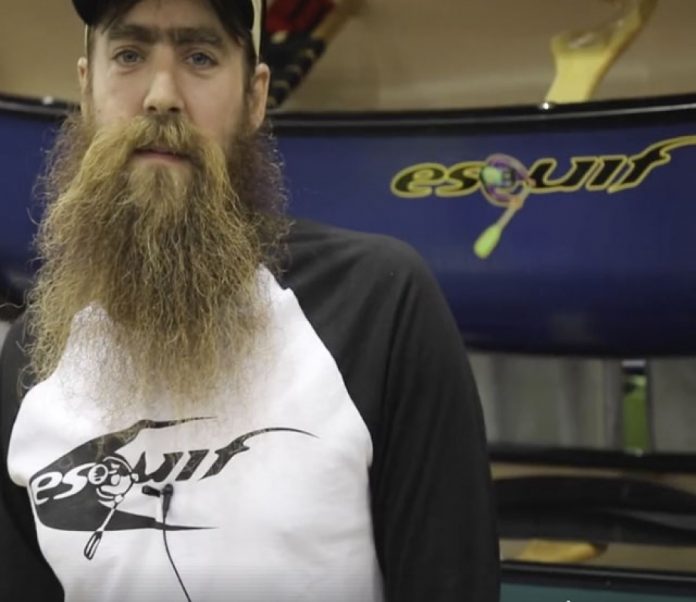
Esquif Canoes Whitewater Canoes

Photos and video by Rapid Media
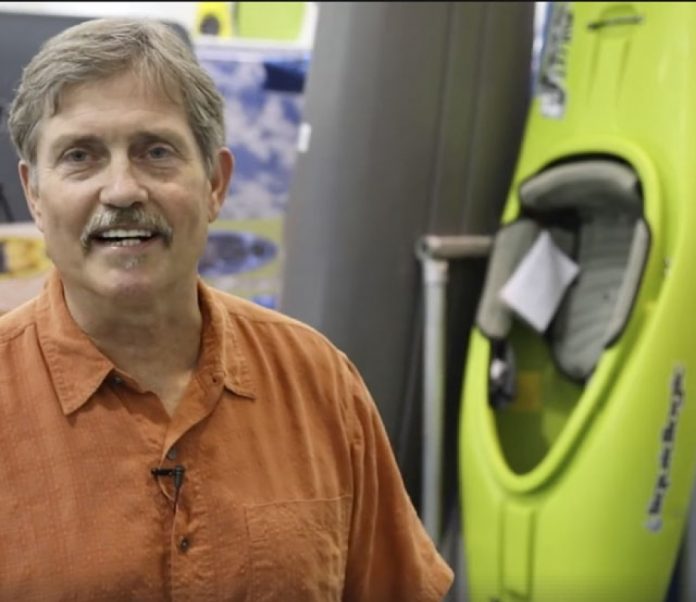
A man standing in front of an Esquif Canoe

Esquif canoes were one of the first brands to use rotomolded polyethylene in canoes. And as time has gone on, the rotomolded canoes have gotten older.

Esquif showed off two whitewater canoes with rotomolded hulls. The first is a lite version at 52-pouns and the second is a super-lite version at 43-pounds. Both canoes have a foam bulkhead for more buoyancy.

Grab some whitewater and you are ready to boof.

For a closer look, check out the video below:

Hurricane Kayaks Santee 110 Sport

Photos and video by Rapid Media
A man standing in the Hurricane kayaks booth.

Hurricane kayaks are introducing a new boat to their ABS-thermafoamed plastic boat line, the Santee 110 Sport. At 33-pounds and 11-foot long, the Santee 110 sport is the perfect kayak for a  solo paddle or a long trip with friends. 

The seat of the kayak is an aluminum frame seat that is easily removed for loading. The best part about the seat is that you can use it as a camp chair after a long day of paddling. The hinged hatch in the back is great for storing your camping gear and the adjustable foot-pegs will help you stay comfortable all day long.

For more information, check out the video below:

Dagger Kayaks Phantom

Photos and videos by Rapid Media.
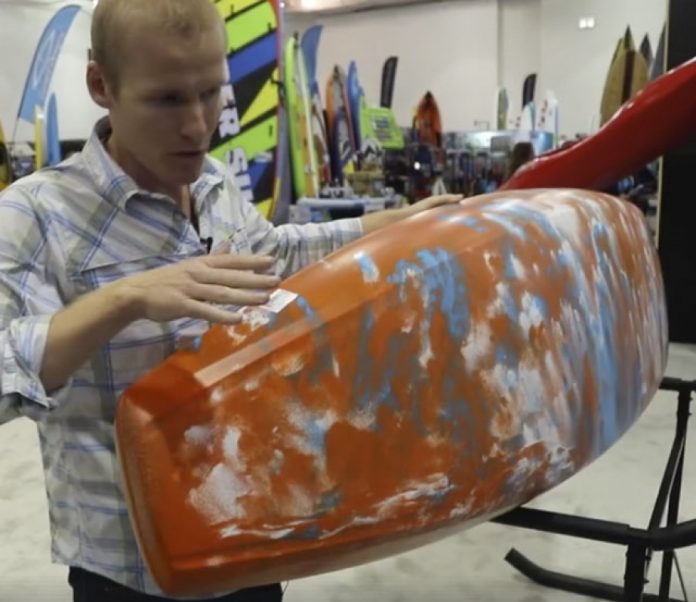
A man looking at the bottom of the Dagger Phantom kayak.

After spending a few years as an under-the-radar passion project, Dagger Kayaks has revealed the Phantom. The Phantom is about nine-feet long and is a perfect creek boat.

The boat has a ton of bow volume and rocker, to ride up and over anything you can throw at it. It also has a flat hull.

Never compromising on safety, the Phantom has rotomolded outfitting, a step-out pillar and an adjustable bulkhead on the front. 

The boat also has five true grab handles, for pin extraction points and places for swimmers to grab in the event of a rescue.

For more information, check out the video below:

Current Designs Serene

Photos and video by Rapid Media
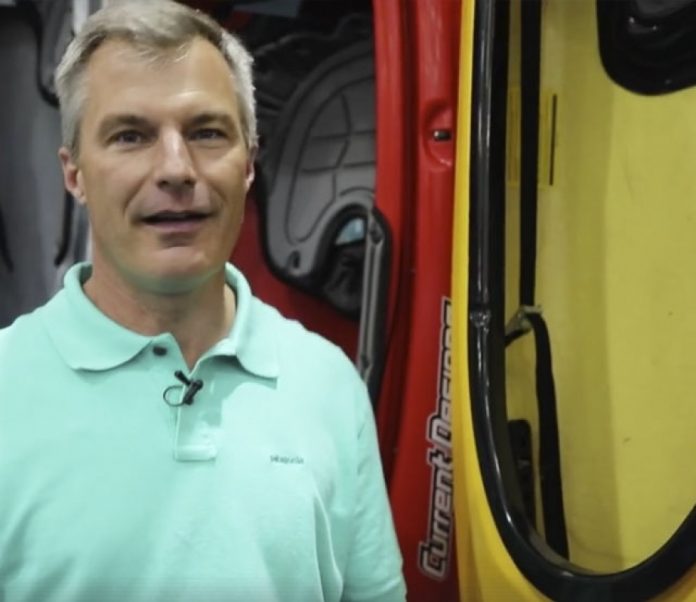
A man standing next to the Current Designs Serene kayak.

The Current Designs Serene is a recreational kayak for all types of paddlers. At only 31-pounds, you can throw this kayak over your shoulder and get to the water with ease. 

The kayak is outfitted with a comfortable seat, foot braces and a really large, open cockpit. And it ships this fall, just in time for the holidays.

For more information, check out the video below:

Video: How To Read Whitewater

Whitewater can seem chaotic and hard to understand when you first tackle it. But with a little practice, reading whitewater will become second nature.

The video below introduces 5 things you need to look for when learning to read whitewater.

  • Current
  • Eddy
  • Eddyline
  • Waves
  • Holes

Current is where water is flowing downstream. It usually creates a downstream V. Current will always flow in a straight line until it hits an obstacle. It will always be the strongest on the outside of a turn.

Eddys form on the downstream side of obstacles. This is where water can be shielded from the force of the main current, but they are moving water. The flow of the water will be toward the object that created it. Eddys can be broken down into three zones.

In the middle of an eddy is the standing part. This is where the water is the calmest. You can stay in this area with only a few paddle strokes.

The second zone is the draining part of the eddy. This is the downstream end of the eddy where the water is going back into the current. Here, you need to paddle in order to stay in the eddy.

The third zone is the filling part. Here, the current is flowing back toward the obstacle that created it. This part will pull you back into the obstacle or back into the main current.

The eddyline is the swirly water where the current and eddys meet. The are narrowest at the upstream point where they begin and widest at the downstream part where the eddy ends.

The waves are most often formed by current slamming into and slowing down by downstream water. They can come in many shapes, and a lot of waves will also mimic holes.

Holes are formed when water flows over a ledge or rock. The water is forced downwards and the water on the surface of the obstacle downstream is forced to flow back upstream into the whole. This creates a strong recirculating current.

For more detailed information, watch the video above.

New Sealskirt Fabrics

Photos by Rapid Media
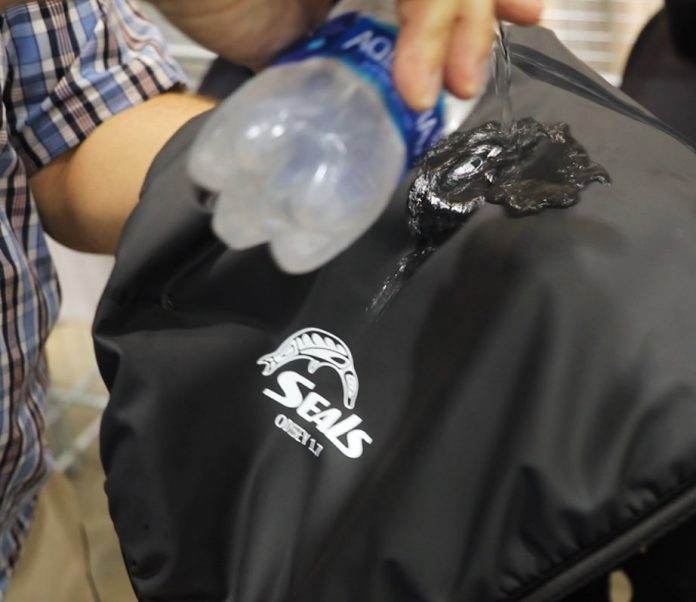
seal skirts with water being poured on it.

Seal Skirts are introducing a fourth category of kayak spray skirts. Check out the video below to find out more.

Venture Kayaks Trilite

Photos by Rapid Media
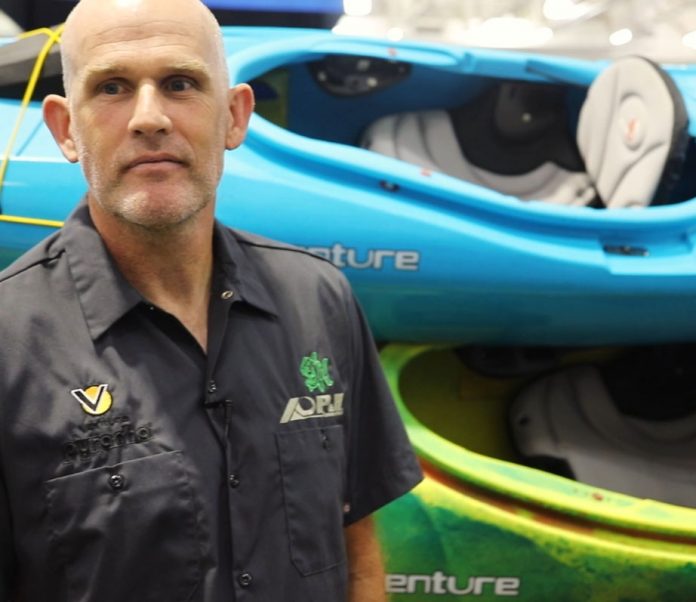
Venture kayaks

Check out the new products from Venture Kayaks in the video below!

New Airhead SUP Products

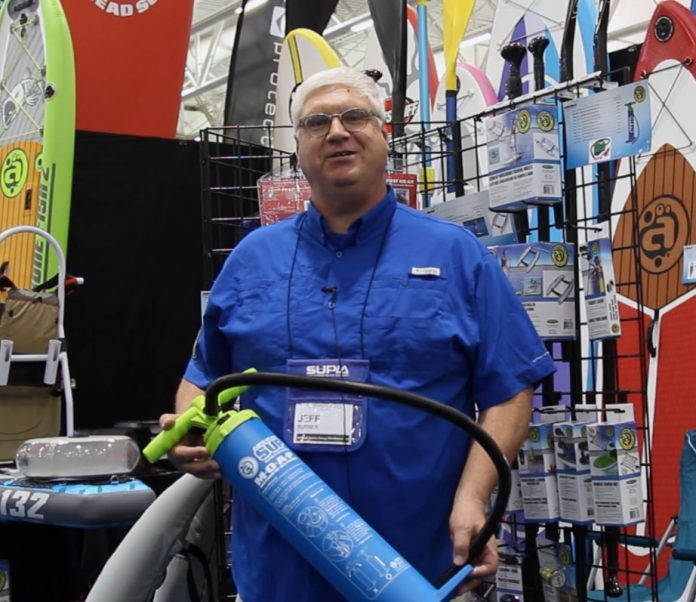
Airhead SUP introduced a ton of great new products at Paddlesports Retailer 2017. The first is the MOAP, the Mother Of All Pumps. It is a two stage pump, one to fill the cavity of the board and the second to get the board to full pressure. 

The second prodcut is their new electric pump. It is a “set it and forget it pump,” so you just have to set it to the pressure that you want in your SUP and it will kick off when it reaches the desired PSI. 

For more information on new Airhead SUP products, check out the video below.

Hala Gear River Running Paddleboards

Photos by Rapid Media
Paul Clark from Hala Gear

Hala Gear brought their river-specific boards to Paddlesports Retailer 2017. Hala is about design and technology, they are known for innovation. On of these innovations is the Hala Stomp Box, a retractable fin system on the bottom of your board.

Hala also uses double stacked rail systems. The Hala Peño has two chambers, tented to create a play board style.

For river surfing, Hala produced the Hala Gram and Hala Miligram. These boards are four and three quarter inch thick inflatable, that brings ISUPs to surfing.

In the open water paddling category, Hala has introduced the carbon-stringer technology. The carbon performance series is sure to fly on the open water.

To learn more, check out the video below: