Home Blog Page 225

Whitewater Kayak Gear For The Ultimate Road Trip

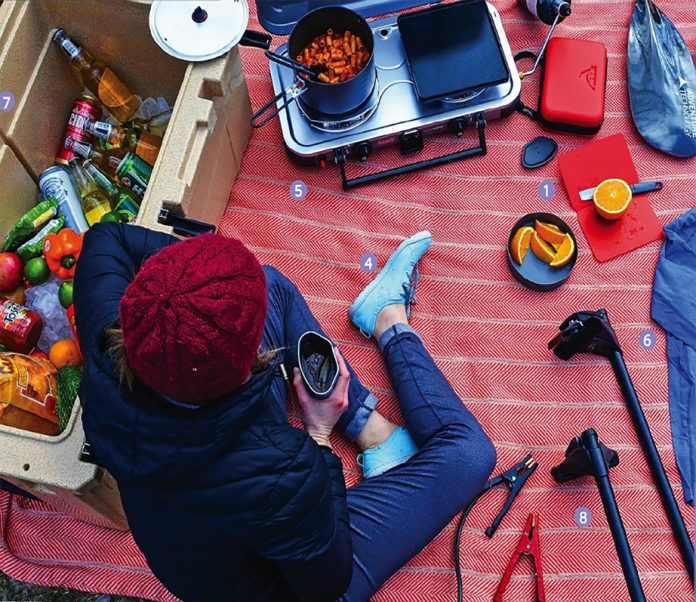
A woman on a whitewater paddling road trip sitting on a blanket with a paddle, camping stove, paddle and river shoes.
What more could you possibly ask for? (Maybe less mosquitos). | Photo: Dawn Mossop

A road trip with your pals in search of whitewater is certainly a summer highlight. You’ll need the essentials though, snacks included. Deciding what whitewater kayak gear to bring can be difficult if you don’t know what to bring, and what kind of trip you’re going on. Have no fear, Paddling Magazine staff has created the ultimate road trip checklist with all the proper whitewater kayak gear. Don’t go hungry, don’t get cold, but get cozy and excited with this checklist. Happy paddling!

Whitewater kayak gear checklist

1. MSR Alpine Deluxe Kitchen Set & Flex 3 System
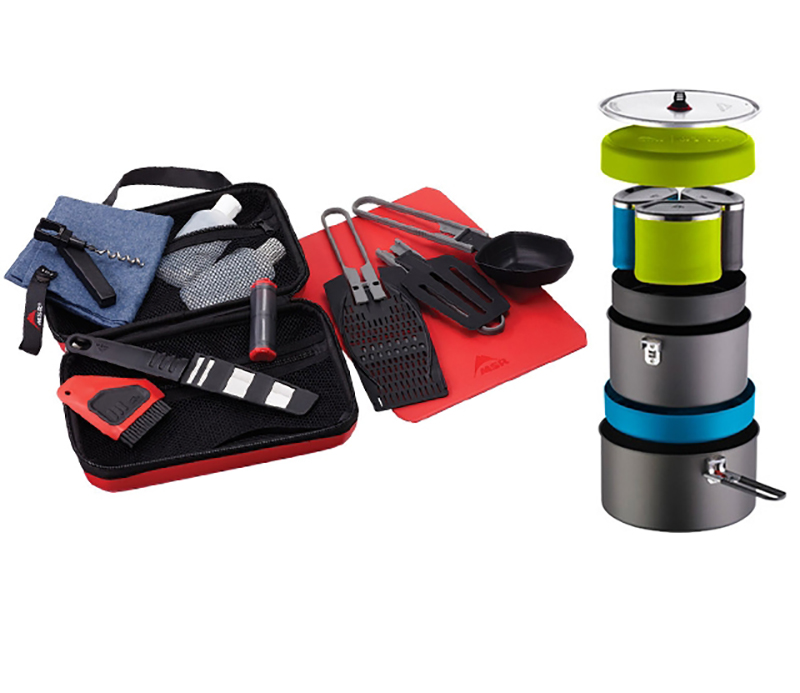
The MSR Alpine Deluxe Kitchen set and flex 3 system used for whitewater road trips.

This is what I love about MSR: they don’t do anything half-assed. When they decided to put a knife in their Alpine Deluxe Kitchen Set, they made it a super sharp mini chef’s knife that’s better than most in my kitchen drawer. When it comes to whitewater kayak gear, quality is on point for all items: fold-up cutting board, quick-dry PackTowl, two mini squeeze bottles, a fold-up spoon and spatula, dish scraper and brush, teeny salt and pepper shaker, corkscrew and a small plastic cheese grater that doubles as a strainer (hey, what’s the point of car camping if I can’t have freshly shredded cheese on my chili?). Zip up its handy carry case and pair it with the Flex 3 cooking set and you’re well prepared for gourmet meals on the go. Three insulated mugs with lids, three bowls and a 2.3-liter non-stick pot all nest into a larger 3.3-liter pot and are held in place by a strainer lid and click-in place folding handle.

Flex 3 system: $129.95 | Alpine Deluxe Kitchen Set: $54.95 www.cascadedesigns.com

2. Adventure Technology AT2 Standard
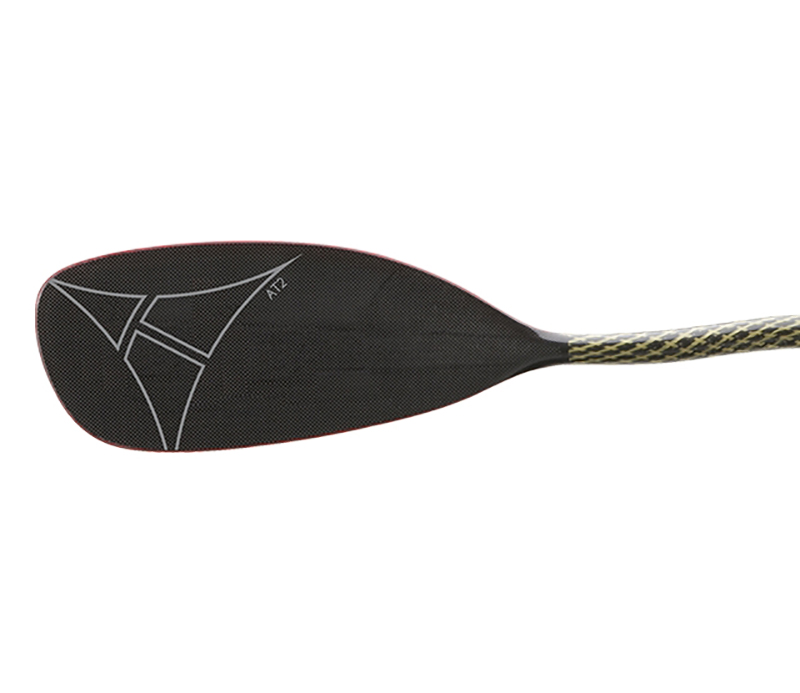
AT2 standard paddle from Adventure Technology in black

As our gear gets more and more specialized (page 49), our quivers of paddles are growing. We have paddles just for racing, paddles just for creeks and paddles just for freestyle. If you have to choose just one to take along on a whitewater road trip, it’ll be hard to beat the AT2 from Adventure Technology’s Elite Series. The key here is versatility. It is lightweight, very stiff and integrates both freestyle and river running paddle features to make it as close as you can get to one stick that does it all. The combo of carbon, aramid and fiberglass in the shaft makes the AT2 durable, so you can count on it when you only have space for one blade on board.

$440 | www.atpaddles.com

3. Immersion Research Devil’s Club Dry Top & Shawty Dry Suit
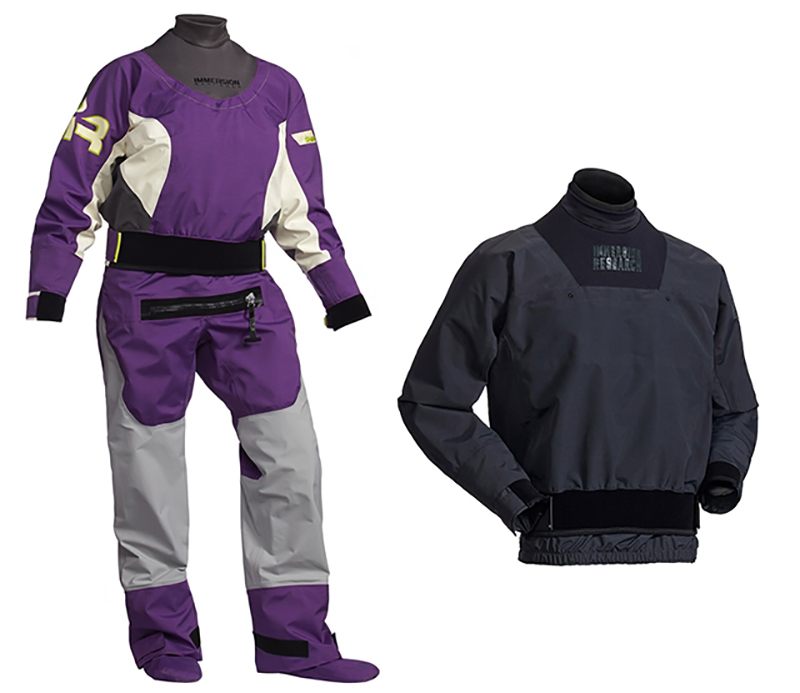
Immersion research devil's club dry top and purple and white Shawty Dry suit

IR got serious about new outerwear this year. The Devil’s Club series takes its name from the nasty, spiny Pacific Northwest plant that’ll tear your gear on hikes to and from the river. Now you can go ahead and bush crash. The dry top’s outer shell uses heavyweight fabric that puts durability first. Of course, this means the top is heavier than most—maybe not the best choice for soul surfing on a sunny summer day—but if you’re venturing off the trail, the Devil’s Club is a bomber choice for durable protection and waterproofness.

On the women’s side, I couldn’t wait to try IR’s new Shawty drysuit. Once I got over the name (Urban Dictionary: “Fine ass woman. Sup shawty, how you doin?”), I was nothing but stoked about this whitewater kayak gear piece. Across-the-shoulder zippers are my new favorite entry method thanks to the ease of movement they allow, and the Shawty has a hard T-shaped pull that makes it easy to do up myself when I don’t have a friend to help me out. The adjustable buckle at the waist is a simple sizing solution that lets me dial in the fit, and the fabric is supple enough that it moves smoothly with my body so I don’t feel like I’m in a spacesuit. It’s clear that IR put time into tailoring the fit—the Shawty works with my curves without being awkwardly wide in the hips. The waterproofness is bomber and the fabric feet are reinforced for added durability. The front relief zipper means you should bring backup base layers if you’re accustomed to a drop seat, but I promise your stand-and-pee skills will come with time.

Devil’s Club Dry Top: $398 | www.immersionresearch.com

4. Coleman FyreChampion HyperFlame
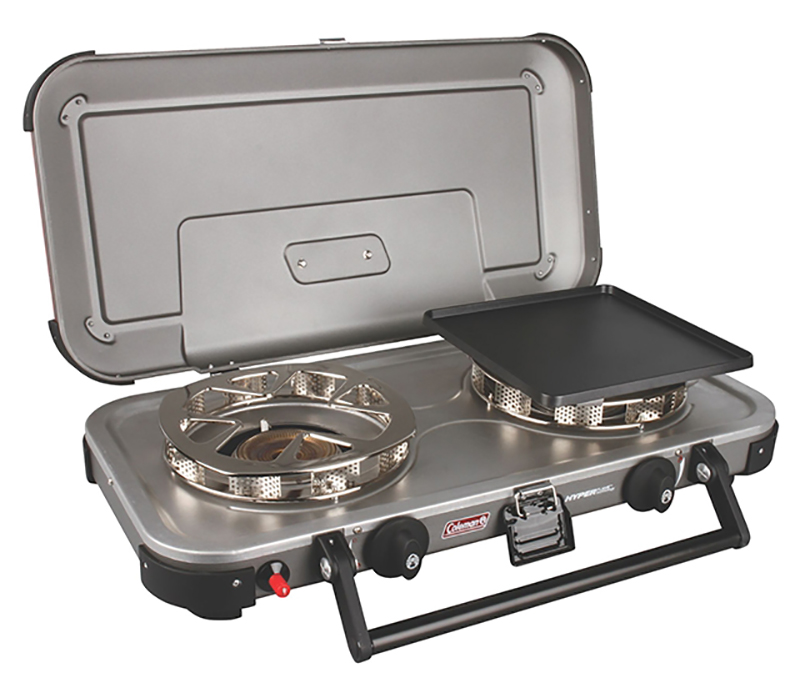
Coleman Fryechampion Hyperflame, a great cooking stove for whitewater kayaking road trips

An amazing on-the-go stove. Powered by a 16.4oz propane cylinder, the FyreChampion’s two burners roar to life with a flick of the easy ignite button. Each burner has a small, removable no-stick griddlekayak padfor perfect pancakes, and the control knobs let me regulate temperature with precision. I can boil water with unprecedented speed. The open lid is an effective windshield with an arm to hold it in place. The whole unit closes up to contain the burners, griddles, and screw-apart propane regulator for a slim suitcase-style kit with a carry handle that’ll easily slip under a seat in the car or between bigger storage bins.

$179.99 | www.coleman.com

5. Astral Loyaks
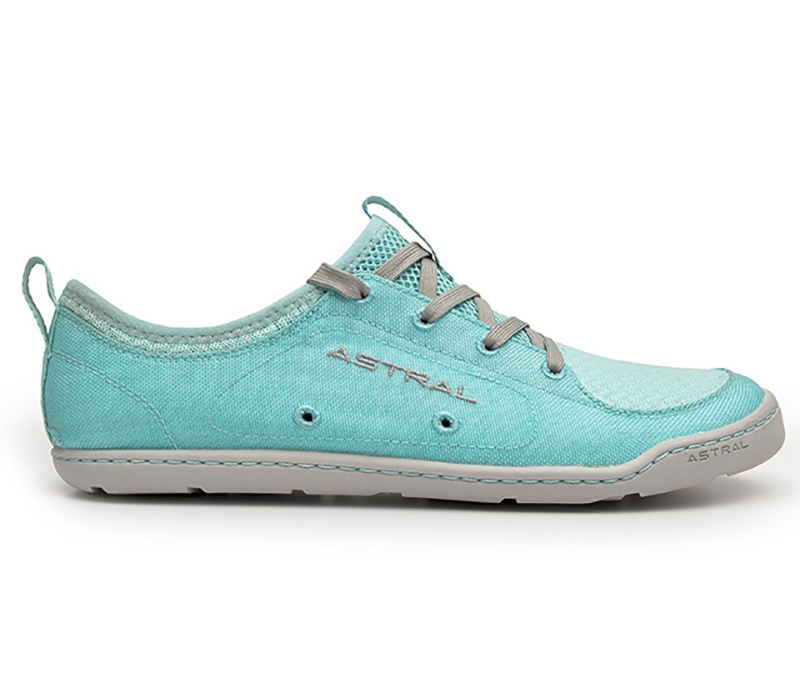
Astral Loyaks, a great shoe to take on whitewater paddling road trips

Other than the fact that they come in my favorite shade of turquoise, comfort is the best thing about the Loyaks. They’re incredibly light, flexible and low profile, and I can wear them for an après paddle beer without feeling like I’m in clunky river clogs. Their flexible sole minimized the foot cramps I get with stiffer shoes against my open canoe foot pegs. Astral’s proprietary rubber means they handle well on rocks in and around the water and drain well so I don’t end up with sloshy puddle shoes. Don’t plan to wear these just anywhere—slim design means limited support so they’re not suited to treacherous portage trails, but they’re my new top pick for a grab-and-go kayak shoe.

$79.95 | www.astraldesigns.com

6. NRS H2Core Lightweight Hoodie & Pants
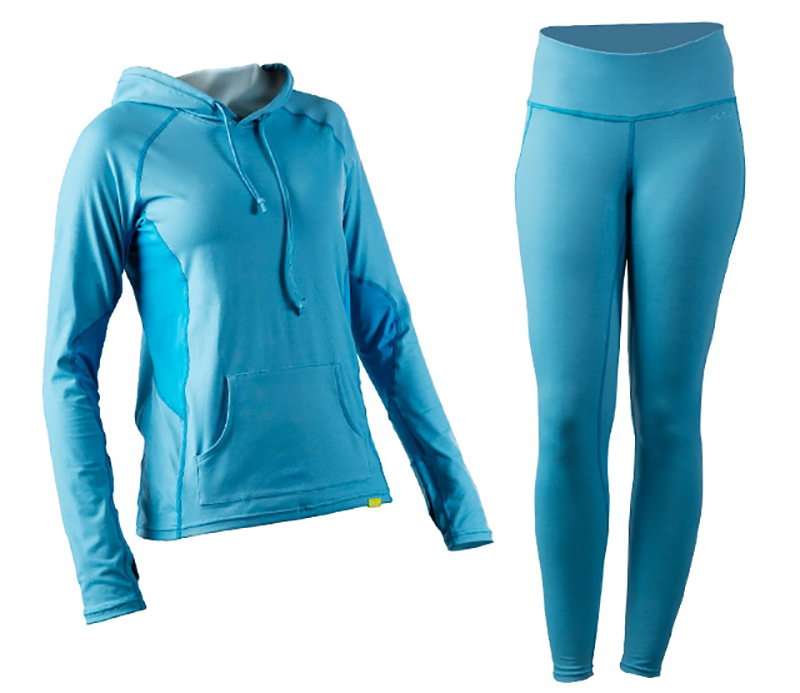
NRS H2core insulating layers perfect for a paddling road trip

Snuggly soft on the inside with a smooth brushed exterior, these insulating layers are warm and versatile. They’re surprisingly cozy for how light they are, which is a bonus for wearing under dry gear—none of the annoying restriction that sometimes comes with warmer base layers. I’m happily wearing them under my suit for spring paddling or in my sleeping bag on a cold night (not on the same day—gross). The top has a panel of lighter fabric under the arm and partway down the torso to combat underarm chafe and keep things breezy for the seriously sweaty among us.

Hoodie: $64.95 | Pants: $49.95 | www.nrs.com

7. Canyon Cooler Prospector 103
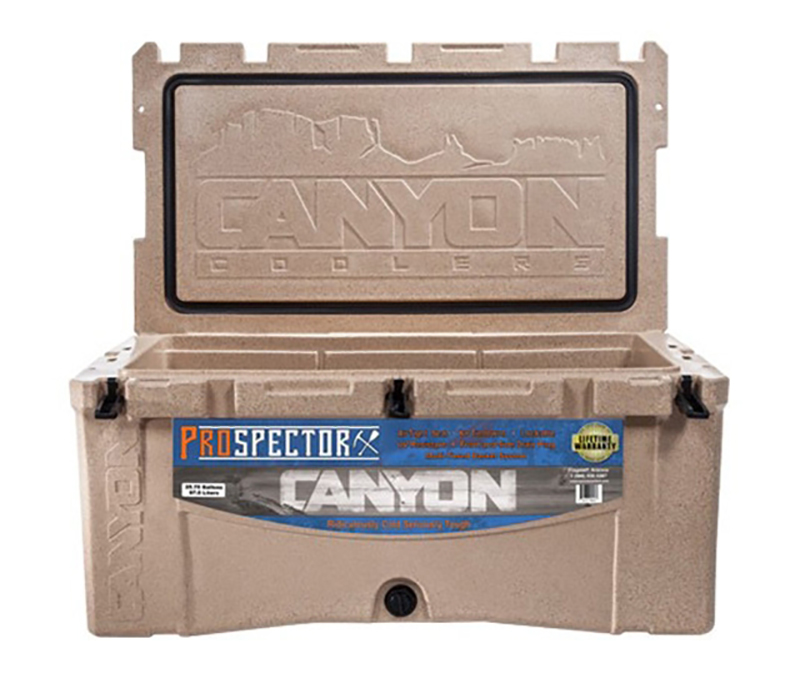
Canyon cooler prospector 103, a great choice for whitewater road trips

Gigantic and seemingly indestructible, this is the cooler for serious rafting adventures and tailgate parties. For on-the-water adventures, it has six tie-down points to thread cam straps through and fits perfectly into our AIRE 156R and 143D rafts. It has two drains, one on the front and one on the end, so I can access one of them no matter how the cooler is tied in. Both the drains and the three rubbery latches that hold the lid closed are recessed into the cooler’s rectangular shape so they don’t get damaged or cause a snag. At 37.5 by 21.25 by 18.5 inches, this cooler will take up some serious trunk space, but it stores enough food and beer for a long trip or big bash and keeps everything perfectly cool.

$410 | www.canyoncoolers.com

8. Yakima Round Bars & Q Towers
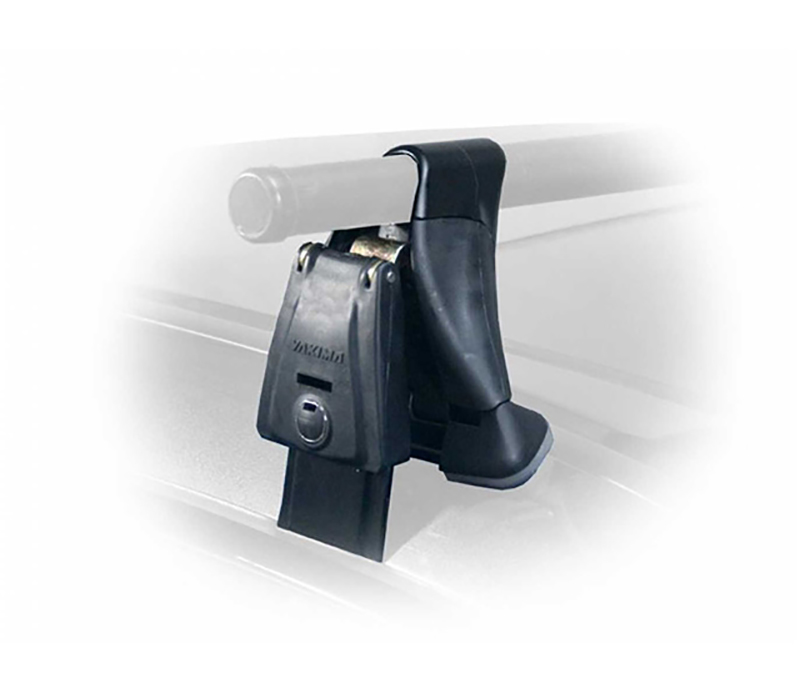
Yakima round bars and Q towers, a great option for whitewater paddling road trips

These tried and true roof racks have taken my boat and me all over the map. I’ll admit that the initial set up was a little intimidating—I opened the box to find several smaller boxes inside, and in them, what felt like a million tiny pieces. Luckily, Yakima made it absolutely idiot proof. Their step-by-step instructions guided me through the assembly, and the best part is, it was a one-time job. Since then, I’ve popped them on and off my car a hundred times with ease. The Q Towers have a simple knob in them to adjust on either side for a perfectly balanced clamp on my naked-roof car—no need for factory bars. The instructions also walked me through finding exact placement on the top of my weirdly curved hatchback to make sure they were the right distance apart and positioned with perfect symmetry. I was nervous about the home installation, but once they were on my car it felt like they had been there all along. Solid and reliable. Little locks on each clamp mean that only I can undo them. Yakima makes newer, more aerodynamic crossbars, but the RoundBars are a proven choice and better on the budget. Use Yakima’s website to search the make, model and year of your vehicle, and it’ll spit out all the roof rack options for your ride.

Round Bars: $135 | Q Towers: $555 | www.yakima.com

What more could you possibly ask for? (Maybe fewer mosquitos). Feature Photo: Dawn Mossop
Bench vs. Bucket Seats: Which Is Better On A Canoe?

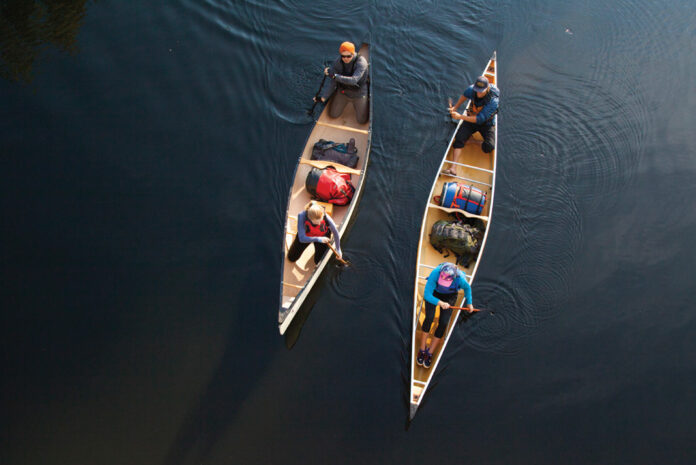
The great debate. PHOTO: HANNAH GRIFFIN
The great debate.| PHOTO: HANNAH GRIFFIN

At the 1981 Whitewater Nationals in upstate New York, canoe racer Tom Staz arrived to the event with a boat that caused a stir among competitors. He had modified his Wenonah race canoe with a low-set bucket seat and foot braces. If the conventional wisdom for paddler positioning were an indicator for how the race should have played out, Tom Staz would have finished dead last. Instead, he surprised everyone by finishing minutes ahead of the next competitor.

While materials, weight, length and trim are all aspects most paddlers consider when they are in the market for a canoe, rarely do we reconsider how we sit in our boats. And where we live determines how we sit.

[ Paddling Buyer’s Guide: View all canoes ]

“The Lower 48 is a sitting market, whereas Australia, Germany, the United Kingdom and Canada prefer to kneel,” says Bill Kueper, vice-president of Wenonah Canoe, which manufactures canoes with both seat styles. “There are cultures of sitting and kneeling, and you are more likely to sit or kneel depending on where you learn and what water you paddle.”

Kueper jokingly likens the two seating styles to the Reformation between the Catholic Church and Martin Luther. Some people swear by their seating position, and others just don’t know any different.

“The height of bench seats is the real reason kneeling became the staple of canoeing tradition,” says veteran marathon racer and coach Peter Heed. Kneeling lowers a paddler’s center of gravity, especially important for rough conditions and river running.

While kneeling was commonplace in the early days of recreational and sport canoeing, bucket seats were quickly adopted by marathon paddlers following Staz’s 1981 debut. Buckets were mainstream in the race scene and recreational market by 1983, according to Heed.

The great debate. PHOTO: HANNAH GRIFFIN
The great debate.| PHOTO: HANNAH GRIFFIN

“Sitting is preferred as a more comfortable position over long distances, and for more powerful sprints,” says Heed. However, for lovers of traditional aesthetics, departure from the seating style of Bill Mason and the voyageurs before him may feel akin to blasphemy.

While the bench seat is simple, adaptable and easier to alter trim from, when considered from an ergonomics perspective, “the bucket seat is preferred,” asserts Greg Redman, lead physiotherapist for Canoe & Kayak Canada.

“Sitting places the pelvis in a better ergonomic position under the spine. The paddler’s back muscles are not in a stretched position and therefore allow easier trunk rotation to place the blade further forward,” says Redman. “Bucket seats are also more comfortable as they wrap around the glutes, providing better stability.”

Bucket seat design has come a long way since the refabbed tractor seats of the ’80s. Some manufacturers offer multi-point contact seat outfitting systems—keeping butt, knees and feet in contact with the boat—which increases control in rough water. For the pros, bucket seats are meticulously customized to ensure fit, offering greater side and lateral support for additional power.

Despite expert opinion that bucket seats promise to make us stronger and faster paddlers, there’s not a clear winner in this debate for average canoeists. Both seat styles offer their advantages.

Kueper notes that for the regular consumer, bucket seats aren’t custom-made and are shaped to fit the average butt. Bucket seats may also limit onboard maneuverability—the bow paddler can’t turn 180 degrees to face the stern for an on-water lunch or sit askew comfortably to fish, and there are no seating options for soloing a tandem design.

“Bench seats are simply more versatile for accommodating a variety of activities,” summarizes Kueper. —Gabriel Rivett-Carnac

Quiz: Which Pro Whitewater Kayaker Are You?

iStock
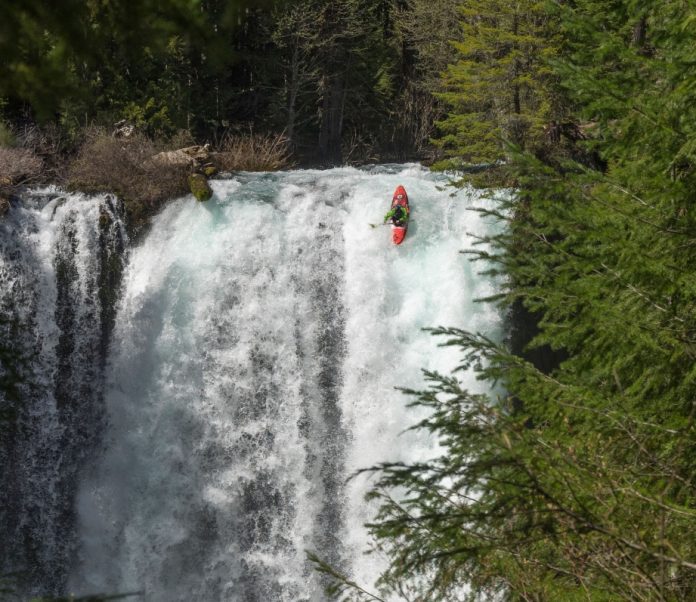
A kayaker descends a waterfall in a red kayak.
Ever wondered if you’re more of a Nouria or a Dane? Rest easy, our quiz will sort you out. Answer eight easy questions and see which professional whitewater paddler best fits your personality.

Why Mountains Are The Future Of Sea Kayaking

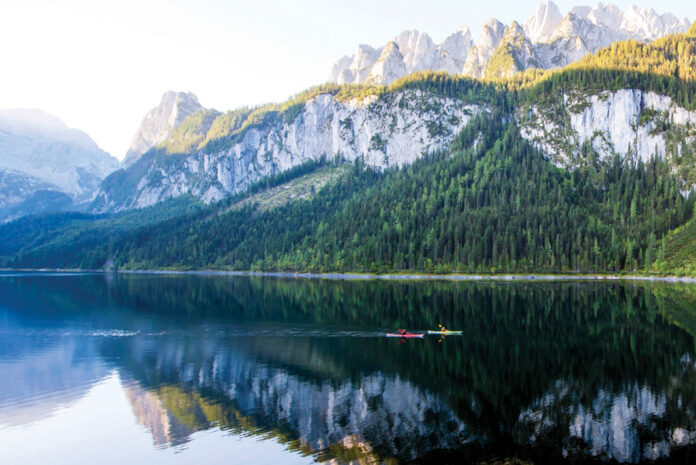
Asking big questions in Gosauseen, Austria. PHOTO: MICHAEL NEUMANN

Whenever I stop for gas with a sea kayak on my car, I get the same questions. “Is sea kayaking relaxing? Is it scary? Can you camp out of that thing?” The answer, of course, is yes, yes, and yes. All in a single trip. The sea kayak is the most versatile of human-powered vessels. A single craft that can handle glassy mirrors, the churn of rock gardens and long expeditions on exposed coasts. I’ve even taken my fiberglass sea kayak down class II rivers. However, that same flexibility has made sea kayaking hard to define. It’s impossible to convey the joys and challenges of a sport so complex and diverse. Usually I babble up a bunch of stories until the gas station attendant’s eyes glaze over. Then I pay, get back in my car and leave.

Not exactly attracting new blood to the fold.

Even the term sea kayaking confuses people. Salt isn’t the determining factor of our sport: we take our sea kayaks many places that aren’t the sea. Is kayak touring a better term for what we do? Perhaps, but that always implies place- to-place movement, a kind of backpacking on the sea. That’s not always true, and doesn’t begin to hint at the dynamisms of the environment. Backpacking trails don’t build into steep cresting waves when the wind rises or the tide turns. Meadows don’t harbor invisible currents, which can deflect course by a mile. When weather turns for the worse on a backpacking trip it adds discomfort but seldom poses danger.

Does sea kayaking have an identity crisis? Only if its greatest advocates can’t even properly describe what it is.

To explain what is at the heart of the sport I turn to the legendary dirtbag Fred Beckey. As Beckey explained to the New York Times back when he was a young chap of 85: “You’ve got to be physically pretty strong to be any good at it at all. You’ve got to have a hard-core mental attitude. You’ve got to have the right mantra. You’ve got to have dedication, a sense of security, safety and sensitivity with your partners, and a good sense of balance. It’s a combination of many, many things. You need to have the capability or desire to accept a certain amount of risk. A lot of it is maybe spiritual, not a religious type, but you have to have an affinity with the outdoors.” Sounds like a good explanation of the varied world of sea kayaking to me. But Beckey wasn’t describing sea kayaking. In fact, I don’t know if he’s ever been in a kayak at all.

Beckey’s a legend of old school alpinism. As I write these words, he’s still climbing at 93. Old school alpinism involves backpacking to scale remote mountains using a variety of techniques. There’s a lot of simply walking with a pack for a long ways. Once at the mountain, alpinists are faced with mixed terrain: rock, ice, cracks, ridges and glacier travel. Alpinism is a mix of steady-burn endorphins, flashes of adrenaline, continually watching the weather and route conditions, all the while reveling in wild remoteness. It’s equal parts endurance, technical skill, judgment, love of wilderness and raw desire to do strange and challenging things in remote places. Sound familiar?

Sea kayaking is traditional alpinism on the sea. In a week of paddling, there will be a lot of simple repetitive forward strokes to get from point A to point B, infused with a perpetual awareness of weather and currents and changing conditions that an alpinist would be proud of. Exposed crossings, tide races, surf zones and boomer fields are our headwalls, crevasses, and knife-edged ridges. Our base camps are storm-wracked beaches at Cape Scott instead of alpine cols. Crux moves are similar: a stretch of exposed sea cliffs can be a lot like one of Beckey’s high alpine traverses in commitment, required skill and raw wildness.

Subtract any one of these four elements—endurance, wilderness, technical skill or judgment— and we lose something. No endurance and we’ll lose access to remoteness. We’ll share beaches with surfers, kite-fliers and golden retrievers instead of whales and wolves. Subtract the wilderness and we’ll have the sea kayaking equivalent of whitewater park-and-play: exercise and skill but not the soul-deep connection to nature. Subtract the technical skill and we’ll be avoiding conditions, limiting our destinations and the margin of error. Lose the judgment and we’ll become fools who rush in where angels—and Coast Guard helicopters—may fear to tread.

In the years since Beckey’s climbing heyday, traditional alpinism has mostly given way to sport climbing, which removes the long slogs up ridges with a heavy pack but subtracts the wilderness. And in climbing’s indoor stepchild, the rock gym, the weather is controlled by the HVAC system and the condition of the route is managed by gym staff. With shorter vacations and busy lives giving way to more day trips and park-and-play surf breaks, kayaking is going through a similar transition.

Sea kayaking, like Beckey’s alpinism, includes all of it. When sport climbing hit the climbing world, the remaining alpinists quickly found they had the remote mountains to themselves again. If you can keep your chart-reading, route planning and boat handling skills up to snuff, so too can you.

Backcountry Brushwork Part II: Lorenzo Del Bianco

Lorenzo Del Bianco
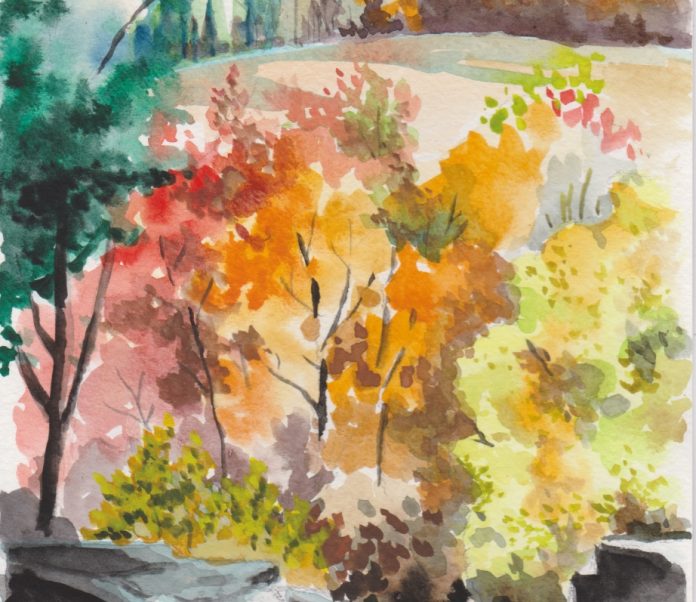
colourful trees painted by Lorenzo del Bianco

Lorenzo Del Bianco has been a long time illustrator here at Rapid Media, he’s contributed to our sister brands including, Adventure Kayak, and Kayak Angler. On top of that, Lorenzo has spent many a trip painting from shorelines. Here are some tips he’d recommend for painting en plein air. 

“I prefer working in watercolour out of doors because it’s easier to throw everything I need together quickly. “

“I pack a small paint box; a variety of brushes even though I seem to only ever use the same two brushes; watercolour paper blocks in usually two to three different sizes; charcoal sticks; an X-acto knife and water.”  

Most importantly, I asked Lorenzo how he keeps everything secure between the gunnels. 

“The paints are in a little paint box and the smaller paper block fits nicely inside of it, also works well as a makeshift easel. The brushes, charcoal and knife are tightly rolled in a bamboo brush holder, a large sheet with pockets that can rolled up for storage and rolled out to be used as a work surface.”

“The larger paper sizes are a bit of a pain but, conveniently, come in a block or stack that is glued on the longer edges, this keeps the paper stretched and resists buckling when wet. The water is in a leak-proof container.” 

Britton Tract Nassagaweya Line low res

So, how does he keep it all safe from water outside of the canoe?

“The whole kit goes into a silicone-treated top-loader backpack. The finished pieces get put into plastic zip-loc bags to protect them from accidents. The backpack is also bright orange so that I won’t lose it.”

The real challenge comes to play when you have a fully finished piece of art that you need to get home without compromising it. Lorenzo seems to have it all lined up, right down to how fast his artwork dries. 

“Because I use watercolour, it dries fairly quickly, which makes transport very easy. This allows me to either place it in a plastic bag or even nestle it between the cover and block of the watercolour pad.”

 In all of his years painting plein air, Lorenzo admits he never seems to be as prepared as he’d like to be. But thats okay, if you are resourceful. 

“As much as I try to be prepared, I find that I’m never as prepared as I thought I was. Sometimes you have to make due with what you have and be spontaneous! Once, on a kayaking trip to the west coast, my wife reminded me to bring a sketch pad and pencils, but I didn’t bother. It didn’t take long before my surroundings summoned the muses. I was scrambling for anything to draw on and with. I found some scrap paper and burnt cedar twigs in a fire and then honed the ends into points.”

“After a few sketches, a wonderful couple from Alaska saw this and offered me the use of their watercolour paper and watercolour pencils. From the cockpit of my kayak, I painted a waterfall using these borrowed tools. I simply sketched with the pencils and dipped my finger into the surrounding waters using it as my brush. The trick is to always be inventive.”

waterfall 

When asked what his number one tool would be in the backcountry, Lorenzo had a few nuggets that may work for others, but for him, it’s a good old fashioned notebook and pen, not pencil. 

“I thought my number one tool, aside from the obvious, might be a camera to record detail, but I don’t really enjoy working from photographs; I find them too factual, too restrictive, too much like work. Perhaps some wine then; a crusty baguette and some old sharp cheese? Very enjoyable but also increases the possibility of balance being tipped more in favour of fun. Then I thought, my notebook, yes!”

“The importance of field sketches and notes; thoughts, feelings, details, memory. Edvard Munch felt that one should not paint as one sees, but instead as one remembers. Note taking helps me remember how I ‘felt’ at that moment, at those times when I can’t stay long enough to finish, but still want to later retain that feeling in my painting. A notebook and a pen. Not a pencil. As one of my college professors once offered, “use a pen, make a commitment.” I always have those two things with me, always.”

Though Lorenzo has been painting and illustrating for as long as he can remember, he admit there is a balance between focus and soaking in the moment. Other times, it’s just a matter of staying comfortable in your element. 

“Sometimes I add a little vodka to the water to keep it from freezing if it’s cold out, sometimes I add a little vodka to me if it’s cold out too”

“Work can be enjoying and enjoyment can be work. Painting out of doors requires a certain discipline and focus, but also demands that you be aware of the beauty of your surroundings. A balance needs to be struck. A nonrestrictive discipline.”

“Another trick I’ve learned is not to worry about finishing a piece on the spot. Sometimes you only have enough time to capture the emotion or impression of the scene. That’s probably the most important thing, though. You can always finesse it later at camp or at home.”

CCC PartnerBadge Web

Among many other outstanding accomplishments, Lorenzo has worked with Walt Disney Animation Canada, illustrated two children’s books one of which, Dirty Science, written by Shar Levine and Leslie Johnstone went on to win the Canadian Science Writer’s Associations Outstanding Youth Book Award in 2013, and of course, Lorenzo has worked with us here at Rapid Media. 

Watch THE CANOE, an award-winning film that tells the story of Canada’s connection to water and how paddling in Ontario is enriching the lives of those who paddle there. #PaddleON

{loadposition EndContent}


Hooked Up: The Boat And Accessories You Need To Catch The Big One

Locked and loaded.| PHOTO: MARK VLASKAMP

I’m an accessories guy.

My dad, not so much. All he thinks he needs is a canoe, a paddle, a Thermos of coffee, and the same silver spoon he’s been throwing since his big walleye on the Rupert River in 1985.

Fortunately for me, the innovation of fishing accessories is catering to my gear affinity. Accessory companies are developing clever ways to mount, store, tie on, and plug in anything and everything. If it’s shiny, packs down small or can be clamped onto a gunwale, it’s mine.

Somewhere between an over-loaded gear junkie and an old-school minimalist there is a perfectly rigged fishing vessel, not to cumbersome but equipped to find and land fish. Start here.

THE CANOE

Almost any canoe can make a good fishing platform. However, if you’re buying a boat specifically to chase trophies you’ll want to keep a few factors in mind. Chief among them is stability. Beamier boats tend to feel more stable, giving anglers the confidence to battle with deep lake leviathans. Some anglers even break the golden rule and stand to cast. Another factor to consider is weight. One of the big advantages of fishing from a canoe versus a typical fishing kayak is the opportunity to portage to distant lakes and hard to- access fishing grounds. The lighter the canoe the farther you’ll carry it to less pressured fishing waters. Finally, if you like to fish in rocky rivers and creeks, opt for a material that will slide over rocks, logs and gravel bottoms.

Locked and loaded.| PHOTO: MARK VLASKAMP

ROD HOLDERS 

Rod holders do exactly what the name implies. Without rod holders I’m always only one movement away from stepping on my rods, knocking them overboard or running them into a rock. My rods’ relative fragility compared to the rest of my gear means I like to know  exactly where they are and paddle assured that they are out of harm’s way. There is no reason a $200 rod should be sliding around the bottom of a canoe when you can take out $25 gunwale-mounted insurance policy.

DEPTH FINDERS 

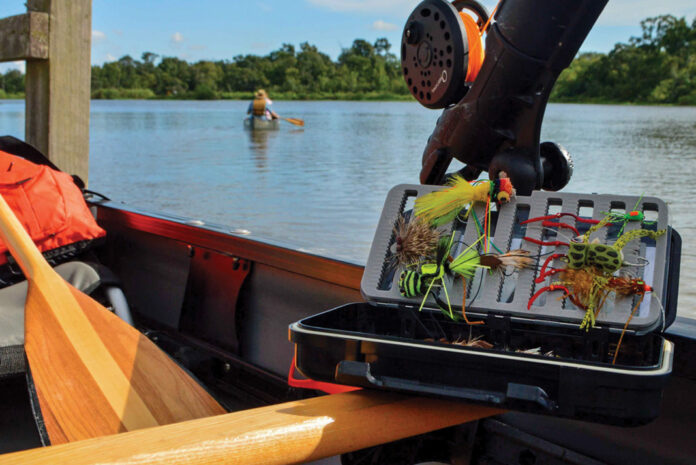
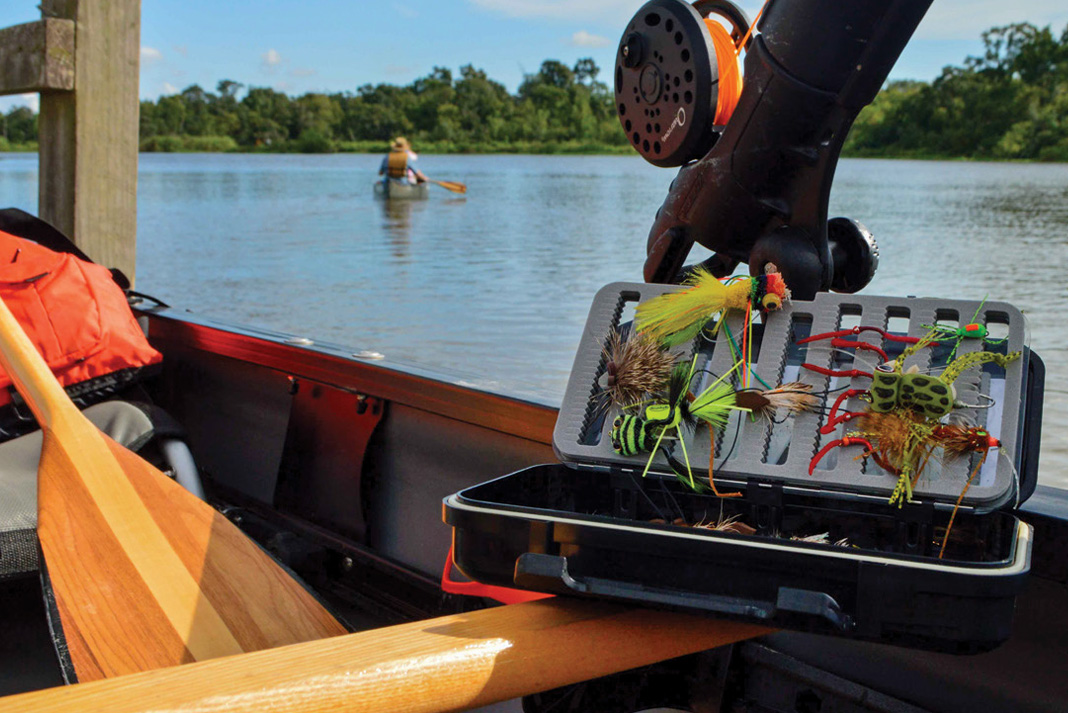
Once a luxury only compatible with powerboats, today’s compact new depth finders are not the typical hard-mounted captain’s rig of the past. Mine is portable, comes in a carry-bag and sits under the yoke and next to my fly boxes. Its counterpart, the suction cup transducer arm, is stuck to the outside of the hull just below the gunwale. The transducer flips into the water making structure and water conditions now easy to find, leaving only the fish left to be uncovered.

CAMERA MOUNT 

Welcome to the selfie generation. A gunwale-mounted, single-pod camera arm extension provides fully adjustable options in all directions for mounting and positioning a camera. You can capture the glory of every catch. On solo trips or when I’m catching up to Dad after a late start organizing all of my gear at the launch, this simple rig is my personal camera man that never misses a shot.

EXTRA POWER 

John Jacob Astor and the other American Fur Company voyageurs are rolling over in their graves right now, but it’s true. I don’t leave the dock without extra power. Whether it’s a 150-watt expedition charger to run my depth finder, GPS and iPhone, or a simple camera battery backup, I stay safe and connected on the water with extra power. No matter how many times he rolls his eyes, I know Dad appreciates the new-tech power backup when I use it to recharge my camera before getting his grip-and-grin trophy shot.

Mark Vlaskamp is a fisherman, paddler and adventurer. He recently quit his day job to embark on a six-month road and fishing trip across the USA.

Dawn Patrol: Why You Need To Paddle In The Morning

a person standup paddleboarding in the morning
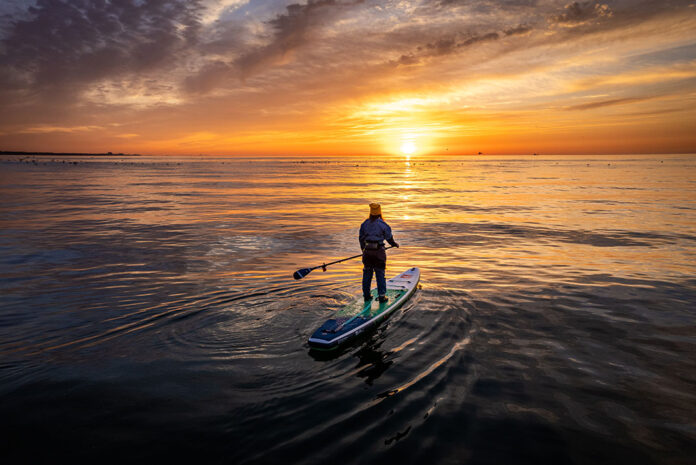
Get up early and you’ll be able to capture awesome photos like this—along with a host of other lasting benefits. | Feature photo: Tony Felgueiras Photography

Every morning, along your local shoreline, some brave soul is pioneering the day with a paddle in hand. Cooking up miles for breakfast is a powerful form of nourishment, promising benefits for everyone who can keep their finger off the snooze button. Sound too good to be true? Believe it or not, that silhouette on the horizon could be you.

The many benefits of a good morning paddle

“Getting in a paddle before most people are awake gives me a sense of accomplishment that carries me through my day,” says dawn patrol enthusiast and competitive racer John Beausang, co-founder of the popular Paddle Monster community. “Regardless of what I face, I’ve already ensured that at least part of my day was my own, enjoyable and challenging.”

a person standup paddleboarding in the morning
Get up early and you’ll be able to capture awesome photos like this—along with a host of other lasting benefits. | Feature photo: Tony Felgueiras Photography

Early activity wakes your brain

New research suggests that getting out on the water in the golden hour has lasting benefits on your physical and mental capabilities throughout the day. A study by PHIT America measuring performance by students in Illinois saw a 93-percent improvement in math scores and a 56-percent increase in reading scores after exercise.

“What’s good for kids has to be good for adults, too,” says Jim Baugh, founder of PHIT. “Getting active in the morning wakes up the brain, improves concentration and gets the brain ready to learn and be productive.” Plus, it fires out mood-boosting endorphins that stay with you for hours.

“By going out at sunrise you’re putting yourself first,
and that’s a powerful thing.”

Dawn patrol also offers greater opportunities for consistency. Evening paddling sessions risk being delayed, interrupted or abandoned entirely due to working late, running errands and getting blindsided by unexpected to-dos. There are fewer obstacles to getting on the water at 6 a.m. than at 6 p.m.

“I love getting that jumpstart on the day,” says Julian DeSchutter, co-founder of Vancouver-based outdoor group Chasing Sunrise, which organizes 4:30 a.m. adventures that have attracted as many as 800 participants. “Everyone else is still sleeping. By going out at sunrise you’re putting yourself first, and that’s a powerful thing.” The phone isn’t ringing, and there are no distracting emails or texts. “There is energy at the beginning of the day. A silence,” DeSchutter adds.

Morning exercise leads to sounder sleep

Research also shows that morning fitness promotes a better night’s sleep. Appalachian State University’s Dr. Scott Collier studies the effect of exercise on blood pressure. “Much to our surprise, 7 a.m. exercise was better in terms of reduced blood pressure throughout the day and greater sleep benefits than exercise at 7 p.m. There was little blood pressure or sleep benefit when exercise was done at 1 p.m.,” he says.

[ Browse the widest selection of boats and gear in the Paddling Buyer’s Guide ]

“We don’t yet know the physiological mechanisms that result in these changes, but we do know enough to say if you need to decrease your blood pressure and if you need to increase your quality of sleep, 7 a.m. is probably the best time to exercise,” Collier adds.

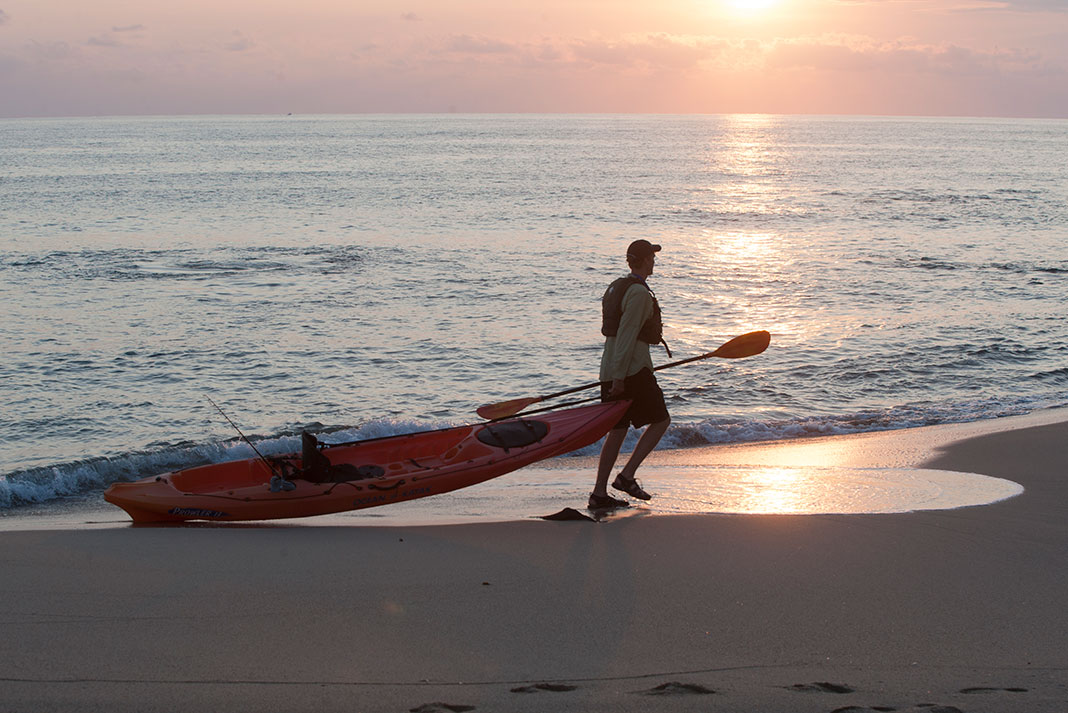
man drags a fishing kayak and paddle along the beach in the morning sunrise
Get a jump on the day to jumpstart your health and vitality. | Photo: Courtesy Ocean Kayak

Slim down and wake up on the water

Finally, for fitness paddlers who are as motivated by losing weight as setting a new personal best, exercising in the morning boosts your metabolism and keeps it elevated for six to 10 hours afterward—you’ll burn more calories throughout the day thanks to a morning workout. Exercising on a pre-breakfast empty stomach has been shown to burn a greater percentage of fat for fuel, rather than carbohydrates.

Kaydi Pyette joined the team as managing editor for the Spring 2013 issues of Adventure Kayak, Canoeroots and Rapid.

Cover of the 2023 Paddling Buyer’s GuideThis article was first published in the 2017 Paddling Buyer’s Guide and was republished in the 2023 Paddling Buyer’s Guide. Subscribe to Paddling Magazine’s print and digital editions, or browse the archives.


Get up early and you’ll be able to capture awesome photos like this—along with a host of other lasting benefits. | Feature photo: Tony Felgueiras Photography


Mariann Saether’s Firsthand Advice For Kayaking While Pregnant

Silhouette of pregnant woman with sunset in background.
Do what makes you happy. | Photo: courtesy of Mariann Saether

On September 4, 2016, I gave birth to my son Benjamin, my first child. The nine months of pregnancy were surprisingly easy and allowed me to kayak up until 10 days before birth. More of a surprise was the fact that I felt comfortable with trail biking and paragliding up until month seven. Furthermore, in the eighth month I went hiking for seven hours in the vicinity of Svartisen glacier, and in general was feeling very good as the little man grew happily inside.

I felt blessed and stoked that I could keep up my activity level, and the future seemed bright. But as I was soon to find out, not everybody liked the fact that a woman still goes down a hill on a bike or jumps in the kayak to paddle Class IV as soon as the belly can be seen.

Before pregnancy I repeatedly heard comments such as, “Women have to decide for themselves when to slow down and put on the brakes,” and “Pregnancy is not an illness—it is really good to keep staying active.” “Your body will tell you when to slow down,” was also one I heard a lot.

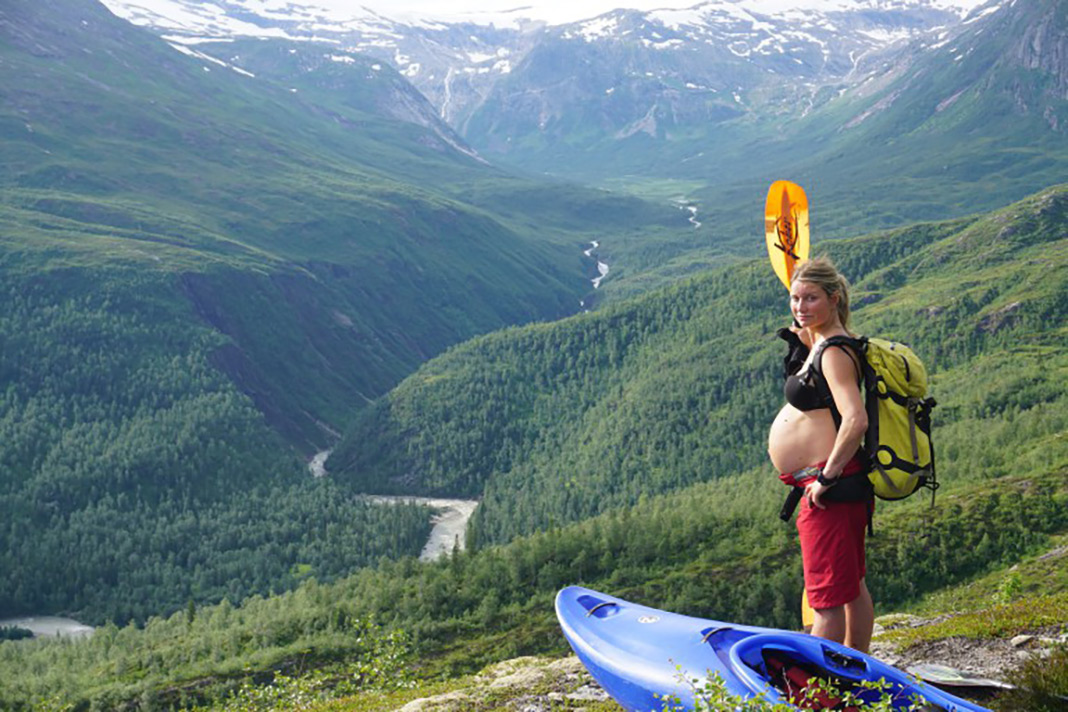
Pregnant woman looking out over valley with whitewater kayak next to her
Eight months pregnant. | Photo: courtesy of Mariann Saether

So what happened when my body and mind actually did not tell me to stop until 10 days before birth? People got angry. Annoyed. Negative.

I guess I should not have been so surprised to realize that whitewater kayaking and trail biking is not really looked upon as “normal activity” for pregnant women. However, to be able to stay so active made the mental aspect of my pregnancy extremely easy—I was happy and active, which I think made my baby boy happy.

One of the main points here is that I am not pointing my finger at other women that find it hard to be active while being pregnant—it is truly their body and mind—and I trust everybody to do whatever is best for them. Here are some facts to consider before you start judging:

When I got pregnant I was not just normally fit

I was as fit as I have ever been in my entire life—coming straight from high-end athlete performances at World Cups and World Championships the months before, and a hard training regime leading up to those competitions.

My mind did not play tricks on me

I still trusted myself to make the smart decisions on the water and on the biking trails. Why would I suddenly start screwing up just because I was pregnant?

Kayaking is like walking

I have close to 15,000 hours on the water. That is 625 days (24/7) or 1.71 years.

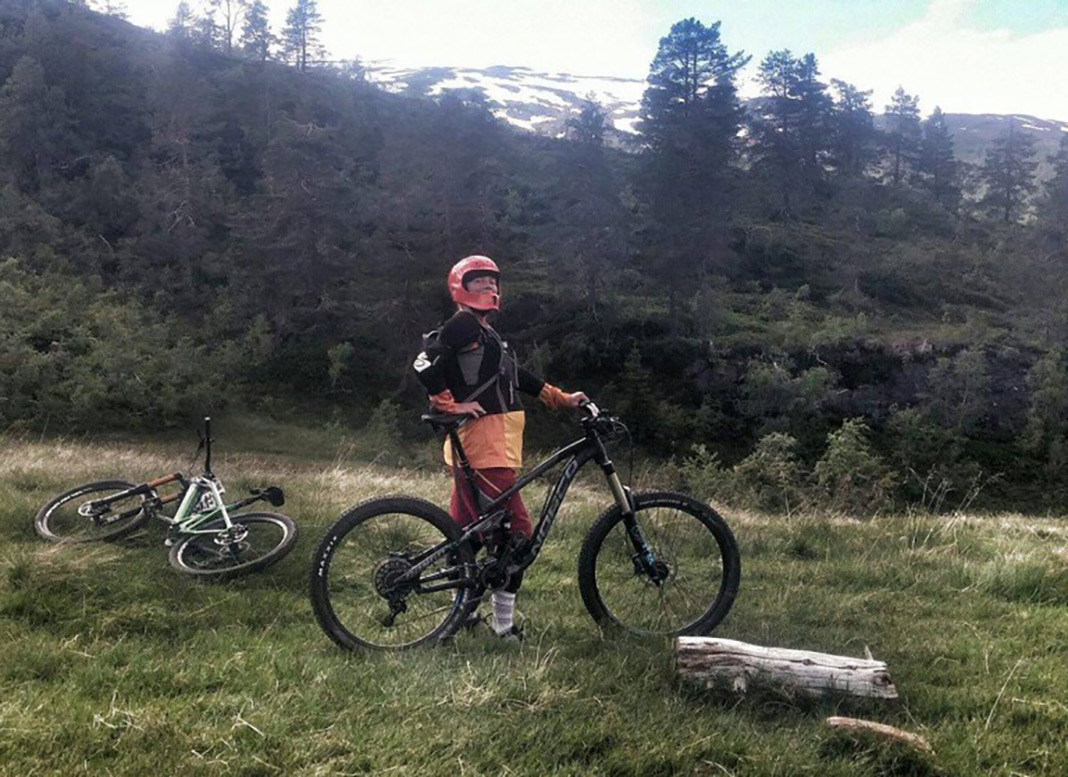
Pregnant woman riding mountain bike
Seven months pregnant. | Photo: courtesy of Mariann Saether

But what really has surprised me is that it is not just strangers remarking on my activity level during pregnancy months. Some of my closer friends have also found it appropriate to point the finger at times. It seems like the tolerance for so called “extreme sports” while being pregnant is quite low—and lower than I actually thought up front.

That brings me to the key topic of this text: TOLERANCE.

Perception is the key to it all. I do believe that many of the negative remarks come from not truly understanding the world an extreme sport athlete walks in. One of my friends commented “But what if you get the paddle in the stomach when you run this?” The section in question is one I consider very easy, and one I have done hundreds of times without anything happening. Ever.

I just replied: “Why would something happen now?” It is all in the mind. And to be able to control your mind, trust yourself and your abilities. In a way, pregnancy is not unlike running Class V rapids. Go figure.

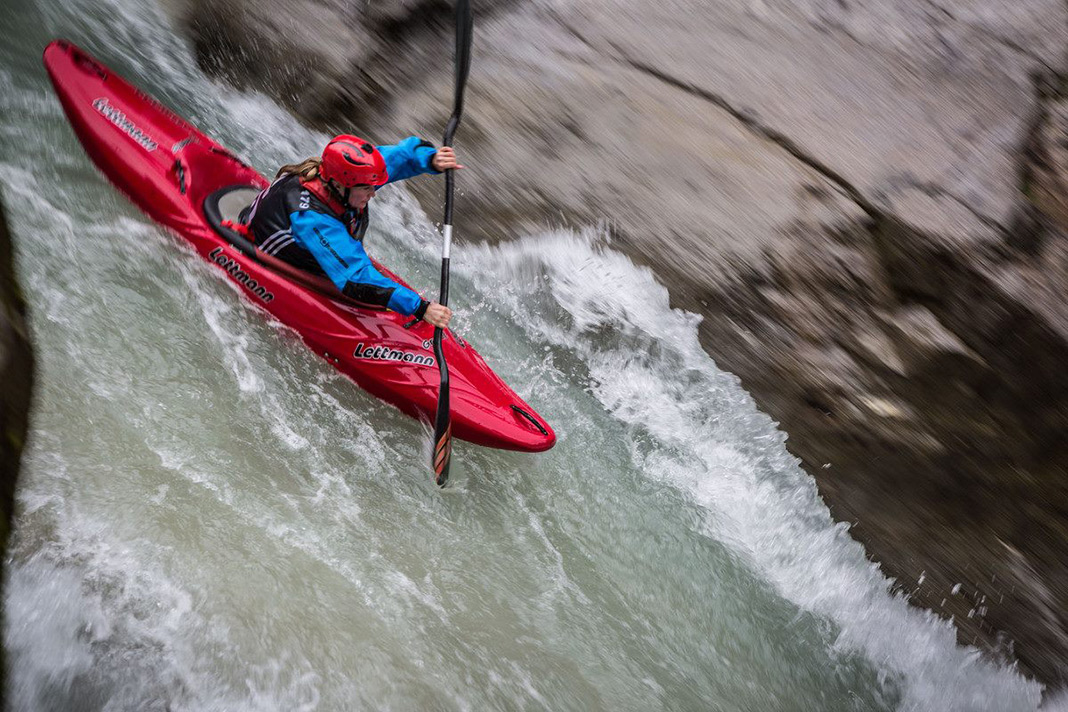
Woman paddling red whitewater kayak
Competing at the Sickline World Championships 4.5 weeks after giving birth. | Photo: courtesy of Mariann Saether

I furthermore have been blessed with a man who trusted me 100 percent while carrying his child. He never once told me to not get on the river, to not run a rapid or to not go biking. He even once or twice suggested I should rather run a rapid than walking around with my big belly! He did however tell me that I might be wise to not paraglide during the last two months—something I agreed with as soon as I gave it a second thought. His trust in me has been the biggest sign of love ever, and I am forever grateful for his support.

Being pregnant has been a wonderful journey. As I have explored new depths of my own being and ability to love, I have also learned more about the people around me and the world I live in. It only encourages me to walk my own steps, making myself and thus my little family happy.

Here is some advice for the pregnant extreme sport athlete:

Try to follow your gut instinct—not just your brain

The brain will tell you to slow down or to keep going—but it is really the body that will tell you how active you should be while being pregnant. I stopped kayaking when I was too uncomfortable in the kayak—easy as that.

Try your best to not listen to anybody telling you what to do or not—be your own being

This is truly difficult, but very empowering when you manage to.

If you are happy, the child will also be happy

You will never cause him or her any harm or risk—it is your child after all, and you should trust yourself and the power of your love.

Kayaking safely while becoming heavily pregnant really comes down to having good balance, good edge control in the boat and a good back-deck roll

I had all three and thus enjoyed endless trips on easy whitewater the last month of waiting.

I thought being fit would help me in delivering the child—but I was partially wrong

(Thank God I did not know up front!) Strong core muscles sometimes can cause a hard delivery because the muscles tend to cramp and hinder the cervix getting dilated enough to start pushing. I spent 30-plus hours of labor before the mid-wife told me I could push. Then it only took 20 minutes, and the mid-wife said she had never seen a firstborn being pushed out that fast or so determinedly before. Especially not after 30 hours of labour.

So in the end my strength was helping me. Also, the fitness level put me back on the bike four days after birth, and in my kayak seven days after birth, so I daresay the benefit of being active is huge after all.


Mariann Saether is a whitewater kayaker from Norway and the 2015 World Champion in extreme kayaking. Learn more about her here.

The Beauty Of Idaho’s Main Salmon River

“How do we save more rivers? I honestly think it starts with love.” That’s the first line we hear in this beautiful short film from O.A.R.S. The words are spoken by Amy Kober of American Rivers, who narrates the film and shares her thoughts on the need for young people to love rivers in order for conservation of them to continue. Kober has dedicated her 18-year career to saving waterways and is passionate about Americans being able to enjoy and build relationships with public land.


Level Six’s Stig Larsson On Turning Passion Into Profit

RBC
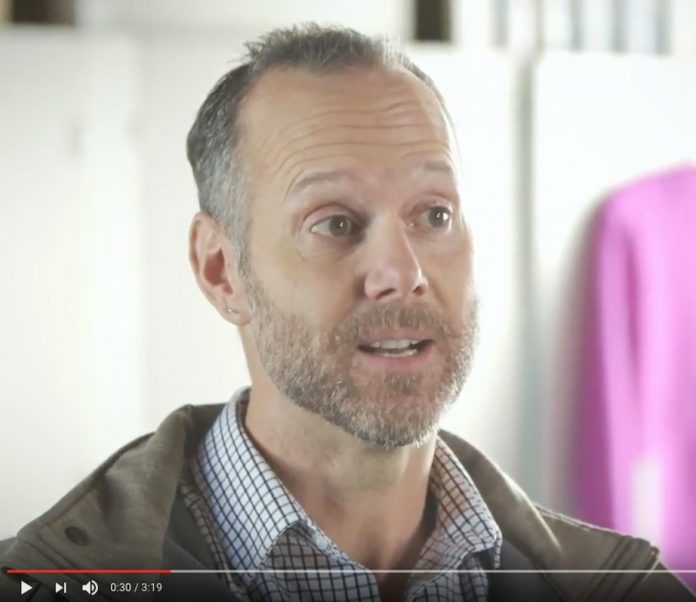
Stig Larsson of Level Six in a video speaking to RBC about his company's path to success.
Stig Larsson of Level Six in a video speaking to RBC about his company’s path to success.

http://www.youtube.com/watch?v=X5XrQ_CWvVk

RBC

Level Six’s Stig Larsson sits down with RBC to explain how his company was born. Larsson explains that in the summer of 1997, while in Costa Rica training with the World Cup Kayaking Team and going on surf trips, he realized there was a lack of a lifestyle brand for paddlesports. 

He began Level Six and travelled around on the world selling his shorts and t-shirts on the World Cup circuit. He say it was six or seven years before he was able to draw a salary from the business, but he persevered. Today Level Six products are sold in 428 stores worldwide. Larrson’s advice for young entrepreneurs? “Have a passion for what you do and be all in.”