Home Blog Page 236

The $40-Million Quest To Build The World’s First Artificial Waterfall

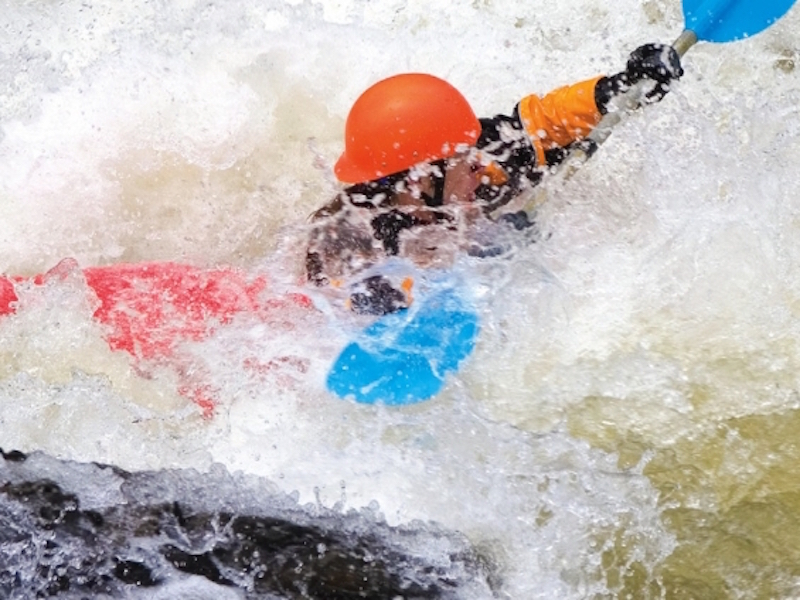
a kayaker plays in whitewater at Vector Wero Whitewater Park in Auckland, home to to the world's first raftable artificial waterfall
Vector Wero Whitewater Park in Auckland is home to the world’s first raftable artificial waterfall. | Feature photo: Lawrance Simpson

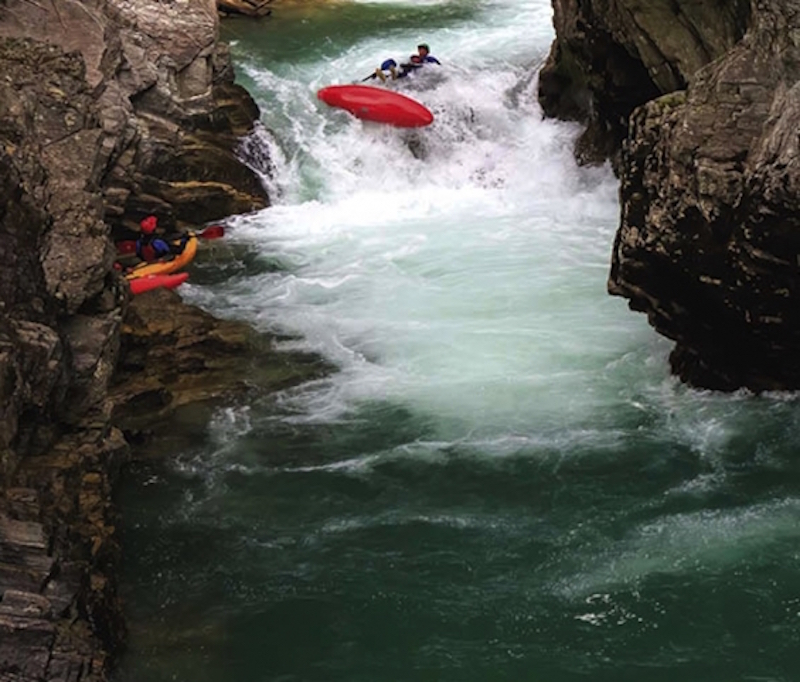
Leave it to the Kiwis to build the world’s first raftable waterfall at a play park facility. Vector Wero Whitewater Park in Auckland, New Zealand, opened in March 2016 complete with a 15-foot waterfall gushing at 140 cfs.

The $40-million quest to build the world’s first artificial waterfall

Inspired by the iconic Okere Falls, an all-natural point of pride for whitewater enthused New Zealanders, the Vector Wero park is the only self-contained course in the country and one of only two play park facilities across Oceania.

With a class II and a class IV run, the park rivals the Rio Olympic Slalom Course—and it should. It was built by the same team at Whitewater Parks International.

When tasked with the prospect of building a waterfall, WPI’s managing director Bob Campbell said he was first concerned that they’d be pushing the safety limits too far. But he says the response to that was, “Hey, we’re Kiwis, this is kind of what we do!”

a kayaker plays in whitewater at Vector Wero Whitewater Park in Auckland, home to to the world's first raftable artificial waterfall
Vector Wero Whitewater Park in Auckland is home to the world’s first raftable artificial waterfall. | Feature photo: Lawrance Simpson

It took 15 years to raise the $40 million necessary to build Vector Wero. During that time the park’s general manager, Ian Ferguson, says he grew restless as he noticed a very similar course crop up for the London Olympics, modeled on their two-course design, minus a waterfall.

Designing the perfect hydraulic

The team knew their one-of-a-kind waterfall had to be thrilling but safe. They built a to-scale prototype at a glass testing facility at the University of Prague, which allowed an underwater side view of the hydraulic. It proved to be a challenging build that required rounds of tweaking.

“Our goal was to make a hydraulic that could assist on the landing, giving paddlers the best chance to stay upright and have a smooth ride,” says Campbell.

From the start pool, paddlers can choose to go down one of the two courses or run the drop. Many of New Zealand’s top paddlers, including Luuka Jones and Mike Dawson, have already taken a turn at Vector Wero.

“It’s an evolution of all the courses that have been built around the world,” says Dawson, an Olympic slalom canoeist, who has been on the Vector Wero course six times and counting.

“The whitewater feels almost the same as a natural river.”

Vector Wero raises Auckland’s whitewater profile

From the outset, the course was built in the hope that it would host international paddling events, the first of which will be the multi-sport World Master’s Games in 2017. Campbell says both this course and the Rio Olympic course have an important characteristic in common: great care was taken to centralize the current and keep water moving from top to bottom. This avoids the bathtub-surging effect that occurs when too much water doesn’t have anywhere to go.

Photo: Jackie Russell

“Some of the athletes that have paddled it already have dared say it might be better than Rio,” says Campbell. With over a million people in Auckland and surrounding area, and no natural whitewater runs nearby, Ferguson estimates a low-ball number of 15,000 per year will paddle through Vector Wero. The class II course should also attract legions of school kids. At Vector Wero, anyone who is at least 14 years of age is permitted to run a course or take the drop. Ferguson says he hopes more young New Zealanders will catch the paddling bug through the school programs the park is offering for both rafting and kayaking.

“When the kids come off the waterfall they’re bubbling,” Ferguson says. “You can hear them squealing as they go over it and laughing like hell at the bottom.”

Cover of Summer/Fall 2016 issue of Rapid MagazineThis article was first published in the Summer/Fall 2016 issue of Rapid Magazine. Subscribe to Paddling Magazine’s print and digital editions, or browse the archives.


Vector Wero Whitewater Park in Auckland is home to the world’s first raftable artificial waterfall. | Feature photo: Lawrance Simpson


5 Storage Secrets To Extend The Life Of Your Canoe

a group of canoes in storage in a garage
Canoe storage mayhem in the Canoeroots garage.| Feature photo: Kaydi Pyette

When you bring home a new boat, where do you put it? Leaving it on the soggy lawn to collect mold and earwigs isn’t any way to treat your pride and joy. Proper storage of your canoe not only makes better use of your yard or garage’s real estate—so you can bring home even more boats—it seriously prolongs the life of your canoe.

5 storage secrets to extend the life of your canoe

1 Keep your canoe off the ground

Most importantly, keep your canoe off the ground. In a pinch you can use rafters, sawhorses or a pair of wood blocks. If opting for ceiling storage, look for a cradle that uses wide webbing for support. Resist the temptation to hang your canoe by its front and rear decks, thwarts or carrying handles, which weren’t manufactured to endure this stress long-term.

MAYHEM IN THE CANOEROOTS GARAGE.| PHOTO: KAYDI PYETTE
Canoe storage mayhem in the Canoeroots garage.| Feature photo: Kaydi Pyette

2 Store it upside down in a dry place

The best way to store your canoe is upside down in a dry place. Distribute the weight of your boat over racks or a cradle evenly to prevent the hull from deforming over time. Plastic hulls are the most susceptible to this, but fiberglass and wooden boats can fall victim over the years.

3 Keep the material in mind

When storing in an unheated area, be aware Royalex has a faster rate of contraction in cold temperatures than wood, making wood-trimmed Royalex canoes susceptible to cracks where the trim is fastened to the hull. Extreme heat, from being stored next to a water heater or furnace, can also warp plastic and composite canoes.

4 Use outdoor racks the right way

If storing your canoe on an outdoor rack, tie the canoe to the rack and anchor the rack securely. While a quality rack is sure to be sturdy enough to weather a storm, a lightweight aramid canoe can easily become airborne on blustery days.

Be aware that sunlight is your enemy, degrading plastic hulls, browning Kevlar and fading paint colors. Use a cover or durable tarp for outdoor storage. If using a tarp, suspend it above the canoe to maintain airflow, so that moisture doesn’t rot wooden parts. Keep heavy snow off your canoe, which could crush the hull.

5 Keep it indoors if possible

The best way to protect your canoe against theft is to keep it indoors. However, if storing your boats outside, use a security strap with a locking buckle and reinforced with cut-proof stainless steel to secure it.

Cover of Canoeroots Magazine Early Summer 2016 issueThis article was first published in the Early Summer 2016 issue of Rapid Magazine. Subscribe to Paddling Magazine’s print and digital editions, or browse the archives.


Canoe storage mayhem in the Canoeroots garage.| Feature photo: Kaydi Pyette


Kevin Callan’s Special Recipe For Natural Healing

Mental Benefits Of Canoeing
Mental Benefits Of Canoeing | ILLUSTRATION: LORENZO DEL BIANCO

The black flies and lengthy portages weren’t Jason’s biggest enemy. It was his drug addiction that plagued him. I found him halfway along the portage trail, sitting on his pack, whimpering.

The other students in this at-risk youth program passed him by without saying much. Each one was battling their own demons on the tough trail, and it didn’t help that Jason had made little attempt at forming friendships in the group. He was a loner prone to angry outbursts, and he’d spent the last year self-medicating with pharmaceuticals. Now, at the side of the trail, he was breaking down and there was little I could do to help him.

Kevin Callan’s special recipe for natural healing

I’m a wilderness guide and outdoor skills instructor—not a counselor. I feel compassion for each and every one of the students in the at-risk programs I often lead, but my main focus is to teach them the skills needed to keep themselves safe. I’m not trained to help anyone with personal issues. That said, I’ve been doing the job so long I’ve gotten to know a thing or two. Keep your fancy leather couches and high-priced psychobabble, I’ve witnessed time spent in the wilderness to be an astonishing healer.

Jason just needed more time.

Three days into our five-day trip Jason was as resentful and lost as he’d been when we met. He desperately wanted to go home, likely due to his addiction issues and being ignored by the other students. I had also made a major error in planning the route. I chose a linear trip, not a loop. As we began to make our way back, the students recognized the landscape we were traveling through. Suddenly the trip didn’t feel so remote.

Mental Benefits Of Canoeing
Mental benefits of canoeing. | Feature illustration: Lorenzo Del Bianco

It was midnight when Jason escaped. He slipped a canoe into the water and quietly paddled off into the darkness. Luckily, one of the students was sneaking a smoke by the smoldering campfire and came to warn me that Jason was making a run for it.

I went after him. What Jason lacked in paddling skill he made up for in desperation, channeling his anger and loneliness into fast and forceful strokes. I couldn’t catch him. He paddled and portaged across two lakes before the storm hit. The pounding rain and strong wind drove him to shore.

When I caught up to him, he was hunkered under a tree, desolate. I put up a tarp up, lit a fire and just sat beside him, not saying a word. It was now 2 a.m. We passed the night together, sitting just like that.

At first light we got back in our boats and paddled to meet our group. Jason admitted he’d taken Ecstasy, a drug usually associated with wild parties and frenetic dancing, and that he’d been high when he paddled away from camp.

[ Paddling Trip Guide: View all canoe trips and adventures ]

No wonder I’d had trouble keeping pace with him. I didn’t question, chastise or judge him, but I did suddenly find myself laughing. The juxtaposition. Here we were paddling on a crystal-clear lake, white-throated sparrows welcoming the day and the brightening sky streaked with mare’s tail. This was my ecstasy.

Reunited with our group, we spent our remaining two days traveling towards home. Jason didn’t try to escape again. It might have been my imagination, but I think I even glimpsed a solitary smile. Soon after the trip, my colleague told me he’d heard through the grapevine that Jason had enrolled into a post-secondary outdoor education program. Cool, I thought. It’s been a few years since, and recently Jason sent me an email. Now he’s got a job taking at-risk students into the woods.

Undoubtedly, there are many people for whom medication and therapy are the best options—but give someone a paddle, canoe and some real time in the wilderness, and I’ll show you some natural healing.

Kevin Callan has been diagnosed with Obsessive Camping Disorder, for which time in the wilderness has not proven to be a cure.

Cover of the Early Summer 2016 issue of Canoeroots MagazineThis article was first published in the Early Summer 2016 issue of Canoeroots Magazine. Subscribe to Paddling Magazine’s print and digital editions, or browse the archives.


Mental benefits of canoeing. | Feature illustration: Lorenzo Del Bianco


The Dusi Canoe Marathon: It’s A Real Doozy

It’s a Real Dusi | PHOTO BY KELVIN TRAUTMAN/RED BULL CONTENT POOL

Doozy is an old term used to describe anything remarkable, unusual or outstanding of its kind—and the Dusi Canoe Marathon is certainly these things.

Why the Dusi Canoe Marathon is a real doozy

The venerable South African event is one of the toughest kayak marathons on the planet: three days of racing covering 75 miles, including ruinous rapids, headwind-plagued flatwater and up to 12 miles of brutal portaging through steep bush. The race has claimed four lives. Composite kayaks snapped in half like brittle twigs are not an uncommon sight.

It’s a real Dusi. | Feature photo: Kelvin Trautman/Red Bull Content Pool

Founded in 1951, the first Dusi down the Umsindusi and Umgeni rivers was raced by just eight paddlers. Nearly six-and-a-half days later, only one bedraggled and exhausted kayaker arrived at the finish in Durban, having survived two days of low water, a flash flood and a venomous viper bite. Over the next three decades, the annual event swelled to more than 1,000 paddlers—larger even than the narrow views of apartheid: the first black competitor raced the Dusi in 1981.

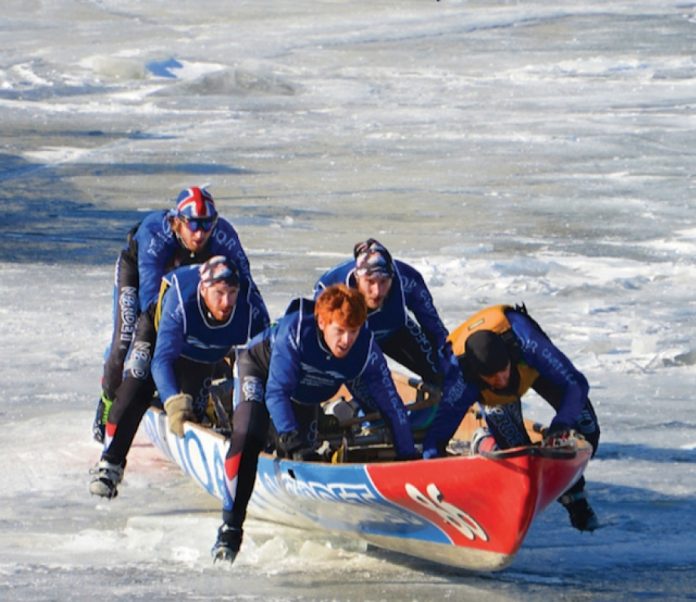
Today, the Dusi is raced K1 and K2 in alternating years, attracting between 1,600 and 2,000 competitors. For this image of three-time podium finisher and 2014 champion Sbonelo Khwela, photographer Kelvin Trautman sought out a vantage point that captured the effort of sprinting up the marathon’s infamous portages in sweltering 104°F heat.

[ Plan your next African paddling adventure with the Paddling Trip Guide ]

Khwela’s prowess on the treacherous hills and lung-busting flats is legendary. “Running is my strength,” he says, “I rely on the run to close big gaps, or if I’m pulling away, that’s where I can make the other guys suffer.”

Cover of Summer/Fall 2016 issue of Adventure Kayak MagazineThis article was first published in the Summer/Fall 2016 issue of Adventure Kayak Magazine. Subscribe to Paddling Magazine’s print and digital editions, or browse the archives.

It’s a real Dusi. | Feature photo: Kelvin Trautman/Red Bull Content Pool


Montreal’s Biggest Whitewater Event On The St. Lawrence Recap

Screen Capture: Montreal Eau Vive
A kayaker surfs on the st. Lawrence River with a jetski beside it.
Kayakers race in the boater cross event during the 2016 Montreal Eau Vive whitewater event.

{Vimeo}180962066{/Vimeo}

Screen Capture: Montreal Eau Vive

Claire O’Hara and Bren Orton topped the leaderboards at the 2016 Montreal Eau Vive whitewater event held in downtown Montreal on the St. Lawrence River. With jetboat starting lines for the boater-cross and jetski tows for any of the three waves to throw down tricks, this event is growing in popularity and bringing awareness to the unique and constant water features so close to but yet so far away from the city core. Hosted by the Montreal Kayak School, watch for this event to grow in popularity in the coming years. 

For more videos from past Montreal Eau Vive events watch here.

7 Facts You Didn’t Know About Wolves

Photo by Steve: https://www.pexels.com/
  • Wolves don’t make good pets. Unlike your sit-for-a-treat schnauzer whose ancestors came to the fire about 25,000 years ago, wolves have survived thanks only to their instincts. Chief among them? Avoiding humans in an increasingly crowded world.
  • The wolf was once one of the world’s most widely distributed mammals with a habitat that ranged from the high Arctic to as far south as India. Persecution has reduced its population to a third, with extinction in Western Europe, Mexico and much of the United States.
  • Iconic canoeist Bill Mason set out to dispel the myth of the bloodthirsty wolf by relocating three young wolves to his Quebec acreage. His 1972 documentary, Cry of the Wild, offered never-before-seen glimpses into the tender moments of pack life.
  • Ever heard the saying, it takes a village to raise a child? Wolves would agree. The entire  pack assists with raising, feeding and protecting the cubs. Usually only the alpha pair of a pack will mate, and most wolf couples stay together for life. Aww.

Photo by Steve: https://www.pexels.com/

  • Listen up Game of Thrones fans: Dire wolves aren’t fiction. These prehistoric wolves lived in North America two million years ago and hunted woolly mammoths, but they weren’t the size of small horses as in the books and TV show. Dire wolves were roughly the size of the largest timber wolves on record today, about 175 pounds.
  • Wolves typically hunt large prey, like moose, deer, caribou or elk. A hungry wolf can ingest 20 pounds of meat in a single meal—the equivalent to a human eating 100 hamburgers.
  • Often villanized in mythology, the Big Bad Wolf trope is best known from folklore tales like Little Red Riding Hood, The Three Little Pigs and Peter and the Wolf. Farley Mowat’s Never Cry Wolf and the Disney movie by the same name are credited with changing the public’s perception of wolves as man-eaters. There have been just two confirmed human deaths by wild, healthy wolves in North America over the last hundred years.

Q: What does a wolf say when it stubs its toe?
A: Aooowwww! —KP


v15-iss2-Canoeroots.jpgThis article originally appeared in the Canoeroots Early Summer 2016 issue.

Subscribe to Paddling Magazine and get 25 years of digital magazine archives including our legacy titles: RapidAdventure Kayak and Canoeroots.

Fast Friends: The Effect Of Friendships Made On The River

WHERE THE WILD THINGS ARE. | PHOTO: RYAN CREARY

Sitting like children, feet dangling, inches from the edge of the raging, plummeting maw of Wilberforce Falls, my friend Brian and I connect with few words. We are 12 days into an expedition on the remote Hood River in the Arctic barrens of the Northwest Territories. Our days have been heavily peppered with mosquitoes, and we have spent hours scanning the mossy green and grey tundra in search of muskox, to no avail. High winds and rain have offered a much-needed respite from the bugs, but have also succeeded in locking us away in our tents for many a windbound hour.

We have shared fleeting glimpses of a young Arctic wolf as we surprised him rounding a bend, fished to our hearts’ delight, been chased and almost crushed by candling ice floes on the upper lakes, and negotiated miles of beautiful northern whitewater with mutual glee. Our lives have become timeless here, unhinged from modern routines.

Fast friends: The effect of friendships made on the river

Many of us who have spent time with a close-knit group on a river can attest to the fact that shared experience in wild places has a galvanizing effect on friendships. But why is it that these connections tend to trump those formed by conversing in coffee shops or beside the water cooler? What is it that we come to know about one another in the course of a trip, long or short, that makes it different?

Where the wild things are. | Feature photo: Ryan Creary

I believe we start to move away from verbal and intellectual representations of ‘who we are’ that typically ensconce the friendships of city life. Dinner party repartee pales in comparison to the meandering conversations and organic silences that emerge and weave themselves through the social fabric of a long trip. On the river we begin to know in each other something wilder and less concrete than our jobs, opinions and intellectual views. We are more alive, riding the flow of the present moment—having our inhibited and protected selves gently but inexorably pummeled out of us by the simple cadence of self-propelled travel.

We are washed from the inside out by the extremes of wilderness living and the soul-feeding play that happens on a river trip. Here, perched on the edge of the Hood River, there is some form of conversation happening, but more so there is a shared recognition of what is contained in the glint of our eyes and the tilt of our heads towards the smooth curtain of water. The depth and power of our connection lies in the subtle and the unspoken. We both have a love of being on the edge of one of the most powerful forces on earth and have watched each other on other trips, always seeking the most proximal edge to the biggest and most churning stretches of whitewater.

Seated on these spray-spattered river edges we come to know each other’s wild nature, and develop an understanding that goes beyond the typical parlance of friendship. We are undistracted by the petty, the material and the political, and perhaps remain in each other’s imaginations as a part of the river, wilder and more ourselves than we are at other times.

Fiona Hough is a lifelong adventurer and has worked as a wilderness guide, instructor and instructor trainer since 1989. She was also the course director for our editor’s first whitewater trip.

Cover of the Early Summer 2016 issue of Rapid MagazineThis article was first published in the Early Summer 2016 issue of Rapid Magazine. Subscribe to Paddling Magazine’s print and digital editions, or browse the archives.


Where the wild things are. | Feature photo: Ryan Creary


Boat Review: Clipper Canoes Jensen 18

SLOW AND STEADY DOES NOT WIN THIS RACE. | PHOTO: JOEL KRAHN

It started out a bit like an online date. I was looking for a speedy, stable and competitive canoe. About 18 feet long, not too curvy.

“Sounds like you’ll want a Clipper Jensen,” Yukon River Quest organizer Valerie Ross told me over the phone. “But we only have one left in our rental fleet, so you’ll need to act fast.”

Clipper Canoes
Jensen 18
Length: 18’
Width:  33”
Center Depth: 13”
Weight: 59 lbs

Fly across the country to paddle for three days straight in a canoe that I’d never sat in before— what could possibly go wrong? I Googled for an image of the boat.

“Let me give you my credit card number,” I told Valerie.

Perhaps also like online dating, when we arrived in Whitehorse, Yukon, to compete in the longest annual canoe and kayak race in the world and finally met our canoe just hours before the start, I wasn’t sure what to think. In person, the boat’s 18-foot length and 13-inch depth was unfamiliar—both longer and shallower than the trippers I usually paddle. Yet, with those long lines and virtually no rocker, I could tell that the Jensen was a canoe that would paddle fast and track true.

Designed by marathon canoeing revolutionary Eugene Jensen (father of the bent shaft paddle and many modern race designs), Clipper Canoes began manufacturing Jensen models in their Abbotsford, British Columbia, shop back in 1980. While Clipper has since added bells and whistles like foam thigh pads and wood trim options, the hull design itself has barely changed.

With a reputation for being fast under load and stable in non-technical whitewater, it’s no wonder that a decade ago the Yukon River Quest’s organizing committee opted to outfit their small rental fleet primarily with Jensen 18s. The design remains a favorite in many race circles on the West Coast and in the northern U.S.

SLOW AND STEADY DOES NOT WIN THIS RACE. | PHOTO: JOEL KRAHN

Meeting the requirements of the stock category in many races, few canoes of its class are faster. However, part of the appeal of the Jensen 18 is its versatility. It’s speedy and competitive, yet also easily manageable for weekend touring and day cruising. Just try to take the kids fishing in a temperamental pro racer like a Jensen-inspired V-1.

Despite a dozen seasons of use in the YRQ, our sleek Jensen was still a looker—inside and out the hull appeared brand new, a tip of the hat to Clipper’s durable fiberglass with foam core lay-up, and Kevlar-reinforced bow and stern.

For three glorious days we paddled the Jensen 18 almost non-stop under the midnight sun on our way to Dawson, 715 kilometers north. Thanks to its shallow-arch hull, the Jensen 18 offered barely a wobble during hurried layer changes, She-Wee mishaps and the occasional unintentional micro-nap.

My biggest worry on the river was Five Finger Rapids. Though a relaxed class II to III rapid in any whitewater hull, as we approached the roaring wave train in our shallow fiberglass rocket I had my doubts about our safe passage. Almost every year boats capsize and racers often scratch after the frigid swim.

Instead of up and over, we barreled right on through the waves. The first broke hard against my chest, the second merely crashed off the spray deck. Race organizers were only too pleased to later share far hairier experiences, spinning yarns of paddling wind-frothed lakes with well over six-foot-high swells. I believe them when they say the Jensen 18 can handle it with ease, I’m just not sure my nerves would.

After three days in the bucket seat, I felt like the Jensen 18 and I had been a team forever. What does my tripper back home look like? It might have been the lack of sleep talking, but I couldn’t even remember.

Seventy-nine hours after we left Whitehorse we arrived at Dawson in 39th place—it turns out it takes more than a speedy boat to win. My top concerns at the finish line were: cheeseburger, shower and sleep, in that order.

Still, I took a quiet moment to say a quick goodbye to the Jensen 18 on the Yukon River’s shore. “I’ll be back,” I said. I can’t wait for our second date. —KP


v15-iss2-Canoeroots.jpgThis article originally appeared in the Canoeroots Early Summer 2016 issue.

Subscribe to Paddling Magazine and get 25 years of digital magazine archives including our legacy titles: RapidAdventure Kayak and Canoeroots.

Filmmaker Mike McKay On Quitting Your Day Job

Paddling filmmaker Mike McKay poses with camera beside a set of rapids after quitting his day job
Goodbye, nine-to-five. | Feature photo: Dylan Page

Mike McKay has been one of whitewater’s best-known filmmakers since his 2010 release of Currents, a 20-part conservation-themed series profiling whitewater communities around the world. Since then, McKay has made more than 50 whitewater films, including an in-depth rescue skills series and his recent three-part Chaos Theory, juxtaposing skillfully shot artistry—music, dance, painting—with class V whitewater scenes.

McKay and his production company, Five2Nine, is regularly shortlisted and awarded at outdoor film festivals. He’s a fixture of Rapid Media’s annual Paddling Film Festival. We caught up with McKay after his recent decision to quit his day job—a 14-year career in finance—to pursue filmmaking full time.

4 questions for filmmaker Mike McKay

1 What inspires your filmmaking?

It all started with a kayak porn video called Just Like You Imagined. After that went well, I started wondering what I could do if I made something that really mattered. I had the idea of going to all these different places and telling the story of each whitewater location and how it involved the community—it was very conservation-based.

I thought kayak porn was fun to do, but that it would be really cool to use this skill set to make a difference. That was really how Currents was born. I wasn’t a conservationist when I set out to do this, I was just striving for a better form of content.

2 How have you grown as a filmmaker?

From the beginning, I think I had a knack for storytelling, but my technical skills weren’t there—that grew with every single episode. By the end of the Currents series I was getting pretty stoked on where things were. I’ve come a long way in terms of how I tell stories too.

With my newest film, Botella, I didn’t want to just have talking heads discussing the issue of garbage on the Alseseca, so I followed a bottle down the river to tell the story.

Goodbye, nine-to-five. | Feature photo: Dylan Page

3 Why did you quit your day job?

I wasn’t going to bed at night thinking “wow, that really helped.” I used to feel like I was making a difference for people, and when I stopped feeling that way about my job it really bothered me.

On the other hand, when I went out to communities where there was a dam being constructed on a river or a pollution problem, and I could do something that really mattered, it felt good. I was getting pissed off about the fact that there were all these great places I might not get to visit in my lifetime because those rivers might not be there any more.

4 What’s your advice for those looking to quit their day job?

You need to wake up in the morning and know that you’re not going to make any money but go out and do something anyways. A lot of professionals won’t leave their house unless they’re making a certain amount, but sacrifices are important at first.

Pay comes in many different forms. You can do a cool project and not make much money, but somebody who’s going to pay you a lot for another job really likes it. A project that doesn’t pay might be the one that defines you and gets you all kinds of gigs.

Also, you have to go all in. You have to come home from your nine-to- five job and work until midnight—as I was working towards this, it was really like having two full-time jobs.

Cover of Rapid Magazine Early Summer 2016 issueThis article was first published in the Early Summer 2016 issue of Rapid Magazine. Subscribe to Paddling Magazine’s print and digital editions, or browse the archives.


Goodbye, nine-to-five. | Feature photo: Dylan Page


What’s In Paul Zizka’s Camera Bag

Photo: Paul Zizka

Best known for his stunning captures of the night sky—from spectacular northern lights pulsing above mountain lakes to starlit paddlers, climbers and skiers—adventure photographer Paul Zizka has long had a fascination with shooting after dark. “I love how the nighttime can turn familiar places into completely different experiences,” says the Banff-based lensman. Zizka’s work is inspired by his passion for wild places, a connection that’s reinforced through his instantly recognizable self-portraits. “We live in a cluttered world. You have to put effort into making that connection and then when you’re out there, under the stars, it just feels so right.”

HOLD STILL

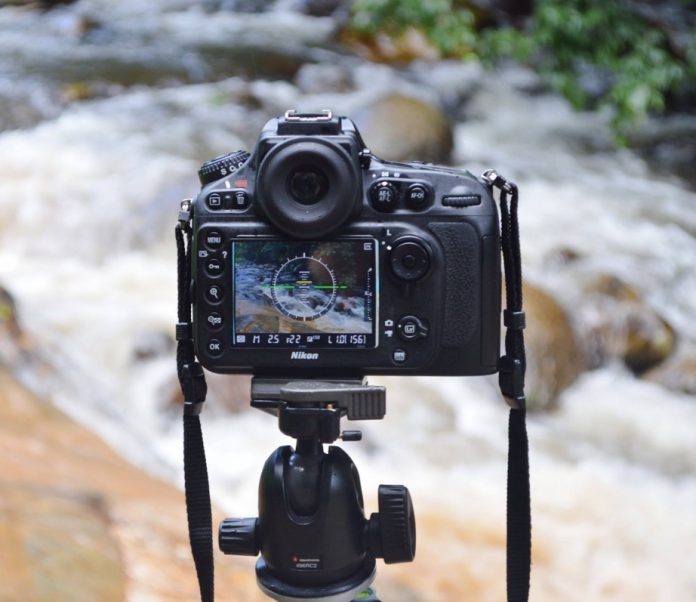
The magic of astrophotography is how the camera reveals all these elements—aurora, stars, moonlight—that the naked eye cannot see. All we see are little points of light; everything else is left to the imagination. There is so much to dream about. The key to capturing night photos is a sturdy tripod, like my Manfrotto MK055XPRO3-BH, that holds the camera perfectly still during minutes-long exposures.

PERFECT TIMING

Including a person in a landscape image can convey a sense of vulnerability or belonging, or make an image more relatable. Often I am out shooting alone, so the human in the frame is me. At first, it seemed like a chore, running back and forth to the camera to change settings and fix any compositional issues. But eventually the self- portrait aspect became a part of the photographic journey, and I enjoy the challenges it brings. One essential tool to capture this sort of image is an intervalometer—a remote that allows you to trigger a timer so you can put yourself in the image.

BODY BUILDER

I shoot with a versatile Canon 5D Mark III SLR camera. I can photograph astro, fast action and landscape all with the same camera. It’s super durable and easy to operate, which is important in the dark when I’m shooting by feel.

LENS CRAFTER

My Canon 16–35mm f/2.8L has been my workhorse lens since I started doing photography. I love this wide-angle zoom’s versatility, and its relatively light weight. I also carry a Canon 70–200mm f/2.8L telephoto lens to get sharp and dramatic mountain shots. And my fast prime, Canon’s 24mm f/1.4L, is perfect for night and…

GET FILTERED

Two of my go-to filters are a circular polarizer and a neutral density (ND) filter. Use a polarizer to add contrast to a blue sky or to eliminate reflections—perfect for shooting water scenes on bright days. I use a three-stop ND filter to achieve long exposures without waiting for low light, usually to emphasize subtle motion that a shorter exposure would not record. For example, capturing the silky flow of water or grasses blurred by the breeze.

LESS IS MORE

Your camera pack needs to protect all your essentials, without restricting access to your gear. It should be comfortable and weatherproof, like Lowepro’s Pro Runner BP 450 AW II backpack. Shooting in the backcountry for extended periods, I’m committed to using only the gear I carry. Deciding what I need depends on the duration of the trip, the location, how technical the terrain will be and what I want to accomplish.

SELF-PORTRAIT

This shot was captured on a very dark night on the remote atoll of Fakarava, in the Tuamotus, French Polynesia. After finding a foreground that complemented, even mimicked, the Milky Way above, I proceeded the way I usually do: adjust composition and settings, drop headlamp on the spot where I need to stand, set focus, set intervalometer to shoot continuously, enter the scene, try different body positions, then return to the camera to see if anything needs fixing. The skies are incredible in this part of the world, but the profound darkness pushes the equipment to its limits. As well, each set of incoming waves washed over my feet and swirled around the tripod, which made things a little nerve-wracking


This article originally appeared in Adventure Kayak
Early Summer 2016 issue.

Subscribe to Paddling Magazine and get 25 years of digital magazine archives including our legacy titles: Rapid, Adventure Kayak and Canoeroots.