The Left Coast, as political pundits know, is an appellation that refers as much to the attitudes of its residents as it does to its being the continent’s southpaw. So it should come as no surprise that Pacific Coast paddlers represent some of the loudest environmental voices calling for a more sustainable present, and a greener future. From Alaska to California, from lobbying policymakers to creating art and picking up trash, these diverse custodians of our coasts and rivers are showing paddlers that we all have the power to protect our beloved habitat. —VM
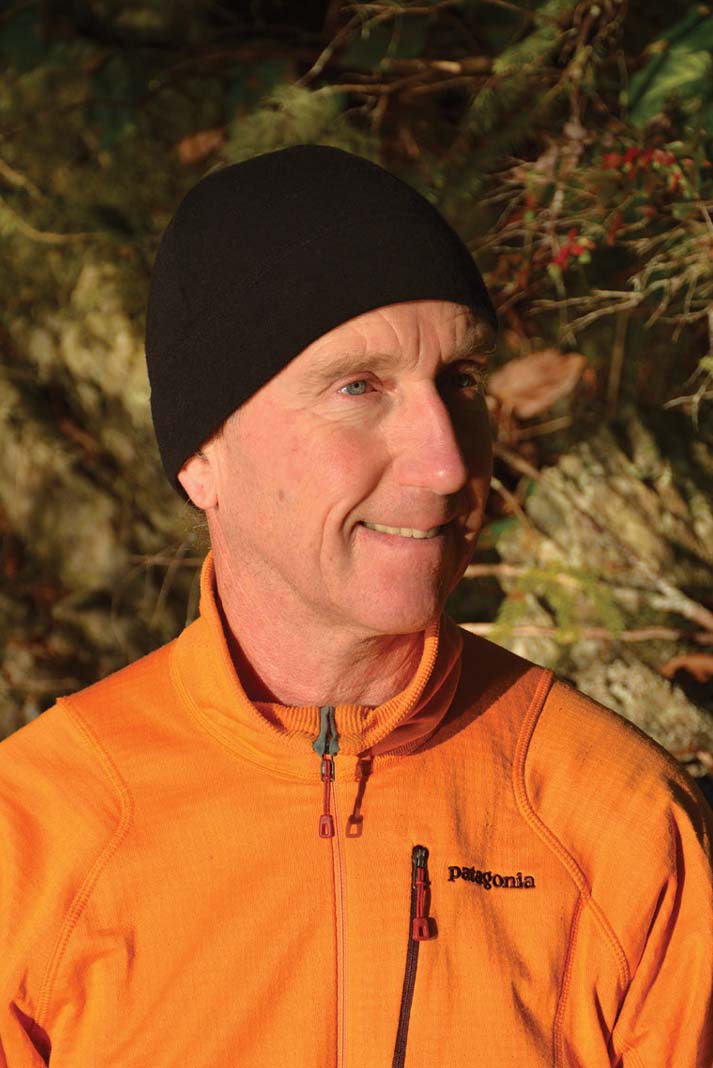
Steward of the Sound
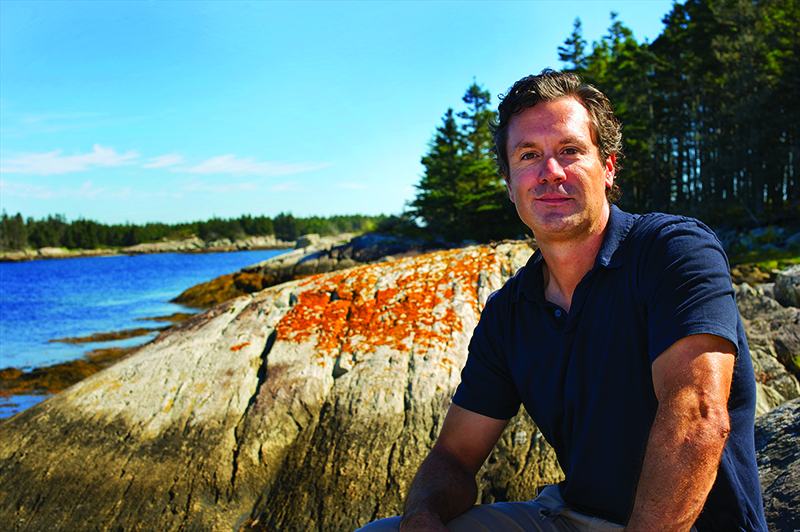
DAN LEWIS
Clayoquot Sound, British Columbia
You can learn a lot about a person by how they answer the phone…and why they don’t.
My pre-scheduled call with Dan Lewis, Executive Director of Clayoquot Action, goes straight to voicemail. A few minutes later another number appears on my phone. “Sorry,” Dan explains, “we’re having a 30-knot blow today, so I didn’t paddle into Tofino. But I’ll probably go in later today—we’re out of beer.”
Lewis’ connection to Clayoquot Sound has shaped more than just his watery commute from the island where he lives with Bonny Glambeck, his wife and Clayoquot Action co-founder. Kayaking into town in sketchy weather is far from the biggest risk he’s taken.
Lewis and Glambeck had owned Tofino’s Rainforest Kayak Adventures for 13 years when Imperial Metals proposed an open-pit copper mine on Clayoquot’s iconic Catface Mountain.
“It was a dark time, a great turning point of sorts. We realized we needed to do more than teach kayaking,” recalls Lewis. On the 20th anniversary of the 1993 Clayoquot logging blockade, they closed their profitable kayak business and founded Clayoquot Action.
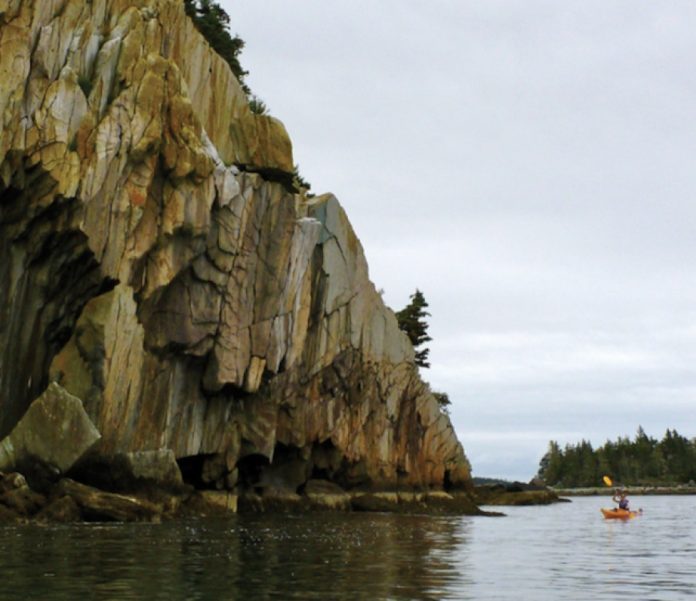
It wasn’t the first time Lewis had left kayaking to plunge into conservation work. He’d fallen in love with Clayoquot during a 1990 circumnavigation of Vancouver Island.
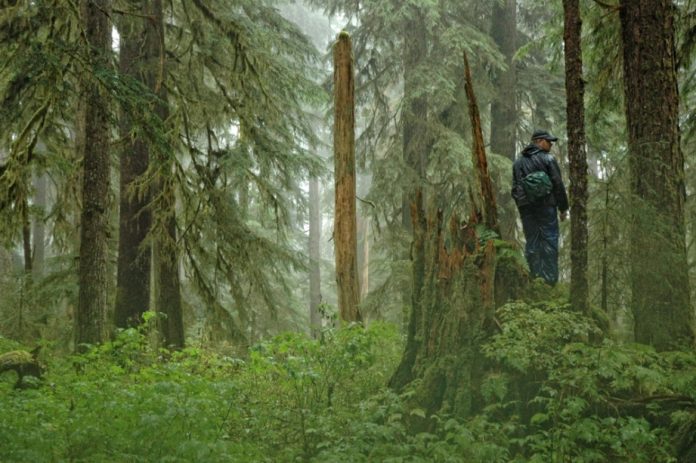
“Clayoquot had the best paddling and was the island’s last great rainforest,” he says. “I decided I was going to devote my life to protecting it.”
Lewis sold his kayak operation in Vancouver, moved to Tofino, and lived off savings while he, Bonny and Valerie Langer orchestrated the 1993 protests that made Clayoquot a household name. It’s the largest act of civil disobedience in Canadian history.
This time around, mining, fish farms and oil transport are the adversaries. The tactics are similar: education, science, advocacy and, when necessary, peaceful direct action. Glambeck and others were arrested protesting a Kinder-Morgan pipeline in late 2014.
And he goes to the source. Lewis, along with First Nations leaders, is fundraising for a trip to Norway to pressure fish farming multinationals and rebuild the wild salmon economy. “But I don’t really like leaving Tofino at all,” he says. “Unless it’s in a kayak.”
Loving a place so deeply also gives him a chance to savor the victories. “Every day I can look out at Meares Island Tribal Park and say, ‘We won that one.”’ —Neil Schulman
How to Help:
“We couldn’t do anything without the combined power of all the paddlers supporting us. They say that wilderness needs no defending, it only needs more defenders. It’s true.” —DAN LEWIS
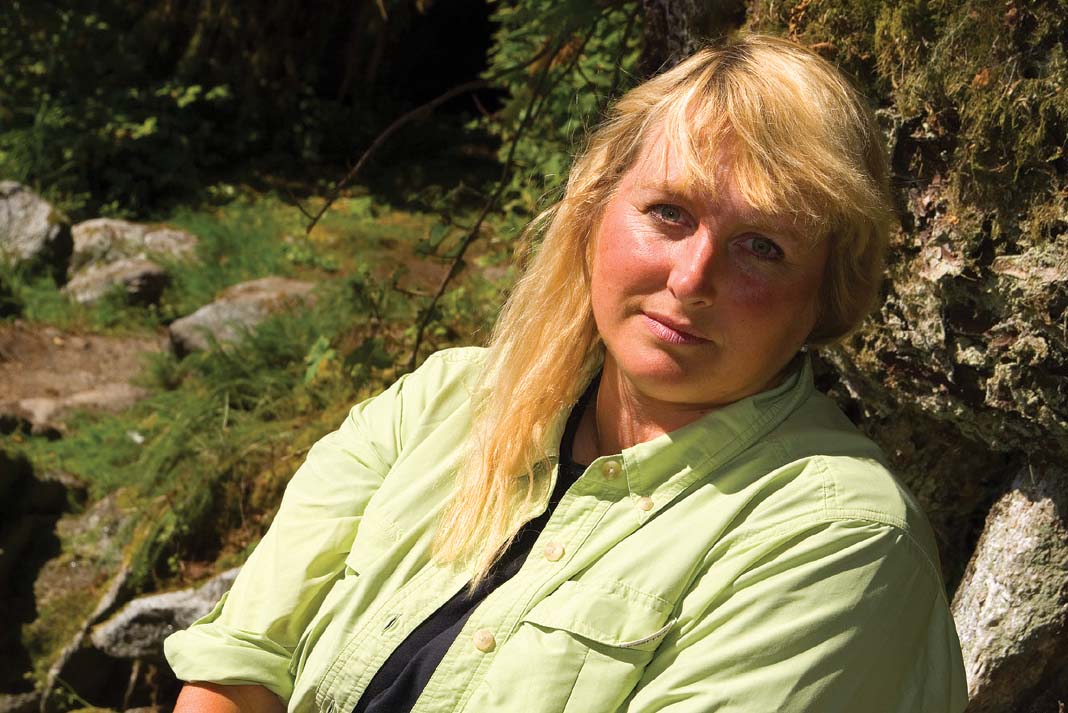
Keeper of the Stikine
Brenda Schwartz-Yeager
Wrangell, Alaska
“I don’t have any early memories without the Stikine in them,” says Brenda Schwartz-Yeager, “I’m pretty sure the river’s water runs through my veins.”
A fourth-generation Alaskan, award-winning artist and owner-operator of Alaska Charters and Adventures, Schwartz-Yeager grew up homesteading on the Stikine. The 640-kilometer-long river originates in British Columbia and drains into Southeast Alaska, encompassing one of the greatest wild ecosystems left on Earth and one of the largest wild salmon runs remaining on the West Coast.
Schwartz-Yeager is losing track of how many times she’s paddled the lower 270 kilometers, from Telegraph Creek to her hometown of Wrangell—at least 11. She’s also paddled all the way from the river’s headwaters, but just once. Often, the mother of five paddles by herself, in late fall, after she’s finished a season of guiding the river and her freezer is full of Stikine salmon. One of her favorite memories is paddling alone in October, as silver dollar-sized snowflakes fell, the last of autumn foliage shone and the river crinkled with ice.
“I was just yards ahead of freeze-up. It was like the river was closing down for the season,” she remembers.
Schwartz-Yeager’s acclaimed watercolors are another way she connects people with Alaska’s wilderness. Many of her landscapes are painted directly onto navigational charts of the area, a trademark she developed after sketching on the only paper available on her family’s commercial fishing boat. She often portrays the best of human interaction with the wild landscape—a kayak on the beach, or people walking the shore.
But Schwartz-Yeager also knows how easy it is to destroy a wild river. The U.S. Environmental Protection Agency states that 40 percent of western watersheds have been polluted from mining. Her beloved Stikine could be next.
“I’m terrified and feel strangely powerless,” she says of the Red Chris Mine, which opened in 2015, one of several enormous open pit copper mines planned in the Stikine watershed, in what’s referred to as the transboundary region. “Everything I love is downstream of that.”
The Red Chris Mine is owned by Imperial Metals, the same company that runs the Mount Polley Mine in central British Columbia. In August 2014, this open pit copper/gold mine had a massive tailings dam failure. Ten million cubic meters of toxic water and 4.5 million cubic meters of fine toxic tailings polluted the Fraser River watershed. Despite the Red Chris Mine using a similar tailings dam design, Imperial Metal was allowed by the British Columbia government to begin production at this site soon after.
“People are dumbstruck by its beauty, but then I have to burst their bubble,” Schwartz-Yeager says of showing visitors the Stikine’s waters, mountains, glaciers and forest— then revealing that all is not as untrammeled as it seems. She believes that the Stikine and the transboundary region can be used to support future generations of Alaskans, but development “needs to take place in a manner that doesn’t degrade the forest and the sea.” Her hope is more like-minded people will continue to visit and take ownership of the river’s future.
“You can’t come here and paddle it without loving it.” —Bjorn Dihle
Brenda Schwartz’s artwork reflects her lifelong relationship with wild Alaska. www.marineartist.com
For more information, visit www.salmonbeyondborders.org
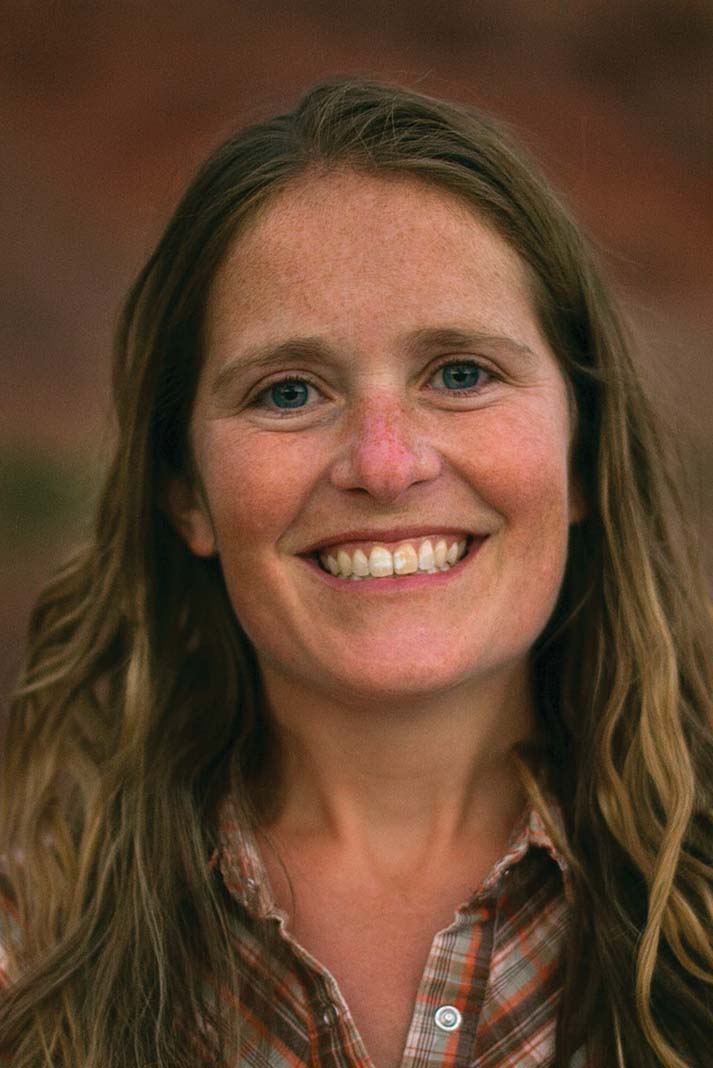
River Angel
KATE ROSS KUTHE
Portland, Oregon
At the beginning, there’s always an outing, says Kate Ross Kuthe, Education and Outreach Coordinator for Willamette Riverkeeper. “I’m screening films about environmental activists for a festival,” she tells me over coffee next to the river. “Every single one has a visceral connection to a place—a river, a beach, a mountain. And every single story starts with someone getting outside to explore.”
For Kuthe, the outings began in the Adirondacks, followed by hopscotching around Alaska and the Northwest doing environmental science, fighting fires for the National Park Service and guiding kayak trips. “I had one stream restoration internship where they gave me machetes and vague directions on which invasive plants to cut,” she recalls. “None of my friends’ internships gave them machetes.”
Working with Willamette Riverkeeper, making that connection starts with getting people to rediscover a river they think they already know. The Willamette’s 187-mile course winds past most of Oregon’s population, “but most people just drive over it,” she says. “You can hop in the river in downtown Salem, and in two miles you’re in wilderness. We show people the river in a new way, from a kayak or canoe.”
Conservationists are born on those trips. Paddle Oregon, an annual five-day, 100-mile downriver journey, is a particularly fertile breeding ground. “There’s a ripple effect from living on the river and falling in love with the river for that much time,” Kuthe says. “Those people become our best advocates.”
But love is just the beginning. Willamette Riverkeeper’s paddler-advocates then enter the daunting world of restoring and protecting a river with centuries of heavy use. One example is cleaning up Portland’s harbor, a Superfund site. “Here we are, 16 years after the EPA’s designation. How do you mobilize people?” Kuthe asks. Then she answers her own question. “By speaking in plain language. People need stories to connect to the river, not gobs of scientific data and policy jargon.” Even at polluted sites, outings are key. “We do canoe and walking tours, and let people see and smell the sites. It sticks.”
Looking downcurrent, she thinks her greatest impact will be the Superfund section of the Willamette becoming a place that people visit and enjoy. Then she changes course.
“Well, in a few years, I think Canyon will be my largest achievement,” she says, referring to her and husband Paul Kuthe’s one-year-old son. He’s already been on more river trips than most people manage in a year. At the beginning, there’s always an outing. —Neil Schulman
How to Help:
“Share what you love. If you have a special place, bring other people there. Personal experience is contagious.” —KATE ROSS KUTHE
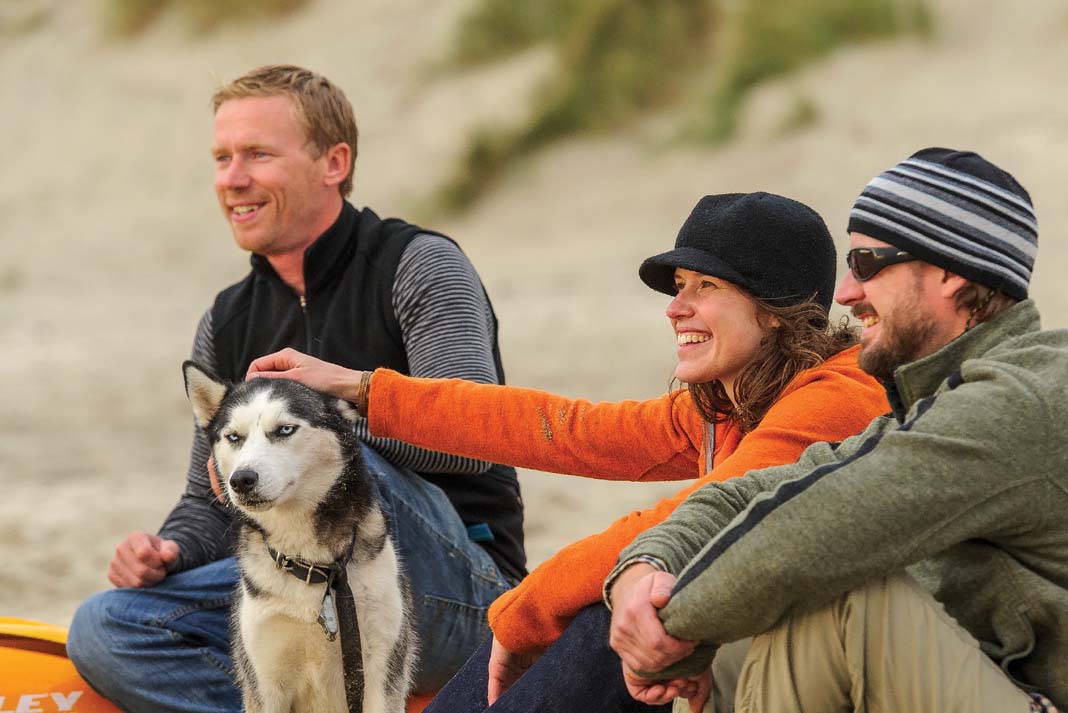
Plastics Pollution Fighters
JASON SELF, SHAY BICKLEY & CHRIS BENSCH
Humboldt, California, and Portland, Oregon
“We’ve always been a one-person-at-a-time kind of organization,” says Jason Self. “I am proud every time someone says ‘thank you for your work’ or is inspired to change their own behavior.”
Team Out of Sight, Out of Mind—OSOM for short—is, well, awesome. Since 2010, friends Jason Self, Chris Bensch and Shay Bickley have been fighting back against the overwhelming tide of sea trash and plastics pollution in our waterways.
Regular paddling buddies on the rivers and coast around Portland, Oregon, the three often found themselves complaining about the trash they’d encounter along the banks or at the beach. Then the BP Deepwater Horizon disaster spilled 4.9 million barrels of oil into a fragile ocean ecosystem.
“BP seemed to be focused on patting themselves on the back for their response to the spill, even as crude was still flooding the Gulf of Mexico,” recalls Self. “It sickened us. We care, and we hate complaining without action.”
The trio adopted the name Out of Sight, Out of Mind as a reference to the widespread lack of understanding surrounding pollution and habitat destruction, “as well as our inherent cultural ability to ignore these problems.”
The OSOM gang knew they faced tremendous odds in their effort to raise awareness of the threats facing the world’s waterways, while simultaneously taking physical action to counter these problems. It was a paddle on the Colorado River at flood stage—dodging televisions and toilets bobbing in the muddy water—that presented a strategy for their mission. As Self says, “We couldn’t stop industry, agriculture and human development, but we could pick up trash.”
They posted photos of their removal efforts to social media and found people were supportive and receptive to their message: Just pick it up. In 2012, Self, Bickley and Bensch launched the Portland to Ocean Trashpedition, a 100-mile paddle down the Columbia with a canoe-cum-garbage scow in tow. They collected all the trash they could find along the route, until the load piled high above the gunwales.
Trashpedition continues to inspire local cleanups and even similar expeditions, and it stands as one of OSOM’s proudest accomplishments. In the years since, however, the team’s tactics have evolved. “Our understanding of the problem has changed,” says Self. “Trashpedition focused on littering. Afterwards, we realized mass consumption by the growing amount of people on the planet is the real problem.”
They set their sights on plastics pollution. “Plastics last for thousands of years, leach toxic chemicals and threaten wildlife,” Self explains. “They’re also the least necessary—the majority of plastics we find are single use, disposable items for which there are easy, reusable alternatives.”
This led the three friends to creating The Search for the Perfect Day, a film project showcasing the work of pollution fighters in California, Hawaii and Florida. The film also highlights the paradox between enjoying a perfect day on the water, and abiding the habits of our throwaway society.
“We’ve realized that at the root of all of the problems facing the natural world, is this growing disconnect between how we live and what we do every day, and our desire to advocate for nature,” says Self.
The solution, they decided, is deceptively simple: Encourage, inspire and motivate others to get outside. If you can pass on a love and respect for the natural world, you can inspire a change in behavior.
“Our hope is that through our efforts, and the efforts of other activists across the globe, future generations won’t know what it’s like to fill your boat with plastic trash and not even make a dent in the pile.” —Virginia Marshall
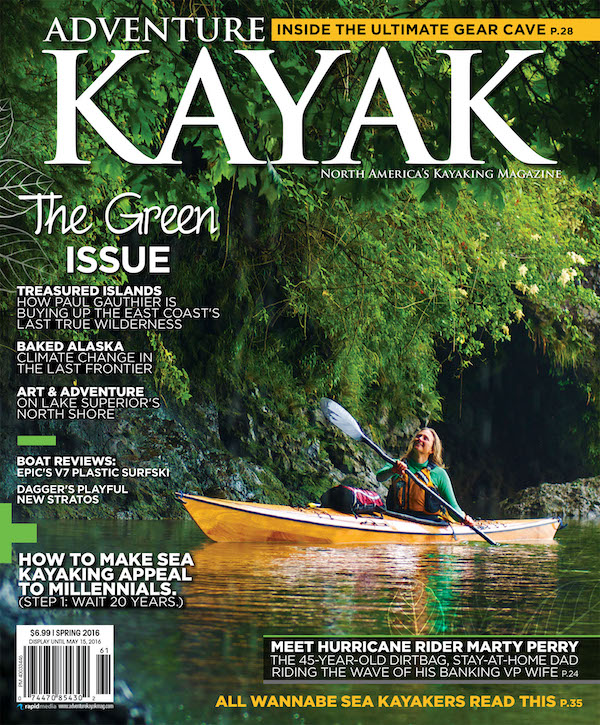 This article originally appeared in Adventure Kayak Spring 2016 issue.
Subscribe to Paddling Magazine and get 25 years of digital magazine archives including our legacy titles: Rapid, Adventure Kayak and Canoeroots.
 This article first appeared in the May issue of Paddling Magazine. To read more from Paddling Magazine, click
 This article originally appeared in Canoeroots Spring 2016 issue.




 This article originally appeared in Adventure Kayak Early Summer 2016 issue.