Home Blog Page 249

Pyramid Scheme: Racing to Secure the Future of Whitewater

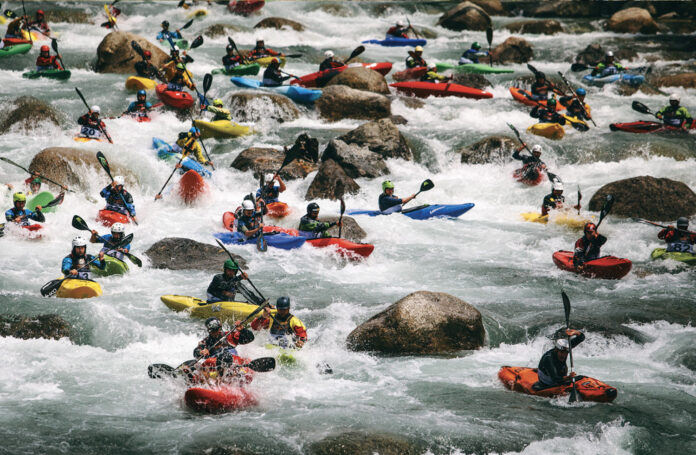
COME ONE, COME ALL. | PHOTO: FLO SMITH

As an aging athlete sliding down the backside of my glory days, the role numbers play in claiming oneself an enthusiast in any activity is not lost on me. I have 15 years worth of recorded training data for bike and cross-country ski racing, including distance, time, heart rate and power output. These numbers, when tracked, indicate form and direct performance improvements. These numbers tell me where I am and where I need to go if I want to get better at my sport.

I’m not alone in this. Witness the Fitbit or Apple Watch activity sensor craze, the prevalence of GPS navigation apps, sleep monitors, power meters, and all manner of measurement tools for life. Witness the explosive popularity of people testing themselves in triathlons, adventure races, marathons and similar competitive events. Witness the craze of apps like Strava, where weekend warrior athletes compete on hometown, crowd- sourced, GPS-recorded and timed routes. Real-time results are posted online. There is no entry fee, no prizes.

Almost none of this applies to whitewater paddling. No measurement tools, no participation-based competitions, no Strava routes to test one’s self.

All of this occurred to me while watching the ICF World Freestyle Kayak Championships, which took place on my home river this past summer. While the finals were exceptionally exciting, it was mostly spectacle rather than intelligible competition.

Even after decades on the river, the scoring of a high-intensity freestyle run remains a mystery. As with any judged event, there are limitations to what can be understood from the riverbank, especially when the moves being performed have little to do with what the average paddler does when they run a river themselves. This leaves the top end of our sport detached from its participant base, and where our lack of numbers becomes a problem.
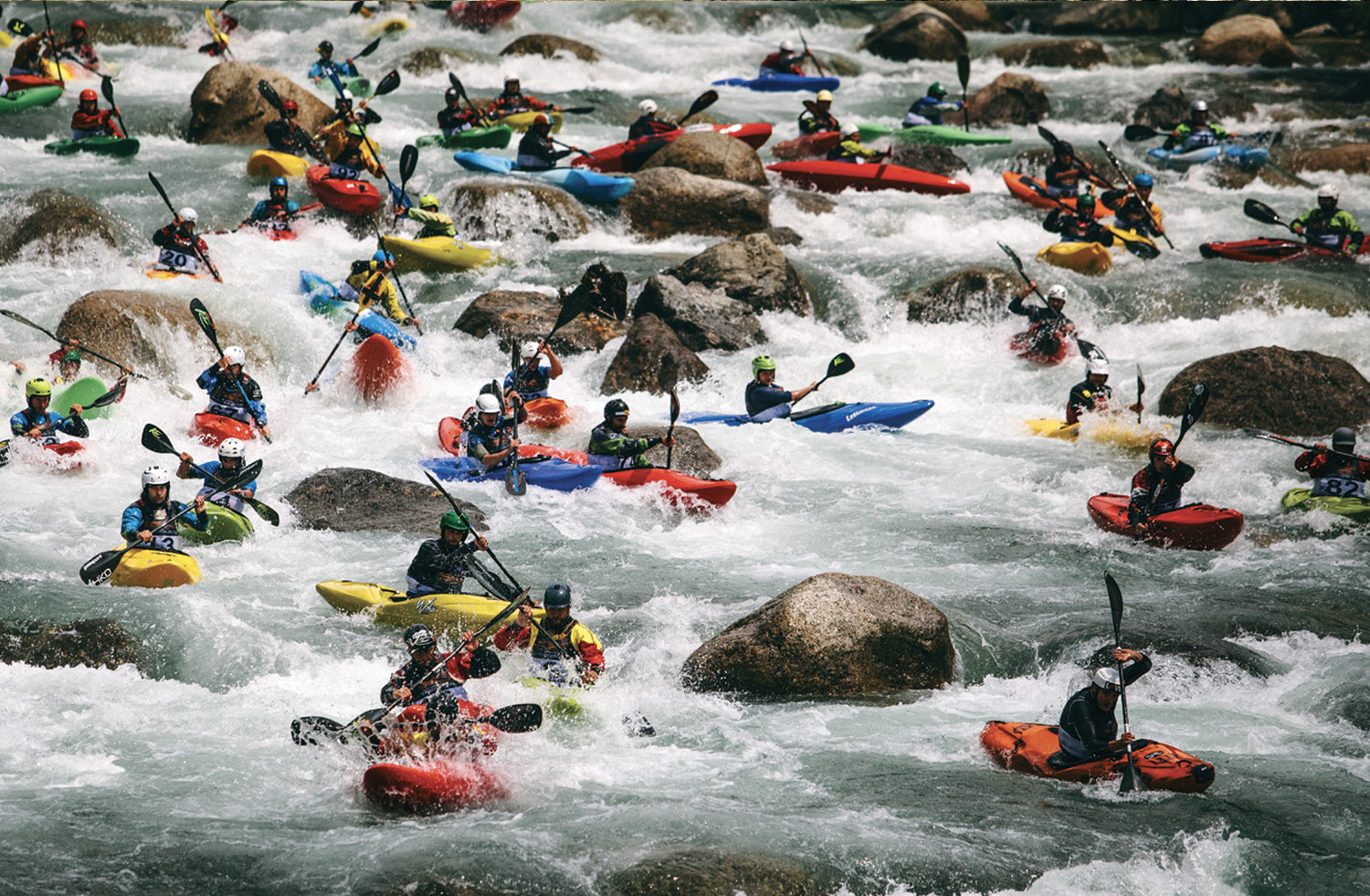
COME ONE, COME ALL. | PHOTO: FLO SMITH

HOSTING THE MASSES

Baseball and hockey fans track statistics and join fantasy leagues and pools, which serve both as a means of connecting to the elite of their sport, and also motivating their own participation at a recreational level. That surfing, road cycling, mountain biking and ski racing are the new boom in fantasy leagues points to the desirability of this connection even in niche action sports like ours.

The fact is, there isn’t an equivalent whitewater participation-based competition structure that feeds paddlers upwards. Competition and whitewater are not mutually exclusive—slalom has been an Olympic event for more than 40 years. Unfortunately, slalom has utterly failed to capture the imagination of most North American river runners, and freestyle kayaking has yet to find a formula that appeals to recreational play boaters.

The rise in downriver racing showed great promise, but it collectively skipped attracting mass participation by largely focusing on class IV and V high-stakes runs. That has alienated the class III recreational participant who is the bread-and-butter of this sport. This is no structure for growth.

What we need are competitive events that are targeted to class III paddlers. One-time avid paddlers who have left the river to race the clock in a marathon or go elbow-to-elbow on a bike may find themselves drawn back. Perhaps slalom gates that are wider than shoulder width apart, timed river runs that don’t require risking ones’ life and fun-for- the-whole-family events can build the mass that is required for hosting participation events.

We need opportunities to turn our sport into a participation pyramid rather than the narrow and sketchy ladder to the top that it is now.

Jeff Jackson is a professor at Algonquin College and focuses his research on risk management. Alchemy is a regular column in Rapid magazine.

BG_2016_0.jpgThis article originally appeared in the 2016 Paddling Buyer’s Guide issue.

Subscribe to Paddling Magazine and get 25 years of digital magazine archives including our legacy titles: Rapid, Adventure Kayak and Canoeroots.
Spending Time in Nature Makes You a Better Citizen of Earth

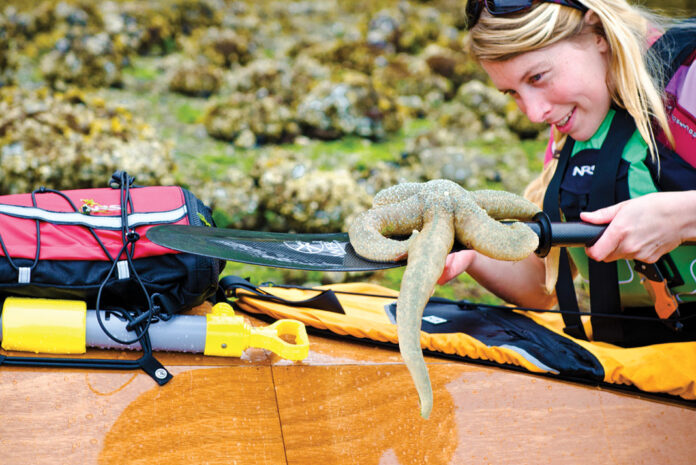
NOT A WASTED MOMENT. | PHOTO: FREYA FENNWOOD

Don’t believe everything you read on the Internet.

It was a blog post by champion whitewater kayaker Eric Jackson that sucked me in. EJ did a quick calculation and figured he’d spent nearly 2,000 hours last year kayaking—nearly a year’s worth of 40-hour work weeks playing outdoors.

Awesome, I thought. What a great life.

Then EJ announced that he was “turning over a new leaf.” He’d been chatting with a friend who’d pointed out there’s no social utility to all that time on the water pursuing his latest passion, kayak fishing.

“What if all these fishermen, you included, put the same amount of energy into doing something productive that would help others, instead of such a selfish activity?” his friend asked.

EJ couldn’t come up with a good answer, so he decided to completely overhaul his life. He’d re-dedicate himself to higher pursuits: “simplify my life—eliminating the things that have no meaning, and are just time wasters.”

Holy shit, I thought, EJ’s so right! Think of everything humanity could accomplish if we didn’t squander so much time on unproductive activities like kayaking. I should do something more meaningful with my time.

I was 300 words into the post before I got the joke.

“All I can do is start today, on April 1, 2015, and try to make the world a better place,” he wrote.

Instead of laughing at the clever April fool’s joke, I stared at my computer in shock. I couldn’t believe how easily my rational brain had been duped by an argument that my heart knew all along was utter hogwash.

The truth is that EJ’s post is no joke. We live in a world that sends us similar messages every day.

A recent newspaper article made the same point about mountain climbing, calling it “one of the most damagingly popular forms of empty self-absorption of our age,” and “the ultimate act of pure meaningless egotism.” It was a lot like EJ’s argument, except the columnist was dead serious.

It’s not like we don’t have enough barriers to connecting with our beleaguered planet. The last thing we need is to be condemned or self- critical for doing what we love—what humans actually evolved to do. For hundreds of thousands of years, before this flash in the pan we call history, we were all nomads. Activities like traveling in the wilderness in kayaks and canoes, and fishing, were how we spent our days.

Now the forces of consumer society are pushing us so hard into allegedly more productive activities that most kids don’t even get the recommended one hour of physical exercise each day.

NOT A WASTED MOMENT. | PHOTO: FREYA FENNWOOD

“Outdoor activities are critical to society today,” EJ rants at the end of his post. This time he’s being genuine. “Kids NEED to understand how to live outdoors, to appreciate wildlife, to understand fish, birds, animals, if they are going to protect them… Get out there, take your kids, remember that Mother Earth isn’t something you learn about on TV.”

If I truly want to help the world, the answer isn’t to spend more time at home working. It’s to augment my paddling and family outings with activities that bring us even closer to the natural world, like fishing, birdwatching, plant identification or stargazing.

EJ ended his post with a video compilation of his past year— paragliding, mountain biking, paddling and hauling trophy bass into his kayak with an ear-to-ear smile.

I resolved then and there to focus on the best uses of my time. This summer I learned to sail yachts, bought a second paddleboard, ticked off 50 days on the water, and took my kids on their longest canoe camping trip yet.


BG_2016_0.jpgThis article originally appeared in the 2016 Paddling Buyer’s Guide issue.

Subscribe to Paddling Magazine and get 25 years of digital magazine archives including our legacy titles: Rapid, Adventure Kayak and Canoeroots.
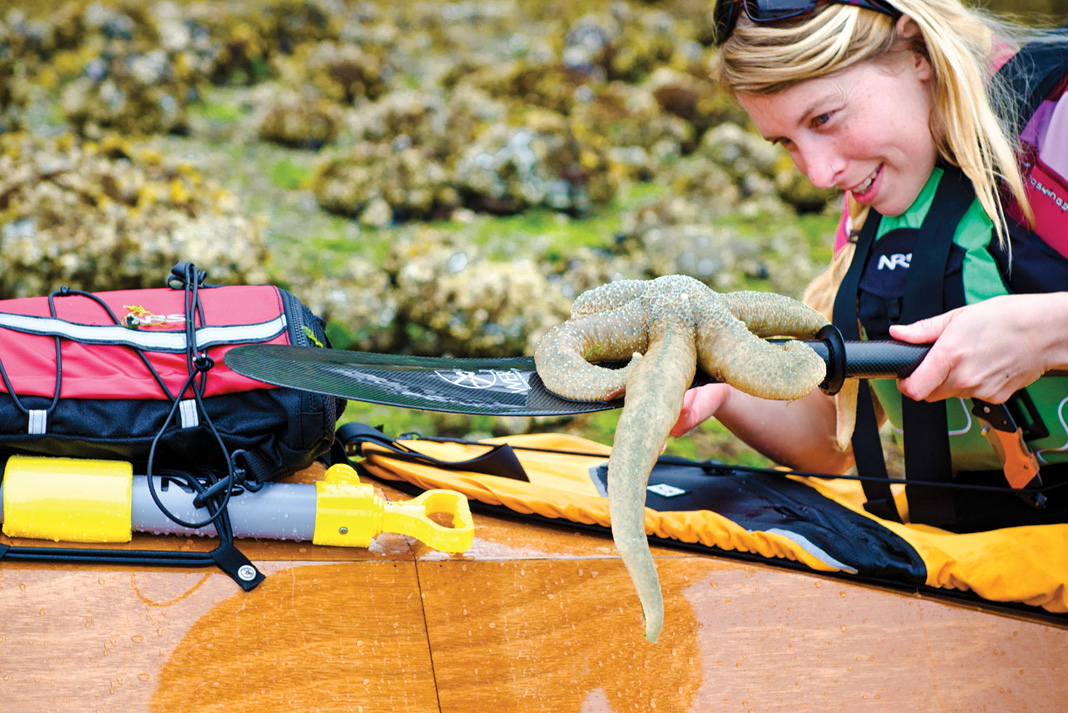
Photo: Milky Way

Photo: Christopher Boffoli
Milky Way | Photo: Christopher Boffoli

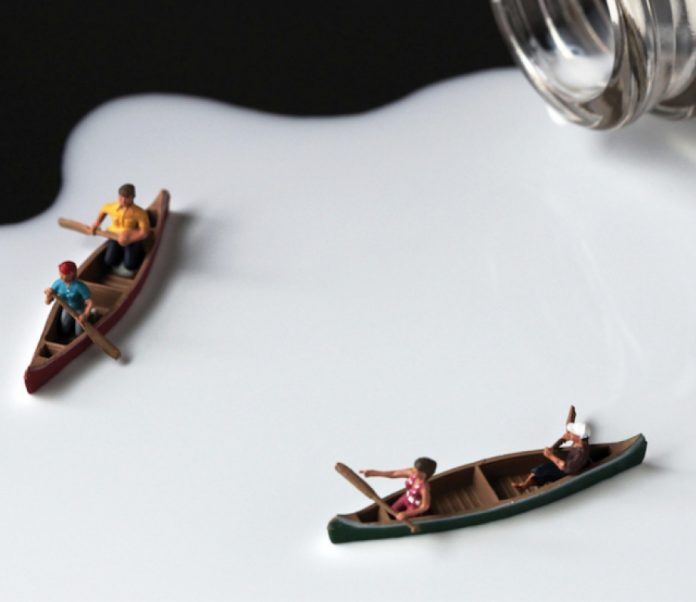
Where you and I might see a teacup or hot dog, Seattle-based photographer Christopher Boffoli sees a workplace and playground. His international award-winning series, Big Appetites, features a universe of tiny people living in a giant world of food.

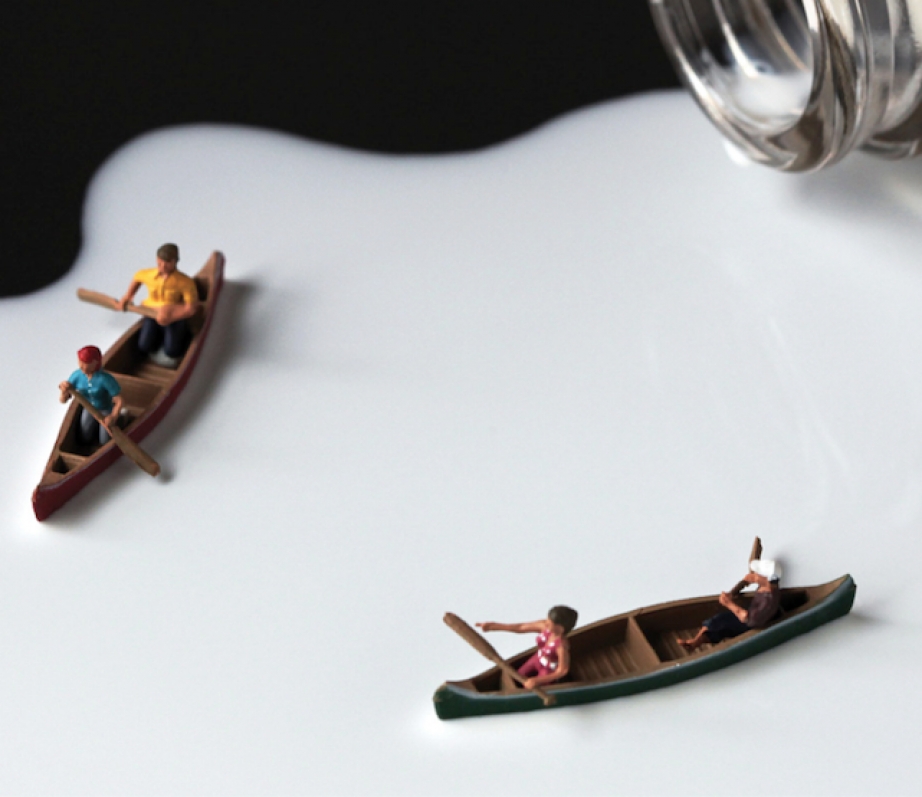
In Boffoli’s world there are tiny climbers on walls of rock candy, motorcycle daredevils jumping cheesecake, ice cream cones turned into tipis, and even canoeists on lakes of milk. Captions deepen the story behind each photo, in this case: “Janet was one of those people who would use absolutely any excuse to stop paddling.”

Making this particular photo presented its own challenges. “I generally try to avoid liquids and melting things,” says Boffoli, “there’s so much cheating in food photography, but everything in my photos is real.” Photographing milk required equired working quickly. This was shot on his kitchen’s marble counter.

The Big Appetite series has been exhibited in more than 100 countries. “Whether you eat with a fork, chopsticks or your hands, everyone understands food,” Boffoli says.

The decision to turn photography from passion project to career followed a devastating accident on Washington’s 14,000-foot Mount Rainier more than 10 years ago. Twelve weeks later, recovering with a broken leg and ankle, Boffoli found himself back underneath fluorescent lights at his desk job, looking out at the mountains. “I asked myself, what am I doing here? So I took a creative sabbatical.” He hasn’t looked back.

Photo: Christopher Boffoli
Milky Way | Photo: Christopher Boffoli

While people are often delighted by the humorous juxtaposition of his images, there’s a subversive message as well, one of a nation with a complex relationship to food. “There are entire TV networks engaging with our eyes but not out stomachs,” says Boffoli. “As a culture, we’re not cooking very often; many meals are eaten on the go in cars, or are reheated processed foods at home.”

While Boffoli had previously purchased his tiny figures from model building suppliers, today he 3D prints them, and then meticulously hand paints each figure. “It’s a tedious process,” he laughs, “I won’t even make my assistants do it.”

See more of the series at bigappetites.net.


BG_2016_0.jpgThis article originally appeared in the 2016 Paddling Buyer’s Guide issue.

Subscribe to Paddling Magazine and get 25 years of digital magazine archives including our legacy titles: Rapid, Adventure Kayak and Canoeroots.
Video: Kevin Callan’s Early Love for the Canoe

Photo: courtesy Trailguide Pictures
[iframe width=”560″ height=”315″ src=”https://www.youtube.com/embed/HV-50gta9o0″ frameborder=”0″ allowfullscreen ]

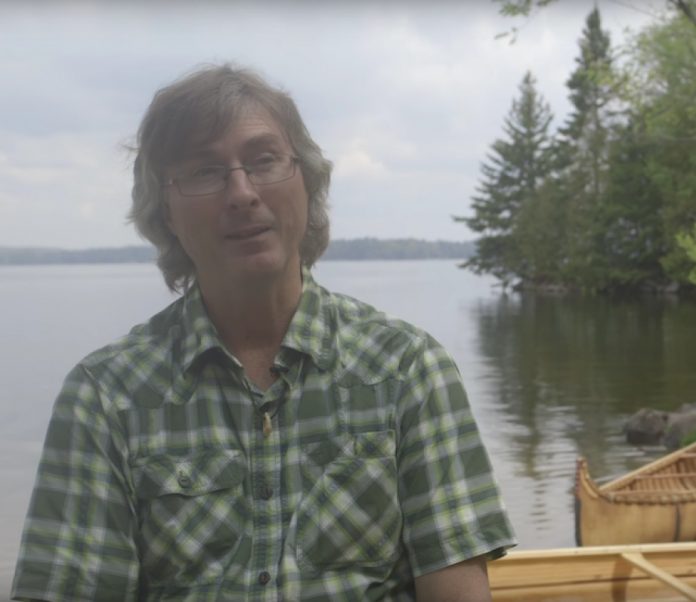
Kevin Callan’s interview with the folks behind Canoe: Icon of the North was only shown in part in the completed film. Now, you can watch the entire Kevin Callan interview, now available for digital download here. Watch a teaser above.

Find out more about Canoe: Icon of the North and watch a trailer here.

Find more about Canoeroots contributor Kevin Callan here, and visit Canoe: Icon of the North/Trailguide Pictures on Facebook.

Video: Packing For Your River Trip Made Easy

Photo: Screen Capture
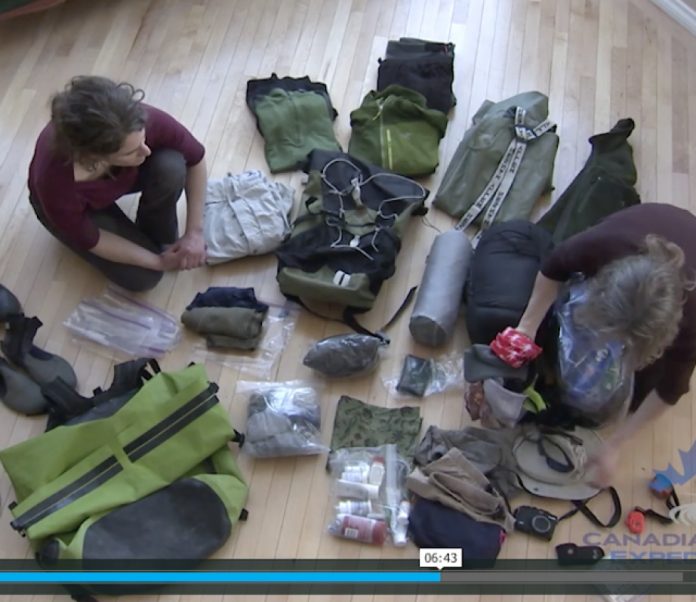
Screenshot of Nahanni River Adventures Staff packing personal gear for a river canoe trip.

Keeping track of and packing all the necessary gear for a northern river adventure can be tricky. That’s why Canadian River Adventures and Nahanni River Adventures send this helpful video check list to their clients pre-trip, so they’re sure to bring all the essentials that will keep them safe and comfortable on trip. If you’re planning your own northern river adventure you’ll find this packing list helpful. You might also be surprised by some of the items that make it on the list and the rationale behind them (really, rubber boots?).


“People report that the video makes preparation easier and they are better prepared for the weather and have a more enjoyable experience,” says the video creator, Neil Hartling. “When it is summer and 35 degrees Celcius down south, it helps to see the video to understand why a pair of fleece pants/tights and a puffy jacket are must-brings, and also why sun protection and shorts are a must in the land-of-the-midnight-sun. And, yes, you could be wearing both in the same day.”

What does good rain gear look like? What do you mean by rubber boots? How will it all fit in that river bag? Let the pros show you how to pack.

Packing for your river trip made easy from Neil Hartling on Vimeo.

Video: 25 Years in Algonquin Park

Photo: courtesy David Hartman
[iframe src=”https://player.vimeo.com/video/155899582″ width=”500″ height=”281″ frameborder=”0″ webkitallowfullscreen mozallowfullscreen allowfullscreen ]

Celebrating 25 years of guiding Algonquin Park adventures – Voyageur Quest from David Hartman on Vimeo.

A look at the Voyageur Quest team who are celebrating 25 year anniversary operating Algonquin park guided canoe and lodge adventures at Algonquin’s north west corner. Visit them at voyageurquest.com.

Video: Canoeist’s Checklist – The 7 Essentials Every Boat Needs

Discover the 7 items every canoe needs to head out onto the water for a day trip. Chad Casey at the Lodge at Pine Cove (frenchriver.com) in French River, Ontario shows you what to bring.

Keeper of the Flame: Optimism for Future Wilderness Enthusaists

TENT VACATION). | PHOTO: ROBERT FAUBERT

I’m a worrier. I know this because my 11-year-old daughter tells me so.

It might be some type of genetic disposition I’ve been cursed with. Or it may be I just have a lot to worry about.

I worry about our natural wilderness. With urban sprawl, deforestation and climate change threatening, I worry whether the next generation will have any wilderness left. Even more worrying is whether people will still want to travel in these remote and magical locations.

Increasingly, people canoe and camp for shorter periods of time, in areas closer to urban centers. They post to Instagram from the portage trail, fundamentally altering the wilderness experience. Those campers will never even know the truly remote and magical experiences they’re missing out on. Without the opportunity to connect to these wild areas, who will grow to love them and fight for them when the time comes?

In 1949 Alfred Leopold wrote, “The richest values of wilderness lay not in the days of Daniel Boone, nor even in the present, but rather in the future.”

It’s a great line, but more and more often, it seems the people who do spend time in the wilderness are trying to “survive” out there, rather than be part of it. Television’s so-called reality shows far outnumber true tales on the joys of wilderness travel. Bear Grylls’ sensationalistic Man vs. Wild has even been trumped by the lunacy that is Naked and Afraid—almost four million weekly viewers and counting.

Are we stepping backwards into a Lewis and Clarke era? Why are we attempting to conquer nature rather than connect with it?

When my daughter tells me I’m a worrier, I worry that she may be right.

Luckily, she says I have another character trait: I’m an optimist. She says I have to be for her sake. To give up on the future of wilderness protection means I’m giving up on her.

TENT VACATION). | PHOTO: ROBERT FAUBERT

My daughter is certainly not giving up. She’s grown to love the woods even more than I do. And that love has inspired a passionate desire to protect her playground. On a canoe trip last summer she memorized a quote by Chief Seattle, the 19th century advocate for wilderness protection and Native rights, as well as the namesake for the U.S. city.

In camp in the evening she recited his words to me: “We are part of the earth, and it is part of us. The flowers are our sisters, the deer, the horse, the great eagle, these are our brothers. The rocky crests, the juices of the meadow, the body heat of the pony and the man, we all belong to the same family. The shiny waters that move through the streams and rivers, is not just water, but the blood of our ancestors.”

Someday the blood in the shining water flowing through the streams and rivers will be mine. I have to believe that my grandchildren will paddle these waters and will fight to protect them.

Kevin Callan is an author of 15 canoe camping books and guides. Butt End is his regular column in Canoeroots magazine. 


BG_2016_0.jpgThis article originally appeared in the 2016 Paddling Buyer’s Guide issue.

Subscribe to Paddling Magazine and get 25 years of digital magazine archives including our legacy titles: Rapid, Adventure Kayak and Canoeroots.
SUP Safety: Vests, Belts, or Leashes

Photo: iStockphoto.com/visualcommunications
SUP Safety: Vests, Belts, or Leashes

On August 21, 2015, 29-year-old paddleboard racer Andres Pombo drowned while training for the Columbia Gorge Paddle Challenge. According to local news services, Pombo went out to paddle the course a day before the race, fell in the river and drowned. His body was found six days later. He reportedly was not wearing a leash or PFD.

The death of an experienced paddler so close to a high-profile race has re-ignited debate about the need for more awareness and use of safety gear on paddleboards, as well as debate about which equipment is best.

A day before Pombo’s body was recovered, Warren Currie, owner of Easy Rider board shop in Edmonton, Alberta, and Dave Kalama of paddle manufacturer Quickblade, penned an open letter to the paddleboard community demanding manufacturers, retailers and pro paddlers promote safety equipment in stores, online and in advertising.

“The bicycle and wakeboard industries both went through similar circumstances with helmet use,” says Currie. “In both cases it took a high-profile tragedy for their respective industries to band together and implement campaigns for helmet use. Now you can’t see an image put out by either industry without a helmet in use.”

Lifejackets: It’s the law

According to Transport Canada and U.S. Coast Guard regulations, a PFD must be carried on your paddleboard at all times except in a surf zone or designated swimming or bathing area. However, it only takes a glance at the svelte silhouettes on local waterways to confirm that PFD use on paddleboards is low. A 2012 American Canoe Association (ACA) survey of members found that only 25 percent always wear a PFD when paddleboarding, a number that is estimated to be lower in the general—and sometimes less safety conscious—public.

Perhaps this is not surprising, considering that paddleboarding advertising images often feature safety-essential-free paddlers whose beautiful beach bodies would be marred by cumbersome safety equipment—bulky foam flotation isn’t exactly sexy.

“It’s really cool that so many people are excited about paddleboarding, but some have jumped into it half-cocked and aren’t aware of the dangers,” says Wade Blackwood, executive director of the ACA, America’s largest educational organization for paddlesports.

“It has been hard to combat the no-PFD look of the traditional surfing community, and hard to say to paddlers that it doesn’t matter what you look like, you have to wear it. That’s why inflatable belt packs have been so great,” adds Blackwood.

Chair of Paddle Canada’s SUP program, Tony Palmer, agrees. “The waist worn inflatables are great, they are low profile, they don’t get in the way in the surf zone or on a hot day—all excuses evaporate with it. They don’t even wreck your tan line,” he says.

Palmer believes that if industry pros were seen wearing visible safety equipment others would pick up on it. “If the big shots—the people winning the races, the people on the magazines, with their own blogs and thousands of followers on Twitter—if those people started wearing PFDs it would trickle down,” adds Palmer.

Leash versus life jacket

Whether PFDs are even the best piece of safety gear for paddleboarders is hotly debated in the community. While neither Canada nor the U.S. require leashes by law, some industry professionals believe it’s the safest option.

“If you are wearing a leash, you are attached to a PFD and you are in the safest position possible,” says Dave Meyler, CEO of Boga Paddleboards based in San Clemente, California. “If you are separated from the board you’re in bad shape, even if you are an experienced paddler. If you are even just one mile off the coast, that is a long way to come in. If you are in waves and wind, it’s hard to swim.” He adds that an exception to his leash-wearing rule is in whitewater.

Easy Rider’s Currie agrees, adding that regulations requiring paddlers to have a PFD on board without the requirement to wear it creates a false sense of security. Many paddlers remember the tragic story in 2013 of a 42-year-old man who drowned in Lake Tahoe with both a leash and PFD attched to his board, but not his body.

“The leash is by far the best option for a person’s safety on a SUP,” argues Currie. “It tethers you to an unsinkable object. If you do wear a lifejacket and no leash, and become separated from your board, you are then immersed in the water, which will likely lead to hypothermia.”

In 2012, Transport Canada stated that it “supports leash use, but not as an alternative to a lifejacket or personal flotation device.”

“At the ACA we advocate that you need a PFD out there, outside of the surf zone,” says Blackwood. “You’re that much safer.”

Following Pombo’s death on the Hood River, the Stand Up Paddle Industry Association (SUPIA), a trade rep organization, released a statement further committing itself to safety of its participants and businesses, and advising the paddleboard community to expect new safety precedents to be rolled out in the next six months.

For Blackwood and the ACA, more public education, discussion and promotion of safety equipment from all sectors of the industry is a good thing. “There are inherent dangers on the water and it takes just seconds for things to go wrong,” he says. “The overall debate reminds me of driving school— wear a seatbelt, don’t be dumb. It’s the same. Using a PFD and leash [where appropriate] can help prevent tragedies.”

Nicola Johnston Beaudoin is a freelancer writer and owner of Sea To Sky, a SUP, yoga and fitness company based in Vancouver, British Columbia.

BG_2016_0.jpgThis article first appeared in the 2016 Paddling Buyer’s Guide. For more great content, subscribe to Canoeroots, Adventure Kayak, or Rapid. You can visit the Paddling Buyer’s Guide online here.

Around South America with Freya Hoffmeister

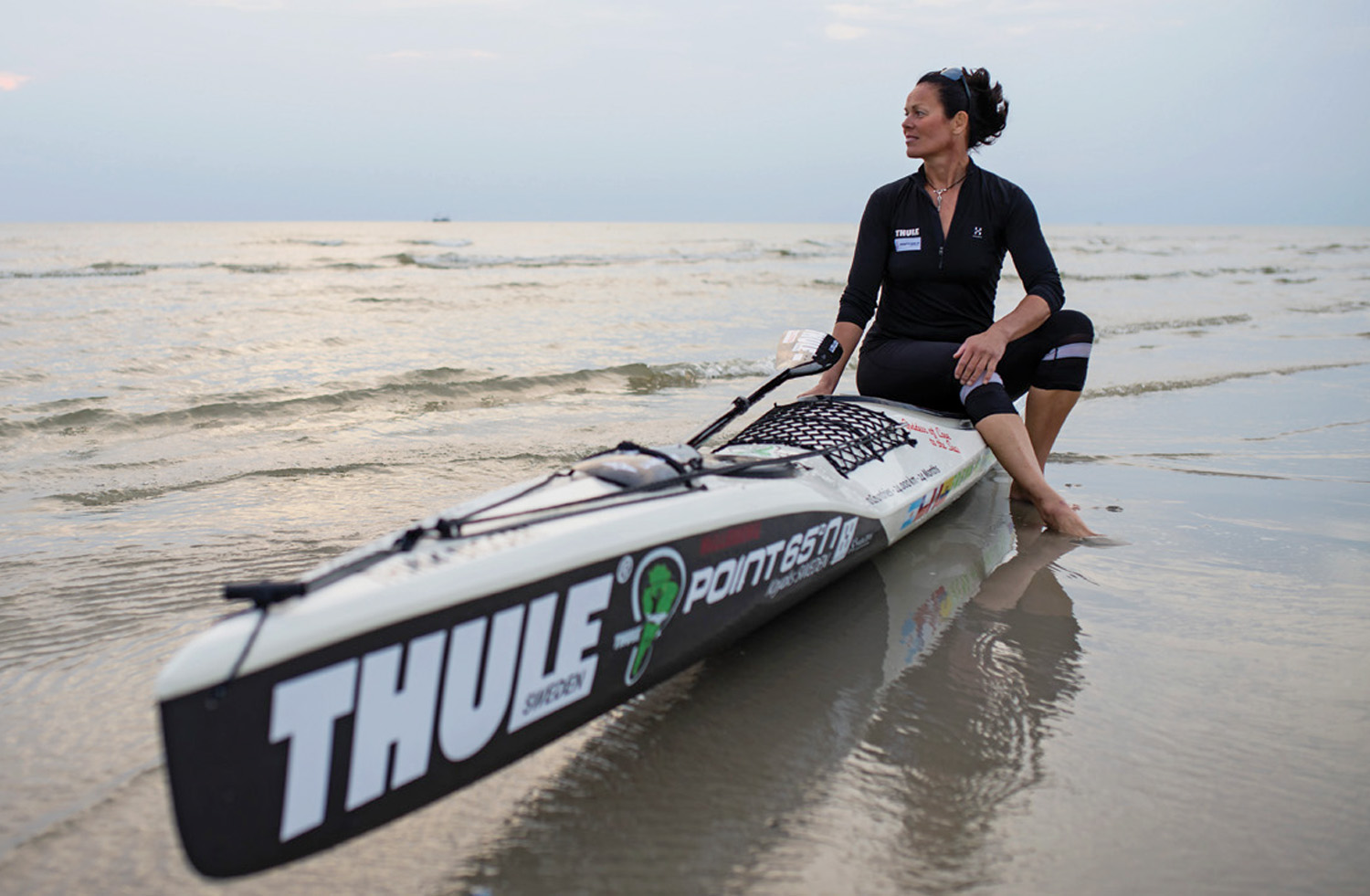
AT PLAY AMONG MERE MORTALS. | PHOTO- MICHAEL NEUMANN

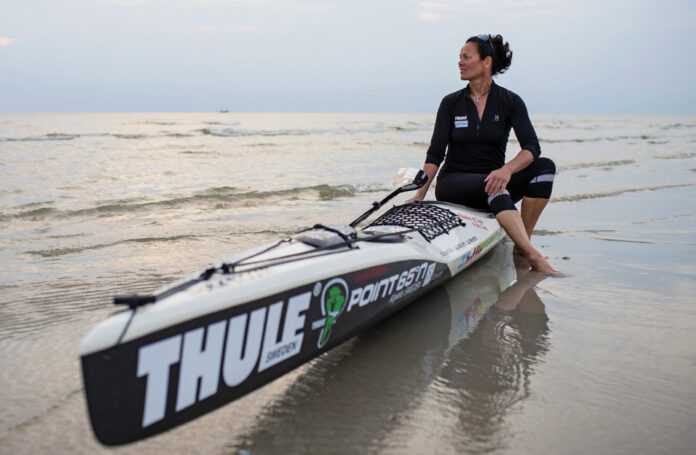
Few could argue Freya Hoffmeister is the most accomplished sea kayaker that has ever lived—or likely ever will. The 51-year-old sportswoman and entrepreneur’s life is a catalog of the extraordinary. She spent her early years as a competitive gymnast, bodybuilder, beauty pageant contestant and skydiver (1,500 jumps, including one over the North Pole). Since lasering her formidable energies onto sea kayaking as a “less dangerous” sport to pursue during pregnancy in the mid-‘90s, she has overrun the sport like her namesake—a Norse goddess at play in the land of mere mortals. Her record-smashing expeditions—mostly solo and unsupported—have taken place around treacherous and spectacular countries and continents, and she’s logged more expedition miles than any paddler in history. In May she returned from a nearly four-year, 27,000-kilometer, near-fatal circumnavigation of South America.

Who will ever repeat your circumnavigation?

I don’t think anybody will. I can’t advise anybody to do that because it’s simply too dangerous. Not only because of the dangerous water, but also from the human side—I encountered many criminals. But, I had an advantage as a woman. Many people did not believe a woman could do an intrepid trip like this, and I got a lot of respect that way.

What happened on Brazil’s Pororoca Tidal Bore?

This was my scariest moment, and it happened because I was stupid. I didn’t get enough information about the conditions. I was paddling through the night and became stuck in the mud at low tide. I thought I would just wait for the tide coming in, but it came in rough. Within 15 minutes it had side-surfed me for eight kilometers. I was afraid for my life that night.

When else did you have a close call?

I got trapped by high winds and had an emergency crash landing on an island near Cape Horn. That night the wind was 120 knots. In my tent, I was reinforcing the corners of the tent with my arms and legs like a beetle on its back. Two kayakers were attempting to circumnavigate that area on the same date with the same wind conditions I had. One of the men drowned.

AT PLAY AMONG MERE MORTALS. | PHOTO- MICHAEL NEUMANN

Where would you go back to paddle in South America?

I would return to the south because of the animals— penguins, whales and seals. Northern South America was dead in the hot water, and the Caribbean Sea was great but it wasn’t that exciting to paddle without seeing seals or dolphins or sharks. Argentina and Chile were much more interesting—and also very beautiful.

Why didn’t you learn Spanish?

It was my decision not to learn Spanish and it worked okay for me. I was not able to always get the information from local fishermen who could have told me about dangers ahead. But that also gave me peace at night. Everyone always says there is danger ahead. And I like my peace and my privacy after 10 hours of paddling.


BG_2016_0.jpgThis article originally appeared in the 2016 Paddling Buyer’s Guide issue.

Subscribe to Paddling Magazine and get 25 years of digital magazine archives including our legacy titles: Rapid, Adventure Kayak and Canoeroots.