Home Blog Page 257

Skills: Soup Up Your Ride

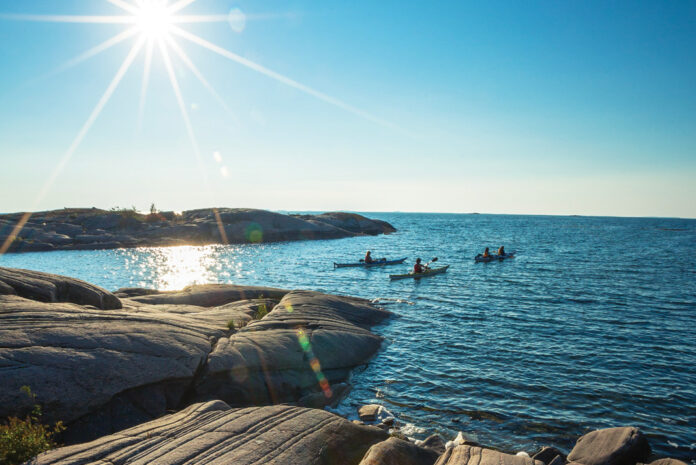
Photo: Ontario Tourism
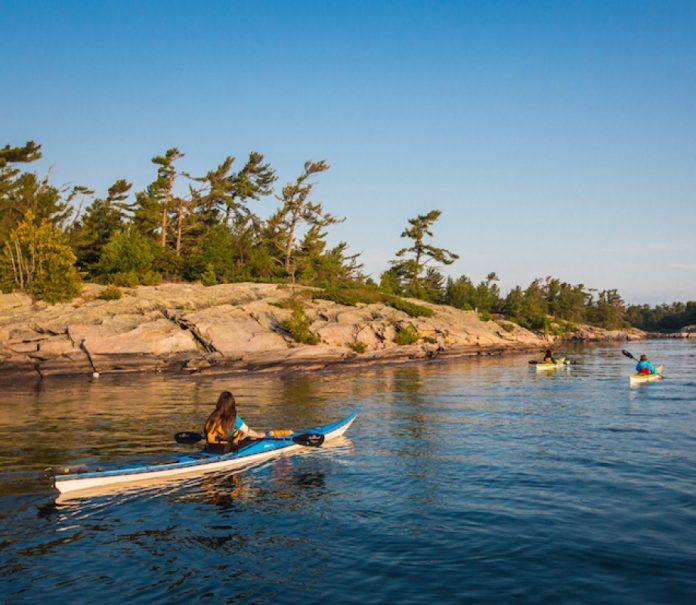
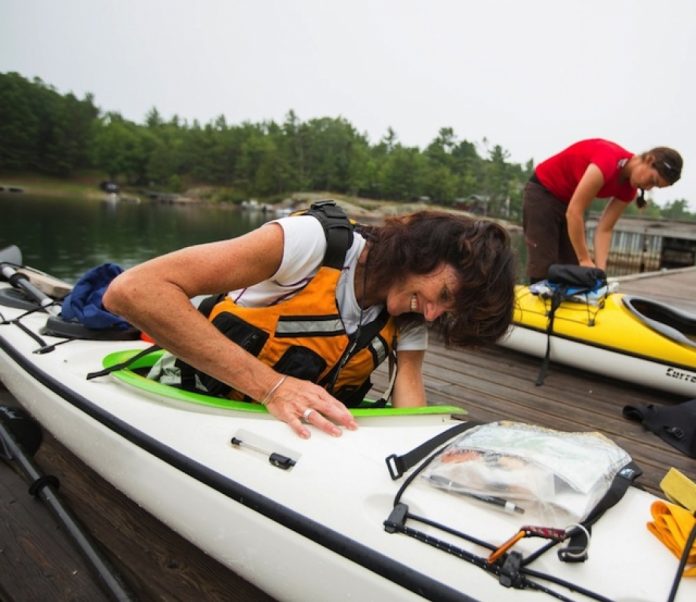
Two sea kayakers make adjustments in the cockpits of their sea kayakers.

So you’ve found your dream kayak, but a few details still need tweaking. There are countless ways to personalize your kayak—some some fast and easy, some more involved and complex. As you start playing with drills and epoxy, just don’t forget basic requirements like flotation and water-tightness. If in doubt, consult an expert before you do anything drastic. Here are 12 ways, some practical, some purely hedonistic, to soup up your ride.

Keel strip

There’s a reason you’ll see a keel strip on many experienced paddlers’ kayaks—it’s simple yet effective. This extra layer of fibreglass or plastic tape will help protect your boat and let you focus on playing hard.

Customized seat

Paddling is infinitely better with the right seat. If your seat isn’t working for you (e.g. your legs go numb quickly), try small modifications like high density foam under your bottom or install a different seat. Keep in mind that a well-formed yet simple seat can be more comfortable than an overly padded bulky seat which may limit your movement and can hinder good paddling posture.

Custom padding

A well-fitting boat is essential for more advanced strokes and maneuvers that require edging, good boat control and full body engagement. If you find that your boat is a bit too wide or loose, add foam blocks or wedges (handcarved or purchased) to ensure that your hips make contact with the boat.

{loadposition PBG_AK_Midcontent}

Heel pads

If you often paddle barefoot, make your life more comfy by adding a thin layer of high density foam to the bottom of the boat where your heels rest. Make your own or purchase a set.

Underdeck bungees

Keep your deck and cockpit clutter free. Rig up a storage system under your deck for items you want out of the way, but easily accessible, like pumps and flares.

Bulkhead

If you’re up for some major boat renovations, you can move your front bulkhead back to allow for more dry storage space. Unless you are very capable with boat repairs, it’s best to leave this in expert hands, or request this modification when you first order your boat.

Paddle park

Add some spare bungee and a clip within easy reach on your deck, and voila, you have a place to park your paddle!

Beads

Hand-carved beads are traditionally part of the deck rigging on many Greenland boats. This small and easy modification allows you to more easily stick your paddle (or harpoon) under the deck rigging or makes it easier to grab a hold of your boat during self-rescues.

Reflective tape

Trim your boat and paddle with reflective tape for added visibility during night paddles and foggy conditions. If you’re really into sticking stuff on your boat, there are lots of decals and designs out there to give your boat some added flair.

Cup holder

Rig up a cup holder on your deck, it’s the ultimate extra for caffeine-loving paddlers.

{loadposition PTG_AK_Midcontent}
Results: The Worlds at Garb

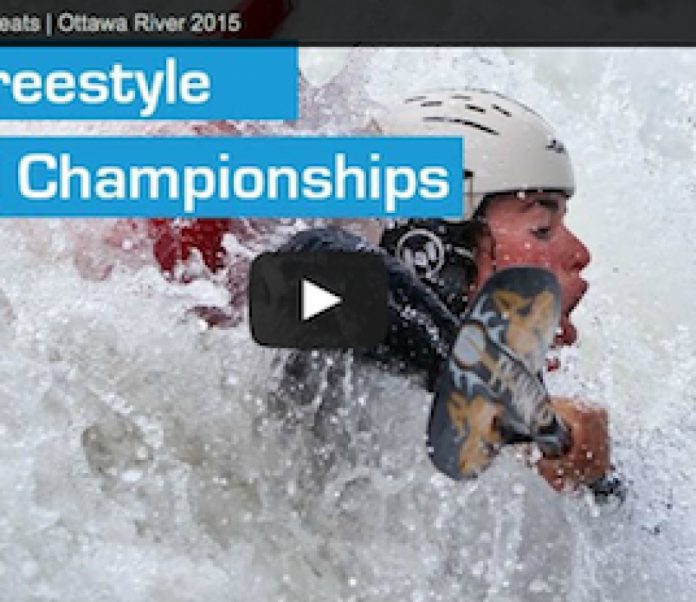
Re-watch the final rounds here. Photos: Scott MacGregor

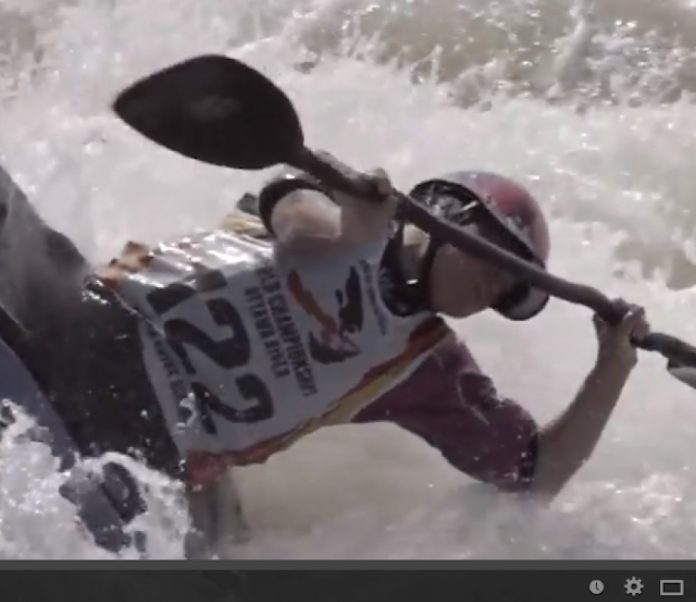
The last two days of competition provided high tension and excitement – and also doled out crushing heartbreak and triumph to some of the world’s best freestyle athletes, proving that on Garburator, anything can happen.

In Men’s OC1 Finals, more impressive aerial moves were laid down, and the crowd was exuberant as the men took to the wave. Andy Hill (CAN) claimed the first gold medal of the day after an incredible third ride, where he landed a flashback, blunts, and a massive pistol flip, earning him 281.67 points. Coming in almost 100 points behind Hill was Dane Jackson (USA) with 190 points, and Brad McMillan (USA) claimed bronze with a 70 point ride, pushing former champion Jordan Poffenberger (USA) into fourth place and off the podium.

In Junior Women’s finals, Sage Donnelly (USA) dominated the competition, posting a best score of 588.33—a score that would have topped the podium in Senior Women’s K1 division. Coming in second was teammate Darby McAdams with 203.33, followed closely by Sophie McPeak (GBR) with 71.67.


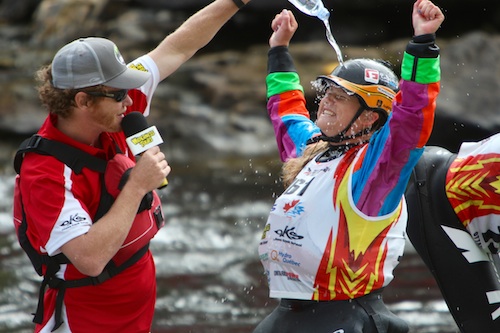
Junior Women's champion, Sage Donnelly, celebrates after her first place finish on Garburator at the ICF World Freestyle Kayak Championships.

Junior Women’s champion, Sage Donnelly, celebrates after her first place finish on Garburator at the ICF World Freestyle Kayak Championships.

Junior Men’s K1 saw some high scoring rides with a heavy presence from Great Britain. Topping the podium was Hugo Anthony (GBR) with an impressive 781.67, followed by Alec Vorhees (USA) with 676.67, and clinching the bronze medal was Scott Hugo (GBR) with 593.33.

Competition for women’s K1 semi-final was intense

The Men’s C1 division saw Dane Jackson on top of his game, throwing an impressive 863.33 points on the board in his third run, securing the top spot. In second place was Seth Chapelle (USA) with 565 points and in third was 20-year old Zach Zwanenburg (CAN) with 528.33 points. Poffenberger (USA) was again pushed out of the running for a medal in this category, posting a best score of 505 points.

Women’s K1 semi-final was easily one of the exciting and stressful rounds of the entire competition, with early favourite Adriene Levknecht (USA) flushing on both of her rides, which pushed her into 9th place and out of the running for finals. Emily Ward (GBR) topped the podium with a 320 point score. Going into the top five after her were Emily Jackson (USA), Claire O’Hara (GBR), Hitomi Takaku (JPN) and Katya Kulkova (RUS). The competition was tough on Saturday as the top five women took to the wave, but Jackson’s experience with competition paid off, and she took the top spot with a score of 448.33. 

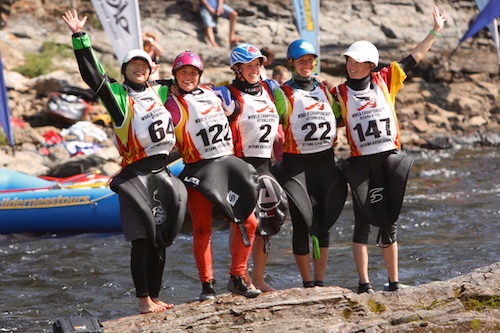
The top five women's K1 finishers at the ICF World Freestyle Kayak Championships. From left to right: Hitomi Takaku, Emily Jackson, Claire O'Hara, Katya Kulkova, and Emily Ward.

The top five women’s K1 finishers at the ICF World Freestyle Kayak Championships. From left to right: Hitomi Takaku, Emily Jackson, Claire O’Hara, Katya Kulkova, and Emily Ward. 


Very close scores at the ICF World Freestyle Kayak Championships

In Men’s quarter finals on Friday, the field was cut from 20 to 10, and later that day the same group of men were culled from 10 to the top 5. Scores were incredibly close, with the top five posting scores between 1100 and 1500 points. In the end, moving onto Saturday’s final were Dane Jackson (USA), Nick Troutman (CAN), Bren Orton (GBR), Joaquim Fontane Maso (SPN) and Mathieu Dumoulin (FRA). The final proved to be a nail biter, with early favourite Orton flushing on one of his rides, and posting a highest score of 876.67 points, which wasn’t enough to break into the top three. Troutman had the hometown crowd’s attention, but struggled to post high scoring rides on his first two rides before coming back with a vengeance for the bronze medal, posting a score of 1170 before losing his paddle in the foam pile and hand paddling downstream. In the end, brother-in-law Dane Jackson added to his medal collection with a gold medal ride with an incredible 1653.33 points, followed by Dumoulin with 1420 points.

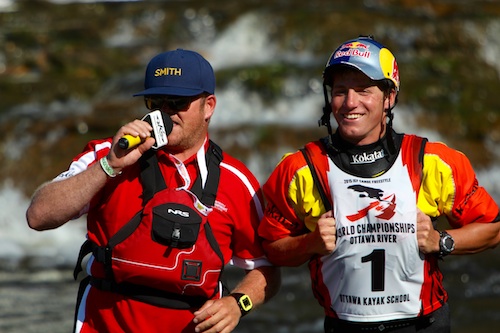
Matt Hamilton announcing live with Dane Jackson, the Men's K1 winner of the ICF World Freestyle Kayak Championships.

Matt Hamilton announcing live with Dane Jackson, the Men’s K1 winner of the ICF World Freestyle Kayak Championships. 

This year’s world freestyle event was one for the books, with plenty of drama, great weather and perfect water levels. The event truly captured the spirit of the paddling community as a whole—coming together to celebrate life, whitewater and paddling with friends from around the world. Truly, a world-class event on a world-class feature, accompanied by an epic after party.

More Photos

Emily Jackson, K1 Women's top place finisher on Garb at the ICF World Freestyle Kayak Championships.

Emily Jackson, K1 Women’s top place finisher on Garb at the ICF World Freestyle Kayak Championships.


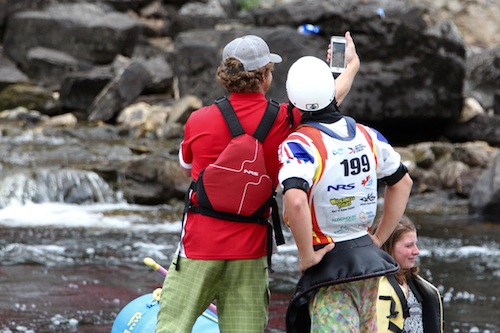
Anthony Hugo, the winner of the Junior Men's Finals, selfies on the shore of the Ottawa River at Garb during the ICF World Freestyle Kaak Championship.

Anthony Hugo, the winner of the Junior Men’s Finals, selfies on the shore of the Ottawa River at Garb during the ICF World Freestyle Kayak Championship.

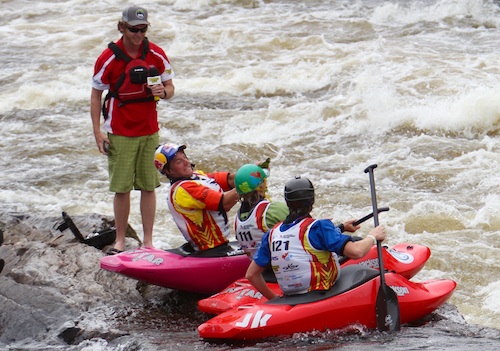
Dane Jackson celebrates with Zachery Zwanenburg and Seth Chapelle following a top three finish in the C1 division at the ICF World Freestyle Kayak Championships.

Dane Jackson celebrates with Zachery Zwanenburg and Seth Chapelle following a top three finish in the C1 division at the ICF World Freestyle Kayak Championships. 

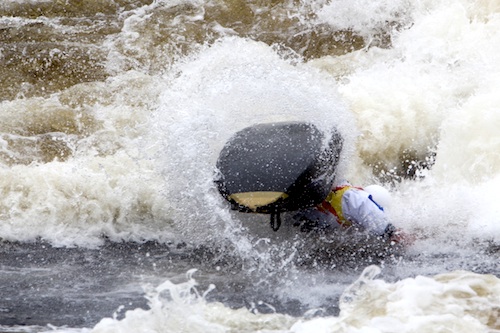
Anthony Hugo, winner of the Junior Men's divison, on Garb at the ICF World Freestyle Kayak Championship.

Anthony Hugo, winner of the Junior Men’s divison, on Garb at the ICF World Freestyle Kayak Championship. 

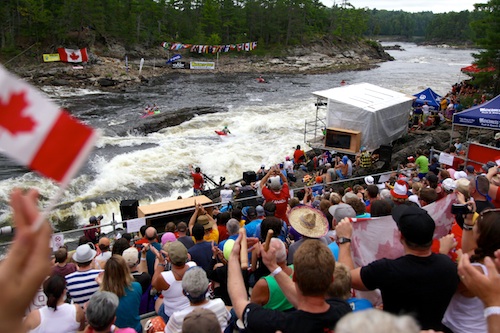
The scene at the Lorne on the Ottawa River at the ICF World Freestyle Kayak Championships.

The scene at the Lorne on the Ottawa River at the ICF World Freestyle Kayak Championships. 

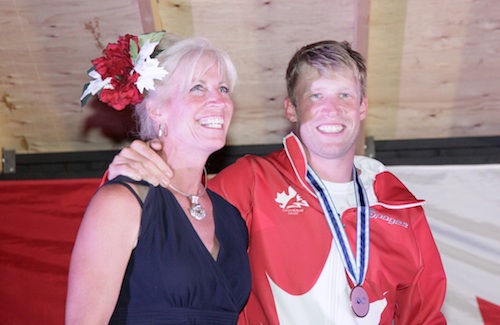
Nick_Troutman_and_Mom.jpg

Nick Troutman, who placed third in Men’s K1, celebrates a podium finish his mom, an avid supporter and volunteer, at the ICF World Freestyle Kayak Championship.


5 Easy Weekend Loops

Destinations: 5 Easy Weekend Loops | Photo courtesy Ontario Tourism

SATURNA ISLAND

This gem in British Columbia’s idyllic southern Gulf Islands boasts spectacularly eroded sandstone cliffs, nimble-footed feral goats, seal haul-outs and the longest stretch of untouched coastline in Gulf Islands National Park Reserve. Make the 35-kilometer circumnavigation in two days and camp at one of the five national park sites on tiny, neighboring Cabbage Island. pc.gc.ca/gulf

SPARKS LAKE

The best time to wind your way around this 370-acre lake in central Oregon’s Deschutes National Forest is early summer, when snow still caps the surrounding 10,000-foot summits, and meltwater keeps the lake at a perfect level for exploring its many wildflower- filled cracks and crannies. Head south from the launch area to find curious volcanic islets, wilderness campsites and trout-filled waters. fs.usda.gov/deschutes

FATHOM FIVE

This National Marine Conservation Area lies at the tip of Ontario’s Bruce Peninsula, where the sparkling green waters of Georgian Bay meet the depths of Lake Huron. Cross 6.5 kilometers from Tobermory village to Flowerpot Island, then circle around it (6.5 kilometers) to see the historic lightstation and twin limestone sea stacks that give the island its name. Spend the night at a paddle-in campsite in Beachy Cove. pc.gc.ca/fathomfive

Destinations: 5 Easy Weekend Loops | Photo courtesy Ontario Tourism

TEN THOUSAND ISLANDS

Southeast of Marco Island, Florida’s Rookery Bay is embroidered with a seemingly infinite number of keys, islets and mangrove channels, making it quite possible to tour this national wildlife refuge and never take the same route twice. For a relaxing weekend in this watery maze, travel inside the islands from Goodland to Cape Romano campsite (seven miles), then return via Kice Island’s Gulf side (10 miles). paradisecoastblueway.com

ANTELOPE ISLAND

Save a tour around Lake Powell’s largest island for September, when fewer powerboats means less competition for prime beach campsites and calmer waters through the steep-walled Antelope Narrows. Launch at Antelope Point just south of the Arizona/ Utah state line and enjoy views of towering Castle Rock on this 18-mile circumnavigation. Don’t miss a side trip into the swirling sandstone splendor of Antelope slot canyon. nps.gov/glca


Screen_Shot_2015-06-15_at_3.44.39_PM.pngThis article first appeared in the Early Summer 2015 issue of Adventure Kayak magazine. 
Subscribe to Paddling Magazine and get 25 years of digital magazine archives including our legacy titles: Rapid, Adventure Kayak and Canoeroots.

Crossover Shootout: Examining Whitewater’s Newest Category

Crossover Shootout: Examining Whitewater's Newest Category | Photo: Rapid Staff

The term crossover is confusing. What are we crossing over, anyway? Even the heads of marketing at the leading whitewater brands seem to define this emerging category of whitewater kayaks in different ways. Some don’t put them in the whitewater category at all. If they can’t agree, imagine how confused a consumer wandering into a local shop might be. Or maybe they’re not confused at all. Maybe this category of whitewater inbetweeners makes perfect sense.

So, I’m standing there in the Rapid Media booth at Rutabaga’s Canoecopia show in Madison, Wisconsin. Behind me is a wall of magazines. Lots of magazines. We have all the latest issues of Rapid, Adventure Kayak, Canoeroots and Kayak Angler. I like to play this little game where I stand off to the side and creep passersbys as they browse the rack. I try to guess which of our titles they will pick up. When they don’t pick an obvious favorite, I get anxious and quickly move in with probing questions before they shuffle along to the booth selling beer nuts.

“What type of paddling do you do?” I like to start pretty general; I assume if they are here at the show this one should be easy.

“Well…[long pause]” is an unfortunately common non-answer.

I press on.

“Do a lot of canoeing, maybe?”

“I used to when I was a kid, but now I’m doing more kayaking. Hard on my knees, you know. I still do a few weekend trips every year.”

“Are you into whitewater?”

“Oh no! Look at me. Do I look like I’d paddle over waterfalls?”

Not sure. What does a guy who paddles over waterfalls look like, exactly? I decide to save that one for another day.

“My buddies and I do float a few easy flowing rivers with some bumpy rapids.”

Perfect.

“Do you have sea kayaks?” I ask reaching for a copy of Adventure Kayak.

“Chicago’s a long way from the ocean.”

“Right.” I put Adventure Kayak back on the shelf. “I do play in the waves in Lake Michigan.”

Really.

They must have been playing the same game in the Dagger, Jackson, Pyranha and Wave Sport booths. And those guys were keeping score.

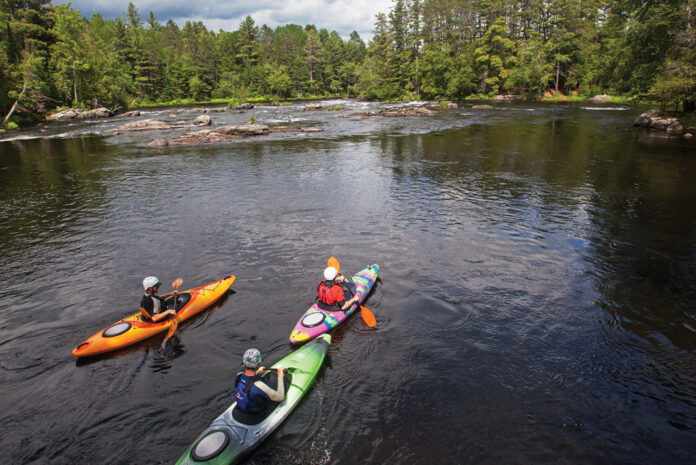
After weeks of exploring and testing in various conditions, we found that each of the four whitewater brands [Liquidlogic Kayaks declined our invitations to participate] came at this whole crossover thing from a slightly different angle. No question, all the boats are around nine or 10 feet long and they all have some configuration of deck rigging, skeg and stern bulkhead, compartment and hatch. The similarities however end there. They truly are quite different boats.

We ran them all down the same sections of rivers, across the same windy lakes and humped them over the same rooty and rocky portage trails. This was unlike any previous kayak shootouts we’ve done here at Rapid. This time we were both evaluating the boats, and defining this relatively new category. What do we have to say about the crossover category? One word: freedom.

There is a group, perhaps even the largest group, of paddlers looking for kayaks that allow them the freedom to do whatever they hell they want. Float. Drop. Roll. Surf. Overnight. Whatever.

Don’t be fooled by the mass appeal of these crossovers, all of them are legit whitewater kayaks with all the research and development of creeking, river running and freestyle rolled into one bigger-than- average package. I predict that in a few years, all whitewater boaters will own one. If you already have a creeker and you already have a play boat, crossovers are perfect river runners with a trunk.

We expect to see even more new models for 2016. I predict there will be cross over crossovers. Dagger has already released a larger volume, less aggressive sit-on- top called the Roam, as in freedom to Roam. Last year, Jackson introduced the Karma RG for playing in ocean rock gardens, crossing up sea kayaks with whitewater playboats. Pyranha has the Fusion SOT, creating a true whitewater sit-on-top crossover category.

Where are crossovers going? I don’t know for sure. Probably everywhere. 


Screen_Shot_2015-07-07_at_3.09.09_PM.png

This article first appeared in the Fall 2015 issue of Rapid Magazine.

Subscribe to Paddling Magazine and get 25 years of digital magazine archives including our legacy titles: Rapid, Adventure Kayak and Canoeroots.

Partner Wanted: Frank Wolf Teams Up With First-Time Tripper

The First-Timer's Canoe Expedition | Photo: Frank Wolf

On an unmarked 1,350-kilometer canoe route through rushing rivers, ravenous mosquitos and tortuous muskeg, veteran expedition paddler Frank Wolf took the plunge to team up with a canoe trip first-timer. Here’s what the unlikely duo learned along the way.

Canoe trip pickings have been thin for me recently. By thin I don’t mean I have trouble dreaming up new trips—my problem is that my once-trusty tripping partners are being sideswiped by real-life responsibilities: kids, jobs and mortgages. They’ve moved on while I can’t shake my expedition addiction.

Last summer, with a route mapped and time to find a partner running out, I settled on Rob Hart, a relative youth at 30 and a regular mountain biking companion. The only problem? He’d never been on a canoe trip.

Frank Wolf teams up with first-time canoe tripper

What was it Matthew McConaughey says in Dazed and Confused? “The thing I like about tripping partners is that I keep getting older, but my tripping partners stay the same age.” Something like that.

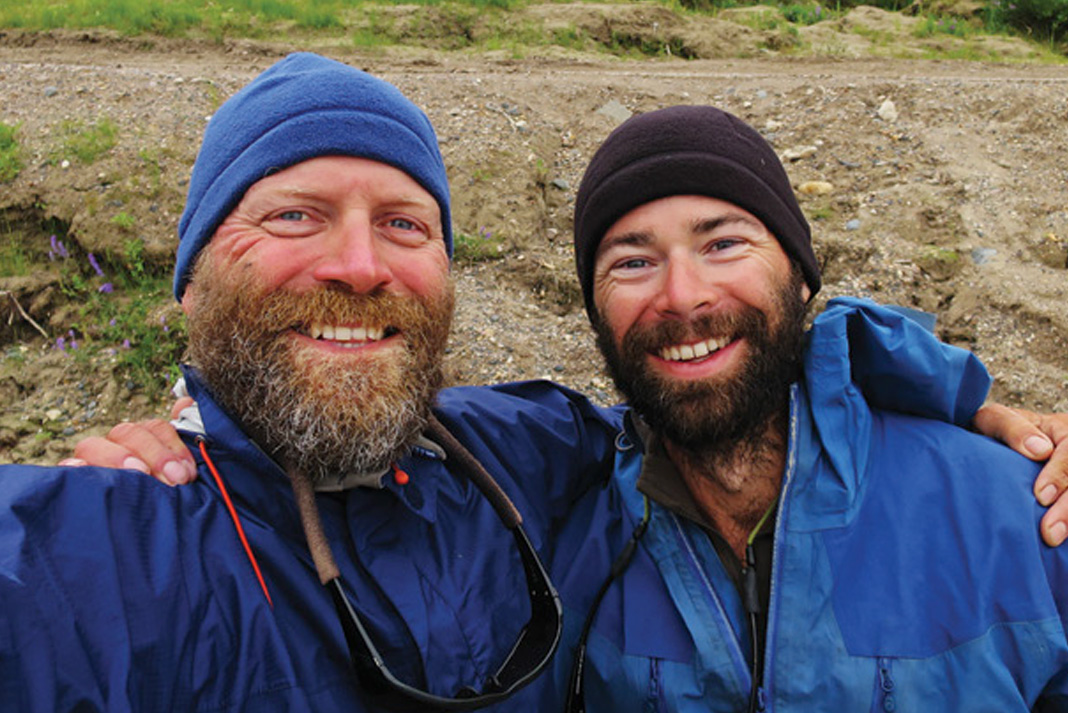
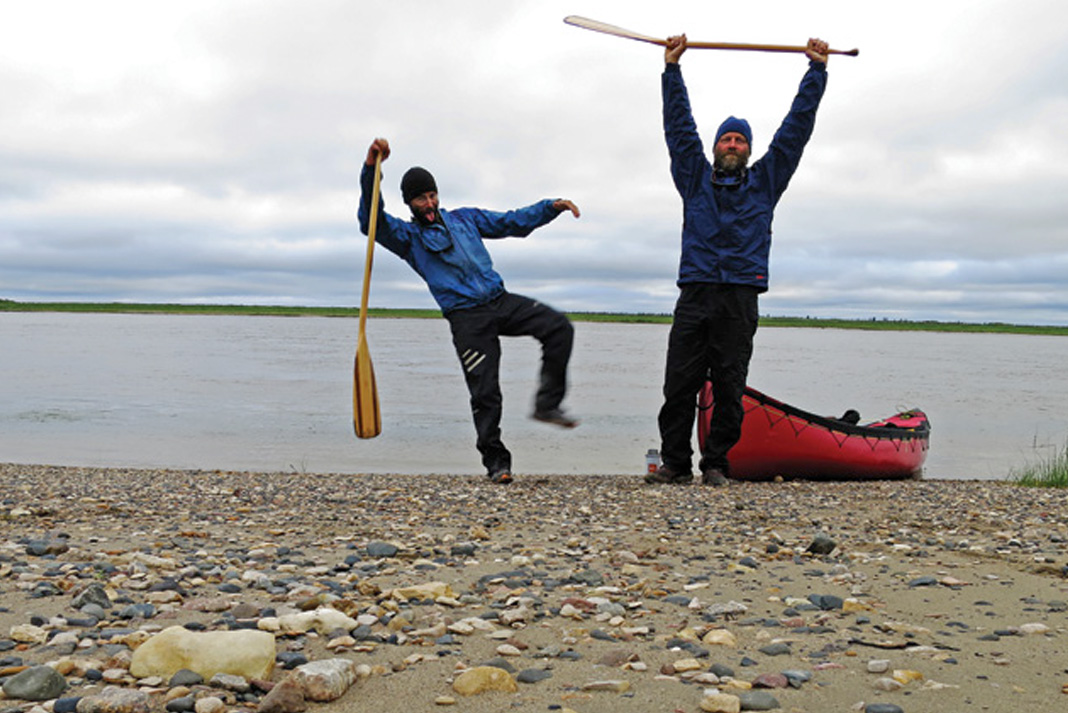
Frank Wolf and Rob Hart pose on their canoe expedition
Wolf and Hart share good humor and 26-day beards. | Photo: Frank Wolf

A British Columbia boy born and raised in the remote mountain community of Tatla Lake, Rob grew up amongst a scattering of homesteads in the bush. Though he’d never been on a canoe trip before, he was familiar with the woods of the North Chilcotin range. By age seven he was in charge of chopping wood and keeping the woodstove stoked in his parents’ small cabin.

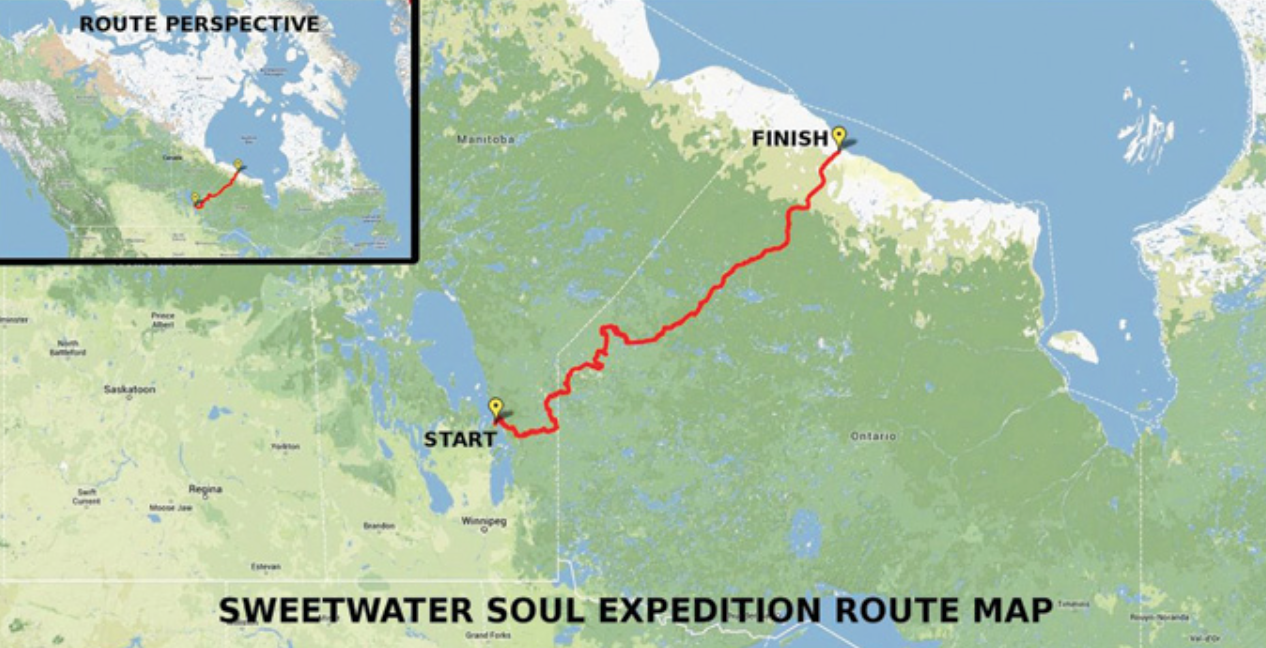
Living on the land creates an innate connection with the rhythm of nature. Paddling strokes and navigation skills can be taught, but being comfortable moving through vast wilderness is an asset you don’t find every day. Plus, Rob was keen and I was desperate. I needed a partner if I was to complete the 1,350-kilometer expedition from Lake Winnipeg to Hudson Bay in 26 days.

expedition map of Frank Wolf and Rob Hart's 26-day canoe trip

Plenty of lessons left to learn

Even I recognized this was a stiff test for a first-timer, and had pre-trip doubts about the decision. As it turned out, in many ways, I was to become the student.

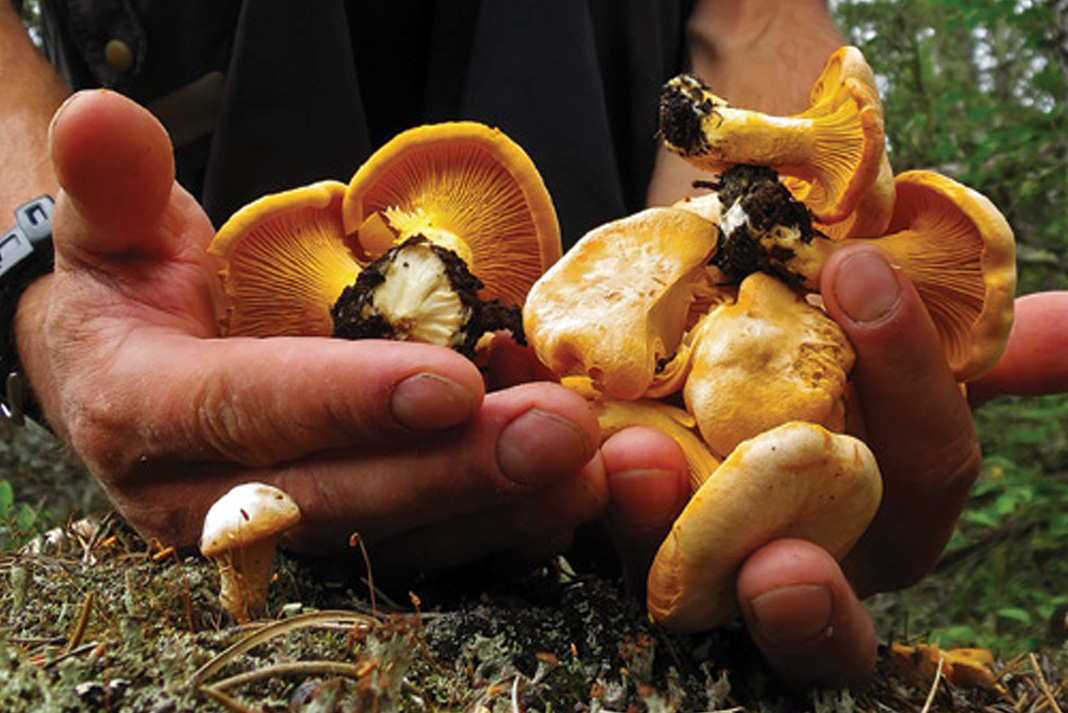
A couple days into the trip we came upon a hearty clump of orange-yellow colored mushrooms along the riverbank. Rob stepped out of the canoe and crouched down to inspect them.

“These are chanterelles,” he told me.

“Really? You sure they’re not poisonous?” I asked.

“I pick the same ones back home every fall.”

I’ve walked by these delectable morsels countless times during thousands of canoe tripping kilometers in the Boreal, but it took Rob’s keen eye and curiosity with forest edibles to make me see them in a different light. In the past, the threat of mistakenly eating toxic wild mushrooms had made me steer clear of them, but the scrumptious addition to our bland freeze-dried food that night turned Rob into the hero of the day.

It was just one of many moments where Rob had me seeing things from a different perspective: Under a hot sun we dragged our canoe through swampy shallows in a thicket of cattails. When the canoe lurched to a stop I looked back to find Rob knee deep in swamp water, cutting a stalk of one of the cattails and stripping it down to its core. He snapped me off a piece. It tasted like a combination of carrot and celery—a refreshing and unexpected bog snack. Suddenly, cattails were more than something just to grind through; they were sustenance.

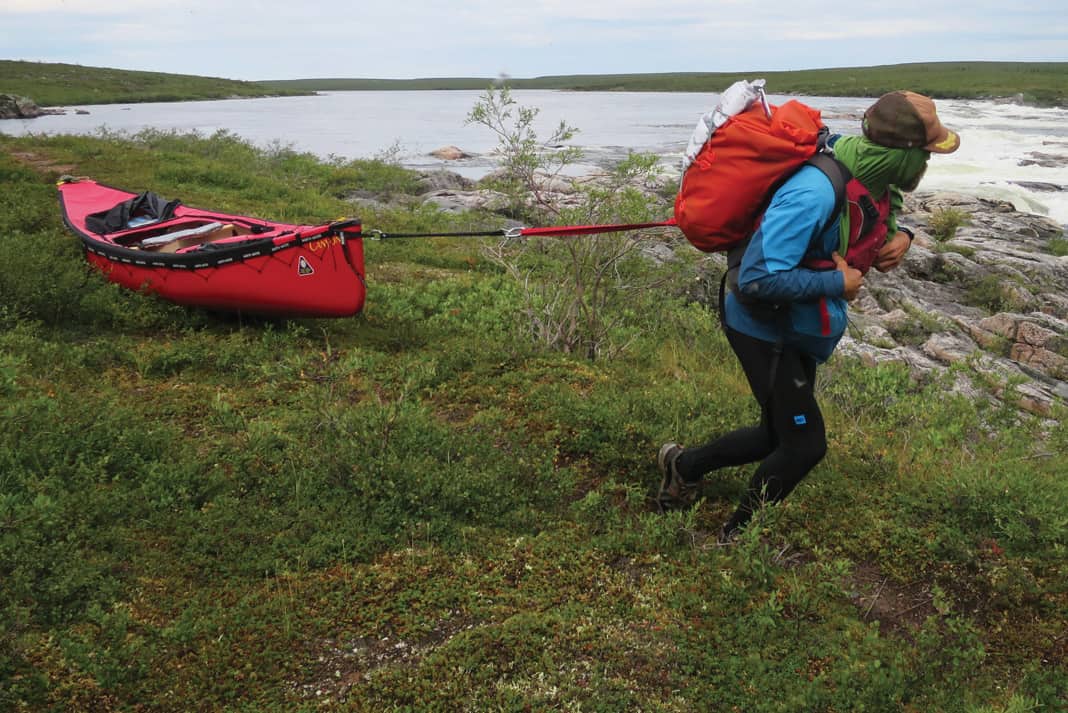
man pulls canoe along backcountry river
Grinding upstream. | Photo: Frank Wolf

Another time, fishing off an island on the Black Birch River, Rob pointed out some algae-like sacs attached to the rock underwater, billowing in the current. This underwater windsock was something I’d often paddled past, but never considered. Rob turned one inside out to show me the larvae of the trumpet-net caddisfly.

His wide-eyed curiosity was showing me something fresh in an environment I thought I knew so well. And the eight days we’d just spent grinding upstream on the Bloodvein River? Rob just breezed through it like he was sipping a Mai Thai at the Royal Hawaiian on Waikiki Beach.

…And some lessons to teach, too

Not to say Rob didn’t have his learning moments. The one thing they don’t have out West are the billions and billions of bloodthirsty mosquitoes that rise from the muskeg at dusk for their nightly feed.

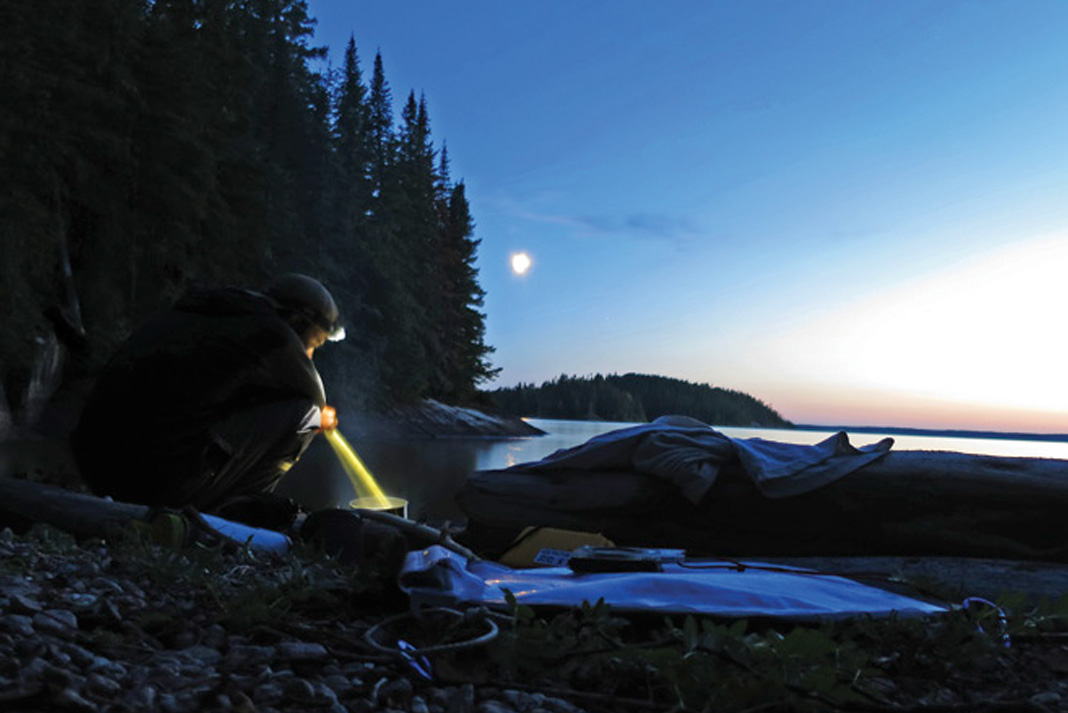
man stands outside tent at a canoe tripping campsite in a boreal forest
Boreal forest living. | Photo: Frank Wolf

Our second night, Rob decided he’d go outside for a pee at 2 a.m. He was abruptly mugged by thousands of the beasties, who then followed him as he dove back inside the tent to escape the onslaught.

Brutally awakened, I joined in the slaughter of the ‘skitters until peace returned. For Rob, the experience was like a kid putting his finger on a hot stove for the first time—he’d only ever do it once. He made sure he had a pee bottle handy inside the tent from that point on.

By the end of the trip, Rob had picked up the paddling skills and general river savvy that comes with time on the water, while my mind had been enriched by fresh observations of the Boreal wilderness. After two decades of expedition paddling, for the first time I was learning to pause my lust for kilometers and achieve a new level of intimacy with the wilderness.

A fitting reward in the end

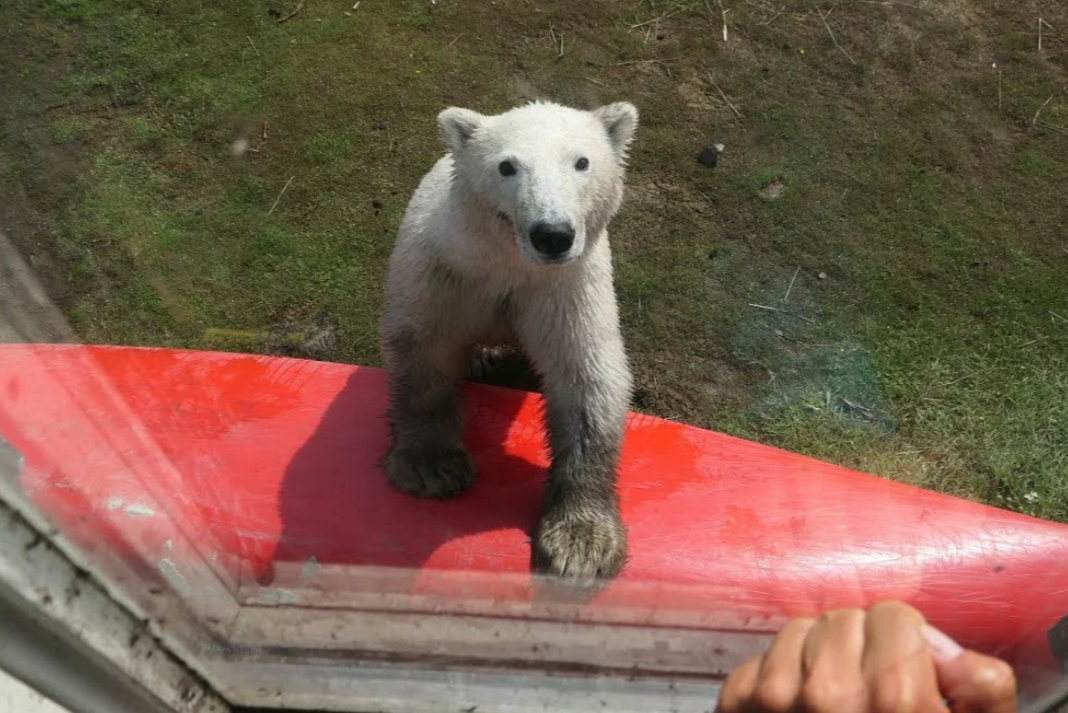
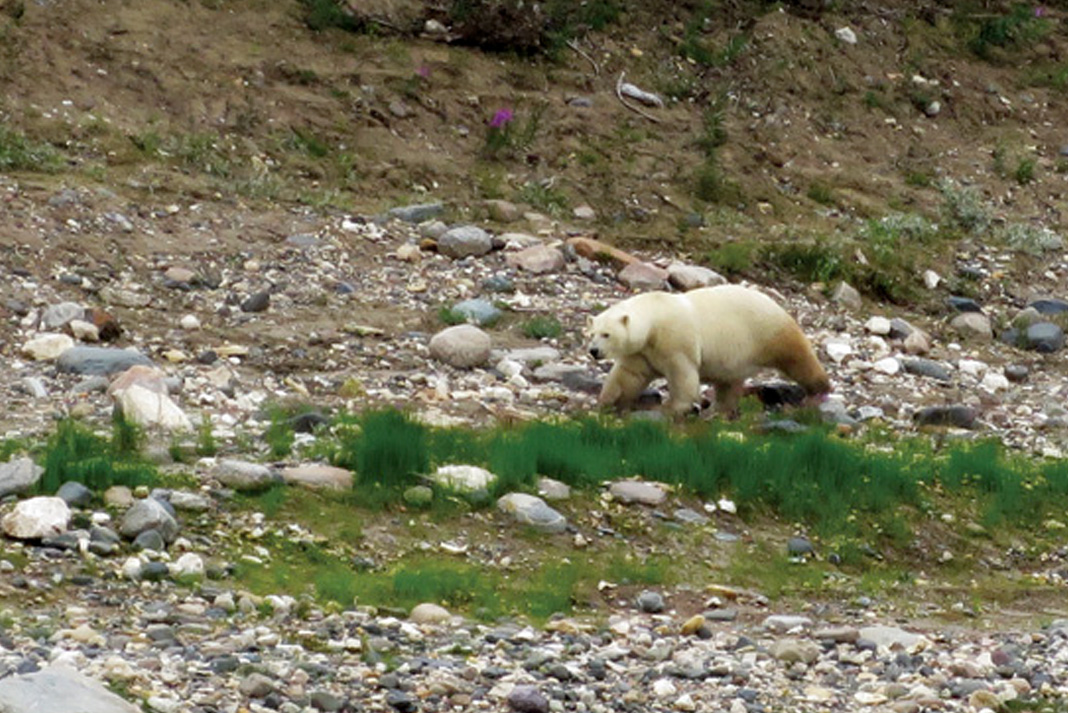
Twenty kilometers from our finish at Fort Severn, we spotted a polar bear lumbering along the shore toward us. We stopped paddling and drifted slowly by it, stunned and delighted by the surprise sighting. It paused, looked at us, yawned, and then moved on.

The bear was a perfect, awe-inspiring reward for Rob—an experiential Stanley Cup he could hoist to mark the passage from newbie to veteran tripper over the course of 26 glorious days.

Another summer is rolling in as I write this. Predictably, Rob got a steady job and can’t go with me this year. However, since it worked out so well with him, I’m pretty open now to another fresh-faced partner. Any takers?

Frank Wolf is a Canadian filmmaker, adventurer, writer and environmentalist. Visit him at fwolf.ca

Cover of Canoe Magazine Fall 2015 issueThis article was first published in the Fall 2015 issue of Canoeroots Magazine. Subscribe to Paddling Magazine’s print and digital editions, or browse the archives.


Feature photo: Frank Wolf


We Sit Down With Justine Curgenven, The Filmmaker Behind This is the Sea Series

In celebration of the 10th anniversary of the Reel Paddling Film Festival, we checked back with a few filmmakers whose films we’ve featured over the past ten years. You can find more stories on past filmmakers in the pages of our Early Summer issue to catch up with them and find out what they’ve been up to since their films embarked on our annual world tour. 

This is the Sea 1-5

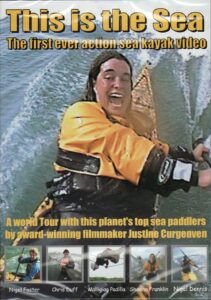
Exotic expeditions, talented paddlers and plenty of rough water, This is the Sea pioneered the action sea kayaking genre. If you’ve never seen these feature-length films, pick up the box set. A quintessential series for sea kayaking junkies—enough said. 2004–2013; cackletv.com

BUY ON AMAZON


Before there was GoPro, YouTube or the Reel Paddling Film Festival, there was Justine Curgenven.

In 2004, This is the Sea redefined sea kayaking as an action-packed adventure sport, and established Curgenven as a sassy up-and-comer. (Remember the film’s opening scenes? Curgenven and her all-female crew surf into sight wearing bikinis and fake beards—an irreverent, pass-the-torch-pretty-please nod to ocean kayaking’s crusty, male-dominated image.)

By bringing rough water paddling and remote trips to the attention of mainstream sea kayakers, Curgenven’s debut DVD led some admirers to dub her the “Warren Miller of sea kayaking.”

“It’s nice to think I’ve been a catalyst for people believing in their dreams,” she says.

Led by little more than a positive attitude and a love of kayaking and exploring, at age 23 Curgenven left a fledgling career as a TV news reporter to pursue her own dream. After several years writing to TV companies with ideas, she found herself running out of funds and steam. “I was tired of using all my energy failing to convince TV commissioners to give me a chance to make a film,” she recalls. “I figured if I filmed well-known sea kayakers and good stories, it would sell.”

Driven by a desire to show kayaking in a new light, Curgenven sourced equip- ment that could get in-your-face action cam shots four years before GoPro did the same. “It was cumbersome and broke down a lot but it gave groundbreaking angles,” she says of the contraption.

The film’s timing was perfect. In the 11 years since, Curgenven has produced four This is the Sea sequels, completed expeditions (and films) in New Zealand, Kamchatka, Patagonia and Alaska to name just a few, and made forays into paddling with a single blade for This is Canoeing (2010) and Greenland-style for This is the Roll (2012). She’s also swept the field with six category wins at the Reel Paddling Film Festival and screened a total of 10 films on the World Tour, making her without any overstatement the most prolific sea kayak filmmaker ever.

“I feel really lucky that these films have allowed me to make a living doing exactly what I want to do,” Curgenven says. “I work harder than I would if I had a regular job, but it’s given me the opportunity to go on any personal trip that I could dream up and meet some really interesting characters.”

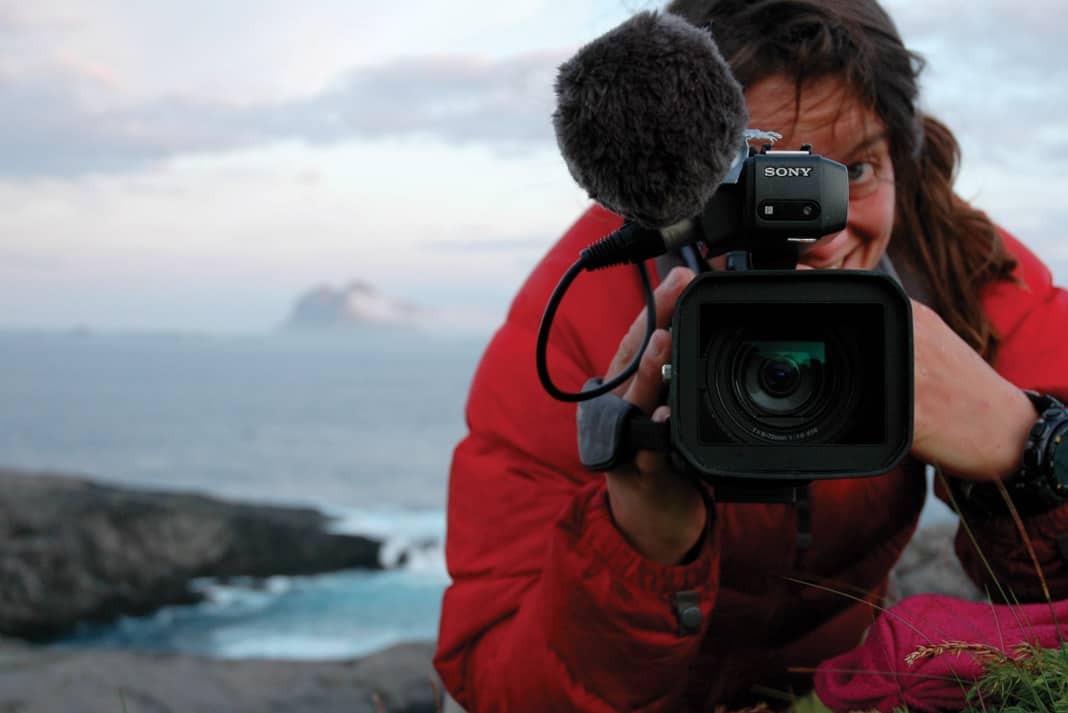
Justine Curgenven filming a whitewater kayaking movie
Paparazzi in gore-tex. | Feature Photo: Justine Curgenven

Most recently, she joined Sarah Outen for the final sea kayaking leg of Outen’s round-the-world expedition—a 2,500-kilometer epic along the fantastically re- mote and stormy Aleutian Islands. That odyssey became the foundation for Curgenven’s new film, Kayaking the Aleutians.

With so many miles behind the lens, there have been times when her enthusi- asm for filming has waned. On the theory that sometimes a change is as good as rest, she brushed up on new skills for This is Canoeing. “The chance to go on a 13-day trip down the Mountain River in the Northwest Territories did wonders for my work ethic,” she laughs.

Ever perceptive of the vagaries of her market, Curgenven says she doesn’t see another This is the Sea DVD in the future. Because of the explosion of social  media and free online content, “a new title today sells less than half the number of DVDs as a title 10 years ago,” she notes. For this reason, her next projects will be instructional films, which currently enjoy higher sales: This is the Roll 2 and a guide for planning your own multi-day trips and expeditions.

“Things change quickly,” she says, “I have to change with the times to keep making my living this way.”


Screen_Shot_2015-06-15_at_3.44.39_PM.pngThis article first appeared in the Early Summer 2015 issue of Adventure Kayak magazine. 
Subscribe to Paddling Magazine and get 25 years of digital magazine archives including our legacy titles: Rapid, Adventure Kayak and Canoeroots.

The Worlds at Garb

The Worlds at Garb

Day two of the ICF World Freestyle Championship was an exciting day, with Men’s OC1 opening the day in what some were calling the most exciting display of OC1 paddling they have ever seen.

Jordan Poffenberger (USA), Dane Jackson (USA) blew everyone away, with Poffenberger scoring 386.66 points and Jackson with 306.66 points. Not far behind were Brad MacMillan (USA) and Andrew Hill (CAN) who tied for third place with 250 points, but McMillan narrowly pulled ahead as one of his rides scored slightly higher than Hill’s. Rounding out the top five to advance to Saturday’s final was Jonas Utenberg (GER), and special mention of the day goes to Jakob Hanoulle (BEL) for entering in the OC1 division at the last minute and getting the most epic face surf on Garb in a long boat.

In the Junior Women’s category, Sage Donnelly (USA) dominated the field with a score of 716 points— a score high enough to rank in with the senior women. Over 400 points behind her was Darby McAdams (USA) with 343 points, and Sophie McPeak (UK) with 218 points. The top 10 ladies will advance to the semi-finals which takes place Friday morning.

In the Junior Men’s K1 category, Scott Hugo (UK) took the top spot, with an impressive 1,378 points, followed by Alec Vorhees (USA) with 1,163 points and Ottawa River local Kalem Kenneday (CAN) with 1,110 points. The top 10 from this group also advance to semi-final on Friday afternoon.

In what is some consider the most exciting event of the competition, Men’s K1 premliminaries took to the water on Wednesday morning for an action-packed day. Leading the scoreboard early on with the score to beat was Bren Orton (UK) with an impressive 2,290 points, which set the bar extremely high for all the athletes. By the end of the day, Dane Jackson (USA) came out on top, with a stunning display of athleticism and finesse, earning him a whopping 3,113 point ride.

Hot on his heels was local hero, Nick Troutman (CAN) with 2,626 points. Troutman, hailing from Beachburg, Ontario has in the area for some time spending his days at the wave.

“For some reason, I was nervous when I didn’t need to be,” says Troutman, “I have been training hard and paddling well, I guess it’s just some early nerves.” Taking the rest of the top five spots were Bren Orton with his initial score of 2,290, Mathieu Dumoulin (FRA) with 2,225 points and Devyn Scott (CAN) with 1,966.  All athletes from the Canadian team will advance to quarter finals on Friday, including Kalob Grady and Joel Kowalski who were immediately behind Scott, and Whitewater Grand Prix organizer Patrick Camblin, who ended in a respectable 15th.

When asked about who the biggest competition will be going into quarter-finals, it’s really no surprise, “Probably all the guys in the top 10,” says Troutman with a smile, “though honestly it is probably my brother-in-law Dane, he is always looking good.”

Thursday morning saw the women of whitewater take to Garb, with a field of 40, and only 10 will advance to the semi finals on Friday, followed by Men’s C1 in the afternoon. Stay tuned for more details.

How To Eat Fresh On Your Camping Trips

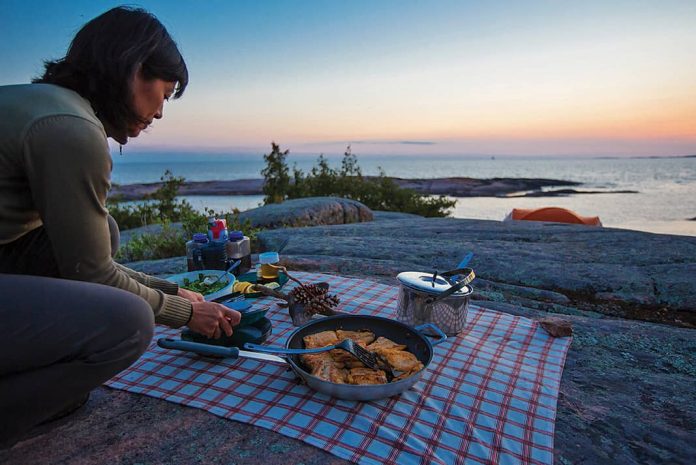
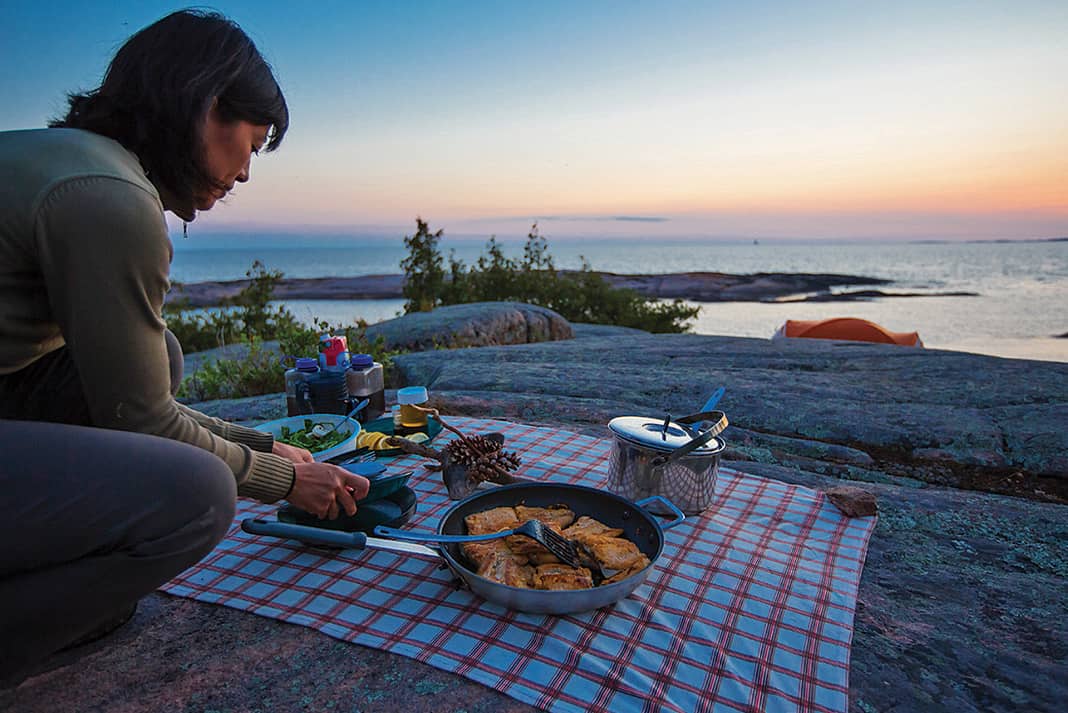
A camper prepares dinner on the rocky edge of a large body of water, late in the evening
A camper prepares dinner on the rocky edge of a large body of water, late in the evening. | Photo: Ontario Tourism

We’re not backpackers. Sure, bringing freshies on trip means portaging a few more pounds, but it’s a small price to pay to eat a peppercorn steak accompanied by a loaded, fire-roasted baked potato at the end of a long day. This is canoe tripping—live a little.

The downside of fresh food is its shorter shelf life. Summer temperatures and a squishy pack can leave your treats bruised, sweating or even rotten before you have a chance to enjoy them.

Regardless of which foods you bring, extend their life by following a few tried and true camp foodie rules.

A camper prepares dinner on the rocky edge of a large body of water, late in the evening
A camper prepares dinner on the rocky edge of a large body of water, late in the evening. | Photo: Ontario Tourism

How To Keep Food Fresh On Camping Trips

Paper Bag with Fruits
Pexels.com

Keep Food Dry

“Keep your food dry and allow airflow,” advises Wendy Grater, owner of Black Feather Outfitters and co-author of Camp Cooking in the Wild.

Tough veggies should be packed in paper bags, which allow for better breathing than plastic bags. Soft fruits and vegetables will need protection to avoid bruising. Pack them in hard-sided cooking pots and bowls.

Keep Food Cool

“Put a light-colored, wet towel on top of your food storage barrel or bin for cooling by evaporation,” adds Grater. She also recommends a light-colored pack for food that will help reflect the rays of the sun, or advises that paddlers line their barrel with cardboard to further insulate, and store food in the shade.

Buy Underripe Fruits and Vegetables

When shopping, opt for fruits and veggies that are underripe—they’ll ripen on route. Don’t wash or cut food until you’re ready to prepare the meal, as this increases the rate of spoilage. For meat lovers, freeze your fare unless you’re planning on eating it the first day.

11 Reasons to Kayak Now

Photo: Ontario Tourism
11 Reasons to Kayak Now

Just in case you’re looking for the perfect excuse to go paddling, here are some irrefutable arguments to suit any occasion.

  1. Paddling makes you healthier. With obesity levels and related illnesses on the rise in North America, getting out in your boat is clearly an essential part of a healthy active lifestyle.
  2. Paddling increases productivity. Ample evidence suggests that a brief nap at work increases productivity – but imagine how much more productive you’ll be after a quick lunchtime spin on the water. With more employers supporting gym memberships and active meetings, kayaking is a logical progression.
  3. Kayaking keeps you sane. No matter how crazy your day, spending time on the water helps reduce stress levels. The simple act of gliding across the water can be the perfect meditation to find inner peace.
  4. Build community. In a time where many aspects of society seem to foster isolation, paddling connects us with people. Whether chatting with a curious spectator on the beach, philosophizing with old friends or meeting new people, paddling has countless opportunities to make meaningful connections.
  5. Paddling promotes connection with nature. Author Richard Louv speaks of rampant ‘nature deficit’ in contemporary life. By getting connected with nature, paddlers are also more likely to care about protecting the environment.
  6. Keep your friends out of trouble. Who knows what your paddling buddies might get up to without you?! Your wise judgment and risk management skills are imperative to prevent further YouTube disasters.
  7. Escapism. No explanation needed.
  8. Keep an eye on things. Wondering what’s going on with that condo development by the waterfront? Curious about local yacht traffic? That new osprey nest? Kayaking gives us a unique perspective on what’s happening in the neighbourhood.
  9. Keep your gear in good working order. With all the time, effort and money we put into acquiring just the right paddling kit, it’d be a waste not to use it, right?
  10. Your boat feels lonely. If in doubt, anthropomorphise! That’s right, your boat feels really lonely because you haven’t taken it out in days, and it really needs some love.
  11. New perspectives. Kayaking can let us see familiar places from a completely new perspective. Beyond getting to know new and familiar places, paddling can also give us deeper insight into ourselves and others.

Interview With Filmmaker Bryan Smith

Where Are They Now: Filmmaker Bryan Smith
Where Are They Now: Filmmaker Bryan Smith | Feature photo: Phil Tifo

In celebration of the 10th anniversary of the Reel Paddling Film Festival, we checked back with a few filmmakers whose films we’ve featured over the past ten years. You can find more stories on past filmmakers in the pages of our Early Summer issue to catch up with them and find out what they’ve been up to since their films embarked on our annual world tour. 

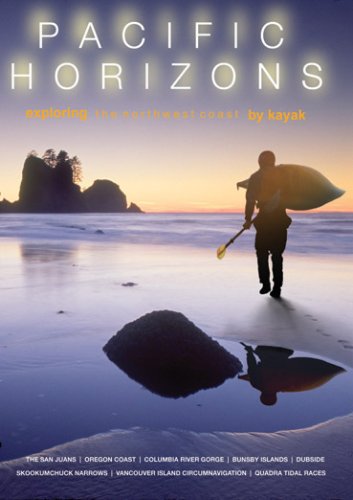
Pacific Horizons

Bryan Smith (Director)

Winner of the Best Sea Kayaking Film award at the Paddling Film Festival in 2008, this film is a celebration of the Pacific Northwest as the ultimate soul food for sea kayakers of all stripes. From surfing with rough water regulars to kayaking with orcas and rolling with “commando kayaker” Dubside, Bryan Smith establishes himself as a skilled cinematographer as he delves into the diverse pleasures that make this region a paddling paradise. 60 minutes, 2007; reelwaterproductions.com

BUY ON AMAZON

All it takes to kick off your dream career is a chance encounter or conversation with the right people, says Bryan Smith. That, and a pile of passion and hard work.

Smith should know, the documentary filmmaker and owner of Reel Water Productions has emerged from humble beginnings as an indie activist, to adventure cinematography’s go-to guy for the trickiest shots in the toughest locations.

Paddling the whitewater rivers of the Pacific Northwest every weekend, the Michigan transplant bought a cheap camera to document his adventures. When a proposed hydro project was green lighted for his beloved Ashlu River, “I didn’t know what else to do other than pick up the camera and start filming,” recalls Smith.

The resulting film, 49 Megawatts, went viral in British Columbia and became a showpiece for communities fighting their own run-of-river projects. “It showed me that if you do a good job making a film, you inspire people— whether it’s for a love of kayaking or a bigger issue.”

That was 2007. The following year, Smith sought sponsorship from Kokatat and P&H Sea Kayaks, bought a better camera and turned his lens on another passion: sea kayaking. Pacific Horizons featured the Pacific Northwest’s top kayaking ambassadors—including Smith’s own paddling mentors, Shawna Franklin and Leon Sommé—as well as the superb cinematography that was Smith’s nascent specialty. Sea kayaking had never been shot like this before and the film’s success led to an Atlantic follow-up, Eastern Horizons, in 2009.

Many of the locales popularized by the Horizons films—especially tidal features like Skookumchuck, Okisollo and the Bay of Fundy—have become staple destinations for rough water paddlers.

“It’s crazy—no one took sea kayaks to Skooks before,” recalls Smith. “That’s the long-term takeaway: watching those areas that we were the first to really document and seeing that popularity spin off into the greater paddling community, the people watching the films.”

“Horizons showed me that adventure filmmaking is this amazing tool where I not only get to make cool films, I get to dig deeply into places that people dream of going, and I actually get paid to do it.”

Whatever affect Horizons had on the sport of sea kayaking, its influence on Smith’s life and career was even more profound. “Horizons showed me that adventure filmmaking is this amazing tool where I not only get to make cool films, I get to dig deeply into places that people dream of going and I actually get paid to do it,” he says. “Those films inspired me to think even bigger.”

The following year, Smith collaborated with master storyteller Fitz Cahall on The Season, a hugely successful web-TV series that followed five athletes as they progressed through the challenges of their respective seasons. The show’s pioneering format propelled it through 46 episodes spanning two years and more than two million downloads, bringing Smith recognition outside paddling circles.

Surrounded by a growing team and driven by a superhuman work ethic, Smith has since shot nearly every adventure sport under the sun.

“I had this lifelong dream when I started making films that I would someday work for National Geographic,” he remembers, “so I just pounded the pavement long and hard enough that I finally opened the door there.”

That led to work on reality-based television series like Alaska Wing Men and Monster Fish, and the highly acclaimed documentary The Man Who Can Fly with free climber and BASE jumper Dean Potter. But it also led to a lack of creative control.

“They were bringing projects to me, I wasn’t bringing projects to them,” Smith explains.

More recently, he’s been working extensively with Red Bull Media House. Feature documentaries for Red Bull TV like Frozen Titans, an ice climbing film that entailed harrowing -30°C shoots, and Smith’s most recent project— documenting an epic trans-Rockies paragliding flight with athletes Will Gadd and Gavin McClurg—are the brainchildren of Smith and his crew.

Smith admits that going pedal to the metal on high profile, big budget shoots makes it harder to carve out time for passion projects. Still, he’s managed to squeeze a few in over the years: whitewater exploration in Kamchatka in 2010 and filming Sea Kayak Rescues with Franklin and Sommé. In 2013, The Joy of Air, a short film that captures the unbridled pleasure of catching air, featured appearances by Smith and partner Lise-Anne Beyries’ young son, Nelson, alongside eight-year-old mountain biking phenom, Jackson Goldstone.

And Smith isn’t finished with sea kayaking. “One thing I’ve never done with sea kayaking is a two- or three-month expedition,” he says, hinting at a project brewing for summer 2016. He isn’t divulging details, but he says  he’d like the story to captivate a mainstream documentary audience, rarified waters in the realm of paddling docs.

There’s no doubt it will be a very different film than Pacific Horizons. In part, that’s because of the vast evolution in camera equipment over the past decade.

“We pretty much shoot exclusively now on RED Dragons—these are the same cameras that Peter Jackson just shot The Hobbit on,” marvels Smith. “This camera system costs $40,000. Back when I shot Horizons, if I wanted to shoot on the cameras that Hollywood was using, they were a quarter- to a half-million dollars. The tools have become democratized to a point where creativity reigns.”

Just as significant, however, is that Smith’s creative vision has become as finely honed a lens as his camera’s, earning him the trust of some of the deepest pockets in adventure filmmaking.

“I had a moment last summer, where I was in Vancouver rigging a helicopter with a $750,000, gyro-stabilized camera system, and I almost broke down,” Smith recalls. “I couldn’t believe that in just seven years, I had gone from a crappy little camera that I bought at Walmart, to the most sophisticated camera system in the world.”

Unlike Hollywood’s A-listers, the success hasn’t gone to Smith’s head. He owes it all, he says, to the mentors and early sponsors he found through paddling. “They started me on a path that totally changed my life.”


Screen_Shot_2015-06-15_at_3.44.39_PM.pngThis article first appeared in the Early Summer 2015 issue of Adventure Kayak magazine. 
Subscribe to Paddling Magazine and get 25 years of digital magazine archives including our legacy titles: Rapid, Adventure Kayak and Canoeroots.