Home Blog Page 258

Destination: Greenland

Destination: Greenland
{Vimeo}56804128{/Vimeo}

Have you dreamed about a kayaking trip to Greenland? If you ahven’t already, you will be after watching this short tourism clip. 

Producer: MMPFilms
Director: Humbi Entress
DOP: Ralph Baetschmann
Line Producer: Mads Pihl
Editor: Aurora Vögeli
Color Grading: Jürgen Kupka
Music: “If You Go” by “Simon Lynge”
Sound Design: Jingle Jungle / Robert Buechel

Skills: Free Ways To Improve Your Kayak Skills

Photo: Ontario Tourism
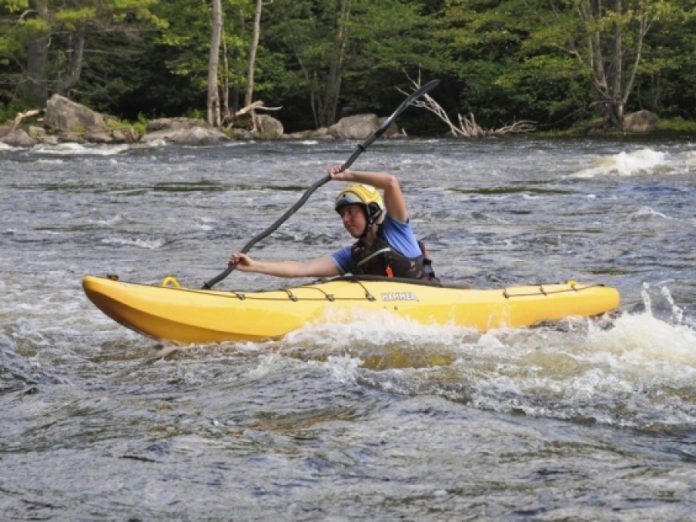
A sea kayaker finishes practicing her roll.

Being a paddling addict can be a bit hard on the wallet—there’s always a tempting new piece of gear to acquire, another course to take, a new boat of your dreams (funny how that dream boat seems to change year to year) and of course those irresistible coastal destinations calling your name.

Here’s the real scoop—you don’t have to throw money around to become a better paddler. Read on for five free or cheap ways to improve your paddling skills.

Switch it up

Feel that your paddling skills are stagnating? Switch it up by paddling in different conditions, in new places, in different boats and with different people. Go for a night paddle (with proper lights, of course), try rescues in stormy conditions, paddle in waves with your eyes closed (use your judgment for safety here!), go out with a more experienced paddler or take a friend for their first paddle ever. Exhausted all local options? Hit the road and head to a new area to repeat all of the above steps.  Any time we switch up the variables, we increase our chances of learning something new, and creating fun memories.

Go test paddling

Trying new boats can be a great way to expand your comfort level and paddling skills. Many outfitters and kayak shops offer regular test paddling sessions during the paddling season—make the most of these opportunities. Go ahead and try a boat with more or less rocker, scant primary stability, or perhaps something completely different like a surf ski or whitewater playboat. As you take each boat through its paces, you’ll learn loads about boat design, your own strengths and weaknesses, and perhaps you’ll even meet a boat or two that catches your fancy.

Paddling festivals and symposiums

While courses and trips can sometimes come with a large price tag, many of these events have accessible prices. Where else will you find so many dedicated paddlers, coaches and experts all in one place? Even a brief weekend of quality instruction can stretch your limits and give your skill development a boost for months to come.

Technology

Put all that screen time to good use. True, there are far more silly cat videos than kayak instructional videos out there, but YouTube and the Internet in general have some useful and inspiring material for paddlers of all skill levels. Even better, make your own video for some in-depth stroke analysis. If you have access to a GoPro, fantastic, but a friend with a smart phone on a nearby dock can just as easily get some informative footage of your various strokes.

Those who can, teach

Teaching with clarity and precision can be the ultimate test of how well we truly understand the fundamentals. Take out a newbie friend for a paddle or volunteer to assist on an introductory paddling course or local social paddle. You’ll gain great insight into the art and science of paddling, and perhaps you’ll discover an unexpected love for teaching.

Sitting Down With The Filmmakers Of Paddle To Seattle

Filmmakers J.J. Kelley and Josh Thomas | Photo courtesy of: J.J. Kelley and Josh Thomas

In 2015, we celebrated the 10th anniversary of the Paddling Film Festival by checking back with a few filmmakers whose films we featured over the previous 10 years. This article was part of a series catching up with filmmakers and finding out what they’d been up to since their films embarked on our annual world tour. 

About Paddle to Seattle

A charming story of friendship, discovery and humor in the face of adversity, Paddle to Seattle claimed Best Sea Kayaking Film at the Paddling Film Festival in 2010. Aided by diverse scenery and fearlessness of the effect of foul weather on fragile electronics, J.J. Kelley and Josh Thomas are natural storytellers.

There are none of the post-trip voiceovers so common to this genre—you feel like you are truly along for the ride: cold neck rain, musky whale breath, close calls with bull kelp lassoes, and everything else the fellas run into. Their wit is in the same dry, deadpan vein as Bill Murray and Dan Aykroyd in Ghostbusters; a wonderful on-screen rapport that makes Paddle unlike any other sea kayaking film then or since.

BUY ON AMAZON

Filmmakers J.J. Kelley and Josh Thomas | Photo courtesy of: J.J. Kelley and Josh Thomas

The filmmakers: J.J. Kelley and Josh Thomas

“It’s one thing to come up with the idea for a film—the idea of going on an amazing adventure—but if you’re going to make a movie about it, you’ve got to have a name that grabs people and brings them into the story,” Josh Thomas tells the camera from inside his tent in the opening scenes of Paddle to Seattle.

In 2011, the pair set off for India to complete a by-any-means-necessary source-to-sea descent of the country’s holiest—and most polluted—river. The most memorable scene in Go Ganges is Kelley and Thomas rowing on a literal “river of poo” while contemplating the fact that many of the wild places we seek out are becoming ever less wild.

“I had this awesome title in my mind forever; even as a kid I remember thinking, ‘This title can be used somewhere in my life.’” Thomas hasn’t finished speaking and already we’re hooked.

The narration then flips to trip partner J.J. Kelley sheltering in the same soggy tent. “Josh told me, ‘Come with me, I’ve got this special idea for this film we need to make.’” Kelley goes on to describe a clandestine, behind-closed-doors revelation of the title that would take them both to scarcely imagined places.

When Thomas delivers the punch line—“That title was Into the Wild”— the budding filmmakers cement Paddle to Seattle as a funny, endearing and smart buddy flick and one of our all-time favorite paddling films.

KELLEY FILMING FOR NATIONAL GEOGRAPHIC IN AFRICA | PHOTO: COURTESY J.J. KELLEY AND JOSH THOMAS

Thomas and Kelley’s unfailing sense of humor, optimism and self-deprecation establish them from the start as loveable underdogs. On day one of the 1,300-mile journey—while pumping several liters out of his leaky front hatch after paddling in 30-knot gusts with four-foot seas—Kelley tells his friend’s camera, “Those were the nastiest conditions I’ve ever sea kayaked in my life”…pump…pump…“I couldn’t have gone much further. Seriously, it was f***ing awful.” But he’s smiling.

In 2003, Kelley and Thomas met 500 miles into respective solo thru-hikes on the Appalachian Trail and ended up walking 2,000 miles together. “We both used humor as a coping mechanism for the suffering that comes along with a long expedition,” recalls Thomas.

The following summers found them working in Alaska together, teaching kayaking, crewing fishing boats and driving tractors, but both dreamt of making a living from adventuring. Enter filmmaking. Paddle to Seattle came on the heels of their freshman film, Pedal to the Midnight Sun, documenting an Alaskan cycling adventure.

[ What to plan your own adventure? Head over to the Paddling Trip Guide ]

“We knew we wanted to get to Seattle,” jokes Kelley when asked about planning for Paddle. “We wanted to keep it extemporaneous and fun. We didn’t want anything canned.” Despite their cheerful enthusiasm, neither imagined the acclaim Paddle would eventually receive, sweeping dozens of awards on the festival tour and garnering an Emmy nomination.

Paddle confirmed Thomas and Kelley as bonafide filmmakers and their adventure features have since grown in step with professional careers in television production.

“We started working more and more as TV cameramen, producers and directors,” says Kelley. “Ultimately, television is paid for by commercial dollars and you have to keep those people happy. Our adventure films are about making us happy.”

Whether pursuing their own interests or producing content for television, “we try to stick with projects that speak to our values of wilderness, wildlife and adventure,” says Thomas.

In 2015, those projects found Kelley and Thomas collaborating on conservation-focused short films for National Geographic, where Kelley works as a producing director. Gyre: Creating Art from a Plastic Ocean (2013) looks at how garbage impacts our planet, while Battle for the Elephants took the pair to the central Congo to document the trade of illegal ivory.

“In the end, you want to inspire people,” says Thomas. “No matter how depressing a story it is—elephants on the brink of extinction, or garbage in the oceans—there’s always an inspirational twist you can add to it. That’s the goal of our films, to give people hope.”

THE DUDES IN INDIA. | PHOTOS COURTESY J.J. KELLEY AND JOSH THOMAS


When we caught up with the duo for this story in 2015, Thomas—who works on contract—had just returned from a four-month shoot on a crab-fishing boat in the Bering Sea for the Discovery Channel series, Deadliest Catch, and was heading out to film the release of wood buffalo in Alaska for Nat Geo Wild. Between gigs, he returns to the same beach in Seward, Alaska that he’s lived on for the past decade. Kelley estimates that between them they traveled around the globe perhaps 10 times in 2014/15. Both cite increasingly hectic work schedules as the biggest life change since Paddle.

“It’s such a huge landscape, an enormous distance, at three miles per hour covering 15 miles a day, you have a lot of time to reflect,” muses Thomas at the end of Paddle’s 99-day odyssey. “To think about where you’re going and where you’ve been and what you want your future to look like.”

If the past five years have been a wild ride, the next five promise more of the same. “We’re still goofballs,” observes Kelley, “we’re just a bit more grown up now.”

Restless for adventure, they’re scheming up potential expeditions for 2016. It’ll be something difficult, something outside their comfort zones. “That’s how you learn about yourself,” says Thomas. “Whatever it is, it will be uncomfortable. And we’ll be laughing.”

[ Paddling Trip Guide: Browse all expedition paddling trips ]

Since this article was published, Kelley has gone on to host the Travel Channel’s series Lost in the Wild, which investigates some of history’s greatest adventures gone wrong. He is also a producer and correspondent for National Geographic Channel’s flagship documentary series, EXPLORER.

More from this series:


Screen_Shot_2015-06-15_at_3.44.39_PM.pngThis article first appeared in the Early Summer 2015 issue of Adventure Kayak magazine. 
Subscribe to Paddling Magazine and get 25 years of digital magazine archives including our legacy titles: Rapid, Adventure Kayak and Canoeroots.

NRS Anarchy Helmet

Photo: Dawn Mossop
NRS Anarchy Helmet

The ultra-safe Anarchy Helmet from NRS protects your melon with two-layer foam technology often found in motorcycle and bike helmets. I like the flashy white and green color options for visibility and style. It also comes in black and blue. The best feature is the easy-to-use BOA fastener at the back that lets me dial in fit and keeps the helmet firmly in place, even in the water. Wear with ear pads on or off.

$89.95 | www.nrs.com

RPv17i2 Cover


This gear review first appeared in the Early Summer 2015 issue of Rapid magazine.


Pay It Forward

SHARING THE LOVE. | PHOTO: RAPID STAFF

I learned to kayak in a hand-me-down lifejacket and a skateboard helmet. Surrounded by stubby playboats, I took my first strokes in whitewater from the seat of an old Perception kayak. My uncle spent the day teaching me strokes, safety and how to read the water. I spent more time upside down than right side up. I soaked up the challenge and thrill, the atmosphere and camaraderie. I was hooked.

That simple afternoon on the water led me into a sport that has shaped my life—from my friends and work to where I choose to live. I want as many people as possible to have the chance to see the world from the seat of a kayak, but it’s not an easy sport to break into.

With entry-level paddles priced around $150, basic skirts and PFDs in the $200-range and quality helmets pushing $100, the odds of a newbie making the investment before trying the sport and knowing they’re hooked is incredibly low. Add to that the base layers, insulation, drywear, booties and gloves that take us from just-hanging-in-there to oh-so-comfortable.

Learning to swim and read rapids, being confined in a small boat, negotiating moving water and spending time inverted underwater add more obstacles to an already daunting path.

Donating gear and donating time are two simple ways we can break down those barriers and share the whitewater love. These are valuable in any activity but especially in a sport like kayaking where the initial gear investment is high and the learning curve steep.

When you lend someone gear—even if it’s just that dusty old paddle in your garage—you present them with an opportunity. And by lending your time and experience, you can give someone tools to stay safe and to progress and improve.

SHARING THE LOVE. | PHOTO: RAPID STAFF

I have had many whitewater teachers over the years and have often felt like I was paddling with a gang of big brothers—people who have my back no matter what. I owe my addiction to the whitewater and my place in such a supportive community to my uncle who passed on his love of paddling.

Some pro paddlers have taken this pass-it-on idea one step further. Mexican waterfall ninja Rafa Ortiz is working with his sponsors to develop whitewater kayaking in indigenous communities in Mexico’s Chiapas province.

“I believe that through kayaking, we can make peoples’ lives better,” says Ortiz in a short film about the project.

Ortiz and his friends are providing boats and other equipment to local kids and spending time teaching them the basics. They weren’t surprised to find that children who live near whitewater naturally develop skills in the current. Kayaking offers prospects to these kids and their communities—it can open doors to travel, sport and tourism. For them, like myself and so many others, learning to kayak could be life changing.

“Kayaking has expanded my horizons,” says Ortiz. “It has changed my life and it could change theirs, so why not share it?”

Carmen Kuntz is a regular Rapid contributor. Currently, she’s paying it forward by organizing the Juanito de Ugarte Memorial Scholarship that pays for Peruvian youth to attend kayak camps. Learn more at www.juanitoscholarship.com.


This article on whitewater canoeing was published in the Early Summer 2015 issue of Rapid magazine.This article first appeared in the Early Summer 2015 issue of Rapid Magazine. 

Subscribe to Paddling Magazine and get 25 years of digital magazine archives including our legacy titles: Rapid, Adventure Kayak and Canoeroots.

The Antidote to Apathy

DEVELOPING UNCONSCIOUS COMPETENCE. PHOTO: VIRGINIA MARSHALL

Starting with little league trophies and Girl Guide badges and ending with degrees, diplomas and certificates—external recognition is a driving force in many realms of life.

Courses and certificates can inspire us to learn, to challenge ourselves and to grow as individuals. However, courses alone are not a guaranteed pathway to proficient paddling, just as they are not sufficient to the mastery of Greek philosophy, culinary arts or race car driving. If we depend blindly on external experts and occasional courses to develop our skill and understanding, we are doing each other and ourselves a great disservice.

Not so long ago, I taught an intermediate sea kayaking course. One of the participants hadn’t been in a boat since completing a basic course a year earlier. This participant hadn’t paddled all year and could not reliably demonstrate even fundamental skills like a simple assisted rescue— yet still expected to pass on to the next level.

Now don’t get me wrong—I love to teach. I am happy to take the time to introduce, review and practice skills, but in a four-day course the time is limited. I had to fail the astonished individual because I could not in good faith send them forth into the world as a certified intermediate kayaker when they didn’t meet basic criteria for competently taking care of self and others.

Certification courses are a wonderful tool, but they are only the tip of the iceberg of knowledge, experience and ongoing practice that makes up a strong, versatile paddler. Much of the responsibility falls on individuals to actually practice and regularly apply their skills outside of courses.

Blame society for our collective lack of ownership over our own strengths and shortcomings. We no longer have a culture of apprenticeship and mentoring. We are used to buying certificates and diplomas, being handed a pass, instant gratification—rather than putting true dedication, time and energy into good old-fashioned practice.

DEVELOPING UNCONSCIOUS COMPETENCE.
PHOTO: VIRGINIA MARSHALL

A friend was recently rewiring his house. I asked how he’d learned to do this, expecting a story about helping an old family friend or assisting a trusted neighbor with a similar renovation. No, he assured me, a YouTube video had taught him all he needed to know. Next time I saw him, he had burn marks on his hand and had decided to hire an electrician.

Sometimes what we don’t know can be very dangerous indeed. A couple years ago I was enjoying a post-paddling dinner of fish and chips at a popular waterside eatery. It was early in the season and the water was just a few notches above freezing. Across the bay, I noticed a kayaker paddling out. I remember wondering at his lack of gear, but I was too far away to get his attention. I guessed he was heading to a nearby cottage and gave him no further thought. The following day, I heard that same kayaker had been found capsized and drifting out to open water, unable to get back in his boat. Through incredible luck or fate, the local marine unit happened to be out for a practice session and picked him up.

Psychologists talk about four levels of competence in any skill or area of expertise. The first is unconscious incompetence, where we don’t even know what we don’t know. As we gain a bit more experience in a field, we become aware of what we don’t know and thus reach the second stage: conscious incompetence. With practice and further experience, we can make informed decisions and apply our skills and move to the third level: conscious competence.

When we truly master a skill and know how to apply it instinctively and intuitively in dynamic conditions, we reach the forth level: unconscious competence. Unconscious competence allows us to make instinctive responses such as bracing in rough water, automatically compensating for current, or instantly going to the bow of a capsized kayak rather than wasting time blundering around the wrong end.

While in the throes of appendicitis, we don’t want a doctor who’s fumbling with the scalpel, trying to remember details from a course a few years ago. We want decisiveness, competence, good judgment and the ability to perform under pressure. These are the same attributes we as kayakers should seek to develop in our padding partners and ourselves. Of course, we’ll also happily take a friend paddling for the first time, with no expectation of any rescue skills, but if this friend intends to continue kayaking, we should all take our turn in the water to practice rescues together.

Paddlers have different goals: relaxation, fitness, wilderness expeditions, time for personal reflection or socializing with friends. Some may claim they’ve already learned all they need to for their purposes—but can they do that roll or self-rescue when they’re cold? Tired? In waves? Blindfolded? There are always new ways we can challenge ourselves and stretch our skills.

“Certification courses are only the tip of the iceberg of knowledge, experience and ongoing practice that makes up a strong, versatile paddler.”

Practice can take many forms—attending symposiums, enrolling in courses and paddling with friends—but it needs to be ongoing. Ideally we find a group of paddlers with compatible skill level and risk assessment and spend time in conditions that can push us beyond familiar habits.

I have a kayaking friend who practices a roll and rescue every time he goes paddling, sunshine or snowstorm. I immensely admire his diligence, even as I happily go out of my way to keep my head warm and dry for the winter months. If he ever needs to use his skills in serious conditions, I think it’s safe to say he’ll be more prepared than most.

Once, for a month, I practiced 10 rolls a day on each side—by the end, I couldn’t remember which was my offside. Just a couple weeks later, I ended up swimming after surfing and getting flipped out of the boat before I could catch myself on the thigh braces. A good reminder to paddle a well-fitting boat, and that no amount of practice will ever prepare us completely for the unexpected. Chances are there are more interesting swims in store for me.

Practice brings us competence, joy, fluidity and the ability to move confidently in different conditions. There will always be more to practice and certification courses can be valuable tools for honing in on specific skills, receiving expert advice and stretching our comfort zone in a safe and supportive environment. But no matter how many letters and numbers they add to our credentials, they should never be our sole source of experience.

Charlotte Jacklein learned to kayak with her high school outdoor club, where she and her fellow participants spent a disproportionate amount of time upside down.


Screen_Shot_2015-06-15_at_3.44.39_PM.pngThis article first appeared in the Early Summer 2015 issue of Adventure Kayak magazine. 
Subscribe to Paddling Magazine and get 25 years of digital magazine archives including our legacy titles: Rapid, Adventure Kayak and Canoeroots.

Ra Energy Natural Food Energy Mix

Photo: Dawn Mossop
Ra Energy Natural Food Energy Mix

Add a nutritional punch to downriver meals with Natural Food Energy Mix from Ra Energy. The combo of hemp, sesame, flax and chia seeds and sprouted buckwheat comes in three flavors: plain, garlic and sweet. It can be added to just about anything—the plain kind won’t affect flavor—but my favorite is a couple tablespoons in my oatmeal or granola, so hunger doesn’t set in halfway through the morning.

$23.99 for 12 individual-serving sachets | www.raenergyfoods.com

RPv17i2 Cover


This gear review first appeared in the Early Summer 2015 issue of Rapid magazine.


Exploring Lake Superior’s Southern Charms In Michigan’s Upper Peninsula

Launch: Michigan's Upper Peninsula | PHOTOS: AARON PETERSON

Marquette is the white collar on the well-worn work shirt that is Michigan’s Upper Peninsula. It’s a center of culture in a rough and tumble region known for logging, mining and huge swaths of lightly populated hinterlands along the south shore of Lake Superior.

I love living near Marquette because of the laid back live-and-let-live phi- losophy and the diversity of shoreline geology, great public access and largely undeveloped coast. Within city limits you’ll find a 10-mile stretch of rock gardens, surf spots, sandstone caves and sandy beaches. North of town, the shoreline is mostly state owned and offers pocket beaches and bedrock headlands more reminiscent of the Canadian side of Lake Superior. The big lake lends its mood to the town and our lives tend to revolve around what Superior is serving up daily.

Michigan’s Upper Peninsula Trips:

If you have a half day explore 323-acre Presque Isle city park, where red and white swirling sandstone cliffs clash with an ancient lava flow known as Black Rocks.

If you have a day extend the trip out from Presque Isle to the bedrock headland of Middle Island Point, then hop to Middle and Partridge islands and enjoy some rough water rock gardening when the north wind blows.

If you have a weekend tour 30 miles around Grand Island National Recreation Area. Launch from Sand Point to make the easy half-mile crossing to the island. The southern end has protected bays and agate beaches ideal for camping and rock hounding, while 200-foot sandstone cliffs grace the north end.

If you have a week paddle under the mineral stained sandstone cliffs that give Pictured Rocks National Lakeshore its name. Depart from Sand Point and head to Grand Marais, a 42-mile trip past arches, sea caves, majestic Spray Falls and the Grand Sable Dunes. Mosquito and Chapel beaches offer sugar sand beach camping and great day hiking.

Launch: Michigan’s Upper Peninsula | PHOTOS: AARON PETERSON

Michigan’s Upper Peninsula Stats:

POPULATION
21,000

AVERAGE SUMMER HIGH
67°F

WILDLIFE
Wolf, moose, deer, black bear, mountain lion, otter, sandhill crane, bald eagle, osprey.

TERRA
Sand and cobble beach camping.

EXPOSURE
North and northwest winds are predominant and produce the largest conditions with fetch exceeding 160 miles.

DIVERSION
Marquette is an IMBA-designated ride center. Four local mountain bike shops offer beta and rentals.

SUDS
Bookend your trip with a cold brew at the Lake Superior Brewing Company in Grand Marais.

LOCAL WISDOM
August through early September is the sweet spot for fine weather, warmest water and relief from bugs.

OUTFITTERS
Paddling Michigan – rentals, instruction and guided trips in the central Upper Peninsula – paddlingmichigan.com.

MUST-HAVE
Wetsuit/drysuit, camera.

Aaron Peterson is a professional photographer based in Marquette, where he enjoys having the greatest lake on his doorstep and ready access to the diverse state and national forests, parks, lakeshores and wildlife refuges that comprise much of the state’s Upper Peninsula—“the U.P.” to locals.


Screen_Shot_2015-06-15_at_3.44.39_PM.pngThis article first appeared in the Early Summer 2015 issue of Adventure Kayak magazine. 
Subscribe to Paddling Magazine and get 25 years of digital magazine archives including our legacy titles: Rapid, Adventure Kayak and Canoeroots.

How A Multi-Week Canoe Trip Offers A Zen That You Can Draw On For A Lifetime

KNOCKOUT. PHOTO: PAUL MASON

The music died for Don McLean in 1959 when rock legend, Buddy Holly, died in a plane crash. The day the music died for me was the moment my college students got bored two minutes into Bill Mason’s 1984 Waterwalker. It was an outdoor leadership course and I thought it was prudent to show them this classic canoe film.

The eyeballs started to roll during the synthesized beats of Bruce Cockburn’s opening song of the same name. Then a few students started snoozing while Mason drifted through a beautiful early morning fog. By the time the stunning scene appeared of Mason painting on a rock ledge, overlooking Lake Superior, and there wasn’t a single “ooh” of awe, I knew I’d lost them all.

I grew up watching Waterwalker. I still watch it over and over again, all 86 minutes. It gets me through the long winters and never ending spring thaws. The film inspired my generation to dream big and get outdoors. Mason took us along for the ride on his real wilderness journey.

Never has the ethos of peace and solitude that canoe tripping offers been more apparent than in Mason’s work. In the film, he travels for two weeks along Superior’s coast, paddling from camp to camp, while carrying all his belongings.

Looking out over a sea of glazed eyes in the darkened classroom, I asked myself why these students were turning out. Was it Mason’s squeaky voice preaching environmentalism and Native philosophy? How about the unabashed way he connects spirituality and the natural world? Maybe it’s simply the long shot sequences, or the ‘80s folk music.

Desensitized to danger perhaps by waterfall-hucking Red Bull athletes, not one of my students even flinched when Mason dumped his canoe and found himself in serious danger in freezing Lake Superior. It was obvious the students hadn’t connected with this canonical work. Maybe they can’t.

In our instant gratification culture, long canoe trips, especially weeks paddling the rugged north shore of Lake Superior, are rare. While two-week trips were common 30 years ago, nowadays the average canoe trip lasts just a long weekend and takes place in nearby, semi-wilderness areas. Maybe they don’t understand how big, wild, cold and unconnected Superior can be.

KNOCKOUT. | PHOTO: PAUL MASON

The symbolic red Prospector canoe in a vast wilderness is beyond the imaginations of those in campgrounds providing free WiFi.

A canoe trip can be a transformative experience. The key to making this happen, however, is to spend time in the wilderness. Real time. A weekend jaunt may get you through a bad week at work. A week of paddling may even help your anxiety level during moments of crisis. But a multi-week canoe trip offers a Zen that you can draw on for a lifetime. My outdoor-ed students might miss out on all of that.

“The path of the paddle can be a means of getting things back to their original perspective,” Mason famously said.

Despite the eye rolls, note passing and light snoring; I won’t stop sharing Waterwalker with my students. Long trips are the heart and soul of canoe tripping. Even if only one student is inspired to dream bigger and push farther, I’ll have done my job.

Kevin Callan is the author of 15 books about canoeing and camping. Follow his adventures at thehappycamper.com. 


Screen_Shot_2015-06-12_at_11.26.38_AM.pngThis article first appeared in the Early Summer 2015 issue of Canoeroots and Family Camping magazine.

Subscribe to Paddling Magazine and get 25 years of digital magazine archives including our legacy titles: Rapid, Adventure Kayak and Canoeroots.

Why We Don’t Need Another Complete Guide To Sea Kayaking

an autumn sea kayaker holds up their paddle with a rainbow in the background
The question isn’t how to hold a paddle, it’s why you should hold a paddle at all. | Feature photo: David & Skylar Anderson // @daveyandsky

A publisher once approached me and invited me to write a kayaking how-to book, a “complete” guide to the sport. Despite a momentary rush of excitement at the thought of fame on the symposium circuit as sea kayaking’s next great know-it-all, I politely refused. The last thing we need is another how-to book.

Why we don’t need another complete guide to sea kayaking

Scanning any shelf of sea kayaking volumes turns up plenty of “manuals,” “guides” and “handbooks.” There are already at least half a dozen titles purporting to be kayaking’s “complete” or “comprehensive” guides. These books claim to offer insights that are “efficient,” “optimum” and “essential.” Many of them emphasize the beloved subject of “safety.” With so many fine books already available, there really isn’t much new to say on the subject of how to kayak.

an autumn sea kayaker holds up their paddle with a rainbow in the background
The question isn’t how to hold a paddle, it’s why you should hold a paddle at all. | Feature photo: David & Skylar Anderson // @daveyandsky

Sea kayaking is the same sport, fundamentally, that it was when it first evolved from a prehistoric survival tool to a recreational pastime. Kayaking now is play; a joyful celebration of life and a ritual break from our workaday lives. Which raises the question: why do we take it so damned seriously?

Other sports do a much better job. Climbing, skiing and surfing have always had their philosophers, deep thinkers and flamboyant practical jokers to explore their sports’ subtle and soulful sides.

Consider canoeing, kayaking’s dreamy, artistic cousin. Eloquent canoeing writers like Sigurd Olson and James Raffan have always been much more interested in writing about what’s going on in their hearts and minds, or being discussed around the campfire, than what they’re doing with their paddles.

Canoeing’s classic guidebook is Path of the Paddle: An Illustrated Guide to the Art of Canoeingno mention of completeness or efficiency. Its author, Bill Mason, was an artist and devout Christian for whom canoeing was a creative inspiration and both a literal and metaphorical path to salvation. He was on a spiritual mission to teach people to paddle so they could save their souls and be inspired to save the planet.

Enlightenment from the seat of a sea kayak

If canoeing is an art, then surely kayaking is too; so why do we treat it like a science or an extreme athletic pursuit? There’s plenty of evidence that sea kayaking goes together with an unconventional and free-spirited lifestyle—stories of entrepreneurs and artists living off the grid in outback locations, homeschooling their kids and growing their own food—but few champion this the way Mason did for canoeing.

Kayaking authorship has long keened toward scholarly preoccupation with the sport’s Indigenous origins, or such militaristic and masculine nautical concepts as “seamanship.” Our shining lights tend to be hard-charging A-types who leave families and jobs behind to head off on ambitious global expeditions. Hard-assed mountaineers of the high seas, not warm fuzzy sorts with a taste for introspection.

Why, then, are kayakers stereotypically such nerds?

From the wonders these gurus experience abroad they bring back not enlightenment but new paddling strokes, safety principles, speed and efficiency graphs, techniques to do headstands in kayaks or 27 different rolls while holding a lit candle.

Sure, there are exceptions—Jon Turk’s spiritual odysseys rival those of any adventure literature. And the female perspectives shared by explorer-writers like Audrey Sutherland and Victoria Jason have helped open the door to an insightful, lyrical and more reflective way of viewing our sport.

Why, then, are kayakers stereotypically such nerds? Is it demographics—our advanced age or the critical bias of our university educations? Is it because most of us are really landlubbers, fearful city folk trying to come to grips with the alien sea in an absurdly vulnerable craft? Is it because kayaks are tippier than canoes? Is it the dour Eastern European character of expat Czech and German pioneers or the scientific rigor of Seattle aerospace engineers who influenced early sea kayaking in North America?

“We shall comprehensively describe this sport in every practical detail so that it may be optimally disseminated to the wider population with complete accuracy and efficiency.”

Finding the spirit of the sport

Sea kayaking is not rocket science. It’s play, which by very definition is neither serious nor practical. As philosopher and writer Alan Watts said, “Man suffers only because he takes seriously what the gods made fun of.”

sea kayaker silhouetted while splashing water
The meaning of life is best experienced by the warmth of a beach bonfire and sunset, not a guide book. | Photo: Chris Bensch

Try going on a long sea kayak expedition and you’ll very quickly figure out what to do with your paddle and how to set up your tent. But spend a season bobbing on the waves and camping on the sand and then come home to our crazy modern world and tell me there’s anything complete about a kayaking book that doesn’t help you make sense of the meaning of life as experienced by the warmth of a beach bonfire and sunset.

What sea kayaking needs is not another expert, not another guide of how to do it, but a guide of why to do it, and what for, and what it means. More kayaking Bill Masons, John Muirs, Ralph Waldo Emersons and Henry David Thoreaus. More kayaking art, poetry, philosophy and religion; less kayaking science.

If kayakers need another manual, it isn’t the complete or comprehensive guide to anything. Rather, it’s the essential guide to the art, soul and spirit of the sport. Maybe it could be called Way of the Paddle: A Playful Romp Through the Soul of Sea Kayaking.

Tim Shuff joined the team as assistant editor of Canoeroots for the second-ever issue of the magazine in 2003. From 2006 to 2010 he was the editor of Adventure Kayak.

Cover of the 2023 Paddling Trip GuideThis article was first published in the Early Summer 2015 issue of Adventure Kayak Magazine and was republished in the 2023 Paddling Trip Guide. Subscribe to Paddling Magazine’s print and digital editions, or browse the archives.


The question isn’t how to hold a paddle, it’s why you should hold a paddle at all. | Feature photo: David & Skylar Anderson // @daveyandsky