Dympna Hayes from Ontario Sea Kayak Centre shares step-by-step tips that make performing a re-enter and roll in your kayak simple and straightforward. If you’ve exited your kayak, the re-enter and roll is the fastest self rescue, increasing your confidence and safety on the water.
Stay tuned for more great paddling skill videos, including canoeing, kayaking and whitewater techniques, brought to you in partnership with Rapid Media and Ontario Tourism.
Story Behind the Shot: Dreaming of Adventure | Photo: Bryan Hansel
The Lake Superior Water Trail runs from Duluth, Minnesota, to the Canadian border. Along the way, campsites every 10 or 15 miles let you take your time to experience the shoreline at a casual pace, and this campsite is my favorite on the entire trail. It’s just a long afternoon paddle from Grand Marais, my home port, which makes it a great little getaway and overnight destination.
For me, kayaking is about exploration. I love to load my kayak full of camping gear and head off solo to places I’ve only read about, but I find that when I combine photography with kayaking, I can return to the same places over and over and explore their different moods and feelings without growing bored of the same scenery. I’ve paddled this route a dozen times and often hike into the campsite from the road to photograph this island tombolo, and every time I return it feels like I’m exploring a new location.
Solo kayaking allows me to explore the scenery with a different perspective than when paddling with a group. I can speed up or slow down on my whims, poke the nose of my kayak into a granite cave carved by relentless pounding of Lake Superior, or just stop on the beach to look for Lake Superior agates. It’s my pace, my adventure, but most importantly being solo takes away all the distractions and lets me explore the world by simply being in it.
Story Behind the Shot: Dreaming of Adventure | Photo: Bryan Hansel
When I set up my campsite on the night I took this picture, I was alone. I had planned on being at a The Tombolo, the local nickname for this island, to capture the Milky Way arching over it. I set up my camera on the beach and snagged a few shots. Wondering what it would look like if I set my tent up on the island, I set my camera to shoot on a timer and stood at the water’s edge for this self-portrait.
The resulting image of a lone person on an island, looking up at a sky full of other islands, captures a sense of adventure and the amazement gained from exploration.
This article first appeared in the 2015 Paddling Buyer’s Guide. Subscribe to Paddling Magazine and get 25 years of digital magazine archives including our legacy titles: Rapid, Adventure Kayak and Canoeroots.
TAKING THE PLUNGE | Photo: Liam Hennessey / Applehead Studio
This isn’t a scene from a trash-the-dress, post-wedding shoot.
“It was a legitimate accident,” says Liam Hennessey, owner of Applehead Studio, and official photographer on the big day. A 10-year veteran of the wedding photography industry, this was the first time he’d witnessed a debacle of this magnitude—an accident not even a Tide To Go pen could fix.
After dinner Hennessey stole the bride and groom for a few minutes to take advantage of a stunning sunset. That’s when it happened.
“The bride, Miriam, suggested getting into the canoe, I thought it was a great idea,” confirms Hennessey. In the dusk, as the bride leaned over to get into the canoe, she put too much weight on one gunwale. She plunged into the shallows with a splash and a yell.
“It’s a great example of how things can go wrong and there’s nothing you can do about it except choose how you deal with it.”
“She was literally knee-deep in mud 15 minutes before the first dance,” says Hennessey. “My first reaction—right or wrong—was to shoot, shoot, shoot.” The cameras weren’t set up for the light yet, so getting the image right was a shot in the dark for Hennessey and his assistant.
TAKING THE PLUNGE | Photo: Liam Hennessey / Applehead Studio
“My right-hand man, Steph, held up a flash as Miriam was coming up. I let off a few shots as her husband reached out his hand—terrified, I think—but she came up laughing.” Miriam went back to the reception drenched and covered in mud, cleaned herself up and then danced until 4 a.m.
“It’s one of those things that could have been a complete disaster, but to them it was hilarious. Her reaction? ‘Fuck it, let’s have fun,’” says Hennessey.
“It’s a great example of how things can go wrong and there’s nothing you can do about it except choose how you deal with it,” says Hennessey. After a moment’s pause he adds, “Though, there might be a lesson here about canoe safety, too.” —Kaydi Pyette
This article first appeared in the 2015 Paddling Buyer’s Guide. Subscribe to Paddling Magazine and get 25 years of digital magazine archives including our legacy titles: Rapid, Adventure Kayak and Canoeroots.
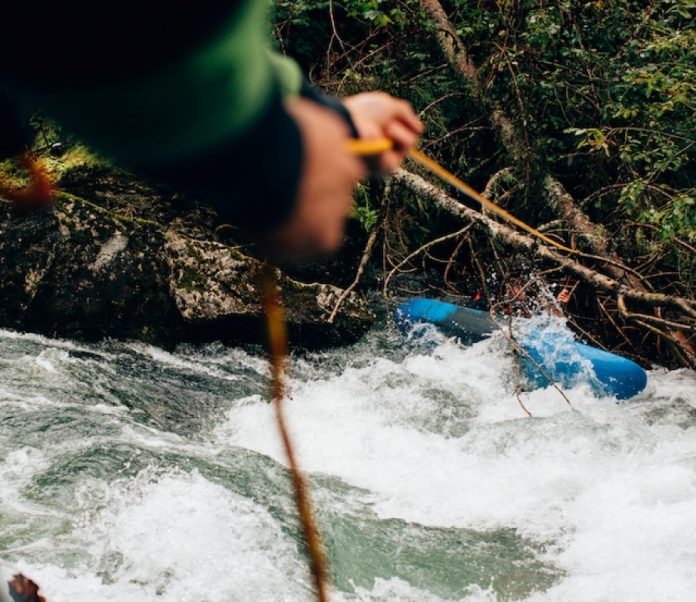
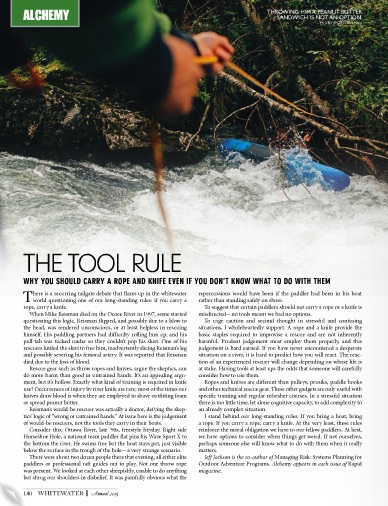
There is a recurring tailgate debate that flairs up in the whitewater world questioning one of our long standing rules: if you carry a rope, carry a knife.
When Mike Reisman died on the Ocoee River in 1997, some started questioning this logic. Reisman flipped, and possibly due to a blow to the head, was rendered unconscious, or at least helpless in rescuing himself. His paddling partners had difficulty rolling him up, and his pull-tab was tucked under so they couldn’t pop his skirt. One of his rescuers knifed the skirt to free him, inadvertently slicing Reisman’s leg and possibly severing his femoral artery. It was reported that Reisman died due to the loss of blood.
Rescue gear such as throw ropes and knives, argue the skeptics, can do more harm than good when in the wrong or untrained hands. It’s an appealing argument, but it’s hollow. Exactly what kind of training is required in knife use? Occurrences of injury by river knife are rare, and most of the times they have drawn blood is when they were employed to shave outfitting foam or spread peanut butter.
That Reisman’s would-be rescuer was actually a doctor defies the skeptic’s logic of “wrong or untrained hands.” At issue here is the judgement of would-be rescuers, not the tools they carry in their boats…Click here to continue reading in the free desktop edition of Rapid Media’s 2015 Paddling Buyer’s Guide.
This article originally appeared in the 2015 Paddling Buyer’s Guide. Read the entire issue on your desktop, Apple or Android device.
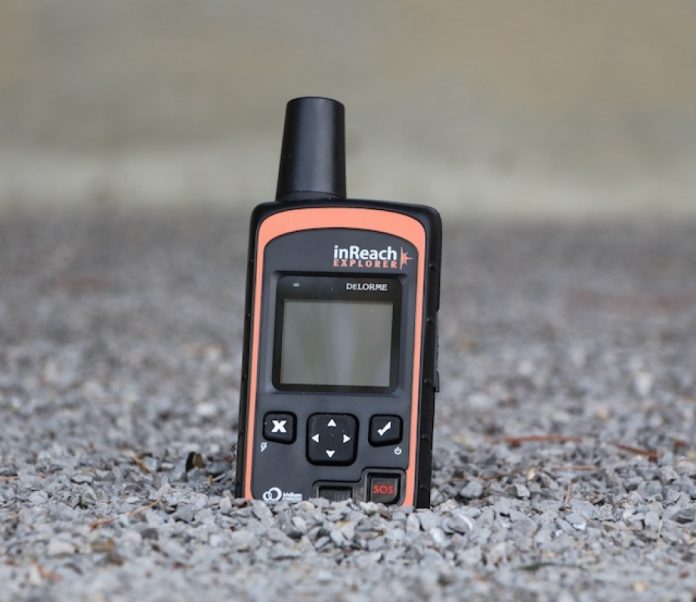
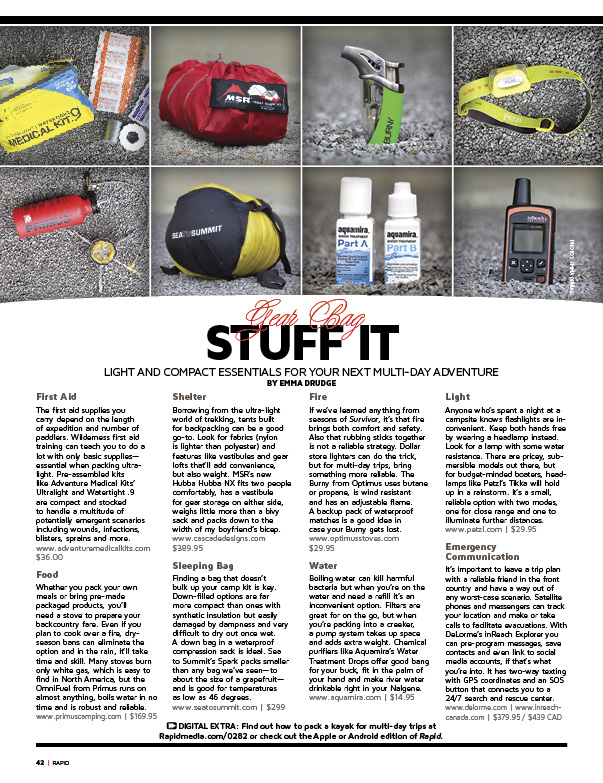
It’s important to leave a trip plan with a reliable friend in the front country and have a way out of any worst-case scenario. Satellite phones and messengers can track your location and make or take calls to facilitate evacuations. With DeLorme’s inReach Explorer you can pre-program messages, save contacts and even link to social media accounts, if that’s what you’re into. It has two-way texting with GPS coordinates and an SOS button that connects you to a 24/7 search and rescue center.
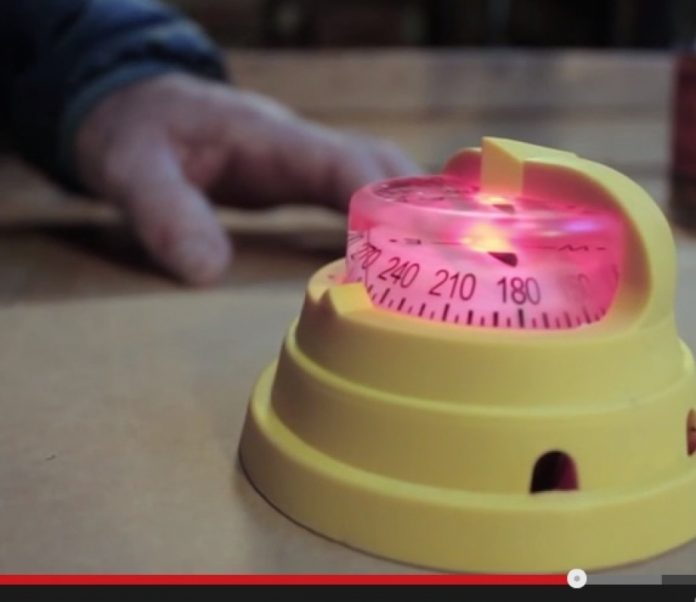
Paddling at night is a lot of fun and a good way to build your kayak navigation skills. Unfortunately, there are not a lot of good compass options for night navigation. In this short how-to video presented by Adventure Kayak magazine, Leon Sommé of Body Boat Blade International shows us a quick and easy modification for a lit compass that is easy, waterproof and portable. The red light also preserves night vision—this DIY deck mounted kayak compass setup even helped Leon through his BCU 5 star award!
Stay tuned for more skills videos with Body Boat Blade International in this series, presented by Adventure Kayak, and watch more techniques on our YouTube channel.
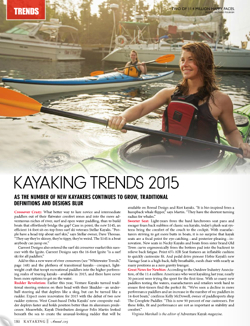
Light-years from the hard lunchroom seat pans and meager foam back nubbins of classic sea kayaks, today’s plush seat systems bring the comfort of the couch to the cockpit. With manufacturers striving to get more butts in boats, it is no surprise that kayak seats are a focal point for eye-catching—and posterior-pleasing—innovation. Necky Kayaks and sister brand Old Town now sport the stylish and high-tech ACS2 Seat System. The fully adjustable seat is designed to curve ergonomically from the bottom pad into the backrest to relieve back fatigue. Swedish brand Point 65’s AIR Seat features an inflatable cushion to quickly customize fit. And pedal drive pioneer Hobie Kayak created a buzz at this year’s Outdoor Retailer summer market tradeshow with their new Vantage Seat, a high-back, fully breathable, mesh chair with nearly as many positions as a Zero Gravity Lounger.
This article originally appeared in the 2015 Paddling Buyer’s Guide.
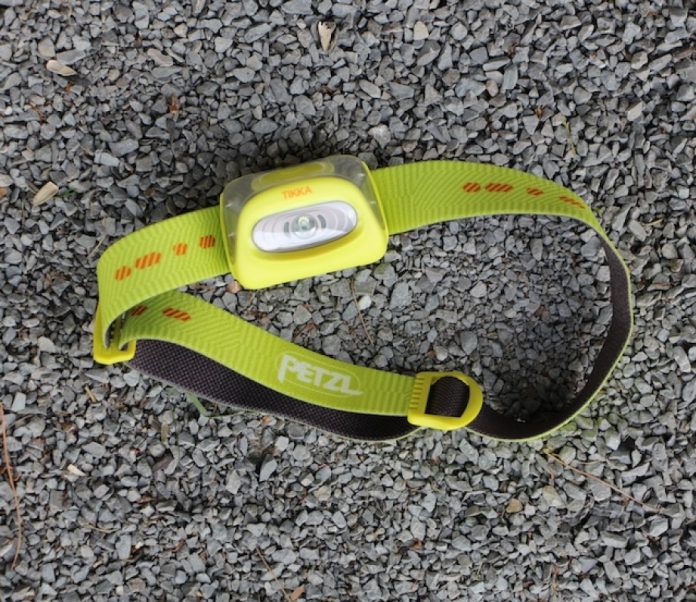
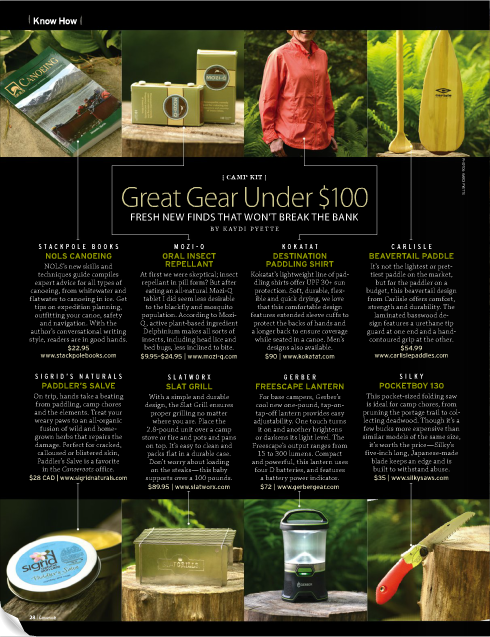
Anyone who’s spent a night at a campsite knows flashlights are inconvenient. Keep both hands free by wearing a headlamp instead. Look for a lamp with some water resistance. There are pricey, submersible models out there, but for budget-minded boaters, headlamps like Petzl’s Tikka will hold up in a rainstorm. It’s a small, reliable option with two modes, one for close range and one to illuminate further distances.
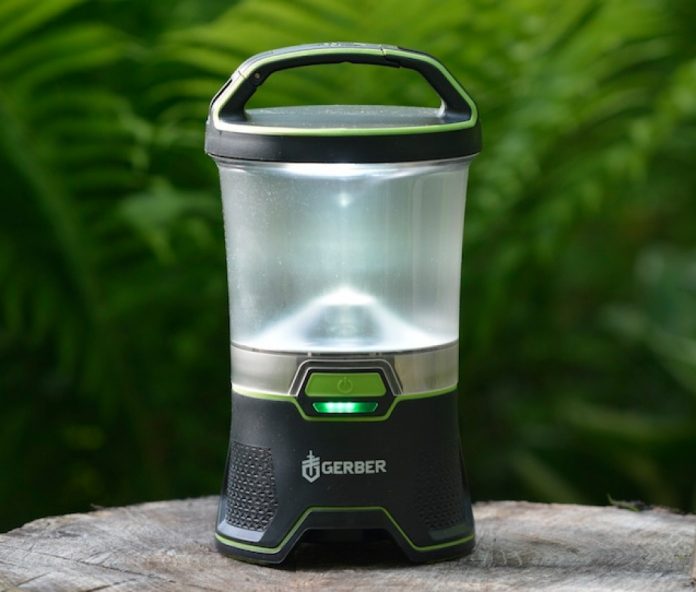
For base campers, Gerber’s cool new one-pound, tap-on-tap-off lantern provides easy adjustability. One touch turns it on and another brightens or darkens its light level. The Freescape’s output ranges from 15 to 300 lumens. Compact and powerful, this lantern uses four D batteries, and features a battery power indicator.
This article originally appeared in the Late Summer/Fall issue of Canoeroots and Family Camping. Read the entire issue on your desktop,Apple or Android device.
Stef McArdle from Madawaska Kanu Centre shares her top tips for turning your kayak with a sweep stroke.
Stay tuned for more great paddling skill videos, including canoeing, kayaking and whitewater techniques, brought to you in partnership with Rapid Media and Ontario Tourism.




 This article first appeared in the 2015 Paddling Buyer’s Guide.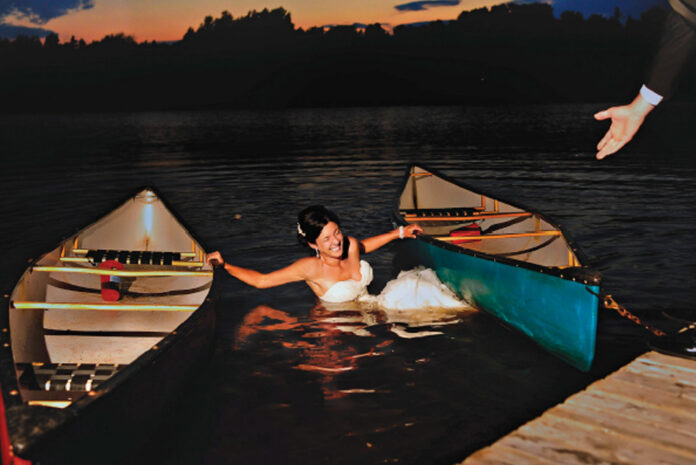

 This article originally appeared in the 2015 Paddling Buyer’s Guide.