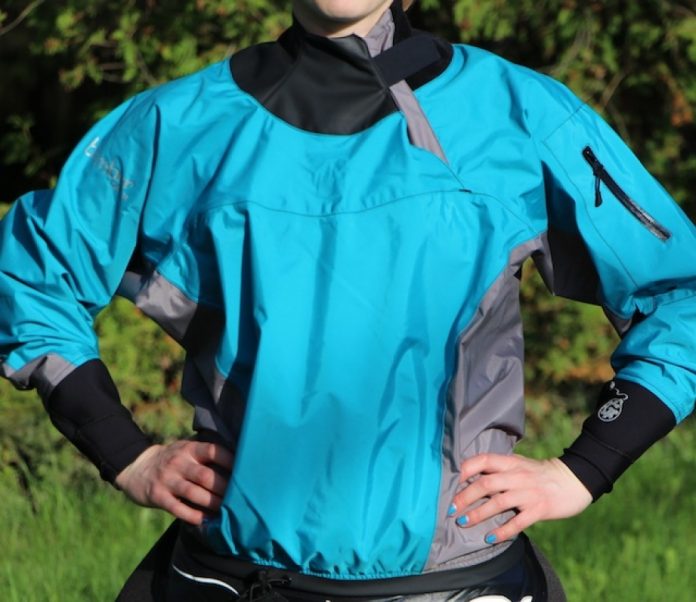
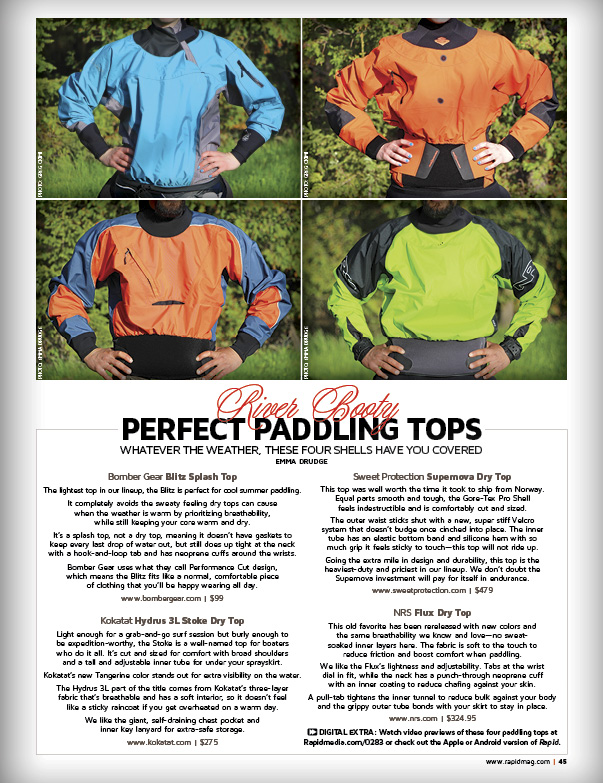
The lightest option in our dry top lineup, the Blitz is perfect for cool summer paddling.
It completely avoids the sweaty feeling dry tops can cause when the weather is warm by prioritizing breathability while keeping your core warm and dry.
It’s a splash top, not a dry top, meaning it doesn’t have gaskets to keep every last drop of water out, but still does up tight at the neck with a hook-and-loop tab and has neoprene cuffs around the wrists.
Bomber Gear uses what they call Performance Cut design, which means the Blitz fits like a normal, comfortable piece of clothing that you’ll be happy wearing all day.
Solider and Paddler | Illustration: Lorenzo del Bianco
Locked in Canada’s intellectual property vaults are something in the order of 150 patents having to do with canoes and kayaks, the earliest of which were taken out by builders in the mid-19th century. They’ve accumulated at a slow rate—some of the more recent innovations include the packsack canoe (2001), outboard canoe seat (2002), heated paddle shaft (2009) and pedal-propulsion system (2010).
You’d be forgiven for thinking that very little has happened in the world of canoe innovation and even with the craft itself, since maritime history began. But you’d be wrong.
A Strange Source Of Canoe Innovation
Breakthroughs in canoe design and construction techniques over the years that have resulted in leaps in the utility, elegance, durability, buildability and popularity of our much-loved vessel.
By far, the strangest source of canoe innovation in modern times has been war. War has been responsible for the strong and steady growth in canoeing of all kinds since WWII. Even Bill Mason’s first canoe, a Plycraft, was made thanks to wood laminating technology perfected in the construction of de Havilland Mosquito bombers.
It was slick aluminum fabrication technology used to produce military aircraft that allowed the Grumman Aircraft Company to create a peacetime fuselage—the enduring Grumman canoe. Thanks to the low cost and ease of manufacture that comes with mass production, canoeing became more accessible in North America and single blades flooded the water.
Similarly, we owe the best canvas-covered sectional canoe the world has ever seen to the Link Trainer, a flight simulator designed to mass educate young pilots without crashing too many real planes in the process. Edwin Albert Link, an ingenious inventor, parlayed air piston technology from his family’s organ business in Indiana into creating one of the first flight simulators. More than 500,000 pilots were trained in the U.S. alone.
When the war came to a close, Link adapted the same wood-trimmed phenolic resin panels with canvas cover, used in the simulator production, to the manufacture of 10-piece sectional Linkanoes with commercial success. The patent is still in effect today.
Solider and Paddler | Illustration: Lorenzo del Bianco
More recently, cloths, resins and plastics developed for war tools and equipment have continued to further the path of the paddle. Best known of these materials are aramid synthetic fibers, such as Kevlar and Twaron, the staple of bulletproof garments and portable armor plating.
These war-driven cloth and resin manufacturing techniques made it possible to mold canoes with incredible strength-to-weight ratios and offer modern designs. Not only can canoeists now paddle and portage farther with less effort, they can even do it alone—solo-carry ing a wood canoe requires the strength of a marine.
While flipping through this year’s edition of the Paddling Buyer’s Guide, you might find it strange to consider how our peaceful little boats have evolved by leaps and bounds thanks to an industrial production cycle powered by global conflict.
James Raffan is the former executive director of the Canadian Canoe Museum and a regular contributor to Canoeroots.
This article first appeared in the 2015 Paddling Buyer’s Guide. Subscribe to Paddling Magazine and get 25 years of digital magazine archives including our legacy titles: Rapid, Adventure Kayak and Canoeroots.
What better way to lure novice and intermediate paddlers out of their flatwater comfort zones and into the more adventurous niches of river, surf and open water paddling, than to build boats that effortlessly bridge the gap? Case in point, the new S14S, an efficient 14-foot sit-on-top from surf ski veterans, Stellar Kayaks. “People have a head trip about surf skis,” says Stellar sales rep, Vaughn Smith, “they’re skinny, they’re tippy, they’re weird. The S14S is a boat anybody can jump on.” Current Designs also entered the surf ski crossover market this summer with the Ignite. Echoing Thomas, CD says the 16-foot Ignite “is not an elite-level, hyper-sensitive surf ski requiring a lifetime of skills, rather it is a surf ski for all paddlers.” Add to this a new wave of river crossovers and the plethora of transitional kayaks—compact, lightweight craft that tempt recreational paddlers into the higher performing realm of touring kayaks—available in 2014, and there have never been more options to get on the water.
This article originally appeared in the 2015 Paddling Buyer’s Guide.
Portability meets performance. | Photo: Virginia Marshall
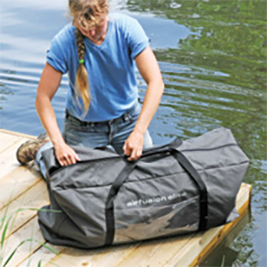
I watched her roll down to the waterfront and lean her Schwinn 10-speed against a garden pagoda. Her earbudded head bopping to some unknown beat, she proceeded to unpack the inflatable kayak stashed on her bike trailer and lean into a hand pump very similar to the Advanced Elements pump I held in my own hands. The race was on.
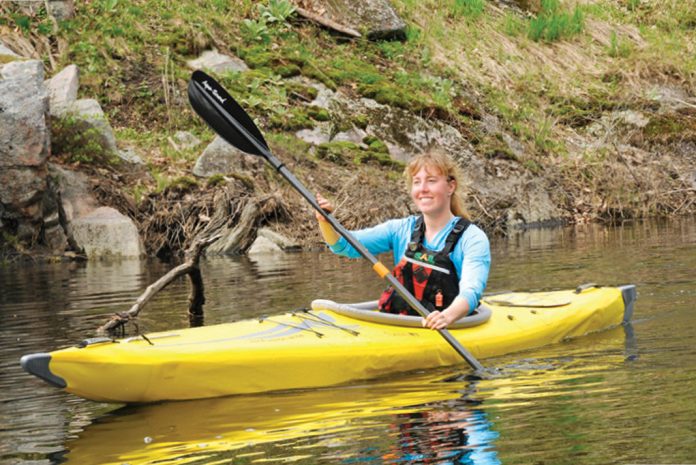
The AirFusion Elite streamlines Advanced Elements’ hybrid frame and airtube design. High-pressure air chambers along the chines and gunwales add stability and tension the PVC skin, while aluminum poles along the keel and front deck improve tracking, hull speed and water shedding. The result is a boat that feels surprisingly rigid in the water, yet avoids the complex assembly of a folding kayak.
While the competition takes shape like a parade float down the shore, I insert the AirFusion’s foam floor, slide in the keel and deck poles, and inflate the side chambers, removable bow and stern thwarts and cockpit coaming.
The AirFusion’s design appears simplistic, but it’s actually ingenious. The foam tile floor insulates, stiffens and gives shape to the hull.
The inflatable thwarts serve as bulkheads, acting as a foot brace in the bow and creating a roomy, well-defined rear storage area accessed through a Velcro hatch and dry bag-style roll closure on the stern deck.
Earbud Girl beats me to the water—I’m scribbling notes when she launches—but I beat her out of the harbor.
While her department store pool toy spins in circles with each paddle stroke, my craft accelerates quickly, cruises comfortably, tracks well on the level and snaps around with a slight edge.
Rock-solid stability and a standard-sized cockpit opening keep it dry when playing in waves, although there’s not quite enough knee support for aggressive bracing.
Lightweight and lively, the AirFusion Elite is great for paddlers who want fast and easy set-up without compromising performance.
[ Paddling Buyer’s Guide: View all Advanced Elements inflatable kayaks ]
Ideal for: Grab-and-go lunch break and after work adventures; traveling with your ‘yak; carefully packed overnights on lakes, rivers and sheltered coasts.
Assembly time: 10 minutes
This article originally appeared in Adventure Kayak’s Summer 2014 issue. Subscribe to Paddling Magazine’s print and digital editions here, or browse the archives here.
Dympna Hayes from Ontario Sea Kayak Centre shares step-by-step tips that make performing a re-enter and roll in your kayak simple and straightforward. If you’ve exited your kayak, the re-enter and roll is the fastest self rescue, increasing your confidence and safety on the water.
Stay tuned for more great paddling skill videos, including canoeing, kayaking and whitewater techniques, brought to you in partnership with Rapid Media and Ontario Tourism.
Story Behind the Shot: Dreaming of Adventure | Photo: Bryan Hansel
The Lake Superior Water Trail runs from Duluth, Minnesota, to the Canadian border. Along the way, campsites every 10 or 15 miles let you take your time to experience the shoreline at a casual pace, and this campsite is my favorite on the entire trail. It’s just a long afternoon paddle from Grand Marais, my home port, which makes it a great little getaway and overnight destination.
For me, kayaking is about exploration. I love to load my kayak full of camping gear and head off solo to places I’ve only read about, but I find that when I combine photography with kayaking, I can return to the same places over and over and explore their different moods and feelings without growing bored of the same scenery. I’ve paddled this route a dozen times and often hike into the campsite from the road to photograph this island tombolo, and every time I return it feels like I’m exploring a new location.
Solo kayaking allows me to explore the scenery with a different perspective than when paddling with a group. I can speed up or slow down on my whims, poke the nose of my kayak into a granite cave carved by relentless pounding of Lake Superior, or just stop on the beach to look for Lake Superior agates. It’s my pace, my adventure, but most importantly being solo takes away all the distractions and lets me explore the world by simply being in it.
Story Behind the Shot: Dreaming of Adventure | Photo: Bryan Hansel
When I set up my campsite on the night I took this picture, I was alone. I had planned on being at a The Tombolo, the local nickname for this island, to capture the Milky Way arching over it. I set up my camera on the beach and snagged a few shots. Wondering what it would look like if I set my tent up on the island, I set my camera to shoot on a timer and stood at the water’s edge for this self-portrait.
The resulting image of a lone person on an island, looking up at a sky full of other islands, captures a sense of adventure and the amazement gained from exploration.
This article first appeared in the 2015 Paddling Buyer’s Guide. Subscribe to Paddling Magazine and get 25 years of digital magazine archives including our legacy titles: Rapid, Adventure Kayak and Canoeroots.
TAKING THE PLUNGE | Photo: Liam Hennessey / Applehead Studio
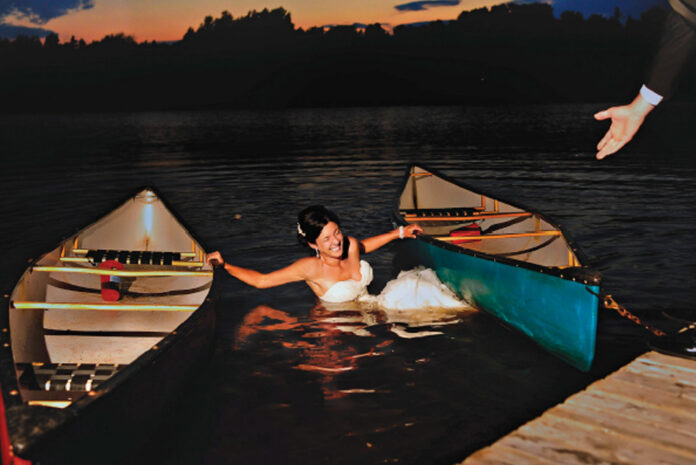
This isn’t a scene from a trash-the-dress, post-wedding shoot.
“It was a legitimate accident,” says Liam Hennessey, owner of Applehead Studio, and official photographer on the big day. A 10-year veteran of the wedding photography industry, this was the first time he’d witnessed a debacle of this magnitude—an accident not even a Tide To Go pen could fix.
After dinner Hennessey stole the bride and groom for a few minutes to take advantage of a stunning sunset. That’s when it happened.
“The bride, Miriam, suggested getting into the canoe, I thought it was a great idea,” confirms Hennessey. In the dusk, as the bride leaned over to get into the canoe, she put too much weight on one gunwale. She plunged into the shallows with a splash and a yell.
“It’s a great example of how things can go wrong and there’s nothing you can do about it except choose how you deal with it.”
“She was literally knee-deep in mud 15 minutes before the first dance,” says Hennessey. “My first reaction—right or wrong—was to shoot, shoot, shoot.” The cameras weren’t set up for the light yet, so getting the image right was a shot in the dark for Hennessey and his assistant.
TAKING THE PLUNGE | Photo: Liam Hennessey / Applehead Studio
“My right-hand man, Steph, held up a flash as Miriam was coming up. I let off a few shots as her husband reached out his hand—terrified, I think—but she came up laughing.” Miriam went back to the reception drenched and covered in mud, cleaned herself up and then danced until 4 a.m.
“It’s one of those things that could have been a complete disaster, but to them it was hilarious. Her reaction? ‘Fuck it, let’s have fun,’” says Hennessey.
“It’s a great example of how things can go wrong and there’s nothing you can do about it except choose how you deal with it,” says Hennessey. After a moment’s pause he adds, “Though, there might be a lesson here about canoe safety, too.” —Kaydi Pyette
This article first appeared in the 2015 Paddling Buyer’s Guide. Subscribe to Paddling Magazine and get 25 years of digital magazine archives including our legacy titles: Rapid, Adventure Kayak and Canoeroots.
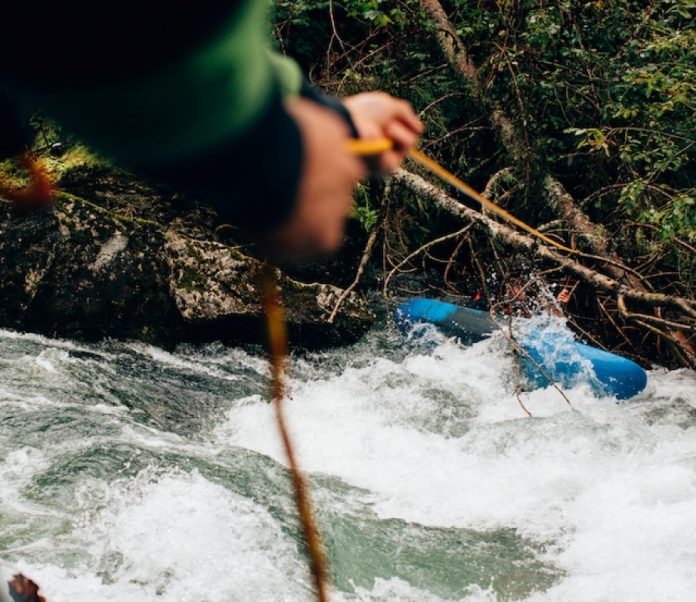
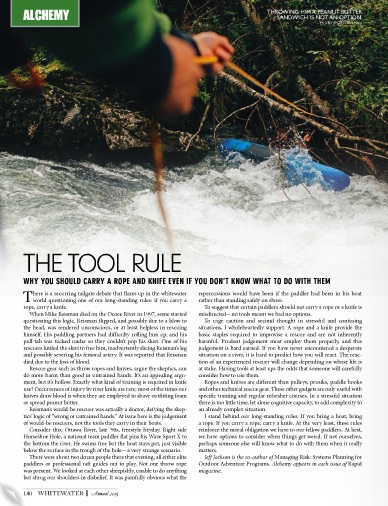
There is a recurring tailgate debate that flairs up in the whitewater world questioning one of our long standing rules: if you carry a rope, carry a knife.
When Mike Reisman died on the Ocoee River in 1997, some started questioning this logic. Reisman flipped, and possibly due to a blow to the head, was rendered unconscious, or at least helpless in rescuing himself. His paddling partners had difficulty rolling him up, and his pull-tab was tucked under so they couldn’t pop his skirt. One of his rescuers knifed the skirt to free him, inadvertently slicing Reisman’s leg and possibly severing his femoral artery. It was reported that Reisman died due to the loss of blood.
Rescue gear such as throw ropes and knives, argue the skeptics, can do more harm than good when in the wrong or untrained hands. It’s an appealing argument, but it’s hollow. Exactly what kind of training is required in knife use? Occurrences of injury by river knife are rare, and most of the times they have drawn blood is when they were employed to shave outfitting foam or spread peanut butter.
That Reisman’s would-be rescuer was actually a doctor defies the skeptic’s logic of “wrong or untrained hands.” At issue here is the judgement of would-be rescuers, not the tools they carry in their boats…Click here to continue reading in the free desktop edition of Rapid Media’s 2015 Paddling Buyer’s Guide.
This article originally appeared in the 2015 Paddling Buyer’s Guide. Read the entire issue on your desktop, Apple or Android device.
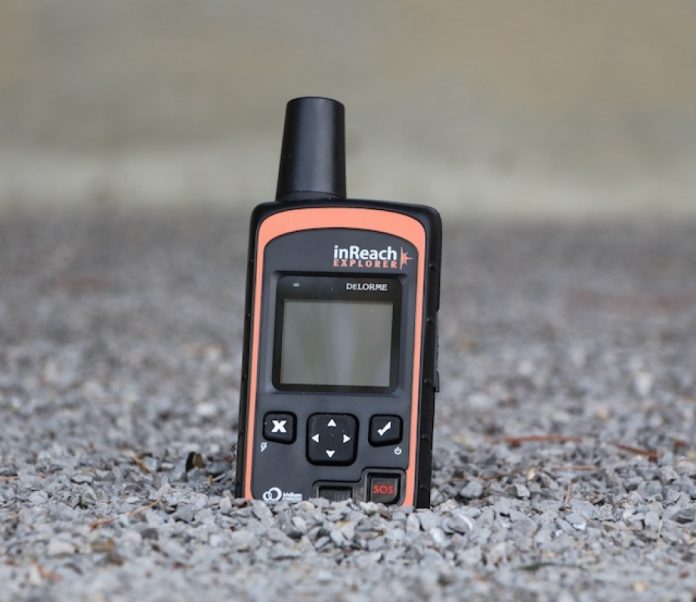
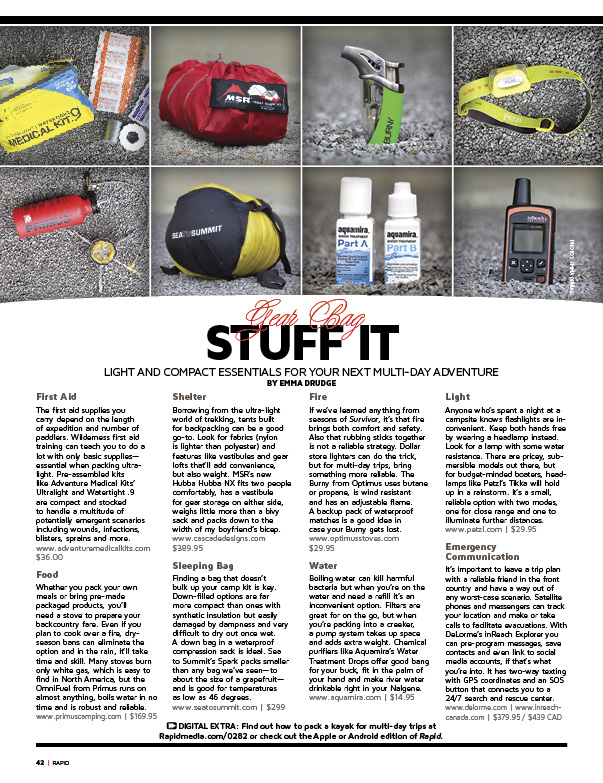
It’s important to leave a trip plan with a reliable friend in the front country and have a way out of any worst-case scenario. Satellite phones and messengers can track your location and make or take calls to facilitate evacuations. With DeLorme’s inReach Explorer you can pre-program messages, save contacts and even link to social media accounts, if that’s what you’re into. It has two-way texting with GPS coordinates and an SOS button that connects you to a 24/7 search and rescue center.
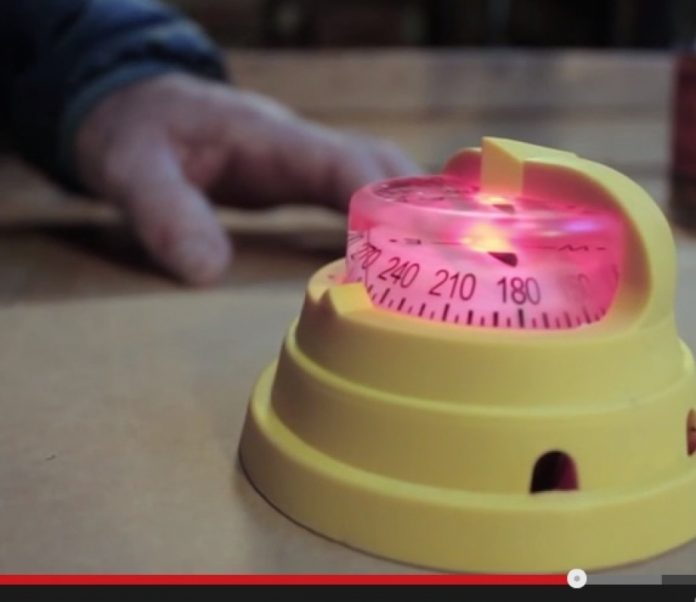
Paddling at night is a lot of fun and a good way to build your kayak navigation skills. Unfortunately, there are not a lot of good compass options for night navigation. In this short how-to video presented by Adventure Kayak magazine, Leon Sommé of Body Boat Blade International shows us a quick and easy modification for a lit compass that is easy, waterproof and portable. The red light also preserves night vision—this DIY deck mounted kayak compass setup even helped Leon through his BCU 5 star award!
Stay tuned for more skills videos with Body Boat Blade International in this series, presented by Adventure Kayak, and watch more techniques on our YouTube channel.




 This article first appeared in the 2015 Paddling Buyer’s Guide.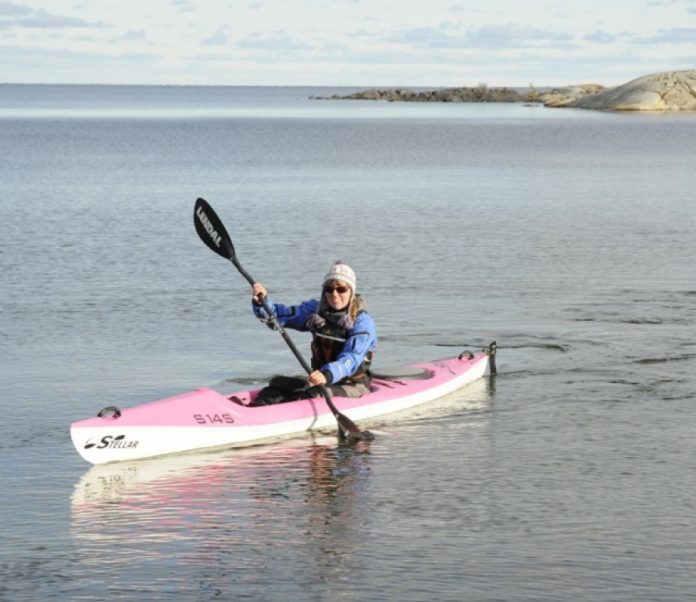
 This article originally appeared in the 2015 Paddling Buyer’s Guide.