If you’ve been living under a rock rather than scraping over them, you may not know that Royalex canoes are in short supply.
Manufacturer PolyOne announced last summer that it was calling it quits on the long-time favored hull material of whitewater and recreational canoes. Production of Royalex sheets ceased in March. The announcement sent the paddling community into a Royalex-boat-buying frenzy. Outfitters are bulking up their fleets while enthusiasts are buying backups of favorite models. Everyone is wondering about the future of the sport.
Jacques Chassé, owner of Esquif Canoes, thinks he has the magic bullet.
Beginning this fall, Esquif will begin replacing Royalex in its canoe line with a brand-new, in-house-made material they are calling T-Formex.
According to Chassé, paddlers can expect the same indestructability and performance of Royalex for approximately the same price. And he claims T-Formex will be 10 percent lighter and 20 times more abrasion resistant than Royalex.
“Seventy-five to 80 percent of our boats are now made from Royalex. We had no choice but to innovate,” says Chassé. “It’s not a secret I had been asking the manufacturer to improve their material but they weren’t interested. They’d been making Royalex for the last 35 years and there’s a lot of new plastic and new technology.”
Chassé is building a 6,000-square-foot T-Formex factory within Esquif’s existing 15,000-square-foot warehouse in southern Quebec.
“Because so many of our canoes were made from Royalex, we needed to find a material that could be used in the same molding stations in which the Royalex boats are shaped,” says Chassé. Switching to T-Formex will not require any re-tooling of this boat building operation. The same workshop will be able to produce the usual 20 to 25 canoes per day.
Like Royalex, T-Formex is manufactured into sheets using foam core, ABS plastic and another outer material Chassé won’t disclose. These are layered together to create a reinforced, multi-laminate sandwich that can withstand years of abuse.
At the time of publication, Chassé had just recently approached other canoe manufacturers. Before going public he wanted to let them know he had a new material coming and is hoping that T-Formex will replace Royalex in their canoe lines as well. No commitments had been made at the time of printing this issue of Canoeroots. In the meantime, Chassé is completing his factory-within-a-factory and setting up his operation to manufacture the T-Formex sheets needed to supply Esquif’s fleet.
“T-Formex is the only alternative to Royalex I know about,” says Chassé, adding that his first T-Formex prototype canoe hit the water mid-April. “I have very modest forecasts, but I’m pretty sure once the manufacturers and public see the properties of the material, everyone will step up and want to work with it. It’s the much improved material we’ve been waiting for.”
This article first appeared in the Early Summer 2014 issue of Canoeroots Magazine.
A couple hours at the International Boat Show affirmed that everything old is new again.
The indoor, arena-sized pond hosted everything from paddlesports instruction to motorboat trials to crazy wakeboarding and water stunts throughout the weeklong show. I took the organizers up on a chance to try standup paddleboarding for the first time.
I admit it, from one canoeist to another, I was skeptical of the sport.
SUPs have been the wunderkind of the paddlesports world and a much-needed financial boom for manufacturers over the past five years. According to the Outdoor Industry Association, it was also the fastest growing sport in the United States last year.
At first, I thought SUP was a gimmick. “This will blow over,” we conventional canoeists told ourselves. The truth is far from it. “They’re out-selling canoes two-to-one,” a cheerful whippersnapper in a wetsuit told me, handing over a paddle. Fad or not, I was ready to dump my canoe—temporarily, of course—to have a go and see what the hubbub was about.
Waiver signed, PFD secured, watch and wallet tucked into my shoes on the makeshift dock, I should have accepted the counsel of the young man who suggested I begin on my knees and work up from there. (“A lot of the ladies are doing yoga on standup paddleboards these days,” he said brightly, “but it takes a minute to get your balance.”)
Not Captain Canoe, of course—being a gunwale-bobber from way back, I stepped right on and very nearly swam.
I began by J-stroking but changed to rhythmically switching the extra-long paddle from side to side to keep straight. Looking down at my bare feet, images from early days growing up with my faithful retriever, Princess, on the banks of the mighty Speed River came flooding back. Déjà vu.
In look, the SUP was more like a Carl-Wilson-autographed surfboard but in feel, it was a raft—childhood’s first vehicle of exploration, made of logs, bailer twine and old fencing wire—with improved hull shape and hydrodynamics. Here we go again, Huck Finn!
Lost in my raft revelry, I paddled easily, building up speed with every pull and push. Hoisting an imaginary Jolly Roger, I was again Bluebeard on the bounding main or Captain Hattaras on my way to the North Pole. The 21st-century design didn’t fool me—this was my paddlecraft of yore.
Of course, with little storage, no secondary stability and the requirement of standing all the time, the SUP remains an inferior craft to the canoe—but the child in me won’t hear of it.
Don’t worry, James Raffan hasn’t given up his canoe, but he is considering an Arctic SUP trip with raft support. He asks you not to be too disappointed.
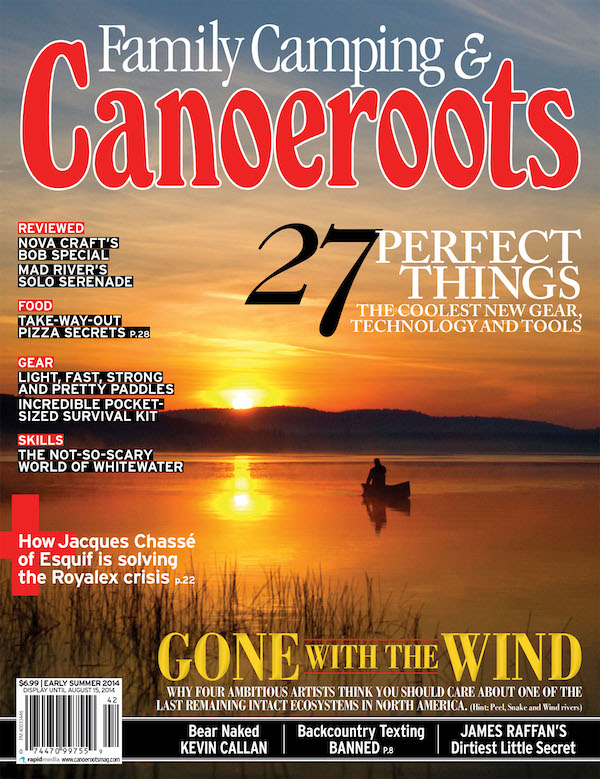
Get the full article in the digital edition of Canoeroots Early Summer 2014. Subscribe to Paddling Magazine’s print and digital editions, or browse the archives.
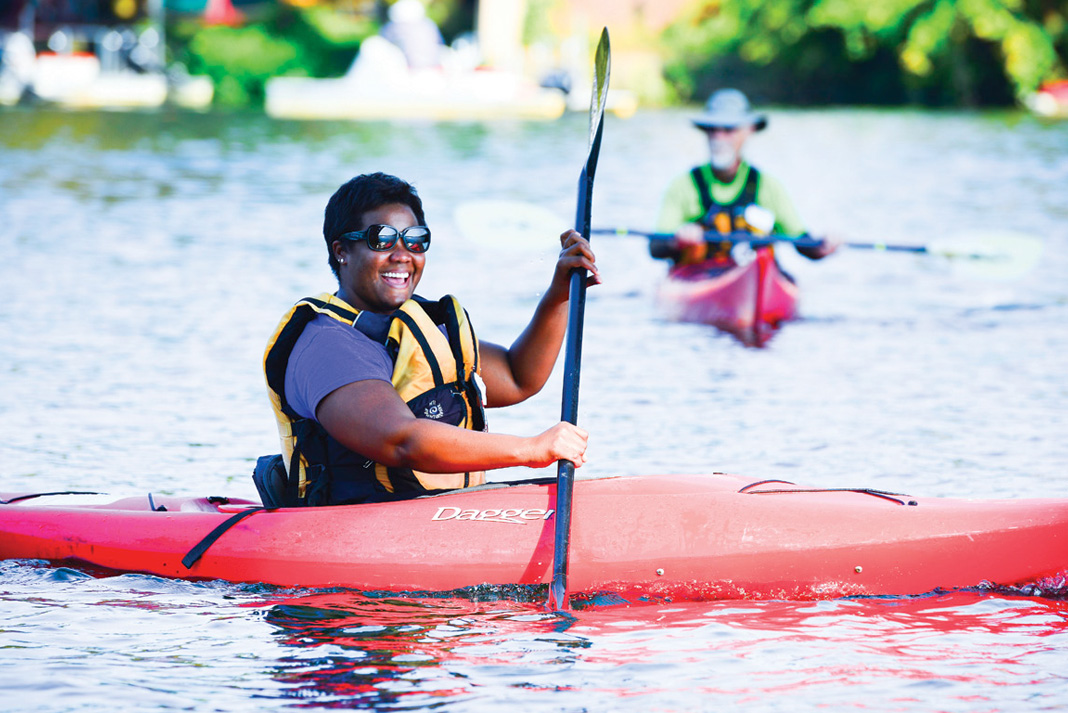
Team River Runner organizes social events like this fun race in D.C. for vets and their families. | Photo: courtesy of Team River Runner // Robb Sharetg
A desperate man stands in a room with a shotgun, a fishing rod and a choice. One tool represents despair, the other hope. He chooses life—the fishing rod—and goes kayaking.
A woman is run down at the side of the road in Iraq while changing the tire on her Humvee. She wakes up from a two-year coma, able to function in every way but without the ability to remember anything from day to day. Then she goes kayaking, and that becomes the first thing she remembers in three years.
“The experience was so positive that it cracked the shell on all the bad stuff,” explains Jim Dolan, who tells me these stories as examples of the many lives he’s seen kayaking save.
Dolan is the founder and director of Heroes on the Water (HOW), an organization that takes wounded U.S. veterans out kayak fishing. Dolan, an avid kayak angler who flew for the U.S. Air Force for 13 years before a career as an American Airlines captain, saw helping wounded veterans as a call to duty.
“We owe these guys our best,” he says. “They have given so many pieces of themselves. We need to help get them up and running again. Kayak fishing is a great way to do it.”
Lately I’ve been thinking a lot about the therapeutic connection between kayaking and post-traumatic stress disorder (PTSD).
I’m preoccupied by some disturbing news that emerged in Canada last year: the suicides of eight military veterans in as many weeks. This led to my reading the excellent book by the Iraq war journalist David Finkle, Thank You For Your Service, which gives an intimate look into the lives of a few U.S. veterans and the extreme challenges they face getting healed.
Kayak therapy: inexpensive and effective
Who is doing anything about this? Kayakers, it turns out, are playing a vital role.
Dolan describes kayaking as physiotherapy, occupational therapy and mental therapy rolled into one. It’s remarkably effective and also damn cheap.
“There are organizations that spend five grand to take a guy or gal to Montana to go fly fishing, but for five grand I can take 100 guys out and do it in their backyard,” explains Dolan. “I can take them out tomorrow. It’s immediate, it’s inexpensive, it’s now and it’s local. It’s extremely simple.”
HOW often works with veterans who have been injured in explosions, suffering brain injury and mental stress. As Dolan describes it, the brain essentially shuts down for self-protection.
“They come back wound tight as a drum. They have hypervigilance, TBI (traumatic brain injury), post-traumatic stress. Until they can unwind, getting back to their family or their job or their education is very, very tough. We get them out in the water, get them to relax and teach them they don’t need to be wound as tight as they are over there.”
[ Paddling Trip Guide: View all kayaking instructional and skills clinics ]
That feeling after a good day on the water, that all is right with the world—every kayaker can understand its healing power. Now there’s empirical evidence to back it up. A 2013 study of HOW’s program in Pensacola, Florida, found that participants experienced a huge reduction in PTSD symptoms: a 78 percent reduction in overall stress; 77 percent in hypervigilance; 63 percent in avoidance behavior.
TEAM RIVER RUNNER ORGANIZES SOCIAL EVENTS LIKE THIS FUN RACE IN D.C. FOR VETS AND THEIR FAMILIES. | PHOTO: COURTESY TEAM RIVER RUNNER/ROBB SCHARETG
This shouldn’t come as a surprise. Symmetrical, repetitive activities like cross-country skiing and inline skating are widely recognized as particularly effective therapy for PTSD. Kayaking’s steady left-right-left-right tempo works in the same way, enabling both halves of the brain to work together to process traumatic memories.
An equally important factor in the success of these programs is the social network and support system they create.
Beginning in Texas in 2007, HOW has grown to 43 locations in 24 states, with affiliates in the U.K., Australia and New Zealand. Another U.S. veterans’ therapeutic kayaking program, team River Runner, which offers whitewater and flatwater kayaking without the fishing, started at Walter Reed army Medical Center in Washington, D.C., in 2004 and now has over 40 chapters across the U.S. with more than 2,000 participants a year.
But with an estimated 24 million cases of PTSD in the United States alone, the need is much greater.
Kayaking as preventative medicine
There are also many PTSD sufferers outside the military.
In 2011, recreation therapist and musician Zac Crouse kayaked and bicycled home from eastern Ontario to Halifax, Nova Scotia, as self-treatment for PTSD he developed after seeing his best friend die whitewater kayaking. He documented the 82-day journey in the film and accompanying album, Paddle to the Ocean (Best Sea Kayaking Film, 2014 Reel Paddling Film Festival). As a result of the trip, he found the frequency and intensity of his symptoms went way down—echoing the Pensacola findings.
“In the simplest terms, doing physical activity every day is an essential part of being human. We’ve gotten away from that and it’s killing us,” says Crouse.
It just makes sense that reintroducing physical activity will promote healing. Traveling under our own power opens us up to the world in ways that our mechanized and virtual lives do not, encouraging a healing attentiveness akin to meditation.
“There is no instant remedy for mental health,” Crouse acknowledges, “but living a healthier, active lifestyle is part of that process.”
As a firefighter I’ve coped with my own minor symptoms of acute post-traumatic stress after bad calls. And I have colleagues with full-blown PTSD who’ve had to take extended leaves of absence or retire early. I’m starting to think of my kayaking less as a hobby and more as a vital dose of preventative medicine.
Maybe my next step will be to take Dolan’s lead and find a way to share that with others. As he says, “this is a hobby, but it’s also a cause. There is an absolute need.”
Waterlines columnist Tim Shuff is a former editor at Adventure Kayak and embraces both the playful and serious sides of paddling.
This article first appeared in the Early Summer 2014 issue of Adventure Kayak Magazine. Subscribe to Paddling Magazine and get 25 years of digital magazine archives including our legacy titles: Rapid, Adventure Kayak and Canoeroots.
Breaking the Mold: Traditional Design Meets New Tech
While their roots can be traced back thousands of years to ancient Arctic cultures, sea kayaks as we know them today are just a few decades old. Folding kayaks had been around since the early 1900s, but it wasn’t until the advent of a modern composite material—fiberglass—that commercial production really got going.
Some of the earliest fiberglass kayaks appeared in Seattle in the 1960s. Many of these home-built models were precursors of the now-classic West Coast designs: high-volume cruisers with capacious cockpits. But in the summer of 1968—as an impressionable 15-year-old kayaking for the first time—I paddled a very different style of boat.
It was a homemade fiberglass version of a slender West greenland kayak, born of a union of an ancient form and emerging materials. as a composite sea kayak, it was among the first of its kind.
The late John Heath, an authority on traditional kayaks, was living in the seattle area not far from my family’s home. Heath had experimented with making fiberglass versions of alaskan and greenland kayaks by building sacrificial frames, requiring only the keelson, chines, gunwales, stems and deck ridges to define the shape. He covered the forms with layers of glass fabric and saturated them with polyester resin. When the laminate had cured, he pulled the wooden pieces out through the cockpit opening, destroying the building form in the process.
The kayak I paddled was made by one of Heath’s friends using a different approach. He first built a complete replica. Then, protecting the canvas skin with a plastic wrap, he laid up a fiberglass hull and deck in separate operations. Removed from the skin boat, the cured composite pieces were overlapped and duct tape employed to keep the seam waterproof. The construction was crude but the shape was true to the traditional design and spared the kayak used to create it.
The small cockpit opening made for a tight squeeze. I sat directly on the hull with my legs pinned flat by the foredeck. Bits of fiberglass from the resin-starved laminate made my bare calves itch. It was, to put it mildly, uncomfortable.
Unaffected by winds and undeterred by rough water, the kayak’s sharp, low bow drove through waves as if they weren’t there. the paddling was exhilarating. By the time I’d come ashore my legs were fully asleep. I’d push myself out of the cockpit and crawl onto the beach until feeling returned.
MERGING OLD FORMS AND NEW TECH
Bits of traditional kayak designs showed up in commercial boats as the paddling industry grew. One of the first to draw heavily on a greenland kayak was Valley’s Anas Acuta, produced in 1972.
Today, many composite kayak forms are derived almost entirely from the Greenland tradition. In 2008, Tahe Kayaks of Estonia debuted their Greenland model at Germany’s Kanumesse show. I introduced myself to tahe owners Marek and Janek Pohla and asked if I could try it on for size.
The brothers eyed my six-foot-plus, 210-pound frame: “you won’t fit.”
I sat on the aft deck, pointed my toes, wriggled my kneecaps under the coaming and dropped into the seat. squeezing into the gleaming, carbon and glass fiber Greenland brought back memories of my introduction to kayaking and of the pioneering efforts of Heath and others. It was a snug fit, but this elegant and logical apogee of merging old forms and new technology felt just right.
Reflections columnist Christopher Cunningham is the former editor of Sea Kayaker magazine. He still favors Greenland-style kayaks.
This article first appeared in the Early Summer 2014 issue of Adventure Kayak Magazine. Subscribe to Paddling Magazine and get 25 years of digital magazine archives including our legacy titles: Rapid, Adventure Kayak and Canoeroots.
On my first visit to Grand Marais, I sat down for breakfast at the Blue Water Café under a 15-foot mural of Lake Superior. I thought, one day I want to paddle that entire shore.
Years later, I moved here and got a job guiding kayaking. I was green and the big lake, as locals call it, taught me plenty of lessons. Namely, it’s cold!
Superior rarely rises above 55°F. Paradoxically, because it is so big, it holds its temperature and seldom freezes near Grand Marais. I have a six-year record of paddling at least once, every month, on the lake.
Despite its brutal temperature, the endless horizon where clouds meet unsalted sea draws me in. I lose track of time listening to the sound of surf pounding the 1.1-billion-year-old basalt shoreline.
A peaceful feeling comes with paddling under the 200-foot cliffs of Palisade Head, gazing through the limpid water at boulders that fell eons ago. the big lake feels timeless and you can easily forget your workaday life when paddling here.
TRIP SUGGESTIONS FOR GRAND MARAIS
If you have a half-day paddle west to the Fall river and swim under a 25-foot waterfall.
If you have a day begin an intermediate trip in tettegouche State Park and paddle northeast around Shovel Point, a rhyolite lava flow that juts out into the lake. Continue through the Cave of Waves natural arch then return to Palisade head.
If you have a weekend head across the border to Ontario’s “Sauna Islands.” Park in Little Trout Bay and paddle to Victoria Island for your first night. On the second, enjoy a sauna on Thompson Island.
If you have a week paddle from Gooseberry to Grand Marais on Minnesota’s Lake Superior Water trail, which features campsites about every 15 miles. along the way, visit Split Rock Lighthouse, Tettegouche and the Manitou River waterfall.
GRAND MARAIS STATISTICS
Population: 1,351
County Lands: 92% public
Wildlife: Bear, wolf, moose, deer, coyote, bald eagle, pine martin, fisher, lake trout, steelhead, salmon
Campsites: cobblestone, sand
Exposure: 150 miles of fetch. Longshore NE and SW winds product the biggest conditions.
Diversion: Build a skin-on-frame kayak at the North House Folk School.
Best Eats: Dockside – fresh caught fish and chips. Sven and Ole’s Pizza – the Uffda Zah is a favorite. Sydney’s – land on the beach for a Stealth: frozen custard, blueberries, and Oreos.
Bryan Hansel’s life and livelihood are inextricably entwined with Lake Superior. A professional photographer and founder of North Shore Expeditions, Hansel has paddled all of the American shoreline of the lake, but chooses to call Grand Marais home.
This article first appeared in the Early Summer 2014 issue of Adventure Kayak Magazine. Subscribe to Paddling Magazine and get 25 years of digital magazine archives including our legacy titles: Rapid, Adventure Kayak and Canoeroots.
Five W's: Kayak Builder and Artist Kiliii Fish | Photo: Oliver Ludlow
Skin-on-frame kayak builder, photographer, filmmaker, expedition kayaker, climber, musician, wilderness survival instructor and primitive skills guide—if we had to put a label on Kiliii Fish, it might be outdoor adventure Renaissance man. For Kiliii, 28, teaching, shooting and paddling are all extensions of the same creative urge, a drive nurtured by the wild frontier of the Pacific coast and stoked by a fascination with traditional techniques. We caught up with the Seattle-based artist to learn how he balances modern know-how with 5,000 years of primal expertise.
WHO kindled your interest in primitive skills?
My Nanai grandma used to tell me stories about her childhood in siberia. Her people were hunter-gatherers, living close to the land. one story really stuck with me—she and her dad caught a fish that was bigger than their boat. she would have been paddling a 13-foot canoe and the fish they caught was a kaluga sturgeon, one of the largest freshwater fish in the world. Being from the border of a country where it’s still not cool to be indigenous, my parents weren’t really into the traditional stuff. But for my brother and I, who grew up here, it was great for our imagination.
WHEN did you realize the power of what you teach?
I’ve taught skin-on-frame workshops to native Iñupiat and Yupik kids in Alaska whose traditional technology these incredibly lightweight, high performance boats originally come from. they don’t understand how amazing it is, and how important the kayak was to their ancestors. For many native people, there’s a lot of hating who they are. There’s a huge lack of pride. It was eye opening and heartbreaking to see them look at a kayak that came from their ancestry—that they built with their own hands—and hear them say ‘wow, this is the coolest thing ever.’
WHERE do you find creative inspiration?
That quietness you get from being in the flow— not just in the zone of whatever sport you’re doing, but also being in the flow of nature—that inspires me. Sometimes the flow in sea kayaking is having an amazing ride on a wave. But other times it’s that quiet moment when you’re bobbing in the swell and there’s no distinction between you, your boat, the puffin in front of you, the wave and the sky—that place and that feeling become embedded in my photographs.
Five W’s: Kayak Builder and Artist Kiliii Fish | Photo: Oliver Ludlow
WHY do you do this stuff?
That quietness you get from being in the flow— not just in the zone of whatever sport you’re doing, but also being in the flow of nature—that inspires me. Sometimes the flow in sea kayaking is having an amazing ride on a wave. But other times it’s that quiet moment when you’re bobbing in the swell and there’s no distinction between you, your boat, the puffin in front of you, the wave and the sky—that place and that feeling become embedded in my photographs.
WHAT is the downside to teaching survival?
When you’re doing primitive survival stuff, you spend a lot of time starving. There’s a lot of hungriness and suffering. After a few years of toughing it out, I moved to the Pacific Northwest. If you’re near an ocean, then there’s food to be had. Survival school itself wasn’t really sustainable financially—it’s hard, because anyone who wants to learn survival is generally broke. You teach it because you love it.
Learn more about Kiliii’s traveling skin-on-frame workshops at seawolfkayak.com. See his photos and films at kiliii.com.
This article first appeared in the Early Summer 2014 issue of Adventure Kayak Magazine. Subscribe to Paddling Magazine and get 25 years of digital magazine archives including our legacy titles: Rapid, Adventure Kayak and Canoeroots.
I gasped for breath as the cold water hit me, looking up at the droplets shimmering brightly in the summer sun. the tumbling falls thumped a bass drumbeat on my neoprene skirt. I could just hear my father, in his kayak a few feet behind me, over the water’s roar: “you’ll draw upon this memory soon enough.”
He was right. twenty days later I was in Panjwai, one of the deadliest districts in afghanistan’s Kandahar province, commanding a leopard tank. Many times over the next eight months, I would find peace and strength in that vivid memory.
Returning home, the memory lingered. My father’s observation, paddling beneath the falling water, surviving another tour of duty—together they reminded me of the true essence of life. I sold my house in the city, moved my family east— way east, to Newfoundland—and bought a depreciated, 70-year-old saltbox by the sea, complete with weeds and small conifers sprouting inside. six months of renovations later, we moved in.
KAYAKING AS SUSTENANCE
This new existence makes time for paddling whenever the weather permits. Now, I kayak to sustain myself: easing into the meditative bliss of gliding across calm water, gathering wild edibles for supper.
Shouldering my kayak after one such outing in House Cove, I spotted a skull and scattered vertebrae in the sand.
to be honest, I thought the worst. Instead, I had stumbled upon the remains of a minke whale and a harp seal resting in a field of strand wheat, lungwort and beach pea. Pink and blue lungwort flowers and white pea blooms flourished among the bleached bones. a perfect contrast of life and death right before my eyes. seeking to capture one side of this precarious balance, I composed the picture in black and white.
A simple filter can change a photo’s subject, much as a single decision can transform a life.
This article first appeared in the Early Summer 2014 issue of Adventure Kayak Magazine. Subscribe to Paddling Magazine and get 25 years of digital magazine archives including our legacy titles: Rapid, Adventure Kayak and Canoeroots.
THE GRASS REALLY IS GREENER. | PHOTO: VIRGINIA MARSHALL
Not so long ago, I departed my bicycle in a most dramatic fashion. The bike stopped rather abruptly; I continued over the handlebars.
For a moment, as I hurtled through the warm late-summer air, utterly at the mercy of the juggernaut of my own 20-mile-per-hour momentum, the sensation was not unlike falling into the sweet spot on a wave. That instant when your stern lifts, your kayak accelerates and you relinquish all power to the unstoppable force of the water. A fly on the windshield of a freight train; weightlessness and awful anticipation.
Then my body hit the unyielding pavement, and the impact registered a simple truth: I should have gone paddling.
WHY THE KAYAK IS THE BEST WAY TO EXPERIENCE THE OUTDOORS
It isn’t just two-wheeled activities that are trumped by boat and blade. sure, avoiding the gruesome task of scraping gravel out of road rash is compelling incentive to head for the water, but there are a host of other reasons kayaking is a superior vehicle for outdoor adventure:
The View
It just doesn’t get any better than from the water. Paddle within arm’s reach of the coast for an intimate perspective, or head offshore to feel humbled by the big picture.
Comfort
Foul weather is a fact of outdoor life, but our boats and equipment shelter us from the worst of it. Once you slip on a drysuit or paddling jacket and seal yourself into the cockpit, even the dirtiest downpours are all but forgotten.
Wildlife
Maybe it’s the silence of the hull slicing through still water, or the unthreatening profile of our slim crafts. Certainly it helps that our playground is the rich littoral intersection of land and water. Whatever the reason, frequent wildlife sightings are one of paddling’s finest perks.
THE GRASS REALLY IS GREENER. | PHOTO: VIRGINIA MARSHALL
Headwinds
Okay, even kayakers whine about the wind. But try tackling a stubborn blow in a canoe, or worse, stomping on your pedals into a soul-crushing headwind on a prairie highway.
Escape
Hiking is pedestrian. Cycling a more efficient, yet still earthbound, enterprise. But to paddle is to transcend. Kayaking grants entry to a secret world, unseen by those trapped on terra firma.
Kayaking is more than mere hobby; it’s absolutely vital. In that light, it hardly seems a fair yardstick for other out- door pastimes. So despite scarred elbows and mangled shifters, I still ride my bike—to the local launch, kayak in tow.
Adventure Kayak editor Virginia Marshall now keeps vigilant watch for potholes.
This article first appeared in the Early Summer 2014 issue of Adventure Kayak Magazine. Subscribe to Paddling Magazine and get 25 years of digital magazine archives including our legacy titles: Rapid, Adventure Kayak and Canoeroots.
n. A piece of music sung or played in the open air. | Photo: Emma Drudge
Interested in impromptu adventures? Mad River Canoe’s Serenade could be your partner in crime. The Serenade is a unique hybrid design, melding a canoe hull with kayak comfort. At only 42 pounds, this 13-footer’s light weight and versatility make it perfect for spontaneous after-work paddling sessions or for the days when your tandem partner bails.
“It’s a real spur-of-the-moment type boat,” says Buff Grubb, product manager at Mad River Canoe. “And because it’s light and small, it’s easy to car-top solo.”
More familiar with speedy-and-straight 15-foot touring solos, I was impressed with the hull speed and glide of the Serenade’s shorter design.
Its minimal rocker, just an inch in the bow and half that in the stern, allows for maneuvering but makes the Serenade easy to keep on course.
The fiberglass shallow-V hull offers plenty of stability and instantly put me at ease. I was comfortable leaning far out over the gunwales to test my balance despite icy spring water beneath me.
Its stability has made the Serenade a favorite amongst photographers and sportsmen in the two years since its release, says Grubb, adding that it’s a boat designed for the twistys—marshes, backwaters and meandering rivers.
The ultra-comfy seat is a distilled version of parent company Confluence’s Phase 3 outfitting, featuring a contoured seat, backrest and leg lifter—perfect for paddlers who get sore knees or require lumbar support. This sports-car-style seating had me resting lower than I’m used to, just two or three inches above the hull. This position spurs many canoeists to opt for a kayak paddle, though the boat was designed for use with either, according to Grubb.
I started out with a double blade but soon switched to my trusty single blade and immediately found my rhythm.
The seat itself is super easy to remove for transporting and uses a simple system of two cords and jam cleats to secure the seat on aluminum rails.
For die-hard traditionalists that love the hull but can’t abide by a kayak-style seat, Mad River will unveil the Serenade outfitted with a traditional cane bucket seat later this summer.
[ Paddling Buyer’s Guide: View all canoes from Mad River ]
A capacity of 300 pounds means the Serenade can easily accommodate a weekend’s amount of gear. “For lengthier tours, five or six days out, you’re going to want a longer and more efficient hull anyways,” says Grubb. “The Serenade truly is the grab-and-go boat you want when the fever hits.”
Now also available: the Serenade Carbon 13 (27 lbs) and the Serenade AR 13 (32 lbs).
This article originally appeared in Canoeroots & Family Camping‘s Early Summer 2014 issue. Subscribe to Paddling Magazine’s print and digital editions here, or browse the archives here.
n. A piece of music sung or played in the open air. | Photo: Emma Drudge
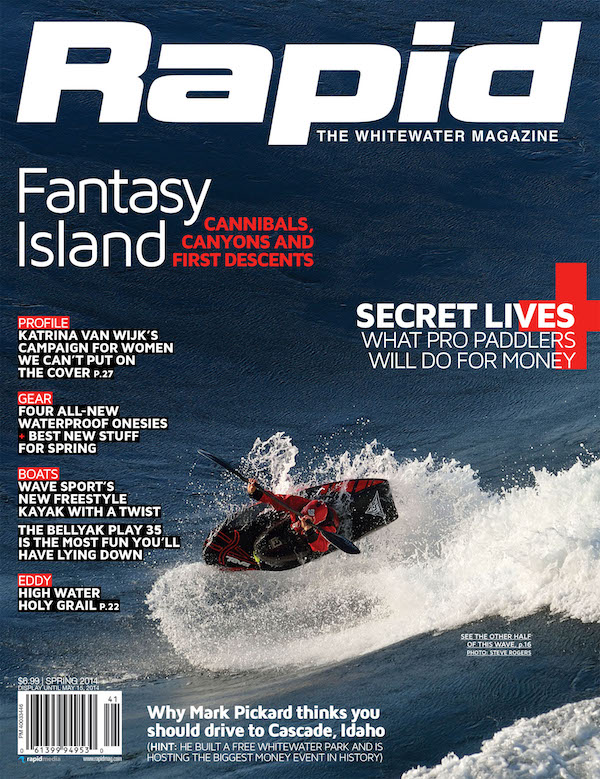
The term professional athlete elicits images of the elite—pros that get paid to train and compete at the highest level, making a living doing what they love. In the world of whitewater there are only a handful of athletes who can paddle year round without having to get their hands dirty.
The truth for many of today’s top kayakers is that their days of extreme racing, waterfall hucking and freestyle combos are earned with weeks of hard work slinging beer, pouring concrete, digging holes or saving lives. Take a look at the double lives of these pros to see how top kayakers divide their time between work and whitewater.
How whitewater pros get paid and paddle
Tyler Fox, Concrete Laborer. | Photo: Courtesy Tyler Fox
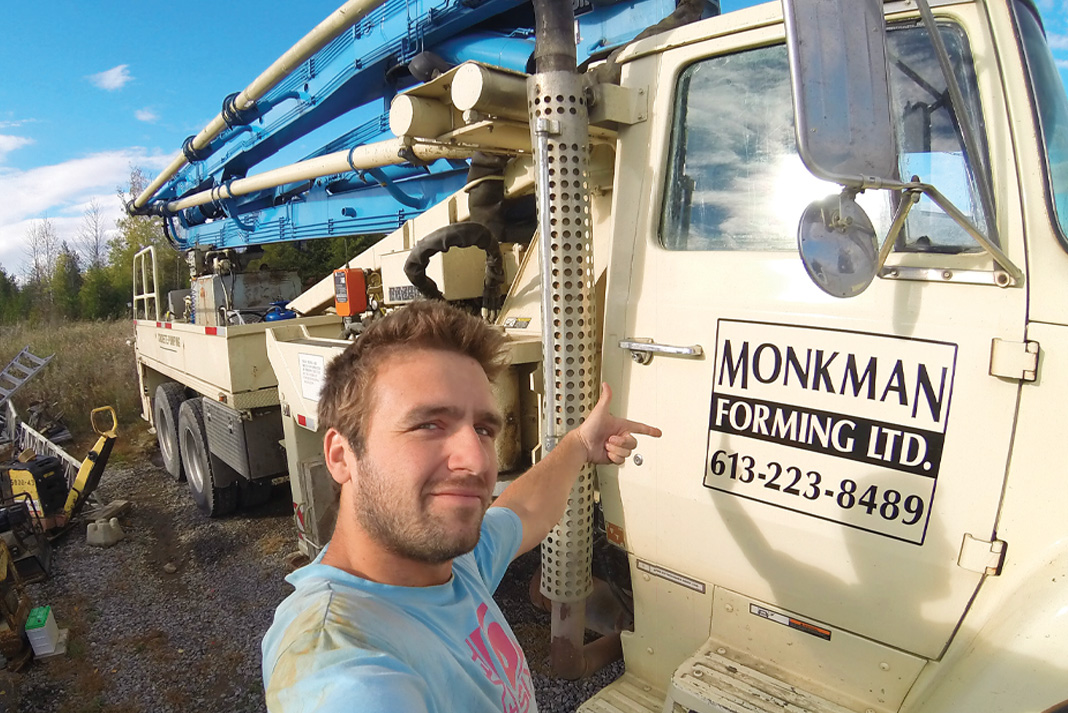
1 Tyler Fox, Concrete Laborer
Tyler Fox doesn’t try to combine his paddling time with a job that pays his bills.
“I typically enjoy buckling down and pounding out a month or so of solid concrete work followed by a couple months of traveling and extensive paddling,” he says.
When the work is hard and the weather is unforgiving, Fox daydreams of paddling. “On really long, hard, shitty days at work, I like to think about getting paid in enjoyment. For example, instead of getting paid x amount of dollars that day, I like to think about how many days of traveling or paddling I can get out of the money that I make during that day.”
Fox supplements his seasonal concrete work with on-water jobs, including kayak instructing, raft guiding and photography, and is currently in New Zealand training hard for the upcoming season of extreme racing.
“I put concrete into places that need concrete in them,” explains Fox, of his less-than thrilling work for Ontario-based company, Monkman Forming. “The crew of people I work with makes it much more enjoyable,” he says of the other kayakers among his concrete co-workers.
“It’s just a quick month here and there to boost the bank account, so that I can head off on another adventure.”
Dream job
“Fireman.”
Wisdom from the workforce
“We need to own money, but we don’t have to let that money own us. If you’re struggling to go kayaking because of your work and you don’t enjoy your job, get one that allows you to do what you really want. You can always go back to your stink-ass job if you can’t handle having all that fun.”
Kelsey Thompson has made the transition from professional paddler to full-time filmmaker.
“I started shooting video of myself paddling to help improve my technique for competition,” says Thompson. As time went on though, he spent more time on shore shooting his friends kayaking, and soon Thompson discovered that it was the filming itself he had passion for. “When I started shooting cool sticks and leaves I knew something had changed.”
A former Canadian Freestyle Champion, Thompson’s work-to-play ratio has shifted. Though competitive kayaking has taken the back burner, paddling is an integral part of his nine-to-five.
“I shoot and edit films of all kinds, but 90 percent of the content is paddling related,” says Thompson. “I pretty much always paddle when I work.”
His job as an independent filmmaker is a dream come true. “Over the years I’ve learned to love shooting video as much as paddling. I’d say that’s what I like most about my job, the fact that I actually enjoy doing it!”
Dream job
“Filming some other outdoor sport” (skiing is his first love).
Wisdom from the workforce
“A lot of people associate work-life balance with sacrifice but if I have to work an eight-hour day I almost always have time to do something before or afterwards. For me it comes down to motivation—I just need to get up and do it!”
Nicole Mansfield, Server. | Photo: Tommy Hood
3 Nicole Mansfield, Server
After a day of whitewater in the Pacific Northwest, Nicole Mansfield isn’t sitting back enjoying a cold one—she’s serving them. The hours and flexibility of slinging beer and serving tables at a brewpub in White Salmon, Washington, allows Mansfield to kayak competitively.
“I try to make it to most of the local competitions,” Mansfield says, “but as a trade-off, I usually miss the after party.”
The evening hours of beer pouring fit perfectly around her paddling plans.
“I have a full day for kayaking, skiing, hiking or whatever else before showing up for dinner service at 5
One of the toughest parts of her daily aquatic to terrestrial transformation is telling customers how she got her newest collection of stitches, Mansfield says. “Explaining how I split my forehead open ‘rafting’ Metlako [a nearby waterfall] gets old.”
Dream job
“Big mountain skier, garbage man or helicopter pilot.”
Wisdom from the workforce
“Find a job that allows you to paddle frequently and doesn’t stress you out too much. Set goals for yourself; I find it easier to go to work if I have trips I’m saving for.”
Tyler Curtis, Heli Ski Guide. | Photo: Patrik Trädgårdh
4 Tyler Curtis, Heli Ski Guide
Tyler Curtis works on and off the water to sustain himself year-round. National coach for the Norwegian Paddle Federation, sales agent for Sweet Protection, author, private kayak coach and international paddling guide, Curtis is fully immersed in kayaking.
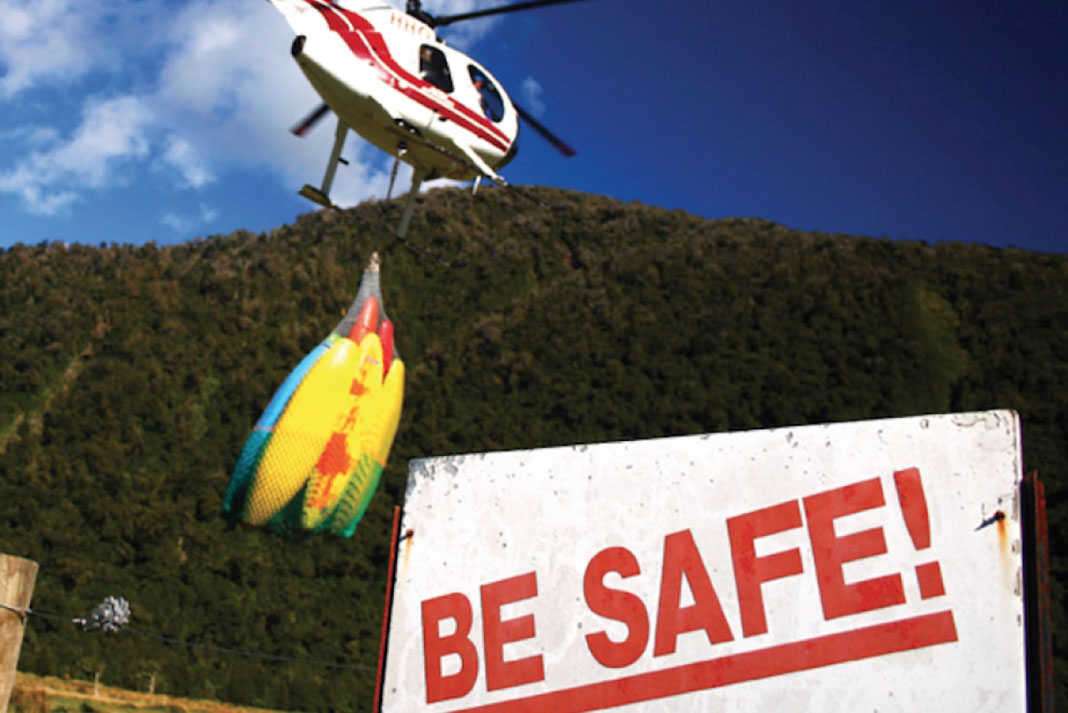
Recently, though, Curtis has spent his off-seasons submerged in snow instead of water. As a lead helicopter ski guide 200 kilometers from the Arctic Circle in Kittelfjäll, Sweden, his day job has high stakes.
Each day Curtis monitors snow conditions, briefs clients on helicopter safety, plans trip logistics and chooses safe terrain for each heli ski group’s adventure.
The five-time Canadian Freestyle Champion has transferred paddling skills to each new job. “The biggest thing I have gained through kayaking, which I apply to everyday life, is communication and having the social skills to deal with people,” he says. “This comes in handy when working in the tourism and customer service industry.”
Curtis’ lifestyle allows him to continue to be competitive in the freestyle and extreme racing scene. “By focusing on a lifestyle that allows me to work with the things I love, I don’t really see any of it as being work but rather living life to the fullest.”
Dream job
“Owning and operating a timbering company.”
Wisdom from the workforce
“Use your job to facilitate your paddling. Picture kayaking in your future and work toward it—don’t sacrifice everything for paddling today and miss out on a lifetime of paddling.”
Evan Garcia, Filmmaker. | Photo: Eric Parker
5 Evan Garcia, Filmmmaker
While many paddlers toil away on land, there are some who have made the river their office. Evan Garcia is one of those lucky people. As a professional filmmaker, Garcia has established himself as a whitewater storyteller—he’s worked his way into getting paid to paddle every day.
“My job is to kayak at a high level and make films about whitewater and the lifestyle of us river people,” says Garcia.
Though he’s well known for his smooth racing style, waterfall running and filming of remote and exotic multi-day river expeditions, Garcia says it wasn’t easy to get where he is now.
He maintains what he calls a gypsy-kayaker lifestyle by managing his spending. “I don’t buy things I don’t need, splurge, or waste money…money is my one-way ticket to the river,” he says.
Garcia’s dedication has paid off. “I’m proud of myself for making the life choices that brought me here,” he says. “I knew that if I put everything I had into my paddling, maybe someday I could be one of those people that call the river their occupation.”
Dream job
“Owner of a tiki bar on the shores of the South Pacific.”
Wisdom from the workforce
“When I was working outside of the paddling scene I felt something special, every time I got on the water I was so stoked! Don’t lose that spark—when you get out on the river, soak it all in.”
Ben Marr, Manual Laborer/Driller. | Feature photo: Ryan Creary
6 Ben Marr, Manual Laborer/Driller
Ben Marr knows work and play go hand in hand. “Hard work for money, hard work for the take-out,” he says, comparing his off-season work to his big water boating.
When he’s not on the water, Marr is drilling holes and planting dynamite for a geo seismic exploration company in Grand Prairie, Alberta.
“My job is physically intense and demanding,” says Marr. “My pay is production based, so the more efficient and speedy I am, the better. I like that.”
He was introduced to the job by fellow paddlers who, like him, saw it as an opportunity to make money and have the flexibility to travel and kayak.
Marr does feel some of the perks of being a pro. “I could support a decent paddling season with my job but because paddling is priority número uno, I take off a lot of time to shred,” he says. That’s where sponsorships come in, providing a financial boost that helps Marr spend more time paddling than digging holes.
Dream job
“Rally car driver or professional lawn mower.”
Wisdom from the workforce
“Move to a place where kayaking is more accessible so you can cut down on time spent getting to and from the river. Make kayaking your priority. If you want it bad enough, you’ll find a way to make it happen.”
“The biggest skill I was able to take from kayaking and apply to my job is staying calm under pressure,” says Shannon Carroll. “I’m basically paid not to get excited when shit hits the fan. Instead, I have to perform.”
As an ER nurse in Grass Valley, California, she deals with everything from heart attacks to gunshot wounds.
Carroll had been kayaking professionally for eight years when she realized she was tired of being broke every fall.
Since becoming a nurse, Carroll has found “more financial freedom to focus my kayak energies on the specific type of kayaking that is my passion, creek boating,” she says.
The shift work that comes with the job allows Carroll chunks of time off to paddle— she’s currently training for an all-female paddling expedition to Brazil—and working in healthcare has helped her appreciate those opportunities more than ever.
“You can’t put a price on your health,” she says. “I see people everyday, young and old, being diagnosed with life altering diseases and I’m thankful that I’ve had the opportunity to lead the life that I’ve lived.”
Dream job
“Professional singer.”
Wisdom from the workforce
“Whatever you do, put your happiness and health first. Work and school will always be there—travel and live life to its fullest.”
Mariann Saether, School Teacher. | Photo: Martina Wegman
8 Mariann Saether, School Teacher
Well-established in the whitewater world, who knew Mariann Saether is equally proficient in her professional life? With a Masters degree in Medieval History, Saether teaches history, social science, English, Norwegian and math at a secondary school in Norway.
“It is an amazing feeling to be able to guide the youngsters through a pretty important phase of their lives,” she says. She acts as a mentor for many of her students who compete in skiing at a high level, helping them balance training with academics— a feeling she’s familiar with.
“I hope to make it to the Grand Prix in Quebec, but it is the same period as 60 of my students have their exams so it is not likely,” she says.
With an already-lengthy list of paddling accomplishments from freestyle to first descents, Saether is feeling the pull towards competitive paddling.
“The challenge,” she admits, “is to get enough time to paddle, which has left me pretty close to showing up to some of my classes still in my kayaking gear.”
Dream job
“Author.”
Wisdom from the workforce
“Have an end goal but break everyday life down to smaller goals. Do not be too hard on yourself if you cannot do it all every day.”
This article was first published in Volume 16, Issue 1 of Rapid Magazine. Subscribe to Paddling Magazine’s print and digital editions, or browse the archives.
Ben Marr, Manual Laborer/Driller. | Feature photo: Ryan Creary



 This article first appeared in the Early Summer 2014 issue of Canoeroots Magazine.
 Get the full article in the digital edition of Canoeroots Early Summer 2014.
 This article first appeared in the Early Summer 2014 issue of Adventure Kayak Magazine.








 This article was first published in Volume 16, Issue 1 of Rapid Magazine.



