Home Blog Page 295

Sit-Up Stern Stall How-To

Photos: Lisa Lind
Sit-Up Stern Stall How-To

 The Sit-up Stern Stall is an explosive flatwater trick that has recently become my new favorite. Now that boat design has distributed volume in all the right places we can use our power and body positioning to get our kayaks vertical.

I have written down a few pointers along with a sequence photo of how this flatwater technique works.
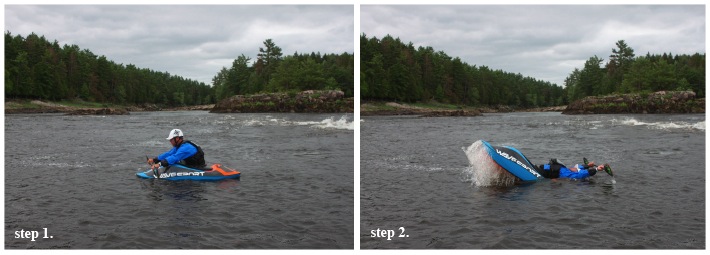
Technique1

Step 1.

With your kayak sitting still, your first task is to get all your weight and body mass to the bow of the kayak. Think about bending at the hips and stretching your arms and paddle forward—way forward.


Step 2.  

Throw your entire upper body and weight to the stern of your kayak. Again make sure to reach with your arms and paddle. Your entire body should be on the back deck and stretched out. This will also lock your knees into your thigh braces and set you up for your next step.
Technique4

Step 3.

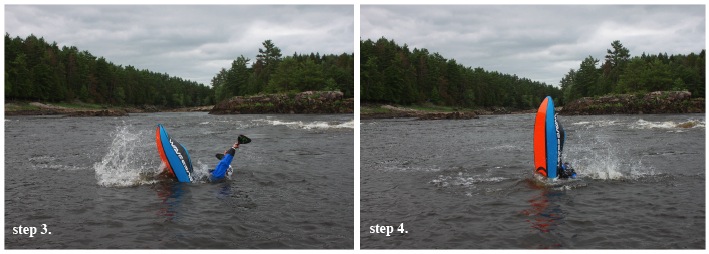
With your upper body stretched out start to pull up on your knees/thighs while sitting up. Your body should be doing a sit-up but focus on keeping your upper body stretched out so you are using all your upper body muscles and not just your lower crunch abs. You should be trying to pull your feet and hands together to get the maximum leverage to force the stern of your kayak under the water!

Note: If you try to crunch your torso to bend forward you will simply push your kayak back to flat. Remember stay stretched out with your torso and use your leg muscles as well.


Step 4.

Once you have finished your sit-up and your boat starts to approach vertical, you can once again lay your body toward the back deck (stern of your kayak). Reach your paddle blades toward the stern and into the water. By lying back at this point you will help the momentum of your kayak and add weight to the stern to get the volume of the boat under water. Continue to pull with your legs to get the boat fully vertical.
Technique5

Step 5.

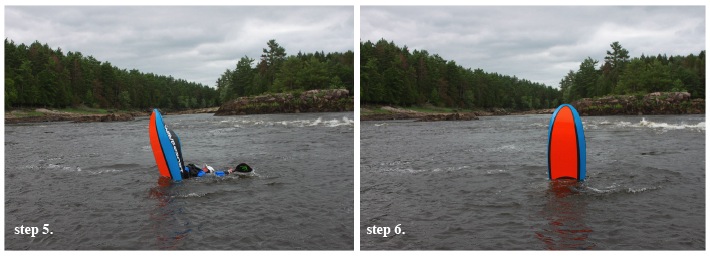
Once the boat is vertical your can start to sit forward again to find your neutral body position and balance point of your stern stall.

Note: If you continue to lie back after step 4 your boat will be pulled over vertical. You need to sit back neutral to stop the momentum and establish your stern stall by finding the balance point. It may also help to push your legs away from you to stop the momentum.


Step 6.

Now that you have found your balance and neutral position you can chill out in a stern stall and keep working on your paddler six pack abs.

This technique takes some serious explosive power and some time to perfect. Try it out and add something new to your bag of tricks.


—Tyler Curtis, www.riverplay.ca
 

Kayak Keview: Valley Gemini SP Kayak

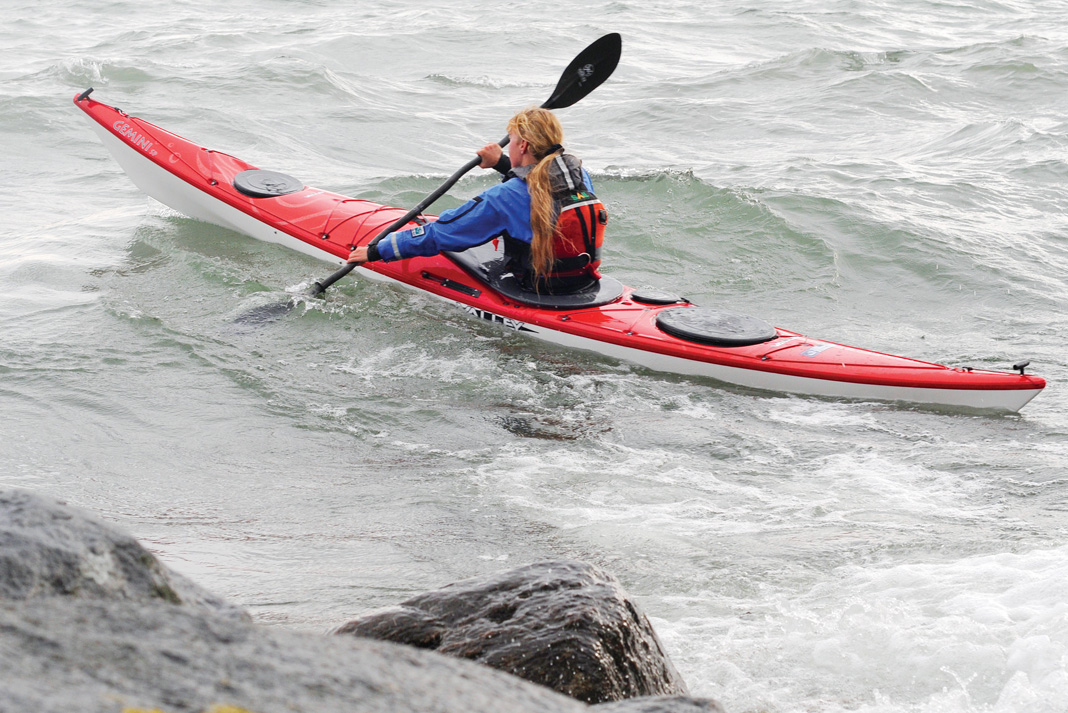
TWIN ENVY. PHOTO: PO MARSHALL

In Greek mythology, Castor and Pollux were Gemini, the twins. Like most twins, the brothers were similar in appearance but disparate in personality and talents. Both were adventurers and Argonauts, but Castor was a skilled horseman while Pollux’s talents lay in boxing. (Unlike most twins, the Greek heroes also had different fathers—mortal Castor’s a human king, immortal Pollux’s the god Zeus).

Improbable genetics aside, the Gemini myth demonstrates the Ecclesiastical adage that two are better than one.

Valley Gemini SP Specs
Length: 14 ft
 10 in
Width: 22 in
Weight: 45 lbs
Price: $3,500
valleyseakayaks.com

Designers at British boat builder Valley Sea Kayaks reached the same conclusion when they decided to enter the compact touring kayak market for the first time. As Valley puts to develop a proper sub-16-foot kayak was complicated by the spectrum of reasons a paddler might seek out a shorter kayak.”

The solution? Twins. Valley split the egg, creating two boats from the same design and tuning each for a specific purpose. The Gemini SP (Sports Play) is the playful twin, prioritizing maneuverability, agility and strength. The Gemini ST (Sports Touring) is more journey-oriented, emphasizing speed, tracking and lighter weight.

Of course, Valley is quick to point out, you can still play in the touring version and tour in the play one, but “the further you get to the ends of that use spectrum, the more you’ll benefit from the specialist.”We put this claim to the test in the mercurial waters of a late autumn rendezvous on Lake Superior. When

the hoped-for witch of November fails to come stealing, I find myself paddling the Gemini SP on a scenic tour of the coast, sprinting across placid waters with a pod of Nordkapps and Explorers.

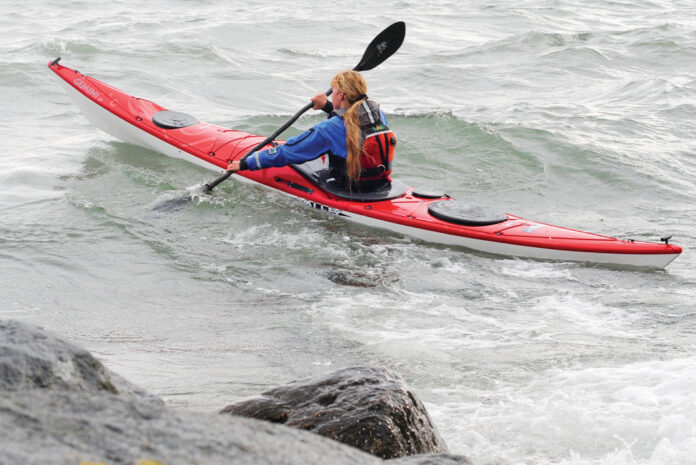
Considering the SP’s pronounced rocker, hard chines and flatter mid-hull profile—not to mention the two-to-three-foot longer waterlines of conventional expedition kayaks—I am pleas- antly surprised that it is able to keep pace. While I am undoubtedly working harder than my companions, the SP doesn’t possess the chelonian flatwater performance of some play- biased boats. Tracking is more than adequate with the skeg deployed, I discover when a beam wind teases us on a crossing.

TWIN ENVY.
PHOTO: PO MARSHALL

Getting in close and scooting through clefts in the cliffs at Montreal River is a highlight of our tour. Unlike many bigger boats, there’s no need for dramatic edging to make effortless turns. Combined with forgiving initial and secondary stability, this makes the SP as much fun for developing paddlers playing a shoreline in calm water as it is for more advanced folks throwing it around in surf or rock gardens.A day later and 500 miles to the south, the wind is blowing furiously on my local lake, hurling steep, short-period waves against the shore.

Hardly the sensuous swell of the ocean, but the SP doesn’t mind. It accelerates quickly with just a few strokes, matching speed with the impatient breakers. The high volume bow stays out of the troughs and the stern stays loose while surfing, making the boat easy to turn and resistant to broaching.

Like Castor and Pollux, the Bryan Brothers and Ashley and Mary-Kate, the Valley Gemini twins demonstrate two really are better than one. Both boats are spacious enough to accommo- date weekend tours, but if your inclinations lie toward cover- ing distance look to the Gemini ST. From placid gunkholing to rollicking rough water, however, the Gemini SP is a play partner nonpareil.

Sit and Fit

A keyhole cockpit and con- toured thigh braces provide a secure fit with room to relax. No ratchets or risers here, just a padded seat and low profile backband.

Twice as Nice

Both Gemini benefit from impeccably finished vacuum- infused composite con- struction, a new technique for Valley that allows up

to 20 percent reduction in weight. A reinforced lay-up for roughhousing adds 7.5 pounds to the SP. A polyeth- ylene version is also available.

Peel and Stick

Three rubber hatches—stan- dard round bow, oversized oval aft and teeny-weeny day—provide a bone-dry seal.


AKv14i1 cover300This article first appeared in the Adventure Kayak, Spring 2014 issue. Subscribe to Paddling Magazine and get 25 years of digital magazine archives including our legacy titles: Rapid, Adventure Kayak and Canoeroots.

Urban Escape: Guide To Paddling The Grand River

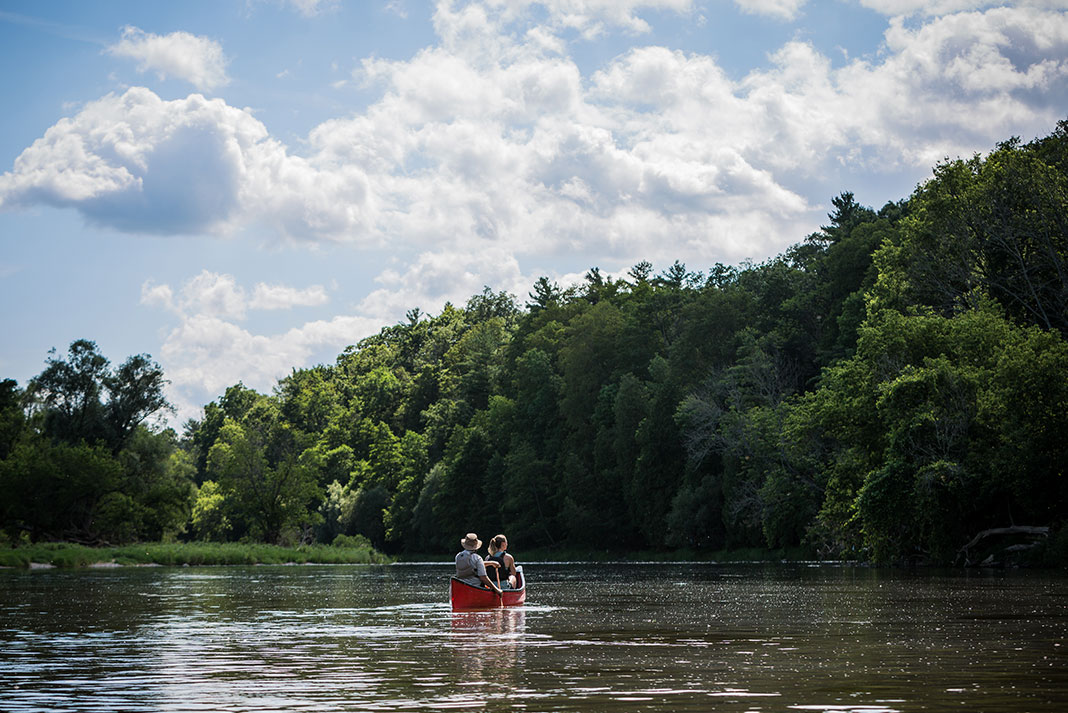
Canoe travelling down a river with forest on either side.
Wilderness feel, easy access from the city. | Photo: Destination Ontario

Sounds grand doesn’t it? Of course—it’s the Grand River. The Grand flows 300 km from its northern source in Dundalk to its mouth at Lake Erie in the town of Port Maitland. Along the way, it passes through the backyard of Canada’s most densely populated region, some 100 km southwest of Toronto and easily accessible from highways 401 and 403. Roughly 6 million people live within an easy hour’s drive of this paddling paradise, but you’re unlikely to encounter any of them on this hidden jewel.

Flowing through both the exquisite beauty of Ontario’s largest preserved Carolinian forest and a number of towns and cities, the Grand offers a rare contrast of urban and wild settings. With an early start there’s a good chance of glimpsing deer, raccoon, beaver and coyote. And you may become tired of counting the plentiful bird species including blue herons, cranes, ducks, red tailed hawks and even bald eagles.

Canoe travelling down a river with forest on either side.
Wilderness feel, easy access from the city. | Photo: Destination Ontario

Canada added the Grand River to its exclusive list of Heritage Rivers in 1994, as much for its human heritage as for the preservation of its unique natural setting.

Evidence of aboriginal culture dating back 10,000 years has been uncovered along the banks of this ancient human highway.The 1800s saw the completion of a series of dams and locks, which allowed the Grand River Navigation Company to warp scows and barges laden with commerce to and from the many settlers in the bustling riverside communities—settlements that grew into present-day cities like Kitchener, Cambridge, Brantford and Paris. The canals and barges are long gone, but several dams remain, regulated by the Grand River Conservation Authority (GRCA) to ensure adequate flows year-round for water quality and recreational purposes.

If you’re interested in Grand River paddling—whether by canoe, kayak, paddleboard or raft—read on to learn more and plan your trip.


Why go?

The beauty and serenity of this river system is the biggest surprise… The most common comment from new paddlers is, “I can’t believe I am one hour from Toronto and paddling in a setting like this!”


Keep an eye out for…

Bald eagles, osprey, beaver, mink, numerous song birds, vultures, turtles, fish and deer.

[ Paddling Trip Guide: View all paddling trips in Ontario ]

Best paddling route

Canoe Grand River Cambridge to Paris

While much of the lower half of the Grand is navigable by kayak, the most enjoyable section is the 18 km between the south end of Cambridge and the picturesque town of Paris (named after plaster-of-paris and not the famous French city). This section’s swifter current and steep forested bluffs block out signs of city life, intensifying the wilderness experience, while the shallow water negates any chance of encountering the drone of power boats.

Start your adventure by launching at the put-in beside the Petro-Canada gas station just south of Cambridge on Hwy 24 (you can find the parking lot here). Here you’ll find free parking and a ramp to the river. Ten minutes adrift down the river and you’ll leave behind any signs of urban sprawl. This is the fastest section of the river, other than a small stretch of some serious whitewater up north in the Elora Gorge. Occasional sets of minor rapids offer an exciting twist to the serene drift of the river current. Paddlers cruising in kevlar or museum-quality kit boats might opt for a plastic rental boat to avoid the unavoidable scratches and dents. A leisurely two- to three-hour paddle will take you to the lift-out and portage at river-left just under the railway bridge, a hundred yards above Penman’s Dam in Paris.

While there are scattered homes and farms visible near the city boundaries at each end of this trip, you’ll see very little evidence of human influence in-between with the exception of two car bridges and the massive abutments of an abandoned CNR railway bridge. Watch for the ruins of an old mill hiding in the trees on the left bank just before the second bridge near Glen Morris.

The occasional muffle of human voices echoing from river-left might be mistaken for the ghosts of paddlers past but are merely the sounds of hikers and bikers enjoying the Cambridge–Paris Rail Trail which follows an old rail line along the river for this entire section. There are several lookouts from the trail with excellent views of the river, and the pathway allows paddlers to opt for a bike shuttle instead of the two-car shuffle. You can leave your bike chained to a tree near the take-out in Paris, then lock your kayak there when it’s time to ride the 18 km back upriver to your car.

Alternatively, you can make shuttle and/or rental arrangements through one of the local outfitters or even catch a cab back to the Petro-Canada station.

Whichever way you choose to arrange your shuttle, make sure to check out downtown Paris before you head home. Follow the trail from the portage to the bridge across the river. The businesses back onto the river and the cars still park diagonally on the main street. Check out one of the local diners such as Stillwaters Plate & Pour and Cobblestone Public House.


Where to stay

The Grand offers three- to seven-hour canoe trips as well as multi-day trips. Paddlers can camp on the riverside during multi-day trips. There are also many hotels, B&B and campsites nearby.

Campgrounds

Hotels and B&Bs


Outfitters

Gear rentals, guided tours, trip planning and shuttles are all offered by the following outfitters along the Grand:

Canoeing The Grand

  • Location: Kitchener, Ontario
  • Section of river: Elora to Cambridge

Grand River Rafting

  • Location: Paris, Ontario
  • Section of river: Cambridge to Brant Park

Grand Experiences Outdoor Adventure Company

  • Location: Paris, Ontario
  • Section of river: Cambridge to Brant Park

Wilderness feel, easy access from the city. | Photo: Destination Ontario

Five W’s: Quest for the Northwest Passage

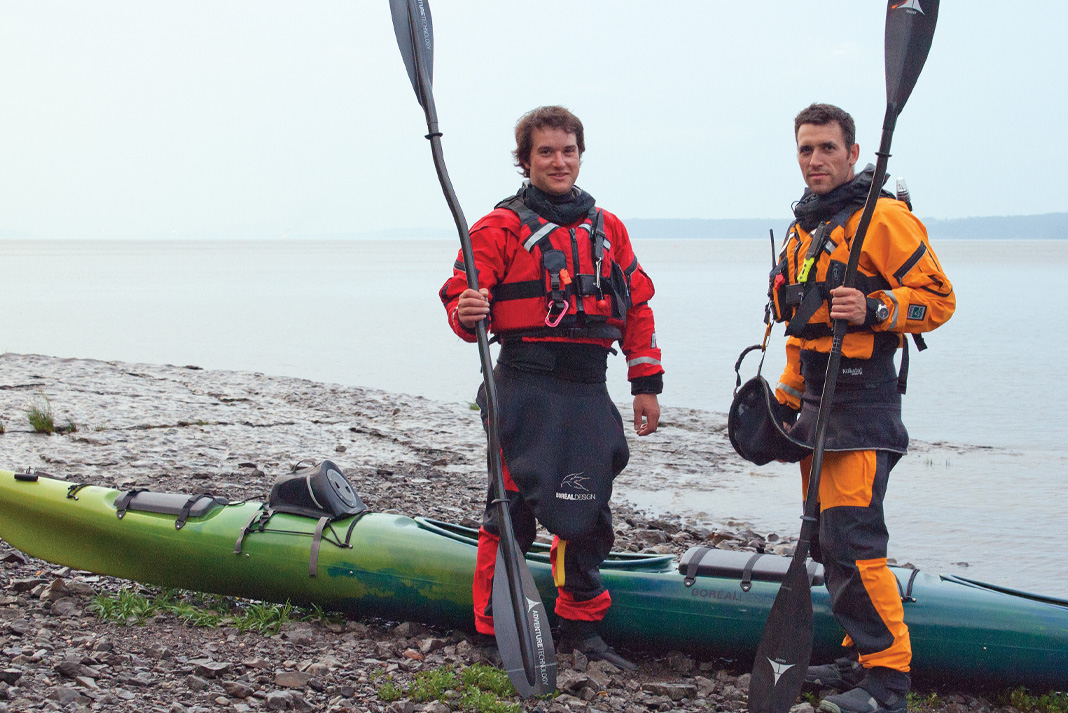
Five W's: Quest for the Northwest Passage | Photo Sebastien Lapierre

Sébastien Lapierre and Olivier Giasson were new to sea kayak expeditions when they launched their tandem into the Arctic Ocean in July 2013. The Quebec firefighters were attempting to be the first to complete a single-season transit of the legendary Northwest Passage by sea kayak, 3,500 kilometers from Tuktoyaktuk, Northwest Territories, to Igloolik, Nunavut. We caught up with Lapierre, 35, to learn how they fared on an audacious, 80-day expedition that was appropriately billed Rêve de Glace—Ice Dreams.

WHERE did the name of the expedition come from?

We did a 30-day ski expedition in Greenland in 2010 and fell in love with the Arctic. We were living our dreams up there and we really wanted to return. At home we started hearing a lot about the Northwest Passage in the news—about global warming and less ice coverage. We realized maybe one day all we’ll be able to do is dream about icebergs. So I started researching a trip. Why not do the whole thing in a kayak? After three years of planning we were ready to go.

 WHO made the call to take a tandem?

We both thought it was the right move. The main factor was that it’s more efficient to paddle a tandem than to both paddle solo kayaks. On the other hand, we had less storage space. But with a tandem one of us could be eating while the other paddled so we didn’t have to stop for rests. In the end, we made it further than all of the others who were also up there last year trying to do the Northwest Passage in rowboats. A kayak handles much better in the wind.

Five W’s: Quest for the Northwest Passage | Photo Sebastien Lapierre

WHEN did you realize you weren’t going to make it?

We picked the coldest summer in 20 years and the ice was a real challenge. Had we done the trip a year earlier we probably wouldn’t have encountered any ice. We still pushed it to the maximum and made 2,800 kilometers in 60 days. It was disappointing because we were two days ahead of schedule and we had time to make it, but there was no way we could’ve continued on from Gjoa Haven [Nunavut] because of the ice. We knew this could happen before we started. Sometimes you have to be humble and say maybe next time.

WHY do you love the Arctic?

It’s something about the cold; you just feel alive up there. The landscape is so magnificent and the light is different: A sunny day in the North is different from a sunny day in the south. The North has always been a magnet for me and now that I’ve tasted it, I know all my future projects will be close to the poles.


AKv14i1 cover300This article first appeared in the Adventure Kayak, Spring 2014 issue. Subscribe to Paddling Magazine and get 25 years of digital magazine archives including our legacy titles: Rapid, Adventure Kayak and Canoeroots.
FLORIDA’S NATURE COAST

Photo: Scott Smith Photographic
Crystal River, Florida

Award-winning professional photographer Scott Smith’s images are rooted in the misty cypress swamps and sparkling aquamarine waters of Florida’s wildest counties. He and wife Erin are so fond of the Nature Coast—the state’s most remote coastal region north of the Everglades—they recently said their vows at Three Sisters Spring… in their kayaks, of course.

FLORIDA ISN’T ALL SANDY BEACHES and theme parks. Citrus County has managed to escape the rapid development that is consum- ing the rest of the Sunshine State, preserving a sleepy region of stunning natural beauty. The rivers and springs here can be paddled year-round, with each season offering something special.

On sweltering summer days, we’ve experienced nature’s air con- ditioning while gliding across crystal clear water that remains a con- stant 72 degrees. In cooler months, manatees gather in the springs to enjoy the warmer waters, often swimming right up to inspect a swimmer or kayaker.

Our favorite spot for manatee viewing is Three Sisters Spring. Pad- dling into the springs right at sunrise, before any of the tour compa- nies arrive, is an unforgettable experience. In the chill morning air, the first sunbeams dance upon the fog rising off of the spring waters. Manatees mingle where the three boils transform the water from cloudy to crystalline, and we enjoy a connection unlike anything else on this watery planet. ERIN LEIGH ROHAN

TRIPS

If you have a half-day paddle the Crystal River to King’s Bay and explore some of the bay’s 30 springs, including Three Sisters Spring.

If you have a day tour the eight springs along the pristine Ichetucknee River. Averaging just 20 feet wide, the river flows six miles through shady hammocks to the Santa Fe River. To avoid crowds of people on inner tubes, save this trip for early spring, fall and winter.

If you have a weekend put in at Chassahowitzka Springs and paddle “The Chaz.” En route, explore the many smaller springs tucked away on lush, densely canopied tributaries. Don’t miss the Crack, a head spring hiding up jungle-like Baird Creek.

If you have a week follow the blackwater Withlacoochee River South Paddling Trail from Green Swamp to the Rainbow River, ending at Rainbow Springs. Numerous access points and campsites make this a relaxing journey through scenic sandhills and cypress swamp.

STATS

POPULATION

139,360 (Citrus County, 2012 census)

AVERAGE TEMPERATURE

81°F (July) 56.5°F (January)

WILDLIFE

Manatee, deer, otter, black bear, beaver, great blue heron, moorhen, osprey, alligator

CAMPSITES

Developed, sand

SPRINGS

More than 700 in Florida, Citrus County has the highest density.

DIVERSION

Take in a mermaid show at Weeki Wachee Springs.

BEST EATS

Vintage on 5th—upscale southern comfort food in Crystal River. The Freezer Tiki Bar—Homosassa Springs’ local favorite, fresh caught seafood served wharf-side.

OUTFITTERS

Crystal River Kayak Company— rentals, launch site near Three Sisters Spring; www. crystalriverkayakcompany. com. Paddle Florida— Gainsville-based non-profit organizes group tours on many scenic waterways, including the Withlacoochee; www.paddleflorida.org.

MUST-HAVE

Dive mask and snorkel


AKv14i1 cover300This article first appeared in the Adventure Kayak, Spring 2014 issue. Subscribe to Paddling Magazine and get 25 years of digital magazine archives including our legacy titles: Rapid, Adventure Kayak and Canoeroots.

Editorial: One Fifth is Waiting

Photo: Virginia Marshall
Editorial: One Fifth is Waiting

72 hours. That’s the longest I’ve been pinned down on shore, waiting for a break in the weather. Back on those wind-lashed cobblestones, three days felt like an eternity.

When I was guiding sea kayaking trips full-time, one of my most inspiring—and exasperating—clients was a septuagenarian from Germany named Max. Athletic and high-strung, he was not in the habit of waiting for anyone or anything. Our weeklong trip together was plagued by high winds and we were often driven ashore miles short of our planned camp, waiting for safer conditions.

Max grew restless as soon as we’d hit shore. Pacing the beach, heedless of the foaming seas, his eyes fixated on some distant headland. “We’re going now?” he’d ask before long, the words sounding more like a command than a question.

At my earlier suggestion, the other members of our group had already set up their tents and immersed themselves in books or beachcombing. But Max’s Feathercraft—purchased especially for this trip—remained at the water’s edge, fully packed and ready to launch.

Worried he might make a solo break for it, I tried reasoning with him. Max was a retired engineer, so I assured rationally, “The forecast is for lighter winds tomorrow—it won’t be any trouble to make up lost miles.” When that failed, I appealed to his inquisitive nature, “The map indicates a waterfall on this creek…why don’t you hike up and try to find it?” Nothing. I tried empathy, “You’re a strong paddler Max—I know you could handle these waves but we must wait until it’s safe for the entire group.”

Still, Max moped around our island like a prisoner. Finally, I could take no more. “Max!” I pressed him, “What’s the hurry?”

That’s when I learned that my elderly German guest, having literally waited a lifetime to paddle in the Canadian wilds, was not interested in waiting a moment longer. “One third of life is sleeping and one fifth is waiting,” he said by way of explanation. With Max, some things got lost in translation. But I understood his meaning perfectly—he simply couldn’t afford to squander the rest.

I waited seven years to road trip to British Columbia with my kayak (a trip that yielded the itinerary in “Hit the Road,” page 64 of this issue). If there’s one regret I have about those two blissful months of exploring, it’s that I didn’t do it sooner.

For this special issue of Adventure Kayak, we asked correspondents, friends and readers what adventures and experiences top their life lists. Then we took all those inspiring plans and aspirations and packed as many as we could into a single year. Because why wait a lifetime to live your dreams?


When she’s not waiting for next issue’s drafts, Adventure Kayak editor Virginia Marshall lives her dreams one paddle stroke at a time.


 AKv13i1-01webThis article originally appeared in Adventure Kayak, Spring 2013. Download our free iPad/iPhone/iPod Touch App or Android App or read the rest of the issue here for free. 


Practice the Dump

Photo: Body Boat Blade
Practice the Dump

So you have a solid roll and you know how to self-rescue after a swim? The next step is typically the time-consuming, tippy and treacherous process of pumping out your flooded cockpit. But there is another, faster way to a dry boat.

Practice the Dump to quickly empty water from your cockpit after a cowboy self-rescue (aka scramble—learn it here) or reenter and roll. Using the same principles as a standard T-rescue, the Dump empties water from the cockpit with the rescued paddler sitting inside his or her boat. According to Body Boat Blade International’s Leon Somme and Shawna Franklin, who shared this video of the technique, “The Dump is a fast, simple way to empty a boat for someone with a solid roll and a helpful friend.”


To see more kayak technique videos, visit Body Boat Blade’s YouTube channel here.

Nail the Sea Kayak Back Deck Roll

Photo: Rochelle Relyea

While the back deck roll is far less common than the sweep or C-to-C roll, in some situations it’s the fastest because it skips the setup step required by some other rolls. It’s particularly useful for surfing situations where you often flip in a stern rudder position, which sets you up perfectly to execute a quick back deck roll. It’s so fast, you may even be able to keep riding the same wave.

Some paddlers say the back deck roll puts undue strain on the shoulder and leaves the face exposed to injury, but in reality, if you keep your hands in front of your body and don’t overextend your arms, the back deck roll doesn’t present any additional risk to your shoulder. The primary restriction for this roll is the boat—high stern decks and tall seatbacks prevent you from lying back far enough.

If you use an offset paddle with a right-hand control feather, it will be easiest to perform the back deck roll flipping to the left, with your right blade doing the work as shown here. If your blades are unfeathered, it won’t make any difference which direc- tion you choose to roll.

Photo: Rochelle Relyea

11 Begin by sitting upright with your paddle held comfortably in front of your chest, elbows low and wrists cocked back so that your right paddle blade is facing down, parallel with the water’s surface. You’re now forming a rectangle with your arms, paddle and chest. This rectangle should stay relatively intact throughout the roll. From this position, start to lean back onto the stern deck and aggressively turn your head and upper body to the left.

2Think about trying to kiss the stern deck of your boat as your head leads the way through the twisting motion of this roll. Plant the power face of your left paddle blade at the stern of your boat. As you continue to flip, keep turning your body and get your right blade in the water as quickly as possible. This right blade will provide the support to roll the kayak. You are now effectively lying on the back deck with the kayak upside down above you.

3Continuing to lead the way with your head and body, push your right blade out in a wide arc above your head, past your stern and out to the opposite side coming back toward to your toes.

4As the blade clears the stern and sweeps toward the bow, hip snap the boat upright by driving your right knee skyward. Your wrists must remain cocked back throughout the sweep to maintain a sculling angle on the blade, keeping it near the surface and providing the high brace that your hips need to roll the kayak upright.

5Maintaining the rectangle between your arms, chest and paddle, continue to swing your body forward through the last part of the roll, raising your head last. When your right blade finally reaches your toes, your boat should be completely upright and your body in a good position to take the next stroke.

Cover Shot of the Adventure Kayak Magazine featuring articles on mastering the kayak roll.This technique feature originally appeared in Adventure Kayak, Early Summer 2007. To learn more self-rescue skills, download our free iPad/iPhone/iPod Touch App or Android App or continue reading here for free.

Editorial: The Three Types of Fun

Photo: Mike Monaghan
Editorial

This editorial about the outdoor Fun Scale originally appeared in Canoeroots and Family Camping magazine.

It happens to me on most trips. Usually on a portage, the yoke grinding against my collar bones; the unevenly packed food barrel on my back pulling just enough to one side to make me miss every third step; the drone of mosquitoes inside the overturned hull reminding me that if I swing an arm to swat, I’m going down. It’s the moment when I question whether I’m having fun.

It’s no wonder I’m often met with a blank stare after trying to convince non-paddlers that this stuff is enjoyable. Sometimes I feel like telling people that if they have to ask, they probably won’t understand. But I want to share the good feeling I get from canoeing and writing people off is unproductive.

So, my strategy has been to use the Fun Scale. If you’re into mountain climbing, you may have heard of the scale before. A mountaineering guide first introduced me to the concept and it applies just as well to canoeing as it does to climbing.

Type I fun is the purest type of fun. It’s fun while it’s happening. It would be great if it never ended, and when it does end, it can’t happen again too soon. It’s bluebird days, skinny-dipping, long weekends, s’mores or stopping for a cold beer and a hamburger on the way home. It’s the moments you hope for when planning your trip. Curiously, the giddy feeling Type I fun instills rarely lasts long enough to sustain me until my next trip.

In the moment, you’d be hard pressed to call Type II stuff fun. You might be glad when it’s over and you’re probably not looking forward to it happening again. For me, Type II usually includes long portages, five a.m. wake-up calls, weather-bound days, collecting firewood, plain oatmeal and blackfly season. This type of fun makes for great campfire stories and inspires me to plan my next trip. It may involve rattled nerves and frustration while it’s happening, but it builds character and makes us better paddlers and better people.

Type III fun isn’t fun at all. Not while you’re doing it, not afterwards. It can’t be over fast enough and you look forward to the day when you forget it ever happened. Examples of this one are limited only by the imagination. I’ve had my share of Type III moments. In fact, the guide that shared the Fun Scale with me did so as I was being evacuated from an Alaskan mountainside with a perforated lung. The old saying “what doesn’t kill you makes you stronger” applies here. And while that might be the case, it doesn’t mean I want to relive those moments and it’s difficult to look back on them with a smile.

When doubt creeps into my head, I make an effort to recognize it’s probably just a Type II moment. Type II fun is, after all, still fun. And when the trip is over, I can relate my experiences, making fellow paddlers smile around a campfire and helping those who have to ask understand a little better.

Michael Mechan has developed a knack for turning Type III moments into Type II fun.


This article appeared in Canoeroots & Family Camping, Spring 2012. Download our free iPad/iPhone/iPod Touch App or Android App or read it here.

Why We Paddle

Photo: Virginia Marshall
Why We Paddle

It was already afternoon and we had yet to launch the boats. I had been duped—this wasn’t a paddling trip with friends! The strange thing is, I didn’t care. It was, after all, still a trip with friends.

Paddling can be many things to many people. Tripping with friends. Soaking up afternoon sunshine. Exploring new places and revisiting favorites. Sleeping under the stars. Living well outdoors. Fitness. Therapy. Adventure. Challenge. I noted this on Facebook after my trip and asked readers, why do you paddle?

Some cited the ability to get away from the urban clamor. “It gets me into the outdoors to explore nature,” shared Penny Swisher Hartlaub. “You can enjoy nature without really intruding on it,” wrote Mira Chambers Robins. “The nearly complete silence—I can ease up along the shore and watch turtles and ducks nesting,” agreed Garrett Martin.

For Rod Bailey, “It is the independence to do whatever I want on the water.”

Many echoed Farid Silman Winstanley, who replied, “Peace, freedom and sometimes adrenaline.” Denise Hexum confided, “It gives me peace—sometimes I run to the water.”

One of the last posts reads: “It’s my Zen!” My mind reaches back to an image of Seinfeld’s Frank Costanza raising his hands to the sky and yelling “Serenity now!” in a tone that was anything but serene. I look at the Zen author’s profile picture. She certainly looks relaxed.

Paddling has an alchemist’s transformative touch. Exercise and exposure to sunlight, both common ingredients in time on the water, stimulate production of serotonin, the happiness hormone. Increased physical fitness contributes to a host of health benefits too numerous to name.

Further, the act of discovery and exploration, and the challenge of developing new skills, can actually grow your brain. Acquiring a complex motor skill—like learning to roll a kayak—exercises our brains as well as our bodies, stimulating new neural growth and pathways and increasing cognitive function.

And, of course, there are the people we meet and the relationships we develop through our aquatic passions. “I kayak with a great group of people,” attested Shar McCoy Mallory on the Facebook poll.

Moving around the country has left me with friends scattered far and wide. Many I met through paddling, and most often it’s this activity that continues to bring us together. Even if we spend more time sharing stories around the campfire or lounging in the sunshine than we do making miles on the water.  

PaddlingMag Dec13 Cover

This article first appeared in the December issue of Paddling Magazine.