Home Blog Page 302

How To Get A Grand Canyon Trip

Photo: Michael Mechan
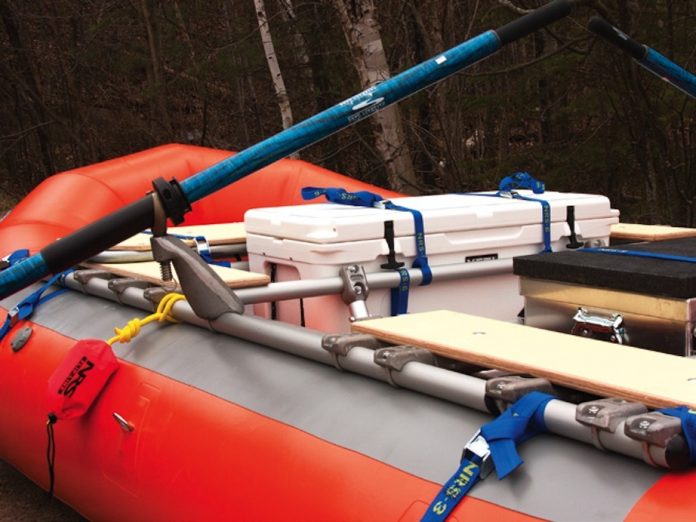
Canyon Rig


An epic 280-mile, self-support run of the Grand Canyon is a perfect way to humble your spirit and marvel at the vastness of one of our world’s greatest wonders. The question is: how do you get on the river without the wait?

Every year 8,000 rafters, kayakers and open boaters run the river, accounting for just one percent of total Grand Canyon visitation. In the off-season, regulations limit launches to one trip per day; in peak season, launches alternate between one and two trips per day. This includes both commercial and private trips. Still, in November 2011, our group put onto the mighty, 24,000 CFS Colorado River after waiting just three months for a permit.

Your best odds for a Grand Canyon self-support launch ticket are the supplemental lotteries for canceled permits. Plan to go in the winter months—October to March—when the weather is nippy but there are inevitably more open dates. If you can go on short notice, your odds are even higher. Supplemental lotter­ies are held five to seven times a year; get on the Park Service’s email list to be notified in advance of each lottery. Look at the stats for the most popular dates, and then avoid these when you enter your bid.

The lottery is weighted to give more points to those who have never been on the river or have not won a trip in at least five years. Find a trip leader who has never been down before, as he or she gets five bonus points for the targeted launch date. Each person in your group should independently submit bids for the same launch date. If you can organize 16 people (the maximum group size), each with five points, to submit for the same date, then the trip will have 80 chances of winning—al­most a sure thing for a winter launch date.

Be careful with this system if you plan on running the river again in the next five years. A winning bid that you don’t use goes straight back to the bottom of the barrel and reduces your chances in the future.

It is crucial to know that the winning trip leader (TL) must go on the trip. If for any rea­son the TL doesn’t make it to Lees Ferry on the appointed date, your launch is canceled. Not all is lost if this occurs, Las Vegas is only five hours away.

List a few alternative trip leaders (ATLs) on the application. If the TL cannot make it, an ATL may be substituted as the permit holder and life floats on. One important caveat—the TL and all ATLs should hold the same number of points; if the TL has five points and one ATL has one point, the application is given a weight of one point. Good luck!

Learn more about Grand Canyon trips and permits here: http://www.nps.gov/grca/planyourvisit/whitewater-rafting.htm 

This article originally appeared in Rapid, Early Summer 2012. Download our free iPad/iPhone/iPod Touch App or Android App or read the rest here. 
 

Trips: 10 Worst Portages

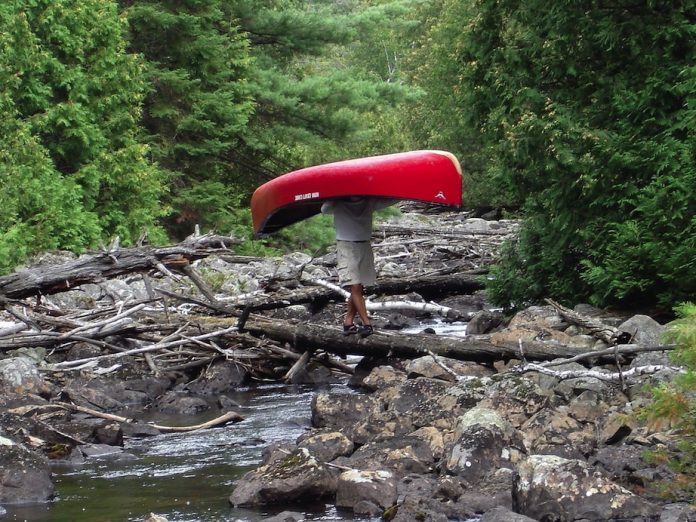
Photo: Dana Jorgenson
Worst portages

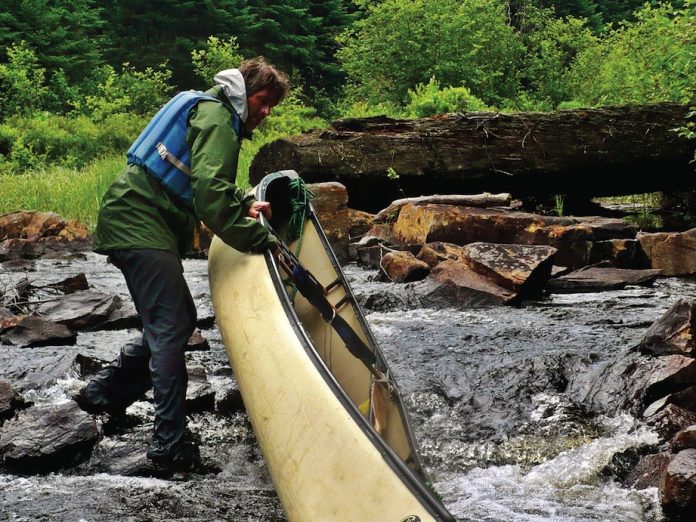
 No canoe-tripper can deny the feeling of satisfaction that comes at the end of a portage, when the watery destination sparkles through the trees and the trail tends downhill. Immediately the canoe or pack become light on your shoulders and struggles are forgotten—sort of. In assembling this list, we came to the conclusion that Bill Mason’s favourite saying, “Anyone who ever tells you that portaging is fun has got to be a liar or crazy,” was only half right.  There’s a healthy dose of pride, humour and even happiness in all these tales, which goes to show that sometimes you have to go through a bit of hell to get to heaven.


Wet and Wild Wabakimi

Phil Cotton speaks with authority when he says, “the worst portage is not the longest one.” For the mastermind of the Wabakimi Project’s six years of documenting canoe routes in the wilderness of northwestern Ontario—and portaging 137,000 metres in the process—one carry stands out. In 2007, Cotton portaged from the Pikitigushi River to Cliff Lake, along Wabakimi’s eastern boundary, in a torrential downpour. “The final portion of this portage is straight down,” says Cotton. “We had a torrent of water cascading over our feet while we picked our precarious footing.” Th e team survived the billy goat path by floating the canoes down the trail, only to discover that the end of the portage “simply plunged into the water.”


Mountain Goat Mackenzie

Northwest Company explorer Alexander Mackenzie became the first European to cross the North American continent in 1793 by surviving a back-breaking route across the Coast Mountains to British Columbia’s Pacific coast at Bella Coola. When his native guides warned of hostile tribes further south, Mackenzie elected for a more northerly route, in which he climbed a 6,000-foot mountain pass, skirted a series of peaks and a wild river valley, and eventually descended to Bella Coola. In his grossly understated journal, Mackenzie described his feeling of accomplishment at the end of the portage: “I could perceive the termination of the river and its discharge into a narrow arm of the sea.”


The Case of the Stolen Canoe

Midway through the longest portage of his career—a 107-kilometre grunt across the parched foothills of Wyoming—the late long-distance paddler Verlen Kruger’s canoe was stolen from the side of the highway. Kruger, who was 60 at the time, was in the midst of his 45,000-kilometre Ultimate Canoe Challenge. A day later, Kruger and his occasional paddling partner and future wife spotted the stolen boat atop a pickup truck. A high-speed chase ensued for nearly 100 kilometres, in which Kruger dropped notes out the window asking for help, hoping that someone would notice the paper trail. Th e strategy worked. Police eventually apprehended the thief, Kruger’s canoe was returned and he was promptly ushered back to where he left the portage.


Short Man Complex

Participants in the 1967 Centennial Canoe Pageant from Rocky Mountain House to Montreal faced many challenges—not the least of which was the back-breaking toil of hauling 26-foot, 400-pound north canoes on the portages. Th e biggest problem, remembers Norm Crerar, a long-time marathon racer whose Manitoba team won the Centennial race, was the fact that not all his teammates were the same height. “Th ere was a four-mile portage from Cedar Lake to Lake Winnipegosis that was a killer,” says Crerar. “It was very hilly, and going downhill the guys in the front had all the weight and going uphill the guys in the middle could’ve done chin-ups from the thwarts.”


Discover six more of the roughest and toughest portages in Canoeroots and Family Camping’s Summer/Fall 2010 issue. For more expert tips, download our free iPad/iPhone/iPod Touch App or Android App or read it here.

Off the Tongue: Fluffy Bunny

Photo: Scott MacGregor
Fluffy bunny

How is it that I can travel 2,000 miles from my home river to Vernal, Utah, be on a river I’ve never paddled before, with complete strangers, and hear our guide Charlie—a man 19 years younger than myself—reply “Fluffy Bun­ny” when a high-tech worker from San Francisco asks the name of the next big rapid? Sorry Charlie, that’s my line. Or at least I thought it was.

I’d joined a commercial rafting trip on the Green River’s Gates of Lodore. I was there to write and film a story for Rapid and Rapid Media TV (Easy Green, Spring 2012). I’d never paddled in the Southwest but I could have given the safety talk verbatim, jokes included. It was the same guide talk I’d given clients a hundred times when I was Char­lie’s age. It was the same talk cameraman Dan Caldwell gave on the Kicking Horse and Illecillewaet rivers in British Columbia. How does this happen?

Throughout the Southwest, a hunch-backed, longhaired, flute-playing figure is painted or carved into boulders and rock walls. Kokopelli is per­haps the most famous of all ancient rock art; you’ve probably seen him on T-shirts and bumper stickers. Legend says that in his sack he carries seeds and songs from town to town. He is credited with the spread of agricultural technology, teaching villagers how to plant and grow corn. Kokopelli was also believed to be a fertility god, prankster, healer and storyteller. He could have been a raft guide and paddler.

Like Kokopelli, when we travel to rivers, we bring the changing of winter to spring. We bring the melting of snow and the rain. We play jokes. We help and heal those sick with smog and congestion. Some say Kokopelli was capable of detaching his penis and sending it down the river to have his way with the innocent young maidens who were bathing in the stream. I don’t know about that, but raft guides have been the source of many hu­man conceptions—we won’t mention names. And wrapped inside our large duffels among our paddles, helmets and gear, we bring our own stories and traditions from river cultures far away.

Long before paddlers were friends on Facebook, we had our ways of sharing information and passing on traditions. We had guidebooks and adventure stories. We had club newsletters, journals and magazines. We had bars, take-outs and tailgates. And we had teachers, instructors and mentors.

Long-time raft guides like Rapid columnist Jeff Jackson bounced back and forth between guiding in the Ottawa Valley and working for NOLS on rivers in the Southwest. Jeff was trained by the best river managers and now, in a senior leadership and mentoring role, he passes all of what he has learned down to the next generation—the third generation.

Get a few dozen or so dirtbag guides like Jeff with international airfares and, sure as Kokopelli’s hunched back, there will be guides on the Sun Kosi, Zambezi and Pacuare telling their guests as they approach the big rapids, “This one’s called Fluffy Bunny.”


Scott MacGregor is the founder and publisher of Rapid.

This editorial originally appeared in Rapid, Early Summer 2012. Download our free iPad/iPhone/iPod Touch App or Android App or read the rest here.
6 Steps For Building A DIY Backcountry Sauna

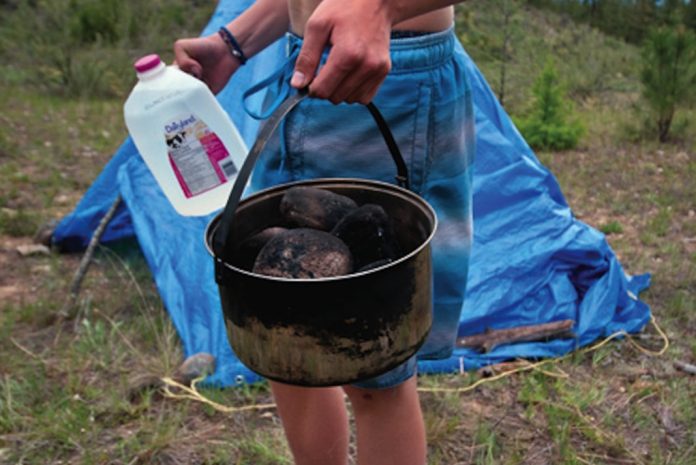
Person holding a jug of water and pot with blue tarp in background
True "glamping." | Photo by: Dave Quinn

The sauna (sow-na), or sweat, is a traditional pastime used for thousands of years. A sauna generally involves creating hot steam in a closed space by pouring water on a super-heated surface, and allowing the moist heat to relax muscles, ease the mind and renew your spirit. Whipping your friends with juniper boughs and leaping repeatedly into icy water are optional.

A sauna is an excellent way to pass a weather-bound day, while relaxing and getting clean in the bargain. After all, generations of First Nations people and Fins can’t be wrong.

[ Paddling Trip Guide: Find your next backcountry paddling adventure ]

How to build a backcountry sauna

Step 1: Choose site

The ideal sauna site is right next to a good deep-water jumping spot or swimming beach. You also want to be as close as possible to the spot where you will heat your rocks.

Step 2: Build the frame

Use driftwood or fresh-cut green boughs to create the sauna structure; set it up so there is just enough room for your group to sit inside without touching the hot rocks. Note: only use living trees if they are in the process of being washed away—do not cut trees from the forest. Drive the thick ends into the sand or block them with stones. Bend in and tie the thin ends together to form a small structure. The smaller the hotter!

Step 3: Add the shelter

Drape a large, four-by-four-metre tarp (that you don’t mind getting dirty) over the structure and seal the edges with sand, rocks or driftwood.

Step 3: Rock and roll

Collect grapefruit-sized or smaller stones for the sauna. Avoid softer, lighter, weathered and odorous rock and be sure to stay away from rocks that have been soaking in water, as they are more likely to explode. Look for crystalline igneous rocks or metamorphic rocks that are formed from igneous rock. For the geologically fluent, experts recommend peridotite, olivine, vulcanite and basalt. Stay away from sedimentary rocks such as sandstone or shale and collect your rocks from a dry area.

Collect a lot of firewood and light a large fire in an existing fire-pit or a low-impact spot. Let the fire burn down to a good bed of hot coals and place your rocks in the coals until they are red hot. Transfer the hot rocks into the sauna using a metal pot or bucket or pairs of strong, forked sticks. Add more rocks to the fire as replacements for those cooling in the sauna.

[ Further reading: Guide To Building A DIY Canoe Tree ]

Step 4: Bliss

Strip down as bare as you dare, crawl into your sauna and seal the door. Pour water on the rocks and—ahhh… To make it a sweat in the native tradition, enter clockwise and exit the way you came in. Don’t forget to bring in water for drinking and extra for sprinkling on the rocks.

When you’re ready for a break, make a dash for your swimming spot to complete the thermotherapy routine—hot and cold immersion gives you a natural high and is said to strengthen the immune system. The hot rocks should be good for two or three repeats. If it’s cold out, crawl back inside the lukewarm sauna to dry off after your final plunge.

Step 6. Erase evidence

The backcountry or beach sauna is not a low-impact technique. Save the sauna for special occasions and suitable places—think ocean beaches, not alpine lakes. Make sure you’re getting rocks from a place where they won’t be missed and throw any blackened or cracked rocks out of sight into deep water. Burn your fire down to white ash and put it out before you leave.


Sauna rules:

1. Stay hydrated—drink at least a cup (250mL) of water every 15 minutes.

2. Exit sauna to cool down every 10 to 15 minutes.

3. Try a cold-water dunk at least once!

4. Clothing optional.

These articles originally appeared as “DIY Backcountry Sauna” in Canoeroots and Family Camping‘s Summer 2009 issue and “Build Your Own Beach Sauna” in Adventure Kayak‘s Summer 2006 issue.Subscribe to Paddling Magazine’s print and digital editions here, or browse the archives here.


True “glamping.” | Photo by: Dave Quinn

Butt End: The Toughest Portages

Photo: Kevin Callan
Portage

It seemed a moot point to the accused. I take the act of stealing red Lifesavers out of my candy stash very seriously. I toss these sugary rings in my mouth at every 1,000-metre mark along a portage—a personal act of rich reward and the only thing that seemed to get me to the other side of the particularly grueling, blackfly-infested trails we trudged along on that trip. He claimed I was being overly dramatic when I threatened to never travel with him again. He gave me an evil smirk and took my last one. I haven’t tripped with him since.

What gets each canoeist to the other side of a portage varies. Some, like me, treat themselves to high-grading their candy bags. Others go into a dreamscape of good first dates, movies worth seeing a second time and dirty tricks to play on their bosses. Some paddlers simply think of things happening back at home—like traffic jams and the Greek economic crisis—to give them reasons why the pain of the portage isn’t so bad.

Many of us hum or, if we know the words, sing monotonous show tunes or the last song we heard on the radio driving to the put-in. The Proclaimers’ I’m Gonna Be (500 Miles) is a favourite. So are Dancing Queen by ABBA, Cat Stevens’, Cat’s in the Cradle and John Denver’s Poems, Prayers and Promises.

I remember a 27-day solo trip when I couldn’t get Aqua’s Barbie Girl out of my head. Imagine I’m a Barbie girl in a Barbie world / Life in plastic, it’s fantastic / You can brush my hair, undress me everywhere / Imagination, life is your creation every step of every portage. It was a long month.

Where the portage is located on the trip changes the carrot I dangle from my deck plate.

In the beginning, I daydream of monster walleye, picturesque campsites and the peaceful solitude I know I’ll find deeper into the interior. Near the end of the trip, it’s the thought of a cold beer and roadside junk food that makes me dance (albeit a slow waltz) my 60-pound canoe barrel across to the other side.

Ultimately, what gets most of us to the other side—no matter when and where—is the fact that the portage, nasty or not, is the only thing that protects the places we’re portaging to.

I almost guarantee that he or she who suffers the most, will be rewarded the most. A two-Lifesaver portage with steep inclines and a squishy spruce bog will give you complete solace. There will be no crowds at the end.

If you do stumble across another canoeist—ideally not as you are belting out Come on, Barbie, let’s go party, ah ah ah, yeah from beneath your Rob Roy—be assured she’ll be just as in love with the pain and pleasure of portaging as you are.


Discover more great adventure stories in Canoeroots and Family Camping’s Late Summer 2010 issue. To read it, download our free iPad/iPhone/iPod Touch App or Android App or read it here.

7 Sunny Places To Paddle & Work On Your Tan

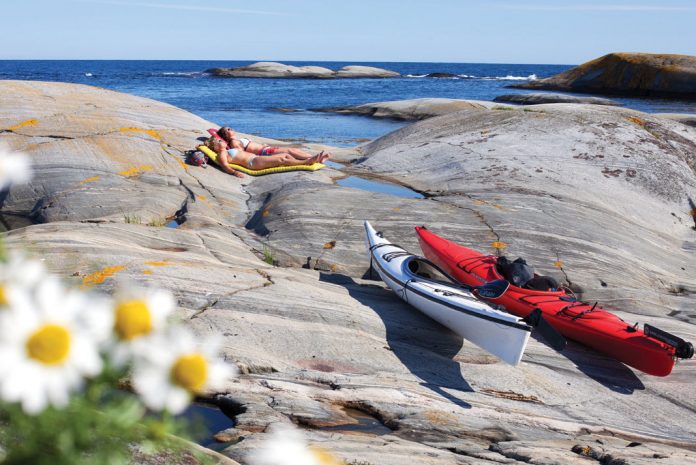
Two women sunbathing on thermarests on rocks with sea kayaks pulled up on shore.
Fun in the sun. | Photo: Benjamin Hjort

The link between sunny skies and feelings of well-being isn’t just a bunch of emo hokum. In a study of more than 1,200 people, researchers found that sunshine is the single most profound weather factor affecting mood. The reason is likely physiological: our bodies produce serotonin, a hormone that promotes happiness, in response to sunlight. Enjoy responsibly.

Gulf Islands, Florida

Balmy year-round temperatures and 70 percent annual sunshine make Florida’s Gulf Coast justifiably popular with vacationers, snowbirds and sun-worshippers. Even so, Charlotte County’s 28 miles of beaches are less crowded than the keys. Find you own secluded patch of white sand and seashells on water access-only Don Pedro and Little Gasparilla islands and, farther south, Cayo Costa, a state park with campsites and a nine-mile strand on the Gulf.

[ Paddling Trip Guide: Find your sunny kayaking, canoeing, SUP or rafting adventure ]

South Maui, Hawaii

Maui’s south coast offers paddlers unrivaled variety combined with a dry, sunny microclimate in the rain shadow of massive Mount Haleakala. Lather on the sunscreen for a few hours on the golden sands of Makena Beach State Park, then explore the 50-foot cliffs, bizarre volcanic formations and wild coves of nearby La Perouse Bay and adjacent ‘Ahihi-Kina’u Natural Area Reserve. Experienced paddlers can continue five miles east around Hanamanioa headland to camp on the fine, black pebbles of Kanaio Beach.

Lake Tahoe, Nevada

In Nevada, one thing you don’t have to gamble on is the weather. With 274 days of sunshine annually, we like the odds at Lake Tahoe. Head to the north shore for golden sands, crystalline coves filled with wave-polished boulders, and stellar views of snowcapped mountains at Sand Harbor State Park.

Desolation Sound, British Columbia

British Coumbia’s Sunshine Coast lives up to its name in the wild island clusters and passages of this marine provincial park, which is blessed with both warm waters and frequently clear skies. July is the driest month, with an average of just nine rainfall days. Expect rugged bedrock outcrops and few beaches, but hunt around and you’ll find idyllic campsites on the mossy headlands of the Curme Islands.

Ocmulgee River, Georgia

The sunniest city in the Peach State is Macon, and the Ocmulgee flows right across its doorstep. Downstream, put in at Bullard Landing and paddle 42 miles of meandering flatwater and class I rapids on the Ocmulgee River Blueway to Hawkinsville. Wending between sandy banks through undeveloped oak, cypress, gum, tupelo and magnolia bottomland forests, this is one of Georgia’s last great wildernesses.

Prince Edward County, Ontario

Work on your tan lines and work out your taste buds on this wonderfully accessible island in Lake Ontario. With relatively stable, sunny summer weather and plenty of south-facing coastline, the County is home to some of the province’s most popular beaches, as well as some of its finest vineyards. From the golden dunes of Sandbanks Provincial Park to the limestone bluffs and pebble beaches of Long Point, there’s something to suit everyone, and seclusion is just a short paddle away.

Salton Sea, California

According to the World Data Center for Meteorology, Yuma, Arizona, is the only place on earth confirmed to receive more than 4,000 hours of sunshine annually. Year round, the city averages 11 hours of sun a day—that’s a lot of vitamin D. Nearby, the Salton Sea is a sun-scorched, super-saline oasis in the desert. Bring your pool mattress.

This article originally appeared in Adventure Kayak‘s Summer/Fall 2013 issue. Subscribe to Paddling Magazine’s print and digital editions here, or browse the archives here.


Fun in the sun. | Photo: Benjamin Hjort

Q&A with Nigel Foster

Photo courtesy Nigel Foster
Q&A with Nigel Foster

Adventurer Paul Everitt speaks with veteran expedition paddler and sea kayak designer, Nigel Foster. To read the full interview, click here, and to learn more about Everitt and other adventurers around the world, visit Going Solo.

Crossing oceans in a sea kayak. For the foolish or the daring? 
Nigel – For the foolish and the daring! In my early days I was fascinated by what motivated people like John Fairfax, and others who rowed across the Atlantic solo, so I read all the books I could find. I also read solo sailing books by people like Joshua Slocum. I was intrigued by Alain Bombard drifting across the Atlantic in 1952, and then Romer, and Lindeman kayaking across. It takes some daring to set off on even a short open crossing in a kayak, but to tackle an ocean is in a different category. Some succeed but not all. Bombard’s health suffered, and Romer, and more recently Andrew McAuley both did amazing things but died. My own take on it? The kayak is the boat that excels in conditions close to shore, and it is the boat that can find a landing more easily than pretty much any other. It is ideal for daytime travel, when you can sleep on shore. There are other better boats than kayaks when you consider using sails or oars, or cooking on board or sleeping on board, and for crossing big open water. Crawling on hands and knees does work well when caving but why use that technique to scale a mountain? 

Who are your paddling idols, who inspired you and who continues to?
Nigel – I always admire people who take off to do their own thing, stretching their own limit of comfort. And there have always been a lot of them! Nowadays I am really impressed by Freya Hoffmeister. Her dedication to long distance kayaking trips is phenomenal. Also Oscar Chalupsky: an amazing powerhouse of a personality with dedication to his sport.
 
I also really admire people like Carmen Adell, who has worked really hard for kayaking in Catalonia and Spain, especially in enabling disabled paddlers, and she has such a contagious joy for life. I also get a lot of inspiration from the paddlers I meet day to day, full of enthusiasm for the sport and doing their own thing!
 
What’s the longest distance you’ve gone paddling without touching land and where was this? 
Nigel – About 40 miles. (Nautical). That was across the eastern entrance to Hudson Strait from Resolution Island to the Button Islands.

 
You’ve kayaked places that many have not heard of, If you was to recommend an area to explore where would it be and why?
Nigel – So many to choose from but how about Shetland? This group of islands off to the north of Scotland offers some of the most amazing cliff erosion scenery, with stacks, arches, tunnels and caves that take your breath away. It’s a particularly good place for seeing north Atlantic sea birds, and otters, seals etc. There are a few areas with strong tide and plenty of opportunity for rough water, or smooth, on any given day, depending where you go. On land you’ll find all manner of ancient ruins, from standing stones and burial mounds to ruins of ancient villages. Lots of potential for exploration, reasonably accessible, and very interesting!

 
During your Labrador trip you had some very close encounters with Polar Bears, what goes through your mind when you have the tidal sea dropping behind you and a Polar Bear approaching you from the front? Has there ever been any other moments in your life while kayaking where you’ve wondered if this is it, no tomorrow?
Nigel – Our closest polar bear scare was very real. We could so easily have been a meal. I think the bear was just enough uncertain of us. We were not behaving like prey: Kristin stood and told it to go away. If she’d reacted differently maybe we wouldn’t be here. My flares had no effect even when fired from eight feet away. It’s not a comfortable feeling.

 
But that incident was sudden and stunning. We had plenty of other polar bear encounters that were unsettling but less life-threatening.
 
On another trip I had the slow realization that things were going wrong that might lead to doom. That was while crossing the Hudson Strait. One element after another stacked up against me through the day until I barely made it. It’s a different feeling when you have plenty of time to consider your predicament, and you are very much on your own.
 

To anyone who is new to the world of kayaking what one tip would you give them to aid them into being a successful kayaker?
Nigel – Get some good instruction early on so you develop good technique… it’ll save you a lot of energy and frustration. Then don’t think you have to go out to practice. Instead, get on the water somewhere and explore. Use the skills!

Nova Craft Moisie Canoe Review

Photo: Scott MacGregor
Nova Craft Moisie

This review of Nova Craft Canoe’s Moisie was originally published in Canoeroots and Family Camping magazine.

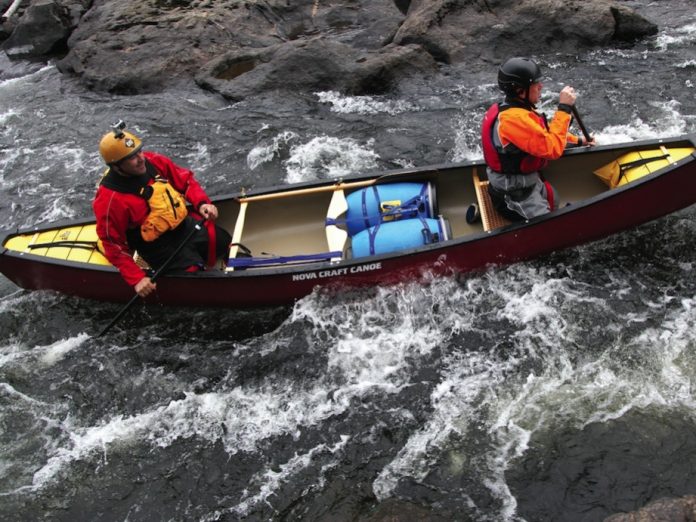
Nova Craft has reinvented a boat with an enviable reputation among river trippers. The long-defunct Blue Hole Canoe Company of Sunbright, Tennessee, first released this canoe in the early ‘80s as the Cumberland. Steve Scarborough, creator of the celebrated Mad River Canoe Caption, was responsible for its original design. Evergreen Canoes then reproduced it as the Starburst in the 1990s.

The now legendary, highly rockered hull design has never been bettered as a river running tripping canoe. However, since Evergreen stopped making boats several years ago, a re-sale market hardly exists—why would anyone sell a boat this good? So, a hungry frustrated market for this boat built quickly as time passed.

Enter Nova Craft Canoe of London, Ontario. They created a new mold carefully taken from the dimensions of the Cumberland and Starburst, and in response to paddler demand, began pressing Royalex. The new hull was christened the Moisie in honor of the iconic Quebec white-knuckle river. At first glance, the Moisie is a dead ringer of the Starburst. It is the same 16-foot four-inch hull with aggressive rocker and a very round bottom. It isn’t until you get out the tape measure that you realize the subtle improvements Nova Craft has made.

With each iteration, this boat has become deeper. The Moisie is half an inch deeper than the Starburst, making a dry boat even dryer.

“Hollow vinyl gunwales are prone to collapsing at the points where the seat and yoke bolts pass through,” says Roch Prevost of Nova Craft, “so we inserted a tough vinyl bushing into an oversized hole at these locations to take the pressure, and bingo, we have a simple solution to grossly sunken bolt washers.”

The Starburst hull was prone to a splitting of the interior vinyl just forward of the stern paddler’s knees—most likely from flexing of the floor when running the boat empty. A new Moisie has a hull completely lacking in flex because of the heavier expedition-grade material Nova Craft is calling Royalex Plus. It also comes in stan- dard industry Royalex. The seats are set in an optimum tripping position, maximizing the load carrying space with room for far more than two 60-liter barrels between the bow seat and the yoke and two more to fit snugly between the yoke and the stern thwart.

Any real-world comparison of this hull with other boats highlights its exceptional dryness and maneuverability. It should be mentioned here that the Moisie is a boat that begs for whitewater outfitting—thigh straps, contoured kneepads, flotation bag cages and forward-tilted seats bring it to life. Our demo boat came without outfitting so we set shaped kneepads loosely in the bottom and set out to do some turns.

The Moisie sweetly initiates, turns and carves like a playboat. It feels even better carrying a load as the extra weight sits the boat lower in the water, adding stability. It is so responsive to input from both bow and stern thanks to its heavy rocker and dramatically rounded bottom that new paddlers may find it requires a lot of minding to keep it straight. But advanced paddlers will be left smiling and wondering if they should finally send their scarred and treasured veteran Starbursts out into the resale market.

If you are going to travel a river straight through and just enjoy the scenery, there are many other boats that will float you. But this is the boat for playful three-week river adventures far from the maddening world.

Nova Craft Canoe Moisie specs

  • Length: 16’6”
  • Width at gunwales: 34”
  • Depth at bow: 26”
  • Depth at center: 15”
  • Depth at stern: 26”
  • Weight: Royalex plus, vinyl trim, 77 lbs | Royalex, aluminum trim, 67 lbs
  • MSRP: $1,899 CAD
  • www.novacraft.com

This article originally appeared in Canoeroots & Family Camping, Spring 2013. Download our free iPad/iPhone/iPod Touch App or Android App or read it here.


Video: Kevin Callan Around Algonquin Park

This is the first of five segments about Kevin Callan’s crazy canoe trip around Ontario’s Algonquin Provincial Park taken in June 2013. The route followed was initiated by Algonquin Outfitters and labelled “The Meanest Link.” It’s a 20-day trip consisting of 350 kilometers, 55 lakes, six rivers (three of which necessitate upstream travel) and 93 portages that add up to 68 kilometers.

See the next segment on his YouTube page here: http://www.youtube.com/user/KCHappyCamper


Doggy Paddling Canoe Tips

Photo: Kevin Callan
Doggy Paddling Canoe Tips

Camping with your best friend can be hassle free. Use the know-how below, and have a howling good time.

Let sleeping dogs lie

Only a few breeds are independent enough to curl up under a balsam branch and tolerate being chewed by the blackflies. Unless you own huskies and are in the midst of running the Iditarod, your dog can sleep inside the tent with you or can be leashed inside the vestibule. Packing his matt or blanket from home will keep him warm and settled at night and discourages him from sneaking into your own personal sleeping quarters.

Guard dog

Never assume your dog will protect you from black bears or grizzlies—although a few breeds such as the Karelian Bear dogs are bred specifically for confronting and herding problem bears. Instead, stick with regular bear safety practices. In my own experience, I’ve found that more often than not, my dog will chase a bear out of the campsite only to come running back to hide behind me, bringing the bear with her!

Vet’s Orders

A trip to the vet is a must to make sure your dog gets the shots it needs. Ask your vet if your dog needs additional vaccines to protect against Leptospirosis, which is contracted through rodents and deer populations, or Lyme disease, which is spread by deer ticks. Your dog may also need an oral medication to prevent heartworm. While you’re at the office it’s a good idea to inquire if there are any poisonous reptiles or insects in the area and how to treat a bite.

Hot dog

To prevent heat exhaustion and heatstroke, let dogs go for frequent swims to lower their body temperature. According to Dogs Ultimate Care Guide, fast, heavy panting and excessive salivation are the first signs of heatstroke. Try to keep them shaded on hot, humid days. Fixing a small sun umbrella to the canoe gunwale works wonders.

Sun dog

Some dogs’ noses are prone to sunburns. This is easily preventable by applying a little bit of waterproof sunscreen.

Dog Bitten

Make sure to also bring along bug repellant that’s free of nasty chemicals such as DEET. My vet supplies me with repellant made of oil of peppermint, eucalyptus, pennyroyal and citronella.

Cool dog

For cold-weather camping, pack a dog blanket or a children’s sleeping bag and a small ground sheet for sleeping. Dogs burn more calories in cold weather to keep warm, so give them additional food and treats.

A Bone to Gnaw On

Plan to take two extra days of dog meals beyond your planned stay, just in case. All dog food and treats should be stored like your own food—away from the campsite in water- and critter-proof containers. Feed your dog in the kitchen area and pack up any kibble that falls out of the bowl. It’s also important to use the same food brand your dog is accustomed to at home. Canoe trips are a bad time and place to deal with allergic reactions or a picky eater.

Water dogs

It’s pretty difficult to stop them, but dogs can get sick from drinking contaminated water in rivers and lakes. A common waterborne parasite known as Giardia will give dogs volcanic diarrhea and could be transmitted from them to you. Provide them with plenty of clean water throughout the day.

Doggy Bag

Purchase a dog pack so she can carry her own food, water and snacks. Always store the pack away from the tent and out of reach of wild animals. I believe that if the dogs feel more involved with the trip, they will enjoy the time out there far more…and so will you.

Sit…lay down…Stay

The best way to get dogs to stay in the canoe is to create a comfortable place for them. Try gluing a slab of foam to the floor of the canoe or bring their favorite mat from home. Go for an afternoon test paddle with all your gear to work out the wrinkles and get your pooch familiar with the drill. Training him to sit or lie down takes time…and patience.

Don’t tie me down

It’s very important to never tie your dog into the canoe. If your canoe capsizes, your dog must be able to swim free of the boat and gear. Paddling with your pup in rapids depends on both his and your own comfort level. Dogs can run the portage trail while the owners run the rapid.

Dog rules

Dogs are permitted in many provincial parks across Canada. Park rules state that pets should always be kept on a leash, are never left unattended, do not make excessive barking noise and that their waste is cleaned up and disposed of properly. Some parks have dog-free zones, so make sure to check regulations before heading to your destination. My preferred choice is to go north to the less crowded, more dog-friendly parks and public land areas.

This article first appeared in Canoeroots and Family Camping, Early Summer 2010 issue.  For more expert tips, download our free iPad/iPhone/iPod Touch App or Android App or read it here.