Home Blog Page 327

The Art of Trip

Photo: Frank Wolf
The Art of Trip

Wading through my gear stash last spring, my eyes eventually settled on the protective case that contains my video camera.

As an outdoor filmmaker, I feel a certain obligation to bring the camera along on any extended trip and attempt to craft a work of engaging cinema. Creating art from the wilderness experience is a Canadian tradition made internationally famous by emissaries like Emily Carr and Bill Mason. Inspired by these icons, I’ve done my small part through the medium of film by sharing stories set within the context of remote self-propelled expeditions.

More often than not, I travel by canoe. This summer, the plan was for my friend Todd McGowan and I to paddle through the deepest heart of Ontario’s Boreal forest via an 1,120-kilometer route that would span the length of Wabakimi Provincial Park and then continue north, eventually ending at the mouth of the Winisk River on Hudson Bay. But this trip would have one important difference: for only the second year in about a decade, I said no to filming.

Once committed to making a film, any situation on trip that is hard, beautiful, interesting or relevant demands that I pull out the camera and start recording—an all-encompassing task that inevitably changes the personal experience within the journey. After making back-to-back documentaries, it was time to let my artistic outlet lie fallow and rejuvenate. This summer the canoe trip itself—not the filming of it—would be front and center. 

If art is the expression of individual freedom, emotion and creativity, says Frank Wolf, then the canoe trip must be its highest form

I grovel up a side gully to reach the top. Peering over the edge, the looming gap between my precarious perch and the distant water takes my breath away. I inhale, step into space and let out a hoot before exploding into the liquid below. Under the surface, I look up through rising bubbles at the cliff as it bends like a Dali painting in the expanding ripples.

Experiences like this accumulate like dirt and calluses over the course of a canoe trip, eroding the thin veneer of a modern, vicarious iPhone life to reveal a basic, animal core that exists in each of us. They are moments of pure freedom. 

Painters are naturally drawn to certain processes and mediums—some choose oil, some acrylic, others go for watercolor. The key for the artist is to find something that feels right, the method and result that satisfies the creative self.

Similarly, individual canoe trippers approach the wilderness journey in their own unique ways. Some like to paddle to an island and chill out for a week. Others linger in camp, put in a few hours on the water and then linger in camp again. The beauty of canoe tripping is that it reflects the style of the individual and no matter how you go about it, the rewards are rich.

If a film or painting is considered to be art then canoe tripping is, in every sense, art.

Typical days on this journey have been 10 hours long with perhaps a half-hour break for lunch. We average almost 47 kilometers daily for the 24-day trip, including upstream, downstream, portages and dragging. I only sleep five hours a night because I’m so energized by every paddle stroke and aspect of this fresh environment that I want to jam as much action as possible into each moment. 

Todd is setting up camp when I double-back along a rough 1,100-meter portage on the Witchwood River. I hop fallen logs and zigzag through the forest as fast as I possibly can. It’s a game to test my speed and agility and see how quickly I can retrieve the last pack. Turning a corner, a knobby spruce branch wedges perfectly between my front and back leg, catapulting me headfirst into the moss. I curse the branch and look down to see a long, deep laceration on the calf of my left leg and an ugly gouge on the shin of my right. Blood pours instantly from both wounds.

I get up and continue to run, first at a hobble and then at a steady, rhythmic clip. My clenched teeth relax into a smile and everything clarifies. Blood, moss, spruce and movement in the heart of the Little North. Life is simple and I am extremely happy.

I’ve been affected by a strain of madness perhaps, but on reflection it makes perfect sense. People are hardwired for this—to physically struggle and push our bodies in nature for extended periods of time. Our ancestors ran down prey and traveled under their own power for most of the million years or so of human existence. If time is a gauge, we are only a blip apart from that way of life—a blip filled with La-Z-Boy chairs and cheesecake, but a blip nonetheless. Much like the artist whose need to create is passed to them from the DNA of prehistoric cave painters, our genetics retain that need to move. Canoe tripping is a portal that allows us to tap into this tribal call. 

Todd and I are in the Cree village of Peawanuck waiting for our plane to come and return us to urbana. In the meantime we’re hanging out at the house of the local Northern store manager, who generously offered us accommodation. I’m in the dining room hunched over a detailed map of Ontario, tracing a line over the blue veins and blotches of our completed route. I step back and admire the curves of the fresh line with a visual record of every campsite, lake and river etched in my mind.

I love making films about canoe journeys, but I realize now that making a film is simply adding another artistic layer to a thing that is itself utterly original and creative. Like an artist who is compelled to produce a painting on a blank canvas, the canoe tripper is compelled to step into a blank landscape, emerging at the end with the ultimate experience of a vision realized. If a film or painting is considered to be art then canoe tripping is, in every sense, art.
This article on art was published in the Spring 2012 issue of Canoeroots magazine.

This article first appeared in the Spring 2012 issue of Canoeroots Magazine.
 

Catching the Bug

Photo: Larry Rice
Catching the Bug

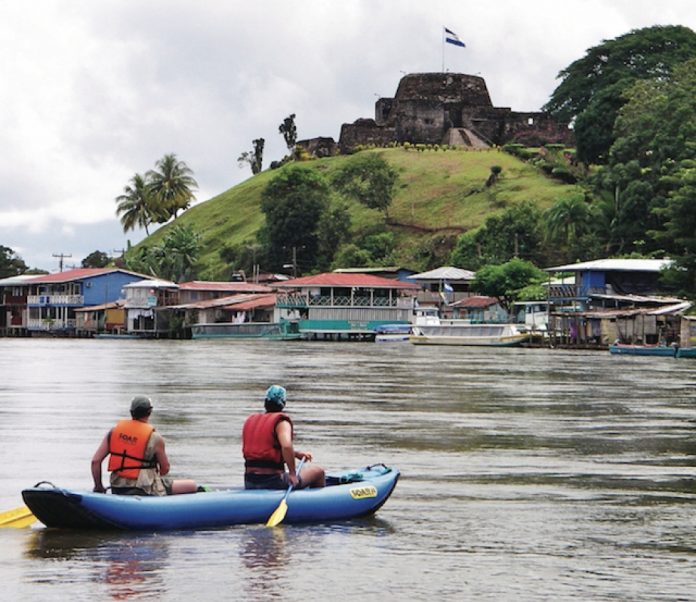
I really don’t know what made me want to explore the world, let alone in a canoe.

I grew up in a Chicago suburb where Wisconsin was considered somewhere far-off and foreign. Maybe it was my inexplicable interest in African wildlife; I visited Chicago’s stately Field Museum of Natural History, with its immense African Hall, every chance I got. Or maybe it was my penchant to devour classics like Robinson Crusoe, Treasure Island and The Adventures of Huckleberry Finn. Even the Mississippi River was exotic and enthralling to a city kid.

But, digging deeper, I believe it was my discovery of canoeing that helped rock my sheltered world. Seeking a means to commune with nature somewhere closer to home than Africa, I purchased an Old Town Tripper and ventured—often blundered—through places I had only imagined up to then: the Florida Everglades, Missouri Ozark rivers, spectacular canyons of the Rio Grande. My horizons quickly expanded far beyond the urban jungles and cornfields of Illinois.

Since then, I’ve been fortunate to canoe in 25 countries and on all seven continents, but I’m still humbled by how big our planet is and how precious little of it I have visited. Running my index finger over the smooth curve of a globe in my living room in central Colorado, my mind begins to wander. I dream about canoeing far-flung places with challenging waters, unfamiliar cultures and more unknowns than knowns: Botswana, Tasmania, Peru, Ellesmere Island, Vietnam, Moldova. The list goes on and on.

It’s impossible to see around the bend, which only raises the possibilities.

I like that about traveling, about paddling. Once you slip your bow into the current and let it usher you downstream, everything is possible, or seems to be.

When everything clicks on a paddling trip, I find not only the rugged wilderness I am seeking, but also a new way of appreciating the world. An appreciation of the unique qualities of the country I am visiting—its history, culture and the people I reach out to and meet along the way. Traveling by canoe allows me to discover my internal compass as well as be guided by an external one. By going with the flow, not fighting it, I find myself floating through life and oftentimes laughing along the way.

Following the path of the paddle these past 35 years, my passion for travel still burns as bright today as when I was that youngster fantasizing about tripping down Ol’ Man River.

This article on exploring the world by canoe was published in the Spring 2012 issue of Canoeroots magazine.

This article first appeared in the Spring 2012 issue of Canoeroots Magazine.
 

The Perfect Tump

Photo: Conor Mihell
The Perfect Tump

Seventeen feet of old-school canvas and cedar makes you think differently about portages. I’ve carried relatively lightweight kevlar and Royalex canoes for hundreds of kilometers, but my big green prospector is different. It weighs an honest 82 pounds bone-dry and considerably more after a few days of travel.

Luckily, the legion of trippers who’ve lugged such waterlogged beasts in Temagami and the North Woods of Maine have come up with a clever way to bear the weight—one that’s equally effective on lighter contemporary canoes.

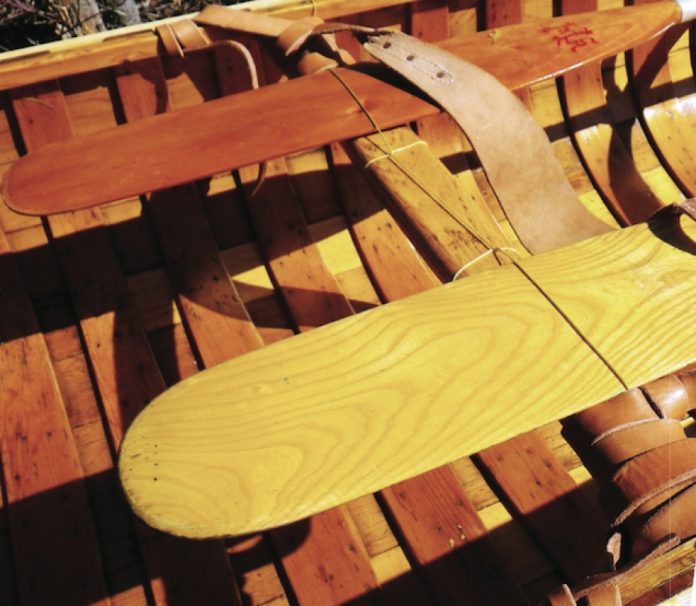
Maybe you’ve discovered the advantages of the tumpline on your favorite portage pack—the way it transfers weight from shoulders to spine and enables you to move massive loads. Rigged on the center thwart or carrying yoke of a canoe, the tumpline has similar advantages: a properly adjusted tump positioned just above your forehead actually lifts the canoe off of your shoulders and eliminates the pressure points of portaging. When your head and neck become fatigued, slipping out of the tump moves the weight back onto your shoulders, providing some respite on long carries.

Traditional outfitters sell leather tumplines that are designed for carrying canoes.

Look for one with a two-inch-wide head strap measuring about 15 inches long that’s securely riveted to five- to seven- foot tails. It’s also possible to build your own with leather, canvas or nylon webbing.

On canoes with carrying yokes, wrap the tails of the tumpline on either side of the contoured portion of the yoke and secure them with a simple hitch near the gunwales. The tumpline will only work if it fits tight; for me, this means fastening it to the yoke as close to the headpiece as possible.

It’s easy to use your paddles to create a carrying yoke on canoes equipped with straight center thwarts. Tie a thin cord permanently to the thwart with spaces for the paddle blades and enough room for your head in between. The blades should be aligned with your shoulders. Loosely secure the grip ends of the paddles on a seat or thwart. Then attach the tumpline, wrapping the tails so that the paddles can slide in and out of position without the need to remove the tump.

Once you’ve lifted the canoe (unfortunately a tumpline won’t help you there), slip the tump over the crown of your head and feel the weight of the canoe levitate from your shoulders. It helps to hold the tump near your jaw with one hand; use your other hand to keep the canoe resting level. 

This article on tumplines was published in the Spring 2012 issue of Canoeroots magazine.

This article first appeared in the Spring 2012 issue of Canoeroots Magazine.
 

Septuagenarian Tony Shaw Realizes a 40-Year Dream

Photo: Laurel Shaw
Photo: Laurel Shaw

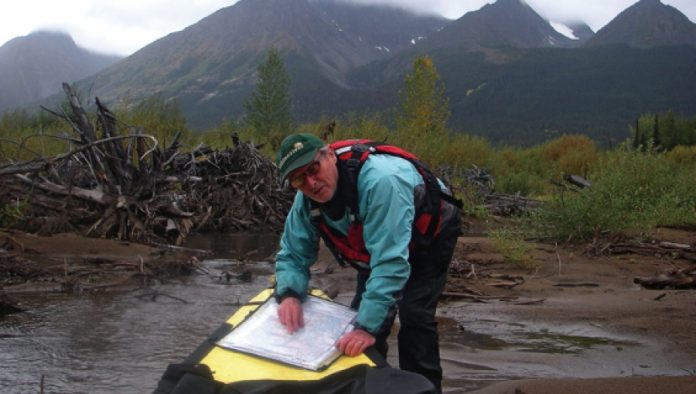
Northern British Columbia’s Finlay River is seriously testing our skill and experience. Good thing Tony Shaw, my 70-year-old bowman and friend, has plenty of both. A legendary B.C. paddler with a sly sense of humor, huge heart and diminutive voyageur build, he has dreamed of this trip for over four decades.

The Finlay is at record-breaking high flows for September, making the beta gleaned from the few written sources on the route—one being Finlay’s River by R.M. Patterson, the book that inspired Shaw’s dream to paddle the Finlay—almost useless. Reef Canyon in 2011 looks nothing like the photo in the insert.

We see why the river got its reputation of being too difficult to travel, experiencing our own versions of passages from HBC explorer Samuel Black’s 1824 journal and R.G. Swannell’s 1914 survey notes. Black’s guide breaks down at the sight of more endless rapids; flat ground is non-existent in the gorges and Swannell’s surveyors bivouac tied to trees.

When we scramble up the base of crumbling 100-meter cliffs to try and scout blind corners, my legs shake. Shaw is in awe, “Imagine, Black running these canyons in a birchbark canoe!”

It’s one thing to be a very good canoeist and it is another to be a very good person when the going gets tough. Literally carrying his weight on portages, joking and smiling, Shaw’s inextinguishable enthusiasm and thankfulness for being on the river inspires our team. No surprise he’s participated on numerous boards and committees over his long career, including the Recreational Canoeing Association of British Columbia and Paddle Canada. He’s also raised six kids, three adopted, and spent decades as a schoolteacher and canoe instructor.

Like R.M. Patterson, the author and explorer who ignited Shaw’s fascination with the Finlay, Shaw moved to Canada from England in search of adventure. He fell in love with canoeing northern rivers in 1967 while teaching near the Yukon border in Lower Post, B.C. Eventually, he set up Red Goat Lodge and outfitted Stikine River canoe trips for the likes of Pierre Trudeau. Both Patterson and Shaw retired on Vancouver Island and even met there in 1983.

Yet Patterson’s Finlay’s River, his last book, published in 1968, is really an account of others’ journeys on the Finlay. Even Swannell never paddled the entire river. But we are getting close. Shaw and I run Old Man Rapids perfectly; it’s the last whitewater of the trip.

Construction of the massive W.A.C. Bennett Dam was completed the same year Finlay’s River was printed, flooding much of Deserter’s Canyon beneath the sprawling waters of Williston Lake. When we reach this last historic landmark, Shaw’s eyes fill up.

After 43 years of dreaming and 257 kilometers of paddling and portaging, he struggles to describe how it feels to finally run the Finlay. “Elated. Sad. To live this moment, how I feel is beyond description.”

This story originally appeared in the Early Summer 2012 issue of Canoeroots & Family Camping.


Betcha Didn’t Know About… Salamanders

Photo: iStock.com
Betcha Didn't Know About... Salamanders
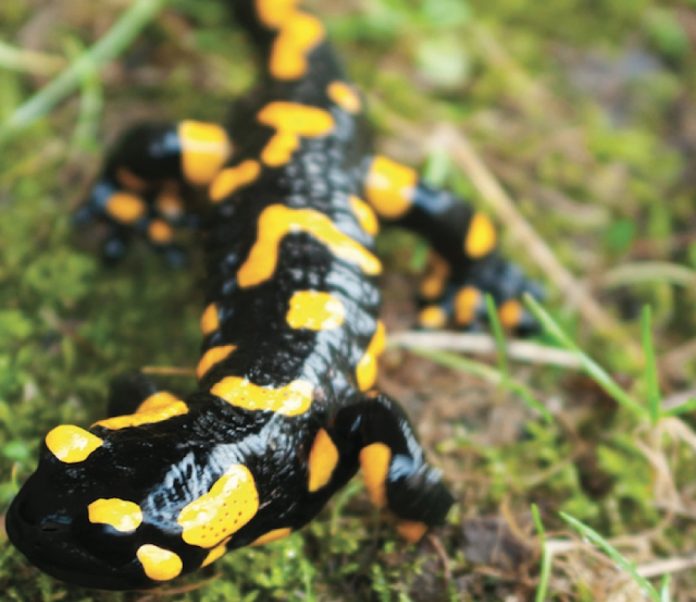
  • Salamanders have 10 times more DNA in each cell than humans do and can live as long as 30 years.

  • The largest salamander is the Chinese giant, which can grow up to six feet long.

  • The term “siren” is generally applied to salamanders that have lungs as well as gills. Other names salamanders go by include olm, axolotl, spring lizard, water dog, mud puppy, hellbender, triton and Congo eel.

  • All newts are salamanders. Except Newt Gingrich—he’s a Republican.

  • Salamanders’ forelimbs have four toes each and their hind limbs each have five. None of their toes have claws.

  • A key ingredient in witches’ brews, eye of newt is thought to be a common name for a medicinal herb, not the eye of a living newt. It refers to mustard seed, believed to have magical properties of enhanced fertility and mental fortitude.

  • like some types of lizard, salamanders can regenerate legs or tails lost in predatory attacks.

  • The rough-skinned newt, found in the Pacific Northwest, produces enough poison to kill a human.

  • The word salamander comes from the Greek words for fire lizard.

  • Carrie Henn played the resourceful, wild-haired girl, Newt, alongside Sigourney Weaver in the movie Aliens. Henn never acted professionally again. Instead, she became a schoolteacher. 

This article on salamanders was published in the Fall 2011 issue of Canoeroots magazine.

This article first appeared in the Fall 2011 issue of Canoeroots Magazine.
 

The Dumoine

All Photos: Scott MacGregor
The Dumoine

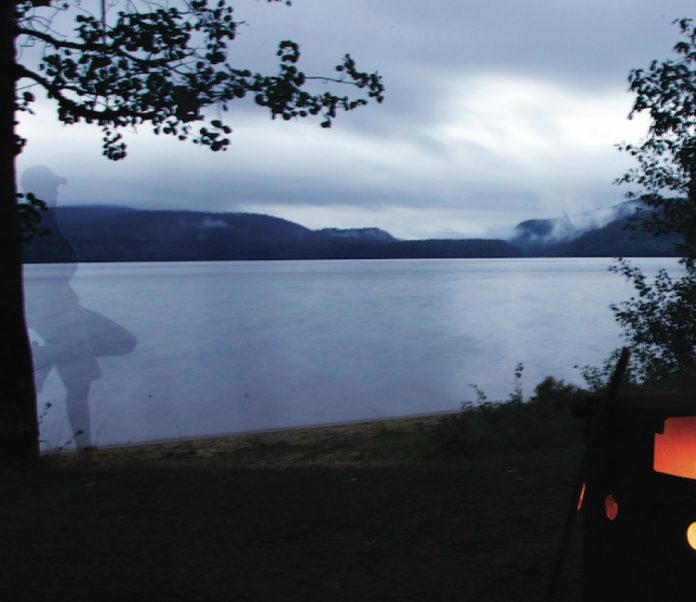
During the summer months of 2010, more people paddled down the Dumoine River than ever before. With incredibly low water levels in surrounding watersheds, vans and canoe trailers were rerouted from their local runs toward the rock garden rapids of this classic whitewater river.

But low water is not the only factor contributing to higher concentrations of paddlers on the Dumoine. Restrictions are easing in school systems allowing whitewater back into outdoor curriculums. A relatively new forest road allows more convenient access. Financial and program objectives are forcing outfitters and camps to travel in larger groups—it’s cheaper to run one large trip than three smaller ones. And the Wild West management strategy on the Dumoine does little more than take a per-head fee to control access; so the more the merrier in their eyes. There is no maximum group size, no route planning and no staggered starts. Compared to rivers in surrounding provincial parks like Algonquin, the Dumoine is a free-for-all.

Some worry this perfect storm is putting too much pressure on the area once considered pristine. And so, I spent six days last summer picking my way down the Dumoine with my family and Canoeroots contributor Brian Shields. I wanted to see firsthand what all the fuss was about.

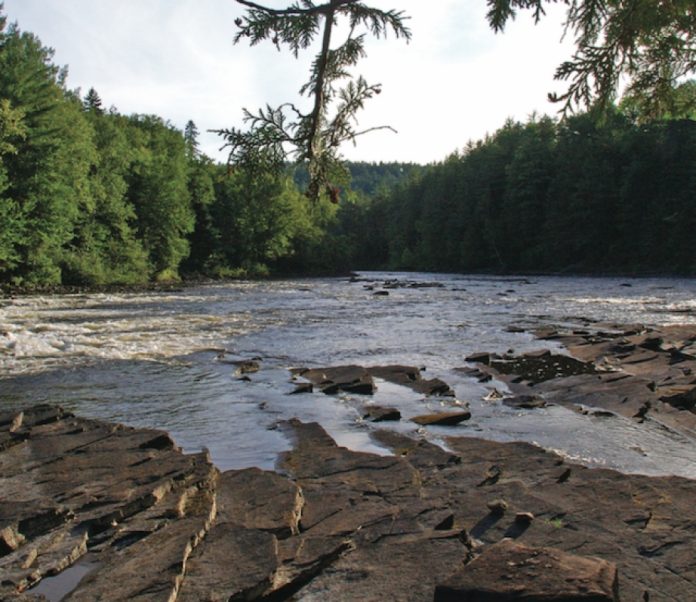
The Dumoine falls over 39 rapids along its 129 kilometers from its source in Machin Lake near La Verendrye Wildlife Reserve in western Quebec. The jewel of the whitewater canoeing Triple Crown, it flows south off the Canadian Shield into the Ottawa River upstream of its sister rivers, the Noire and Coulonge. All three are popular whitewater routes.

The Dumoine is considered the best.

We drove two hours from our home in the Madawaska Valley and camped our first night in Driftwood Provincial Park on the Ontario side of the Ottawa River. This would be our take-out where we’d leave our truck and where we’d meet Wally Schaber and the Trailhead shuttle van. Trailhead is one of three operators now running shuttles up the Dumoine.

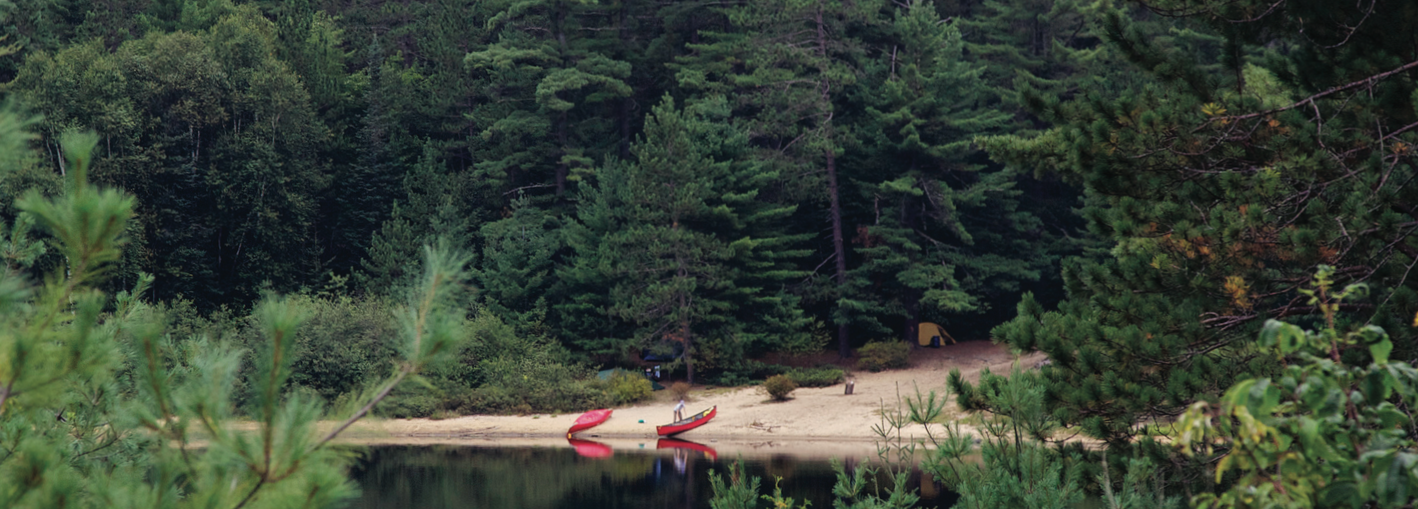
We’d planned to meet early so that we’d be at Bridge Rapids, our put-in above Lac Benoît, for lunch. Then it was a short paddle to Little Italy, a boot-shaped sandy spit and popular first-night campsite.

Before the new access road you had two options: paddle down from Lac Dumoine another 40 kilometers upstream or fly in with bush pilot and owner of Bradley Air Service, Ron Bowes in his 1951 de Havilland Beaver. 

For 35 years, Bowes flew canoeists into the Dumoine River valley acting as both transportation and wilderness turnstile, limiting and controlling access with each drop.

“Back then crowding wasn’t a problem. Ronnie kept a keen eye on the groups. He was pretty good at dropping you at an open site and then nudging you along so that you’d be evenly spaced apart,” Wally tells me as we tie down our canoes to his van. “Somehow in those days there seemed to be more class to it.”

I have to admit stepping off the left float of a Beaver is more romantic than the three-hour teeth chattering rattle north into Quebec. Trailhead goes through three sets of shocks a season and sells off their shuttle vans every three years. I made a note to never buy a used white passenger van in Ottawa.

With the increase in fuel prices and a change of ownership from Bradley Air to Air Swisha, the flight almost doubled in price overnight. At about the same time, forestry operations opened a logging road north from Grand Chute linking to Bush Road #819 providing real public access to the most popular section of the Dumoine.

With my wife, Tanya, and Brian asleep in the back seats of the van, the kids plugged into the DVD player, I rode shotgun next to Wally for a three-hour history lesson about the river. 

Near the end of the First World War, the boys camp, Keewaydin, pioneered recreational canoe tripping on the Dumoine. From their Lake Temagami base, the boys jumped in green cedar canvas canoes, heading out for four weeks. At Lac Benoît, the campers met up with their river guides. Keewaydin hired J.R. Booth lumbermen to lead the groups down the 60 kilometers of challenging whitewater. We had Brian.

At the peak of the log drive 3,000 men worked the river.

The true Dumoine wilderness was being floated down the rapids toward the Ottawa River.

Massive old-growth pine would then find its way to england and the United States to be used for things like ocean liner decks.

Even the Keewaydin teenagers wouldn’t have known the Dumoine as a wilderness river. Trees closer to the river were easy picking, the first to be cut and splashed into the water. Supply depots and large farms, like the Rowanton Depot with 75 acres of wheat, 200 head of cattle and a post office, provided for the loggers. By 1918, the camp boys may have been paddling through a shoreline of scrubby second growth. However, by the early ‘70s, farming mostly abandoned, the banks of the Dumoine were rejuvenated, ready for adventure.

In 1972, Wally and his partner Chris Harris pioneered wilderness canoe tripping on the Dumoine. Their 1978 Black Feather Wilderness Adventures brochure describes the river as a, “superb wild river, offering beautiful scenery, a variety of whitewater challenges, good fishing. The river is paradise for all canoeists willing to put in the effort to cross the watershed and reach its headwaters.”

Screen_Shot_2015-08-20_at_1.05.15_PM.png

 It was Wally who first tipped me off to the increased pressures caused by easy access and larger groups.

“When I look back over 40 years, I’ve seen a slow erosion of the campsites and the wilderness experience,” Wally told me. “It started back in the ‘80s with the introduction of Royalex canoes and Therm-a-Rests.”

Although many consider the heyday to have been 20 years ago, roughly the same number of people are still going down the river today. The difference is that trips are now concentrated into a two-month window. Like my family, most canoeists today want perfect summer weather, lower flows and no bugs.

We stepped out of the van for a stretch at Grand Chute—about the halfway point of our shuttle. Boundless High School was also stopped for a stretch. Teenagers leaned against the mini school bus- es swatting flies and punching each other in the shoulder, as excited about the trip as we were.

Boundless is an outfit that runs 10 or so trips down the Dumoine in July and August. Adrian Meissner is their director of operations. He realizes Boundless is one of the heavy users of the Dumoine. I counted 10 tandem canoes tied on their tandem axle trailer.

“Developing social skills and teamwork can only be done in larger groups. And to run a river like the Dumoine with new paddlers, we like to maintain a three-to-one student to staff ratio,” Adrian wipes a mosquito off his neck. “We need a river that allows longer trips with challenging but not over-the-top whitewater. The Dumoine is perfect.”

Smaller, private groups flown in from ice-out to late fall by Ronnie Bowes’s Beaver have been replaced by busloads of inner-city teens. There are four large groups on the river with us this weekend—approximately 80 people stretched over the 60-kilometer run.

“The nice thing about river travel is that everyone moves at roughly the same pace; we may never see another group. If we do, we just plan our days so we aren’t tripping over each other,” Adrian tells me.

I began this trip watching out for trash. We had a loose plan putting us at the nicest and most used campsites: Little Italy on Benoît, Little Steel, Lake Robinson and Margaret Spry. I was looking for the telltale signs of overuse. I checked every fire pit for burned bean cans and crumbled bits of tinfoil. Nothing. I scanned campsites for plastic bread ties, juice box straw wrappers and half buried toilet paper.

Twice a year Boundless sends staff down the Dumoine, partly to train new guides and partly to look after the river.

“We know we are heavy users of the river and so we do our share to keep it clean,” Meissner explained. Staff paddle in with saws, shovels and new thunder boxes and paddle out with any debris they find. “I believe the increased use by camps and outfitters has actually cleaned up the river over the last five years. Looking after the river is part of our curriculum and part of camp culture.”

I didn’t have the same 40 years of Dumoine experiences as Wally Schaber. I hadn’t smoked a pipe and drawn every rock in every rapid like Hap Wilson did for his Rivers of the Upper Ottawa Valley. I hadn’t watched the best campsites sprawl to accommodate a dozen tents. I was paddling the Dumoine for the first time—with a fresh perspective.

At Bowman’s Portage, what the locals call Ryan’s Chute, we’d paddle only a short distance to where the Dumoine pushes into the Ottawa River and then 2.5 kilometers across to Ontario and our truck. Motorboats can access this site and it shows—we stuffed our pockets with nested fishing line and granola bar wrappers, and tossed a dozen empty beer cans in the canoe. This was the first trash we’d seen on the river in six days.

I was still thinking about the future of this river as my kids carried the last of their things to the truck.

The Dumoine is the last undammed, free-flowing tributary to the Ottawa River.

Ironically, the most significant change to come will likely be the success of conservation groups lobbying to create a type of wild river park to protect the Dumoine from hydro development. With any level of protection comes special status; with status comes increased awareness and surely more marketing to increase use to justify a government budget. I’ve come to accept that this is just how it goes.

There may have been a progressive erosion of the wilderness experience, but I wouldn’t know that, nor would my children. It’s the next 30 years that will matter most. Certainly it will to them. If the Dumoine is ever challenged by hydro development, the more people down the river, the more people will care and fight to protect it. And if we were to lose that fight, then all this fuss about the campsites getting a little trampled will seem a bit silly. 

This article on the Dumoine River was published in the Fall 2011 issue of Canoeroots magazine.

This article first appeared in the Fall 2011 issue of Canoeroots Magazine.
 

Base Camp: Little People Camping

Photo: Scott MacGregor
Base Camp: Little People Camping

Doug and Kate have been using sleeping bags as blankets since before they moved into big-kid beds. We just tossed a bag in the crib one day. We do get sideways looks from some parents—parents who buy their kids matching frilly sleep sets.

Horrible parenting you say? It was the best thing we ever did. Hear me out.

Sleeping bags make every night feel like camping; they make every road trip to Grandma’s, every strange bed and every tent feel just as familiar as sleeping at home. Now four and six, Kate and Doug still curl up in their sleeping bags every night. Someday they may grow out of it and ask for real bedding. Although it might be a while—I spent six years of university slumming in a sleeping bag.

My wife and I have taken this concept one step further.

Before a canoe trip, we haul out the kids’ 30-litre blue barrels (used in place of a canoe pack on river trips because the barrels stay bone dry) and put one outside each bedroom. They pack their own camp clothes. Then anything else that fits they can take.

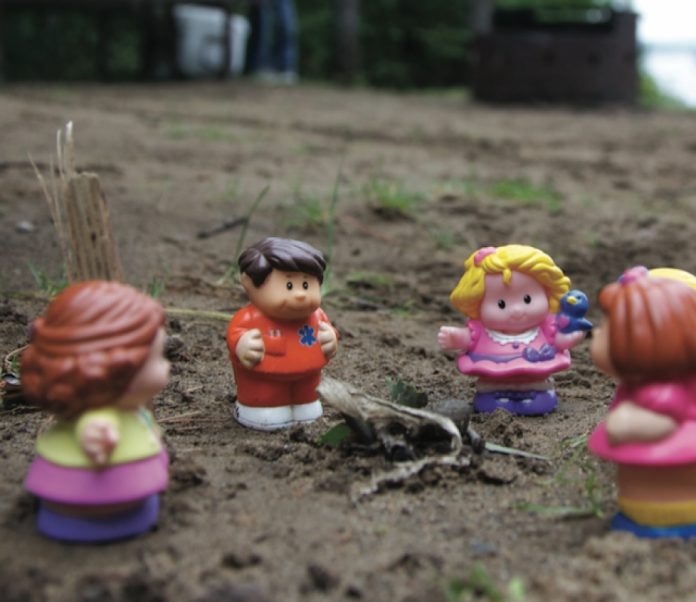
They spend the day sorting through Lego Club magazines, stuffed animals and flowery dresses. We perform pre-trip toy swim tests in the tub. Sinkers go in the barrel. Toys that float are okay to stay in the canoe. Fisher Price Little People float and My Little Ponies don’t, in case you’re wondering.

The idea is to allow them to bring things that are familiar, to ease the transition from inside to outdoors.

We’re also teaching the reality of camping—you can’t bring everything. Electronics are banned, but otherwise their choice of comforts is limited only by the size of their barrels and the ingenuity of their packing. I once found Berenstain Bears in my nighttime reading. “We packed books for you, Daddy.” Clever little suckers aren’t they?

In a world that is changing so quickly, there is a simple familiarity in daily routines. As much as camping is an escape from our routines of work, home, school and traffic, for children, routine is the pine tar that holds them together. The essential routines we fight so strongly to maintain around home are just as important on camping trips. especially my favorite: Jammies… teeth… stories… and into their sleeping bags.

Peace, at last. 

This article on packing for camping was published in the Fall 2011 issue of Canoeroots magazine.

This article first appeared in the Fall 2011 issue of Canoeroots Magazine.

 

Lost Moves: Canoe Stunts Were Once Must-Have Skills

Photo: Courtesy of David Stringer Collection
Lost Moves: Canoe Stunts Were Once Must-Have Skills

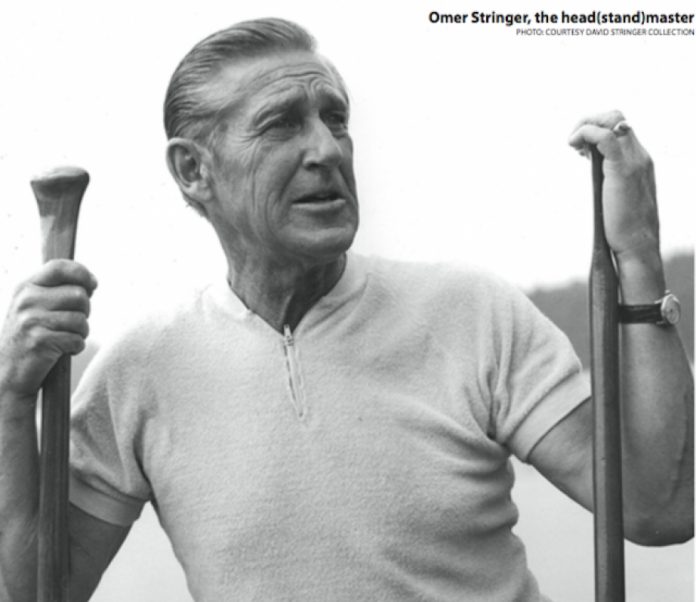
Since the passing in March 2011 of canoe guru Captain Kirk Wipper, I’ve been thinking about one of the first amazing things I ever saw him do in a canoe—a headstand on the center thwart of a 16-foot, wood-canvas Peterborough Canadian.

Back when most rivers flowed the other way because the ice age had yet to come, proficiency in a canoe included a variety of novelty moves that any novice hungered to learn from the masters.

Take Omer Stringer, a contemporary of Wipper’s, and his mesmerizing effect on young paddlers.

Stringer mastered all the functional canoeing and portaging skills as a guide and general factotum in Algonquin Park.

But in the 1960s he crisscrossed the province demonstrating canoe stunts—a kind of canoeing that is all but gone today, lost in the rush of getting certified and carded up.

I vividly remember Omer standing on the dock at Camp Kandalore, describing headstands and shakeouts and all the cool stuff you could do in a canoe. As he was talking, his canoe, which floated behind him untethered, drifted gently away from the dock. Kids in the audience got agitated, pointing and calling out to Omer: “Your canoe is floating away!”

Totally unconcerned, he kept talking. Then, with the power of a gymnast and the timing of a circus showman, he did a standing broad jump from the dock into the moving canoe, clearing a couple yards or more without missing a beat in his discourse. Howls of approval pealed out from the audience.

There were other tricks as well. Canoe over canoe is a rescue technique, of course. But the term also referred to a stunt performed regularly during free canoeing at camps throughout the ‘40s, ‘50s and ‘60s.

The stuntman or woman sat behind the stern seat and paddled like crazy toward a willing participant in another canoe. Lining up for a T-bone collision, the stunt involved ramping the moving canoe as far as possible over the mid-ships of the stationary canoe. Next, in one fluid motion, the paddler stood and ran up the moving boat until it balanced over the stationary canoe, and then see-sawed down on the other side. At this point, the paddler settled in and continued on his or her merry way. Canoe over canoe.

The spectacular headstand was something that many Kandalore campers felt compelled to learn if ever they were to paddle like a master. Training for the headstand included the monkey walk—turning 360 degrees in a canoe with hands and feet on the gunwales—and progressed to the flip—spinning the canoe on its longitudinal axis, above the water, without sinking it.

Adding a second person opened doors to gunwale bobbing, jousting and the double headstand.

Since Kirk and Omer were doing their stunts, and encouraging others to do the same, canoeing has evolved. The glamor of these tricks has faded, lost to historic irrelevance. Maybe today’s leaders should sit down and delineate a curriculum for Flatwater Stunting levels I, II and III certification. A flashy badge could be awarded to those who achieve Master Stuntman status.

Why would you want to do a headstand in a canoe on flatwater? It’s a bit like practicing Zen. A path to enlightenment known only to the great canoe masters of old and those willing to wade in and give it a whirl. 

James Raffan mastered the monkey walk in graduate school and is still working on his headstand. 

This article on canoe stunts was published in the Fall 2011 issue of Canoeroots magazine.

This article first appeared in the Fall 2011 issue of Canoeroots Magazine.

 

Random Acts of Canoeing

Photo: Ian Scriver
Random Acts of Canoeing

I paddled the Dumoine River once—from the bridge above Lac Benoit to its outflow at the Ottawa River. It’s definitely a trip best done at a nonchalant pace to fully appreci- ate the rough-hewn landscape. That’s the approach Canoeroots publisher Scott MacGregor and his family took on their trip down the Dumoine. That’s not how my trip went. It was never really supposed to.

A few years ago, my crew of three made a deal with our employer, a local outfitter, to help drive the Dumoine’s punishing shuttle. In return, we could familiarize ourselves with the route by running the river. The group we shuttled was scheduled to take the standard five days. When we started the drive, we had just 36 hours until we had to be back in the city and back at work.

The bullet trip went off without a hitch. We took advantage of much of what the river had to offer, albeit at a much swifter pace than most canoeists with banked vacation days.

I’ve talked with scores of paddlers, new and seasoned, and it never takes long for the conversation to turn to practical canoeing advice, trip anecdotes and yarns. But all too often, when I ask about personal exploits, people bow their heads and write off their experiences as insignificant.

I mull this over when I find myself compromising trip plans to satisfy relatively mundane commitments.

Constantly bombarded with stories of dramatic canoeing accomplishments, I get caught up in the desire to hold a candle to those making larger waves than my own.

Like many of the modest folks who blush when asked about their past on the water, my canoeing career has been arguably less than monumental. I have no first descents. I’ve never paddled across the country. I’ve never been hit by lightning.

After some 20 years paddling, my canoeing resume is filled with a disproportionate number of seemingly random acts of canoeing like that trip down the Dumoine. Even spending most days eating, sleeping and breathing paddling, I remain in the camp of canoeists unspectacularly accomplished on the water. Still, I keep my head up when people ask how my season is progressing.

Here and there I develop a technique, pass a weekend with friends in a canoe or head out after work for a quick tour. My status may be hovering somewhere in the neighborhood of Weekend Warrior but I’m proud that it has developed well beyond Armchair enthusiast.

When I consider my trip down the Dumoine, I wonder if I did it right. There’s so much to see on this river that by rushing downstream, missing things was unavoidable. Then I realize that given my alternative, there’s no doubt the run was worth doing. Any canoeing is better than no canoeing. 

This article on paddling the Dumoine River was published in the Fall 2011 issue of Canoeroots magazine.

This article first appeared in the Fall 2011 issue of Adventure Kayak Magazine.


Profile: Birchbark Builder

Photo: Tim Foley
Profile: Birchbark Builder

“I don’t paddle unless I have to,” says Pinock Smith with his characteristic wry smile.

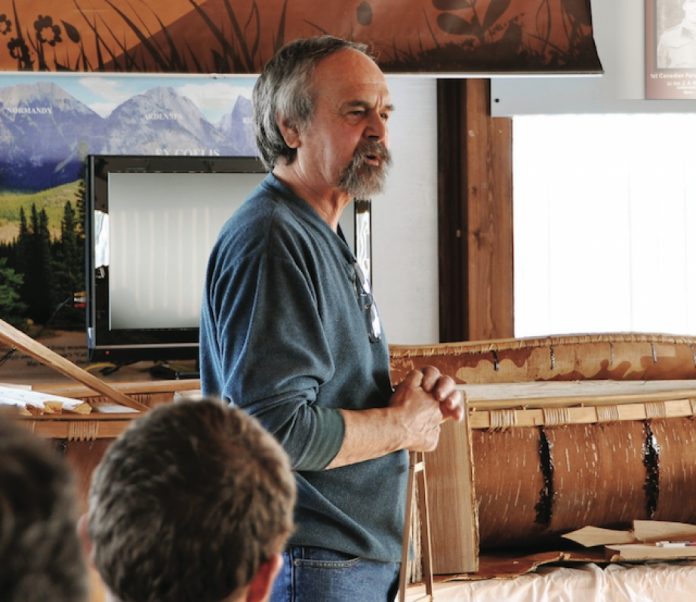
For the Algonquin Indian, canoe building is all about the process, not the reward. It seems counter-intuitive that a builder who doesn’t paddle could possess the know-how and inspiration, but spend a day at one of Smith’s workshops and he’ll have you convinced.

Smith grew up surrounded by community on a reserve in western Quebec. “I was never formally taught,” he says, “but I’m not self-taught either.”

He learned to build birchbark canoes through hands-on experience and exposure— the same way he shares his craft with audiences across North America.

Smith worked as a guide, trapper and carpenter until one day he decided to build a birchbark canoe for himself. “That was some 11 years ago,” he laughs, “and I still don’t have my own boat.” Each unique canoe is sold or shared with his pupils.

Since his uncle first took him through the building process step-by-step, Smith has built hundreds of birchbark canoes using the traditional methods and materials of his ancestors. “We complicate our lives so much today,” he muses, surrounded by yards of birch bark, lengths of spruce root and tin pots filled with fragrant pine resin. “I don’t see why we need complicated tools and materials and exact measurements.” With no measuring tapes or rulers anywhere in sight, Smith admits, “I couldn’t make two canoes the same if I wanted to.”

Smith’s art is in many ways about simplicity, appreciation of beauty and a connection to nature. “Listen to what the bark tells you,” he coaches his students. While Smith is seeing a decline in the availability of quality, naturally occurring materials, he believes that the spiritual experience of building is worth his efforts to preserve and promote the craft.

In an age filled with new and improved, high tech and exacting standards, Smith’s attitude is as contagious as his smile. “If you make a boat and it floats pretty well, I’d say that’s a damn good canoe.”

This article on Pinock Smith was published in the Fall 2011 issue of Canoeroots magazine.This article first appeared in the Fall 2011 issue of Canoeroots Magazine.