A review of the Big Dog Flux, a whitewater kayak, from Rapid magazine.
Honda Racing fairing kits, a Guinness record setting English Channel kayak crossing, motorcycle land speed record attempts and benchmark- setting whitewater, sea, surf and squirt kayak designs. What do these things have in common? For the players behind British upstart Big Dog Kayaks, it’s the seeming contradictions that are the strengths of this emerging brand. Big Dog’s line-up of eye-catching kayaks benefits from the diverse pedigrees of its designers. Popping up on English boating forums as “3wisemonkeys,” co-owners Peter Orton and Jason Buxton and sales manager Andy Whiting are all former members of the British freestyle kayak team. Orton and Buxton are also ex R&D department heads at P&H and Pyranha, respectively, while Whiting was involved with Riot and Peak UK.
The company’s stealthy launch into a severely depressed market in the spring of 2009 surprised many industry pundits, but Orton stated he was excited by his fledgling brand’s fresh, if inauspicious, start: “It will live or die entirely on the strength of what we do.”
Playful riverrunner
Three seasons on, the Big Dog website bills the brand “Britain’s fastest growing whitewater kayak company.” Cheeky. Although the boats are still scarce in North America, Big Dogs are creeping across the pond with containers of Orton and Buxton’s popular Valley sea kayak brand.
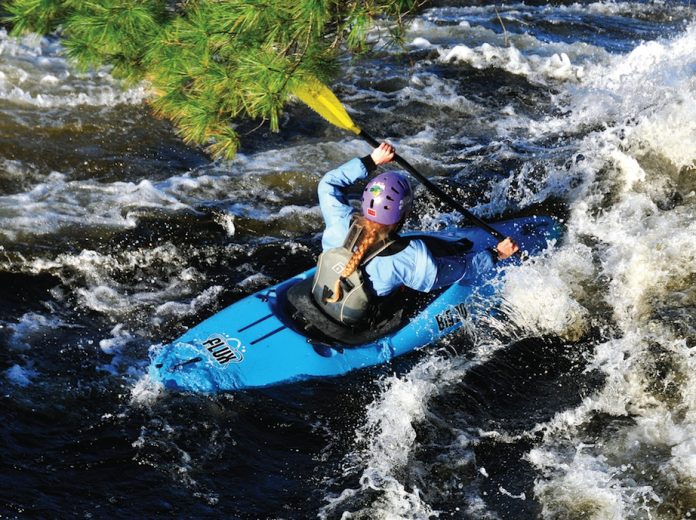
So what are Big Dogs like? Former Riot frontman Corran Addison says they look like Dagger bred with Fluid (actually, being Corran, he writes on a U.K. forum, “Dagger had sex with a Fluid!”). The functional, no frills outfitting in our test boat used a twin ratchet backrest, aggressive thigh grips and a full plate footrest to adjust for a positive fit.
The Flux is Big Dog’s offering in the one-boat does- it-all “playful river runner” category. The combination of full volume and a planing hull is reminiscent of popular river runners like the Diesel, Mamba or Remix, but the Flux’s highly rockered hull has a feel all its own. Forgiving rails make for effortless crosscurrent charging, spinning on a wave and rolling, but less-than snappy eddy turns. Keeping your weight forward and driving aggressively from the bow avoids washing out on eddy lines.
An ancient Chinese proverb states: A dog in a kennel barks at its fleas; a hunting dog does not feel them. Raised on lean times, Big Dog isn’t whimpering at its biggest hurdle—getting butts in the boats. As Orton, Buxton and Whiting doggedly attack the North American market, expect to see more of these puppies in the future.
Open Canoe Shootout | Mad River and Esquif | Rapid Magazine
This faceoff between two whitewater open canoes, the Mad River Outrage and the Esquif Zephyr, is from Rapid magazine.
The Esquif Zephyr and the Mad River Outrage are two often-recommended boats for paddlers seeking a canoe that inspires immediate confidence. Beginners and nervous boaters love them both, as do many old hands who’ve enjoyed decades of different designs. Beyond that, however, they don’t have much in common.
The hull material, design, stability and dryness are so different that it’s really no wonder these boats appeal to such a wide array of paddlers, all of whom will argue passionately for their favorite.
Esquif Zephyr
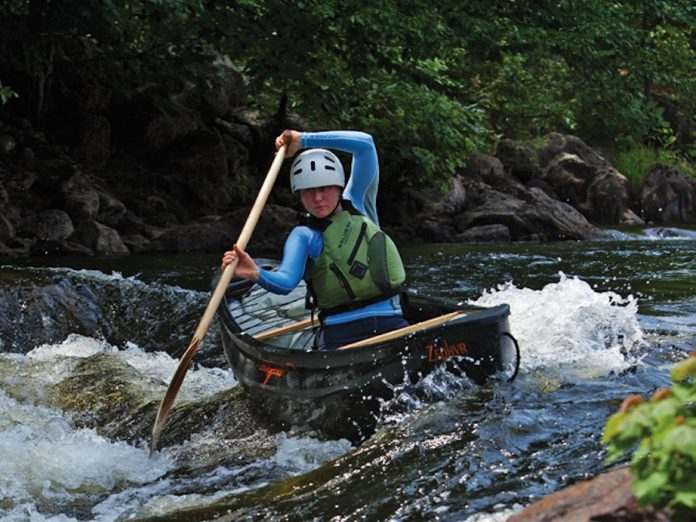
The Zephyr’s lightness is certainly appealing—13 pounds less to throw over your head and straight-arm onto your roof racks, 13 pounds less to accelerate through an eddy. Outward flaring sides keep it dry even when the circumstances should cause it to fill with water. Its flat bottom makes it a surfing machine with an added bonus—the security of pronounced primary stability. Its sharp entry point and long waterline allow paddlers to accelerate the Zephyr with only a couple of strokes and carry speed easily.
The Twin-Tex hull—a comingled product based on reinforced glass fibers and thermoplastic polymers—is where the Zephyr dream starts to fade for boaters looking for a hard-wearing canoe. The stock outfitting is factory-installed using an exotic two-part, space-age glue that requires vacuum bagging machinery to exert the necessary pressure to effectively make the anchors stick. Should your outfitting begin to release, the boat must go back to the factory or to an installer with a vacuum bagger for reworking. Hull damage requires special repair expertise that is also not readily available.
Mad River Outrage
The Mad River Outrage. Photo: Mad River
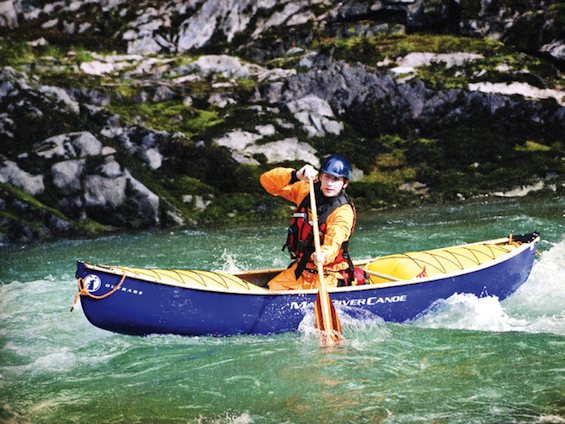
Mad River Canoe’s Jim Henry and Tom Foster designed the Outrage as an asymmetrical, shallow-arch hull with extreme rocker—extreme because it starts almost at the center of the boat and rolls up five and a half inches all the way to the ends. The Outrage tapers both laterally and longitudinally making it more maneuverable and giving it better final stability than a flat-bottomed hull, though it doesn’t plane as well. The boat carves effortlessly and rolls up quickly when full of water. The larger Outrage X is also available, scaled up to carry paddlers over 200 pounds or folks who just like lots of boat around them.
The Outrage might buckle your knees as you heft it but the penalty may be worth paying. Its proven Royalex construction is resistant to impact in cruel river playgrounds and has a memory to return to its original molded form. It is repairable by (almost) anyone who can open a can of epoxy and cut Kevlar cloth. Its outfitting is installed with vinyl glue and contact cement available at any hardware store.
The Outrage and Zephyr are both fine boats to recommend to a friend just starting out, or to paddle yourself for stable, lively fun. If endless surf and effortless portages back to the top of the play run are your top priorities, choose the Zephyr—just keep it off the rocks. If you prefer a super durable, go anywhere ride and don’t mind shouldering a few extra pounds, the Outrage is your faithful workhorse.
Woody shows Rapid Media the ins and outs of the new LiquidLogic Kayak – The Freeride. This boat isn’t about getting the biggest air, running the steep creeks, it’s all about getting real paddlers out on the water and having fun.
The Marmora and Area Canoe and Kayak Festival (MACKfest) just kicked off the paddling season in Ontario for it’s 4th season. There was a freestyle competition, extreme down river race, raffles, gear swap, live band, vendors, camping, good food, and great rivers. Here is a short highlight vid of what it’s all about and look for Rapid Media TV to be there again next year.
Only a handful of times have I been to the edge—life threatening, soul searching, that-almost-killed-me events. The kind, to put it mildly, I never wish to experience again. What I remember about these brief, endless moments on the river is two things: first, the burning of water blasting through my sinus cavity and behind my eyeballs; and second, the confusion.
The other half of my life is considerably more sedate. I’m an academic, which means I read a lot, teach some, think about ideas and go to conferences. While sometimes I still walk away saying, “That almost killed me,” for the most part it is a safer place. Within this reading, teaching, ideas and conference circuit, there are a couple of gurus. One of them, a round, grey-haired sociologist, specializes in confusion.
Sensemaking, actually. The opposite of confusion. Sensemaking is “the process by which people give meaning to experience” he writes in his seminal work on risk management and error prevention. Karl Weick is fascinated with how individuals make sense of a situation. His specialty is how people deal with crisis.
Back to the edge.
It was a medium drop on the Upper Yough with a way-left boof line. Lock the lip, boof…why am I not coming up? Where am I? How long did it take me to figure out I was getting surfed between the curtain and the rock wall? Minutes? A second? Hard to tell. My confusion was dark, loud and all consuming.
The field of risk management and accident investigation commonly retraces the decision-making process preceding and during a critical event. In this case, the decisions preceding my slip (being 16 inches off line) were sound. What should occur next—the decisions in the moment of crisis—either minimizes or escapes the situation. This is where Weick and sensemaking comes in, or doesn’t.
Confusion precludes decision-making. Weick explains that how one makes sense of a situation directly affects what gets decided. If sensemaking does not catch up with a situation that is desperate and life threatening, then other critical decisions are not made.
“The less adequate the sensemaking process directed at a crisis, the more likely it is that the crisis will get out of control,” he concludes.
The thing with theory is that it doesn’t help with the water blasting my eyeballs and the rock wall where I want to put my paddle. In this case I didn’t make sense of where I was until I had already minimized the problem to something I could deal with. I needed air. As I focused on solving my basic air problem, I eventually figured out what was going on.
Weick can explain this, too. “There is a delicate trade-off between dangerous action which produces understanding, and safe inaction which produces confusion…people don’t know what the appropriate action is until they take some action and see what happens.” In effect, trial and error helps define what is going on, and brings sense to the confusion. Waiting to see what happens only makes things worse.
Sensemaking grows with experience. A wider range of experience allows wider breadth of sensemaking. That doesn’t mean I’m going to volunteer to get pinned just to get a sense of it. I’d rather take my chances on the conference circuit.
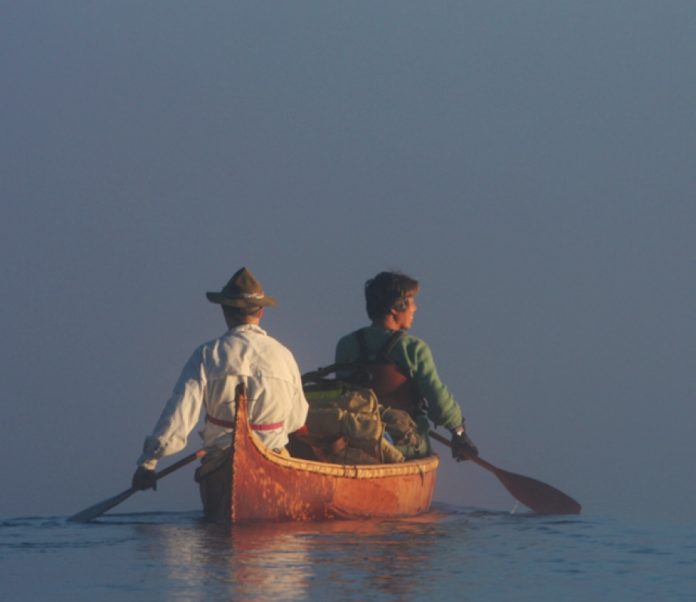
Three of us headed west last summer for a trip on what is known as Saskatchewan’s voyageur highway—a loop starting at La Ronge and ending at Misinipe via the Deschambault, Sturgeon-Weir and Churchill rivers. Towed behind our car were the two newly built birchbark canoes we would paddle on this historic, 18-day journey.
We regarded the 6,800-kilometer roundtrip drive as a necessary evil, not really part of the core trip experience. It turns out that bark canoes tagging along behind your car is the equivalent of showing up at the office sporting a cast—everybody notices and has a story to share.
At six a.m. in a blink-and-you-miss-it pit stop, we drew such a curious crowd that we nearly ran over a couple of them just trying to get back onto the road. Where did we get the canoes, they wanted to know. Did we make them ourselves? Are we really using them for a trip? What happens if we crack them up on a rock?
At another stop, we returned to find a tattooed Harley rider leaning against the canoes. Out of his leather jacket he pulled a denim-bound photo album, eager to show us pictures of a trailer he’d built for his hog. It was in the shape of a canoe. As far as he was concerned, we were brothers.
By the halfway point of our drive, we had developed a system where one of us would pump the gas, another would head to the washroom and the third would act as public relations officer back at the trailer.
On Portage Street in downtown Winnipeg, we returned from shopping to find two Native men circling the canoes, soaking in every detail. For one of them, the boats were a throwback to something he’d heard about from his Anishinabe elders. The other man, a senior writer and researcher for the Aboriginal People’s Television Network, told us, “If you guys die on this expedition in these bark canoes, let me know because it might be newsworthy.” I said I would.
Our route to La Ronge included a drive north through remote eastern Saskatchewan, where we hoped to put the canoes in a tributary of the White Fox River and paddle up to the village of Love, thus empirically proving that you can actually make Love in a canoe. Sadly, the creek was no more than a damp, weed-choked gully. Canoes went back on the trailer and three smelly, road weary men made Love in the car instead.
Taking rooms that night at a motel in the nearby diamond-mining town of Nipawin, our disappointment was swept aside by a trucker we met in the bar.
“You say the word and let me join your expedition,” he implored us. “I’ll call the dispatcher right now and tell her where to find the truck. I’d give anything to paddle in a birchbark canoe.”
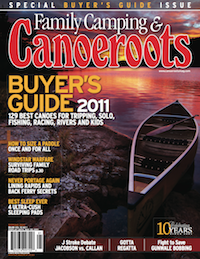
This article first appeared in the Spring 2011 issue of Canoeroots Magazine.
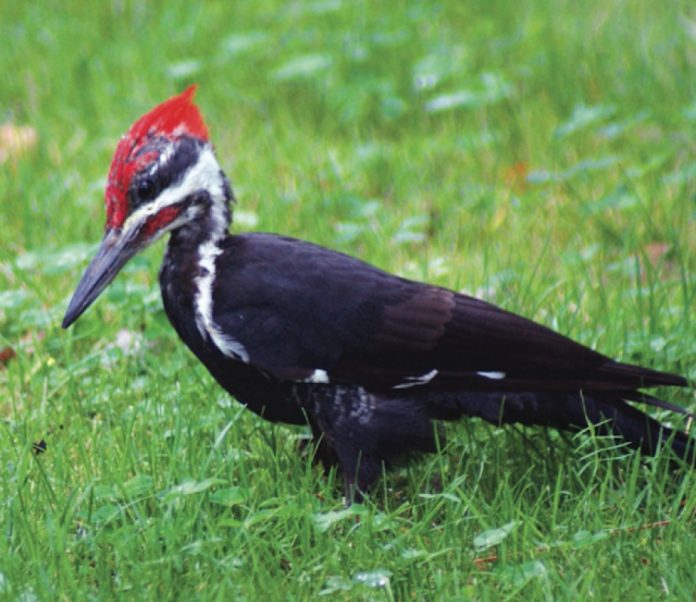
There are nearly 200 different species of woodpeckers—19 call North America home.
The ivory-billed woodpecker was long thought to be extinct until a sighting in 2004. Since then, thousands of enthusiasts have flocked to Big Woods, Arkansas, in search of the bird and the $50,000 reward for its find. Join the hunt and you may also spot elvis or Bigfoot.
The original voice of Woody Woodpecker was provided by Mel Blanc who also recorded the voices of Bugs Bunny, Yosemite Sam, Porky Pig and countless other cartoon characters you watched on saturday mornings growing up. Ha-ha-ha-haha!
A woodpecker can peck up to 20 times per second.
Woodpeckers use the drumming sound of their pecking to attract mates and establish territory. Many species are known to hammer on utility poles, metal downspouts and even brick chimneys. Ouch!
Woodpeckers have small brains wedged tightly into reinforced skulls to reduce shock and avoid concussions.
Used to pluck insects from the holes it bores, a woodpecker’s tongue can be up to four inches long—too large to fit inside its mouth. Instead, the tongue is stored in a special chamber that wraps around the inside of the bird’s skull.
The late ‘70s punk rock revival of the mohawk hairstyle is often attributed to Robert Deniro’s 1976 role in Taxi Driver. Who’s going to tell Glen Plake he’s been sporting a woodpecker?
This article first appeared in the Spring 2011 issue of Canoeroots Magazine.
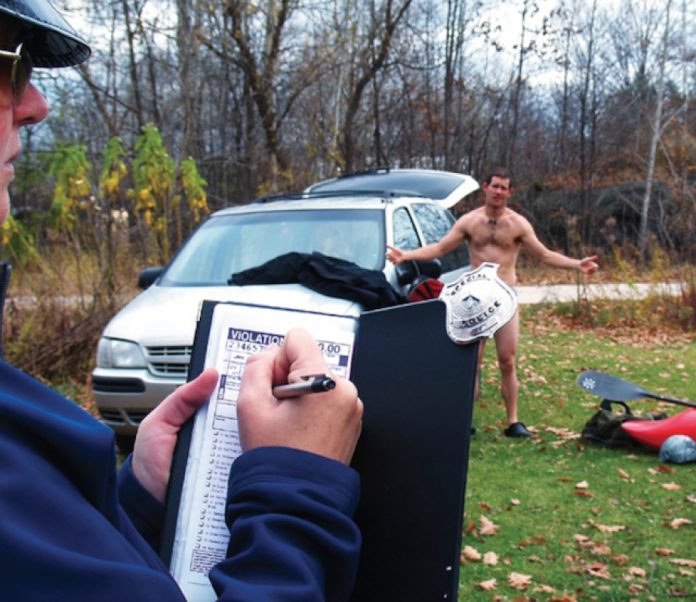
When asked what they enjoy most about the sport, many paddlers say it is the inherent freedom. Some stretch the definition of liberty to include the freedom to be naked. Unfortunately, that doesn’t always sit well with bystanders—or with the law.
Take, for a graphic example, Corran Addison’s off-river mishap at the ‘93 World Freestyle Championships on Tennesee’s Ocoee River.
“I’m getting changed—not too discretely but, hell, it is just an ass isn’t it?—and some ranger sees me and flips his lid,” recalls Addison. “He comes over and is giving me shit an’ so I say ‘What’s the problem? See something you like and it bothers you?’”
TIPS FOR STAYING COVERED
While most paddlers will admit there have been times when they were not too discrete about changing at the put-in or take-out, the fact that Addison ended up in jail suggests you might want to handle things a bit differently. Instead of thinking up excuses for when you’re caught with your pants down, stay covered with these tips.
MISDIRECTION: Although frequently practiced by paddlers and magicians with equal alacrity, disaster can be just a stumble away. I discovered this painful truth while trying to change at the back of the rafting bus. A combination of sudden braking and my pants firmly around my ankles ensured that I didn’t get any tips that day and my guests couldn’t look at me with- out giggling (in my defense, the water was really, really cold). The problem with misdirection: too many variables.
{loadposition PTG_RP_Midcontent}
TOWEL TECHNIQUE: The standard waist wrap offers adequate coverage but can be cumbersome and prone to malfunction. Having a friend hold the towel allows for greater ease of movement but also requires a great deal more trust. Be mindful when changing beside your car, as objects in mirrors appear smaller than actual size.
PONCHO PROTECTION: The poncho is a useful tool, but can also make you look like one. Design and cut are crucial for this hands-free, flash-free method of changing. Rain ponchos are easy to find but can rub the wrong way. Cotton or fleece is more comfortable. A tenty garment made from these materials is actually called a muumuu.
BATHROBE BUSINESS: Hugely under-utilized, the common bathrobe (complimentary at nice hotels) is comfortable on the skin, allows you to change with ease and is great for lounging après paddle.
Remember, just because you are comfortable airing things out doesn’t mean others want to be subjected to it. Stay out of jail, help keep river access open and maintain good boater- public relations—when changing to and from your river gear, do your part by covering yours.
Dan Caldwell now prefers the towel technique for stealthy clothing swaps.
This article first appeared in the Spring 2011 issue of Rapid Magazine. For more great content, subscribe to Rapid’s print and digital editions here.
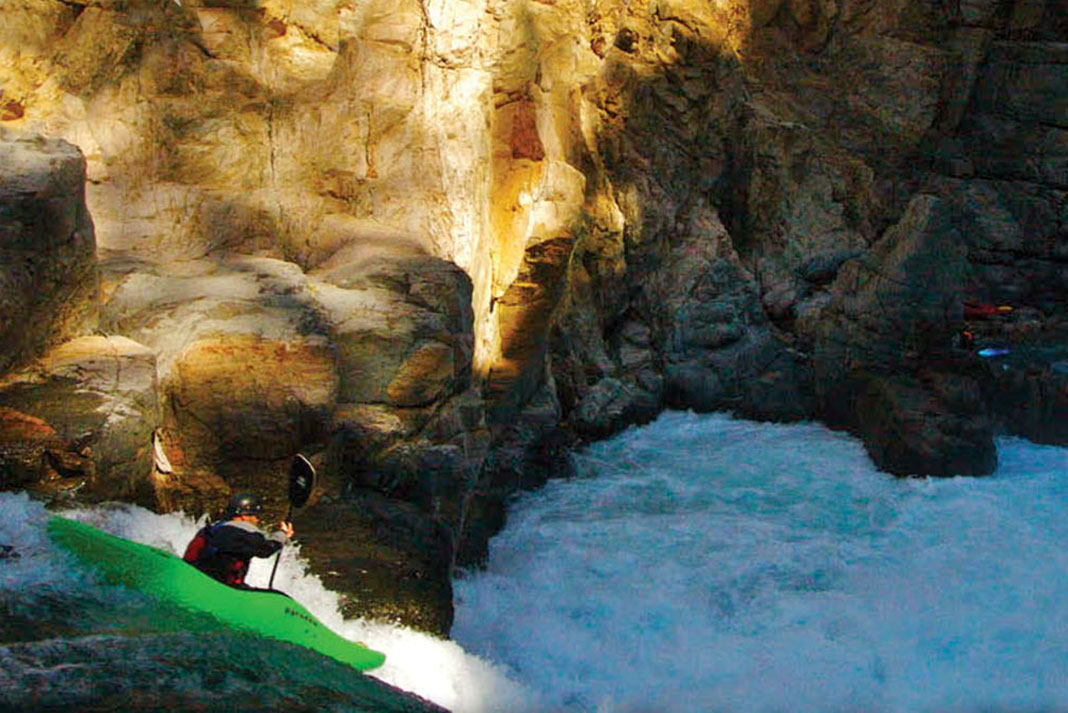
Easier to get out than in. | Feature photo: Dan Patrinellis
Looking downriver from the Chelan Dam, it’s hard to imagine the volume of water that carved this gorge through Chelan, Washington. For three fleeting weekends last year, paddlers were satisfied to take advantage of a modest 400 cfs release.
An agreement made in 2006 between American Whitewater, the U.S. Federal Energy Regulatory Commission (FERC) and the local energy agency is the basis for a three-year flow feasibility study that concludes this year. The project’s outcomes will include a recreational resource management plan that directly addresses the needs of whitewater paddlers.
Last July and September, the ongoing work of Thomas O’Keefe and American Whitewater gave paddlers the opportunity to demonstrate safe use of the waterway.
“The utility, federal regulators and the local community will be carefully evaluating the outcome of these releases,” says O’Keefe. “The success of the weekends is judged not on the number of paddlers or the number of trips, but on our ability to be safe.”
Easier to get out than in. | Feature photo: Dan Patrinellis
Before putting in, paddlers were greeted by project leader Kris Pomianek and two security guards. They were required to sign in and were issued permits following a briefing on what was expected of them during the day’s descent. Pomianek told paddlers, “Because these releases are part of a study required by the FERC, the local utility takes things very seriously.”
Authorities originally objected to these releases over concerns surrounding hazards known to lay hidden within the gorge. Although short, the run brims with horizon lines, class V drops and vertical walls, constantly reminding paddlers that there is no easy exit from the gorge. At one set of rapids, The Point of No Return is crudely spray-painted on a rock face.
Paddlers can be optimistic about their playgrounds
The initial study only allows access for hard-shelled kayaks. O’Keefe implored boaters to respect the policy and insisted that access for inflatables could be explored when the management plan is revisited at the end of this year.
The efforts of O’Keefe and a small group of Washington boaters resonate with paddlers across the U.S. and Canada who are fighting for shared access to their local waterways. This project makes it clear that with a willingness to work alongside authorities and compromise, paddlers have reason to be optimistic about reclaiming their playgrounds.
Referring to the Chelan Gorge, O’Keefe speaks to whitewater activists everywhere. “Our actions will have implications for the future of this run and other regulated rivers across the continent.”
Dan Patrinellis was thrilled to join a group of paddlers taking part in the test release on the Chelan Gorge last summer. For more info on this and other river stewardship projects visit www.americanwhitewater.org.
This article was first published in the Spring 2011 issue of Rapid Magazine. Subscribe to Paddling Magazine’s print and digital editions, or browse the archives.
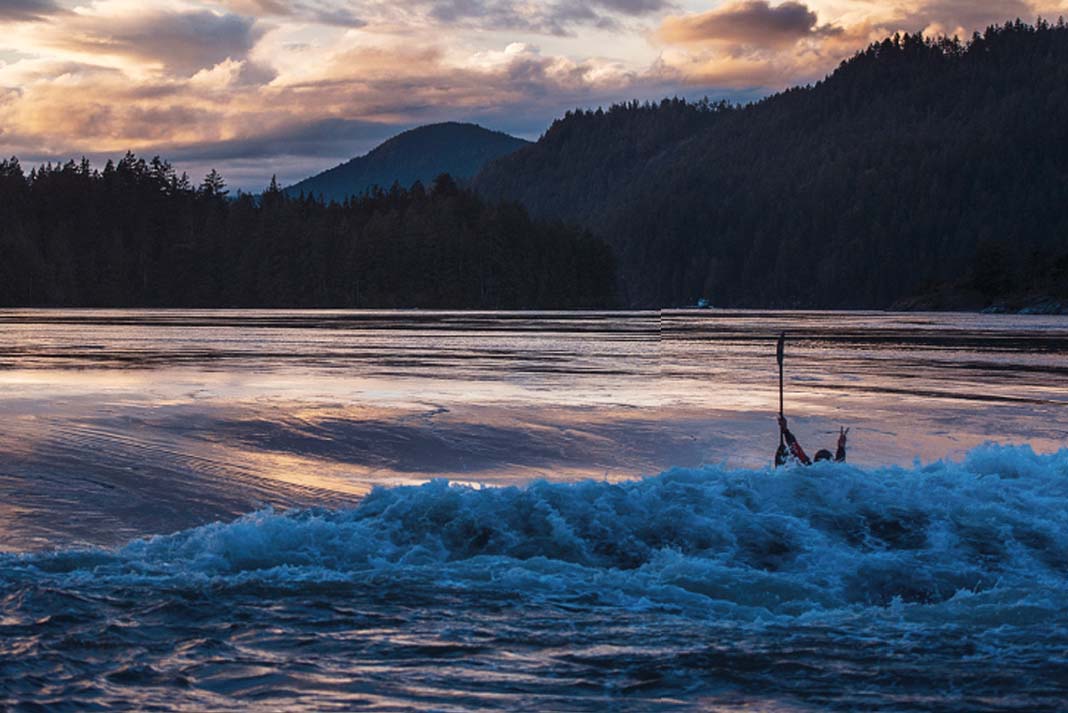
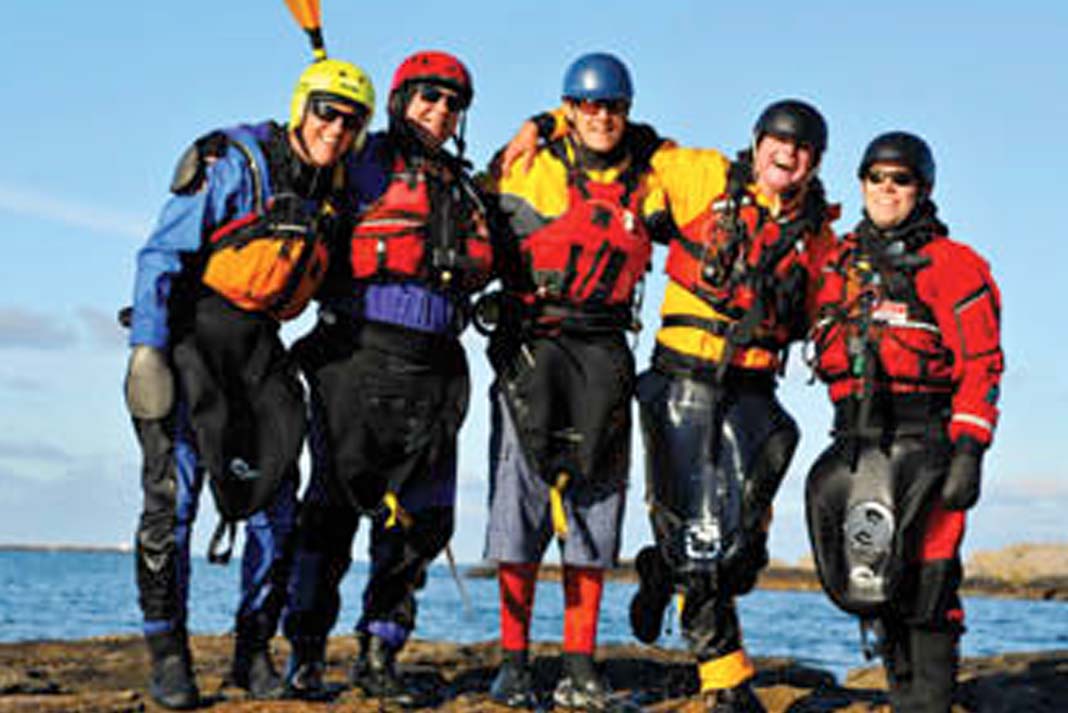
These swashbucklers make breaking world records seem as easy as crossing the street. | Feature photo: Gabriel Rivett-Carnac
Gathering for a storm. | Feature photo: Virginia Marshall
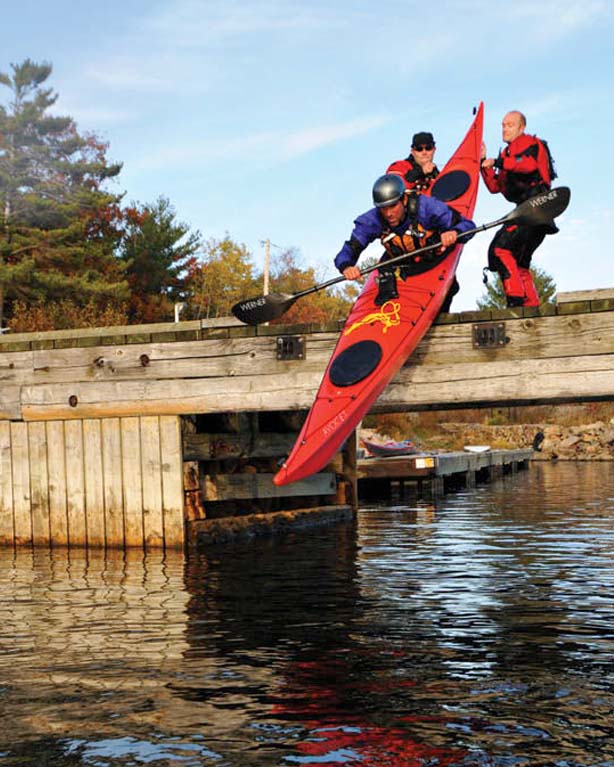
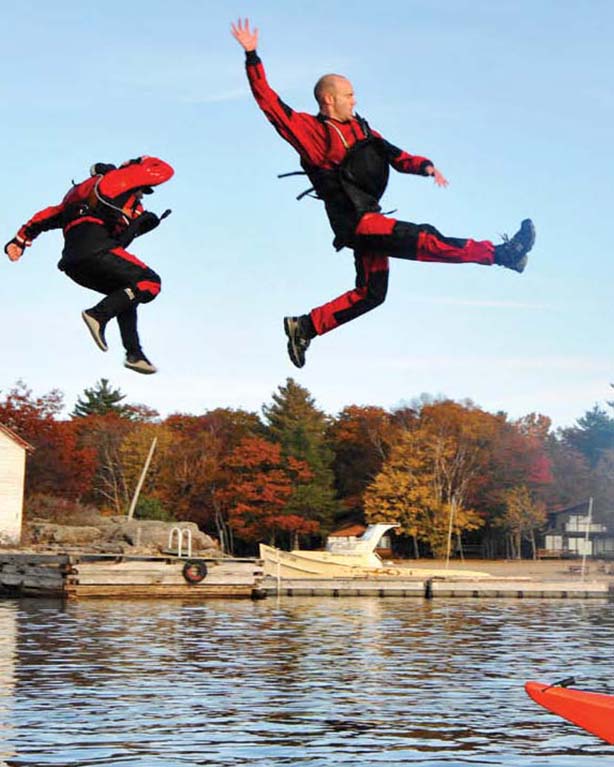
David Johnston is screaming like a school girl at this year’s Storm Gathering. A dozen eager hands release the stern of Johnston’s kayak, launching it off Snug Harbour’s six-foot-high pier. For a moment the boat arcs gracefully through the air, and then the bow dives into the cold, clear water.
The kayak enders, submersing Johnston and 12 feet of gleaming red and black fiberglass beneath the harbor. Briefly, a Darth Vader sticker and Union Jack behind the rear hatch are all that is visible.
Johnston’s head and body resurface first, like the conning tower of a submarine. He is grinning and laughing his high-pitched laugh. The Snug Harbour Dock Launch Competition is a Johnston favorite and already a Storm Gathering classic.
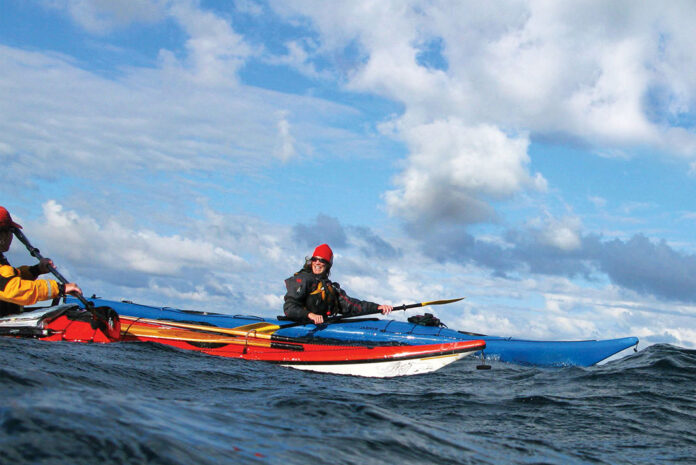
Wind, waves and fun at the 3rd annual Storm Gathering
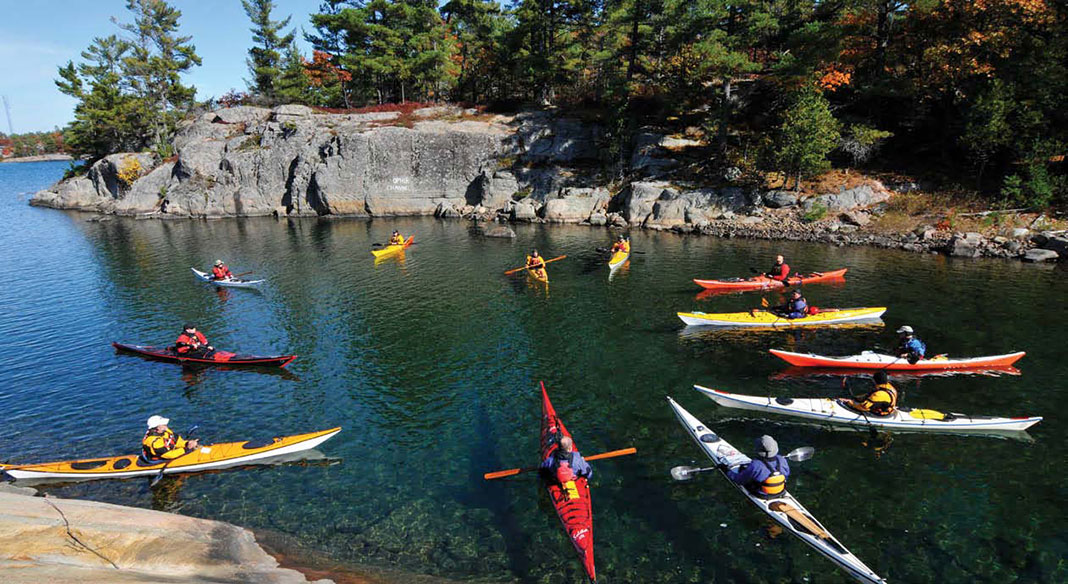
We are assembled in a sheltered nook 20 kilometers northwest of Parry Sound, Ontario, for the third annual Georgian Bay Storm Gathering. It’s mid-October and the combined water and air temperature in degrees Celsius barely scrapes the double digits in the morning. Yet some 50 paddlers have traveled from as far away as Cape Breton, Nova Scotia, and Victoria, British Columbia, to get together for one last weekend of sea kayaking before winter sets in.
The Snug Harbour Dock Launch Competition. | Photo: Virginia Marshall
Some entries are less graceful than others. | Photo: Virginia Marshall
Nearly half of them are now cheerfully hurling themselves off the Snug Harbour dock. Leading the charge are Johnston, Storm Gathering’s energetic creator and co-organizer, and Tim Dyer, 25-year veteran owner of nearby White Squall Paddling Centre and fellow event ringleader.
The running Storm Gathering joke is that Johnston and Dyer started the event as an excuse to go paddling in wind and waves with a bunch of experienced paddlers. Like any good myth, this one is half true.
In 2007, Johnston and a friend were looking for alternatives to sanctioned certification courses as a means to develop advanced paddling skills.
“We considered traveling to the U.K. or California, but we were too cheap,” recalls Johnston. Their solution was to rent a cabin in Tobermory, Ontario, fly in an accomplished instructor, share the cost with half a dozen friends and go paddling. The following autumn, Johnston partnered with Dyer to grow the idea into a public event and Storm Gathering was born.
“The goal of Storm Gathering is to build a community,” says Johnston. “Sea kayaking is like rock climbing or whitewater paddling; you can only reach a certain point on your own before your skills plateau. We’re connecting paddlers with each other so they can progress.” Where other symposiums focused on drawing in new paddlers, the Gathering targeted committed kayakers with the lure of challenging conditions in a safe and supportive environment. According to Johnston, the timing for such an event was perfect.
“You would never have been able to run this event five years ago.”
“You would never have been able to run this event five years ago,” he says, citing the recent availability of good, affordable drysuits; recognition of sea kayaks as true rough water vessels by the press and public; and skyrocketing interest in rolling brought about by the popular Greenland-style paddling trend.
Paddlers travel from far and wide for one last weekend in the sea kayaking season. | Photo: Virginia Marshall
Like any new event, Storm Gathering has had its share of growing pains. Both the inaugural year and the 2009 gathering suffered from uncooperative weather: Flat calm and bluebird skies for three whole, stinkin’ days.
“I told Tim [Dyer] that if it is calm this year, we are done,” Johnston tells me Thursday evening. He’s smiling; the historical weather data he studied to find the dates with the best chance of strong winds on Georgian Bay is finally paying off. This year’s weekend forecast is much more promising: 20- to 25-knot winds and waves to three feet.
Day One – Friday October 15
Forecast: Strong wind warning in effect, wind north 15 knots, increasing to 20 near noon.
“Most of you tell yourself, ‘Some day I want to try this.’ This is that day—we’ll try anything,” Johnston addresses the circle of still-groggy faces gathered post-breakfast in Snug Haven Resort’s spacious log lounge. He’s introducing the weekend program: four loosely structured on-water workshops, padded with dry land discussions, presentations and generous allowances for goofing around in boats, soaking in the resort hot tub and sharing stories. One of this morning’s sessions is called Attack of the Savage Rocks.
Two hours later, I’m watching a delicate-looking woman getting hammered against the rocks. Together, her matching drysuit, PFD, helmet and shiny new kayak comprise an investment of at least $4,000. The sound of fiberglass on granite grates my ears as kayak and occupant are dashed between polished stone and curling wave. She keeps her wits, pushes off and escapes.
Gathering for a storm. | Feature photo: Virginia Marshall
She doesn’t cry. Betty Wang, like the other participants I’ve met here, is grateful for any learning experience, even an expensive and potentially painful one. She read the registration disclaimer: Please note that due to hard rocks and big waves, there is a good chance that boats, paddles and gear will get damaged, broken or lost.
At day’s end, only a few paddlers are too tired to race to the adjacent harbor for Johnston’s dock launch competition. When the line-up for falling off in boats starts to resemble the nearby Hwy 400 artery on a summer long weekend, people who celebrated mid-life nearly a decade ago leap like lemmings into the harbor. Johnston and Dyer—radish and mango drysuits clashing like cymbals—run hand-in-hand off the end of the pier, literally into the sunset.
Forecast: Strong wind warning in effect, wind north 10 knots, backing to southwest 15 late afternoon, then increasing to 25 late evening.
“Just give it everything you’ve got and get them the hell outta there.” Tim Dyer is debriefing a rough water extraction scenario in his inimitable soft-spoken yet hard-hitting way.
The surprise scenario is a Dyer classic that sets the eight participants in his workshop scrambling to retrieve his “unconscious” body from the over-turned kayak, and then holds them in rapt attention as the challenges of the mock rescue are addressed.
In the millpond calm of the morning, the conditions might be contrived, but the learning is not. Reality is dirty, demanding and unpredictable—just like Dyer’s workshop.
The second day wraps with a fresh fish feast and uproarious gear auction at Gilly’s Restaurant in Snug Harbour. Afterwards, participants stagger back in the blue light of a neatly bisected half moon to Snug Haven’s cloister of cozy cottages. The cottages each house four to five participants, making them a social affair— building community—as well as a practical answer to the sub-zero evenings.
This year, dubious bunk assignments have seven instructors—business adversaries outside this gathering—sequestered in a single cabin, sharing dish duty while guarding trade secrets.
The second day wraps with a feast and gear auction. | Photo: Virginia Marshall
“The goal of Storm Gathering is to build a community,” says Johnston. | Photo: Virginia Marshall
Day Three – Sunday October 17
Forecast: Strong wind warning in effect, wind southwest 20 knots, backing to northwest 20 early morning, risk of waterspouts.
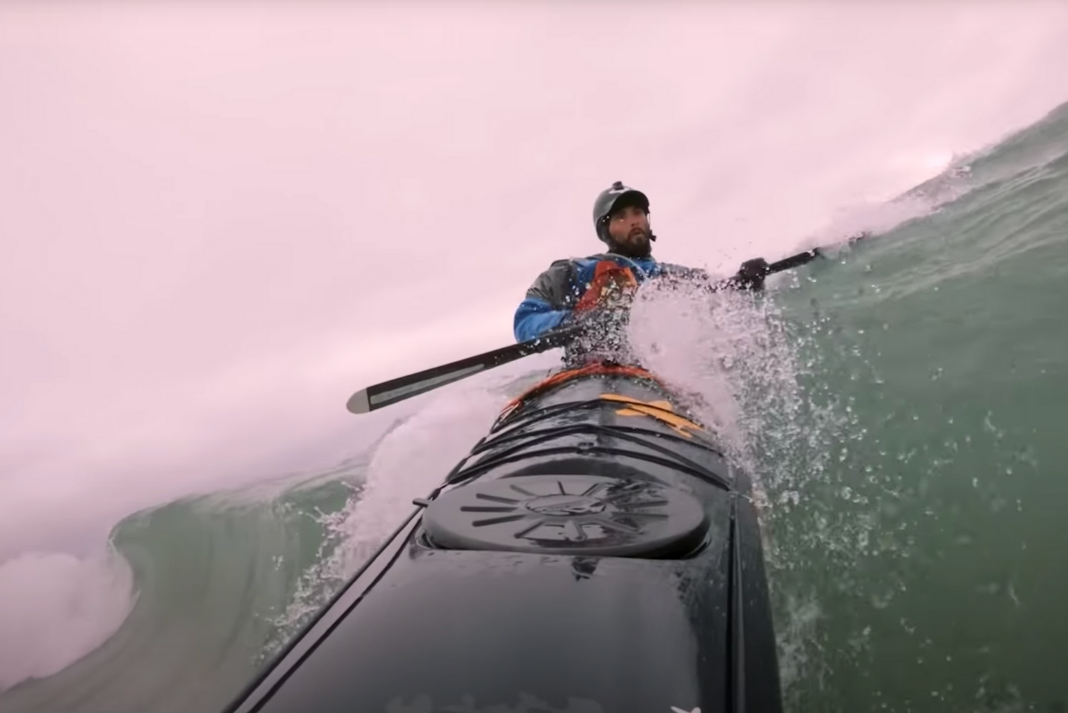
White horses gallop through the four-kilometer-wide passage. Kayaks alternately disappear amid, and emerge from, the rolling sea. A snorting giant, foaming at the mouth, consumes Snug Harbour light. Moments later, the cheerful red and white dollhouse reappears on the horizon and I adjust my wind-blown course for it, continuing methodically toward the goal.
A flash of blue at the edge of my vision catches my attention. I turn my head to see Stewart Todd, a tirelessly enthusiastic new kayaker, ripping across the face of another long roller. Todd’s return journey from the Snake Islands is 30 percent longer than the rest of ours as he zigzags across the channel, pursuing waves like a hound on a scent.
The storm has finally arrived at Storm Gathering. Cumulous clouds are piling up in the western sky and the forecast is calling for a risk of waterspouts and exponentially increasing winds for the rest of the week. Too bad tomorrow is Monday.
Back in the harbor, we’ll huddle in circles and swap tall tales involving harrowing rescues, near misses and half-mile surfs before packing vehicles for the long drives home. So, I ask Johnston, are you still thinking about calling it quits next year?
“No way,” he grins, “We’ll be back.”
Virginia Marshall is the former senior editor of Adventure Kayak magazine.
This article was first published in the Spring 2011 issue of Adventure Kayak Magazine. Subscribe to Paddling Magazine’s print and digital editions, or browse the archives.
Gathering for a storm. | Feature photo: Virginia Marshall


 This article first appeared in the Spring 2011 issue of Rapid Magazine. For more great content, subscribe to Rapid’s print and digital editions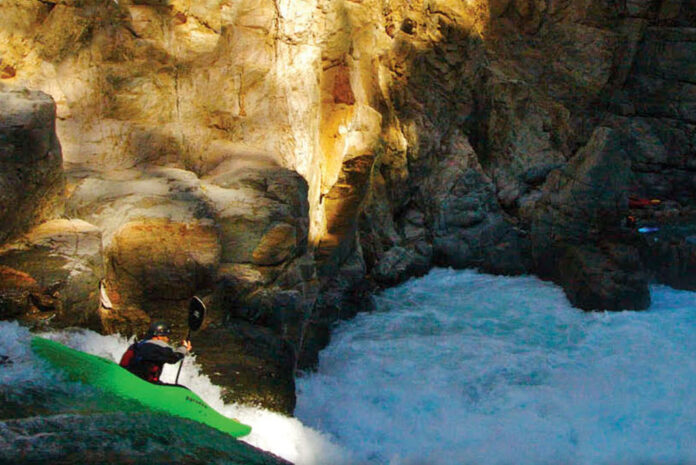


 This article was first published in the Spring 2011 issue of Adventure Kayak Magazine.



