Home Blog Page 331

A Forager’s Manifesto

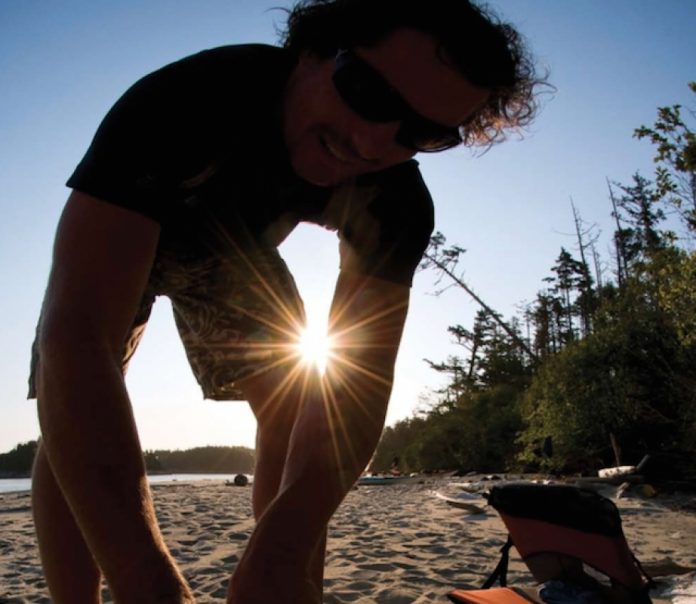
Photo: Bruce Kirkby
A Forager's Manifesto

Fishing for food embodies much of my truth as a kayaker. For me, sea kayaking and fishing are natural adjuncts. We sea kayakers tour for a lot of different reasons. But in my book, a week of tasty fish fillets is one of the best.

Take, for example, a recent trip to the Brooks Peninsula. My friend Steve and I had spent the better part of the afternoon paddling and fishing in vibrant seas, tepid sun and vagrant autumn breezes. Alone on the remote northwest coast of Vancouver Island, we had paddled ashore to fly fish the mouth of Battle Creek for coho salmon.

The only action we had was one feisty buck salmon jumping multiple times five feet in front of us. With the tide pushing in, the wading was dicey; waves and surge pulses hit us randomly and threatened to knock us over.

We got back in our boats, pushed off and spent the last hour trolling Battle Bay hoping to find a fish or two hanging out up top. When it looked like fate would surely give us the stiff we pointed our bows toward camp half a mile distant. But dragging those flies, mind you, every stroke of the way.

Steve was well ahead of me and my mind was drifting toward the beers we’d stashed in the creek when I looked up to see a salmon leaping repeatedly around his boat. I reeled in my line, dug hard with my paddle, and watched as Steve reached back for his rod and waved wildly in my direction.

It was an extremely long fight and nearly dusk before he finally had the fish in his lap. We stashed the fish in the rear hatch and pad- dled ashore, while I envisioned salmon fillets grilling over a little driftwood fire.

The perfect end to a day of kayaking.

I love ocean kayaking in a coldwater para- dise like this, camping and fishing day after day, night after night until my inner savage is stilled, my “wild quota” is met once again. The way I see it, just because we’re on a kayak trip doesn’t mean we don’t try to eat locally, organically, fresh and wild. For me, tapping into seafood resources completes the kayaking experience.

Sure, I bring along a few freeze-dried meals for when I’m too wiped out to cook, but for the most part, the staples we bring are intended to complement a seafood buffet—sautéed onions and garlic and carrot with a little red cabbage and apple salad over Basmati. If the fishing turned out to be a total bust, I’d be looking at a lot of low-cal dinners. 

Fortunately that has never happened. The ability-to-live-off-the-sea index is very high in British Columbia. The more remote you are, the better it gets. If you’re lowering a jig off the edge of a kelp bed or a rocky point, you’re fishing in the right place; odds are, something will bite. This is not dry fly fishing on the henry’s Fork. These fish are wild and hungry and eager for the lure. You’ve got to be a fishing klutz not to bring the bacon back to camp here.

How do I do it? For salmon, I usually fly fish, casting or trolling a bucktail, unweighted, right on top, using a 9-weight rod. But a good handline and a lead or painted metal jig, jigged up and down just off the bottom, or even troll- ing that bucktail, will catch most everything.

When the inevitable storm comes along, I harvest ahead for one day, but no more—a basket chilling in a pool in a forest creek is our only refrigerator. If I’m confined to the beach, I look at the next tier of critters. Even an aver- age low tide will usually reveal barnacle beds, from which horseshoe barnacles can be care- fully gathered, then steamed and drenched in butter and tamari for dinner. Or perhaps there are crab in a nearby lagoon we can wade for or trap. And there are always trout up the fresh- water coastal streams. More often than not, a meal is salmon fillets grilled over a beach fire, or chunky lingcod fillets with pepper and lime, prepared in a ceviche dish.

living off of the sea as you explore is about more than the nutritious food that you put on the table; it is an integral part of wilderness exploration. In fact, it’s that return to the primacy of needs-based hunting and gathering that cre- ates the kayaking buzz for me. Not only does it give me something soundly pragmatic to do; it provides both the excitement of fishing (which is a near universal thrill) and a wealth of seafood entree options.

No matter what you catch or how you prepare it, a fresh seafood diet for an extended pe- riod of time is something to look forward to on any kayak trip. In the spirit of “chop wood, carry water,” out here it’s chop/carry and catch fish, and there is a deeply refreshing quality about such direct imperatives.

Rob Lyon is a former fly fishing guide who lives in the San Juan islands. He can be reached at rob@lyonexpeditions.com. learn more about kayak fishing in Adventure Kayak’s sister publication, Kayak Angler.
AKv10i3_LowRez__1.jpgThis article first appeared in the Summer/Fall 2010 issue of Adventure Kayak Magazine. For more great content, subscribe to Adventure Kayak’s print and digital editions here.

Building Your Boat

Photo: Ginni Callahan
Building Your Boat

I took the thin plywood panels out of the box and lined them up on the plastic floor covering. A Pygmy Arctic Tern. Too excited to wait, I stitched and glued the middle butt joints with epoxy after only a cursory glance at the directions. Then, hmm, there was another butt joint at the bow; together it didn’t seem to fit in my 16-foot workshop. I re-measured the room. Still 16 feet.

Hello? Pygmy? Do you sell different sized Arctic Terns? Oh. I meant to order a 14-foot model.

No problem, Ginni, just ship it back in the box.

Too late! That is how I got to build two kayaks in one 16-foot room. And, that is when I learned that life is never the adventure we first expected.

A boat is a creative extension of a life—even if it is from a kit. Your hands make it. You rig it to your needs and tastes. My 14-foot Arctic Tern has mahogany pad eyes with a blue deck line running underneath around the perimeter of the boat. Mahogany end toggles match the pad eyes. After my latest trip to Australia, the kayak may also get a sail.

For me, that little Arctic Tern opened more doors than I thought existed in this labyrinth of life. One little kit boat project, some years playing in surf, a symposium in northern California, a Welsh filmmaker… One door just kept opening to another in a dizzying maze of kayaking adventures I had never even dared to dream. Where does all that good fortune start? In a 16-foot room.

The boat-building bug may be more manageable in kayak size, but of course it isn’t limited to kayakers. Go to Marina Seca in Guaymas, Mexico, and you will find a revolving community of international project addicts of all flavours: fibreglass, aluminum, steel, Ferro cement and wood. Pandora III, a 50-foot schooner with two broken masts and wood rot completely through is a box that should have never been opened. But there is one so smitten with her that she will be his life’s work. Thankfully, he is still a young man.

What am I doing in Marina Seca? I’m hanging with another sea lover and boat artist on his steel-hulled sailboat. Instead of building a boat, I’m chopping my fibreglass Romany in half in preparation to fit it onboard to explore the world under sail and paddle.

Looking back to my Arctic Tern days, I believe: You shape the boat, then let the boat shape you. 

Ginni Callahan is a sea kayak guide on the Sea of Cortez, Mexico, in winter and on the Columbia River and Oregon Coast in the summer. She owns Columbia River Sea Kayaking and Sea Kayak Baja Mexico. 

AKv10i3_LowRez__1.jpgThis article first appeared in the Summer/Fall 2010 issue of Adventure Kayak Magazine. For more great content, subscribe to Adventure Kayak’s print and digital editions here.
What Color Should You Wear To Be Seen On The Water

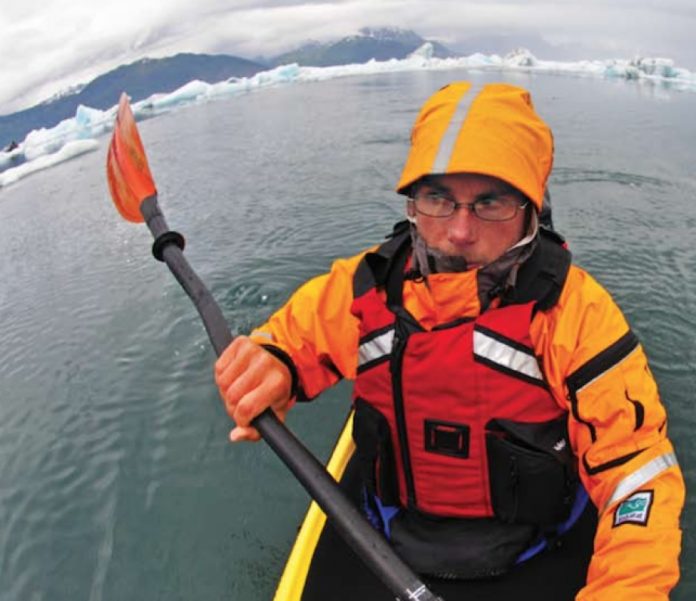
Photo: Ryan Bonneau
A sea kayaker is dressed in bright paddling clothes as he paddles on a dark, rainy day.

One of the most frequently asked questions in sea kayaking is: What is the best color for visibility on the water? Opinions vary, research is scarce and personal experiences are conditional at best. So the bottom line, it seems, is that it all depends.

Our eyes have sensory cells called rods and cones. Rods are more abundant and help us see the size, shape and brightness of an object. They are also more sensitive than cones, which show us colors and detail. Cones detect specific wavelengths corresponding to red, blue or green. We use our cones to see during the day. In low- light conditions we see mostly with our rods, and those images are basically black and white.

In those general terms, a color seen in full sunlight would begin to appear differently as light subdued, caused by either atmospheric conditions such as fog and rain or as nightfall approaches.

The U.S. Navy’s medical research lab conducted a study on color and visibility in 1951. Researchers sought the best visibility colors to aid search and rescue operations at sea. They compared the existing basic yellow of the then-current G.I. survival raft to other colors in the spectrum that might be more visible.

They determined that yellow-red colors were more visible than yellows of the same brightness. They also found that light targets against dark backgrounds were easier seen than dark against light and that the old G.I. rescue raft yellow wasn’t very visible at all.

The general conclusions gleaned from the Navy study were that against normal sea background colors, yellow-reds (think oranges) are most readily detected; the redder the better for visibility in a given value range; and visibility increases by 30 percent when the target color is lighter than the background. A Coast guard friend of mine throws another color into the discussion. Robin’s egg blue stands out extremely well in water from the air.

So what should one’s choice of color be for optimum visibility? Consider the conditions in which you expect to paddle most often. For sunny, clear, bright days, favor reds. If you’re in an area that is commonly overcast, misty and foggy, favor bright yellows or red-yellow. Composite kayaks can be ordered in custom color combinations, but for single-color plastic boats, reds and yellows are probably the best all-round against both dark and frothy waters.

More important than your boat color may be your life jacket, especially if you get separated from your boat. The same theory applies to picking your best life jacket and clothing color. To be more visible at night, carry lights and consider reflective tape on your body and boat, and maybe even a radar reflector for an even greater chance of being spotted.


Tom Watson is a freelance writer with over 20 years experience as a sea kayaker. He specializes in kayak safety, skills and survival techniques.


Journey of the Spirit: Kayak’s Ancient History

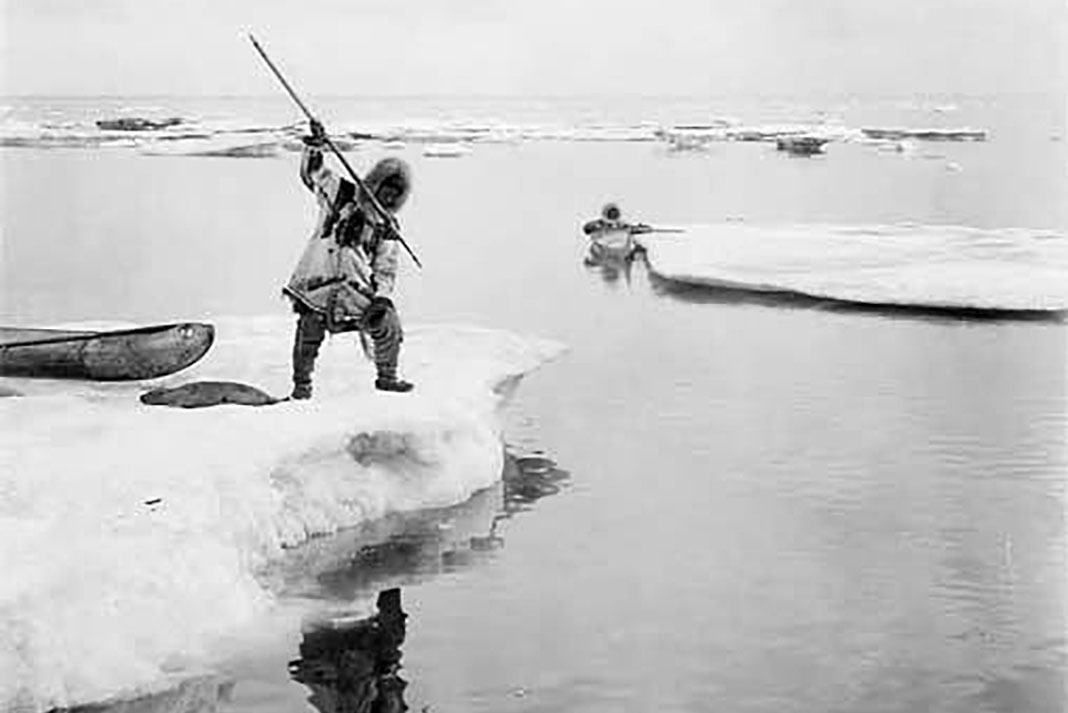
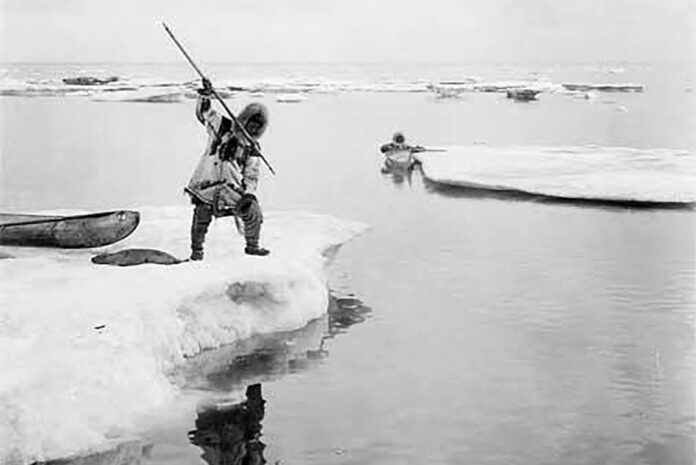
two Inuit hunters with kayaks hunt using spears on ice floes
Feature photo: Lomen Bros/Wikimedia Commons

The ancient Inuit chose as their domain a very inhospitable environment. A vast, frozen land devoid of the essentials of life. Those who inhabited the coastal areas were especially deprived of the gifts of the land—natural resources in the forms of vegetation and land animals were simply not available. The sea became their source for sustenance and their needs dictated the path of their ingenuity.

Journey of the spirit: Kayak’s ancient history

Life for the ancient Inuit depended on their ability to make the most of the meager materials at their disposal. To not create meant extinction, so they created perhaps one of the greatest design and engineering feats in history. From a dearth of construction materials, and in the worst of environments, the Inuit developed the kayak.

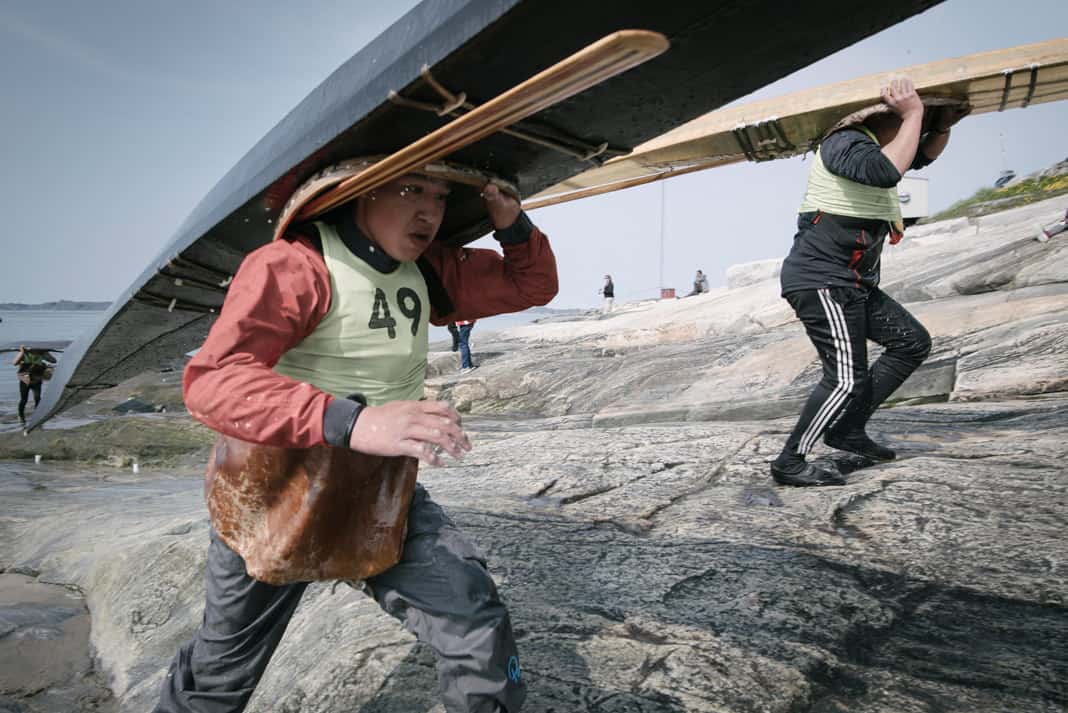
Made from bones and driftwood, covered with seal skin sewn by the hands of a craftsman, the original kayaks made a mockery of the harsh land in which they were built. The noble hunters braved the extreme elements to pursue the elusive seals, developing the necessary skills to manoeuvre their vessels and hunt from the confines of the cockpit. It was a job held in high esteem. The hunter was the provider of life for his village. Without his success- ful forays over the treacherous waters, the Inuit people would not survive. his was an existence tied to courage and heroism. And tied to a boat—the hunter’s boat!

two Inuit hunters with kayaks hunt using spears on ice floes
The ancient kayaker, after having sighted and then stalked his prey in the unforgiving waters, would trade paddle for harpoon. | Feature photo: Lomen Bros/Wikimedia Commons

One can readily imagine the social position of the Inuit kayaker. His was an existence predicated on risk, for the dangers he faced from the cockpit of his tiny vessel were always present. The ancient kayaker, after having sighted and then stalked his prey in the unforgiving waters, would trade paddle for harpoon and, in the pitching swells, launch his weapon while maintaining the delicate balance that kayakers often seek so desperately with a flick of the hips.

With the fate of the entire village riding on his skill and courage, the kayaker’s launch into the hunt was a momentous occasion, heralded with sacred chants and actions focused on success and survival. What a scene must have ensued as the hunter, at one with his kayak and the frigid waters, pushed off from the icy shoreline and pulled those first few strokes of his mission. The kayak, its decks laden with harpoon and attached air bladder, would quickly become a silhouette on the horizon.

As you slip into the cockpit, dare to feel the spirit for which your kayak yearns. The ancient lines and purpose that have evolved its existence speak a sacred language to you, if you care to listen. For those onlookers who see only a recreational paddler dipping the first paddle strokes of a pleasant journey, feel pity. They do not see the spirits of the hunter and hunting vessel that guide your voyage.

Michael Walmsley resides in Orangeville, Ontario, where he and his wife operate Inukshuk Kayak, a company enhancing the culture of kayaking through art.

Cover of Adventure Kayak Magazine Summer/Fall 2010 issueThis article was first published in the Summer/Fall 2010 issue of Adventure Kayak Magazine. Subscribe to Paddling Magazine’s print and digital editions, or browse the archives.


The ancient kayaker, after having sighted and then stalked his prey in the unforgiving waters, would trade paddle for harpoon. | Feature photo: Lomen Bros/Wikimedia Commons


Boat Review: The Vital 166 by Maelström

Photo: Alex Matthews
Boat Review: The Vital 166 by Maelström

Maelstrom is the brainchild of kayak instructor Charles-Alexandre DesJardins. Instead of setting up his own shop, Desjardins forged an agreement with well-established Quebec-based kayak manufacturer Boreal Designs to build Maelström kayaks. The partnership with an established builder ensures quality manufacturing and better distribution for both of the Maelström models: the Vitäl 166 and its big sister, the Vaåg 174.

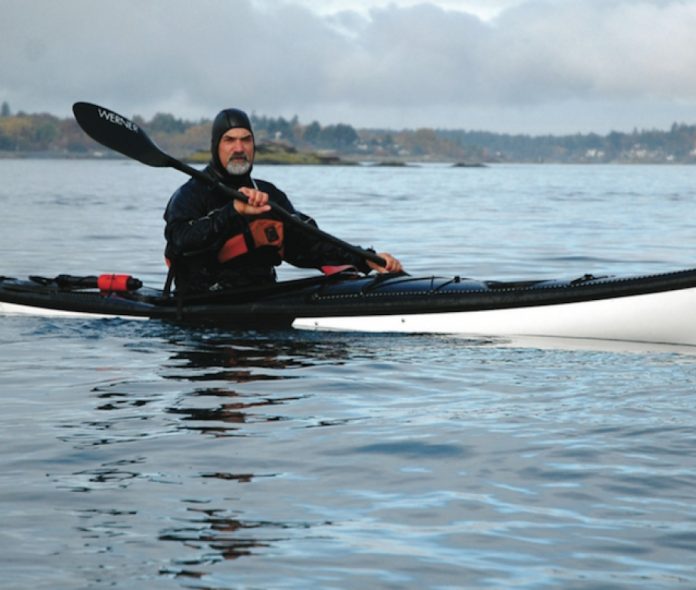
My first impression of the Vitäl is that it’s small. It’s not particularly short at 16-feet, six-inches but the extremely low decks mean that it’s certainly a low-volume design. The look is British with an upswept bow and stern, a drop skeg and capped with rubber Kajak Sport hatches. These include a four-inch hatch on the foredeck, a 9.5-inch round bow hatch, 17×10-inch oval stern hatch, and finally an eight-inch round day hatch that is centered behind the paddler. The Vitäl is obviously not an expedition-oriented design but a play boat with tripping potential for the careful packer.

The Vitäl is a snug fit due to its low deck, producing good thigh contact for a secure fit. Mid-sized and larger paddlers will find themselves in a straight-legged position. If you come to the Vitäl from a Greenland background, you’ll love it. If however you are more accustomed to paddling with your legs slightly flexed, then you’ll be longing for a little more deck height.

Despite its narrow 21-inch beam, the Vitäl is very stable on an even keel. Edging is confidence inspiring but there certainly is a hinge point beyond which good bracing is required. The rocker profile is quite conservative, so the boat tracks well and needs to be edged aggressively for tight turns. As an all-out playboat, I personally would have enjoyed more rocker, giving up some of its tracking for increased turning ability. Surfing was fun in the Vital and the boxy cross-section and hard chines worked well for subtle edge control and carving.

When we were out in conditions reported as 30 knots gusting to 42, we found the Vitäl to be a wet ride, and it had a tendency to throw its bow high when riding over waves. This results in the bow deflecting and being blown off course. Speed seems average for a sea kayak of this length and design—a good compromise between speed demon and not damnably slow. The low stern deck makes rolling the Vitäl very easy—it’s great for lay-backs.

With Boreal building the Maelström boats the quality is good with no rough edges or messy caulking, and the distinctive sexy black deck and black hull sections drew many favourable comments from other paddlers. As a sporty all-round day-paddler the Vitäl fits the bill, particularly for diminutive folks who feel swamped by larger kayaks, or for paddlers who love a low deck, straight leg configuration. Larger paddlers should try the Vaag 174.

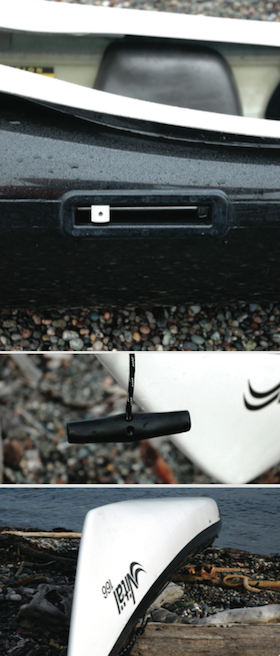
Screen_Shot_2015-06-26_at_12.43.37_PM.pngAn order of skeg on the side

The skeg slider is neatly mounted right on the seam joining the hull to the deck. the placement keeps the slider within easy reach, and out of the way of the paddler’s knee inside the cockpit. Clever.

Sometimes less is more

The vital sidesteps the potential danger of finger entanglement by having its handles tethered with a single length of cord, rather than a loop.

Can you say “hard chine”?

The very boxy cross-sectional shape of the vital provides great initial stability for a boat only 21-inches wide. any more angle to the sidewalls and the vital wouldn’t release from the mould.

Specs

  • Length: 1.5 ft (5.03 m)
  • Width: 21 in (53.3 cm)
  • Volume (storage): 48.0 gal (184 L)
  • Bow hatch: 23.8 gal (90 L)
  • Stern hatch: 14.5 gal (55 L)
  • Weight: 53 lbs (24 kg)
  • Fiberglass: $3,599 CAD
  • Kevlar: $4,199 CAD
  • Carbon: $4,999 CAD

AKv10i3__1.jpgThis article first appeared in the Fall 2010 issue of Adventure Kayak magazine. For more boat reviews, subscribe to Adventure Kayak’s print and digital editions here.
Flushed: Rhyme of the River Rogue

Photo: Robert Faubert
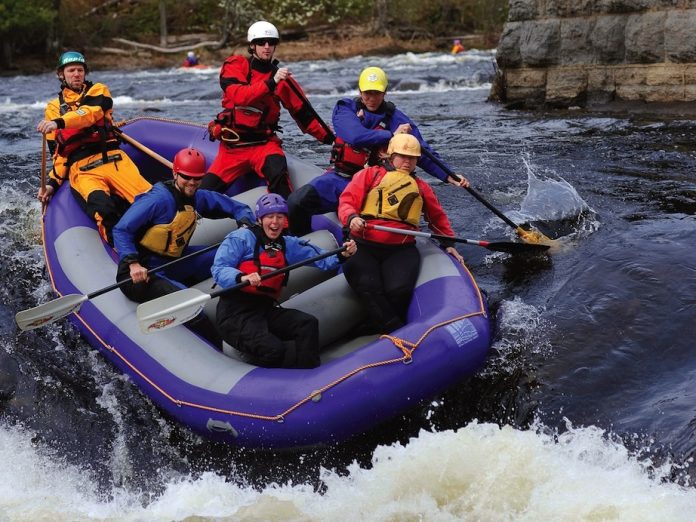
Whitewater rafting with the Rapid team.

This article originally appeared in Rapid magazine. 


Who works and plays on the river

Lives to see it froth and foam,

Its surface all shine and shiver

Who calls whitewater home?


The river-in-her-veins, sunshine-or-rain whitewater raft guide


Who has hands like a vice


With fingers clever and strong,

Who is ready to pay the price


If ever he does something wrong?


The brawny, tawny whitewater raft guide


Who can spot an effortless route

With just a sidelong glance,


Through a narrow, rocky chute

Where most wouldn’t stand a chance?


The hawk-eyed, sharp-spied whitewater raft guide


Who cares not for the almighty buck


And knows she will never be wealthy,


Who would trade money for wisdom and luck

The privilege to live free and healthy?


The salt-of-the-earth, knows-her-worth whitewater raft guide


Who is confident and knowing

 And comfortable with a crowd,

Who looks to where he’s going

And speaks his commands loud?


The witty and wise, clear and concise whitewater raft guide


Who stares down waves 12 feet high

 And guides right through their surge,

When all of the crew is safe and dry

Who is last to emerge?


The high-flying, death-defying whitewater raft guide


Who lives in that mythical place


Where legends are born and truth is vague,

Who wears a smile always ‘pon her face

And breeds envy like the plague?


The rule-breaking, epic-in-the-making whitewater raft guide


Who thinks he’s got it grand

Though he’ll never be rich?

That bugger the rest of us brand “A lucky son-of-a-bitch!”


The paper shack, never-look-back whitewater raft guide


Who has always a cozy home


A place to put down roots


When her feet can no longer roam

Who will just kick off her boots?


NOT the ne’er-do-well, crazy-as-hell whitewater raft guide!


This article originally appeared in Rapid, Summer/Fall 2010. Download our free iPad/iPhone/iPod Touch App or Android App or read it here.

Editorial: Marketing Whitewater

Photo: Scott MacGregor
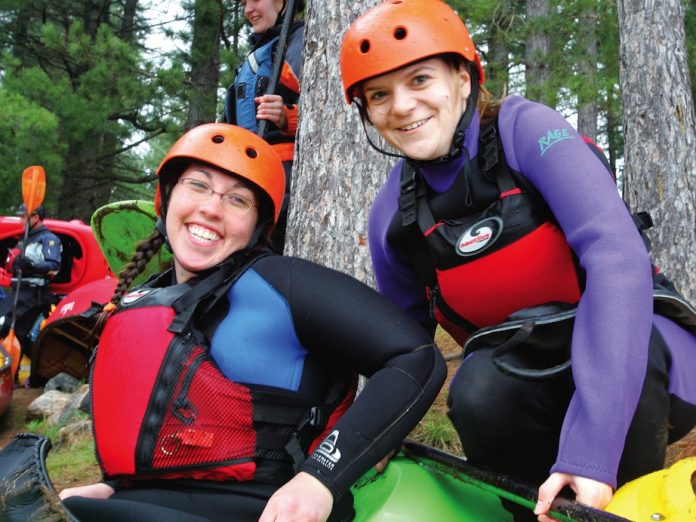
No milk moustache, just big wet happy smiles.

Jeff Manning is the man behind “got milk?” You probably know this award-winning ad campaign— it has a 90 per cent awareness rating and its television ads feature celebrities wearing thick milk moustaches.

The “got milk?” campaign kicked off in California to save a dairy industry that was sucking the hind tit, as they say, losing three per cent a year to non-alcoholic beverages driven by mega brands like Coke, Gatorade and Evian.

Doug Iverster, Coca-Cola’s president at the time, was quoted saying, “I’d like to earn your friendship, but that’s not really my priority. Nor is earning the beverage industry’s respect and admiration. All of those things would be nice, but this is what I really want—I want your customer.”

As you might expect, this was a wake-up call for the dairy industry. Manning called it an “oh-so nice and we’re good for you, too, kind of business.” Sounds a lot like paddling to me.

The “got milk?” campaign is often referenced when members of the paddling industry gather in eddies and around boardroom tables to discuss ways of growing whitewater. Over the last few years there have been a number of attempts to do just that, none of which came anywhere close to a 90 per cent awareness rating—some died on the boardroom table.

Enough already Scott, isn’t this type of article better suited to trade magazines? Maybe, maybe not. As a consumer, a thriving whitewater industry brings you more innovation, more international trips, cheaper prices. You’d have more people to paddle with. This magazine would be fatter. American Whitewater and local groups would surely benefit by doubling their memberships, we’d be a stronger lobbying force to be taken more seriously at whatever table we sat around discussing river issues.

Another round of industry-lead marketing campaigns is in the works this summer. The Let’s Go Paddling campaign is a World Kayak initiative spearheaded by Jackson Kayak, albeit at arm’s length. And Paddlesports Nation, funded by Confluence Watersports, is a spin-off of Outdoor Nation.

I estimate that whitewater as a whole is a $17 million dollar business. If you could convince the industry to come together and add one per cent to equipment prices and service fees to fund “got whitewater?” we’d have $170,000 to play with in a North American marketing campaign, compared to $22 million for milk in the State of California alone. Milk was up against every other non-alcoholic beverage. We’re up against every other recreational activity you can do outside, including golf, RVing and gardening. I’m not sure we’d make a significant difference.

I think we’ve forgotten something really important. Most of us got into paddling because either our parents introduced us (either themselves or by paying for camp) or we went along with a buddy.

I have an idea. I stole it from the Outdoor Industry Foundation and their “I Will” campaign—in which people pledge to take two kids outside to experience any outdoor activity over the next year.

Imagine the change if every whitewater paddler pledged to take two new people down a river this year. No round-table discussions required. No increase in equipment prices to fund it. No milk moustaches. Just big wet happy smiles.

Scott MacGregor is the founder and publisher of Rapid. Learn more about the campaigns at www.paddlesportnation.org, www.letsgopaddling.com and www.outdoorfoundation.org/iwill

This article originally appeared in Rapid, Summer/Fall 2010.


Kayak Essentials: Sea Kayaking Ditch Bag

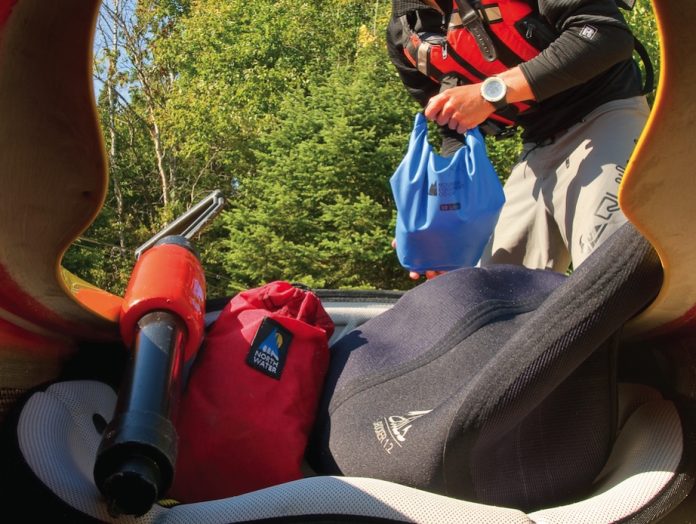
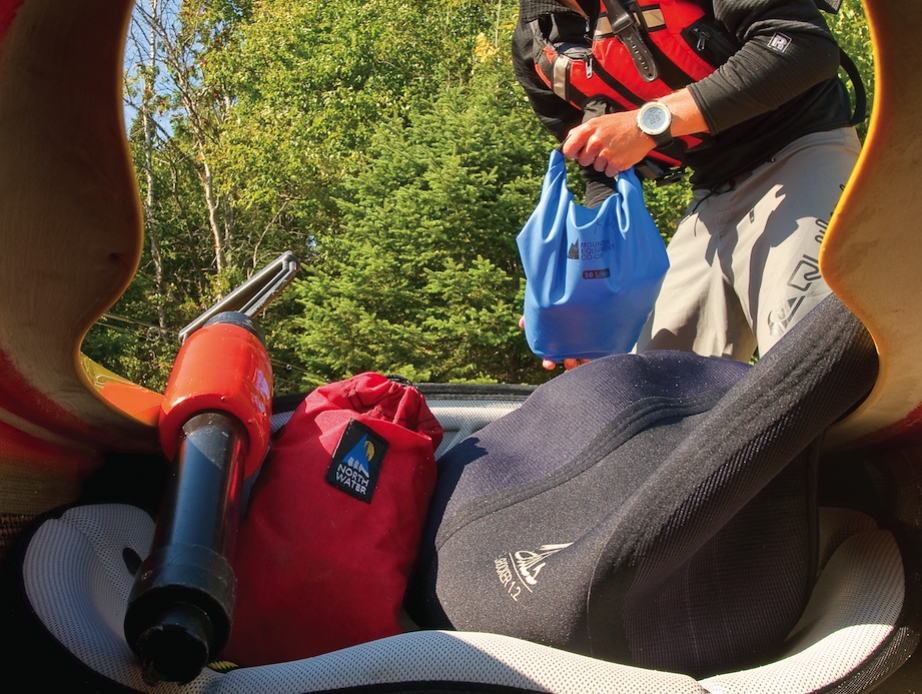
A picture from inside the cockpit of a sea kayak showing a paddler packing gear into the boat.
Feature photo: Kamil Balous

If you are unable to self-rescue while sea kayaking, then bringing a boat-full of luxury items to have a comfortable trip will be in vain. You do not need to be a professional to know what to bring and how to pack it but learning from those who are sea kayaking professionals can be easier than trial and error. Sea kayak guides develop their own packing and safety systems; they all know that a few standard items packed on the body or in the cockpit will help quickly mediate many escalating situations. No matter your style or micro systems, packing like a guide is simple: Keep the items most necessary to survival at closest proximity.

Kayak essentials: Sea kayaking ditch bag

First, on the body you’ll want a sounding device, visual alert and a fire starting kit. Clip your VHF radio to your PFD and know how to use it. Remember that throughout Canada and the United States channel 16 is used to make calls. Always keep track of where you are and be ready to share this information. If help is in the area, flares may be your best chance at being seen. Keep them dry. At the very least, equip your PFD with a loud whistle. Be sure you can access it and blow it comfortably from where it’s tied.

Assuming you self-rescue, get an assist or swim to shore, you may need heat from a fire to stave off hypothermia. Three crucial and easily packed items will make it happen: ignition, tinder and a knife.

A picture from inside the cockpit of a sea kayak showing a paddler packing gear into the boat.
Feature photo: Kamil Balous

Don’t trust waterproofing to a tiny dry bag alone. Double up with a new plastic inner bag with ends twisted shut as a security measure. Stash two lighters and waterproof them separately. If you choose matches, don’t count on strike-anywhere ones; include the strike pad in your kit. For tinder, I like cottonballs coated in petroleum jelly. Stuff these in a waterproof tube or pill container.

I use a straight-blade knife with sheath that attaches right onto my PFD. A solid non- collapsible knife with a beefy handle makes the creation of rooster tails and splitting cedar most efficient. Keeping these three safety items together, dry and on your person will make starting a fire as easy as possible under potentially ugly conditions, especially in ubiquitously wet coastal weather.

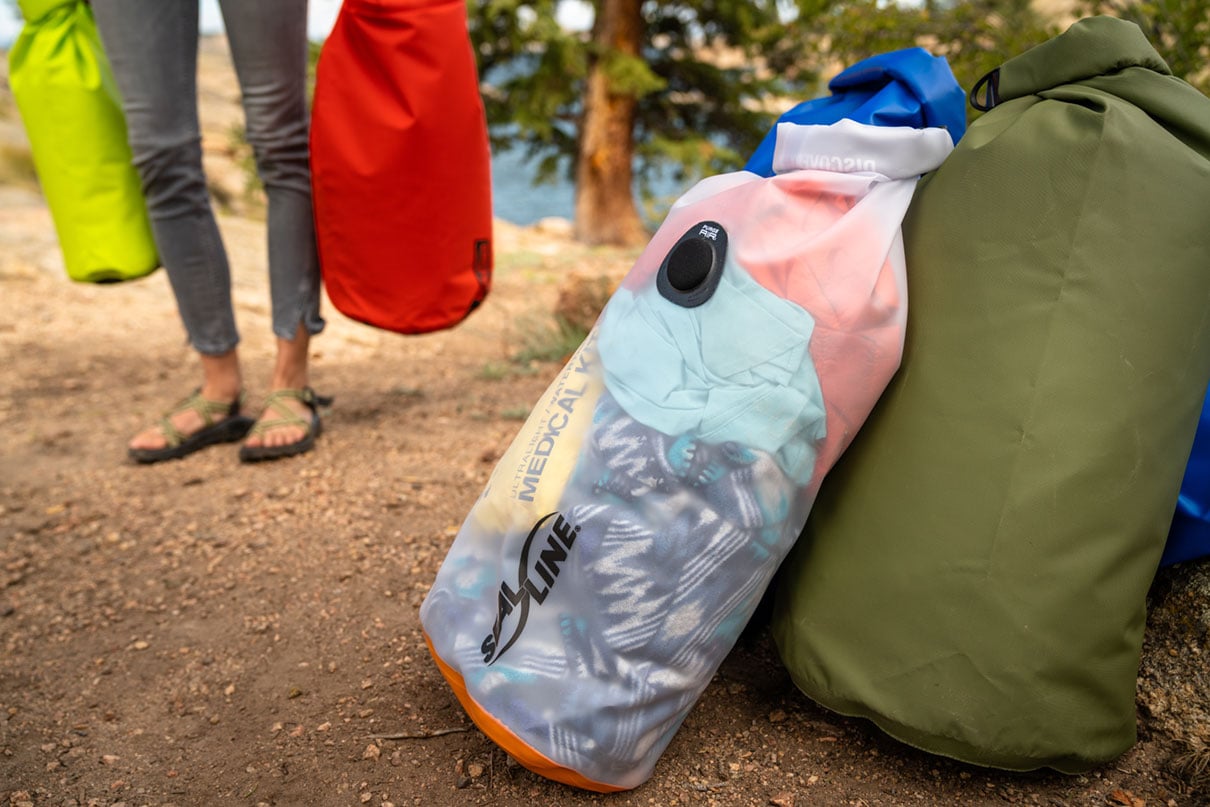
Most guides pack a few items that can fit into a small dry bag in the cockpit between their legs or preferably clipped in behind the seat so it doesn’t disappear if they bail. The contents seem simple, but prove repeatedly useful.

I bury spare warm base layers at the bottom of this dry bag and hope I don’t see them again until I get home. Put a wool or fleece toque in there, because if any part of you is cold, putting on a warm hat helps. Dry gloves or hand warmers can make the difference between having the dexterity to build a fire or not. You’ll be grumpy paddling a rainy coast without a proper rain hat—if you have the good fortune to begin your trip in the sun don’t forget to stuff a rain hat in your dry bag.

The last item on my list offers the comfort and emotional support that helps me function better on trip and can aid in stabilizing a cold or injured person. Before breaking camp in the morning I boil extra water to make tea or quick soup in a thermos; a good one will actually keep liquids piping hot until evening.

You can spend a lifetime modifying these personal kits; most guides do. Some develop and check menu-card packing lists before each trip. A best-case scenario is that none of this stuff is even necessary except maybe the warm thermos treat when you land at the end of the day.

April Link spent 100 days in Canadian outdoor leadership training (Colt) in Strathcona Park to become a Sea Kayak Guide and Canoe instructor on the coast of British Columbia.

This article originally appeared in Adventure Kayak, Fall 2010.


Feature photo: Kamil Balous


Shootout: Esquif Spark vs. Bell Ocoee Canoe Review

Photo: Virginia Marshall
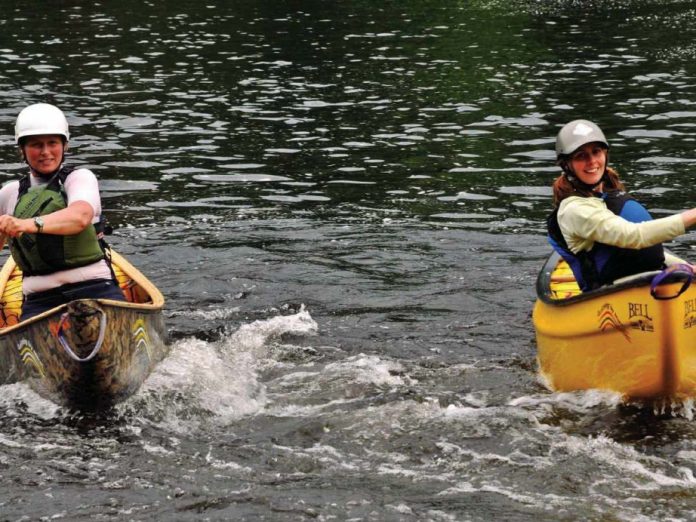
Esquif Spark and Bell Ocoee Whitewater Canoes. Photo: Virginia Marshall

A comparison and review of the Esquif Spark and Bell Ocoee whitewater open canoes from Rapid magazine.

At first glance , these two boats appear as disparate as apples and oranges. The hull materials are different and everything about the shapes seems to be from separate fruit baskets altogether. And yet many prospective OC buyers agonize over this choice: Bell Ocoee or Esquif Spark? Let’s examine some of the facts and debunk some of the myths surrounding these two top contenders.

“The Spark is so much lighter.”

Sorry, partner. The Spark may be an effortless river darter but it also comes stock with wood gunwales. Make the comparison meaningful with comparable wood trim on the Ocoee and it weighs just 43 pounds fully outfitted. The Spark comes in at 42 pounds outfitted. The difference is the weight of 17 oz (a half-litre) of water—one small wave splashing in for the ride.

“The Ocoee is so much tougher.”

The outer layer of the Ocoee’s hull is made from the same material as plastic plumbing pipe and is not as prone to crushing from rock collisions as the Spark’s Royalite material, but Royalite does toughen with age and will gain durability. Treat your Spark hull with respect and it will last for years.

“The Spark doesn’t surf well.”

With more rounded chines and bottom, less secondary stability and a long, thin stern, the Spark is a somewhat less stable surfing platform than the flatter-hulled, hard-chined Ocoee. Although the learning curve is steeper for Spark surfing, it’s pretty easy to get it on a wave.

“The Ocoee wasn’t meant for racing.”

Both boats were designed by accomplished slalom paddlers. The Ocoee’s designer, the late Frankie Hubbard, was a top-level competitive racer, and of course, John Kazimierczyk (who now has over 100 slalom medals in his sock drawer) adapted his Ignitor solo race boat to create the Spark. Hubbard and Kaz even used to race together.

“The Spark is faster.”

With its narrower footprint and flatter shallow arch hull, the Spark is faster than an Ocoee. However, except in the hands of exceptional paddlers for whom wave-blocking and finding the perfect line every time is instinctive, the Spark is also wetter. The Ocoee is flared outward from the waterline to the gunwales; the Spark flares inward, a trait that lends itself to the attack style and vertical forward stroke used in slalom racing…and to water forever rinsing your knees. For most paddlers, the Spark’s natural speed advantage slips away as it gets heavier with every wave. Both boats also show a performance bias for lighter paddlers, as heavier paddlers cause the bows to push water with predictable effects on speed.

“The outfitting always falls out of the Spark.”

Absolutely true—if you don’t install the anchors with Stabond glue and pre-clean the gluing surfaces with MEK cleaner. Vinyl glue is almost useless except in the very short term, and it’s a waste of good outfitting anchors. This is because the inner layer of the Spark is ABS, not vinyl. Use the right adhesive and your outfitting will stay put.

Whether it’s apples and oranges or an Ocoee and Spark, the best fruit—like the best canoe—is the one that suits your tastes. If you are determined to stand on the slalom podium, to devote yourself to the pursuit of competitive excellence, the Spark is your boat. If you want to practice in slalom gates, race for pure fun, run wild rivers with rocks and drops, play in steep creeks and do it all in smug dryness, then the more versatile, Ocoee is the boat to fall in love with.

This article originally appeared in Rapid, Summer/Fall 2010. Download our free iPad/iPhone/iPod Touch App or Android App or read it here.


Butt End: Talkin’ About My Generation

Photo: Kevin Callan
Butt End: Talkin' About My Generation

Born in 1963, I’m a Baby Boomer on the graying edge of Generation X. Generation Y, people born between the mid-1970s and early 2000s, can sometimes really get on my nerves. At the college where I teach part-time, students answer cellphones in class, text message during exams and Tweet on their iPod Touches while we’re having what I thought was a meaningful discussion, like why I shouldn’t give them a big fat zero for not handing in a paper.

These kids don’t know the smell of a bottle of Wite-Out, think money is made in ATM machines and have never heard a phone actually ring. Gen Yers’ love affair with GPS and Gore-Tex is as overwhelming as their inability to use an axe or read a map. While keeping in contact with other paddlers through Facebook and chatter forums is at an all-time high, their attendance at local canoe club meetings is low.

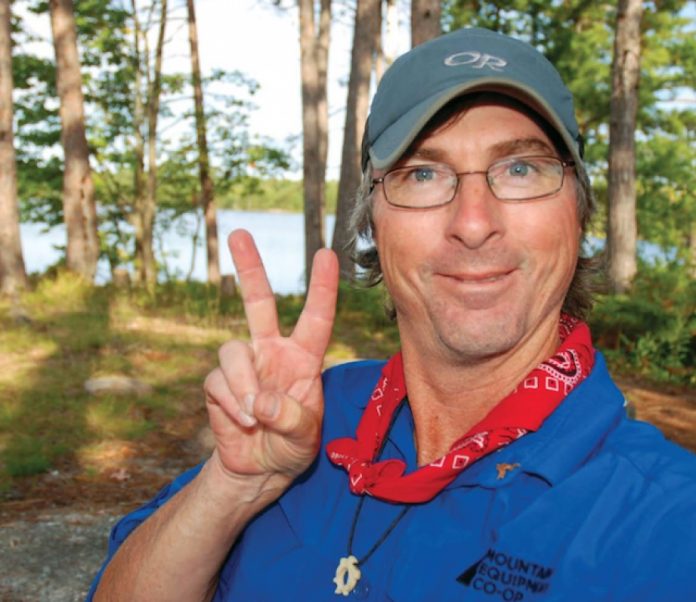
Gen Yers claim we’re just as weird (note the bandana and peace sign in the above photo). In their eyes, Baby Boom paddlers have been cursed with Tilley hats, fixate on canvas packs, wool socks, plaid shirts and camo pants and think it’s cool to make camp stoves out of beer cans. We also seem to go on about how young people don’t paddle anymore—which couldn’t be further from the truth. 

CANOE TRIPS ARE MORE POPULAR, BUT SHORTER

According to such groups as Paddle Ontario and Paddle Canada, canoe trips have increased in popularity with people in their mid-twenties by almost 40 per cent across North America in the last few years. Great news. However not many canoeists today are tripping for any length of time, not like the good old days. 

Baby Boomers once averaged a minimum of 12 days out, Gen Xers trips in the ‘80s were seven to ten days and now Gen Yers don’t go for longer then a weekend. Don’t believe me? Try finding a two-week rental rate in an outfitter’s brochure… Oops, I mean website.

So why are we paddling less? Provincial and federal tourism studies suggest two reasons why we don’t go out for longer periods—no time and less money.

I blame technology. It was designed to make our lives easier, at home and at the workplace, but it has done the opposite. Now we’re addicted to it—they call them CrackBerries for good reason. like an addict detoxing, only after day 10 of a trip do you come to the conclusion that Tweeting is best left to the birds. Too bad the majority of us will never know (or remember) that feeling.

And the Gen Yers texting in my classroom, I just hope they are planning their day-11 breakfast menu. If that were the case, I’d give them an extension on their papers.

Kevin Callan’s favourite pastime is making beer can stoves. 

This article on generational divide was published in the Summer 2010 issue of Canoeroots magazine.This article first appeared in the Summer 2010 issue of Canoeroots Magazine. For more great content, subscribe to Canoeroots’ print and digital editions here.