Home Blog Page 352

By Paddle and Paintbrush

Photo: Gary McGuffin
By Paddle and Paintbrush

If you ask Rob Mullen, the stink of formaldehyde can’t compare to the scent of the boreal forest in September. The Vermont wildlife artist took a deep breath 20 years ago while drawing dissection diagrams as a biology student and decided he’d rather be painting living creatures.

Mullen—who’s been canoeing since buying a Grumman with money from his childhood paper route—has used a canoe as a tool of his trade to travel the boreal forest that covers much of Northern Canada. He says you don’t need an artist’s eye to notice changes in the forest. “It’s impossible to ignore the logging, damming and mining that’s been going on.”

Mullen was on Ontario’s Missinaibi River in 2001 when he decided to assemble a team of artists to help spread appreciation for the forest to a wider public.

“There is an ignorance about this forest that is out of line with its importance. You can put the information into charts and graphs, but to motivate people you have to involve the heart, not just the mind,” says Mullen. “Plus,” he adds, “ I was tired of tripping alone and wanted some company.”

In 2005 Mullen formed the Wilderness River Expedition Art Foundation and, along with photojournalists and paddlers Gary and Joanie McGuffin, led an 18-day trip on Quebec’s George River last September with four other acclaimed wildlife and landscape painters.

Paintings from the trip will form the “Visions of the Boreal Forest” exhibition in the Smithsonian Museum of Natural History next year in Washington, D.C., before touring to cities across North America.

Mullen hopes the exhibition will connect a few dots for people. “As resources around the world dwindle, the market is driving prices up and now it’s feasible to run a road deep into the forest to haul stuff out,” says Mullen. “Development has to be guided by something other than just our consumptive appetites. We’re trying to show people where their junk mail comes from.” 

BY GEORGE

Though the George River sees only a few canoeing parties a year, Gary and Joanie McGuffin knew its non-technical rapids would be perfect for artists that wanted to go deep into the wilderness, not deep into the river. It flows fast and clean over a cobblestone bed along the west side of the Torngat Mountains, which separate northern Quebec from Labrador. The broad valley it has cut into its namesake plateau allows for a longer growing season than the surrounding tundra and has allowed a finger of the boreal forest to point north up the valley to Ungava Bay.

“The rapids aren’t complicated,” says Joanie, “but there are big waves and it’s fast and wide so you have to start out on the correct line. A dump could mean a lot of lost gear.” 

NOT LIKE WATCHING PAINT DRY

The group took 18 days to cover 320 kilometres on the fast-moving river, which works out to about the same speed people in black turtlenecks move through an art gallery. But the pace only taught Joanie an appreciation for the artistic process. “Artists are the ultimate trippers because they take time to study the land,” she says. “Some paddlers race down a river so they can check it off their list. Artists don’t just admire the landscape from their canoe. They see a ridge and then go to see what they can see from it, or what’s behind it. It’s the best way to trip.” 

WILD THINGS

Having spent 24 years seeking inspiration for her wildlife art, British-born Lindsey Foggett wasn’t about to let a little frigid whitewater stop her from paddling the George in September, a time when the 400,000-caribou-strong George River herd would be on the move.

“If you are serious about painting animals, you have to encounter them in the wild where they are behaving naturally,” says Foggett. “An animal’s manner, and even its muscle tone, is completely different in a zoo.” 

STUDY IN MUD

The opaque watercolour paintings John C. Pitcher does in the field are reference studies for works he’ll start later in his Vermont studio. Pitcher did this study after noticing a wolf track in the mud beside a small creek he was fording. “A sketch like this not only gives me the proportions and colour that I need later, but also connects me to the encounter. I also take photos for later reference, but when I paint a scene I establish a cognitive connection with it and come to know it better than when I worry about what exposure will capture the blue shades of the sky reflecting off the mud.”

CRASH COURSE

Quebecker Jean-Louis Courteau was unsure about being selected to stern the fourth canoe: “Since I paint mostly landscapes the canoe has always been an ideal way for me to get around. But I paddle lakes and marshes. Whitewater was new to me. I had heard stories of gigantic waves and thunderous rapids on the George. So on the first day I was nervous. In fact, I was terrified. I didn’t want to take a bath. Now, of course, I’m hooked.” 

FIELD WORK

“The George River has its guardians: the cold, the wind and the blackflies!” explains Jean-Louis Courteau.

“I have painted in Laurentian marshes and the jungles of Guatemala but I’ve never seen so many voracious little vam- pires as on the George. They made sketching and painting on the spot a challenge. And when the temperature dropped enough to keep them at bay then Tshiuetin—the north wind—took their place. But this puts you in a state of mind that lets you paint more than what the eyes see. What you experience in the field inevitably goes into the work.” 

GARY MCGUFFIN: PHOTOGRAPHER AS ARTIST

“Photography is the coming together of pleasing light and lines, but it’s not just a case of technical ability, you have to show how your subject relates to its surroundings. How do you present your subject to tell a better story than the one you initially see in the viewfinder? Can you position the camera differently to show how the caribou relates to the river, or should you open the aperture and blur the background?

The photos you make on a canoe trip are different from ones you would make if you dropped into the same place on a float plane. If it takes you three weeks to get some- where, it changes how you see things when you get there.

I’m really happy when I’m in the creative zone. As the sun gets low and the light gets soft I become oblivious to everything else. That’s when I say, ‘Joanie, you’ll have to set the tent up tonight.’ And I’m gone.” 
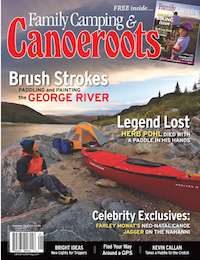
This article on painting was published in the Spring 2007 issue of Canoeroots magazine.This article first appeared in the Spring 2007 issue of Canoeroots Magazine. For more great content, subscribe to Canoeroots’ print and digital editions here.
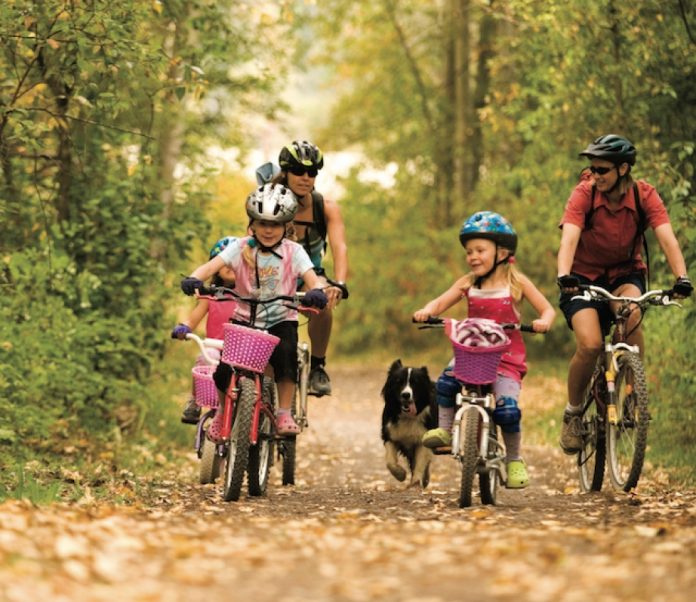
Family Bike Adventure Checklist

Photo: Henry Georgi
Family Bike Adventure Checklist

As your family’s fleet of bicycles grows, it gets harder to move the wrench fast enough to keep up. Though periodic attention from a skilled mechanic is always a good idea, you can stay ahead of most maintenance issues by keeping your eye on a few important areas.

Brakes: coaster brakes (a.k.a. pedal brakes) require virtually no maintenance. Other types of brakes require some attention. For rim brakes, ensure that the brake pads are properly positioned so when engaged they aren’t too high rim). As the pads wear, the cable will become slack. Tighten the cable, either at the lever or the wheel, so the lever can’t touch the handlebar grip. Disc brakes are increasingly popular and come in two main types. Mechanical disc brakes need periodic cable and pad adjustments; best done by a professional. Hydraulic disc brakes adjust for pad wear automatically, but you do need to monitor the pads to ensure they don’t wear out entirely. If a hydraulic brake feels soft, it needs bleeding. Again, take it to the pros.

Wheels: check that the rims are true by spinning the wheel and making sure it does not wobble. Ensure that the wheel is properly attached to the bike by making sure the axle nuts or quick release levers are tight. Finally, check for loose hubs by holding the front forks or rear stays in one hand and wiggling the wheels from side to side to check for play.

Handlebar grips: As simple as grips are, they can be a hazard if they are worn or don’t fit properly. Make sure that the ends of the grips are intact and don’t leave the hollow ends of the bar exposed, ready to take a core sample of your youngster. If the grips are loose and slip or rotate on the bar replace them with a new pair immediately.

Handlebars and saddle: sandwich the front wheel between your legs and try to turn the handlebars from side to side. If the bars move when the wheel stays still, tighten the stem. The photo shows how to do this on a quill stem. It usually requires a 6mm Allen wrench (shown) or a 13mm box end wrench (a crescent wrench will do in a pinch). Tighten the top bolt on the stem just enough so that the handlebars cannot move independently of the front wheel. Now wiggle the saddle. If there is any rodeo potential tighten either the bolt that fixes the seat post clamp to the saddle stays or the clamp that holds the seat post in the frame. Your child uses these points to control the bike so they should be secure.

Headset: this is the bearing set that the handlebar and fork rotate on and is often very loose on kids’ bikes. To check the headset, engage the front brake and rock the handle- bars fore and aft. If you feel some play it is loose and should be tightened. The majority of kids’ bikes come with what’s called a threaded headset/quill stem. If the bike in question resembles the one in the photo then you will need some specialty tools to tighten the headset. Pick these up at your local bike shop. Be sure to take the bike with you because there is some variance in the sizes and styles of threaded headsets and therefore the tools you’ll need. You can also ask the staff for basic instructions. For more instructions on this (and other jobs) visit www.parktool.com and look under the repair Help section.

Tyler Merringer is the owner and head mechanic at Revolution Cycles in Rossland, B.C. 

This article on family bike trips was published in the Spring 2007 issue of Canoeroots magazine.This article first appeared in the Spring 2007 issue of Canoeroots Magazine. For more great content, subscribe to Canoeroots’ print and digital editions here.
The Wild Ones: Family Bike Trip

All photos this page: Mike Payne
The Wild Ones: Family Bike Trip

The bikes roll into town in tight formation and come to a stop in a diner’s dusty parking lot. Like a good henchman, Mike goes in to case the joint and see if it’s big enough for our gang and a good place for the bosses to take their meal.

Heads turn to watch our entrance. The server takes a deep breath and approaches cautiously. She can see there is a power struggle going on and that things could get ugly. Luckily, when the bosses sit down, there is no kicking, biting, or screaming.

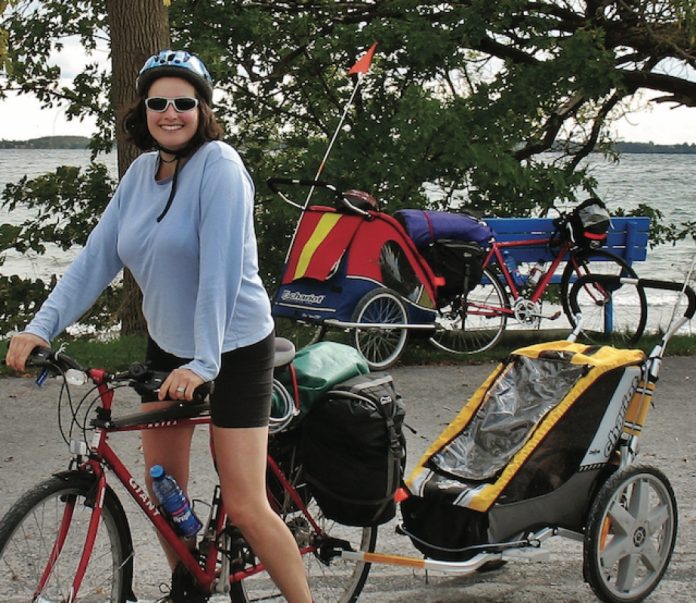
Our gang includes a four-month-old infant, a 20-month-old toddler, a one-year-old and three newly initiated parents. We had rolled out of Kingston, Ontario, that morning to do a four-day September bike tour to Sandbanks Provincial Park in Prince Edward County.

You have to travel a little differently when under the ever-vigilant eyes of the bosses. There can only be so much time spent looking for picturesque wineries and beautiful picnic lunch spots. In- stead, they have us on constant lookout for farms, big trucks, playgrounds, even a supermarket on a rainy day to run around in. One of the keys is constant movement, which makes a slow-rolling vacation perfect for a young family.

And rolling slowly is the best way to travel in a convoy such as ours. Pedaling is noticeably harder on bikes burdened with panniers full of camping gear and the extra weight of the space-age pods we are towing. Today’s decked-out bike trailers, with their inflatable tires, sensitive suspension systems, infant slings, bug meshing and wind screens decrease the top speed we can maintain, but they ensconce the kids in comfort and as new parents we know that when the bosses are happy, we are happy.

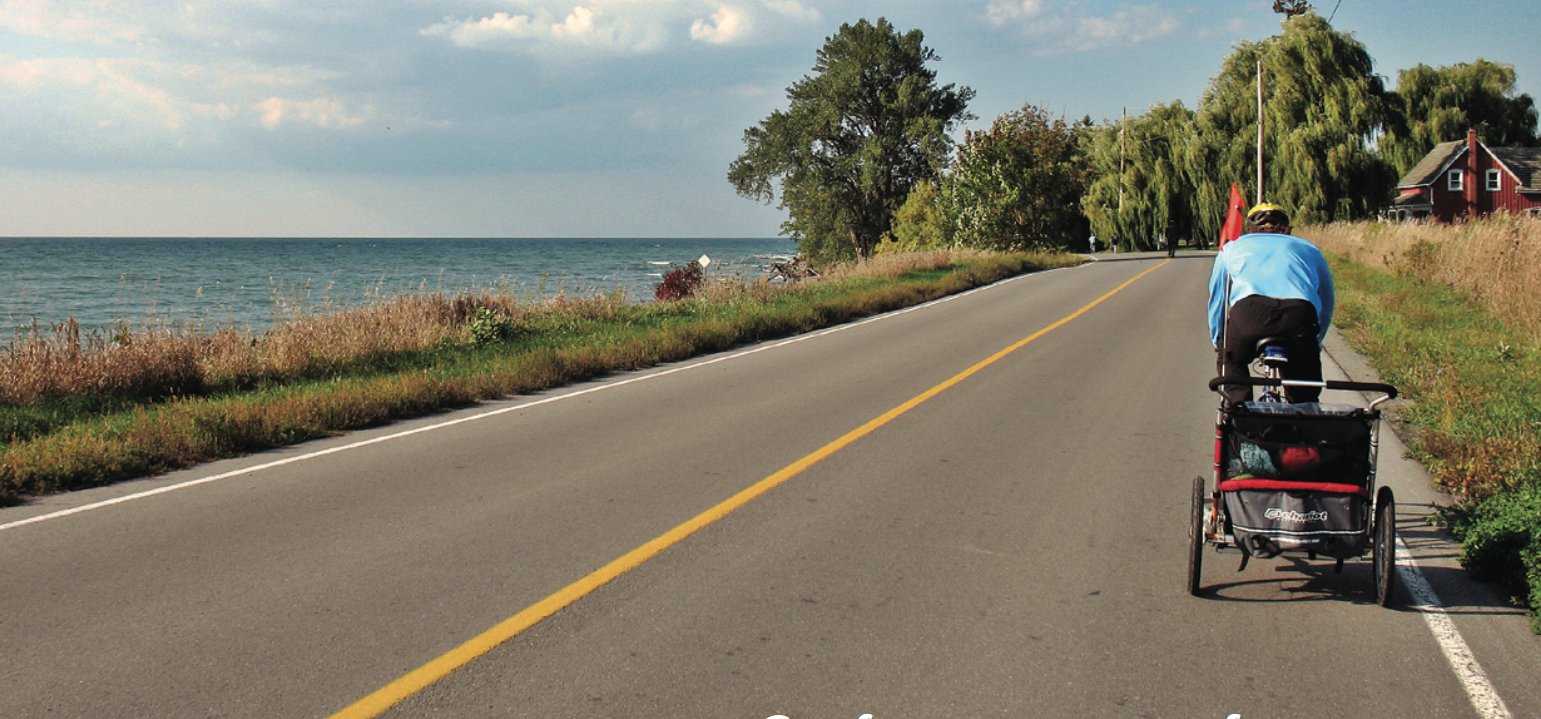
person biking on road with kids carrier pulled behind

Riding on any of the three routes from Picton to Sandbanks Provincial Park is normally quiet and safe outside July and August, but today, in no hurry, we choose an even more scenic long-cut. The motion lulls the kids into a peaceful reverie as they gaze at the ever-changing countryside, pointing out cows, horses, houses, more cows and lakes. On the practically car-free Ridge Road, we ride three bikes abreast and chat, daydreaming about our next bike tour and planning a swim by the dunes at the park’s warm West Lake.

Four-month-old Sacha, however, soon begins to squawk and we are forced to reconsider the kids’ needs and the flow of the day. If we stop here to feed Sacha, the other kids may wake up and demand a snack and a play now. Since we still have dinner, tents and dark- ness to contend with, we opt to pass the dunes and take our swim at camp, in the cooler Lake Ontario. With an adult to kid ratio of one to one, we devise a plan. Beth stops to service Sacha while Geoff and Mike continue on slowly, concentrating on pedaling just hard enough to maintain the magically calming motion.

When we escort the bosses into Sandbanks Provincial Park, we see there is no intimidation effort necessary to secure a gorgeous site on the beach—the park is nearly empty. The bosses are stripped of their clothes and get down to the serious work of ingesting sand and watching the waves roll in. We sip wine at sunset as the bosses run up and down the beach shrieking at seagulls.

“Our children have blessed us, we suppose, with the sight of many sunrises.”

Nighttime routines unfold as they do at home: the favourite blankey, the beloved teddy bear, a familiar book—only this time the snuggling takes place on sleeping bags and the reading is illuminated by headlamp.

The sand we discover when we finally slip ourselves into our sleeping bags is a gritty reminder of the fort-building that went on in the tent earlier—and of our shifting priorities. There was a time when we fastidiously kept sand away from our food, tent and toothbrushes. Now we smile fondly at the thought of our kids and roll over to an immediate sleep, one that will last at least an hour if we are lucky.

Two years ago we would have slept until the sun baked us out of the tent, but our children have blessed us, we suppose, with the sight of many sunrises. Coffees firm in hand, we watch the girls make sandcastles and beckon them to the picnic table for breakfast.

Today we’ll visit the dunes for a few hours of risk-free exploration before hitting the road in search of a winery to sample a few bottles that don’t come with nipples.

After four days on the road our gang will return to the clubhouse, satisfied to have successfully expanded our ever-growing home turf.

Beth Rubenstein and Mike Payne cycled across Holland and Belgium with their daughter Zoe when she was seven months old. 

This article on family bike trips was published in the Spring 2007 issue of Canoeroots magazine.This article first appeared in the Spring 2007 issue of Canoeroots Magazine. For more great content, subscribe to Canoeroots’ print and digital editions here.
Grandcamping on the Rise

Photo: Ian Merringer
Grandcamping on the Rise

A third wheel—or generation—can really get in the way on a camping trip. That’s why a few wise companies have started organizing outdoor adventure and camping programs strictly for grandparents and grandchildren—parents have to find their own fun.

“It’s a unique learning experience,” says Despina Gakopoulos of Elderhostel, a non- profit group that organizes more than 400 inter-generational programs around the world. “Grandparents and grandchildren say they get to know more about each other when they spend time without the parents around.” She says the outdoor adventure trips are growing in popularity as outdoor activities like camping and rock climbing become more mainstream.

Myrna Boulding started running Elderhostel’s inter-generational programs in 1986 at Strathcona Park lodge on Vancouver Island. “The programs and activities are designed so the two generations learn

And experience new things together,” she says. “It’s a real bonding experience.”

Most of Elderhostel’s programs are run by a camp or resort like Strathcona, where the week-long program is really just summer camp with the grandparents. Groups of grandkids and grandparents learn to canoe, rock climb, hike and then camp overnight under the watchful eye of an instructor. It’s no torture test though. If grandparents don’t feel up for anything— including a night on a camp mattress—they can always opt out.

Boulding says both generations make new friends in the groups. “I don’t know which generation has more fun.” 

This article on grandparents was published in the Spring 2007 issue of Canoeroots magazine.This article first appeared in the Spring 2007 issue of Canoeroots Magazine. For more great content, subscribe to Canoeroots’ print and digital editions here.
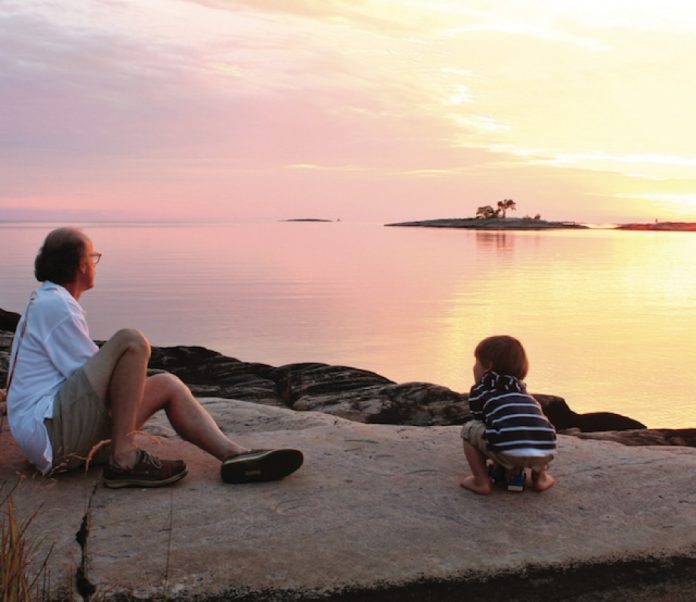
Family Camping: I Want to Ride My Bicycle

Photo: Rick Matthews
Family Camping: I Want to Ride My Bicycle

I can’t pick up a parenting book or magazine without ranting to my wife about the often useless, and I suspect completely made-up, quotes from pseudo parents the authors use to make their points. Take for example this one from The Mother of All Toddler Books, Sharon, a 29-year-old mother of one, says, “You have to believe in the discipline method you’re using in order to be able to properly enforce it.”

Thanks Sharon.

First of all who is Sharon (or Nicole, Loree or Kathlene) and what makes her more of an authority on nutrition or behaviour modification than any other parent? I don’t want to hear about their problems, I want advice from experts with ph.Ds or at least from parents with real experience (like 11 kids).

The other problem I have is that these authors are always telling me how to deal with problems, not how to prevent them. For example, if you want your toddlers to stop whining, your pre-schoolers to have an appetite and your teenagers to stay out of trouble, I say get them outside and allow them freedom to explore… I say get them on a bicycle.

ADVENTURE, TRAVEL, AND INDEPENDENCE ON A BIKE

Biking is such an important part of family camping. Riding bikes is something you can do around the campground or it can be the means of travel for a week-long camping vacation. Bikes offer adventure, travel, skidding, jumping and the fastest way to get fishing in the creek. Bikes for kids are independence and exercise, two things that have never been more important than in our modern Xbox world.

To support my argument, and in the spirit of mocking the advice found in mainstream parenting media, I present to you three experts who really do exist, whose advice I respect and whose desire to be outside and riding bikes with kids is truly inspiring.

Beth Rubenstein from Kingston, Ontario, a 32-year-old mother of two and family doctor, cycled with her husband and seven-month-old daughter Zoe from Amsterdam to Brussels, “We didn’t want to give up our active travel holidays just because we’d had a baby. It turns out the rhythms of travelling with a baby are well suited to a cycling vacation. When she slept we rode. When she was awake we rested and explored. And at night we camped. It was really that easy and not that different than our other cycling trips.” 

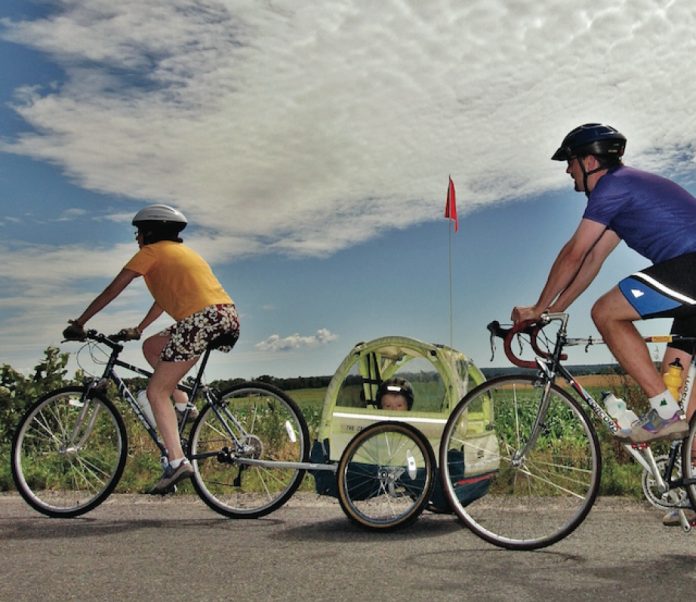
Rick and Wendy Matthews, grandparents in their late 50s from Mount Hope, Ontario, remember back to their cycling trips with their kids in the early 1980s. “The bikes went with us on every camping trip. When Laura and Jason were 15 and 11 we flew overseas for a four-week trip through Yorkshire and Wales,” remembers Rick. “In the hostels they got to meet kids from around the world.” Twenty years later, three generations of Matthews go family camping together and on at least one four-day cycling trip every summer (photo above).

Doug Detwiller, an elementary school teacher living in Gibson, British Columbia, along with other cycling enthusiasts and parents developed Sprockids, a national program that introduces kids to cycling. Nine to twelve year-olds work their way through a fun program of riding skills, bike mechanics and safety and etiquette.

Funny, you’d think a program kids enjoy and is credited with building self-esteem, empathy for others and providing kids with a feeling of belonging would be mentioned in parenting books and magazines.

Maybe Sharon, the 29-year-old mother of one, doesn’t believe in riding bikes.

But I do. 

This article on cycling was published in the Spring 2007 issue of Canoeroots magazine.This article first appeared in the Spring 2007 issue of Canoeroots Magazine. For more great content, subscribe to Canoeroots’ print and digital editions here.
Of Writers, Canoes, and Reincarnation

Photo: Canadian Canoe Museum
Of Writers, Canoes, and Reincarnation

Farley Mowat says the spark that brought him into being was kindled in a canoe called Conception on Lake Ontario’s Bay of Quinte. The boat was dark green and paddled by his parents on a sultry August evening in 1920. “My mother,” says Canada’s most colourful writer, “denied this vehemently.”

His father, Angus, just smiled when the topic came up in conversation. But there, the story slips the bonds of earthly logic.

Fast forward to Peterborough, Ontario, 2006. Farley’s nephew had driven him up from Port Hope to have a first peek through the Canadian Canoe Museum.

Farley introduced himself to a startled docent. “I said, ‘My name is Farley Mowat and I’d like to give you a canoe.’ He looked at me as if I’d said my name was Adrienne Clarkson or something. I thought he was going to throw me out. Eventually… they believed me.”

The only catch was that the craft was stored in a barn on Cape Breton Island.

As museum volunteers who had plans to be in Nova Scotia last summer, my wife and I jumped at the call to be couriers. It’s not every day one gets the chance to drop in on a storyteller who has sold 18 million books in 24 languages.

Farley’s wife, Claire, met us outside their seaside summer home. Chester the dog saw us in. The octogenarian sailor, wolf chaser, paddler and storyteller extraordinaire was just surfacing from a siesta. After a quick drink we headed out to the barn where the sailing canoe was stored, and carefully loaded the craft and its various bits—mast, sail, leeboards, splash guards and rudder—before heading back inside to hear the story. 

THE REINCARNATION OF CONCEPTION

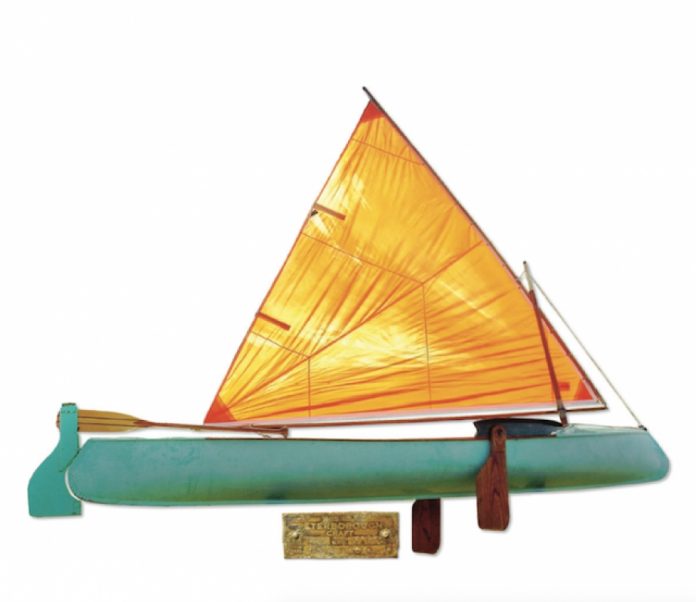
“It’s a 1921 Peterborough sailing canoe that my father acquired around 1932 in Saskatoon, of all places,” he began. “I was 11 that summer.”

Back then, the Mowats spent summers living in a caravan at a campsite on the banks of the South Saskatchewan River about eight kilometres downstream from town where Farley’s dad worked as librarian. Angus used to commute to work in the canoe, leaving young Farley with vivid memories of his dad portaging his pride and joy from the river through the centre of town to the library.

This pale green canoe had been his first connection to nature, on the sloughs of Saskatchewan. Later, when Farley brought it home to the same Bay of Quinte he was supposedly conceived on, he resolutely rigged the lateen sail before a howling gale on Lake Ontario. Moribund over love gone wrong, Farley was ready to cast his adult fates to the wind and accept whatever verdict the green canoe and the storm handed down.

Through the tempest the canoe delivered him, and a couple of empty rum bottles, safely on the beach near the village of Consecon. He was awoken the following morning by the light of a rising sun, lying beside her, miraculously demon-free. “I wrote a poem about that night that I’d like to give to the museum along with the canoe,” said Farley.

All I could think was, Woah! I hope we don’t get creamed by a transport truck on the way home.

“But was this the green canoe in which you were conceived?” I finally asked. “Well,” said Farley, “Angus called it Vagabond, but sometimes he would slip and call her Conception. To me, she’s Conception.”

By degrees I came to see that whatever its official provenance, this faded green Peterborough, if not the canoe, certainly houses the soul of Farley’s natal canoe. It’s not the canoe Farley Mowat was conceived in. It’s better than that. Vagabond is the reincarnation of Conception, and one of our greatest writers captured the transformation in a poem about his canoe.

James Raffan is currently editing the diaries of paddler Herb Pohl, entitled The Lure of Far Away Places. 

This article on Farley Mowat was published in the Spring 2007 issue of Canoeroots magazine.This article first appeared in the Spring 2007 issue of Canoeroots Magazine. For more great content, subscribe to Canoeroots’ print and digital editions here.
Betcha Didn’t Know About Smoke

Photo: flickr.com/ruanon
Betcha Didn't Know About Smoke
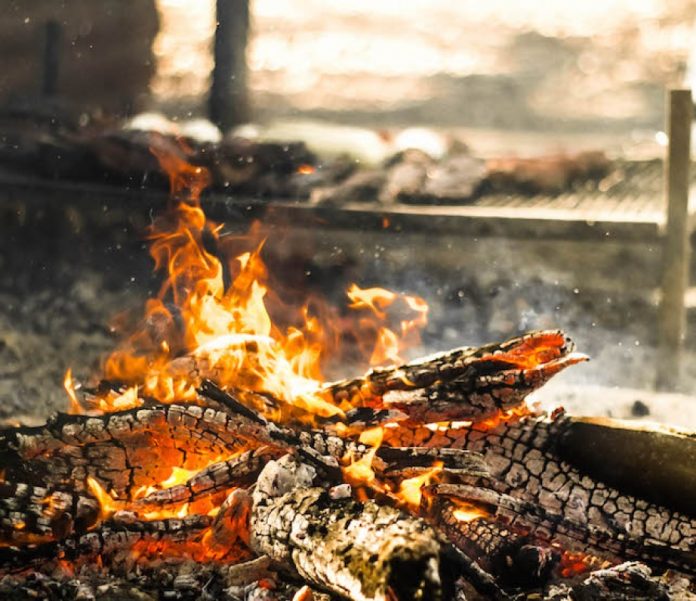
  • Smoke consists of airborne particles rising with hot air currents after the incomplete combustion of fuel.
  • The hotter a fire is burning, the less smoke it produces.
  • Smoke may be used to preserve meat because it consists of particles of various chemicals such as carbolic acid. These chemicals coat the meat and prevent bacteria and mould from spoiling it.
  • Green or fresh wood produces more smoke because it contains about half its weight in water and therefore does not burn as completely.
  • You can predict the weather by observing the behaviour of your campfire smoke. If it rises straight up you are in a system of high pressure and the weather will be fair. If the smoke hangs around the ground you are in a low pressure area and wet weather is likely.
  • CB radio operators use the term “Smokey” to alert each other to the presence of police officers.
  • 1984 Surgeon General’s Warning: “Smoking causes lung cancer, heart disease, emphysema, and may complicate pregnancy.”
  • Mosquitoes avoid the downwind side of campfires because many of the suspended particles in smoke are toxic. 
  • Deep Purple’s song “Smoke on the Water” tells the story of a night in Montreaux, Switzerland, in 1971. Frank Zappa was playing a concert when a fan lit off a flare gun. The ensuing fire burned down the casino in which Deep Purple had planned to record Machine Head.
  • No matter how many times you repeat it, the phrase “I hate white rabbits” has absolutely no repellent effect on campfire smoke blowing in your eyes. 

This article on smoke was published in the Spring 2007 issue of Canoeroots magazine.This article first appeared in the Spring 2007 issue of Canoeroots Magazine. For more great content, subscribe to Canoeroots’ print and digital editions here.
Jagger Paddles the Nahanni River

Illustration: Lorenzo Del Bianco
Jagger Paddles the Nahanni River

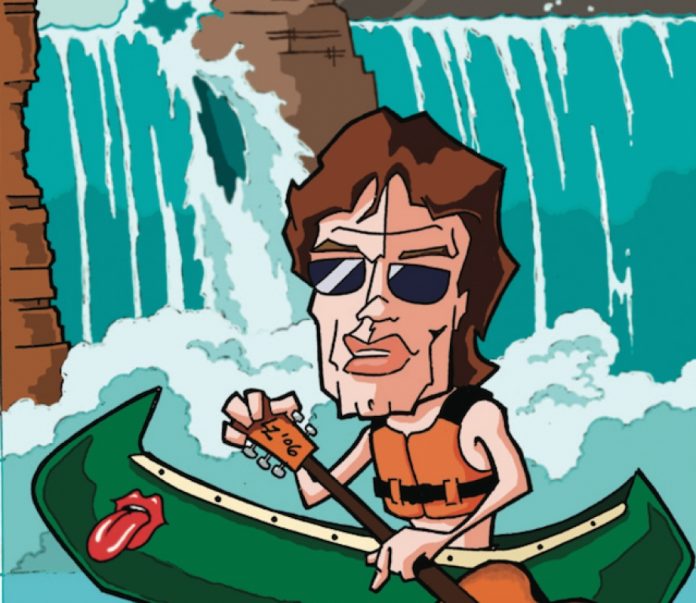
With the recent release of “Nahanni Song” credited to a certain British songwriter by the name of Jagger, it’s no longer a secret that a big-name British rocker paddled the northern river in 2005.

That summer, the Rolling Stones were in Toronto rehearsing for their upcoming North American tour. Late in the summer, the 59-year-old vocalist Jagger covertly jetted to the Northwest Territories for a week-long trip on Canada’s most famous canoeing river.

Starstruck guides schooled the aging rocker in river safety and bear protocol before escorting him down the South Nahanni.

“I decided it was about time to visit Canada—the real Canada, not the cities but the wide open country of lakes, mountains and rivers,” said Jagger, whose father wrote books about canoeing and nearly raced at the 1948 Olympics.

Jagger was so inspired by the Canadian wilderness that he penned a song about the river. A lucky audience got a sneak preview of “Nahanni Song” when Jagger dropped in for a post-trip jam at Yellowknife’s storied Wildcat Café.

The lyrics (Beautiful river/Running so free/But it’s goodbye/To the Nahanni) combine Jagger’s post-trip melancholy with his fear for the river’s future. “The song came along when I was at the landing after the trip was all but over… I guess it’s an offering,” Jagger says of the song.

The lyrics provide a rare glimpse at the nature-lover behind Chris Jagger’s public persona as lead vocalist, guitarist and occasional washboard player for the zydeco-funk band Atcha!

You can hear “Nahanni Song” as a bonus track on import copies of Atcha!’s latest album, Act of Faith, alongside a rare duet with Jagger’s older brother, Mick, who also visited Canada in 2005 and is a successful musician in his own right—albeit a less accomplished paddler. Download “Nahanni Song” and read Chris’ trip journal at www.chrisjaggeronline.comgeronline.com.

This article on music was published in the Spring 2007 issue of Canoeroots magazine.This article first appeared in the Spring 2007 issue of Canoeroots Magazine. For more great content, subscribe to Canoeroots’ print and digital editions here.
With a Passionate Heart: Achieving Personal Limits

Photo: Wendy Killoran
With a Passionate Heart: Achieving Personal Limits

I discovered sea kayaking when I was five months pregnant and not quite 29 years old. I
was watching a sunset at Flamingo Campground in the Florida Everglades. The sun was framed by silhouetted palm trees and diving pelicans splashing into the bay with wings folded back. Then I saw a sleek kayak glide peacefully into the scene. This first impression stayed in my mind, growing like a well-watered seed until, many years later, kayaking came to define my life.

I waited one and a half years after the birth of my daughter before taking my first kayak journey, a guided trip on Georgian Bay – I couldn’t leave a newborn and the demands of motherhood preceded all other notions. It took only a few strokes to realize that kayaking would become a significant part of my life. I felt I belonged on the water.

From then on, I made short kayak trips with guided groups to exotic places for a week once or twice a year. I paddled the barrier reef off the shore of Belize. I camped and kayaked along the Exumas, a chain of islands in
 the Bahamas. And I paddled among icebergs in east Greenland.

These short breaks renewed my spirit and whet my appetite. I studied maps and dreamed of far-away paddling destinations, but I had parental obligations and these dreams simmered in my active imagination.

Eventually, I bought a used kayak from a tour company and I paddled
at The Pinery, a provincial park on Lake Huron. The Pinery had been my special place since early childhood, but now I enjoyed the dunes and beach from a new perspective. I was attuned to the subtle differences in the quality of light, in the clouds in the sky, in the changing of the seasons.

On the water I felt alive. My senses awakened to the rush of wind or the sting of icy water. I revelled in the songs of loons and the flight of bald eagles. My spirituality strengthened as I felt my small place in this complex but beautiful world, connected to all that exists.

AQUA THERAPY

Kayaking was my aqua therapy, a means to wash away the stresses of daily life, to get away from the continuous demands that society places upon us, or that we allow society to place upon us.

I built my confidence by paddling in varied conditions in all seasons
and in many places. I read about kayaking. I took courses and paddled with strong paddlers to strengthen my skills.

As much as I enjoyed paddling with others, I found it easiest to paddle
on my own. It meant I could paddle wherever and whenever I wanted. I relied only on myself and felt a deeper sense of being on the water. My focus was on my surroundings, not on my partners. My days as an elementary school teacher working with 150 kids a day are busy enough that I fervently seek these moments of solitude.

In 2003, in the Westfjords of Iceland, I met a remarkable woman.

Shawna Franklin was paddling around Iceland with two male partners. Her energy, vitality and genuine love for the world shone brightly. She looked at me and spoke of living true to myself.

This was an epiphany. Up until then, I had always done things to please others. I had followed the “system”, getting a university degree and a good job, getting married and raising a family, taking on a hefty mortgage. Yet it was my brief forays into nature by kayak that truly made me feel joyful and alive.

I was also inspired by a poem, The Invitation by Oriah Mountain Dreamer, which says “dare to dream
of meeting your heart’s longing” and “risk looking like a fool for love, for your dream, for the adventure of being alive.” This reiterated what I already knew but had been afraid to do for so long: to live true to my soul, which sang of being free on the water, to follow my dreams and find peace and fulfillment.

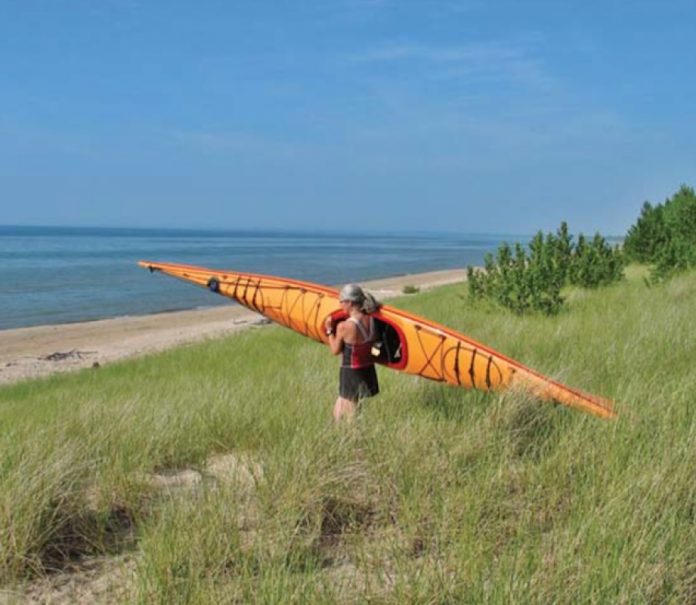
And so I found the courage to plan bigger challenges. In 2004, I paddled around Manitoulin Island, the world’s largest freshwater island. Geographical extremes appeal to me as do islands that have their own unique identities, and Manitoulin lies at the northern tip of Lake Huron. I paddled the 350 kilometres in 12 days.

A WHOLE SUMMER TO PADDLE

In 2005, I took a leave of absence from teaching during the months of May and June, giving me the whole summer to paddle. I chose to circumnavigate Prince Edward Island.

Again, it was a geographical extreme as it was the only province that I could completely circumnavigate. I was the first woman to complete the entire 600-kilometre circumnavigation, paddling it in 15 days. I then felt I could accomplish anything I put my mind to.

The following summer, I again took the months of May and June
off work, this time to paddle around Newfoundland, a demanding journey of almost 3,000 kilometres. Again I would be the first woman to do so.

I started my journey with much trepidation on a cold, wet, dreary and windy day early in May. What had I gotten myself into? I felt relieved to be paddling part of the south shore with another accomplished female sea kayaker, Freya Hoffmeister from Germany. She helped give me the strength and courage to complete the remainder of the journey alone.

I often dug to the depths of my core to face wind, waves, fog, lightning,
and long open water crossings of enormous bays. At times I felt utterly alone on such a vast and unforgiving ocean and often arrived humbled on shore, relieved to set foot on solid ground. Many days I spent eight, nine to paddle in exotic destinations and or even 10 hours in my kayak before share my experiences as a presenter at finding a landing place.

I arrived safe at Isle Aux Morts at the exact dock where I’d started 104 days earlier. I averaged 40 kilometres a day on the 68 days I paddled. Succeeding on these expeditions has meant sponsorships, the chance to paddle in exotic destinations and share my experiences as a presenter at symposiums around the world. I have even taken this whole year off teaching to continue kayaking full time.

KAYAKING AS A SELFISH INDULGENCE

These rewards have come at a price. My spirit is renewed, my zest for life continues to grow, but indulging my needs is in many ways selfish.

I have had to leave my family, who are non-paddlers, for extended periods. It has created enormous friction in my personal life when loved ones cannot fully understand my need to reach for these extended journeys at the cost of being home and making money. Because kayaking distant shores requires financial security and extended time off, I am still dependent on a job that is draining my life energy. Having sponsors also brings obligations. Some of the spontaneity of quietly travelling is taken away with the continual need to blog about my experiences and give up my privacy.

But I will continue to seek kayaking adventures. It is what fulfills me and 
makes me happy. And I enjoy sharing my experiences with others. My perspective of looking from the outside towards the inside is so different from the experiences of most. Maybe I can inspire someone to grow by stepping outside of their comfort zone. It is important to keep growing as a person throughout life’s journey. The motto on
my blog states, “Make the journey of life a beautiful adventure.” Think of a dream and then visualize how you can make it happen. I am a petite, middle-aged woman. It is through sheer passion and strength of mind that I make my dreams into reality.

For years and years I devoured accounts of personal triumphs in adventure and dreamed that I too could follow my dreams. Finally, in mid-life, I reached for my dreams, realizing that time lost is irreplaceable. I feel that if you can dream it, you can do it. Achieving new personal limits has taught me that the only limits set upon ourselves are made by ourselves, in our minds.

Wendy Killoran lives and works in London, Ontario. She presents at sea kayaking symposiums worldwide and blogs at kayakwendy.com

This article on Wendy Killoran was published in the Spring 2008 issue of Adventure Kayak magazine.This article first appeared in the Spring 2008 issue of Adventure Kayak Magazine. For more great content, subscribe to Adventure Kayak’s print and digital editions here.
In Parting: The Search

Photo: Dave Quinn
In Parting: The Search

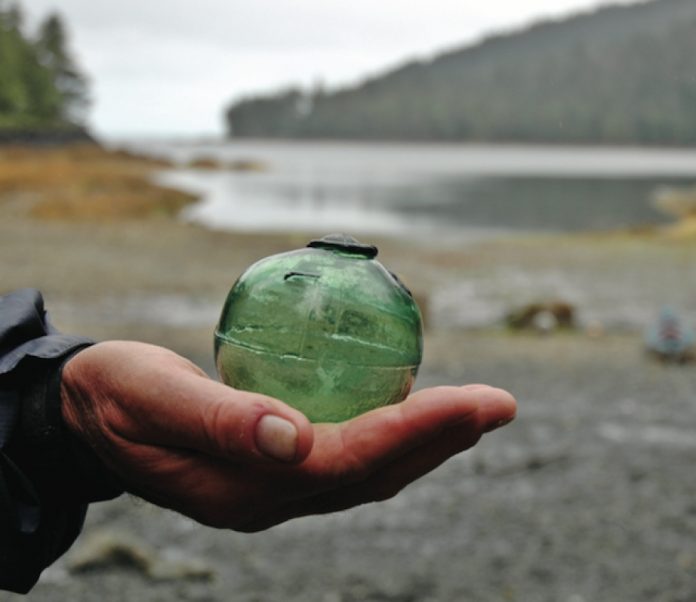
On Hecate Strait, B.C., a storm-wracked beach with a steep pile of driftwood and flotsam that extended into the haunting, moss-draped chaos of forest above the gravel, my hunt began. Bottles and driftwood and fishing floats had been tossed into there by some fierce winter storm. Torpedo-shaped buoys, basketball-sized buoys, plastic buoys, metal buoys, netting, rope, lighters, oil cans, shampoo bottles, a whole plastic hardhat, a car bumper, mangled chunks of aluminum boat hull.

But, goddamn, no glass balls.

Jonathan Raban, in Passage to Juneau, says the West Coast natives were the first to find Japanese glass fishing floats, along with wreck- age with iron and copper fittings and other Asian artifacts washed in on the Kuroshio current and the north Pacific drift. They believed, he writes, that these things floated in from submarine civilizations inhabited by the mythical creatures Komogwa and nazunakas—like a couple of “fat undersea emperors.”

“In effect, the Indians had dreamed Japan into being, but located it, like Atlantis, somewhere at the bottom of the ocean.”

Glass balls adrift from a magic kingdom of the sea—how I dreamed of finding one!

LOTS OF PLASTIC, BUT NO GLASS TO BE FOUND

On Princess Royal Island, I poked around in the huge driftwood piles on two beaches, found a yellow roadway sign to pound on like a drum, marker pens and highlighters and driftwood. Found wolf trails, tufts of fur, a favourite howling spot, even a wolf—a real wolf at the end of the beach.

On the Brooks Peninsula, windbound, I searched for glass balls. Found: A plastic fishing buoy with Japanese characters on it, half full of water, bleach bottles, fish floats, blocks of Styrofoam, a jar of salad dressing, plastic water bottles, tide laundry detergent bottles, very little glass and no glass balls.

Saw bear tracks, walked around an island, faced the sun and watched water pound home. Fragrant spruce sap on my fingers. Plastic bottles under mossy driftwood in groves of salal in the middle of the island, brought there by historic storms.

All these things, no glass balls. But by this time it was just an excuse to go walking.

Scrambled over rocks, plants I’d never seen, tidepools of eelgrass and anemone and crab, stagnant pools green with algae, bones, shells of butter clams and moon snails, worn round pebbles, a group of seals lying on the rocks by a large tide pool on the other side of the island. A boomer that, just once, refracted and sent a house-sized pyramid of water straight up with an exclamation mark of white atop, backlit by sun, green as glass. Glass! 

This article on what you find on ocean beaches was published in the Spring 2007 issue of Adventure Kayak magazine.This article first appeared in the Spring 2007 issue of Adventure Kayak Magazine. For more great content, subscribe to Adventure Kayak’s print and digital editions here.