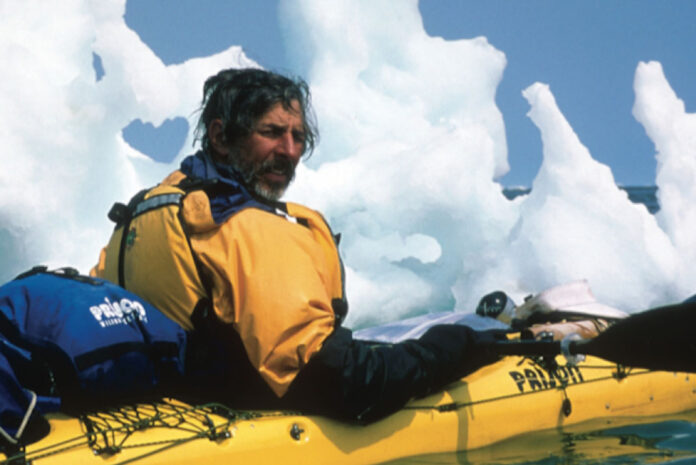
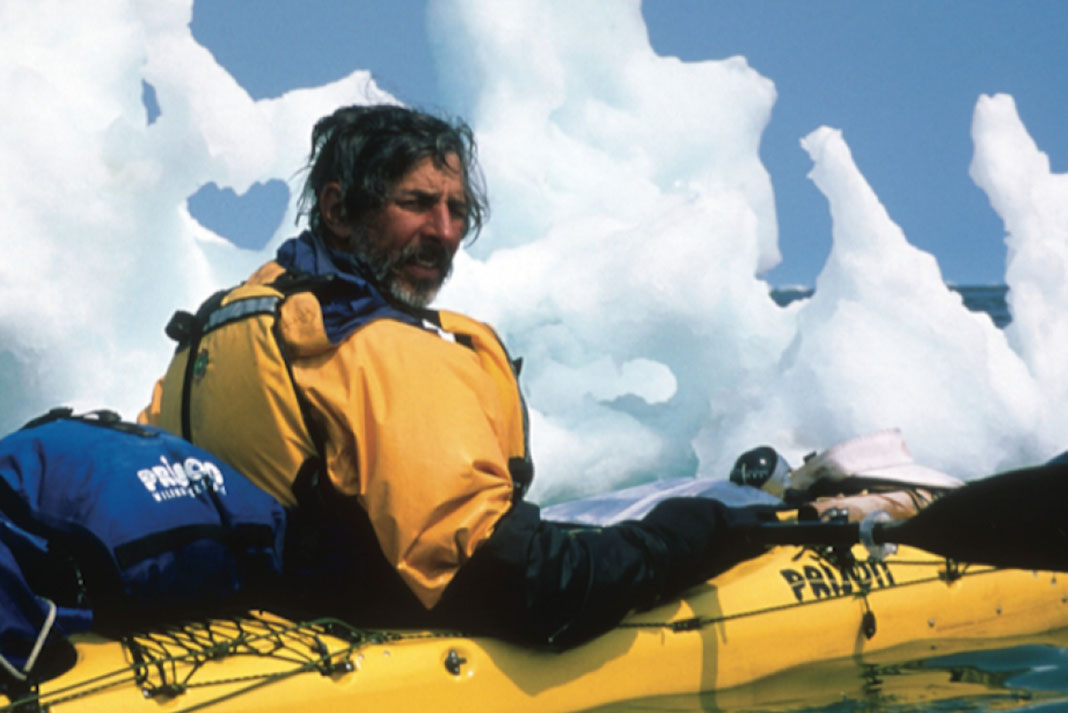
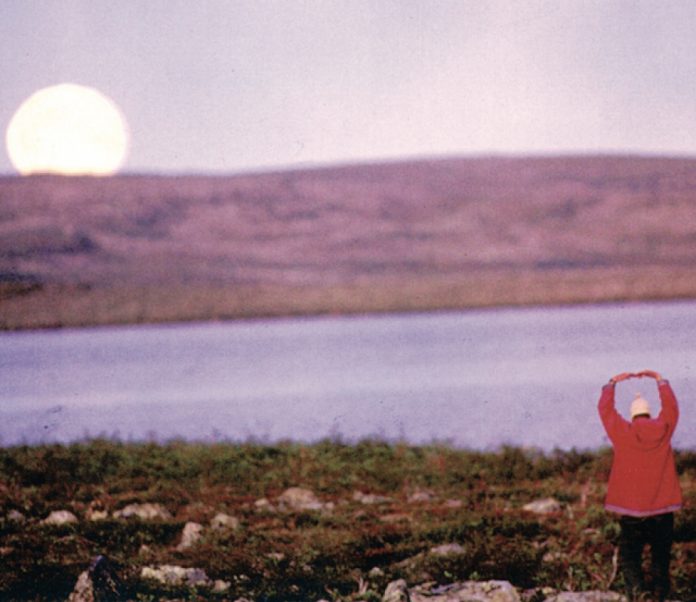
I first learned of the writer, poet and filmmaker Robert Perkins when I saw his classic film Into the Great Solitude, a startling chronicle of his 1987 solo paddle down Nunavut’s Back River during which he comes unwound, seemingly losing grip with reality as he travels further and further north. It was as disturbing as it was magical. Perkins’ film made me renew my vow to paddle an Arctic river, but it also convinced me I wouldn’t try it alone.
I met Perkins a year or two later at a film festival reception where champagne bubbled in fluted glasses, waiters bustled in their tuxedoes and canoeists fidgeted in their suits and ties. he was a gracious guest of honour, introducing himself to everyone as he circulated around the room. I hoped my three minutes of small talk would revolve around writing, the Arctic and paddling. I wanted him to know we had much in common.
Instead, we talked about splitting firewood. More deserving guests threw daggers at my back as the party wound down and we continued to talk about axes, wood and swing techniques. he seemed genuinely intrigued by my winter business of selling firewood and we dissected the visceral appeal of frosty mornings and working hard. I left pleased we had made a connection, but it was years before I understood why we spoke so long about swinging axes, and not paddles.
Perkin’s 1996 book Talking to Angels is comprised of three autobiographical stories. the middle one is about his summer of self-imposed Arctic exile on the Northwest Territories’ Baillie River. He lived in a converted meat locker with a weather radio, roaming wildlife and breathlessly spacious beauty as his only distractions. His lyrical writing penetrates the sublime violence of a northern spring break-up and the life and death truths apparent in the carcass of a scavenged musk ox.
This middle section is most popular with canoeists, but the first third of the book prefaces his time in the Arctic. It documents his decline into mental illness as a young man. Written against a backdrop of the wider insanity of 1968—an escalating Vietnam war and the assassinations of Martin luther King Jr. and Robert Kennedy—Perkins writes of living in an Alice in Wonderland world where nothing makes sense but the feeling that he has “lost his keys,” and can’t find them no matter how hard he looks. He portrays himself as the only sane observer in a maximum security ward and writes, in dripping metaphors, that he’s floating adrift, swimming in darkness, sinking, drowning… his escape attempt ends with him knocking on the hospital’s back door, too tired and drugged to get away.
When Perkins was released, he knew where he had to go:
“I went north, to the tundra. whenever I could, I traveled into wilderness… I preferred the straight- forward fear I felt and the physical dangers I faced to dealing with family and other people. slowly I stopped leaning on nature and began to just look, to see. she was all I could trust.”
The haze of confusion and madness of the first story is set in clear contrast to the clarity of the Arctic air and stillness of the tundra. Perkins found sanity by paddling northern rivers, by being alone and facing his fears. out there he connected different parts of his life—he found his keys—and he prepared to re-enter life at home.
It only takes a glimpse of daily headlines to see that there is as much insanity and confusion in our world today as in the one Perkins peeked out at from his hospital window in 1968. Geopolitical paranoia and manipulation, routine road rage and the vacuous Canadian Idol seem to be disparate things, but together they are enough to make us want to take our paddles to the wilderness and seek the same clarity Perkins found on the tundra.
Re-reading his book now I realize why we hit it off so well at the film festival. I found the answer in an incidental detail that most would have passed right over. Patients in the hospital were rewarded for good behaviour by being allowed to choose a special activity to pass the time. Many chose cooking or extra television time. Perkins chose to chop firewood.
Jeff Jackson gave up his firewood business to become a professor of outdoor adventure at Algonquin College in Pembroke, Ontario.
This article first appeared in the Early Summer 2006 issue of Rapid Magazine. For more great content, subscribe to Rapid’s print and digital editions here.
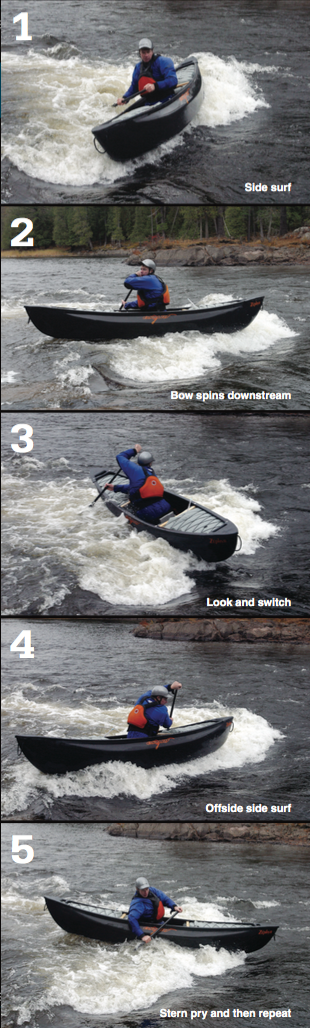
Whether you are river running, creeking or hanging out at your favourite park and play spot, you’ll often come across friendly little holes that are ideal for 360s. Not only is the 360 an amusing pastime in its own right, learning this skill will also help you deal better with unplanned visits to unruly bigger holes.
1. As you cross the foam pile, initiate an onside turn by applying a braking or ruddering stroke just behind your hip. This will get you into a side surf before your bow hits the green water coming into the hole. The green water hitting the upstream edge of your boat will try to flip you so you should have a slight downstream tilt. Side surf until you feel comfortable in the hole. Keep your strokes close to your body with an upright, balanced posture.
2. Move forward to the corner of the hole with a forward stroke or an angled blade on your high brace. As the bow hits the green water going past the hole it will be pushed downstream and initiate the spin. Help turn the boat and pull yourself toward the foam pile by doing a draw just ahead of your knee. Stay close to the peak of the foam when you initiate the turn to guard against the stern catching the green water when the boat is parallel to the current. This will also lift the ends out of the water and make the boat more manoeuvrable.
3. The crux of this move occurs when the boat is parallel to the current. As your bow passes beyond downstream, your off-side edge will become the new downstream edge so change the tilt by putting weight on your offside knee. Move your paddle to the downstream side as if you were doing an offside forward stroke with the shaft against the gunwale just in front of your knee. Turn your head and look back into the hole to see where you are going and to help the turning momentum.
4. When you complete the first 180, you’ll be in an offside side surf. Keep a steady downstream tilt to your offside and move the stern back toward the green water at the corner of the hole with a back stroke.
5. When the stern catches the green water and initiates the next part of the spin, plant your paddle on the upstream side of the boat in a ruddering position just behind your hip and close to the hull. This is tricky because you need to keep a downstream tilt on your offside. An upright and balanced body position is essential. When the boat is parallel to the current, change the tilt to onside and rudder into an onside side surf to complete the 360.
You may find turning the 360 toward your offside even easier. The tilt transitions are the same and only the strokes vary.
There are times when you might lean your body forward or back to keep the stern from hitting the green water, but aim to keep your body upright and balanced throughout the turn. Also, you’ll have more efficient strokes and a better body position if you keep your strokes close to your body. And remember, don’t get stuck looking downstream as the bow swings around the back of the hole. Quickly look over your shoulder and switch your tilt.
Mark Scriver is a former open canoe freestyle world champion and co-wrote The Thrill of the Paddle.
This article first appeared in the Early Summer 2006 issue of Rapid Magazine. For more great content, subscribe to Rapid’s print and digital editions here.
Dave Calver has paddled more rivers in more countries than I can name without the help of an atlas. Tough, stubborn, sensitive—but never too sensitive to tell you what he was thinking if you stared too long at a shot glass or a boulder-ridden class V run. Dave would always pipe up, “Come on man, take your balls out of you purse.”
When I caught up with him last spring in a wheelchair-accessible brewpub in downtown Vancouver, Dave told me that those are words I’ll never hear him say again.
I met Dave in the early 1990s
At Lakehead University in Thunder Bay, he was the only guy on campus with his own boat. During the summers he taught hundreds of people to paddle—you couldn’t help but take your balls out of your purse, sucked in by his passion for paddling.
When the rest of us peeled behind the white picket fence called real life, Dave kept his drybags packed and moved around the world floating from river job to river job. Then, after 10 years of the most footloose, free-spirited, adventure-filled life I know, Dave had an accident and became a paraplegic.
After finally settling down and landing his dream job as the river-based instructor at the prestigious Thompson Rivers University adventure Guide program (formerly Caribou College) in Kamloops, Dave landed on his head. Not wanting to be outdone by his riding buddy, Dave launched himself off a mountain bike jump, a jump he’d been avoiding for days. He said he knew as soon as he was airborne he was in trouble and he knew immediately when he crashed that he had broken his back.
Sitting with him drinking beer I didn’t notice his chair anymore, he was just my buddy Dave rolling with life’s punches. He says in many ways he sees more opportunities opening up for him now than he did as an able-bodied person.
He traded his five-speed Tacoma pick-up for a lower riding, automatic Subaru wagon. He sold his snowboard and bought a sit-ski. He traded his mountain bike for a racing wheelchair. He left his college job in the mountains for a master’s degree in occupational therapy in the snow-free streets of Vancouver. And so long as Liquidlogic is turning out kayaks, Dave is set up for boats.
I asked him if he thought his sponsorship was some sort of publicity stunt.
“Shane Benedict is a good friend who I worked rivers with in Nepal and Ecuador. When he heard I was getting back into boating he wanted me in his boats. i guess sliding my atrophied ass down riverbanks on a modified Crazy Carpet represents a love of paddling and dedication that the guys at Liquidlogic understand and respect.”
Whether through luck or karma, Dave was left with the right muscles to continue paddling. He has use of his adductors to bring his knees together and hip flexors that allow him to roll. Dave was discharged from rehab in January of 2003. He was back in a boat by early may and linking cartwheels that summer.
What he lost are his butt muscles, hamstrings and everything below the knees. “I spent many hours in friends’ basements with piles of foam and cans of glue,” Dave told me. “They kept turning me upside down until I had my legs stuffed in tight enough that I wasn’t falling out.”
After beating me in a few drunken laps around the crowded bar in his wheelchair, Dave asked me to draw him a picture of my C1 outfitting set up. “I think I’ll give it a try,” he said with a wry smile. “C1 is perfect for guys like me. After a day of kneeling in your boats, you guys can’t feel your legs either.”
This article first appeared in the Spring 2006 issue of Rapid Magazine. For more great content, subscribe to Rapid’s print and digital editions here.
I was seven the first time I saw Niagara Falls. My strongest memories of that family vacation are of the wax museum, Ripley’s Believe It or Not and grilled cheese sandwiches. The falls didn’t impress me much, and it certainly didn’t occur to me to run them.
The same can’t be said for others. Since 1901 Niagara Falls has attracted nutbars of all sorts going over the lip for their final swan song or for a shot at fame and fortune. Besides the 20 suicide victims police purportedly retrieve from the pool below every year, 15 “daredevils” have run the falls. Ten have survived.
Most of those 15 attempts sound like contenders for the Gong Show. They’ve relied on all manner of inner tubes, wooden barrels and metal kegs. One guy even rode off the lip on a jetski, hoping his rocket-propelled parachute would bring him down safely. Unfortunately he did a poor job of attaching the parachute to his body.
Most recently, in 2003, Kirk Jones, an unemployed man from Detroit, survived a swim over the falls wearing nothing but the shirt on his back (and some pants). He went on to join the Toby Tyler Circus. To paddlers, though, one story stands out.
Jesse Sharp, an unemployed 28-year-old from Ocoee, Tennessee, had ten years of whitewater experience behind him when he ran Niagara Falls in his red Dancer C1 on June 5, 1990, making headlines across the continent and reinforcing the public’s belief that paddlers are all crazy. He didn’t wear a helmet so his face wouldn’t be obscured in photographs. Friends believed he did it as a stunt in order to launch a career as a stunt man.
But Sharp may not have been a total quack. He had a decent creeking resume and he scouted the falls for three years. On the day of his attempt he made dinner arrangements downriver in Queenston. We can only assume he made his line, but he never made it to dinner. Authorities recovered his boat, which suffered only a mi- nor dent, but Sharp’s body was never found. It seems 170 feet of freefall was too much.
When Jesse Sharp went over Niagara Falls the world record for successful waterfall descents belonged to Shaun Baker for his freefall of 49.5 feet. Six years later Baker upped his own record to 75 feet. With Ed Lucero and Dave Grove both breaking the 100-foot barrier in the last three years, 170-foot Niagara is looking more and more like the type of river paddlers challenge themselves on and less like a sideshow for a wax museum.
People run waterfalls (and paddle whitewater, for that matter) for all sorts of reasons, but very few do it because it will make them famous. Those pushing the envelope of paddling are doing it with a noticeable lack of bravado after long bushwhacks through hordes of bugs. Ed Lucero fretted for a week with fear gnawing his sleep before he committed to running the 105-foot Alexandra Falls in the Northwest Territiories. Dave Grove thought his 101-foot run of Oregon’s Metlako Falls might be a record, but he didn’t get back to measure it until a month later.
These paddlers were not reckless seekers of fame. In some ways both were humbled by their accomplishments, but they also upped the ante when it comes to what is possible in a kayak. These accomplishments open the door for bigger challenges and expand the pool of what is considered possible.
Twenty years after my first family trip to Niagara, the falls impressed me more, and I spent a long time tracing lines over the lip to the pulverized froth below. It still doesn’t occur to me to run the falls—it’s both illegal and likely a quick death—but paddlers are now dropping falls nearly two-thirds the height of Niagara. It says a lot about the pace of progress in our sport that paddlers have even caused me wonder if they’ll ever reclaim this natural wonder from its dark history as a tourist-ridden venue for stunts and suicide missions.
Jeff Jackson admits he spent more time on a winery tour than at the falls or the wax museum during his last trip to Niagara.
This article first appeared in the Spring 2006 issue of Rapid Magazine. For more great content, subscribe to Rapid’s print and digital editions here.
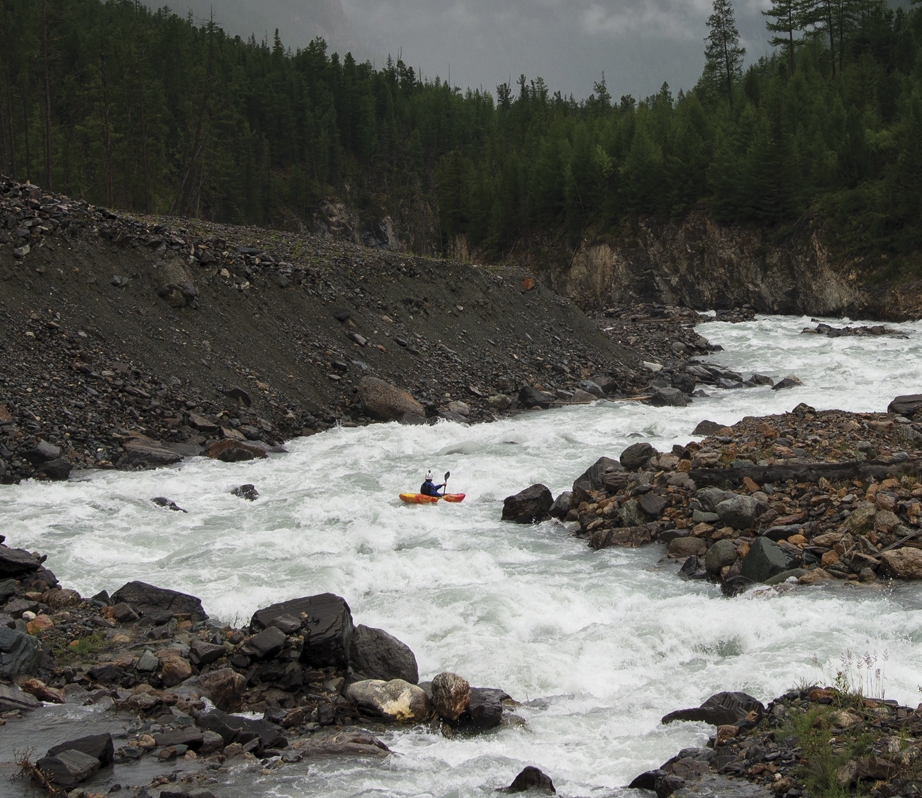
Baskaus River, day 1. “The Baskaus has been run since the 1970s. We assumed it would be a good warm-up for the more remote Chebdar River. I wish we had a warm-up for the warm-up.” | Photo: Seth Warren
Struggling to keep a grip on my 90-pound kayak, I tried to anchor it to a tree. No luck; the weight of the fully loaded boat started to drag me down the rotten incline until my legs jammed underneath a log and a stick probed me in an unmentionable place.
All humor had long since tumbled into the gorge below, along with untold amounts of loose scree. We were seven hours into a portage around a 50-meter section of Siberia’s Chebdar River. I gripped the grab loop as if it were my own sanity. If I let go the boat would have plummeted thousands of feet back to where this ridiculous journey began, stranding me in the middle of the Altai Mountains with only a paddle.
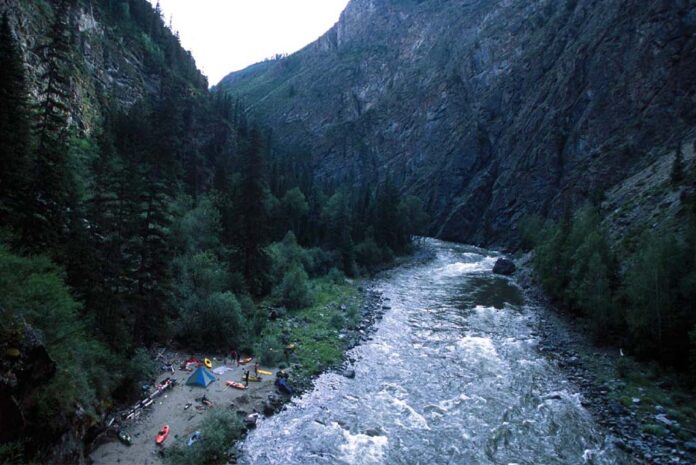
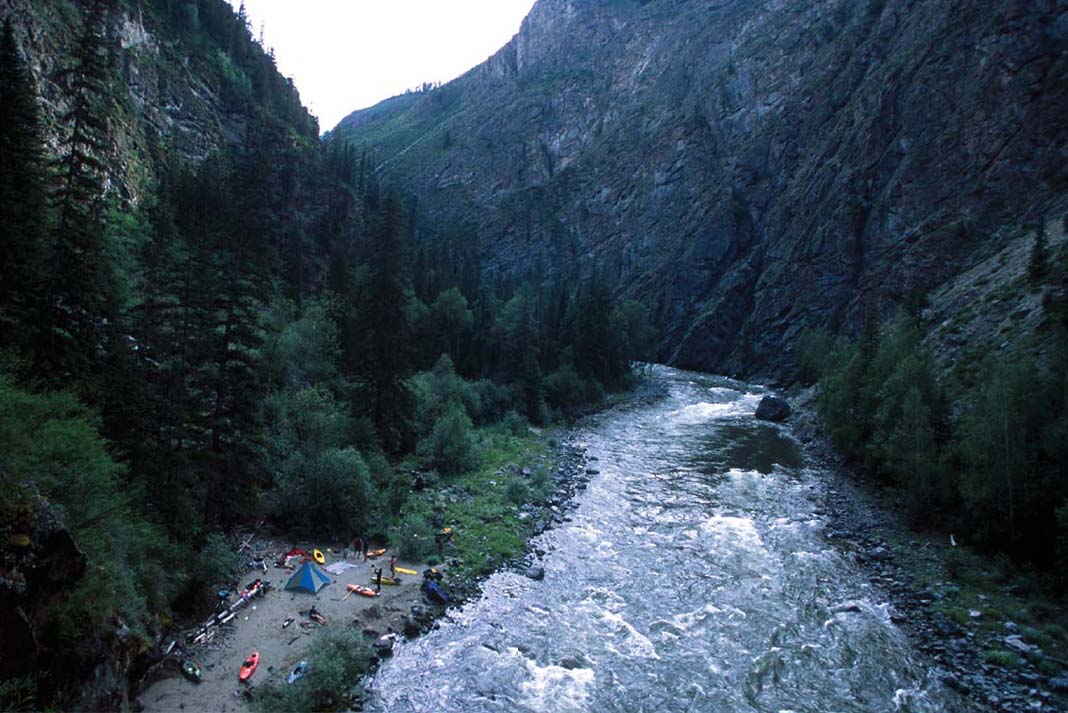
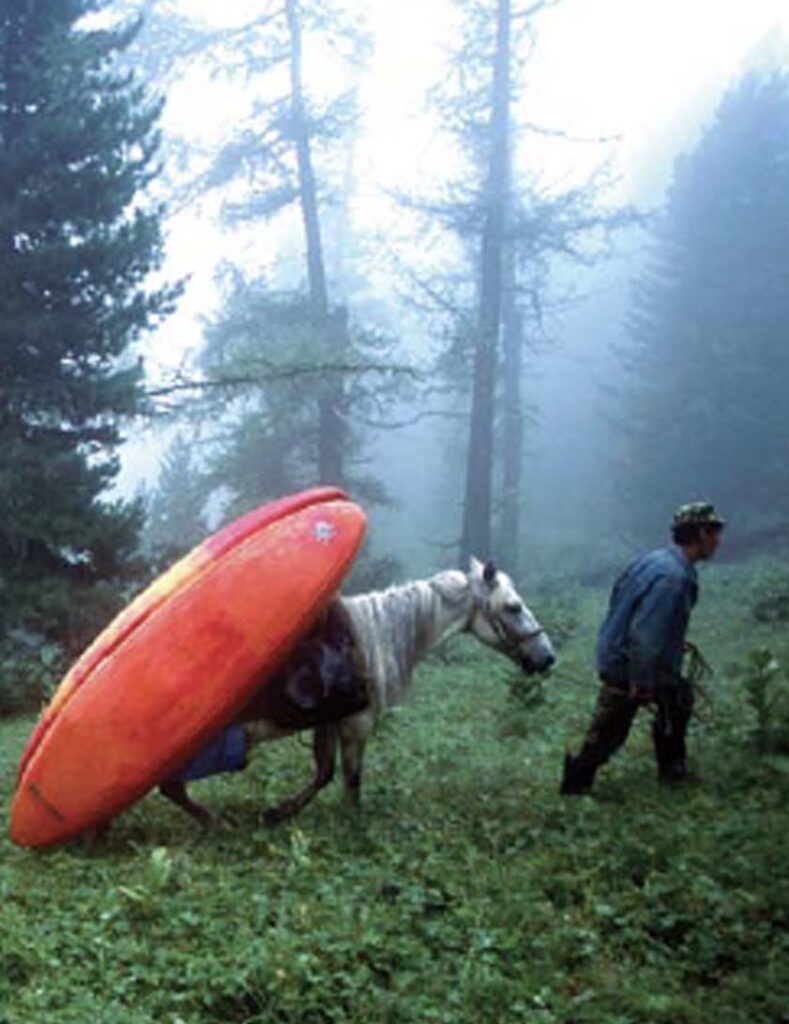
It was the fifth day of our six-day, self-supported first descent of the Chebdar. To get to the put-in we had hiked two days over ground so rough the pack horses we had hired were turned around by their owners. The morning broke with the typical schedule of coffee, energy bars and talk about what lay ahead—except today we didn’t know what lay ahead. The river had been attempted by raft twice before. Both parties had met unnavigable gorges, abandoned their missions and gear, and walked out.
After two quick kilometers, a canyon pinched the river into a horrendous maze of terminal holes and exposed rocks that funnelled the angry water through woody sieves. The final section pushed itself through a two-meter gap between cliffs that fell straight into the river. Our only option was to climb.
Baskaus River, day 1. “The Baskaus has been run since the 1970s. We assumed it would be a good warm-up for the more remote Chebdar River. I wish we had a warm-up for the warm-up.” | Feature photo: Seth Warren
Mountain climbing with kayaks
It was early—11 a.m.—and I assumed we’d find a route above the gorge with a few hours of portaging. That optimism slipped away with every step. The climb began on as steep a slope as trees can grow on, each step sunk knee-deep into decomposing vegetation. Three labored hours later the trees thinned and I turned my head to see the canyon wall close on the other side of the gorge. I tied my boat off to a tree and it hung nearly suspended in the air. We were now on a climbing expedition with kayaks—people and boats were to be on belay or tied off to anchors at all times.
We pooled every piece of climbing gear we had and followed the most obvious way forward, a three-pitch traverse that ended in a highly exposed dead end. Russell Kelly free-climbed straight up on a scouting mission using the hanging vegetation to aid his ascent. A long hour later he came swinging back down like a clothed Tarzan: “It’s a long, long way up. But I made it to the top and found a ravine that goes down. No guarantees but it might get us down to the river.”
Photo: Seth Warren
Photo: Seth Warren
Three hours into the portage and we were less than half way to the top. Every water bottle was swinging empty at the end of its clip. The possibility that we’d descend back down to the river only to find more impassable sections nagged at me like the neoprene rubbing on my blisters. We had little information about what was downstream. Russian paddlers told us it looked runnable, but that was only from map and aerial scouting.
After three pitches, the steepness mellowed and we began shouldering our boats toward a saddle as dusk fell. I reached it last and came across a desperate scene. Five dirt-encrusted figures were bent over and panting dryly through mouths that hadn’t tasted water in hours.
A sleepless night on scree
Though skeptical about blindly descending, we couldn’t stay put so we began lowering the boats through a steep tree-choked ravine. Four rope lengths later we came out at the top of a scree field. For the first time in hours I could hear the river below.
Camp was destined to be at the base of the scree field, above the lip of a cliff that faded into darkness. Pruzan and I followed the beam of our headlamps toward the sound of some running water coming out of the cliff below. I anchored myself to a tree and slowly lowered Pruzan across a descending traverse to a rivulet where he filled up all the water bottle and a big drybag. Nothing will ever taste as good.
Chebdar River, day 5. Downriver of the day-long portage from hell. Nothing worth having comes without some sort of fight. | Photo: Seth Warren
Relief overcame fatigue when Wilson’s whistle put an end to the few hours I spent in my tent wondering which of us would be crushed or swept off the cliff by the talus that was still adjusting to having been disturbed for the first time by six clumsy humans.
After a meager breakfast, we got back at it, traversing along the rim of a cliff until we found a five-hour route down to the river through another scree field as a thunderclap announced a downpour of rain. We arrived back to the river at 11 a.m. after 24 hours spent getting around 50 meters of river.
All we could see downstream was a class VI rapid that led into a thin gorge. There didn’t seem to be any way to scout it, but it didn’t matter. Portaging again was out of the question.
Seth Warren was joined on the Altai expedition by Russell Kelly, Aaron Pruzan, Matt Wilson, Ryan Casey, Evan Ross, Adam Majors and Nick Turner.
This article originally appeared in Rapid’s Spring 2006 issue. Subscribe to Paddling Magazine and get 25 years of digital magazine archives including our legacy titles: Rapid, Adventure Kayak and Canoeroots.
Baskaus River, day 1. “The Baskaus has been run since the 1970s. We assumed it would be a good warm-up for the more remote Chebdar River. I wish we had a warm-up for the warm-up.” | Feature photo: Seth Warren
The word “expedition” comes with a lot of baggage. And I don’t mean the two tons of lightest-gear-known-to-man that invariably accompanies each team member in the form of loaded duffles, camera equipment and paddling gear.
What I’m talking about is that increasingly cloudy distinction between going for a nice paddle somewhere and mounting an “expedition.” What exactly are the key ingredients that launch paddling from one place to another into the realm of expeditioning?
What separates an expedition from a simple paddling trip?
In the old days, going on an expedition meant doing things the hard way in order to complete a trip that was so ambitious, so outrageous in scope that the paddling world simply had to sit up and take notice. But that approach is really tiring—and scary too! Just ask Paul Caffyn what it was like to paddle around Australia in 360 days through shark- and snake-infested waters. Or quiz Ed Gillet on how much fun it was to paddle alone from California to Hawaii for 63 days, running out of food and losing 25 pounds along the way. These guys are so tough that their trips are just plain nutty! That’s not for the likes of you and me.
Feature illustration: Lorenzo Del Bianco
Marketing makes it real
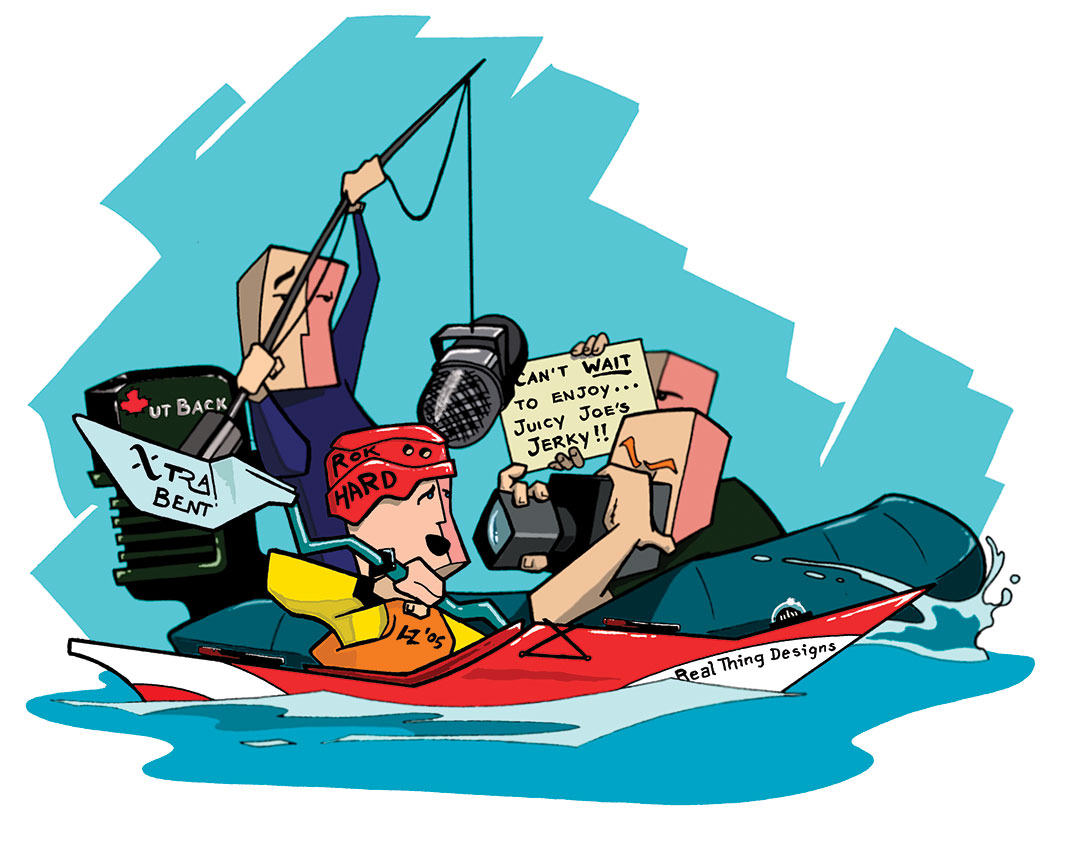
Nowadays, the only real difference between a paddling trip and a true expedition is marketing, which comes in the form of sponsorship and media coverage.
If you’re not sponsored, it’s not an expedition. I don’t care how far you paddle or how much you suffer. You must have stickers on your kayak and get all of your gear for free. Without sponsorship, you’re just going for a paddle like everybody else, and what’s special about that?
Once you’re properly wallpapered with corporate logos, you need media coverage—reportage.* If your expedition doesn’t generate any hype, it’s all over. You might as well do nothing at all.
It’s just like the proverbial tree in the forest. You know, if a tree falls in a forest and there’s nobody there to see it, did it really happen? And if you round Cape Horn and…. You get the idea. Your sponsors won’t be happy. You might even have to pay for all that free gear, just like every other schmo who dips a paddle in the sea. Lame!
[ Plan your next paddling expedition—or trip!—with the Paddling Trip Guide ]
Imagine, however, that the tree falling in the forest is sponsored. It’s all covered in the Coca-Cola swirl and Microsoft stickers, and there’s a tie-in to Extreme Tree Falling Week on TSN hosted by Paris Hilton and Prudential Insurance. A scrum of reporters and photographers are on the ground while the NBC news chopper circles overhead. FOX has nailed a killer crane shot for the live feed and Geraldo Rivera is working his TV magic. The tree sways, the crowd goes quiet, the Olsen Twins hold their breath…. Now that’s the right way for a tree to fall in the forest if it wants to get noticed.
This trip brought to you by…
These days when all the big trips have been done and the good destinations used up, marketing is the next frontier. Anybody can launch a kayak and try to paddle to Hawaii—again (although if you want to survive, you should definitely try to get Ed to come along). But it will take a real adventurous soul to push the boundaries of expedition marketing, to go beyond the limits of sponsorship from mere manufacturers of paddling equipment, those small, struggling Mom and Pop enterprises with limited budgets and no international media leverage. The really big dreamers will tap into the unexplored reaches of the Dow Jones companies and mega-media conglomerates like Pfizer, Philip Morris and Disney.
Imagine the Viagra-Marlborough-Jack Daniels Sea Kayak Expedition, bringing the message of “life-enhancing drugs, a smooth smoke and mellow Tennessee bourbon” to small communities up and down our great, unspoiled coasts. Think of the possibilities. And think of the free product. Now that’s an expedition I’d want to be part of!
*For any canoeist reading this, “reportage” does not mean to carry your boat to the same location twice.
Alex Matthews’ first story appeared in the Fall 2002 issue of Adventure Kayak. His Rock the Boat column has prompted plenty of letters to our editors over the years.
This article was first published in the Spring 2006 issue of Adventure Kayak Magazine and was republished in the 2023 Paddling Trip Guide. Subscribe to Paddling Magazine’s print and digital editions, or browse the archives.
The expedition is egalitarian as never before. Once the domain of enduring national heroes and earth shaking discoveries, the expedition has devolved to the personal sphere. Rather than bulwarking a nation’s reputation and capacity on the global stage, the modern expedition galvanizes the reputation and capacity of the individual. Instead of revelations that rock a people, we have discoveries that rock a person.
Anyone with the drive, the strength and the smarts can put an expedition together if they want it badly enough.
For those with a strong sense of adventure, who would like to use their little boat to paddle to those places much less travelled, it is important to know, to consciously understand, what-it-is-you-do, and why. Of all the variations of the sport, the expedition requires the clearest intentionality for a successful journey. Conversely, it has the least margin of tolerance of a failed one.
A kayak expedition may be a trip to a distant locale, an awesome distant bay or cape or beach, it could be the attempt of a very long crossing, or, more commonly, paddling a predetermined length of coastline, perhaps with a vehicle shuttle to put your rig at trip end. But no matter how you slice it, a kayak expedition is as much about a style of adventuring, of paddling and camping, of nuts and bolts, day to day life, as it is about the objective itself. In a word, two words actually, it is about paradigm and imperatives.
Paradigm, in my dictionary, is “an example that serves as a pattern or model for something.” A kayak expedition is a wonderful model for living in sustained adventure in the wild. And what that implies is a refreshingly straightforward set of imperatives. Def, imperative: “absolutely necessary or unavoidable.”
In other words, it is the chop wood/carry water credo of Zen sensibilities, but with an edge. We trade the soft, ill-defined, banal imperatives of routine civilized life for those of travelling in a coastal wilderness. Routine activities revolve Northwest Passage, near Bylot Island around the nourishment and conservation of our well being as we travel. Instead of concern with meetings, relationships, finances, we are concerned with keeping our brown rice dry and safe from marauding animals, our boat right side up and free from holes, our tent from leaking, our hands free of blisters. Instead of reacting to events we try and stay ahead of the curve. Before we launch we make sure everything we might need in our cockpit on the water is at hand, and ashore when the sun is out we string our wet clothes out to dry. Anticipation, preparedness, circumspection are the watch words. A vacation it is not.
On a recent expedition my partner and I reached a protected cove on an offshore island at dusk in stormy weather. Our first imperative was reaching the sanctuary of the cove, done. Next imperative was to establish shelter and secure our equipment. Then, to get warm and dry and vittle up. Finally, to sleep and restore the precious energy and enthusiasm to do it over again.
Purpose, objective, intention, the quickening of our bodies and minds in the face of danger, the readjustment of attitude during times of impatience or prolonged tedium, the accountability of personalities in the stew pot of enforced teamwork, the mental pique of managing logistics and itinerary in remote, roadless waterways.
The nearly tangible relief, satisfaction, contentment or joy of daily events like shelter in a gale, nourishment in extreme hunger and fatigue, safe passage ashore through surf, a dry sleeping bag.
The imperatives we engage on a kayak expedition keep us on our toes, obviating a direct causal relationship with consequence. More than that though, the expedition offers a rare opportunity to experience the sacred paradigm of living by our wits and few resources in a primordial natural environment. And that, when we come home at expedition end, is tonic for the soul.
This article first appeared in the Spring 2006 issue of Adventure Kayak Magazine. For more great content, subscribe to Adventure Kayak’s print and digital editions here.
Eight hundred and fifty thousand years ago, three quarters of a million years before our species, Homo sapiens, evolved, Homo erectus built boats and went to sea. Many of us inherited this yearning to sail, paddle, float or zoom across the earth’s abundant waterways.
Two thirds of planet Earth is covered by glistening lakes, gurgling brooks and azure seas. Unless you live in Saudia Arabia’s Empty Quarter, chances are good that there is some waterway near you, perfect for a weekend getaway or a major expedition.
How to plan your expedition
The first task in planning a journey is to select the right adventure and danger level for your personality. The idea is to maximize fun—for your individual brain and your DNA—not to try to accommodate some marketing agent, boyfriend or girlfriend.
If you’re not sure what fits, err on the conservative side at first, and then ratchet things up bit by bit until you maximize your fun.
Fun of course is personal; is it a cozy peaceful afternoon, an exhilarating level of fear, or abject terror? Only you can decide.
Planning requires an ability to sit at home and accurately predict how a body of water will behave when you are bobbing around in an absurdly small boat like a kayak or a canoe.
Waves, currents and wind make water dangerous, but it’s easy to determine the frequency, probability and intensity of all three. Data on tidal currents is available from any fishing or boating supply near your proposed location. Pilot Charts are the penultimate source for wave and wind data. These are available from the U.S. National Geospatial-Intelligence Agency. In an intricate series of maps, you can obtain information on wind speed and direction for just about any ocean location in the world, for any month.
Feature photo: Chris Seashore
A few pieces of advice: For starters, choose a region where the gale frequency is zero and the wind will be blowing primarily from your back. Wave height is dependent on the wind speed and duration and on the distance that the wind has travelled, called the fetch. If you’re on the open ocean, where the wind can blow 6,000 kilometres before it reaches you, you’re likely to get huge waves and violent surf. Paddle in an enclosed bay and even a strong wind will produce only small wavelets. This factor is intuitive: enclosed bodies of water are safer than exposed ones.
When currents collide with waves, the waves develop a steep face and become much more dangerous than rounded waves of the same height.
A kayak is the most versatile watercraft in the world, capable of navigating shallow mangrove swamps and the open waters off Cape Horn. Humans are the most diverse species on the planet, with an almost incomprehensibly wide range of personalities and desires. Match the two and you’ve got a wondrous gambit of journeys and adventures. The only important adage is to go out—and have fun—whatever that means for you.
Jon Turk’s first expedition was paddling the coast of B.C. and Alaska in a Grumman canoe in 1974. He has kayaked from Ellesmere Island to Greenland, made two trips to Cape Horn, and in 2000–01 paddled 3,000 miles across the Pacific Ocean from Japan to Alaska, the subject of his book In the Wake of the Jomon.
This article first appeared in the Spring 2006 issue of Adventure Kayak Magazine. For more great content, subscribe to Adventure Kayak’s print and digital editions here.
Expedition Planning: You Don't Have to Quit Your Day Job
How many times have you heard someone say, “I would love to go on a long kayak expedition, but I just can’t get the time off work”?
Vancouver paddler Colin Mahony didn’t let his job as a forestry consultant stop him.
Colin’s dream was to paddle around Vancouver Island—up the relatively sheltered waters of the Strait of Georgia and Johnstone Strait, then down the extremely exposed icy waters of the island’s surf-washed west coast to Victoria, and finally across the Strait of Georgia back to Vancouver.
Giving up his job was not an option. So he just broke the expedition up, paddling most weekends as well as in longer stages whenever he could get the time off.
Colin set out northward from Vancouver in early April, 2005, paddling on his days off and then finding a place to stash his boat each Sunday night to catch a ferry back to Vancouver.
Over the summer, he was able to take four separate weeks off which, with weekends, gave him up to nine days of paddling at a stretch.
The week that he planned to round the fearsome waters of Cape Scott, known for their nasty tidal rip and the wild weather that spins off Vancouver Island’s northern tip, the forecast called for 50-knot winds and ocean swells up to eight metres. Luckily, Colin was able to reschedule his time off and go the following week instead.
One of the greatest challenges he found was, after days of solitude, pushing himself to be outgoing when paddling into some unfamiliar remote community. One Sunday afternoon near the end of the journey, he found himself on the outside of Vancouver Island, still on the water. He had to be back in the office on Monday morning. Port Renfrew lay ahead, and the one bus left there at 4 p.m.
“I landed on the beach, found a phone booth, and started calling around. I needed somewhere I could leave my boat. Someone said, ‘Call Rick.’” Rick was happy to help (it turned out that Colin had landed right in front of his house anyway) and offered him a beer.
“So I missed the bus,” continued Colin, “and got out on the road. It was getting dark, but I ended up getting a ride all the way to Victoria that night, right to my friend’s door.” He caught the first ferry in the morning, and made it to work on time.
“The logistics of this trip forced me to rely upon the kindness of others,” he said. “It created these wonderful situations where I would meet people.”
Now, having completed his journey, he says that the people that he met and the friendships that resulted are what really defined this trip for him.
Colin paddled back into Vancouver Harbour on Labour Day weekend, five months after he set out. In a total of 42 days on the water, he covered 1,200 kilometres.
This article first appeared in the Spring 2006 issue of Adventure Kayak Magazine. For more great content, subscribe to Adventure Kayak’s print and digital editions here.
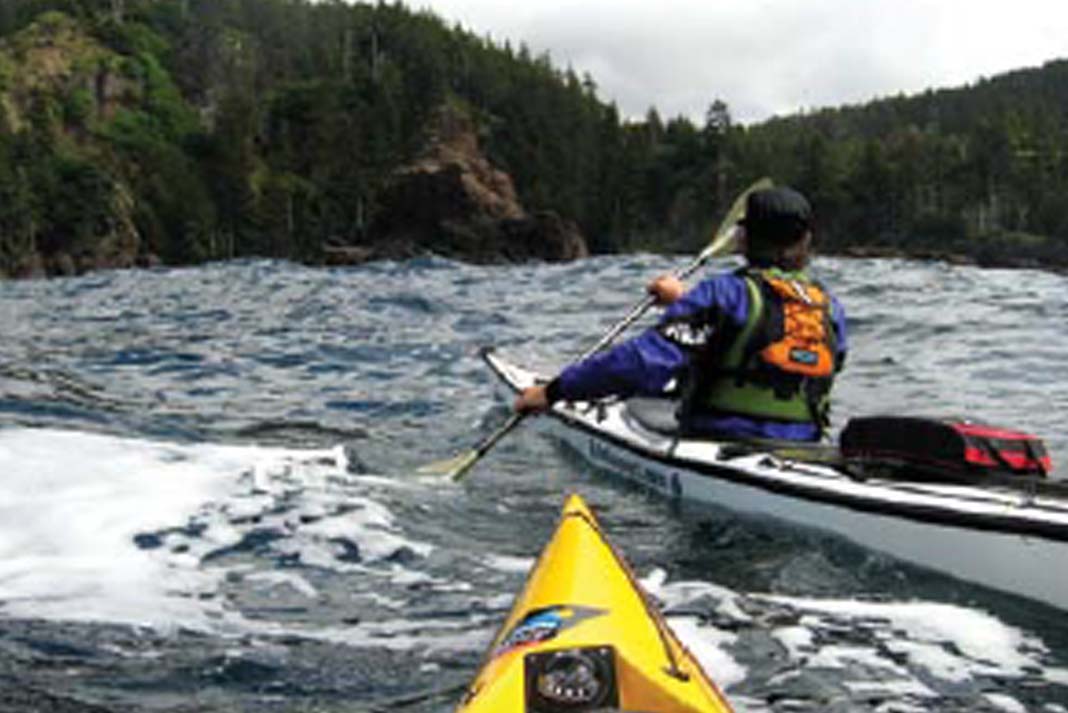
My hand curled comfortably around the paddle shaft, a month’s worth of calluses finding their place for another evening’s work. The blade bit into rippled water and my muscles fell into rhythm. As we moved out from the safety of the cove, we knew we were in for it. Dark sentries of swell marched steadily across the exposed mouth, growing like anthills under time-lapse photography.
The forecast called for a huge northwest sea of three to four metres, with waves up to twice as big on the faces.
Highs and lows in Haida Gwaii
When I’d planned the circumnavigation of Haida Gwaii five months earlier in a skid row diner in Vancouver, I envisioned a journey that would take me away from the crawling city and bring me face to face with raw nature, far from help or hindrance. I wanted to go to a place where I was a mere speck of dust, something that could be absorbed in an instant without the surrounding ecosystem missing a beat. Now the bleak thought squeezed into my brain, “Frank, you should be careful what you ask for.”
We had holed up in Mike Inlet for the afternoon, hoping the building seas would calm. The 4 p.m. forecast on the VHF didn’t bring the news we wanted. But with only six kilometres to go—a mere six kilometres!—we chose to push on to Puffin Cove anyway.
Puffin Cove is where local legends Neil and Betty Carey built a cabin and homestead that they lived in from the 1960s to the early 1980s. Keith had read Neil’s book Puffin Cove and was eager to see the place. Todd had read Bijaboji, Betty’s account of her 1930s canoe trip up the Inside Passage, and become somewhat smitten with the adventurous lady. In Mike Inlet, the black flies were brutal and the camping marginal at best—and love, well, a man in love will not be denied. We stuffed scattered, drying belongings from the pebble beach into our kayaks and were ready to go in half an hour.
Photo: Keith Klapstein
Photo: Keith Klapstein
When Todd, Keith and I had started our trip 30 days earlier, the packing process had taken more than twice as long. We split the expedition into two parts, first going counterclockwise around Graham Island, returning to our starting point in Queen Charlotte City to re-supply, then continuing in the same direction around Moresby and Kunghit islands. Paddling 460 kilometres around Graham had worked out all our packing kinks for this second leg of the journey.
The proving ground to reach Puffin Cove
Breaking out from the shadow of the mountains, we joined the big blue at its huffing, puffing best. Thirty five-knot gusts drove the swell and began to shove us inexorably toward Puffin Cove. The wind and waves were so strong that within a couple minutes of leaving Mike Inlet it was impossible to backtrack. We were committed. It was six kilometres of huge water or bust. Mike Inlet is one of a handful of safe coves that cut into the 3,000-foot, storm-scraped San Christoval Mountains.
Dropping straight down to water level along the west coast of Moresby Island, the mountains are stark in their nakedness. They were named in 1774 by Captain Juan Perez after St. Christopher, who was known for his protection of travellers. Now we hoped the peaks would cast some of that saintly cover over us.
In between bays on the west coast of Haida Gwaii, rolling buses of swell crash relentlessly against jagged rock, creating boomer zones and clapotis that test even the most skilled paddlers.
Feature photo: Keith Klapstein
Rounding Hippa Island two weeks before, I was pounded over a shallow reef by a rogue, Jaws-sized wave that broke unexpectedly, jettisoning me from my boat. The experience instilled in us a respectful fear every time we ventured out along the perpetually exposed coast.
Ever seen the movie Castaway? There’s a scene where Tom Hanks’ plane has just crashed into the ocean during a storm. He’s clinging to a little yellow rubber raft, the camera pans away, and all you see is this little speck bobbing up and disappearing behind mountains of water in the middle of the sea. That’s what it felt like watching Todd and the Keith, their kayaks seeming more like little paper boats made by children.
Trying to draw focus away from the growing knot of fear in my gut, I looked ahead at the beehive-shaped island that indicated the entrance to Puffin Cove. Gripping the paddle shaft so tightly I thought it would shatter in my hands, I crushed every stroke like it was my last.
Time ground to a halt, our destination only a dream. Though we were hauling ass, it felt like we were paddling on a treadmill. Every time I looked up, the distant cove remained static.
Photos: Keith Klapstein
If I let the waves take me, I’d instantly surf seven metres down the face and pound into the trough at the bottom, submerging my kayak halfway. The best thing to do was backpaddle when the wave broke from behind, let it wash over and then stroke like mad before the next one broke. We all tried to stay close—but not too close, as we could end up harpooning each other with our boats. After 40 minutes that seemed like 400, the biggest, baddest wave appeared just as we were about to turn into the lee of Puffin Cove. With Todd and Keith just behind me, a behemoth that was literally 20 metres wide and who knows how high passed underneath and then broke only 10 metres ahead of us in one simultaneous explosion that seemed to turn the entire ocean white. It was a little bon voyage kiss from the North Pacific. Moments later we were in Puffin Cove.
In the Careys’ lagoon, a pioneering life preserved
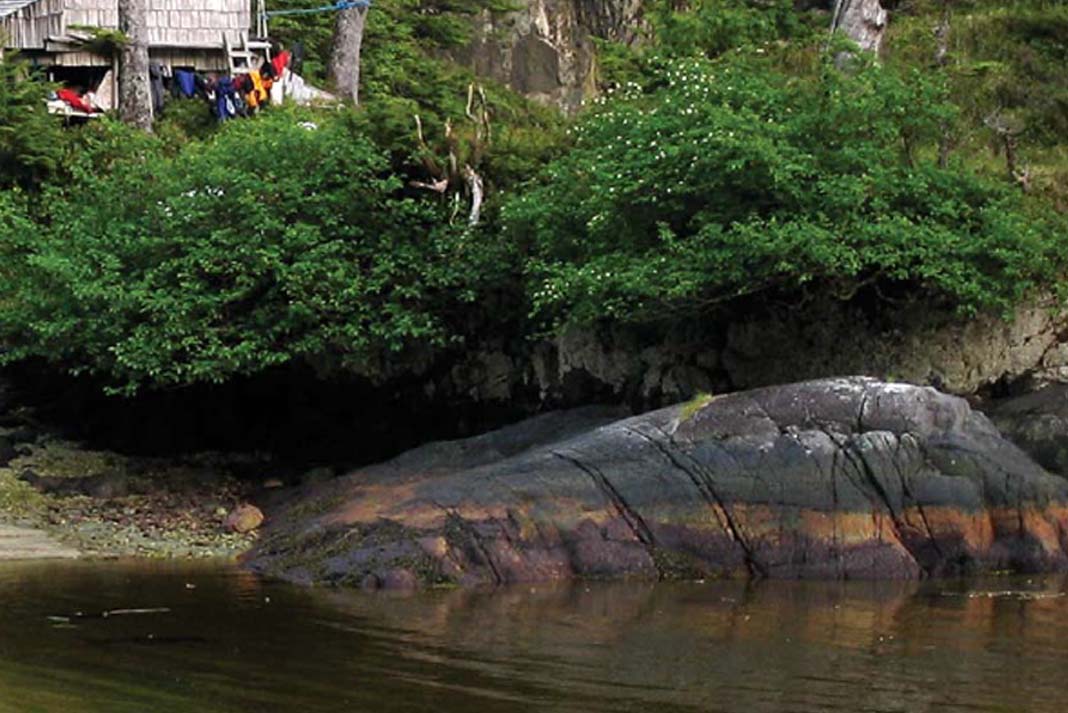
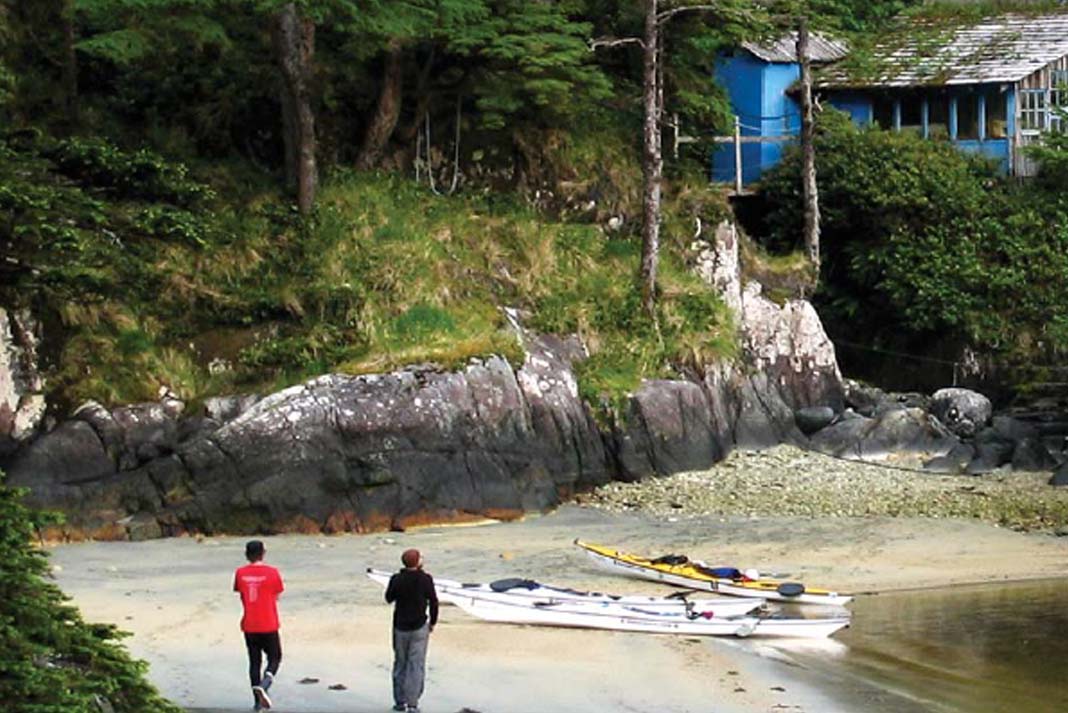
A narrow channel brought us into a placid lagoon and our jaws dropped. Encircled by perfect powder sand and protected by an amphitheatre of rock, it was like we’d entered Fantasy Island.
I half expected a flock of bronzed women in hula skirts to run down to the beach, greet us with hugs and put leis around our necks. At any moment Ricardo Montalban would appear in his white suit to welcome us while diminutive Tattoo would cry out, “THE KAYAKS! THE KAYAKS!”
The Careys were Americans who sought out a life away from the hustle and bustle of California. After years of searching, they found Puffin Cove. Their cabin is still there, fully intact after 40 years, perched up on a bluff in the corner of the lagoon.
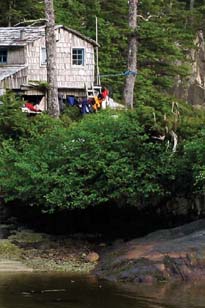
Incurable beachcombers, they accumulated piles of fish floats, buoys, glass balls and other flotsam and jetsam that remain stashed around the foundation. We entered through a trap door via stairs underneath the 12-foot-by-12-foot, greying cedar structure. For all we could tell, Neil and Betty might as well have stepped out a few minutes earlier. Seashells were displayed neatly on the left wall, rows of books and Reader’s Digests lined a ring of shelves. A little wood stove sat in the corner across from the kitchen table, a double mattress and a kid’s bed. Faded bottles of bug repellent, sewing kits, fishing hooks and other bric-a-brac sat around waiting to be used.
Nothing post-dated 1987, the date the Careys’ lease ran out and Parks Canada took over the land to make it part of Gwaii Haanas National Park. For over two decades, the Careys fished, foraged and explored a forgotten coastline, pioneers in every sense of the word.
A logbook indicated we were only the 14th party to visit there in five years. Though we were in one of the world’s great parks, the committing nature of the outer coast deters most kayakers from exploring beyond the sheltered archipelago on the eastern shore of Moresby.
Photo: Keith Klapstein
The Careys’ haven is one of the few nooks along the West Coast where there wasn’t once a Haida village. This is most likely because the whole lagoon dries out at low tide, making for poor water access for natives going on expeditions in 100-foot-long cedar canoes. At the height of their civilization, the Haida numbered 20,000 but dwindled to as low as 600 by the mid-20th century, victims of a smallpox epidemic introduced by European traders.
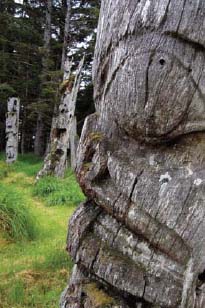
Weathered totems and remnant longhouses remain as the only evidence of their millenia-long inhabitation of a shoreline now patrolled only by black bear and whale.
Even though they weren’t physically visible to us on the outer part of the archipelago, we could feel the spirit of the original people flow strongly through every rock, tree and living being on Haida Gwaii, which means, literally, “Haida Homeland.”
A fitting place to linger before journey’s end
On day 18, we crossed paths with a “super pod” of over a hundred transient orca, their man-sized dorsal fins dropping and rising on all sides of us. Like an ancient tribal greeting party, they came out from a bay in front of the abandoned village of Tian, where archaic totems carved with clamshells and stone still stand.
We bobbed breathlessly amid the procession, staring in wild awe as the creatures disappeared ephemerally into the navy horizon.
The conditions outside Puffin Cove were good for paddling the next day but we decided to linger. With most of the difficulty behind us, we wanted to savour the remaining time we had in that magical land. Lingcod and rockfish practically begged us to throw our lines out, there was endless reading to be done, and we soberly realised we were only a couple of weeks from the end of our journey.
I contemplated what a month of paddling had taught me, how emotions on the outer coast swing between extremes that lead to the purest form of euphoria. One minute you’re paddling for dear life, and the next you find yourself relaxed in a secluded nirvana, your mind bathed in endorphins.
That afternoon, Todd grinned as he served me up a fillet on the beach, fried over fire in one of Betty Carey’s old pans. Keith slowly chewed the white, flaky flesh, gazing quietly out at the breadth of the North Pacific.
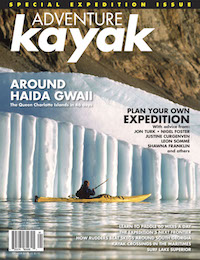
This article originally appeared in Adventure Kayak’s Spring 2006 issue. Subscribe to Paddling Magazine and get 25 years of digital magazine archives including our legacy titles: Rapid, Adventure Kayak and Canoeroots.


 This article first appeared in the Early Summer 2006 issue of Rapid Magazine. For more great content, subscribe to Rapid’s print and digital editions here.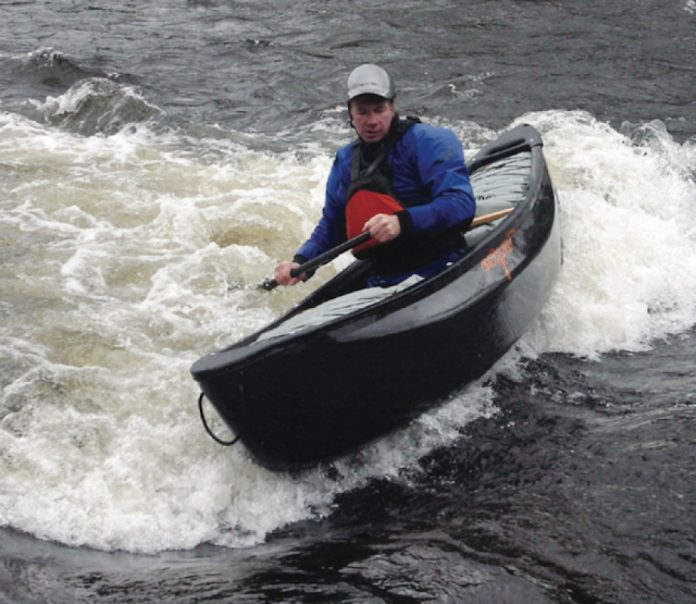
 1. As you cross the foam pile, initiate an onside turn by applying a braking or ruddering stroke just behind your hip. This will get you into a side surf before your bow hits the green water coming into the hole. The green water hitting the upstream edge of your boat will try to flip you so you should have a slight downstream tilt. Side surf until you feel comfortable in the hole. Keep your strokes close to your body with an upright, balanced posture.
 This article first appeared in the Spring 2006 issue of Rapid Magazine. For more great content, subscribe to Rapid’s print and digital editions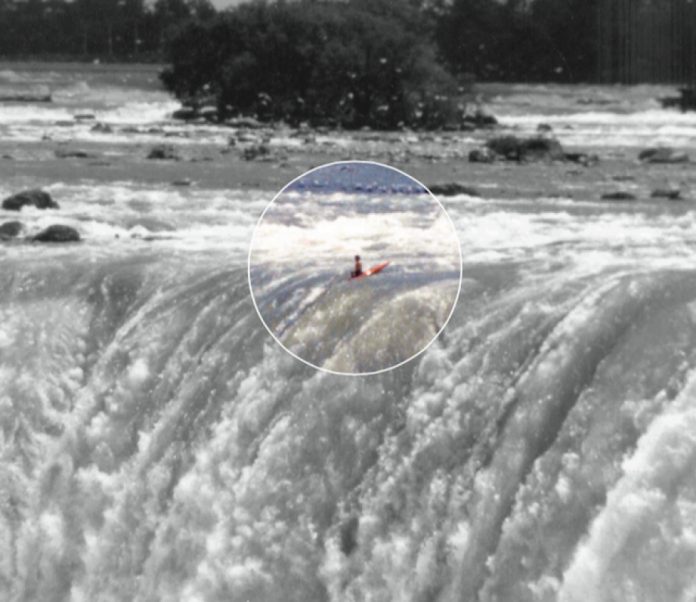
 This article was first published in the Spring 2006 issue of Adventure Kayak Magazine and was republished in the 2023 Paddling Trip Guide.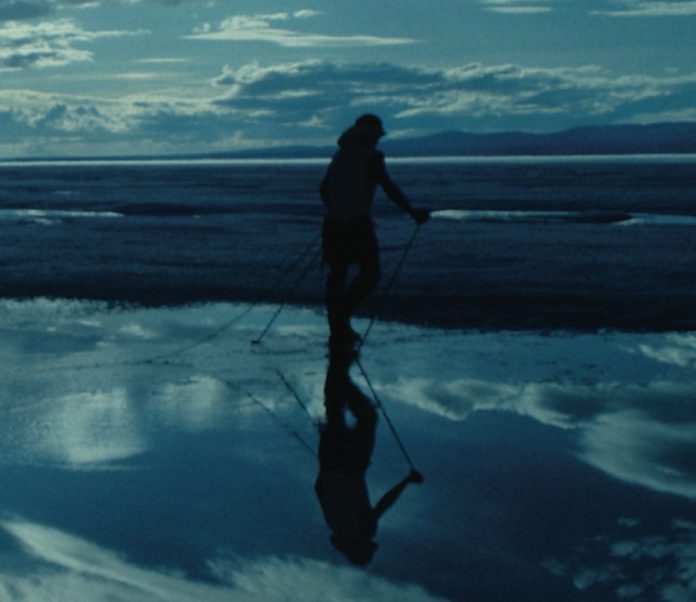
 This article first appeared in the Spring 2006 issue of Adventure Kayak Magazine. For more great content, subscribe to Adventure Kayak’s print and digital editions