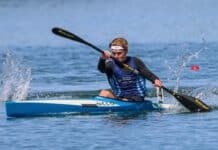
Athlete Arseni Mashko moved to the United States at 16 on an athletic scholarship and just one year later won the U.S. Sprint & Paracanoe Team Trials. Today, the Belarusian athlete competes against senior athletes and delivers results on par with world championship finalists.
In this interview, he speaks about how the American training system differs from international ones, how elite sport intersects with data analytics, and how he manages to compete against the world’s top paddlers.
Kayaking is considered one of the fastest and most physically demanding water sports. How did you come to it, and when did you realize you were ready to pursue it professionally?
AM: I started kayaking at 10, when I was still living in Belarus. At first, it was just a regular youth club, but training quickly began to take up more and more of my life. At 14, I was accepted into the Minsk Olympic Reserve School, a professional environment for promising juniors, where training takes place at a higher level of intensity and responsibility. Later, I was selected for the Belarusian Youth National Team. I earned my spot at age 16.
During that period, I was already competing consistently at national events and selection races, regularly taking part in national and interregional tournaments, including the Olympic Days of Youth, where I earned multiple medals. It became clear that this was no longer just a hobby but a genuine professional path that demanded full commitment.
In kayaking, so much depends on the consistency of the training process: it’s not only about building strength and endurance, you also have to work constantly on technique, refining every movement until it’s as close to perfect as possible. This is especially true for athletes like me who specialize in the sprint, the 200-meter distance: a race lasts roughly 35 to 39 seconds, and even half a second can be the difference between first place and last in a final.
In Belarus, the climate makes it impossible to train on the water year-round: in winter, most preparation shifts to the gym, cross-country skiing, running, and general physical conditioning. In California, everything is different—you can paddle on the water all year. And that directly affects the results athletes can produce.
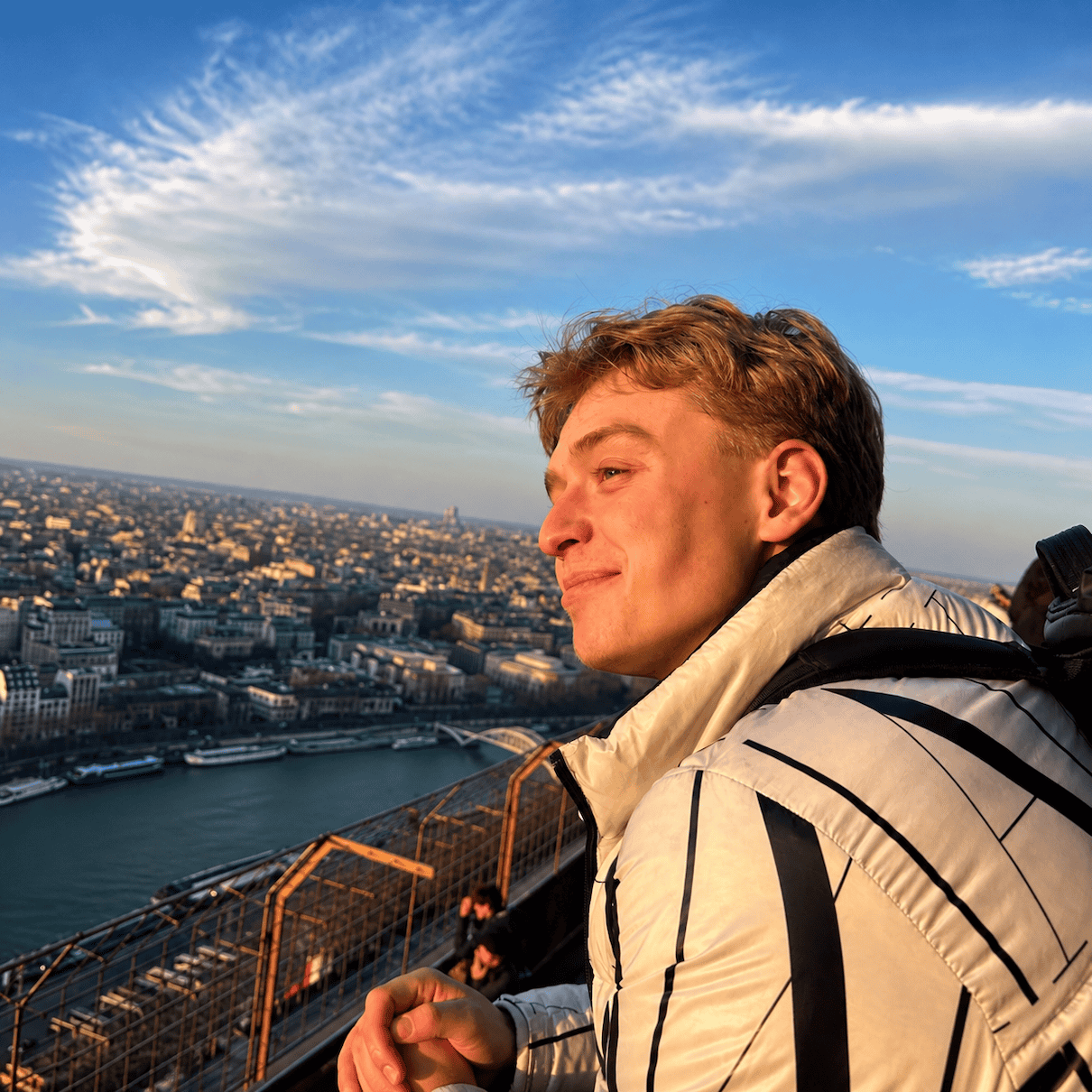
At 16, you were invited to train and compete with the San Diego Canoe & Kayak Team (SDCKT), receiving a substantial athletic scholarship and the opportunity to combine sport with university study. How did you make that happen?
AM: I was actively looking for a way to continue my athletic career while also getting an education in the United States. I sent in my results and training videos, traveled to tryouts and training camps. I’m grateful to have been given the opportunity to continue developing within the American sports system. San Diego is one of the centers of American kayaking. The Olympic Training Center is nearby, where members of the U.S. national team, Olympic champions, and world championship medalists all train. When you’re around athletes of that caliber every single day, it automatically raises your own bar.
How does the American athlete development system differ from the Belarusian one?
AM: The biggest difference is in infrastructure and the sporting environment. In California, and specifically at SDCKT, the conditions for kayaking are nearly ideal: the climate, the equipment, the training facilities, the ability to be on the water year-round. We train twice a day—on the water in the morning, in the gym or doing functional work in the evening. And that schedule continues almost without interruption throughout the year. As a result, progress comes faster.
My coach, Chris Barlow, is a former Olympian and one of the most respected coaches in American kayaking. Joe Harper, the U.S. national team coach, also works alongside us. These are people with vast experience preparing athletes for the world stage.
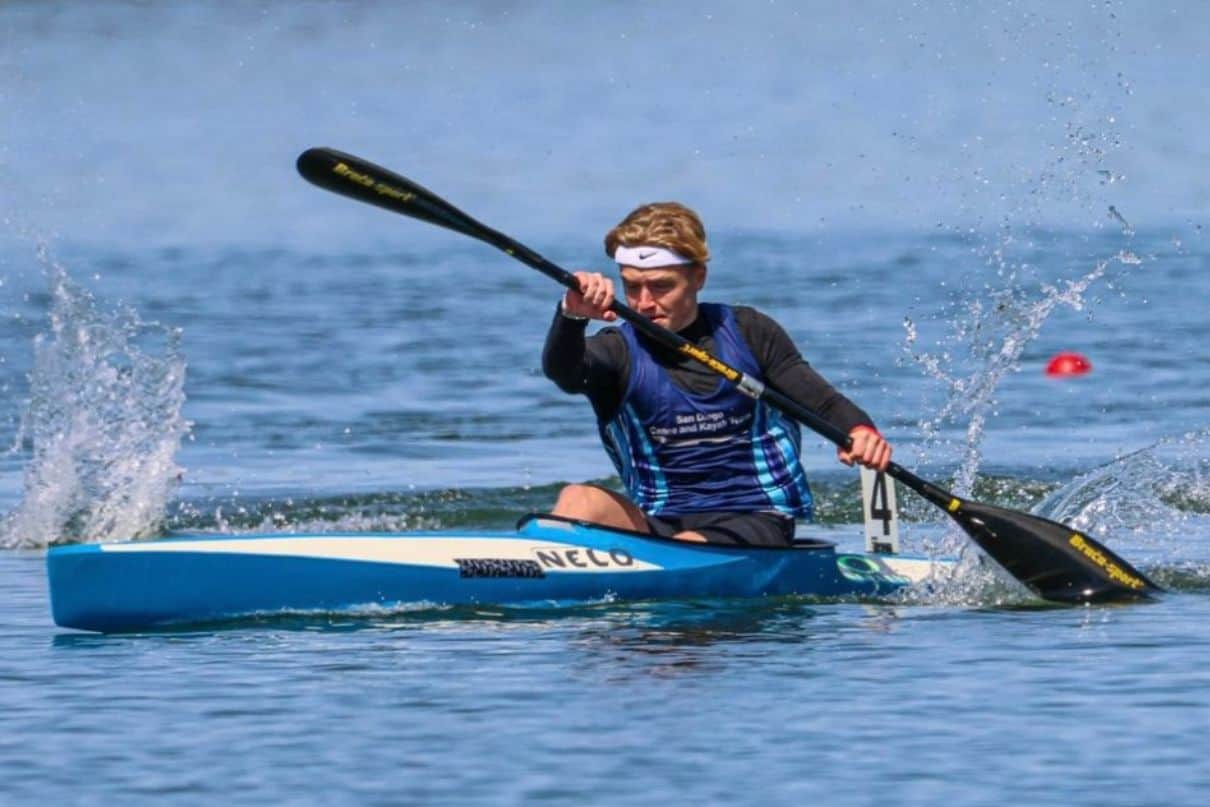
But perhaps the most important factor is the environment. In Belarus, I trained mostly among juniors. Here, Olympic champions, world championship medalists, and current U.S. national team members train alongside me on a regular basis—among them Olympic champion Nevin Harrison and other top athletes on the American team.
In addition, European national teams, from Germany, Hungary, the Czech Republic, Portugal, regularly come to California for winter training camps. For many of them, this is their winter base. The result is that you find yourself surrounded by some of the world’s best athletes virtually all year long.
You’re studying Data Science at Point Loma Nazarene University. Does that connect to your work as an athlete?
AM: My studies are closely tied to what I do as an athlete. I’m specifically interested in sports analytics. Elite sport today is built to a significant degree on numbers: training loads, speed, recovery, technique analysis, performance trends over time. I’m interested in approaching my preparation not just intuitively, but through the lens of data.
Technique is enormously important in kayaking, especially on the 200-meter distance, where the race is very short and explosive. And when you’re able to analyze data, track changes in your metrics, and compare training cycles, it helps you approach your development in a far more deliberate way.