I have tendonitis. My brother has plantar fasciitis. My 97-year-old dad has endocarditis. Here’s what I know: ailments ending in ‘itis’ are not good.
Get-there-itis is no exception. Known formally by psychologists as plan continuation bias, it’s a cognitive trap widely studied in aviation—pilots and kayakers discuss it because it contributes to accidents. Folks generally don’t even know when they have it.
The perils of plan continuation bias
Get-there-itis happens when our original goal blinds us to new information, making us ignore better choices as they arise. It manifests as an overpowering drive to complete our original plan of action, even when it becomes clear a new and alternate course of action would be safer or smarter. A particularly nasty symptom of plan continuation bias is it intensifies the closer we get to our goal.
Here’s a common scenario: despite deteriorating conditions—building headwinds, increased swell and mounting fatigue—we continue for hours, struggling through the last desperate push to our destination. After all, we came so far, worked so hard and we’re so close. Of course, if we turned around and went with the swell and wind instead of fighting it, we could quickly retrace our steps and return to the sheltered bay we started from within 30 minutes. But we seldom do. Instead, the farther we get into our planned route, the more committed we become.

Or how about when we’re leaving a protected harbor or bay? Only once we’re in open water might we realize the wind and waves are much more significant than we’d thought. Do we reconsider? Do we turn around? Or do we stick to the plan?
Do we attempt the unanticipated surf landing on a steep beach because it was our target destination? I mean, we can see the take-out! Or do we explore more sheltered alternatives?
Sufferers of get-there-itis are susceptible to doggedly making terrible decisions over and over again. But really, it’s not even a decision. It’s more like the omission of reasoned decision-making. We forfeit consideration, operating instead in the mental vacuum of autopilot. When challenged, we just buckle down, blindly struggling to complete the task. It’s our default setting for success.
Plan continuation bias doesn’t just mean suffering through an exhausting slog; it could potentially kill you. It’s been implicated in numerous fatal paddling and aviation accidents.
Get-there-itis isn’t restricted to on-water decision-making either. Many paddlers have chosen to launch into bad conditions based on schedules alone. It starts with assertions like: “I can’t be back late,” or simply the all-encompassing and damning: “We stick to the plan!” (often shouted by some idiot in the teeth of a gale—yes, I’ve been that guy).
Plan continuation bias doesn’t solely manifest as a life-and-death struggle. That’s its deadly form, but get-there-itis can also be a non-life-threatening chronic condition: continuing to slog away at a given route or activity when no one is having fun, just because it’s part of the plan.
“We forfeit consideration, operating instead in the mental vacuum of autopilot.”
Toxic masculinity and dumb attitudes espousing tropes like “No pain, no gain,” and “Winners never quit and quitters never win” are contributing factors. Of course, “Those that never win and never quit are idiots” is also a pithy saying. I favor the adage: “When the going gets tough, the tough get thoughtful.”
That’s the key—get thoughtful. Explore plans B and C before departing, and discuss these alternatives with the group. Consider radical options like abandoning your original plan altogether. Quit sometimes. Fall off the route. Change your mind and your goals. Make flexibility a habit. Encourage it in your paddling buddies. Be receptive to it. We often have more options than we know.
Plan carefully. Then question your plan—and your commitment to it.
If we inoculate ourselves with self-awareness and carefully considered, detailed contingency plans, we are better equipped to avoid plan continuation bias. After all, sticking to the plan is often overrated anyway. Sometimes the smartest thing to do is call it quits.
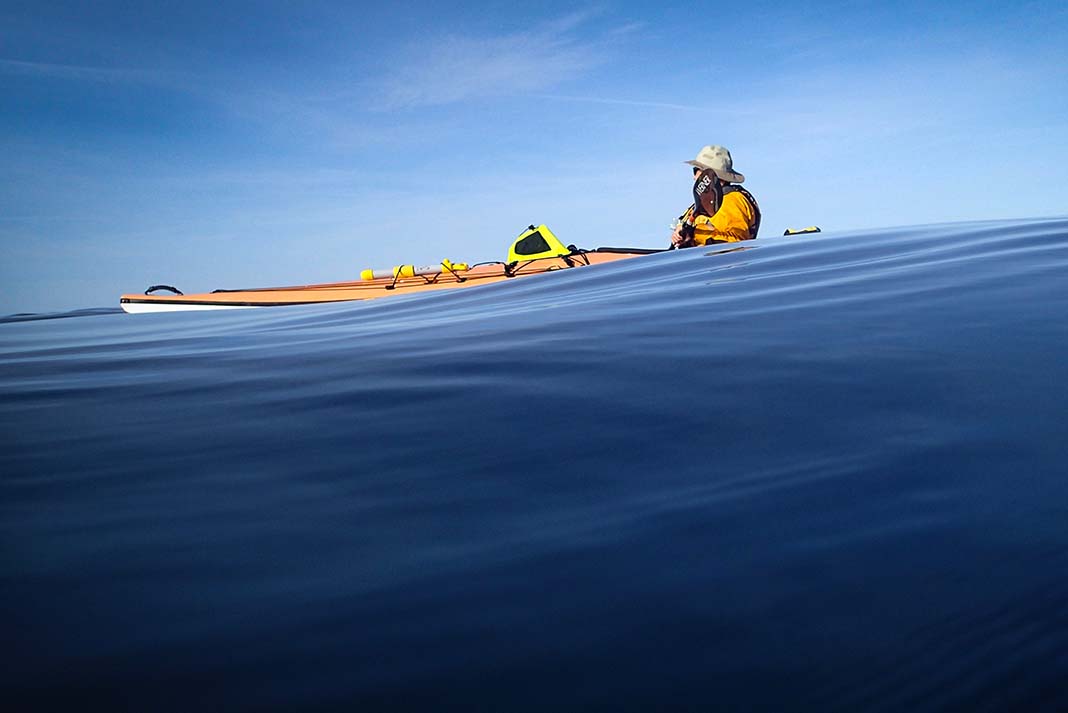
Alex Matthews has been a contributor to Paddling Magazine for more than 20 years, and is the author of multiple books about sea kayaking. He lives in Victoria, British Columbia.
 This article was published in Issue 74 of Paddling Magazine.
 World’s best fallback plan. | Feature photo: Brendan Kowtecky