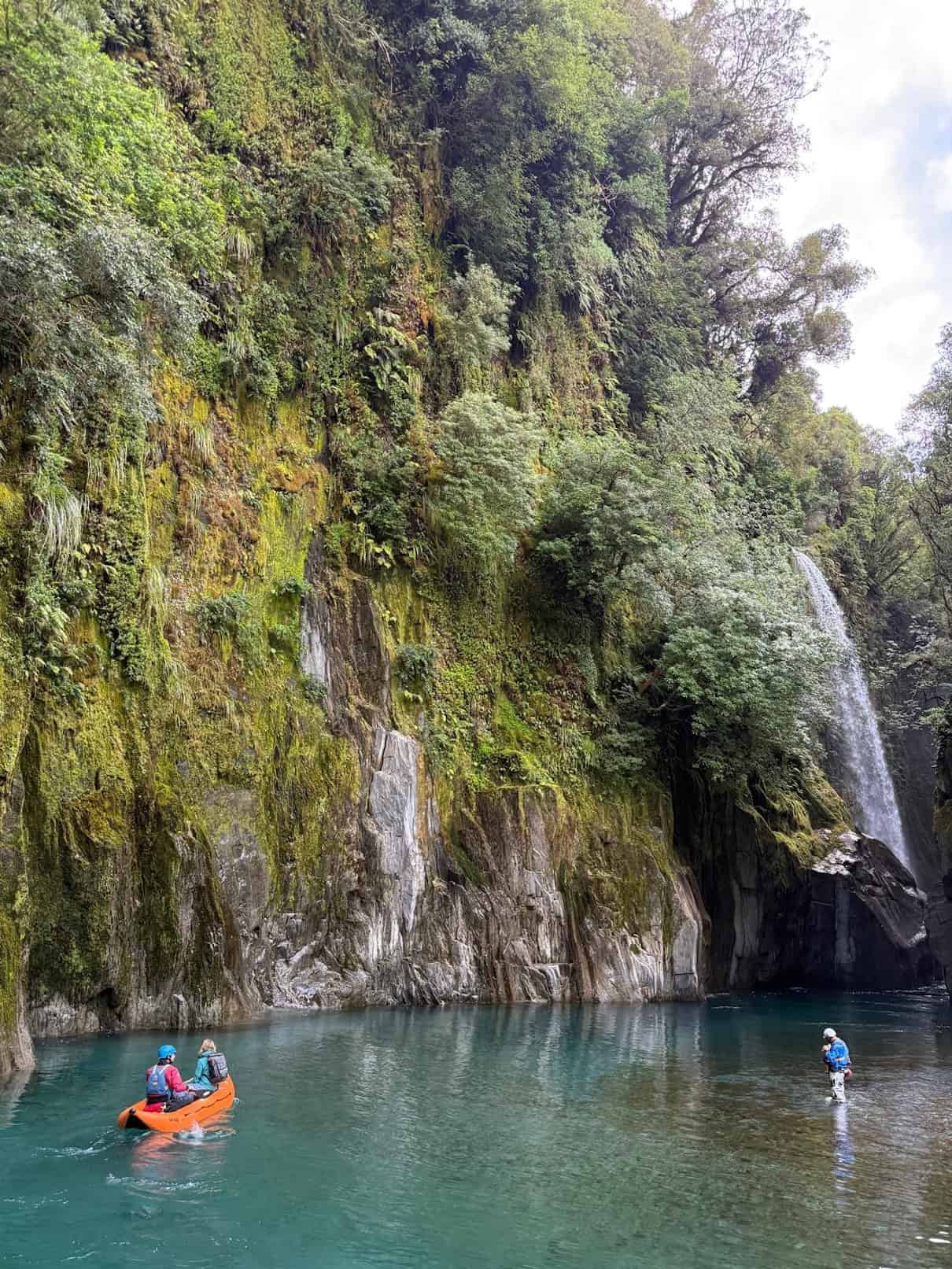
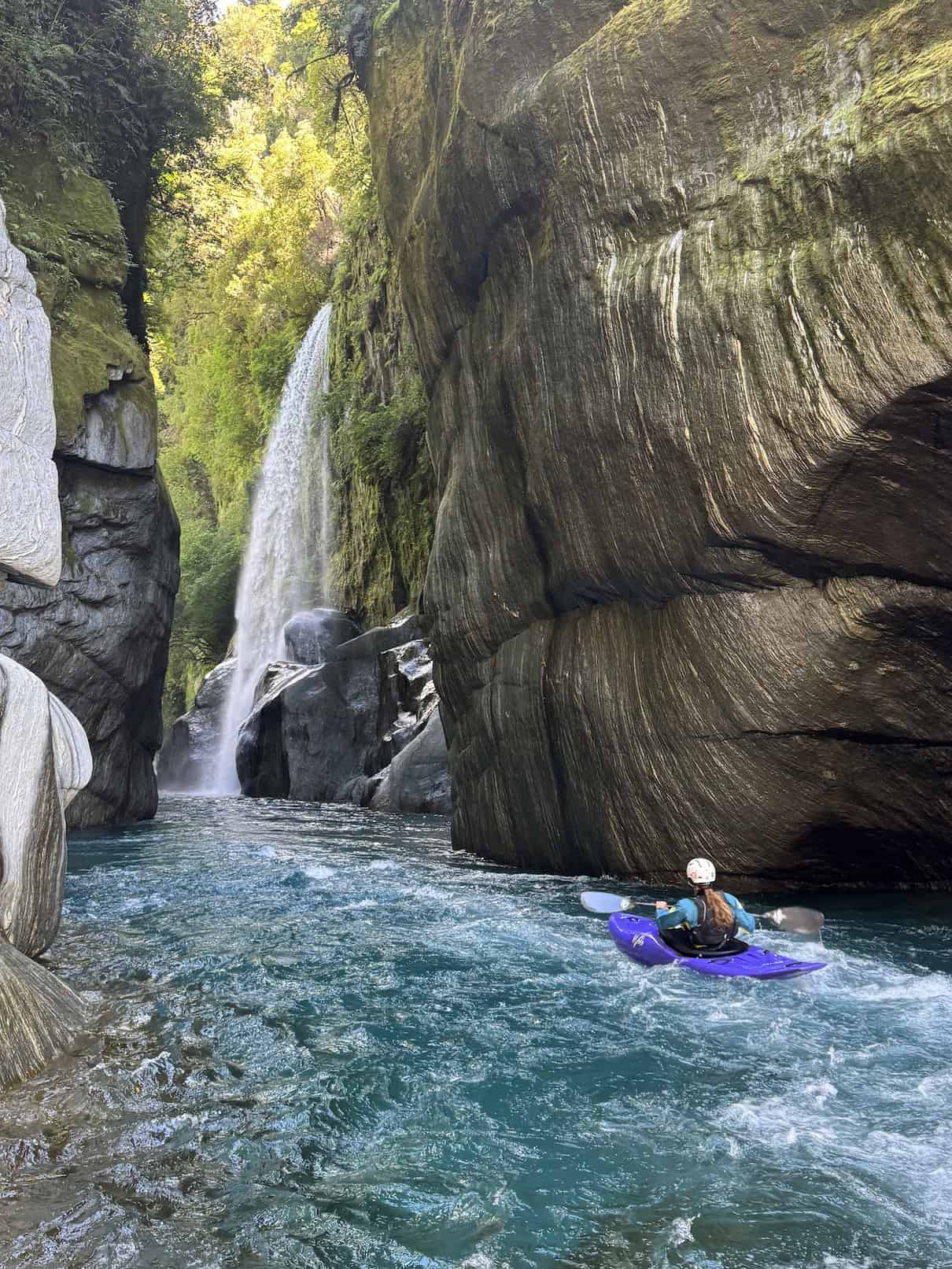
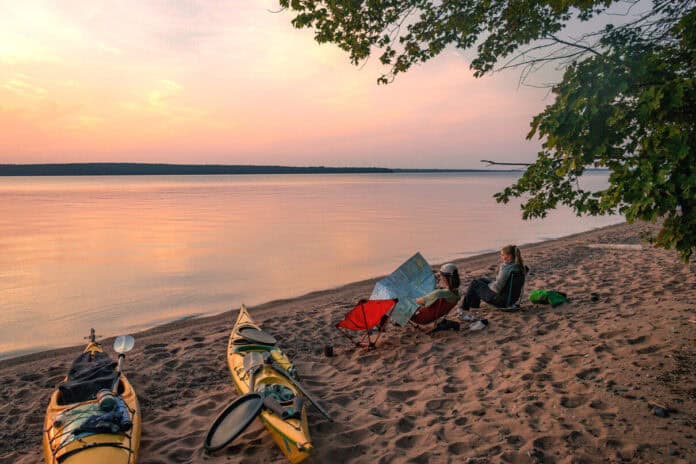
A journey of a thousand miles begins with a single step—or, in this case, a single paddle stroke. Niki Choo and Jared Gentz took the first paddle stroke of their 1,000-mile journey on the Pacific Ocean near Haines, Alaska. Three months later, they dipped their paddles in the Arctic Ocean and pulled their canoe ashore in Tuktoyaktuk, Northwest Territories. Along the way they were met with logjams, upstream travel, a two-day portage, stormy weather, and more challenges that tested their relationship and themselves, and at many points had them wondering whether they’d complete their mission.
The story of this incredible feat is told in the film 1,000 Miles to Tuk, directed by Whitney Hassett, which is touring in the 2026 Paddling Film Festival. The Paddling Film Festival review panel selected the film in the fall of 2025, and were impressed by the couple’s tenacity, honesty and skillfulness in threading together waterways that accomplished their goal of traveling from the Pacific to the Arctic Ocean—so much so that the panel awarded the film Best Canoeing Film.
In February 2026, Niki Choo was killed in an avalanche while backcountry ski guiding in California’s Sierra Nevada. She was 42. The tragedy turns a remarkable story into a tribute to Choo’s adventurous spirit and love for wild places. The Paddling Film Festival extends condolences to her family and loved ones.
In hindsight, the conversations around measuring risk, which is a major theme in the film, feel especially poignant. Risk was something Choo and Gentz thought about constantly. Their main fear heading into the trip was something happening to the other.
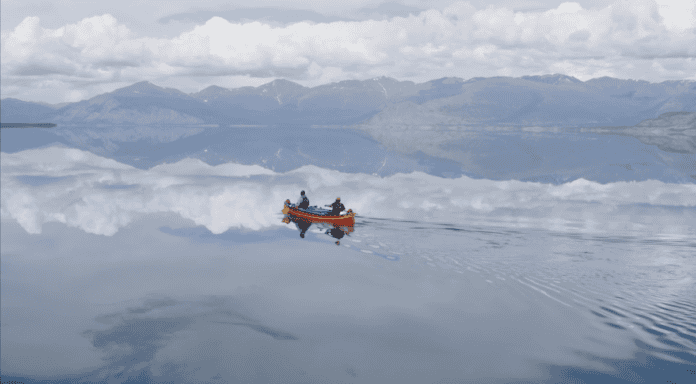
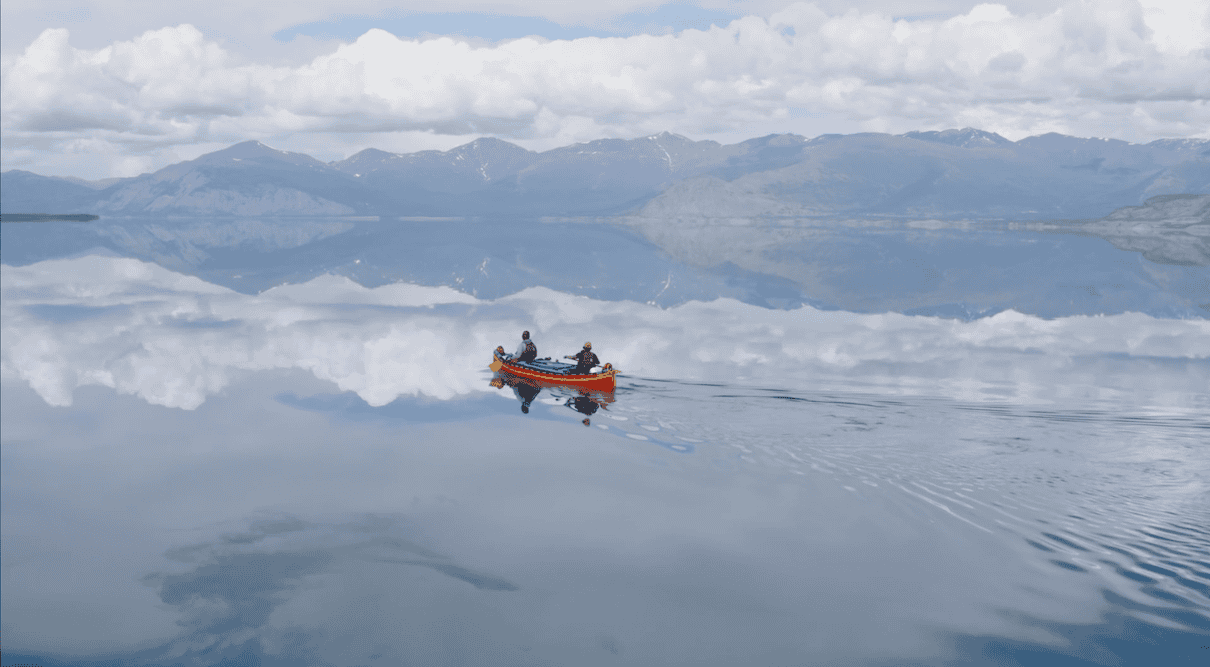
The pair lucked out with glass-like conditions when crossing Lake Kluane. | Feature photo: Courtesy of 1,000 Miles to Tuk
“I worry about something happening to Niki and having to manage that on my own if she were sick or injured,” says Gentz in the film.
Choo was a highly accomplished adventurer, dabbling in everything from ski touring and climbing to mountain biking and whitewater paddling. She began whitewater kayaking at age 14, on the Ottawa River in Canada.
“Whitewater has a different smell and being out there with the trees and the birds, the water just drew me in like nothing else I had done before,” she told PackitGourmet in an interview. “I had loved canoe tripping at summer camp and being on the Ottawa River where I learned most of the whitewater skills reminded me of tripping… and I think during those first few summers guiding is when I began to think of doing a trip like this.”
Jared Gentz (left) and Niki Choo (right). | Photo: Courtesy of 1,000 Miles to Tuk
But Gentz was the first person she’d met who she could envision herself doing a big trip with. Before meeting Choo, he’d never done any whitewater paddling.
Planning for the trip took two years. The trip began by paddling on the Pacific Ocean and up the Chilkat River to Haines, Alaska. They originally planned to ski from Haines to Kluane Lake, Yukon, where they’d begin paddling again. However a delayed start meant there wasn’t enough snow, so they pivoted to cycling the 200 miles.
“I know you have all the grit in the world to do this, but be cautious, right?” says Choo’s father in a phone call to Choo in the film. “And then you see it through to the end.”
They were met with challenges almost right away, with high volumes of water pushing into strainers and logjams on the Donjek, and then on the White and Yukon rivers as well.
“I felt like we had to be on our game the entire time,” Choo told Caltopo’s Blog. “Those first few rivers were fast and furious, cold and rainy. Most days we were pulled off the river for a few hours because of thunder and lightning.”
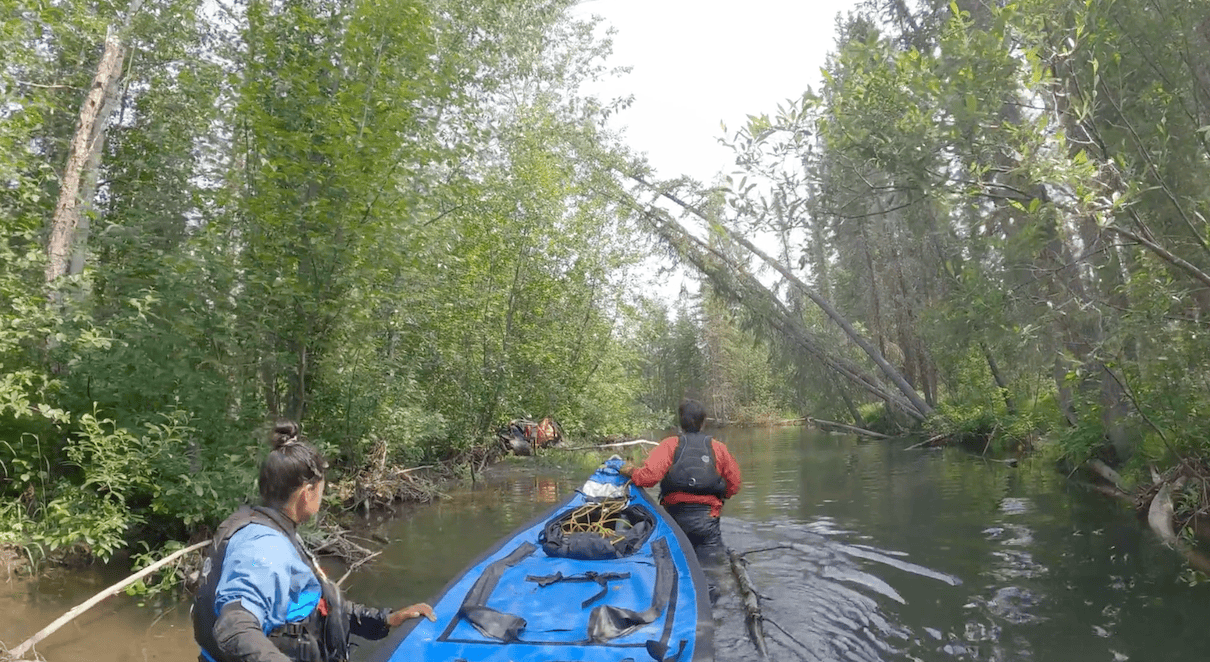
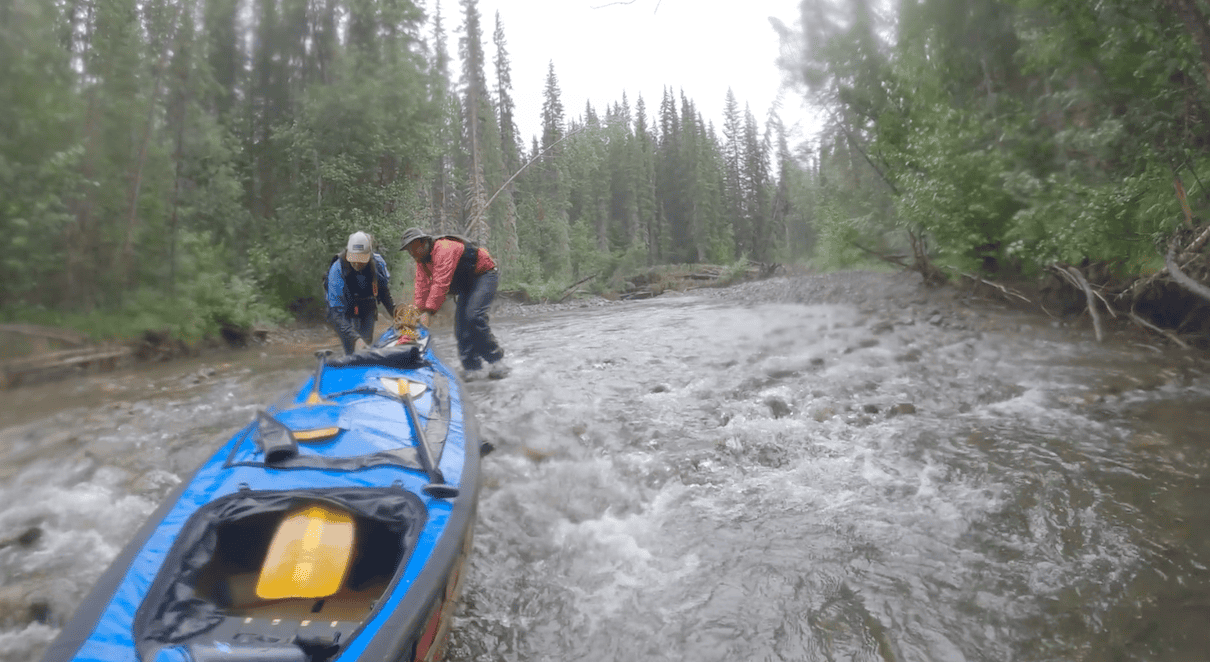
The biggest struggle of the trip happened while upstreaming on the Chandindu River. The river was moving faster than they expected, and they were met with hazards that also made progress slow. Choo and Gentz grappled for days about whether they should turn around due to the dangers and potential for running out of food. Gentz thought they should turn around.
They were met with many obstacles while traveling up the Chandindu.
Photos: Courtesy of 1,000 Miles to Tuk
“I wanted to keep going,” says Choo in the film. “And we had difficult conversations and argued about it. And then I kind of realized, if he’s really not doing well, it puts us both at risk.”
They backtracked and made a new plan to upstream the Blackstone River instead.This proved to be much more feasible and they were able to continue on, reaching Seela Pass and then heading downstream on the Blackstone and onto the Peel and Mackenzie rivers.
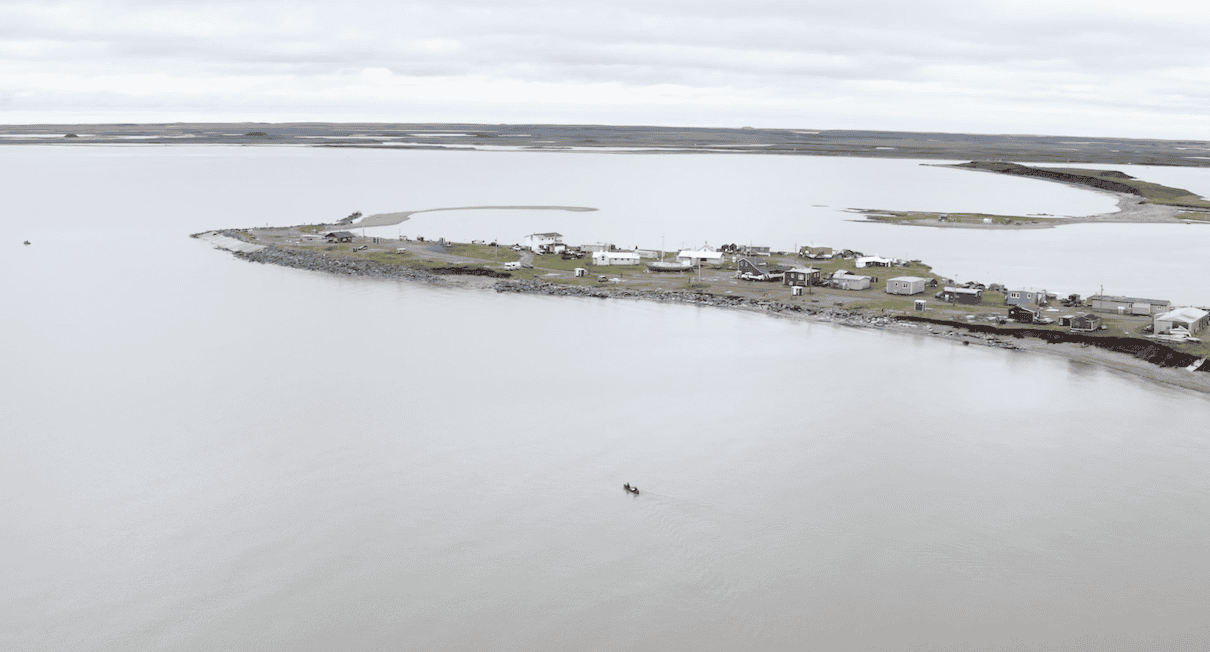
The going still wasn’t easy. They had to line class IV rapids, complete a two-day portage around Aberdeen Canyon and sleep in wet gear after their campsite almost flooded. But after three months of travel, they finally reached Tuktoyaktuk, Northwest Territories, on the Arctic Ocean.
Choo and Gentz had navigated the risks of the journey and come out the other side.
Choo and Gentz arriving in Tuk. | Photo: Courtesy of 1,000 Miles to Tuk
“It’s nice to know that the person you’re with shares a little bit of the same passions you do, even if you want to experience them slightly differently,” says Choo in the film. “I think that will always bind us together. All the things that build good relationships are a little bit amplified now in terms of the trust that we have with each other, the humor, the playfulness, the willingness to go through hard things together. All of those things are a little bit more full.”
Those who watch the film are sure to be inspired by the determination of Choo and Gentz, and will be touched by the way in which it acts as a fitting tribute to Choo’s adventurous approach to life and its challenges.
Just across the Ottawa River lies a sprawling labyrinth of deep bays, wild islands, hidden passages, interconnected lakes and spectacular whitewater. Scenic and unspoiled, Québec’s Kipawa region in Abitibi-Témiscamingue offers something for every level of paddling adventure. Explore the peaceful island archipelagos of Lake Kipawa for a relaxing weekend of canoe camping and fishing, or venture deeper into wilderness waterways for a descent of the rugged Kipawa River.
The name Kipawa comes from an Algonquian word meaning “at the narrows beyond which more water opens out,” describing the countless closed-off channels that form the many arms, reaches and bays of Lake Kipawa. The watershed drained by the Kipawa River encompasses close to 6,000 square kilometers of mostly untouched forest and small lakes, much of it within Québec’s largest managed outdoor recreation zone, ZEC Kipawa. Both the lake and river are known for exceptional camping, fishing, canoeing and kayaking with Opemican National Park and the welcoming villages of Kipawa and Laniel providing access and services.
Whether you enjoy portage-free paddling, intimate lake-to-lake journeys, or navigating rapids on a thrilling wilderness river, this guide will help you discover the best Kipawa canoe routes.
There are endless opportunities for exploring on sprawling Lake Kipawa. | Featured image: Courtesy Abitibi-Témiscamingue
Where is the Kipawa region?
The Kipawa region is situated within the Abitibi-Témiscamingue region in western Québec, just east of the Ottawa River, Lake Temiskaming and the Ontario border. The gateway towns of Laniel, which serves the northern end of Lake Kipawa, and Kipawa—on the lake’s south end—are less than a five-hour drive from Toronto and just over an hour’s drive from North Bay. Both communities are readily accessible from Highway 101 and are popular destinations for cottaging on area lakes and outdoor adventure opportunities in Opemican National Park, which lies midway between, 25 minutes south of Laniel and 30 minutes north of Kipawa.
The wider Abitibi-Temiscamingue area is known for its incredible outdoor adventure opportunities, from hiking and paddling to skiing and snowshoeing.
Where to canoe trip
Lake Kipawa canoe camping
With deep, clear waters covering over 300 square kilometers of rocky Canadian Shield and mature red and white pine forest, Lake Kipawa is a paddler’s paradise comparable to the iconic Ontario canoe country of Lake Temagami, which lies less than 70 kilometers west as the crow flies. Both lakes are roughly 50 kilometers long with sprawling, irregular shapes concealing quiet bays and forgotten islands splintering off in all directions.
Nearly 50 percent larger than its famed neighbor, Lake Kipawa boasts over 1,300 kilometers of shoreline with minimal boat traffic, fishing lodges or cottages interrupting the wilderness. Countless islands, passages and breathtaking cliffs give the impression of interconnected rivers and narrow lakes. Red pine giants, some over three centuries old, line the lake in several places and sugar maples create a crimson spectacle in autumn. Bald eagles and osprey soar overhead, while the haunting cry of the loon accompanies still mornings and evenings.
Lake Kipawa’s waters reach a maximum depth of 40 meters, with an average depth of 11.5 meters, and remain chilly throughout the summer. The lake and its ancient canoe routes are located on the Anishinaabeg ancestral territory of Hunter’s Point; both are deeply intertwined with the early fur trade era and traditional Algonquin ways of life.
Many of Lake Kipawa’s campsites are on Crown land. | Photo: Hugo Lacroix
Canoe routes
Lake Kipawa canoe routes include portage-free touring and camping on the lake’s maze of arms and islands or portaging into smaller surrounding lakes for a peaceful backcountry experience. With so much water to explore, routes range from easy two- or three-day loops to longer forays of 100 kilometers or more.
Opemican Archipelago Paddling Trail
For a scenic introduction to this vast lake, the Opemican Archipelago Paddling Trail visits deep-water bays, beautiful cliffs, uncrowded beaches and comfortable island campsites within Opemican National Park in Lake Kipawa’s north end. Launch from Laniel Municipal Park (free parking) or the national park’s Baie-Dorval access (recommended, entry fee applies) for this +25-kilometer “lollipop” loop. Three scenic island and sand beach campsites in the Île aux Fraises area can be reserved through Opemican National Park.
Opemican Crescent Paddling Trail
For a longer one-way (or out-and-back) journey, extend the above route into the Opemican Crescent Paddling Trail (33 km). Connecting the national park’s Baie-Dorval and Lac Ravalet access points, canoeists on this route enjoy paddling in the archipelago, nosing through narrow channels stalked by herons and cranes, and wild camping on the open lake before finishing with a tranquil paddle-and-portage journey along several small interior lakes.
Kipawa Archipelago Paddling Trail
More experienced paddlers can choose from two longer routes or link them for a journey of a week or more spanning much of the lake. The Kipawa Archipelago Paddling Trail arcs through the northern part of the lake for 64 kilometers, with just a six-kilometer shuttle ride on a gravel road separating the starting point from your finish in Laniel. Departing from Deux Milles Bay, enjoy remote beaches, secluded campsites and the old-growth pine forests of McKenzie Island.
Dramatic cliff-lined channels offer pulse-quickening jumping rocks and hint at the region’s active tectonic past. Lake Kipawa lies along the Grenville Front, where two sections of Earth’s crust meet, creating spectacular faults and occasional seismic activity like the 2000 Kipawa earthquake. Make a detour into Canal Bay to witness this narrow pass edged by steep granite walls; an opening at the end reveals an idyllic island campsite nestled within the heart of the mighty lake.
Kipawa Southeast Paddling Trail
As its name suggests, the Kipawa Southeast Paddling Trail departs from Chutes-du-Pin-Rouge, where the Upper Kipawa River flows into Lake Kipawa, and meanders for 55 kilometers through the southern part of the lake, finishing in the village of Kipawa. The route squeezes through some of the lake’s most intimate passages, connecting a series of scenic island campsites and beautiful sandy beaches. Free parking is available at both ends, or arrange a shuttle for a one-way trip.
Stay within Opemican National Park for more campsite amenities. | Photo: Christian Leduc
Campsites
Campsites are largely Crown land wild camping (free for Canadian citizens) with a handful of paid canoe campsites reservable through Opemican National Park. Expect basic amenities like a fire ring, cleared tent pads and occasionally a picnic table among the pines at Crown land sites, which are generally unmarked but easy to spot. National park sites feature outhouses and picnic tables and are marked with camping signs.
Reservations
Canoe camping reservations for Opemican National Park cannot be booked online and must be made over the phone by calling Sépaq at 1-800-665-6527, or the park at 819-627-3551. National park campsites are available from mid-June to mid-October.
Outfitters
Contact a local Lake Kipawa outfitter for canoe, kayak, paddleboard and camping equipment rentals. Coop de L’Arriere-Pays (The Backcountry Co-op) in Ville-Marie rents equipment and offers a convenient shuttle service to simplify transportation logistics or relocate your vehicle so it’s waiting for you at the end of a linear trip. Reservations are required.
Located in Temiskaming, Québec, near the south end of the lake, Algonquin Canoe Company maintains and outfits over 500 kilometers of traditional Algonquin canoe routes in the Ottawa River basin. Owned by Wolf Lake First Nation, the outfitter rents canoes, kayaks and camping equipment, offers accommodations and guided tours, and can assist with route planning.
For trips departing from Opemican National Park, Lake Kipawa canoe rental is available at Baie Dorval. Canoe rental includes paddles, PFDs and safety gear. Visit the Sépaq Visitor Centre in Laniel for rental information. Booking in advance is recommended and can be done at the same time as your camping reservation, by phone at 819-627-3551 (June through October).
It doesn’t get more magical than this. | Photo: Christian Leduc
Fishing
Lake Kipawa fishing is regarded as among the best in Canada, famed for trophy walleye, northern pike, lake trout and smallmouth bass. All anglers must carry a valid fishing license and follow local fishing regulations. In addition, canoe campers who wish to fish on the smaller lakes within Opemican National Park must pay a daily right-of-access fee ($22/person/day); book online or call 1-800 665-6527.
You can download the GPS track for each of the four paddling trails outlined above from the Access to Outdoors | Abitibi-Témiscamingue website in GPX (GPS) file formats. Each track includes the paddling route, distances, campsites, portages and notable points of interest. You can also download a printable PDF map set and route guide for the Kipawa Archipelago Paddling Trail.
For supplementary navigation on trip, it’s recommended you purchase the 1:50,000 Canadian national topographic series maps for the region: 31 M/03 Fabre, 31 L/14 Ottertail Creek and 31 L/15 Lac Grindstone. These can be ordered from Maptown or World of Maps.
Safety notes
Keep in mind it’s easy to get disoriented while navigating this immense body of water. Paddlers should carry a detailed Lake Kipawa map, compass and GPS with extra batteries—and feel comfortable using these tools to navigate. Because of the lake’s size, dangerous waves can form in windy conditions. Some route sections run along steep rock walls where chaotic reflection waves can form and no landing is possible. Check the forecast and exercise caution when there’s wind.
Lake Kipawa power boat traffic is generally concentrated within a few kilometers of villages (where you’ll also see the most cottages and Lake Kipawa fishing lodges) and to marked deep-water channels. Watch for boat wakes and stay close to shore when possible.
Find whitewater fun on the Kipawa River. | Photo: Hugo Lacroix
Kipawa River canoe camping
Renowned for its rugged scenery and exciting rapids, whitewater canoe tripping on the Kipawa River rivals popular Ontario rivers like the Spanish, French and Madawaska. Cascading over Precambrian bedrock and dashing beneath towering pines, the Kipawa River flows over 300 kilometers from its headwaters at Lake Dumoine to its precipitous final descent into the Ottawa River.
Along the way, the river meanders through remote forest and lakes, charges over spectacular waterfalls, and vanishes into the vast reservoir of Lake Kipawa, before reemerging for a rowdy, rapid-choked finale.
Most Kipawa River canoe trips take place on the upper section of the river, with the 40-kilometer route from Lac des Loups (Wolf Lake) to Lake Charette offering a perfect, four-day whitewater adventure for intermediate paddlers. The route begins in ZEC Kipawa and travels south, with straightforward road access to both ends and well-developed camping and portages along its length.
A dozen class I-III rapids challenge canoeists; portages at the more technical rapids mean this route is also suitable for more novice moving water paddlers. Camping beside the thundering ledges of Turner Falls is a Kipawa River highlight. On your last day, enjoy the natural sandy Kipawa River swimming beaches at Lake Sairs and search for striking aqua-green gemstones on Amazonite Island.
Rise and shine. | Photo: Christian Leduc
Extend your Upper Kipawa trip
For a longer Upper Kipawa River canoe trip, it’s possible to extend your route two or three days downriver to the town of Kipawa, via the southeastern portion of Lake Kipawa. Paddlers who arrange transport to Lake Dumoine can also paddle the Upper Kipawa from its source.
Lower Kipawa River
Plunging 90 vertical meters down more than 20 rapids from the Laniel Dam at Lake Kipawa to the river’s outlet at Lake Temsikaming, the Lower Kipawa River is a wild and thrilling day run (15 km) for expert whitewater kayakers and open boaters. Rapids range from class II to class V, with portage options at some (but not all!) of the more difficult rapids. There is one mandatory portage at Grande Chute, a breathtaking 30-meter waterfall that was featured on the Canada $10 bill.
Multiple put-in-and take-out options make it possible to plan shorter Lower Kipawa River kayaking runs. This section of the river is located within Opemican National Park, and camping is available nearby at the park’s scenic Kipawa River Campground, perched on a high cliff overlooking Lake Temiskaming. Kipawa River camping reservations are strongly recommended since there are only a handful of rustic walk-in tent campsites and glamping cabins available.
Outfitters
Local outfitter Coop de L’Arriere-Pays offers an all-inclusive, five-day guided Upper Kipawa River canoe trip on the upper section, suitable for intermediate paddlers looking to develop their whitewater skills. Guided trips include all meals, equipment, transportation and a professional French-speaking guide. The outfitter also offers equipment rental and shuttle services for self-guided paddlers. For route planning assistance and equipment rental closer to the Kipawa River put-in, contact Algonquin Canoe Company.
Campsites
Upper Kipawa River camping is largely on Crown land with no reservations required. Between Lac des Loups and the road bridge at Petit Calumet Rapids, the river enters ZEC Kipawa and there is a small fee for camping. Paddlers can register and pay camping fees at one of the ZEC welcome centers, self-check-in stations or using the online reservation service.
Fishing
Kipawa River fishing is popular on both the upper and lower sections of river. If you are fishing within ZEC Kipawa or Opemican National Park, you’ll need to purchase a daily fishing permit. Reserve your national park fishing permit online or by phone at 1-800 665-6527.
Maps
For Upper Kipawa River maps, ZEC Kipawa produces a topographic canoe routes map available from park offices. Alternatively, purchase the 1:50,000 Canadian national topographic series maps for the region: 31 M/01 Lac Ogascanan and 31 L/16 Lac Sairs. These can be ordered from Maptown or World of Maps. You can also download the GPS track for the Upper Kipawa paddling trail from the Access to Outdoors | Abitibi-Témiscamingue website in GPX (GPS) file format.
Get away from the crowds. | Photo: Christian Leduc
With no portaging necessary, Lake Kipawa is also a great destination for sea kayaking. | Photo: Hugo Lacroix
ZEC Kipawa canoe camping
Québec’s largest managed outdoor recreation area, ZEC Kipawa ensures public access to the region’s outstanding canoeing, camping and fishing. Planning a canoe trip in the ZEC is easy: Visitors must register at the welcome centre in Bearn or Temiskaming South upon arrival, or preregister online, and pay user fees to support conservation and maintenance. Reservations for specific campsites aren’t required (or available).
Expect good gravel access roads and well-marked and maintained portage trails. Campsites are marked and offer tent pads, a fire ring and benches. Thunderboxes are located at some sites. Many lakes within the ZEC have road and powerboat access, although traffic is generally light. You’ll see rustic cottages and fishing camps scattered throughout the area.
Looping 96 kilometers through a series of picturesque lakes and small rivers via a dozen easy portages, the five- to eight-day Kipawa Tuk Tuk paddling route is the ZEC’s most popular. The rich history of the Kipawa region is concentrated along this route, beginning with the settlement of Algonquin families at Hunter’s Point more than five millennia ago. Diverse landscapes and numerous marshes provide excellent opportunities to observe wildlife. Accessed from Bearn, the route departs from Hunter’s Point or Lake Ostaboningue and features warm waters, sandy swimming beaches, scenic rapids and a visit to the historic wooden church at Hunter’s Point. Learn more here.
Brousse (Bush) Circuit
For a shorter loop combining the cascading Saseginaga River section of the Tuk Tuk route with an exploration of the park’s more remote lakes, try the four- to five-day Brousse (Bush) Circuit. Accessed from Bearn and departing Lake Ostaboningue, this 58-kilometer route links remote lakes and rapids across 13 easy-to-moderate portages and visits a heron rookery as well as the beautiful falls at North Lake.
Saseginaga River
For those looking for a weekend-long adventure, it’s also possible to arrange a shuttle and paddle the pretty Saseginaga River from Albert Creek to the sandy beaches of Lake Ostaboningue. This 29-kilometer route requires just three short portages, making it ideal for an easy two- to three-day trip. Also available as a guided, all-inclusive three-day getaway from Ville-Marie outfitter, Coop de L’Arriere-Pays.
Cigarette Loop
If you are looking to access ZEC Kipawa from Temiskaming South, the easy Cigarette Loop (31 km, 3 to 4 days) tours through a variety of small lakes and visits the exotic, white-sand beaches of Lake Ogascanane. Depart from Lac des Loups (Wolf Lake) and paddle the loop counterclockwise, finishing with a 3,500-meter portage back to your start.
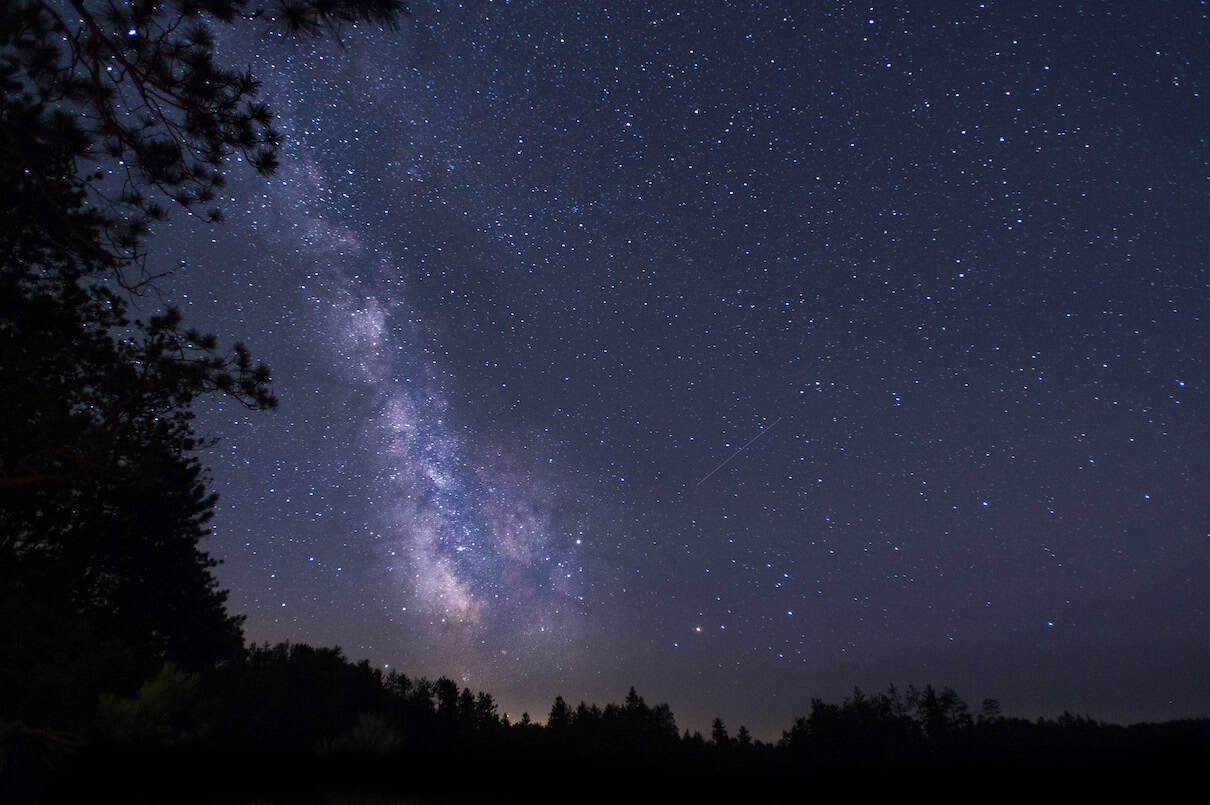
Imagine a sky like this every night of your trip. | Photo: Hugo Lacroix
Outfitters
Outfitters offering canoe rentals and shuttles for ZEC Kipawa include Algonquin Canoe Company in Témiscaming, Quebec, and Coop de L’Arriere-Pays (The Backcountry Co-op) in Ville-Marie.
Maps
ZEC Kipawa produces a topographic Kipawa canoe routes map available from park offices in Bearn and Temsikaming South. You can also download a guide to canoe camping routes from their website.
What is the weather like in Kipawa?
Weather in the Kipawa region is similar to that experienced in northern Ontario parks like Temagami or French River. The best time to plan your Kipawa canoe camping trip is from mid-May to early October. Plan an early season trip in May or June to witness spring wildflowers and take advantage of higher water levels on smaller creeks and rivers. Even better, this is prime time for viewing wildlife like moose, beavers and bald eagles, and you’ll experience very little motorboat or cottage activity with many waterways to yourself (just be prepared for biting bugs).
If you prefer warm waters for enjoying Kipawa’s legendary swimming beaches and jumping rocks, the peak summer months of July and August are your best bet. Late summer is also a great time if you’re looking to avoid blackfly and mosquito season. Alternatively, plan an autumn trip to catch hardwood forests ablaze with fall colours. The cooler days and crisp nights of late September through early October reward with bug-free campsites.
Still dreaming of more exploring? Learn more about the best paddling routes in the Abitibi-Témiscamingue region.
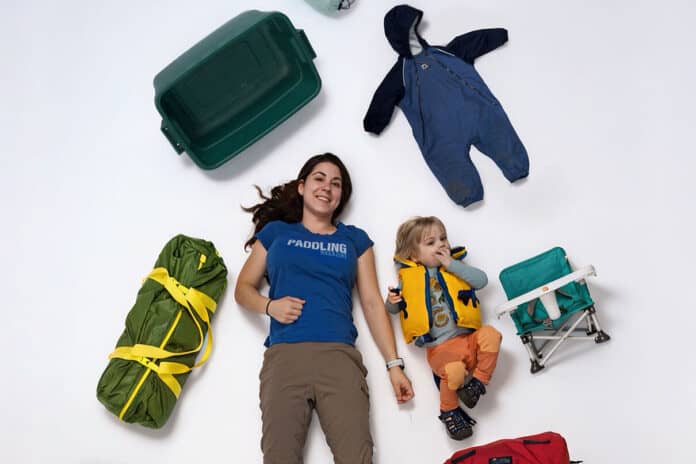
When I started planning my one-year-old son Sebastien’s first few canoe camping trips, I knew we were kissing single-carry portaging goodbye. As we upgraded our tripping kit, I kept a few questions top of mind: what would keep my son safe and comfortable, and make life easier for us as parents? After a summer of trial and error, here’s what earned a permanent spot on our packing list.
What’s in Editor Marissa Trepanier’s kit for canoe camping with a toddler
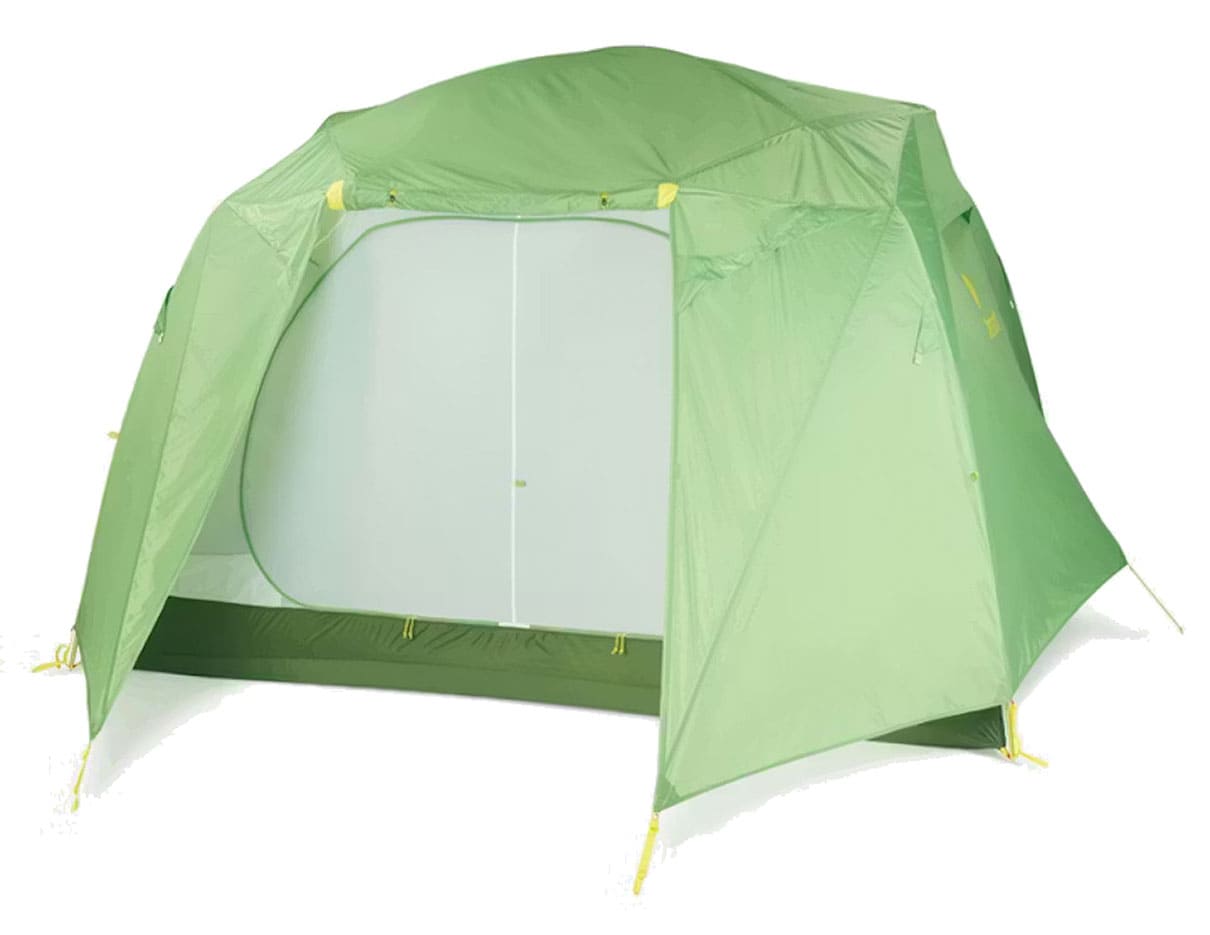
Marmot Limestone 6P
MSRP: $599
The Limestone has large vestibules for storing gear, two doors so we’re not climbing over a sleeping child at 3 a.m., and plenty of headroom to keep from feeling claustrophobic amid everything that needs to be kept in the tent (like: more diapers than you think). At 15 pounds, the Marmot Limestone 6P is one of the lighter and most compact six-person tents out there.
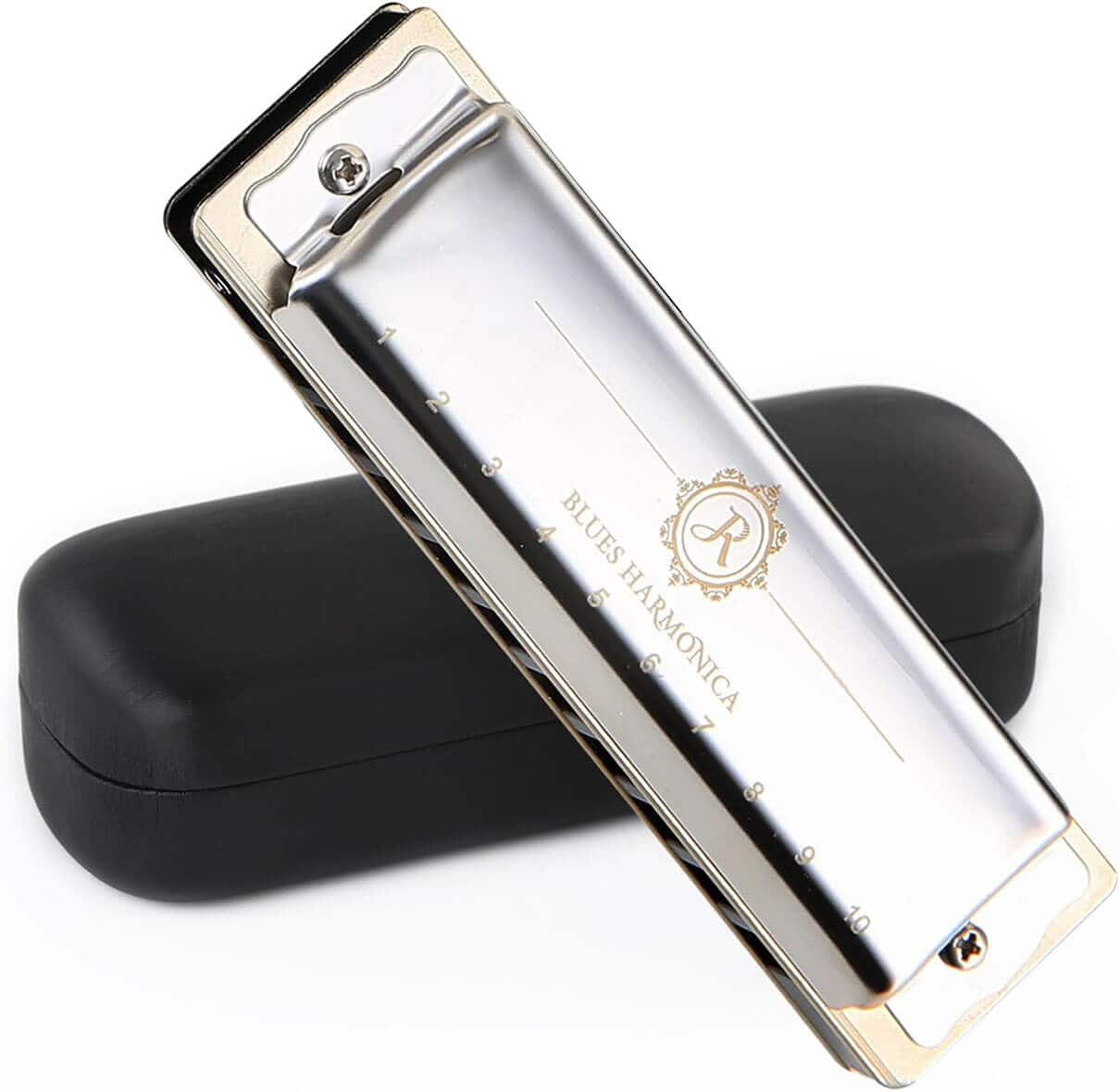
Excitable kids who won’t nap or sit still need something to keep them busy in the canoe. A harmonica provides long-lasting entertainment, not to mention accompaniment for many classic camp songs.
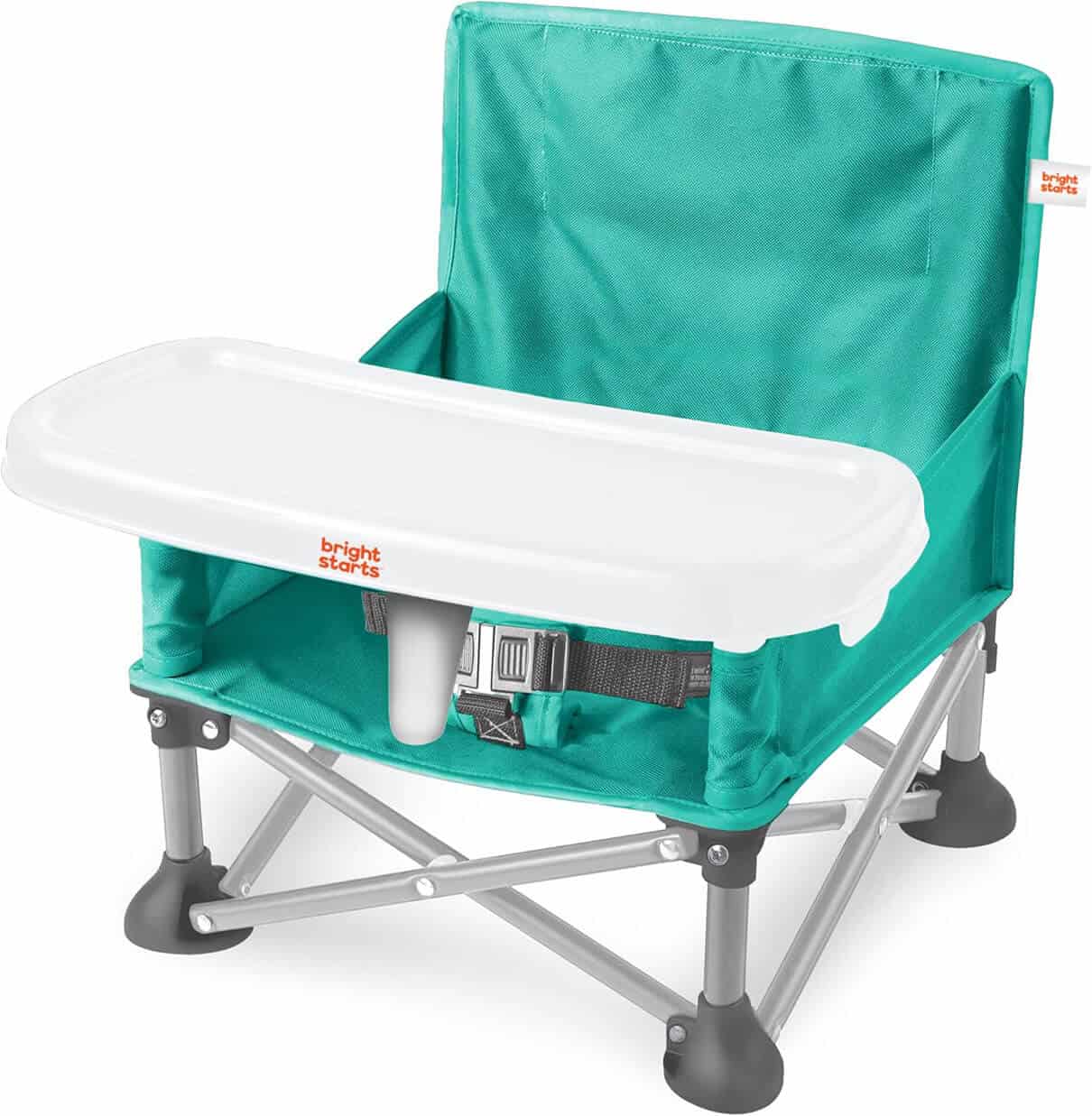
It’s nearly impossible to get Seb to sit still while he’s eating, making this collapsible booster seat a must on camping trips. Walking while eating poses two problems: it increases the risk of choking and makes it difficult to maintain a clean campsite when bits of food are dropped everywhere.
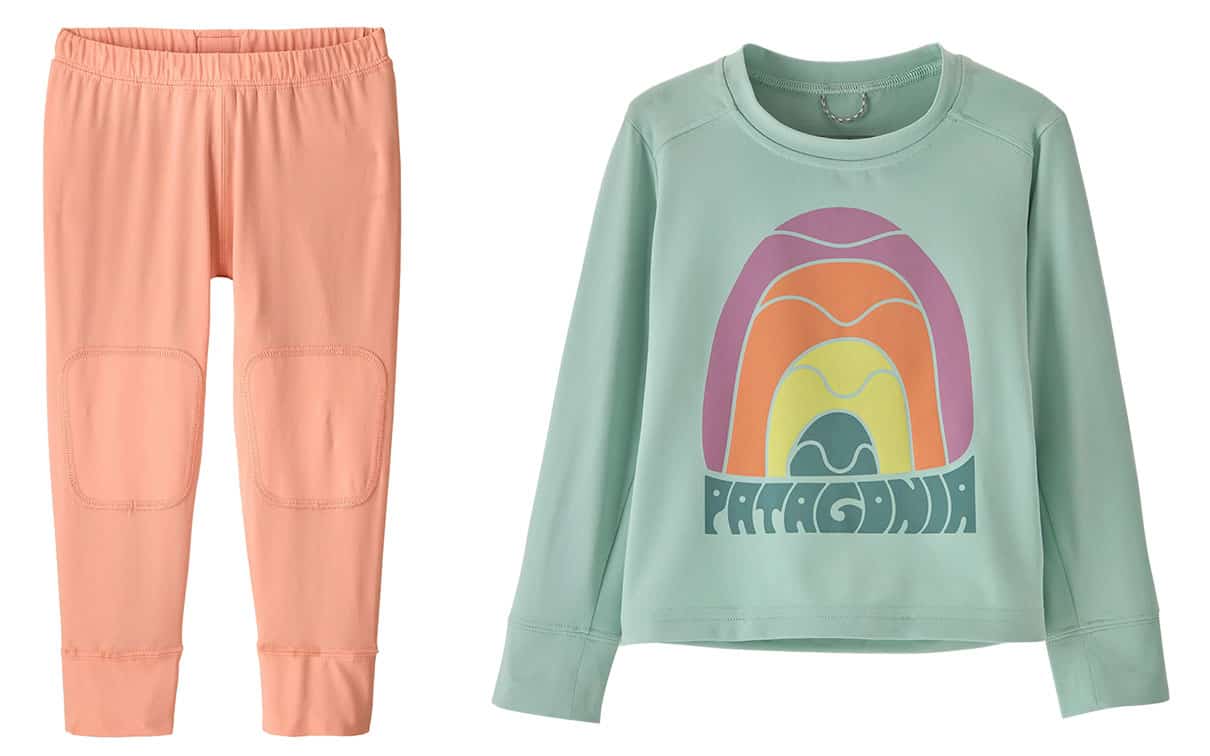
Patagonia Baby Capilene Silkweight Bottoms and Long-Sleeve
MSRP: $39 each
The thought of slathering sunscreen on my son’s arms and legs every couple of hours all day had me searching for long-sleeved UPF-protective clothing. The Baby Capilene Silkweight collection provides breathable sun coverage and stands up to inevitable tumbles.
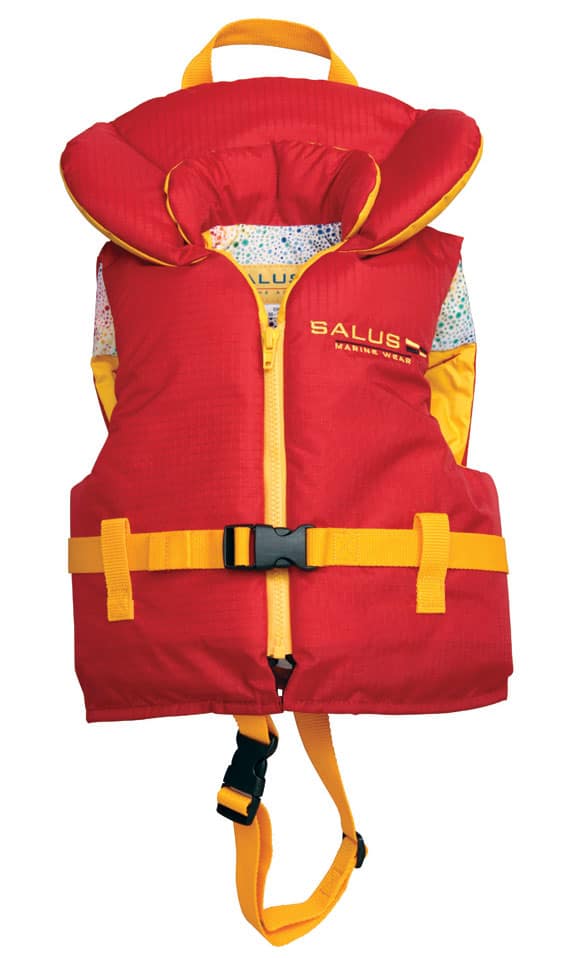
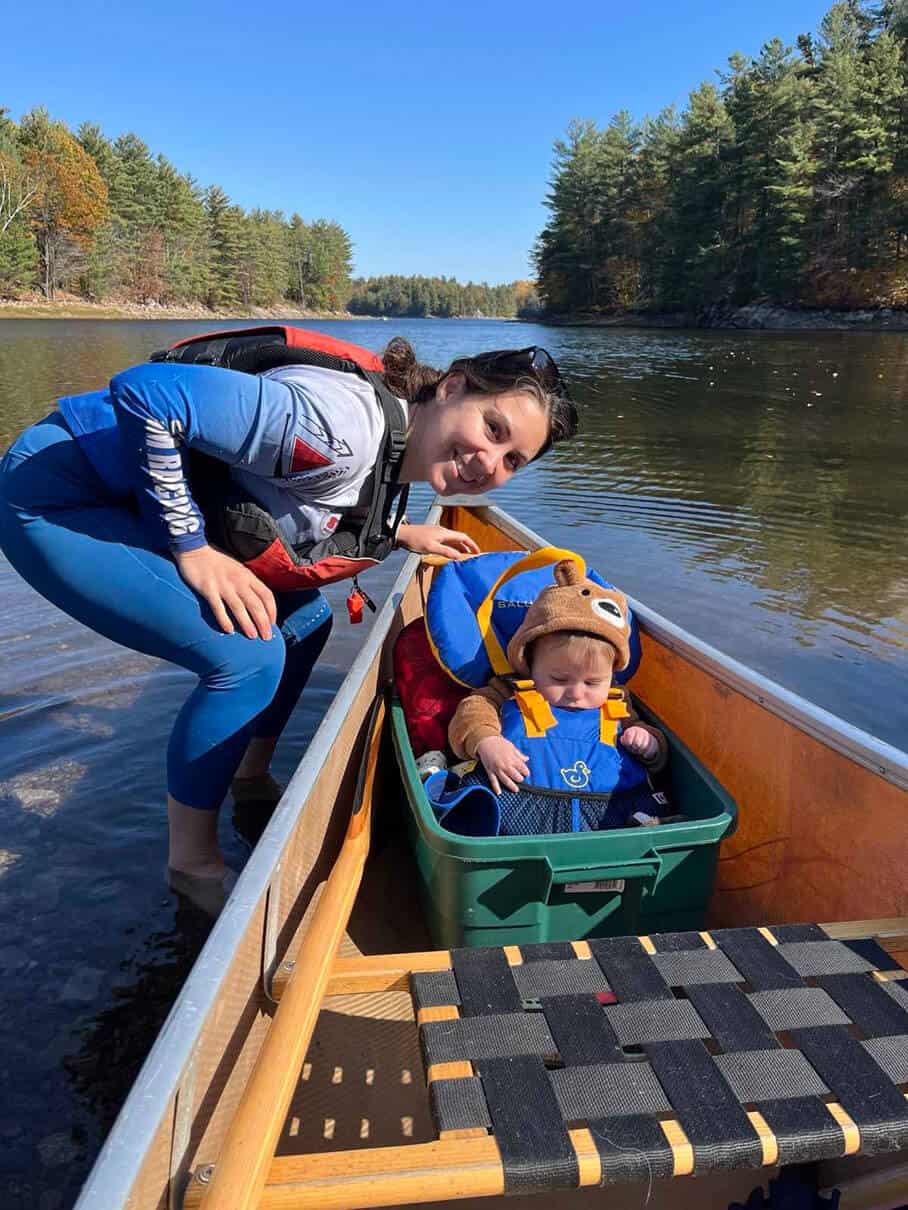
Between paddling and playing near the shore, Seb spends a lot of time wearing his life jacket. So finding a PFD that fit comfortably was non-negotiable. The Salus Nimbus isn’t too tight around Seb’s neck and it doesn’t ride up high when he’s sitting. It’s so comfortable that he even asks to wear it around the house.
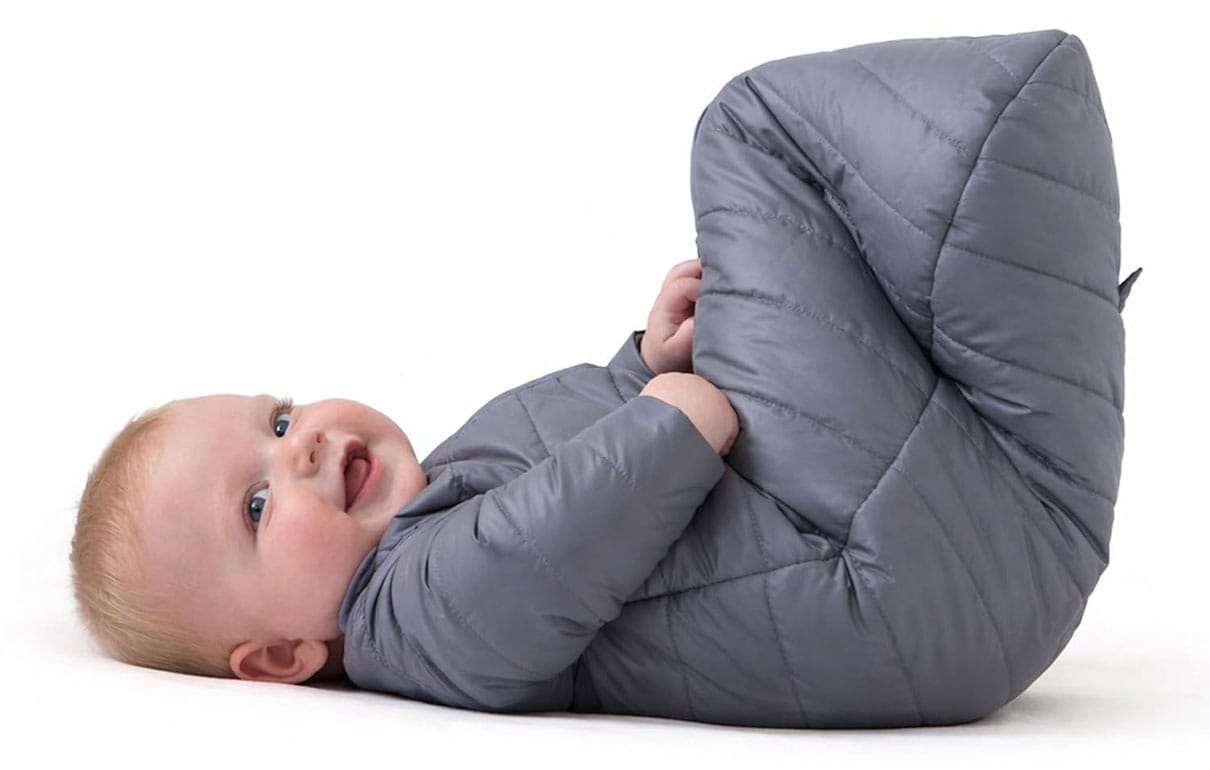
The BabyDeeDee Sleep Nest Travel uses classic sleeping bag material that can be wiped clean and a sleep sack design with arms, ensuring warmth and eliminating the hazard loose blankets or a too-big sleeping bag pose to a small child. Removable arms make it versatile for warm and cool nights.
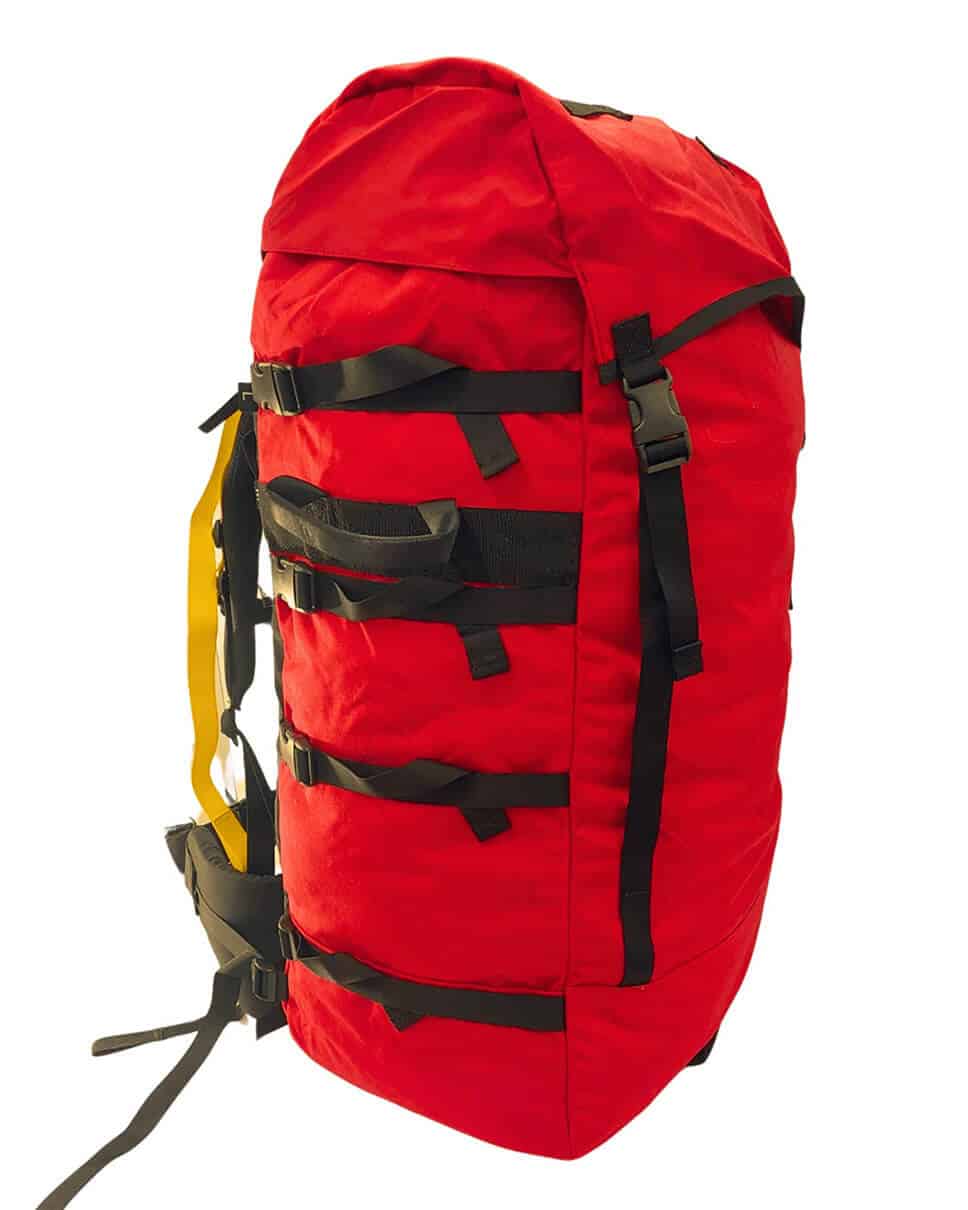
A family-sized kit calls for a family-sized pack. An Ostrom Winisk pack—or two—cuts down on our number of carries across the portage and Tetris skills are not necessary thanks to the pack’s cavernous interior.
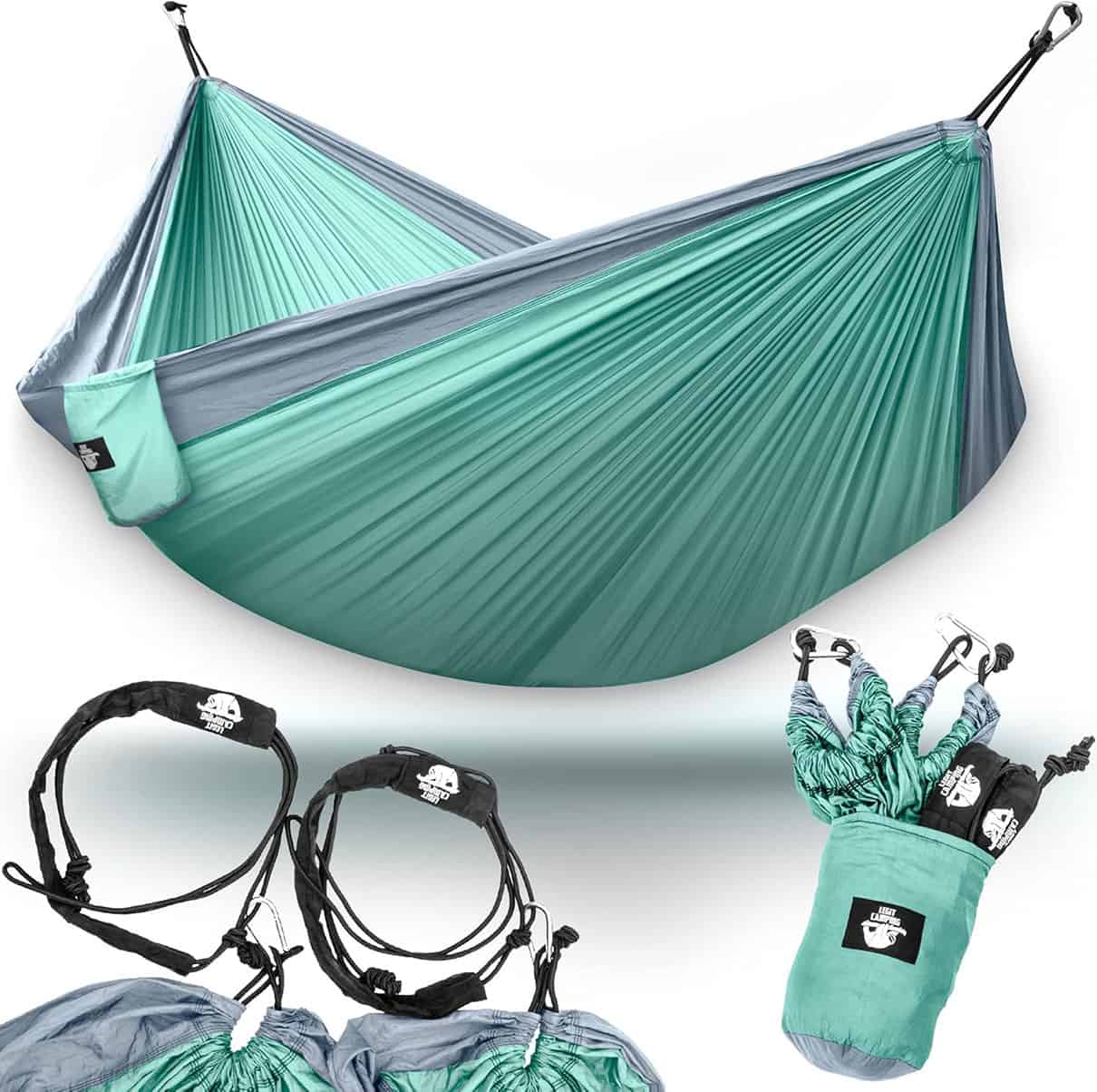
A hammock is a multipurpose tool with kids, great for winding down for naptime and ramping up for playtime. Any hammock works, but I like this one from Legit Camping because it’s compact and easy to hang.
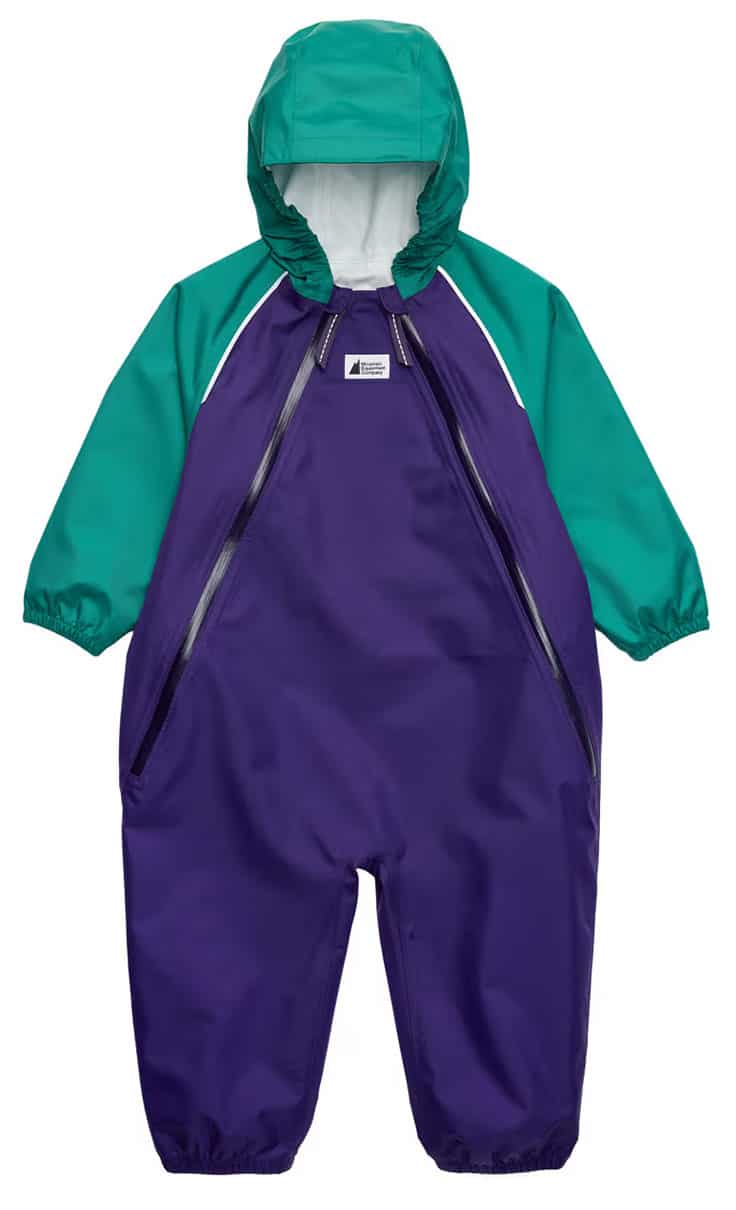
A good rainsuit can make the difference between a completed trip and one you bail on. The MEC Newt Suit’s elastic cuffs and hood, along with the high collar, provide full coverage and confidence that your little one will stay warm and dry in the rain. Plus, it’s durable, meaning your kid can do kid things.
Depending on when you’re starting your little one canoe camping, they may not yet be stable enough to stand or sit unassisted in the canoe. A generic tote with a blanket was my what-do-I-have-at-home solution to providing extra support on Seb’s first canoe outing.
The pings arrive before morning coffee: work emails, news headlines, social notifications. Thirty minutes later, you’re thumbing through suggested videos, trying to remember what you were supposed to check in the first place. The glowing screen sapping attention before the day has properly begun.
The modern benefits of being accessible mean our smartphones are interrupting our sleep, our conversations, and even intended quiet moments. Studies link excessive screen time to stress, anxiety, fragmented attention and emotional fatigue. Yet stepping away from our devices isn’t easy with the dependency on them we’ve interwoven into our lives, and it can feel equally stressful, nearly impossible, to disconnect.
Ironically, just a few hours north of the tech capital of Seattle, there lies an unexpected reset.
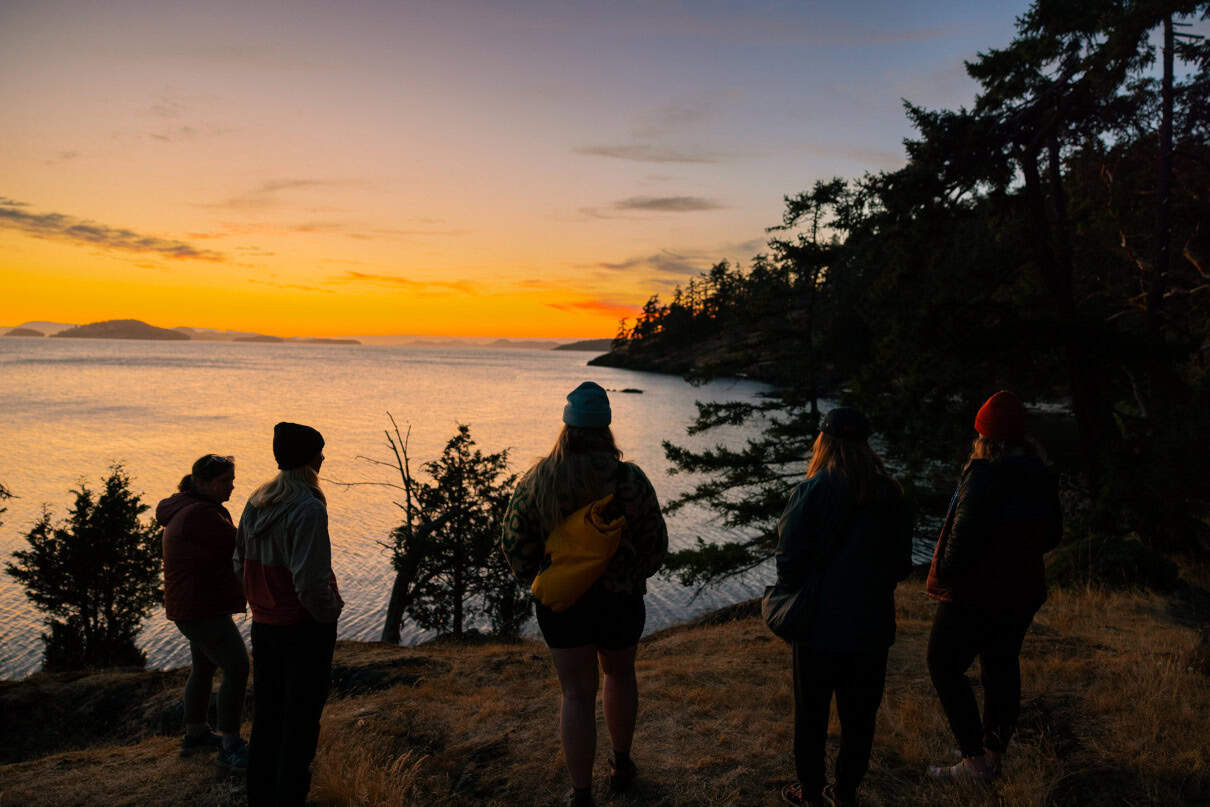
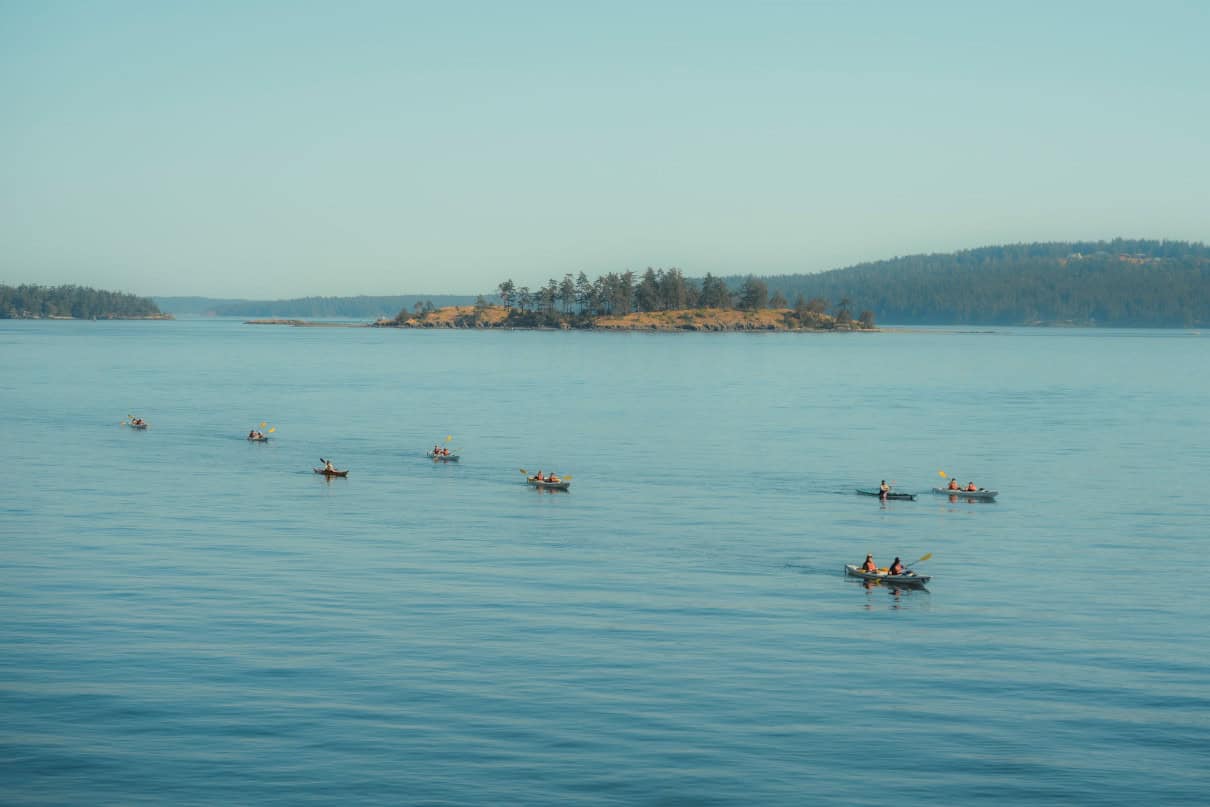
In Washington State’s San Juan Islands, guests launching sea kayaks with Outdoor Odysseys often begin their trip with a radical act: switching their phones to airplane mode (or as the advertising implies, kayak mode), and some even leaving them behind altogether.
Image: Outdoor Odysseys
“There’s information overload and mindless technology use. Both are taxing people in different ways,” says Tom Murphy, the owner of Outdoor Odysseys. Murphy has been with the outfitter since 2005 and purchased the company from founder Clark Casebolt in 2012. He believes strongly in the digital detox, an intentional period of time where we cut the cord and eliminate our screen time.
The research sides with Murphy. Exercise, meditative activities like paddling, and time spent outdoors, in nature, untethered from technology, have been found to reduce stress and symptoms of depression.
While everyone has the power to change their relationship with their phone anywhere, Murphy sees paddling the San Juan Islands as a transformative catalyst. “What we’re really helping guests do is reset their relationship with technology, to enjoy their time with us as fully as possible.”
Murphy and Outdoor Odysseys have built a four-decade reputation guiding paddlers through the waters around these islands. And as the small sea kayaking outfitter has evolved, they have become increasingly relevant with an essential need for modern travel: an analog antidote to our digital lives.
Digital Detoxing by Way of Kayak in the San Juan Islands
Rewriting the schedule on island time
Kayak travel dismantles urgency. Movement depends on tides, weather and daylight rather than rigid itineraries. Launch times sometimes shift. Routes sometimes adapt.
“We’re used to controlling our daily schedules,” Murphy says. “Out here, nature sets the pace, but no matter the route, you’ll have a great time on the water.”
That slower rhythm, commonly called “island time,” begins before paddles even touch water, with travel to the San Juans based on the schedule of ferries. The ride gives guests their first moment of pause to begin disconnecting from the mainland and focusing on the trip ahead and the people they will be traveling with.
Unlike viral destinations of social media fame, Outdoor Odysseys avoids performative tourism in the San Juan archipelago. “There are no queues for the perfect photo rock,” Murphy says.
Instead, you explore one place deeply rather than racing between highlights to check off a list.
Images: Outdoor Odysseys
Going out of office and into the blue
Sea kayaking demands presence almost immediately. Unlike passive sightseeing on a large boat, a kayak connects travelers directly at water level. The result isn’t an escape from reality, but more a recalibration, with attention returning to the physical world, truly IRL (in real life).
“You’re moving under your own power,” Murphy explains. “Your hands are busy, your brain is engaged, and you naturally start paying attention to what’s around you: the birds, the water, your paddling companions.”
Without engines or exhaust, the kayaks move almost silently, allowing you to tap into the marine network around you.
“It’s a respectful way to move through the water,” Murphy says. “You see things more organically, from urchins slowly crawling the sea floor in the clear waters to marine birds swooping and plunging nearby.”
Image: Outdoor Odysseys
Getting Real Without Reels
Wildlife encounters in the San Juan Islands are anything but predictable, but in a world of influencer-curated itineraries, that unpredictability is exactly what makes encounters so intimate.
“Seeing whales is a privilege, not an inevitability,” Murphy says as he expresses to aspiring detoxers that this is a kayak trip first and the rest is up to chance.
Encounters do happen regularly. Harbor seals appear on nearly every trip, curious heads bobbing like what Murphy jokingly calls “marine Labradors.” Sea lions announce themselves long before becoming visible. And occasionally, paddlers experience moments impossible to script, like the sudden breath of a porpoise breaking calm water or an orca surfacing nearby.
Guests often reach instinctively for cameras, but the quickness of these encounters usually foils their attempts. Murphy believes that dozens of rushed photos rarely replace one deeply lived moment.
Any wildlife interaction, according to Murphy, reminds us that there is a lot going on under the boat. And that it’s worth slowing down to experience it and consider the positive impacts of marine conservation too.
Meanwhile, night paddling transforms perception of the waterscape entirely. During bioluminescence tours, darkness settles across calm water until paddle strokes ignite flashes of living light.
For many guests, Murphy says, it’s their first experience with true darkness, free from screens, streetlights, or artificial glow. Without visual overload, he says, awareness sharpens. The water sounds louder and stars appear brighter.
Images: Outdoor Odysseys
Replacing social media with social life
Once phones get put away conversation is inevitable. And in tandem kayaks, communication is essential to adjusting pace, pointing out wildlife, and getting to know your shipmate. Even strangers quickly develop a shared rhythm.
“You’re literally in the same boat,” Murphy says. “Everything becomes something you’re doing together.”
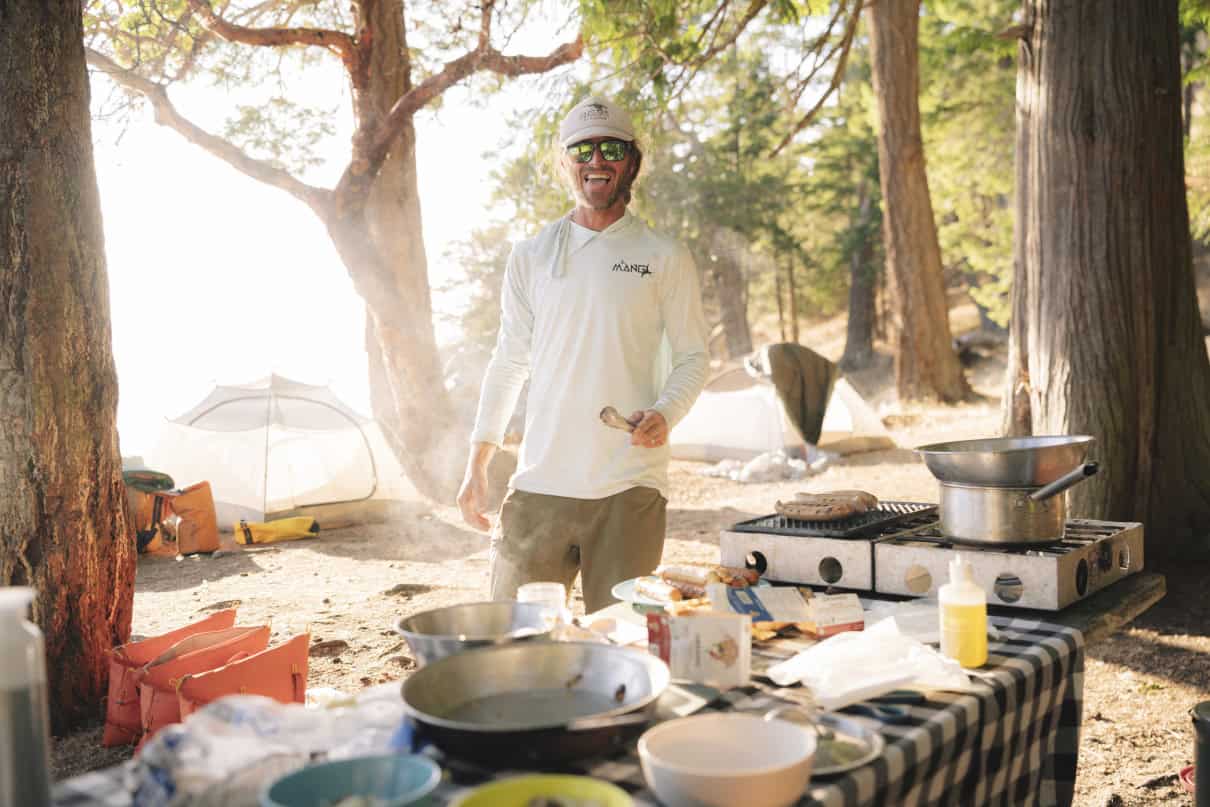
Evenings amplify that connection. Well-thought-out meals unfold slowly on remote beaches. Murphy, an avid cook, has shaped Outdoor Odysseys’ backcountry menu around sustainability and enjoyment rather than convenience and speed. Local produce is prioritized when possible, fair-trade coffee fuels mornings, and herbs grow beside the company’s office.
After hours of paddling, these shared meals become memorable rituals rather than refueling stops. Many of Outdoor Odysseys’ reviews comment on the excellent food, and amazing guides. So naturally, conversations at camp linger long after dinner ends.
Image: Outdoor Odysseys
Connection found
Without digital distraction, simple activities regain novelty: skipping stones, tidepooling, building driftwood sculptures, being mesmerized by flames dancing in a campfire, and watching sunsets that light up the sky.
Murphy recalls watching a young child sit happily in the middle seat of a triple kayak, occupied with nothing else as she turned her spray skirt into a tidal pool with some seawater, kelp and a rock crab.
“It pulls people away from a false urgency,” Murphy says. “They remember or figure out how to fill time differently.”
As trips end and phones reconnect, messages and notifications flood back. Headlines resume their relentless pace. And Murphy says that’s okay. What Outdoor Odysseys ultimately offers isn’t escape from modern life, he says, but perspective on how to live within it.
“We don’t need to abandon technology,” Murphy explains. “We just need a healthier relationship with it.”
Out on the water, paddlers rediscover things increasingly rare: sustained attention, shared experience and the quiet confidence that comes from moving through the water under their own power, immersed in the natural world.
Outdoor Odysseys offers half to multi-day kayaking itineraries in the San Juan Islands between Victoria Island, the mainland of British Columbia and Washington State.
The Chestnut Prospector design has roamed windswept lakes and rivers for more than 100 years. Paddler Paul Brittain, not quite as long. | Feature photo: Scott MacGregor
Sometimes, Paddling Magazinegets one of the very first production boats out of the molds. There are NASA-like logistics to get a still-warm hull onto a trailer headed to some river put-in somewhere. Other times, like with the Esquif Prospecteur 16, we wait so long it feels like surely we’ve written about it already. Did we? We must have. Turns out, no. So, 10 years after its release, we loaded Esquif’s second best-selling tandem canoe into a boxcar for a five-day end-of-season whitewater trip down the Spanish River in northern Ontario.
This Spanish River trip was originally planned back in 2023, which would have been clever timing for the 100-year birthday celebration of the Prospector design from the Chestnut Canoe Company, from which the Esquif Prospecteur was eventually shaped. Before we get into the nibbly bits of this review, can you think of any other piece of sporting equipment designed in 1923 you’d consider using today? A paddle, maybe.
Lots of companies claim to make the Chestnut Prospector. Historian Dan Miller’s website, The Wooden Canoe Museum, tracks the changes over time, revealed in fractions of inches in beam and depth. The shape of wood-canvas Prospectors evolved slightly over time as builders’ forms deteriorated and were modified or replaced. The Peterborough Canoe Company version, which went out of production when the company folded in 1961, was sleeker in the stems and less rockered than the Chestnut.
In 1978, Bill Mason’s neighbor, Chris Frank, borrowed Mason’s river-scarred 16-foot cedar canvas Chestnut Prospector—the one seen in the film Path of the Paddle—to create a mold suitable for producing fiberglass and Kevlar hulls. The mold was passed along to Wally Schaber and Chris Harris, owners of the Ottawa-based paddling shop Trailhead, who began producing and selling composite Trailhead Prospectors.
Ten years later, Trailhead created its own version of the 17-foot Chestnut Prospector and, soon after, partnered with Mad River Canoe to create Royalex molds of both models. Eventually, these molds ended up at Esquif, which produced the Trailhead Prospectors until the end of Royalex. Esquif then purchased both the 16- and 17-foot molds, invented T-Formex to replace discontinued Royalex, and here we are.
A keen, historically accurate eye will notice both the 16- and 17-foot Prospecteur models have a flatter bottom than the original Chestnut cedar canvas versions. Maybe they were purposefully tweaked for more initial stability. Or maybe it was simply because the hulls didn’t need to be as rounded because they weren’t steaming and bending cedar ribs over a form.
The Chestnut Prospector design has roamed windswept lakes and rivers for more than 100 years. Paddler Paul Brittain, not quite as long. | Feature photo: Scott MacGregor
On the water
I’ve spent a lot of time in the Prospecteur 16. I like its symmetrical shape. I like how the gunwale lines smoothly and evenly arc from the 14-inch depth at the center yoke to the bow and stern ends. The 2.75-inch of rocker bow and stern is enough for a whitewater canoe, but not too much to be squirrely in flatwater. The Prospecteur 16 won’t win races like the sharp-edged Boundary Waters rocket ships. You have to remember that in 1923, Chestnut was building these out of cedar and canvas for the Geological Survey of Canada, which needed high-volume and seaworthy canoes that performed well on both windswept lakes and whitewater rivers, like say the Spanish River.
We got off the train in the whistlestop community of Biscotasing. In a matter of a few minutes, our two canoes and gear were handed down from the boxcar, the conductor posed for a photograph, and the train rolled north. Founded in 1884 as a railroad construction town and later a Hudson’s Bay Company fur trading post, Bisco, as they call it here, is now home to only 22 permanent residents. It is the northernmost access point to the West Branch of the Spanish.
One design to rule them all. | Photo: Scott MacGregor
Leaving the trip until the middle of October limited the number of takers to just three. We agreed to take turns soloing the Prospecteur 16 in the flats and rapids.
Our beefier Prospecteur 17 is Esquif’s top-selling touring canoe, driven mostly by outfitter and livery sales. I have a 17-footer for big trips. But when people ask me what canoe they should buy, my answer is—if you can only have one—the canoe you should buy is the one you will paddle most often. And for lots of people, the 16-foot Prospecteur is one of those canoes.
Where the Prospecteur shines
Going on a weekend-to-weeklong whitewater canoe trip like the Spanish? The Prospecteur 16 is perfect, either tandem or solo. The same is true for a lakewater trip. I realize that at 65 pounds it’s far from the lightest canoe, but it’s still fine. The T-Formex my shoulders begrudge on portages is the same T-Formex durability my dry feet appreciate when I mindlessly ram the bow up on shore and step out. Slide the Prospecteur 16 off the dock at the cottage for a misty morning tootle around the lake? Sure, why not. I see no reason why you couldn’t round up an old phonograph, wicker picnic basket and parasol and escape with your true love from the watchful eye of your chaperones. And it’s sporty enough that for the examination run of my moving water instructor course, I got sick of waiting for a solo whitewater playboat to become available, so I jumped in a 16-foot Prospector and ran the Madawaska River’s class III Chalet Rapids.
Carefree durability in T-Formex. | Photo: Scott MacGregor
Some canoeists will argue over a half-inch here and there. If that’s you, builders like Headwater Canoes are still making cedar canvas Prospectors from the original Chestnut forms. For me, I’ll trade the authenticity of having to do pine pitch and birchbark canoe repairs for the modern-day durability and practicality of T-Formex.
I’m not without a nostalgic bone, however. The Chestnut Canoe Company offered their Prospector canoes in two stock colors, red or green. Guess which of the two T-Formex Esquif Prospecteur 16 colors I think you should order. Red, of course. And while you’re at it, to celebrate more than 100 years on the water, I’d upgrade your Prospecteur from vinyl gunwales to Esquif’s ash trim package. It just feels right.
Scott MacGregor is the founder of Paddling Magazine. And yes, he passed his instructor level in the Prospector.
This article was published in Issue 75 of Paddling Magazine. Subscribe to Paddling Magazine’s print and digital editions, or browse the archives.
The Chestnut Prospector design has roamed windswept lakes and rivers for more than 100 years. Paddler Paul Brittain, not quite as long. | Feature photo: Scott MacGregor
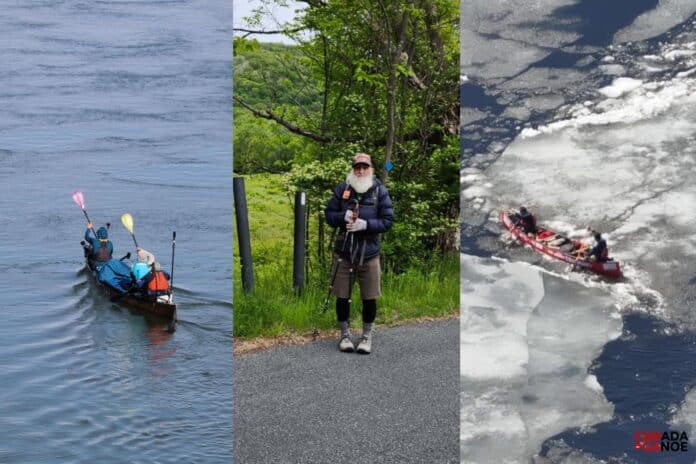
From left to right: The Missouri Speed Record team trains, Dale "Greybeard" Sanders on the Appalachian Trail, Team Canada by Canoe breaks ice. Feature Image: Facebook.
Every spring, hopeful adventurers dust off their paddles and plan ambitious routes. From legendary paddlers taking on trips of epic proportions to newer paddlers chasing Fastest Known Paddles, here are seven expeditions to follow this summer.
Missouri River Speed Attempt
In June 2026, four paddlers will tackle the 2,341 miles of the Missouri River in a Fastest Known Paddle attempt. The existing speed record is 33 days, 18 hours and 45 minutes. The team is made up of Scott Miller, Scott Duffus, Lada Zednik and Curt Leitz as primary paddlers with Ed Wagner as a back up paddler. The mission also includes a robust support team, and all four paddlers were involved in the 2023 Mississippi Guinness World Record for speed.
The route along the Missouri spans from Three Forks, Montana to St. Louis, Missouri. Follow along on Facebook.
Will Steger is on an 800 mile spring thaw expedition
At age 81, Will Steger is out on a solo expedition across the top of the North American continent, tackling 800 miles of spring breakup conditions with a seven-foot, eight-pound whitewater raft, alone.
Steger is sending out daily audio dispatches from the expedition. Take a listen to what’s happening in the tundra today, provided by the Steger Center.
Dale Sanders tackles the second half of his Appalachian Trail age record
Paddling legend Dale “Greybeard” Sanders has paddled the Mississippi from its headwaters to the Gulf of Mexico twice and holds the age record for doing so. Now in 2026 Sanders has set off on the second half of his thru-hike of the Appalachian trail to reclaim his age record for the popular long trail at age 90.
Sanders began his trek on September 6, 2025 heading southbound from Harper’s Ferry West Virginia toward Springer Mountain, Georgia. He then took a short break for the winter before flipping, and hiking north from Harpers Ferry to Mount Katahdin.
Justine Curgenven and Jean-François Marleau to circumnavigate Iceland
Expedition paddler and filmmaker Justine Curgenven and Jean-François Marleau have set out on a 2500km circumnavigation of Iceland, clockwise. For Curgenven, this is a return to Iceland after having visited the island’s west fjords 25 years ago during a solo trip and promising to return.
The journey promises strong currents, challenging surf beaches and sneaker waves, brutal wind and of course, some of the most stunning coastline the Atlantic has to offer. According to Curgenven’s blog, she was even warned to mark her kayaks’ location by GPS as they might get buried in by the strong winds and sand storms.
Juliana Brotzman and Nate Gueltzau have departed to begin an ambitious speed attempt to circumnavigate the island of Ireland. The pair also aims to raise funds and awareness for Team River Runner, an organization supporting veterans and service members through adaptive paddling.
The team aims to paddle 1,100 miles of paddling over 15-22 days, or a minimum of 50 miles a day to meet their goal. Brotzman and Gueltzau will be accompanied by a support crew for logistics, resupply and emergency coordination. Ireland By Paddle lists Brotzman’s experience as including several solo travel cross country trips to hike, backpack, paddle and work and Gueltzau’s paddling resume includes long distance kayak expeditions including the Missouri River 340, Alabama 650 and Suwannee River 230.
The previous Ireland circumnavigation record holder Mick O’Meara completed the 930 miles in 23 days, paddling into fierce headwinds; of five other pairs of kayakers who set out at the same time as O’Meara, two of the five abandoned or postponed their trip according to the Irish Times. At the time of securing the speed record, O’Meara already held the speed record for crossing the Irish Sea with paddler Brian Fanning.
Freya Hoffmeister continues North America circumnavigation
Perhaps the most legendary sea kayaker of all time, Freya Hoffmeister began her journey to circumnavigate North America by sea kayak in 2017. North America will be Hoffmeister’s third continent circumnavigation, and she estimates it will take 10-12 years, paddling in blocks of about three months twice a year.
Hoffmeister is no stranger to circumnavigating continents. The paddling legend paddled around Australia in 11 months, South America in 30 months and is now onto “the North Island” and will be heading north to Nain, Labrador in summer 2026.
Will Vyse, Nolan Aziz, and Georges Kirijian are paddling from Tadoussac, Quebec to Prince Rupert, British Columbia in a coast to coast journey. All three paddlers are 24 years old, but have worked as professional canoe guides since 2019 and had a cumulative 888 days of canoe tripping experience between them going into this most recent expedition.
The paddlers expect the journey to take 200 days, and their mission in part is to raise money for True North Aid, an organization which provides practical humanitarian support to northern and remote Indigenous communities in Canada.
From left to right: The Missouri Speed Record team trains, Dale “Greybeard” Sanders on the Appalachian Trail, Team Canada by Canoe breaks ice. Feature Image: Facebook | Missouri Speed Record, Greybeard Team USA Appalachian Trail, Canada By Canoe.
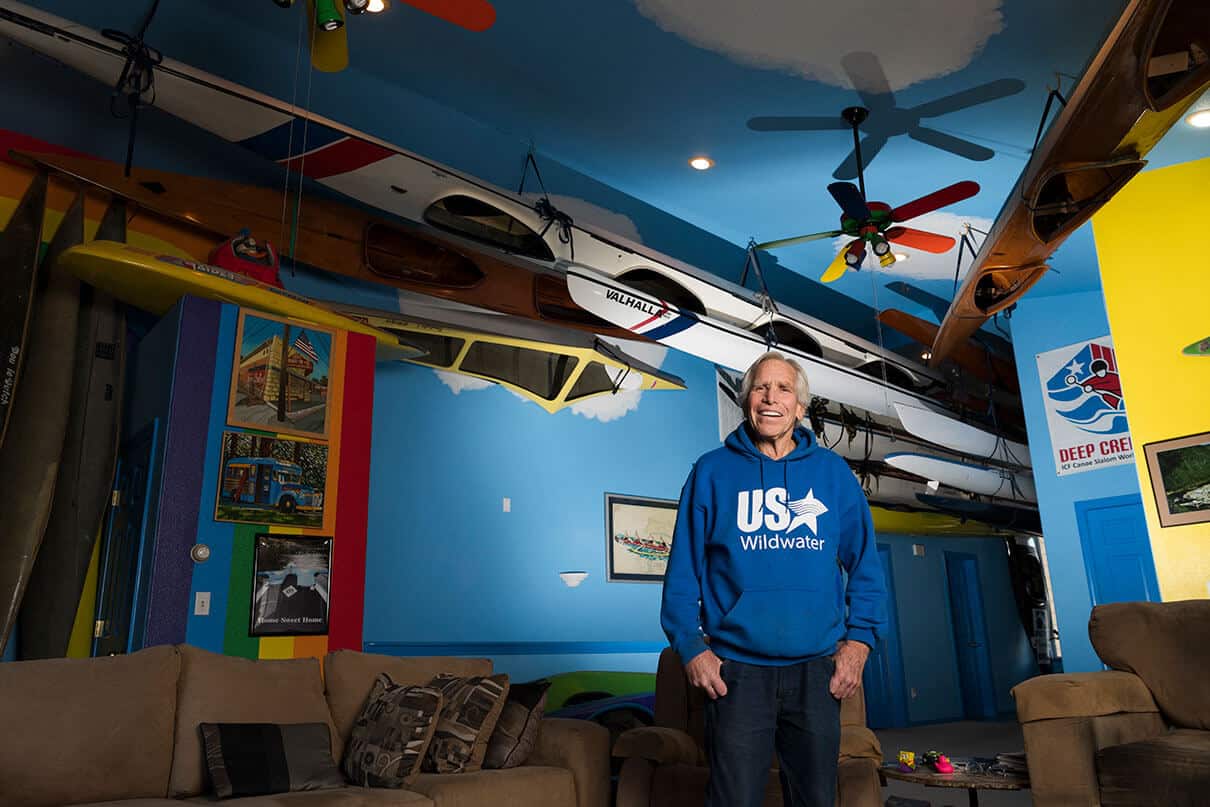
“Folks give me free boats all the time,” says Charles Albright. “I’ve loaned out about 50 that I’d love to get back someday.” | Feature photo: Scott Sady
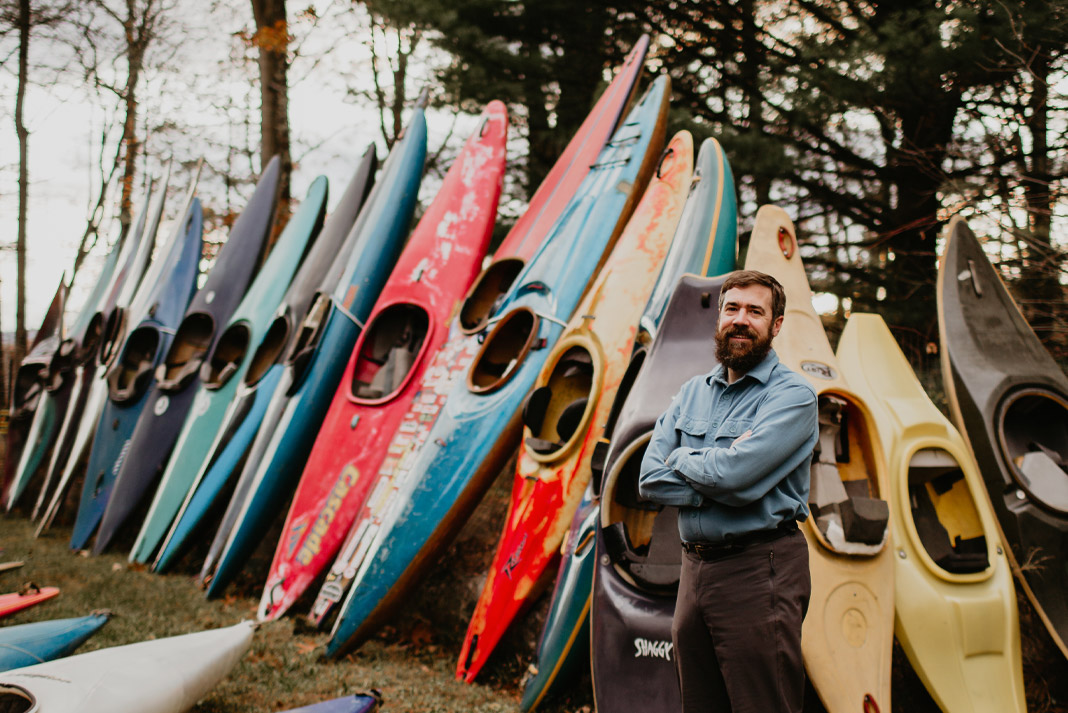
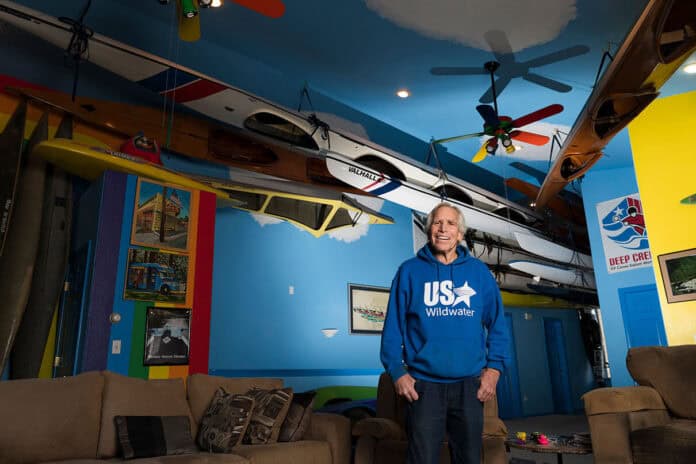
Charles Albright has more boats than you ever will. At last count, the Reno, Nevada, kayaking legend had a whopping 150 in his house, including about 25 in the front room, four in his bedroom, more in his basement and garage, and a full boat room of 40 or so.
The boats range from downriver and sprint racing kayaks to surf shoes, surf skis, outrigger canoes, whitewater slalom kayaks, C-1s, regular whitewater kayaks, a smattering of sea kayaks and canoes, and more, all hanging from rafters, lining the walls and taking up nearly every available square inch of space.
A former USA Wildwater Team member and longtime instructor, he just keeps getting them, curating them into one of the world’s biggest, most eclectic collections. And he doesn’t hoard them; last year he gave 24 of them away—many to local kids—and makes similar donations every year.
To Albright, 75, spreading the paddling love is far more important than his museum pieces.
“My biggest prize isn’t my boat collection but all of the folks I’ve met racing and paddling over the years,” he says. Below, we call out a few favorites—and some other odds and ends—in his kayak-heavy home.
“Folks give me free boats all the time,” says Charles Albright. “I’ve loaned out about 50 that I’d love to get back someday.” | Feature photo: Scott Sady
Inside America’s largest private collection of kayaks: Charles Albright’s Boat House
Olympic K-4
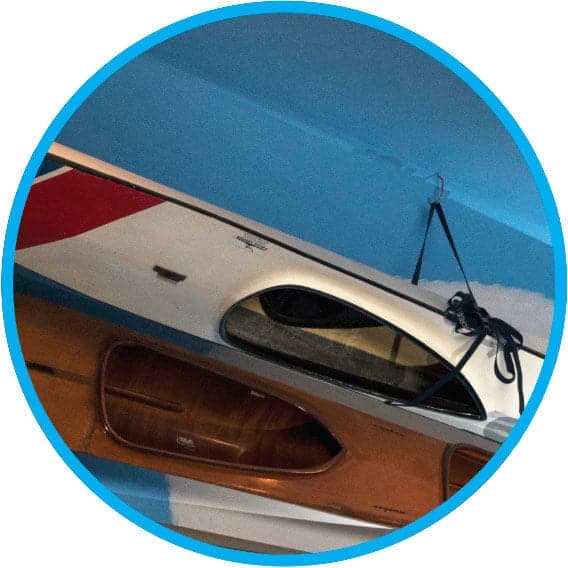
“That’s a Struer from the 1968 Mexico Olympics. I bought it from a flatwater racing team in Seattle. The white one is a K-4 from Susan Starbird, an Olympic paddling coach from Petaluma, which I got from their training center when they needed room.” The 34-foot-long K-4s join another wooden K-2 Struer. “I love Struers. I bought wood boats for a while because they’re so beautiful.”
Wave Ski
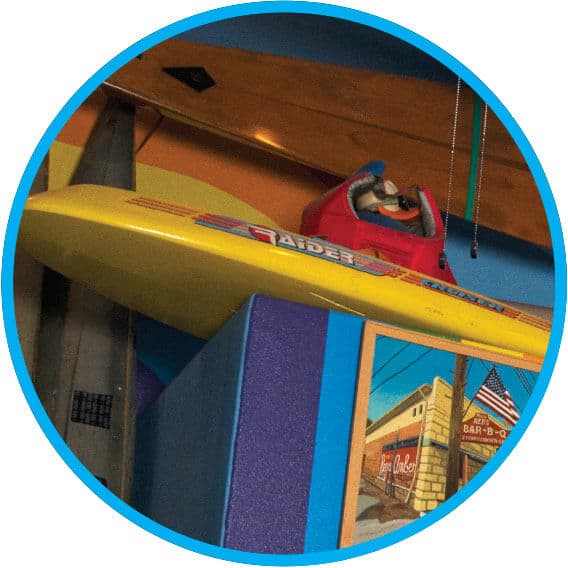
“That’s a Raider from Australia. I competed on it at the Santa Cruz Surf Kayak Festival. Breaking through the surf was challenging, and it was intimidating to be in sometimes, but it’s dynamic and cuts quick.” The ski joins a K-1 collection that ranges in size from a 24-foot-long Missile to a 7’5” Wave Sport Stubby and 6’9” Minnow by Ann Dwyer.
Valhalla
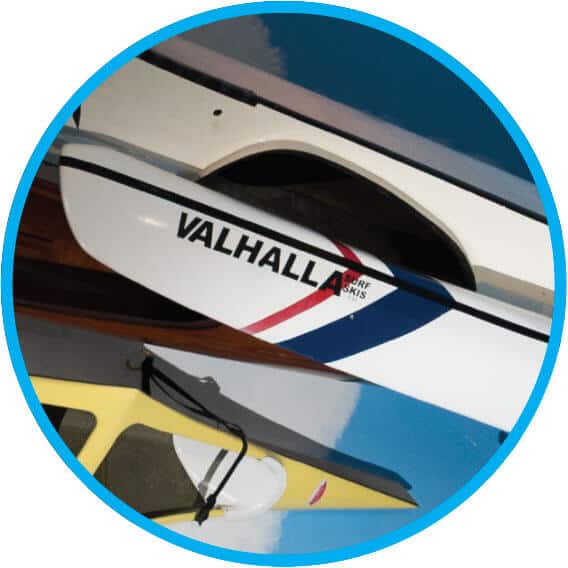
“That’s a double surf ski I bought from a builder named Keith Keillor out of San Diego. The yellow one is a Plastex Olympic flatwater sprint boat from Fairfield, California.” They join other rare designs most paddlers only ever see in grainy photos, including a Hydra Taurus, Duet C-2, Mongoose and Hollowform from Tom Johnson, several boats from the 1960s by Apple Line, and his first kayak, a wood frame/Naugahyde skin Folbot.
Wall Art
“My cousin painted a picture of Poor Red’s [bar] in El Dorado, California. It’s a great place to party after paddling and get s**tfaced on Gold Cadillacs, a drink made with Galliano. The bottom photo I took myself on the Rogue River in my RPM. My roommate put ‘Home Sweet Home’ on it, which describes me when I’m on the river.”
SpongeBob
“Usually, I’d have it on the dash of my van, but there’s no room there; it’s too filled with other things. The pink duck was a river find. I found it in an eddy on the Grand the last time I did it—a super cold November trip during Covid. They were doing some river studies, so it dropped to 4,000 cfs and rose to 20,000—some of the highest water there since 1984, which I was also there for.”
Life Jacket
“That’s a Donald Duck life jacket. His face and body are a bouncing ball. We brought him to Poor Red’s once and sat him on a barstool with us and bought him drinks. I had a business selling paddling gear from 1981 to 1994, and it was one I used for taking people with disabilities out on the water. I still do that, teaching and putting about 60 to 80 people with disabilities on the water every year.”
Ceiling
“I moved into the house in January of 2000 and decorated it to think I was outside. I painted the walls and ceiling with clouds and rainbows, and put in light brown carpet and green linoleum. I also added skylights and 12-inch glass blocks.” You can see Albright’s house for yourself as he gives informal tours twice per month (just get in touch and ask). He’ll be ogling those sky lights aplenty this spring after getting shoulder surgery in February, admitting, “I have to spend three agonizing months off the water.”
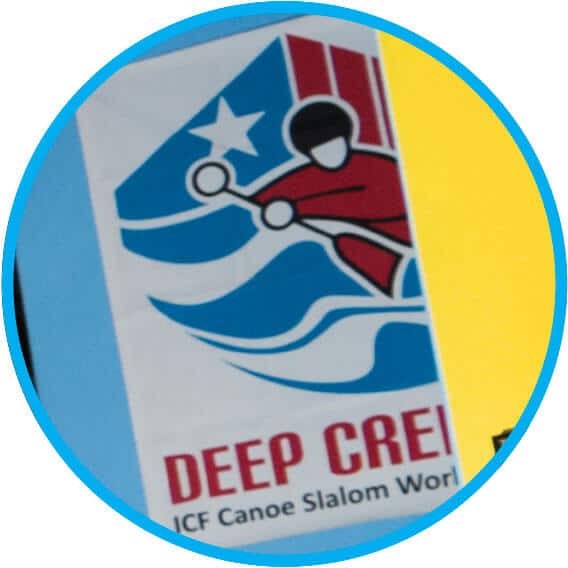
Deep Creek Poster
“I helped run the Slalom World Cup on Deep Creek in McHenry, Maryland, in 2014. I showed up and said, ‘Tell me what you need me to do.’ I did everything—timing, cleaning, hanging gates, you name it. It was a total reunion of boaters.” Albright stayed in his truck—a 2005 Ford Explorer with a license plate that reads “Canoer”—which he’ll drive to Alaska this summer for a two-month paddling trip.
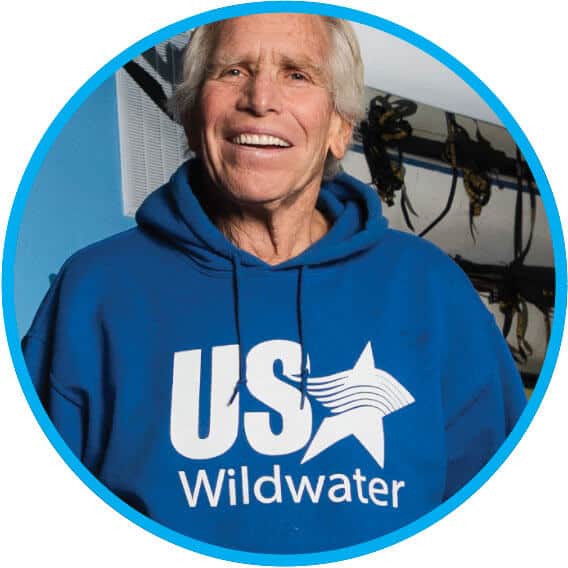
Wildwater Sweatshirt
“During Covid, I was supposed to be at the World Championships at NOC, competing in Wildwater C-2, but it was cancelled.” Albright was on the USA Wildwater Team 12 times, competing in 12 events in the U.S. and in Europe, finishing as high as fourth. He also raced whitewater K-1 in Europe and attended four team trials in Slalom C-2, placing one spot off the team four times. “But it’s all a little fuzzy now,” he says.
This article was published in Issue 75 of Paddling Magazine. Subscribe to Paddling Magazine’s print and digital editions, or browse the archives.
“Folks give me free boats all the time,” says Charles Albright. “I’ve loaned out about 50 that I’d love to get back someday.” | Feature photo: Scott Sady
If you’ve been browsing Netflix recently, you might have noticed an uncommon sight: a film featuring whitewater kayaking trending number one among English films, with 40 million views just two weeks after its release.
Apex is a thriller starring Charlize Theron and Taron Egerton, and involves the former being chased by the latter through the Australian wilderness as part of a deadly game Egerton contrives. Sasha, played by Theron, is an extreme sports enthusiast—as she says in the film, she “does a bit of everything,” including rock climbing and whitewater kayaking.
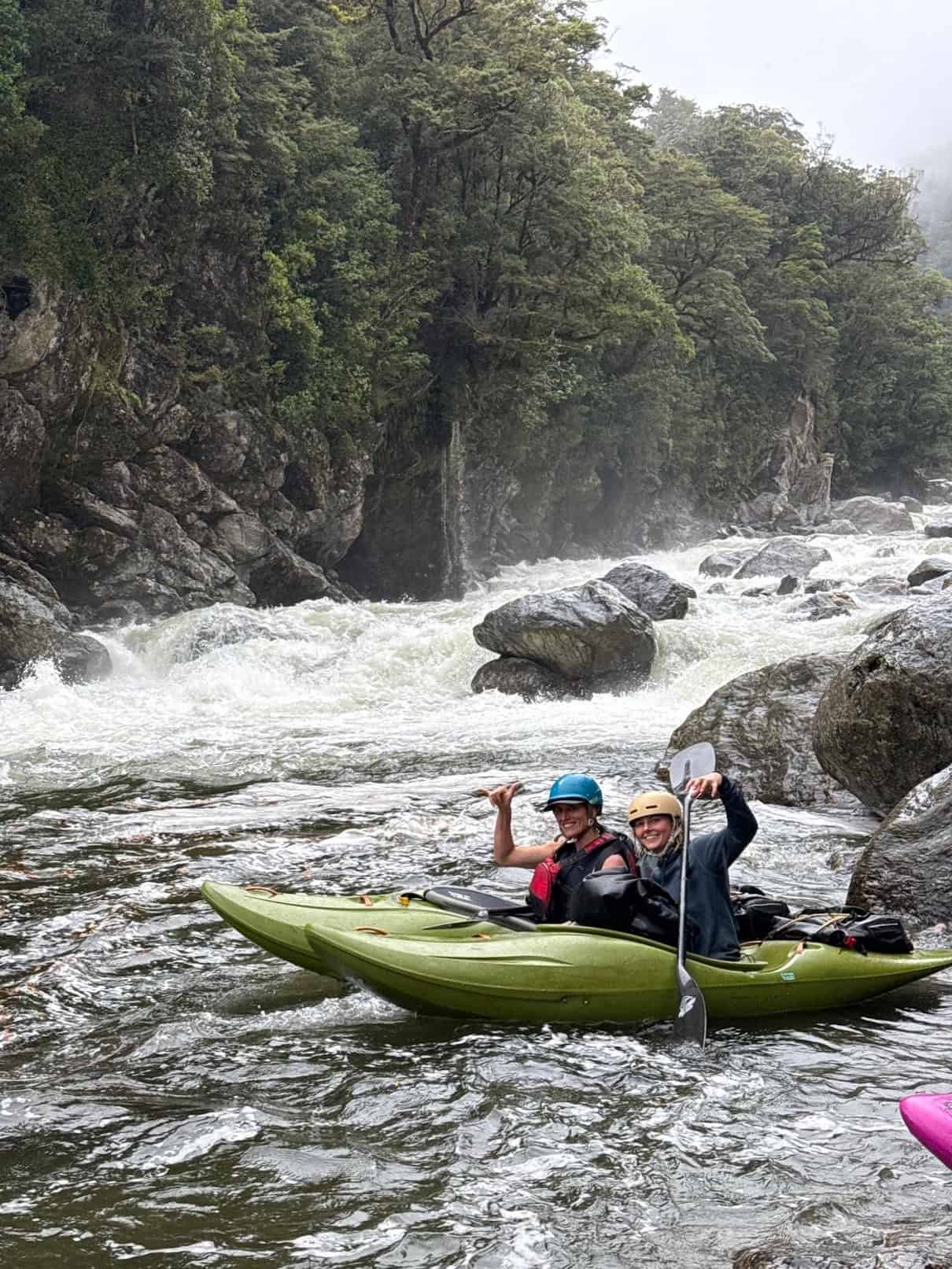
It’s not often whitewater kayaking is featured so heavily in the plot of a mainstream Hollywood film. To make it happen, the film employed two high-level whitewater kayakers to be Theron’s stunt doubles on the river: Luuka Jones-Yaxley and River Mutton.
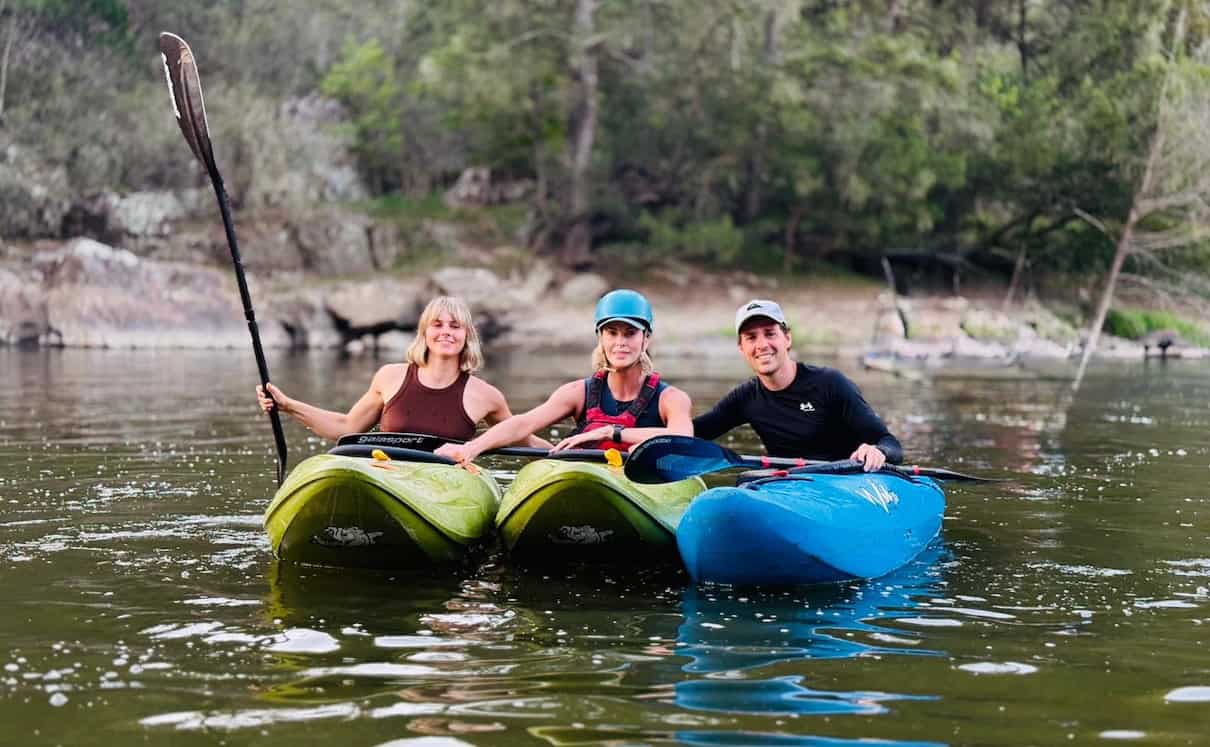
Mutton (left) and Jones-Yaxley (right) in their Pyranha ReactRs, the kayaks used in the film.
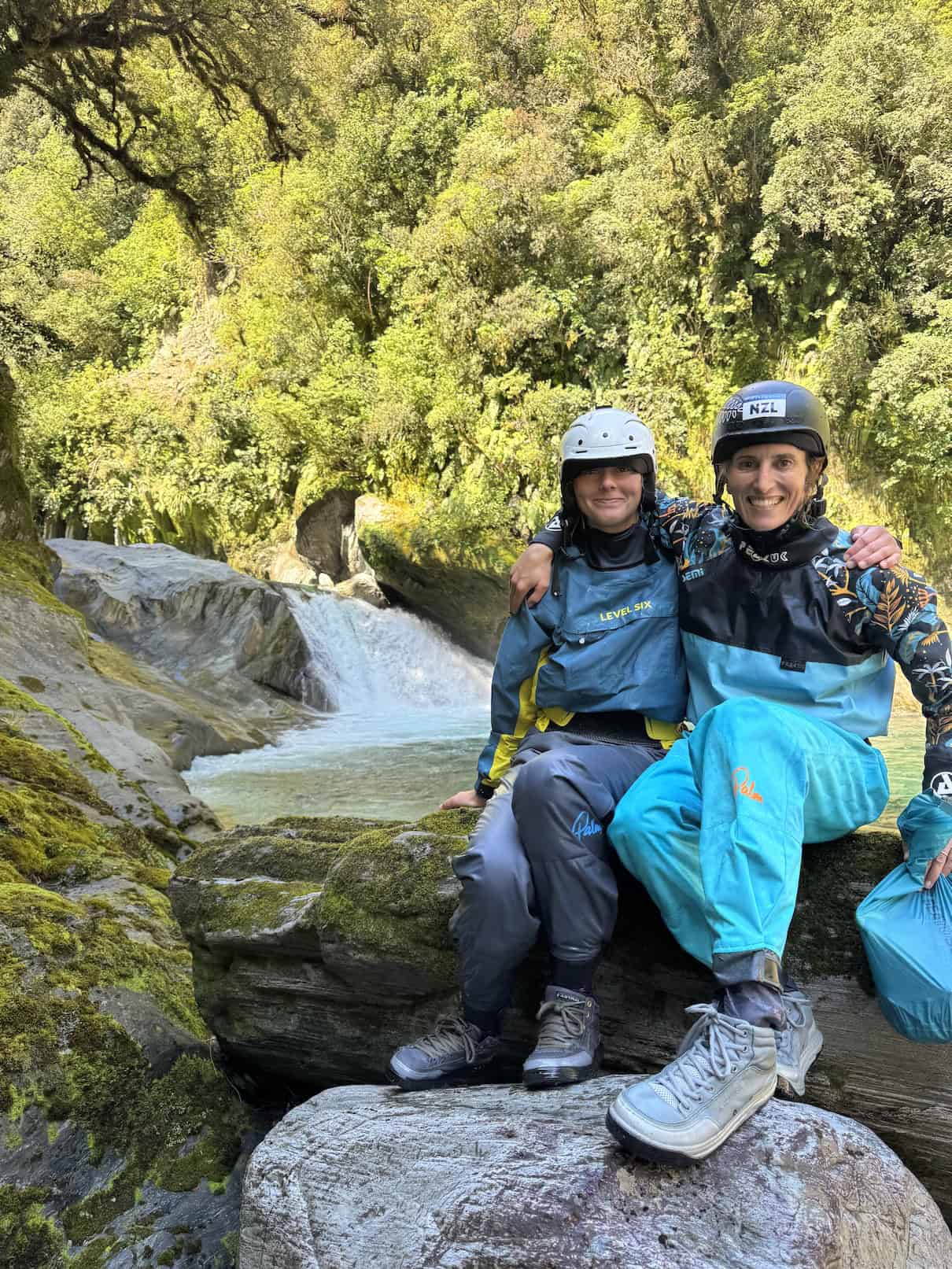
Mutton (left) and Jones-Yaxley (right). | Photos: Courtesy River Mutton
Both hailing from New Zealand, neither Jones-Yaxley or Mutton had been part of a movie previously. In this capacity, at least—Mutton notes she was an extra in the film Yogi Bear when she was eight years old. Pete Townend—who is managing director of Canoe & Kayak, a New Zealand-based company specializing in paddling gear, tours and instructional courses—has been doing kayak and water safety on movie sets in recent years and was asked by the Apex crew whether he knew of any whitewater kayakers who could double for Theron. A friend of both Jones-Yaxley and Mutton, he reached out in late 2024 to see if they’d be interested.
“I thought it seemed so farfetched and unbelievable,” says Jones-Yaxley, who is a five-time Olympian in canoe slalom and K1 bronze medallist at the ICF Canoe Slalom World Championships. “The next thing I knew, I was being called by some of the stunt coordinators and River and I were having to send in our measurements for costuming. It started to become more real.”
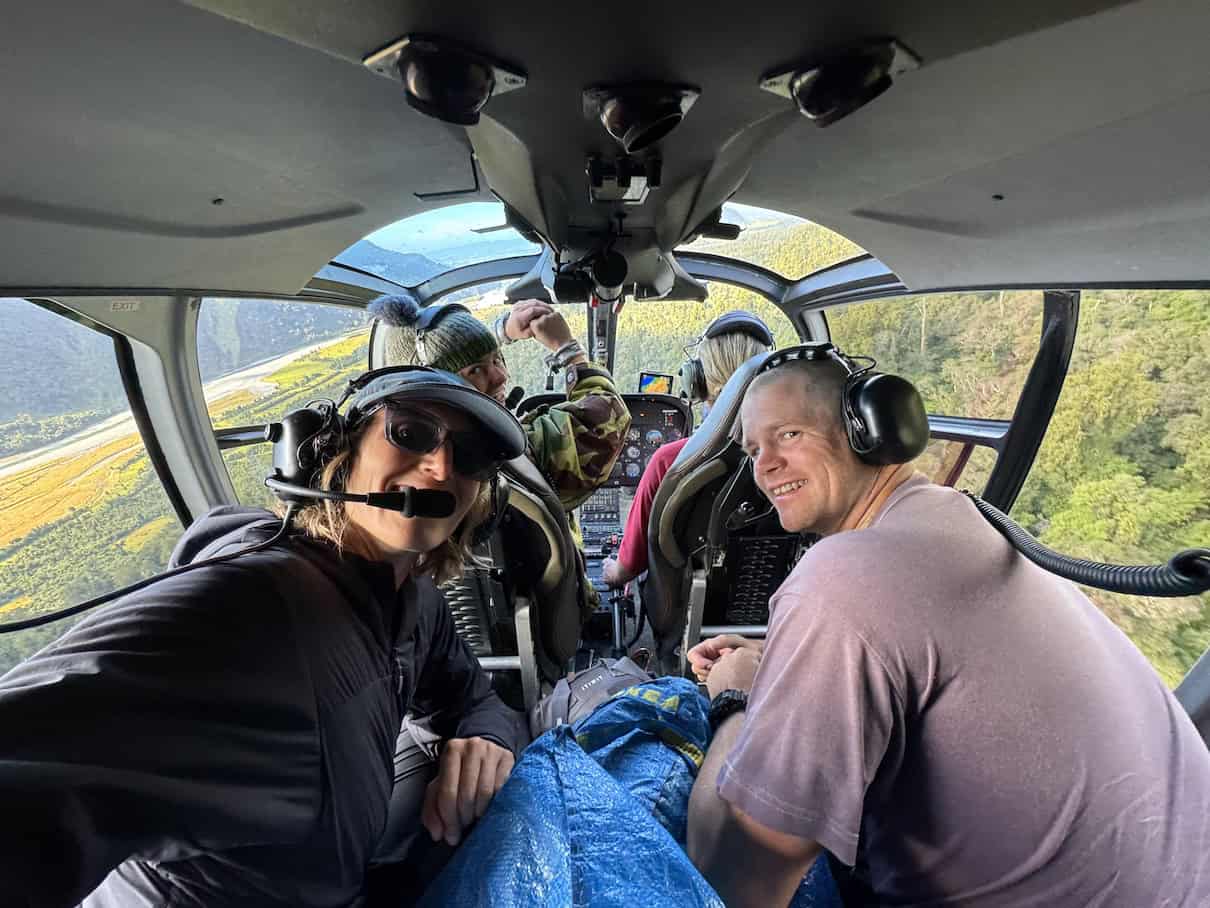
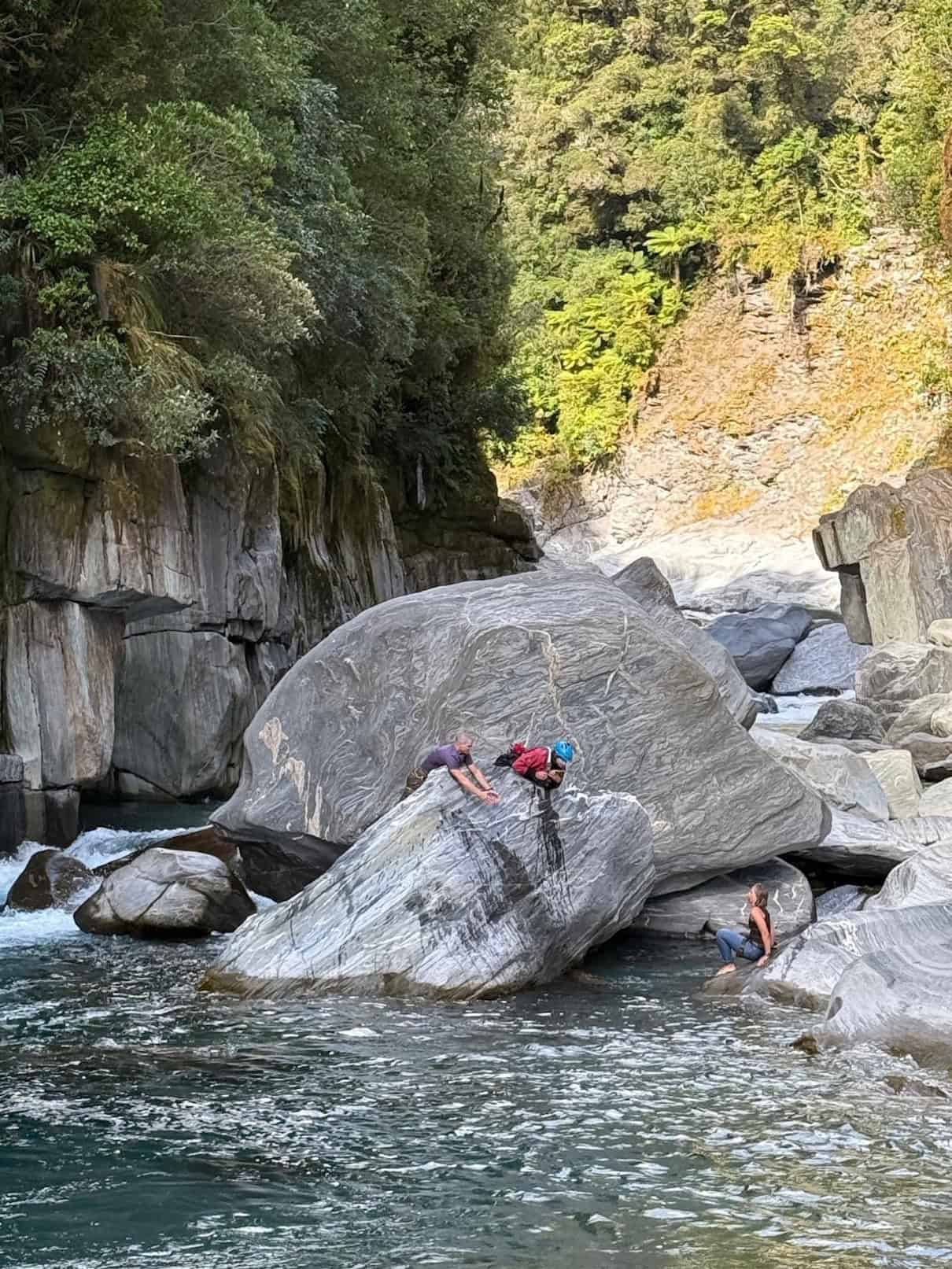
Mutton says one of her favourite parts of the experience was the views they got from the helicopter. | Photo: Courtesy River Mutton
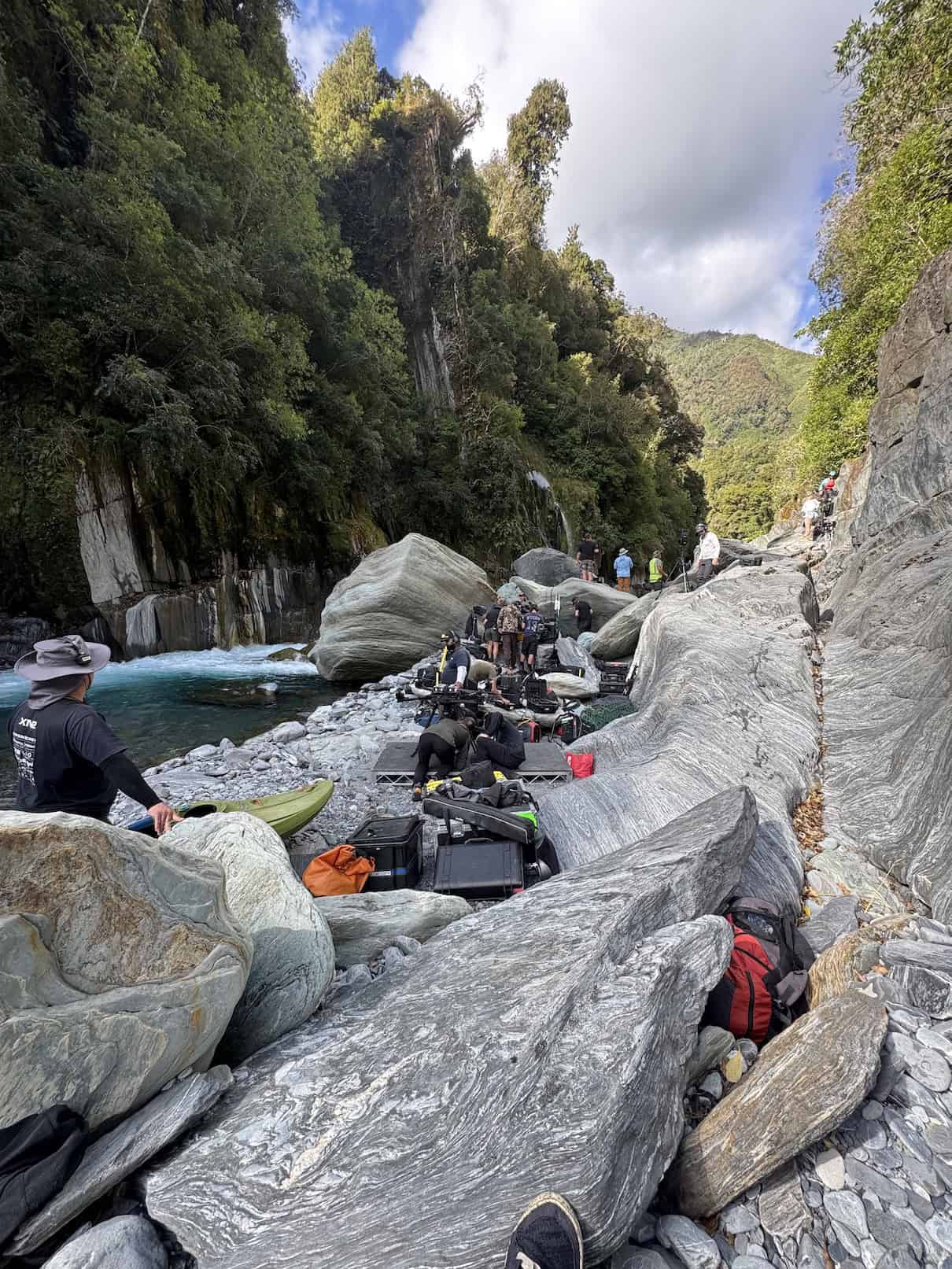
Preparation for filming began in early 2025. The pair were flown to New Zealand’s South Island where they met up with a small film crew. They spent about a week being flown by helicopter into remote rivers, scouting locations where they planned to shoot most of the whitewater kayaking scenes. Then they spent a week flying back to those locations to film.
“We were working together [with the director and stunt coordinator] on what looks cool in a movie context,” continues Jones-Yaxley. “Because when you’re paddling really well on whitewater, you look smooth and you’re dry. But when you’re in a movie, you need to make it look exciting. So it was quite interesting, looking at a river differently and trying to figure out how to make it look as dramatic as possible.”
Mutton, who is an extreme kayak world champion, explains that she was told to hit rocks and miss lines to make the kayaking look more exciting. They were also told to paddle “a little more oddly,” with a less technical forward stroke, so the shots of she and Jones-Yaxley paddling would be easier to knit together with the shots of Theron paddling.
She says it was difficult at first to override her instinct to paddle well.
“It went against what you naturally have trained yourself to do,” says Mutton. “But by the end of filming, I was so practiced at it, that when I went back to my own kayaking I was a little worried I had practiced paddling like that too much. I didn’t have any problems, but it did get in my head a little bit.”
Behind-the-scenes filming in New Zealand.
Photos: Courtesy River Mutton
They divided up the stunt work according to costuming. Jones-Yaxley was in the costume with the red life jacket and blue helmet, which meant she did the scenes before Theron was being chased. Mutton was in the costume with the hoodie and jeans, which meant she did the chase scenes.
“It did mean River had to do more swimming in the cold river than I did,” laughs Jones-Yaxley. “I got the Gucci role.”
Mutton says she isn’t sure why she ended up doing the chase scenes, which involved more swimming.
“Maybe I just seemed a little too enthusiastic,” Mutton says jokingly. “Maybe I looked like I was having too much fun swimming.”
Part of Mutton’s costuming was to not wear a PFD or helmet, because in the film Egerton steals Theron’s equipment and provides her only with her kayak, paddle and backpack of supplies to carry through the chase.
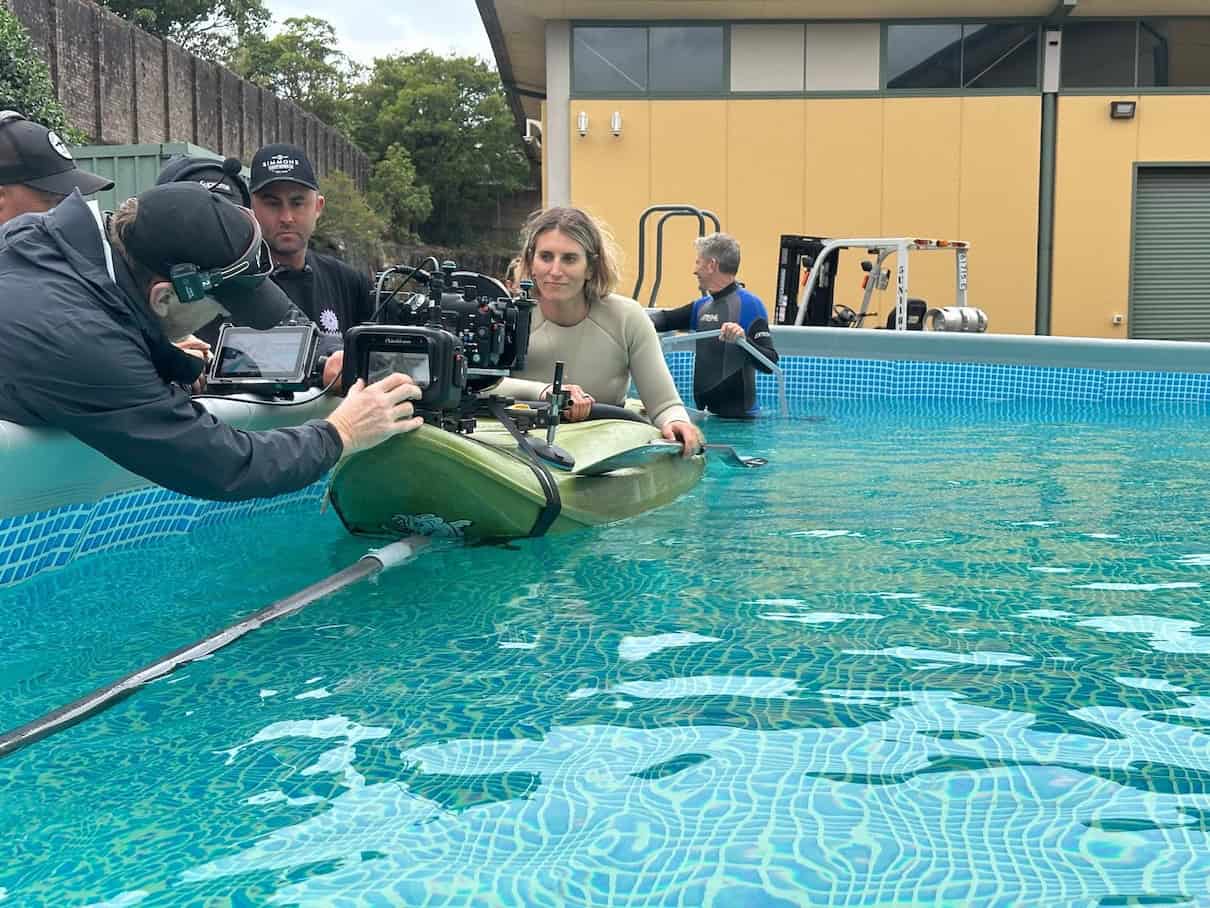
Jones-Yaxley says she was able to visit the Disney studio in Sydney, where they had a pool and other sets. | Photo: Courtesy Luuka Jones-Yaxley
“A lot of the kayaking was reasonably chill,” says Mutton of the rivers and sets they were paddling. “But as soon as you’re taking your helmet and life jacket off, you’re a little sketched out because you’re not really supposed to do that.”
But she says they had a good safety crew and since filming took place late in the summer, they weren’t dealing with “heaps of water”—with one notable exception. They were filming on the Turnbull River when a flash flood occurred and the whole film crew had to be evacuated. Then Jones-Yaxley and Mutton were asked to go out and paddle and be filmed on the drone.
“We kind of looked at each other like, oh that’s quite high now,” says Mutton. “It was actually really fun paddling. It was very good kayaking, solid grade five. But it was probably one of the scariest things I’ve ever done, just kayaking without a PFD.”
Unfortunately, none of the shots from them kayaking on the flooded Turnbull made it into the film.
Left to right: River Mutton, Charlize Theron and Callan Grady—Grady helped coached Theron for the kayaking scenes. | Photo: Courtesy River Mutton
Despite being cold and potentially hypothermic at times, Mutton and Jones-Yaxley say they were well looked after. Where possible, there was a hot tent set up riverside where they could warm up between takes. They were given handwarmers by the costuming department and were wrapped in warm blankets as soon as they got off the river.
“It was quite nice actually,” continues Mutton. “Every day you wake up, you meet your private chauffeur downstairs and they drive you to the movie set. You can just roll out in your pajamas. And you go there and someone tells you what to wear, they brush your hair, style it. And then you go kayaking.”
Filming with the actors took place in Australia. Jones-Yaxley flew back and forth four times and Mutton once to shoot paddling scenes there themselves and advise on Theron’s paddling scenes.
Jones-Yaxley says being flown into remote rivers was the dream paddling experience. | Photo: Courtesy Luuka Jones-Yaxley
Photo: Courtesy River Mutton
They both comment how down to earth and approachable Theron was to work with, and how eager she was to make sure the paddling scenes looked authentic.
“I was super impressed by how quickly she picked up that natural-looking style and she was really good at watching myself or River,” says Jones-Yaxley.
Mutton echoes this, saying she noticed Theron would watch her relaxing in her kayak between shots. “I wouldn’t even be doing anything, I’d just be chatting and hanging out. And then she’d film her next shot and she’d instantly look like she’d been in a kayak her whole life. It was kind of scary. But it was so impressive.”
Jones-Yaxley and Mutton gave some pointers to help Theron learn how to paddle in a straight line, which she initially struggled with.
“She was like, Luuka, what do you love about kayaking?” says Jones-Yaxley, laughing. “I was like, the feeling when you get it right. I think she kind of put that into a dancing context because she has a dancing background. It’s like when you’re in the flow and in the moment, it all feels really good.”
When Apex was released, Jones-Yaxley and Mutton watched the film on a laptop at Mutton’s house.
“Watching the film, it’s actually quite amazing how they put everything together,” comments Mutton. “All these different sets from the South Island and Australia were meshed to look like the same scene. I think paddler-wise the person looked pretty convincingly the same the whole time between me, Luuka and Charlize.”
Jones-Yaxley says the movie was a lot more intense than she was expecting.
In terms of the kayaking, she says, “It was a really authentic film. It was just so cool that they had whitewater kayaking in there that was authentic in terms of going to real rivers and paddling good whitewater.”
Both agree the film is good exposure for the sport.
“I just think it’s awesome,” says Jones-Yaxley, “and I really hope it’s the start of lots of whitewater kayaking in feature films.”
Paddling Magazine is hosting an inspiring and practical webinar with Maddy Marquardt—editor, experienced sea kayaker and guide known for leading women’s trips on Lake Superior and beyond.
This session is designed for women who have spent months (or years) dreaming, chatting, and planning group paddling adventures—but haven’t taken the leap to actually book and go.
Maddy will break down the common barriers that keep trips stuck in the group chat and share actionable strategies to move from idea to execution. Drawing on her extensive guiding experience, she’ll cover how to build momentum, align expectations, make decisions as a group and confidently commit to a plan.
Attendees will leave with practical tools, insider tips and the motivation needed to transform their vision of a girls’ paddling trip into a real, on-the-water experience.
Bring your questions—there will be time for a live Q&A at the end of the session.
Photo: Maddy Marquardt
Photo: Maddy Marquardt
Note: A recording of the webinar will be made available to registrants via email after the live session concludes, so sign up even if you can’t attend on May 26!



 This article was published in Issue 75 of Paddling Magazine.


 Olympic K-4
 Wave Ski
 Valhalla
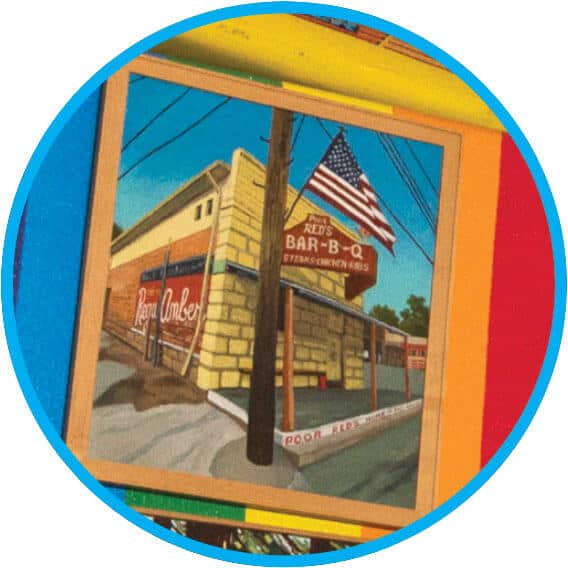 Wall Art
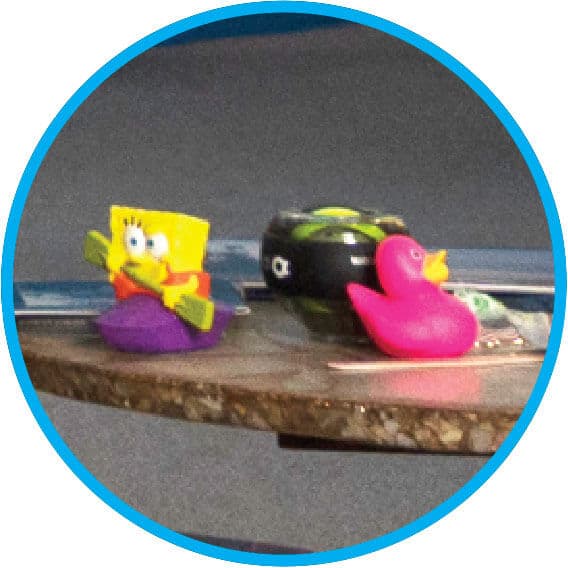 SpongeBob
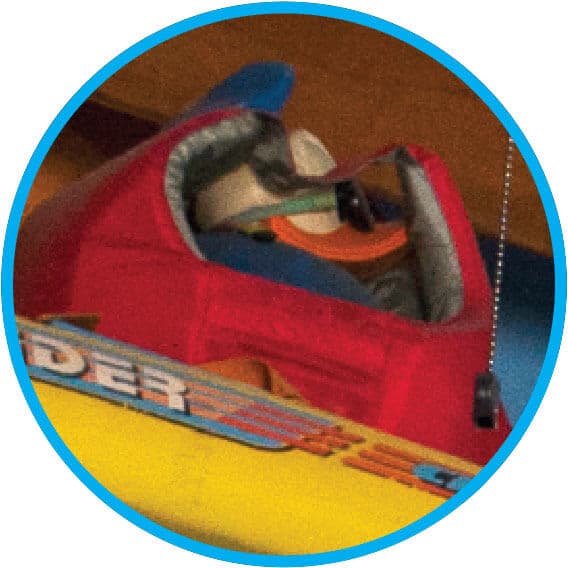 Life Jacket
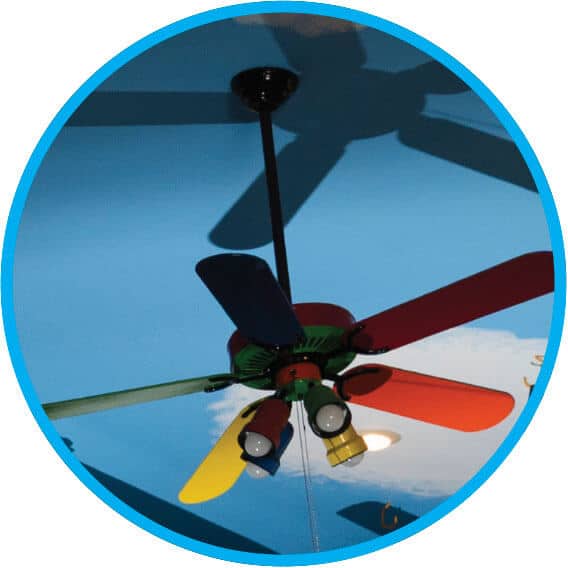 Ceiling
 Deep Creek Poster
 Wildwater Sweatshirt