Monkeys swim across from an island in Silver Springs State Park, Marion County, Florida. Feature Image: @fireball_1969 | TIkTok
While kayaking Silver Springs, Florida, a woman found herself in the middle of an especially wild close encounter – surrounded by falling monkeys!
“They’re jumping in,” the kayaker said as she filmed. “Look at them all! These are all monkeys jumping in. Oh my God, it’s raining monkeys!”
Monkeys fall from sky in Silver Springs State Park, Florida
“One jumped in here right here by me!” The kayaker said as she laughed. “Go on, little one.”
Commenters on the initial video wondered what exactly was causing the monkeys to jump into the water, theorizing both that something big in the trees had frightened the monkeys and that the kayaker herself was the cause of the disturbance.
Later, the kayaker took to TikTok in a followup video to share the whole story.
“We kayak this river quite a bit just in hope that we will get to see the monkeys because you don’t see them a lot,” the kayaker shared. “That day just happened to be a very extra special day.”
The kayaker also shared the cause of the monkeys jumping in the water and fleeing to the other side of the river. According to the paddler, one of the larger monkeys had been making a lot of noise and a smaller monkey then jumped into the water and was swept downstream toward that larger monkey. Shortly after, all of the monkeys started jumping into the water. The kayaker also explained that her group had been observing the monkeys for quite a while at a respectful distance, and that nothing was lurking in the woods chasing the monkeys.
After the encounter with monkeys, the kayaker then went on to paddle up the river and see manatees.
The monkeys of Silver Springs State Park, Florida
The monkeys leaping into the water in the video, of species Rhesus macaque, are invasive in Florida and indigenous to south and Southeast Asia. According to Springs in Florida, the monkeys carry Herpes B, which can spread to humans by way of bodily fluids and lead to complications including spinal cord and brain swelling and ultimately death.
The monkeys of Silver Springs were brought to a small island, now Silver Springs Park, around 80 years ago by a tour boat operator. The tour boat operator released six monkeys onto the island, hoping to create “a park closely resembling the Tarzan story” according to Springs in Florida. Unbeknownst to the tour boat operator, the monkeys were adept swimmers and the first six monkeys escaped the island nearly immediately and the tour boat operator brought in a replacement batch.
The second group of monkeys also escaped. By the 1980s, the monkeys had established themselves throughout the island.
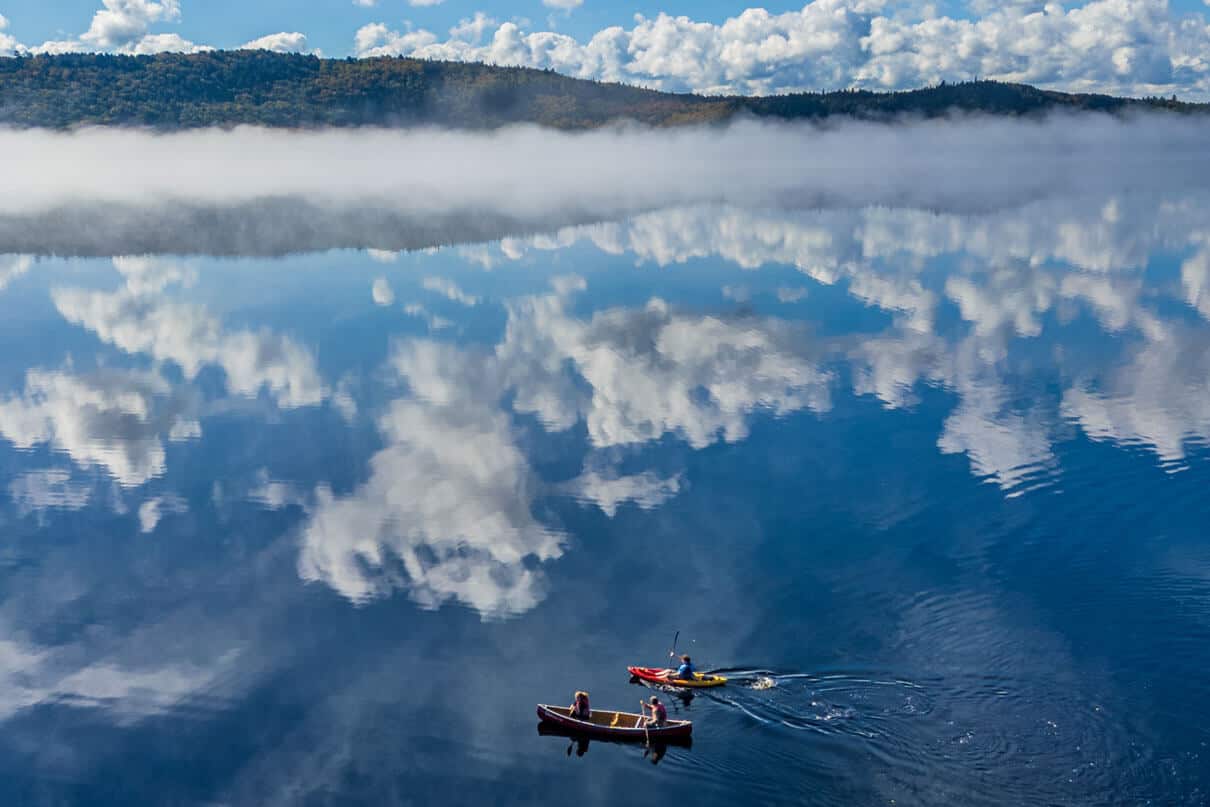
Take a bird's eye view. | feature photo: Rob Faubert
It’s an expression used mostly by grandparents and politicians. If you fly with the crows, you die with the crows. The intended meaning, of course, is a warning. If you hang out with bad kids, you will become like them and suffer the same negative consequences. Makes sense, I guess, but only if you believe what you see in the movies about crows.
Ever since Alfred Hitchcock’s classic 1963 horror film, The Birds, crows have gotten a bad rap. Crows are used by Hollywood to represent bad omens, evil and the supernatural.
Crows don’t seem all that bad, honestly. They’re mischievous, sure. But crows are social birds, more often seen in groups than alone. Crows are one of the smartest animals in the world, right up there with chimpanzees. And they live twice as long as chickadees. If you’re going to be a bird, being a crow might be fun.
An ode to the company we keep on the water
This spring, I paddled the upper section of the Madawaska River, a stretch of spring flow between the Ontario logging towns of Whitney and Madawaska, located just east of Algonquin Park. The first time I paddled it was with James Campbell. We were still in school, working the summers teaching paddling and guiding groups down whitewater rivers. We were on a day off. It was the perfect kind of day when dudes promise each other they will do this forever. Thirty years later, here we are again. Doing the same thing. As promised. This time with my 20-year-old son, Doug.
Take a bird’s eye view. | feature photo: Rob Faubert
In the award-winning adventure film Noatak: Return to the Arctic, two guys in their 70s, Jim Slinger and Andrew “Tip” Taylor, return to the Noatak River in the Brooks Range, Alaska. It could be their last northern canoe trip after 40 summers spent on rivers together.
“If somebody had told us that we were going to be coming back down this river 35 years later, we wouldn’t have believed it,” says Tip.
“We’d have been very delighted to hear that,” laughs Jim.
They bumped into one another on the Yukon River in 1975. One thing led to another and they decided to do a trip together. Since then, they’ve made 30 trips to the north, each lasting at least three weeks long.
In his journal, Jim wrote an old Inuit saying he remembers them reading in a small museum on a previous trip to Baffin Island, “There is just one thing, and that one great thing is just to live. To open our eyes to the great light of dawn moving across the land and the beginning of the day.”
Tip and Jim are old crows. Thoughtful. Smart. Gregarious. Mischievous in their lifelong sense of adventure together. My friend James is a crow.
I think there is another way to look at the old idiom, if you fly with the crows, you die with the crows.
Crows are just misunderstood birds, misunderstood like the types of humans who spend 21 days sleeping on the ground and carrying canoes through barren, bug-infested wastelands.
I believe if you keep flying with the crows, you may be lucky enough to keep flying with them for a very long time.
“How many more times am I coming up here?” says Tip to the camera atop a mountain overlooking the Noatak River. “As we get older, we realize it’s coming toward an end.”
“Maybe this is the last trip,” says Jim. “But, I’m not saying it’s the last trip.”
As James, Doug and I drift up to the take-out bridge in the warm evening sun, Doug says, “It’s crazy you guys have been paddling rivers together since you were my age.”
I ask Doug who he thinks he’ll be paddling with in 30 years. What crows will he still be flying with?
Who are yours?
Scott MacGregor is the founder of Paddling Magazine.
This article was published in Issue 74 of Paddling Magazine. Subscribe to Paddling Magazine’s print and digital editions, or browse the archives.
Take a bird’s eye view. | Feature photo: Rob Faubert
You don’t have to travel deep into the Everglades to experience Florida’s untouched beauty. Within quick reach of downtown Fort Myers, Florida and its international airport, a remote stretch of the nearly 200-mile Great Calusa Blueway Paddling Trail gives paddlers an escape among miles of mangrove islands.
Inspired by the Indigenous Calusa, the Blueway is made up of three distinct regions along Florida’s Gulf Coast. The first meanders through Estero Bay, the second focuses on Matlacha Pass and Pine Island Sound, and the third follows the Caloosahatchee River and its tributaries inland.
Each stretch highlights different parts of Southwest Florida’s natural wonders, but the waters around Matlacha and Pine Island stand out for their mix of mangrove tunnels, shallow flats, and peaceful backwaters. It’s a stretch where paddlers can be surrounded by wildlife and enjoy visiting small coastal communities that still have an Old Florida feel that’s becoming increasingly difficult to find.
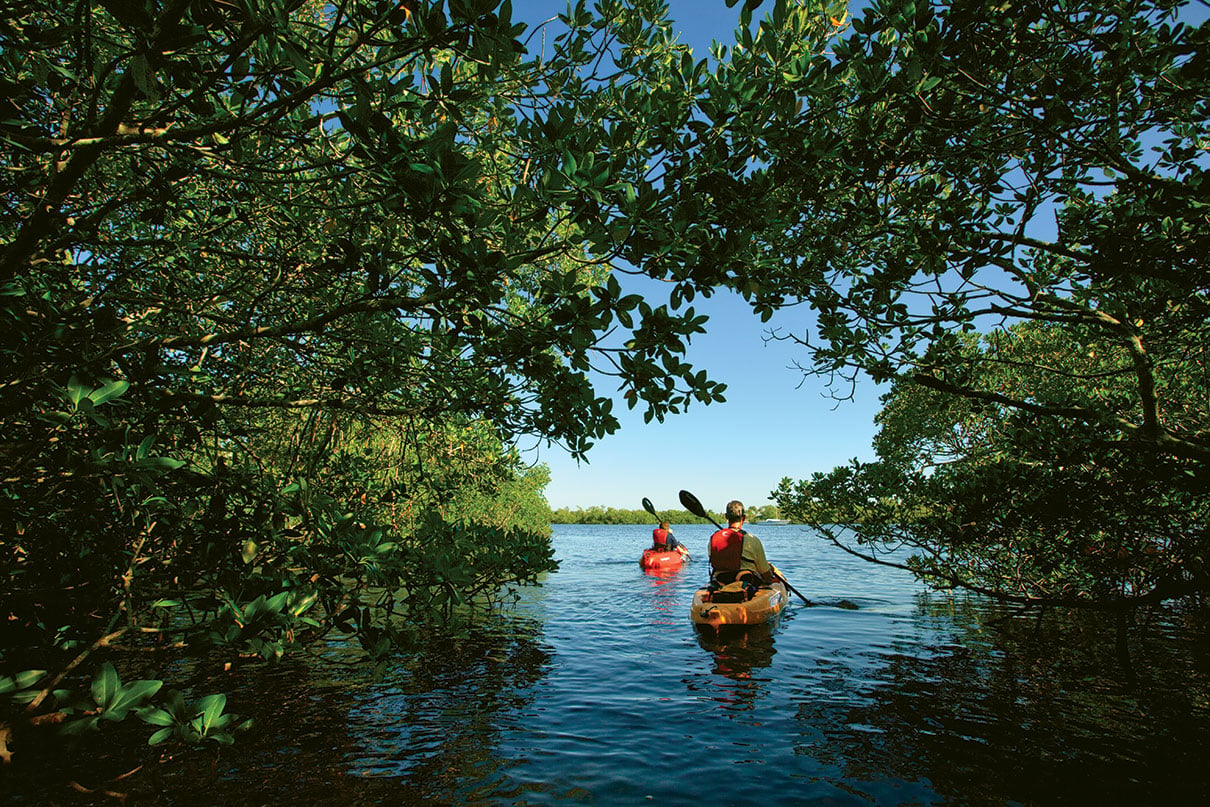
Matlacha Pass is full of mangrove channels and wildlife for paddlers to enjoy. | Feature photo: Lee County Visitor & Convention Bureau
Matlacha And Pine Island: The Laid-Back Side Of The Calusa Blueway
Unlike the turquoise waters and white sands of nearby Sanibel and Captiva, Pine Island’s shoreline is shaped by tangled mangrove roots and tannin-colored waterways. The mangroves make these waters ideal for kayakers by absorbing wave energy and creating calm, protected routes to explore.
The colorful, artsy fishing village of Matlacha sits between Pine Island and mainland Florida, right where the coastal waters are pinched to a braided, tidal corridor—the Matlacha Pass Aquatic Preserve—connecting Charlotte Harbor on the north with San Carlos Bay to the south. This makes the village the perfect entry point for slipping into the water.
Paddlers can set out right from the Matlacha Community Park and Boat Ramp. If you need gear, you can rent kayaks and paddleboards from the newly opened Matlacha Outfitters or Gulf Coast Kayak at nearby Sirenia Vista Park. The preserve spans across 14,000 acres of coastal habitat, meaning there is no shortage of mangrove channels, small islands or tucked away coves to seek out.
For those planning to spend several days paddling here, Matlacha Cottages and The Angler’s Inn both have their own ramps, making it seamless to start or end your paddle right from where you’re staying.
An On-The-Water Safari
The mix of oyster bars, seagrass flats, and mangrove islands in Matlacha Pass creates a natural haven for species of all sizes. It feels like an on-the-water safari, from the sea to the sky.
You can spot ospreys circling overhead, brown pelicans roosting in the mangroves, and double-crested cormorants perched on branches drying their wings. Listen for the sharp, rattling call of a Belted Kingfisher or the flap of white ibis flying overhead.
Perched osprey. | Photo: Jason Boeckman
Manatee surfacing. | Photo: Lee County Visitor & Convention Bureau
In other areas of the pass, you could see manatees surfacing for air and bottlenose dolphins corralling fish in the shallows. And, if you’re lucky, you may spot a loggerhead popping its head up before disappearing below the surface.
The shallow waters support more than 200 species of fish, from mangrove snapper and snook to striped mullet, often seen leaping from the water in silvery flashes. While mullet are prized as bait fish, locals love them on the menu at a number of area restaurants, including the Mullet Sampler at Blue Dog Bar & Grill, a fantastic lunch or dinner stop before or after a day on the water.
Remote shore of Cayo Costa. | Photo: Lee County Visitor & Convention Bureau
Exploring Pine Island Sound
Pine Island is made up of five small communities, each with its own personality: Matlacha, Pine Island Center, St. James City, Pineland, and Bokeelia. Bokeelia, at the northern tip, is one of the best points for paddlers to access the Pine Island Sound, where the Blueway opens from Matlacha Pass.
Start at the Bokeelia Boat Ramp, where there’s a small parking fee, and follow the sheltered coastline of Pine Island through Back Bay and Burgess Bay. The route stays mostly protected, weaving along mangrove islands and shallow flats.
If you need gear, Carmen’s Kayaks in Bokeelia offers seasonal rentals and guided trips, making it easy to get on the water even if you’re traveling light.
From the northwest side of Pine Island in Bokeelia, paddlers can cross more open water to reach Useppa Island and Cabbage Key. The Cabbage Key Inn is a great place to take a break and order one of their famous cheeseburgers before continuing toward the backside of Cayo Costa State Park. This remote barrier island remains one of Florida’s most unspoiled coastal parks, known for its white sand beaches and superb shelling.
When you return to Pine Island, Tarpon Lodge is a convenient and memorable place to stay for those tackling the paddling trail. Built in 1926, the historic fishing lodge is a favorite among because of its award-winning waterfront restaurant, dock access, and a direct connection to the Great Calusa Blueway.
Plan Your Paddle
For maps, route details, and recommended outfitters, visit the Great Calusa Blueway’s official website, which highlights local outfitters and businesses, launch points, and route suggestions throughout Lee County.
Feature photo: Lee County Visitor & Convention Bureau
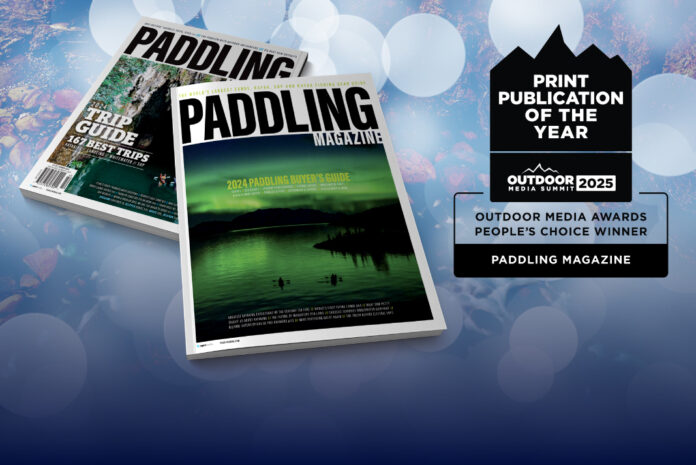
Paddling Magazine has been named Print Publication of the Year in the People’s Choice category for the second year in a row at this year’s Outdoor Media Awards, hosted by the Outdoor Media Summit (OMS). The awards are decided by more than 20,000 public votes and recognize the best outdoor media across print, digital, podcast, video and social platforms.
Thank you to our readers for voting for us!
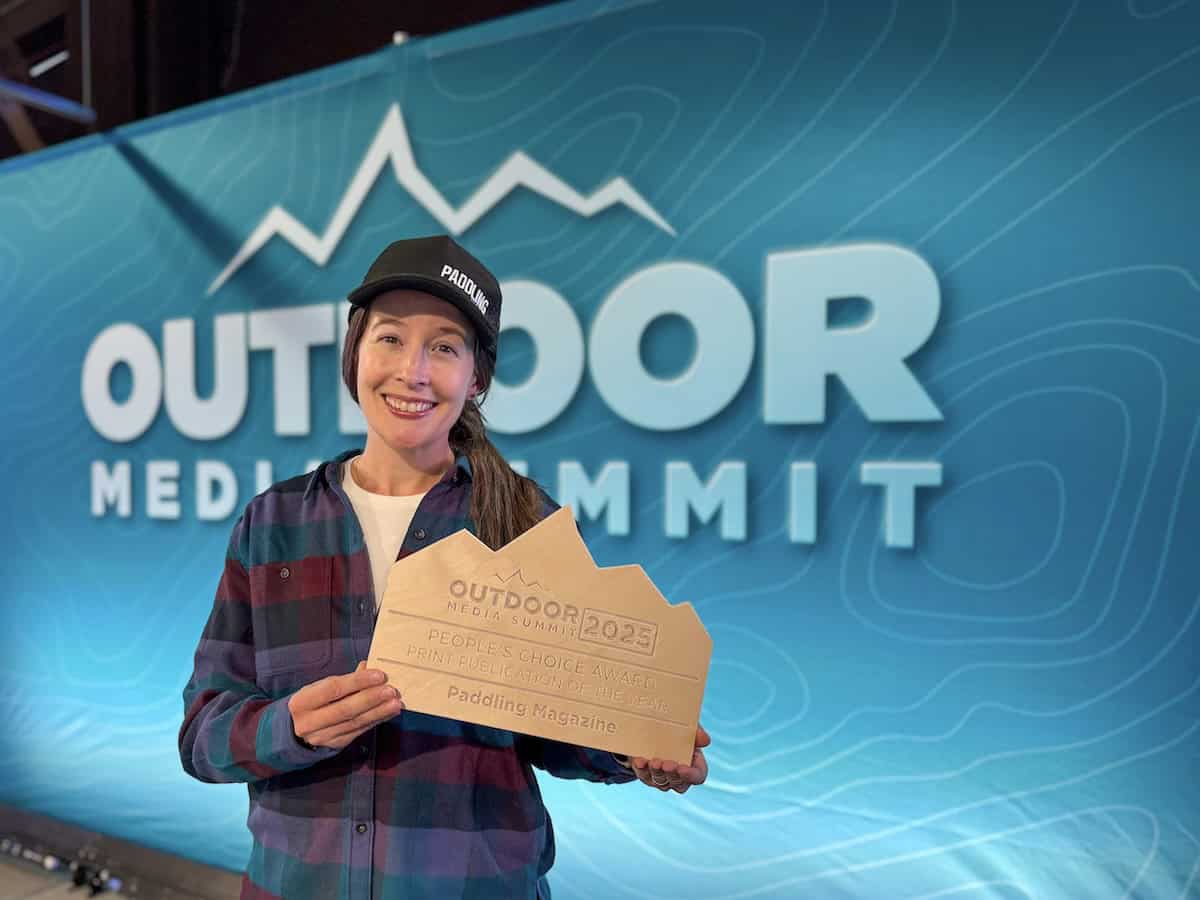
Big win for Paddling Mag! Editor-in-chief Kaydi Pyette represented the team at the Outdoor Media Awards in Durango, Colorado. | Photo: Paddling Mag
Editor-in-Chief Kaydi Pyette was onsite at the 2025 Outdoor Media Summit in Durango, Colorado, October 27-29, to accept the award in person. The three-day Outdoor Media Summit offered a packed schedule of events, combining one-on-one meetings, breakout sessions, industry discussions and packrafting with Alpacka Rafts.
Other People’s Choice winners include National Parks After Dark and Adventure Diaries (Best Podcast), Dumb Runner (Best Digital Publication), YouTuber Eva zu Beck (Best YouTube Channel), and @WomenWhoExplore (Best Social Media Handle).
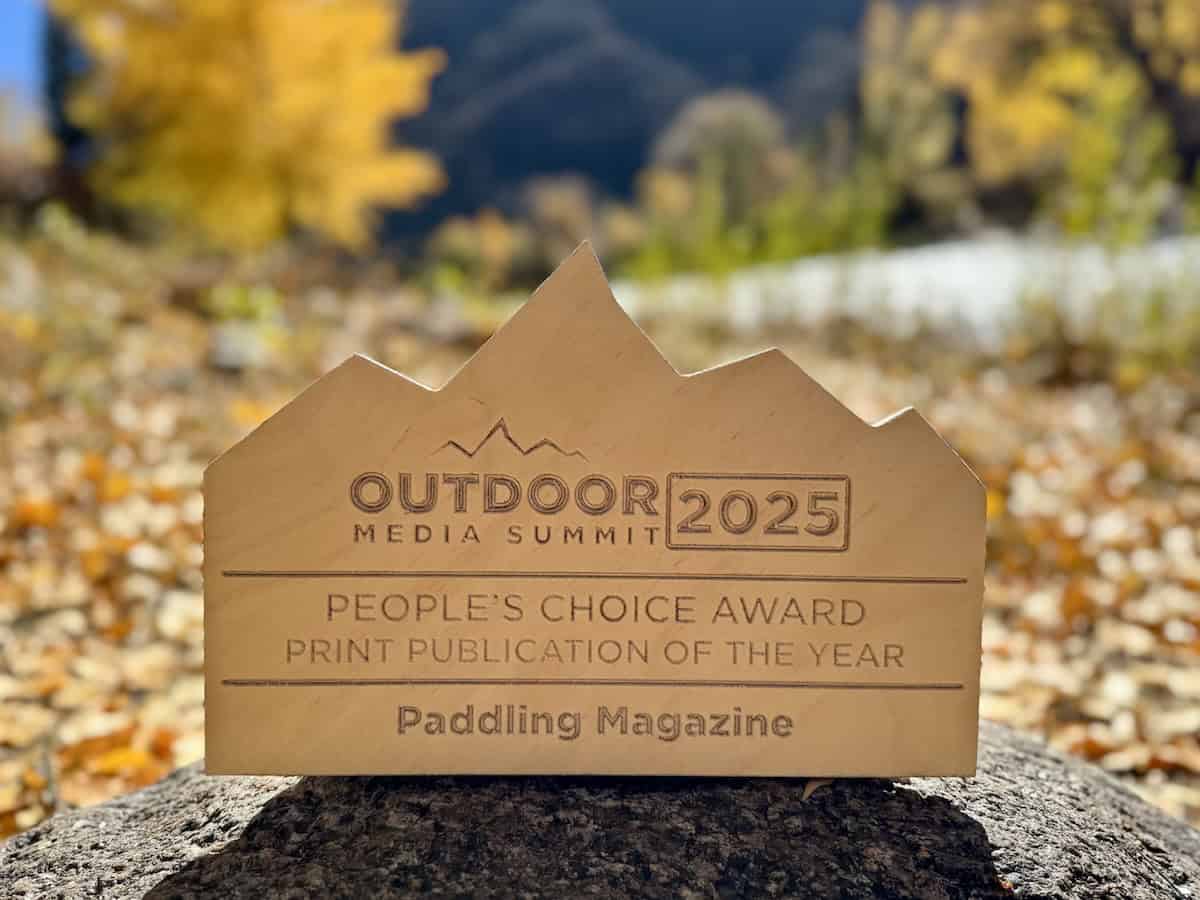
Outdoor Media Awards’ Print Publication of the Year. | Photo: Kaydi Pyette
In addition to the People’s Choice categories, OMS announced the winners of its Judge’s Choice awards, selected by a panel of industry professionals. Among this year’s honorees:
Best Outdoor Story: Alisa Hrusic for “Awe Can Do Wonders for Your Well-Being—If You Know Where to Look for It” (SELF magazine)
Best Podcast Episode: Aaron Lutze and Dylan Bowman for “Building a Content Strategy Playbook for Events” (Second Nature)
Best Gear Story: Graham Averill for “This is the Gear my Family Used in the Wake of a Natural Disaster” (Outside magazine)
Best B2B Story: Berne Broudy for “Brave New Landscape” (Grassroots Stories)
Best YouTube Video of 2024: Miranda Webster for “10 Rules of Hiking Etiquette I Wish I’d Known Sooner” (Miranda Goes Outside)
Get A Paddling Magazine Subscription
If you’re not already a print magazine subscriber, you can dive deeper into the world of paddling with a subscription to Paddling Magazine. If you’re passionate about paddling, you’ll love Paddling Magazine! From thrilling expedition stories to expert tips and the latest gear reviews, Paddling Magazine is crafted for enthusiasts by enthusiasts.
Subscribe now and let us bring the adventure to your doorstep.
For the next three weeks we’re sharing the finalists from the Paddling Kids Story Contest. Read their stories and vote for your favorites to crown a winner! Comment below, or like and comment on Facebook and Instagram to register your support (maximum one comment per week per user). Voting for “First Canoe Camping” is open from now until 5pm ET on Thursday, November 6.
First Canoe Camping
By Owen Morris, age 7, from London, Ontario
Listen to the story here:
Hi, my name is Owen. I’m seven years old and I really like beef stroganoff.
This summer I went on my first canoe trip to Algonquin Park with my grandpa, my sisters Emily and Kaitlyn and my dad. We went on a five-day, four-night trip. It was lots of fun. The only thing I didn’t like about it was the bugs.
Photo: Courtesy Owen Morris
We started on Canoe Lake. It was raining a lot, but it got nicer as we paddled. The hard part was getting used to the different strokes. I loved exploring the campsite we stayed at on Tom Thomson Lake.
Photo: Courtesy Owen Morris
The next day, we had breakfast sandwiches. Then we got in the canoes again. We portaged into Kooy Pond. It really didn’t have much water in it, so we had to walk around it. So muddy! After getting out of Kooy Pond to get away from the bugs, we decided to have lunch in the canoes in the middle of Willow Lake.
On the second and third night, we stayed on an island at Sunbeam Lake. We saw a bunch of catfish. I got my lure under a rock, but they didn’t go for it. The island was the best. We explored and named parts of it. We had our own little table and benches.
I loved climbing on the rocks. We went and explored a waterfall, then an underwater beach. I was able to walk out so far.
On the fourth day, we paddled through Vanishing Pond. There wasn’t much room to paddle. We crashed the canoe a few times against the edge of the channel.
On the last night we stayed on the east arm of Joe Lake. It was hot, so we swam a lot. The rock in the water was so slippery, but we made it. After dinner, we watched the sunset and the stars.
On the last day, we paddled out and had lunch at the canoe store. I had chocolate milk, a hamburger and ice cream. It was so yummy! Then we drove home. It was so good to sleep in my own bed again.
Photo: Courtesy Owen Morris
Vote for your favorite Paddling Kids finalists to crown a winner! Comment below, or like and comment on Facebook and Instagram to register your support (maximum one comment per week per user). Voting for “First Canoe Camping” is open from now until 5pm ET on Thursday, November 6.
Jacques Chassé at Esquif’s factory in Frampton, Quebec. | Feature photo: Francis Vachon
One summer in Maine,as I hoisted my canoe for the quarter-mile portage around Allagash Falls, I noticed the stones at the landing were covered in streaks of dark green and red. Continuing over the rise, blinking sweat from my eyes, I stared vacantly at the trail scrolling beneath my boots. It was rugged and steep and full of rocks, every one of which was marked with red or green, or both, even at the height of land where I stopped to catch my breath. On the way down there were even more colorful streaks, which makes perfect sense because it’s easier to drag a rented canoe downhill than up.
From that day on, I’ve been a believer in Royalex, the green (sometimes red) miracle material that dominated the middle of the canoe market from its introduction in 1972 until 2014, shortly after plastics giant PolyOne acquired Royalex manufacturer Spartech and shuttered the Indiana factory where it was produced, citing insufficient demand from the canoe industry.
T-Formex: Esquif’s long-shot bet on a replacement for Royalex pays off
Jacques Chassé is also a believer. So much so that he gambled his company, Esquif, on creating a replacement for the famously durable material. While other canoe companies looked to fill the gap with high-end composites or rotomolded boats, Chassé never saw those materials as an option for the canoe company he founded in 1997 with an order of five sheets of Royalex. While Esquif had grown to employ about 20 workers at its Frampton, Quebec, factory, it never moved away from Royalex.
“The other manufacturers already had composite boats in their pocket or rotomolded boats in their pocket, so they were able to survive with that,” Chassé says of the years after PolyOne ceased deliveries. “We did not have that. For us, developing T-Formex was a question of survival.”
Jacques Chassé at Esquif’s factory in Frampton, Quebec. | Feature photo: Francis Vachon
Royalex consists of a foam core sandwiched between layers of ABS plastic, with a very thin outer skin that provides UV protection and a slick surface that tends to glance off rocks and slide over shallow river bottoms. Those qualities made Royalex a favorite of canoeists for more than 40 years, particularly expedition paddlers and rental liveries who valued its nearly indestructible nature and middle-of-the-road price point.
Manufacturing Royalex, or any viable replacement for it, requires sophisticated chemistry and machinery to produce each layer of material, and still more complex equipment to bond them together in a process called vulcanization. Chassé was somewhat familiar with the final step, because he had proposed to Spartech that Esquif could take over the vulcanization to expedite delivery during the busy spring season. He knew nothing about Royalex’s real secret sauce—the formulation and manufacture of the three component layers. He decided to go all-in anyway.
“There are things that you will do when you are a believer, no matter the challenge,” he says now.“When I received the letter from PolyOne saying they will cease their operation, instead of panicking or feeling destroyed by that news, I saw it as an opportunity.”
Chassé bought up every sheet of Royalex he could put his hands on, expecting it to bridge the gap until he could introduce the replacement laminate he would call T-Formex. He spent 2014 working to reproduce the Royalex recipe. Chassé read everything he could find about plastics and began working with Polytechnique Montréal, a research university with a pilot plant where Chassé pursued his own version of the Holy Grail: A trio of materials that, when bonded together, will hold its shape after impact, slide over rocks and resist the sun’s ultraviolet rays—a material that won’t weigh too much and can be made in sheets with reinforcements where needed, such as the places that will become the bow and stern when the material is draped over a mold and thermoformed into the timeless shape of a canoe.
Chassé ran out of Royalex, and cash, in early 2015.
“I didn’t pay myself for six months, but I kept my longtime workers until I had to tell them one morning, I can’t pay you anymore,” Chassé recalls. He eventually let all his employees go, and Esquif went bankrupt.
Still, he believed. He gathered a few friends and investors and bought Esquif out of bankruptcy. He was convinced he could bring T-Formex to market, and that when he did the company would thrive like never before.
A void, and an opportunity
In the early post-Royalex years, Chassé remembers talking to paddlers at shows like Canoecopia or on his favorite local runs. “Quebec rivers are tough and rocky, and it’s part of our DNA to paddle them,” Chassé says. “We are involved in whitewater as well, and paddlers were telling us they really needed a material that is durable enough for that.” Those conversations gave Chassé the confidence that there was a strong market—more than that, a real need—for T-Formex, if only he could deliver it.
After more trial and error he developed what he calls an evolution of the Royalex formulation, and found a processor in the United States that could produce the core and the skin. Then he bought the shell of an autoclave in Texas, shipped it to Quebec, and spent months making it operational and converting it from steam to electric heating. This solved one of the problems that had plagued Royalex, Chassé says.
“Moisture doesn’t fit very well with plastic, so our equipment allows us to control the process much better. ”
By the 2016 model year, Esquif was shipping a full line of canoes in T-Formex and was soon thriving like never before. In the Royalex years, Chassé says, Esquif had always been in survival mode. That changed with T-Formex. “It became the second profit center we needed to support our growth,” he says.
Esquif has made T-Formex available to other canoe manufacturers and Chassé has explored its use in different industries. Finally, he says, because a canoe manufacturer owns the formula, the paddlesports industry is no longer vulnerable to the whims of a multinational corporation.
The path hasn’t always been a smooth one. When a factory fire halted production during the peak of the pandemic boom in 2021, Chassé gathered his employees and told them they would be making canoes again in a matter of weeks—and they did.
“If you want your team to follow you, you need to be inspiring. You’ve got to feel the confidence that you’re going to make it,” he says. “You’ve got to believe.”
This article was first published in the 2025 issue of Paddling Business. Subscribe to Paddling Magazine’s print and digital editions, or browse the archives.
Jacques Chassé at Esquif’s factory in Frampton, Quebec. | Feature photo: Francis Vachon
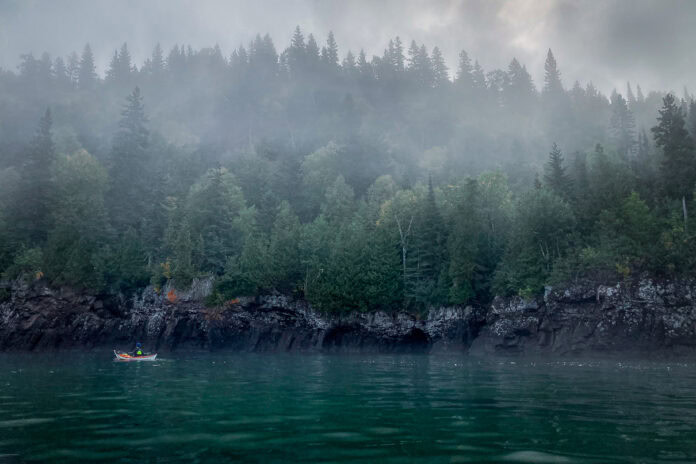
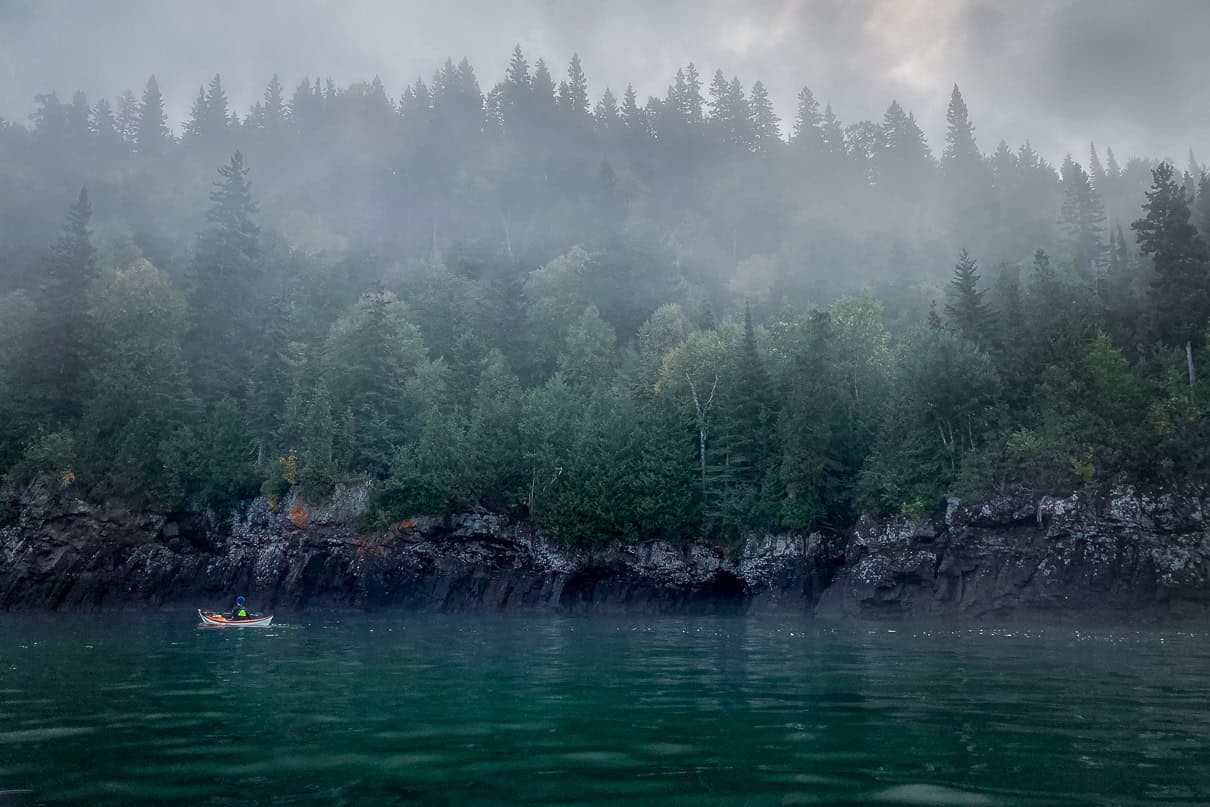
Kayaking through spooky fog on an island. Feature Image: Maddy Marquardt.
The water covers up mysteries, breaks down evidence and obscures footprints, so it’s no surprise that paddlesports harbor a few mysteries. From unexplained phenomena at sea to potential Sasquatch encounters, here are five of the strangest paddling mysteries.
Five of the spookiest paddling mysteries of all time
1 The Tom Thomson canoe mystery
In July of 1917, famous painter Tom Thomson disappeared on Canoe Lake in Algonquin Park. His body was never found, and many point to foul play. Meanwhile, Winne Trainor, one of Thomson’s girlfriends who Thomson often stayed with never recovered from his death and was rumored to be pregnant with Thomson’s child.
She never married and she died at 77, leaving behind a strange note that read “If I saw you I could say things that I will never write.”
A century ago, John “Hermit of the North” Hornby and British financier John Critchell Bullock set out to paddle the Barren Lands, find the then believed to be extinct muskoxen, and capture it on motion picture. In 1925, the expedition had become a battle for survival and the men chose to lighten their load, leaving behind a cache containing the movie camera and 10,000 feet unused motion picture film.
In 2015, Bullock’s journals resurfaced. Polish paddler Michal Lukaszewicz and his wife, Karolina Gawonicz pored over the journals, maps and satellite images, making it their mission to find the cache.
In 2023, the couple climbed into a canoe at Yellowknife and headed into the wilderness to find the cache in an expedition that solved one of the greatest paddling mysteries of the century.
On February 8, 2007, with just 120 kilometers (100 miles) between him and New Zealand, expedition sea kayaker Andrew McAuley sent a text to his wife and son reading, “See you 9 a.m. Sunday!” McAuley was nearing the end of a 1,600-kilometer (1000-mile) open ocean crossing of the Tasman Sea from Australia to New Zealand.
McAuley had weathered nightmare storms with nine-meter (30-foot) waves and spent a decade preparing for the trip. With shore within sight and a relatively friendly weather forecast it was then that McAuley disappeared, leaving behind a kayak in nearly perfect condition missing only its cockpit canopy.
Paddler and explorer Sander Jain had kayaked into a remote cabin on Clayoquot Sound when the woods and seashore went silent. Then, Jain heard a strange sound in the distance as if boulders were being thrown followed by owl-like vocalizations, punctuated only by silence.
Enter Sasquatch. A stomping noise began on the ground near the front porch.
“The stomping was joined by the most horrifying vocalizations— disturbingly erratic and deliberate at once, tribal, not quite like human speech but similar enough to recognize certain elements. It sounded as if something was trying to speak, shout, articulate itself without quite mastering the language,” wrote Jain, in one of the more compelling—and unsettling—accounts of potential Sasquatch encounters.
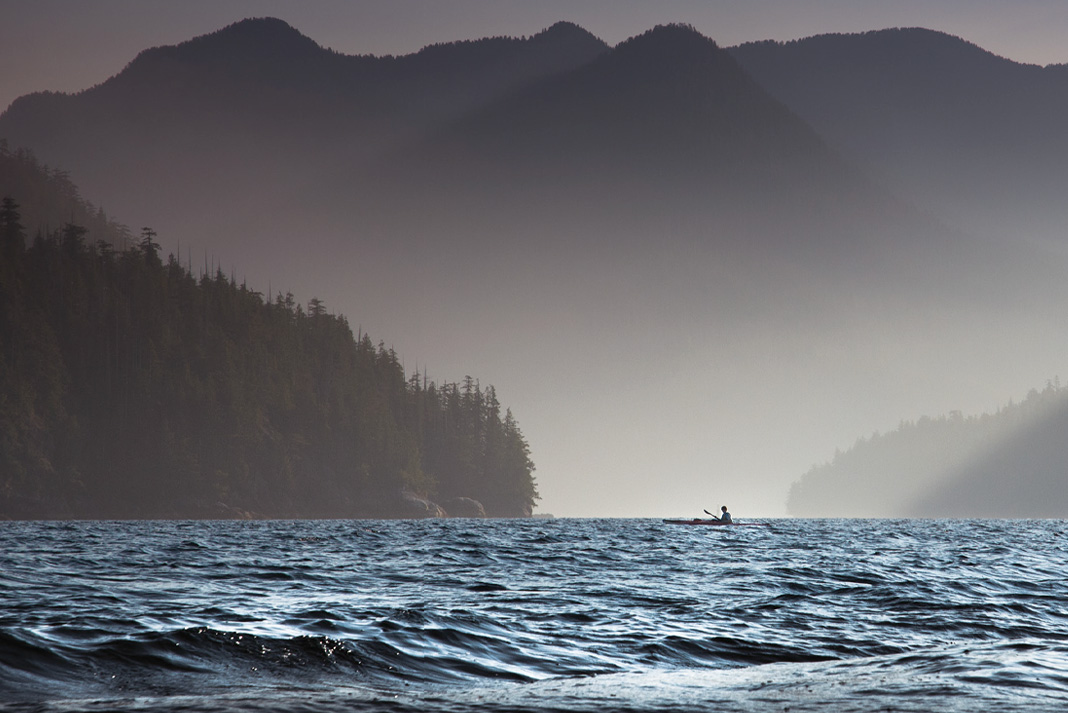
Kayaking through spooky fog on an island. | Feature photo: Maddy Marquardt
5 Mystery collision in Mid-Atlantic
Thirteen days into his transatlantic solo journey from Portugal to French Guiana, paddler Micheal Walther had settled in for the night when his modified paddleboard collided with an unidentified object in the ocean.
The collision caused Walther to call off his expedition. The mystery object remains an Unidentified Floating Object—a UFO.
Think this is big? Try teaching a beginner to roll. | Feature photo: Eli Castleberry
“Idolizing hard whitewater leaves out what the vast majority of whitewater paddlers do,” expedition kayaker and author Doug Ammons wrote 10 years ago in this same column. He’s not wrong. The article was titled “Why Going Bigger Makes the Whitewater World Smaller” and it’s one of the most popular whitewater essays ever written in this magazine—and for good reason. It challenged a culture of bravado that sometimes alienates new paddlers and diminishes the quieter joys of the river.
But I’ve been stuck on the title ever since.
Does going bigger really make our little whitewater world shrink? I don’t think so. Going big can inspire and expand the community—when we tell the story right.
Hey, whitewater boaters: This is why no one understands you
Big moments get so much attention because they captivate and inspire us. Epic, viral clips of kayakers aren’t bad for our sport any more than the X Games are bad for snowboarding and skateboarding. Spotlighting big moments is good for sports. With the acclaimed HBO series 100 Foot Wave in its third season, surfing is poised for another boom, projected to grow into a whopping $5.3 billion industry by 2032, according to Surfer magazine.
Free Solo, with its 2019 Academy Award win for Best Documentary Feature, highlighted one of the most extreme moments of climbing. The number of climbers in the United States increased by five percent the following year, according to the Outdoor Industry Association, and reached a total of over 10 million in 2021.
Think this is big? Try teaching a beginner to roll. | Feature photo: Eli Castleberry
Just watching the biggest moments in kayaking can inspire us to challenge ourselves. We all go big in our own ways. That’s where the magic is.
For most of us so-called thrill seekers, connection and flow are the goals, not adrenaline. For me, adrenaline is the enemy. It means I wasn’t prepared. But when I take a reasonable step up, my skill takes over, and I feel like a better, clearer me. I paddle away transformed, forever changed by the accomplishment. I learn about myself, how I handle fear and what I’m capable of. That stays with me and spreads to other aspects of my life. As an instructor, I’ve watched countless students find personal growth and connection through safely approaching their own big moments.
We rarely take the time to share the skills learned, failures earned, safety considerations or how it feeds the soul.
Going big is not the whole story, and it’s time kayakers share it. Whitewater paddling is a small, niche sport in a hyper-connected world. On social media, we may find a spotlight—but without context, the non-paddling public often misunderstands what they’re seeing. They catch glimpses of massive waterfalls and viral clips but rarely see the years of preparation, training and calculated risk behind those feats. Or they see headlines about so-called experienced kayakers drowning on easy streams—often with no training, skill or safety equipment at all. They can’t distinguish a well-earned kayaking accomplishment by an expert paddler from a lucky hold-my-beer moment with a kayak from a big box store.
We discount ourselves, too. Within our own community, we disparage practiced skills with statements of bravado, such as “just send it” and downgrading a waterfall to “plop and drop.” Kayakers frequently showcase spectacle, discomfort, danger and trauma over personal growth, connection and well-earned accomplishment. We rarely take the time to share the skills learned, failures earned, safety considerations or how it feeds the soul. And when we highlight our accomplishments, we rarely share why it matters to us personally. Maybe we’re afraid of vulnerability.
We undermine our own sport and its credibility when we downplay the true breadth of skill and journey toward big moments. Every kayaker will tell you paddling makes their life better and can articulate why. Whether it’s the feeling of being on the river, the connection with nature, the flow that comes with challenging your skills or the friends we make along the way, it’s what makes pushing through the inherent danger, challenge and discomfort worth it.
We all go big in our own ways, whether stepping up to a class II rapid, a reasonable personal first descent or earning your stamp for sending a monster waterfall. It’s time to showcase and appreciate the dedication and training required, as well as the value, connection and heart that come with it. Going big can make the whitewater world grow larger, but it comes down to how we share those moments and the stories we tell.
Boyd Ruppelt is whitewater paddler of more than 30 years, a longtime athlete for Jackson Kayak, and a global kayaking instructor and guide. You can find him at CleanLineKayaking on YouTube or at boydruppelt.com.
This article was published in Issue 74 of Paddling Magazine. Subscribe to Paddling Magazine’s print and digital editions, or browse the archives.
Think this is big? Try teaching a beginner to roll. | Feature photo: Eli Castleberry
For the next three weeks we’re sharing the finalists from the Paddling Kids Story Contest. Read their stories and vote for your favorites to crown a winner! Comment below, or like and comment on Facebook and Instagram to register your support (maximum one comment per week per user). Voting for “San Juan Madness” is open from now until 5pm ET on Thursday, October 30.
San Juan Madness
By Asa McCallum, age 9, from Weybridge, Vermont
The water flies into my face. I hear cheering from the shore. I feel like I am going down a roller coaster.
Right, left, right, left.
Then I feel the boat hit something huge. We lurch to a stop.
“What is going on?” I hear Pinky yell over the roar of the water. Grampa looks at me.
Twenty minutes before:
I get out of my kayak. I walk over to the rocks where Grampa is standing.
I start to hear a roar. It sounds like a dragon.
“That’s it. The Government rapids.”
Photo: Courtesy Asa McCallum
When I first see it, I am surprised. The water is low like it has been the entire trip, but I expected that the main attraction of the trip would be a little more… I don’t know. Main attraction like. It is pretty spectacular though. I watch as Grampa shows everyone the safe routes, and the routes that you should not take.
“First, Max will go down, then he will take Erin’s boat. After that, I will take it down with Asa. Then I will go down again with the one raft left. Asa if you want to come again, you can.”
Max gets in his kayak and pushes off. He starts to paddle. He doesn’t have to, though. The current sucks him in. He starts down. He takes a hard left, then goes straight until the end, where there are rocks. He goes right, and water flies into his face. He lets off a “whoop!” as he gets off the rapid. Then Max takes down Mom’s boat. After he finishes with that, it’s my turn.
Everyone helps push us off because ours is the first big raft. Grampa starts to paddle. We pick up speed. Then it happens. Water flies into the front where I am sitting. We take a left when I see a huge rock in front of us. Max had taken a right at the rock. That is what Grampa does. At least tries to.
I feel the boat stop. “What the” are Grampa’s first words. Everyone is confused. Grampa is paddling as fast as he can. It is no use. After about two minutes Pinky yells something. We can’t hear her over the roar of the water, but then she uses her hands to show what she is saying.
“I think she wants to bump us,” I yell over the current.
“No,” Grampa shakes his head. A minute later Grampa starts to pile stuff on the front of the boat so the weight shifts to make the boat move.
Weight starts to pile on me. I try to endure it. I imagine the boat tipping, then try to get the image out of my mind. Grampa starts to paddle. He tries to catch the paddle on a rock. Finally, the oar hits bottom.
He leans on the paddle with all his might. We don’t budge. Soon, he starts to make progress. I get a good feeling, then we break free.
Photo: Courtesy Asa McCallum
We start down. Then the back of the raft gets stuck AGAIN.
Water pounds the boat. Now we are at a new angle, so the water is pouring right in the part of the boat that I am in. It is being flooded. Water is pounding against me. I make a shield with my arms, but the water breaks over the wall onto my head.
All I can do is sit there. I think about what could happen if the boat does not make it. Will it tip, leaving Grampa, and me in the water? Will the boat ever move? I hope so. Thoughts swirl through my mind.
I see my mom on the shore. Max and Pinky are getting a rope below.
They all look worried. I just don’t get it. How did this happen? It worked for Max. Twice!
Photo: Courtesy Asa McCallum
Grampa puts down the paddles. He probably needs a rest. I can’t blame him. He pulls out something from his pocket. A Coke! At this time he drinks a Coke. He puts it back in his pocket after taking a sip.
“Okay. You got this,” I hear him whisper to himself. He stacks more things in the front. I wedge myself in a corner to give him more room to put things.
I want to help, but what can I do? I can barely get out of this cramped place.
All I can do is stay quiet and not interrupt.
All I do is listen. The roar of the water. Pinky, Max and Mom yelling on the shore, trying to ask Grampa things.
All Grampa does is shake his head no.
I hear him groaning as he pushes on the oar. I hear the oar pushing on a rock, trying to break free.
Then in one final lean. With all his might, Grampa moves the oar.
We move down the river. Water splashes in my face. I hear cheers from the shore. Best of all…
Mom got it all on camera. We get to the shore, and everyone is coming down the hill to greet us. “That may have been the longest two minutes of my life,” I say.
“Two minutes! That was fifteen!” My mom says.
“What!” I exclaim!
“Well then, that was the shortest fifteen minutes of my life,” I emphasize shortest, and fifteen just to make a point.
My mom laughs. I hear Grampa telling Pinky and Max about it. He was saying how good I was on the boat, and that I was calm, understanding, and able to go with the worst flow of all time. I don’t get how he thinks that, though. I was not calm at all.
I was freaking out all over. I mean ALL over. Still, it feels good to get the compliment.
We walk over to the boats. I got a lemonade. I did some kid math to figure out I could get two every day. I sat down next to Mom. All I can think is O.M.G. That was really awesome.
Photo: Courtesy Asa McCallum
Vote for your favorite Paddling Kids finalists to crown a winner! Comment below, or like and comment on Facebook and Instagram to register your support (maximum one comment per week per user). Voting for “San Juan Madness” is open from now until 5pm ET on Thursday, October 30.
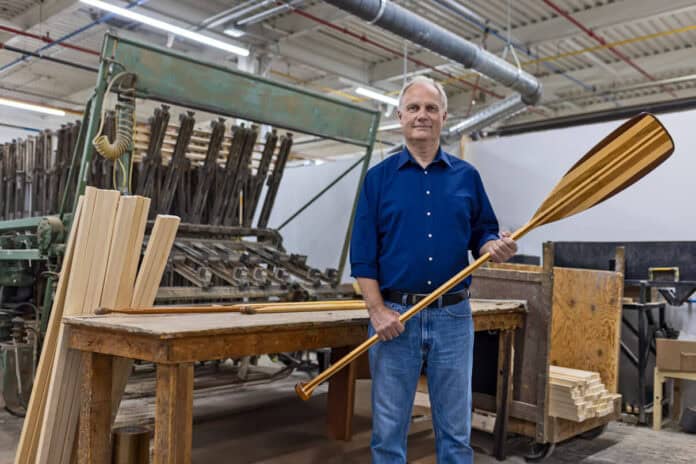
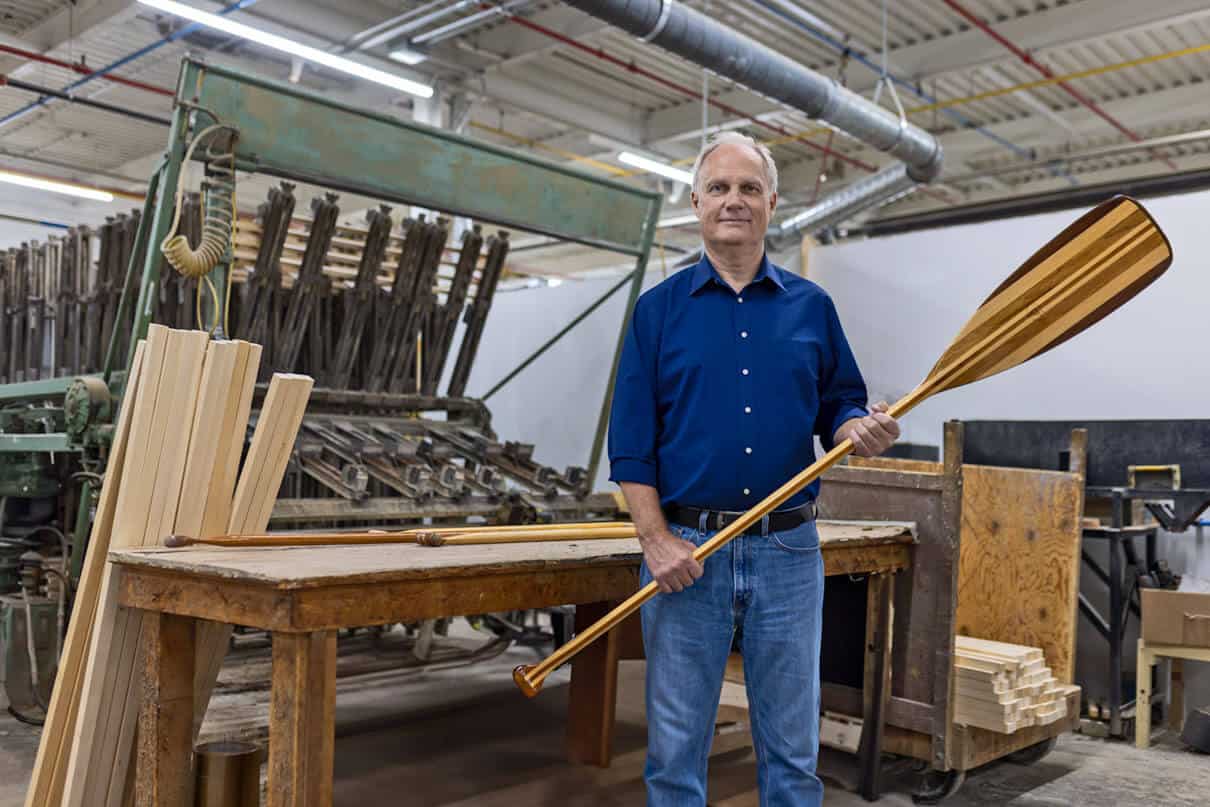
He shoots! he scores! Roustan Sports Ltd. Chairman W. Graeme Roustan acquired Grey Owl Paddles in the brand’s 50th year. | Feature photo: Patrycja Hyrsz
For decades, Grey Owl Paddles has been a fixture in canoes across Canada. Now, as the brand marks its 50th anniversary, it’s found a new home. The acquisition is the perfect off-season match to complement an already thriving hockey stick manufacturing business, says new owner W. Graeme Roustan, executive chairman of Roustan Sports Ltd.
Grey Owl Paddles set for expansion under new ownership
“Here was the challenge: Hockey is a winter sport, so six months of the year, we were very busy making hockey sticks. But the other six months, we were slow,” Roustan says. Roustan Sports is the only commercial manufacturer making hockey sticks domestically in Canada or the U.S. and produces more than 250,000 sticks annually.
Grey Owl Paddles was founded by canoeist Brian Dorfman in 1975. He started the company in his garage after he’d fled the suit-and-tie life of Bay Street. After being an industry stalwart for decades, Dorfman, now 80 years old, began searching for a buyer for Grey Owl two years ago. The hockey stick and paddle businesses were already acquainted, having once shared wood—and even employees—when both operated in the Ontario city of Cambridge.
He shoots! he scores! Roustan Sports Ltd. Chairman W. Graeme Roustan acquired Grey Owl Paddles in the brand’s 50th year. | Feature photo: Patrycja Hyrsz
Roustan is no stranger to dealmaking. A former Wall Street banker, he led a group that acquired Bauer Hockey from Nike for $200 million in 2008.
“Two years ago, I sat down with Brian and I said, ‘I hope I’m worthy.’ And he said to me, ‘I’ll talk to your employees. I’ll talk to your suppliers. I’ll think about it,’” says Roustan. Dorfman waited until Grey Owl’s milestone anniversary before retiring.
Roustan officially took over Grey Owl on July 1. “I’m going to do my very best to continue on the legacy of Brian and his life’s work,” says Roustan. Dorfman remains involved as an advisor.
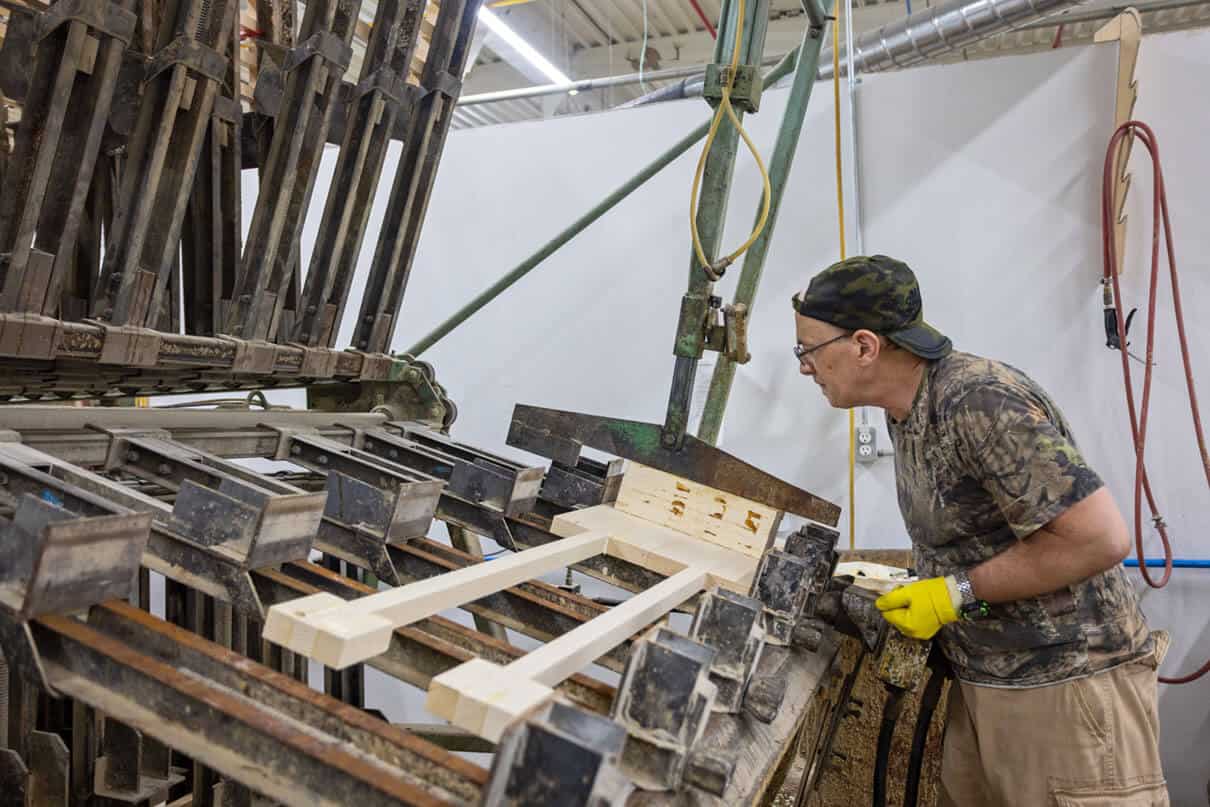
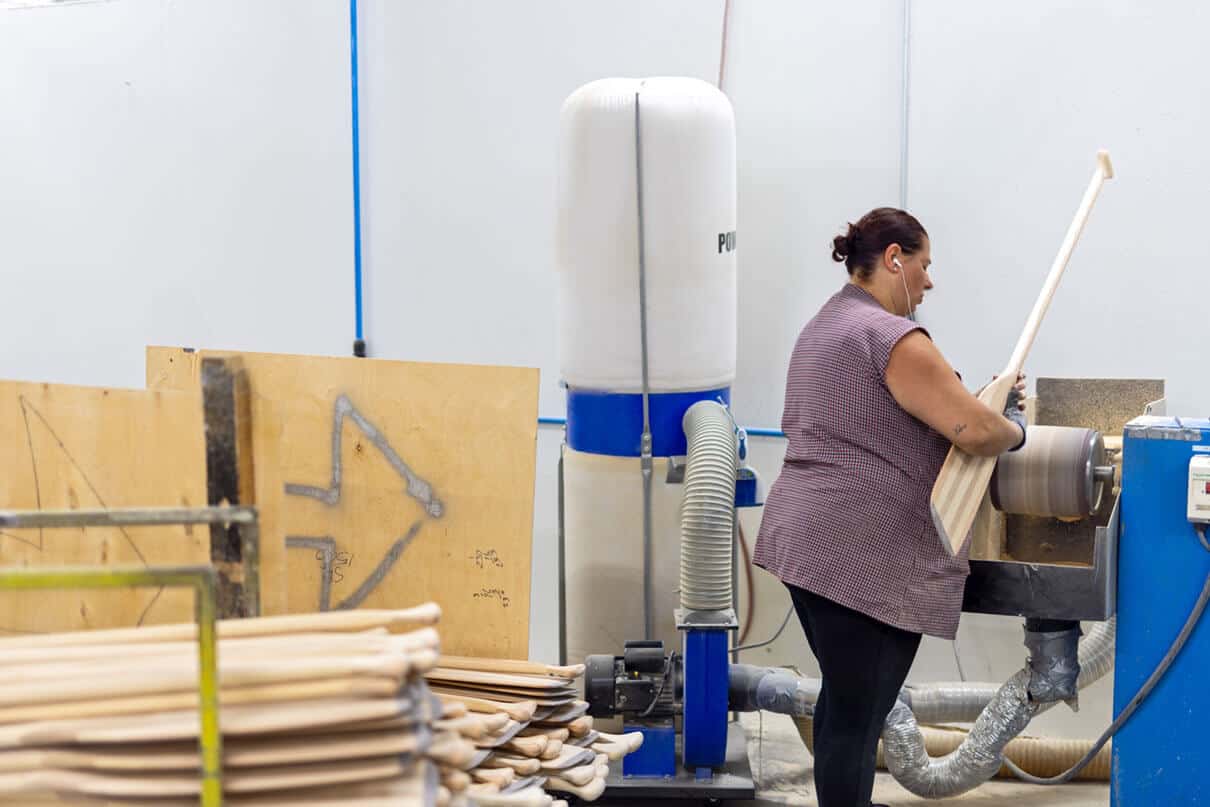
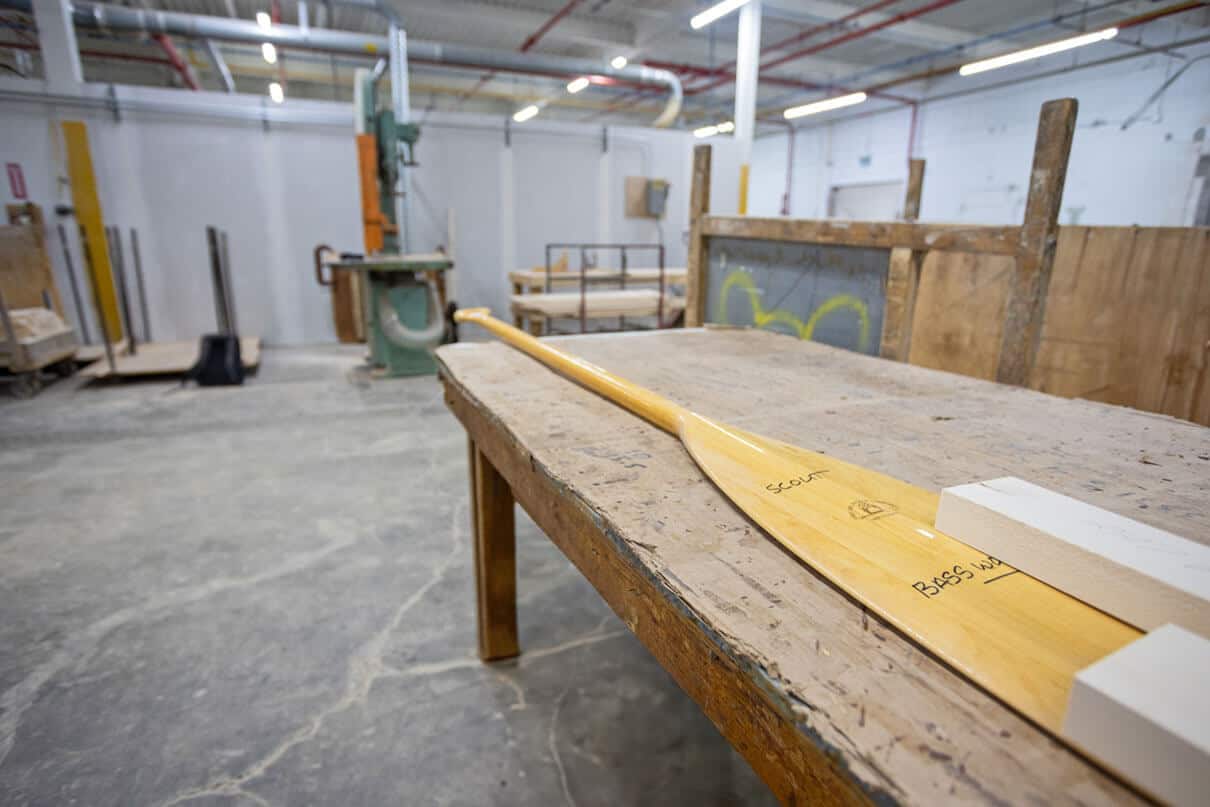
Roustan spoke with Paddling Magazine in early August, just four days after the first paddle was made in Roustan’s 130,000-square-foot mega-factory in Brantford, Ontario. Relocating Grey Owl’s specialized equipment to the nearby city cost half a million dollars, says Roustan. The price of the sale was not disclosed. Consolidating operations eliminates much of Grey Owl’s overhead, and because Roustan Sports buys wood in greater volume for its hockey sticks, Roustan anticipates substantial cost savings on materials.
In 2024, Grey Owl made more than 30,000 paddles. In the first 12 months after acquiring the business, Roustan aims to make 50,000 paddles, with plans to double that within three years. Roughly half will go to the 145 dealers worldwide, with the other half sold direct to consumer (DTC).
Behind the scenes inside Roustan Sports LTD.’s 130,000-square-foot factory in Brantford, Ontario. | Photo: Patrycja Hyrsz
Photo: Patrycja Hyrsz
Photo: Patrycja Hyrsz
DTC will be new for the brand, which recently launched a Shopify-powered site on greyowlpaddles.com. Of the 7,000 paddles in acquired inventory, 4,000 were sold in July, says Roustan, mostly direct to consumers, boosted by advertising in The Hockey News magazine and website, where Roustan is the owner and publisher.
This isn’t Roustan’s first foray into launching DTC. In 2019, he launched stix.com, selling hockey sticks online. To overcome retailer concerns about DTC, his model used the postal codes from online buyers to assign commissions to his dealer network.
He plans to do the same with paddles, supporting dealers while embracing DTC. His message: DTC isn’t going away, but retailers can still win.
“There has to be a new model where we share in the opportunities because the dealers are our partners. It has to be a two-way, win-win partnership, or else it doesn’t work,” says Roustan.
It’s a model he believes will help Grey Owl build on its 50-year legacy. “When kids put a hockey stick in their hand, a smile goes on their face. When someone has a paddle and they’re in a canoe, it puts a smile on their face,” says Roustan. “We live in a time when not too many smiles are going around. I’m in the business of putting smiles on people’s faces. It’s a privilege.”
This article was first published in the 2025 issue of Paddling Business. Subscribe to Paddling Magazine’s print and digital editions, or browse the archives.
He shoots! he scores! Roustan Sports Ltd. Chairman W. Graeme Roustan acquired Grey Owl Paddles in the brand’s 50th year. | Feature photo: Patrycja Hyrsz




 This article was published in Issue 74 of Paddling Magazine.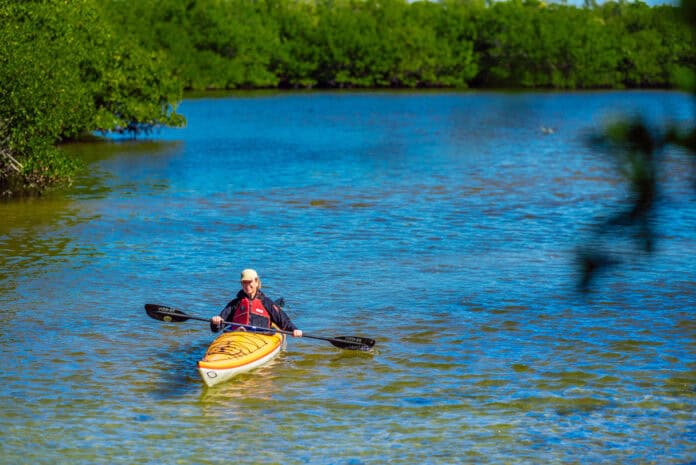




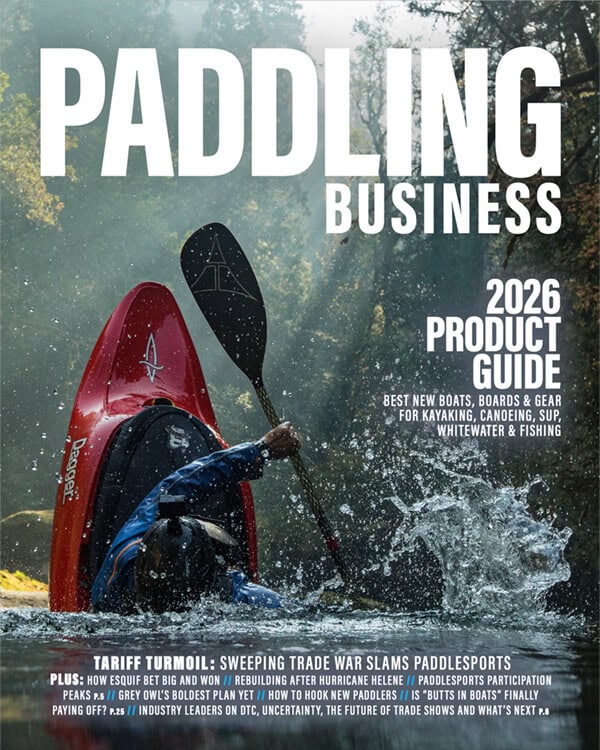 This article was first published in the 2025 issue of Paddling Business.