Home Blog Page 125

Navigating A Love-Hate Relationship With Emergency Communications Technology

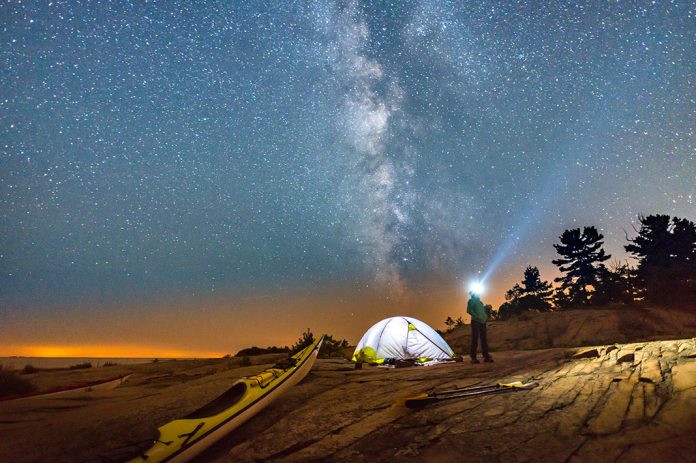
Person standing beside tent and kayak pulled up on shore, with headlight on, and Milky Way overhead.
Disconnect to reconnect. | Photo: JP Danko

Each spring, I realize how fast time scrolls by when an outfitter friend recruits me to instruct his sea kayak guides’ training course on Lake Superior. I inevitably assume the role of an old codger. How things have changed since my glory days.

When I started guiding 20 years ago, adventure tourism was booming. My favorite recollections portray the nascent industry as fly-by-night. I was still a teenager, leading greenhorn adults on wilderness trips without any emergency communication technology. On sea kayak trips, if you raided the gear room early, you’d score an oversized, non-waterproof VHF marine radio with a sketchy battery and limited range. The plan if things went sideways was implicit: deal with it on your own.

I was longing for those simpler days last winter when a friend and I set off on a 10-day snowshoe and toboggan trip on the frozen waterways of canoe country, just as the world descended into the chaos of the pandemic. Each evening my partner fired up his InReach satellite communicator and the messages rolled in from his girlfriend: lockdowns and border closures, numbers of infections and professional sports seasons abruptly canceled—illusions of an apocalypse so far removed from the reality of our existence.
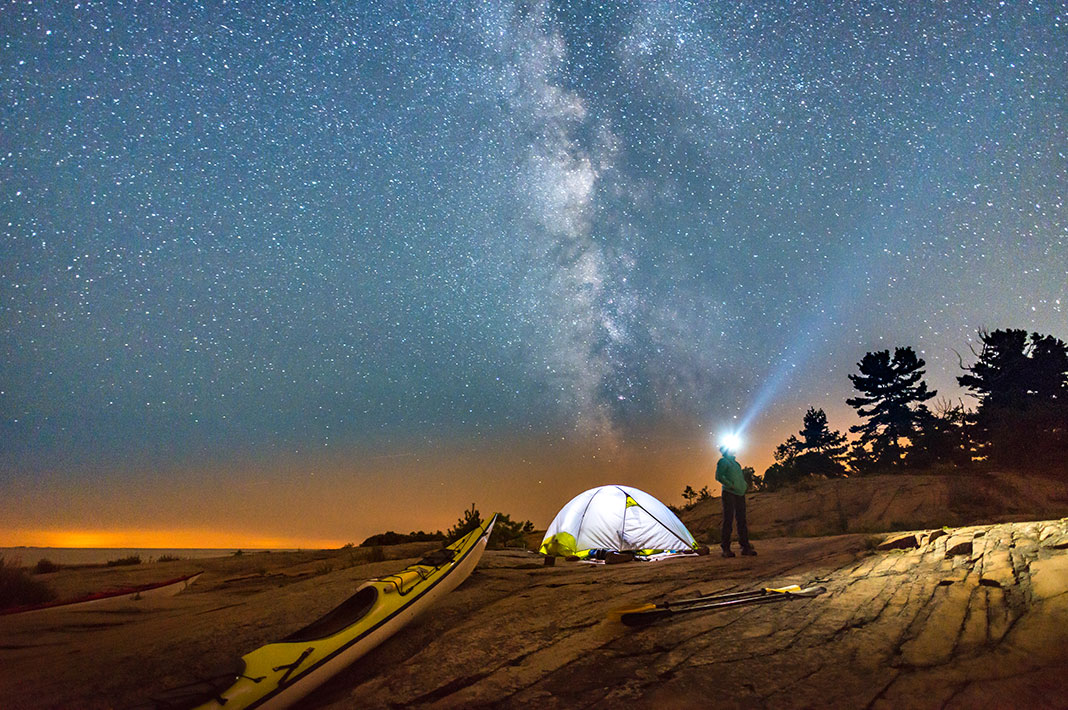
Person standing beside tent and kayak pulled up on shore, with headlight on, and Milky Way overhead.
Disconnect to reconnect. | Photo: JP Danko

During the days, my mind wandered and I was easily distracted—worrying about the portents of the diminishing number of jet contrails in the bluebird sky rather than celebrating the glorious sunshine and certain arrival of spring. I came home thinking I was done with satellite communicators. How’s that for assuming responsibility for my actions?

Globalstar’s SPOT holds the distinction of being the first pocket-sized consumer satellite communication device. Previously, some wilderness adventurers carried personal locator beacons, all-or-nothing emergency locators like those used in aircraft. The first-generation SPOT came on the market in 2007 and allowed users to send generic “I’m OK” messages to a circle of friends or summon rescue with an SOS button.

InReach launched in 2011, adding two-way communication technology for actual conversations and the ability to make off-grid updates to social media feeds. Garmin eventually took over the brand. Both devices direct distress calls to an international dispatch center that in turn calls upon regional rescue professions to respond; the latest technology verifies the nature of the incident and affords a short, second-chance window should outdoor enthusiasts wish to call the rescue off. As of last fall, InReach and SPOT devices were responsible for more than 12,000 rescues over 14 years. Many, no doubt, were legitimate life-threatening emergencies. But the stat makes me wonder: how many people died in misadventures before the advent of these devices?

[ Browse all emergency signalling devices in the Paddling Buyer’s Guide ]

Like anti-lock brakes or “indestructible” plastic whitewater canoes, satellite communicators and navigation apps impart peace of mind—and, sometimes, a false sense of security.

Last October, an Indiana man ventured into Minnesota’s Boundary Waters Canoe Area on a solo canoe trip—his first visit to the million-acre wilderness area—renting an InReach device from a local outfitter for $10 per day. The 34-year-old was less than 24 hours into a weeklong trip when an early blast of winter exposed his startling degree of unpreparedness. He issued a distress message and search and rescue professionals arrived that night, pushing through a snowstorm and freezing temperatures, to extract him from the wilderness. In an interview, the paddler blamed his hypothermia on a “poor choice of gloves.” He added, “It got so cold, my cellphone shut down on me.”

Of such a scenario, a friend of mine would say, “Stupid oughta hurt.”

To me, that sounds harsh, but it speaks to a critical opportunity lost. When experienced responsibly, so-called “natural consequences”—like being cold, wet, bug-bitten and exhausted—make the outdoors a great place to learn humility. However, a society that’s become more accustomed to instantly gleaning information from YouTube and Google emphasizes the fact expertise and good judgment take time to develop. Pressing SOS offloads the consequences of one’s choices and actions on someone else.

Pressing SOS offloads the consequences of one’s choices and actions on someone else.

Such self-reliance—ironically, a YouTube catchphrase—is overshadowed in marketing campaigns targeting our natural fear of injury and death.

In a press release celebrating InReach’s 5,000th rescue last fall, a Garmin representative said, “If anything happens…you’re still connected to emergency responders, friends and family.”

Admittedly, I’m also terrified of dying alone, but this sort of connection, I’ve come to realize, is exactly what I set off into the wilderness to escape.

Three summers ago, my partner and I set off on our longest paddling trip yet: A 56-day journey in subarctic Quebec’s Ungava Peninsula. I pride myself in traveling self-supported; we packed all our provisions for the entire trip. Yet, I couldn’t help but feel as though we were tethered to society by our InReach device. At times, I took joy in composing pithy 160-character messages to update our Facebook page. More often, I felt frustrated by endless weather forecasts and friendly advice issued by relatives in the outside world—besides wrestling with my usual impatience with technology: slow Bluetooth connections and half-typed messages, mysteriously deleted.

After six weeks of hard travel, we crossed the treeline where the winds became relentless. I realized technology was staunching our senses as we stared at the screen expectantly, seeking an external source of hope as our tent billowed around us. The feeling of dependence reminded me of early environmentalist Howard Zahniser, who drafted the U.S. Wilderness Act in the early 1960s. To experience wild places, Zahniser wrote, “is to know profound humility, to recognize one’s littleness, to sense dependence and interdependence, indebtedness, and responsibility.” I grieve this loss.

Sometimes, I wonder how I would’ve responded two decades ago had a client suffered a heart attack, broken leg, appendicitis or any number of accidents on one of my early guided trips. What made it acceptable back then to travel without reliable communications? Clearly, the baseline has shifted.

Indirectly, I pose this question to the latest cohort of wilderness professionals when we discuss various accident scenarios in the kayak guides course. Their default solution to what once would’ve been the hardest problem is simple: Hit SOS.
This article was first published in Paddling Magazine Issue 63. Subscribe to Paddling Magazine’s print and digital editions here, or browse the digital archives here.


Conor Mihell is a sea kayak guide, award-winning travel journalist and, once upon a time, was a Rapid Media intern.

Disconnect to reconnect.| Photo: JP Danko

Canoe Pin Rescue On Ontario’s Petawawa River (Video)

Two tandem open-boat canoeists were out for a paddle on the Petawawa River in Ontario’s Algonquin Park, when they ran into trouble.

Gary Ataman and Iori Miller entered one of the more challenging rapids on the river—named “Crooked Chute”—when, moments later, their canoe became pinned and wrapped on a semi-submerged rock.

In the video review of the events, the commentator states that the plan had been to sneak past the big wave trains on the right side of the river. The “uh oh” we hear from the stern paddler, as the paddlers diverge off their intended course and towards the rock, suggests things didn’t go to plan.

Moments later, both paddlers are in the water, desperately hanging on to the canoe as it inevitably fills with water and becomes further  stuck against the rock. “Pull, pull!” the rear paddler shouts to the other, nearest the river bank.

Once the bow paddler has his footing on the river bank, he desperately pulls the rope attached to the front of the canoe in an effort to free the boat. “It’s buckling, let’s let go” the other paddler shouts, as they realize they need to stop and reassess.

[ Paddling Buyer’s Guide: See all Canoes ]

The commentator then proceeds to explain how they managed to get the canoe out of the water using their pin kit to conduct a “Z Drag” to recover the canoe. Despite a successful rescue attempt (surprisingly, the boat had minimal damage and the folds popped straight back out), it took the crew over three and a half hours to recover the canoe.

The video, produced by the Wilderness Canoe Association, highlights the importance of being prepared for the worst-case scenario. Make sure to carry the appropriate safety gear and equipment, and have adequate knowledge of the area, and the appropriate skill set for the class of water you are accessing.

The Ultimate Beginner’s Guide To SUP Surfing

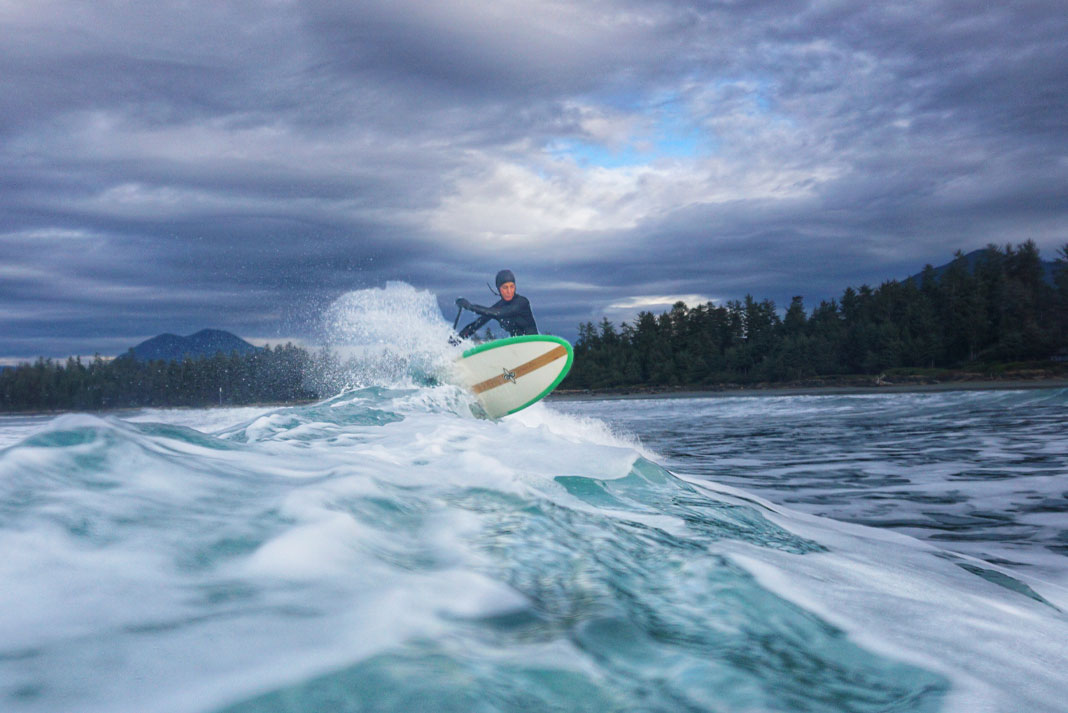
Person surfing on a wave on a paddleboard
You’ll need a few years of practice—or more like a lifetime—to catch waves like Olympic hopeful Catherine Bruhwiler. | Photo: Zak Cross

Paddle in hand and with a bigger board under your feet, SUP surfing looks a little different than prone surfing. At its core, the wave riding is the same. On your paddleboard, you can still enjoy the feeling of flying effortlessly, riding the energy of the swell as you lean from rail to rail and enjoy the ride. Once you’ve mastered the basics of SUPing, here’s what you need to know to start shredding waves.

Choosing a SUP for surfing

Most SUP surfboards feature a narrow tail and lots of rocker. Beginners should choose a board size at least 10 liters bigger than the board you paddle in flatwater—waves, swell and chop require larger volume for stability. Start with a board in the 9.5- to 11-foot range in length. Boards less than 30 inches wide will feel unstable for beginners.

The bigger the board, the more stable and forgiving it will be. Your positioning on the board and the wave doesn’t need to be as exact, and it’ll allow you to catch waves more easily with less self-generated speed. The trade-off with a bigger board is less maneuverability. With increased skill and wave experience, paddlers can move to smaller boards to ride a wave at its maximum fun capacity.

Renting SUP surfboards from your local shop allows you to experiment with different models, brands, shapes, constructions and sizes to match your current abilities and the daily conditions until you are ready to own a small quiver of boards. There is no one magic board that works for all situations, as changing conditions and skill level dictate different shapes and sizes of appropriate boards.

Surfing with an inflatable

Inflatable SUPs will eventually reach their limit in high-performance surfing, but that’s less of a concern for beginners. When surfing an inflatable, opt for a surf-specific model and pump to maximum PSI. Inflatables tend to be limited to catching waves and surfing a straight line, as such thick rails make it harder to dig into the side of the wave to maneuver the board sharply.

Sizing your paddle

SUP surfers generally use paddles with smaller blades than touring blades for less resistance and higher cadence strokes.

When sizing your paddle for SUP surfing, a rough guide is a paddle approximately matching your height, but ultimately it comes down to personal preference and board size. Your surf paddle will be slightly shorter than your touring paddle to compensate for your body bending and compressing to balance in chop and swell, which brings you closer to the water.

An excellent investment for newbies is buying a high-quality, adjustable or custom-fitted fixed paddle. Having your own paddle allows you to easily travel and be comfortable no matter what board you are riding.

What to wear

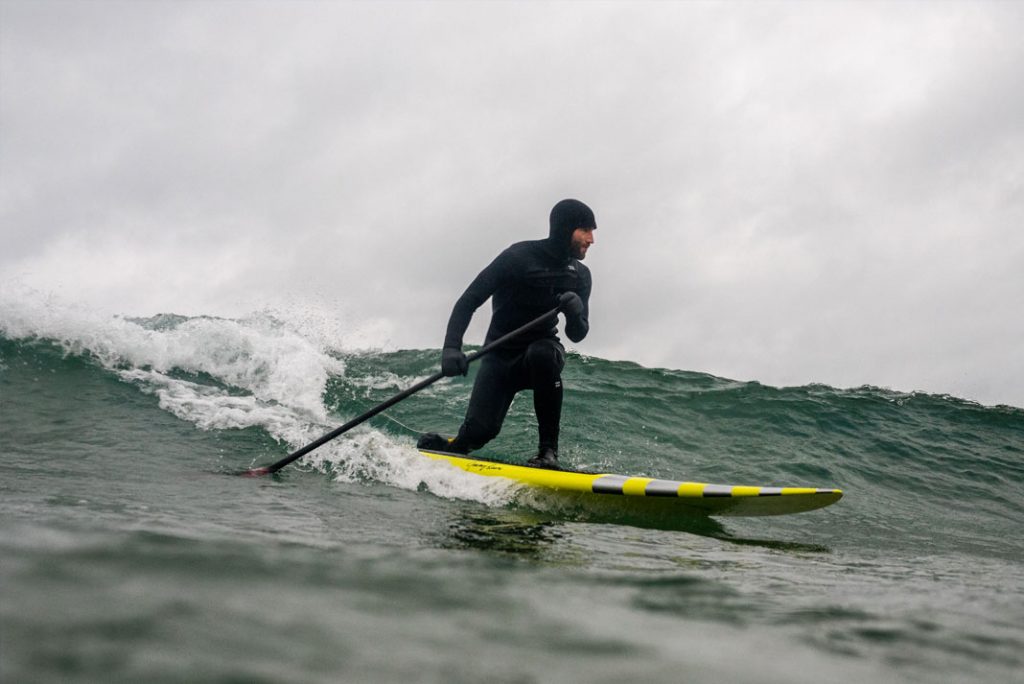
Expect to spend a lot of time in the water when you’re learning to SUP surf. To stay nimble, avoid bulky drysuits. Surfing wetsuits are made for maximum mobility and comfort and are the only attire I recommend. For winter surfing in the Great Lakes region and Canadian coasts, wear a hooded wetsuit with a 5/4 or 6/5 thickness rating. For summer surfing, a shortie in a 3/2 or 4/3 is usually sufficient. You can dress down one grade of thickness from what a prone surfer would wear as you won’t spend as much time in the water.

Surf booties and gloves are necessary for the colder months. A winter kayaking glove is better for grasping the paddle shaft, as opposed to bulky surfing gloves.

You’ll also need a leash. Make sure it’s rated for surfing big boards, attached properly to both your board and ankle, and also check for length—the general rule is your leash should be at least the length of your board. Never use coiled leashes, as they’ll cause the board to bounce back at you.

Person surfing on a wave on a paddleboard
You’ll need a few years of practice—or more like a lifetime—to catch waves like Olympic hopeful Catherine Bruhwiler. | Photo: Zak Cross

Is SUP surfing easier than prone surfing?

Not exactly. When learning to prone surf, you are laying down and catching whitewash waves. This is easy to learn in an afternoon lesson, and broken waves are easier to spot and catch. Surfers also don’t have to maintain balance as they paddle for waves and they often learn where they can stand in the water and easily position their boards.

When learning to catch waves on a SUP, you’ll stand on a board in deeper water and need to balance, gain speed, turn the board and position yourself in the unbroken swell, which is harder to identify. Your foot position also needs to change from the regular SUP square stance to a surf stance at the right time.

Wannabe SUP surfers will benefit from being able to comfortably perform advanced paddling maneuvers like pivot turns and different foot stances before trying to surf. Fortunately, the skills needed to paddle out and catch waves and the foot positioning for riding waves can all be practiced and honed while paddling flatwater.

Surf safety considerations

Traditional surfers don’t wear PFDs. When leashed to your board, you have a floating device tied to your body and have the ability to hang on if needed. Leashes and boards do break, however. Nothing substitutes strong swimming ability and ocean knowledge.

Because SUPS are larger, less responsive and less maneuverable than prone boards, it’s hazardous to SUP surf in crowds. A 10-foot-long board and 10-foot-long leash create a 20-foot radius that you must keep clear. Your board should never come close to another surfer and you carry the responsibility to keep others safe.

Learning how to navigate the lineup, understanding surf etiquette and wiping out safely are essential skills to master before heading out into waves. Take a lesson or ask an experienced friend before you paddle out. And remember to keep your head up and look both ways to avoid collisions.

Finding the best SUP surfing spots

Finding waves is easier than you think. Coasts and big lakes have waves and—lucky for beginners—you won’t need waves packing much of a punch.

Start in waves just a foot or two tall. Beach breaks with sand bottoms and lots of space, with few crowds, are perfect.

The local SUP or surf shops will be happy to point you in the right direction and warn you of hidden dangers like submerged rocks, shallow breaks or rebar in the water. Online communities spring up around surf hotspots, with paddlers sharing forecasts and meetup plans. 

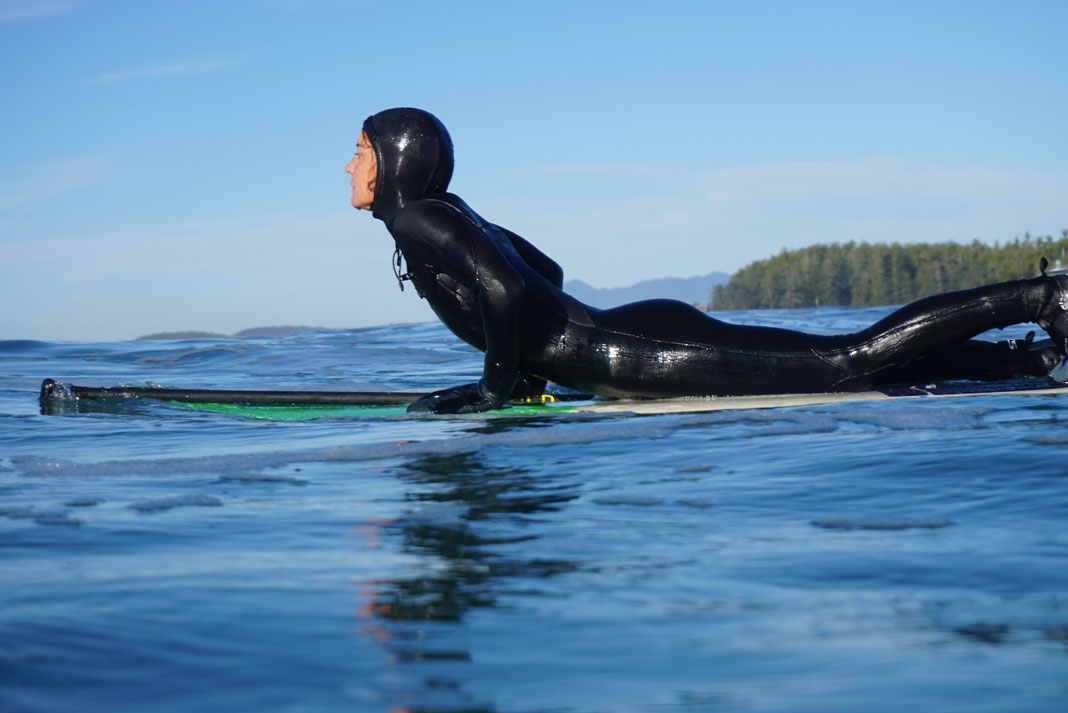
Woman wearing wetsuit and lying on paddleboard on the water.
To get out past breaking waves, paddlers often lay prone and hand paddle out. | Photo: Zak Cross

How to SUP surf

Confident technical flatwater paddling ability is the ticket to catching waves on a SUP. If you’ve never tried any kind of surfing, try surfing on a regular board, boogie board or just playing in the waves first. Detailed instruction could fill this entire magazine so here are a couple tips in broad strokes to keep in mind and help you catch your first waves. Above all—taking lessons will speed your progress, refine technique and ensure your safety.

1
To get out past the breaking waves, beginners often find it’s easier to paddle out on their knees or lay prone and hand paddle while the paddle rests under their chest and the handle sticks out over the nose.

2
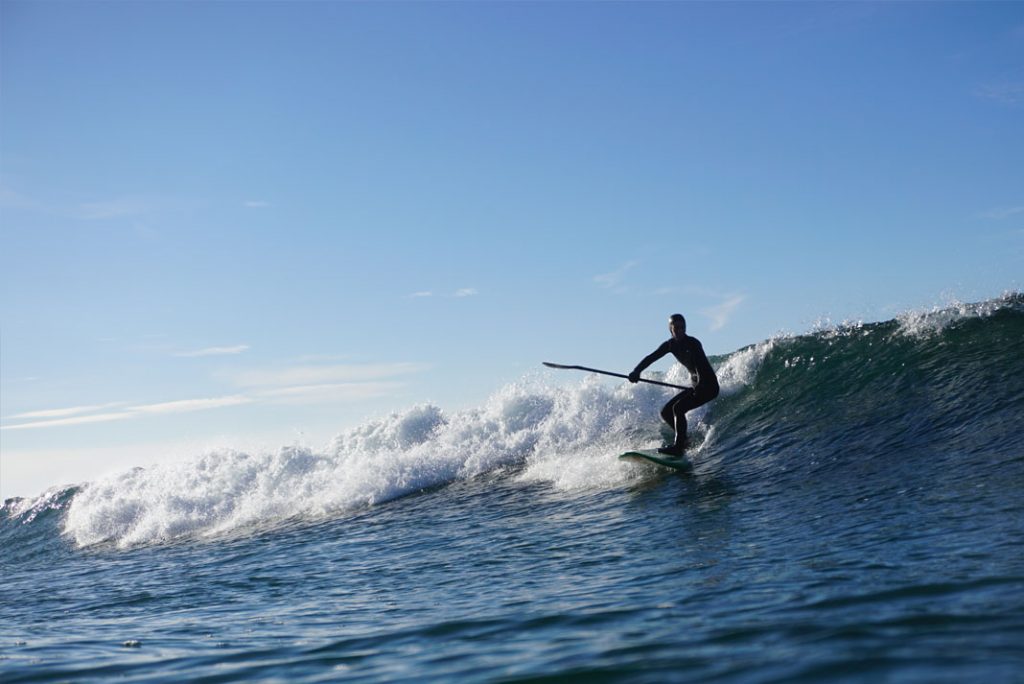
Once past the breaking waves, standing up on the board in the swell may take patience and perseverance. Remember to bend your knees and keep your feet staggered in a hybrid stance to help stay balanced. Don’t get discouraged if you spend a lot of time in the water.

3
Choose a wave, make sure your path is clear of others, paddle to gain momentum and turn the board towards the beach at the proper place on the wave in your surf stance. Paddle to match the speed of the wave to catch it.

4
Settle into the face of the wave and enjoy the ride—this is the easy part. Use your paddle to amplify your turns by leaning into your paddle when maneuvering, but don’t use it to brace or balance you. When starting out, it helps to have your paddle on the wave side of your body.

5
Enjoy a cold beer on shore and a long nap.


The most common difficulty new-to-surfing paddleboarders run into is not catching the wave. Usually, this is because new surfers are too far back on their boards. Just like paddling in the flatwater, when paddling for a wave, body weight needs to be perfectly distributed so the board is flat in the water. If you are too far back, the board’s nose will come out of the water and its sinking tail will cause you to slow down and not let the board plane. If you are too far forward, you will nosedive. If you are too far out to sea, past the place where the waves are breaking, you will also have trouble catching a wave.

A smaller SUP will be more maneuverable when doing turns, but paddling out and catching waves will be more challenging. Work on your balance and paddling skills, gain experience and practice until wave catching is easy and natural. Then graduate to a smaller board.

Catherine Bruhwiler is a lifelong Tofino, British Columbia local, and one of Canada’s top surfers. She teaches paddleboarding and surfing full time through her beachfront business Tofino Paddle Surf.

This article was first published in Paddling Magazine Issue 63. Subscribe to Paddling Magazine’s print and digital editions here, or browse the digital archives here.


You’ll need a few years of practice—or more like a lifetime—to catch waves like Olympic hopeful Catherine Bruhwiler. | Feature photo: Zak Cross


Ultimate Guide To Choosing The Best Shoes For Canoeing

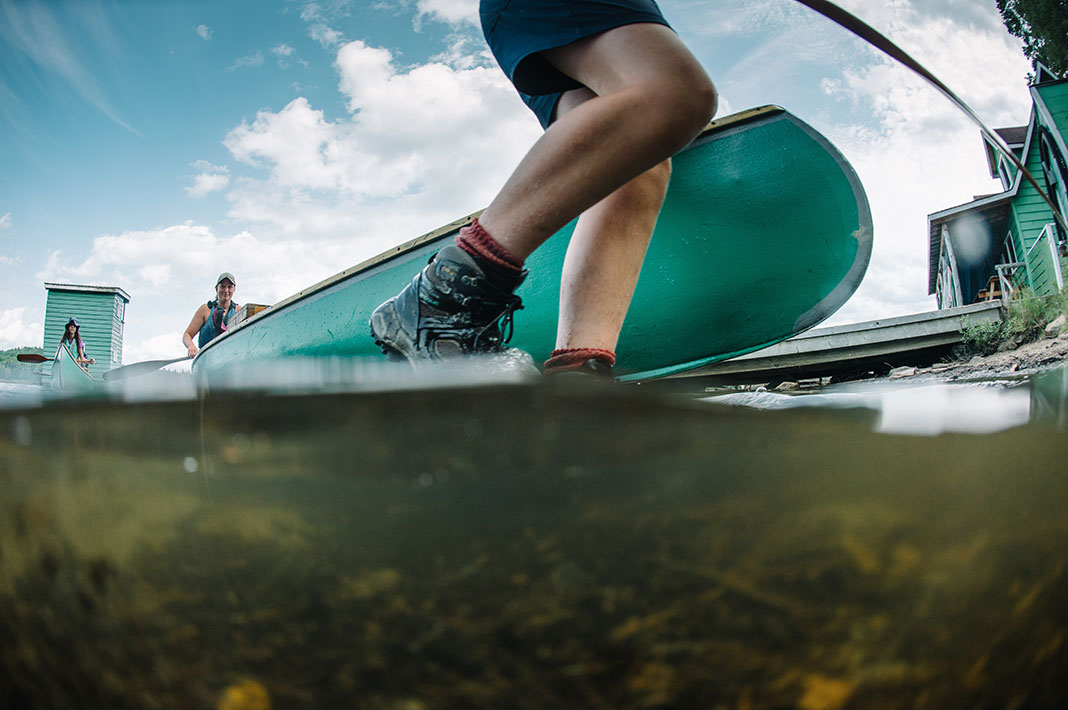
Person wearing hiking boots walking beside front of canoe in the water.
Finding your solemate is no easy task. | Photo: Mike Last

Much fuss is made by hikers about the demands placed on their feet, while canoeists tend to focus more on their boats. But before canoeists paddle, we walk, often carrying heavy and challenging loads. Canoe trippers are in and out of the water, traipsing through mud and swamp, over rocks and the tooth-sharp spears of beaver dams. There’s no greater test to a good pair of water shoes than a canoe trip, yet many of us treat footwear as an afterthought. We cavalierly don a pair of cheap sandals or castoff sneakers and then complain we have no good options for our feet.

I’ve paddled and portaged in just about everything from rash-inducing sandals to clammy drysuit booties and often returned home with fantasies of designing the perfect tripping shoes—something like a mukluk with a space-age waterproof-breathable shell and a supple high-friction sole.

Informed by a century of outdoor literature and the opinions of more experienced paddlers, I’m now sure the optimal canoe trip footwear is not found in a single pair of togs or anything newfangled or futuristic, but in a blend of good judgment and the right mix of already-available options.

Person wearing hiking boots walking beside front of canoe in the water.
Finding your solemate is no easy task. | Feature photo: Mike Last

First considerations

Your style

What sort of tripper are you? Fastidious and careful or full-steam-ahead and damn the consequences? The latter is the faster way to travel but always equals wet feet. A prima donna attitude can keep your feet dry under many circumstances, to the detriment of your canoe’s finish and the sanity of your companions. It’s also potentially dangerous—paddlers trying to keep their toes dry are more likely to wipe-out at landings and on the trail.

Your body

Recommendations for popular canoeing footwear usually come with some version of the late Bill Mason’s caveat about moccasins: “It’s true there is no ankle support, but I’ve worn them for years, and I have never twisted my ankle.” Your mileage may vary.

Your canoe

Paddlers willing to ram their boat full speed into shore can likely keep their feet dry most of the time—until it rains or they have to portage through a bog. Paddlers of composite or wood canoes tend to be pickier about footwear because their feet absorb the wear and tear as they leap into deeper water to protect their hulls. It’s all about priorities.

Waterproofness

This unicorn-like feature comes with a tradeoff. Like rain gear, that which keeps water out also keeps it in. For summer weather, most people opt for something quick-dry over waterproof.

Temperature

Weather changes everything. Sandals and water shoes are popular, but they emphasize drainage and quick-drying, making them limited mostly to summer tripping. The colder the temperature, the warmer and more waterproof your footwear must be.

Traction

All canoe trippers prize the ability to grip slick rocks. High-traction rubber with a tread is essential.

Terrain

On a trip without portages or in a well-traveled area with easy trails, you can get away with almost anything. The more rugged the trip, the sturdier the footwear required.

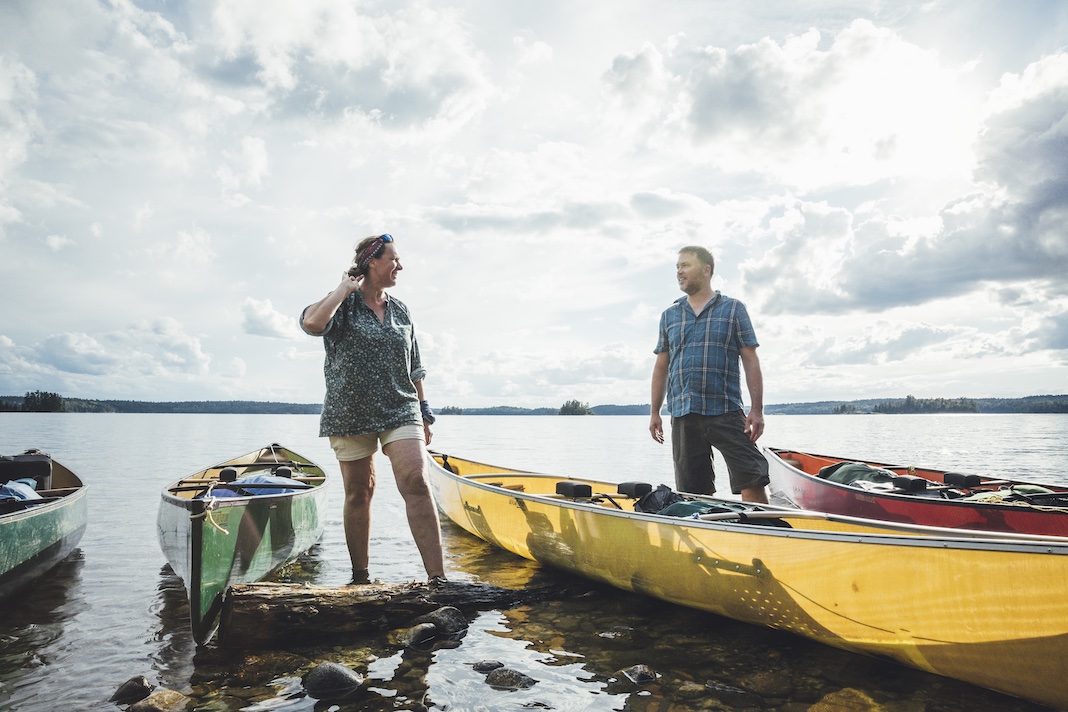
Two people standing in shallow water beside their canoes.
If you normally end up with your feet in the water, quick-drying water shoes might be best for you. | Photo: Destination Ontario

The options

Sandals

The ultimate in quick-drying footwear are watersports sandals. For years I stubbornly wore nothing else, bearing the pain of the odd stick between my toes in exchange for the freewheeling pleasure of picking my way gingerly along the gnarliest portages carrying 100 pounds like an Andean porter in glorified huaraches. I got away with it because I was on easy routes.

The most reliable sandals are the simplest, with the least padding to soak up water and plastic buckles instead of Velcro. However, with the wisdom of age, I’ve given up on sandals as primary footwear. Constant wetting and drying are harder on my skin, causing cracks and rashes.

My friend Conor Mihell, who specializes in multi-week expeditions on northern Quebec’s Ungava Peninsula, agrees. “I won’t do sandals anymore because I don’t like my toes sticking out.” He reserves sandals only for backup. “The theory is that if I were to lose a shoe, I could wear them.” Crocs are like camp slippers—useful as a pair of nearly weightless camp shoes but hardly a stand-in for portaging.

Moccasins

I have never canoe tripped with moccasins or met anyone who does, but they have an illustrious history of proponents. In Camping and Woodcraft, first published in 1917 (my copy is from its 27th printing in 1971), outdoor writer Horace Kephart waxes for two pages about this “most rational of all” foot coverings.

Seventy years later, legendary canoeist Bill Mason wrote in Song of the Paddle that a pair of smoke-tanned moosehide moccasins, paired with a removable rubber covering (see overshoes) is “the only kind of footwear that has kept my feet dry, warm and comfortable in all weather and canoeing conditions, excluding upsets or having to jump overboard when landing.”

On Etsy, I found a pair looking exactly like the moosehide moccasin wraps in Mason’s book. Tempting for the campsite, but I can’t imagine rugged portaging in them.

Overshoes

Curiously, Mason argued for the benefits of rubber overshoes, what he calls “moccasin rubbers,” which appear by all evidence to be the exact rubber galoshes my father used to pull over his dress shoes before going to work in the wintertime back in the 1970s.

For truly wet weather, Mason said he carried a pair of mid-high rubber overshoes to slip over his moccasins. Despite Mason’s popularity, I’ve never seen anyone adopt this look. I can’t imagine how these would ever survive a muddy portage, nor am I keen on rocking my dad’s style.

Instead, I ordered myself a pair of outdoorsy looking Neos Villager Mid Overshoes. For about $100, they look promisingly like the high-tech mukluks of my dreams while fulfilling the basic function of Mason’s “rubbers,” transforming my Etsy moccasins or whatever other footwear I bring along into a pair of comfortable, waterproof boots, useful at least for rainy days around the campsite. I’m wearing them as I write this. My 11-year-old daughter took one look and said, “Those are so stupid!” But I may have the last laugh on our next rainy canoe trip.

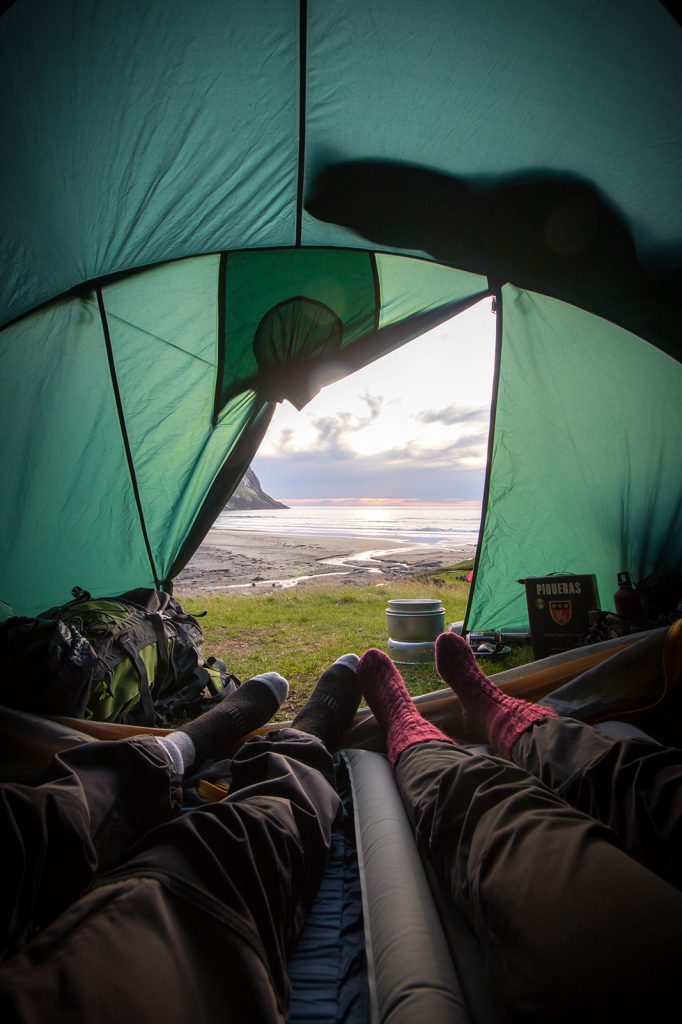
Two people wearing wool socks with open tent revealing view of the water.
Wet or dry, wool socks will keep your feet warm. | Photo: Teemu R/Pexels

Socks

For a while, my answer to dry feet was not the overshoe but Gore-Tex socks, paired with any of my other footwear and dry wool socks to keep my feet toasty. However, when stuffed in a wet shoe for many hours, Gore-Tex is no drier or more breathable than rubber boots, even without the pinhole leaks that inevitably crop up over time.

Neoprene socks are far cheaper and warmer but do take a long time to dry out.

Wool socks are the standard and warm either dry or wet. They’re comfortable, provide padding, resist odor, conceal dirt and are reasonably fast drying. Bring multiple pairs and never look back.

Rubber boots

Too bulky to carry for the times they’re useful. “Once, I took rubber boots on a six-week trip,” says Tim Bankerd, a Maine-based canoeist who trips nearly 100 days a year. “They only have one purpose, and that’s in the water. Anytime out of the water, they’re miserably hot and not effective for portaging.”

Neoprene booties

Neoprene river boots are popular among sea kayakers and whitewater paddlers, good for shorter aggressive pursuits in icy water. Some trippers find them impractical for longer trips because they take a long time to dry out and most lack ankle support. I’ve also tried various high-top neoprene boots claiming to be waterproof. These are appealing in theory but share the disadvantages of rubber boots, above.

L.L. Bean Boots

I aspire to be the kind of person who has dryish feet always, like veteran tripper Bankerd, who could have an honorary doctorate in the L.L. Bean Boot. This traditional Maine hunting boot with a rubber bottom and sealed leather upper is the footwear choice of many venerable summer camps and canoe tripping traditionalists, author Hap Wilson among them.

The argument is these offer ankle support and are waterproof if you look after them (and don’t step into water deeper than the cuff), plus they’re unlined so they can dry quickly. Bankerd’s tips include: Order one to one-and-a-half sizes down, get spare insoles to swap out if you get a soaker, find a cobbler to reinforce the stitching if you can, treat them fastidiously with Sno-Seal, replace the laces with Kevlar ones, and send them back for free replacement if they wear out. And since they became trendy on college campuses, you can sometimes get good money for your old ones on eBay.

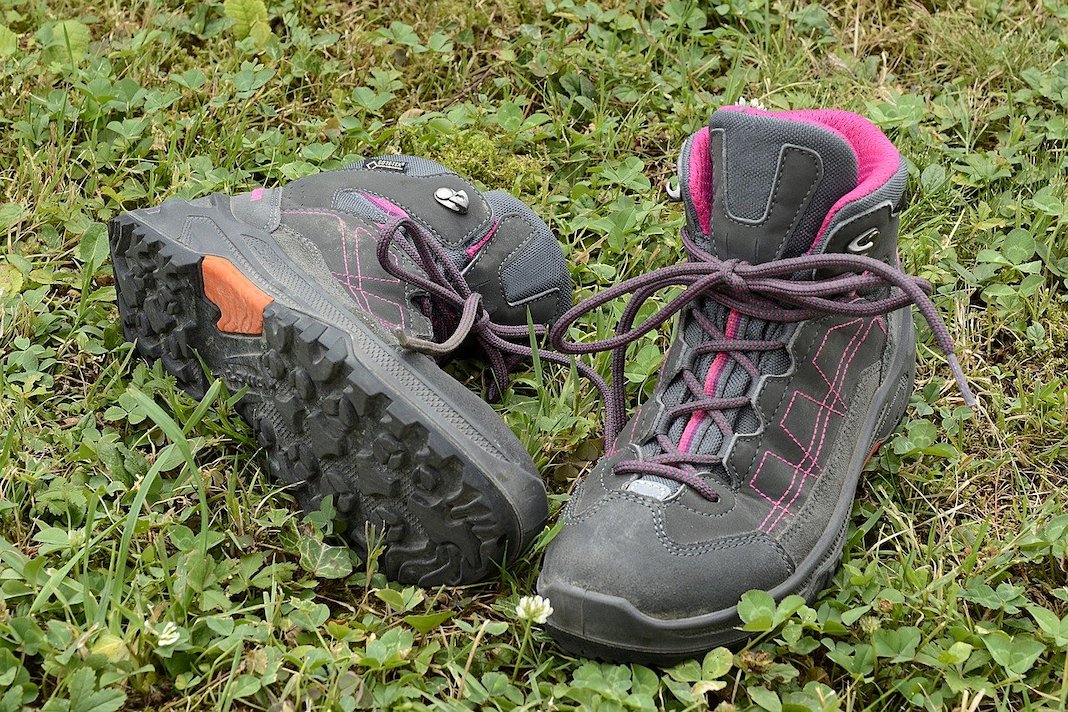
Pair of grey and pink hiking boots on the grass.
Hiking boots offer ankle support on tough portages and are often waterproof. | Photo: Pexels

Runners and hikers

A good compromise for those who can’t be bothered to try to keep their feet dry is to find a sturdy, dependable, comfortable shoe that’s not too heavy and accept it’s going to get soaking wet. Pair with something dry to change into in camp.

In the past, I would wear light hikers, which were just glorified running shoes, comfortable for portaging, but, like many running shoes, had a nasty tendency to come unglued after being wet for days on end. Lately, I’ve switched to wearing my old trail runners. They’re reasonably lightweight and quick-drying but have a stiffer sole, bigger tread and protect the feet better than regular sneakers thanks to plastic-reinforced arches and toe caps.

Water shoes

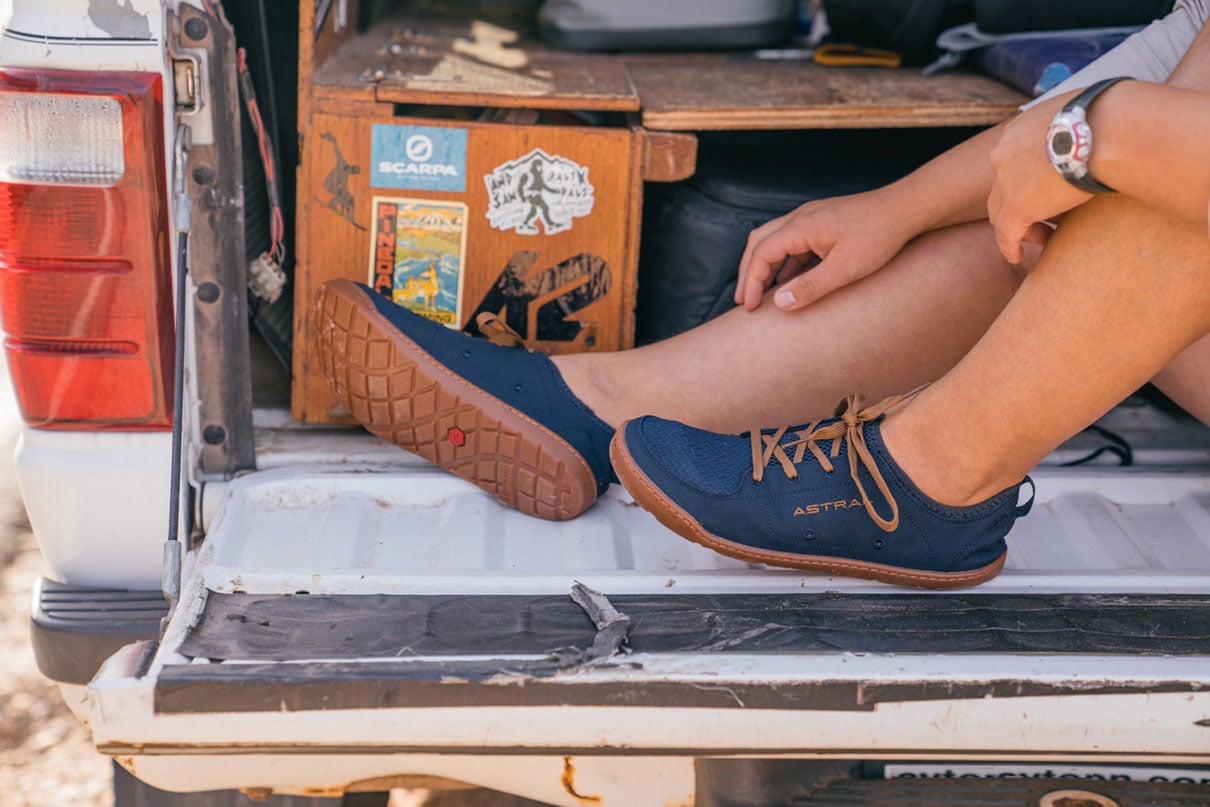
Specialized sneakers designed to be worn in and around water emphasize durability when wet, drainage, dry time and traction. Mihell is such a fan of the now-discontinued Five Ten Water Tennie that he has secured a multi-year supply: two that he rotates between trips and two brand new pairs on reserve. When his supply runs out, he says he’d go with something like the Astral Rassler.

“The other option I would look into is a pair of approach shoes from a climbing shoe company—something with really sticky rubber.”

Dry pants

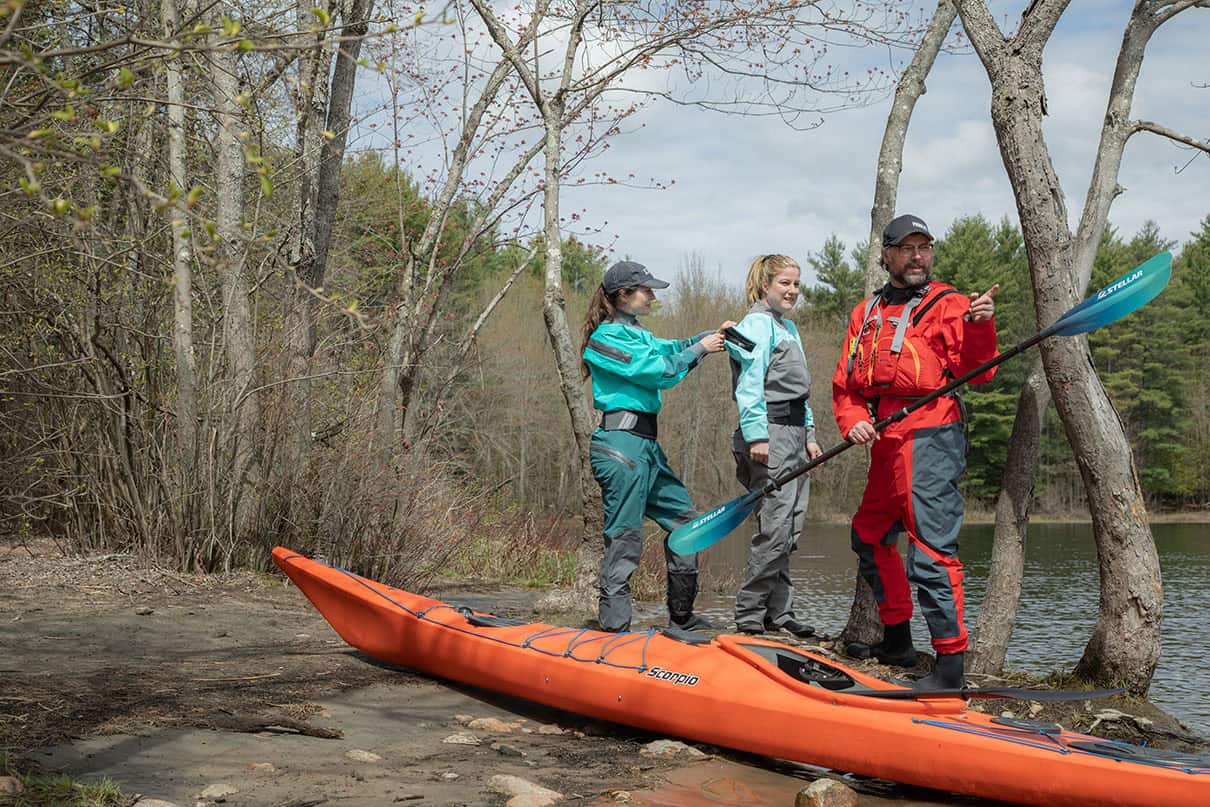
A drysuit or waterproof wading pants with built-in socks are an excellent solution to keep feet dry and warm for cool weather. “That’s what I used in Hudson Bay and for dragging upriver on the Ungava Plateau,” says Mihell, referring to a recent 53-day trip with Kokatat Gore-Tex paddling pants. You can wear your socks inside and your regular tripping shoes over top.

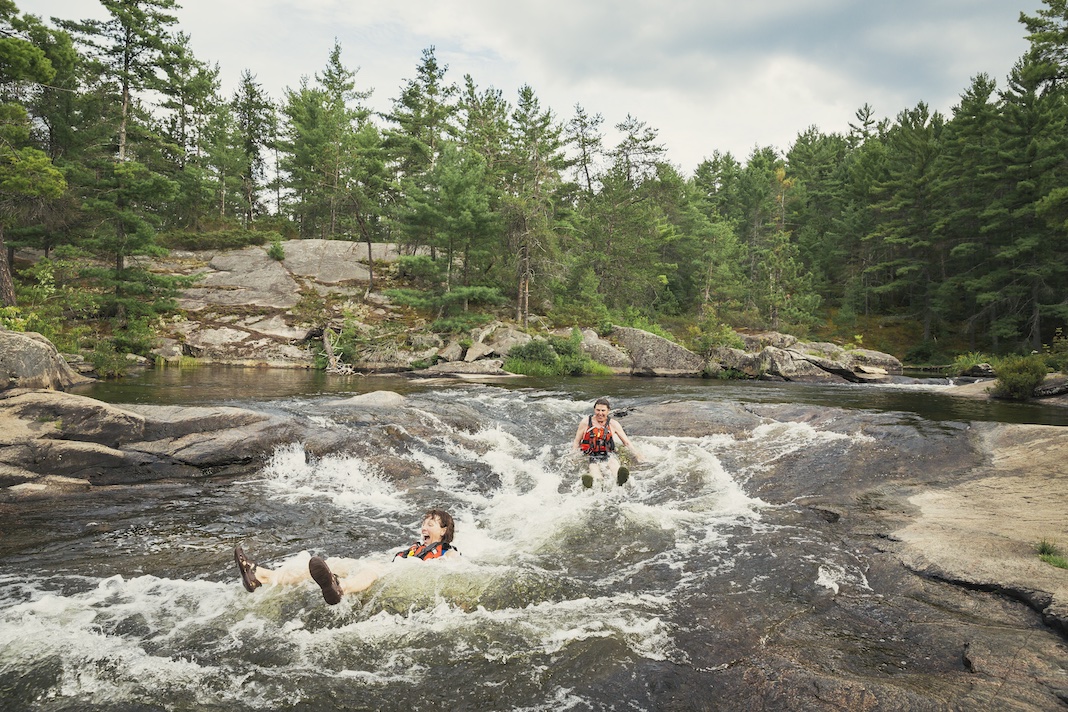
Two people sliding down natural waterslide wearing water shoes.
There’s no one “best shoe for canoe trips”—it all depends on your needs. | Photo: Destination Ontario

The final result

Everybody swears by wool socks. Beyond that, the ultimate footwear depends on your route and lies somewhere among these options—perhaps in a combination of all of them. Indeed, the ultimate footwear may just be more footwear. So, look for me in old runners, sandals or moccasins, a drysuit and my giant Neos Overboots. With an extra canoe pack dedicated to footwear, I’ll be either the laughingstock or the envy of my next family canoe trip—likely both. But I know my feet will be happy.

This article was first published in Paddling Magazine Issue 63. Subscribe to Paddling Magazine’s print and digital editions here, or browse the digital archives here.


Finding your solemate is no easy task. | Feature photo: Mike Last


14 Amazing Artists Inspired By Paddling Adventures

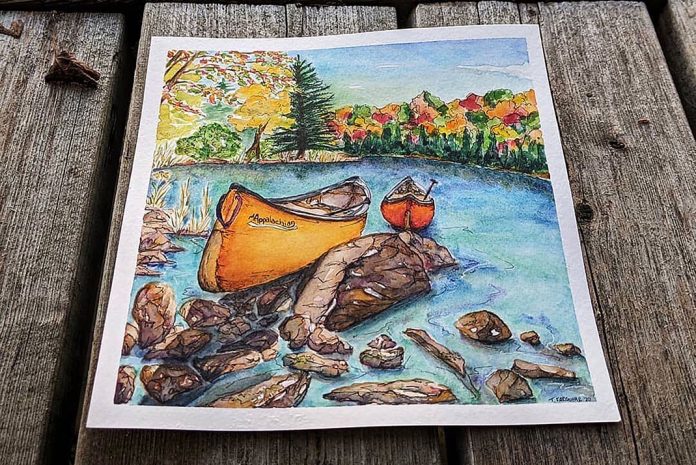
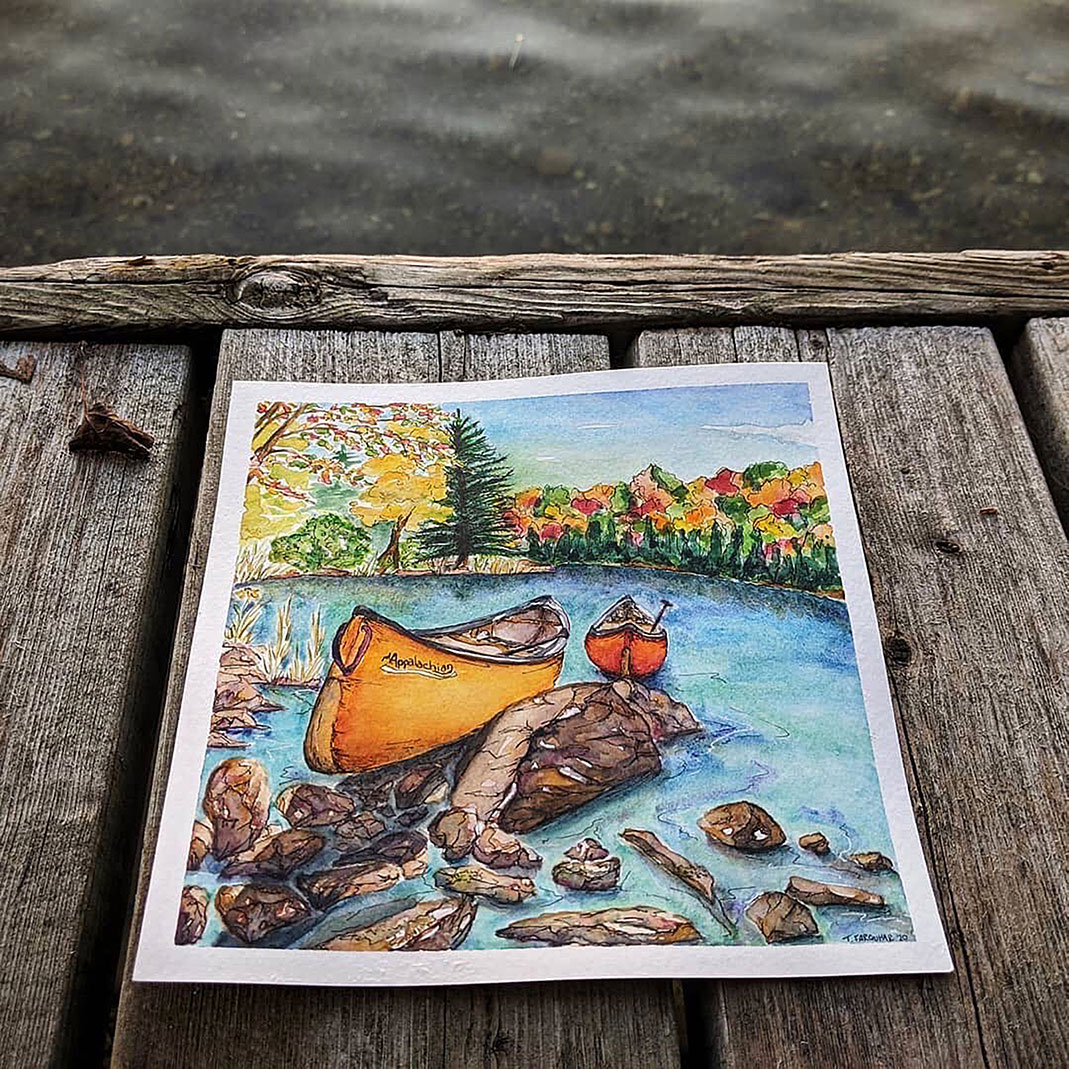
Painting of two canoes on river laid out on a dock.
Combining passions. | Art by Taylor Farquhar

When you love paddling, it influences practically everything you do. So it’s no surprise artists who paddle often incorporate paddling into their artwork, from painting to woodworking to jewelry-making.

We know the paddling community is full of talented folks, so we asked them to tell us about the ways in which paddling has influenced their art. As expected, they more than delivered and we’re excited to showcase their kayak and canoe art here — some that you can hang on your wall, wear, stick on your fridge or place on your desk.

You’ll find examples of their handiwork below. Be sure to let us know how paddling has inspired the way you create art in the comments.


Watercolor painting of canoes on lake with fall colors in background.
Photo: Taylor Farquhar

Taylor Farquhar

Taylor is an artist and outdoor educator based out of Palmer Rapids, Ontario, near the headquarters of the Paddling Magazine office. “Whitewater paddling brought me to the area and has inspired my artwork,” she says. Taylor works in pyrography and watercolor painting. | @theartofoutside


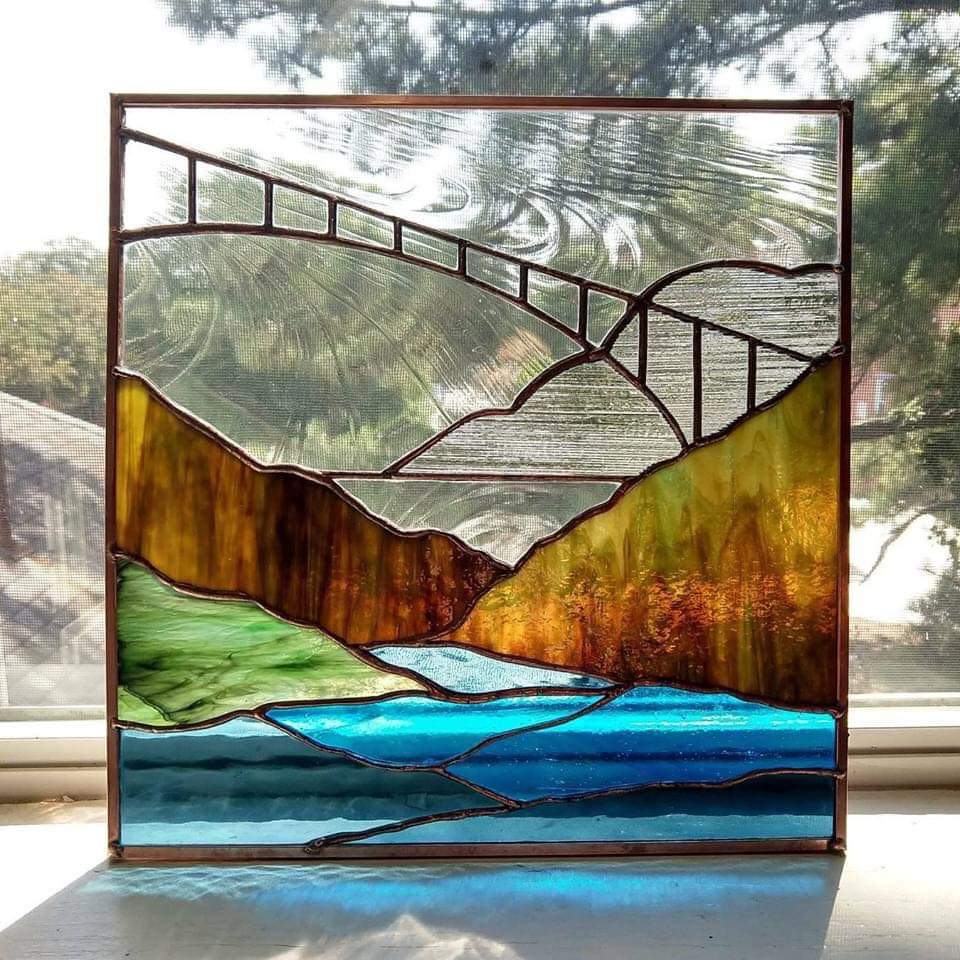
Katherine Nash Stained Glass Art
Photo: Katherine Nash

Katherine Nash

“Whitewater has been my favorite part of my life so far, so during quarantine this year I decided to start making pieces related to the thing I love most. Many of these were in my first show this past September and are specific to places I’ve kayaked.” | etsy.com/shop/KnashGlass


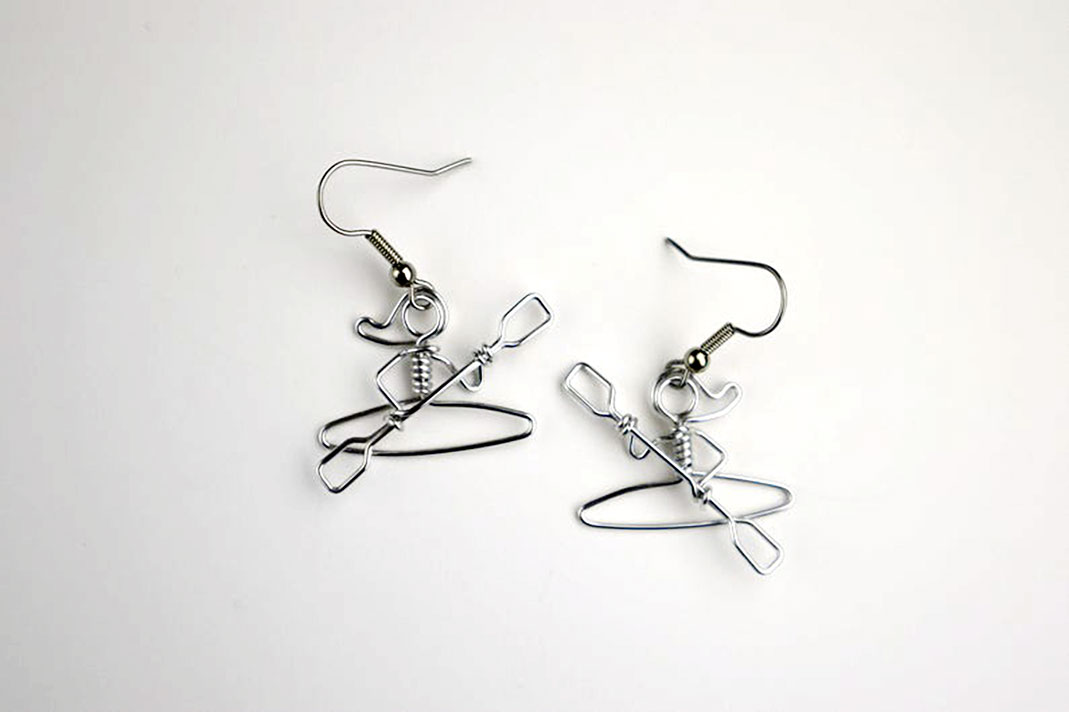
Earrings made of wire in shape of kayakers.
Photo: Heather Boyd

Heather Boyd

“I have been making wire art and jewelry for 30 years. My husband and I create custom jewelry and wedding cake toppers. Designs are made freehand with a single continuous piece of aluminum wire.” | heatherboydwire.com 


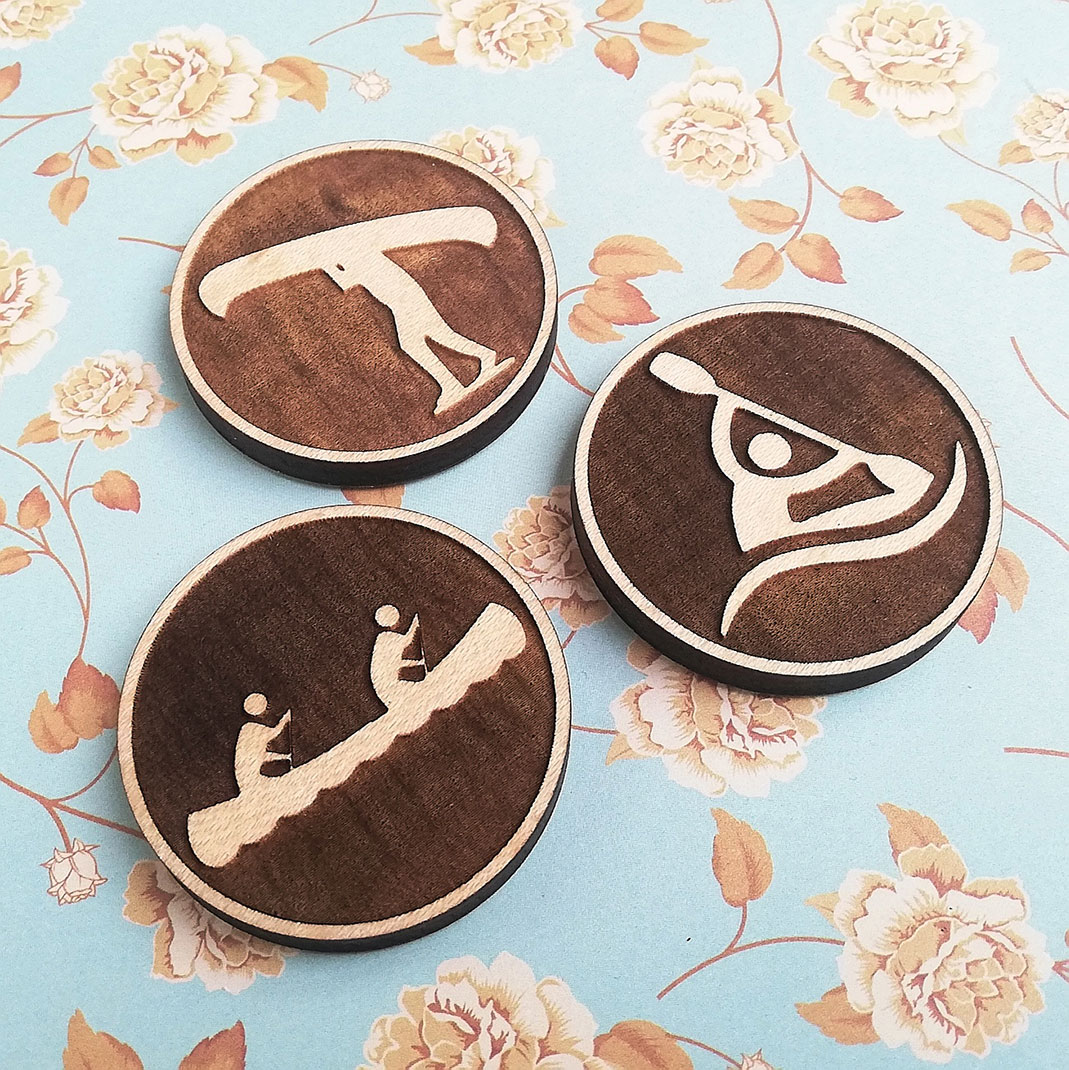
Wooden fridge magnets with person portaging canoe, two people paddling canoe, and person paddling a kayak etched on.
Photo: Michelle Hambourg

Michelle Hambourg

“I always have smaller scraps of wood left over from my larger projects. To make the most of my materials, I like to turn some of those scraps into fun fridge magnets. These are laser cut and engraved on maple plywood and measure 1.5 inches in diameter.” | sparkedupstudio.etsy.com


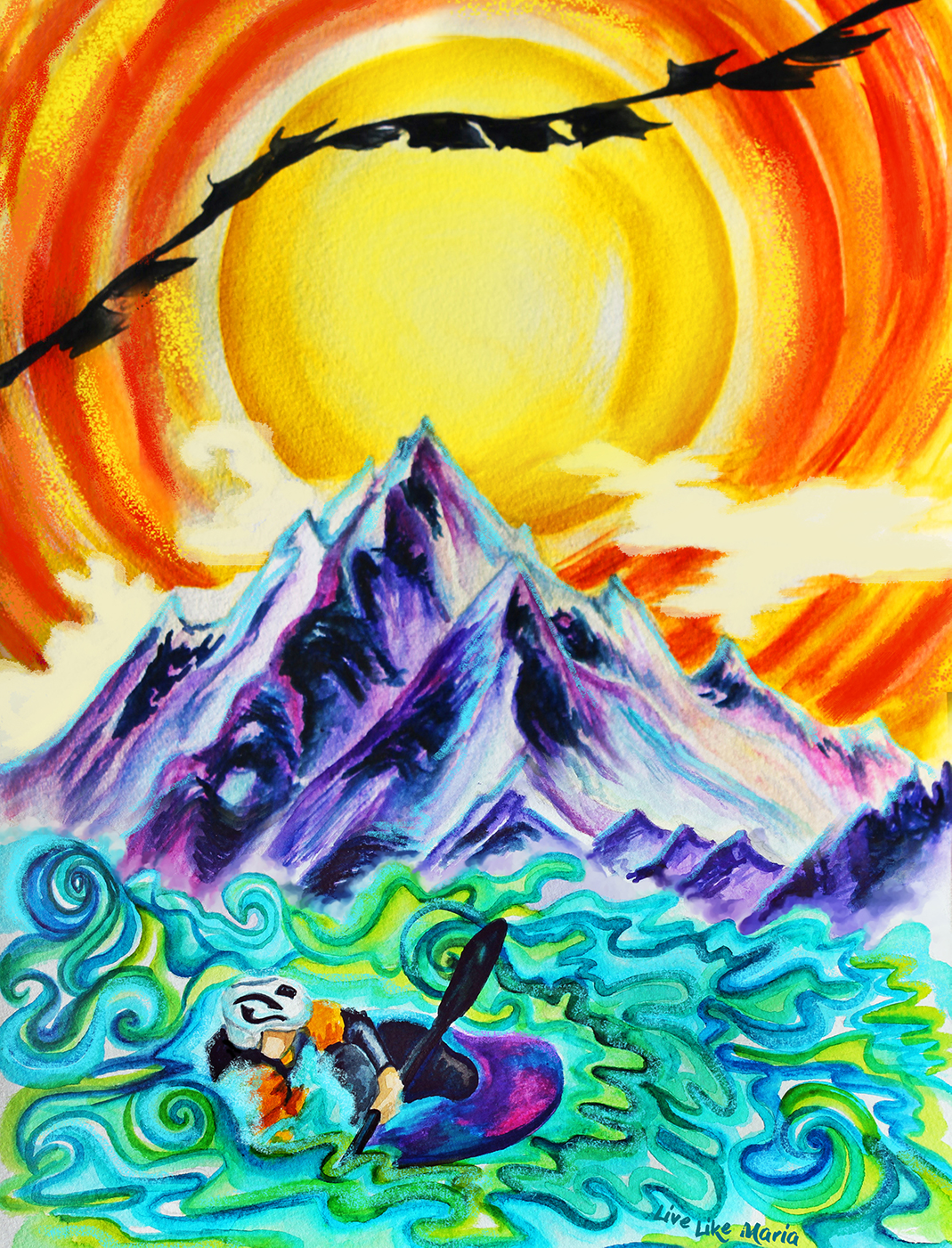
Painting of whitewater kayaker with mountain and sun in background.
Photo: Candice Caldwell Day

Candice Caldwell Day

“I am an artist, graphic designer, painter, jeweler and crafter. I have been a paddler for more than 25 years and began my journey slalom racing with the Nantahala Racing Club and USA Junior Whitewater Slalom Team in the late 90s.” |  candicecaldwellday.etsy.com


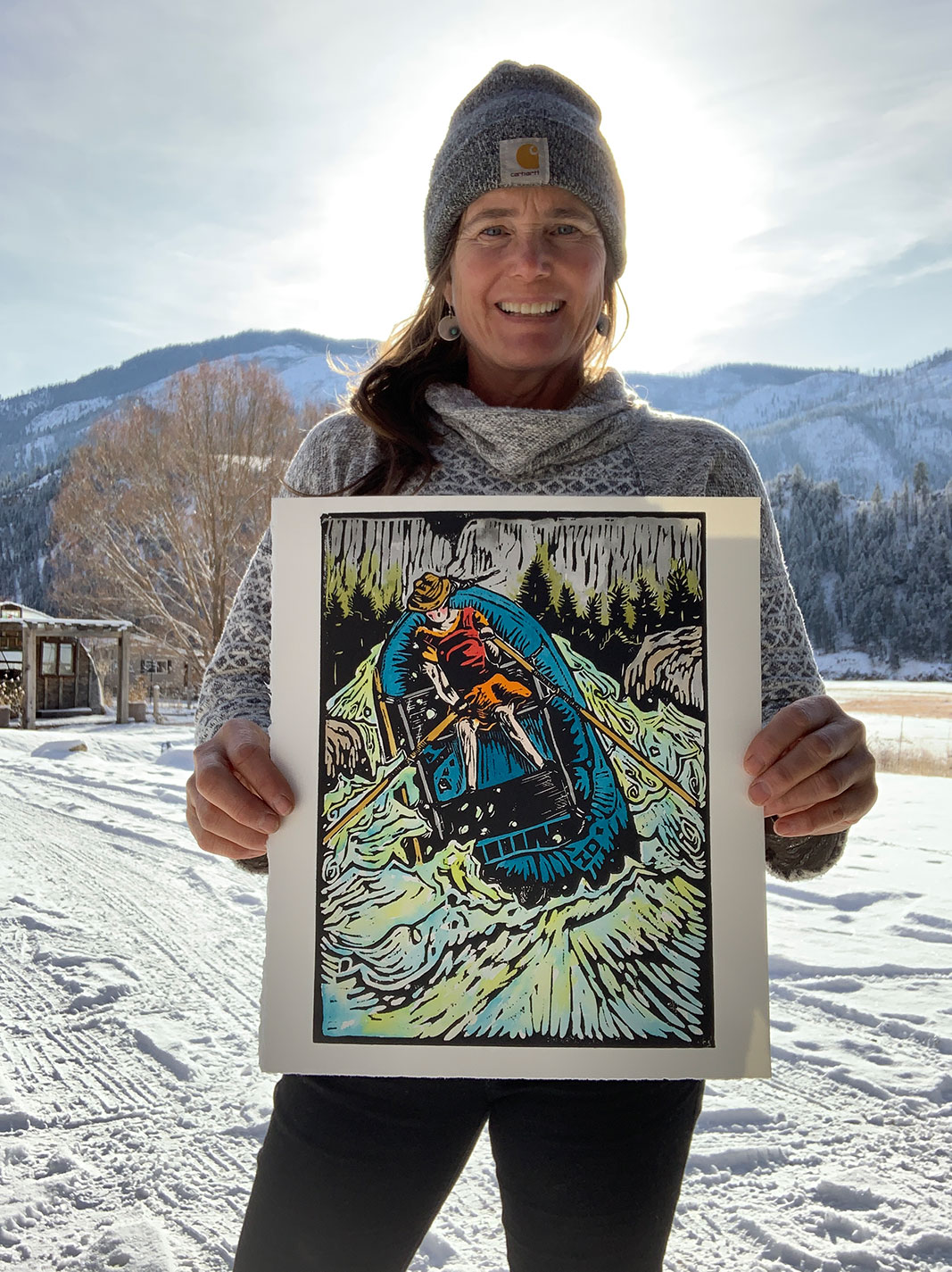
Woman holding print of person on a raft.
Photo: Hannah Spencer

Hannah Spencer

An Idaho river and fly fishing guide who makes original woodblock prints inspired by the wild rivers she runs. Hannah lives on the banks of the Salmon River with her husband and 6-year-old twins. |  hbsartworks.com


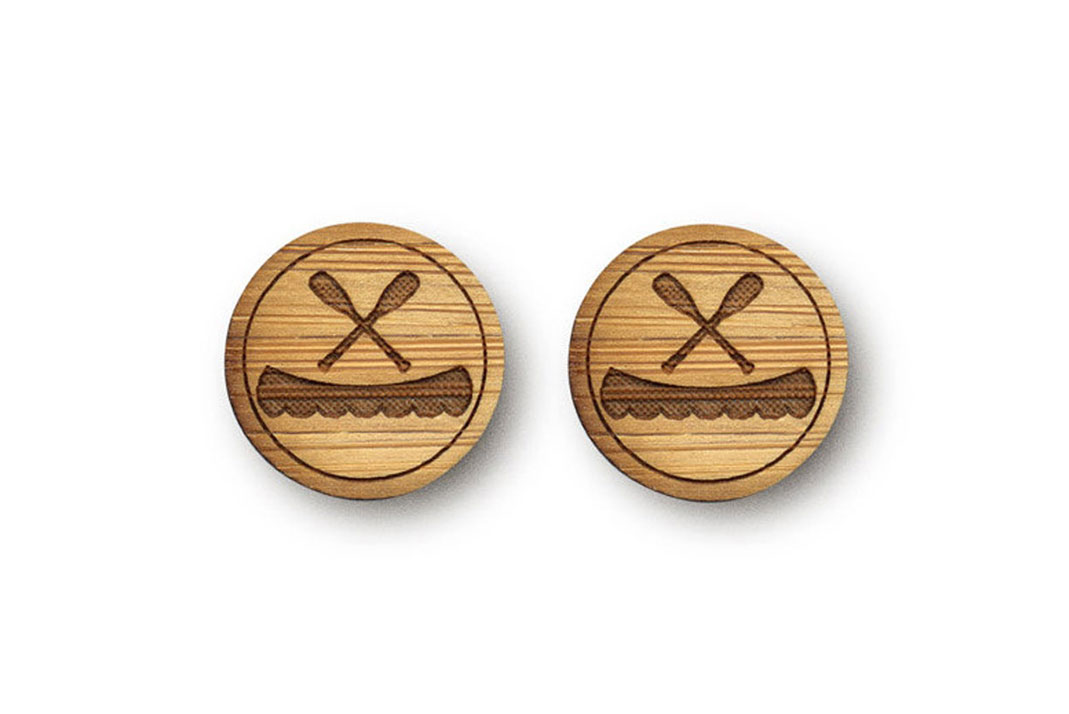
Wooden earrings with canoe and paddles crossed overtop.
Photo: Valerie Thai

Valerie Thai

“All our jewelry is designed in-house and assembled in our Vancouver, B.C. studio,” says Cabin + Cub founder, Valerie. Since 2006, she’s been making laser-cut wood accessories inspired by wilderness and wildlife, like these earrings for canoeists. |  cabinandcubshop.com


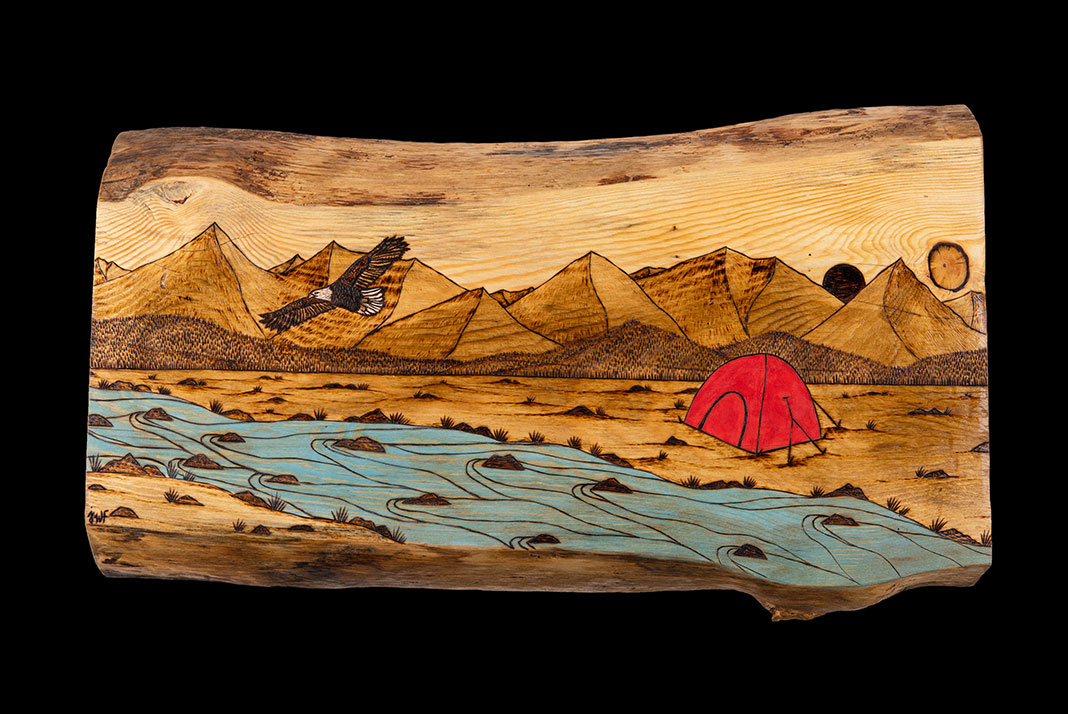
Piece of wood with scene of tent beside a river with eagle flying overhead and mountains in background.
Photo: Jenna Forest

Jenna Forest

“Pyrography translates to writing with fire. My art aims to capture the intentions of my mind without detracting from the beauty of the wood: from snow-crowned mountains, wild rivers, and flourishing forests, to untamed creatures and harmonious humans at play.” |  truesouthwooddesigns.com


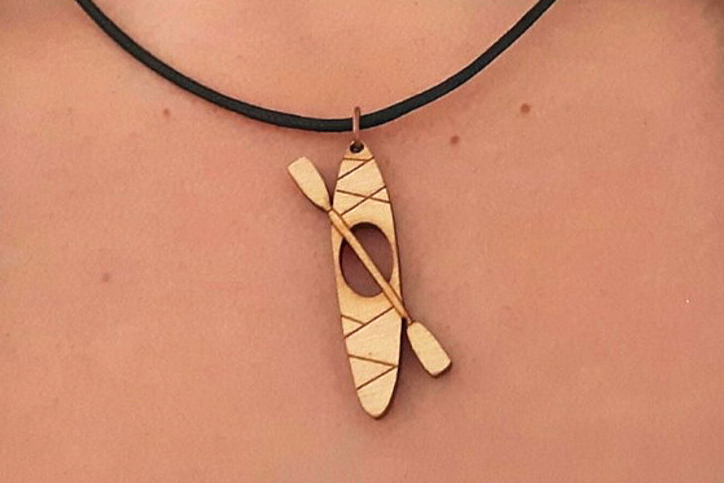
Necklace with canoe and paddle.
Photo: Maren Hills

Maren Hills

A Vancouver Island maker of jewelry in wood, acrylic and leather. “This rustic kayak pendant is laser cut from birch wood—perfect for the water enthusiast,” says Maren. | joyhillsislanddesign.com


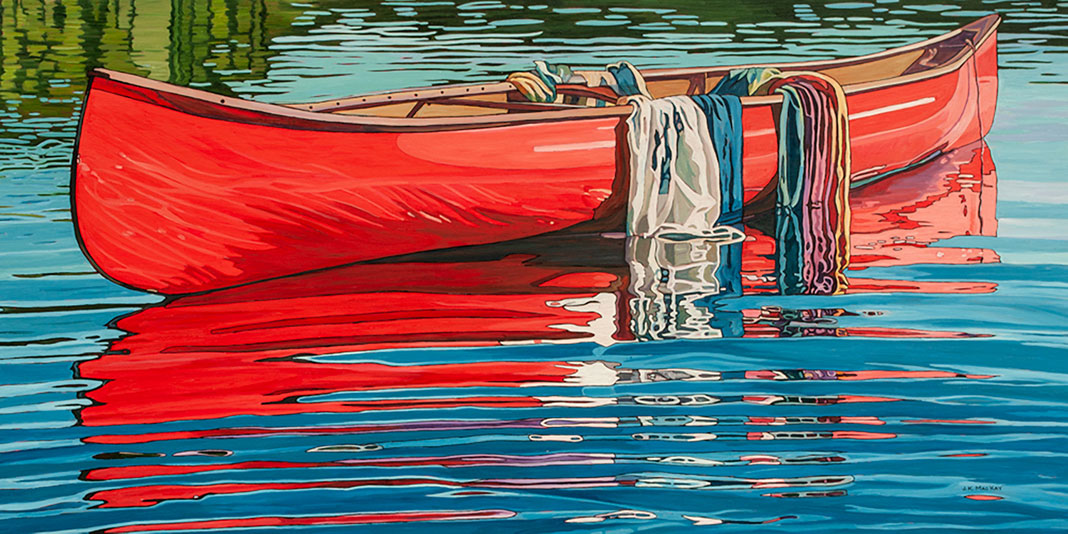
Painting of canoe on water with clothes draped over side.
Photo: Janet Mackay

Janet Mackay

“Many of my paintings are inspired by our paddling trips or just lazy days at the cottage watching the paddlers go by. In 2019, I created a series called Skinny Dipping in Canada and have returned to the theme due to popular demand.” | worldviewstudio.ca/artists/janet-k-mackay


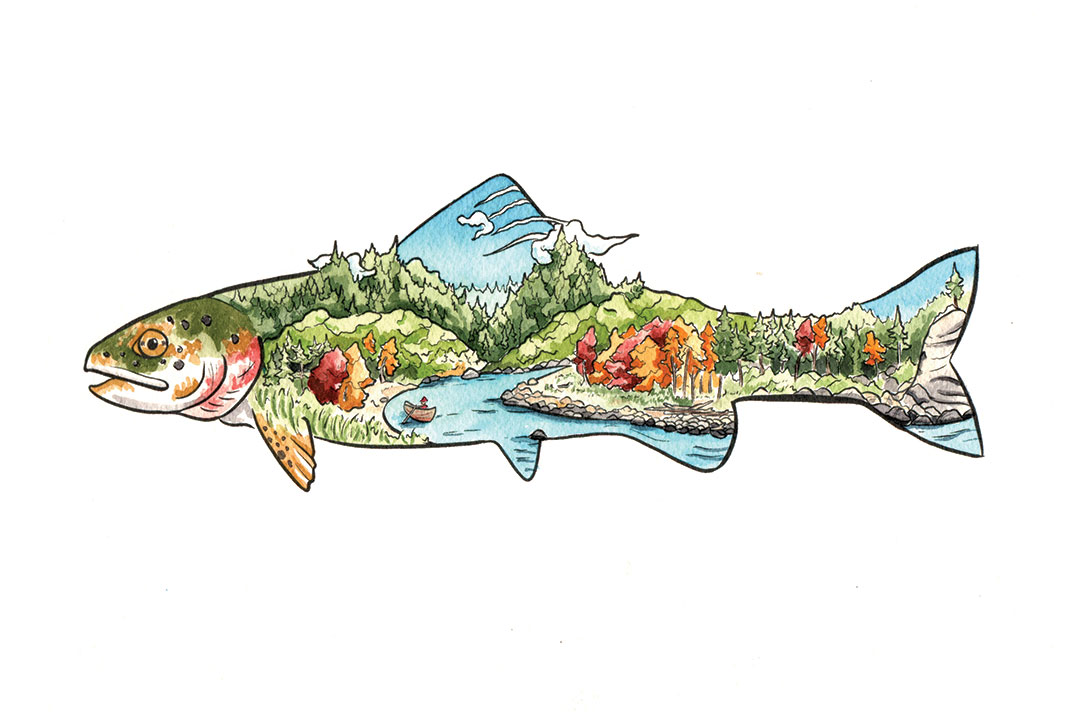
Fish with painting of canoe on a river surrounded by forest within it.
Photo: Drew Madden

Drew Madden

Drew is a second-generation raft guide and grew up in the small town of Lotus next to the South Fork of the American River. He spent his childhood playing alongside the river. Using ink and watercolor, Drew uses his experience kayaking and guiding to reflect the beauty and simple lifestyle rivers provide. | riverstoseastickers.com


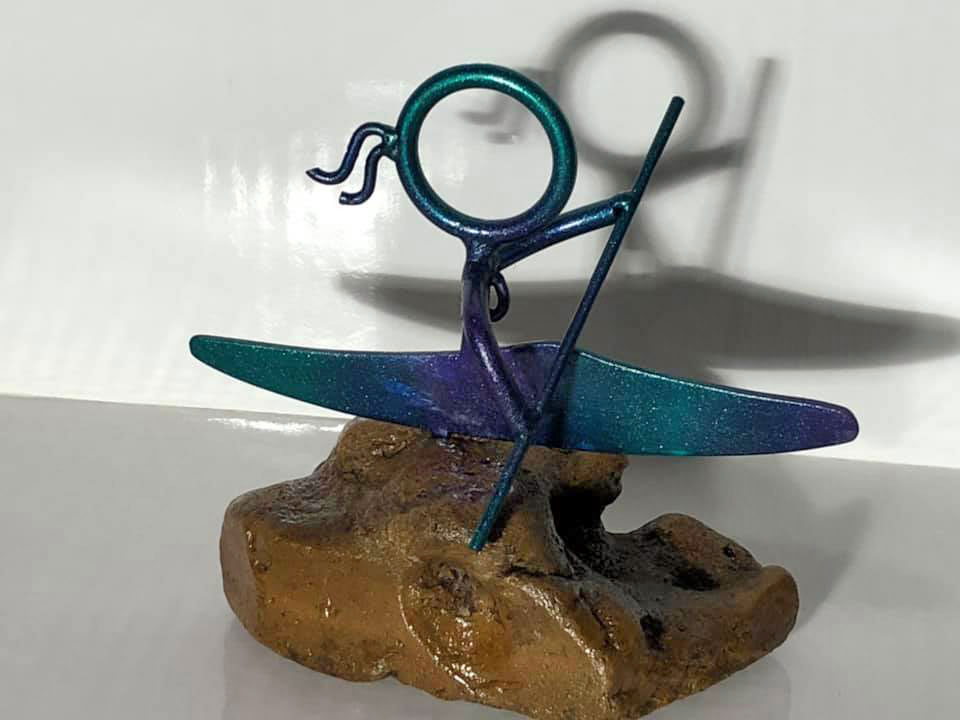
Person in a kayak made of metal and mounted on piece of wood.
Photo: James Woodall

James Woodall

“I am in Tennessee, building a house in Crossville on Daddy’s Creek. I have been carving little canoes and kayaks out of a variety of wood for about 25 years. I also create little metal figures and sculptures that I call Paddling Freaks. Search for Woody’s River Art on Facebook.” | facebook.com/Woodys-River-Art-772918876103387


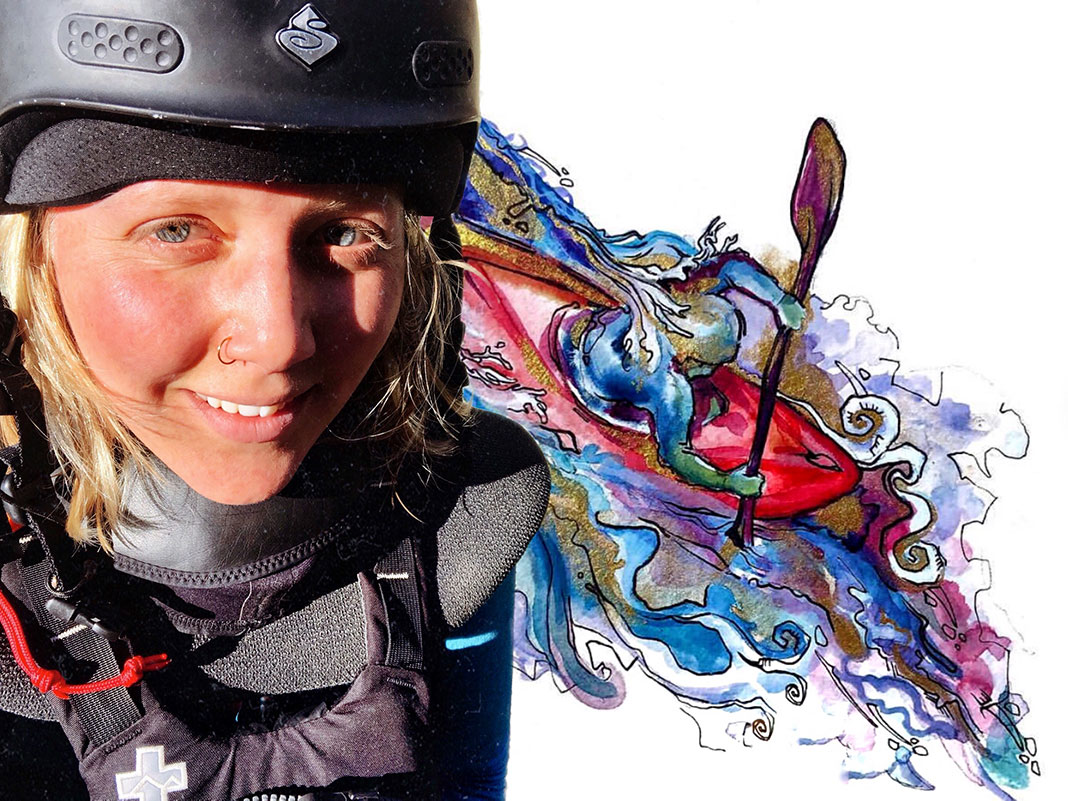
Woman's face beside her painting of a whitewater kayaker.
Photo: Hailey Thompson

Hailey Thompson

“I’m an artist and whitewater kayaker living in Anchorage, Alaska. My small art business is called Watercolorwoods, and my work is a mixture of watercolors and acrylics, inspired by the wild rivers and mountains I’m fortunate enough to live amongst.” |  watercolorwoods.com

[ Paddling Trip Guide: Find your next canoe, kayak, SUP or rafting adventure ]

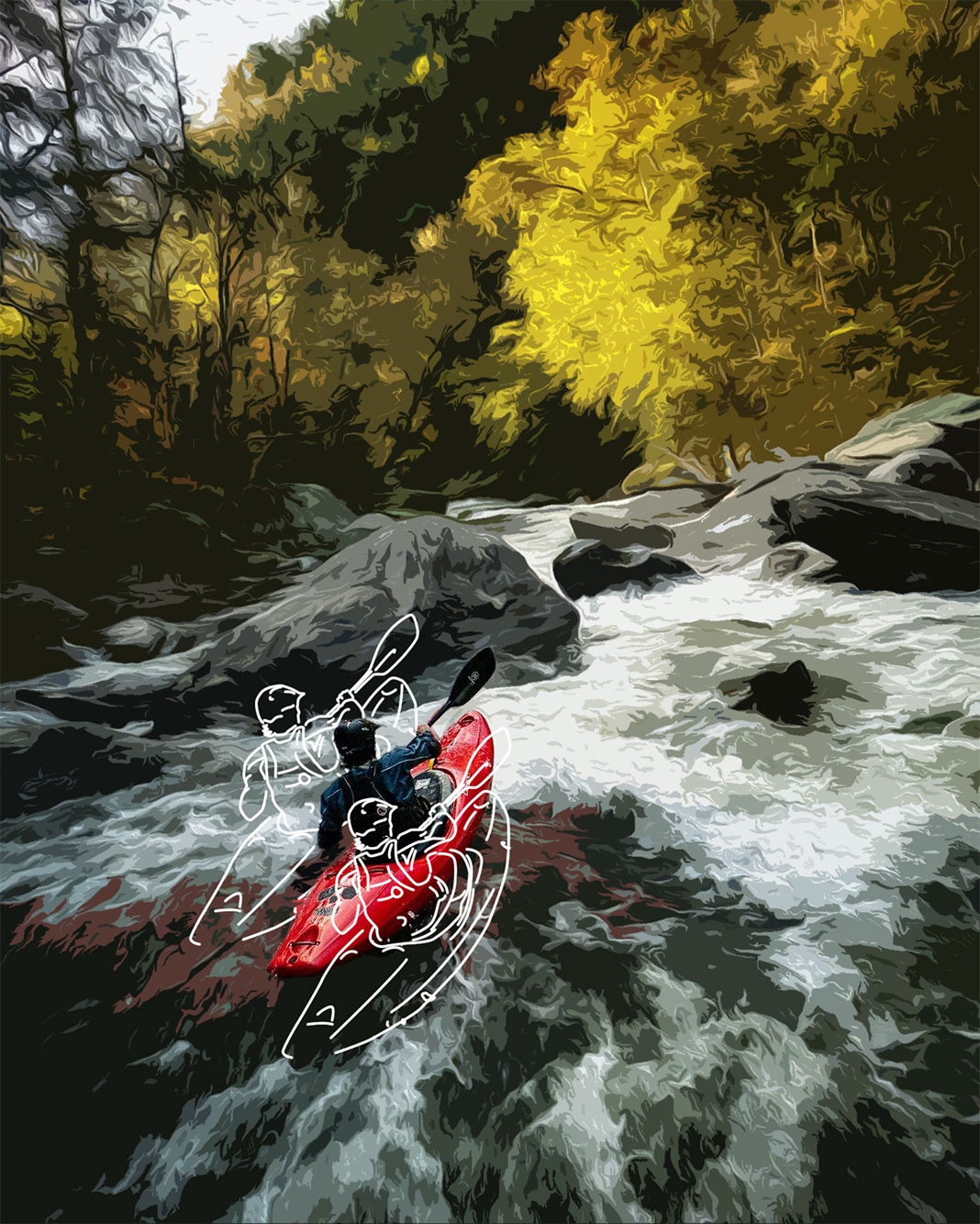
Person kayaking with outline overlay.
Photo: Patrick McGrady

Patrick McGrady

“Inspiration for these illustrations comes from the paddling community. When sent a picture, I start my illustrating process in Photoshop. Through the mixed media approach, I create an illustration that inspires others to adventure outdoors.” |  patrickmcgradydesigns.com


Show us your best shots!

For a chance to be featured in a future issue of Paddling Magazine, share your paddling photos and artwork from around the world on Facebook, Instagram or Twitter with the hashtag #paddleforever.


This article was first published in Paddling Magazine Issue 63. Subscribe to Paddling Magazine’s print and digital editions here, or browse the digital archives here.

A Kayaker’s Intimate Encounter With Basking Sharks (Video)

A kayaker was enjoying a peaceful day paddling through the waters of Ireland’s west coast—near Galley Head, Cork—when over half a dozen Basking Sharks surrounded his kayak.

Paul Clearly mentioned that he stumbled across “at least eight large basking sharks feeding” and remarkably was able to capture the extraordinary encounter on his handheld, underwater camera.

Basking Sharks’ jaws can expand up to 3 feet wide and, in the video, we can clearly see that it’s feeding o’clock for these guys.

At this point, you’re probably wondering, “why is he filming, instead of paddling away as fast as he can?”

Well, luckily for Clearly, this species of shark—the second-largest living shark or fish on the planet—has no interest in humans. Basking Sharks feed almost exclusively on microscopic animals called zooplankton.

Even so, we’re still not certain we would have the courage to be sticking our hand underwater, so close to their mouths…

[ Book your next Wildlife Viewing Adventure with the Paddling Trip Guide ]

6 Weird Facts You Didn’t Know About Wetsuits

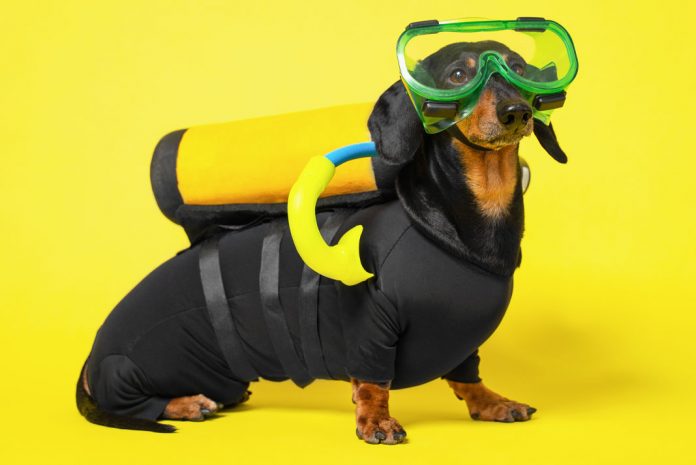
Dachshund wearing scuba gear.
Jacques Barkteau. | Photo: istockphoto.com

1. Wetsuits provide an insulating layer between skin and outside air and water but they’re not waterproof. Lightweight, flexible, durable and available in all different shapes and thicknesses, a wetsuit can keep paddlers, surfers, divers and anyone else playing in the water comfortable, even in 40°F water.

[ Paddling Buyer’s Guide: View all wetsuits and neoprene ]

2. The wetsuit was invented in 1951 by University of California physics professor and Manhattan Project scientist Hugh Bradner. He didn’t foresee its mass appeal and never patented the idea. Both O’Neill Inc. founder, Jack O’Neill, and Body Glove founder, Bob Meistrell, also claimed to have invented the wetsuit. They continued to publicly vie for the distinction for decades, even threatening lawsuits, according to the Los Angeles Times. Before wetsuits were available, surfers kept their sessions brief in cool seas, wearing a swimsuit and sometimes oil-soaked wool sweaters or long underwear.

3. Most wetsuits are made of neoprene. Invented in 1930, neoprene was the first synthetic rubber. Nowadays, it’s in many everyday objects, including laptop sleeves, mousepads, cycling chamois, electrical insulation, automotive fan belts and paddling apparel.

4. Neoprene is even used in space. American astronaut Neil Armstrong’s spacesuit was made of 21 layers of synthetics, neoprene and metalized polyester films, protecting him from the vacuum of space and the Moon’s extremes of heat and cold, which range from 260°F in sunlight to -280°F in shadow. The suit cost $100,000 in 1969, equivalent to $670,000 today, according to Smithsonian Magazine.

Q: What detergent do surfers use to wash their wetsuits?
A: Tide.

5. There are those who pee in their wetsuit and those who lie about it. The need to go when you’re in the water is due to a physiological process called immersion diuresis. When you enter water colder than the ambient air temperature, vasoconstriction occurs (narrowing the blood vessels), and extra blood is sent to the central organs. The body interprets this as fluid overload, causing an increase in urine production.

6. According to Guinness World Records, the record for the fastest time to put on a wetsuit is held by Lindsay Scott of Fayetteville, North Carolina, at 43.13 seconds. Alistair Kealty of Belgium holds the world record for the fastest marathon run while wearing a wetsuit at 3 hours and 14 minutes.

This article was first published in Paddling Magazine Issue 63. Subscribe to Paddling Magazine’s print and digital editions here, or browse the digital archives here.


Jacques Barkteau. | Photo: istockphoto.com

Capsized Kayaker Is Rescued From Okanagan Lake (Video)

capsized-kayaker-rescued-from-okanagan-lake

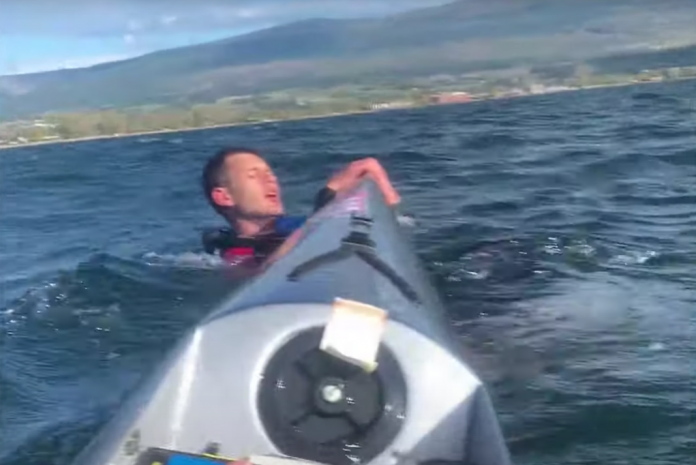
Sally Wallick, a music teacher from Kelowna, B.C., was out enjoying the sunshine on Okanagan Lake when she noticed a fellow kayaker had capsized and become stranded.

Despite Kelowna’s warm spring temperatures, Okanagan Lake can still reach frigid low temperatures of around 9 degrees celsius. Wallick paddled over to the man and quickly learned that he had been capsized and in the water for at least 45 minutes. As she approached, she realized his lips were blue. With hypothermia top of mind, she knew she had to act fast.

Wallick urged the man to grab onto the back of her kayak so that she could paddle him to shore. After some trial and error, she instructed him to move to the front of her boat and to “try to kick” so that he would stay as warm as possible.

The stranded paddler seemed unwilling to leave his kayak and belongings behind. “You’re really cold. Leave the kayak. We’ll find it I promise,” said Wallick in the video. She reassured him that the kayak and his belongings would wash up on the shore.

The rescue began promisingly, with Wallick reassuring the swimmer that he was doing a “good job” as she paddled forward with him hugging the side of her sit-on-top kayak. Unfortunately, their joint success was short-lived.

[ Find the Lake Kayak you’ve been looking for in the Paddling Buyer’s Guide ]

She asked the man to lie across her kayak, and as he did so, the kayak flipped—submerging them both underwater. The camera she was filming with became submerged and the sequence of events that followed becomes a little unclear.

Despite the new dire circumstances, the video shows Wallick remain calm. She was able to flag down a pontoon boat that was able to bring the man to shore. Though, at that point in the video, it is unclear how long they were both in the water. “I’m just grateful that it all worked out,” she told Global News. “I do kind of think about what would have happened maybe if the pontoon boat didn’t come.”

Hobie Redefines Kayak Versatility with New Mirage Lynx

Photo courtesy Hobie Cat Company
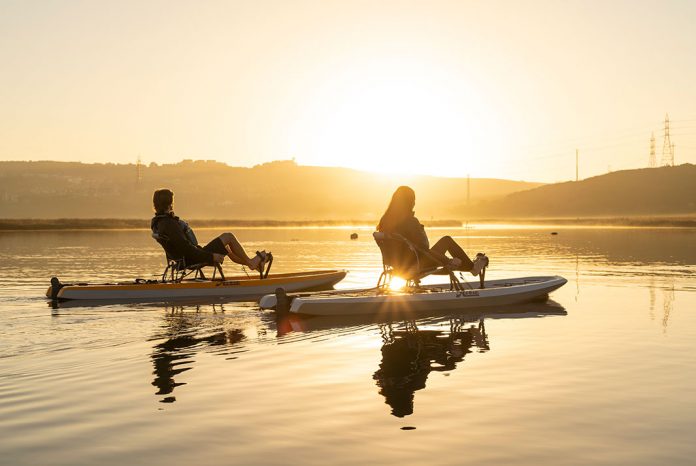
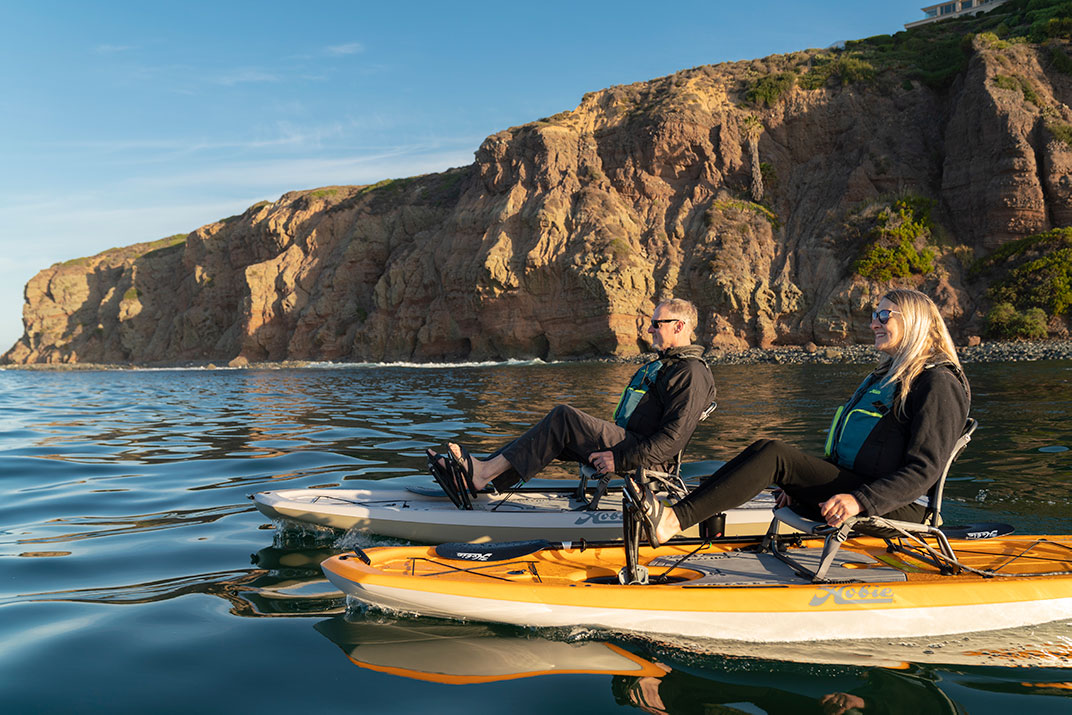
OCEANSIDE, California – Hobie, the leading manufacturer of premium kayaks and watersport products, today announced the launch of the Mirage Lynx, an innovative pedal kayakwith elevated seatingthat boasts extreme versatility, rugged performance, and a durable but lightweight design.

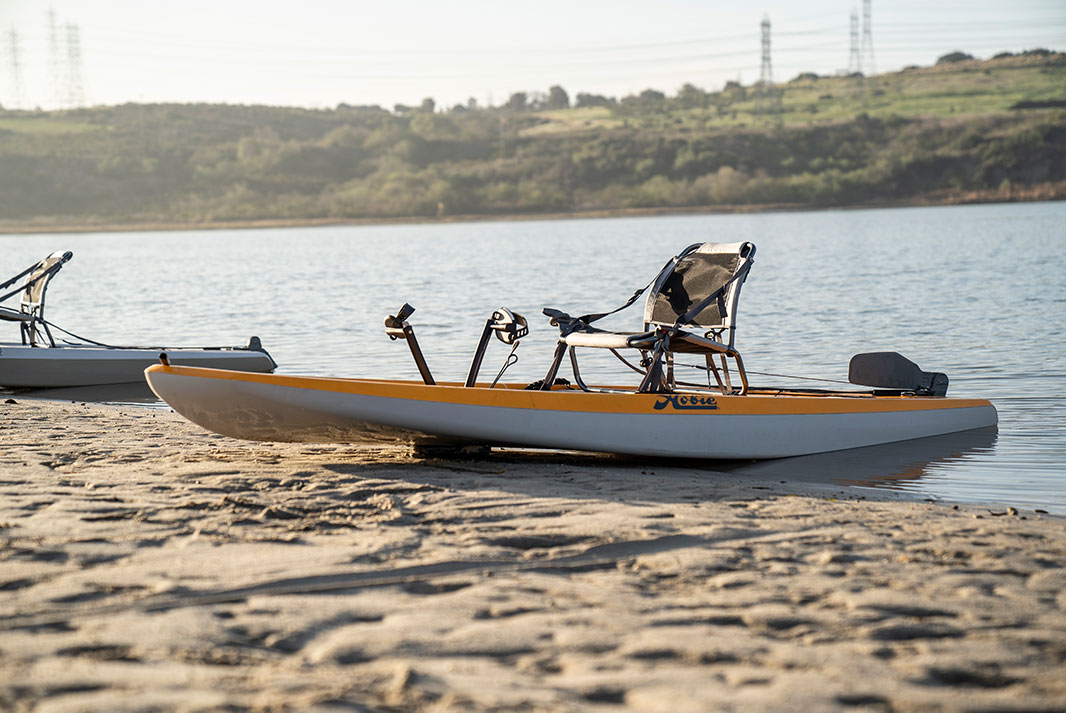
Born out of popular demand for a hard-sided version of theinflatableHobie i11s, the Lynxdelivers lightweight performance withACE-TEC construction that delivers rigidityanddurabilitywhile maintaining afitted hull weight of just 45 pounds. Fast and efficient, the Lynx features the patented MirageDrive 180 with Kick-Up Fin Technology, enabling hands-free forward and reverse pedaling in even the shallowest of depths. The stability of the Lynxhandles rough water with ease, allowing for effortlessmaneuverabilityin challenging waters, thanks to a v-hull entry, wide bow, and innovative waterflow tunnel system.

“We built theLynx to give kayakers everything they could dream of and more.”

“We built theLynx to give kayakers everything they could dream of and more,” says Mike Suzuki, CEO of Hobie. “With all of the tenacity of a hard-sided kayak, and the benefits of the unique, lightweight design, the Lynx is as enjoyable as it is versatile; whether it’s taking you fishing, kayaking, sailing, traveling, or relaxing, the Lynx is a jack of all trades.”

Photo courtesy Hobie Cat Company

The Lynx includes accessory mounts, molded-in tracks, an EVA standing pad, and ample cargo room that can be utilized for a variety of applications. AnH-bar stand-up bar,fishing accessories, and an H-Rail system with integrated, patented RAM® Hand-Track™are easily installed to give anglers the ultimate package for fresh andsaltwater fishing alike. The Lynx comes ready to install fishing electronics and a Power-Pole® anchor system.Hobie’s optional Mirage Sail Kit and Bimini Sunshade are simple to installusing the forward accessory mount, while the lightweightmono-mesh seat delivers elevated, comfortable seating for increased visibility and a lively, stable ride. Multiple features, including ergonomic handles and rear loadingskidpads, make transporting the Lynx efficient and hassle-free.
The Lynx retails for $2,699 MSRP and will be available in a neutral tone, Dune, and a brighter, safety option, Orange Papaya. Inventory is arriving at authorized Hobie dealers as early as today. To purchase, customers can use the dealer locator feature at www.hobie.com to find their closest Hobie dealer.
Photo courtesy Hobie Cat Company
###

About Hobie

Since 1950, Hobie has been in the business of shaping a unique lifestyle based around fun, water and quality products. From their headquarters in Oceanside, California, Hobie Cat Company manufactures, distributes and markets an impressive collection of watercraftworldwide. These include an ever-expanding line of recreation and racing sailboats, pedal-driven recreation and fishing kayaks, inflatable kayaks and fishing boats, standup pedal and paddleboards, plus a complementary array of parts and accessories. To learn more, visit hobie.com.

Bruce Kirkby Pushes The Limits Of SUP At Cape Scott

Man on a paddleboard on ocean on a gray day.
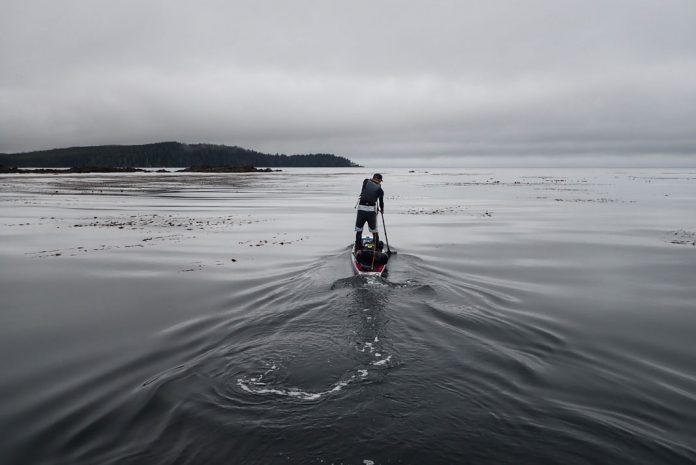
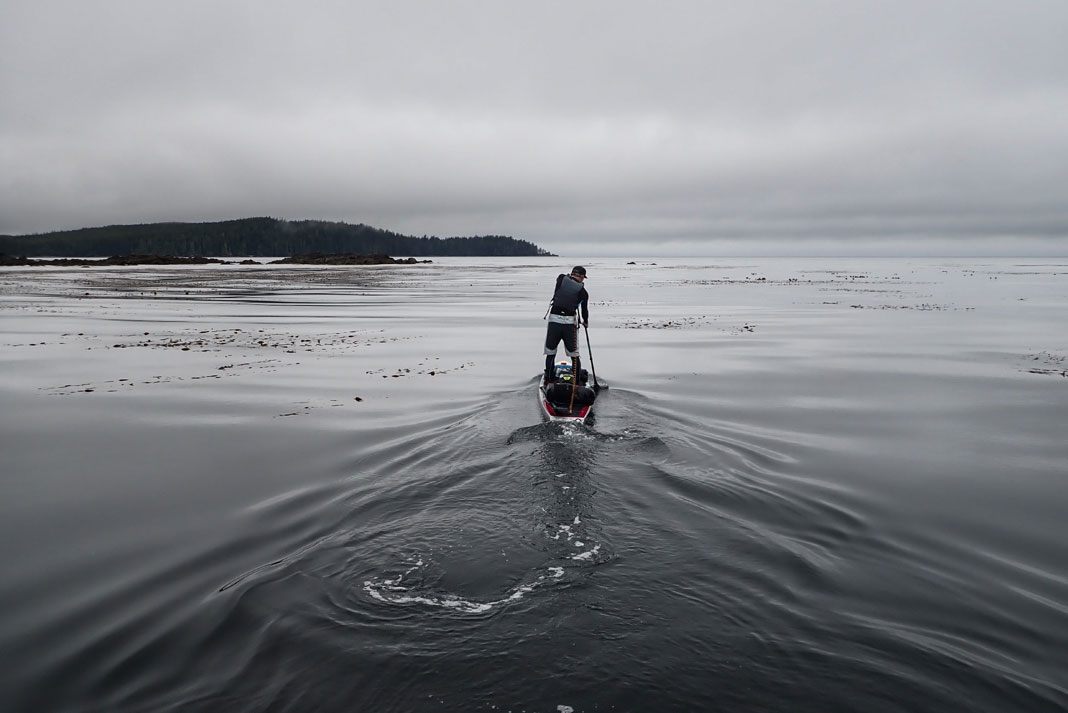
Going where no board had been before. | Photo: Bruce Kirkby

Years ago, while traversing Vancouver Island’s outer coast by paddleboard, I chose to avoid Cape Scott’s capricious waters. Instead, I portaged a narrow sand tombolo, following a centuries-old Nahwitti portage trail, where heavy dugout canoes were once dragged in efforts to avoid dangerous waters with names like achdem (foam place), nomas (sea monster) and tsequime (trail on the surface).

But ever since, the Cape had haunted my imagination.

So last summer, longtime expedition partner Norm Hann and I set out from Port Hardy—a quiet fishing community in the north of the island—with seven days of food and gear lashed to our boards. We weren’t aware of anyone previously rounding Cape Scott by SUP, but that was beside the point. We both love exploring wild landscapes, and together pushing the limits of what seems possible aboard a SUP.

Afternoon gales were building by the time we finally departed the busy harbor, and we soon had tucked into a draft, scratching our way along a rocky coast, darting from headland to headland with waves crashing over our bows. It took three hours to reach Songhees Creek, a sheltered beach tucked beneath towering Sitka spruce. A pair of curious seals watched as we cooked a quick dinner. Later, while lying in the tent, the haunting cry of a bald eagle echoed over the dark waters. Already, modernity had slipped far behind us, and we’d entered a wilder and more primal world.

The next morning, we faced our first major obstacle: Goletas Channel. This narrow waterway funnels the prevailing northeast winds and tidal currents. Lined by a sheer rock offering no chance for respite, paddlers must run the entire 24-kilometer gauntlet in a single shot.

On the water before dawn, we raced over glass waters, a gentle ebb tide carrying us on. Three hours later, sweaty but happy, we emerged on the far side. Beyond, we passed Tatinall Reefs (where waves and current pile up) and Cape Sutil (the most northerly point on Vancouver Island), before camping amid dunes at Shuttleworth Bight, where crashing knee-high surf eased us to sleep.

Another day of paddling, past increasingly rugged beaches and windswept forests, over dark sparkling with herring and feeding humpbacks, brought us to Experiment Bight—the last pullout before the notorious Cape.

Following a muddy trail out towards the distant headlands, we emerged from old-growth forest to a scene unlike anything I’d witnessed before. Lines of dark swell heaved on the horizon, breaking a kilometer or more offshore. Closer in, foam and waves exploded from a maze of rocks and islets. Unbeknownst to us (on the protected north coast), a strong southerly wind had been blowing for days, leaving the ocean in turmoil. For some time, neither of us said a word. Clearly, we weren’t going around the Cape any time soon. On a deeper level, we both felt humbled. And intimidated.

Man on a paddleboard on ocean on a gray day.
Going where no board had been before. | Photo: Bruce Kirkby

Thirty hours later, the storm finally began to ease. That night, the weather radio announced northwest gales would build the following morning. It was a typical West Coast weather pattern, but it meant the only possible window was a slack tide near dawn. After that, the ocean would again be a mess.

We fell into an uneasy sleep, heads churning with questions. Would the swell ease overnight? Could we see sufficiently clearly to paddle at 5 a.m.? Would we be able to sneak around the headland before the gales arrived?

Watch alarms hummed at 4 a.m., but we were already awake, having slept restlessly. Twenty minutes later, our gear packed, we gulped down energy bars and water. Coffee and oatmeal could wait.

We planned to launch at 4:45, giving us a short window to get around the Cape before flood currents built. But we couldn’t see a thing. So, we paced the beach, waiting. At 4:55, we pushed through knee-high surf. The sky above was a dark purple bruise. Far to the east, the sun’s first embers smoldered on the horizon.

Within minutes we’d reached the point of no return: an immense black rock separating Queen Charlotte Sound from the open Pacific. A stiff northwest wind was blowing, generating a chaotic, three-foot chop. More unsettling, the powerful southwest swell had not abated overnight. Dark sets rose from the ocean, three meters tall or more, exploding over shallow reefs. There was no discussion. The situation wasn’t ideal, but it was within our abilities. Without a word, we paddled on, entering a world of black, gray and white.

Then a wave caught my tail, sending me tumbling
forwards across my nose. Suddenly I was underwater. 

Ghostly waves exploded upwards around us. The tide turned, slowing progress. A monster wave reared up and broke, exactly where we’d been headed, so we pointed further out to sea. Surf scooters streamed past at waist height, in long lines reminiscent of smoke. Then a wave caught my tail, sending me tumbling forwards across my nose. Suddenly I was underwater. Silence. And up again.

“You okay?” Norm yelled, but I was already on my feet and paddling—proving a long-held theory that paddleboards, and the ability to leap back on, have significant advantages in serious situations. I shudder to think of a capsized kayak in those waters.

Steadily we inched southwards. Brace, paddle, brace. At some point, we realized we were past the worst of it and rafted up. Tiny corks tossed on a massive ocean. Norm’s eyes told the story: we’d experienced something quasi-spiritual in those few miles. Hours later, we landed on the sprawling white sand beach of Lowrie Bay. The open coast lay before us.

Rounding Cape Scott was like passing a portal—both outer and inner. We now found ourselves alone in raw, windblown wilderness. Wandering white sand beaches and rocky islets, we kept eyes alert for Japanese glass fishing floats. The scotch emerged from the bottom of the drybag. Time stretched out in a comforting way.

Days later, we entered San Josef Bay’s protected waters, paddled up a quiet estuary, and saw the glint of sunlight on windshields. The wilderness had released us.

This article was first published in Paddling Magazine Issue 63. Subscribe to Paddling Magazine’s print and digital editions here, or browse the digital archives here.


Going where no board had been before. | Photo: Bruce Kirkby

Bruce Kirkby is a photographer and writer living in Kimberley, B.C. A member of the Starboard Dream Team, his third book, Blue Sky Kingdom, was released in Fall 2020.