Home Blog Page 132

Best Places To Go Camping In Edmonton

Campers staying in geodesic domes at Elk Island Retreat
From wilderness camping to glamping, Edmonton’s picturesque parks and lakeside campgrounds have the perfect site for you. | Photo courtesy of: Explore Edmonton

The glacial lakes of Alberta’s Rocky Mountains may get all the glory, but the reality is that Albertans are spoiled with access to hundreds of freshwater lakes, rivers and waterways throughout the province.

Central Alberta is no exception to this rule. The mighty North Saskatchewan River flows directly through Edmonton’s downtown core, and dozens of lakeside campgrounds and summertime communities are only a short drive away. It may come as no surprise to learn that camping is a favorite summer pastime for Edmontonians, with easy access to ample fishing, boating and paddling opportunities.

Whether you’re looking to camp directly in the city or just want to know the best camping close to Edmonton, we’ve got you covered. Here’s the finest camping around Edmonton.

[This article is part of our 7 Adventurous Things To Do In Edmonton seriesLearn more about where to hike, bike, paddle and sightsee around Alberta’s capital city region.]


Camping in the Edmonton area

Campgrounds near Edmonton

Astotin Lake Campground

Visitors to Edmonton are often surprised to see the herds of bison just off the Yellowhead Highway, one of the province’s main traffic arteries. Fully enclosed, Elk Island National Park is also home to moose, white-trailed deer, wolves, foxes, cougars, black bears and 250 species of birds—and it’s all only a 35-minute drive from Edmonton’s downtown core.

Bison graze in a field on Elk Island
Bison graze in a field on Elk Island. | Photo courtesy of: Robin Laurenson // @motherpixels

The park’s main campground is Astotin Lake Campground. With 75 non-serviced campsites, including 15 walk-in tent sites and five oTENTiks, it offers some of the best family camping near Edmonton, alongside canoe, kayak and SUP rentals.

Prices range from $10 to $122, although park entry costs extra. It’s open from mid-May until Thanksgiving and reservations—which can be made with Parks Canada—are recommended. Winter camping is also available at reduced rates ($5.01 per person per night), but showers are closed during this time period.

[ Plan your next Alberta paddling adventure with the Paddling Trip Guide ]

Elk Island Retreat

A 20-minute drive east of Fort Saskatchewan, Elk Island Retreat is a privately owned campground just outside the national park boundaries. It has 26 fully serviced RV sites, but the real drawcard here is the glamping (or “comfort camping”) options, making it some of the most sought-after camping close to Edmonton.

Options include yurts, cabins, tipis and—new in 2020—two luxe geodesic domes. Glampsites range in price from $90 to $219, while RV sites cost $48 to $53 per night, with discounts for weekday and long stays. It’s open mid-March to mid-November.

Devon Lions Campground

Situated in Devon, a small town southwest of Edmonton, the Devon Lions Campground has a plot of prime real estate; it’s right on the shores of the North Saskatchewan River, making your put-in spot a no-brainer.

This family-friendly campground is open through the summer months, with sites starting at $30.50 per night. Weekly and monthly rates are also available, but booking in advance for weekends and holidays is advised.

Rainbow Valley Campground

When it comes to camping near Edmonton, you can’t get any closer than Rainbow Valley, which is the only campground directly in the city. It’s nestled within Whitemud Park on the city’s southwest side, with access to plenty of nature trails. However, if you get sick of the great outdoors, its proximity to the freeway also means that you can be at the “great indoors” in minutes. West Edmonton Mall—which was once the world’s largest shopping center—is only a 15-minute drive away.

Open from June to mid-October, it costs $37 for an unpowered site and $43 for a powered site, with weekly rates available.

Shakers Acres RV Park & Campground

Shakers Acres sits on Edmonton’s doorstep. Conveniently located next to the Anthony Henday (a freeway that encircles the city) on the city’s west side, it has 163 pull-through and back-in sites that can accommodate that any size of motorhome. Rates start at $42 per night and $262.50 per week. It’s open from May until October.

People sit outside a yurt at Elk Island Retreat while camping near Edmonton
A yurt at Elk Island Retreat. | Photo courtesy of: Sameer Ahmed // @sameer.design

St. Albert Kinsmen RV Park

A bedroom community on Edmonton’s northwest side, St. Albert is widely considered one of the province’s most beautiful cities. With the Sturgeon River running through St. Albert and the wetlands and lakes of Lois Hole Centennial Provincial Park on its edges, there are endless opportunities for hiking, biking and paddling.

The St. Albert Kinsmen RV Park is in the heart of the Riel Recreation Park, a green space with easy access to the city’s waterways. It has 93 fully serviced sites with views of the river, each costing $50 per night.

Métis Crossing Campground

Métis Crossing is a bit further afield than most of the Edmonton camping sites on this list, but it’s well worth the 90-minute drive. Not just a campground, the 500-acre site is composed of river lot titles from the original Métis who came to the region in the late 1800s. Today, it’s Alberta’s premier Métis cultural interpretation center.

Yes, you can camp here (there are 21 powered sites for $30, along with unpowered and tent sites overlooking the North Saskatchewan River), but the real reason to visit is the chance to paddle an authentic Voyageur canoe and learn about the area’s rich Indigenous culture and history.

Backcountry camping Edmonton

Although there are plenty of wide-open spaces to be found in central Alberta, much of it is farmland. The result is that there’s few backcountry camping spots near Edmonton and even fewer that you can canoe into. However, if you don’t want to drive all the way to Jasper to get your backcountry fix, here’s a couple of spots that will help you scratch the itch.

Along the North Saskatchewan River

One of the best places for crown land camping spots near Edmonton is along the shores of the North Saskatchewan River. For $220, outfitter CanoeHeads drops paddlers off at the Genesee Bridge (southwest of the city). Over the next two or three days you’ll paddle 70 km of Class 1 water downstream until you reach the city, camping on crown land along the way.

New to Edmonton in 2021, Urban River Adventures picks tourists up from downtown Edmonton in a jetboat before whisking them away to a crown land island on the North Saskatchewan River. Camping spots are close to Edmonton and options include canvas tents, bubble tents, dome tents and hammocks, but if you’re into the good old fashion nylon variety, island hopping adventures—where you paddle from island-to-island by kayak or SUP and camp overnight—are also available starting from $150 per night.

Oster Lake

Elk Island National Park has six backcountry sites ($10.02 per person) located on the west shore of Oster Lake, a waterfowl sanctuary. Access is via the Shirley Lake Trail (six kilometers one way). It’s relatively flat, making for some great family camping near Edmonton. Reservations are recommended.

Lakeland Expedition Rentals

While not in Edmonton, Lakeland Expedition Rentals in Lac La Biche (a 2.5-hour drive north of the city) outfits keen paddlers to tackle Alberta’s only backcountry canoe circuit. At 38 kilometers in length with a doozy of a portage at the start (3 km), it takes about three days to complete.

A man sits on a picnic table outside a tipi while camping near Edmonton
A tipi at Elk Island Retreat. | Photo courtesy of: Sameer Ahmed // @sameer.design

Crown land camping Edmonton

When conventional campgrounds closed or imposed restrictions during the COVID-19 pandemic, the number of people seeking out crown land camping near Edmonton exploded, with the number of people following the Crown Land Camping Alberta Facebook group swelling to over 60,000 members.

Unfortunately, most of the Public Land Use Zones (PLUZ) sites are in Alberta’s north and west, meaning that you’re unlikely to find free camping in Edmonton. (You can technically camp on agricultural crown land, but you do need to ask the leaseholder first, which can be easier said than done.)

For more information, Road Trip Alberta (by local Albertans and budget travel experts Dalene and Pete Heck) has written a comprehensive guide to crown land camping in Alberta.

Lakes near Edmonton for camping

Miquelon Lake Provincial Park

Celebrating the natural beauty of the Beaver Hills, this provincial park—located midway between Edmonton and Camrose—is part of the Beaver Hills Dark Sky Preserve.

In addition to several smaller ponds, it has a campground on the edges of Miquelon Lake. While the lake’s waters aren’t suitable for swimming, it can be used for canoeing or kayaking. The campground has nearly 300 sites, starting at $30 per night, which can be reserved online.

Lac Ste. Anne

If you’re looking for camping near Edmonton with a beach, go where the locals go. Lac Ste. Anne is about an hour northwest of the city. The main community, Alberta Beach, is Edmonton’s answer to cottage country, with countless cabins surrounding its shores.

The county owns and operates three campgrounds (including one beside the popular Pembina River), but Alberta Beach Family RV Park and Campground is within walking distance of all amenities. Sites start at $30 daily and $170 weekly.

Wabamun Lake

You’ll know you’re near Wabamun when you see a giant dragonfly, allegedly the world’s largest. One of the most popular lakes in Alberta—and one of the best spots for camping near Edmonton with a beach, the waters of Wabamun Lake are ideal for swimming, paddling, and even sailing.

The seasonal campground, located within Wabamun Lake Provincial Park, has about 275 treed sites starting at $35 per night, which can be reserved online.

Pigeon Lake

Like most of the other lakes on this list, you’ll have to drive about an hour from Edmonton to reach Pigeon Lake, but once you get there you’ve arrived at one of the most popular summer destinations in Central Alberta. (The evidence is the 10 summer villages and 2,300 privately owned cabins in the area.)

In addition to hundreds of powered and unpowered sites ($30 to $54), Pigeon Lake Provincial Park campground has eight full-equipped and accessible yurts for $125 to $170 per night. Winter camping is also available here.

People sit outside on the deck of a geodome while camping near Edmonton
Geodomes at Elk Island Retreat. | Photo courtesy of: Explore Edmonton

Winter camping Edmonton

Your best bet for year-round camping in Edmonton is in Alberta’s provincial parks. Unlike privately owned campgrounds—which are typically only open from May until October—many offer winter camping options at reduced rates.

Lower rates also mean reduced services; booths may not be manned due to fewer visitors and self-registration is often in effect. Visit AlbertaParks.ca for winter camping options.


Camping stores Edmonton

Mountain Equipment Co-op

A perennial favorite for camping supplies in Edmonton, MEC has not one, but two nearly brand-new stores within city limits. The south-side location (1624-99 St.) is the larger of the two, while the Oliver Square location (1904-104 Ave) is close to downtown.

Campers Village

It doesn’t matter what kind of camping gear you’re looking for in Edmonton, you’ll find it at Campers Village. The Albertan chain has two locations in Edmonton: one on the west end (10951 – 170 Street) and one on the south side (3235 Calgary Trail).

Cabela’s

This is hunting and fishing country, so it should come as little surprise to learn that Cabela’s (a subsidiary of Bass Pro Shops) is a popular spot to pick up camping supplies in Edmonton. If you’re headed north or south out of the city on an adventure, you’ll find a location on your way out of town.

People inside the Geodomes at Elk Island Retreat
Looking out at the forest from inside a geodesic dome. | Photo courtesy of: Explore Edmonton

Camping gear rental Edmonton

Timberwolf Tours

If you’re looking for locally owned camping outfitters in Edmonton, contact Timberwolf Tours. In addition to tours of the Athabasca River, the Spruce Grove outfitter rents out canoes, tents and other camping gear. A shuttle service for canoe trips is also available.

Mountain Equipment Co-op

Edmonton has two large MEC locations (one near the downtown core and one on the south side) with gear rental programs.

Rent Eh Tent

Rent Eh Tent is good at more than just clever names. The Edmonton outfitter hires out everything you might need for an outdoor camping or paddling adventure.


From wilderness camping to glamping, Edmonton’s picturesque parks and lakeside campgrounds have the perfect site for you. | Photo courtesy of: Explore Edmonton

12 Scenic Places To Camp In Lake Of The Woods

Tent set up on a rock while a campfire burns at night
Find the perfect campsite on Lake of the Woods. | Photo courtesy of: Destination Ontario

Whether you’re looking for a scenic destination for RV camping, a peaceful spot for tent camping, a wilderness camping escape, or a unique glamping experience, few places in North America can match the splendors of Lake of the Woods. The scenery surrounding the city of Kenora, located between Thunder Bay and Winnipeg in northwestern Ontario, is defined by Canadian Shield outcrops and tall pine, the merging of lake country and the prairies.

But mostly, Lake of the Woods camping is defined by access to pristine freshwater—lakes and rivers offering outstanding fishing opportunities and great canoeing, kayaking and standup paddleboarding for all levels of adventurers.

Tent set up on a rock while a campfire burns at night
Find the perfect campsite on Lake of the Woods. | Photo courtesy of: Destination Ontario

We’ve assembled a list of great Lake of the Woods campgrounds and backcountry camping destinations that includes something for everyone, including families, paddling enthusiasts and anglers. Now is the time to hit the road to discover Ontario’s Sunset Country.

[This article is part of the The Ultimate Lake Of The Woods Outdoor Adventure GuideFind all the resources you need to plan an adventure-filled trip to the Kenora area.]


Lake of The Woods: best car and RV campgrounds


View this post on Instagram


A post shared by RushingRiverPP (@rushingriverpp)

Rushing River Provincial Park

Located a short drive south of Kenora on Highway 71 and barely 2.5 hours from Winnipeg, Rushing River Provincial Park offers some of the best tent and trailer camping near Lake of the Woods. The park boasts 290 drive-in campsites, many with electric hookups, along the shores of Dogtooth Lake. Group sites accommodating up to 50 people are also available. If you’re looking for an introduction to backcountry camping, check out several walk-in sites located a short distance from your vehicle.

Rushing River features four hiking trails, great children-friendly swimming beaches, and outstanding fishing for walleye, northern pike, smallmouth bass and lake trout. The campground makes an excellent base camp for canoe trips on Dogtooth Lake.

Find out more.

RESERVE / CHECK RATES


View this post on Instagram


A post shared by James Campbell (@jcampbell003)

Tomahawk Resort

Your Lake of the Woods camping experience at Tomahawk Resort is all about embracing the great outdoors in Northwestern Ontario. Located in Sioux Narrows, ON, on the east shore of Lake of the Woods, Tomahawk Resort includes 75 campsites and 14 cabins, all within an easy walk of a private beach. The campground features a hiking trail and easy access to canoe and kayak adventures on the island-pocked waters of Lake of the Woods.

Find out more.

RESERVE / CHECK RATES


View this post on Instagram


A post shared by Miel Mangonon (@1namiellion)

Anicinabe RV Park and Campground

You’ll find great Lake of the Woods camping within Kenora city limits at Anicinabe RV Park and Campground, with 38 tent sites and 45 RV sites. The park is located on a traditional Indigenous gathering place by the water with a horseshoe-shaped sand beach. There’s plenty of greenspace, a playground, and access to Lake of the Woods for boaters and paddlers. The campground is located on Kenora’s Rat Portage Urban Trail, providing great options for walking and cycling along the waterfront.

Find out more.

RESERVE / CHECK RATES

[ Paddling Trip Guide: View all paddling adventures in northwestern Ontario ]

Wild Woods Hideaway

Looking for a different Lake of the Woods camping experience? Check out Wild Woods Hideaway, located just west of Kenora on Highway 17, to get a taste of glamping in Sunset Country. Wild Woods rents cozy canvas prospector tents and log tiny homes set in the rugged boreal forest on the shores of Mink Bay. Canoes, kayaks and standup paddleboards are available for guests. There’s also 4.5 km of hiking trails and a swimming beach, with access to legendary fishing on both Lake of the Woods and the Winnipeg River.

Find out more.

RESERVE / CHECK RATES


View this post on Instagram


A post shared by Trystan Petrash (@trystanpetrash)

Sioux Narrows Provincial Park

Reserve a Lake of the Woods campsite at Sioux Narrows Provincial Park—a great destination from which to explore the islands and hidden channels of one of Canada’s greatest lakes. Each of the more than 50 car camping sites, group sites and semi-wilderness walk-in campsites at Sioux Narrows Provincial Park is replete with the icons of the Canadian outdoors: granite outcrops, white pine trees and outstanding views of the shimmering waters of Lake of the Woods.

The park is an ideal starting place for day trips by canoe and kayak, and for fishing for Lake of the Woods’ renowned walleye and northern pike. Birders will encounter numerous species during the migration periods of spring and fall, as well as American white pelican throughout the summer.

Find out more.

RESERVE / CHECK RATES

Redden’s Camp

Campers have plenty of options at Redden’s, located on Longbow Lake, on Highway 17 south of Kenora. Highlights include a full-service RV campground, rental cabins, boat slips and two swimming beaches.

If you’re looking for a unique Lake of the Woods camping and fishing experience, check out Redden’s outpost camps, with remote cabins available for rent on Lake of the Woods and Dryberry Lake. Both offer superlative wilderness fishing experiences, with world-class walleye and northern pike on Lake of the Woods and excellent musky action on Dryberry Lake.

Find out more.

RESERVE / CHECK RATES

Caliper Lake Provincial Park

Experience a more intimate Lake of the Woods camping experience at Caliper Lake, located on Highway 71 adjacent to Lake of the Woods’ eastern shore. The campground includes almost 100 campsites, with one-quarter offering electric hookups; one waterfront group site with space for up to 40 campers; and eight waterfront walk-in campsites located along short trails from roadside parking areas, giving you a more secluded feel.

The sheltered waters of Caliper Lake are ideal for paddling, with rental canoes and kayaks available at the park gatehouse. There’s also a 2- to 3-km hiking trail to explore.

Find out more.

RESERVE / CHECK RATES

Blue Lake Provincial Park

Located between Dryden and Kenora, the 198-site campground at Blue Lake Provincial Park is a perfect place to discover crystal-clear waters, sand beaches and stunning rocky cliffs. The large campground features car camping, trailer and group sites, as well as six sites that come complete with a trailer.

Get a taste of canoeing the wilderness lakes of northwestern Ontario—the park is the starting point for a six-day, 97-km canoe route. The park also boasts four hiking trails, ranging from 1 km to 11 km in length. The Spruce Fen Boardwalk Trail offers barrier-free access to a unique wetland habitat. The fishing for lake trout, smallmouth bass, northern pike and walleye has to be experienced to be believed. 

Find out more.

RESERVE / CHECK RATES


Lake of the Woods: best backcountry camping areas


View this post on Instagram


A post shared by Kris Söderman (@ksoddy)

Bathgate’s Point on the Winnipeg River, Minaki

You’ll find numerous options for canoe camping on the Winnipeg River, north of Kenora, along the Kenora to Minaki canoe route. Perhaps the best backcountry campsite is located on the rocky east shore of a broad, wide stretch of river, opposite Big Island. This campsite has room for five tents and has great swimming. Try fishing for walleye and northern pike right off shore. Camping reservations are not required; non-Canadians must purchase a Crown Land camping permit.

Find out more.

Scotty’s Beach, Lake of the Woods

With over 14,000 islands, it’s easy for houseboaters to find their own private Lake of the Woods island campsite. The golden arc of sand on the northwestern tip of Scotty Island, located barely 6 miles south of Kenora, is a great spot to experience the backcountry of Sunset Country with all the comforts of a floating cottage. Book a rental from Houseboat Adventures in Kenora and set out in search of your own wilderness paradise.

Find out more.

RESERVE / CHECK RATES


View this post on Instagram


A post shared by Bruce Emberley (@bruceemberley)

Kakagi Lake Backcountry

You’ll find no less than eight excellent paddle-in campsites on Kakagi Lake, a scenic backcountry canoe route accessed off Highway 71. Your Lake of the Woods wilderness camping experience includes stunning rock cliffs, pristine sand beaches and snug campsites beneath towering pine.

The best campsite on Kakagi Lake is on a south-facing headland, near the lake’s narrows. This large campsite has room for six canoes, good shelter for tenting, scenic views and excellent swimming, making it the perfect location for a base camp. Camping reservations are not required; non-Canadians must purchase a Crown Land camping permit.

Find out more.

[ Also read: 13 Best Canoe Routes & Trips Near Lake Of The Woods ]

Beaches of Winnage Lake Provincial Park

If you love backcountry beach camping, set your sights on Winnage Lake, located east of Kenora, on the three-day Stewart Lake canoe route. The broad sweep of sand on the lake’s northeastern shore boasts excellent swimming and plenty of room for tenting in a jack pine forest. Plan on camping on Winnage Lake on your second night, as you complete the canoe route in a counterclockwise manner.

Better pack an extra meal or two, just in case you find this Lake of the Woods campsite too idyllic to leave. Winnage Lake is a non-operating provincial park. Camping reservations are not required; non-Canadians must purchase a Crown Land camping permit.

Find out more.


Find the perfect campsite on Lake of the Woods. | Photo courtesy of: Destination Ontario

Kayak Edmonton: Where To Paddle, Rent, Buy & More

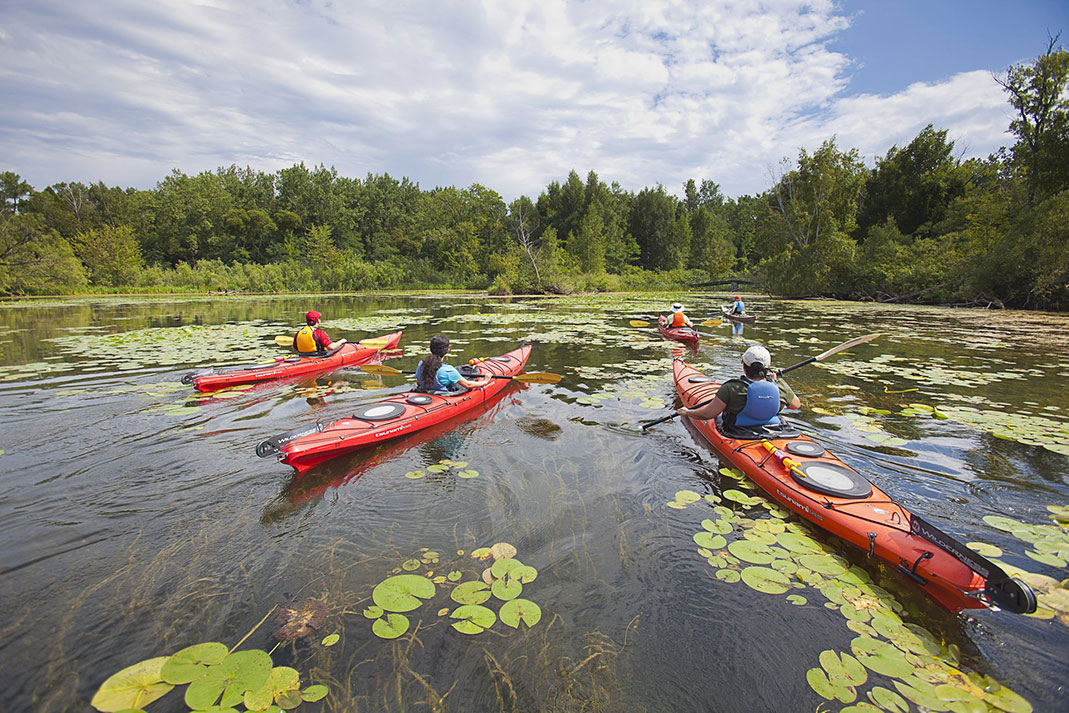
Kayakers paddling in the waters of Elk Island
Kayakers paddle in the waters off Elk Island. | Photo courtesy of: Roth & Ramberg

Canoes once reigned supreme in Western Canada, but over the last 20 years kayaking has surged in popularity in the province of Alberta, with the pandemic only serving to cement its place. In the summer of 2020, kayak outfitters and tour operators in Edmonton reported being consistently booked-up.

The area around Edmonton is ideal for novice paddlers, thanks to the dozens of calm, shallow lakes surrounding the city in nearly every direction. That’s not to overlook the North Saskatchewan River, which flows steadily through the downtown core.

Kayakers paddle in the waters off Elk Island near Edmonton
Kayakers paddle in the waters off Elk Island. | Photo courtesy of: Roth & Ramberg

Regardless of whether you choose to launch your kayak directly within the city or from an outlying area, you’re also likely to see some of Edmonton’s wildlife; hundreds of species of birds call the area home, as do beavers, porcupines, coyotes, deer and moose.

Ready to head out on the water? Here are our favorite spots, outfitters and schools for kayaking near Edmonton.

[This article is part of our 7 Adventurous Things To Do In Edmonton seriesLearn more about where to hike, bike, paddle and sightsee around Alberta’s capital city region.]


Where to kayak in Edmonton

North Saskatchewan River

The North Saskatchewan River runs for 48 kilometers through the city, offering both islands (such as Big Island) and offshoots (including Whitemud Creek and Mill Creek) to explore. Throughout Edmonton’s River Valley you’re likely to see animals including beavers and birds.

With dozens of put-in spots along the river, it may feel hard to narrow down the best adventure on the North Saskatchewan River in Edmonton. AQ Outdoors has a great rundown of spots to put-in and paddle, but our top pick would be to kayak from Devon to Edmonton. One of the most popular options, budget half a day for the downstream journey.

Pembina River

A regional favorite for tubing (many a local has spent summer afternoons floating down the river with beverage in hand) this is also the spot for whitewater kayaking around Edmonton. You’ll find Class II rapids between the bridge near Lobstick River and the Pembina River Provincial Park—a section of water that takes about a day to cover.

Astotin Lake

Don’t want to kayak on Edmonton rivers? With dozens of small lakes within an hour’s drive of the city in pretty much every direction, you’ve got plenty of options. Astotin Lake, the biggest body of water within Elk Island National Park, is one of the prime locations. A kayak rental company is located on-site and it’s easy to launch from the beach. The only potential downside is the park entry fee, but it’s worth the opportunity to see Elk Island’s massive herd of free-roaming bison. The National Park is located just a 35-minute drive east of Edmonton.

Lac Ste. Anne, Wabamun Lake & Lake Isle

Lac Ste. Anne is to Edmontonians as Muskoka is to Torontonians. The main community, called Alberta Beach, is where many Albertans own summer cottages, perfectly placed for exploring the 54-km2 lake and islands. Wabamun, about 15 minutes south, is just as popular but slightly larger. Finally, Lake Isle—named for its nearly dozen islands—is a small recreational lake nestled between the two.

The lakes in this region tend to be shallow, which also means they can be weedy near the shore. You’ll need to be prepared to share the water with motorized boats, but the trade-off is that there are plenty of docks and boat launches to avoid the underwater plants.

All three lakes are located about an hour drive west of Edmonton, and they offer some of the best kayaking in the Edmonton area.

Pigeon Lake & Sylvan Lake

Pigeon Lake and Sylvan Lake are a bit further afield than some of the other bodies of water on this list—the former will take about 90 minutes to reach, while the latter will take about two hours—but both are popular lake communities south of Edmonton and are well worth the trip.

Like Lac Ste. Anne and Wabamun, you need to be prepared to share the water with motorboats and Sea-Doos, but you’ll also have access to more amenities, including a range of accommodation and kayak rental companies.

Kayaking in Elk Island waters near Edmonton
Kayaking under Alberta’s big sky. | Photo courtesy of: Explore Edmonton

Islet Lake

Located within Cooking Lake-Blackfoot Provincial Recreation Area, Islet Lake is about an 45-minute drive east of Edmonton. It’s the only place within the recreation area that canoeing and kayaking are allowed, and the launch area is only a short walk from the parking lot. That’s not the only selling point: There are no motor boats here, but there are plenty of islands to discover. Adventure Alberta has written a comprehensive guide to exploring the lake and its islands.

Big Lake and the Sturgeon River

The Lois Hole Centennial Provincial Park—which Big Lake sits within—is best known for its wetland hiking trails, where you can view around 200 species of birds, including those that migrate to and from the Arctic, such as tundra swans. However, the park is also a good spot for kayaking, particularly as it connects to St. Albert’s Sturgeon River.

If you want to skip the lake and get directly on the river instead, go to the Riel Recreation Area, where you’ll find a boat launch.

Both waterways are found in St. Albert, a bedroom community directly northwest of Edmonton.

Telford Lake

Nestled within Leduc, a small community near Edmonton’s International Airport, Telford Lake is only a 30-minute drive from the downtown core. It’s popular with paddlers, so you’ll find that you’re in good company if you set out for a paddle here.


Kayak lessons in Edmonton

Aquabatics

With locations in both Calgary and Edmonton, Aquabatics is an outfitter and gear store offering comprehensive kayaking lessons for beginners and advanced paddlers. Courses include kayak rolling and kayak fishing.

Haskin Canoe

Another local operator, Haskin Canoe, runs private and group kayak lessons directly on Edmonton’s North Saskatchewan River, starting at $95 per person.

Community Clubs

Kayak lessons are also provided in many of the community paddling clubs that exist throughout the city of Edmonton. These might not be the best fit for tourists who are just looking for a one-off lesson, but one of these membership-based programs might fit the bill if you’re based in Edmonton and looking to develop your skills over time:


View this post on Instagram


A post shared by Huy (@huyfishin)


Kayak rentals in Edmonton

Haskin Canoe

In addition to kayak courses, Haskin Canoe’s outpost in Elk Island National Park will fully outfit you for a day spent paddling on Astotin Lake. Haskin Canoe offers both single ($20/hour) and tandem kayaks ($30/hour), rented out on a first come, first served basis.

Lake Isle Adventures

You can explore the nine islands of Lake Isle with Lake Isle Adventures, a family-owned business that rents out kayaks from the start of May until the end of October. Bookings must be made by texting 780-241-5034 and payment is cash-only. Inquire for pricing.

Sunsport Rentals

Located in the summertime community of Sylvan Lake, Sunsport Rentals hires out single and double kayaks for $20/hour.

Get Fit Rentals

With pick-ups directly in the city of Edmonton, the locally owned Get Fit Rentals is arguably the most centrally located place to rent a kayak in Edmonton. Get Fit rents out inflatable one- and two-person kayaks starting at $45 for a one-day rental, with discounted rates for weekends, long weekends and weekly rentals.

MEC

Mountain Equipment Co-Op’s gear hire program is currently on hiatus due to COVID-19, but when it resumes, it will offer canoe and kayak rentals.

Community Clubs

Edmonton’s many membership-based clubs also offer kayak rentals. You typically need to buy a membership in order to rent a kayak, but this is the most affordable option if you live in Edmonton or will be in the city long term. Clubs with kayak rentals include The Leduc Boat Club and The Ceyana Canoe Club.


Kayak stores in Edmonton

Wondering where to buy kayaks in Edmonton? Here are some of the best places to buy a kayak in the Edmonton region.

[ See the largest selection of kayaks in the Paddling Buyer’s Guide ]

Aquabatics

Whatever your paddling needs, Aquabatics has you covered. With locations in both Edmonton and Calgary, Aquabatics specializes in kayak, canoe, SUP and rafts. 3825-99th Street.

MEC

This outdoor retailer has two nearly new locations in Edmonton: a mega store within South Common (a shopping area on the city’s south side) at 1624-99 Street, and in the downtown Brewery District at 11904-104 Ave.


Kayakers paddle in the waters off Elk Island. | Photo courtesy of: Roth & Ramberg

The Ultimate Lake Of The Woods Outdoor Adventure Guide

Lone kayaker paddling to an island in blue waters
Plan your Lake of the Woods adventure. | Photo courtesy of: Destination Ontario

Lake of the Woods is a world-class outdoors destination located in the heart of the continent. The city of Kenora is easy to access on the Trans-Canada Highway, between Thunder Bay, Ontario and Winnipeg, Manitoba. The region is also within a day’s drive of the Midwestern United States, including Minneapolis.

You’ll find great canoe tripping, kayaking and camping, idyllic cottage and houseboat rentals, and fantastic fishing in the crystal-clear waters and among the countless islands of Lake of the Woods, an iconic part of Northwestern Ontario’s Sunset Country. Kenora is your gateway to Lake of the Woods, Rushing River Provincial Park, Canada’s Great Trail, Blue Lake Provincial Park and so much more.

We’ve created the ultimate guide to help you plan your Lake of the Woods outdoor adventure.

[ Paddling Trip Guide: View all paddling adventures in Northwestern Ontario ]

Things to do

Canoeing

The Lake of the Woods area is undoubtedly a canoe tripping paradise. You can choose to paddle the sprawling waters of Lake of the Woods itself, or disappear into the surrounding backcountry that offers no end of route options on rivers and smaller lakes. Camp on Canadian Shield campsites, gaze up at skies filled with more stars than you’ve ever seen in your life, and enjoy the true seclusion this area offers in abundance.

Want to know more? Find more details in the articles below.

Lake of the Woods hiking trails

It’s no surprise that Kenora, a city perched on the edge of the Canadian wilderness, boasts an abundance of hiking trails for all-season use. The 8-km Rat Portage Urban Trail runs right through town, including boardwalks and footpaths through wooded areas, combining nature with Lake of the Woods waterfront and shopping and dining areas.

Wass’Say’Gaa’Boo, also known as the Tunnel Island Trail, celebrates the region’s Indigenous heritage. The 5-km Rabbit Lake Trail system is accessible to everyone. And the Mink Bay Trail passes through wilderness wetlands that come alive with frogs and songbirds in the spring. You’ll also find great hiking at nearby outdoor destinations, including the town of Minaki, Rushing River Provincial Park and Blue Lake Provincial Park.

Lake of the Woods fishing

Kenora is a renowned Canadian fishing destination, with great opportunities to land trophy walleye, muskie, northern pike and sturgeon on Lake of the Woods, as well as excellent smallmouth bass and lake trout fishing on other bodies of water. With so much water to explore, you’re best to tap into the local knowledge of guides, lodges and outfitters if angling is the prime objective of your Lake of the Woods vacation. Visit Sunset Country provides a comprehensive list of fishing opportunities in Northwestern Ontario.

Canoe trippers and campers have great opportunities to supplement their menu with fresh fish; be sure to pack your fishing rod, tackle, spices and cookware to prepare shore lunches and fish dinners.


View this post on Instagram


A post shared by Mike Harris (@mike_in_the_outdoors)

To fish in the Lake of the Woods area you are required to have a valid Ontario fishing license (information for Canadian residents and non-residents) and must adhere to regional fishing regulations. The FishingBooker blog provides a great general resource for angling success on Lake of the Woods, and an overview of fishing opportunities in various waterways is available on Fish ON-Line.


Places to visit in Kenora

There’s plenty to see and do in Kenora, including cultural events like Indigenous pow-wows, swimming at Lake of the Woods public beaches, historic attractions like the Lake of the Woods Museum and Kenora Railroaders Museum, and interactive exhibits at the Lake of the Woods Discovery Centre.

Make sure you grab a selfie at local landmarks including Husky the Muskie, the Loonie Bear and the Tugboat at McLeod Park.


View this post on Instagram


A post shared by Arjun S. Narayan (@arjunarayan)


Where to stay

When it comes to Lake of the Woods accommodations, there are a range of options from rustic to luxurious that will allow you to base your stay close to the amazing outdoor activities the area has to offer.

Lake of the Woods camping

From frontcountry campgrounds that have both tent and fully serviced RV sites, to glamping opportunities in cozy canvas tents or log tiny homes, to backcountry campsites, you’ll find it all in Lake of the Woods. Camping is both an affordable option that will allow you to spend more on the other activities that have drawn you to the area, and a draw itself for those looking to venture into the backcountry.

Find more information on the camping options available below.

Lake of the Woods cabins & cottages

Why rough it when you can have all the comforts of home, nestled in a breathtakingly beautiful location? The Lake of the Woods area has ample cabin and cottage rentals (including some houseboats, for a truly unique experience), making for a great family getaway, a romantic escape or simply a place to base your stay as you enjoy everything else the area has to offer.

Find our picks of the best rentals below.

Lake of the Woods resorts & lodges

Whether you’re looking for a Lake of the Woods fishing lodge or an all-inclusive Ontario wilderness resort, you’ll be more than pleased with the options in the Lake of the Woods area. our best bet is to peruse the Accommodation Finder tool on the Visit Sunset Country website. But here are some of the best.

Crow Rock Lodge

Located at the north end of Lake of the Woods, this boat-in lodge makes for the perfect angling getaway. You can choose whether to fish the main lake, or walk into eight remote lakes where you’ll be the only one fishing. You’ll also have the choice between staying at the main lodge or on a private island.

  • Website: www.crowrock.com
  • Address: Meet your boat shuttle at the Second Street dock, 201 Main Street South, Kenora
  • Phone: 1-800-547-3474

Fletcher Lake Lodge

This full-service fly-in fishing lodge is located 50 air miles north of Kenora on Fletcher Lake, part of a chain of lakes that form the south flowing Sturgeon River. Stay in comfortable lakefront cabins and choose between the American Plan (meals included) or Housekeeping Package (no meals, but can cook in the kitchen in your cabin). You’ll be able to fish the pristine waters that have a history of producing trophy fish.

  • Website: www.fletcherlake.com
  • Address: Meet your bushplane shuttle at Kenora’s harbor front
  • Phone: 807-224-3400 (summer); 218-386-1538 (winter)


View this post on Instagram


A post shared by Minaki Yurt Adventures (@minakiyurt)

Dogtooth Lake Resort

Stay in spacious, fully equipped cabins on beautiful Dogtooth Lake, with access to connecting Kilvert Lake for even more fishing opportunities. You can also choose to stay at the outpost in a more secluded location on the lake. This is a drive-in resort, located 15 miles from Kenora.

Ash Rapids Lodge

Ash Rapids Lodge is located on Lake of the Woods and can be reached by boat or float plane. Rent lakeside cabins with the option to explore in your own way, on your own time, or to purchase the American Plan (fully guided fishing, cabin cleaning, all meals from their restaurant).


Lake of the Woods weather

Kenora is known as the heart of Sunset Country for good reason. The Lake of the Woods region boasts a moderate climate, with comfortable temperatures, modest humidity and plenty of sunshine. An abundance of freshwater lakes (not to mention the vast watery horizon of Lake of the Woods) means you can find a cooling breeze on even the hottest days.

Given Lake of the Woods’ northern latitude, the shoulder seasons of spring and fall tend to be brief transition periods. May temperatures average 16 degrees Celsius (62 degrees Fahrenheit), average June through August daytime highs range up to 25 degrees Celsius (77 degrees Fahrenheit), and September temperatures average 17 degrees Celsius (63 degrees Fahrenheit) with cooler nighttime lows.


View this post on Instagram


A post shared by Green Adventures (@greenadventures)

Lake of the Woods map

Pick up a nautical chart if you’re going boating on Lake of the Woods. Topographical maps are preferred for smaller bodies of water, especially for canoe trippers. Map Town and World of Maps are good sources for online shoppers.

Contact Green Adventures in Kenora for Lake of the Woods canoe route maps, including detailed topographic maps for inland canoe routes and charts for exploring the big water of Lake of the Woods. Local guides at Green Adventures can help you customize your canoe route map with campsites, portages and scenic attractions.

The Path of the Paddle Association produces a canoe trip planning map for The Great Trail, which stretches through northwestern Ontario’s Sunset Country from Vermillion Bay to Rushing River Provincial Park to Lake of the Woods to Kenora and to Minaki before crossing the Manitoba border. It’s your best resource for planning an epic long-distance canoe expedition or exploring the scenic highlights of the Path of the Paddle water trail. Interactive digital maps are also available.


Plan your Lake of the Woods adventure. | Photo courtesy of: Destination Ontario

7 Adventurous Things To Do In Edmonton

A view of Edmonton from afar with people relaxing in the forefront
The Edmonton river valley boasts hiking and biking trails galore. | Photo courtesy of: George Simhoni

Edmonton has long been renowned for its indoor opportunities—ahem, West Edmonton Mall—but you can shop anywhere. We’d argue that Edmonton should be known for its outdoor activities. With a massive river running through its core, dozens of lakes on its periphery and hundreds of kilometers of trails, there are endless opportunities for outdoor adventure in the capital city region.

Whether you’re an Edmonton local wondering what to do or a first-time visitor researching Edmonton attractions, we’ve rounded up a list of our favorite adventures.

[ Plan your next Alberta paddling adventure with the Paddling Trip Guide ]

Adventurous things to do in Edmonton

1. Edmonton hiking trails

River Valley

You don’t have to look further than the river to find hikes near Edmonton. Allegedly the longest and largest stretch of urban parkland in North America (it’s 22 times bigger than New York City’s Central Park), Edmonton’s River Valley has over 150 kilometers of mixed-use trails.

Designed for hiking, biking, cycling, cross-country skiing, snowshoeing and even Segwaying (it’s a thing here), trails can be found on either side of the river. Not sure where to start? Some of the most popular walking trails can be found in William Hawrelak Park, Laurier Park, Emily Murphy Park and Victoria Park. Visit the Edmonton.ca interactive map for details on all of the river valley’s trails and amenities.

Whitemud Ravine Nature Reserve

Running between Fox Drive and Whitemud Drive, the Whitemud Ravine Nature Reserve boasts some of the highest biodiversity in the city. The easy 4.4-km round-trip trail crosses the Whitemud Creek three times, taking hikers through a mix of huge balsam poplars and spruce trees.

Terwillegar Park

You must love dogs to walk here. With its expansive off-leash area, this is the spot to boop dogs’ noses as you breathe in the fresh air. Terwillegar Park can be found on the south bank of the North Saskatchewan River at the end of Rabbit Hill Road.

A hiking trail in Edmonton
A hiking trail in Edmonton. | Photo courtesy of: Sameer Ahmed

Elk Island National Park

Located just 35 minutes outside of Edmonton, Elk Island is one of Canada’s most accessible national parks. Fully fenced, it’s home to a herd of free-roaming bison, which you can see on the 15.6-km Wood Bison Trail. If that seems too long, this park has plenty of more family-friendly options, with walks ranging in length from 30 minutes to five hours.

Lois Hole Centennial Park

You’ll find Lois Hole Centennial Provincial Park on the edges of St. Albert, a city on Edmonton’s northwest border. The main trail is the 1.27-km John E. Poole boardwalk; while short, it’s designed to give visitors views over the wetlands and a chance to spot some of the migratory bird species that use the area on their flight paths.

White Spruce Park

Also in St. Albert is Grey Nuns White Spruce Park, located just east of Ray Gibbon Drive. One of the last native white spruce forests within an urban municipality in North America, the park is home to trees that are over 100 years old, along with a wide variety of birds, mammals and amphibians.

Clifford E. Lee Bird Sanctuary & Bunchberry Meadows

A 35-minute drive southwest of Edmonton, the Clifford E. Lee Nature Sanctuary near Devon has a series of four short trails (none more than 2 km), which take hikers through ecosystems ranging from wetlands to pine forests and meadows. The sanctuary can be accessed from Range Road 264 or Road 512.

If you want to extend your day, drive 10 minutes east to nearby Bunchberry Meadows Conservation Area. Despite being within spitting distance from Clifford E. Lee, Bunchberry Meadows is actually an entirely different ecosystem. The meadow sits on sand dunes blown by post-glacial winds, providing habitat for unique plant species that are found nowhere else in the Edmonton region.

Chickakoo Lake Recreation Area

Just northwest of Spruce Grove is where you’ll find Chickakoo Lake. This multi-sport destination has 11 kilometers of trails spread over 480 acres of woodland and lakes, ideal for cross-country skiing, walking, mountain biking and horseback riding. For paddlers, there’s even a hand launch on site.

2. Edmonton bike trails

River Valley

There’s a reason Edmonton champions its river valley trail system—in addition to hiking, it offers some of the best biking trails in Edmonton. With 150 kilometers of mixed-use trails, it might feel hard to narrow down where to go, which is why you should consult the  Adventure Alberta guide to some of the park system’s best trails. And if you need a set of wheels to get around, River Valley Adventure Co. offers mountain bike rentals for $13 per hour (or $60 per day). The outfitter plans to add fat bikes to its line-up in the near future, turning this into an all-season destination for cyclists.

Cooking Lake-Blackfoot Provincial Recreation Area

With around 170 kilometers of pathways, the trail system of Cooking Lake-Blackfoot Recreation Area is open to mountain bikers, hikers, snowshoers and even dog sledders. (Fat biking is also available at Blackfoot Lake Staging Area.) The park is located just south of Elk Island National Park, about 35 minutes east of Edmonton.

Four cyclers taking a breather on a gorgeous day
Edmonton has great bike trails to explore. | Photo courtesy of: Explore Edmonton

Mill Creek Ravine Park

A tributary of the North Saskatchewan River, Mill Creek is a favorite destination for local mountain bikers. It has a two-kilometer paved pathway and connects riders to the river valley’s network of trails.

Devon Voyageur Park

Want to know why Devon is known as “Bike Town, AB”? A visit to the small town’s Voyageur Park will answer that question for you. Soon, it will be the start of an 88-km trail system that starts in Edmonton and runs all the way to Fort Saskatchewan along the riverfront.

3. Edmonton cross-country skiing, snowshoeing and skating trails

We’ve outlined some of the best hiking and biking trails, but winter doesn’t put a stop to outdoor activities in Edmonton. Many of the above parks are transformed into cross-country skiing, snowshoeing and even skating destinations come wintertime. Refer to each park’s website for details.

Looking for other places to check out? The Strathcona Wilderness Centre offers groomed cross-country ski trails, along with rentals. During the wintertime, the Devon Nordic Ski Club turns the town’s golf course into a cross-country ski mecca.

4. Kayak Edmonton

In addition to the North Saskatchewan River, there are ample opportunities to kayak on the dozens of lakes surrounding Edmonton.

Read on to find out the Best Places To Kayak In And Around Edmonton.

5. Canoeing Edmonton

Like kayaking, canoeing in Edmonton isn’t limited to the North Saskatchewan River (although the trip from Devon to Edmonton is a must-do). Travel for 45 minutes in any direction and you’ll hit a lake.

Read about for our Favorite Spots To Canoe In And Near Edmonton.

6. Paddleboard Edmonton

Alberta’s small and shallow lakes are an ideal place to learn to stand-up paddleboarding or to brush up on your existing skills.

We’ve rounded up the Top Places To SUP In The Edmonton Area.


Where to stay in Edmonton

Edmonton hotels

Fairmont Hotel McDonald

Edmonton’s own castle, the Fairmont Hotel McDonald, has sat on the banks of the North Saskatchewan River for over 100 years. Located right off Jasper Avenue, these fancy digs offer direct access to Edmonton’s River Valley and its extensive trail system.

A jogger running with the city of Edmonton in the background
Go for a run on one of Edmonton’s many paths. | Photo courtesy of: Explore Edmonton

Matrix Hotel

Also located close to the River Valley, the Matrix Hotel is all about the inclusions. Think: cocktail hour, à la carte breakfast, and WiFi.

JW Marriott

One of Edmonton’s newest hotels, the JW Marriott is right in the ICE District. On opening, the JW Marriott was the go-to spot in town, with its cocktail bar hidden behind a bookcase. Adventurers will love the 13,000 square foot gym, which is rumored to be a favored training spot for the city’s elite athletes. In addition to the standard equipment, guests are welcome to sign-up for yoga and fitness classes in the high-tech studios.

Cabin rentals near Edmonton

Elk Island Retreat

Within a short driving distance of Elk Island National Park, the privately-owned Elk Island Retreat has yurts, cabins and tipis. The latest addition is a group of geo domes that allow visitors to gaze up at the night sky from the comfort of their beds.

Camping Edmonton

Countless private and provincial park campgrounds can be found both directly within Edmonton and on the shores of lakes in the region.

We’ve compiled a list of the Best Camping In Edmonton to help you find the perfect place to pitch your tent or park up for the night.


Edmonton weather

Here’s the good news: Edmonton is one of the sunniest places in Canada, with up to 17 hours of sunshine in the summer. In the winter, these clear skies allow the opportunity to see northern lights from just outside the city limits on occasion.

Now here’s the bad news: As one of Canada’s more northerly capital cities, Edmonton is notorious for its long, cold and frigid winters, often with plenty of snow. But it’s not the averages that will get you—it’s the extremes. Temperatures can dip as low as –40°C (with or without the windchill) in the winter, and reach up to 35°C in the summer.

Two people standing on a bridge over a frozen river
The winter air is clear and crisp in Edmonton. | Photo courtesy of: Travel Alberta // Cooper & O’Hara

If you’re visiting Edmonton to paddle, cycle, or hike, the best months to visit are June, July, August or September. If you’re ready to ski, snowshoe or fat bike, consider December, January, February or March. Visit The Weather Network for up-to-date forecasts.


Edmonton wildlife

When adventuring in Edmonton and area, don’t be surprised to spot porcupines, beavers, deer, moose, elk and even bison.

However, even in the urban wilderness it’s not out of the question to cross paths with a coyote or black bear. In the past few years, there have also been incidents of cougars stalking hikers or being spotted on the city’s fringes.

In the woods, be sure to make plenty of noise to warn off bears—even if you’re close to civilization. For backcountry excursions, travel in groups and consider carrying bear spray as a precaution. When camping, always follow bear-aware best practices: don’t store food in your tent, keep your campsite clean and use bear-proof bins to dispose of any waste.

Ultimately, the biggest threat to your safety (and sanity) while adventuring in Edmonton will be much smaller. The mosquitos up here are bloodthirsty and don’t disguise it.

Finally, be sure to wear a hat while walking in wooded areas, as ticks have been reported to carry Lyme disease in Alberta.


The Edmonton river valley boasts hiking and biking trails galore. | Photo courtesy of: George Simhoni

Best Kayak Trips & Tours on B.C.’s Sunshine Coast

Kayaking on the sunshine coast, an island in the distance
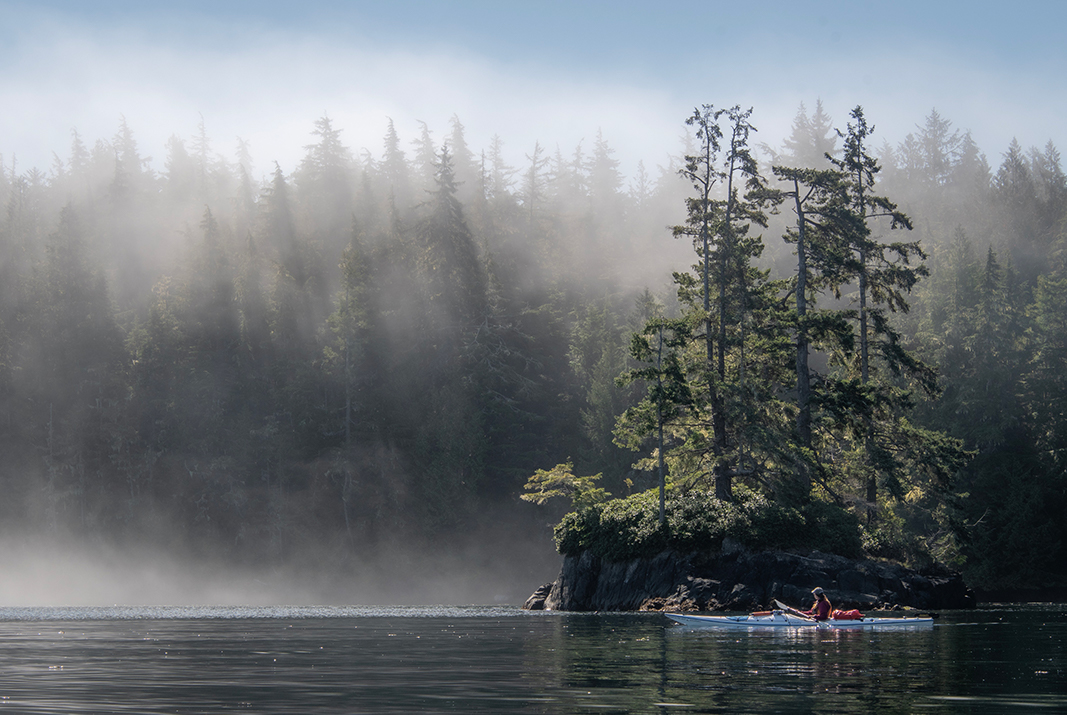
Exploring the misty waters of Desolation Sound. | Photo courtesy of: Destination BC // Andrew Strain

The Sunshine Coast is British Columbia’s nearest faraway place. It’s easy to access via ferries from Vancouver’s Horseshoe Bay; you can be on the water in well under a day of travel. Yet it’s remote enough and replete with the jaw-dropping sea-meets-sky scenery that makes the west coast famous. Regardless of your paddling skill and ambitions, you’ll find plenty of options.

Here’s the definitive list of the best places to kayak on the Sunshine Coast.

[This article is part of the The Outdoor Adventurer’s Guide To VancouverFind all the resources you need to plan an adventure-filled trip to the city of Vancouver.]

Kayaker on the dark water
Setting out for the Harmony Islands on the Sunshine Coast. | Photo courtesy of: Destination BC // Albert Normandin

Best places to kayak on the Sunshine Coast

Kayaking Desolation Sound

Sea kayaking in Desolation Sound is all about stunning Pacific Northwest scenery (think: soaring coastal mountains, rocky islands and rugged shores) and the warmest summer water temperatures north of California (seriously: sea temps hit 21 degrees Celsius). Desolation Sound Marine Provincial Park is British Columbia’s largest marine park, spanning 60 km of coast with 11 designated backcountry camping areas, many set on pristine islands.

Popular launch sites for Desolation Sound kayaking include the town of Lund (located at the north end of the Sunshine Coast, on Highway 101) and nearby Okeover Arm. Day trips are plentiful. Touring kayakers will also find wilderness paddling routes up to one week in length. Guided trips are available.

Lone kayaker next to a Desolation Sound cliffs
Desolation Sound at low tide. | Photo courtesy of: Destination BC // Andrew Strain

Desolation Sound camping

Desolation Sound, Copeland Islands and Malaspina Marine provincial parks provide 11 backcountry camping options for paddlers. Launching from Lund, you’ll find outstanding backcountry camping at the Copeland Islands, on the Salish Sea. The best camping is on the west shore of the Middle Copeland, on a beach lined with arbutus trees.

If you start from Okeover Arm, paddle out to the rocky Curme Islands (three sites), Hare Point or Grace Harbour. All designated sites include pit toilets; campfires are not allowed. Reservations are not accepted but you can pay for your campsite online. If you’d prefer to do Desolation Sound kayak day trips from a drive-in campground, check out Okeover Arm Provincial Park (14 vehicle campsites).

Desolation Sound map

BC Parks provides an overview map and detailed backcountry campsite map for Desolation Sound online. Rely on Canadian Hydrographic Service nautical chart #3538 for navigation; you can order a waterproof chart online.

Desolation Sound kayak rentals and guided trips

Spirit of the West Adventures

One of British Columbia’s preeminent sea kayak tour operators, Spirit of the West Adventures (Quadra Island, B.C., 250-285-2121) offers a five-day, all-inclusive guided sea kayak trip in Desolation Sound, starting from Cortes Island. The tour is rated as “easy and comfortable” and suitable for all levels of paddlers, ages 12 and up.

Wildcoast

Wildcoast’s (Quadra Island, B.C., 250-285-9453) six-day Desolation Sound guided sea kayak tour explores much of Desolation Sound Marine Provincial Park, providing paddlers with an intimate, all-inclusive paddling experience, with departures in June and September.

Terracentric Coastal Adventures

Based on Highway 101 in Lund, Terracentric Coastal Adventures (604-483-7900) provides Desolation Sound kayak rentals and guided tours. Experienced paddlers can pick up their fully equipped rental single or tandem kayak and launch to explore destinations like the Copeland Islands or Okeover Arm. Guided half-day, full-day and multi-day tours are available with expert local guides.

Powell River Sea Kayak

Stop in Powell River to pick up your rental kayaks on your way to Desolation Sound. Powell River Sea Kayak (604-483-2160) provides Sunshine Coast kayak rentals and guided trips to a variety of destinations, including Desolation Sound. The company has a seasonal location in Okeover Arm for greater convenience.

Mitchell’s

Based in Powell River (604-414-4607), Mitchell’s rents sea kayaks, canoes and standup paddleboards for all your Sunshine Coast paddling adventures, including Desolation Sound.

Footprint BC

Footprint BC (Powell River, B.C., 604-414-6884) specializes in guided sea kayak tours to the Copeland Islands and Desolation Sound, with day trips and wilderness tours up to six days in length. Unique theme trips include birding by kayak and certified Paddle Canada courses. Desolation Sound kayak rentals are also available for experienced paddlers.

Coast Mountain Expeditions

Coast Mountain Expeditions (Quadra Island, B.C., 250-285-2823) provides an all-inclusive, weeklong guided Desolation Sound sea kayak tour in late June. Anticipate sheltered paddling conditions and a breathtakingly rugged shoreline, with the potential of encountering a variety of marine life, including dolphins and humpback whales.

Powell River kayaking

Powell River is an often overlooked paddling destination, but well worth it for kayakers and canoeists. Launch at Gibsons Beach to sea kayak Powell River’s waterfront as a day trip (three-hour guided day trips are available from Footprint BC).

Meanwhile, Powell River is one of B.C.’s finest destinations for wilderness canoeing, with a five- to seven-day route heading inland through eight freshwater lakes on the Powell Forest Canoe Route. A shorter 13-km option is available for a great weekend canoe trip. Both are accessed via the Loubert Road at the community of Stillwater.

Coastline of Powell River
A long view of the coastline near Powell River. | Photo courtesy of: Destination BC // Andrew Strain

Powell River camping

The Powell Forest Canoe Route includes many options for backcountry camping, including a drive-in site at the starting point on Lois Lake. You’ll find waterfront backcountry campsites along the way, set on jewel-like lakes amid old-growth west coast forests.

Drive-in campers will find 81 oceanfront campsites at Powell River’s Willingdon Beach Campground. Meanwhile, the Haywire Bay Campground with 48 RV and tent campsites on Powell Lake is located 7 km from Powell River.

Powell River map

A map of the Powell Forest Canoe Route is available online. Mitchell’s also provides a map specific for paddlers.

Powell River kayak rentals and guided trips

Mitchell’s

Based in Powell River (604-414-4607), Mitchell’s rents sea kayaks, canoes and standup paddleboards for all your Sunshine Coast paddling adventures, specializing in outfitting paddlers for the Powell Forest Canoe Route.

Footprint BC

Footprint BC (Powell River, B.C., 604-414-6884) specializes in guided sea kayak day tours on the Powell River waterfront. 

Powell River Sea Kayak

Powell River Sea Kayak (604-483-2160) provides Sunshine Coast kayak rentals and guided trips to a variety of destinations.


View this post on Instagram


A post shared by Frazer Constable (@eff.daddy)

Sechelt Inlet kayaking

Sechelt Inlet is the heart of the Sunshine Coast, about as close to a Mediterranean climate you’ll find in British Columbia (or all of Canada, for that matter). Sechelt Inlet kayaking is characterized by a wide range of options for all levels of paddlers. This is some of the best kayaking in southern B.C.

The main launch site is Porpoise Bay Provincial Park, located minutes from the town of Sechelt. The town also offers a launch site and vehicle parking at the public wharf. Thrill-seeking whitewater paddlers and advanced rough water sea kayakers often target Skookumchuck Narrows, located at the north end of Sechelt Inlet, via the town of Egmont. You’ll find several Sechelt kayaking outfitters and camping options.

Sunset over the Sechelt inlet
Last light over Sechelt. | Photo courtesy of: Destination BC // @dolfvermeulen

Sechelt Inlet camping

Porpoise Bay Provincial Park is located a short 45-minute ferry ride and easy half-hour drive from Vancouver’s Horseshoe Bay. You’ll discover a fantastic beach with great opportunities to explore the sheltered waters of Sechelt Inlet by sea kayak.

There are two options for camping: a full-service, drive-in campground (make a reservation online), or a more rustic walk-in area specifically for paddlers and cyclists. For backcountry camping, paddle north from Porpoise Bay. You’ll find six backcountry camping options in Sechelt Inlet, mostly on beaches and all part of Sechelt Inlets Marine Provincial Park. Camping is free.


View this post on Instagram


A post shared by Spencer Field (@dispencer_field)

Sechelt Inlet map

You can find an overview map of Sechelt Inlets Marine Provincial Park online. A detailed chart of the area can be ordered here.

Sechelt Inlet kayak rentals and guided trips

Pedals and Paddles

Sechelt kayak outfitter Pedals and Paddles (604-885-6440) is located on the waterfront of Sechelt Inlet, north of Porpoise Bay Provincial Park. The company offers Sunshine Coast kayak rentals and guided trips, specializing in two-hour, family-friendly tours.

Halfmoon Sea Kayaks

Located on the water in Sechelt, Halfmoon Sea Kayaks (604-885-2948) rents single and double fiberglass sea kayaks by the half-day, full-day and multi-day. Standup paddleboard rentals are also available. The company offers guided day trips and all-inclusive guided multi-day tours in Sechelt Inlet and throughout the Sunshine Coast, as well as Paddle Canada-certified instruction.

Sea to Sky Marine Trail

Explore the Sea to Sky Marine Trail from launches located at Hopkins Landing in Langdale (near the BC Ferries terminal) and the community of Gibsons. Another launch is available at Bowen Island. All options require a short ferry ride from Vancouver’s Horseshoe Bay. Another launch is available at Porteau Cove Provincial Park, located barely 30 minutes north of downtown Vancouver on the Sea to Sky Highway.

Any way you get there you’ll find unique Sea to Sky Marine Trail kayaking opportunities throughout the western end of Howe Sound, with good day trips and overnight tours. Backcountry camping is available in several locations. Beware of boat and ferry traffic while paddling in this area.

Sea to Sky Marine Trail camping

From Gibsons, it’s less than an hour’s paddle to Plumper Cove Marine Provincial Park on Keats Island, where you’ll find established campsites, pit toilets and a freshwater pump (no reservations). For a longer tour suitable for advanced sea kayakers, make several open water crossings from either Gibsons or Porteau Cove Provincial Park to Gambier Island, which features campsites at Douglas, Brigade and Halkett bays—the latter is a provincial marine park with designated, non-reservable sites. Launch from Port Mellon for a shorter paddle.

If you’re looking to take Sea to Sky Marine Trail kayak day trips, check out Porteau Cove Provincial Park, with 60 drive-in campsites near the ocean. Make a reservation online.

Sea to Sky Marine Trail map

BC Marine Trails provides a digital overview map of the Sea to Sky Marine Trail. Pick up a copy of Canadian Hydrographic Service Chart #3526 for accurate navigation; order yours online.

Sea to Sky Marine Trail kayak rentals and guided trips

Bowen Island Sea Kayaking

Bowen Island is a world apart on the Sea to Sky Marine Trail—yet only a short ferry ride from Horseshoe Bay on Vancouver’s North Shore—and Bowen Island Sea Kayaking (located at Bowen Island Marina, 604-947-9266) is your go-to outfitter. You can rent single and double sea kayaks as well as SUPs from this nearby Vancouver outfitter to explore the waters of Howe Sound, or sign up for a guided tour or lesson. Kids kayaks and overnight rentals are also available.

Sea to Sky Adventure Company

Located a short drive north of Vancouver, Sea to Sky Adventure Company in Squamish (38551 Loggers Lane, 888-284-2453) is a great Vancouver area kayak and paddleboard rental outlet with convenient access to the Sea to Sky Marine Trail. SUPs, canoes, recreational kayaks and sea kayaks are available to rent for two hours (walk-ins only), four hours or full days.

Strait of Georgia

Also known as the Salish Sea, the Strait of Georgia divides mainland British Columbia from Vancouver Island. This is big, tidal water—best for experienced sea kayakers. However, good Strait of Georgia paddling opportunities exist north of the town of Sechelt, with launch sites available at Halfmoon Bay, Secret Cove and Pender Harbour, all accessible via Highway 101.

It’s a short crossing to North and South Thormanby islands, which are wonderful to explore and offer backcountry camping. From there, expert paddlers can cross moderate channels to access the wild shores of Texada Island.

Strait of Georgia camping

Backcountry camping is available at Buccaneer Bay Provincial Park on North Thormanby Island and Simson Provincial Park on South Thormanby Island. Camping areas are rustic with no services provided, available for free on a first-come, first-served basis. Located just off the southwest tip of Texada Island across the Sabine Channel, Jedediah Island Marine Provincial Park features camping (at Home Bay) and hiking trails.

Kayakers on the straight of Georgia
Kayaking with Halfmoon Sea Kayaks. | Photo courtesy of: Destination BC // @glamouraspirit_

Strait of Georgia map

Rely on a detailed nautical chart from the Canadian Hydrographic Service for kayaking the Strait of Georgia. Order chart #3512 online.

Strait of Georgia kayak rentals and guided trips

Pedals and Paddles

Pedals and Paddles (604-885-6440) is located on the waterfront of Sechelt Inlet, north of Porpoise Bay Provincial Park. You can rent single and tandem kayaks here for paddling trips on the Strait of Georgia.

Halfmoon Sea Kayaks

Sechelt’s Halfmoon Sea Kayaks (604-885-2948) services the southern portion of the Sunshine Coast, with single and double rental kayaks, guided day trips and all-inclusive guided multi-day tours to popular destinations, including Texada Island, Sabine Channel and Jedediah Island.


More top Sunshine Coast kayak rentals

Alpha Adventures

Alpha Adventures in Gibsons (604-885-8838), located at the south end of the Sunshine Coast near the Langdale ferry terminal, offers single and double rental sea kayaks from Seaward, Wilderness Systems and Perception. The company also provides guided trips, instruction and retail sales.

Natural West Coast Adventures

Located in the community of Garden Bay, in the heart of the Sunshine Coast, Natural West Coast Adventures (604-535-7985) offers Sunshine Coast kayak rentals and guided trips. They specialize in kayak fishing tours, targeting species like ling cod and salmon on the ocean and cutthroat trout in freshwater lakes. Instructional courses tailored specifically for kayak anglers are also available.

[ Paddling Trip Guide: View all kayaking adventures in British Columbia ]

Kayak kishing Sunshine Coast

The best time to kayak fish on the Sunshine Coast is anytime, with abundant ling cod, rockfish and flounder available to kayak anglers over rocky shoals and a variety of salmon species to be targeted year-round. If the ocean is rough or you’d prefer a more sheltered, inland kayak fishing experience, most freshwater lakes on the Sunshine Coast are home to feisty cutthroat trout.

In particular, Sakinaw Lake and Waugh Lake are great Sunshine Coast kayaking fishing destinations in the early spring.


Exploring the misty waters of Desolation Sound. | Photo courtesy of: Destination BC // Andrew Strain

Scary Hippo Encounter On The Lugenda River (Video)

Going on an African expedition is an unforgettable chance to visit exotic natural landscapes and observe the plants and animals that live there. But not all wildlife encounters are made equal, as demonstrated by this group paddling the Lugenda River in North Mozambique. The trip goes from placid to pulse-pounding when a hippo suddenly surfaces among the group, threatening to swamp their boats.

Paddling the Lugenda

The Lugenda River (also known as the Msambiti) flows in a northerly direction from Lake Amaramba/Lake Chiuta in Mozambique and is the largest tributary of the Ruvuma River. The river valley is home to the Lugenda Wilderness Camp, a major draw for tourists. Bordering the river is the Niassa Reserve, Mozambique’s largest protected area covering over 42,000 square kilometers. The Lugenda’s roiling waters are ecologically rich, home to at least 40 species of fish… and a healthy population of hippos.

[ Plan your next African paddling adventure with the Paddling Trip Guide ]

Hippos are not to be trifled with

Despite their portrayal in popular culture, hippos are not the gentle, ungainly creatures they seem at first glance. Hippos are among the most aggressive and dangerous large mammals in the world, and they become particularly territorial when in water. With their large tusks and powerful jaws hippos are capable of inflicting severe injuries, and they weigh enough to easily crush an adult human. For these reasons, deadly encounters between tourists and hippos are unfortunately not unheard of.

If you plan to paddle in sub-Saharan Africa, make sure to stay alert and keep your wits about you when out on the water. You should be practiced and up-to-date with kayak rescue techniques. Most importantly, always hire an expert guide or tour operator and rigorously follow all instructions. Enjoy your African expedition, but ensure that your boat doesn’t become the next target for a hungry hungry hippo.


15 Best Places To Rent Kayaks & Paddleboards In Vancouver

People running on the beach, a kayak on the shore
Rent kayaks and discover Vancouver’s waterfront, including the beaches of Stanley Park. | Photo courtesy of: Tourism Vancouver // Hubert Kang

Wondering where to rent kayaks and standup paddleboards in Vancouver? Turns out you have plenty of options. Whether you’re an experienced paddler visiting Vancouver and looking for an easy escape or a beginner seeking the services of an outfitter, we’ve compiled a list of Vancouver’s best kayak rentals and paddleboard rentals.

Along the way you’ll discover guided tours of some of Canada’s best paddling destinations, as well as retail boat, board and accessory sales.

[This article is part of the The Outdoor Adventurer’s Guide To VancouverFind all the resources you need to plan an adventure-filled trip to the city of Vancouver.]

A paddleboarder on the water
Sunset paddleboard cruise in Vancouver. | Photo courtesy of: Tourism Vancouver // Nelson Mouellic

Vancouver kayak and paddleboard rentals

Vancouver Water Adventures

Located in the heart of downtown on Granville Island, Vancouver Water Adventures is a great kayak and paddleboard rental outlet for exploring False Creek. The company’s rental fleet includes 60 sea kayaks (including singles and tandems) and 80 SUPs. Besides a downtown location (1812 Boatlift Lane, 604-736-5155), Vancouver Water Adventures operates a mobile kiosk at the north end of Kitsilano Beach.

The company’s decade of experience shines through with its Vancouver kayak and SUP day tours and lessons. Their kayak and paddleboard rentals are available in two-hour increments, with additional pay-by-the hour time available.

Creekside Kayaks

A Vancouver kayak rental specialist, Creekside Kayaks is located on False Creek in the Olympic Village (Creekside Community Centre, 1 Athletes Way, 604-688-2382). Solo and tandem kayaks are available to rent on an hourly basis.


View this post on Instagram


A post shared by Creekside Kayaks (@creeksidekayaks)

Mountain Equipment Co-op

Try before you buy: rent a kayak or paddleboard from MEC’s downtown Vancouver location (111 2nd Ave East, 604-872-7858) and explore local waters. MEC retails a wide range of models for all applications, from recreational kayaks to long-distance touring sea kayaks and standup paddleboards for cruising, surf and fitness paddling.

Jericho Beach Kayak Centre

Jericho Beach is a great destination for sea kayaking and Jericho Beach Kayak Centre (1300 Discovery St, 604-689-7575) is your Vancouver kayak rentals outlet, located right on the waterfront. What’s more, the company offers guided day tours, sunset outings, night paddles and winter kayaking tours.

Various levels of kayaking lessons are on offer, many of which are Paddle Canada-certified courses. Jericho Beach Kayak Centre maintains a fleet of single and double sea kayaks, with multi-day off-site rentals available. Pre-booking is mandatory; no walk-ins are accepted.

Rocky Point Kayak

Rocky Point Kayak (Rocky Point Park, 2805 Esplanade Ave, 604-936-1112) is conveniently located at the junction of Burrard Inlet and Indian Arm—both of which are great kayaking destinations in the Vancouver area and are only a 25-minute drive from downtown. No car? No problem. This kayak rental outlet is easily accessed via Vancouver SkyTrain’s Evergreen Line, giving you quick access to the water.

Kayak, SUP and canoe rentals are available on a two-hour, daily or weekly basis, and paddling instruction is also on offer. Open April 1 to Thanksgiving (mid-October).


View this post on Instagram


A post shared by Rocky Point Kayak (@rockypointkayak)

Deer Lake Boat Rentals

Deer Lake Park in Burnaby is a great destination for Vancouver paddling on sheltered freshwater. Deer Lake Boat Rentals (5435 Sperling Ave, 604-521-3183) rents canoes and kayaks for use in the area.

Windsure Adventure Watersports

Windsure Adventure Watersports has operated at the Jericho Sailing Club (1300 Discovery St, 604-224-0615) on Jericho Beach since 1977. It’s a great bet for Vancouver paddleboard rentals, with recreational and high-performance boards available for one- and five-hour rentals. Lessons are also available.

Yes Cycle Adventures

This downtown Vancouver SUP rental outlet (1351 Burrard St, 604-569-0088) maintains a fleet of inflatable paddleboards for daily rentals, with lessons available. Their location is just minutes from English Bay—a great place to dip your paddle in the water—but since these SUPs are highly transportable, you can take it to any access point in the Vancouver area with little trouble.

[ Paddling Trip Guide: View all kayaking and paddleboarding adventures in British Columbia ]

North Vancouver kayak and paddleboard rentals

Cates Park Paddling Centre

Located in the heart of North Vancouver’s largest waterfront park, Cates Park Paddling Centre (4141 Dollarton Hwy N, 604-985-2925) near Indian Arm offers Vancouver kayak and paddleboard rentals in an amazing paddling location. Single kayaks, tandem kayaks and SUPs can be rented from two hours to two days. Guided day tours are also available.

Deep Cove Kayak Centre

Located 30 minutes from downtown Vancouver on the picturesque shores of Indian Arm, Deep Cove Kayak Centre (2156 Banbury Rd, 604-929-2268) is one of Canada’s preeminent paddlesports outfitters. They offer sea kayak rentals (single and double), standup paddleboard rentals, surfski rentals and canoe rentals on an hourly, daily and multi-day basis. The company offers guided sea kayak and SUP tours and certified paddling skills instruction in one of Vancouver’s best places to paddle.

Middleton’s Boats

Middleton’s rents canoes and sea kayaks in North Vancouver (604-240-0503). Contact the company on Facebook or give them a call to organize individual or group rentals and deliveries.

Bowen Island Sea Kayaking

Bowen Island is a world apart—yet only a short ferry ride from Horseshoe Bay on Vancouver’s North Shore—and Bowen Island Sea Kayaking (located at Bowen Island Marina, 604-947-9266) is your go-to outfitter. You can rent single and double sea kayaks as well as SUPs to explore the waters of Howe Sound, or sign up for a guided tour or lesson. Kids kayaks and overnight rentals are also available.

Belcarra Paddling Centre

The Indigenous guided canoe and kayak outfitter Takaya Tours offers single and double sea kayak and SUP rentals in Port Moody’s Belcarra Park (4500 Tum-tumay-whueton Dr, 604-936-0236), about 20 minutes from Coquitlam and the metro Vancouver area, at the mouth of scenic Indian Arm. Find rates for part-day, full-day and multi-day rentals online.

Mountain Equipment Co-op

Try before you buy: rent a kayak or paddleboard from MEC’s North Vancouver location (212 Brooksbank Ave, 604-990-4417) and explore local waters. MEC retails a wide range of models for all applications, from recreational kayaks to long-distance touring sea kayaks and standup paddleboards for cruising, surf and fitness paddling.

Sea to Sky Adventure Company

Located a short drive north of Vancouver, Sea to Sky Adventure Company in Squamish (38551 Loggers Lane, 888-284-2453) is a great Vancouver area kayak and paddleboard rental outlet with convenient access to Howe Sound. Inflatable and hard SUPs, canoes, recreational kayaks and sea kayaks are available to rent for two hours (walk-ins only), four hours or full days.


How much will kayak and paddleboard rentals cost in Vancouver?

Most Vancouver kayak and paddleboard rental operators charge in hourly, part-day, full-day or multi-day periods. Expect to spend around $25 for a one-hour solo kayak or SUP rental in Vancouver (tandem kayaks are about $50 per hour). Rates decrease for longer rental periods; for example, a typical two-hour kayak or SUP rental costs $30 to $45. You’ll pay $100 to $125 for a full-day kayak or SUP rental, with rental costs decreasing with additional days if you’re setting out on a multi-day trip.

Kayakers paddling towards the city sunset
There’s plenty of paddling in Vancouver, and no shortage of rental options to get you on the water. | Photo courtesy of: Tourism Vancouver // Nelson Mouellic

Where to buy a kayak and paddleboard in Vancouver

For retail paddlesports sales in Vancouver, check out specialty shops like Deep Cove Kayak Centre and Coast Outdoors, both located in North Vancouver. Both offer expert service from paddling professionals, with the opportunity to test paddle new kayaks and SUPs in advance. Mountain Equipment Co-op has stores in both downtown Vancouver and North Vancouver, and sells a wide range of kayaks and paddleboards for all applications.


Rent kayaks and discover Vancouver’s waterfront, including the beaches of Stanley Park. | Photo courtesy of: Tourism Vancouver // Hubert Kang

Top 7 Wild River Reads by Whitewater Women

Wondering how you’ll keep your thirst for paddling in check while awaiting spring? When you aren’t tackling rapids in freezing temps, here’s an alternative. When you’re not on the water in real life, let these wild women guide you on journeys through bucket list expeditions in your own backyard and all over the world.

NEW RELEASES & BEST SELLERS

Amazon Woman by Darcy Gaechter

In this adventurous autobiographical account, Darcy Gaechter describes the physical, social and geo-political challenges of her three-person expedition down the Amazon River. With an epic opening sequence in a class V-VI multi-mile mining corridor which seems to promise certain death, the reader gets a clear sense of the dangers and remoteness of the journey. Gaechter experiences innumerable discomforts and much team dissension. Obtaining travel permissions, border crossings, avoiding clashes with guerilla warriors, coming to terms with a life of adventure kayaking over adulting and searching out vegan food opinions, all while juggling the “first woman” trope. The reader will walk away with respect for what women go through in male dominated spaces and sports—which Gaechter maps out directly and indirectly.

BUY ON AMAZON


Downriver: Into the Future of Water in the West by Heather Hansman

A first-class environmental writer and reporter, Heather Hansman enlists raft guiding skills from her earlier years to solo paddle the Green River while simultaneously unpacking a murky history of water rights in the west. Hansmen blends enlightening discussions with farmers, city officials and fellow boaters with long periods of solitude. From source to confluence on the most significant tributary of the Colorado River, Hansman considers the many uses, users and perspectives of the surrounding water that transports her over 700 miles and how it became so over-taxed. This book echoes variables and concerns in water rights debates around the world.

BUY ON AMAZON


The Sun is a Compass by Caroline Van Hemert

Deciding to travel 4,000 miles by rowboat, ski, foot, raft and canoe with her college sweetheart, Caroline Van Hemert and partner odyssey from the rainforests of the Pacific to the Alaskan Arctic. Academic and thoughtful avian observations and environmental metaphors are a-plenty from Hemert’s doctoral filtered perspective. The sweetness Hemert shares with her long-time partner on the expedition made for a light adventure romance sub-theme which stands out nicely next to the many solo paddle selections mentioned above. Undeniably a top pick for lonely winter nights.

BUY ON AMAZON

CULT CLASSICS & OBSCURE FINDS

Paddling North by Audrey Sutherland


Paddling North by Audrey Sutherland

After many an adventure island-hopping under her own swimming duress in Hawaii, Audrey Sutherland embarks on a solo inside passage Alaskan voyage. Humble yet confident in her own abilities, she successfully employs an ill-suited inflatable kayak and paddles from Ketchikan to Skagway, 850 miles, without a lifejacket. The reader easily slips into tandem on Southerland’s sojourn as she details animal encounters, camp recipes, foraging finds, weather and more. Sutherland passed away in 2015. Check out her chronological paddle prequels, Paddling Hawaii & Paddling My Own Canoe.

BUY ON AMAZON

River House: A Memoir by Sarahlee Lawrence

With a master’s degree in water resources, a penchant for captaining first descents in Egypt and beyond and dusty high-desert agriculture in her DNA, Sarahlee Lawrance isn’t just a renaissance woman. She’s a quintessential Oregonian with an eye for the subtleties of nature and an embodiment of the frontier. This is a coming-of-age tale in which Lawrence grapples with the intoxication of world of whitewater and her magnetic draw to carry on the legacy of her family’s farmland back home. Follow along as she untangles her passions through the act of building a log cabin with her father in the dead of winter.

BUY ON AMAZON

Chasing Grace by Lily Durkee

A fiction novel for teens, Chasing Grace tells the story of 17-old-year kayaker Ginny Kinsey. When her parents ban her from paddling, she does what any reasonable teenager would do—she jumps in her car and embarks on a cross-country road trip with two other paddlers bound for the the mighty waves of the Ottawa River. On the road, she encounters more than just whitewater and gas stations and realizes that kayaking, like life, is a lot more complicated than it seems. Chasing Grace was self-published by Diversify Whitewater co-founder Lily Durkee when she was a teen herself.

BUY ON AMAZON

Breaking into the Current: Boatwomen of the Grand Canyon by Louise Teal

This chronicle of infamous and lesser known female guides on the wiliest most legendary river state side, features interviews and reports on river characters from the author, to the late great Georgie White. With riveting accounts of the notorious 1983 six-digit cfs flood and its havoc on Lava and Crystal rapids, this book also includes many other Colorado River yarns and tales fit for any campfire. Although this text sometimes needs a reboot through a modern outdoor lens of diversity, equity and inclusivity (Desert Cabal, Amy Irvine style), the writing represents a distinct and relevant geographic and cultural chapter of a shared and sometimes problematic whitewater herstory.

BUY ON AMAZON

Bonus Books:

The Inside Passage by Susan Conrad

Cowboys Are My Weakness by Pam Houston (Chapter 2: Selway River, Idaho)

KM Collins lives in Bend, Oregon, and writes extensively about river life and paddling. Missed your favorite book? Send us a note at editor [at] paddlingmagazine.com. This reading list is curated by Whitewater Lit Review Reading Crew. All are welcome. Click for details.

Waterproof Phone Pouch Saves Life Of 17-Year-Old Paddleboarder (Video)

Would you have been prepared for an emergency situation like this? 17-year-old Alfie was paddleboarding off the coast of Gwynedd in Wales when he was separated from his board. Thankfully, he was wearing his life vest—doing so undoubtedly saved his life. But another safety measure Alfie rightly took when heading out aided in his rescue and survival: putting his phone in a waterproof phone pouch. As a result, he was able to call for help.

This video contains the real-life audio recording of the phone call Alfie had with the coastguard rescue operator, and footage of the rescue effort. A helicopter and lifeboat were dispatched from the nearby RNLI Abersoch Lifeboat Station to search for Alfie while the operator talked him through staying calm and floating on his back as much as possible in the rough waters.

As the video shows, Alfie was successfully rescued, the RNLI volunteers reaching him in a lifeboat and then transferring him to the helicopter which flew him to the hospital. Now the video is being used by the Royal National Lifeboat Institution (RNLI) to promote the use of waterproof phone pouches, in addition to other safety precautions that could save the life of someone in a similar situation to Alfie.

The RNLI is a registered charity in England, Wales, Scotland, the Republic of Ireland, the Bailiwick of Jersey, the Isle of Man, and the Bailiwick of Guernsey and Alderney, that is dedicated to saving lives at sea. They do so through providing education and rescue services. Since 1843, their lifeboat crews and lifeguards have saved more than 140,000 lives.

The RNLI website provides many helpful articles about safety precautions to take when undertaking different activities on or near bodies of water, as well as instructions on what to do in emergency situations, such as this article about How To Call For Help At Sea. They also sell safety items, such as waterproof phone pouches, on their website.

Alfie’s experience is an important reminder to brush up on your paddling safety knowledge and skills. The United States Coast Guard and the Water Sports Foundation recommend the following safety measures to paddlers:

  • Always wear your life jacket (and for paddleboarders, wear your leash)
  • Know your limits
  • Carry the paddling essentials
  • Plan for changing weather conditions
  • Take a paddling class
  • Dress for immersion
  • Tell a friend
  • Make yourself seen

For more resources, read all the articles in our Safer Paddling Campaign.