Home Blog Page 138

Taking a Paddling Trip Down Memory Lane

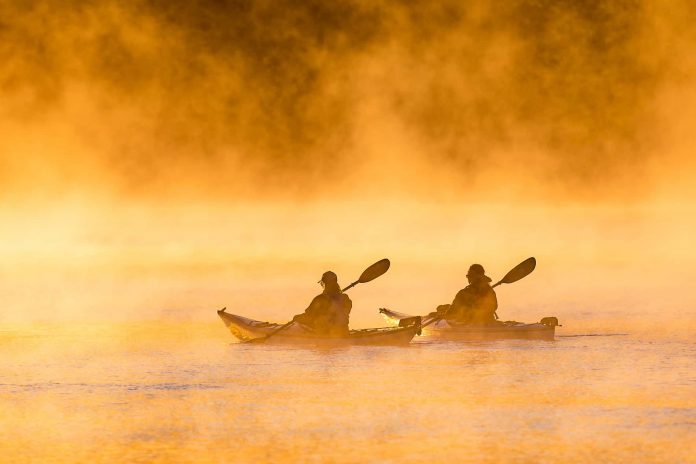
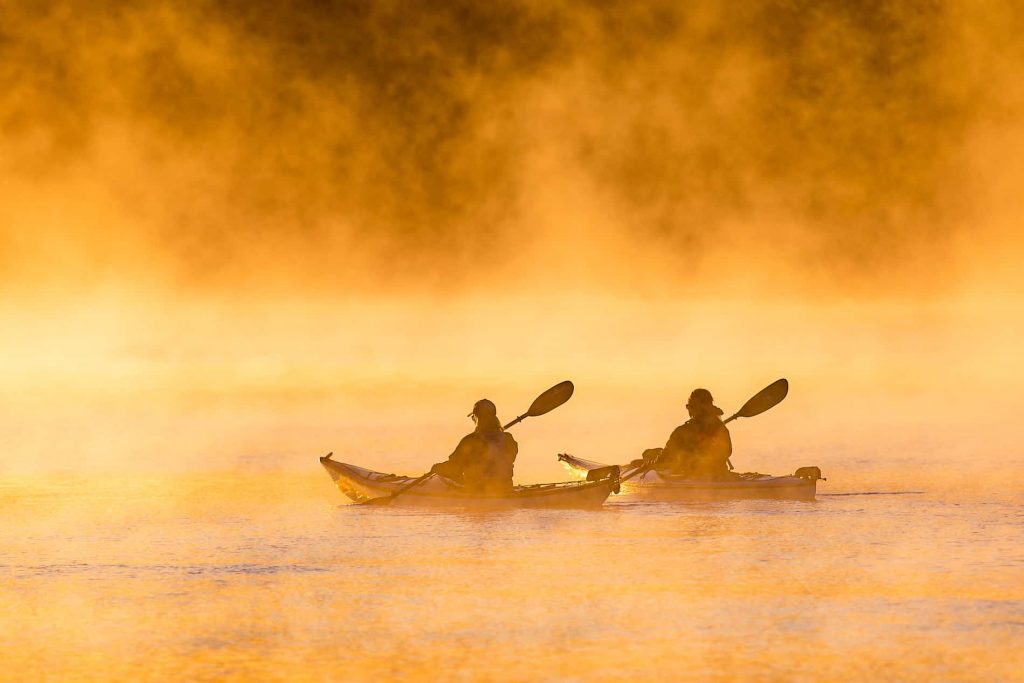
“Sometimes you will never know the value of a moment until it becomes a memory.” —Dr. Seuss | Photo: Andy Zeltkalns

What value do wilderness trips have in your memory?” I ask my wife, Tory, over a Saturday afternoon lunch in our urban backyard as we contemplate the coming summer and the paddling trips we have planned.

Tory lets out a deep sigh, as if I’m asking her to lift anvils.

“You are the most philosophical person I know,” she groans, taking a bite of her B.L.T. “I don’t know how you live with yourself.”

“I can’t help it,” I tell her. “Seriously though, what do your past trips mean to you? Do they have any present value?”

I have been dredging up notebooks and memories of my 80-day kayak trip on the West Coast because I want to write a book about this 17-year-old adventure. I think of it as a midlife-crisis project. The trip seems extra valuable to me now simply because it would be so impossible to repeat.

When my paddling partner, Dave, and I had boastfully called it the trip of a lifetime, we couldn’t have imagined how right we were. Who has that kind of time now? Not a home-owning, forty-something-year-old dad of two.

The central question I’ve been struggling to answer before I can write about my trip is what relevance the memory of it has to my life now. Thinking about this has made me hyper-aware when we go on trips, we do not just have experiences, we’re also creating memories. Yes, this seems dully obvious, but how often do you think about what the point of a trip will be once it’s over? Would we approach trips differently if we were conscious we were in the process of creating memories?

“Well, I guess trips are mementos of a life well-lived,” Tory concludes.

[Paddling Trip Guide: View All Kayaking Trips]

“So, does it matter how many you went on, or could you have just gone on one?” I’m looking around at the city backyards surrounding ours. The neighbors’ houses overlook us like we’re in a fishbowl, contrasting sharply with the contents of my thoughts—deserted and wave-battered Pacific Coast beaches, granitic islands rising out of Canadian Shield lakes, sheltered by towering white pines.

“No, it matters. The more, the better,” she tells me.

“So, trips are like the contents of a treasure chest or a storehouse of memories you horde?”

“Yes, like shiny pebbles or a squirrel’s nuts. I can bring them out and shine them and admire them from time to time.”

“But you’re not admiring them now?” I ask.

“No, not at all. I only really think about them when I’m going on another trip. That’s my opportunity to bring them out and look at them again,” says Tory.

This is a big difference between Tory and me. She tucks her trip memories away like the way she folds her smoky quick-dry clothes into a bottom drawer, and dutifully busies herself with the alternate reality of city life. Her memories are like photos stored away in an album—nice to have but usually forgotten. Whereas I’m always turning mine over and caressing them like Gollum’s one ring, pondering their meaning, wondering if my current life does them justice.

My relationship to memories is not as pragmatic as my wife’s, but I can’t imagine life any other way. Trip memories are my guide and inspiration—for the work I do, our choice to live close to the lake, the dwarf white pine planted in our front garden beside a chunk of granite we hauled home in a canoe barrel from Temagami. Wilderness memories shape who I am.

My friend Dave says thinking about the 80-day trip we shared makes him feel melancholy because it was the best 12 weeks of his life. But it’s also inspiring, a constant reminder of how good things can be.

Trip memories make me frustrated too, because I compare the shortfalls of my current life to the highlight reel of my past. I sometimes run roughshod over my days, castigating them precisely because I’m not outside on a kayaking trip or in a beautiful wilderness area. But of course, why else do we go on trips than to seek experiences that will stand out as extraordinary and more memorable than regular life?

I recently reminisced with a friend about a trip to France. I remember hiking the glaciated flanks of Mont Blanc and the white cliffs of the Mediterranean Sea. He can remember every model of Peugeot and Audi we drove. Human perception is selective. We only notice a small fraction of what is going on, and we only remember what we notice.
paddling trip memory
“Sometimes you will never know the value of a moment until it becomes a memory.” —Dr. Seuss | Photo: Andy Zeltkalns
Thinking about this conscious creation of memory gave me reason to pause the other day on the way home from dropping my kids off at school. I anxiously waited for the light to change to cross the street, annoyed at wasting 30 seconds. Then I had a meta-awareness of some future time when I will struggle to remember this particular day. “I’ll probably wish I’d been a bit less impatient and actually noticed something,” I thought. I took a deep breath and looked around. It was a dull grey spring morning. Cars zipped towards downtown in rush-hour traffic. People stood idly at the bus stop. A billboard advertised a new brand of watch. That was weeks ago, and I can still remember it crisply.

We can choose what and how we remember. And we should choose wisely because memories are the building blocks of our selves—our identity, our choices, our perception of what we can and can’t do. “Knowing I can do things next year even if I was scared of them last year,” is my 10-year-old’s response to my question about trip memories. “Like the jumping rock. I know I can do it this year because I did it last year even if I was scared, and it was really fun.” Her trip memories are place markers of where she left off the summer before.

Our family trip this summer involves a very long journey to a hard-to-get-to lake in the heart of the Boundary Waters wilderness. This is Tory’s inspiration. We could go anywhere, but this lake is calling to her, out of her metaphorical treasure trove of memories. She went there as a teenager on summer camp trips, and she brought me there the year we were engaged. Now we’ll return with our kids, to the same perfect island campsite with a good jumping rock.

It will feel magical to arrive at this place we’ve been holding in memory for the past 13 years and discover that it’s still there, like we’re paddling into some parallel universe where all our dreams exist in reality. We’ll set up our tent in the same flat spot and tie our hammock to the same trees overlooking the water, and in the process knit our new experiences together with the previous ones. We’ll tell our kids about the times we went there before, so our stories will become a part of their memories too. They’ll measure their boldness against the jumping rock. And then we’ll all return to our regular lives, each carrying something slightly different home with us. And long after our sunburns fade and the seasons change, this will remain.


Tim Shuff is a former editor of Adventure Kayak magazine, and a firefighter on the north shore of Lake Ontario.

“Sometimes you will never know the value of a moment until it becomes a memory.” —Dr. Seuss | Photo: Andy Zeltkalns
Sea Kayaking In Antarctica: Small Spaces, Tall Places

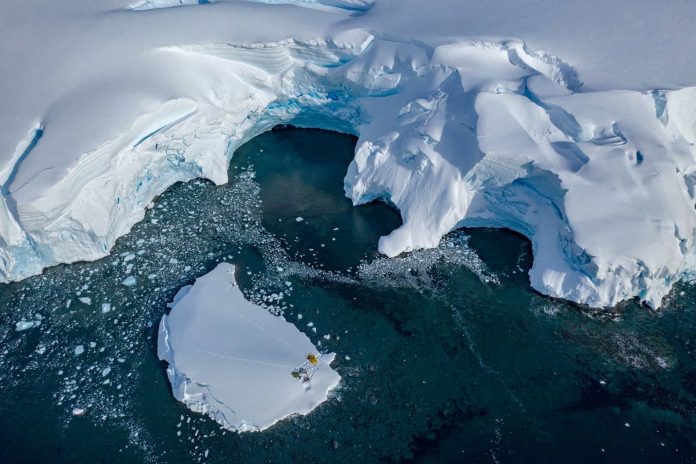
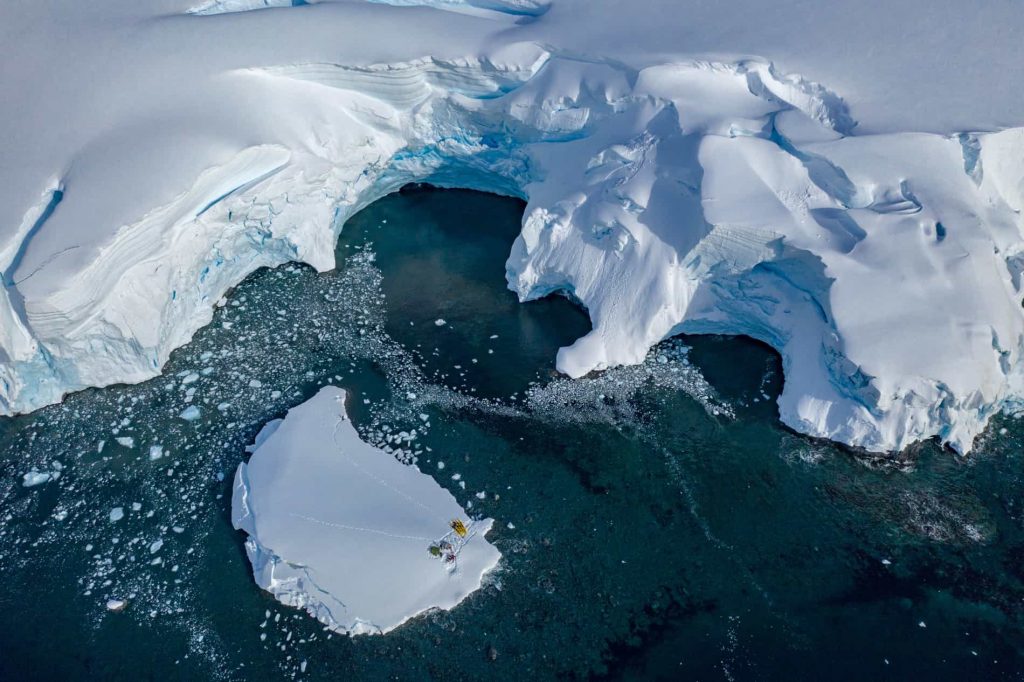
Antarctica is the coldest, windiest, driest and highest continent. Who’s in? | Photo: Steve Ruskay

With the main sail full of wind and favorable seas, the last mountain peak of Cape Horn dipped below the northern horizon. The sleek hull of the Spirit of Sydney, an open 60-foot aluminum sailing yacht, slid easily through the waves and swell. Our fleet of kayaks was secured to the forward deck for the journey south. Destination: Antarctica, 500 nautical miles across the Drake Passage.

The Spirit of Sydney is an Australian-flagged, single-mast sailing vessel retrofitted for Antarctic charters. With a crew of four and five keen passengers, it set sail from Ushuaia, Argentina, fully laden with provisions to be self-sufficient for the 25 days.

I felt small at sea, especially on the infamous Drake Passage. The raging seas here have helped keep the continent a pristine, natural wonder. It’s the largest protected ecosystem in the world, and one of the most fantastic sea kayaking destinations.

Access to Antarctica is strictly regulated. Most travelers prefer the luxury and comfort of a cruise liner. However, vessels with more than 12 passengers face additional regulations, which limits where and how kayakers can travel or conduct expeditions. Small sailing yachts provide access to more remote and less-traveled areas, as well as the freedom to paddle out on multi-night kayak camping excursions. Traveling on small vessels also eliminates the noise and bustle of large ship excursions.

[Paddling Buyer’s Guide: View All Sea Kayaks]

Waking up in a tent beside the largest piece of ice on Earth is an indescribable feeling. Camping in Antarctica is a thrill just a tiny fraction of Antarctica’s 45,000 annual tourists experience. An expedition here requires a great deal of skill and planning. Landing options can be hazardous, and the weather and ice conditions can quickly turn. On this early season trip, the seasonal snowpack proved to be a challenge. At high tide, beaches and intertidal zones vanished, and the water met the three-meter-deep snowpack. The first order of business when setting camp was to dig a way up on to the land and eliminate any snowfall hazards. Mechanical haul systems helped raise the kayaks off the beach. Using snowshoes, the team created a small kitchen area and tent platforms. This was full winter camping from a kayak, and we followed stringent leave no trace regulations.

Antarctica is the coldest, windiest, driest and highest continent. Who’s in? | Photo: Steve Ruskay
Antarctica is the coldest, windiest, driest and highest continent. Who’s in? | Photo: Jerry Ricciotti

In the Peltier Channel, spectacular mountainscape meets wild seascape. The nine-mile paddle towards Port Lockroy is one the most fantastic kayak excursions any paddler could dream up. Towering jagged peaks have marked the entrance for mariners for more than 100 years. Massive glacier-clad peaks rise out of the ocean, and gentoo penguins playfully swam around our kayaks. Humpback whales have recently arrived in these rich waters and are busy feeding. The cove was frozen with seasonal sea ice, which made for a perfect and smooth landing for our kayaks, and a BBQ off the after deck of the Spirit of Sydney, as she was safely nosed into the sea ice as well.

Pleasant weather must be enjoyed to the fullest because it’s never long before another storm is on the horizon. Preparations made and hatches battened down; careful calculations determine when the optimal weather window is to start the return voyage back to South America. And then we return North.

While I’ve have had the opportunity to travel on several ships, by far, a sailing vessel offers the best travel off the beaten path in Antarctica. Small spaces sometimes get you to the tallest places.


Steve Ruskay is a Kokatat ambassador, the lead guide for Black Feather, and an expedition guide aboard the Spirit of Sydney.

Antarctica is the coldest, windiest, driest and highest continent. Who’s in? Photo: Jerry Ricciotti

The Antidote To Soft

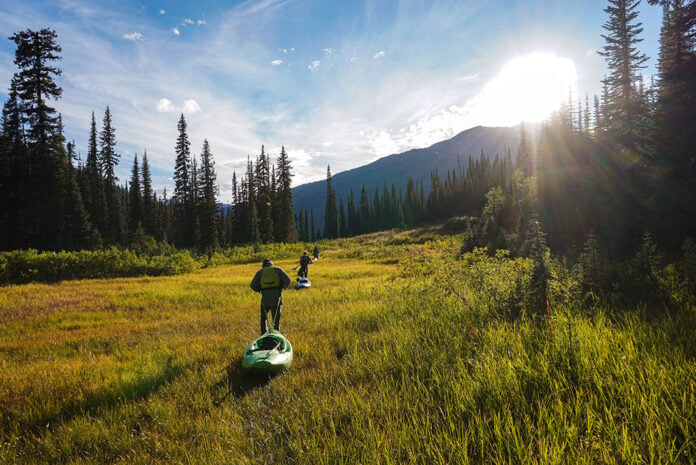
people tow whitewater kayaks on portage through a grassy field in the hills
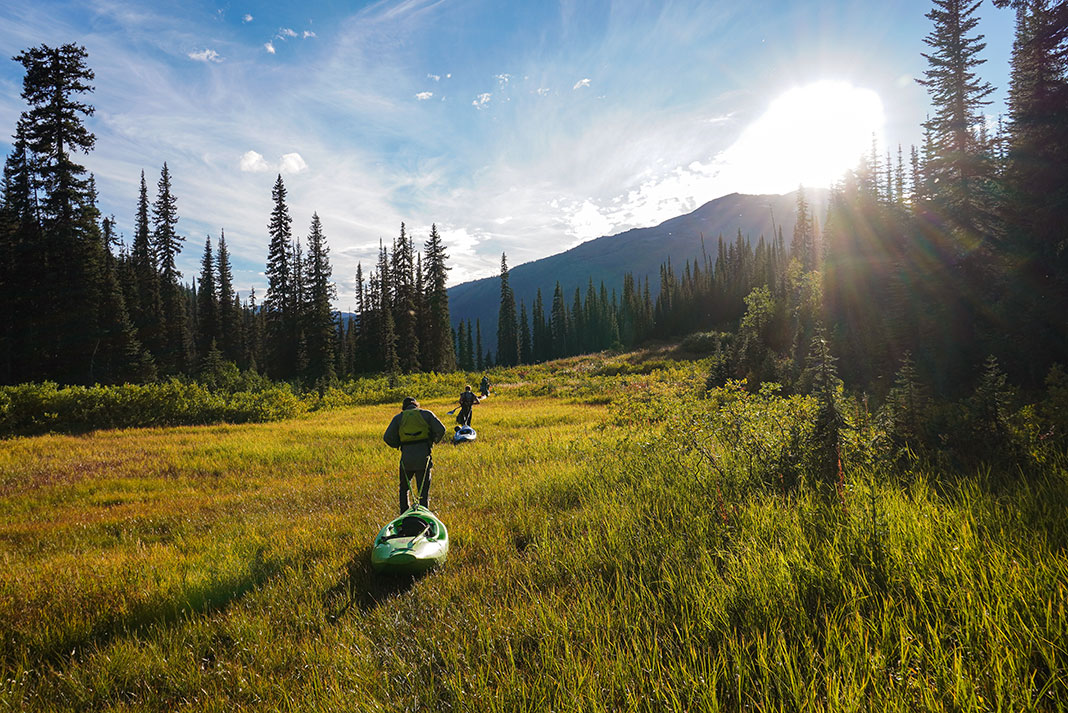
Jeremiah Say wrote, “Complaining is an energy-draining habit. Redirect that energy towards things that bring you joy and growth.” Like say, the river, if we ever find it. | Feature photo: Oliver English

Recently, I read irreverent travel writer Chuck Thompson’s To Hellholes and Back, a hilarious account of his pilgrimage to the world’s most ill-reputed places—the Congo, Mexico City, India, Disney World—and started thinking about how being a good paddler is like being a good traveler, which, in turn, is like being a good citizen.

The antidote to soft

Thompson explains this journey was inspired by a belief that “there’s value in doing things the mind cautions against… Comfort is the enemy of creativity.”

He goes on to lament: “We’ve become soft. Like Jell-O. You. Me. Everyone… Our edges have been beaten away by trophies handed out just for showing up; schools that no longer make kids memorize multiplication tables; doctors who pass out brain meds like Skittles; and therapists who indulge the public’s every impulse to whine and wallow in self-obsession.

people tow whitewater kayaks on portage through a grassy field in the hills
Jeremiah Say wrote, “Complaining is an energy-draining habit. Redirect that energy towards things that bring you joy and growth.” Like say, the river, if we ever find it. | Feature photo: Oliver English

“We’re turning into a nation of fearful twats, obsessed with supposedly tragic childhoods, lousy parents, career disappointments, social outrages, political grudges and long lists of personal grievances that until recently were collectively known as the human fucking condition.”

[ Browse the widest selection of boats and gear in the Paddling Buyer’s Guide ]

Thompson is ranting in his typical style: opinionated, abrasive and, unfortunately, largely accurate. He concludes with this pearl about his travels: “…while not always pleasant, [they] usually end up leading to some surprising and enlightening discoveries.”

The river toughens us up

Paddling, too, is a departure from our everyday marshmallow constitutions. We are forced to consider the well-being of others in our fraternity on the river—not doing so could literally be life or death. We must shed the self-absorbed, cut-off-thy-fellow-driver, too-lazy-to-hold-the-door existence of civilized life. On the river, there’s no pouting on the bench, no adjusted average grades, no second and third changes. No hand-holding.

When even breathing the word discipline can have teachers thrown out of their classrooms and social workers knocking at your door, we are not accustomed anymore to our actions eliciting real, palpable—and sometimes painful—consequences.

The river demands our full attention, our best performance. It does not hold back, carelessness and indifference are punished. The river is the anti-soft.

The river demands our full attention, our best performance. It does not hold back, carelessness and indifference are punished. The river is the anti-soft.

As paddlers, we willingly embrace the discomfort, danger and demands of the river. It’s the same quest for personal challenge driving mountaineers to the Eiger North Face, sailors to the Sydney-Hobart Yacht Race and cyclists to the Tour de France.

Tough guys. | Photo: Steve Rogers

As citizens, we could all do well to toughen up. I don’t mean we should strive to be fearless or hard-core. Just that we should frequently, and purely for our own growth, leave our comfort zones and face that which scares, or worries, or even merely surprises us.

Where Thompson endured 18-hour flights in coach cabins, explosive digestive ailments, “synthetic American culture at its overcrowded worst,” rampant Congolese corruption and intimidation, run-ins with handless Mumbai beggars and jostling with 50,000 “shitfaced soccer hooligans” in a Mexico City stadium, we paddlers need only the river.

Class III or class V, 10-footers, numb toes, long swims, white-knuckle shuttles, blown tires, missed take-outs, gasket rash, soggy sandwiches, warm beer, muddy walks out after dark…it’s all there—the antidote to soft.

Virginia Marshall’s first article for Rapid Media appeared in the Spring 2007 issue of Adventure Kayak. She went on to become editor of Rapid and Family Camping for the Spring 2009 issues, and eventually editor of Adventure Kayak and Canoeroots in 2011.

Cover of the 2023 Paddling Trip GuideThis article was first published in the Early Summer 2012 edition of Rapid Magazine and was republished in the 2023 Paddling Trip Guide. Subscribe to Paddling Magazine’s print and digital editions, or browse the archives.

Jeremiah Say wrote, “Complaining is an energy-draining habit. Redirect that energy towards things that bring you joy and growth.” Like say, the river, if we ever find it. | Feature photo: Oliver English


Where The River, Ocean And Mountain Gods Meet

Sup in the mountains
A moment as perfect as we have ever known. | Photo: Bruce Kirkby

This past spring, Norm Hann and I set out from the Gitga’at community of Hartley Bay, tucked in the deep fjords of northern British Columbia’s Great Bear Rainforest. Our goal was to follow an ancient and long-disused section of a traditional Grease Trail, once employed by Coastal First Nations carrying oolichan grease to the interior, where it would be traded for furs and meat.

For years, Norm—the pioneer of the Stand conservation project and an adopted member of Gitga’at Raven Clan—had heard whispers of the route. Traveling up the Quall River, the path led over a portage, into the mysterious Ecstall drainage, and finally down to the Skeena River. Being long-time SUP expedition enthusiasts, Norm and I saw it as a perfect test; taking us upstream, through rugged bush, down unknown rapids, and finally out onto the open ocean. After receiving the blessing of Gitga’at elder Helen Clifton, and invaluable route advice from community members, we set out, carrying seven days of food and minimal camping equipment on inflatable paddleboards.

For two days, we pushed up the Quall, as it slowly shrank into an ankle-deep creek. With fins off, we dragged our boards over rocks, across tumbled log jams, and through thickets of prickly Devil’s Club. Soon exhaustion set it and progress slowed to a crawl. Shins and forearms grew scratched and bloody. It took three hours to cover a kilometer.

[Paddling Buyer’s Guide: View All Paddleboards]

“You’ll know the portage trail when you see it,” Spencer Greening told us, a young First Nations archeologist working in the region. “You’ll know many feet have walked there.”

I wondered how a trail could still exist after a century of neglect, but Spencer was right. Abruptly, amidst rocky slopes and Avatar-like Sitka spruce, an unmistakable trail materialized, leading over the mountains and to the sandy banks of Ecstall. That night we camped in the shadow of a driftwood log, 10 feet in diameter.

The next day we launched in drizzle, unaware and unprepared for the wonders awaiting us downstream. The river was playful, weaving and turning as it descended class III boulder gardens. Elsewhere it was glassy-smooth, a crystal-clear conveyor belt, carrying us into the largest intact-yet-unprotected old-growth rainforest on the British Columbia coast. Amid this world of tangled brush, lush green and constant birdsong, the overriding sensation was not the uniformity we have grown accustomed to in second and third growth stands, but rather an unspoiled wildness; the sense that everything was exactly where it was supposed to be.

Where the river, ocean and mountain meet
A moment as perfect as we have ever known. | Photo: Bruce Kirkby

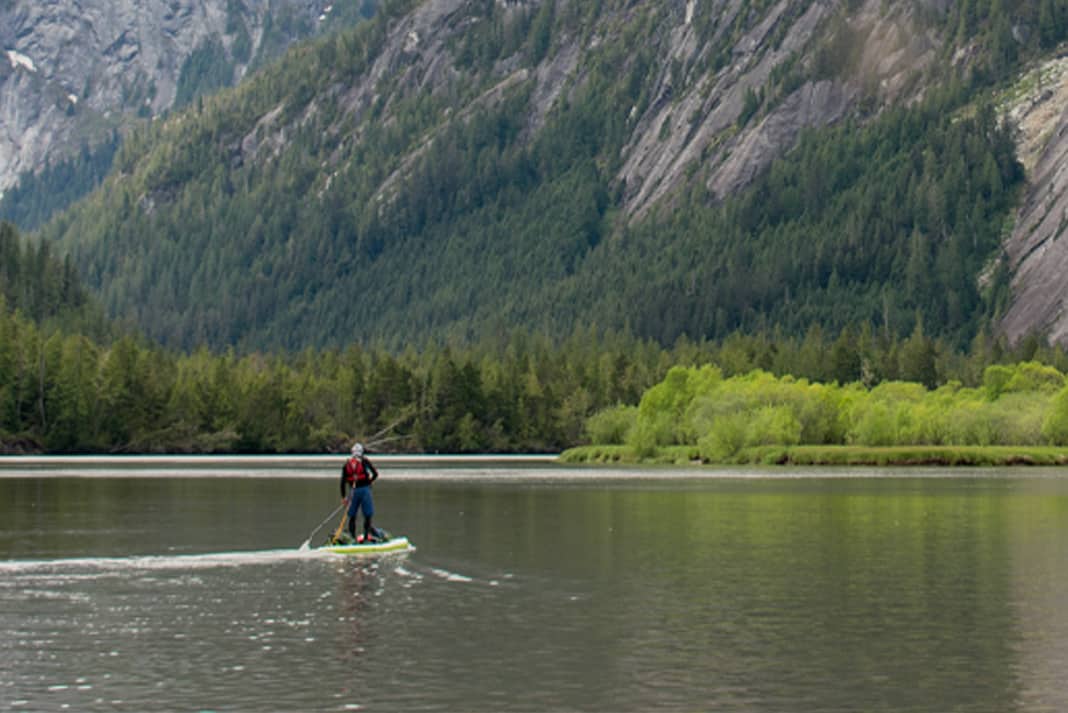
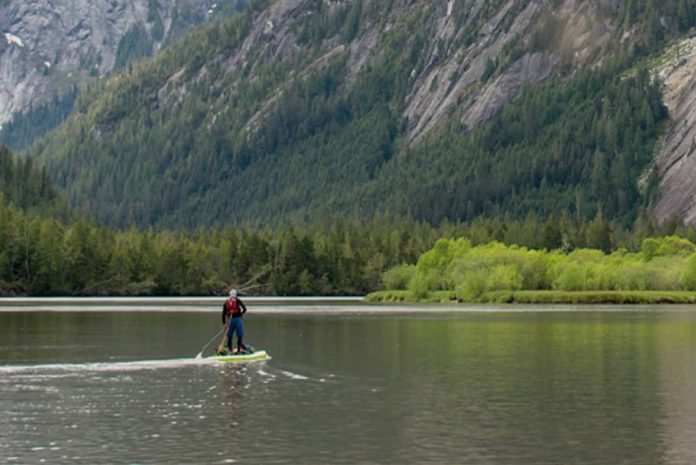
For three days the waters of the Ecstall grew until it felt more like a fjord than a river. Silt caked the banks. Tides pushed and pulled us back and forth. And it seemed we had left the great, hidden wonders behind. Then we rounded a corner and came face-to-face with granite monoliths of a scale and grandeur rivaling Yosemite. Paddling to the base of the steepest cliffs, we lay speechless on our boards for hours, warmed by the sun, munching on energy bars, while gazing upwards at the impossibly sheer walls of rock. It was a moment as perfect as I have ever known.

We would later press on, past log booms and busy shipping-container ports on the ocean, to the First Nation village of Metlakatla, north of Prince Rupert, but by then, the wilderness had released us.


Bruce Kirkby is a photographer and writer living in Kimberley, British Columbia. A Starboard team rider, his third book, Kingdom of the Sky, will be released in fall 2020.

A moment as perfect as we have ever known. | Photo: Bruce Kirkby

National Boating Industry Safety Award Winners

National Boating Industry Safety Awards Logo

Southold, NY, December 10, 2020 – The Sea Tow Foundation and its North American Sober  Skipper Advisory Council announced winners of the  National Boating Industry Safety Awards  which recognize the best boating safety work in the for-profit section of the recreational boating  industry. Sponsored by  KICKER Marine Audio , the six top contest winners were revealed in a  special awards recognition segment held during the Marine Retailer Association of America’s  virtual Dealer Week on December 10, 2020.  

The  Top Powerboat Manufacturer Award  was presented for the second year to  Sea Ray Boats. 

Sea Tow Foundation Executive Director Gail Kulp said, “Sea Ray’s messaging clearly shows a  corporate commitment to a strong boating safety culture with a special emphasis on new  boaters,” she said. “They successfully incorporated the COVID-19 pandemic into their safety  messaging through multiple platforms including videos, photos, customer emails and social  media posts.” 

Another second-year repeat winner is  MarineMax  who took home top honors in a new category  for the  Top Marine Retailer with More Than Three Locations.  

“MarineMax showcased a solid, proven plan for providing boating safety education and they were able to adapt this to the constraints imposed by the COVID-19 Pandemic,’ said Kulp. “While previous years allowed for their educational classes to be conducted in person, their virtual classes attracted as much boating participation if not more than previous years.”  

National Boating Industry Safety Awards Logo

A new category was  Top Marine Retailer with One to Three Locations,  and it was won by  Bridge  Marina, Inc.  of Lake Hopatcong, NJ.  

“Bridge Marina, Inc. clearly put a lot of work into creating a multi-faceted safety program  specific to the area and type of boat people are using,” said Kulp. “They have developed an  integrated marketing campaign including web, social, phone follow-up and in person that  appears to be quite successful in reaching the intended audience. For a small company with  limited resources, their campaign represented an impressive effort to promote boating safety.” 

Due to the important role marine media play in how they position boating safety among their  readership or viewership, the Sober Skipper National Advisory Council created a special  category last year to recognize top media for their outstanding contributions in consumer  education and marketing. The 2020 award for  Top Marine Media Outlet Award  was won by  Rapid Media  which focuses on the human-powered/paddling market. 

Kulp noted, “Rapid Media offered a solid campaign featuring a mix of digital ads, pre-roll, video, e-blasts, newsletters and contests to promote their boating safety messaging to the paddling  community. Their videos were especially well done, relevant and authentic.”  

The  Top Marine Marketing and Outreach Award  was won by   Freedom Boat Club  who last year  received a special Sober Skipper Award for its national adoption of the Sober Skipper program.

Said Kulp, “Freedom Boat Club delivers clear, concise and consistent safety messaging and  programming to a well-defined and highly targeted audience. They utilized every touchpoint  available to communicate their messaging, coupled with a solid national boater education and  training program. Safety is clearly a big part of their overall operation.” 

Another new category for 2020 and one of the highest scoring submissions was the  Top Gear &  Equipment Manufacturer Award  won by  FELL Marine. 

“FELL Marine knows its core demographic and provides outstanding demonstrations on their  website to educate customers on how to install and use a wireless man-overboard device,” said  Kulp. “They provided a diverse selection of many high-quality advertising materials to review and  outline future business opportunities to increase the adoption of their product and further  promote boating safety.” 

“Our Sober Skipper Advisory Council and Sea Tow Foundation are extremely pleased by the  growth of this awards recognition and the quality of the work being done by recreational for profit, boating industry organization to promote boating safety,” she said. “We also appreciate  the hard work of our council members in judging this year’s competition and the support of our  sponsor KICKER Marine Audio in making this year’s competition even more outstanding.” 

For more information about the North American Sober Skipper Advisory Council and the  National Boating Industry Safety Awards, visit  www.boatingsafety.com/awards  where a video of  the awards presentation from Dealer Week will be available along with future highlights of each  award winning company and campaign.  


Members of the Sea Tow Foundation’s North American Sober Skipper Advisory Council  include  David Connolly, Thomas H. Connolly and Sons; David Dickerson, NMMA; Jim Emmons, Water  Sports Foundation; Kevin Falvey, Bonnier/Boating Magazine; Adam Fortier-Brown, MRAA; Mike  Hankins, American Marine Sports; John Jost, Ken Cook Company; Captain Keith Lake,  MarineMax; TK Krumenacker, Admiral’s Insurance Corp; Dave Marlow, Brunswick Corporation;  Tyler Mehrl, Mercury Marine; Mark Pillsbury, Cruising World Magazine; Angie Scott, The Woman  Angler & Adventurer; Eric Shepard, retired; Captain Frank Stoeber, Regal Boats; Nic Thomas,  Freedom Boat Club; Stephanie Vatalaro, RBFF; Annamarie Worrell, Emerald Coast Marine Group;  and Leslie Zlotnick, Yamaha Watercraft Group. The council’s executive committee includes  Kristen Frohnhoefer, Sea Tow Services International; Gail R. Kulp and Michael Wesolowski, Sea  Tow Foundation; and Wanda Kenton Smith, Kenton Smith Marketing.  

Sea Tow Foundation 

With a focus on safe boating practices that result in fun on the water, the Sea Tow Foundation – a 501(c)(3) nonprofit organization – was established in 2007 by Sea Tow Founder Capt. Joe  Frohnhoefer. After his passing in 2015, Captain Joe’s legacy continues as the Foundation brings  attention to the number of preventable boating-related accidents, injuries, and deaths, and  directly addresses prevention methods through education and awareness. More than 750 life jacket loaner stands are now available across the United States and the Foundation’s Sober  Skipper program continues to grow. For more information on the Sea Tow Foundation, please  visit BoatingSafety.com.

11 Top YouTube Canoe Channels According To Kevin Callan

Just half-a-dozen years ago, paddlers had only a few channels on YouTube to binge-watch to get inspired for the next canoe trip; mini video celebs like Maddy the Goose and the then-up-and-coming Joe Robinet filled the void. Now we have a seemingly endless list of paddling personalities filming their time out canoe tripping. And there’s enough subscriber swag out there to fill a 17-foot prospector—twice.

Some are big stars, like the Baird brothers and Les Stroud. Others are diamonds in the rough, like Single Malt and Maps, Pray for Nathan, Kevin Outdoors, Canoe The North and PineMartyn. Some dwell mostly on how-to tips and tricks. Others share extensive wilderness journeys. Some do both.

[Discover the best gear of the year in the Paddling Buyer’s Guide]

Below are 11 of my favorites that tend to pop up in my recommended pile more often than not. They’re not necessarily the vloggers with the most followers, but they are enthusiastic paddlers armed with a video camera and a solid data connection, who make excellent paddling content with soul. 

Jason’s films—I wouldn’t call them mere videos—are a work of art. This guy is amazing. He captures the true essence of wilderness canoe travel like no other. I literally jump with joy when I get a notification that he has another trip account up on his channel. I just wish he had more.

Daryl Phillips channel has stunning visual content, heartwarming soundtracks, and absolutely pure and honest (and sometimes spiritual) motivation to get you, and especially your family, out paddling.

Chris is an amazing filmmaker and storyteller. Her channel will captivate you. Guaranteed. The videos are a mix of Chris’ outdoor travels with her spouse, Julia, and son, Cedar. My absolute favorite are the Algonquin canoe trip series—and when her and Julia go and cut their own Christmas tree and portage it in a canoe barrel. Totally awesome!

Alex Traynor and Noah Booth are two young, enthusiastic outdoorsy guys who have taken on some major remote canoe trips. The footage is great, editing and music superb, the fish they haul into their canoe are huge, and their enthusiasm for being on trip is absolutely genuine.

Jonathan Kelly, as well as his partner, Erin Elizabeth, have gained incredible popularity with Backcountry Angling Ontario. Jonathan has an addiction to the backcountry that is irreversible, intense and insatiable. It’s obvious he loves being out there, especially on a secluded lake with a canoe rod in his hand. His work has a poetic flare to it, with a voice-over tone similar to Bill Mason’s Waterwalker.

Brad Jennings started up his channel a few years back after a television pilot, shot with his dad Wayne, got kiboshed. He then turned to YouTube – and hasn’t looked back since. The excursions now include Brad’s wife, Leah Schmidt. Together, they embark on countless adventurous and exploratory canoe trips, mostly rediscovering long forgotten ‘lost’ routes. Brad should be applauded for all his work on getting attention to places less paddled.

A woman solo canoe tripping seems to be a rarity on YouTube, but Christina Scheuermann is helping to change that. Thanks to her and the solid trips she embarks on and documents for others to enjoy, there’s sure to be a lot more solo women on the portage. 

Dennis Rogers’ channel has a blend of trips and tips, but his claim to fame is his weekly Canoehound’s Outdoor Adventure Show where he livestreams interviews with a mix-bag of paddlers (with audience participation). It’s an addictive show. I’ve been on it so many times he’s started labelling me his Ed McMan, of Johnny Carson fame. Dennis offers solid content that shouldn’t be missed.

Hailey Sonntage is a recent graduate from Mohawk College’s Television Broadcasting and Communications Media and now runs Run Wild Media. However, she has her own personal channel documenting all her outdoor trips and tips. She has a few backpacking treks with her mother, but by the look of her facial expressions throughout, you can tell she prefers making canoe videos. 

Justin Barbour

Justin sure makes his home province of Newfoundland proud. His charisma and spunk shine in every one of his arduous canoe tripping series where he paddles across the remote and beautiful landscapes of Newfoundland and Labrador. Each video exemplifies true wilderness canoe tripping.

Waboose Adventures

Cobi Sharpe is probably more known in the canoe world for her photographs and blog. Not sure why? Her YouTube channel really does an amazing job defining what a normal canoe trip is all about – and she has some amazing tips added along the way as well.

Main Image: Courtesy Ontario Tourism

The Gender Gap In Whitewater Kayaking Prize Money Payouts

Mariann Sæther was crowned Queen of the North Fork Championship in 2019. It was the first year the NFC offered a women’s category, and with it the competition offered equal prize money. | Photo: North Fork Championship // Liam Kelly

As a competitive whitewater kayaker, it has always been my dream to stand on top of the podium for a professional competition. In May 2016, I achieved my goal. I won the pro women’s category at CKS Paddlefest, a freestyle kayaking competition in Buena Vista, Colorado. I was so excited about my win, I didn’t even notice the envelope of cash handed to the men’s winner was twice as thick as mine.

The same thing happened in 2017 at Montreal Eau Vive, a multi-stage competition on the St. Lawrence River in downtown Montreal. The competition hosts two big wave freestyle events and a big water boatercross, with Jet Skis and jet boats as shuttles to and from the waves. There is always a strong turnout of athletes at the event. 

As I was called up to stand on the top block of the podium, the event organizer announced, “And $500 prize to the pro women’s category winner!”

I was ecstatic. It paid for my travel expenses, entry fee, camping fee and food for the weekend. I came out of the event with my bank account unchanged. I was stoked—until the men’s winner was announced.

kayaking gender pay gap
Mariann Sæther was crowned Queen of the North Fork Championship in 2019. It was the first year the NFC offered a women’s category, and with it the competition offered equal prize money. | Photo: North Fork Championship // Liam Kelly

A thousand dollars was awarded to Nick Troutman, who took the top spot in the men’s category. Nick and I surfed the exact same waves and raced the exact same boatercross rapid. We paid the same entry fee, and we each earned the top spot in our respective categories. And yet, I got paid just enough to cover my expenses for the weekend, while he left with cash in his pocket.

The gender pay gap in athletic competitions is not unique to whitewater kayaking.

Last summer, the surfing world heard outcry when the Billabong Pro Junior Series paid the male champion twice as much as the female champion. A photo of the two holding their respective prize winnings went viral as commenters argued both for and against the World Surf League’s unequal payout. “Did the girls surf a different ocean that was easier we don’t know about? This is pathetic!” one online commenter wrote.

Event organizers justified the gender pay gap by saying there were fewer female competitors than male competitors, and therefore less female entry fees going into the pool for prize money. World Surf League Australia manager Will Hayden-Smith told SBS News that, “Men get double the prize money only because there are double the competitors.” I’ve been given the same reason every time I’ve been paid less than a man in a kayaking competition.

Being paid less than the male category for the same competition result is the same as being publicly told I’m less valued. This is a slap in the face. If we want to increase the number of female competitors in an event, we need to pay them as if we want them there.

“No matter gender or discipline, we compete in the same sport, on the same river and feature,” eight-time Freestyle Kayak World Champion Claire O’Hara told me.“We pay the same entry fees and complete the same training and preparations. It’s not the competitor’s fault there are fewer entries in one class than the other. Discriminating based on this factor is so far behind the times. I would love to see the sport ensure athletes are rewarded equally for their achievements.”

Being paid less than the male category for the same
competition result is the same as being publicly told I’m less
valued. If we want to increase the number of female competitors
in an event, we need to pay them as if we want them there.

The gender pay gap is also not unique to adventure sports. Since 1991, the U.S. women’s soccer team has won four World Cup titles and four Olympic gold medals. The U.S. men’s team has won neither. According to CBS News, “For the 2015 [Women’s World Cup] Final, an estimated 30 million people watched on TV in the U.S. as Carli Lloyd’s three goals sealed a huge win against Japan. It was and remains the highest rated soccer match in American history, including games played by the U.S. men.” And yet, the U.S. women were being paid one third as much as the U.S. men. In March 2019, the team launched a lawsuit for equal pay.

Last June, Forbes released “The World’s Highest Paid Athletes” list for 2018. This list breaks down the top 100 highest paid athletes in the world based on their prize winnings, salaries and bonuses earned between June 1, 2017, and June 1, 2018. No women were on the list.

With statistics like this, it comes as no surprise competition rosters see far fewer women than men. How are women supposed to afford the costs of training, travel, coaching and competition fees if they are at a financial disadvantage from the start?

A social media user expressed a common sentiment when he commented on the Billabong Junior Series surf photo saying, “Surfing, like most sports, is a predominantly male sport. More people watch men’s surfing, and more men surf than women.” Are more people watching men’s surfing because it is more appealing? Or, are more people watching men’s surfing because it’s what the media has always streamed?

Just three percent of TV sports coverage is devoted to women in the United States, according to Cheryl Cooky, a Purdue University professor and co-author of a 30-year study on the quality and quantity of men’s and women’s sports coverage. In an article about the U.S. Women’s Soccer Team published by The Atlantic, Cooky says our perceptions of how interesting women’s sports are have come from the media itself.

“Men’s sports are going to seem more exciting,” she says. “They have higher production values, higher-quality coverage, and higher-quality commentary… When you watch women’s sports, and there are fewer camera angles, fewer cuts to shot, fewer instant replays—yeah, it’s going to seem to be a slower game, [and] it’s going to seem to be less exciting.”

“Audiences will not get excited about women’s sport as it gets minimal exposure in the media, and the media would justify the lack of coverage by saying female athletics do not generate enough audience engagement,” agrees Valeria Perasso, a news correspondent at BBC News.

In freestyle kayaking competitions, the competition format goes like this: Junior Women compete first, followed by Junior Men, followed by Pro Women, and then Pro Men. The male category always competes last. It’s the headlining act. With the male category almost universally highlighted by the media as the main event, it receives more engagement than the women’s category, and entire sports get mischaracterized as “predominantly male.”

Our own media is part of the problem. The editor of Kayak Session, Anna Bruno says since she has been in charge, there has been just one female athlete featured on the magazine cover. Almost 20 years of Rapid magazine has seen just one female whitewater paddler featured on the cover—in a swimsuit. No wonder there are fewer women kayaking than men—it’s portrayed as a male sport.

It is clear the gender gap in athletics and whitewater—in media representation, participation numbers and prize money—stems from the much larger issue of inherent sexism in our culture. What can we do to fix it? Equal prize payouts for male and female categories is an excellent place to start.

A big wave freestyle kayaker, Brooke Hess is from Missoula, Montana, and a member of the U.S. National Freestyle Team.


Mariann Sæther was crowned Queen of the North Fork Championship in 2019. It was the first year the NFC offered a women’s category, and with it the competition offered equal prize money. | Photo: North Fork Championship // Liam Kelly


Fake Bushcrafters’ Lasting Impacts

fake bushcrafters tripod cooking technique
This tripod cooking technique is a low impact bushcraft skill and easy to dismantle And leave no trace—Kevin Callan approved. | Photo: Ontario Tourism / Goh Iromoto

What an eyesore. The campsite, an idyllic pitch of granite and pine in central Algonquin Park, had been blemished by of a couple of yahoo bushcrafters. 

They had cut down standing trees to build a makeshift lean-to shelter and lashed it together with cordage made of young saplings. An elaborate kitchen area, complete with a table, storage compartments and a circle of benches was constructed. Conifer boughs were cut to make a bed, set in front of a large fire pit away from the designated metal fire grate placed by the park wardens.

I saw them paddle off before I reached the site. They were dressed in camouflage fatigues and I imagined the majority of their gear was purchased at army surplus stores. The only things not green were their bright white Tilley hats disappearing into the distance.

They weren’t doomsday preppers practicing for a worst-case scenario or campers playing some dystopian future fantasy game—they were worse. They were fake bushcrafters.

The term bushcraft has been around for a long time. It’s generally defined as skills to help one thrive in the wilderness. To quote bushcrafter Steve Watts, “Without the context, it’s just arts and crafts.”

Bushcraft techniques have been employed for millennia by indigenous peoples. Today, bushcraft is enjoying an in-vogue moment and become a bit of a catch-all term.

Bushcraft can refer to everything from firecraft, tracking, navigation by natural means to higher-impact techniques inappropriate (and even illegal) in some managed wilderness areas—like cutting boughs for bedding or live branches for cordage, and non-emergency shelter building. Don’t even get me started on the campers who attempt to reestablish the configuration of their living rooms’ furniture at campsites and leave it for the next camper and have the audacity to call it bushcraft. It’s crappy camp carpentry.

I find a fundamental difference in the way the wilderness is treated by people who believe they’re out in the woods to thrive versus survive. Real bushcrafters practice leave no trace camping—the guys I met were just ignorant slobs who watched way too many “wilderness survival” YouTube videos and were playing make-believe. It’s when less-than-ethical techniques practiced by unskilled campers then show off their exploits on their social media pages and video channels that bad behavior can get passed off as the norm for others to adopt. It’s creating a strong movement of false prophets.

[Buyer’s Guide: View All Camp Kitchen Gear]

I find North America to be far more plagued by false bushcraft messiahs than Europe or Australia. For some, the term bushcraft seems to be just another way to say you’re a camper that’s mixed both modern wilderness skills and primitive techniques. Closer to home, it’s too often a way for buddies to act out a survival TV show for the weekend.

Building a shelter to weather a storm is definitely a wilderness skill. Going to a protected wilderness park on a warm summer day, cutting down living trees to build a half-ass lean-to and leaving the structure intact when you leave—well, that’s just ignorance.

Would it be different if these immoral bushcrafters kept clear of provincial, state and national parks and practiced their skills in remote areas, like Crown land? Some say, yes, but I’m undecided. Regardless of the designation of the land you camp on, everyone should follow leave no trace principles. You never know when another happy camper will be paddling by next.


Kevin Callan is the author of 18 books, including the best-selling The Happy Camper and his popular series of paddling guides.

This tripod cooking technique is a low impact bushcraft skill and easy to dismantle And leave no trace—Kevin Callan approved. | Photo: Ontario Tourism / Goh Iromoto

The Big Gear Show’s Bold, New, Almost-Pandemic-Proof Plan

Photo Courtesy of Courtesy of Deer Valley Resort

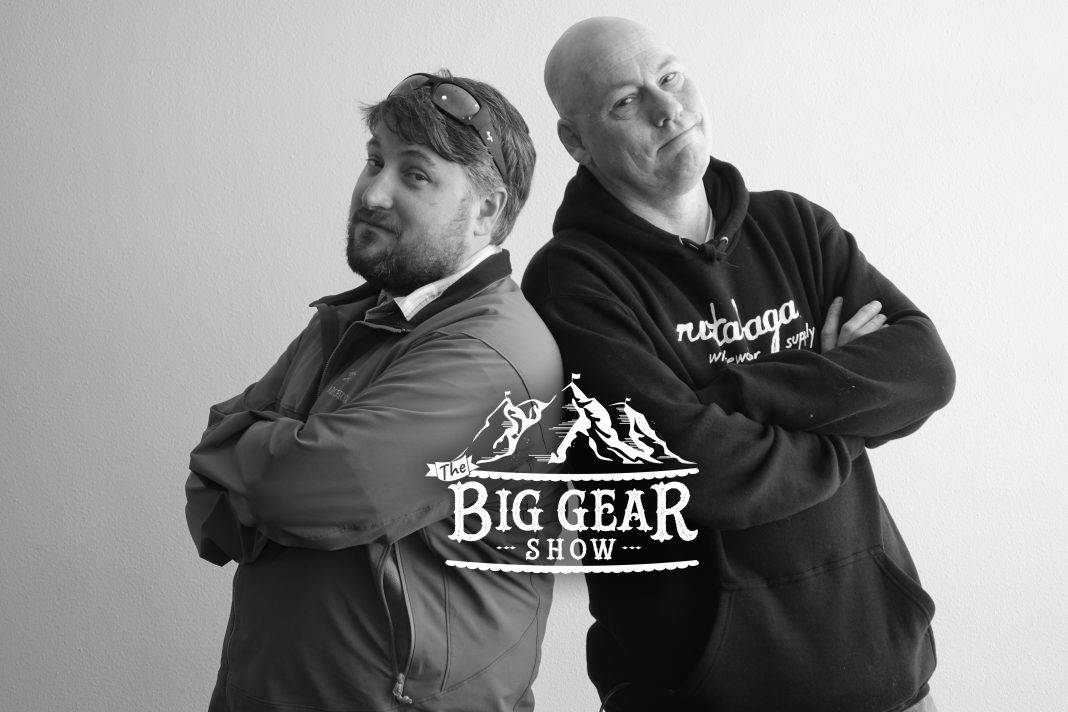
The middle of a pandemic is an odd time to launch a new trade show, but there’s nothing conventional about the vision Darren Bush and Sutton Bacon have for their hardgoods-focused exhibition, The Big Gear Show, which debuts August 3-5, 2021, in Park City, Utah.

The industry veterans behind Paddlesports Retailer, which was discontinued after a three-year run in Oklahoma City, have reworked the formula yet again. Co-founders Sutton Bacon and Darren Bush have ditched the convention hall, moving their new show outside and expanding it to combine paddlesports with cycling, climbing and select camping brands. The idea is to double-down on gear, without compromising the show’s schedule to accommodate soft-goods manufacturers.

The Big Gear Show co-founders: Sutton Bacon and Darren Bush. | Photo: Paddling Magazine Archives

Timing has been the persistent bugaboo of outdoor industry tradeshows. In recent years, the behemoth Outdoor Retailer Summer Market has moved steadily left on the calendar, drawn by the gravitational pull of apparel and footwear giants who do most of their manufacturing in Asia. A decade ago, Summer OR took place in the second week of August; next year it’s scheduled for June 15-17.

“The entire outdoor industry has been wrapped around the axle of the apparel side of the industry. There’s just no boat company on Earth that’s going to have prototypes ready in June,” Bacon said.

By the same token, an August show is far too late for soft-goods companies. “For a soft-goods manufacturer that makes stuff in Asia, there’s no point in going to a show in September. Not only has the stuff been made—it’s probably in our warehouse already,” said Immersion Research president John Weld.

[Discover the best gear of the year in the Paddling Buyer’s Guide.]

Bacon and Bush believe the answer to these irreconcilable differences is an amicable separation. Their Big Gear Show will jettison most of the soft-goods brands and turn its focus and schedule strictly to gear. The show was due to launch in August 2020 at the Salt Palace in Salt Lake City, but was canceled due to the Covid-19 pandemic, as were other tradeshows. For the re-launch, they’re moving the whole shebang outside.

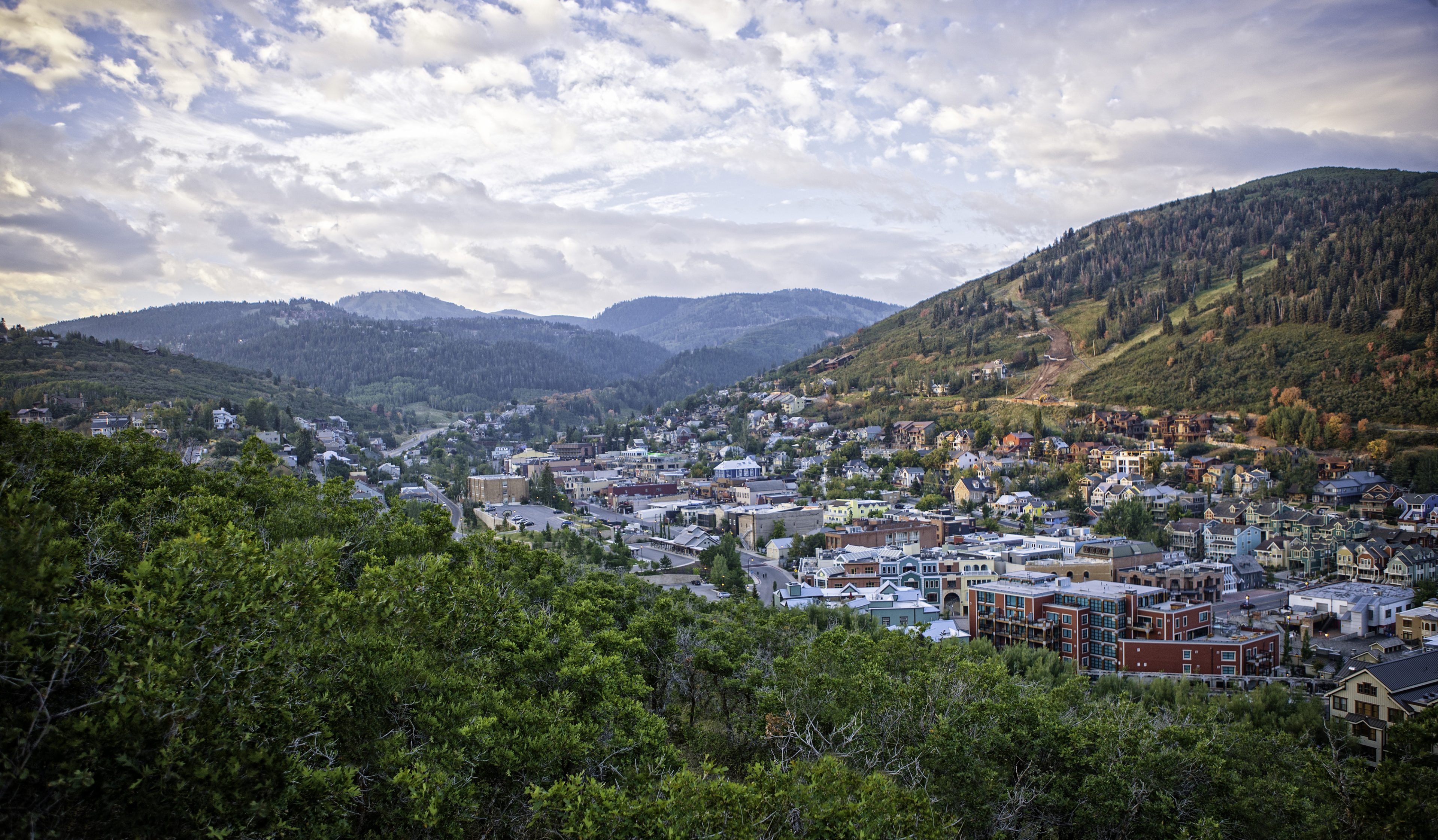
Park City is 32 miles (51 km) southeast of downtown Salt Lake City in Utah. | Photo: Courtesy Visit Park City

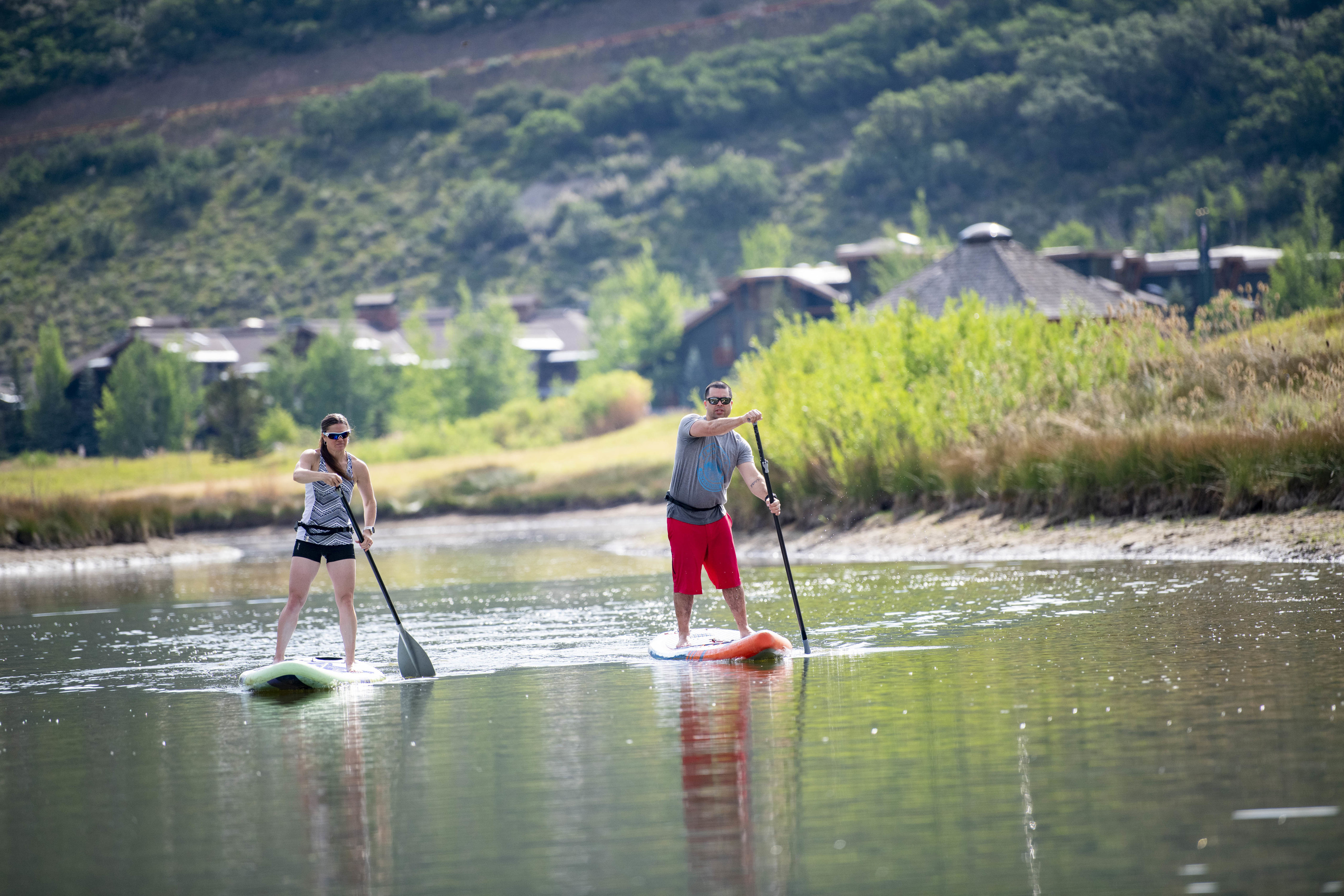
Park City’s Deer Valley Resort will host the event, with paddling brands exhibiting along the shoreline of seven acres of ponds. The bike companies will set up near the chairlifts, providing easy access to mountain bike trails, as well as smooth asphalt for the roadies.

“Unlike a lot of outdoor goods that can be probably sold over Zoom, paddlesports buyers have to sit in the boat and use the paddle and gear to make buying decisions,” said Bacon, who stresses the show’s overriding philosophy is “for retailers, by retailers.” Besides the opportunities for hands-on testing, the planning comes down to two driving factors: Covid and cost.

While it would be folly to predict how the virus will impact an event nine months from now, a smaller show at an outdoor venue in August seems to present less risk than large indoor shows such as ICAST or Outdoor Retailer, whose venue, the Colorado Convention Center, is currently on standby as an emergency Covid hospital. Outdoor Retailer is on the schedule for June 2021, but with the pandemic spiking and vaccine distribution in question, it’s anyone’s guess whether it will go off as planned. That means The Big Gear Show could be the only game in town next summer.

The outdoor venue is also key to the show’s relatively low exhibitor fees, which are roughly half that of Outdoor Retailer. With lakeside pop-ups replacing an indoor convention center, and without the union and vendor markups that go hand-in-hand with such venues, manufacturers will save on everything from booth costs to setup fees. Retailers will also benefit from off-season room rates and a lodging subsidy of up to $400.

Bacon and Bush have assembled an all-star cast to organize the Big Gear Show, including former Interbike showrunner Lance Camisasca and Outdoor Retailer director Kenji Haroutunian. The Grassroots Outdoor Alliance and the National Bicycle Dealers Association have endorsed the show.

Park City’s Deer Valley Resort will host The Big Gear Show in 2021. | Photo: Courtesy Visit Park City

The prospect of a smaller, gear-focused show in August is appealing, says Sean Creary, owner of River and Trail Outdoor Company in Rothesay, New Brunswick. He’s skipped Outdoor Retailer the last few years—ironically, even in June that show comes after most of his soft-goods orders are in—but had found the Paddlesports Retailer schedule much more to his liking.

“Paddlesports Retailer was fantastic because we went to the show in August and got to see all the gear, paddles, boats and boards and then do our buy at the end of September,” he said. “So it aligned perfectly.”

The big question mark for Creary is the pandemic. “The final decision will come down to the Covid situation next summer,” he said. “That would be the reason why we don’t go.” Creary will make his own assessment about whether it’s safe, but the decision could be out of his hands. As a Canadian retailer, he will only be able to attend if the ban on nonessential cross-border travel is lifted.

Dave Lindo, owner of OKC Kayak and Tulsa Kayak in Oklahoma, says his decision will likely depend on vendor participation. Many brands have not yet committed or even received formal invitations. The event was only announced at the end of October, and invitations to retailers went out in November.

As of December 4, 2020, companies that have accepted invitations include: Appomattox River Company, ACK/Summit Sports, Alder Creek, Bill Jackson’s, Canoe Kentucky, Crawdaddy Outdoors, Dolphin/Economy, Earth’s Edge, Get Outdoors, Idaho River Sports, LL Bean, Massey’s Outfitters, Moosejaw, Mountainman Outdoor Supply, Nantahala Outdoor Center, Outdoor Gear Exchange, Outdoorplay, Pack & Paddle, Pack Rat Outdoor Center, REI, River Sports Outfitters, Rutabaga, Scheels, The Trail Head, Travel Country and Wilderness Supply.

While informal talks with key brands have been ongoing, official bids to manufacturers are still in the works as organizers poll retailers about which companies they want to see at the show.

[Discover the best gear of the year in the Paddling Buyer’s Guide.]

That’s a key component of the Big Gear Show’s curated approach, Bacon said. “Our motto has been for retailers by retailers, and we’ve stuck to that mantra through the Paddlesports Retailer shows and this show,” Bacon said. “We wanted to get the input and feedback and buy-in from the retailers prior to going back out to the trade.”

The show has space for 250 exhibitors and 500 retailers, roughly split between the paddlesports, bike and outdoors sectors, said Bacon, who characterized the response thus far as “extremely strong.” That translates to about 150 paddlesports retailers—and if they come there’s little doubt the major manufacturers will follow.

The Salty Single Blade of Coastal Canoeing

Coastal canoeing
“In the deep space of the sea, I have found my moon.” —Jacques Yves Cousteau | Photo: Penny Huang

I have always been a canoeist, but when I moved to the British Columbia coast 12 years ago, everyone was paddling kayaks. I joined in, mostly casting aside my single blade and tandem tripping boat. In the decade since, I’ve occasionally met a rare and unusual species of paddler—the coastal canoeist.

Newfoundlander Richard Alexander helped create Paddle Canada’s ocean canoeing curriculum and he is one of just five instructor trainers in the discipline in Canada. In his mind, the canoe is the ultimate wilderness tripping boat for every type of water. “A lot of the great northern river trips end on the ocean,” he points out. These trips are the Holy Grails of expedition paddling, he says, and canoes have the versatility to navigate all sections—portages, river, lake and ocean.

When I first arrived on the coast, I was amazed by the amount of gear sea kayakers packed. Roll-up tables and chairs, multiple kitchen sinks, two-burner stoves and propane tanks are standard, especially in guiding circles. If you like to travel in luxury, a canoe can handle the excessive load without all the packing problems associated with kayak hatch Tetris. And portaging is never an issue on the ocean.

“I can carry comfortable chairs, lots of water, food for two to three weeks, beer rather than spirits, fresh produce in a cooler, all without packing problems,” confirms Alan Thompson, a Paddle Canada ocean canoeing instructor trainer.

More important than load, what about safety? Canoes are harder to rescue in big waves, especially when loaded, and even harder to self-rescue. Instructor Tony Shaw says the vulnerabilities of the craft might breed better judgment. Now in his 70s and still teaching courses, Shaw says, “It is the very fact canoeists know the limits of our choice that makes us safe and careful paddlers.”

Training programs tend to focus heavily on the development of situational awareness and judgment. It’s about knowing when to go out and when to stay at the campsite and enjoy the beer, camp chair and library of hardback books.

Ocean canoeing is not just about being conservative. Paddle Canada’s Thompson has been paddling the British Columbia coast in a Prospector since the mid-90s. He’s traveled to places where canoes are seldom seen, including the Brooks Peninsula on the west coast of Vancouver Island. He says if you’re willing to wait out the weather, a canoe can go to the same places as kayaks. Plus, because of their durability and the ease of getting in and out, canoes can sometimes land and launch in situations where a loaded kayak cannot. Big swell and waves? Alan says throw a spray deck on and you’ve got a craft that can handle it.

“Your badass cred increases exponentially when you’re an ocean canoeist,” adds new instructor Julia McIntyre-Smith. A Musgamagw Dzawa’daenuxw from Ukwanalis (Kingcome), British Columbia, she says, “Our elders tell stories of the whole community canoeing down to Steveston to pick apples, then onwards to the U.S. to pick hops.” The route covers hundreds of nautical miles and includes significant crossings, current and exposure.

The canoe is closely connected to the history of the coast.

“Indigenous people have done it for thousands of years, why shouldn’t we?” asks Pete Smolders, a former instructor for Coastline Challenge, a program taking adjudicated youth on 26-day trips on the West Coast.

Some instructors also say sea kayaking gets novice paddlers on ocean terrain too quickly. Conversely, paddling a canoe requires practice and technique to do at all. “It’s the difference between banging on a drum and playing the fiddle,” says Alexander, arguing coastal canoeing takes more skill than sea kayaking.

His challenge to the naysayers? “Follow me and see if you can do it!”


Fiona Hough has worked as a paddlesports guide, instructor and trainer for more than 25 years. Find a coastal canoeing course at www.paddlecanada.com.

“In the deep space of the sea, I have found my moon.” —Jacques Yves Cousteau | Photo: Penny Huang