Home Blog Page 15

Best Current Designs Kayaks For 2026

man carries Current Designs Sisu kayak into the water on a beach
Feature photo: Courtesy Current Designs

Current Designs kayaks emerged from the wilderness of Vancouver Island in the late 1970s with stable, high-storage sea kayaks suited for multi-day coastal travel. Evolutions of these early Current Designs kayaks include the Solstice and Equinox, two classic designs that are still available today.

Over the last four decades, the company has expanded from their coastal touring roots to produce kayaks for everyone, including durable recreational boats and lightweight transitional kayaks for cottage cruising, sleek Danish-style kayaks for ocean play, traditional Greenland-style kayaks for rolling, and more. In 2023, Sanborn Canoe Co. bought the composite division of Current Designs. The brand continues to offer lightweight composite kayaks and custom builds.

If you’re looking for an impeccably finished, thoughtfully designed touring, recreational or transitional kayak, there’s likely a Current Designs that’s a great match for you.

In this guide, you will find links to the best Current Designs kayaks on the market, as well as an overview of the types of kayaks this company produces. We’ve also included some buying advice for used Current Designs kayaks and answers to common questions.

Top picks: Best Current Designs kayaks

Current Designs Karla
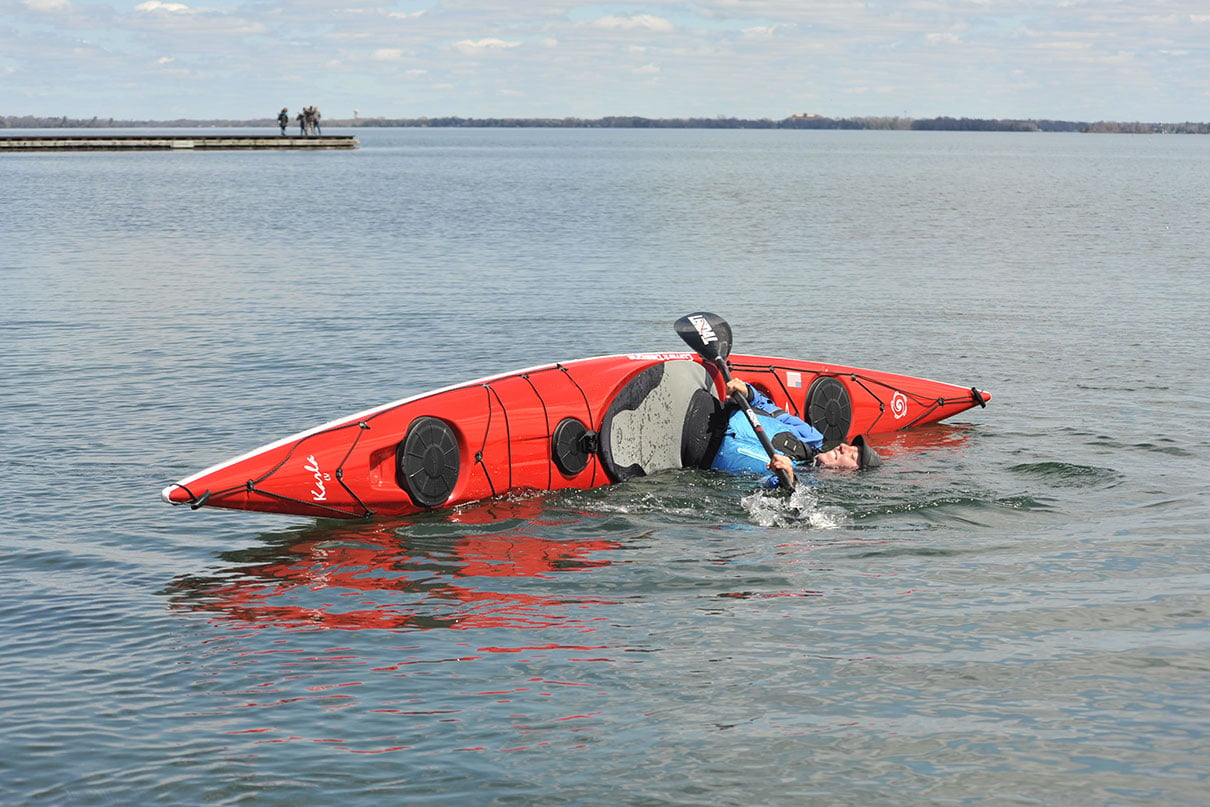
woman smiles while performing a roll in the Current Designs Karla touring kayak
Current Designs Karla. | Photo: Owen Marshall
Current Designs Karla Specs
Length: 15’3”
Width: 21”
Weight: 52 lbs
MSRP: $3,500+ USD

Buy from:

CURRENT DESIGNS

From our review:

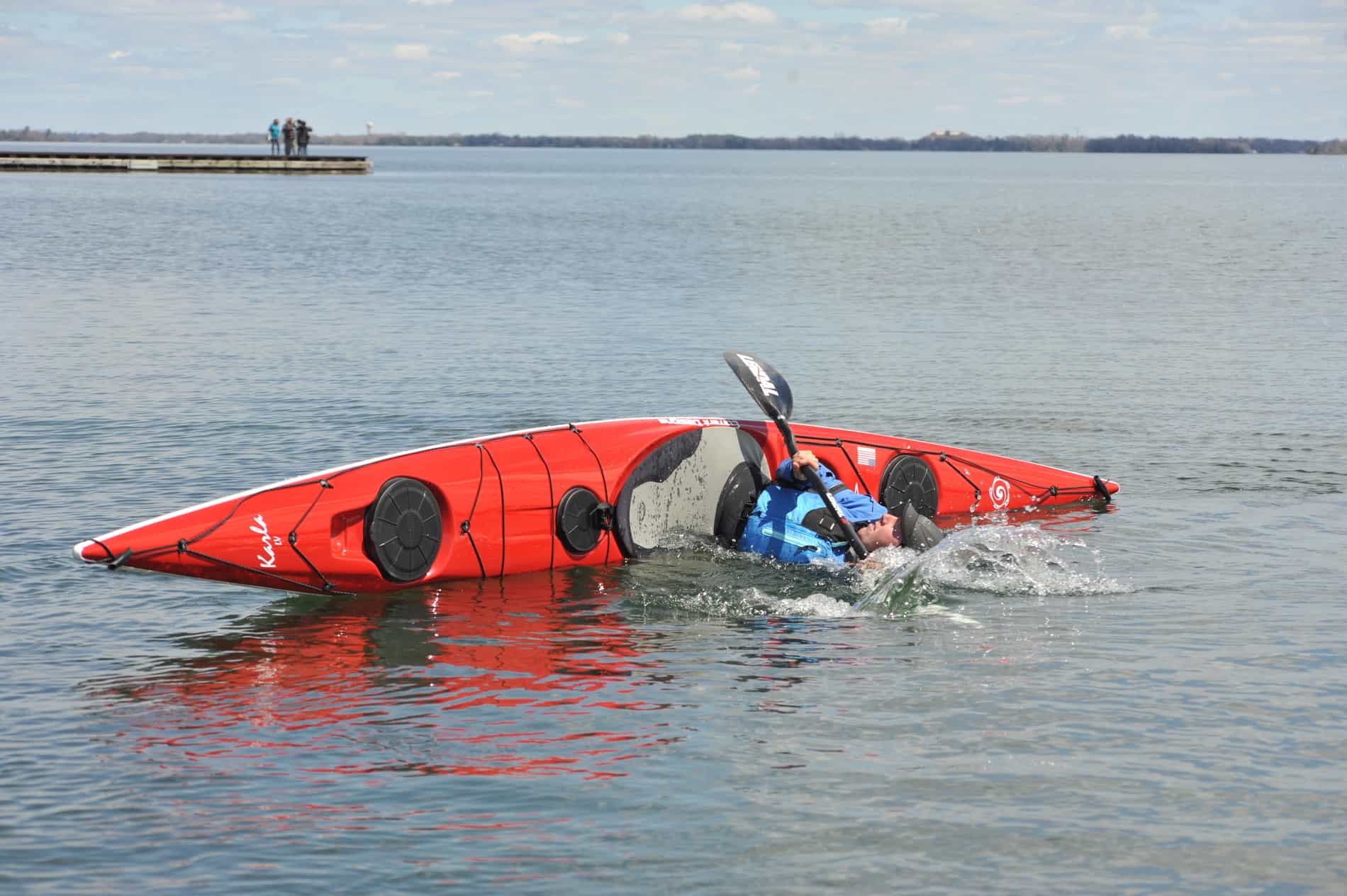
The Karla is one of our top picks for the best touring kayak. It amps up the Danish series, with an even more aggressive rocker profile than the Sisu, as well as a slightly shorter and narrower hull. Kromann-Andersen also added volume in the bow, so his newest creation surfs like a dream and displays nimble prowess in the heaviest waters.

Topside, the Karla sports the same four-hatch configuration and sweeping deck contours as her siblings. This bow-to-stern shaping is not only stylish, it increases stiffness throughout, provides clearance for paddle strokes, and creates space for a positive fit in the knee area—all while keeping overall deck height low…” [ Read full review ]

Current Designs Solstice GT Titan
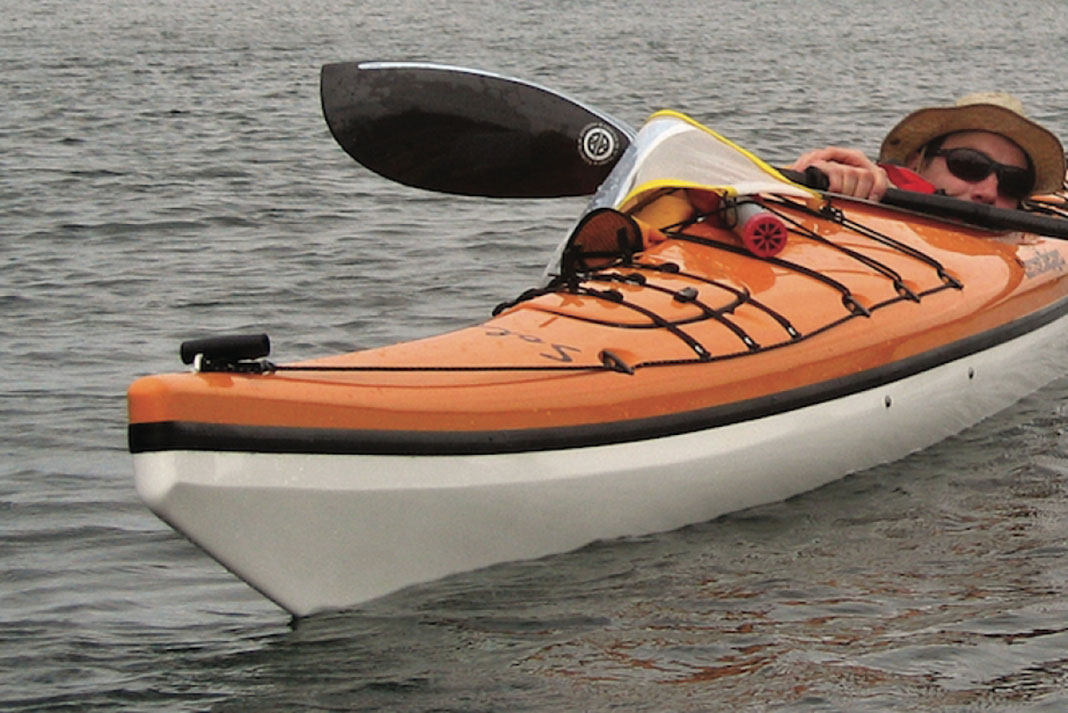
Man fits almost entirely inside the Solstice GT Titan kayak by Current Designs
The Solstice GT Titan will fit big and tall paddlers. | Photo: Victoria Bowman
Current Designs Solstice GT Titan Specs
Length: 17’7”
Width: 24.25”
Weight: 51+ lbs
Capacity: 475 lbs
MSRP: $4,345 USD

Buy from:

CURRENT DESIGNS

From our review:

For big and tall paddlers. “The Titan is essentially just a double high-volume cut of a Solstice GT hull—same length and width with an extra inch and a half of depth to give it 30 percent more volume. The Titan retains the performance characteristics that have made the Solstice GT one of the best-selling boats of all time—stability, speed, reasonable manoeuvrability. The noticeable effect is high windage, but this is a small concern for the very large paddlers and loads this boat is meant for.” [ Read full review ]


Current Designs Equinox GTS
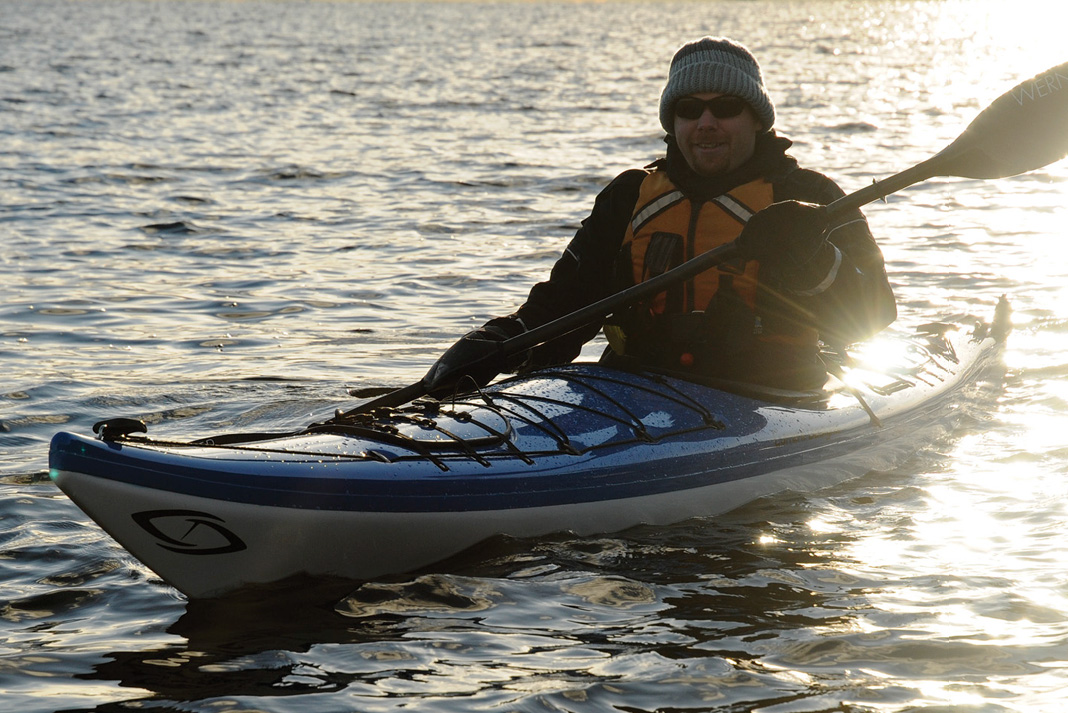
A man paddles a kayak
Current Designs Equinox GT | Photo: Virginia Marshall
Current Designs Equinox GTS Specs
Length: 16’
Width: 24”
Weight: 45+ lbs
Capacity: 325 lbs
MSRP: $4,345 USD

Buy from:

CURRENT DESIGNS

From our review:

“At nearly two feet shorter than the Solstice, the 16-foot Equinox GT has the same roomy 24-inch beam (a lower volume, 22-inch-wide GTS version offers a sportier fit), shallow-V hull and soft chines for rock-solid initial stability and smooth edging.

In a family hailed for superb acceleration and glide, the Equinox’s shorter waterline actually makes for even greater efficiency at a comfortably sustained touring pace of three to four knots. Tracking with or without the rudder is excellent, adding to the effortless feel of open-water cruising….” [ Read full review ]


Current Designs Sisu
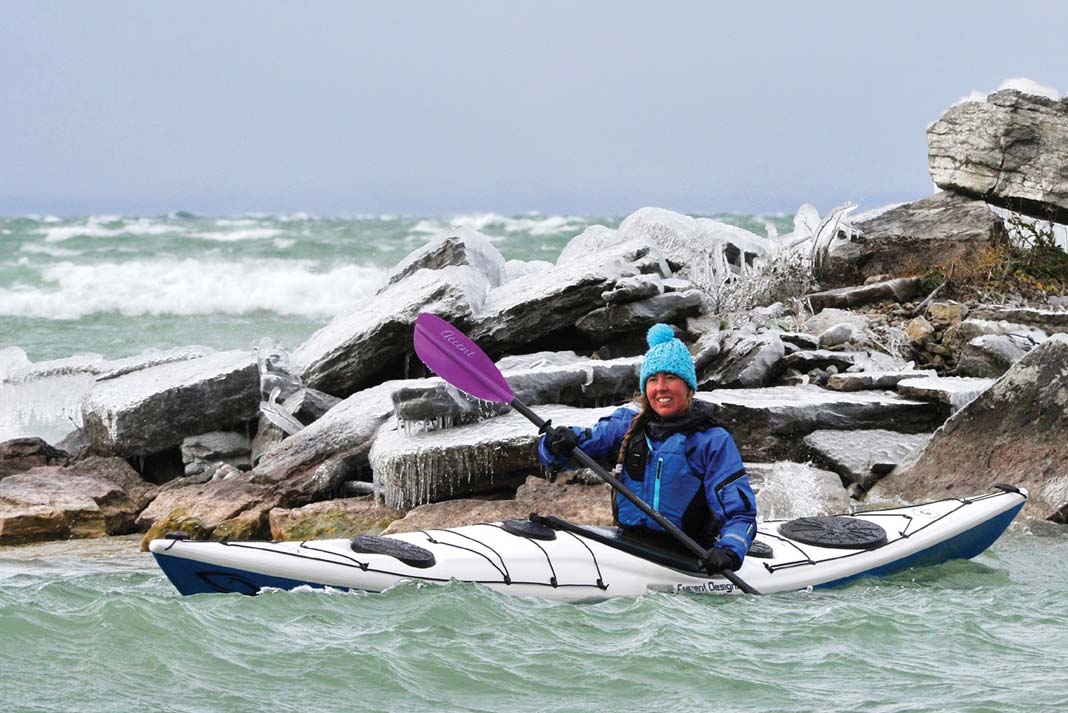
User-friendly, even when the conditions aren’t. | Photo: Vince Paquot
Current Designs Sisu Specs
Length: 16’
Width: 22.3”
Weight: 52 lbs
Capacity: 400 lbs
MSRP: $3,750+ USD

Buy from:

CURRENT DESIGNS

From our review:

“At 16 feet, the Sisu is a foot shorter and slightly wider than the Prana. It also has even more rocker and the hull’s flat mid-section extends further in front of the cockpit, transitioning into a buoyant, flared bow. On a wave, this means the nose doesn’t dive and the boat stays loose and maneuverable while surfing. The Sisu’s hard chines are most pronounced at mid-ship, where the boxy profile makes for superb secondary stability when edging and carving waves.

Seeking a suitably dynamic environment to test our flawless, frost-white-and-royal-blue Sisu, I wait for a late fall gale to sweep across my local waters. Thirty-five-knot gusts out of the northwest plunge the wind chill well below freezing and send noisy breakers charging onto the rocky shore. Taking shelter behind the breakwall of a neighboring estate might feel a little like trespassing, but it offers a welcome rest between wild rides…” [ Read full review ]


Shopping for a used Current Designs kayak?

Current Designs’ timeless designs and robust construction make shopping for a used Current Designs kayak a great option. But with outdoor recreation booming, and delays in supply chains impacting kayak availability, where can you find a used Current Designs kayak? Or any kayak, for that matter?

It may take a bit of patience and perseverance to find the right one, but through online classifieds like Kijiji or Craigslist, Current Designs kayaks can be found. Sea kayaks are a niche item, and looking on special-interest pages or Facebook groups, such as a regional paddling club, may quicken the search. These dedicated groups are frequented by avid paddlers, so the kayaks will likely be in better condition.

When looking for a Current Designs kayak, Kijiji searches will be most effective if you try various terms. Beyond the model you are looking for, try more generic ones like “sea kayak” or “Current Designs touring kayak”. Search in all categories, rather than specifically recreation, as sometimes kayaks are listed under “boats”.

Searching for retired demos or rentals is another way to get your hands on a used Current Designs kayak. If an outfitter near you rents Current Designs kayaks, chances are they will be replenishing their fleet as the kayaks get older—ask if they are planning to do so at the end of the season. Renting a boat is also a great way to test how it fits and performs.

With such a long history in the sea kayak world, many Current Designs models are no longer in production. If it is an older kayak or the decals have been removed, the owner may not know the model name. It may take a bit of Internet sleuthing to identify and get more information about the boat.

Happily, the company’s website contains archived pages with descriptions of every Current Designs kayak ever made. Contacting Current Designs with the registration number on the inside of the hull will also provide a definitive I.D. and age of the kayak.

Another benefit of buying an established brand like Current Designs is the ability to source replacement parts. If you find a used Current Designs kayak that needs replacement parts, contact the company. They may have the part in stock or recommend compatible parts to use in the damaged ones’ place.

There’s no real downside to buying an older kayak that has been well cared for. I’ve seen 20-year-old Current Designs kayaks that look brand new because they’ve been stored carefully and never dragged up a beach. Fiberglass boats seem to better stand the test of time, but plastic kayaks that are stored indoors can be an equally good buy.

Proper storage is crucial; UV rays cause devastating damage to kayaks. Garage or indoor storage is best, ideally climate-controlled to negate seasonal temperature fluctuations and prevent moisture. When looking at a used kayak, check inside the hatches and cockpit where moisture may have collected. A well-stored kayak will not have any mildew or dampness inside the hatches. This may not be a dealbreaker if you are considering buying a used kayak, but be prepared to use some elbow grease cleaning it.

When looking at a used plastic kayak, also check the bottom (hull) of the kayak for “oil-canning”—wavy dents that indicate a sun-damaged kayak; these deformities reduce the kayak’s paddling efficiency and performance.

Establishing a fair price for a used kayak is tricky. If stored correctly and well-cared for, a kayak will hold much of its value (this is especially true of hard-to-find, discontinued models). With the pandemic paddlesports boom putting used kayaks in such short supply, quality used kayaks are a rare find.

If you find a perfect fit, don’t hesitate or haggle hard to save a few bucks. This is a long-term investment, and the savings of buying used are likely already significant.

For more tips on what to look for when selecting a used kayak, read our article How To Buy A Used Kayak.

Current Designs kayaks buying advice

Current Designs kayaks meet a range of needs for paddlers of all sizes. Kayaks are a very specialized craft, with deliberate design tweaks for different intended uses. A kayak designed for multi-day camping trips on open water will have different features and performance attributes than a recreational kayak intended for beginner paddlers and short tours on sheltered waters.

Understanding what kind of kayaking you want to do, and where you want to do it, will help you choose the best kayak for your paddling aspirations.

The Current Designs lineup is divided into five categories: Transitional, North American-style touring and Danish-style touring.

Kayak styles

Transitional

Transitional kayaks in Current Designs’ lineup bridge the gap between recreational and touring kayaks. These boats fit in the popular “day touring” category, borrowing elements from dedicated touring kayaks, packaged in the size of recreational kayaks. The flagship Vision series is available in five different sizes and a tandem model to suit paddlers of every size.

Current Designs transitional kayaks have the premium outfitting you would expect on a sea kayak—like decklines, bungees for storage, optional skeg or rudder, and watertight hatches and bulkheads—but they are much shorter. Sized from 12 to 15 feet, they favor stability on calm waters and easy turning over speed. The cockpits are smaller than the Recreational series, adding thigh braces for more efficient paddling and control. Transitional kayaks are best suited for day touring and have storage capacity for shorter overnight trips.

North American-style touring

North American-style touring kayaks are direct descendants of the first boats that Current Designs made. Two of those early designs, the Solstice and the Equinox remain popular today. Other models include the Squall (a plastic version of the Equinox) and two tandems: the Unity and the Libra XT. These kayaks are designed for extended trips in coastal waters; they are high-capacity and comfortable for long days in the seat. North American-style kayaks are more forgiving than both the British and Danish styles.

New paddlers will find these kayaks easier to become accustomed to. They are more efficient, faster and have better tracking (making them easier to paddle straight) than Recreational or Transitional models. North American-style kayaks have foot controlled rudders for added maneuverability and tracking.

Danish-style touring

The newest category to emerge from Current Designs, Danish-style touring kayaks are the brainchild of esteemed Danish kayak designer, Jesper Kromann-Andersen. These boats have far more rocker (the amount of upsweep from the center of the kayak to its ends) than all of the other kayaks in the Current Designs fleet, making them supremely maneuverable and rough-water capable in the hands of more experienced paddlers.

Under other brands, these may be categorized as “Ocean Play” kayaks, great for surfing, rolling and rough water. The 15- to 17-foot length and efficient hull shapes mean Danish-style kayaks are also well-suited to day or multi-day touring. Snug-fitting cockpits and lively handling make these kayaks best suited to intermediate and advanced paddlers.

Fiberglass or Aramid construction keeps these kayaks lightweight, and priced at the high end of Current Designs’ lineup. The Karla, Prana and Sisu fall within the Danish-style touring category, along with each kayak’s low-volume (LV) editions.

Material

After settling on a style and model of kayak, what material should you go for? Sometimes the choice is made for you, and the kayak is only available in a select build. Other times, you’ll have to weigh the options. As with any kayak, the lighter the layup, the higher the price.

Fiberglass

Fiberglass kayaks are much stiffer than plastic boats. This rigidity makes the kayak faster and more responsive. Fiberglass kayaks cannot handle as much abuse as a rotomolded plastic kayak, but they are far from fragile, especially Current Designs’ “heavy water” reinforced layup.

Repairs are also straightforward; if you’re not confident tackling a repair yourself, it’s relatively easy to find a professional who can make the fix. Finally, fiberglass is more expensive, but the boats are lighter than plastic ones.

Aramid composites

Aramid composites are the “ultralights” of the kayak world. These boats land at a higher price point than fiberglass, but you are paying for significantly less weight. These boats are ideal for someone who wants a lightweight kayak that is easier to load on and off a vehicle or carry to the launch.

If you are hard on your equipment, more delicate Aramid construction may not be the best choice.

Finally, remember that online research will only get you so far. If you can, always test paddle before buying any boat. Still wondering if Current Designs kayaks are right for you? Here are answers to some of the most common online questions about Current Designs kayaks.

  • Where are Current Designs kayaks made?

    Current Designs kayaks are made in the USA by Sanborn Canoe.

  • Current Designs kayak prices

    Find manufacturer’s suggested retail prices (MSRP) of Current Designs kayaks on their website. Shipping, optional outfitting and construction layup will affect the costs of the kayaks, and it is best to visit your local paddle shop to get the most up-to-date prices.

    For recreational kayaks, expect to spend around $1,000 for a plastic kayak or $2,000 for an ultralight rec kayak; transitional kayaks range from $1,350 to more than $3,000; and touring kayaks cost upwards of and $4,000 (all prices USD).

Compare Current Designs kayaks

  • Current Designs vs Wilderness Systems

    Wilderness Systems is another widely-known North American kayak company. They now exclusively make polyethylene boats, although some discontinued fiberglass touring kayaks can be found used. Wilderness Systems makes recreational, day touring, touring and fishing kayaks, including sit-on-top models equipped with pedal drives. Wilderness Systems’ flagship touring kayak, the Tempest, is a British-style kayak, comparable to the Current Designs Sirocco.

    Current Designs focuses on sit-inside touring kayaks. Even their recreational models have many elements of a touring boat, like two bulkheads and a skeg or rudder. Current Designs also offers more high-end material options, including fiberglass and Aramid composites. Choose Current Designs for the greatest selection of touring designs and materials; if you are looking for a beginner-friendly sit-on-top or fishing-focused design, Wilderness Systems is the obvious choice.

  • Current Designs vs Eddyline

    Based in Washington state, Eddyline specializes in recreational, fishing and day touring kayaks made from thermoformed plastic—a material that has the durability of traditional rotomolded plastic without the heavy weight. Thermoform kayaks are not as light as Current Designs’ Aramid blends, but are still easy to handle. Current Designs offers more touring designs in the 15- to 17-foot range, aimed at paddlers of all sizes and experience levels.

    Current Designs’ selection of rotomolded plastic and composite kayaks make for a more comprehensive price range, with some boats more expensive than Eddyline kayaks and some cheaper. If you’re seeking a good variety of lightweight sit-on-top and sit-inside recreational kayaks, or a dedicated fishing kayak, look to Eddyline. If you want a wider selection of full-size touring kayaks, choose Current Designs.

  • Impex vs Current Designs

    Now produced by Canadian kayak and canoe manufacturer Abitibi & Co., Impex sea kayaks are high-end, high-performance composite boats. The Impex Force series is known for speedy, rough-water capable hulls. All Impex kayaks are constructed using Kevlar fusion materials, compared to Current Designs’ range of materials.

    Current Designs offers more options for beginner and casual paddlers with their recreational and transitional (day touring) models, as well as options for rudder or skeg steering systems. Impex sea kayaks are more suitable for intermediate and advanced paddlers, and exclusively use skegs.

Current Designs kayak reviews

Paddling Magazine is your best online resource for Current Designs kayak reviews. Reading reviews of Current Designs kayaks helps to understand where these boats excel. See what someone else loved about the kayak, and let it guide your decision. When you find one that matches your needs perfectly, remember, it’s always best to “try before you buy.”

Feature photo: Courtesy Current Designs
The Joy Of Being Uncomfortable

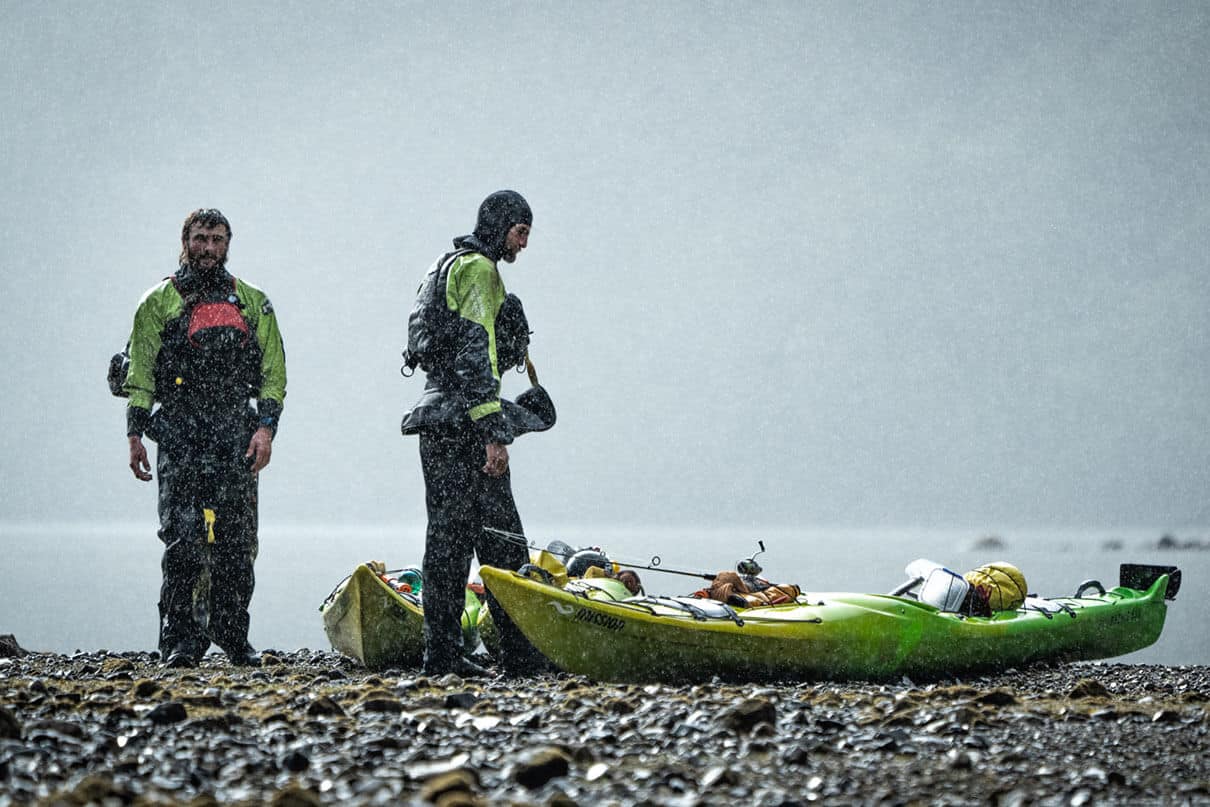
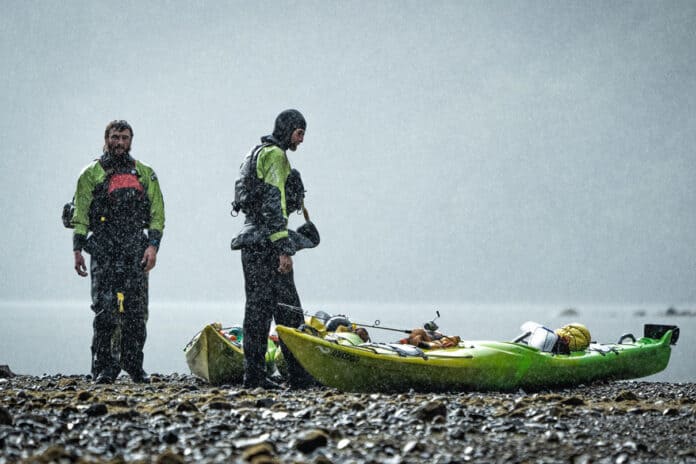
two men dressed in drysuits stand beside packed touring kayaks on a rocky shore with misty water behind them
Working up a renewed appreciation for dry layers. | Feature photo: Dan Sutherland

I wake up and go straight out for a cold-water swim—the best way to start the day on a trip. It’s a crisp morning with late-August chill and mist rising. Still toasty from the sleeping bag, I plunge before my body clues into the temperature. Jump, breathe, let the body adjust.

Then, blood pumping, adrenaline coursing, I’m temporarily immune to cold. I can climb out and air-dry in the morning breeze, perfectly comfortable, while my family looks on in their puffy jackets, shaking their wool-swaddled heads.

I take in the view of the sky, the morning sun on the white pines, the early rays slicing through the mist, feeling nothing but alive. Later, bundled in warm layers, sitting in my folding chair, cup of coffee in hand, freshly split cedar in a pile, fire crackling cheerily, I couldn’t be happier.

The joy of being uncomfortable

Early on a trip, all the bending, squatting, kneeling, heavy lifting and torquing of the body, hunkering against the rain and wind are a shock to the system. Some people never get past it. But what sets wilderness tripping apart from all-inclusive vacations is the willingness to embrace discomfort as part of the deal.

Paddlers know the sacrifices are worth it. We understand the rewards. We get stronger. We adapt. And we have discovered the secret that against this backdrop of slight inconvenience and discomfort, the mind and body are recalibrated so that the simplest pleasures—being warm, sitting down—are more intense than anything you can experience at a poolside retreat with an all-you-can-drink bar. Touring isn’t masochism—seeking discomfort or suffering for its own sake—so much as a kind of refined hedonism, the path to true comfort and pleasure.

two men dressed in drysuits stand beside packed touring kayaks on a rocky shore with misty water behind them
Working up a renewed appreciation for dry layers. | Feature photo: Dan Sutherland

Modern psychology has explained our problem with taking comfort for granted in our everyday lives. In his book The Comfort Crisis, journalist Michael Easter cites a researcher who proved the human brain is wired to find something wrong with every situation. When our big problems are solved, we experience “problem creep” whereby our minds search for something new to fix.

Easter expands this notion to “comfort creep,” whereby “when a new comfort is introduced, we adapt to it and our old comforts become unacceptable. Today’s comfort is tomorrow’s discomfort.” It’s a cycle of dissatisfaction.

I saw a great example of comfort creep recently in a fancy house where the owner showed me a dazzling array of water pipes leading in and out of the furnace room. The purpose was to infinitely circulate heated water in a closed loop so you could get hot water instantly at every tap. I was stunned. How did waiting a few seconds for hot water become so unbearable that someone would re-plumb their entire house instead of appreciating the miracle of hot running water at all?

We’ve engineered comfort into every corner of our lives—heated seats, instant meals, climate control—but we’re still unsatisfied. Instead of embracing simple pleasures, we upgrade, optimize, and consume more, never realizing that the real fix isn’t more—it’s less.

Paddling trips keep comfort creep in check by resetting the goalposts. I think of the Tolstoy character Pierre Bezukhov in War and Peace. Imprisoned in a shed, then forced to march in bare feet, Pierre realizes that his sore, raw feet bother him no more than they did wearing tight dancing shoes in his old life as an aristocrat.

“He had learned that there is a limit to suffering and limit to freedom, and that these limits are not far away; that the person in a bed of roses with one crumpled petal suffered as keenly as he suffered now.”

Not unlike one living in an overly large house with a long hot water delay.

“The roots of pleasure are not to be found in comfort, but in discomfort, because pleasure was a relief from discomfort.”

My kayaking trips are no prison camp, but they do strip life down to essentials in a way that heightens simple pleasures. At home we have the comfort of room temperature, the very concept of which is a recent social construct that, it turns out, may be bad for our health. In a chapter on heating and air conditioning in The Day the World Stops Shopping, writer J.B. MacKinnon argues that living in a constantly “thermoneutral” condition may not only cause us extreme “thermal boredom” but be partly to blame for our society’s epidemic of metabolic syndrome. For our health, he concludes, “We should put up with more heat and cold in our lives, at least enough to make our bodies have to work to keep us warm or cool.”

Enduring some discomfort, thermal or otherwise, may be good for our bodies and souls. But the main benefit is it’s the best way to heighten pleasure. MacKinnon summarizes the research of a French-Canadian scientist named Michel Cabanac:

“Cabanac concluded the roots of pleasure are not to be found in comfort, but in discomfort, because pleasure was a relief from discomfort. He called the effect alliesthesia, which translates roughly from Latin as ‘change sensation.’ Build up the fire in a chilly house in the morning, and the relief from the cold feels especially good. Beer never tastes better than when it’s a respite from a hot and humid day.”

I can’t think of a better explanation for why I find the mild suffering of paddling trips so intensely pleasurable. Pleasure is a signal that rises more clearly above the background noise when the ambient conditions are slightly miserable. Slipping into the wilderness, you dial down comfort like the squelch knob on a radio until the signal comes in clearly—now this feels good! Small comforts salvaged in the face of harsh conditions become a source of wonder and gratitude—a dry tent and a warm sleeping bag on a cold, rainy night. This is not really discomfort—its ultimate comfort.

Call it hedonism, but in a world of rampant consumption, living pleasurably within self-imposed limits offers an antidote to the destructive cult of limitless growth—one that’s kinder to both our pocketbooks and the planet. It also hints at the possibility of a friendlier world with plenty to go around.

I recall the simple joy of air drying on a bare rock after a chilly morning swim, and I feel hope.

Tim Shuff lives in a comfortable house near the shores of Georgian Bay, where he owns a hot tub, but never takes it for granted. He would turn down the thermostat if his wife would let him.

Cover of Issue 73 of Paddling MagazineThis article was published in Issue 73 of Paddling Magazine. Subscribe to Paddling Magazine’s print and digital editions, or browse the archives.
Working up a renewed appreciation for dry layers. | Feature photo: Dan Sutherland


Jackson Kayak Launches Antix 3.0 (Video)

On September 19, 2025 Jackson Kayak announced the shipping of the Antix 3.0, their latest whitewater kayak. The Antix 3.0 features upgrades designed by a collection of the brand’s paddlers including Dane Jackson, Stephen Wright, Clay Wright, Nick Troutman and Alec Voorhees with Tad Dennis leading CAD work.

The new Antix 3.0 is designed with play in mind

The Antix 3.0 includes increased bow surface area with additional volume and rocker with the goal of providing a higher and drier downriver ride. With a wider hull design, the Antix 3.0 is meant to retain speed over river features, while the smaller stern is designed for squirting and splatting. For improved carving and surf performance, the Antix 3.0 inherits the double rail of Jackson Kayaks’ Rockstar V.

“We brought a modern feel with a more confidence-inspiring bow, increased speed, and a higher floating design while maintaining the nimbleness and playfulness I loved with the Antix 2,” shared Dane Jackson. “But my favorite addition is our Rockstar double rail — turning it into a loose, epic surfing machine no matter what size wave you’re on!”

Jackson Kayak is based in Sparta, Tennessee and was founded in 2003 by Tony Lunt, Eric Jackson and David Knight. Today, Jackson Kayak is still in the Jackson family, owned by Eric’s daughter Emily, son Dane and Tony Lunt. As of May 2024, Jackson Kayak acquired Werner Paddles and, more recently Eddyline Kayaks in February 2025.

“With the Antix 3.0 we set out to make a kayak that feels even more playful and intuitive,” shared Tad Dennis. “It’s looser on a wave, easier to stern-squirt, and handles better downriver, all while keeping the confidence and safety paddlers expect.”

The Antix 3.0 is available in lime green, slushie, venom, and LE raven.

The new Jackson Kayaks Antix 3.0. Feature Image: Jackson Kayaks

90-Year-Old Paddling Legend Goes For New Appalachian Trail Record (Video)

Dale “Greybeard” Sanders is something of a legend, wracking up age records for long-distance paddles and hikes throughout North America. At age 80, Sanders became the oldest person to canoe the Mississippi River from source to sea. In 2022 at age 87, Sanders did it again. Now, Sanders has set out to reclaim his Appalachian Trail age record in 2025 at age 90.

Age record-smasher Greybeard goes for Appalachian Trail record at age 90

Sanders got his start as a lifeguard and swim instructor in his younger years and became a canoe instructor in 1954.

In 2015 at age 80, Sanders set off along with a film crew and paddled the Mississippi River from its headwaters at Lake Itasca to the Gulf of Mexico. Averaging 30 miles a day, Sanders completed the journey in 80 days. At age 81, Sanders completed the MR340, a 340 mile human-powered endurance boat race across the state of Missouri.

In 2017 at age 82, Sanders became the oldest person to hike all 2,100 miles of the Appalachian Trail in one calendar year. At age 83 he hiked the 1,300 mile Florida Trail and at age 84 he tackled the Pinhole Trail, a 350-mile long trail through Alabama and Georgia. Heading from the southeast to southwest, in 2020 Sanders became the oldest person at age 85 to hike Rim to Rim to Rim in the Grand Canyon.

By 2022, Sanders set out to reclaim his Mississippi River source to sea age record in a journey documented in film GREYBEARD: The Man, The Myth, The Missississippi. At 89, Sanders became the oldest person to compete in a national-level spearfishing competition and one a third place team award. Now at age 90, after his Appalachian Trail age record was “borrowed” by Nimblewill Nomad in 2021, Sanders has set out to reclaim that record as well.

“Greybeard” leaves symbolic final mile unhiked in Harpers Ferry

Sanders began his mission to reclaim the Appalachian Trail age trail record on September 6, 2025 headed southbound from Harper’s Ferry, West Virginia toward Springer Mountain, Georgia. As of the morning of September 24, Sanders had reached mile marker 834.8 | 1362.7, having hiked 15.5 miles the previous day. Sanders aims to complete the southern half of the trail before December 10, then take a break for the winter before flipping northbound in the spring and hiking from Harpers Ferry to Mount Katahdin.

Sanders has left a single mile southbound through Harpers Ferry unhiked, and will return for that final mile after summiting Mount Katahdin. He will conclude the hike and that symbolic final mile in Harpers Ferry.

Follow Sanders’ adventure on Facebook or through his website.

Feature Image: Dale “Greybeard” Sanders. Adventureitus Productions | YouTube

The Inflatable Kayak With A Feature That Makes Flatwater A Breeze

There are certain things that are great about an inflatable kayak. They pack down relatively small, don’t weigh much, and are super stable. But there is also the not-so-great; notably, that they are sluggish and slap at the water rather than cut through it. These attributes, good and bad, are exactly the reason I asked Sea Eagle if I could test their new 385ft FastTrack, a 13-foot kayak that can be set up as a solo or two-person inflatable and has a unique V-shaped hull.

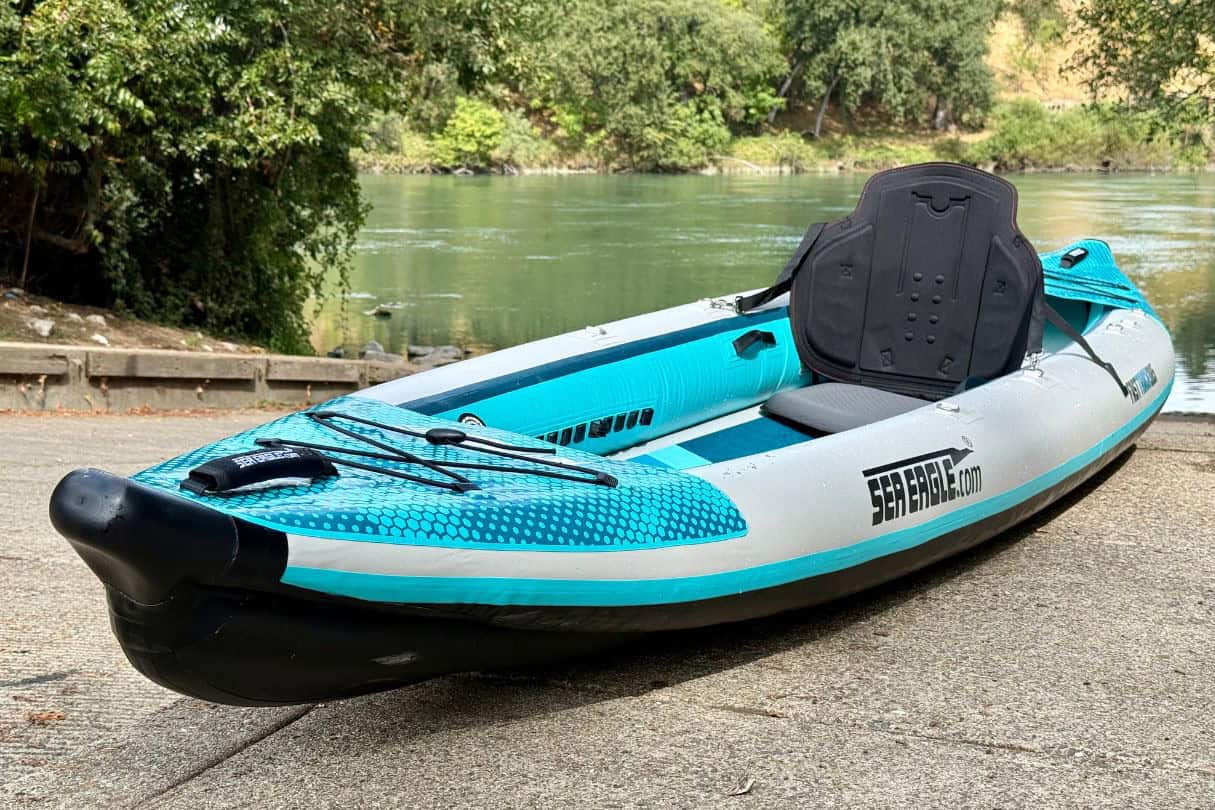
Sea Eagle FastTrack inflatable kayak sitting on boat ramp.
Pronounced “V” can be seen at the bow of the Sea Eagle FastTrack 385ft. | Image: Dan Arbuckle

Review of the Sea Eagle 385ft FastTrack inflatable kayak

Sea Eagle 385ft FastTrack
Specs
Length: 12’ 8”
Width: 36”
Weight: 31 lbs
Maximum Recommended Capacity: 635 lbs
MSRP: $1,199
seaeagle.com

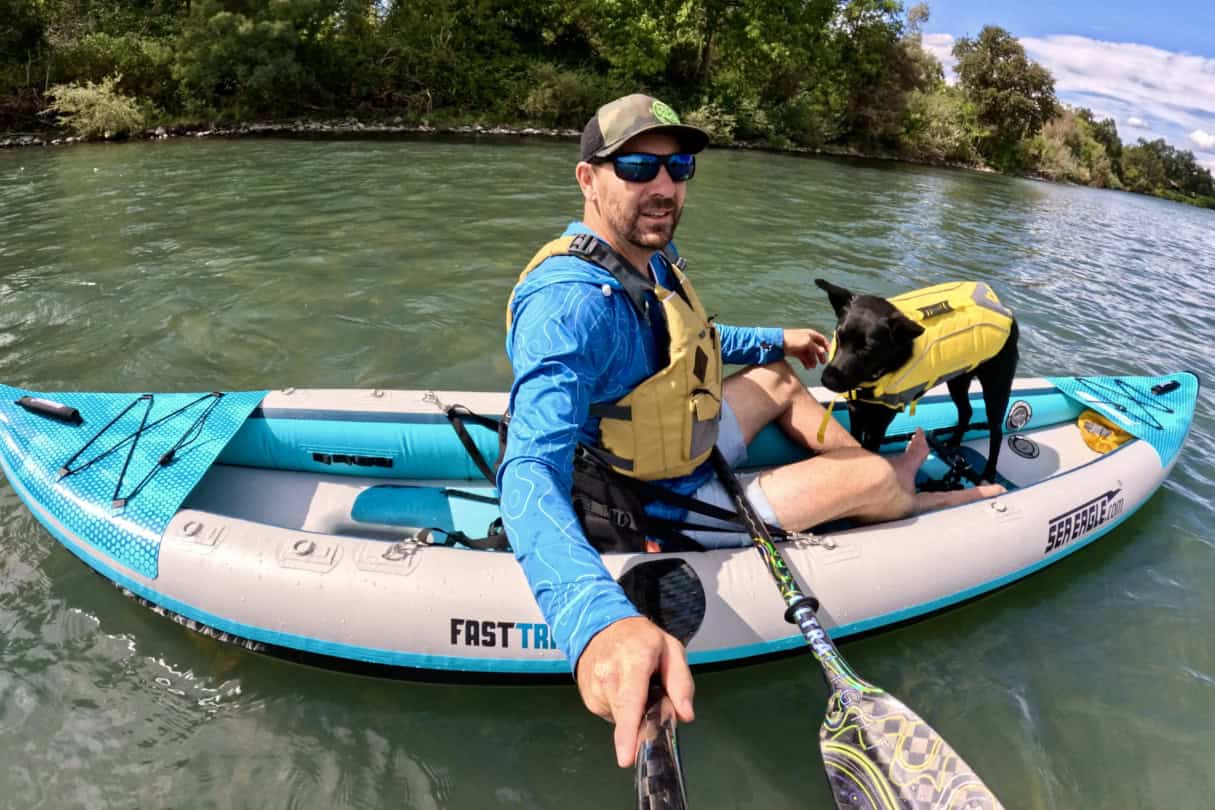
To see how the FastTrack stacks up against other inflatables, I decided on a local mission, a summer day trip with my dog Lego down the Sacramento River. This stretch of the Sacramento is a perfect testing ground with both flatwater and a few rapids. It’s a section I’ve paddled many times in my old inflatable, the Aquaglide Chelan, so I have a solid baseline for comparison.

Benefits of the V-hull design

There are a number of things Sea Eagle has included in this kayak that are worth talking about, but we need to start with what makes it truly unique, which is underneath it. The FastTrack 385ft has something I’ve never seen on an inflatable kayak, and that is a V-hull design. It is the reason I asked SeaEagle to send me this boat. A V-shaped floor gives a kayak good tracking and glide like you would find on a traditional hard-shell kayak.

Sea Eagle is able to do this on an inflatable kayak by building the 385 with an attached high-pressure floor similar to an inflatable paddelboard. The floor is a rugged 1000-denier PVC fabric, wrapped in additional fabric for more durability.

I noticed the boat is a little bit bigger and wider in the back, and narrower in the front. So not only does it have the V-hull, but it has more of a piercing bow on it. So, while it feels narrower up front, behind me, it is kind of fat—which is a good thing for capacity and stability.

We started the test paddle with a bit of flatwater and a nice breeze, so we could get a feel for how the FastTrack tracks.

I could tell right off the bat that the kayak splits the water. There’s no noise. It feels like it cuts the water as opposed to just pushing over the top of it as inflatables tend to do. That’s something I don’t generally love about inflatables, whether it be SUPs or kayaks. Anytime there’s choppy water, the boards or the boats are just slapping. Instead, the FastTrack feels like it moves through the water.

With the V-bottom, I can also lean the FastTrack from edge-to-edge. I don’t usually sense that in inflatables. Usually, they are very two-dimensional, sitting flat on the surface of the water, but this kayak actually has a little bit more of a three-dimensional feel. I especially noticed this in the moving water and small rapids as I entered and exited eddies and could tilt the boat. In flatwater, when it’s on its edge, I could sweep and spin it around really nicely. There is also a removable fin, or skeg, at the stern, and when I had the kayak flat the fin combined with the V-hull to help lock the boat on course as it cut straight through the water.

Speedy setup time and compact storage

The V-hull isn’t the only great aspect to the FastTrack however.

For one, I really like the setup time of seven minutes. I unrolled it, blew it up and it was ready to go in no time flat and that was pumping it by hand. It’s a little work pumping it by hand, especially to get the floor to reach the maximum pressure of 10 psi. I prefer the electric pumps, where you just set the psi, hook it up to the car battery, and away it goes.

The FastTrack also packs down really small. The thing is really tiny compared to a hard-shell kayak and even other inflatables, and I really like how the storage bag works with it because it folds open. This makes it easy to roll it up and cinch down, as opposed to trying to fit it into a backpack. There’s nothing worse than having, say, a tent that you can’t put back in the bag. When you have to wrestle with it to fit into a tiny kit. For the FastTrack bag, you just, open a couple of flaps, fold the boat up into it, and cinch it down.

Man and dog in kayak on river.
Dan and Lego floating the Sacramento River. | Image: Dan Arbuckle

Outfitting

On the boat there is a deck bungee and a little bit of under-deck storage at the bow. Alongside the seating area, there is webbing you could clip a carabiner to. And, there is another under-deck storage area at the stern. These all provide places you could place a dry bag or other personal and safety items.

The FastTrack comes with two extremely nice, high-back seats, with padding on the butt, and a contoured backrest that rises high. Behind the seat, there is more storage with a removable zipper compartment, which is good for things like sunblock, a towel, or other items you want access to throughout the day.

Something the FastTrack does not have are footrests. I was able to work around this with a pretty easy fix, by taking a webbing strap and running it through those webbing loops to create a sort of footplate.

Drain holes

The FastTrack also has are a couple of drain ports for emptying water out of the boat. You can open up these drains like a purge valve, and the idea is that the water should empty.

During the test, Lego and I ran a small rapid with some fun waves that splashed into the kayak, and I opened the valve to see if it would empty the water out. I think if anything it let water in. I have the same problem with my Aquaglide Chelan. They say it’s like a scupper or a self-draining valve, but I believe a boat has to ride at a certain height for the water to exit otherwise a certain amount is going to sit inside. After opening the drain valve I had to pull over to empty the FastTrack.

A stable kayak design with high capacity

The stability on the FastTrack is massive. It’s all the stability you’re going to need. It is three feet wide with the inflated outer tubes that provide much of this stability. I also mentioned the edge-to-edge feel the boat has, and the shape of the hull with these side tubes also provides secondary stability when the kayak is tilted. The secondary stability is super confidence-inspiring in these inflatables because you can just lean way over, and you’ve got essentially these pontoons that give you a lot of feedback.

When I first saw the boat I spotted a sticker stating that it has 635 pounds of capacity, which means this thing is meant to be loaded down. You could add the second seat and paddle it tandem; you could paddle it with your kid; you could load up all your camping gear and do an overnight. You get this big, stable sit-on-top type kayak, and it weighs just 31 pounds.

Who is the Sea Eagle FastTrack right for?

I think the FastTrack is right for someone who has space and transportation issues they need a solution for. For example, if you’ve got a small car without roof racks, or you’re not going to lift a kayak up on your car. Another situation may be if you’re looking for a lightweight inflatable tandem but would still like to have good performance. Or, if you know you want an inflatable and have been wishing for one more capable on flatwater, but which can still handle some whitewater, then the FastTrack may be right for you.

You can find the 385ft FastTrack available from Sea Eagle and retailers including Amazon.


Image: Dan Arbuckle

Iconic Midwest Paddling Shop Rutabaga To Be Sold, Will Remain Open

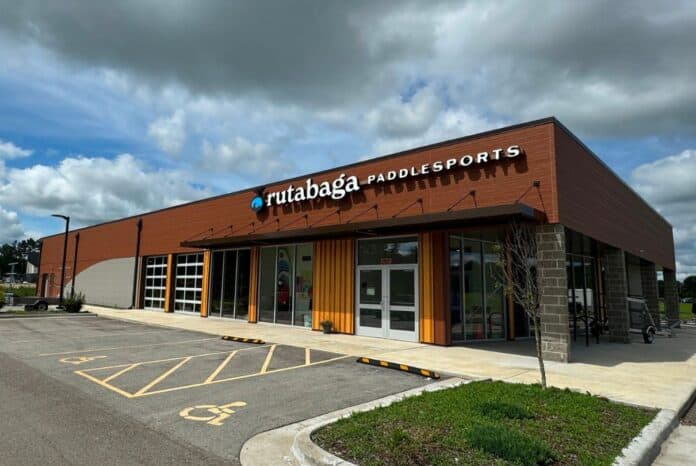
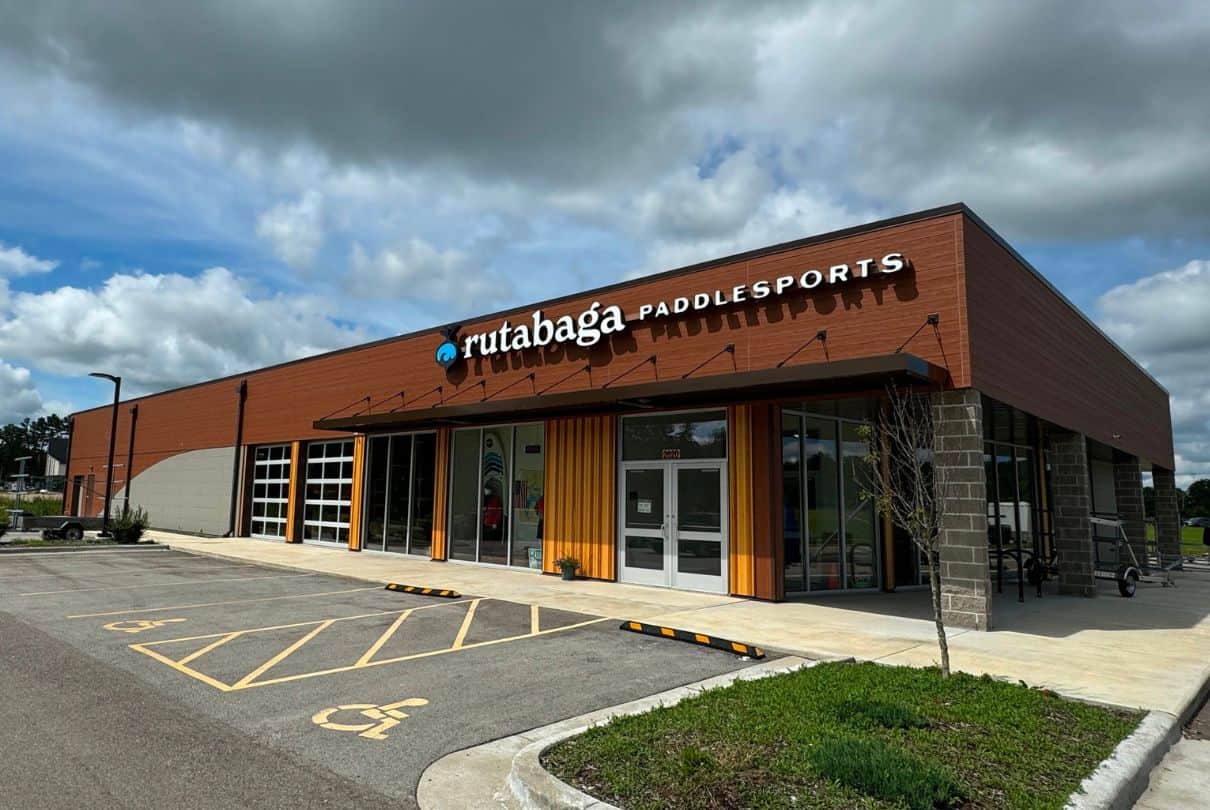
Rutabaga Paddlesports
Rutabaga Paddlesports shop to close at the end of 2025. Photo: Courtesy Darren Bush

UPDATE: After announcing the closure of Rutabaga Paddlesports, owner Darren Bush is now pursuing the sale of the business and in discussions with prospective buyers. Rutabaga Paddlesports will remain open and operations continue in the meantime. The article below was published on September 23, 2025.


Rutabaga paddlesports owner Darren Bush announced that he will close the Madison, Wisconsin, paddling shop at the end of the year to pursue a calling as a hospice chaplain. Bush will continue to own and operate Canoecopia, the largest consumer gathering in the paddlesports business.

“I believe that life teaches you lessons, and when you’ve learned what you need to learn it’s time to move on,” Bush wrote in a substack announcing the change. “I thought I’d work at Rutabaga a few years, get some management experience, then move on. Well, I didn’t stop learning things.”

Bush started selling canoes part-time in 1990 at Rutabaga, when he still had a so-called ‘real job’ as a statistician for the state of Wisconsin. He became a full-time manager in 1994, General Manager in 2000, co-owner in 2002 and sole owner (with his wife Stephanie) in 2007. A rutabaga, by the way, is a root vegetable that resembles a cross between a turnip and cabbage. If you’ve never tasted one you’re not missing much, but until you’ve felt the energy of Rutabaga’s sales floor or the exhibit hall at Canoecopia, you haven’t fully experienced the paddling lifestyle in North America, and especially the Midwest.

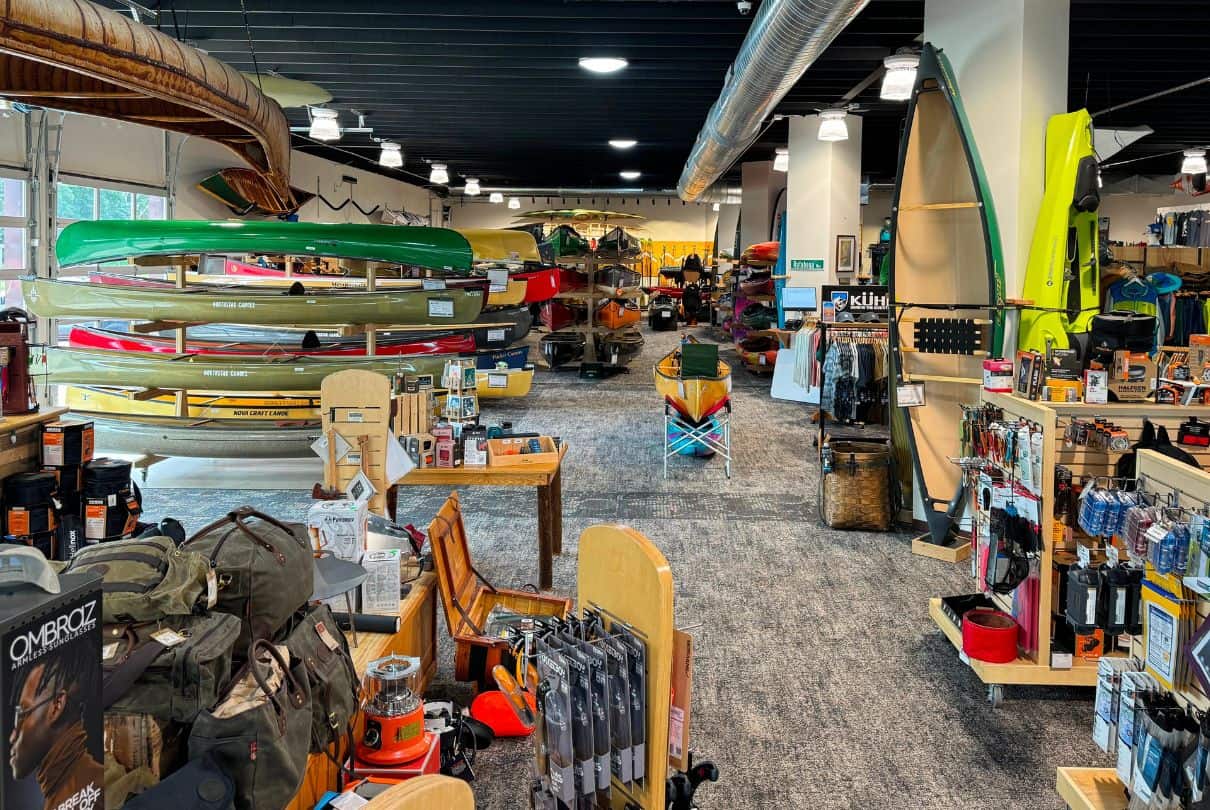
Inside Rutabaga Paddlesports
Rutabaga owner Darren Bush is closing the shop less than three years after building a new 10,000-square foot retail store. | Photo: Darren Bush / Facebook

Bush was at the center of that culture, leading with a quiet energy and a heartfelt urgency to share the joy of paddling with others. In addition to his work with Rutabaga and Canoecopia, Bush co-founded the Paddlesports Retailer show and the Big Gear Show. He also owns a thriving rental operation in Madison, which will continue.

Rutabaga Paddlesports Closing at the End of 2025

“The only thing that’s really going away is the retail part of it,” Bush said. “Everything I’m keeping is community-related, not retail-related.” He spoke with Paddling Magazine in advance of his announcement, about the importance of the paddling industry in his life, his calling to the chaplaincy, and the factors that caused him to walk away from his business less than three years after building a new 10,000-square foot retail store.

Here I should disclose that Bush is both a friend and a trusted source. In my own side-gig as editor of Paddling Business, I could always count on him to give me the ground-truth of the paddlesports industry, whether for better or worse. Our conversations often veered away from business to paddling, and what the sport has given each of us. Invariably, he would share an anecdote from the sales floor about a person he’d recently sold a canoe, car rack or paddle—interactions that usually ended with a hug and a selfie photo.

Rutabaga Paddlesports Happy Customers
Darren Bush (left) outside Rutabaga Paddlesports. | Photo: Darren Bush / Facebook

This time he also spoke about holding a person’s hand as they died—something he has done many times as a volunteer chaplain at the University of Wisconsin hospital, and as a bishop in his LDS congregation. Transitioning to chaplaincy work is something he felt called to do.

“Fifty years ago this year I was in eighth grade and the school counselor gave me an aptitude test. I filled it out, and he told me I’m supposed to be a pastor. And now 50 years later, here I am.”

Darren Bush on Choosing Chaplaincy Over Retail

Paddling Magazine: How will you manage the transition?

Darren Bush: I’m not going to close the doors and walk away tomorrow. I’m going to be open to the end of the year. The other thing to know is that Canoecopia is not going away. I can’t do that. It’s too much of a community event. It’s going to change in nature, obviously, and I’m still working through what that’s going to look like. But I can’t mothball Canoecopia, and without the shop I’ll have a lot more time to dig in and do it exactly like I want it. We’re going to keep doing rentals too. In fact we’re expanding them a little bit.

Rutabaga will be open until the end of the year and we’re going to work on getting rid of inventory. We’ll have stuff that’s left over. Some of it I’ll donate. Some of it I’ll put into a storage unit and sell on eBay or whatever.

PM: That’s going to be a lot of eBay selling.

DB: Well, I hope not. It could be that I have a George Bailey moment and all my friends come in and buy everything.

Darren Bush at opening day at Canoecopia
Darren Bush (front left) at opening day at Canoecopia. | Photo: Darren Bush / Facebook

PM: You’re keeping the rental operation and Canoecopia, so you’re not letting go of paddlesports completely.

DB: No, but everything I’m doing is community-related, not retail-related. The only thing that’s really going away in any real sense is the retail part of it.

You know, I sat on the curb today with a woman that I met last week, and she just put her arm around me and said, ‘Thank you for selling me a kayak.’ It’s all about community, and I’ve said that forever. That’s why customers hug me, because I help them be part of the community.

PM: Did you give any thought to selling the whole business to one of your staff or somebody in the industry?

DB: Yes, but as far as staff goes, they don’t have the capital. Millennials, they don’t own anything. That’s I think one of the biggest problems with transitions right now, is who do you get to buy your business unless you get a trust funder.

I wanted to leave on my terms. I’ll sell the shop or lease it. It’s the perfect place for a Harley dealership. Big roll up doors, a garage in the back. And with the solar panels it has negative power bills.

Rutabaga Paddlesports
Rutabaga Paddlesports will close at the end of 2025. | Photo: Darren Bush / Facebook

PM: When did you make the decision?

DB: It’s happened over the past two years, because you don’t just say ‘I’m going to sell my business tomorrow.’ It picked up last fall when I started getting some really intense chaplaincy work. Very, very good. Very rewarding—life-changing for both me and the clients. And then a friend said, hey, there’s a CPE [Clinical Pastoral Education] program starting in the winter. You should get in on that.

I made the final decision about eight weeks ago. I was at this cabin up north with my wife and my kids. Steph and I had talked about it, and I said, ‘Okay here’s the deal. I’m closing Rutabaga. We’re going to keep Canoecopia. My son said, ‘I’m so glad.’ And my daughter said, ‘You’re not gonna have another heart attack, Daddy.’ I said, ‘Nope, I’m not.’

PM: One heart attack is enough.

DB: The thing is, I love the work I do. I just don’t like how much of it there is.

PM: You’ve said chaplaincy is rewarding. I imagine it’s also very intense.

DB:  The work I’ve done so far has been incredibly rewarding because I’m not afraid to have real conversations with people. The conversations that I’ve had is, number one, how do you want to die? Where do you want to die? And how do you want to be remembered?

Some of the most beautiful moments in my life have been in a canoe and teaching someone how to paddle. And some of the most beautiful times in my life have been holding someone’s hand when they die.

It’s just saying, ‘I’m here. I see you. I feel you. You are loved.’ That’s it. Everything else doesn’t matter. No one should die alone if they don’t want to. It’s a deeply spiritual thing, not necessarily religious. There are so many beautiful things that happen at the end of a person’s life, and you know, there are doulas and midwives who help people come into the world. But there’s not many who help people leave. This is just a transition to my next calling.


Feature photo: Rutabaga Paddlesports will close its doors later this year. | Photo: Darren Bush / Facebook

RallyCrew Launches To Unite Whitewater Paddlers

Paddlers gather using Rally Crew app.
Paddlers gather using Rally Crew app. Photo: Courtesy Rally Crew

RallyCrew, a new free online platform, offers a unique space for the whitewater paddling community to connect, share experiences, and explore new rivers. Designed by paddlers for paddlers, RallyCrew brings together recreational boaters and paddlesport professionals, providing powerful tools to help users find paddling partners, discover events, and track their progress—all in one place.

Founder Deborah Kane, an avid whitewater kayaker, created RallyCrew after realizing how difficult it was to consistently find paddling partners and keep track of upcoming events.

“The whitewater world is passionate, but we are scattered across so many platforms,” says Deborah. “RallyCrew was born out of a desire to bring everyone together in one space—whether you are looking to find new paddling buddies, plan a trip, or improve your skills.”

RallyCrew founder Deborah Kane.
RallyCrew founder Deborah Kane. | Photo: Courtesy RallyCrew

For Paddlers: Connect, Explore, and Level Up

RallyCrew is designed to make it easier for paddlers of all levels to discover new opportunities and enhance their paddling journey:

  • Personalized Paddler Profiles – Users can build a profile that highlights their skills, experiences, and paddling preferences to connect with others in the community.
  • Event Listings – Explore a global database of paddling races, clinics, tours, and trips.
  • Trip Planning and River Logs – Plan paddling adventures, share experiences, and access valuable river insights from fellow paddlers.
  • Affinity Groups – Join communities based on shared interests, skill levels, or paddling styles to create a sense of belonging and collaboration.
  • In-App Messaging – Keep all paddling conversations and direct messages organized in one place.
  • Sophisticated Search – Easily find paddlers for local trips or connect with boaters around the world.

“RallyCrew is the community platform paddling has been missing,” says Aniol Serrasolses, professional kayaker and co-founder of Serrasolses Brothers River Co. “It brings the whole whitewater world together in one place—athletes, instructors, clubs, newcomers, everyone. I love that it’s built to support connection, skill building, and the kind of real friendships that happen on the river. This feels like the future of paddlesports. I’m really stoked to be a part of it.”

Happy woman kayaking
RallyCrew is a free global platform for whitewater paddlers to connect, plan trips, build skills, and find events. | Photo: Courtesy RallyCrew

For Paddlesport Service Providers: Reach and Grow Your Community

RallyCrew offers valuable tools for instructors, schools, guides, and other paddlesport professionals to connect with the paddling community:

  • Connect with Engaged Paddlers – Reach paddlers who are actively seeking events, lessons, and gear.
  • Event Listings – Promote courses, trips, and services to gain visibility among interested paddlers.
  • Business Profiles – Showcase offerings and provide key details about services in one easy-to-find place.
  • Insurance Access – Qualified instructors and event organizers listing on RallyCrew may be eligible for coverage tailored to paddlesport activities.

“RallyCrew is helping us reach paddlers who are looking for instruction and guiding, without getting lost in social media algorithms. It is a direct connection to the community we serve,” says Casey Bryant Jones, Paddle School Director for Ottawa Kayak School at Wilderness Tours. RallyCrew can be accessed from any browser. For more information, visit www.rallycrew.com.


About RallyCrew

RallyCrew is a free global platform for whitewater paddlers to connect, plan trips, build skills, and find events. From kayakers and rafters to packrafters and canoeists, paddlers of all crafts and abilities can find partners, join affinity groups, browse events, and showcase their paddling journey—all in one easy-to-use space. Built by paddlers who understand the challenges of staying connected and informed, RallyCrew offers a seamless alternative to scattered group chats, outdated forums, and algorithm-driven social media. Learn more at www.rallycrew.com.


How To Fillet A Fish

person fillets fish on a wooden board at a camp site
Fish today, feast tonight. | Feature photo: David Jackson

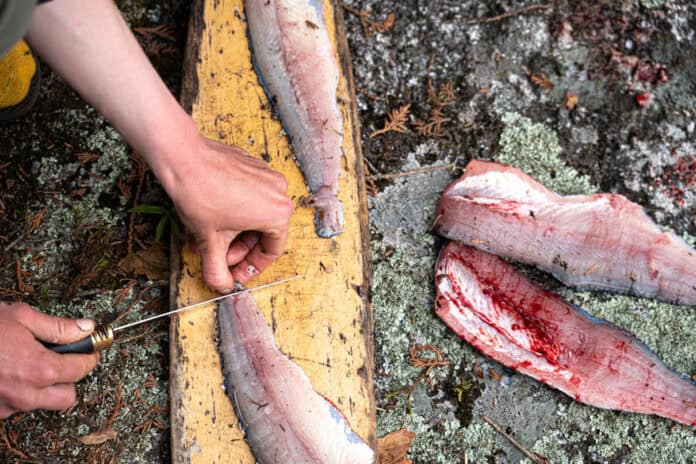
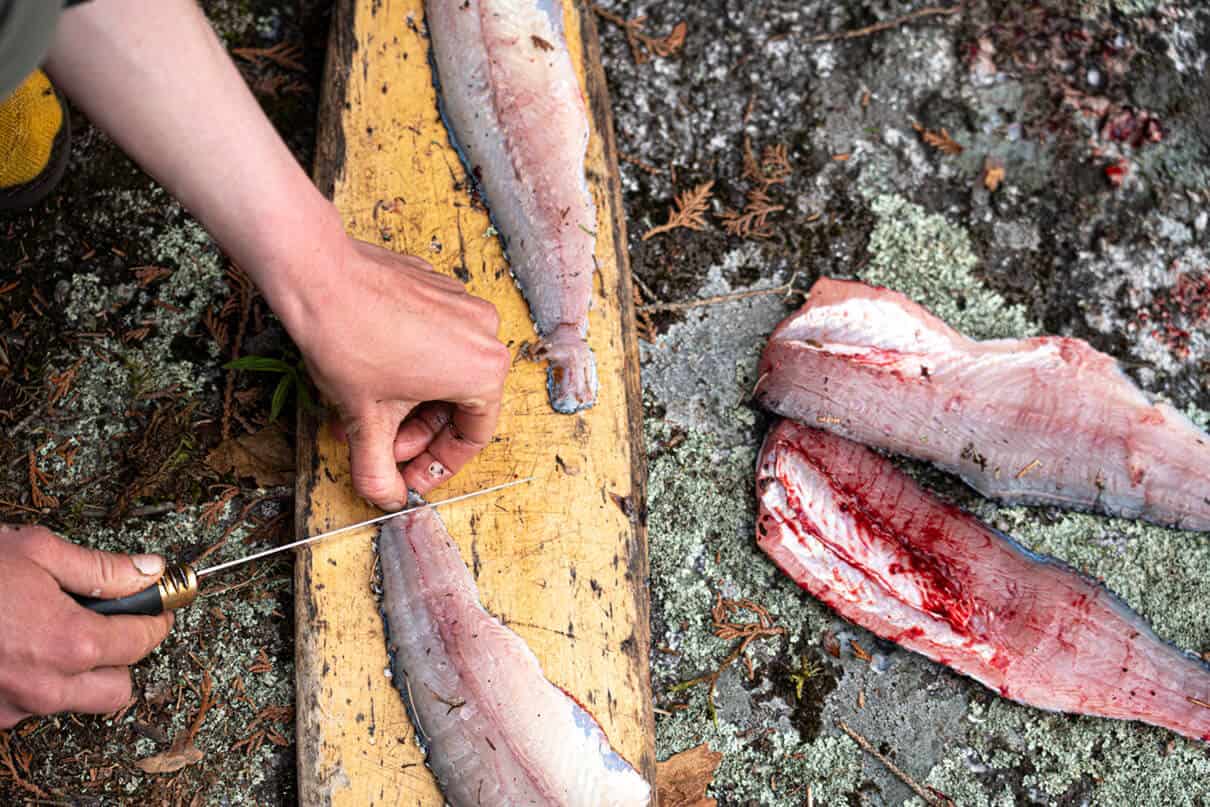
If you’re not fond of bones or skin, you’ll want to fillet your fish to prepare it for cooking. Follow these five simple steps to get a great fillet every time.

How to fillet a fish

1 Prep and cut

First, wipe the cutting surface and fish down with paper towels to lower the risk of slippage. Make sure your fillet knife is super sharp and then insert it just behind the top of the fish’s skull. You should be able to feel where the skull ends and the body starts. Cut only as deep as the ribcage.

person fillets fish on a wooden board at a camp site
Fish today, feast tonight. | Feature photo: David Jackson

2 Slice along the backbone

Slide the knife toward the tail, keeping it parallel to the midline of the body and up against the backbone. Avoid puncturing the abdominal cavity where the entrails are encased. Once the blade is past the anus, push the knife all the way through the fish’s belly. Slide the blade the rest of the way to the tail.

3 Lift and trim the fillet

Create another incision behind the gill plate toward the top of the head where the initial cut was made. Raise the flap of meat and cut along the curvature of the ribs and abdominal cavity. The meat should peel back until only the skin attaches it. At this point, you can simply cut through the skin and detach the fillet.

4 Remove the skin

Finally, separate the meat from the skin. With the scale side down, use a sawing motion as you slide the knife along the full length of the fillet where the flesh meets the skin. Depending on the type of skin, you can start at the tail and hold on to the skin with one hand as you cut away from you with the other. If the skin is too thin and breaks easily, hold the fillet down with one hand and start cutting at the thicker end of the fillet.

5 Repeat and clean up

Repeat on the other side of the fish. Wash the fillets and pat them dry. When enjoying the beauty of harvesting a meal in canoe country, remember that fish remnants attract animals. It’s best to prepare your catch away from your campsite. Bon appétit!

Cover of Issue 73 of Paddling MagazineThis article was published in Issue 73 of Paddling Magazine. Subscribe to Paddling Magazine’s print and digital editions, or browse the archives.
Fish today, feast tonight. | Feature photo: David Jackson


9 Pros On What Boaters Get Wrong About Gear

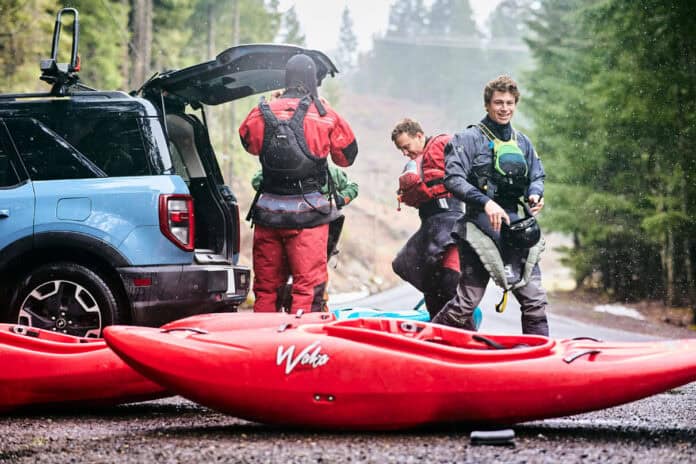
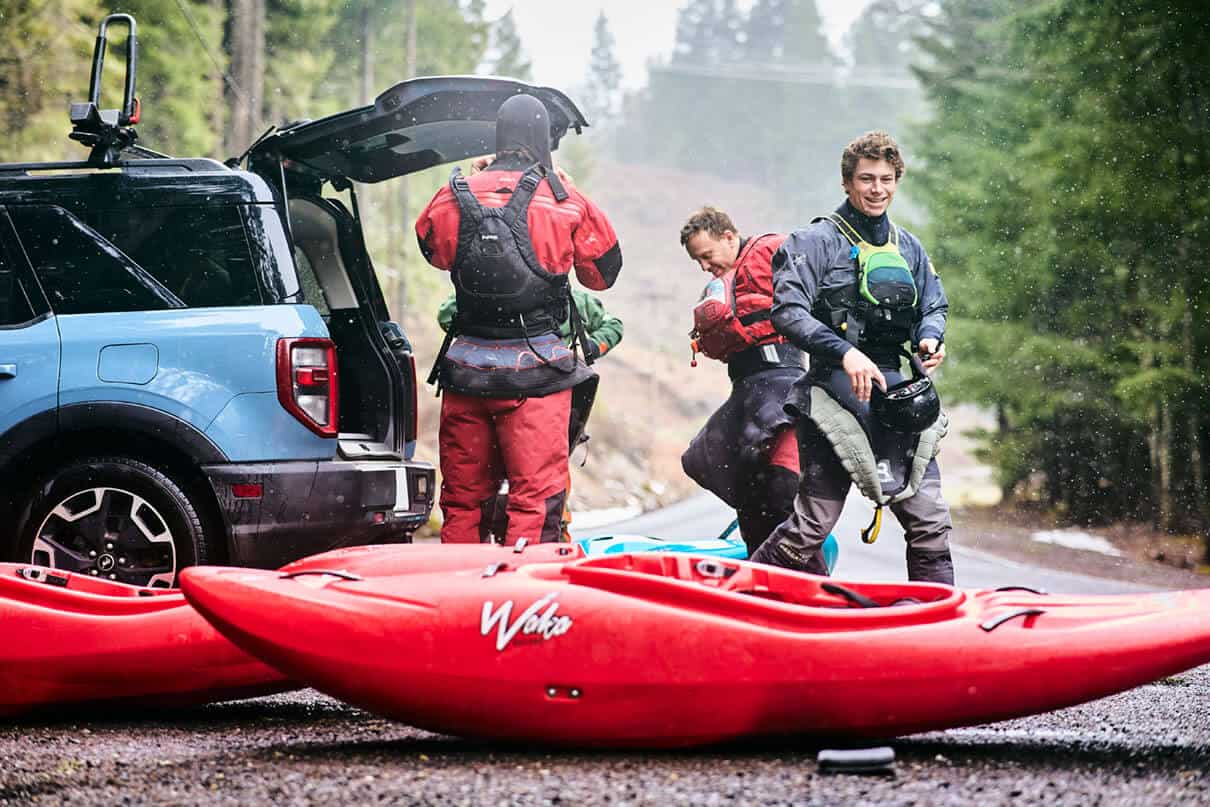
three whitewater kayakers gear up by the trunk of their vehicle with red kayaks on the ground in front
Transform and roll out. | Feature photo: John Webster

When you’re on the water as much as the pro whitewater paddlers we polled below, you see a lot. The good, the bad and the ugly. We asked nine pros to weigh in on the most common mistakes they see on the river when it comes to gear and equipment. Are you guilty of any of these? Here’s what the pros had to say.

9 Pros On What Boaters Get Wrong About Gear

“Nose clips are crippling paddlers. You have to open your mouth to breathe. It makes no sense in bigger rapids.”

—Mariann Saether

“It’s hard not to bring too much gear on a road trip or international paddling adventures. The annoying part is that it’s a time-suck dealing with it, stashing it and worrying that it may get stolen out of a vehicle or storage spot.
The best trips I have done are the ones where everything I bring goes with me in the kayak. The good news is that all that extra gear makes for great barter or, better yet, the opportunity to donate to your adopted paddling community.”

—Ben Stookesberry

three whitewater kayakers gear up by the trunk of their vehicle with red kayaks on the ground in front
Transform and roll out. | Feature photo: John Webster
“Assuming everything that ever happens when using something new is 100 percent the equipment’s fault and not focusing on potential user error.”

—Dane Jackson

“They don’t wear a protective layer over their drysuit socks.”

—Natalie Anderson

“The backband. Most kayakers would put their backband up to the back of their necks if they could. If you keep the backband low but tight, it keeps you in the boat nice, but then you have much more range of motion when paddling. If you want power, you need to use more than just your skinny little arms.”

—Dave Fusilli

“Small creek boats for women or small paddlers. You can be small and paddle big kayaks.”

—Nouria Newman

“Simplicity is best. When you’re starting, it’s easy to complicate your gear, bring too much and not have a great system for ensuring you have the right stuff for the river you’re jumping on.”

—Mike Dawson

“Believing they need something specific and consistent to perform rather than believing they can adapt to anything they need to.”

—Benny Marr

“Paddlers think gear is more important than it really is, and paddlers don’t think about how important gear is. What I mean is people stress out and invest too much into pieces that aren’t crucial.
For example, do you need a top-condition spray skirt? I would say no for 99 percent of paddling. Do you need a nice drysuit? I’ve used wetsuits in some remarkably cold weather. However, here’s the flip side: lives are on the line. Being warm is not just a matter of comfort. If you have a wetsuit instead of a drysuit, you better be absolutely sure you can hike out or deal with a long rescue. Throw ropes need to deploy and hold.
What I’m trying to say is people don’t always have an accurate picture of what their gear will do. It doesn’t have to be the best, but even if it is top of the line, you have to know exactly what its limits are and stay within them.”

—Leif Anderson

Cover of Issue 73 of Paddling MagazineThis article was published in Issue 73 of Paddling Magazine. Subscribe to Paddling Magazine’s print and digital editions, or browse the archives.
Transform and roll out. | Feature photo: John Webster


Best Paddleboards For Dogs: A Beginner’s Guide

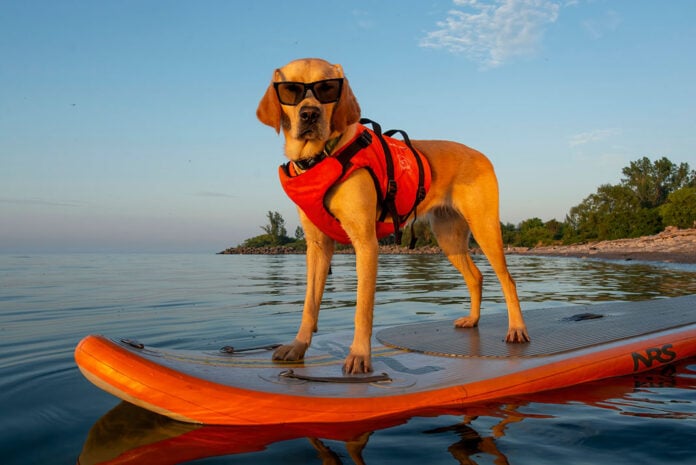
a dog stands on a paddleboard while wearing sunglasses and a pet PFD
Feature photo: Kaydi Pyette

Even if you’ve just gotten into paddleboarding, you’ve probably already realized the only way to improve upon a day spent on the water is to bring your best friend along for the ride. Many dogs can be trained to enjoy a ride on a paddleboard, and it’s an excellent way to deepen your bond, have fun and get some exercise together.

Crucial to enjoying a dog paddleboarding adventure is to have a dog-friendly paddleboard. Fortunately, there are many paddleboards suited for this purpose. In this comprehensive guide, we’ll cover everything you need to know about selecting the best paddleboard for your adventures with your pup and answer the most commonly asked questions about paddleboarding with dogs too. This beginner’s-focused buying guide will also cover must-have paddling accessories for dogs, training tips to keep everyone comfortable, and essential safety advice to ensure you both enjoy your next adventure.

Read on to get expert advice on the best SUP type, size and accessories for the ulti-mutt dog-friendly paddleboard adventures.

How to buy a dog-friendly paddleboard

Choosing a board requires careful consideration since the paddleboard you buy will help determine whether or not you and your dog have a fun time on the water. There is no one single best paddleboard for dogs because the best board depends on the type of paddling you like to do, as well as your dog’s size, weight and temperament. From board size and stability to materials and features, here’s what you need to know.

Stability

When selecting a paddleboard for your dog, stability is the top priority. A stable-feeling board will inspire more confidence. All other aspects being equal, a wider paddleboard will provide more stability. However, a wider board will be slower, and a too-wide board can be difficult to paddle. To paddleboard with your dog, look for paddleboards around 32 to 36 inches wide. With a smaller dog, you might be able to opt for a board on the narrower end of that spectrum, while if you have a larger dog you might opt for a board on the wider end.

Weight limit

Capacity is a critical component of an enjoyable paddleboarding experience with your dog. Ensure the capacity of your chosen paddleboard exceeds the total weight when you combine your weight, your dog’s weight and any other gear you’re likely to bring along. If you exceed the capacity of a paddleboard, it will ride low in the water, won’t feel stable and won’t glide efficiently.

Board shape

All-around paddleboards are the most popular type of paddleboard for beginners. All-around paddleboards tend to be 10 to 12 feet long and typically come with a rounded surf-style nose or a slightly pointed touring-inspired nose. A user-friendly, all-around paddleboard is a perfect choice for relaxed days spent paddleboarding with your dog. Paddlers who want to make miles should look to touring board design.

Inflatables vs. hard boards for dogs

Inflatable boards are convenient for storage and transport and incredibly popular. They’re typically made from a soft but tough PVC material, which provides better traction for a dog’s paws and nails and a softer landing if a dog loses its balance and falls on the board. Hard boards can be made from plastic, wood or composite materials. Their rigidity provides extra stability and increased performance, as there is less bend to the board in waves or when a dog or paddler moves around the deck. Learn more about the pros and cons of inflatable paddleboards and hard boards.

Deck padding for dogs

Particularly on a hard board, a deck pad on the top of the paddleboard provides essential traction for your dog. Your dog’s confidence will be greatly enhanced by getting a grip and not sliding around on a slick wood, plastic or composite surface. Look for full-length EVA foam deck pads, which provide good grip. Full-length deck padding isn’t as essential on an inflatable, as the softer  construction material provides some traction.

Leash essentials

A paddleboarder should always wear an ankle leash (unless in moving water), which is a cord connecting the board to the paddler’s ankle. This crucial piece of safety gear is even more important when paddling with a dog, as your chances of ending up in the water increase with an excitable pup on board. So, too, do the chances that your board will travel away from you in an upset. Even a light wind can blow a paddleboard away from you, faster than you can swim.

Wear The Appropriate Leash When Stand Up Paddleboarding
  • Always wear a leash on open bodies of water like lakes, bays, and oceans. Due to the risk of snags and entrapment, leashes should only be worn on rivers if they include a quick release attached to your life jacket.

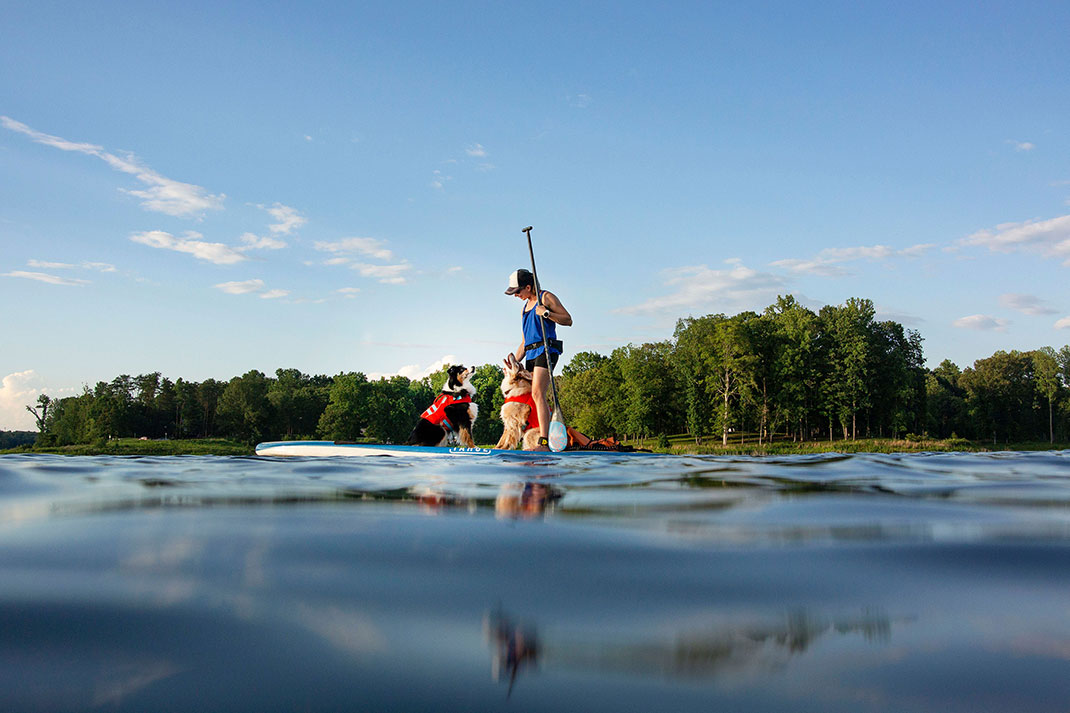
However, a dog doesn’t have to wear its leash on a paddleboard. A well-trained dog shouldn’t need a leash while on a paddleboard, and any dog can be trained to remain in place on the board until released. If your pup is not reliable, you may feel safer leashing your dog. However, never attach your dog’s leash to the paddleboard and never leash your dog in moving water and current.

a dog wearing a PFD stands on a floating paddleboard
Photo: Kaydi Pyette

Dog paddleboard accessories

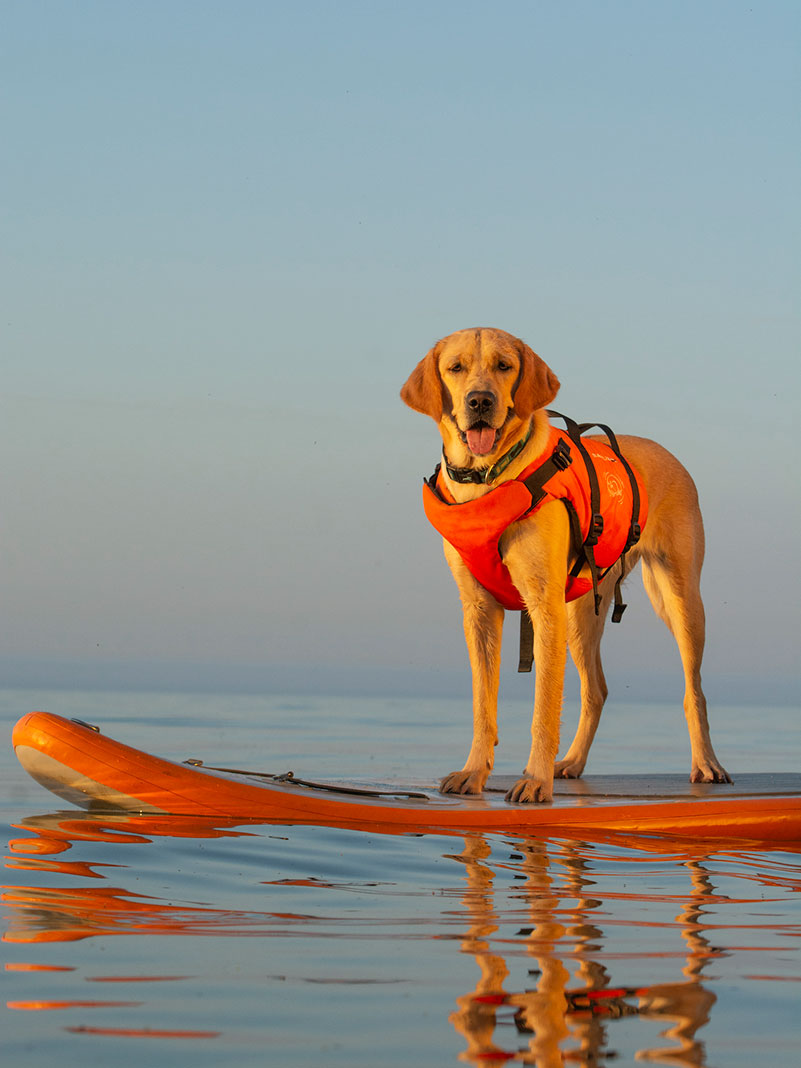
There are a few essential safety requirements to take your dog paddleboarding. Remember: Always wear your life jacket. Everyone, even strong swimmers, should wear a life jacket at all times when on the water. And just like you, your dog should always wear a life jacket on the water too. Not all dogs are strong swimmers. In particular, dogs with short snouts or short legs, and puppies, older dogs and those with mobility issues tend to be weaker swimmers. Plus, any dog can get tired or panic. Protect your best friend by investing in a dog life jacket. Ensure your dog’s life jacket fits snugly and matches their weight. See our top picks for the best dog life jackets for paddleboarding.

In addition to a PFD for your dog’s paddleboarding adventures, some paddlers opt for a dog mat to put on the deck for extra comfort. Others add a kayak-style seat to their paddleboard. To attach these items, choose a paddleboard with some attachment points designed for accessories. You can also use these attachment points to secure snacks, a water dish and other items.

Training your paddleboarding dog

Dogs are naturally curious and want to explore by your side, so tap into that natural instinct and approach paddleboard training as just another fun adventure together. First, introduce the paddleboard on land, where the dog is comfortable, and allow the dog to investigate it and walk all over it until it’s no big deal.

Next, treat your first few outings to the water as training sessions. Keep these sessions short and filled with positive reinforcement (think soft, stinky dog treats and lots of them!) and only paddle in calm and sheltered conditions to maintain stability and cultivate confidence in your new paddleboarding companion. Always check weather conditions before getting on the water and paddle within your skill level.

Paddleboards for dogs FAQ

Finding a paddleboard to enjoy with your dog doesn’t have to be complicated. Let us help demystify the process. Below are the eight most commonly asked questions about finding the perfect paddleboard for you and your dog.

  • Can dogs go on paddleboards?

    Of course! While some dogs may be apprehensive at first, most dogs can be trained to enjoy riding on a paddleboard. It is important to ensure the paddleboard is large enough and stable enough to accommodate the dog’s extra weight. It’s also important to introduce the paddleboard experience gradually—start slowly, always wear your life jacket, always put your dog’s life jacket on her, and provide lots of positive reinforcement to create a fun experience for the dog.

Wear A Life Jacket
  • Everyone, even strong swimmers, needs to wear a life jacket at all times when on the water. It is extremely difficult to put a life jacket on once you fall into the water. Even a light wind can blow any paddlecraft away from you, faster than you can swim.
  • Always wear a USCG-approved Level 70 or Type III life jacket designed for paddling.
  • Can dogs go on inflatable paddleboards?

    Yes, inflatable paddleboards are a great option for dogs. The material inflatable paddleboards are constructed with is not slick like hard boards, and provides good traction for the dog’s paws, which leads to increased comfort and easier reboarding.

  • Can dogs pop inflatable paddleboards?

    No. The construction material of a paddleboard from a reputable brand is a world apart from the cheap material of a Walmart pool toy. Don’t worry about your dog’s nails puncturing the board; the material is way tougher than that.

  • Do dogs like paddleboarding?

    Not every dog will enjoy paddleboarding, just as not every person enjoys paddleboarding. However, so long as you introduce the activity slowly and with lots of positive reinforcement, most dogs can grow accustomed to the experience of being on the water. Plus, your dog always enjoys being with you. Keep training sessions short and sweet, and make your dog’s safety and comfort your priority.

  • Paddleboard vs. kayak with dog

    Both paddleboarding and kayaking can be enjoyable activities to share with your dog. One is not more suitable for bringing your dog along than the other—it just depends on your personable preference. From your dog’s perspective, sitting on the deck of a paddleboard versus sitting on the deck of a sit-on-top kayak is not so different. For dogs who like to swim, a paddleboard may offer easier reboarding. Sitting paddlers may find it easier to manage anxious or excitable dogs.

  • What is the easiest paddleboard to bring your dog on?

    A stable-feeling paddleboard is the most important factor in your dog having a good time on the water. Look for a design 10 to 12 feet long, 32 inches wide or more, and with a capacity that exceeds your combined weight. A full-length deck pad will also help ensure your dog’s comfort.

Dress For Immersion, Not Air Temperature
  • Your body loses heat much faster when immersed in cold water than it does when dry.
  • Avoid cotton clothing like t-shirts and jeans; they retain water and accelerate cooling when wet. Synthetic fabrics, or wool, are generally a better choice. If the water is very cold (60° fahrenheit or less), you should wear a wetsuit or drysuit.
  • What size paddleboard is best for dogs?

    The best size of paddleboard for your dog will depend on its size, weight and temperament. Generally, a wider board provides more stability and a longer board provides more space for you and your dog. Larger boards larger weight capacities. Dog paddleboards around 32 inches wide and 10 to 12 feet long are often a good size to start with for small and medium-sized dogs.

  • What happens when a dog falls off a paddleboard?

    If your dog falls off your paddleboard and they’re wearing a life jacket, it’s no big deal. Stay calm and encourage your dog back to you and the board, using treats or toys if necessary. If your dog is wearing a leash, you can also use that to guide them back. Use the handles on your dog’s life jacket to assist with reentry onto the board. Once they’re safely back on the board, ensure they’re comfortable. Don’t make a big fuss about the plunge.


Feature photo: Kaydi Pyette