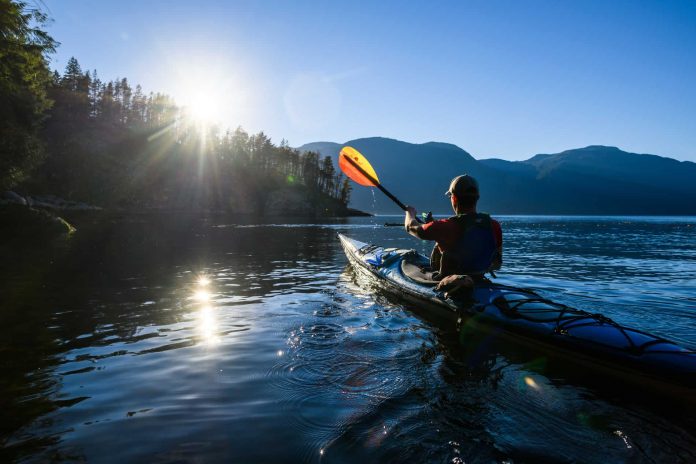
The first time somebody put a kayak paddle in my hand was almost 30 years ago. The kayak paddle chosen for me was feathered, 230 centimeters long and had a blade angle of 80 degrees for right-hand control. My paddling mentor gave me a simple set of instructions: line up your knuckles here and when you want to take a stroke on the left, twist your wrist back and put the paddle in the water.
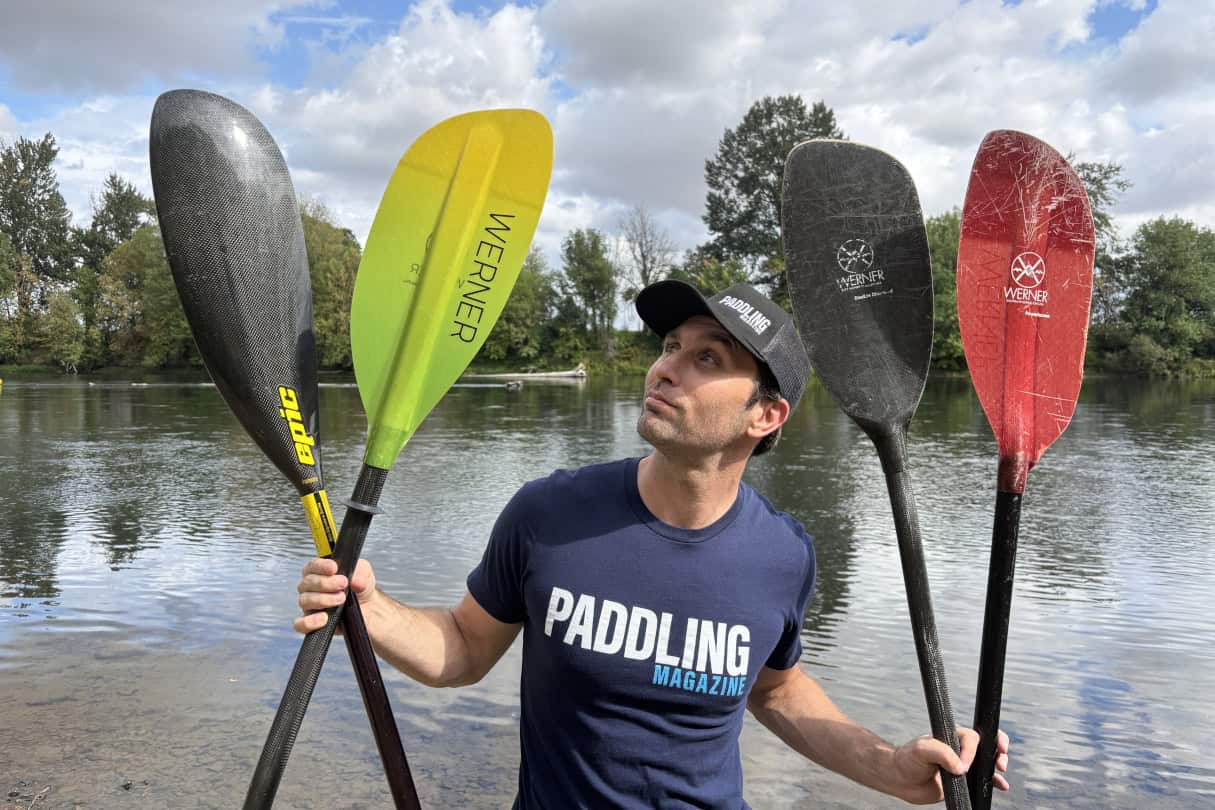
Feathered vs. unfeathered kayak paddles
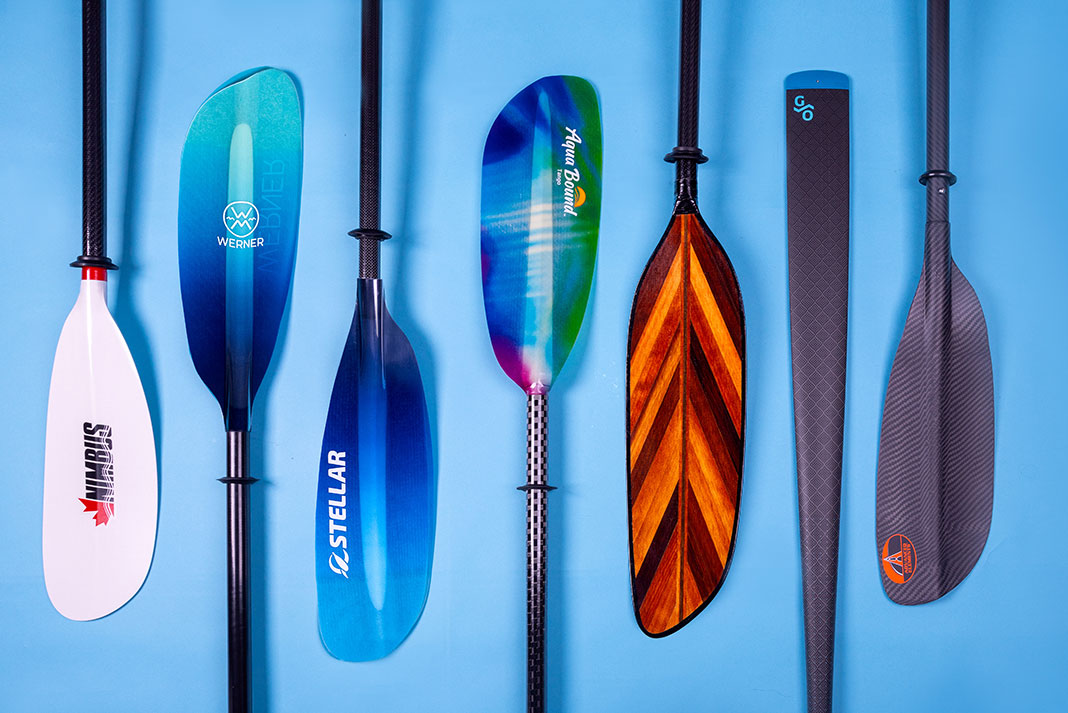
I got started with a feathered paddle because that’s what everyone around me was using, but it wasn’t long before I realized there were a whole bunch of people who thought unfeathered paddles were the way to go. I wanted to know who was right and which blade angle was truly best.
In search of the answer, I dove into the available resources, reading books by John Dowd, Derek Hutchinson and Nigel Foster. I dug into obscure magazine articles. I even carved a Greenland-style paddle and used it until I felt I had the hang of traditional sea kayaking.
Kayak paddle blade angles
By the late 90s, I had set aside the Greenland paddle and started whitewater kayaking. I saw whitewater as a way to improve my rough water sea kayak skills. Since whitewater paddles were feathered I figured it was sensible to standardize my equipment, so I switched to shorter touring paddles and used an 80-degree feather on everything. I was firmly convinced feathered paddles were the way to go.
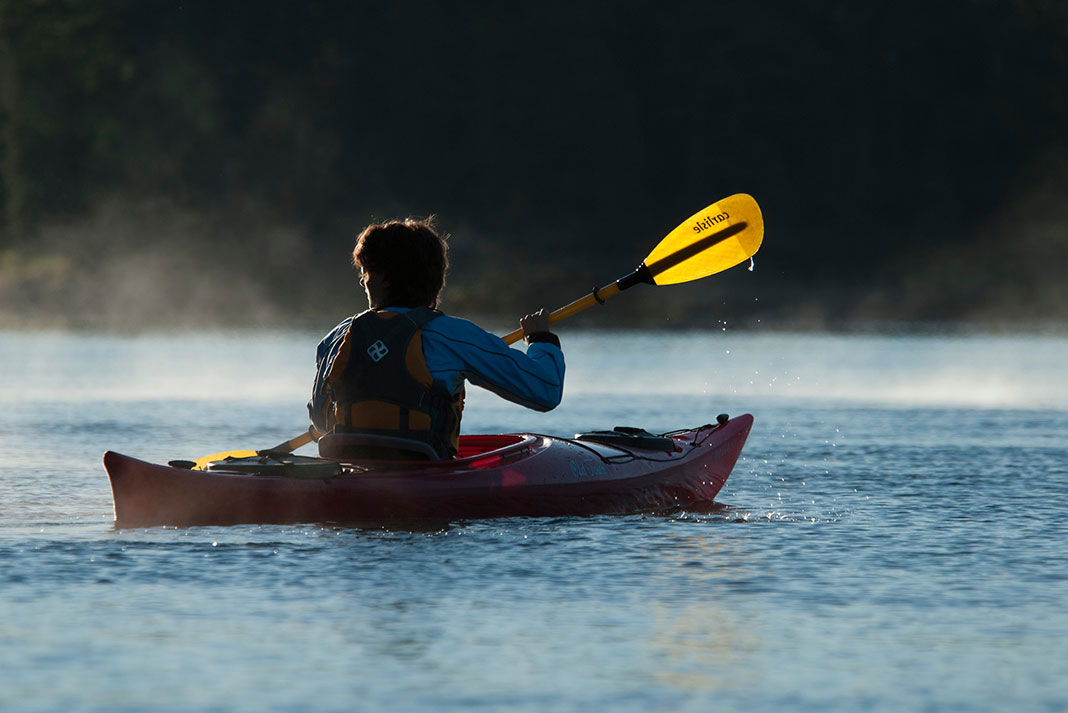
I had to be dragged kicking and screaming away from my 80-degree paddles, but dragged I was. The first challenge came when my favorite sea kayak paddle manufacturer switched their standard blade angle to 60 degrees. The lower angle was said to be easier on the wrists and was still effective in a headwind. I didn’t have much choice, so I made the switch.
Whitewater came next. When I broke my favorite 60-degree whitewater paddle the manufacturer told me they would replace it with a 45, but not a 60. Forty-five, apparently, was easier on the wrists and most whitewater paddlers had switched over. Following the trend, I went and shifted down to 45.
At 45 degrees I noticed a strange thing. I no longer had to twist my wrist to change the angle of the blade on the left side. In fact, as soon as I raised my right hand to my shoulder the left paddle blade automatically squared itself to the boat, ready for a forward stroke. My top hand had a completely straight wrist.
Ergonomics and feathered kayak paddles
I had quite a bit of wrist pain in my early touring years, and it completely disappeared by the time I had eased my way down to 45 degrees. As far as I could tell, it was twisting my wrist over and over that was giving me trouble, and the 45-degree paddle eliminated this motion.
With the pain gone, I started to reevaluate what I wanted in feather angle. Instead of performance in a headwind, I decided I wanted something to keep me paddling without pain. I knew 45 degrees was better than 60, so less was better—but how much less? I tried some whitewater paddles down to 30 degrees and they were just as neutral on my wrists as the 45-degree feather. Twenty years into my quest to understand kayak paddle blade angle I started to wonder if maybe unfeathered paddles were the answer.
The answer is no.
Why not? Well, with a short paddle, once you drop below about 30 degrees of feather, you need to start tweaking your wrist again. Not back like in the old days, but sideways in an awkwardly cocked position that risks a repetitive use injury. If a neutral wrist is the best way to avoid tweaking yourself over time, then feather angles below 30 degrees don’t work.
Don’t work, that is, with a short paddle. I’d been using short, feathered touring paddles for years because they were similar to my whitewater paddles, but the Greenland paddles I used back in the 90s were long, unfeathered and seemed to work fine. What was the difference?
Feathering and paddle length
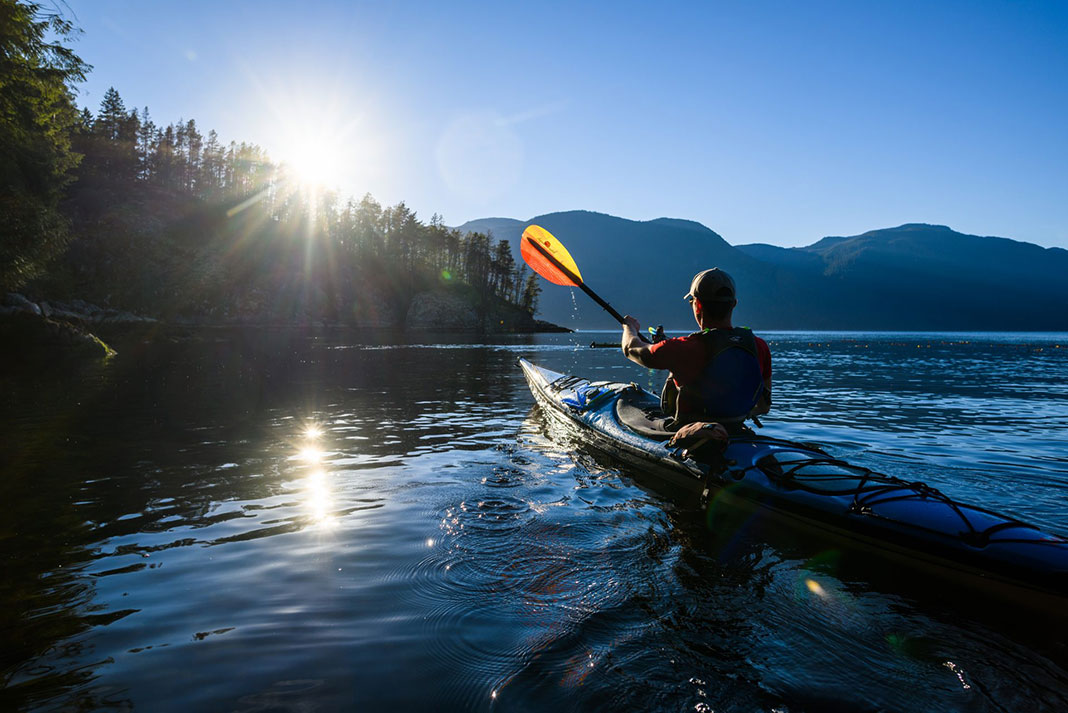
There’s a meme in the sea kayak world used to describe different forward stroke styles. Paddlers using short paddles are said to use a high-angle forward stroke. This stroke has the top hand at shoulder level and is very powerful. It’s the stroke I use for whitewater and touring and there is no question it is an effective technique.
That being said, if you’re holding your top hand at shoulder level you engage your shoulder muscles more. This is fatiguing over time, and while you can always buy a lighter paddle, many people prefer to use a lower top hand position that is less powerful, but also less fatiguing. This technique is frequently referred to as a low-angle paddling style.
The traditional Greenland style paddling I experimented with in my 20s is the ultimate in low-angle paddling. The hands are held very low, just above the sprayskirt, and the paddle is long and unfeathered. What you’ll discover about the Greenland forward stroke, should you try it, is your wrists stay completely straight throughout the stroke. The shoulder, elbow and wrist are aligned differently when the hands are held low. I discovered a similar effect when I experimented with longer modern sea kayak paddles: long unfeathered paddles keep your wrists straight.
So, there you have it. There isn’t one answer to the feathered versus unfeathered argument—there are two.
What about long feathered paddles? As it turns out, if you use a long paddle and hold your hands low you need to twist your wrist back with even the slightest feather angles. Long paddles, straight wrists and feather angles, it appears, are entirely incompatible. If you go with a long paddle and a low hand position, you’re better off unfeathered.
Final verdict: Feathered or unfeathered kayak paddle?
So, there you have it. There isn’t one answer to the feathered versus unfeathered argument—there are two. If you want to avoid repetitive use injury, you should try to keep your wrists straight during your forward stroke, and there are a couple of ways to do it.
Which kayak paddle blade angle is best? If you prefer a short paddle for maximum power, use a feather angle between 30 and 45 degrees. If you would rather use a long paddle allowing your hands to be held low, an unfeathered paddle will keep your wrists straight. That’s the answer. Keep your wrists straight and keep paddling.
This article was first published in Issue 58 of Paddling Magazine. Subscribe to Paddling Magazine’s print and digital editions, or browse the archives.
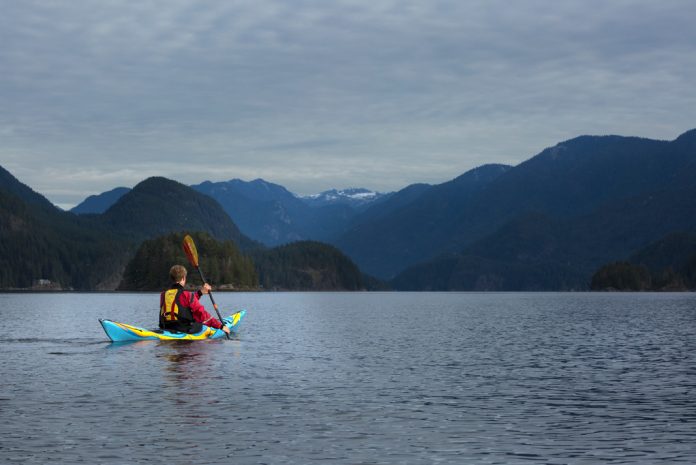
Whether or not you use a feathered paddle should depend on your paddling style and paddle length, according to author Brian Day. | Feature Photo: Andrew Strain

 This article first appeared in the Early Summer 2014 issue of Rapid Magazine.