Home Blog Page 167

The Final Answer On Feathered Versus Unfeathered Kayak Paddles

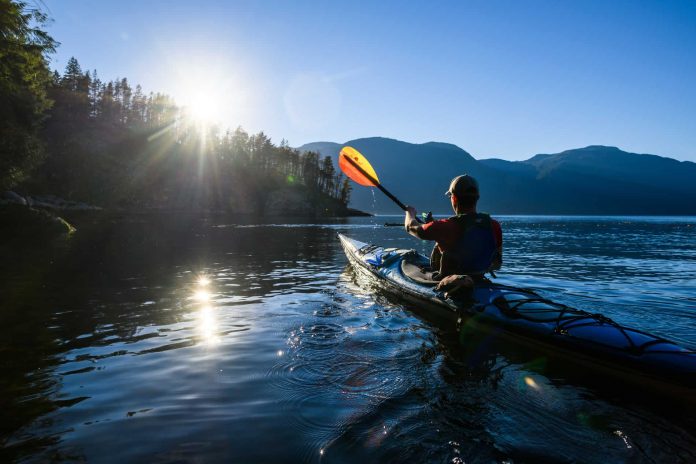
Whether or not you use a feathered paddle should depend on your paddling style and paddle length, according to author Brian Day. | Photo: Andrew Strain

The first time somebody put a kayak paddle in my hand was almost 30 years ago. The kayak paddle chosen for me was feathered, 230 centimeters long and had a blade angle of 80 degrees for right-hand control. My paddling mentor gave me a simple set of instructions: line up your knuckles here and when you want to take a stroke on the left, twist your wrist back and put the paddle in the water.
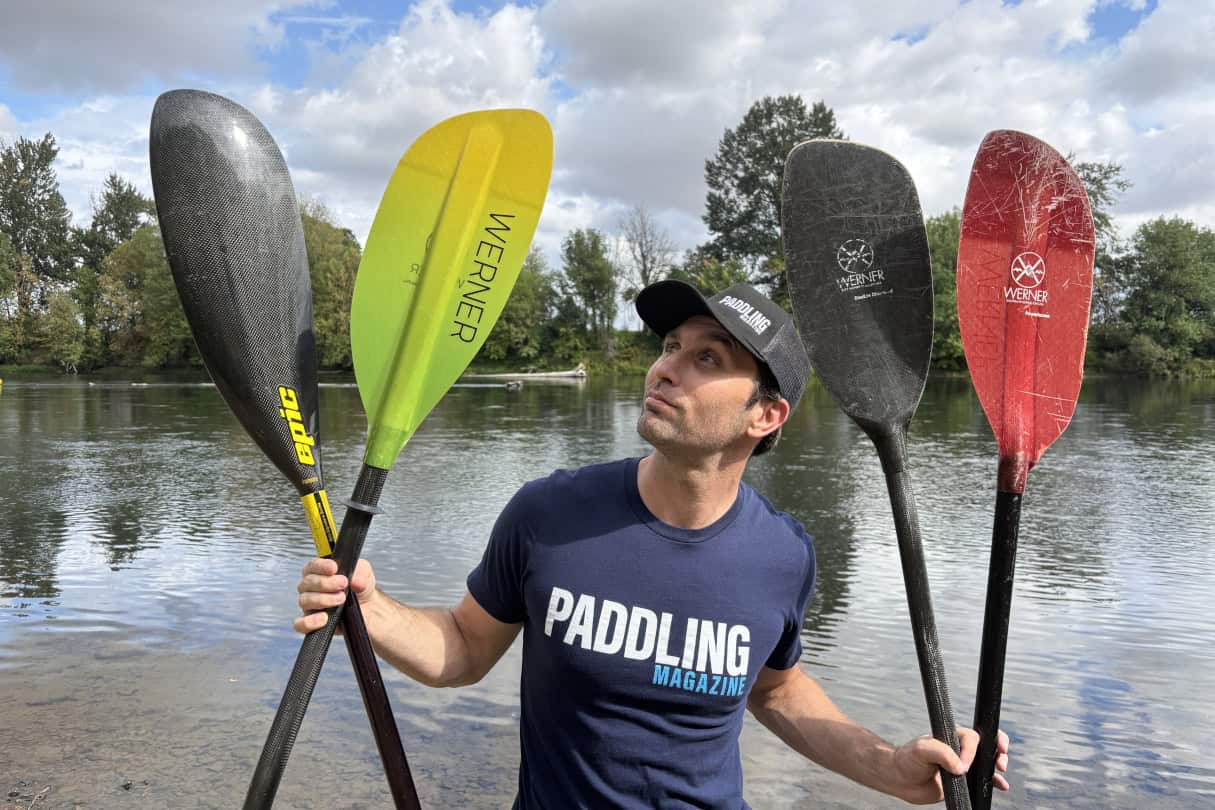
Feathered vs. unfeathered kayak paddles

I got started with a feathered paddle because that’s what everyone around me was using, but it wasn’t long before I realized there were a whole bunch of people who thought unfeathered paddles were the way to go. I wanted to know who was right and which blade angle was truly best.

In search of the answer, I dove into the available resources, reading books by John Dowd, Derek Hutchinson and Nigel Foster. I dug into obscure magazine articles. I even carved a Greenland-style paddle and used it until I felt I had the hang of traditional sea kayaking.

Kayak paddle blade angles

By the late 90s, I had set aside the Greenland paddle and started whitewater kayaking. I saw whitewater as a way to improve my rough water sea kayak skills. Since whitewater paddles were feathered I figured it was sensible to standardize my equipment, so I switched to shorter touring paddles and used an 80-degree feather on everything. I was firmly convinced feathered paddles were the way to go.
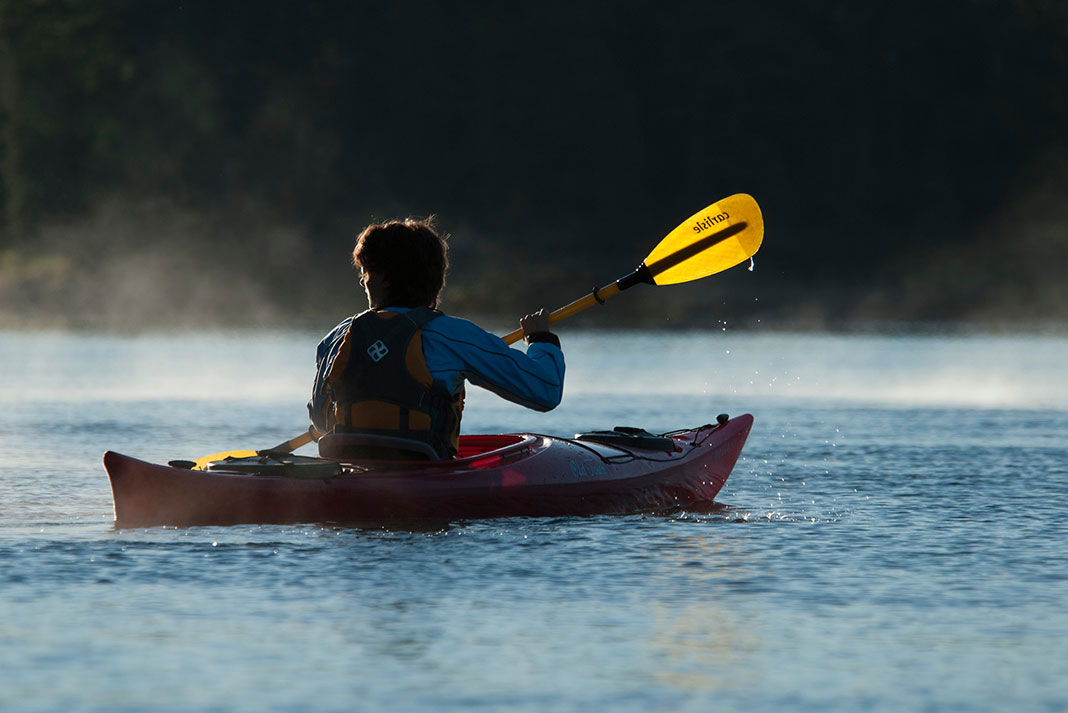
Woman paddles a touring kayak
What’s the right paddle angle for you? | Photo: Courtesy of Old Town Canoes and Kayaks/Carlisle Paddles

I had to be dragged kicking and screaming away from my 80-degree paddles, but dragged I was. The first challenge came when my favorite sea kayak paddle manufacturer switched their standard blade angle to 60 degrees. The lower angle was said to be easier on the wrists and was still effective in a headwind. I didn’t have much choice, so I made the switch.

Whitewater came next. When I broke my favorite 60-degree whitewater paddle the manufacturer told me they would replace it with a 45, but not a 60. Forty-five, apparently, was easier on the wrists and most whitewater paddlers had switched over. Following the trend, I went and shifted down to 45.

At 45 degrees I noticed a strange thing. I no longer had to twist my wrist to change the angle of the blade on the left side. In fact, as soon as I raised my right hand to my shoulder the left paddle blade automatically squared itself to the boat, ready for a forward stroke. My top hand had a completely straight wrist.

Ergonomics and feathered kayak paddles

I had quite a bit of wrist pain in my early touring years, and it completely disappeared by the time I had eased my way down to 45 degrees. As far as I could tell, it was twisting my wrist over and over that was giving me trouble, and the 45-degree paddle eliminated this motion.

With the pain gone, I started to reevaluate what I wanted in feather angle. Instead of performance in a headwind, I decided I wanted something to keep me paddling without pain. I knew 45 degrees was better than 60, so less was better—but how much less? I tried some whitewater paddles down to 30 degrees and they were just as neutral on my wrists as the 45-degree feather. Twenty years into my quest to understand kayak paddle blade angle I started to wonder if maybe unfeathered paddles were the answer.
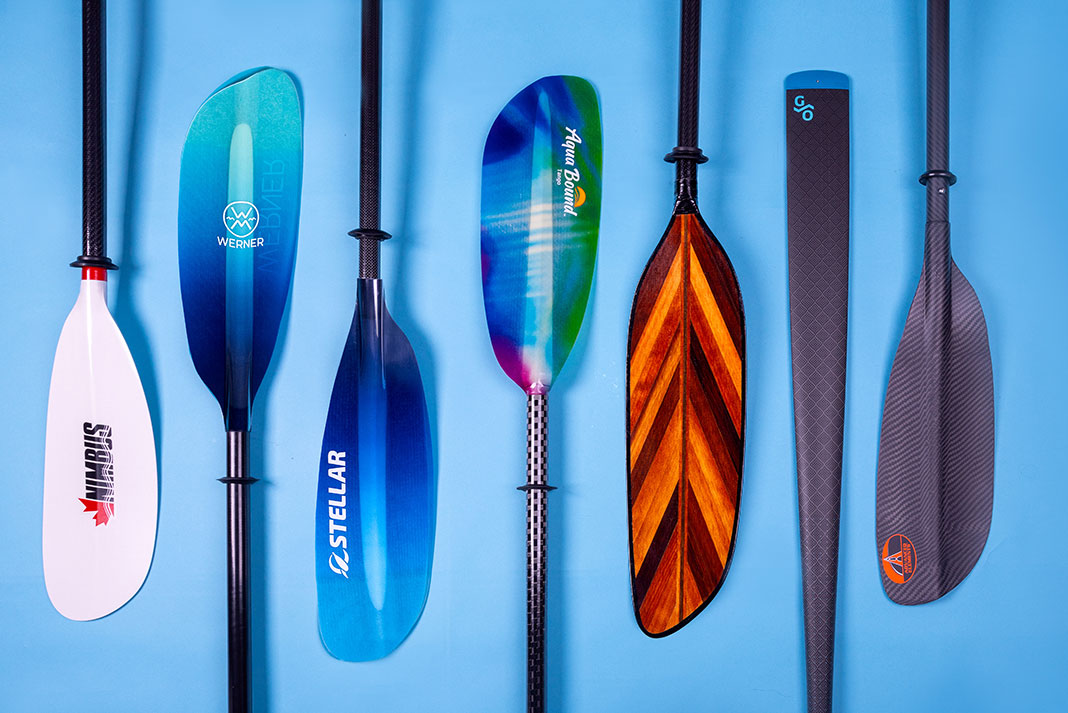
The answer is no.

Why not? Well, with a short paddle, once you drop below about 30 degrees of feather, you need to start tweaking your wrist again. Not back like in the old days, but sideways in an awkwardly cocked position that risks a repetitive use injury. If a neutral wrist is the best way to avoid tweaking yourself over time, then feather angles below 30 degrees don’t work.

Don’t work, that is, with a short paddle. I’d been using short, feathered touring paddles for years because they were similar to my whitewater paddles, but the Greenland paddles I used back in the 90s were long, unfeathered and seemed to work fine. What was the difference?
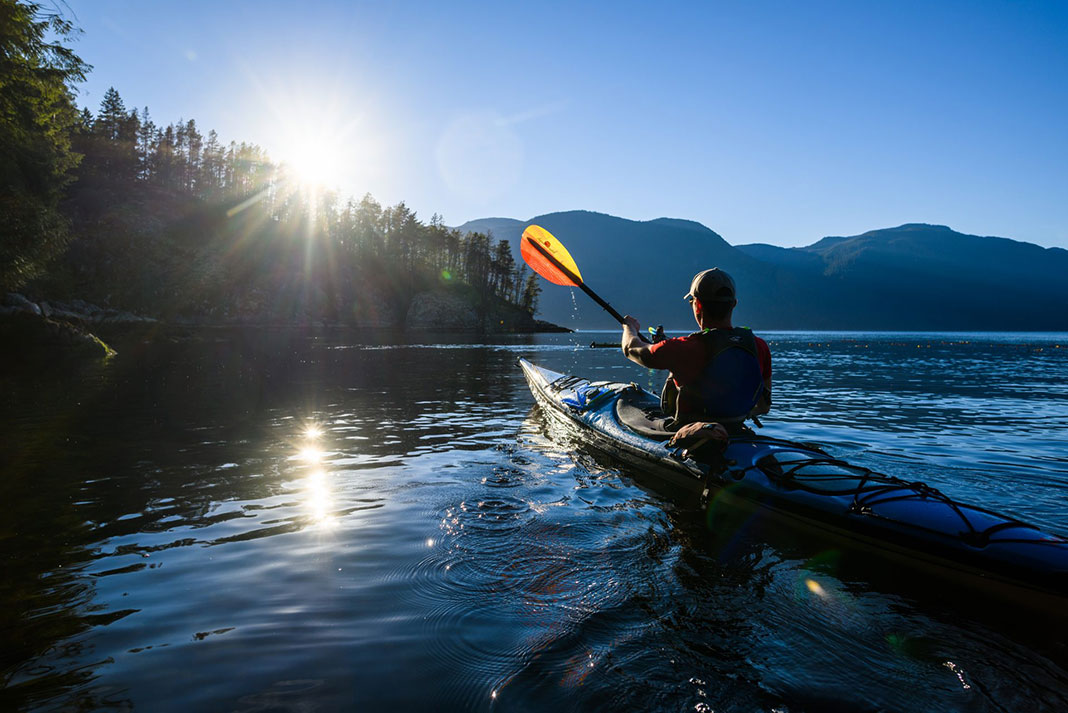
Photo of kayaker with paddle
Whether or not you use a feathered paddle should depend on your paddling style and paddle length, according to author Brian Day. | Feature photo: Andrew Strain

Feathering and paddle length

There’s a meme in the sea kayak world used to describe different forward stroke styles. Paddlers using short paddles are said to use a high-angle forward stroke. This stroke has the top hand at shoulder level and is very powerful. It’s the stroke I use for whitewater and touring and there is no question it is an effective technique.

That being said, if you’re holding your top hand at shoulder level you engage your shoulder muscles more. This is fatiguing over time, and while you can always buy a lighter paddle, many people prefer to use a lower top hand position that is less powerful, but also less fatiguing. This technique is frequently referred to as a low-angle paddling style.

The traditional Greenland style paddling I experimented with in my 20s is the ultimate in low-angle paddling. The hands are held very low, just above the sprayskirt, and the paddle is long and unfeathered. What you’ll discover about the Greenland forward stroke, should you try it, is your wrists stay completely straight throughout the stroke. The shoulder, elbow and wrist are aligned differently when the hands are held low. I discovered a similar effect when I experimented with longer modern sea kayak paddles: long unfeathered paddles keep your wrists straight.

So, there you have it. There isn’t one answer to the feathered versus unfeathered argument—there are two.

What about long feathered paddles? As it turns out, if you use a long paddle and hold your hands low you need to twist your wrist back with even the slightest feather angles. Long paddles, straight wrists and feather angles, it appears, are entirely incompatible. If you go with a long paddle and a low hand position, you’re better off unfeathered.

Final verdict: Feathered or unfeathered kayak paddle?

So, there you have it. There isn’t one answer to the feathered versus unfeathered argument—there are two. If you want to avoid repetitive use injury, you should try to keep your wrists straight during your forward stroke, and there are a couple of ways to do it.

Which kayak paddle blade angle is best? If you prefer a short paddle for maximum power, use a feather angle between 30 and 45 degrees. If you would rather use a long paddle allowing your hands to be held low, an unfeathered paddle will keep your wrists straight. That’s the answer. Keep your wrists straight and keep paddling.

This article was first published in Issue 58 of Paddling Magazine. Subscribe to Paddling Magazine’s print and digital editions, or browse the archives.


Whether or not you use a feathered paddle should depend on your paddling style and paddle length, according to author Brian Day. | Feature Photo: Andrew Strain
 

Boat Review: Necky Looksha IV Kayak

Boat Review: The Looksha IV Sea Kayak By Necky

This summer we spent a week touring the Tangier area north of Halifax with a great mix of boats, including the Looksha IV, a 17-foot sea kayak by Necky. During our combined holiday and boat test adventure we evaluated the kayak’s performance, comfort, and ease of use for paddlers of different abilities.

Getting to know the Necky Looksha IV

The polyethylene Looksha IV—like its composite cousins—has low profile decks, a double chine and a rockered hull. Yes, multi-chine hulls have many performance advantages, but they also allow Necky to produce a pleasingly rigid plastic boat. All the deck fittings around the cockpit are recessed into the plastic to prevent snagging during from-water re-entries. We did notice the lack of a perimeter grab line, which is now part of all the Necky’s newer designs.

Necky Looksha IV Specs
Length: 17’
Width: 22.5”
Weight polymer: 62 lbs
Cockpit: 18” × 31.5”
Rear hatch: 14.5” × 10.5”
Forward hatch: 10” × 8”
MSRP:  $1,899 CAD

Inside the boat

The large cockpit and seat will accommodate just about any sized paddler, although comfort was hit and miss. The backband will adjust up and down by removing a couple screws and reclines forward and back on a rope and cleat system. The storage compartments on the Necky Looksha IV have foam bulkheads and the hatches are sealed with a double hatch system of neoprene and hard polymer covers secured with two webbing straps. This hatch system is simple and stayed dry for four days of normal touring conditions and seeped only slightly after extended rolling and playing in the surf.

The foot pedals are attached to the rudder wires with nylon webbing. There is a ladder lock adjustment ahead of the seat, which was greatly appreciated by tall paddlers who usually have to climb inside the cockpit head first to properly set the foot pegs. With the rudder locked in the up position and using the pegs to transfer power to the boat, we noticed the nylon straps stretched giving a spongy brake feeling with each stroke.

Stability and handling

The most noticeable handling characteristic of the Looksha IV is the inspiring secondary stability—the type of stability generating confidence in paddlers who are not used to tilting to improve boat turning radius. Even our least skilled paddler was cranking the Looksha IV over and sweeping it around. In fact, we found that it takes more than a concentrated effort to push the Necky Looksha IV past its stability zone, and when loaded with gear it’s next to impossible.

During our rolling practice we noted the Looksha IV had similar righting characteristics. You had to keep your head down, righting the boat by pushing past its edge, and then rolling your body up. Rolling the Looksha is by no means difficult, it’s just different.

Between the secondary stability zones the Looksha is very nimble feeling and one of the quickest turning seventeen footers any of the paddlers have paddled. Straight-line tracking was moderate and easily controlled by either quick tilts and minor correction strokes, or by simply deploying the standard rudder. The Looksha was not left behind when tossed in with larger composite touring boats on our casual touring trip. Where it fit in the pack depended more on who was paddling, rather than the length or construction material.

[ Paddling Buyer’s Guide: See all sea kayaks ]

Summing up the Necky Looksha IV

The Looksha IV sea kayak was the only plastic boat on our trip and it was a favorite of all the paddlers. This nimble and stable kayak is capable of carrying its fair share of gear. If the polymer Looksha IV gets the new upgraded outfitting we’ve seen in Necky’s new composite boats, it will be one of the best general purpose touring boats around.

Follow us on Instagram @paddlingmagazine.


11 Things You Don’t Know About Dane Jackson

Dane Jackson kayak athlete

Fans of freestyle kayaking will know Dane Jackson as a long-time fixture in the winners’ circle. Dane’s exploits on and off the race course are splashy and celebrated, following in the footsteps of his Olympian father. However, you might not know these fun facts about the whitewater wunderkind.

11 Things You Don’t Know About Dane Jackson

1

Days In The Water

Dane spent 270 days on the water in 2013 (yes, he kept count). “It was a slow year,” he says, disappointed by a number below 300.

2

Golf

He may have surpassed his father in freestyle scores at the 2013 ICF Freestyle World Championships, but he can’t beat EJ in a round of golf—a primary pastime at the Jackson compound in Rock Island, Tennessee.

3

 Pump Up Playlist

Dane listens to the same pump up playlist before every competition—a mostly Dubstep tracklist, including mind-blasting beats from Rusko and Flux Pavilion. The first track is Krewella’s Play Hard.

4

Severe HearingLoss

Dane has severe hearing loss. It’s only about 30 percent of what it should be, he says. “Reading lips is a big part of being able to communicate.” From a kayak he can read the lips of someone standing on shore. EJ has similar troubles hearing, but for Dane, being born three months premature exacerbated the problem.

5

Career

Dane is incapable of imagining himself in a non-athletic career. When asked (in 10 different ways) what conventional career he’d pick if he had to spend his life off the water, his answer was “a boulderer.”

6

Since dominating in one extreme sport isn’t enough, Dane wants to take the world of competitive climbing by storm. Climbing started as a cross-training exercise to strengthen his shoulders for kayaking, but a new sport is fun, he says, because when you’re used to being a pro, “sucking at something” is a serious motivator.

7

Secret To Crushing Competition

His secret to crushing competition? Relearn every move for each individual feature. “I forget everything I know and relearn it to get it to work for that hole,” he says. He started from scratch with the McNasty at the Nantahala Outdoor Center to train for the Worlds.

8 Favorite Freestyle Trick

He says his favorite freestyle trick is the Lunar Orbit.

9 Family Man

Also eluding him are the steps towards his eventual goal of being a family man like EJ. “The problem with how much I travel and how I live in the middle of nowhere when I’m home, is that a girlfriend is definitely not super easy to find.”

10

Dane was homeschooled in the Jackson family’s RV

Dane was homeschooled in the Jackson family’s RV, but the sound of the river made it hard to do his homework. “It was really hard to want to do school when I could just walk out the door and go kayaking,” he says. He was far enough behind by tenth grade that he decided to make paddling a full-time gig.

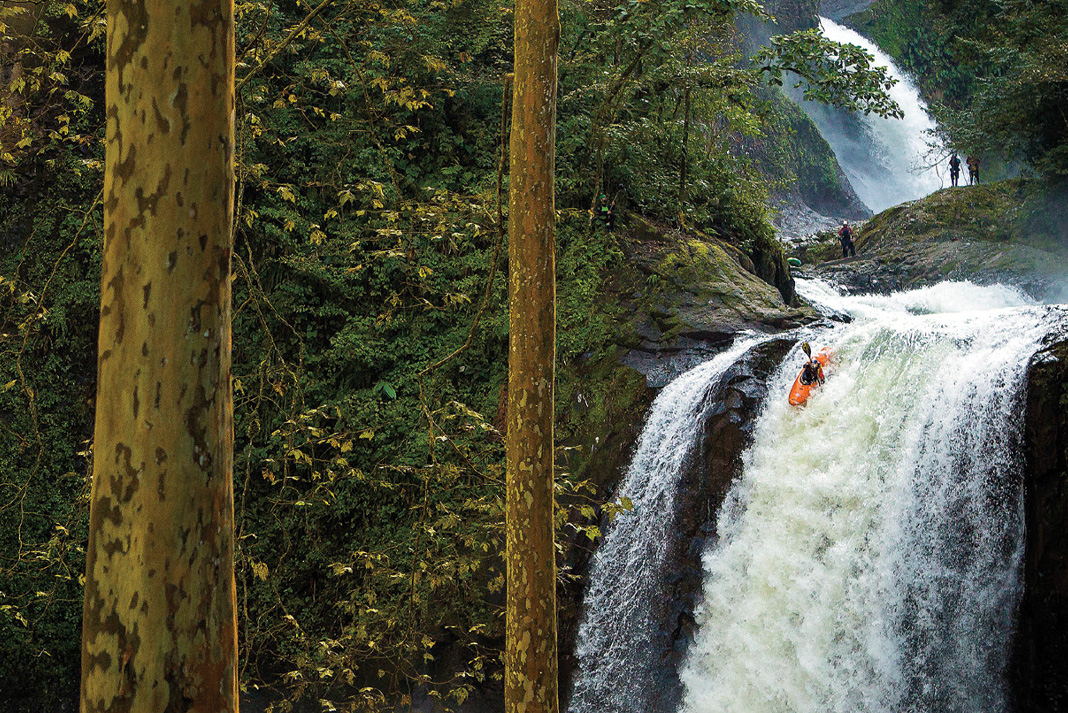
DROP 10 OF 10, TLAPACOYAN, MEXICO. SEE #11. | PHOTO: COURTESY JOHN RATHWELL / RED BULL CONTENT POOL

11World Travels

In his 20 years on planet Earth, Dane has been to six continents, 20 countries, has paddled on approximately 200 rivers, dropped 10 different waterfalls (only counting ones over 40 feet high, of course), broken three paddles, zero bones, and gotten eight sets of stitches.


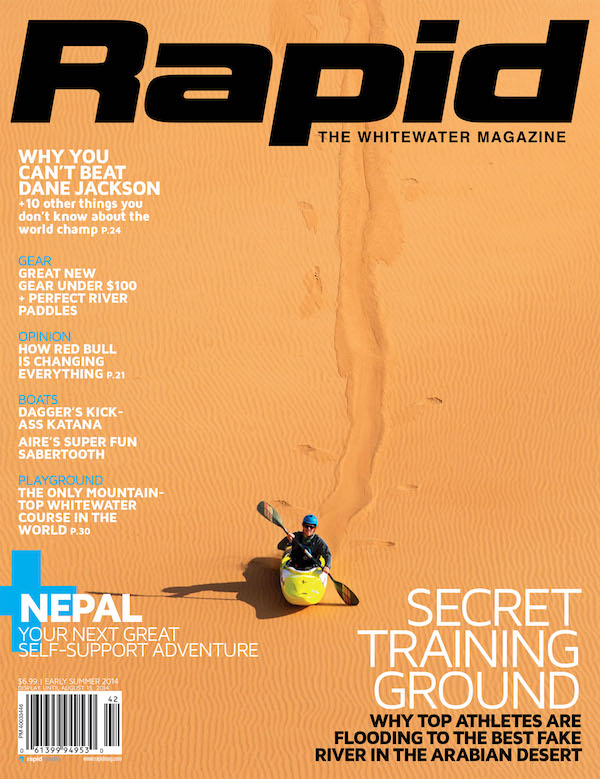
This article first appeared in the Early Summer 2014 issue of Rapid Magazine. Subscribe to Paddling Magazine’s print and digital editions, or browse the archives.
Does Being A Sea Kayaker Make You A Natural Sailor?

Sea Kayaker Instructor to Student Sailor

Ready to tack?” came the call from the helm. “Ready, ready, ready,” yelled out the others on the sailboat. “Ready,” I muttered, reaching for the jib sheet that was tangled around my foot and realizing that I was anything but ready. I quickly untangled it, released one jib sheet, took up the other and crossed over the centerboard, slamming my shin painfully into its casing.

Pulling the slack out of the jib sheet, I became aware that it was hung up on something (likely some part of me). It was much longer than I remembered it being, but I was finally able to tighten it up and cleat it. For the first time in a while, I was a student, and an awkward one at that.

[Expand your paddling skills on your next vacation with one of the offerings in the Paddling Trip Guide.]

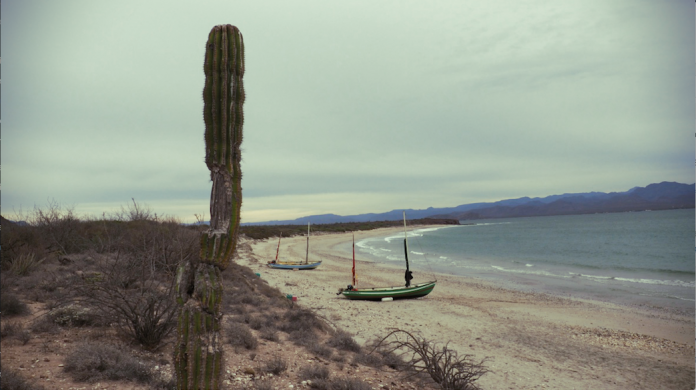
I was in Baja, and over the next 25 days I’d be learning to sail on a National Outdoor Leadership School Sailing Seminar and Clinic, a course specifically designed for current NOLS instructors who are certified in another discipline. As a sea kayak instructor, sailing seemed an obvious transition, as I assumed many skills would transfer nicely: seapersonship, navigation, wind, and tides and current, just to name a few. While it’s true these are indeed useful skills to possess when learning to sail, I quickly realized that the sailing-specific technical skills I didn’t have far outnumbered the skills that I already had.

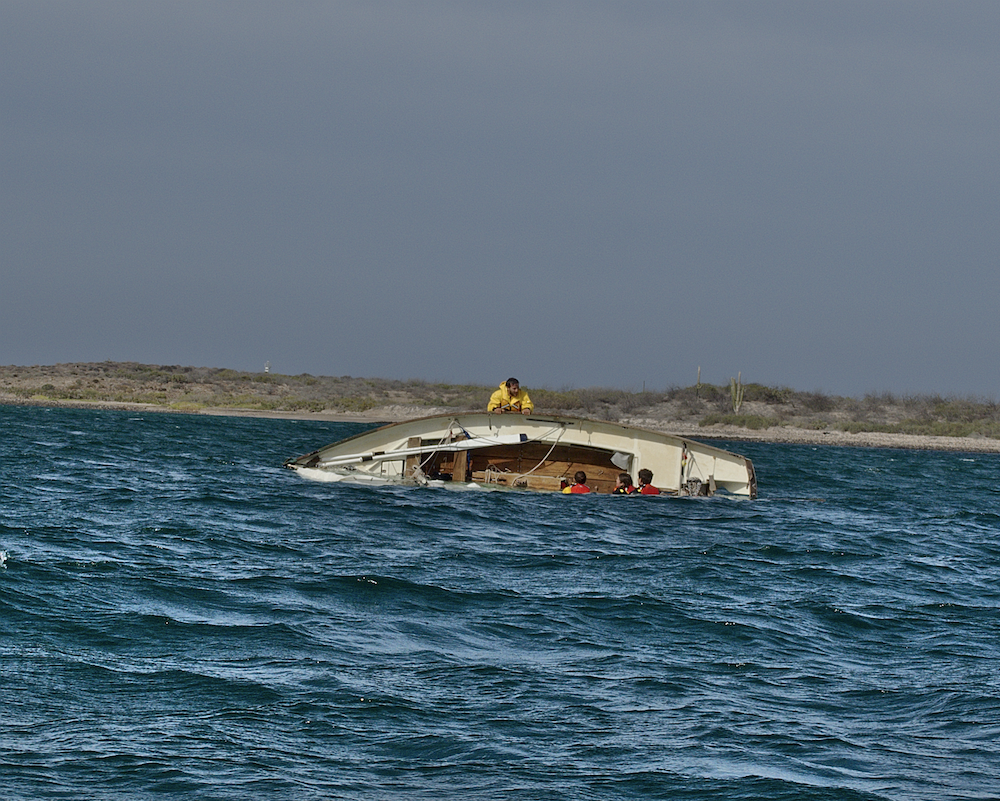
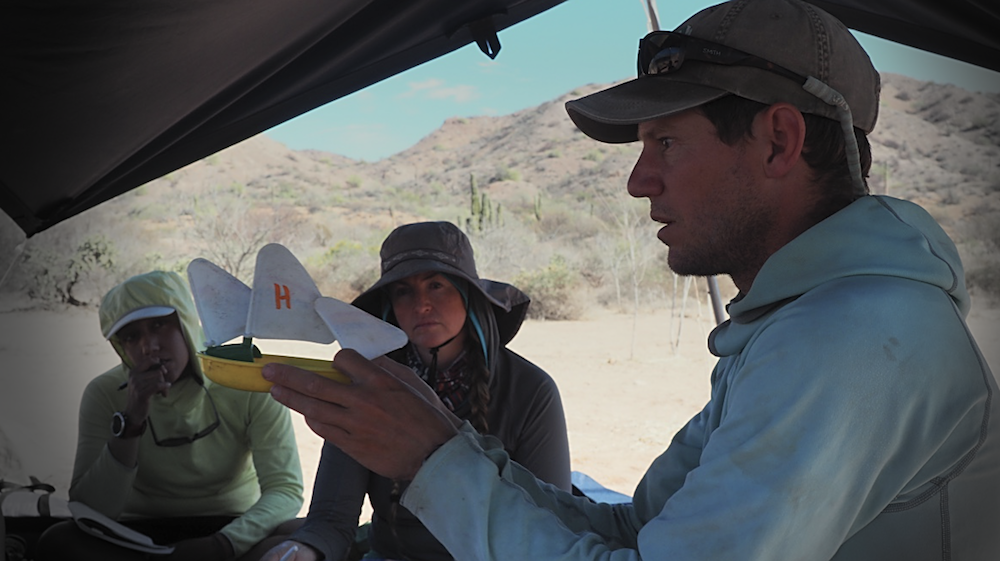
Learning to recover after capsize. | Photo: Meg Lavery

I was an absolute beginner.

I found this quite humbling and reflected on how my students likely have similar feelings of awkwardness.

Throughout the course we worked on technical skills and rotated through the roles; controlling the jib and main sheets (sheets are, simply put, ropes attached to sails, and the jib and main are types of sails) and steering at the helm. We learned how to travel from a shallow-water anchor to a deep-water anchor and how to set up the sailboat for sailing. We also learned how to recover after a capsize and how to land in surf (both of which are a blast).

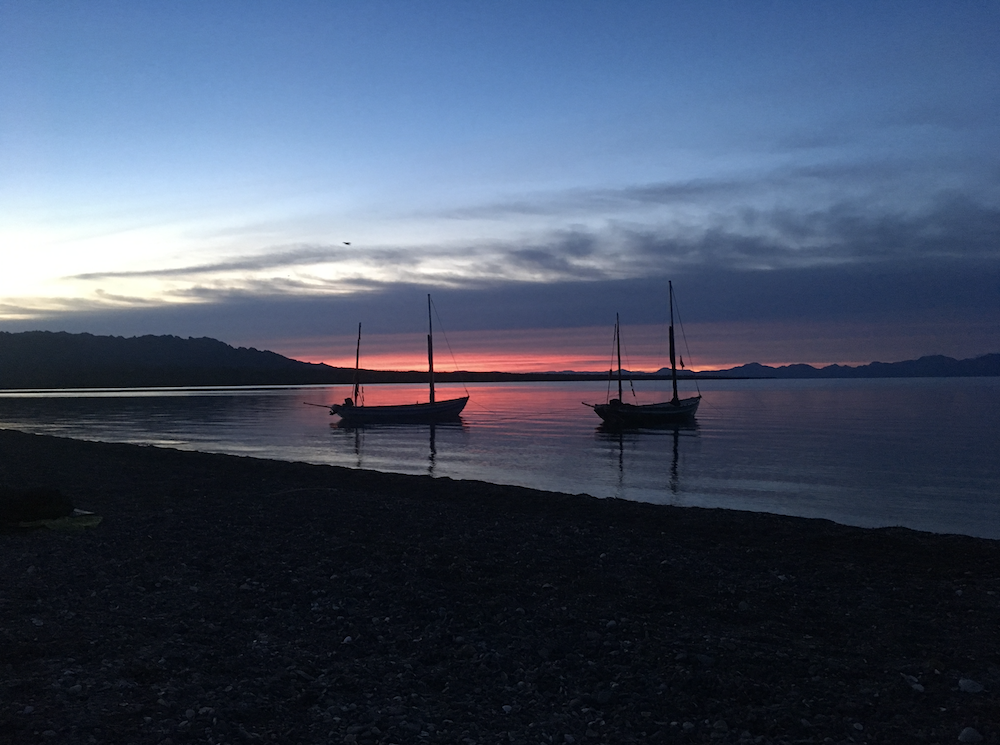
Peaceful nights along the Baja coast. | Photo: Meg Lavery

Every night I’d curl up in my sleeping bag under the stars and think of all of the things that I’d learned. Questions would come to me, and I’d make a mental note to remember to ask them in the morning or to look them up in one of the reading resources that we had with us. Usually though, my brain was so full that these thoughts would dissipate overnight.

It’s very easy to forget what it’s like to be a student, and putting myself in this role pushed me to experience the frustrations, trials, successes and emotions that go along with the learning process. I find this important because it allows me to empathize with my students, and empathy, paired with a fine-tuned class, creates the best learning environment possible.

Learning theory on the beach in Baja. | Photo: Meg Lavery

The final day on the water we had calm seas and a slight breeze. At one point we jumped out of the sailboat for a swim. Later in the day a Dorado (mahi mahi) leapt out of the water, seemingly mocking our extended handlines. The day on the water had been carefree and beautiful, and the things that we had learned over the past 25 days were settling in to a point in both our brains and our bodies where we didn’t have to try quite so hard. My bruises had faded to yellow, and I felt a soothing connection to the boat, its parts and the way that it gently rocked on the water. I had moved through the learning progression, and I smiled to myself as I realized that I was now (almost) “ready to tack.”

Main image: Courtesy Meg Lavery

Sea Kayaking in Halifax, Nova Scotia

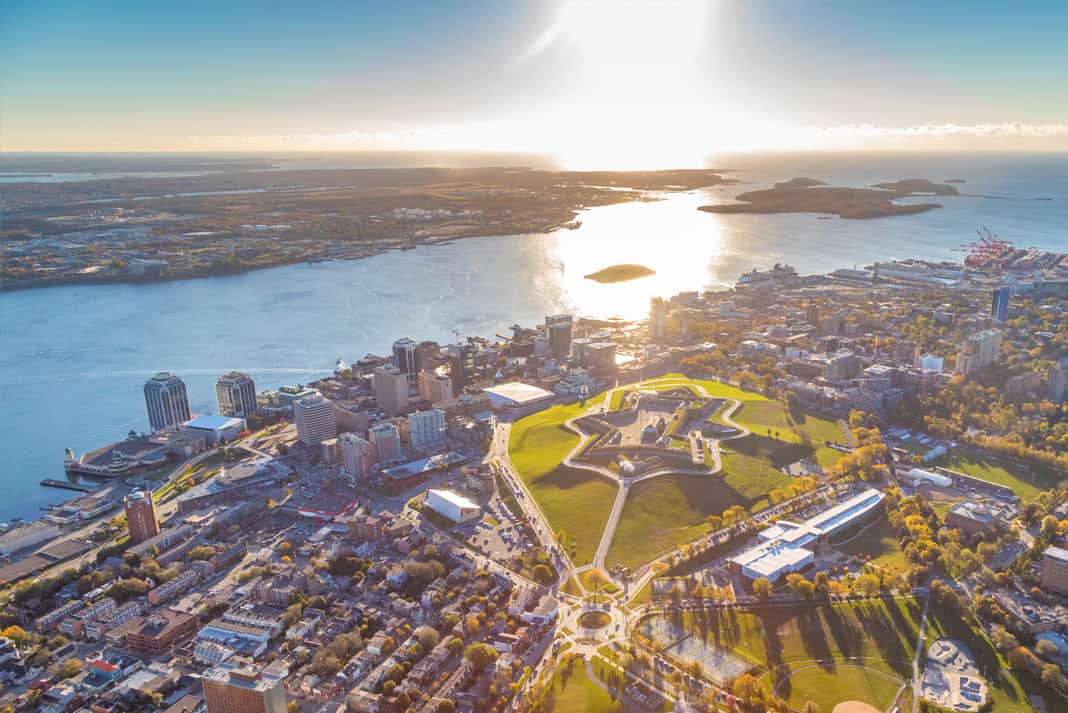
Historic waterfront and East coast charm await paddlers in Halifax. | Photo: Tourism Nova Scotia/Acorn Art Photography

Halifax may be the largest urban center in Atlantic Canada, but it still offers some of the best sea kayaking in Nova Scotia. East Coast hospitality and an abundance of guided and self-guided kayak tours welcome visitors to explore the city’s many islands, parks, and cultural attractions.

In Halifax Harbour, modern glass towers rise above century-old schooners and quaint waterfront boutiques contrast with 19th-century fortifications. “A tour of the harbor is a journey through more than two hundred years of Nova Scotia’s past,” writes paddling guidebook author and Coastal Adventures founder, Scott Cunningham.

[ Find all Nova Scotia paddling adventures in the Paddling Trip Guide ]

In the outer harbor, osprey and blue heron nest amid tangled forest and forgotten fortifications on McNabs and Lawlor Islands Provincial Park. Further out, barren Devils Island is home to a lonely lighthouse (and a legendary ghost).

These lightly visited outposts make for a fascinating day trip away from the bustle of the city.

Kayak rentals near Halifax

East Coast Outiftters

Long Lake Adventure Company

St. Mary’s Boat Club

Where to go kayaking in Halifax

Sea kayaking tours and kayak rentals in Halifax, Nova Scotia
Captivating sea kayaking tours and convenient kayak rentals await paddlers in Halifax. | Photo: Tourism Nova Scotia/Acorn Art Photography

Guided kayak tours in Halifax, Nova Scotia

Join a two-hour, half-day or overnight glamping tour of Halifax Harbour with local outfitter Kayak Halifax. Leaving from the downtown waterfront, you’ll get up-close views of the tall ships and restored Victorian warehouses at Halifax Historic Properties, and the iconic lighthouse and Fort Charlotte on tiny Georges Island.

Kayak day trips in Halifax, Nova Scotia

Take a jaunt on the Northwest Arm, a sheltered finger of ocean that harbors the historic St. Mary’s Boat Club. Haligonians head to this grand, old boathouse in Conrose Park for recreation programs, free canoe and paddleboard rentals on weekends, and evening kayak tours. For a commanding view of the Arm, pull ashore in Sir Sandford Fleming Park and climb the ironstone Dingle Tower. Beyond the Arm, self-guided harbor paddlers launch from Black Rock Beach in sprawling Point Pleasant Park.

Adventurous kayaking in Halifax, Nova Scotia

Just a 20-minute drive from downtown, launch from the Dartmouth side of the harbor at colorful Fisherman’s Cove, a restored 200-year-old fishing village. It’s a quick crossing from here to Lawlor Island, from where you can spend the day circling larger McNabs Island.

Expect pastoral scenery, abundant wildlife, grassy trails, sweeping beaches, great skyline views and amazing sunsets. For a guided islands tour with gourmet cuisine, check out Kattuk Expeditions.

Explore sea kayaking near Halifax, Nova Scotia

Nova Scotia’s Islands Of Enchantment

Explore Lunenburg, Nova Scotia By Kayak

This article was first published in Issue 59 of Paddling Magazine. Subscribe to Paddling Magazine’s print and digital editions, or browse the archives.


Historic waterfront and East coast charm await paddlers in Halifax.| Feature Photo: Tourism Nova Scotia/Acorn Art Photography

Explore Deep Cove, The Kayaking Capital Just Minutes From Vancouver

Kayak touring in the Indian Arm fjord near Deep Cove
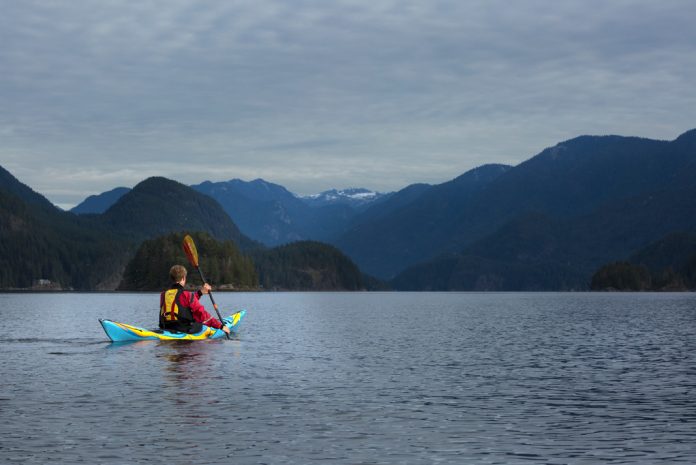
So close to Vancouver and a million miles away. | Photo: Dustin Silvey

Sprawled between the Pacific Ocean and the North Shore Mountains, Vancouver is the biggest city in the province of British Columbia. It’s also one of Canada’s most popular tourist destinations with more than 10.3 million visitors a year. Fortunately, you don’t have to venture far from Vancouver’s downtown core to find great camping and kayaking in Deep Cove.

[This article is part of the The Outdoor Adventurer’s Guide To VancouverFind all the resources you need to plan an adventure-filled trip to the city of Vancouver.]


Wildlife

Spot seals, jellyfish and orcas. And keep your eye out for Hank The Heron, who has been known to take short rests on paddlers’ boards and boats.

When To Go

Though always uncrowded, Deep Cove is popular with kayakers in the summer months. For extra peace and quiet, explore during the shoulder season when the tourists have all returned home.

Outfitters

There are several outfitters in the area, but local paddleshop Deep Cove Kayak Center has the largest fleet of kayaks and paddleboards, and also runs guided trips.

Exposure

Expect the wind to gain in the early afternoon and push north into Indian Arm. Paddlers will need solid skills in reading tides and currents and rescue techniques to venture beyond protected waters.

Diversion

Hike up Quarry Rock, located at the north end of town. The view from the top of this former quarry area stretches out across the cove and can be reached in 45 breathless minutes.

Deep Cove is a Mecca for Paddlers

Just a 30-minute drive from downtown, Deep Cove is an oasis hidden from the bustling city. Tucked along the sheltered, 25-kilometer reach of the Indian Arm fjord, this captivating coastline wows paddlers with magnificent mountains, deserted beaches and idyllic islands.

Setting out from Deep Cove in a kayak
Sleepy morning light and glassy water at Indian Arm Provincial Park. | Photo: The Travelling Umbrella // Instagram

Located at the base of Mount Seymour, the cove was once the traditional fishing area of the Tsleil-Waututh First Nation. Today, tiny Deep Cove is popular with tourists and locals alike for its excellent kayaking, paddleboarding and camping. In the last three years, this hidden gem has exploded in popularity, but you can still jump in a kayak and paddle away to explore in search of seals and orcas.

[ Plan your next paddling adventure in British Columbia with the Paddling Trip Guide ]

Kayak Excursions from Deep Cove

If you have half a day:

Launch from the town and paddle to the south, crossing the channel near Hamber Island. Be wary of boat traffic in this short crossing. Then turn north and paddle toward Jug Island. From here, you’ll have an excellent view of the fjord with the mountains behind it.

If you have a full day:

Follow the directions above and stop for a picnic at picturesque Jug Island Beach. After lunch, continue into quiet Bedwell Bay to look for wildlife before making the return journey.

If you have a weekend:

Head north and paddle the length of Indian Arm. The round trip from Deep Cove is 38 kilometers, with overnight camping at beautiful Granite Falls and Berg’s Landing. View the historic Wigwam Inn, open only to members of the Royal Vancouver Yacht Club. Extend your trip by a day to paddle the Indian River Estuary alongside seals and an array of bird life.

If you have a week:

The coastline of British Columbia offers limitless opportunity for exploration. However, to access more remote shores, Deep Cove paddlers would need to cross Vancouver’s busy shipping corridor. Instead, launch your kayak from nearby Horseshoe Bay and explore the bucket-list-worthy Sea To Sky Marine Trail, which hugs the mountainous coast of Howe Sound for 40 kilometers, all the way to Squamish.

This article was first published in Issue 60 of Paddling Magazine. Subscribe to Paddling Magazine’s print and digital editions, or browse the archives.


So close to Vancouver and a million miles away. | Feature photo: Dustin Silvey


Water Sports Foundation Veteran Appointed Chairman, U.S. Coast Guard NBSAC

WSAI WSF

Jim Emmons, a 31-year career marine industry veteran and current non-profit outreach grants director for the Water Sports Foundation, Inc.—a division of the Water Sports Industry Association—was recently appointed as the U.S. Coast Guard National Boating Safety Advisory Committee (NBSAC) Chairman by Coast Guard Captain David C. Barata, Director, Inspections and Compliance.

In this senior leadership capacity, Emmons now serves as the key communications conduit between the U. S. Coast Guard and its NBSAC members.

Jim Emmons appointed as the U.S. Coast Guard National Boating Safety Advisory Committee (NBSAC) Chairman. Photo: Courtesy Jim Emmons

“Jim has served actively and admirably on NBSAC since the Spring of 2016 and brings a wealth of experience and enthusiasm to this important role,” said Verne Gifford, U. S. Coast Guard Chief, Boating Safety Division. “We are very pleased by his appointment and his willingness to contribute his time and considerable talent to furthering boating safety efforts within the recreational marine sector.”

Emmons’ first assignment came at the onset of Covid-19 and involved planning and conducting the NSBAC’s first-ever online virtual meeting, condensing a full two-day session into a four-hour digital conference involving more than 70 participants.

“I’m appreciative of the confidence extended to me by the U. S. Coast Guard and NBSAC administrators and look forward to continued service,” said Emmons. “Boating safety is a major area of my professional focus, so I’m especially grateful to work closely with such a highly committed organization including dedicated council members in furthering important and ongoing boating safety initiatives.”

Video: River of Return

The Middle Fork of the Salmon River was named the River of No Return by settlers, who traveled downriver but could not get back up through its numerous rapids. For for the people of the Shoshone-Bannock tribes, the Middle Fork is a place to come back to, after a long absence, to reconnect with the land and their culture.

In River Of Return, join Jessica and Sammy as they guide a journey with their Newe people, reintroducing Indigenous youth to the river. Learn more and support their organization, River Newe, at rivernewe.org.

For the Shoshone-Bannock Tribes, the Middle Fork of the Salmon River has been home since time immemorial. Its people remain inextricably linked with the waters even after a history of forced removal from the landscape and generations of disconnection and trauma.

[ Paddling Buyer’s Guide: View all rafting gear ]

River of Return was directed by Skip Armstrong and screened as part of NRS’ Just Add Water Project webinar series, aimed at making outdoor recreation welcoming and accessible to all. The Just Add Water Project holds at its core that representation matters in outdoor adventure and lack of representation is a symptom of the deep roots of injustice. Watch a recording of the post-screening discussion hosted by Just Add Water guides Faith Briggs and Adam Edwards and featuring Sammy and Jessica Matsaw of River Newe, Mark Deming of NRS and Amy Kober of American Rivers. Discussion starts at 35 minutes in.

PolyOne Completes Acquisition and Announces New Name

P olyOne Corporation (NYSE: POL), a leading global provider of specialized polymer materials, services and sustainable solutions, has completed its purchase of the color masterbatch businesses of Clariant and Clariant Chemicals India Ltd. PolyOne also announced that it has changed its name and will now be called Avient.

“We proudly welcome our newest associates and valued customers from Clariant Masterbatch. They are joining us on Day 1 of this new era for our company, which as of today will be named Avient,” said Robert M. Patterson, Chairman, President and Chief Executive Officer, Avient.

Mr. Patterson continued, “Under this new brand, we bring two global leaders together to create a specialty company focused on sustainable solutions for our customers, being a Great Place to Work for our associates, and creating value for all stakeholders.”

The entry into the agreement to acquire the Clariant Masterbatch business was originally announced in December 2019.  The Clariant Masterbatch business includes 46 manufacturing operations and technology centers in 29 countries and approximately 3,500 employees, who will join Avient’s Color, Additives and Inks segment.

The combined net purchase price is $1.44 billion (see Attachment 1), representing a 10.8x multiple of 2019 adjusted EBITDA, or 7.5x including anticipated synergies.

“With this acquisition, Avient now expects over 85% of adjusted EBITDA to be generated from specialty applications,” said Mr. Patterson.  “This is up from less than 10% when our specialty journey began over a decade ago.  While we honor the legacies of our past organizations, under our new name Avient, we come together and look to the future as a world-class sustainable organization.”

The company outlined key priorities for the new organization:

  • Keeping Safety First – PolyOne and Clariant are both ACC Responsible Care® companies, and nothing is more important than the health, safety and well-being of our people.
  • Being a Great Place to Work – We listen to feedback from our associates then take action in building our high-performance culture and being a global employer of choice.
  • Advancing Inclusion and Diversity – All associates are valued and encouraged to bring their true selves to work every day.
  • Leading in Sustainability – PolyOne and Clariant are both founding members of the Alliance to End Plastic Waste. Through our four Ps of Sustainability (People, Products, Planet and Performance) we commit to meeting the needs of the present without compromising the ability of future generations to do the same.
  • Investing in Innovation – Specialty companies invest to grow, so we ensure our resources are concentrated on material science for high-growth end markets, poised for value creation in the long term.
  • Operating Globally, Serving Locally – As a truly global company, we have operations and technical expertise around the world to efficiently serve our customers…wherever they may need us.
  • Leveraging Service as Our Timeless Differentiator – We serve our customers with excellence to build trusting, lasting and collaborative relationships.
  • Delivering Financially for All Stakeholders – Performance is inextricably linked to the investments we make in People, Products and Planet. Capturing acquisition synergies and solidifying Avient as a specialty growth company ensures ongoing longevity and value creation for our associates, customers, communities and shareholders.

Mr. Patterson concluded, “These endeavors are made possible by the joining of our businesses. We are better together.”

In conjunction with its rebranding and new name, the company’s ticker symbol will change from “POL” to “AVNT,” effective at the start of trading on July 13, 2020. As of that date, the “POL” trading symbol will no longer be active.

About Avient

Avient Corporation, with 2019 revenues of $2.9 billion, provides specialized and sustainable material solutions that transform customer challenges into opportunities, bringing new products to life for a better world. Examples include:

  • Barrier technologies that preserve the shelf-life and quality of food, beverages, medicine and other perishable goods through high-performance materials that require less plastic
  • Light-weighting solutions that replace heavier traditional materials like metal, glass and wood, which can improve fuel efficiency in all modes of transportation
  • Breakthrough technologies that minimize wastewater and improve the recyclability of materials and packaging across a spectrum of end uses

Avient employs approximately 9,100 associates and is certified ACC Responsible Care® and a founding member of the Alliance to End Plastic Waste.  For more information, visit avient.com.

Torqeedo Management Team Changes

Torqeedo logo

T orqeedo, the market leader for marine electric drives, is announcing a reconfiguration of its management team, which in future will comprise Dr. Ralf Plieninger and Dr. Michael Rummel. Founder and CEO Dr. Christoph Ballin is moving to the Advisory Board where he and Dr. Frank Hiller, Chief Executive Officer of DEUTZ AG, will continue to advise and support the company.

“As the founder of Torqeedo, Christoph Ballin has been a pioneer in the field of electric drive systems. He built up Torqeedo and played a major role in the integration of the company into the DEUTZ Group following its acquisition in 2017. We would like to thank him for everything he has done for Torqeedo and, consequently, for DEUTZ. We are delighted that he will continue to assist us in his capacity as a member of the Advisory Board,” says Dr. Frank Hiller.

Dr. Ballin’s move to the Advisory Board means that he will be able to devote time to new roles outside Torqeedo in the future. “I would like to thank everyone who has helped to make Torqeedo what it is today: the market leader for marine electric drives. I would also like to thank all the members of the Torqeedo team and all of our external partners who have helped us to achieve this success,” says Christoph Ballin. “The most exciting times for electric-powered transport lie ahead of us. As part of the DEUTZ Group, Torqeedo is ideally positioned for rapid growth.”

Dr. Ralf Plieninger has been with Torqeedo since 2012. His role within the new Torqeedo management team will involve taking charge of all technical matters, including research & development, procurement, quality, and production. He will also oversee Torqeedo’s operational structures and processes and be responsible for their continuous optimization.

Dr. Michael Rummel joined Torqeedo as a managing director in November 2019 and is responsible for finance, reporting, and business performance, with a focus on improving profitability. Going forward, he will also take charge of sales, service, marketing, human resources, information technology, and the international subsidiaries.

Torqeedo currently offers electric and hybrid drives with power outputs of between 0.5 and 100 kW for commercial applications and leisure use. All Torqeedo drives share an uncompromising focus on high-tech, maximum efficiency, and full systems integration.

In 2020, Torqeedo celebrated its 15th anniversary and the fact that 100,000 boat owners have chosen a Torqeedo system over a higher-emission alternative.


About Torqeedo:

Torqeedo is the market leader for electric mobility on the water. Founded in 2005 in Starnberg, the company develops and manufactures electric and hybrid drives from 0.5 to 100 kW for commercial applications and recreational use. Torqeedo products are characterized by an uncompromising high-tech focus, maximum efficiency and complete system integration. Torqeedo is part of DEUTZ Group, one of the world’s leading manufacturers of innovative drive systems.