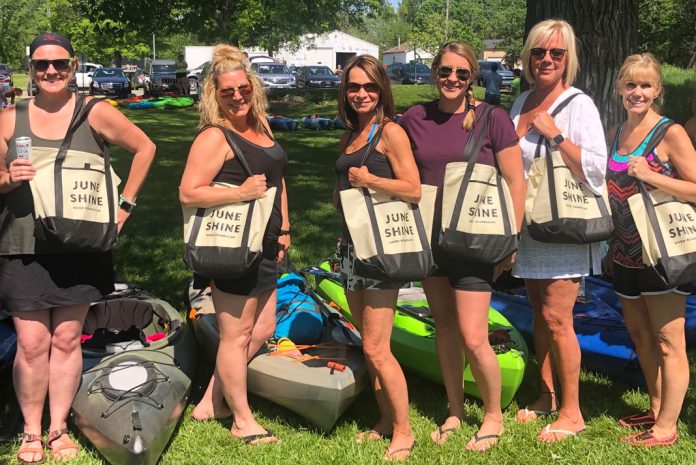
Event participants were given a tote bag full of products and snacks to sample. | Photo: Shelby K
Team Talent, an outdoor marketing agency located in Northern Illinois, was proud to host an all women’s kayaking event by the name of Sip & Paddle 2020. The event was a major success with a full attendance, captivating educational discussions regarding the paddling trails in the area, environmental etiquette as well as mindfulness practices in the Great Outdoors.
Our event began with introductions to one another including many laughs and an abundance of excitement to start our journey on the Nippersink Canoe River Trail in Richmond, Illinois. The sun was out, it was warm with a slight breeze and everyone was immersed in nature. It was the perfect day for a paddle! Shelby Koutas, a founder of Team Talent, began with our first led discussion on mindfulness and wellness in the outdoors. Shelby educated individuals on the basics of mindfulness, outdoor mindful therapy, and the importance of this practice for your mental state especially during these difficult times that many have been experiencing.
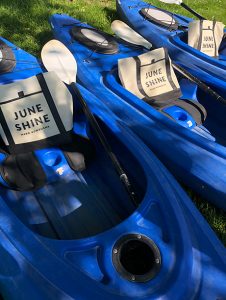
The mindfulness discussion was appreciated by everyone and next all gift bags were distributed including all of the sponsored goods. A short and sweet introduction on each sponsor involved in the event was provided. The Official Media Sponsor for the event was Paddling Magazine with a free digital subscription to each participant involved. JuneShine, a hard organic kombucha beverage company out of Oregon, donated cute tote bags to give to all paddlers and hold all of their sponsored goods. We loved connecting with JuneShine as they were an honest company we hope you would support too! Oatmeal bites from Bobo’s Baked Goods out of Boulder, Colorado were included and loved by all paddlers. Dot’s Pretzels from North Dakota were a hit as everyone loved the flavor in the recipe and stated they would be purchasing these tasty pretzels from now on as they never had them previously.
Then there were the natural energy drinks donated from BUBBL’R out of Wisconsin. Everyone enjoyed their BUBBL’R beverage thoroughly with hopes to purchase more at their local stores. Paddlers noted they have not discovered a healthy and fruitful energy drink until we introduced them to BUBBL’R. L’il Suckers donated drink holders to hold our drinks on our kayaks—everyone was impressed with the innovative and creative design. Wet ‘n Wild Outfitters out of Richmond, IL provided kayak rentals and included a shuttle back to our vehicles with our kayaks and enough room for all 10 paddlers. Team Talent is extremely grateful for all of our sponsors and their generosity for the Sip & Paddle 2020 event. The participants truly loved each and every item donated and have formed new ties with each company including now being lifelong customers.
JuneShine donated tote bags to the event. | Photo: Shelby K
As we consumed these snacks and beverages during our paddle journey there were several pit stops for breaks. At one of the stops an environmental etiquette speech was conducted. Krystal Lee, a co-founder of Team Talent, hosted an educational talk regarding Leave No Trace, which is a non-profit organization creating a standard for outdoor ethics. The speech conveyed the seven Leave No Trace Principles in hopes all individuals can prepare and enjoy the outdoors safely and responsibly for present and future events.
As the Leave No Trace speech wrapped up, the paddle continued. The overall paddle was just short of 7 miles, a beginners route as paddlers went with the current and through some exciting small rapids and tree canopies. The event was intimate and allowed women to be immersed in nature as well as form friendships with other women in the outdoors. Each individual had an amazing time and they were grateful for the opportunity to enjoy nature with other like-minded individuals. All attendees would love to participate in another Sip & Paddle hosted by Team Talent and expressed excitement to learn about any other future outdoor events!
Team Talent, an outdoor marketing agency, promotes their passions by supporting outdoor brands, products and services that we believe in. We strive to create a community in the outdoors by creating attainable outdoor events for all levels such as the Sip & Paddle, to educate others and create a welcoming environment!
A round of applause to the Great Outdoors, all sponsors, paddlers and those involved. We cannot wait to get back on the water with future kayaking events so stay tuned and cheers until next time!
Team Talent LLC
Shelby & Krystal
Co-Founders
The Paddling Magazine Event Network is our exclusive media sponsorship program that provides kayaking, canoeing, SUP and whitewater events national exposure to help promote paddling events to paddlers across the country.
If you would like your paddling event to be part of our Paddling Magazine Event Network please click here to submit your event.
Paddles may feel shorter than they appear. It’s time for paddle manufacturers to create a universal sizing tool to better fit kayakers, says writer Brian Day. | Photo: Kevin Light
Years ago, when I was working at a prominent paddlesports retailer in Madison, Wisconsin, I had a chance to try some new sea kayak paddles. They were carbon fiber with wide, compact blades and intended to be used with an upright, high-angle forward stroke. I grabbed a couple of the new kayak paddles in 215-centimeter lengths and, for comparison, I brought a 215-centimeter paddle from a different manufacturer I had used for the past several seasons.
On the water, the new paddles were light and buoyant. They braced well and transitioned from stroke-to-stroke better than the paddle I had been using. Despite this, something felt a little strange. The catch felt different. Slower maybe. Not as assertive.
At first, I assumed this was due to the shape or size of the blade. Later, on the beach, I realized it didn’t have to do with the blades at all. It was the shaft length.
The compact blades of the new paddles were shorter than the blades of my old paddle. When I set the three paddles side-by-side on the grass, it was obvious the new paddles’ shafts were five to 10 centimeters longer than the paddle I was used to. With longer shafts, the paddles felt longer in the water. In my hand, the 215-centimeter paddle felt like a 220 or 225.
I went back inside and pulled shorter versions of the new paddles off the shelf to try, this time taking care to ensure the shaft length matched my old paddle. Back on the water, the results were dramatically different. The new paddles had a quick, assertive catch. A small change in shaft length had a significant impact on performance.
Charged-up by my discovery, I headed to the sales floor and started comparing the shaft lengths of all the paddles we had on the wall. High-angle, low-angle, and by all manufacturers. The results were illuminating.
Shaft length varied widely across models and brands at any given overall paddle length. Some paddles, with long slender blades intended for low-angle paddling, had surprisingly short shafts. Short enough to make it difficult to use them with hands held low. Others had compact blades and long shafts. The overall length of the paddle seemed to have little relationship to the shaft length, regardless of which paddle I picked up.
Why shaft length matters
This is a problem because shaft length sets the angle of the paddle during the forward stroke. In the forward stroke, you want the blade of the paddle fully immersed without burying the shaft underwater. This means a paddle with a longer shaft requires the blades placed farther from the centerline of the boat. If you’re trying to keep your hands low, you need a long shaft to allow you to get the blade fully immersed at a low angle. If you’re trying to keep the blade close to the boat for a powerful forward stroke, you need a shorter paddle shaft.
You might expect longer paddle shafts would lead to longer paddles, and vice versa, but this isn’t always the case. Kayak paddle blades optimized for low-angle paddling are typically longer and narrower than those more suited to an upright stroke. This difference can result in some confusing paddle length recommendations. The other day I worked my way through an online paddle fitting exercise to see what size the manufacturer recommended for my height and boat width. When I compared the paddles recommended, I discovered the shaft of the low-angle paddle was actually shorter than the shaft of the high-angle model.
Paddle shaft length determines how a paddle feels in use and whether it is best suited to use with a low hand position or an upright forward stroke. If all paddle blades were the same length, it would make sense to size paddles by overall length. They aren’t. Some blades are long; some are short. This means the current industry approach of sizing kayak paddles by overall length is wrong. It’s time for a better approach.
Changing the way we shop for paddles
Through trial and error, I learned what length paddle shaft works best for me. When I’m choosing a kayak paddle, I compare the length of the shaft to what I’m already using. I don’t pay much attention to the overall length. My paddle quiver contains paddles varying in total length, but they feel similar in the water, regardless of whether they are 205 or 215 centimeters long.
Once you know what length paddle you prefer, it’s easy to compare shaft lengths and pick a new paddle with a similar feel. But what about people who are just getting into the sport?
A new way to size customers for paddles
It’s time for paddle manufacturers to take a page out of the footwear playbook and create a paddle shaft sizing tool similar to the metal Brannock device ubiquitous in shoe shops and used to measure feet to determine shoe size. It wouldn’t be hard to do. All you need is an adjustable length paddle shaft with no blades on it. In the kayak shop, a customer could sit on the floor or on a low stool to simulate the paddling position in her kayak. She would then hold the kayak paddle sizer and shorten or extend the length until the lower end of the sizer touched the floor and her hands were in the appropriate position for forward paddling.
For an upright stroke, the sizer would be shortened until the top hand was at shoulder level and the paddle was at a high angle. For a lower stroke, the sizer would be lengthened until the hands could be held comfortably low.
Once the fitting tool has been adjusted, walk over to the paddle wall and compare the length of the sizer to the available paddles. Pick a model with blades appropriate for your preferred forward stroke and then select the size most closely matching the shaft fitter. Don’t worry about the overall length; it doesn’t matter much.
Creating a paddle shaft sizing tool seems like a straightforward way around the wide variation in paddle shaft length found in the marketplace. If such a tool were to be commonly used, I suspect we would discover many of the paddles sold over the past couple of decades have been the wrong size.
Influencing paddle manufacturing for the better
The kayak industry is in the midst of synthesizing the best influences from the Pacific Northwest and British sea kayaking traditions. Historically, paddles used in the West Coast style have been longer and more suited to a lower angle forward stroke. Those from the British style have tended to be somewhat shorter, likely because of the influence of training in whitewater kayaks before transitioning to sea touring in the UK. Whatever the reasons, the collision of these two schools of kayaking over the past 30 years has resulted in a squeezing of paddle sizes a bit toward the middle, mostly resulting in low-angle paddles getting shorter. And this doesn’t work.
If your paddle gets too short, you can’t use it with your hands held low. You’ll bang your knuckles on the boat. After you do this a few times you’ll naturally drift toward a more upright stroke that is appropriate for the shaft length of your paddle and you won’t be using the relaxed, low-angle stroke you had intended to use.
What we’ll discover with widespread use of a paddle shaft sizing tool is low-angle paddle lengths will begin to trend longer again. I expect we’ll also see paddle lengths get shorter for high-angle forward paddling, as people discover the blades of some paddles call for much shorter shaft lengths than they had expected. And as some paddles get longer and others get shorter, kayakers will get a better fit.
Contrarian Brian Day has been paddling sea kayaks, teaching kayak skills and sharing unsolicited opinions about outdoor gear since the early ‘90s. He blogs at www.kitchi-gami.com. Please direct your rebuttals to editor@paddlingmag.com.
Paddles may feel shorter than they appear. It’s time for paddle manufacturers to create a universal sizing tool to better fit kayakers, says writer Brian Day. | Photo: Kevin Light
Despite its rainy image, portland gets less annual rainfall than New York and Houston. However, it does have many cloudy days with light precipitation, especially in winter. | Photo: Neil Schulman
If you wanted to design the perfect paddling town, here’s what you might do. Place it at the junction of two broad rivers, one threading all the way from the Canadian Rockies to the Pacific, the other draining most of western Oregon. Pepper the rivers with islands. Then dig one of them into a dramatic cliff-lined gorge. Now build a mountain range with massive, glaciated stratovolcanos pumping out meltwater all summer long. Send some of those streams flowing into that gorge, where waterfalls plunge off the cliffs.
Weather
Summer is spectacular; expect afternoon northwest winds. Spring is less predictable and boasts massive wildflower blooms. Fall is a roll of the dice; winter is wet.
Re-use your water
Portlanders use water four times: first to ski on Mt. Hood, second as whitewater in the steep rivers, third in the Columbia and Willamette Rivers in sea kayaks, and then in the ocean for surfing and rock gardening.
Other liquids
Portland has 84 craft breweries, one per every 7,621 residents. Seek out Gigantic Brewing in southeast Portland and Breakside Brewing near the Columbia. There are 34 independent coffee roasteries if you’re moving slowly the next morning.
For variety, add another mountain range to the west, and lace it with more rivers. Add a rugged coast and fill it with dramatic cliffs, arches, sea caves and surf beaches. Scoop out some protected bays for easier paddling. For good measure, toss in some mountain lakes. Put all that within a two-hour drive of the city center. Now add the final ingredient—rain and moderate temperatures in the winter, and sunny, warm summers.
If you did all this, you’d create Portland, Oregon. Here the kayaking season is year-round and kayak routes are everywhere. In The Paradox of Choice, psychologist Barry Swartz describes how people can easily decide between three or four options, but struggle when confronted by a vast number of choices. Welcome to the dilemma Portland kayakers face every weekend.
If you have half a day
Plop your boat in the water in the heart of Portland for a spin around Ross Island, a five-mile loop around a forested island in the Willamette River with a bald eagle nest and a great blue heron rookery. You’ll share the water with rowing shells, canoes, outrigger race teams, standup paddleboards, and just about every type of human-powered craft you can imagine.
If you have a full day
Circumnavigate Bachelor Island on the Columbia River, a nine-mile loop through nearby Ridgefield National Wildlife Refuge. You’ll start in quiet sloughs with lots of waterfowl, herons and birds of prey. Then you’ll enter the wide Columbia. Dodge big ships as you cross to Warrior Rock lighthouse. To extend your paddle, explore the Lewis River, Sand Island or Scappoose Bay before re-crossing the Columbia and paddling back up the Lake River to Ridgefield.
[ Paddling Trip Guide: View all paddling trips in the United States ]
If you have a weekend
Go coastal. If you have ocean skills and good conditions, paddle out the Salmon River mouth to Cascade Head. Explore the gorgeous headland’s sea caves, and look for whales and sea lions. On the way back, stop on the spit to sprawl on the sand. If the sea is big, paddle the protected wildlife-rich salt marsh. On day two, head north to Pacific City. If Poseidon is friendly, paddle to Cape Kiwanda and around Haystack Rock and add some surf play. Or explore protected Nestucca Bay.
Paddle the Lower Columbia River Water Trail, 144 miles from Bonneville Dam to the sea at Astoria. Pass through the massive cliffs of the Columbia Gorge, the metropolis of Portland, mazes of islands, and the lower river, with tidal influence and sea-like expanses. Camp on uninhabited islands. Trace the route of Lewis and Clark’s Corps of Discovery in 1805-06. Best in spring, when high flow whisks you along, and before summer’s upriver winds.
Despite its rainy image, portland gets less annual rainfall than New York and Houston. However, it does have many cloudy days with light precipitation, especially in winter. | Photo: Neil Schulman
Goddess of the sea in her natural habitat. | Photo: Jaime Sharp
When Freya Hoffmeister asked me to accompany her on part of her quest to circumnavigate North America, I jumped at the opportunity. We would paddle down the California coast through the Channel Islands, an 11-day blip in a 30,000-mile journey she expects to take 10 seasons to complete.
I was curious what it would be like to paddle with this powerhouse. I heard stories about Freya from all over the world—mostly about an unrelenting speed demon—and had met a couple of men with broken hearts and egos from their time with her. Would I keep up? Could I last? Were there more than great white sharks to worry about on this trip?
Freya was looking to make more than just miles on her North American odyssey. On previous journeys, she paddled solo and unsupported, including around Australia (2009) and New Zealand (2007), and around South America over four years (2011-2015). She’s gone from doing trips in one continuous leg to having them broken up over years. On this epic trip, and for the first time, she asked other paddlers to join her for segments.
After meeting up at the Lumpy Waters sea kayak symposium in Oregon, we traveled south to our put-in at Port San Luis, California. Swell built as we set off from our placid beach and worked south down the rugged coast under the California sun. At the end of our first day, we came in through dumpy surf, smashing sand and spray up the beach. It took multiple attempts to leave the next day, and Freya asked me to help launch her, signaling someone who wasn’t beyond asking for assistance.
Despite two lovely days paddling in the sun on a pulsing Pacific coast, things changed when we reached Point Conception. Not only were we paddling in one of the most active great white shark areas—later we met a local shark researcher who told us he saw two huge sharks in the area we had paddled through 35 minutes earlier—we had timed it perfectly for sundowner winds ripping offshore from the point late in the day. Heavy winds, whitecaps and building onshore swell had us scraping into a military base behind a severely exposed breakwall where people on the dock helped pull our gear and kayaks up a ladder.
Most nights, we settled into a great campsite as the sun set and awoke to thick fog. Crossing from the mainland out to San Miguel Island was a 23-mile slog on surprisingly calm seas. As the sky darkened at the end of the day, we found ourselves paddling amongst playful sea lions as we landed on a beach to find camp.
The Channel Islands are one of the wildlife wonders of the world. As we paddled through the exposed group of islands over the next few days, giant elephant seals and the curious sea lions often covered the beaches and little foxes came by almost nightly to inspect our camp and kayaks.
[ Paddling Buyer’s Guide: Find everything you need for a sea kayaking trip ]
It’s an area of intoxicating beauty and harsh climate. I increasingly found Freya—the self-proclaimed goddess of the sea—like the sea herself. Strong, steady and ever-present, but also harsh and unrelenting at times. Despite our frequent disagreements, we laughed a lot and enjoyed not having to babysit each other on the ocean.
While she claims not to be a speedy paddler like many stereotype her, she does declare an absolute love and joy for efficiency. To many, this could be interpreted as a love for speed, and it certainly made me feel slow and clumsy in camp at times. Despite previous longer and more challenging expeditions, when we paddled off East Anacapa Island and landed in Malibu on the mainland after 10 days together, I was grateful for the journey yet tired emotionally and physically.
I had lived, I had kept up, but keeping pace with Freya is no walk in the park. Like the ocean, she is a force of her own.
Jaime Sharp is a professional photographer and sea kayak guide. Freya Hoffmeister paused her North American circumnavigation on March 21, 2020, due to the coronavirus crisis.
Goddess of the sea in her natural habitat. | Photo: Jaime Sharp
Popular camp slogan: WHAT ARE YOU DOING THIS SUMMER? Campers: AHH... NOTHING. | Photo: Scott MacGregor
Before I foundthe official notice in my inbox, I saw my daughter’s Instagram story. A collage of six photos, all girls her age, nine of them, her cabin group. In the photos, they are sitting on the swim dock shoulder to shoulder. They are in massage circles, arm-in-arm on the playing field and piggybacking. They are elbow to elbow on long benches in the dining hall with 130 more boys and girls who are more likely to abide by the five-second rule than they are any strict government policies on physical distancing. It would be an unenforceable rule and incontestably counterculture to what makes summer camp awesome. And so, this will be the first summer ever in its 67-year history that Kate’s summer camp will not come alive with campers, councilors and campfire songs.
It’s not just overnight camps that are canceled this summer, of course. The outdoor industry, as we know it, has been mothballed, at least for the spring. Health experts agree social distancing is best from a not-spreading-the-virus perspective. But there are going to be unforeseeable long-term emotional and cultural consequences. How we interact in the outdoors may never be the same.
My dad was years ahead of his time. He was a born and raised social distancer. And he passed this down to my brother and me. He was a truck driver and a mechanic, a hunter and a fisherman. He could put anything back together and skin a buck, but he wasn’t a hugger.
“I love you son,” was implied and understood with an extra jug of windshield washer fluid and a stoic nod as I drove off to a four-year outdoor recreation university degree program to start my new life as a born-again, albeit awkward, hugger.
Having spent 25 years living among paddlers, skiers, mountain bikers, climbers and hikers, I now appreciate the physical connection and closeness of our friendships. It is part of the culture and one of the unspoken and underappreciated benefits of the outdoor community.
Research suggests being close together triggers the release of the feel-good hormone, oxytocin. Oxytocin is good for us, and levels rise when we hug, touch or sit around campfires well within the now recommended six-foot social distancing guidelines.
Our pre-COVID touchy-feely hippy outdoorsy cultural normal enhances our psychological resources, such as optimism, self-esteem and mastery. We typically hold more favorable expectations about the future, have a higher overall evaluation of self-worth and believe we can determine our behavior and bring about desired outcomes. Every summer camp and outdoor program website promises this. But they often attribute it to their 1,000 pine-scented acres, climbing walls, guitar lessons, skits, kayaking, polar bear dips and wilderness canoe trips.
Maybe.
Or maybe it’s not the activities or nature at all. Maybe it’s as simple as all the human interactions happening within a close physical distance. Judging by the photos Kate shares on Instagram, it probably is. It’s probably good her camp is canceled. It wouldn’t be the same six feet apart.
[ Paddling Buyer’s Guide: Find everything you need to make sweet summer memories here ]
Also canceled this summer are the outdoor industry trade shows. For the first time in the history of this magazine, our editors will not be traveling to convention centers to preview next year’s paddling and camping gear.
That’s okay; I don’t think we’re ready either. Now that we can’t hug hello or even shake hands, it’s not just the kids who need to find a new normal. I don’t think we’re emotionally ready for the toe-heel-tap, or worse, the socially responsibly but so ’90s finger pistol guns.
It’s too soon. It’s going to take a while to go back a generation or two and remember how to say I love you without a hug.
Scott MacGregor is the founder and publisher of Paddling Magazine. At the time of printing, the province of Ontario has prohibited all overnight camps from opening this summer.
Popular camp slogan: WHAT ARE YOU DOING THIS SUMMER? Campers: AHH… NOTHING. | Photo: Scott MacGregor
There are many reasons you may want to improve the stability of your kayak.
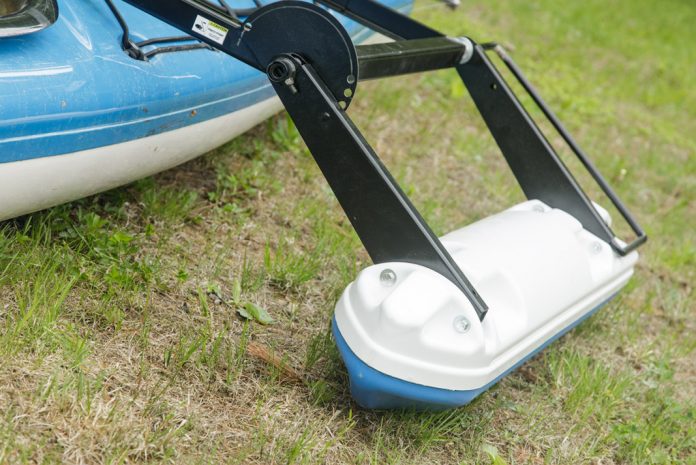
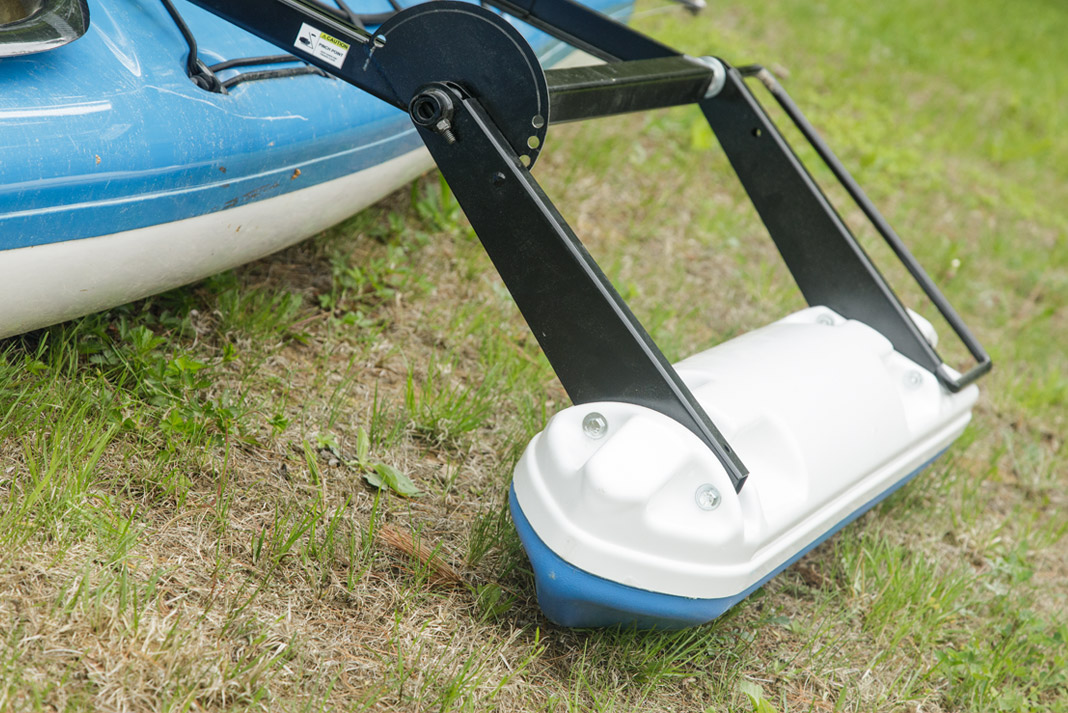
If you find yourself thinking, “This kayak just isn’t steady enough,” you just might be in the market for an outrigger. What are kayak outriggers? Simply put, they’re like training wheels for a kayak; they’re flotation devices that essentially widen the bottom of your boat, giving you more stability. They usually take the form of an arm protruding horizontally from the side of your kayak with some kind of pontoon at the end.
But why would you want them? Remember, they’re all about stability. There are a number of situations in which you may find your boat simply isn’t stable enough. Perhaps you’re on a long stretch of water where using a sail would be absolutely perfect, but you know rigging a sail up would compromise your stability. Outriggers can help with that. Or, maybe you’re just starting to get into kayak angling, but don’t feel totally stable rigging up rods, reeling in fish and taking your catch off the hook in your boat. An outrigger would help with that.
If you’re tall, heavy and always feel unstable in a kayak, then you can already imagine—an outrigger would help with that. And if you simply don’t feel safe in a kayak, an outrigger would help.
There are many reasons you may want to improve the stability of your kayak.
Types of kayak outriggers
Kayak outriggers, also known as kayak stabilizers, come in a couple different variations. The main two are inflatable or solid kayak stabilizer systems. Inflatable outriggers use inflatable pontoons that have a bladder with a tough outer membrane. They’re easy to store, are lightweight and can be inflated using your mouth; however, they are susceptible to punctures from rough terrain or your fishing equipment.
Solid kayak stabilizer kits use solid floats to offer more stability. Often made of PVC, these things are rugged and can be bashed off sharp rocks without concern. Of course, they’re a bit more difficult to store than inflatable options, and tend to be more expensive and heavier.
Most outriggers are highly adjustable, allowing you to find the right spot on your boat for them. Horizontal arm lengths vary as does the attachment method.
How to find the right outrigger for your kayak
If you’ve decided you need outriggers, you probably have all kinds of questions, one of them being, “How long should a kayak outrigger be?” Generally outriggers are between 30 to 36 inches long. They’re usually placed about three-quarters of the way toward the stern, just behind the seat. This keeps them out of the way of your paddle. Of course, this is all up to personal preference.
There are also some outriggers that lift out of the water, providing you with the ability to easily switch between paddling with or without their assistance as conditions change.
How to install outriggers on a kayak
There are a couple different mounting options, some easier than others. Some require you to drill a couple holes in your boat, some don’t. It’s certainly something to consider when shopping for outriggers.
Of course, it’s best to make sure the kayak stabilization kit is compatible with your boat before purchasing it. Any of the reputable outriggers will come with installation instructions. Following their directions, you’ll often have to drill a couple holes in your boat. If you’re totally uncomfortable doing this, your local outfitter should be able to do it for you.
Remember, you can’t un-drill holes! First, figure out the right location on your boat and mark it. When you’re ready to begin drilling, start with a smaller drill bit and switch it out for gradually larger ones to ensure you get the hole in just the right spot.
[ Paddling Buyer’s Guide: View all kayak stabilizers ]
DIY kayak outriggers
Of course anything you can buy, you can make yourself. A DIY kayak stabilizer is totally in the realm of possibility for the avid handyman (or woman!). You can build them from all kinds of materials available at the local hardware store: PVC plumbing pipe, old water bottles or crab pot buoys. You can even go full MacGyver and build it out of bubblegum and duct tape!
The great school of Youtube is probably your best teacher on this. A quick search will give you all kinds of results—some are 18 minutes long, some are six minutes and all have varying levels of useful information. Our best advice? Watch them all and take the best tips from each. Just make sure you test the stability of your homemade outriggers close to shore on a calm body of water before fully putting your trust in them.
Choosing challenge, simplicity and smallness in the face of modern comforts is the kayaker’s most counterculture act.| Photo: Harry Daley
I’ve been settling in for winter by picking up a musty hardcover, Seekers of the Horizon: Sea Kayaking Voyages from Around the World. California paddler Will Nordby edited the 11 stories within and released the book 30 years ago.
Nordby took his inspiration from an even older book, Folbot Holidays by Jack Kissner, published in the 1940s, which he found in a used bookstore when he was a new kayaker. “I like to think my anthology represents a passing of the torch for the current generation of kayakers,” Nordby mused at the time. “Perhaps some future generation might discover it in a used-book store.”
Ha! Nordby could not foresee my generation would be far more likely to instead discover his book thanks to an Internet search algorithm. Then have it shipped across the continent via a reseller on Amazon.com.
Much has changed since the time of Nordby’s stories—the opening tale describes an emergency kit with “dimes for the telephone”—but I’m amazed by how much the kayaking experience has not, even as our technology has advanced.
To arrive at this conclusion, first I had to actually read the book. I want to say I eagerly devoured Seekers the second it appeared in my mailbox. Instead, I treated it like radioactive Kryptonite. It got stuffed into my wardrobe, buried in a pile of clothes. Then it moved to my bedside table, then to my desk, collecting dust.
All the while, I was busy keeping away from a sea kayaking book of my own. This year, I had resolved to finally write about my 80-day kayak trip down Canada’s West Coast way back in 2002. After 17 years of gestation, I figure the thoughts should be about the right vintage now.
This might be surprising coming from the writer of a column about kayaking in a paddling magazine, but the very idea of reading a book—let alone writing one—about kayaking struck me as totally dull. I know how all these stories go, including my own. There’s some bad weather, minor mishaps. Some cold and discomfort. Lots of references to meals eaten. Clumsy attempts to describe the indescribable landscape. And then some canned revelation about how meaningful it all was. Ho-hum. I just remembered I have laundry to do.
Months later, when I finally launched into reading the first story about Paul Kaufmann’s regular paddles in San Francisco Bay, I was enchanted with an insight into a kayak journey which happened 50 years ago. Surprisingly antiquated and yet refreshingly familiar.
Kaufmann uses a wooden paddle, pigskin gloves and rests his feet on a piece of sheepskin and repurposed conveyor belt. He ties a plastic dog leash to his coffee thermos so he can fetch it from deep inside his kayak, presumably before bulkheads and day hatches arrived on the West Coast. He’s the guy who packs dimes for the telephone. There was hardly anybody paddling under the Golden Gate back then. And yet, every feeling he describes—gradually growing comfortable with the water and, over time, being changed by it—is familiar. He could be writing today. He could be a fellow paddler, a friend.
Reading an actual book in public, I stand out.
Choosing challenge, simplicity and smallness in the face of modern comforts is the kayaker’s most counterculture act.| Photo: Harry Daley
“What is that thing?” someone looks up from their phone to ask, and I have to wonder if they’re serious.
The pain of reading nowadays is palpable, like the slowness of walking when used to driving. Or the difficulty of running when out of shape. It’s not unlike the beginning of a trip, feeling a little bit uncomfortable in the new element, and shocked by the slow pace.
“Maybe in the age of the smartphone, reading a book about kayaking is a revolutionary act,” I suggest to my wife one evening. “Maybe writing a book about kayaking is a revolutionary act—maybe kayaking itself is a revolutionary act!”
“Oh, come on!” she scoffs in a voice she reserves for making fun of dumb things men say. “If you said this in public, people would throw tomatoes at you!”
Okay, revolutionary may be too strong a word. But kayaking is certainly going against the grain. Maybe in this Anthropocene epoch of extinction, the time to do things slowly is endangered too, succumbing to the destruction of mental habitat, the psychological wildness razed by chronic overstimulation.
[ See the largest selection of boats and gear in the Paddling Buyer’s Guide ]
Once I started thinking in terms of revolution, I saw it everywhere. To all the writers in Seekers, kayaking is a countercultural act. It always has been.
In Matthew Futterman’s recent book Running to the Edge, about the history of American distance running, he notes we forget about the sport’s rebellious roots. Back in the ‘60s and ‘70s, normal people didn’t exercise, and distance runners were a misfit band of hippies, borderline mystics chasing an elusive natural high at the limits of human endurance.
The kayaking boom was part of the same cultural moment, the one which gave rise to Nordby’s book, full of renegades battling the perceived dangers of going to sea in a tiny boat. Like firecracker Audrey Sutherland who half-swam and half-paddled surf-battered Molokai in a mail-order inflatable. “I was figuring out my systems as I went along,” she writes. “In all my reading about the sea, there wasn’t any guideline for this kind of expedition. It was all trial and error, mostly error.”
These adventures happened before kayaks were widely available, before Paddling Magazine and the Internet. Few of these paddlers had much outside knowledge of what anyone did before, or the sanctioned way to go about it. They were responding to an inner calling, deep in the human spirit, to go out and be one with the water, to make themselves tiny and vulnerable in the face of nature.
John Bauman tries to reassure the skeptical Icelandic authorities it’s not insane to paddle a kayak around their country. In the 1940s, Susan Meredith has to convince the captain of the government vessel on which she’s working along the Alaskan coast that she’s not nuts to purchase one of the local skin kayaks, which marks the beginning of a lifelong passion. Nordby eschews the plush tourist cruise to Glacier Bay, opting instead to camp out in the rain, amongst the bears.
[ Plan your next paddling adventure with the Paddling Trip Guide ]
Understated but pervasive is the thread of defiance and pride at doing this most unconventional thing, nose-thumbing at the bystander’s judgment that taking to big water in such a small, slow boat is boring or dangerous. “You’re crazy to be out there in that thing,” each writer is told.
Every one of these writers is a rebel paddling against the current of civilization, a free spirit choosing the hard way, choosing challenge, simplicity and smallness over the mainstream default toward the comfortable, easy and safe. This pattern of challenge-seeking forms the tapestry of a meaningful life.
If revelation comes at the end of a kayak trip, or the end of the story, it’s the payoff for doing things the hard way. In these days when there’s too much fighting between those who say we have to give things up and those who refuse, it’s helpful to remember sometimes less is more, and with great challenge comes great reward.
It reminds me of a quote from Bohemian-Austrian poet Rilke in another book I’m plodding through: “If only we arrange our lives in accordance with the principle which tells us we must always trust in the difficult, then what now appears to us as the most alien will become our most intimate and trusted experience.”
Choosing challenge, simplicity and smallness in the face of modern comforts is the kayaker’s most counterculture act. | Featured photo: Harry Daley
Using the proper handwear is essential for paddling in different seasons.
Want to keep paddling into autumn and winter, but can’t seem to keep your hands from freezing? Want to paddle all summer in the sun, but don’t want your hands to shrivel up and look like prunes at the end of the season?
It’s time to get yourself some kayak gloves!
[ Paddling Buyer’s Guide: View all paddling handwear ]
Do you need gloves for kayaking?
There are several reasons to wear gloves while kayaking. Sun protection, wind protection, cold protection, or maybe even protection from calluses and blisters are just a few of the reasons to wear kayak gloves.
When kayaking in weather colder than 0° Celsius (32° Fahrenheit), some sort of kayak gloves, mittens or pogies are absolutely essential. They become necessary for not only comfort, but also safety. If your hands are too cold to pull your sprayskirt, or grab onto rocks on the river bank to hold onto, then you become a burden on your paddling partners. If your hands are too cold to operate a throw bag, then you are unhelpful in a rescue situation. Thus, if you are paddling in the winter when it is cold, kayak gloves are essential.
Using the proper handwear is essential for paddling in different seasons.
Types of handwear for kayaking
Gloves
Kayak gloves are made out of durable neoprene. They work just like any other pair of gloves, and keep you warm by trapping body heat against your skin.
Some people also like to use kayak gloves in the summer as a layer of protection against the sun. Most of these gloves come as the fingerless type, with the tips of the fingers being free to tackle any task that may come up.
For a good pair of warm kayak gloves, check out the NRS Maxim Gloves.
Advantages
One of the advantages of using kayak gloves as opposed to mitts or pogies is that they retain your dexterity. You will still be able to do simple tasks with your fingers, like buckling your helmet or unzipping your PFD pocket. You will also be able to safely use a throw bag in case of a rescue. Some find that gripping the paddle is easier in gloves than in mitts.
Disadvantages
A disadvantage of using kayak gloves is that they tend to be less warm than mitts or pogies. Because your fingers are spread apart rather than bunched together, they produce less heat and lose heat faster than they would in mitts or pogies.
[ Paddling Buyer’s Guide: View all paddling gloves ]
Pogies
Pogies function in a similar way to kayak mitts, but instead of being attached to your hands, they are attached to your paddle. Pogies use a velcro system that wraps around the paddle shaft, allowing the paddler to fully grip their paddle with their bare hands, while having their hands fully covered and protected by a neoprene layer.
Advantages
Pogies are advantageous to use in cold weather where you will need to have access to your fully-functioning fingers as fast as possible. Pogies are good for paddling harder whitewater in cold weather as you will not lose any dexterity in your fingers, and will be able to perform rescues just as fast as if you didn’t have anything on your hands.
Disadvantages
Pogies are disadvantageous because they increase the weight of your paddle by quite a bit. This isn’t as noticeable when you are just doing a short stretch of river, but the weight does become noticeable on longer river trips or multi-days paddling trips. Pogies are also not as good for playboating or freestyle kayaking, as they will become water-logged if you are flipping over frequently.
How to use kayaking pogies
Kayaking pogies are fairly simple to use once you get used to them. Simply un-velcro each pogie so they are both laying open, then wrap each pogie around your paddle shaft where your hands normally sit. Re-velcro each pogie together so each pogie sits on the paddle shaft nice and snug. Your pogies should be able to be moved around the paddle shaft if you take your time to move them, but they should be snug enough on the shaft that they don’t slide around randomly while you are paddling.
For a good pair of pogies, check out the NRS Mamba Pogies.
[ Paddling Buyer’s Guide: View all kayaking pogies ]
Mitts
Mitts are the warmest type of kayak handwear you can purchase. As long as you keep your body moving and your blood pumping, your hands will be kept warm in below-freezing temperatures while using mitts.
Advantages
The advantage of using mitts is the warmth. Hands down the best warmth you will get in any sort of kayak handwear.
Disadvantages
The disadvantage of wearing mitts is that you will have next to zero finger dexterity. Simple tasks like buckling your helmet or unzipping your PFD will require you to remove your mitts. Removing your mitts will then expose your fingers to wind, snow, rain and cold, thus actually making your fingers colder than they would be in gloves.
You will also have to remove your mitts in the case of a rescue situation, as you will be unable to operate a throw bag or river knife while wearing mitts. The task of removing your mitts will make you slower to the rescue.
With this said, NRS does make a pair of mitts with open palms. The NRS Veno Mitts aid in paddling grip and also give you easy access to your fingers. You won’t have to take the mitts completely off to access your fingers—just the top part of the mitten.
For another good pair of kayak mitts, check out the NRS Toaster Mitts.
[ Paddling Buyer’s Guide: View all kayaking mitts ]
Materials
Kayak gloves, mitts and pogies built for warmth are all made of neoprene. The neoprene traps water against your skin and uses body heat to warm your hands up. The warmest mitts will have at least a 3-millimetre-thick neoprene layer. Pogies will have 5 millimetres or more. Kayak gloves aren’t always as warm as the other options, so make sure to check how thick the neoprene is before purchasing.
Kayak gloves built for sun protection are normally made out of polyester, with some neoprene bits added around for fit.
What to wear in different seasons
When paddling in summer, the Mustang Survival Traction Open Finger Gloves are a good option to keep your hands protected from the sun.
On a chilly autumn day, when the weather hasn’t quite reached zero degrees yet, a pair of kayak gloves will do just fine.
In winter, it’s time to break out the mitts and pogies when the temperature drops below freezing. Mitts will be better for days on the water when you will be flipping over quite a bit. Pogies will be better for when you are running harder whitewater, and want easy access to your fingers.
Kayak gloves, mitts and pogies should be cared for just as carefully as you would care for your drysuit. They should be removed from your paddling bag every evening and dried out, just like you would dry out your drysuit after paddling.
Kayak gloves and mitts tend to wear out around the thumb, right where you grip your paddle. If holes develop around the thumb area of your mitts or gloves, simply sew them back together with dental floss, add a dab of aquaseal, and they will be like new!
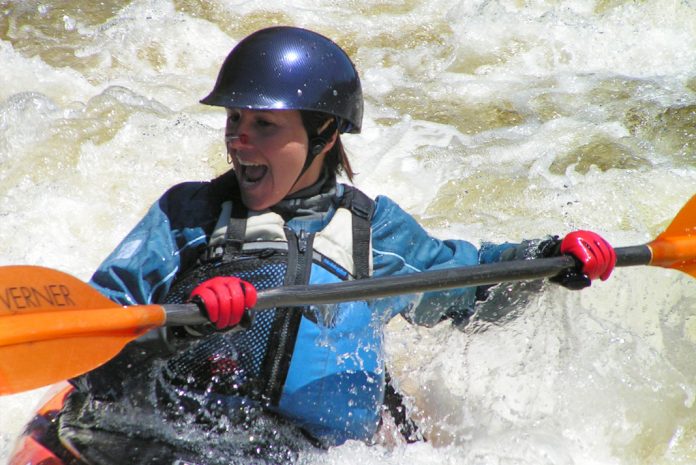
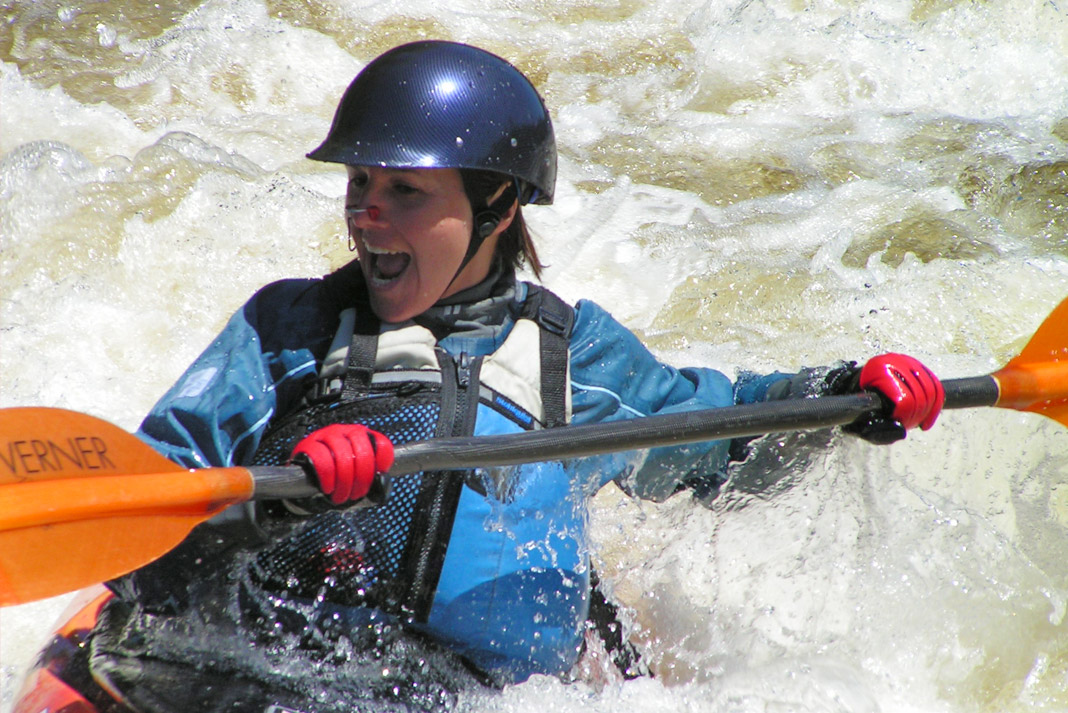
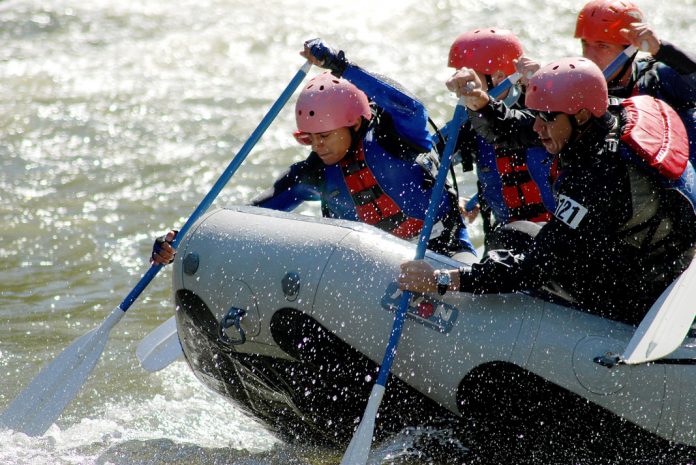
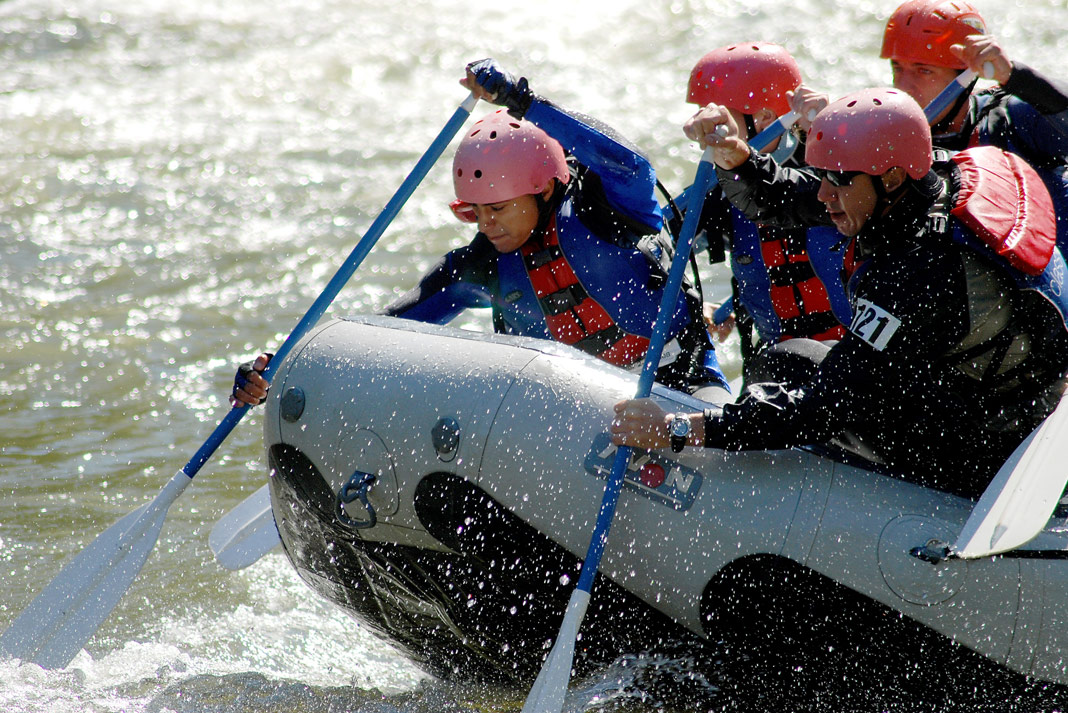
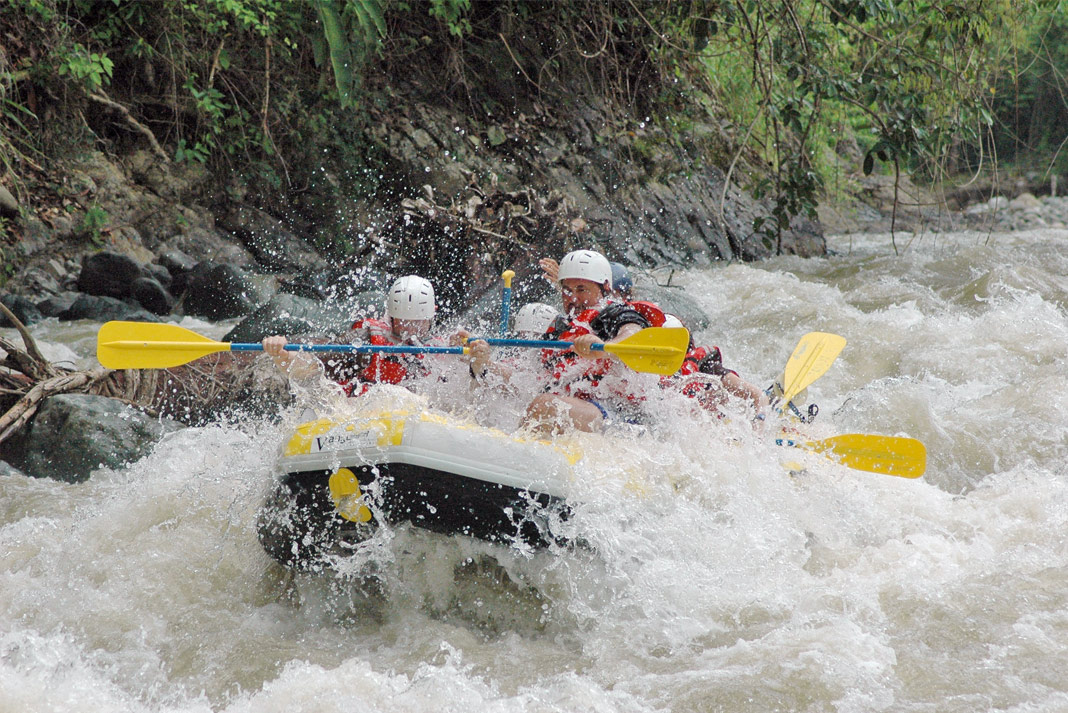
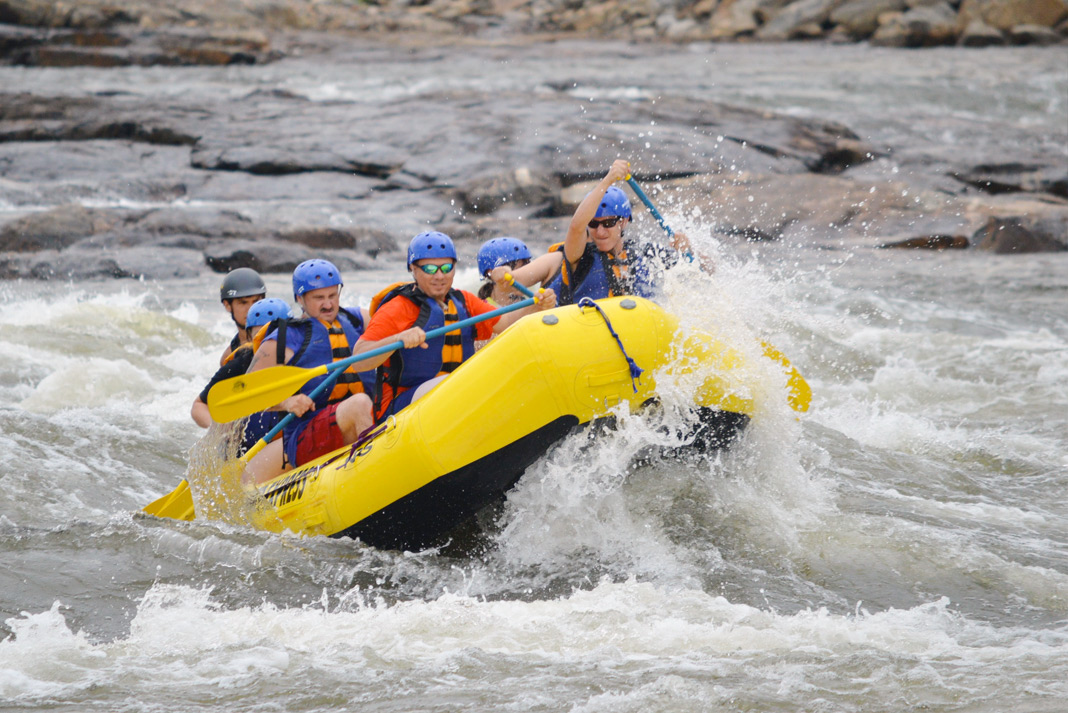
Whatever level of excitement you're looking for, there's a whitewater rafting trip out there for you.
If you’ve never been whitewater rafting, then you really should put it on your bucket list. It’s an amazing way to see a river, experience the power of whitewater and have a great day with friends old and new.
If you have an adventurous spirit, you might not be too concerned about what’s involved in a rafting trip. Paddling hard, working as a team and getting absolutely soaked? Sign me up. However, if seeing pictures of rafts launching off waves makes you a little nervous, this guide will help put you at ease by going over everything you should expect from a trip. Including letting you know that you don’t have to go on a wild ride your first time out.
What is whitewater rafting?
Whitewater rafting is a recreational activity where a group of people paddle down a river in an inflatable raft. It’s a popular thing to do on rivers that are appropriate for it, so wherever such a river exists there will be outfitters. These outfitters provide all the expertise, gear and information on how to paddle the river safely. It’s a really fun experience that just about anyone can do. While you can buy your own raft and get into the sport on your own terms and time, the majority of people choose to go the outfitted route.
Whatever level of excitement you’re looking for, there’s a whitewater rafting trip out there for you.
What is the difference between whitewater rafting and black water rafting?
Whitewater and black water rafting are seriously different things—black water rafting involves taking a raft down rivers that are in caves. It’s a pretty niche sport and isn’t something you find at your regular tourist destination.
Whitewater rafting, on the other hand, can be found all over the place. Any place that has jungle treks (think Costa Rica) probably has whitewater rafting options. The same goes for big rivers, like the Ottawa in Canada or Colorado in the United States. Whitewater rafting involves paddling down whitewater (the rushing, splashing waves look white and are therefore called whitewater) rivers.
What are the levels of whitewater rafting?
Each river presents different obstacles and conditions (and these obstacles and conditions can vary depending on the time of year). The size of the waves and the presence of waterfalls and whirlpools make some rivers harder to paddle than others. As such, river guides had to come up with a system to grade these features.
River ratings go from class I to VI. Class I rapids are found in moving water that gently pushes a boat and make for an easy, relaxing paddle. Class VI are the rivers you see in Red Bull kayaking videos with massive waterfalls, narrow canyons and huge waves.
Generally, whitewater rafting trips stay in the class II to IV category.
What size rafts are there?
There are a couple different raft sizes and how many people are in the raft will depend on the time of year and how busy the rafting company is. That said, the usual numbers are about six to eight people per raft. Some outfitters will also have larger rafts that can accommodate up to 12 people.
Why go whitewater rafting?
Imagine rolling over a wave, darting between some rocks and then smashing through the next six-foot wave of warm water on a hot summer day. Imagine doing that with your best friends, laughing and screaming at the thrill of it all. Whitewater rafting is like spending the day at a water park made by mother nature. And, of course, you’ll also get to see some amazing scenery in a place not too many people are privy to. It’s a super fun way to while away a day with friends or family.
[ Paddling Trip Guide: View all rafting trips ]
How do you prepare for whitewater rafting?
If you’re going with an outfitter, there isn’t much you need to do to prepare. The outfitter will provide all the gear and pre-instruction, and your on-board guide will supply you with direction on the river. You’ll just need to listen, paddle hard, and be ready to get wet and have a good time.
If you’re scared of rushing water, then you’ll need to mentally prepare for that. The guides will take good care of you though, and you can be sure their number one concern (after your safety) is that you are comfortable with what’s going on.
What should I bring for rafting?
Your outfitter of choice will have an FAQ page on their website telling you what to bring. Check with them the day before you go and pack whatever it is they suggest. You’ll generally want an extra pair of clothes and towel for after the paddle, and maybe some food and drink for afterward as well. You can leave these items in your vehicle, or send them in the shuttle vehicle to the pick-up location.
If you wear glasses, bring a strap to attach your glasses to you. And don’t forget to apply waterproof sunscreen before heading out!
What to wear whitewater rafting
One of the most frequently asked questions is, “What should I wear while whitewater rafting?” And it’s a great question. You’re definitely going to get wet. Owl Rafting, a company that sends thousands of people down the Ottawa River every year, gives this advice: Wear sneakers, sandals with a heel strap or water shoes—they don’t allow flip flops or Crocs.
In terms of clothing, going for athletic pants and shirts (read: quick-dry, non-cotton material) is your best bet. Wearing a bathing suit underneath these items is also a good idea as it will allow you to dry out faster once you’re done. On cold days, wool socks and wool or fleece sweaters with a windbreaker are recommended. On top of this, nearly everywhere that has cold water temperatures will rent wetsuits.
How do you stay warm when rafting?
If you’re really concerned about staying warm while rafting, the best thing you can wear is a wetsuit. Most outfitters will rent wetsuits for an extra fee and the extra comfort they provide is well worth the money. Simply put, if you get cold easily, rent a wetsuit.
What do you wear under a whitewater rafting wetsuit?
If you’re going on an outfitted tour and you’re using a rental wetsuit, the ideal clothing underneath is a rashguard. This is basically a form-fitting shirt made of swimsuit-like material. If you don’t have a rashguard, just wear a bathing suit or boardshorts underneath. You want the neoprene of your wetsuit as close to your body as possible to stay warm.
Can you wear Crocs whitewater rafting?
Most outfitters will say heck no to Crocs. The problem is you’ll lose them. Same goes for flip flops. If you do wear sandals, they need to be an active style of sandal with a heel strap.
What are the best shoes for whitewater rafting?
The best shoes for whitewater rafting are the same shoes that are the best for whitewater canoeing and kayaking—sport specific shoes that drain well and can handle being soaking wet are best. That said, designated paddling water shoes are pricey. Your next best option is an old pair of sneakers that won’t get really heavy if they’re wet. You’ll be walking over rocks, roots and rough ground, so having more support than dollar store water shoes is preferable.
What to expect on a whitewater rafting trip
Most whitewater rafting days involve some sort of orientation/safety meeting. You’ll watch a video and/or listen to instruction, get geared up and then get in the boat (though sometimes you will need to be shuttled to the put-in first). Depending on how long your tour is, you’ll head downstream for anywhere from one to six hours.
How to whitewater raft
Outfitters will provide instruction before you get in the boat, and once you’re in it too. Sometimes you’ll have a canoe-style paddle, other times you’ll be told to just hang on! Rest assured, river guides do this every day, all summer long, and they know how to keep you happy and safe.
How to steer a whitewater raft
Rafting guides do most of the steering during a whitewater trip. They’ll be using two oars, set up like a row-boat (only facing forward) and will do the majority of the heavy steering. Sometimes, you’ll be given a canoe-style paddle to help out, but it depends on the river, the group and the outfitter.
Is whitewater rafting dangerous?
Of course anything like whitewater rafting involves an element of risk, but outfitters spare no effort to keep their clients safe. Bumps and bruises happen, but serious injuries are few and far between.
How many people die from whitewater rafting?
While there are deaths from whitewater rafting, the numbers are negligible. The statistics are about six deaths per 2.5 million rafters.
What happens if you fall out while water rafting?
Do you fall out whitewater rafting?
Your guides will generally avoid having you fall out of the raft. That said, the safety meeting at the beginning of the trip will prepare you with how to handle such an accident.
What happens if you fall out?
During the safety meeting you will be told what to do if you fall out of the raft. They’ll tell you how to swim in rapids and where to exit the river or flow of water. Your guide will also yell instructions to you on what to do. If you do fall out of the raft, make sure you know what’s downstream, take actions to avoid anything dangerous, and then look to your guide for instructions. They’ll either come get you and pull you into the boat while still on the water, or in rare circumstances they’ll ask you to swim to shore and then they’ll come get you.
How do you stay in the raft when whitewater rafting?
Your guides will tell you the best way to stay in the boat while whitewater rafting, but the best advice is to brace your legs as well as possible and hold on. If you’re not using a paddle, you can simply hold onto the boat as tight as possible. Anticipating what the boat will do when hitting rocks or waves and counteracting the movements will also help.
Who can go whitewater rafting?
Whitewater rafting is fun for the whole family. Outfitters often take kids as young as 5 and the maximum age will depend on any preexisting health conditions. It’s best to ask this question of your outfitter right off the bat.
Is there a weight limit for rafting?
The easy answer is no. Most outfitters claim there is no weight limit for paddlers.
How old do you need to be to whitewater raft?
Many outfitters will take kids as young as 5 years old, but more difficult trips may have higher age limits or a minimum weight limit.
Should I go whitewater rafting if I can’t swim?
Outfitters are prepared for non-swimmers and have had non-swimmers in the past. Just let the company know and you’ll be fine.
Whitewater rafting when pregnant
This is one of the few restrictions when it comes to whitewater rafting. Nearly everyone can go rafting, except pregnant women.
How much is whitewater rafting?
Half-day whitewater trips range from outfitter to outfitter. That range goes from about $80 to $120 per half day.
How much to tip a whitewater rafting guide
As fun as river guiding may seem, the good guides work their butts off to keep their clients happy and get paid very little. These guys and gals rely on tips to fund their off-season adventures. A tip of $5 per person in your party will go a long way for these river heroes.
Where to go whitewater rafting
There are endless options for places to go whitewater rafting. Choosing where to go depends on a bunch of things. If you’re looking to do nothing but raft for three weeks, then maybe the Grand Canyon is the best bet. If you’re looking for an afternoon of fun this summer, then look to outfitters close to where you live. There are outfitters throughout North America, so there’s probably somewhere within a couple hours of where you live. If you are looking to go on vacation to a place that also has whitewater rafting, places like Costa Rica are a great option.
This is obviously a tough question to answer and no list is final. But some of the world’s most popular places include the Salmon River in Idaho, the Alsek River in Canada, the North Johnstone River in Australia and the Rio Upano in Ecuador.
Where is the best whitewater rafting in the US?
Some of the best places to whitewater raft in the U.S. are the Colorado River (the Grand Canyon!), the Gauley River in West Virginia, the Salmon River in Idaho and the Rogue River in Oregon.
Most outfitters run their season from mid-spring until late-summer. This is when the rivers are at their highest and warmest. This obviously depends on what part of the world you’re in, though!
When is the best time of year to go whitewater rafting?
Water levels dictate seasons for whitewater rafting, so most outfitters run between mid-spring to late-summer. The water will be the highest and most exciting in the early spring, but also the coldest. There also won’t be many people doing it that time of year. As the summer progresses, the water will get warmer and the crowds are likely to get bigger.
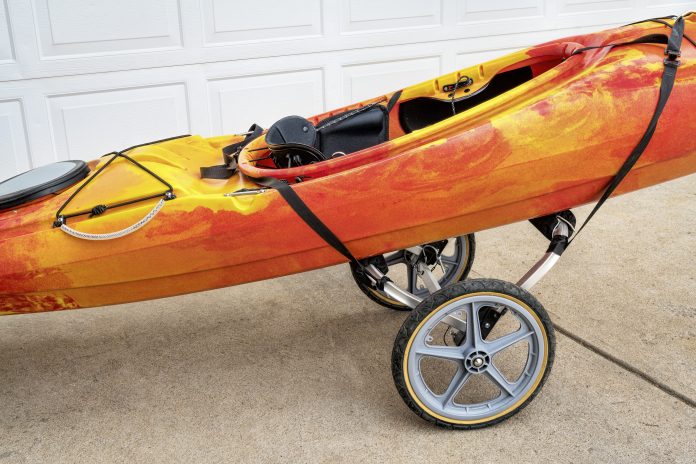
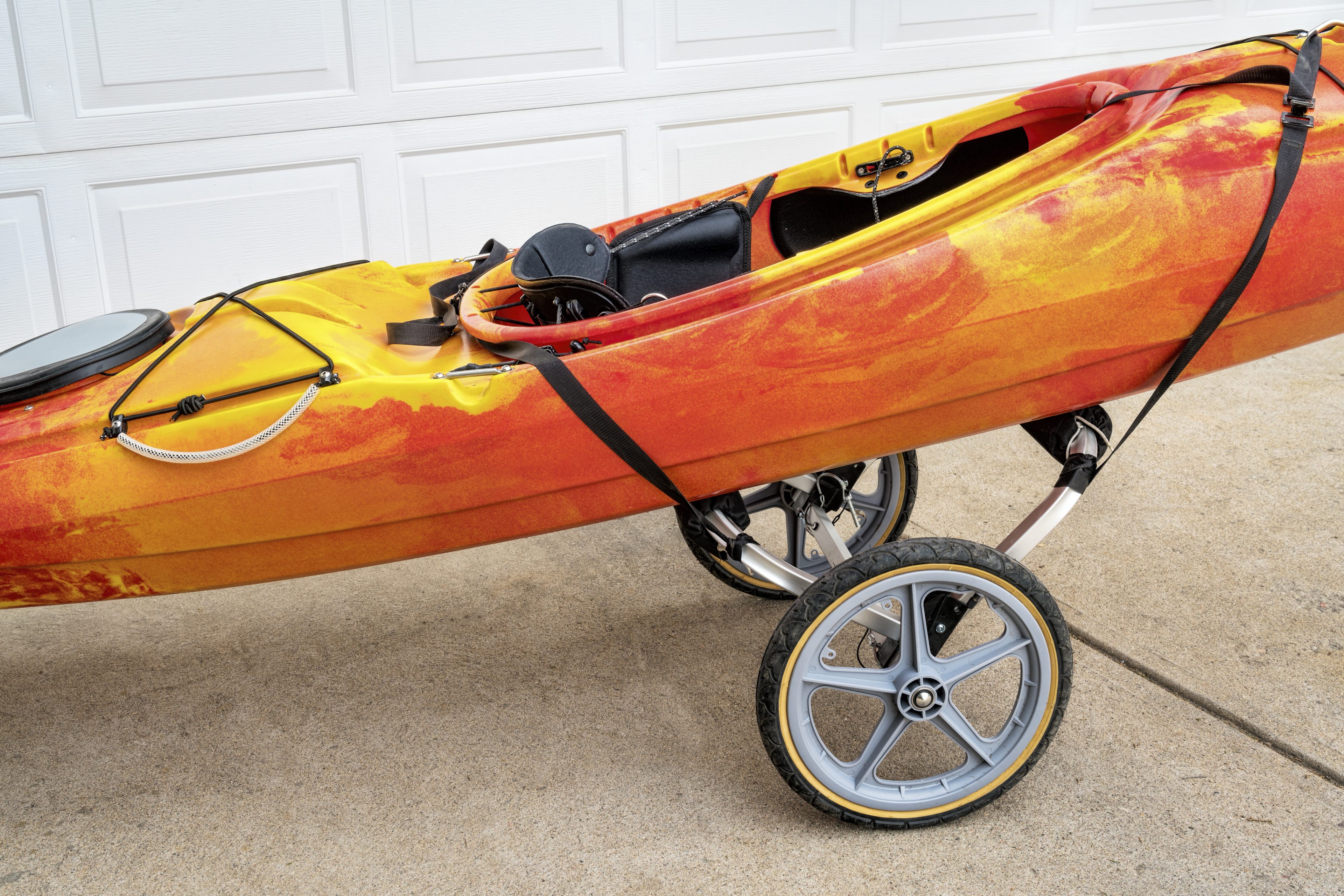
Take your pick of a variety of kayak carts and make getting to the water that much easier.
If you’ve ever had to carry a kayak more than 50 feet—especially by yourself—the idea of a kayak cart has probably already come to your mind. What is a kayak cart? Basically it involves putting wheels on your kayak so you can roll it around. Kind of like a wheeled caddy for a golf bag.
Hopefully you don’t have to lift your kayak very often, but if you do, say from the car to the put-in, or perhaps your house to the put-in, the idea of a kayak cart is pretty darn appealing.
Take your pick of a variety of kayak carts and make getting to the water that much easier.
Types of kayak carts
Kayak cart, kayak trolley, kayak dolly. It doesn’t matter what you call it, they all do the same thing—they get your boat to the water more easily. There are a few different styles of kayak carts, so choosing one can be a tricky prospect. Once you start looking for one, the number of options becomes overwhelming.
[ Paddling Buyer’s Guide: View all kayak carts ]
Trolleys
Trolleys are generally composed of an aluminum or plastic frame that supports the hull of your kayak and is affixed to two wheels.
A popular type of kayak trolley is the C-Tug. These carts generally feature 7- to 10-inch wheels affixed to a platform that hugs the bottom of your kayak and is held in place by a strap around the body. They’re great for uneven or sandy terrain. Because they strap to the middle of your boat, they take the majority of the weight, making it easy to wheel it around.
Some other great kayak trolley options:
All-Terrain Super Duty Cart, by Suspenz
KC7, by The Kayak Cart
KC10, by The Kayak Cart
KC11, by The Kayak Cart
Heavy Kayak Cart, by Wilderness Systems
Solid Wheel Cart, by Sea to Summit
WideTrak ATB Large Kayak/Canoe Cart, by Malone Auto Racks
Dollies
Kayak dollies are usually designed like a boat trailer. They are wider than a trolley and can sometimes be longer, extending the full hull of your kayak. These are great options for tandem kayaks, larger kayaks or kayaks that are loaded up with gear.
Some great kayak dolly options:
Hobie Dolly, by Hobie
Dolly with STD Wheels, by Trailex
Small Aluminum Dolly, by Trailex
Tandem Axle Universal Dolly, by Trailex
Universal Dolly, by Trailex
Scupper carts
While you could use your C-Tug for both your kayak and canoe, scupper carts are kayak-specific and only work on boats that have scuppers. Scuppers are holes usually found in the deck of a sit-on-top kayak to allow for water drainage. Kayak scupper carts have two arms that fit in these holes from underneath. This is a great option if you have scuppers on your boat.
Some great kayak scupper carts:
Sit-on-top carts, by Sea to Summit
Trax 2-30 Plug-in Cart, by Hobie
Trax 2 Plug-in Cart, by Hobie
Original Plug-in Cart, by Hobie
Motorized options
Of course, once you’ve thought of and/or used a kayak cart the next question is, does anyone make a motorized kayak cart? So far there aren’t any on the market. If you delve into the world of angling forums and beyond, you’ll find some people have made these themselves. If you’re a tinkerer, feel free to send us a video of your creation!
How to choose a kayak cart
Like buying any sporting equipment, a kayak cart needs careful consideration. What’s your budget? What’s the weight of your kayak? How often are you going to use it?
Kayak carts range from around $50 to over $1,000, so budget is a major factor. If you’re using it all the time and lifting a heavy, fully-loaded tandem kayak, perhaps you need to spend a bit more. If you’ll only use the cart three times over a summer, you can probably get away with a cheaper, smaller solution.
Storing the cart can also be an issue. You don’t want a six-foot-long kayak trolley in the middle of your condo living room all winter long, do you? Speaking with your local paddling outfitter is always a great way to get an idea of what product is best for you.
How to use a kayak cart
The kind of kayak cart you choose to go with will determine exactly how your kayak cart works. But they basically all work the same.
It’s best to place the cart close to where your boat is. If you’re lifting the boat off a vehicle, be sure the cart is somewhere close by (but not so close it gets in the way of lifting the boat off). Lift the boat off the vehicle (or the ground) and onto the kayak cart. Use the attachment devices supplied by the manufacturer to secure the cart to the kayak. Then you either grab the kayak cart handle, or the bow handle of the boat, lift and pull the boat in the direction you’re headed.
As always, anything you can buy, you can also build yourself. A quick Google search will send you down the rabbit hole of how to build one yourself, and YouTube can supply you with videos on how to do the same. The key to any DIY project in the internet age is to pick and choose from all the available options to get what you want.
Wheels are the most difficult thing to come by, but sourcing online is easier than ever. Many people use PVC plumbing pipe to build the frame of their kayak cart. Good luck with it and please send us a photo of your completed project!