Home Blog Page 179

LynQ Announces Commercial Shipping of People Compass

Keeping tabs of friends and family at ski slopes, parks, festivals and pretty much anywhere in the outdoors just got easier. LynQ is the people compass that keeps groups together by locating anyone without the need for phones, networks or infrastructure of any kind. After selling more than 20,000 units totaling in $1.7 million in presales on Indiegogo and shipping to its campaign backers, LynQ announced today it is officially commercially shipping.

“We’ve all been in a situation where we are trying to find or stay connected with a friend, family member or colleague in a crowded space or during an off-the-grid activity, but our phones, apps and trackers that require signal just don’t work. LynQ is intended to help people enjoy activities together without waiting, worrying and wandering around, looking for their group,” said Karina Costa, President of LynQ.

Available today on lynqme.com, LynQ features an intuitive compass-like display that allows people to see their relative distance and direction from each other, keeping people together even when other technology fails. It has been rigorously tested in many outdoor exercises through partnerships with organizations across multiple industries, including winter sports, festivals, theme parks and even the government. In a joint exercise between the U.S. and Thai governments, LynQ was able to demonstrate a reduction of time spent locating wounded soldiers by 61 percent – a result published in a formal government report by U.S. Pacific Command (USPACOM).
Easy-to-Use By Everyone

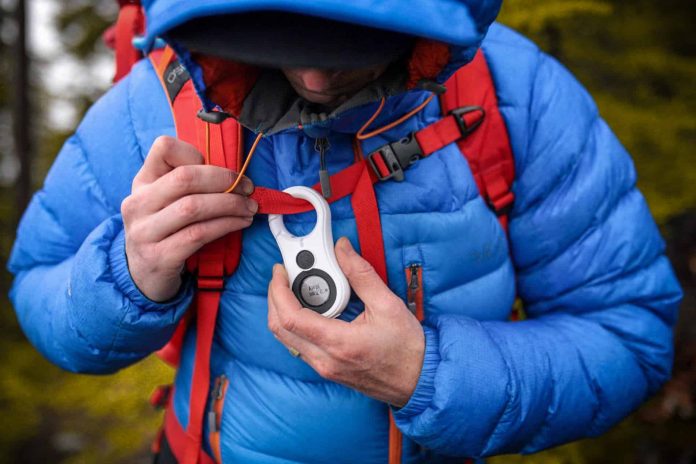
Ideal for outdoor adventures, LynQ allows groups of up to 12 to find each other across miles without the need for phones, apps, subscription fees and reliance on cell phone networks. The weather-proof, clip- on device uses a proprietary software to display each users’ distance and direction from each other in real-time and allows for tens of thousands of devices to work in the same vicinity.

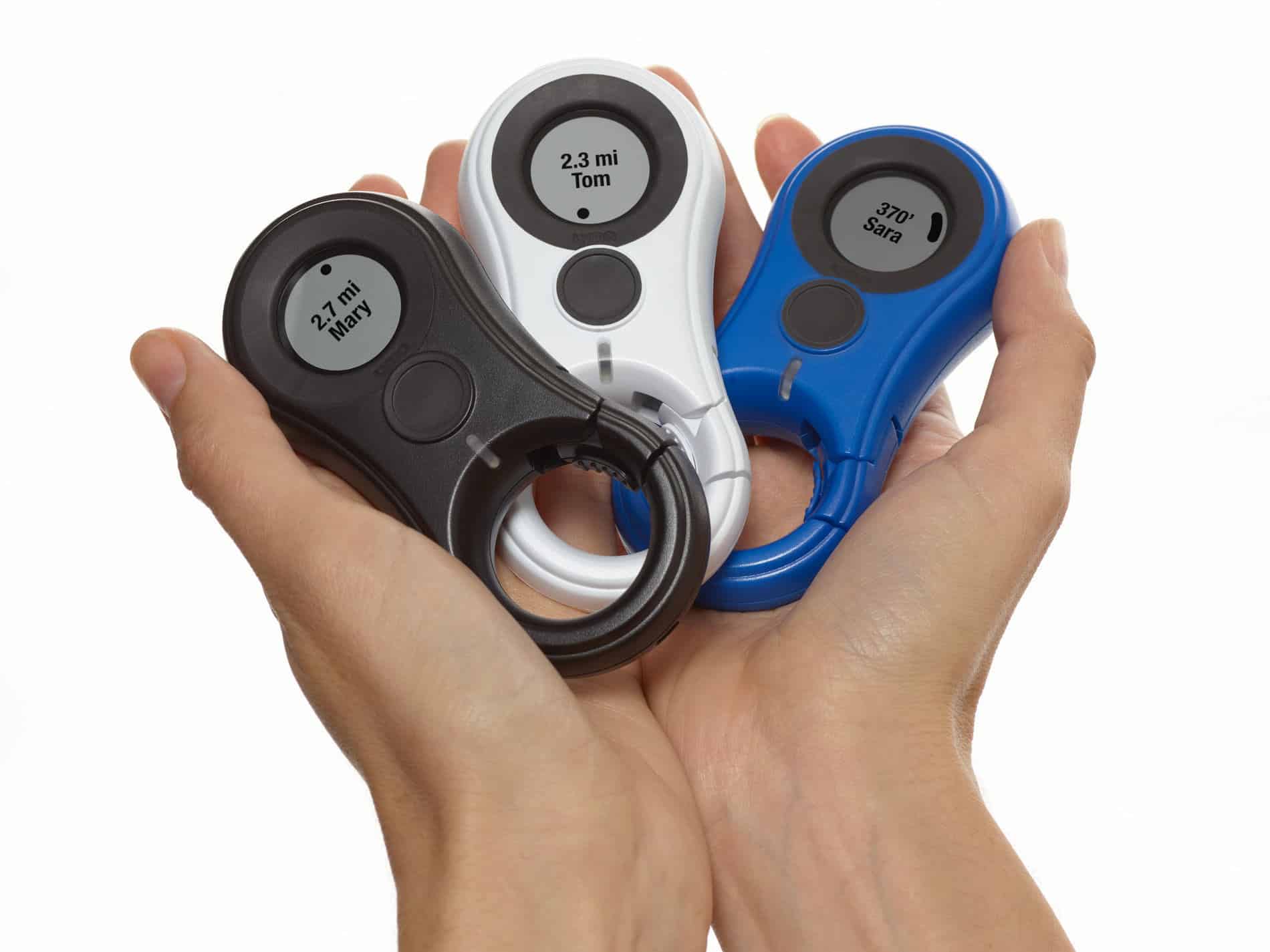
LynQ can be set up in seconds, pairing devices and enter names with a simple one-button interface. A simple click allows users to move between their group members, displaying a user’s name, arrow and number of feet that are visible under any conditions on a backlit and glare-protected screen. Users can also set boundaries for their group, receiving sound, optical and vibration alerts the instant someone leaves the safe zone, which is perfect for young kids, pets and those with special needs or Alzheimer’s. In addition, a “homebase” (i.e. base camp, car, ski lift or hotel) can be set as an anchor for everyone to find each other.
Useful in Any Outdoor Situation

LynQ is a valuable tool for any outdoor application. This includes helping adventure seekers go off-the- grid and enjoy skiing, hiking, traveling, cycling and more without the need to worry about cell service, maps or phone battery life. Additional use cases include:

  • Child safety – Parents can feel comfort in knowing exactly where their children are while allowing them the freedom to explore.
  • Special Needs Care – Caretakers and family members can monitor their patients or loved ones that are at risk to wander.
  • Public events – From music festivals to sporting events, networks are often overloaded, eliminating cell signal while maps are useless in crowds and without landmarks.
  • Disaster relief, first responders and government applications – When locating people is a matter of life and death and infrastructure is destroyed, LynQ is able to save lives.
  • Pets – Keeping tabs on pets during hikes or animals in open fields has never been simpler.

Availability & Full Tech Specs
LynQ can withstand any situation with a design and features that include:

  • Size – Dimensions: 4” x 2” x 1” Weight: 84g
  • Long range and long lasting – Range of up to three miles and up to three days in mixed use.
  • Real-time distance and direction – Display shows the distance & direction of every groupmember at all times.
  • Groups – Creates a closed private network for groups of up to 12 people.
  • Boundaries and Notifications – Alert system lights up, vibrates and rings the instant a group member or child leaves a user-designated safe zone.
  • Homebase” – “Homebase” locations can easily be set to return to static locations, such as a car, campsite, bike station or landmark.
  • Technology – LynQ’s proprietary radio protocols redefine the capabilities of peer-to-peer location.
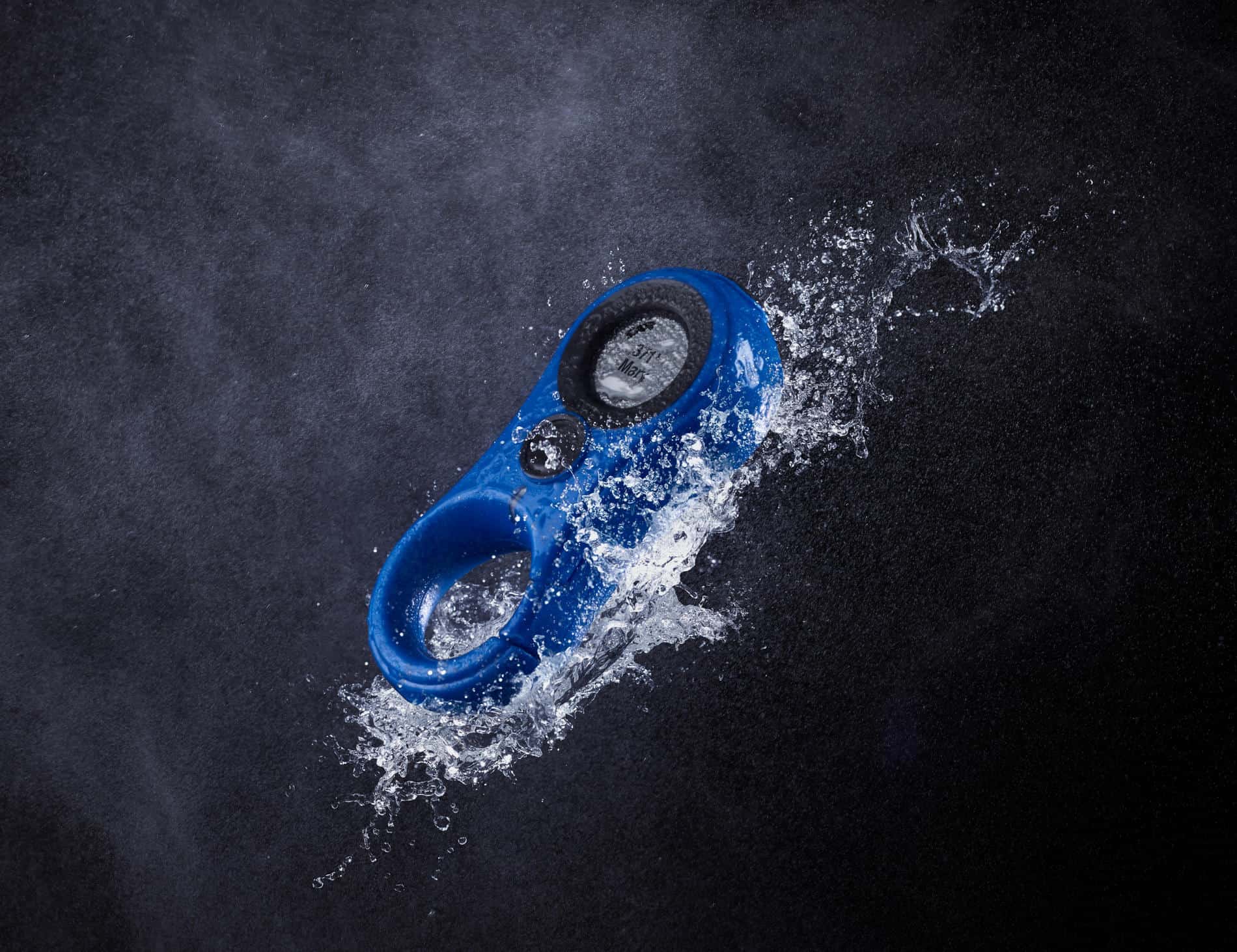
  • Durability – The government-tested device is designed to withstand any climate or situation with its weatherproof and waterproof durability.
  • Multi-wear – Includes rugged carabiner clip that can snap onto clothing or gear and can be slipped into a pocket, pack or pouch.

LynQ has begun shipping and is available for purchase today on LynQ’s website. Pricing starts at $249 for a 2-pack. For more information, please visit: lynqme.com.
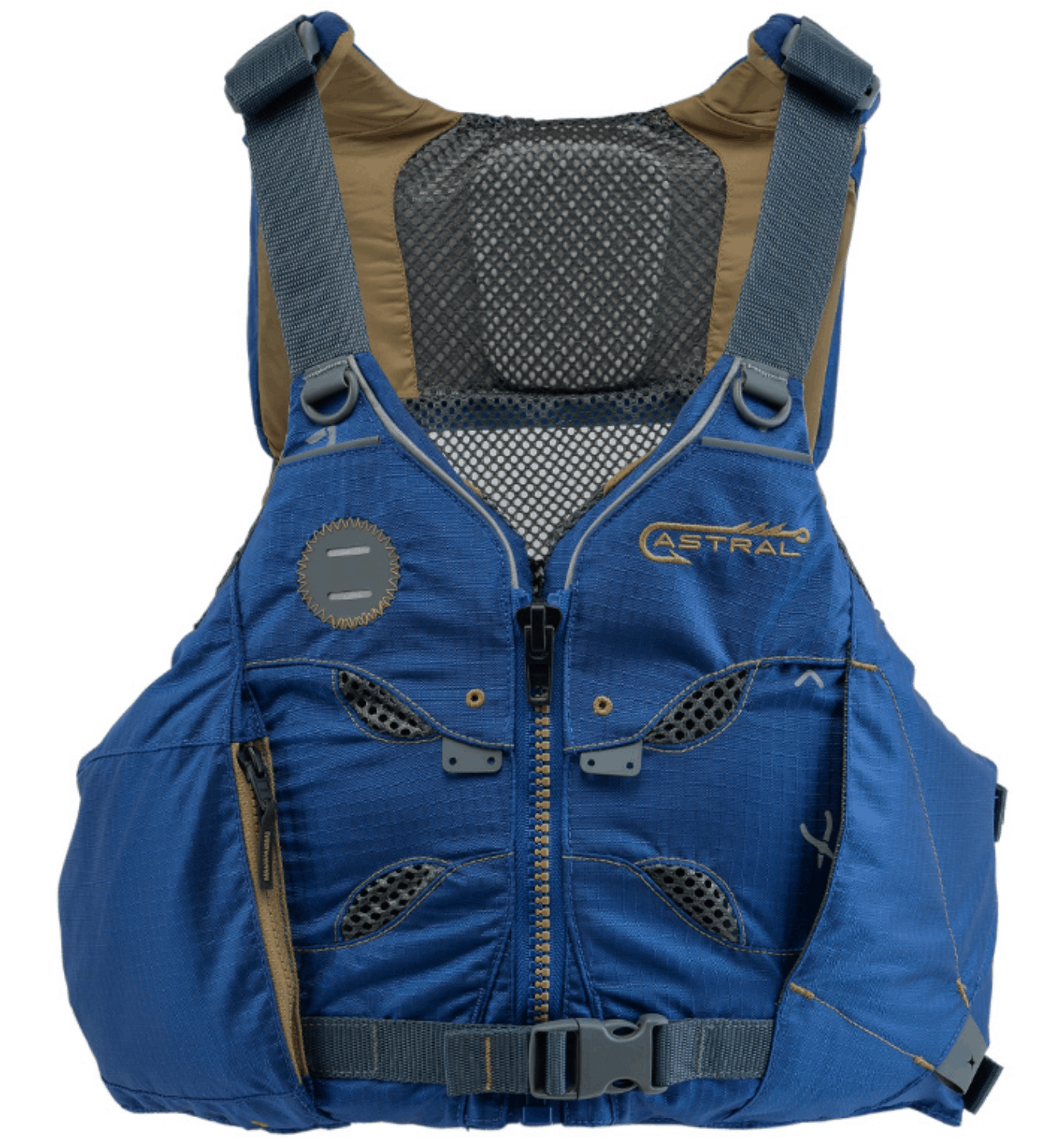
Astral: New Angling PFDs

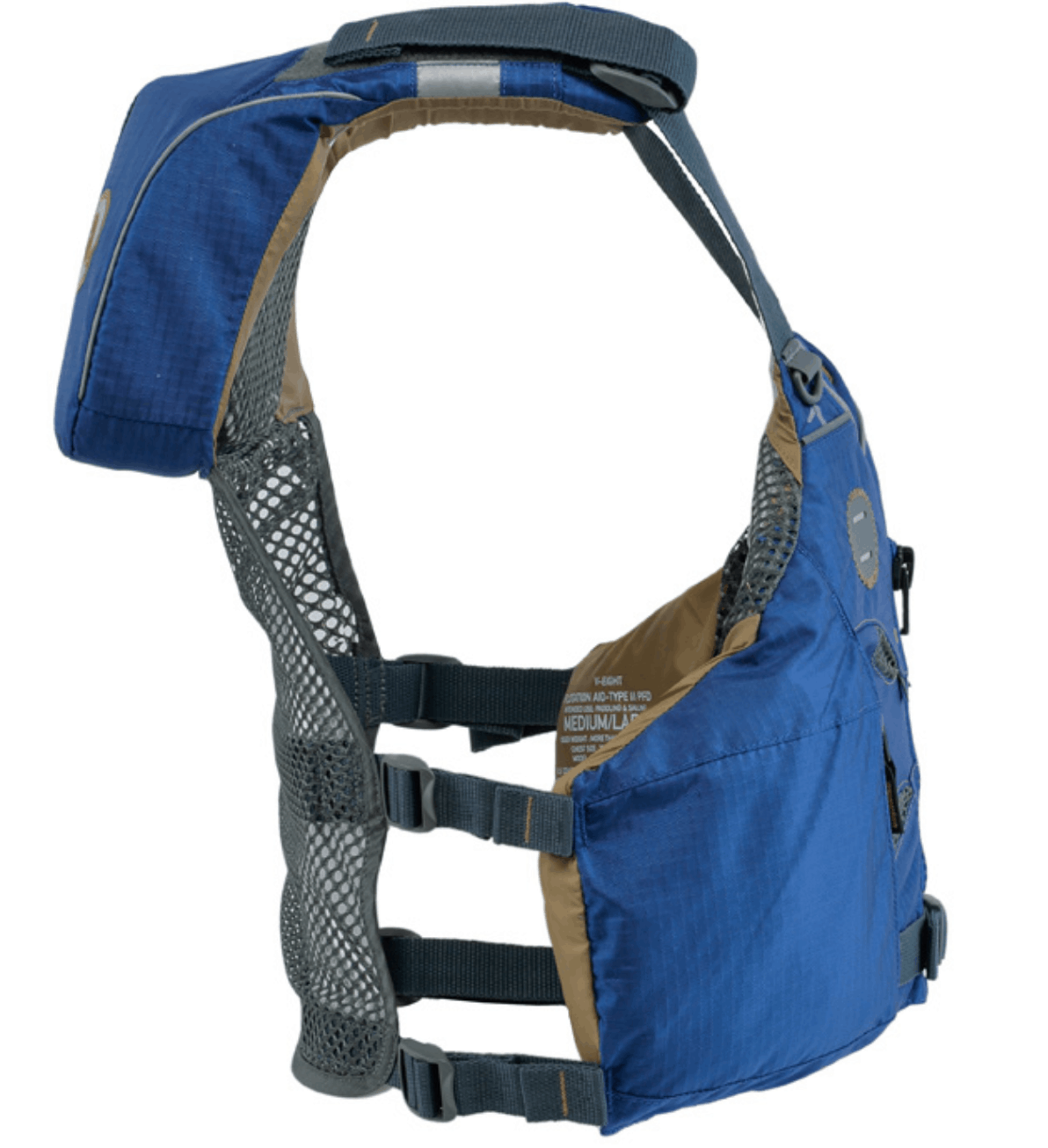
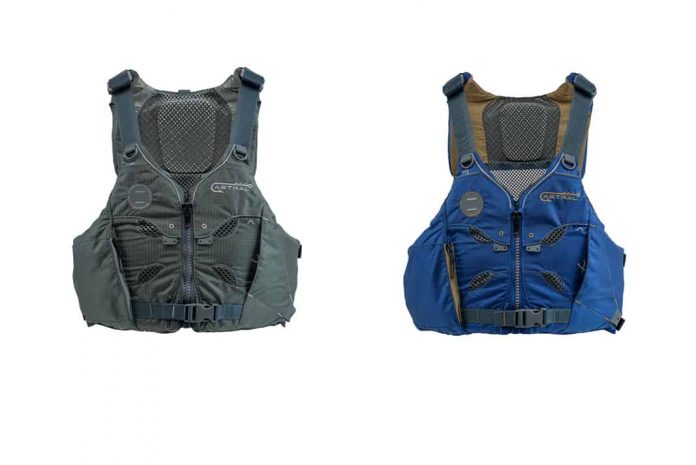
The new V-Eight Fisher by Astral is designed for the serious angler that appreciates minimalism and high-performance. Inspired by the original V-Eight vest, the V-Eight Fisher pairs Astral’s patented Airescape™ technology with plenty of storage for angling accessories. Engineered to prevent overheating, the V-Eight Fisher helps with breathability kayaking with high seat backs.

Specific features include pockets for essentials, a line cutting tool, lashing points, a folding knife slip pocket, fish plier holster with leash tunnel and a white light lashing point on the back. Like all Astral PFDs, the V-Eight fisher is made with proprietary Gaia® foam, a sustainable alternative to toxic PVC foam. MSRP: $130, available now!

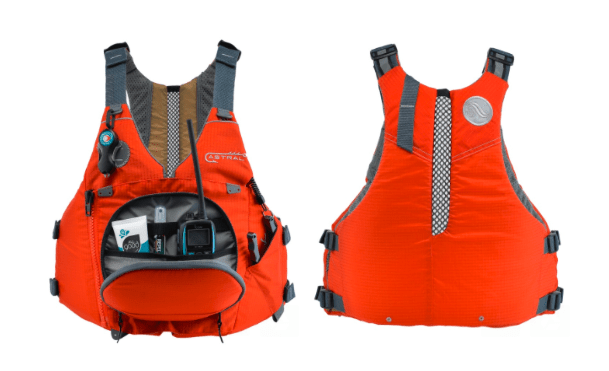
Fishing PFDs commonly include many pockets. It can get confusing what is where, and the pockets create obstacles for the rod handle. On the new Sturgeon PFD, Astral consolidated five pockets into one large centralized place. The result is a streamlined yet highly organized PFD for more efficient fishing.

This vestincludes a Thin-Vent™ back to offer breathability along the users back as well as an easy-access clamshell front pocket with internal zippers, pliers holster, external folding knife pocket, VHF radio slip pocket, clipping points for line nips and retractors and a white light lashing point on back. MSRP: $130available February 10, 2020.

Astral Sturgeon PFD
Astral Sturgeon PFD

Pelican Unveils All-New Pelican CARGO Cases Line

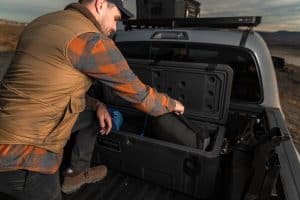
Pelican Products, Inc., the global leader in high-performance protective cases, is announcing an all-new line of PelicanTM CARGO Cases designed to provide the highest level of protection for gear and equipment on vehicles while optimizing storage for overlanding and outdoor adventure travel, professional applications and everyday use.

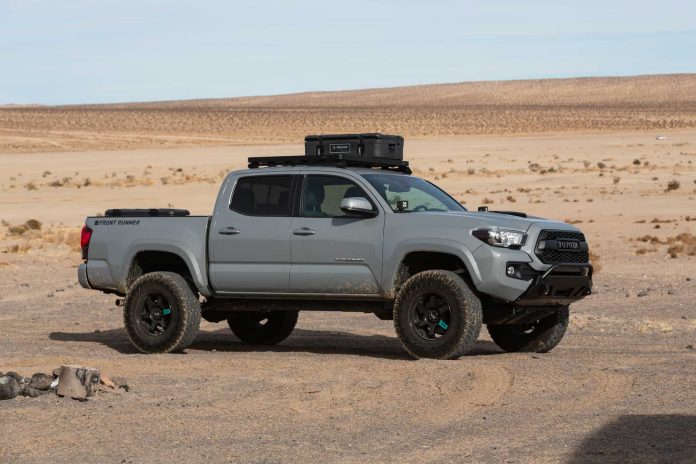
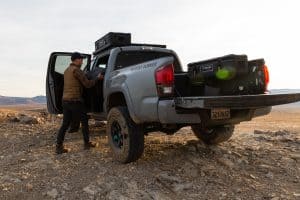
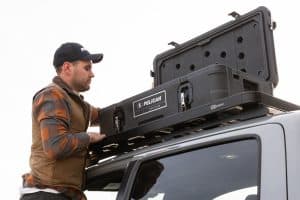
The Pelican CARGO line coming Spring 2020 features multiple sizes and form factors designed to fit in truck beds, in the back of SUVs and on vehicle roof racks. Each case provides innovative solutions for storing, protecting, mounting and organizing passenger cargo.

“PelicanTM products are trusted by professionals, heroes, creators and hardcore adventurers because of our deep knowledge and experience designing and manufacturing products for extreme outdoor use,” said Stephan Corti, Pelican’s Chief Commercial Officer. “Our product design, development and marketing teams focused heavily on researching the specific needs and pain points of the overlanding, off-roading and camping segments to ensure we could and would deliver a comprehensive line of extremely durable and capable cargo-style boxes, cases and mounting solutions. Many existing Pelican products perform great in these environments, but this new line of Pelican CARGO Cases provides a new level of organization, accessibility and gear protection in various configurations all easily mounted to the most popular trucks and SUVs.”

Key features for the all-new Pelican CARGO Cases include:

  • Roto-molded construction: Designed to withstand serious impact in the most extreme conditions.
  • Weather resistant: Lab tested to protect from wind-blown rain and dust.
  • Corrosion-resistant hardware: Lockable latches and integrated tie-down plates for easy mounting.
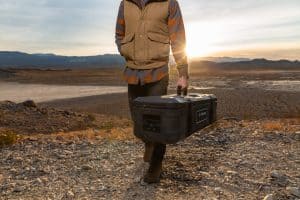
  • Heavy-duty handles: Oversized handles for easy carry and transport.
  • Pelican-grade quality: Lifetime guarantee (cases only).
  • Proprietary mounting systems: For truck beds and roof racks (sold separately).

The various mounting systems provide simple, quick-and-easy, no-drilling installation. Pelican has conducted extensive research, testing and development to ensure fitment with popular truck and SUV brands, including Ford, Toyota, Chevrolet, Dodge and other vehicles, across a wide range of configurations from extra-short to long beds. Standard tie downs can also be used to secure Pelican CARGO Cases.

Like all Pelican products, the Pelican CARGO line will be forged using more than 40 years of experience building industry-leading protective cases for professional and outdoor gear. The cases will come with a lifetime guarantee, while the mounts come with a three-year guarantee.

Pelican is launching the Pelican CARGO line with eight models including:

  • Trunk Cases designed for truck beds and SUVs:
    • Large BX225 (255 liters), MSRP $399.95
    • Medium BX135 (135 liters), MSRP $299.95 o Small BX80 (80 liters), MSRP $249.95
    • Cube Case BX50 (50 liters), MSRP $199.95
  • Saddle Cases designed for truck beds and roof racks:
    • Large BX85S (85 liters), MSRP $299.95
    • Medium BX55S (55 liters), MSRP $249.95
  • Roof Cases designed to fit onto vehicle roof racks:
    • Large BX140R (140 liters), MSRP $399.95
    • Medium BX90R (90 liters), MSRP $299.95
  • Mounting brackets sold separately.

More information about the all-new Pelican CARGO line is online at www.pelican.com/cargo. Follow Pelican on Instagram @Pelican, on Facebook and Twitter @Pelican_Life and across your favorite social media channels through #PelicanLife.

If you’re interested in participating in Pelican’s affiliate link program sign-up here.

Pelican Products, Inc. is a portfolio company of Behrman Capital, a private equity investment firm based in New York and San Francisco.

About Pelican Products, Inc.
Pelican Products, Inc. is the global leader in the design and manufacture of high-performance protective cases, temperature controlled packaging solutions, advanced portable lighting systems and rugged gear for professionals and outdoor enthusiasts. Their products are used by professionals in the most demanding markets including fire safety, law enforcement, defense / military, aerospace, entertainment, industrial and in numerous outdoor markets. PelicanTM products are designed and built to last a lifetime. The company operates in 26 countries, with 24 international sales offices and six manufacturing facilities around the globe. In Europe, the company does business under the name Peli Products, S.LU. For more information, visit http://www.pelican.com or www.behrmancap.com.


YETI Announces International 12-City Film Tour To Preserve The Wild

YETI Holdings, Inc., announced it will travel across North America and overseas for a 12-stop film tour debuting a collection of unreleased and never-before-seen films from the wild that capture the unbreakable human spirit. All proceeds from ticket sales will benefit various conservation groups dedicated to preserving the outdoors, including:

Additionally, all proceeds from the Melbourne stop ticket sales will be donated to organizations delivering aid and support to communities affected by the Australian bushfires.

Film tour stops include:

  • January 29: Denver, CO @ Mission Ballroom
  • February 8: Orlando, FL @ Plaza Live
  • February 11: Charlotte, NC @ McGlohon Theater
  • February 21: Nashville, TN @ Marathon Music Works
  • February 26: Chicago, IL @ Thalia Hall
  • February 29: Jackson, WY @ Center for the Arts
  • March 7: Portland, OR @ Revolution Hall (GA tickets only)
  • March 10: Santa Barbara, CA @ Lobero Theatre
  • March 19: Toronto, ON @ The Cinesphere
  • March 25: Somerville, MA @ Somerville Theatre (GA tickets only)
  • April 9: Austin, TX @ ACL Live
  • April 23: Melbourne, VIC @ The Astor Theatre

“Since releasing our first film in 2015, YETI has continued to produce what we hope are inspirational stories that highlight the triumphs, tragedies, and spirit of people who share our passion for adventure and the outdoors,” said Matt Reintjes, YETI President and CEO. “We are excited to bring people together again to experience our newest films and to support organizations that value and support the outdoors.”

Attendees will also have the opportunity to meet some of YETI’s well-known Ambassadors – women and men who represent the best of the best in their various outdoor pursuits. From anglers and hunters to surfers and climbers, many of our Ambassador attendees have been featured in YETI Presents films.

General admission and VIP tickets are available for purchase from $20 to $40 at https://www.yeti.com/en_US/yeti-film-tour. Each purchase of a general admission ticket includes a custom Rambler 18 oz. Bottle valued at $35. The purchase of a VIP ticket also includes two drink tokens and a limited-edition YETI Film Tour hat along with the custom Rambler Bottle.

The 2020 YETI Film Tour marks the brand’s second multi-stop film tour. In the fall of 2018, YETI celebrated the ten-year anniversary of its iconic Tundra cooler during a cross-country film tour showcasing some of the brand’s most popular films to date.

For more information regarding the YETI Film Tour, visit yeti.com.


About YETI Holdings, Inc.

YETI is a growing designer, marketer, retailer, and distributor of a variety of innovative, branded, premium products to a wide-ranging customer base. Our mission is to ensure that each YETI product delivers exceptional performance and durability in any environment, whether in the remote wilderness, at the beach, or anywhere else life takes our customers. By consistently delivering high-performing products, we have built a following of engaged brand loyalists throughout the United States, Canada, Japan, Australia, and elsewhere, ranging from serious outdoor enthusiasts to individuals who simply value products of uncompromising quality and design. Our relationship with customers continues to thrive and deepen as a result of our innovative new product introductions, expansion and enhancement of existing product families, and multifaceted branding activities.

Why You Should Plan Your Paddleboarding Trip To Montreal, Quebec

SUP in Montreal, QC
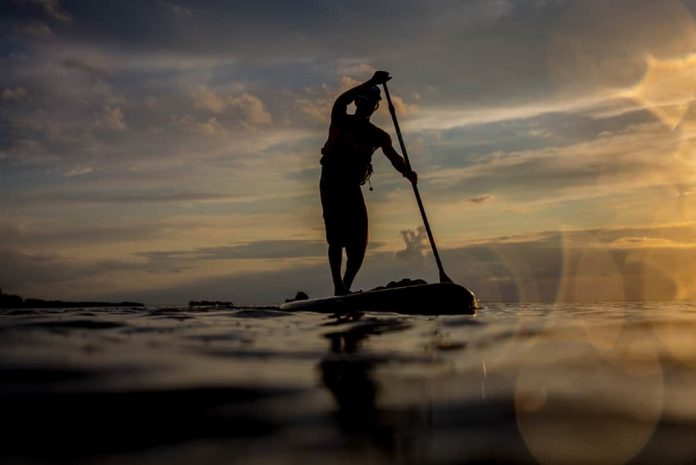
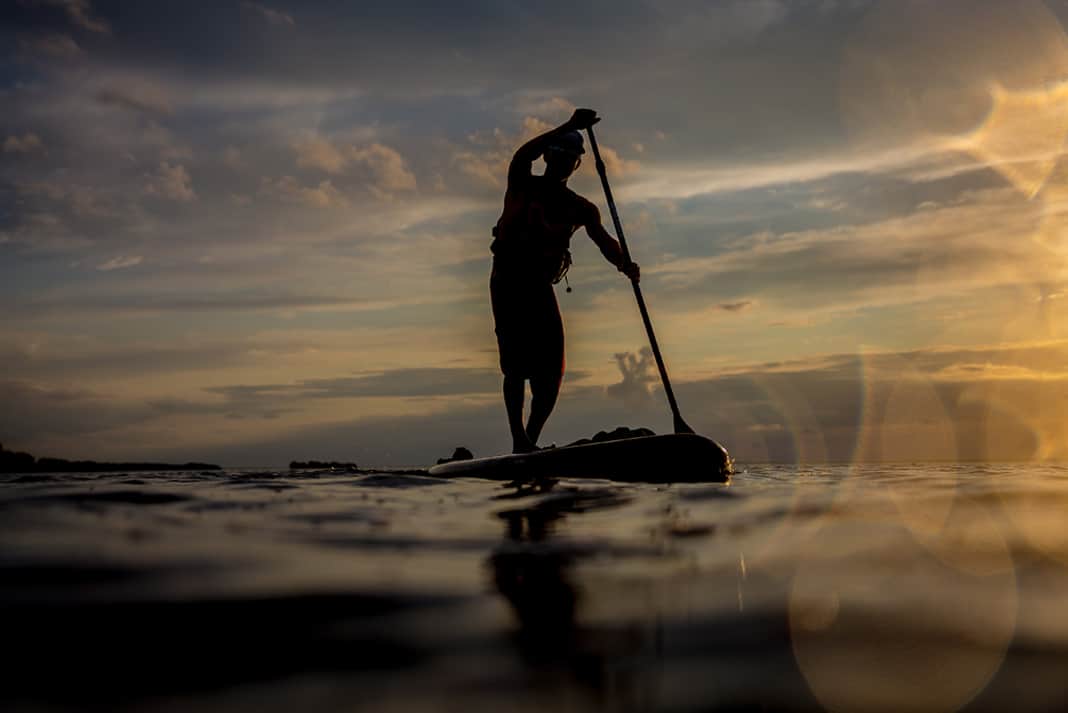
Seeing Canada's second most populous city in a new light. | Photo: Mike Hitelman

Montreal is on a big island. Which means there are many different places and ways to access water. The city may be best known for its cool urban culture, for its bistros and bars and bands and boutiques, but it’s surrounded by the steady flow of the St. Lawrence River.

When you need a break from all those beautiful people, and all that exhilarating noise, make a beeline for the shoreline and hop on a SUP.

SUP in Montreal, QC
Seeing Canada’s second most populous city in a new light. | Photo: Mike Hitelman

“Montreal is located where it is because of the rapids, because the boats the Europeans arrived in couldn’t travel farther upstream,” says Hugo Lavictoire, a former competitive kayaker who started KSF (Kayak Sans Frontiers) in 1995.

“When I arrived, I wasn’t planning to live in any city, but I fell in love with everything you can do here.” KSF, which has grown over the years into one of Canada’s biggest river sports outfitters, with lessons, rentals and a shop, added river surfing to its repertoire in 2003 and SUP in 2007.

If you can’t BYOB (bring your own boards), they’ll supply the stoke you need to see the city in a new light.

[ Paddling Buyer’s Guide: See all paddleboards ]
Stay
The Hotel Bonaventure, near the St. Lawrence in the dense downtown, has an oasis of a rooftop patio with a heated pool, hot tub and lush gardens with 50-year-old trees. hotelbonaventure.com
Drink
Docked near the lively Atwater Market, Canal Lounge—a glassed-in boat—morphs from daytime café to cocktails at night. Open from late May to mid-October. canallounge.com
When To Go
Unlike other rivers in Canada, the standing waves on the St. Lawrence last pretty much year-round, with changing features as water levels fluctuate. Bring a thick wetsuit for winter surf.
Diversions
Although you can’t swim there, the Clock Tower Beach in Montreal’s Old Port features fine sand, chairs, umbrella and mist if you want a break from being in the water.
Snack
Billed as a food truck without wheels, Café September Surf, near the Lachine Canal, is great for grabbing a bite and talking surfing with locals between sessions.
septembersurf.com


If you have a half day:

The highlight of Montreal for a rookie river surfer is Guy’s Wave, a gentle bunny bump in LaSalle, in the west end of the city. KSF’s top SUP coach Pierre-Philippe Loiselle, who grew up across the river, calls this stretch of the St. Lawrence his sanctuary.

“It’s a place where things feel real,” he says, “and you’re almost part of the ecosystem.”Take a lesson with Loiselle and soak up the ambiance of the chill shoreline park where surfers lounge and picnic between runs.

If you have a day:

Walking through the trees to Lac des Régates on Île Notre-Dame, an artificial island on the St. Lawrence near Old Montreal, enveloped by the calls of red-winged blackbirds, it feels like you’re in a tropical jungle. Josiane O’Rourke, a SUP yoga instructor with KSF, enhances the sense of escape. “Go with the flow,” she advises. “This is about finding balance—on a SUP and within yourself.” Afterward, hit Guy’s Wave, or the nearby Habitat 67 wave for advanced surfers.

If you have a weekend:

The Lachine Canal, built nearly 200 years ago to bypass the rapids of the same name, has long ceased serving as an industrial artery. Today, lined by paths and parks, it’s a sweet ribbon of flatwater for recreational paddling. Launch near the Atwater Market, which is full of gourmet merchants, and enjoy the people watching. For a longer one-way trip, put-in on the St. Lawrence upstream from LaSalle and ride the current back toward the city center. And then surf!

If you have a week:

To earn your playtime in Montreal, start with a multi-day paddle from Ottawa. You’ll need to do your homework and have stamina: the route is roughly 160 kilometers, mostly on the Ottawa River, and there’s a major dam to bypass at Carillon, plus rapids on your approach to Montreal.

[ Plan your next SUP adventure with the Paddling Trip Guide ]

But several paddleboarders have made the trip, including one who continued on to New York City the following year. Most of the trip will be calm, and once you arrive, round out your week with some SUP surfing adrenaline.

Seeing Canada’s second-most populous city in a new light. | Photo: Mike Hitelman

Kayak Review: Pyranha 12R Whitewater Longboat

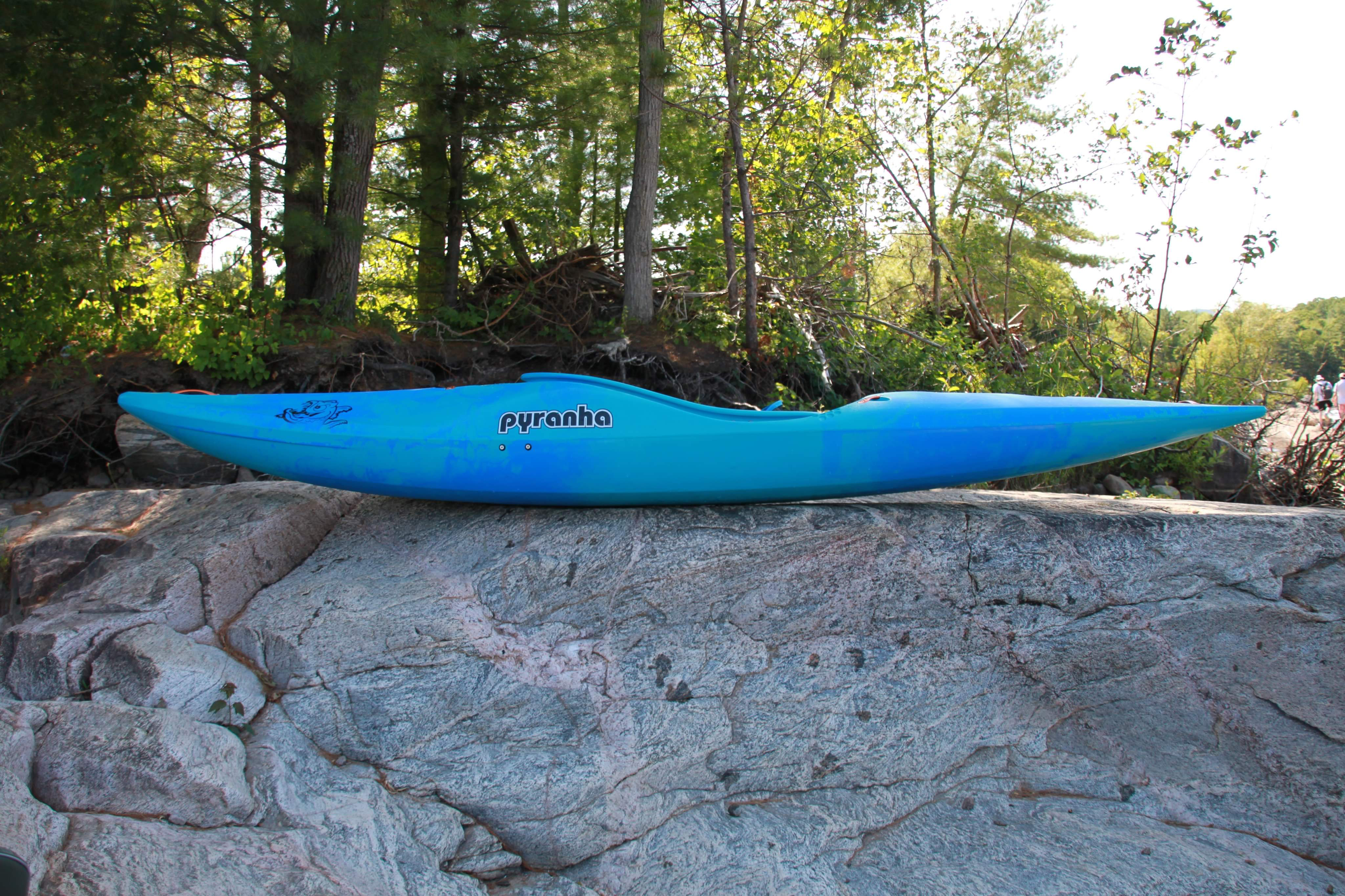
Pyranha’s new 12R
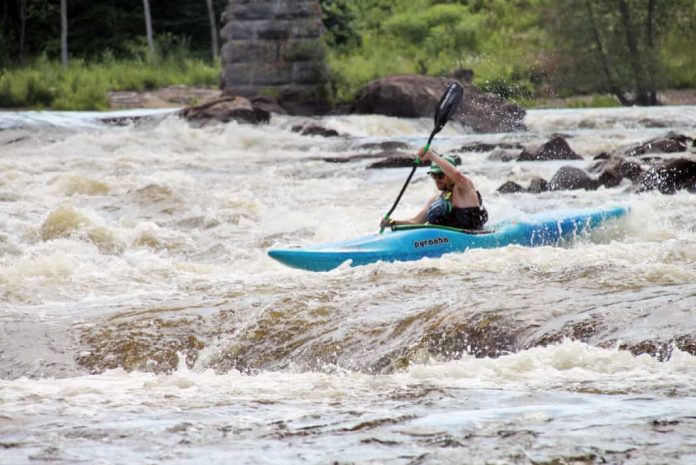
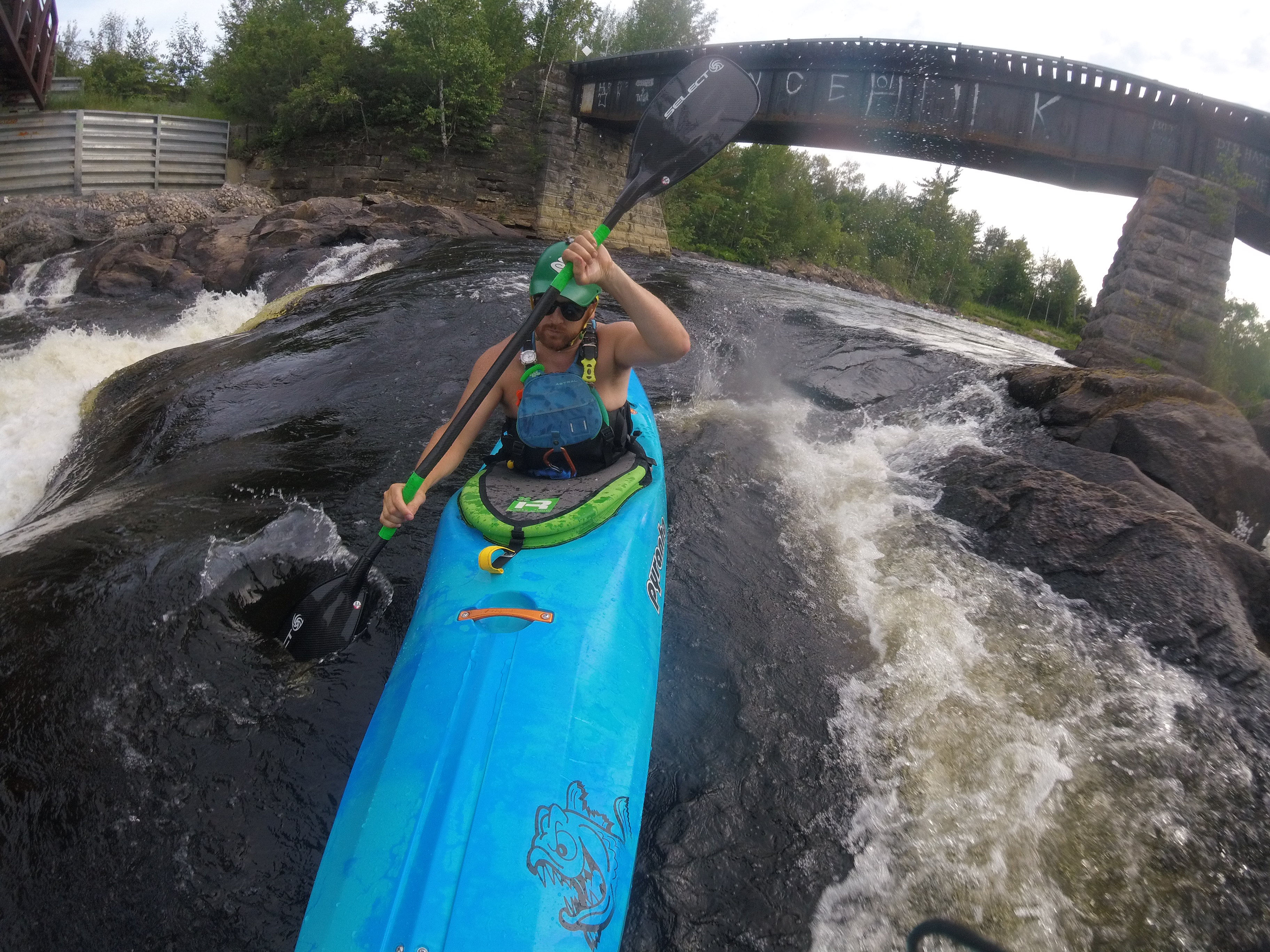
This one goes to 12. | Photo: Phil Kompass

I first heard about Pyranha’s 12R on April 1, 2017. I was soon disappointed to learn the launch of the new longboat was only an April Fool’s Day joke. I wasn’t the only one. For years, some of the U.S.-based Pyranha crew wanted to make a longboat based on the 9R, but they couldn’t convince owner Graham Mackereth to invest in the cost of a mold for such a seemingly niche market.

Pyranha 12R Specs
Length: 12 ft 
Width: 24.5 in 
Volume: 
102 gal 
Weight: 
57 lbs 
MSRP: 
$1,339
pyranha.com

More than half a year later, the team took to Kickstarter. What had jokingly been referred to as the “mythical unicorn of longboats” was suddenly a real possibility if Pyranha pre-sold enough of them. The first day, 60 people signed up. Within three weeks, one hundred 12Rs had been pre-ordered, and the boat moved into production for delivery in the summer of 2018.

Longboats aren’t just for the speed-hungry racing niche. These big boats are designed for big fun—they go ultra-fast and are equally at home tackling huge rapids or holding many days’ worth of gear. I already own a longboat, a Liquidlogic Stinger XP. As soon as I heard about the Pyranha 12R, I was intrigued and knew I wanted to paddle it and compare.

I caught my first glimpse of a 12R in the fall of 2018 at the annual Movember Whitewater Classic men’s health fundraising race on the Ottawa River. This was shortly after the 12R dominated the field at the23rd annual Green Race in North Carolina, taking third place and five of the top 10 spots. When the editorial team at Paddling Magazine hinted they’d be getting a loaner to review, well, I’m pretty sure I started drooling then and there.

The Pyranha 12R shares the longboat race category with the Dagger Greenboat, Liquidlogic Stinger and Jackson Karma UL. All four have very similar specs, with the 12R coming in at the second-longest (12 feet), second-widest (24.5 inches), highest volume (102 gallons), and the heaviest (57 pounds).

Pyranha’s updated Stout 2 outfitting features improved comfort, ergonomics and overall adjustability, and is easily customized. | Photos: Graham Kent

As I already have a few Pyranha kayaks and am familiar with the outfitting, getting the 12R river-ready was quick and easy. The 12R comes standard with Pyranha’s Stout 2 outfitting, which features upgraded hip pads and thigh grips. First, I installed the peel-and-stick foam pad for the full plate footrest. Then, I adjusted the footrest, added the two included seat shims, and added hip shims to fit. My favorite part of Pyranha’s outfitting pack—besides the Angry Fish Sponge—is the peel-and-stick foam pads and foam roll, which I use for adding padding where my kneecaps contact the hull. Why don’t all the brands come with this stuff?

[ See the largest selection of boats and gear in the Paddling Buyer’s Guide ]

In just 10 minutes, the boat was comfortable and fit me like a glove. The only thing I would change, as I have done in my 9R and Ripper, is add a large foam wedge to the footrest for a more relaxed ankle position.

The 12R, like its hugely successful Pyranha 9R inspiration, has a Swede form hull design, meaning the widest part of the hull is behind the paddler. This gives the boat numerous advantages over a symmetrical design on the river, including improved tracking, quicker turning when on edge, and a more efficient stroke due to the narrower width at the cockpit. It also increases downriver speed by displacing water efficiently and minimizing drag.

Despite both boats having almost identical specs, I was surprised by how different the 12R handled compared to my Stinger on the water. After a few laps down my local run, I felt like I had the boat dialed in.


The 12R is exceptionally stable; I was able to edge the boat enough to get my kidney into the water without needing a paddle for support or feeling like I was going to tip over. On flatwater, the 12R didn’t feel as fast as the Stinger, but with its slightly wider width and shorter waterline as a result of its shorter length and increased rocker, I am not surprised. And, of course, flatwater speed has little to do with how quickly it will go downriver.

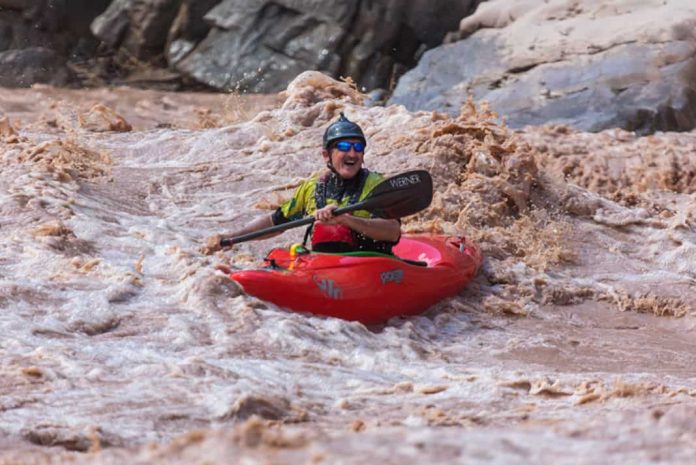
Paddling through rapids, I found despite significant bow rocker, wave deflectors, ample volume and a sloped deck, the bow didn’t rise out of the water after plunging through a wave or hole as quickly as I thought it should. This might be a disadvantage of the Swede-form shape—with the center of buoyancey behind the paddler, the stern has leverage to hold the bow under when coming down the face of a wave or hole. I just needed a change in my paddling style.

I generally choose the straightest line down a rapid while avoiding the largest features, and crash my way down, plowing through anything in my path. The 12R has a much more defined edge and more continuous rocker and is much more agile because of it. I can rapidly change direction and carve a turn on edge. Using this to my advantage, I simply adjusted my line, edging the boat to weave around features to keep the bow dry. The maneuverability of the 12R also made catching eddies—something I don’t even bother trying in my Stinger—easy and fun.

Paddling the Pyranha 12Rwas a blast. If #fastisfun has the mantra of the nine-foot creek race category, then #fasterisfunner with the 12-footers.

This one goes to 12. | Photo: Phil Kompass

Sea Kayak: Current Designs’ Karla Review

It isn’t just experts and rolling junkies who will enjoy this boat; the Karla is an outstanding companion for aspiring paddlers to develop skills and gain confidence. | Photo: Owen Marshall

Three years ago, when I first inquired about the enigmatic designer behind Current Designs’ emerging family of Danish-style touring kayaks, CD vice president Bill Kueper prefaced an introduction to his collaborator in Denmark with one word: janteloven.

Current Designs Karla
Length 15 ft 3 in
Width 
21.5 in 

Depth 11.5 in 
Weight 52 lbs
MSRP $3,599 USD 
cdkayak.com

Translated from Danish, janteloven means law of Jante, and represents a set of deeply entrenched social norms eschewing personal glory in favor of self-effacing Scandinavian modesty.

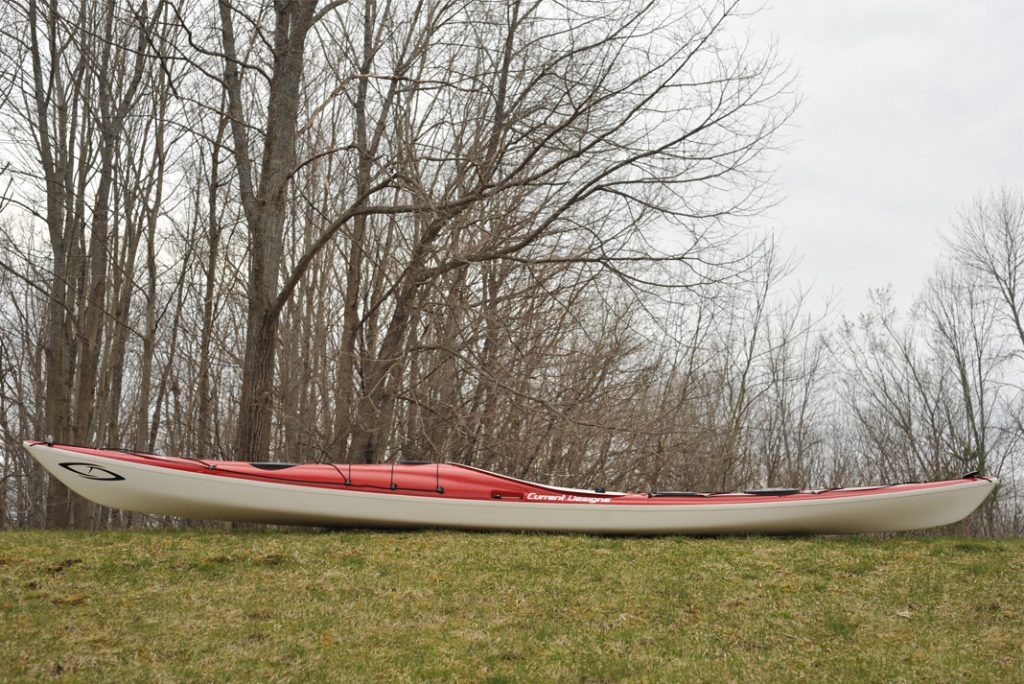
So while you won’t find Jesper Kromann-Andersen boasting about his accomplishments, the 48-year-old designer is less rigid when it comes to another of Jante’s tenets: Don’t do things out of the ordinary. His three collaborations with Current Designs—the Prana (released in 2015), the Sisu (2016) and, most recently, the Karla—are powerhouses of innovative design and stylish personal expression. Social protocol aside, the trio cements Kromann-Andersen among the greats of sea kayak design.

Playful Karla has the most rocker of any Current Designs kayak. Added volume in the bow prevents diving when surfing and maximizes maneuverability. | Photos: Virginia Marshall

At the time of its launch, the 17-foot Prana had the most rocker of any kayak in the Current Designs line-up, making it an agile touring companion with plenty of responsiveness for playing along the way. At 16 feet, the Sisu featured still more rocker and a hybrid hull profile optimized for lively performance in surf and moving water.

The Karla amps it up again, with an even more aggressive rocker profile than the Sisu, as well as a slightly shorter and narrower hull. Kromann-Andersen also added volume in the bow, so his newest creation surfs like a dream and displays nimble prowess in the heaviest waters.

Topside, the Karla sports the same four-hatch configuration and sweeping deck contours as her siblings. This bow-to-stern shaping is not only stylish, it increases stiffness throughout, provides clearance for paddle strokes, and creates space for a positive fit in the knee area—all while keeping overall deck height low.

The cockpit outfitting also shares the Danish simplicity of the other two boats. Instead of the copious adjustments found in many North American kayaks, Current Designs uses robust, well-placed elements that fit correctly the moment you slip into the cockpit. Two sizes—standard and LV, or low volume—ensure a snug, sporty fit for just about anyone. We demoed the LV, which shaves less than an inch of depth—if you’re over six feet tall or 180 pounds, try the standard Karla.

What do you get when you combine compact dimensions, superb secondary stability and just-right cockpit outfitting? A comfortable resting spot. | Photos: Virginia Marshall

Intermediate and advanced paddlers would be hard-pressed to find a more intuitive kayak. Kromann-Andersen’s design process begins with careful consideration of water flow dynamics, desired handling characteristics and paddler integration. Intuition, experience and innovation then guide the time-honored progression of testing in the sea and refining the shape. A kayak must respond, he says, as a natural extension of paddler input.

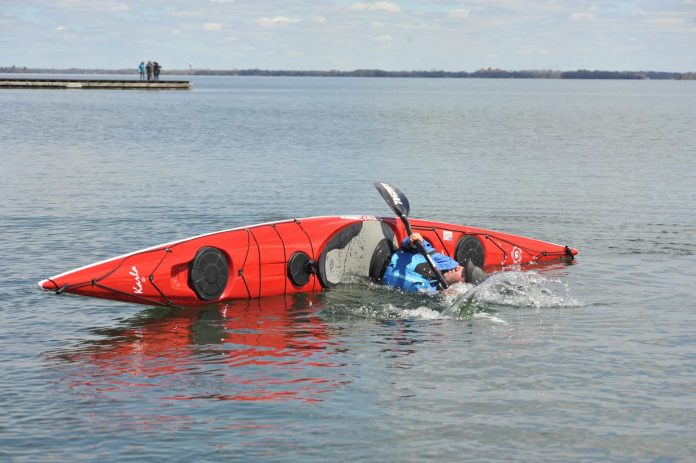
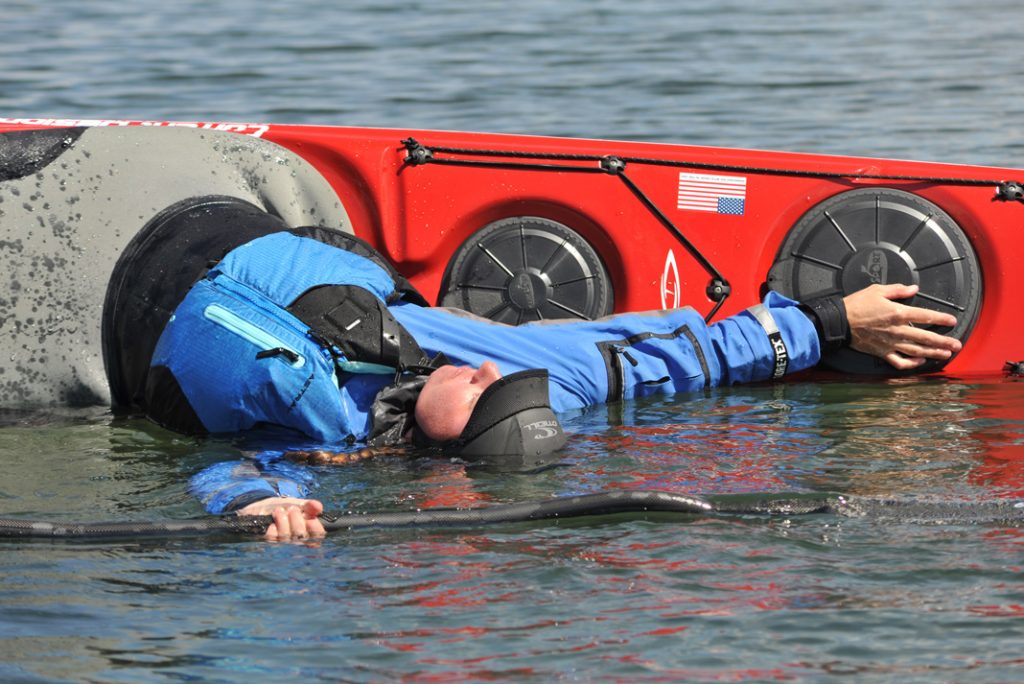
In the Karla, this translates to one of the most maneuverable sea kayaks I’ve ever paddled. Want to scribe turns and carve wave faces? Stay loose and avoid purling while surfing? Slalom through rock gardens and thread currents with graceful agility? Unlock more challenging rolls and balance braces? Karla gives you the keys. And what’s more, it does so while remaining surprisingly efficient. Unlike some dedicated ocean play kayaks, the Karla is fun to paddle on day tours and quickly covers the distance between you and the waves.

TThree hatches, a deck pod, compass recess, skeg and surprising hull speed mean the Karla can tour as well as surf. | Photos: Virginia Marshall
Three hatches, a deck pod, compass recess, skeg and surprising hull speed mean the Karla can tour as well as surf. | Photos: Virginia Marshall

A narrow beam and shallow-V hull purposely trade a degree of initial stability for exceptional edge control. On bumpy waters, where a kayak’s secondary stability is what keeps it right side up, the Karla feels rock-solid. Its hard chines are at home with any degree of edging. I found it second only to ultra-low-volume Greenland kayaks for restful, body-on-the-water stability.

But it isn’t just experts and rolling junkies who will enjoy this boat; the Karla is also an outstanding companion for aspiring paddlers to develop skills and gain confidence in the surf zone or while messing about on calm water. Get comfortable on edge, and the Karla will make anyone feel like a superstar.

Current Designs enhances the Karla’s wide-ranging appeal with a variety of composite layups. The standard fiberglass construction offers a classic blend of lightweight stiffness and strength, while the Kevlar option brings the weight down to just 48 pounds. A third option, which CD calls their Heavy Water layup, reinforces the hull with an extra five pounds of glass and resin to withstand the abuse of regular rock gardening. All of Current Designs’ laminates are vacuum-bagged, a process minimizing unnecessary weight and yielding a flawless finish inside and out.

Five years after Kueper and his team first laid eyes on the elegant CAD drawings of an accomplished Danish designer, Jesper Kromann-Andersen and his trio of playful, punchy kayaks are attracting global attention. But perhaps acclaim and janteloven aren’t mutually exclusive—after all, the Karla and her siblings elevate all paddlers.


It isn’t just experts and rolling junkies who will enjoy this boat; the Karla is an outstanding companion for aspiring paddlers to develop skills and gain confidence. | Feature photo: Owen Marshall


How the most unlikely adventurer became one of the world’s most inspirational athletes

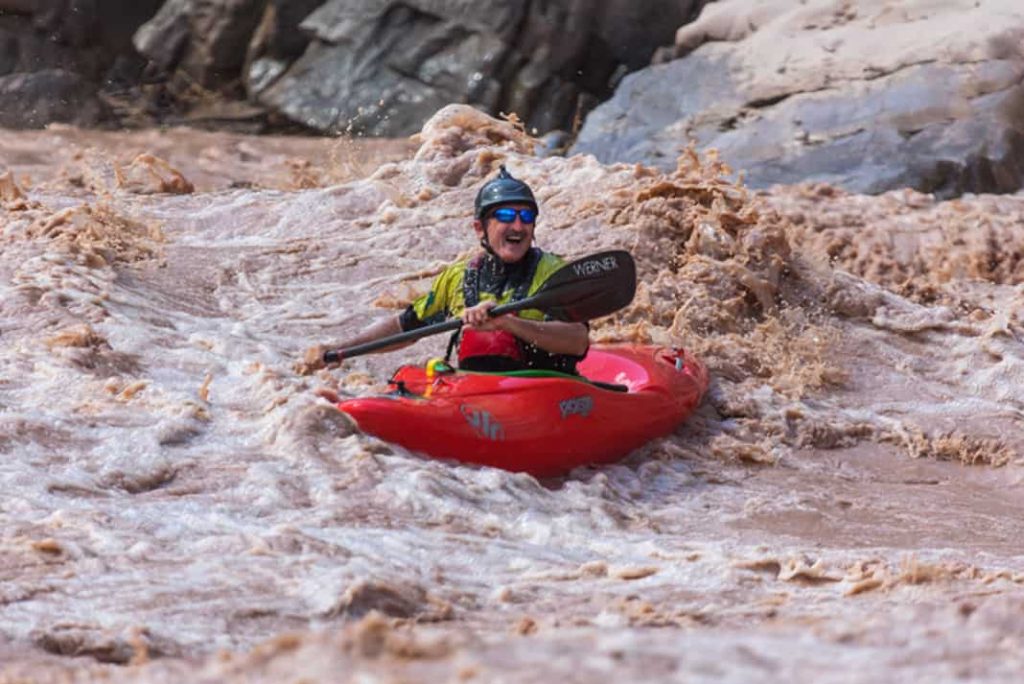
Lonnie Bedwell during a 2018 descent of the Colorado River. Photo: James Martin/Google Maps

As a young man serving as a U.S. Navy submariner in the first Gulf War, Petty Officer Lonnie Bedwell never imagined he would become one of the world’s most inspirational adventure athletes. He also never thought he’d lose his eyesight, blinded by a shotgun blast in a freak hunting accident in 1997, three years after he retired from the military. “It left me in the dark,” says Bedwell, now 53. “Totally in the dark.”

At the time, Bedwell was a 31-year-old single parent with three daughters, settling into civilian life in southwestern Indiana after nine years at sea. It became obvious he could no longer continue his job at a power plant. He went from 180 pounds to 130. Walking was a challenge; without eyesight, his balance suffered. “What would my girls think?” Bedwell wondered. “From that point forward, I had to redefine my life.”

Bedwell speaks in the measured tone of a quintessential Midwesterner; no doubt this calm, steady demeanor played a huge role in his recovery. With the encouragement of his daughters, Bedwell resumed yard chores. Soon he was operating a chainsaw. For work he “got to building houses”—framing, heating, wiring, drywall and roofing—“anything from the ground up, excluding finishing work,” he says. “I realized I could do things.”

When his youngest daughter graduated from high school, Bedwell had more time for new activities. He took up adaptive alpine skiing in the winter of 2011. He was introduced to kayaking at a pool session a year later. In the summer of 2012, Bedwell participated in Outtasight, a program for vision-impaired and blind veterans on the Yellowstone River in Montana. The clinic was organized by Team River Runner, a non-profit introducing veterans to adventure sports.

After the clinic, Team River Runner executive director Joe Mornini asked Bedwell if he would like to be the first blind person to paddle the Grand Canyon. The invitation “instilled a dream,” recalls Bedwell. Mornini encouraged Bedwell to perfect his kayak roll, challenging him to complete 1,000 rolls, and get more experience on the river.

Rolling was easy. Friends gave Bedwell a kayak and gear and he practiced in a pond, completing 100 rolls on his first day. But whitewater is hard to find in the Midwest. Bedwell traveled to North Carolina and practiced on the Pigeon River and at the U.S. National Whitewater Center in Charlotte. Back in Indiana, he quit counting at 1,500 rolls.

Lonnie Bedwell during a 2018 descent of the Colorado River. Photo: James Martin/Google Maps
Lonnie Bedwell during a 2018 descent of the Colorado River.
Photo: James Martin/Google Maps

With only 14 days of river experience, Bedwell and a team of guides attempted the Grand Canyon in 2013. To navigate whitewater Bedwell relies on voice commands from two or three expert kayakers. “The guy in front of me is always at 12 o’clock to my boat,” explains Bedwell, who gained international fame for his successful Grand Canyon descent and has since returned to run the Colorado River three times, most recently in 2018. “He’s like my beacon. It’s amazing how much you can hear.”

Bedwell insists his other senses haven’t improved to compensate for his lack of vision. “But you focus on what you hear and what the river is doing. Blind paddlers are reactive paddlers in a proactive sport.”

He describes the typical commands from his guide, heard over the roar of class IV whitewater: “Turn right. Give me a 2 o’clock bow angle. Hold that angle! Hold that angle! Now line back up on me. Charge!”

Recently, Bedwell was the subject of the award-winning documentary Feel of Vision, which captured his efforts to paddle up to class III water unguided, along with his commitment to Team River Runner and personal mission to introduce “as many people as I can” to the freedom of paddlesports, including veterans and youth.

Through it all, Bedwell always acknowledges the volunteers who have made his experiences possible. “Kayaking is the most independent thing I’ve done since losing my eyesight,” he says. “But sometimes you wish you could see the river, the rapids and what you’ve done. That’s the hardest part.”

Feel of Vision Trailer from Blueline on Vimeo.

Kenji Haroutunian Joins The Big Gear Show Team

Keni Haroutunian Joins Big Gear Show

The Big Gear Show (BGS), a new outdoor industry trade show focused on hardgoods, with an emphasis on paddling, cycling, climbing, and camping gear, announced January 14, 2020, the appointment of Kenji Haroutunian to be its outdoor show director.

Haroutunian joins long-time Interbike show director Lance Camisasca and Paddlesports Retailer show director Charles Conner to complete The Big Gear Show’s leadership team.

Haroutunian has over thirty years of experience in the outdoor recreation industry. From 2007-2015, he served as group show director for the Nielsen Sports Outdoor Group (now Emerald Expositions), leading Outdoor Retailer, Fly Fishing Retailer, and numerous ancillary events. He has also contributed to a variety of initiatives that have sharpened his acumen for a new events model, including Outdoor PressCamp, FOJT Climb Smart, Outdoor Media Summit, the Inclusivity Luncheon, and Outside Experience. Haroutunian is committed to growing access and inclusion to the outdoors and is board director for Access Fund, Friends of Joshua Tree, and the California Outdoor Recreation Partnership.

[Discover the best gear of the year in the online Paddling Buyer’s Guide.]

“Kenji’s appointment solidifies our team. We now have the former show directors of Interbike, Outdoor Retailer, and Paddlesports Retailer all working toward a shared vision for The Big Gear Show. No other show team in the industry brings as much experience and expertise to the table. With these new hires on board, we’re confident we will grow The Big Gear Show into the world’s premier hardgoods show.” commented Sutton Bacon, the show’s co-founder.

The Big Gear Show will be held in Salt Lake City’s Calvin L. Rampton Salt Palace Convention Center July 22-25, 2020. The show’s first three days will be reserved exclusively for retailer attendees, but uniquely the final day, Saturday, July 25, will be open to the general public.

“I am truly excited to be part of The Big Gear Show,” said Haroutunian. “Having an experienced team of retailers conceive and produce a fresh treatment for today’s ‘B2Both’ audience is a great opportunity to put learnings into practice with people I’ve known, worked with and respected for decades. The Big Gear Show brings the outdoor experience back to the center of the production—it allows a new platform to come to life focused on core activities that highlight innovation and discovery, while actively promoting healthy and responsible outdoor recreation.”

About The Big Gear Show

The Big Gear Show is the outdoor industry’s first-ever national B2B2C gear show ‘for retailers, by retailers.’ The show takes place July 22-25, 2020 in Salt Lake City, Utah. The show provides exclusive outdoor and on-site demo opportunities for paddling, cycling, climbing and camping, an expansive marketplace, and an unsurpassed cultural experience for exhibitors, retailers, media and industry advocates alike. For more information, visit www.thebiggearshow.com or contact info@thebiggearshow.com.

How to save our wild places from being loved to death

Take only photos, leave only Likes. | Photo: David Jackson

I can only describe it like a zombie apocalypse.” Those are the words of Brad Bogle, as told to the Globe and Mail newspaper.

Bogle’s parents operate a family farm an hour’s drive west of the city I call home. The farm fields opened to the public each season when the sunflowers were in bloom. Over several weeks in July and August a few thousand tourists would visit and bask amongst the sunny faces.

Last summer, a tagged social media post featuring the estimated 1.4 million sunflower plants went viral. Then all hell broke loose. Enter the zombies.

On one bright and sunny Saturday, an estimated 7,000 tourists showed up in search of the perfect sunflower selfie. The Bogles knew something was up when the first minivan arrived at 5:45 a.m. Soon the onsite parking overflowed. The selfie-seekers parked on the country road—then out on the highway—some hiked from a kilometer away shortcutting and trespassing into the fields. People brought tripods and selfie-sticks. There were drones. One man portaged a stepladder deep into the field.

The local cops were called to direct traffic and control the crowd. The sunflower crop was damaged in the melee. The sunflower fields didn’t open to the public this year—the Bogles claim they’re now closed forever.

A selfie-sticking horde ruining the very thing it seeks seems to be a uniquely 21st-century cautionary tale. And it’s one we increasingly hear about.

Last fall, the Jackson Hole Travel and Tourism Board set a precedent by asking visitors to stop geotagging photographs on social media to protect the state’s forests and lakes after insta-fame and the resulting heavy use damaged remote trails in the Grand Tetons.

Crowds and congestion inaccessible wild spaces is a growing concern in many places, but it seems nowhere more so than in national parks.

“Technology, successful marketing, and international tourism have brought a surge in visitation unlike anything seen before,” reads a November 2018 article in The Guardian, noting the U.S. National Park Services estimates annual visitation peaked at 330.9 million.

Take only photos, leave only Likes. | Photo: David Jackson

Some of the most popular U.S. parks experience two- to three-hour delays to enter, animal sightings cause gridlock and fender benders. Backcountry pit toilets overflow and close due to “extreme overuse.” Glacier National Park rangers have broken up fist fights over parking spots.

On a much smaller—and far less apocalyptic—level, I see this at a handful of my favorite backcountry launches where there is an ever-growing throng of paddlers. It’s terrific to see more people enjoying the outdoors, but worrisome to watch the cumulative destruction in the backcountry—trails widening and unofficial ones appearing, trees scarred from axes, feces improperly disposed of, and candy bar wrappers. Increased usage inevitably affects fragile ecosystems—and also the visitor experience if solitude is what they seek.

[ Plan your next paddling adventure with the Paddling Trip Guide ]

While some American and Canadian national parks have considered adopting a reservation system for entry to lessen the load on park infrastructures and the environment, others advocate for avoiding busy areas already operating at maximum capacity, and instead traveling only lesser-known routes. Some even argue the best way to protect the wild places we cherish is to avoid them entirely—of course, for those who are happiest outside, that’s not much of an option at all.

With an increasing number of people paddling in wild and semi-wild places, it makes following leave no trace principles even more critical. And because today’s popularity spikes are so often tied to social media, some adventurers have suggested adopting an eighth leave no trace principle: consider the potential impacts rapidly increased use can have on wild places and to be mindful of when posting images to social media. Just as Jackson Hole’s Travel and Tourism Board recommends. It’s the best way to keep your own zombie apocalypse at bay.

Kaydi Pyette is the editor of Paddling Magazine. She loves sunflowers but zombie movies really freak her out.

Take only photos, leave only Likes. | Photo: David Jackson