Home Blog Page 179

8 Things You Don’t Know About Getting Lost, But Should

“Shortcuts make long delays.”—Pippin to Frodo Baggins, authorities on the subject. | Photo: istockphoto.com/ ninjaMonkeyStudio
  1. According to a research study by Smokymountains.com, wilderness travelers most often get lost due to leaving the trail (41 percent), bad weather (17 percent) and falling off the trail (16 percent). The search for a lost hiker or hunter averages 10 hours.
  2. There’s an estimated 50,000 search and rescue missions in the U.S. each year, and 40 percent occur in national parks. Of those cases, day hikers made up 42 percent of SAR missions from 2004 to 2014. That’s almost four times the number of overnight backpackers needing rescue, the next closest group at 13 percent. Day-trippers are especially vulnerable when lost because they are often traveling without layers, shelter and food.
  3. For centuries, scientists tried to explain how animals migrate without getting lost. Magnetoreception—the ability to sense Earth’s magnetic field—has become an increasingly popular theory. It explains how monarch butterflies are capable of following routes so long their great-grandchildren complete the journey, and how bar-tailed godwits depart Alaska and fly for eight days and nights over featureless water before arriving in New Zealand, 7,000 miles away.

    lego man
    “Shortcuts make long delays.”—Pippin to Frodo Baggins, authorities
    on the subject.
    | Photo: istockphoto.com/
    ninjaMonkeyStudio
  4. In 1923, a collie mix traveled 2,800 miles on his own back home to Oregon after he was lost while his owners visited family in Illinois. When Bobbie The Wonder Dog died years later, more than 200 people attended his funeral and celebrity canine Rin Tin Tin lay a wreath at his grave.
  5. If lost, remember the mnemonic STOP. Stop—sit down and don’t panic. Think—what do you know about your situation and location? Observe—gather information that can help you figure out where you are. Plan—consider possible courses of action, and choose one. Often staying put is the best bet for being found.
  6. No film has inspired as much misplaced anxiety about being lost in space as 2013 box office hit, Gravity, starring Sandra Bullock untethered from a space station. Of the 536 astronauts and more than 200 spacewalks, no human has ever been lost in space.
  7. Getting lost isn’t always bad. In 1947, a shepherd went in search of a lost goat in the hills near the Dead Sea. He found a cave he’d never seen before and inside were clay pots containing old scrolls. Scholars declare the 2,000-year-old Dead Sea Scrolls the most significant manuscript find of all time.
  8. According to the U.S. National Park Service, even day-trippers should carry a navigation system, sun protection, insulation, illumination, first aid kit, fire making supplies, a small repair kit, food, hydration and an emergency shelter. Always leave a detailed plan of your route with someone you trust.

“Shortcuts make long delays.”—Pippin to Frodo Baggins, authorities
on the subject. | Photo: istockphoto.com/ ninjaMonkeyStudio
How To Plan For Your Next Virtual Canoe Trip

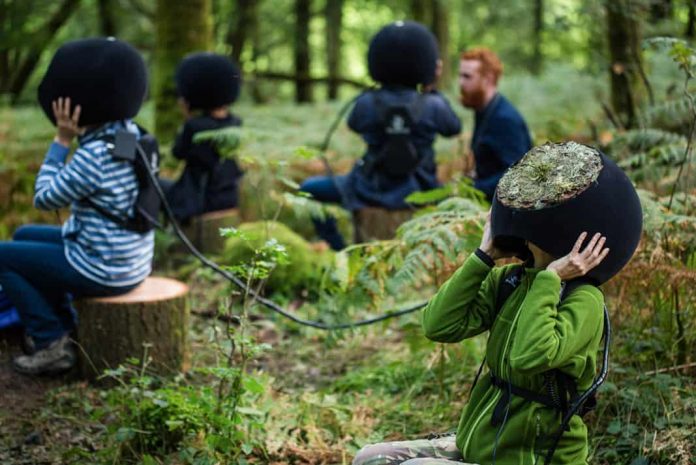
Kids with VR helmets
Award-winning virtual reality experience creators, Marshmallow Laser Feast uses technology to help repair connections with nature. | Photo: Courtesy Marshmallow Laser Feast

If you dream of going to the moon, first try New York City’s Meatpacking District. Last year, an out-of-this-world virtual reality (VR) experience was unleashed in anticipation of the 50-year anniversary of the Apollo 11 mission. Wearing a flight suit, VR headset and gravity-offload harness developed in partnership with NASA to simulate lunar leaping, users experience an immersive and interactive lunar landing. Astronauts say it’s just like the real thing. Living more than 238,000 miles away, it’s the closest most of us will get.

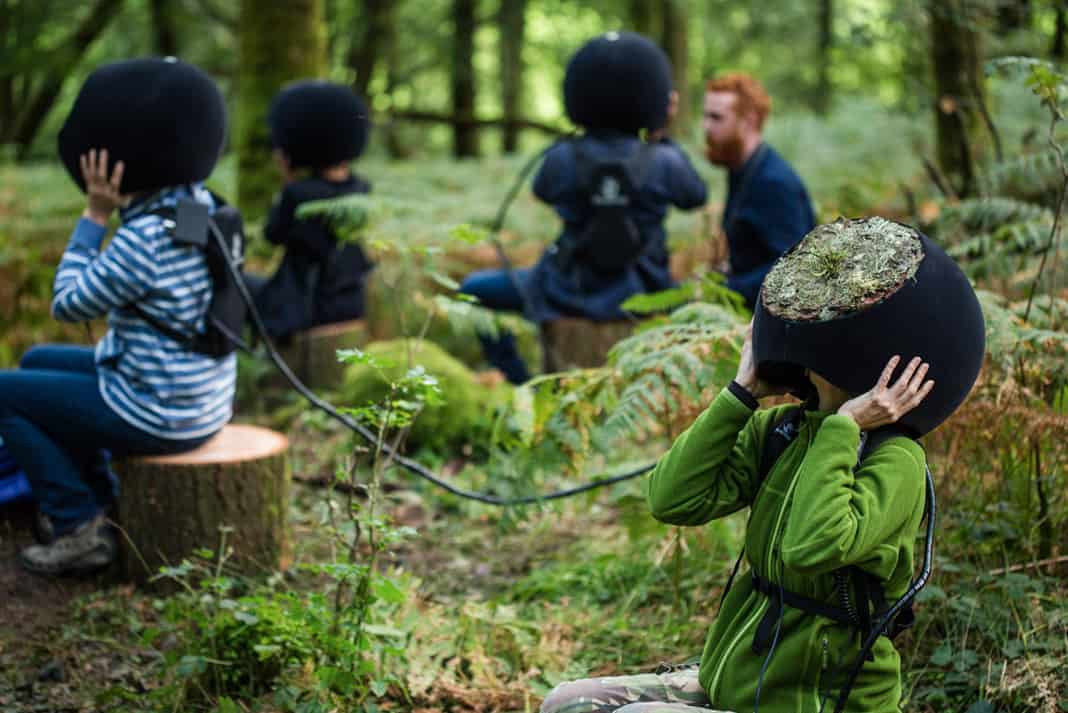
Kids with VR helmets
Award-winning virtual reality experience creators, Marshmallow Laser Feast uses technology to help repair connections with nature. | Photo: Courtesy Marshmallow Laser Feast

And that’s the idea. The project uses VR “to democratize experiences, events, cultural moments typically reserved for the elite few,” says Samsung’s Zach Overton, which partnered with NASA on the project. While only 12 men have ever walked on the moon, Overton said, “We feel like it should be something everybody can experience.”

Last fall, while creating the annual Paddling Buyer’s Guide, I asked a handful of canoeing industry leaders to pontificate about the future of their passion.

“Ten years from now, I fear multi-day wilderness tripping will be a thing of the past and virtual reality canoe trips will be all the rage,” boldly predicted regular columnist and former director of the Canadian Canoe Museum, James Raffan. Raffan’s prediction nettled me. Is there value in a virtual wilderness experience? Without the prep, bugs, sweat and clean-up, isn’t the experience fundamentally changed? Could this really be the future?

Nah.

And yet, for many of the planet’s three billion urbanites who lack access to wild spaces due to geography, economy and other factors, virtual reality could be the closest they get to wilderness. Those benefits are small but still tangible—we’ve written about the positive effects even a virtual nature “experience” on a smartphone app can have on mood and stress levels.

Visual media is powerful. David Attenborough-narrated nature documentaries made many fall in love with places we have never been. Bill Mason’s films inspired many to pick up a paddle. Could an even more immersive experience make someone genuinely fall in love with canoe tripping and the wilderness?

The whimsically named Marshmallow Laser Feast (MLF) is a London, U.K.-based multimedia design studio taking this idea a step further. They aim to use technology to help people re-connect with nature. Their 2015 installation, “Through the Eyes of the Animal,” used a 360-degree virtual experience to help visitors explore a forest through the eyes of animals and insects. Via haptics, headsets and sound, visitors could fly through the forest as a laser-eyed owl, feel a frog’s ribbit run down their back, and buzz along a carbon dioxide trail as a mosquito.

The company’s 2018 project highlights the invisible connection of humans and plants through breath. With the help of breath and heart sensors monitoring the user in real-time, as well as sound, scents, headsets and wind machines, the 20-minute-long untethered experience explores oxygen exchange inside a forest of giant Sequoia trees. The designers hope it will spark conversation about conservation.

Every day we see apocalyptic headlines heralding the sixth great extinction, polar ice caps melting, and oceanic garbage patches the size of large states. MLF’s artistry taps into our collective sense of wonder about the natural world and uses it to inspire, instead of bleak messaging which discourages so many.

“Our hope is you’ll probably start caring a little more about a mosquito or an owl, or the forest itself,” MLF’s director said in an interview with CNN. Through lightweight AI goggles or an app on a smartphone, “you could understand the language birds are singing, see plants photosynthesizing, or watch oxygen enter your lungs. All things we learn about at a young age. Soon we’ll be able to create a true understanding of the invisible parts of our world.”

[ Visit the Paddling Buyer’s Guide for the boats and gear that will give you the real paddling experience ]

It’s just one example of the many ways technology could be used to enhance—instead of erode—our connection to nature. Just like a virtual trip to the moon can expand our awe about the universe, instead of diminishing it. With more than three billion smartphone users around the planet, now is the time for technology to help inspire conversations and solutions for wild places.

Maybe James Raffan is right. Maybe virtual reality canoe trips will be all the rage in the near future. It could be one small step for man, and hopefully a giant leap for us all.

Kaydi Pyette is the editor of Paddling Magazine.

Award-winning virtual reality experience creators, Marshmallow Laser Feast uses technology to help repair connections with nature. Photo: Courtesy Marshmallow Laser Feast

Esquif Canoes Announces Changes in US Distribution and Marketing

FOR IMMEDIATE RELEASE February 4, 2020
Contact: Jacques Chasse

Industry veteran David Hadden joins Esquif team in business development role

FRAMPTON, QUEBEC. – Esquif Canoes announced Tuesday that David Hadden will join the company in the newly-created role of Director of Business Development.

Esquif owner Jacques Chasse is enthusiastic about the addition, and what it means for the company moving forward. “David has been a fixture in the paddlesport industry for 20+ years with experience at several of the major paddlesports brands. I am impressed with his business skills, but also his passion for paddlesports and the outdoors”.

Hadden is excited to return to his “canoe roots” and work with a company that shares his ethics and excitement for life on the water. The paddle sport industry has struggled recently due to a changing retail environment and a lack of innovation. “Paddles sports and specifically canoeing is still one of the best and most affordable outdoor activities, but the business model is broken. Esquif with proprietary technology and a reduced footprint is perfectly positioned to grow and succeed in the new outdoor marketplace while offering innovative product that offers the best consumer experience.” Chasse confirmed that the company is growing and will launch 5 new models this spring. “Our new canoe designs are designed to offer the best experiences for those seeking solitude or those wanting to explore in pairs or small groups.

Paddler owned and paddler run, Esquif has based its existence on the right mix of work and fun and this culture drew Hadden the team. “I’m looking forward to focusing more on the things I enjoy in business: product innovation, working with top accounts, engagement with the customer, and introducing a new generation of outdoor and water enthusiasts to nature and the outdoors. We are going to make canoeing fun again!

About Esquif Canoe

First established in 1997, Esquif Canoes is a North American manufacturer of canoes based in Frampton, Quebec. A leader in the global paddlesports industry, Esquif manufacturers one of the industry’s largest assortment of canoes appealing to paddlers, adventurers, anglers and sportsmen of all ages. Esquif, driven by passion and the desire to innovate; run by paddlers who want to share the sport of canoeing to a future generation of outdoor enthusiasts.


Dropping The Biggest Waterfalls For The Least Likes

kayak going over waterfall
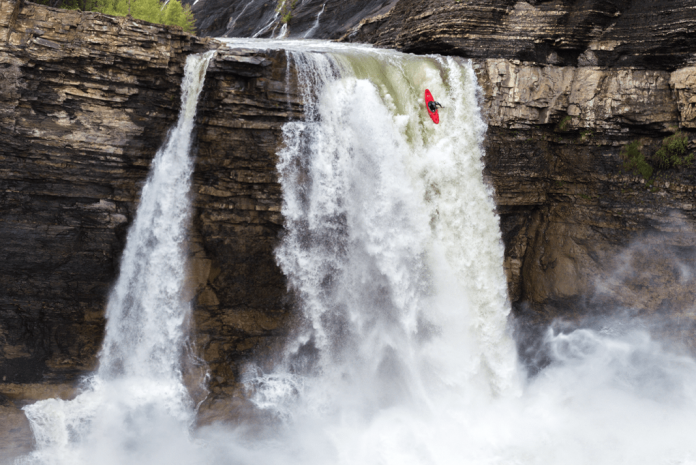
Knox Hammack on Alberta's 98-foot-tall Ram Falls. | Photo: Lachie Carracher

Over the last two years, the West-Coast-based Torryd quartet has made a name for themselves running some of the world’s tallest waterfall descents. Trent McCrerey, Knox Hammack, Edward Muggridge and Liam Fournier are a tight group who met at World Class Kayak Academy, a traveling high school for students who earn credits while paddling around the world.

I’ve been lucky to paddle with the lads, and they’ve lived on my couch more often than not. It’s a pleasure to join the team on a mission—I have spent hundreds of hours on the road with the gang, rap blasting and truck loaded with boats in search of perfect water levels on the world’s largest runnable stouts.

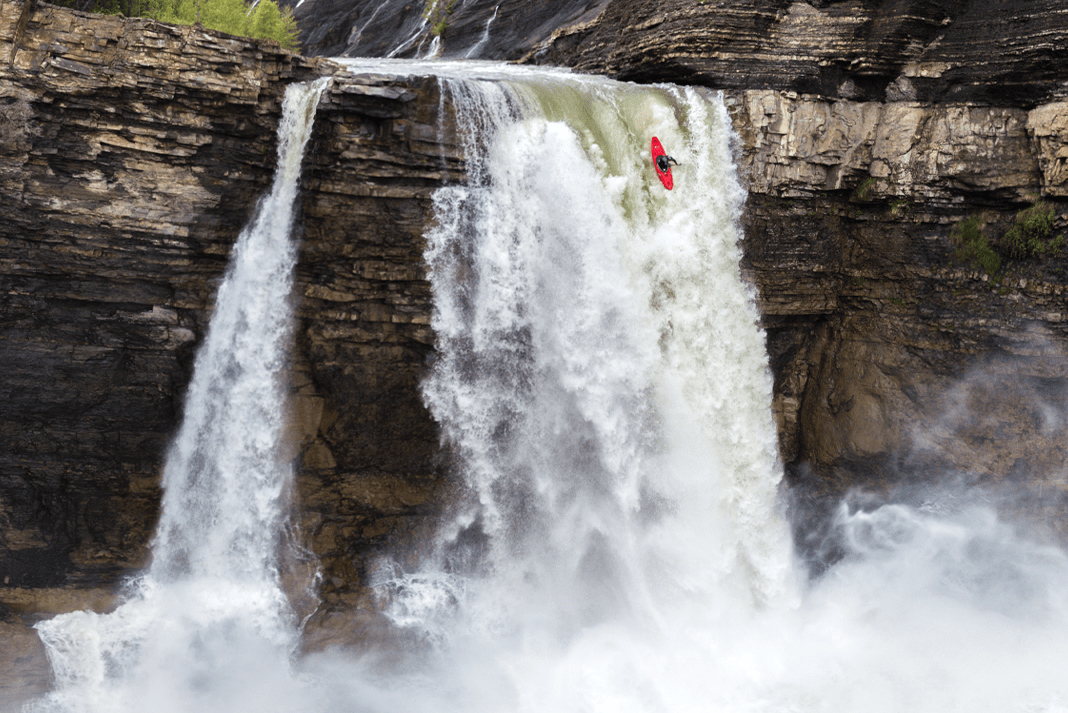
Alberta’s Ram Falls, pictured here, was first run in 2012. Last July, we loaded up the truck and made the 20-hour drive from our place in Squamish, British Columbia, deep into the Rocky Mountains. There Edward styled 98-foot-tall Ram Falls alongside Aniol Serrasolses.

Muggridge is not the only one of the Torryd boys to step up to drop 100-plus feet. During the last 12 months, Knox Hammack laced up and styled 128-foot-tall Big Banana Falls in Mexico, and then 189-foot Palouse Falls in Washington state. It was the first successful Palouse descent since Tyler Bradt descended the drop a decade ago setting a new world record.

Of course, it’s not always smooth sailing for the crew. Trent, Edward and I drove 30 hours last August to paddle Alexandra Falls in the Northwest Territories. Edward was one of the first to attempt the 105-foot falls. He broke his tibia and fibula on impact, taking him off the water and his feet for the next six months.

kayak going over waterfall
Knox Hammack on Alberta’s 98-foot-tall Ram Falls. | Photo: Lachie Carracher

This July, almost a year to the day after Torryd’s first Ram decent, and following the hype of Knox’s new Palouse descent, the Torryd boys loaded up again and returned to Ram Falls. Hopes were high for near-perfect flows.

Trent and Knox geared up first and though nerves were raw, both lads had stunning lines. Knox even ran the Ram twice. The trip had no media plan until I jumped on last minute—they were just going to use GoPros. No photographers were present when Knox ran Big Banana either. These boys are doing it for love, not the attention.

Not only are the Torryd boys cutting their own path and bringing fresh style to the scene, but despite having run some of the world’s tallest waterfalls, they’ve kept a low-key vibe in a scene where paddlers are increasingly saying “look at me” on social media.

A former Australian Geographic Young Adventurer of the Year, Lachie Carracher has devoted his life to following rivers around the world.

Knox Hammack on Alberta’s 98-foot-tall Ram Falls. | Photo: Lachie Carracher

Northstar Canoes B16 Touring Canoe Review

composite canoe on foggy lake
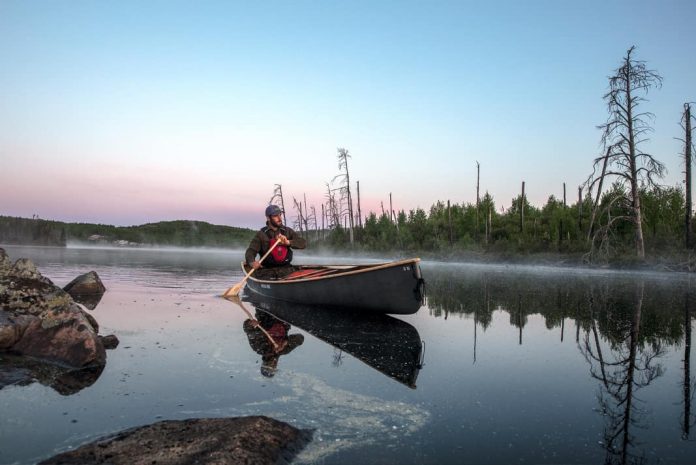
“If you can dream it, you can do it.” —Walt Disney | Photo: David Jackson

My stomach sinks whenever I see a canoe atop the roof of a car. I feel for the vessel, sympathizing with it passing by flowing rivers and crying out to cut the glassy reflection on a lake. I first experienced this feeling when I was just a kid, but in recent years the sentiment grabbed hold of my imagination.

Canoes are tickets to adventure, a tool designed to access the inaccessible. When we place a boat on a roof and drive cross-country, I hope it’s always a means to reach a self-propelled end.

Northstar B16
Length: 16 ft
Width: 
32 in
Weight: 61 lbs
Optimal Load: 400-700 lbs
MSRP: $2,795
NORTHSTARCANOES.COM

This was on my mind when I picked up a new canoe from Ted Bell and Bear Paulsen of Minnesota-based Northstar Canoes. Though the brand is just six years old, it’s steeped in the rich history and excellent reputation of Bell Canoe Works, owned and operated by Bell for 20 years.

I had come to the duo looking for a boat with a few identities. I wanted a hard-traveling solo canoe, yet also a tandem for weeklong trips. Most importantly, I wanted a canoe to paddle at sunset, race on glassy lakes and haul lake trout over its side.

The Northstar B16 seemed the perfect blend of all these desires. When Paulsen offered to bring the B16 to the Boundary Waters Canoe Area Expo outside of Grand Marais, Minnesota, I knew I couldn’t just drive the boat home. The Boundary Waters is canoe heaven. I felt the butterflies of a big adventure stir in the pit of my stomach. I decided to paddle the canoe north, across the international border, and give my new vessel the homecoming all canoes deserve—a christening in adventure.

[ Paddling Buyer’s Guide: See all touring canoes ]

It was fitting to be northbound in a Northstar canoe. Between me and my destination lay the perfect testing ground of windswept lakes, moderate rapids and well-traveled portages, culminating in a chain of trackless swamps and lakes into Canada. Sweating over the first portage, I felt joy at the familiar weight of yoke and canoe, and I couldn’t help but wonder what the B represented in the design’s name. Did it stand for Bell? Or perhaps it represented a more philosophical approach, like the freedom to “B.”

Top: The B16’s IPX layup features 16 layers of Innegra with an inner blanket of Aramid, and has excellent impact absorption, great flex and good abrasion resistance.

My B16 is built in Northstar’s IXP layup, the toughest of four layups Northstar offers for this model. IXP features 15 layers of Innegra and two inner layers of aramid, plus internal skid plates laid into the hull for extra durability in the bow and stern. Innegra blends have excellent impact absorption, high flex and good abrasion resistance; they’ve been heralded by some as Royalex alternatives.

At 16 feet long and 61 pounds, the IPX construction is on the heavier side for a composite canoe, but the trade-off is it’s capable of handling abuse. In skilled hands, it’s a boat suited for extended river tripping and whitewater expeditions, with far better performance than an ABS hull.

The design of the B16 is as modern as its materials, deviating from a traditional Prospector with an asymmetrical hull and lower lines. My childhood vision of a canoe often resembled Bill Mason’s traditional Prospectors, but the truth is lots of rocker means being slow on flatwater. A proud bow and stern—while adding some wave worthiness—get buffeted in the wind, which is extra tough on a solo paddler.

On my journey north, I experienced high winds almost immediately. For two days I paddled headlong into a howling westerly wind. The going was slow, battling against rolling whitecaps and hard blowing points. The ability to travel in wind is vital when crossing significant distances.

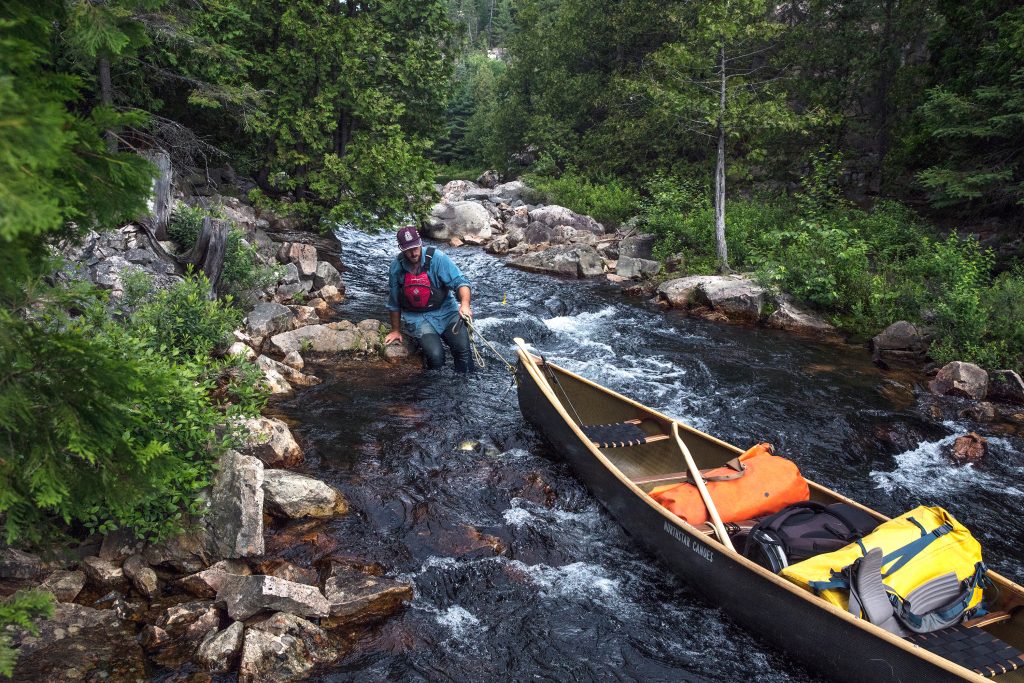
While it was hard at first to appreciate the subtleties of the B16 in such slog conditions, I began to find my rhythm a few days in. In one rapid, when I found myself back ferrying to avoid a ledge, the canoe rode high and perfectly level, as if I was paddling tandem. I jumped out soon after to line the next rapid. It was my first experience using lining holes drilled just above the waterline, and it was a revelation. The ropes pulled the canoe from down low instead of high up on a grab handle, and the difference afforded me maximum control.

[ Plan your next paddling adventure with the Paddling Trip Guide ]

Fighting up a swamp, a mother moose and her two calves darted in front of me. I reached a small lake shortly before sundown, just as the lake began to reflect the setting sun, and in time to feel the tug of lake trout on my line. The stars were aligning. From a bustling roadway to unfamiliar lands and trackless swamps, and now a symphony of moose calls and whippoorwills, I was reminded of just how accessible the inaccessible is.

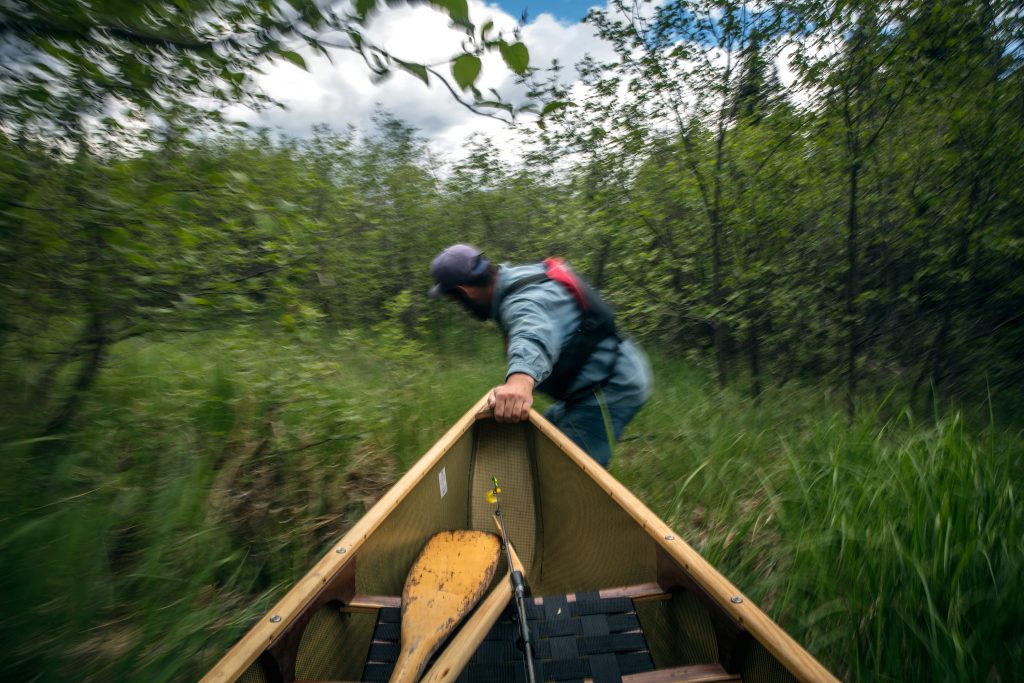
The question of the boat’s name returned near the end of my journey. Traveling hip deep in a bog, carrying through alder tangles, picking leeches from my shoes, I realized the B16 offered the freedom to be whatever type of paddler I wanted to—wilderness wanderer, whitewater thrill-seeker, or portage hound.

Northstar’s B16 is whatever you want it to be.

“If you can dream it, you can do it.” —Walt Disney | Photo: David Jackson

Why three paddleboarders are on a quest to cross all five Great Lakes

Kwin Morris and Joe Lorenz paddled 70 miles
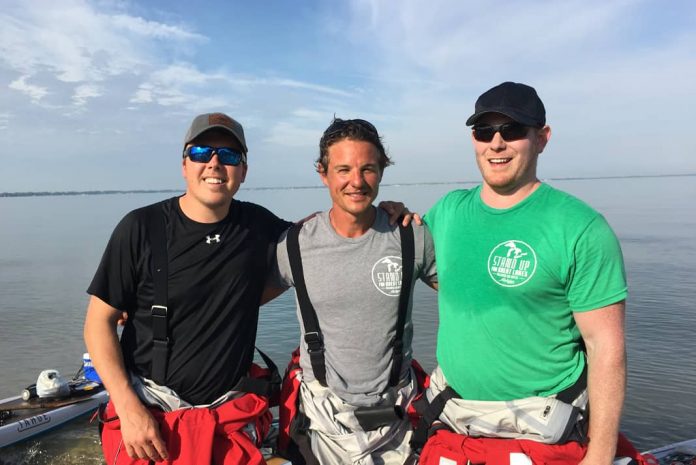
On June 19, 2019, Jeff Guy, Kwin Morris and Joe Lorenz paddled 70 miles across Lake Erie. Their effort raised $16,000 for the Cooperative Institute for Great Lakes Research. | Photo: Stand Up for Great Lakes

After watching in dismay as Fourth of July revelers trashed a local lake, three Michigan men decided they needed to do something to raise awareness about the health of freshwater lakes, big and small.

The result was Stand Up for Great Lakes, an initiative to paddle across the Great Lakes as a fundraiser and raise awareness for the health of the ecosystem.

On June 19, Kwin Morris, Jeff Guy and Joe Lorenz landed on Catawba Island near Sandusky, Ohio having paddled 112 kilometers across Lake Erie. The journey, which included fighting against unexpected headwinds for nearly 20 of the 24 hours they were on the water, raised $16,000 for the Cooperative Institute for Great Lakes Research.

Stand Up For Great Lakes has crossed four of the Great Lakes during the past four years, raising nearly $50,000 for a variety of causes related to the world’s largest freshwater lakes.

Guy, a 33-year-old financial advisor from Traverse City, Michigan, said his connection to the water started when he was a child.

“I spent a lot of time going to Lake Michigan as a kid to go swimming, fishing and boating,” he said. “As you come into adulthood, you see some of the problems facing the lakes. We’re at a point where we need to do something to stop these things before it gets bad.”

While the crossings have been on the Great Lakes, the trio is quick to point out that all freshwater lakes need to be cared for because of the vital role they play in the ecosystem.

In 2016, Guy, along with 33-year-old Lorenz and 31-year-old Morris, crossed Lake Michigan to raise $10,000 for the Great Lakes Alliance. The following year they took on Lake Huron, raising $7,000 for the Thunder Bay National Marine Sanctuary. In 2018, they took on the mighty Lake Superior, raising $15,000 for the Great Lakes Shipwreck Museum.

To decide when to paddle each year, the group works with a meteorologist from a local news channel in Michigan. But sometimes the Great Lakes have their own ideas.

“We give ourselves a week or nine-day window, and as we get closer, we try to make the decision,” Guy said. “I thought Erie was going to be our hardest one because of stuff I’ve read about the lake and people who boat out there say it’s known to be choppy, but it was our second-hardest.”

He said Lake Huron, which took 28 hours to cross, proved to be the most challenging. The weather was ever-changing and Guy fell in at one point while his drysuit was open, allowing freezing water to fill the legs. The group always has safety boats nearby but carries their own supplies for the trip, such as food and water.

[ See the largest selection of boats and gear in the Paddling Buyer’s Guide ]

“Michigan was the third-hardest and, strangely enough, Superior was the easiest because we had such good weather,” he said.

With four lakes down and only Lake Ontario to go, Lorenz, Guy and Morris are now close to becoming the first people ever to have paddleboarded across all five Great Lakes.

The tentative plan is to cross Lake Ontario in June 2020, but the focus remains about the project being bigger than just making history.

“Crossing all five is a personal goal for all of us, but growing the organization and continuing to build is more important,” said Guy, adding he hopes Stand Up for Great Lakes can raise enough to hire a part-time staff member to start working on writing bigger government grant requests.

“Yes, we just raised almost $20,000, but the Great Lakes get $300 million from one grant from the U.S. Government,” he said. “At some point, we would like to get to a place where we can have more of an influence on that type of money. And make sure it’s used well.”

For now, the group is working on its plan for Lake Ontario and is focused on running smaller events such as beach cleanups and teaching kids to paddle.

Paddling addicted journalist Dan Dakin worked as a sports reporter for 12 years before becoming a full-time freelance writer.

On June 19, 2019, Jeff Guy, Kwin Morris and Joe Lorenz paddled 70 miles across Lake Erie. Their effort raised $16,000 for the Cooperative Institute for Great Lakes Research. | Featured Photo: Stand Up for Great Lakes

LynQ Announces Commercial Shipping of People Compass

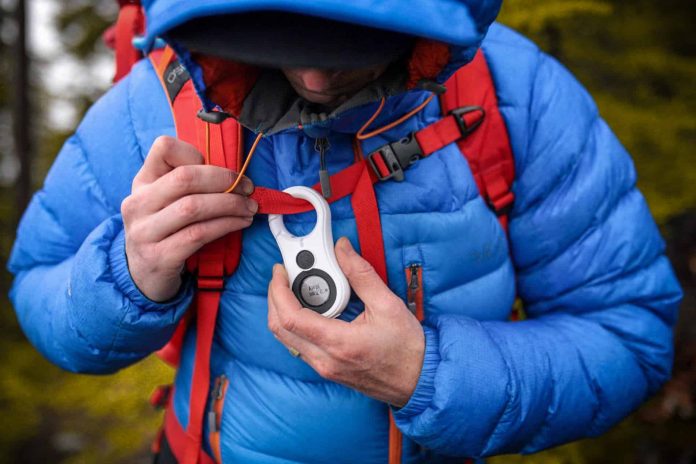
Keeping tabs of friends and family at ski slopes, parks, festivals and pretty much anywhere in the outdoors just got easier. LynQ is the people compass that keeps groups together by locating anyone without the need for phones, networks or infrastructure of any kind. After selling more than 20,000 units totaling in $1.7 million in presales on Indiegogo and shipping to its campaign backers, LynQ announced today it is officially commercially shipping.

“We’ve all been in a situation where we are trying to find or stay connected with a friend, family member or colleague in a crowded space or during an off-the-grid activity, but our phones, apps and trackers that require signal just don’t work. LynQ is intended to help people enjoy activities together without waiting, worrying and wandering around, looking for their group,” said Karina Costa, President of LynQ.

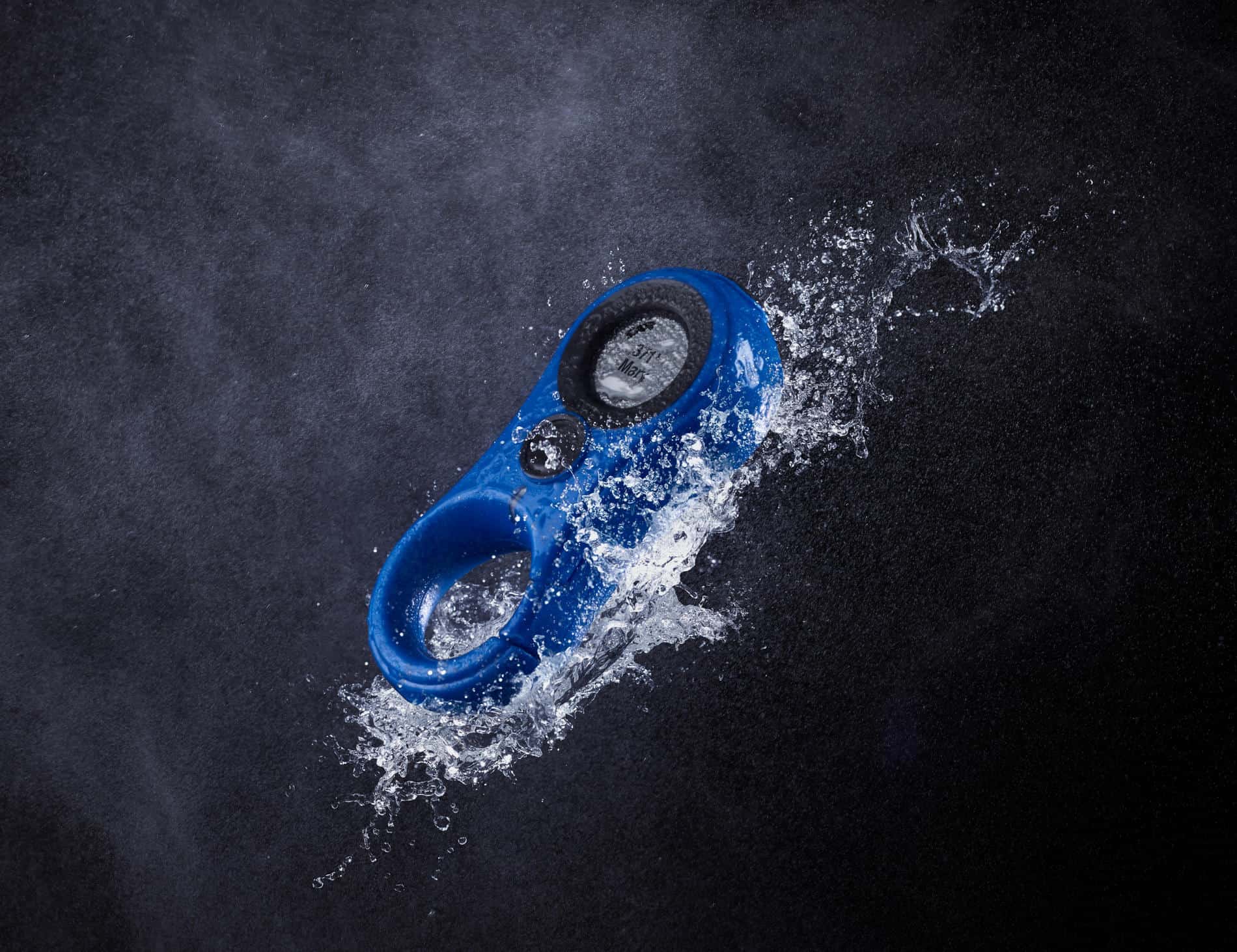
Available today on lynqme.com, LynQ features an intuitive compass-like display that allows people to see their relative distance and direction from each other, keeping people together even when other technology fails. It has been rigorously tested in many outdoor exercises through partnerships with organizations across multiple industries, including winter sports, festivals, theme parks and even the government. In a joint exercise between the U.S. and Thai governments, LynQ was able to demonstrate a reduction of time spent locating wounded soldiers by 61 percent – a result published in a formal government report by U.S. Pacific Command (USPACOM).

Easy-to-Use By Everyone

Ideal for outdoor adventures, LynQ allows groups of up to 12 to find each other across miles without the need for phones, apps, subscription fees and reliance on cell phone networks. The weather-proof, clip- on device uses a proprietary software to display each users’ distance and direction from each other in real-time and allows for tens of thousands of devices to work in the same vicinity.

LynQ can be set up in seconds, pairing devices and enter names with a simple one-button interface. A simple click allows users to move between their group members, displaying a user’s name, arrow and number of feet that are visible under any conditions on a backlit and glare-protected screen. Users can also set boundaries for their group, receiving sound, optical and vibration alerts the instant someone leaves the safe zone, which is perfect for young kids, pets and those with special needs or Alzheimer’s. In addition, a “homebase” (i.e. base camp, car, ski lift or hotel) can be set as an anchor for everyone to find each other.

Useful in Any Outdoor Situation
LynQ is a valuable tool for any outdoor application. This includes helping adventure seekers go off-the- grid and enjoy skiing, hiking, traveling, cycling and more without the need to worry about cell service, maps or phone battery life. Additional use cases include:

  • Child safety – Parents can feel comfort in knowing exactly where their children are while allowing them the freedom to explore.
  • Special Needs Care – Caretakers and family members can monitor their patients or loved ones that are at risk to wander.
  • Public events – From music festivals to sporting events, networks are often overloaded, eliminating cell signal while maps are useless in crowds and without landmarks.
  • Disaster relief, first responders and government applications – When locating people is a matter of life and death and infrastructure is destroyed, LynQ is able to save lives.
  • Pets – Keeping tabs on pets during hikes or animals in open fields has never been simpler.

Availability & Full Tech Specs
LynQ can withstand any situation with a design and features that include:

  • Size – Dimensions: 4” x 2” x 1” Weight: 84g
  • Long range and long lasting – Range of up to three miles and up to three days in mixed use.
  • Real-time distance and direction – Display shows the distance & direction of every groupmember at all times.
  • Groups – Creates a closed private network for groups of up to 12 people.
  • Boundaries and Notifications – Alert system lights up, vibrates and rings the instant a group member or child leaves a user-designated safe zone.
  • Homebase” – “Homebase” locations can easily be set to return to static locations, such as a car, campsite, bike station or landmark.
  • Technology – LynQ’s proprietary radio protocols redefine the capabilities of peer-to-peer location.
  • Durability – The government-tested device is designed to withstand any climate or situation with its weatherproof and waterproof durability.
  • Multi-wear – Includes rugged carabiner clip that can snap onto clothing or gear and can be slipped into a pocket, pack or pouch.

LynQ has begun shipping and is available for purchase today on LynQ’s website. Pricing starts at $249 for a 2-pack. For more information, please visit: lynqme.com.

Astral: New Angling PFDs

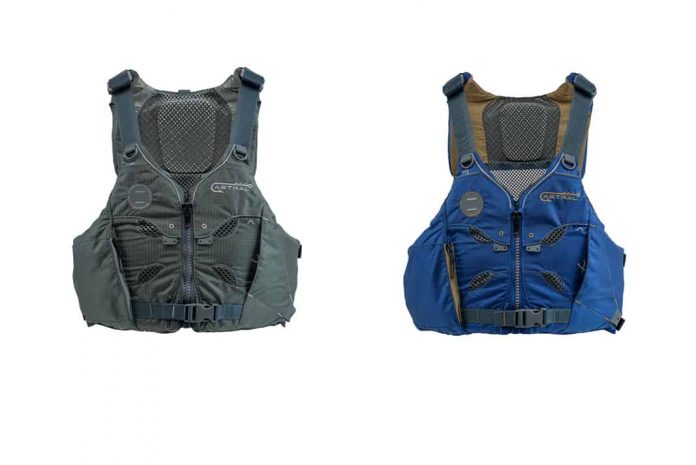
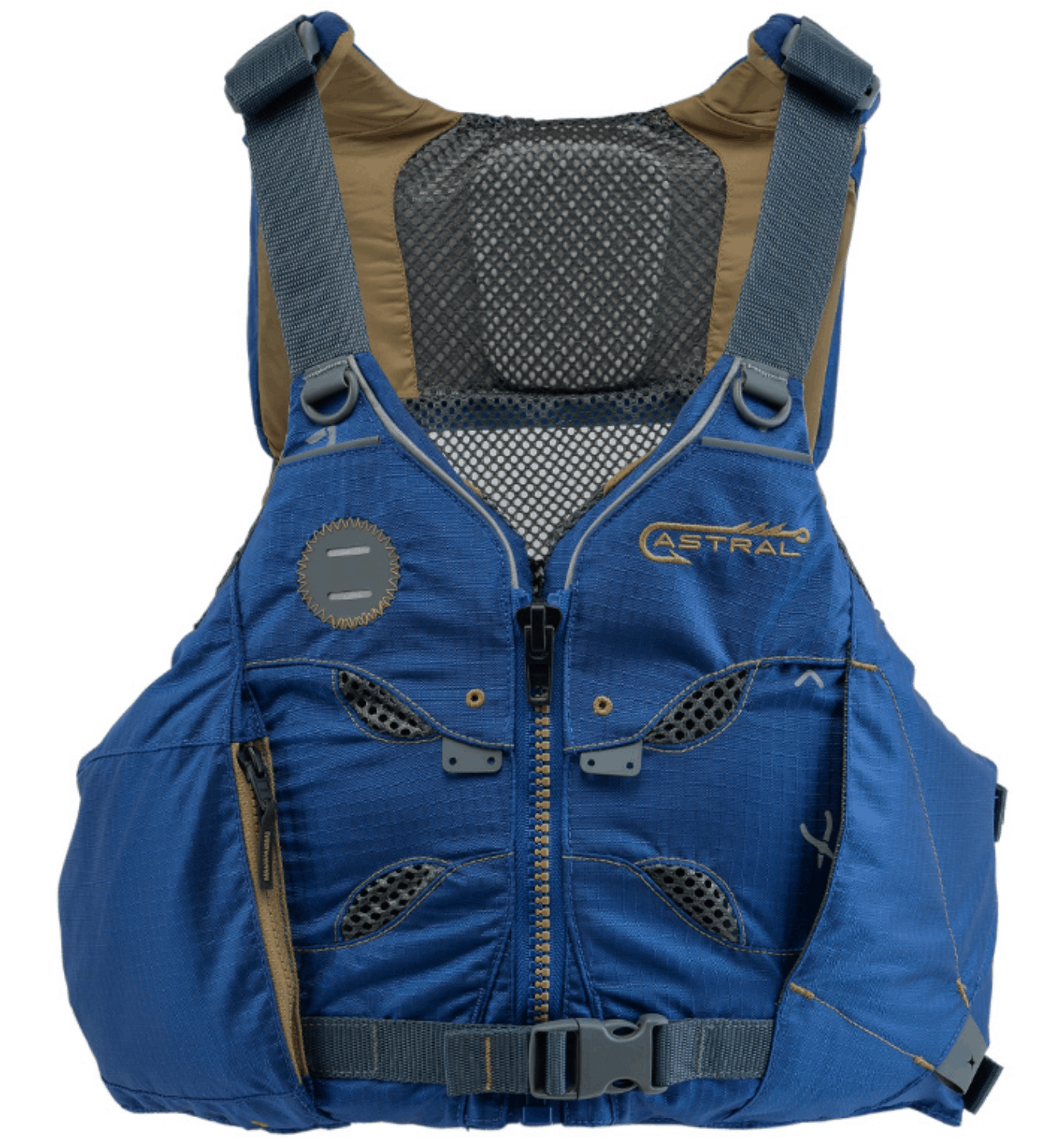
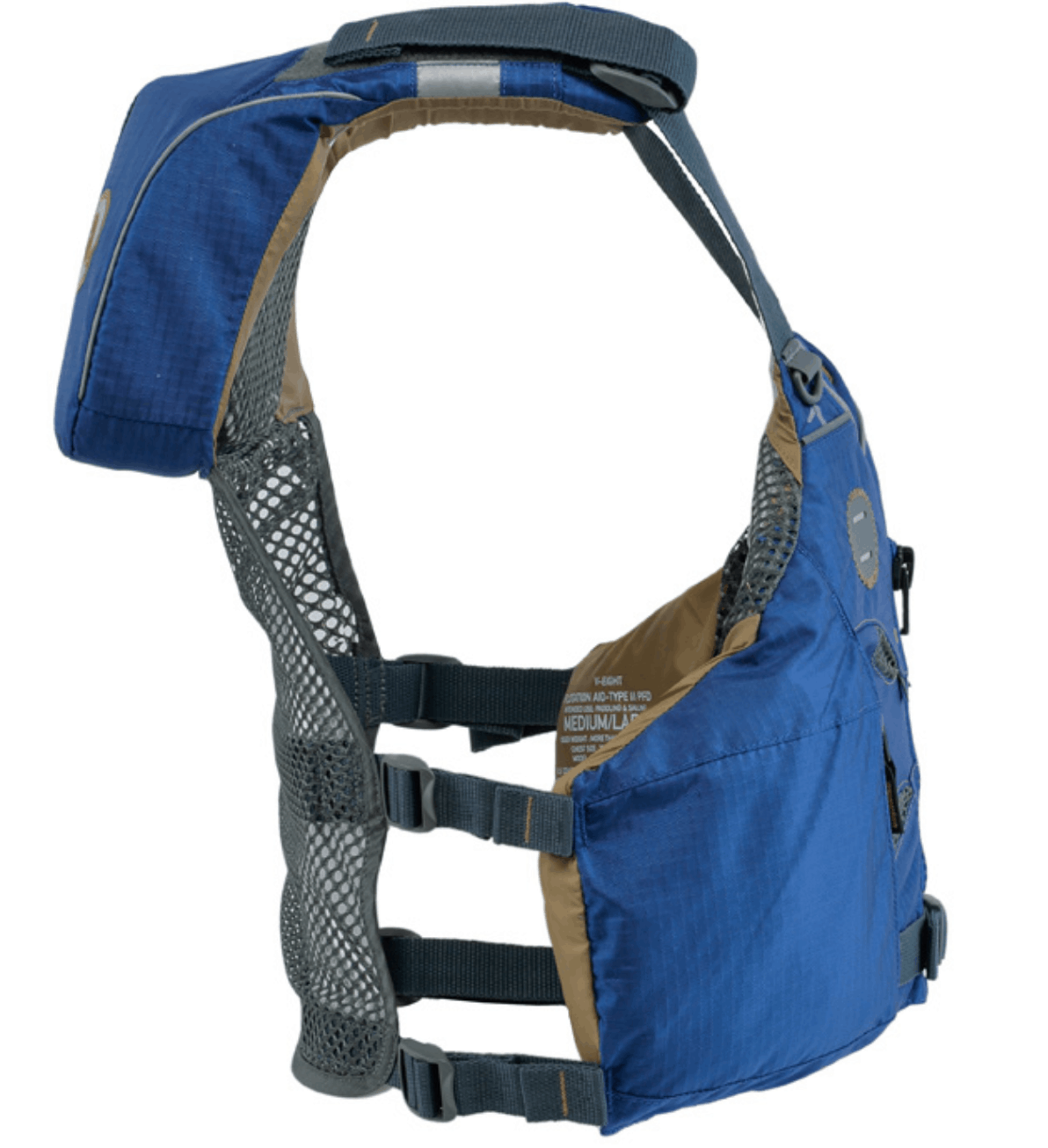
The new V-Eight Fisher by Astral is designed for the serious angler that appreciates minimalism and high-performance. Inspired by the original V-Eight vest, the V-Eight Fisher pairs Astral’s patented Airescape™ technology with plenty of storage for angling accessories. Engineered to prevent overheating, the V-Eight Fisher helps with breathability kayaking with high seat backs.

Specific features include pockets for essentials, a line cutting tool, lashing points, a folding knife slip pocket, fish plier holster with leash tunnel and a white light lashing point on the back. Like all Astral PFDs, the V-Eight fisher is made with proprietary Gaia® foam, a sustainable alternative to toxic PVC foam. MSRP: $130, available now!

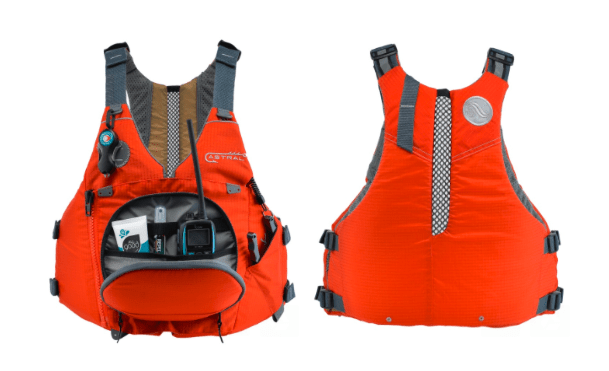
Fishing PFDs commonly include many pockets. It can get confusing what is where, and the pockets create obstacles for the rod handle. On the new Sturgeon PFD, Astral consolidated five pockets into one large centralized place. The result is a streamlined yet highly organized PFD for more efficient fishing.

This vestincludes a Thin-Vent™ back to offer breathability along the users back as well as an easy-access clamshell front pocket with internal zippers, pliers holster, external folding knife pocket, VHF radio slip pocket, clipping points for line nips and retractors and a white light lashing point on back. MSRP: $130available February 10, 2020.

Astral Sturgeon PFD
Astral Sturgeon PFD

Pelican Unveils All-New Pelican CARGO Cases Line

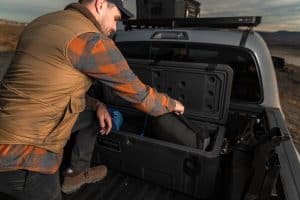
Pelican Products, Inc., the global leader in high-performance protective cases, is announcing an all-new line of PelicanTM CARGO Cases designed to provide the highest level of protection for gear and equipment on vehicles while optimizing storage for overlanding and outdoor adventure travel, professional applications and everyday use.

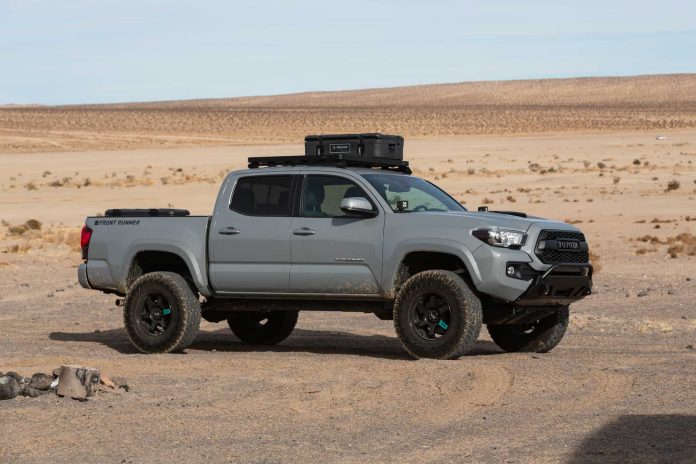
The Pelican CARGO line coming Spring 2020 features multiple sizes and form factors designed to fit in truck beds, in the back of SUVs and on vehicle roof racks. Each case provides innovative solutions for storing, protecting, mounting and organizing passenger cargo.

“PelicanTM products are trusted by professionals, heroes, creators and hardcore adventurers because of our deep knowledge and experience designing and manufacturing products for extreme outdoor use,” said Stephan Corti, Pelican’s Chief Commercial Officer. “Our product design, development and marketing teams focused heavily on researching the specific needs and pain points of the overlanding, off-roading and camping segments to ensure we could and would deliver a comprehensive line of extremely durable and capable cargo-style boxes, cases and mounting solutions. Many existing Pelican products perform great in these environments, but this new line of Pelican CARGO Cases provides a new level of organization, accessibility and gear protection in various configurations all easily mounted to the most popular trucks and SUVs.”

Key features for the all-new Pelican CARGO Cases include:

  • Roto-molded construction: Designed to withstand serious impact in the most extreme conditions.
  • Weather resistant: Lab tested to protect from wind-blown rain and dust.
  • Corrosion-resistant hardware: Lockable latches and integrated tie-down plates for easy mounting.
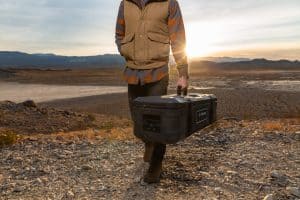
  • Heavy-duty handles: Oversized handles for easy carry and transport.
  • Pelican-grade quality: Lifetime guarantee (cases only).
  • Proprietary mounting systems: For truck beds and roof racks (sold separately).

The various mounting systems provide simple, quick-and-easy, no-drilling installation. Pelican has conducted extensive research, testing and development to ensure fitment with popular truck and SUV brands, including Ford, Toyota, Chevrolet, Dodge and other vehicles, across a wide range of configurations from extra-short to long beds. Standard tie downs can also be used to secure Pelican CARGO Cases.

Like all Pelican products, the Pelican CARGO line will be forged using more than 40 years of experience building industry-leading protective cases for professional and outdoor gear. The cases will come with a lifetime guarantee, while the mounts come with a three-year guarantee.

Pelican is launching the Pelican CARGO line with eight models including:

  • Trunk Cases designed for truck beds and SUVs:
    • Large BX225 (255 liters), MSRP $399.95
    • Medium BX135 (135 liters), MSRP $299.95 o Small BX80 (80 liters), MSRP $249.95
    • Cube Case BX50 (50 liters), MSRP $199.95
  • Saddle Cases designed for truck beds and roof racks:
    • Large BX85S (85 liters), MSRP $299.95
    • Medium BX55S (55 liters), MSRP $249.95
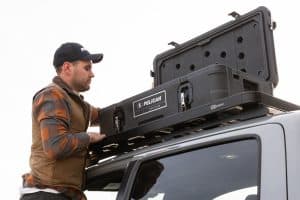
  • Roof Cases designed to fit onto vehicle roof racks:
    • Large BX140R (140 liters), MSRP $399.95
    • Medium BX90R (90 liters), MSRP $299.95
  • Mounting brackets sold separately.

More information about the all-new Pelican CARGO line is online at www.pelican.com/cargo. Follow Pelican on Instagram @Pelican, on Facebook and Twitter @Pelican_Life and across your favorite social media channels through #PelicanLife.

If you’re interested in participating in Pelican’s affiliate link program sign-up here.

Pelican Products, Inc. is a portfolio company of Behrman Capital, a private equity investment firm based in New York and San Francisco.

About Pelican Products, Inc.
Pelican Products, Inc. is the global leader in the design and manufacture of high-performance protective cases, temperature controlled packaging solutions, advanced portable lighting systems and rugged gear for professionals and outdoor enthusiasts. Their products are used by professionals in the most demanding markets including fire safety, law enforcement, defense / military, aerospace, entertainment, industrial and in numerous outdoor markets. PelicanTM products are designed and built to last a lifetime. The company operates in 26 countries, with 24 international sales offices and six manufacturing facilities around the globe. In Europe, the company does business under the name Peli Products, S.LU. For more information, visit http://www.pelican.com or www.behrmancap.com.


YETI Announces International 12-City Film Tour To Preserve The Wild

YETI Holdings, Inc., announced it will travel across North America and overseas for a 12-stop film tour debuting a collection of unreleased and never-before-seen films from the wild that capture the unbreakable human spirit. All proceeds from ticket sales will benefit various conservation groups dedicated to preserving the outdoors, including:

Additionally, all proceeds from the Melbourne stop ticket sales will be donated to organizations delivering aid and support to communities affected by the Australian bushfires.

Film tour stops include:

  • January 29: Denver, CO @ Mission Ballroom
  • February 8: Orlando, FL @ Plaza Live
  • February 11: Charlotte, NC @ McGlohon Theater
  • February 21: Nashville, TN @ Marathon Music Works
  • February 26: Chicago, IL @ Thalia Hall
  • February 29: Jackson, WY @ Center for the Arts
  • March 7: Portland, OR @ Revolution Hall (GA tickets only)
  • March 10: Santa Barbara, CA @ Lobero Theatre
  • March 19: Toronto, ON @ The Cinesphere
  • March 25: Somerville, MA @ Somerville Theatre (GA tickets only)
  • April 9: Austin, TX @ ACL Live
  • April 23: Melbourne, VIC @ The Astor Theatre

“Since releasing our first film in 2015, YETI has continued to produce what we hope are inspirational stories that highlight the triumphs, tragedies, and spirit of people who share our passion for adventure and the outdoors,” said Matt Reintjes, YETI President and CEO. “We are excited to bring people together again to experience our newest films and to support organizations that value and support the outdoors.”

Attendees will also have the opportunity to meet some of YETI’s well-known Ambassadors – women and men who represent the best of the best in their various outdoor pursuits. From anglers and hunters to surfers and climbers, many of our Ambassador attendees have been featured in YETI Presents films.

General admission and VIP tickets are available for purchase from $20 to $40 at https://www.yeti.com/en_US/yeti-film-tour. Each purchase of a general admission ticket includes a custom Rambler 18 oz. Bottle valued at $35. The purchase of a VIP ticket also includes two drink tokens and a limited-edition YETI Film Tour hat along with the custom Rambler Bottle.

The 2020 YETI Film Tour marks the brand’s second multi-stop film tour. In the fall of 2018, YETI celebrated the ten-year anniversary of its iconic Tundra cooler during a cross-country film tour showcasing some of the brand’s most popular films to date.

For more information regarding the YETI Film Tour, visit yeti.com.


About YETI Holdings, Inc.

YETI is a growing designer, marketer, retailer, and distributor of a variety of innovative, branded, premium products to a wide-ranging customer base. Our mission is to ensure that each YETI product delivers exceptional performance and durability in any environment, whether in the remote wilderness, at the beach, or anywhere else life takes our customers. By consistently delivering high-performing products, we have built a following of engaged brand loyalists throughout the United States, Canada, Japan, Australia, and elsewhere, ranging from serious outdoor enthusiasts to individuals who simply value products of uncompromising quality and design. Our relationship with customers continues to thrive and deepen as a result of our innovative new product introductions, expansion and enhancement of existing product families, and multifaceted branding activities.