Home Blog Page 181

The New Big Gear Show Launches Summer 2020

Just three weeks after Outdoor Retailer’s Summer Market and three days after ICAST, the paddlesports industry is welcoming a new show to the summer circuit: The Big Gear Show.

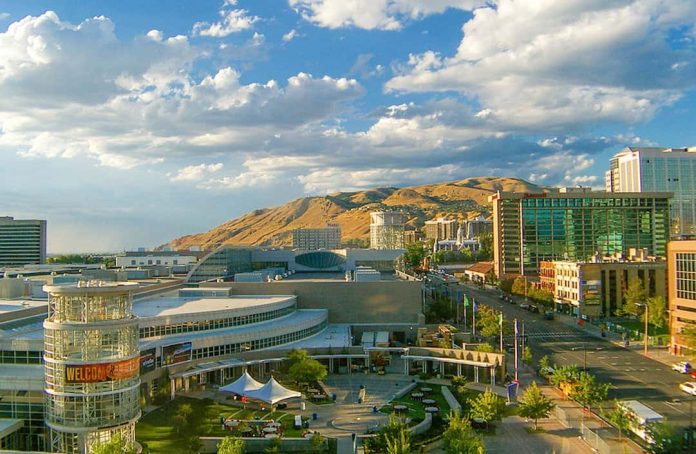
The new trade-and-consumer show debuts July 21 to 25, 2020, back at the Salt Palace Convention Center in Salt Lake City, Utah. It will showcase hardgoods from the paddling, biking, camping, and climbing industries, with planned pre-show excursions and a designated consumer day.

[See the best paddlesports gear of the year in the online Paddling Buyer’s Guide here]

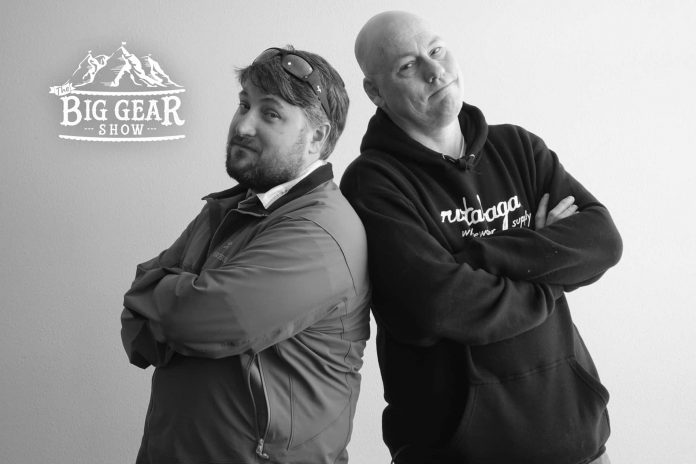
The Big Gear Show is the brainchild of Sutton Bacon and Darren Bush, co-founders of Paddlesports Retailer, the paddling industry’s tradeshow for brands, retailers and manufacturers. Bush is the owner and operator of Madison, Wisconsin’s Rutabaga Paddlesports, and Bacon is the former CEO of the Nantahala Outdoor Center.

Today, the two confirmed to Paddling Business and Paddling Magazine Paddlesports Retailer will leave the Cox Convention Center in Oklahoma City, where it’s been hosted in late August for the last two years. Next year, Paddlesports Retailer will become a part of The Big Gear Show.

The Big Gear Show has been endorsed by the National Biking Dealers Association as the biking industry’s official 2020 tradeshow. Approximately 450 exhibitors and representatives from 1,500 stores are expected—roughly a third of the size of Outdoor Retailer, the organizers say.

Exhibitor rates for the show range from $12 to $15 per square foot, roughly half the cost of some tradeshows, say organizers. Organizers have also promised to limit booth sizes for larger brands and offer VIP placements for start-ups to democratize floorspace and prioritize innovation.

Bush and Bacon answer Paddling Business questions about The Big Gear Show below.

How did the idea for The Big Gear Show come about?

Bacon: We believe Paddlesports Retailer was the right show at the right time for paddlesports, and we’re very proud of it. For three years, our primary objective was to serve the paddling community. To continue that, we’re starting The Big Gear Show and folding Paddlesports Retailer into the show.

We received a lot of really good feedback from retailers and exhibitors—it was universally positive. However, the one piece of consistent feedback we were unable to address in the show’s existing format was exhibitors wanted to see more buyers, and retailers wanted to see more brands. More hardgoods brands specifically. Partnering with other industry segments creates more sustainability and will support those needs better.

Is The Big Gear Show replacing Paddlesports Retailer?

Bacon: Paddlesports Retailer will take place at the Big Gear Show. Each segment—paddling, camping, biking, climbing—will be anchored by what we’re calling a “basecamp” with its own look and identity. We’ll have an indoor experiential demo area, multiple paddle tanks, buyer’s area, media area and new product showcase. At the end of the day, we’re all selling to the same consumer, and the cross-pollination of new ideas, innovation and best practices will be good for attendees.

You two just came off a successful year at Paddlesports Retailer, which has been building momentum for two years in Oklahoma City—why the shift?

Bacon: First and foremost, we’re paddlers. Even though The Big Gear Show is broader than paddlesports, it has a laser focus on paddling. Joining forces with other industries, many of which have more positive trends than paddlesports in terms of growth and sales, will be a stronger and sustainable platform—and home—for paddlesports than a paddlesports-only show.

Bush: A friend of mine with an inflatable paddleboard company opened nine new dealers last year, and five of them were bike shops. I recently asked a Petzl rep, how many bike shops sell Petzl? He said, “I don’t know.” Duh, right. They make a light for a caving helmet; you think that’s not adaptable to a bike helmet? There’s a lot of places where outdoor brands and bike brands don’t cross over. More than I would think. This is a chance for paddlesports to get their foot in the door at bike shops. There’s just so much opportunity for cross-pollination here.

What differentiates the Big Gear Show from other outdoor shows?

Bacon: The Big Gear Show is strictly focused on hardgoods and the needs of hardgoods makers and buyers. There are already great tradeshows on soft goods. But we’re focused exclusively on gear. We’re also doing this at a fraction of the expense of other tradeshow options. Our exhibitor fees may have over 50 percent savings of some tradeshows. We had very affordable price points at Paddlesports Retailer and we’ll continue those.

Also, there will be a consumer day; we feel like they’re a missing component in the dialogue around the industry. Inviting consumer input into the big tent creates an unparalleled environment to showcase products, especially for small brands. It’s really about innovation and is a way for brands to engage directly with the consumer. And it will be impactful from the media exposure perspective.

The Big Gear Show is taking place the week after ICAST. With so many boat brands at ICAST, do you anticipate a conflict?

Bacon: No. We intentionally scheduled so we would be following ICAST and so we don’t anticipate conflicting with ICAST.

Bush: I talked to a few folks who are participating in both, they said it’s actually good because their truck is packed, and they won’t even unpack, they’ll just go straight there.

What will the paddlesports demos look like?

Bacon: We’re working on the demo concept and hoping to publish more information in the next month. There will be several opportunities to demo. First, there will be paddle tanks, but they will be functional rather than fun—meaning no dog jumping competitions and models paddling SUP boards promoting things. We believe the traditional demo paddle on the first day of the show is not the best experience. We’re trying to address that—see it, try it, then buy it. We’re also working with the state of Utah and will have guided and unguided excursions, including paddlesports, within an hour one or two of Salt Lake City.

Why did you choose Salt Lake City? Do you anticipate any blowback from the outdoor industry after Outdoor Retailer’s decision to leave Utah in protest of its public lands controversy?

Bush: Most of the land use issues are not state driven; they are federal. Utah Congressman Rob Bishop is the one who wants to take all the public lands back, and that’s not going to happen—it’s a political stunt. There are political challenges around land use in Utah, but that’s also true of Colorado, Wyoming, Montana, and every other western state. It’s not unique to Utah. The people in Salt Lake City overwhelmingly support federal public lands, and they’re the ones who got hurt by [the outdoor industry] leaving. I think it’s not as much of a debate if you look at it with a critical eye.

How do you think Outdoor Retailer will react to a show so close in focus, timing and format?

Bacon: Darren and I both served on the Outdoor Industry Association (OIA) and we have many friends there and at Emerald [the event organizer of Outdoor Retailer]. We have the utmost respect for OIA and Emerald. I can’t speak for them as to their reaction. We feel like we’re bringing something new to the market because we see a need for a show like this focused on hardgoods. I don’t see it as a zero-sum game; we’re all about building the industry, and open to collaboration. We are laser-focused on the needs of the hard buyers—the owners and the stores where the staff walk the talk, bring in novices and send out enthusiasts, and also innovative gears brands, the innovators, the start-ups, the domestic manufacturers, and the gear makers—that’s our focus.

Who came up with the name?

Bush: It’s what it is!

Bacon: We’d been talking about it for some time, and it just stuck. It’s self-explanatory.

Get more details on The Big Gear Show in the press release here or visit www.thebiggearshow.com.
How this coalition helped pass the biggest land-use bill in a generation

Run wild, run free. The Wild and Scenic Rivers Act turned 50 in 2018. | Photo: Tim Palmer

Back in 2015, Forest Woodward released a film called The Important Places about floating the Grand Canyon with his father, Doug. The name came from a poem Doug wrote a few days after Forest was born. It speaks of “The cave behind the waterfall / The arms of the oak that hold you high / The stars so near on a desert ledge,” and urges Forest to never lose the path leading back to important places.

The film was beautifully shot and edited, and that summer at the Outdoor Retailer trade show, river equipment company and sponsor NRS played it on a loop. For the legions of displaced river rats working the fluorescent-lit halls of the industry’s biggest trade show, the film served as a reminder of why they started working for outdoor-related businesses in the first place.

When photographer Will Stauffer-Norris asked some of them to write the names of their important places on a dry-erase board and pose for photos, the response was overwhelming.

THE IMPORTANT PLACES. from gnarly bay on Vimeo.

“People really opened up their hearts,” says Amy Kober of American Rivers, who sponsored the film with NRS and Chaco. “We were blown away by the stories people shared about the rivers and places they love.”

The modest event showed off the power of personal stories, and the ability of brands like NRS to engage large audiences. So Kober and a handful of fellow river advocates decided to take it to the next level, creating the 5,000 Miles of Wild campaign to raise awareness of the Wild and Scenic Rivers Act ahead of its 50th anniversary in 2018.

[ Plan your next paddling adventure with the Paddling Trip Guide ]

The three-year campaign collected personal river stories from more than 5,000 people and forged a powerful alliance between river advocacy organizations American Rivers and American Whitewater, and industry partners including NRS and OARS.

Ultimately, this coalition played a substantial role in the passage of the biggest land-use bill in a generation, and the Wild and Scenic designation of 676 miles of river. But that’s getting ahead of the story.

Mark Deming is the marketing director at NRS. He says NRS has always played an active role in conservation, but in the past that’s meant giving money to organizations like American Rivers and American Whitewater. In recent years the company has taken a more hands-on approach. “We’re really looking to not just kick in money but also contribute our creativity and audience,” Deming says.

Run wild, run free. The Wild and Scenic Rivers Act turned 50 in 2018. | Photo: Tim Palmer

Companies involved in the 5,000 Miles of Wild campaign contributed in ways playing to their strengths. For OARS, it meant tapping into a deep network of professional river guides, every one of which is an influencer with a captive audience. NRS leaned on its talented in-house media team and social media presence.

Deming’s role initially was to engage NRS customers in river conservation efforts. The next step was actually lobbying congress.

By the end of 2018, American public lands policy was in shambles. Last September, the Senate allowed the Land and Water Conservation Fund (LWCF) to lapse, despite the program having overwhelming bipartisan support. The fund uses revenue from offshore oil and gas leases to support public land protection and infrastructure, and at last count has $22 billion set aside for everything from habitat restoration to boat ramps and municipal parks.

At the same time, more than 150 land use bills were accumulating in various congressional dead ends. The midterms were over and the lame duck session was nearing an end. By the end of November, furniture was stacked in the halls of congressional office buildings.

The powerhouse lobbyists—those working on behalf of pharmaceuticals, insurance and big energy interests—had mostly gone home. Members of congress were eager to leave too, but the budget impasse sparked by President Trump’s insistence on funding his border wall kept them in town. This gave American Whitewater Stewardship Director Thomas O’Keefe and other conservation lobbyists a rare opening.

“We try to do everything we can to be ready for the windows of opportunity when they emerge,” he explains. Conservation lobbyists were already working overtime to save the LWCF. Then they began talking about a lands package combining permanent authorization of that popular program with all those orphaned land use bills.

“We just went into offices and acted like this was going to happen. And when you get enough people saying that, it begins to take on its own momentum,” O’Keefe says. “It’s kind of like the Jedi mind trick.”

Deming and other outdoor business leaders traveled to Washington to join the lobbying effort, which was a crucial factor. Working the halls of congress alone, O’Keefe frequently gets face time with congressional staffers. But when he comes with a delegation of business leaders he’s almost always invited to meet with the Senator or Representative. The members drive the policy, and the staffers implement it, so by working both ends of the equation O’Keefe and others were able to get the landmark bill off the ground.

The government did shut down, for more than a month, but when it reopened January 25, American Rivers and American Whitewater were there with their paddling industry partners. Their primary focus was pushing for the inclusion of new Wild and Scenic Rivers in the land use bill, which to almost everyone’s surprise was gaining momentum.

Thanks in large part to their efforts, the bill added 676 miles of rivers to the National Wild and Scenic Rivers System, forever protecting them from new dams and other harmful development. The protected rivers include 256 miles of the Rogue River and its tributaries in Oregon, 63 miles of the Green River in Utah, desert streams in California and several rivers in New England. With 170 separate provisions and the permanent funding and authorization of the LWCF, it was the most significant and far-reaching package of public lands legislation since the 1970s.

The bill passed in February with veto-proof majorities in the House and Senate, and was signed into law March 12.

The impact on the irreplaceable rivers and landscapes we hold dear, the important places, is incalculable.

Jeff Moag is the former editor of Canoe & Kayak and the contributing editor of Paddling Magazine’s Paddling Business trade publication. The Important Places won best Paddling Documentary at the 2016 Paddling Film Festival

Run wild, run free. The Wild and Scenic Rivers Act turned 50 in 2018. Photo: Tim Palmer

Trips: Kayak in Thousand Islands, Ontario

Thousand Islands
Live on island time in the Thousand Islands. | Photo: Zach Baranowski

Accessible wilderness” is how 1000 Islands Kayaking owner, Scott Ewart, describes the Thousand Islands. The archipelago remains delightfully unspoiled, despite its convenient geography.

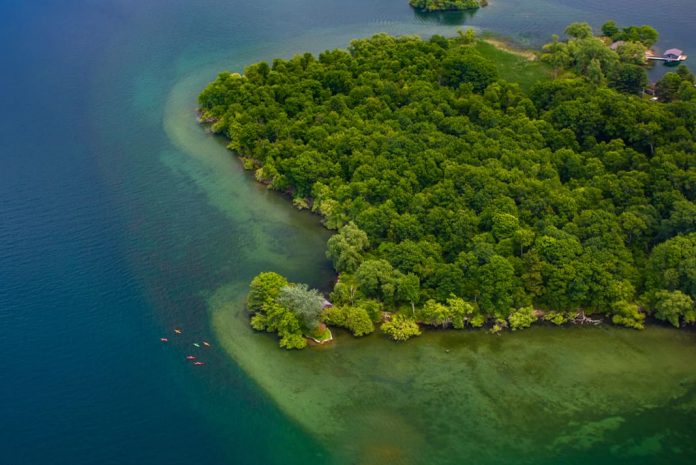
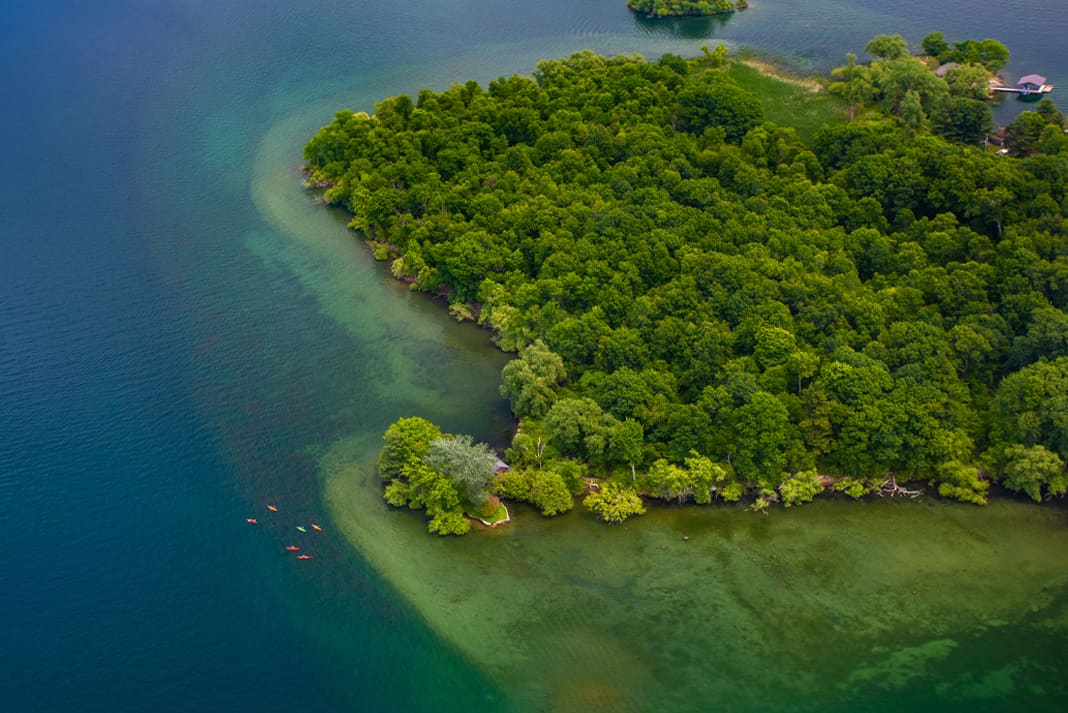
Sandwiched in the St. Lawrence River between New York and Ontario, the islands are centrally located to population centers along the Toronto-Ottawa-Montreal corridor, yet only 90,000 visitors explore Thousand Islands National Park each year. Those who do, discover an unforgettable tapestry of granite islands, windswept pines and broad, sparkling waters.

The Thousand Islands—actually comprised of 1,864 isles—are an integral part of the ecologically rich Frontenac Arch Biosphere Reserve, with more than 250 bird species migrating through every spring and fall.

Exploration is easy (and endless) thanks to the region’s well-organized conservation and paddling communities, which have created the Thousand Islands Water Trail—a series of nine interconnected day-trips between the small cities of Kingston and Brockville, which can be paddled in a myriad of combinations (www.frontenacarchbiosphere.ca).

Where to Go

Thousand Islands
Live on island time in the Thousand Islands. | Photo: Zach Baranowski

If you Want to go guided

Based in the charming riverfront town of Gananoque, 1000 Islands Kayaking (www.1000islandskayaking.com) offers half-day, full-day and two-night trips in the nearby Admiralty Islands group (instruction and rentals also available).

[ Plan your next paddling adventure with the Paddling Trip Guide ]

Learn about the area’s rich history, paddle over a 1920 shipwreck and explore wetlands accessible only to paddlers.

If you Want to paddle into the sunset

Allow a full day to make the rewarding 20-kilometer circumnavigation of Grenadier Island. Highlights include scenic hiking trails, sandy swimming beaches, wildlife-filled marshes, a shipwreck and fine examples of historic architecture.

Depart from the village of Rockport to catch the sunset from a turn-of-the-century picnic shelter at the island’s west end before your return crossing.

If you’re Looking for adventure

Thousand Islands National Park encompasses 21 islands sprinkled between Kingston and Brockville, some offering cabins and campsites so paddlers can undertake a multi-day journey linking two or more sections of the water trail.

From Gananoque, spend a night or a week amid the hundreds of intimate, pine-clad islands in the wild and secluded Lake Fleet, Navy and Admiralty groups.

Live on island time  in the Thousand Islands.| Photo: Zach Baranowski

What would happen if we told the truth about our trips?

The truth is out there. | Photo: David Jackson

In the 1990 comedy, Crazy People, Dudley Moore is Emory Leeson, a bitter advertising executive who gets checked in to a psychiatric hospital because he pitched a “truthful” advertising campaign at his prestigious New York agency.

“We can’t level with America, you crazy bastard,” shouts Emory’s boss. “We’re in advertising.”

By mistake, Emory’s advertisements get printed. Billboards read, “Volvos. They’re boxy, but they’re good.”

As movie plotlines go, consumers line up to purchase Volvos and the new campaign is wildly successful.

Emory is hired to create more honesty in advertising slogans, and soon branches out beyond automotive and helps develop travel slogans such as, “Come to New York, there were fewer murders last year.” Or, “Forget France, the French can be annoying, come to Greece. We’re nicer.”

The truth is out there. | Photo: David Jackson

In all 137 featured trips in this year’s Paddling Trip Guide, not one of the 43 outfitters has taken to heart Emory’s brutally honest approach to advertising. And I’m not sure I would either. Or would I?

According to George Loewenstein at Carnegie Mellon University, all of us walk around with an image of the good life. We may have radically different images of what the good life is, he says, but when we go on vacation, we are trying to create a life resembling what we think of as the good life.

The worst experiences often make the best memories

Except on canoe, kayak, paddleboard and raft trips we know it’s not all going to be unicorns and rainbows.

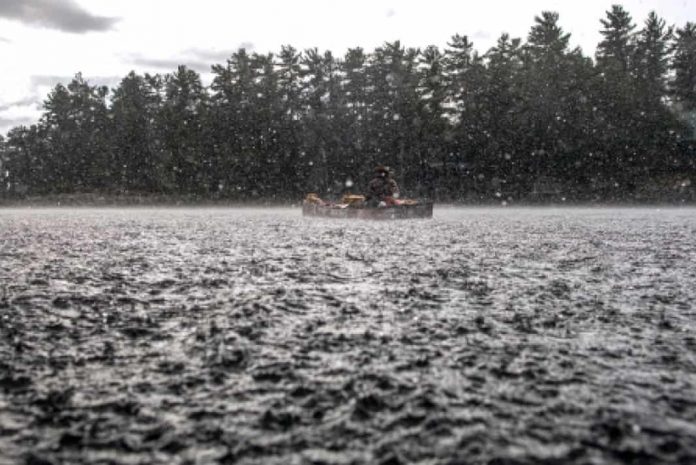
On the Broken Skull River in the Northwest Territories, it rained on us nine of the 11 days. On my last rafting trip, the biggest rapid was an all-day portage. Bike packing and packrafting the Riviere Noire we paddled out in the dark, four hours after we told our families we’d be home. Float planes are delayed. Fish don’t bite. Legs are broken. Tents leak. And I can’t be the only one to confuse tablespoon with teaspoon when mixing baking soda into the bannock.

[ Plan your next paddling adventure with the Paddling Trip Guide ]

“The worst experiences often make the best memories,” Loewenstein said. And when it’s over, we regale friends and family with our tales of misadventures.

“People return to the miseries of the mountains over and over,” Loewenstein said, “in part, because they can’t remember the misery of being cold, hungry, exhausted, and terrified. Mountaineers are acutely aware of this, but it doesn’t help.”

Loewenstein considers this the biggest paradox about vacation travel—why we keep going back despite our disappointments. Disappointments only in that reality does not match our version of the good life vacation.

Paddlers are the same.

Loewenstein believes no matter how much we remember misery on previous trips, we cannot remember what those miseries actually felt like.

Terence Mitchell of the University of Washington coined the phrase, the “rosy view.” We often view vacations as enjoyable experiences, despite the many obstacles and frustrations they sometimes present at the time. Our view of paddling trips gets rosier the longer we’ve been home.

If the bad blends with the good and we’re unable to remember the feeling of swarming mosquitos and achy shoulders, why are outfitters not selling the truths about paddling trips? What if we made reality the good life?

Let’s give Emory a crack at writing our slogans. Embrace honesty in advertising and sell it like it is. “The bugs are horrendous, but you’ll have them all to yourself.” “You’ll flip in the rocky rapids, but our guides are charming and mostly single.” Or, “Paddle with whales. It’s simply terrifying.”

Chances are you’re reading this at the breakfast table. Swarming insects and bumpy whitewater are less threatening from within the air-conditioned comforts of your kitchen. You are wearing your rosy view glasses.

Do yourself a favor, stop reading this magazine and make a list of all the challenges you will face today in everyday life. Because, according to the Loewenstein, “The misprediction and biased recall of vacations is perhaps only surpassed by the misprediction and biased recall of home when one is on vacation.”

Too often on the trip, usually in the rain, daily life will take on an idealized rosy glow. “We forget the fights with our spouse, the trials with our children, the endless chores, and our bed at home suddenly seems infinitely comfortable and comforting,” he said. “Within hours of returning, of course, there is the inevitable, ‘why was I so anxious to get back home?’”

When I was guiding full time and the conditions were nasty, we’d tell our guests, “A bad day on the river is better than a good day in the office.”

Some of them got it. Mostly the crazy people.

Scott MacGregor is the founder and publisher of
Paddling Magazine.

The truth is out there. | Photo: David Jackson

The Big Gear Show Launches in Salt Lake City July 21-25, 2020

The Big Gear Show (TBGS), a new outdoor-industry trade show focused on hardgoods, and emphasizing paddling, biking, climbing and camping gear, officially announced its inaugural event, to be held in Salt Lake City’s Calvin L. Rampton Salt Palace Convention Center July 21 through 25, 2020. The show’s first three days will be reserved exclusively for specialty outdoor retailer attendees, but uniquely the final day–Saturday, July 25–will be open to the general public. Consumers can walk the show floor and preview next year’s hottest gear while meeting representatives and sponsored athletes from the most innovative gear manufacturers.

Notably, the show features biking as a core element, and is endorsed by the National Bicycle Dealers Association (NBDA) as the biking industry’s official 2020 trade show. NBDA represents over 1,100 independent bike storefronts. This will be the first time bike will share a hall with other outdoor categories in recent memory.

“We love networking, we love coming up with ways to work with each other, and not having the space to connect yearly has left a tremendous void,” NBDA President Brandee Lepak said. “What I’m really excited about is that it’s mostly focused on hardgoods and it’s going to be put on by retailers, for retailers. This show is going to be a healthy environment for us to do business and work with all of the other industries on putting together an education platform that will benefit all of us.”

The Big Gear Show exhibitor model offers rates designed for hardgoods manufacturers, innovators and start-ups that don’t have the margins to afford more-expensive mainstream trade shows. By saving exhibitors over 50% in exhibition fees, the pricing structure keeps money in the pockets of gear companies. Exhibitor rates for the show will range from $12 to $15 per square foot. All participants will be carefully curated to ensure relevancy for hardgoods-only retailers and manufacturers.

For retailers, The Big Gear Show offers hardgoods buyers a chance to see every piece of outdoor equipment sold in the summer under one roof. The show will also offset buyer travel expenses by awarding retailers a housing stipend based on how early they register for the show. And The Big Gear Show will stress peer-to-peer educational opportunities because retailers learn best from other retailers, not from consultants.

The show’s most unique feature will be the final-day consumer show. Consumers are a missing but crucial voice in the industry, and the consumer day will be a brand showcase, giving small and upcoming start-ups unparalleled access to thousands of consumers and industry media. Consumers will likewise enjoy connecting with grassroots gear companies they’d otherwise never see. Consumer attendance will also amplify media interest in the show, and the resulting buzz media outlets and consumer word-of-mouth will result in better return on investment for all show participants.

“We’re starting this show for hardgoods manufacturers, innovators, and industry start-ups who don’t have the profit margins to afford expensive trade shows. Our show is about the future and not the past. It’s about parity, curation, the democratization of floorspace, and the prioritization of innovation. We’ll have booth size limits for larger brands and VIP placements for start-ups. We understand the importance of being in one room – no more basements, tents, or ballrooms. We are all about heralding product innovation in all aspects of the show and challenging the entire industry to answer the fundamental question of ‘what’s next?’” said show co-founder Sutton Bacon.

About The Big Gear Show

The Big Gear Show is the outdoor industry’s first-ever national B2B2C gear show ‘for retailers, by retailers.’ The show takes place July 21-25, 2020 in Salt Lake City, Utah. The National Bicycle Dealers Association has endorsed The Big Gear Show as the official trade show of the bicycle industry. The show provides exclusive outdoor and on-site demo opportunities for paddling, biking, climbing and camping, an expansive marketplace and an unsurpassed cultural experience for exhibitors, retailers, media and industry advocates alike. For more information, visit www.thebiggearshow.com or contact info@thebiggearshow.com.

About The National Bicycle Dealers Association

The National Bicycle Dealers Association has represented specialty bicycle dealers in the United States since 1946. The non-profit association offers numerous programs for dealers, with an emphasis on education, research, communication and advocacy. For more information on the NBDA, visit their website at www.nbda.com.

Trips: Kayak in Kauai, Hawaii

Magnum PI approved. Photo: Tor Johnson | Photo Resource Hawaii

The most northerly of Hawaii’s eight main islands, Kauai is also the oldest geologically. More than five million years ago, a long series of eruptions built the island above a hot spot deep within the earth.

As the Pacific tectonic plate drifted northwest, the rest of the islands were each formed in turn. Today, that spot sits beneath the Big Island of Hawai’i and its active volcanoes. Millions of years of erosion have shaped Kauai’s rugged sea cliffs, deeply eroded valleys and the only navigable rivers on the islands.

[ Plan your next paddling adventure with the Paddling Trip Guide ]

For many visitors, Kauai is synonymous with the Na Pali Coast—a superlative stretch of precipitous 4,000-foot sea cliffs dominating the island’s north shore. Na Pali’s (literally, “the cliffs”) otherworldly scenery has made it Hawaii’s most popular paddling destination, and landing and camping here are heavily regulated.

Elsewhere on the garden isle, you’ll discover that kayaking, paddleboarding, outrigger canoeing and surfing are an integral facet of local culture and daily life.

In the winter months, when pounding swell closes out the north coast, surfers flock to nearby Hanalei Bay and coastal paddlers head to the island’s south shore.

Where to Go

Magnum PI approved. | Photo: Tor Johnson | Photo Resource Hawaii

If You Want to go guided

Kayak Kauai (www.kayakkauai.com) pioneered the epic, one-day tour of the Na Pali Coast—a 17-mile, 12-hour odyssey from the road-end in Ha’ena to Polihale State Park.

[ See the largest selection of boats and gear in the Paddling Buyer’s Guide ]

You’ll see spectacular sea caves, arches, tropical lagoons, plunging waterfalls, secluded beaches and astounding views of the technicolor cliffs. Be aware, however, it’s a strenuous journey for fit paddlers—surf landings, capsizes and seasickness are commonplace.

If you’re Craving waves

Early Polynesian surfers used paddles to propel their large, wooden longboards. Centuries later, SUP surfing is enjoying a modern revival at crescent-shaped Hanalei Bay, where sandbars form clean, novice-friendly waves alongside a historic pier and palm trees sway in the breeze.

If you Want to take it easy

Kauai’s short and scenic rivers make for delightful day trips. Glide beneath guava and mango trees, watch for native birds or bathe in a hidden cascade.

Paddle the Hanalei River past flowering hibiscus and vivid-green taro fields into Hanalei National Wildlife Refuge, then return to the golden sands and azure waters of Hanalei Bay to snorkel with reef fish and sea turtles.

On the eastern shore, popular Wailua River State Park packs rainforest views, a lovely fern grotto and secluded waterfall swimming hole into a shady, two-mile paddle.

Magnum PI approved.| Photo: Tor Johnson /  Photo Resource Hawaii

The one type of risk assessment all boaters fail

kayaker
There may be old boaters and there may be bold boaters, but there are no old, bold boaters. | Photo: Daniel Stewart

My local river was closed this spring—a first for the Ottawa. Mega-flood conditions were responsible. The authorities made all boat travel off limits until the declared state of emergency ended. Four hundred kilometers of river was closed. This idea of river closures is not new to some jurisdictions, especially where rivers run through parks, but closure on a scale this large was something new for Canada.

When you learn only six of those 400 kilometers has whitewater, then you realize paddlers got caught in the net of a policy intended to keep motorboaters off of the swollen, debris-filled main river and reservoirs. The famous waves of the Ottawa’s Main and Middle channels were inadvertently off-limits to both kayakers and the commercial rafting companies from May 15 to May 30, 2019. The rafting companies, losing valuable early-season income, lobbied for an exemption to no avail.

Like many others, I hiked in to see what the river looked like. I didn’t need a closure to tell me not to run it—the river looked mean and surly with nowhere to go but down the class-huge middle at high speed. The river was ripping through the trees a hundred meters in from what would be its normal river banks. The main flow was barely visible so far away. You also likely wouldn’t be surprised to hear there was more than one clandestine illegal run made. For some, this was the opportunity of a lifetime.

Risk theorist Jens Rasmussen’s work on safety performance inspired the term risk creep. Rasmussen identified the inevitable trial-and-error learning that goes on as individuals build competency at a given task. Done well, the learning builds efficiency. Done poorly, this trial-and-error wanders toward the edge of what he called acceptable performance.

[ For top picks and expert reviews, check out Paddling Magazine’s guide to the best whitewater kayaks here. ]

In paddling terms, this means we explore outward and challenge our abilities, through which we gain competency. However, we may find ourselves at some point beyond our abilities, over our heads and in trouble. Risk creep is the term to describe the inadvertent movement towards the edge of our skills, without recognizing the risk level has been slowly, perhaps imperceptibly, rising. Risk creep compounds when the individuals do not have the experience or knowledge to realize they have traveled too close to the edge, or when the risk has risen to dangerous levels.

Our brains are poorly equipped to recognize we are slowly getting too tired, too cold or too close to the edge of our abilities. We are ill-equipped to recognize risk creep.

Flood levels are a pretty good example of risk creep. Day by day, the water level rises, slowly changing the river features and slowly ratcheting up the risk level. How high is too high? For private paddlers—as opposed to commercial rafting companies, which is a wholly different story—this is an individualized question, based upon one’s competency and risk tolerance. The problem is, without a bunch of experience at this level, how does one know what one’s limits are?

Psychologists have repeatedly proven humans are terrible at recognizing slow change, or in clinical terms “gradual change awareness.” YouTube the term to prove this point to yourself. Our brains are poorly equipped to recognize we are slowly getting too tired, too cold or too close to the edge of our abilities. We are ill-equipped to recognize risk creep.

kayaker
There may be old boaters and there may be bold boaters, but there are no old, bold boaters. |
Photo: Daniel Stewart

So, what can we do about risk creep, if we know it is a trap we fall into? Create triggers, cut-offs and turn back times. We use our own or our collective knowledge to establish limits for ourselves. When spring flow hits a certain cms/cfs, we find somewhere else to go. What happens when a mega-flood presents yet-unseen water levels? In the case of this spring, the authorities’ response was to close the river. For a rogue paddler unwilling to pass up the opportunity, the closed status was a clear indication this was not just another high water run. The closed status worked as a trigger to establish that old norms don’t apply.

[ Plan your next paddling adventure with the Paddling Trip Guide ]

While the whitewater paddling and rafting community were pretty critical about who gets to decide when a river is closed and by what criteria, the closure status sent a clear message—a threshold had been crossed and we were in new territory. And it forced everyone to acknowledge it.

Jeff Jackson is a professor at Algonquin College on the banks of the Ottawa River.

There may be old boaters and there may be bold boaters, but there are no old, bold boaters. | Photo: Daniel Stewart

Why Open Boaters Need More Than One Paddle

Quintuplets—how does he do it? It’s tricky.| Photo: Paul Mason

The topic of the perfect paddle length is second only to the discussion of the perfect boat whenever more than two paddlers gather. From online forums to campfires, birthdays to wedding receptions, and even at natural disasters—especially floods—nowhere is off limits when it comes to talking about the perfect paddle length.

Recently, I was heading off for a week of teaching tandem canoeing with a mild injury, resulting in very limited range of motion in my shoulder. In desperation, I grabbed my daughter’s paddle, a good three inches shorter than what I usually paddle with.

I was surprised to find how well it worked. Yes, doing a rudder stroke while sitting up on the seat of a big tandem tripping canoe was a bit ineffective, but most of my other strokes weren’t much affected. I came away from the week vowing to try an even shorter paddle in my solo canoe.

Paddle length is influenced by canoe length in that a short canoe responds—or misbehaves—faster than a boat with a longer waterline, which will track more predictably. A shorter paddle equals a quicker stroke rate, therefore reducing delays in corrections.

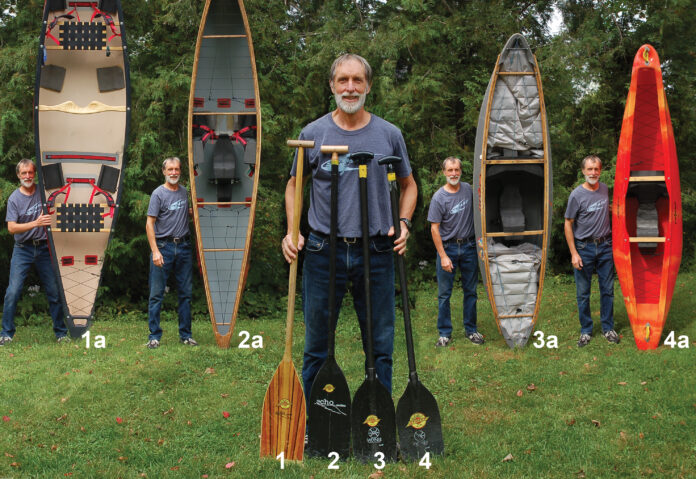
Paddle 1 is 56 inches—the length I use when sitting on the higher seats of a tandem canoe like this Esquif Pocket Canyon. It’s a paddle I can rely on to maneuver a heavily-laden 17-foot tripping canoe through rapids, serve as a tarp pole or dig a house foundation if the backhoe doesn’t show up.

[ Paddling Buyer’s Guide: See all canoe paddles ]

Paddle 2 is a good length at 55 inches for slalom racing in my 11-foot, eight-inch Spark, which requires digging deep into the eddy pools to catch upstream slalom gates and slicing the paddle through the water for control. Paddle 3 is my playboat length at 54.5 inches. Long enough to dig and drag on shallow slides, but short enough to make offside strokes easy in my short 9’2” L’edge.

Paddle 4 is my daughter’s canoe tripping paddle—54 inches long—but the perfect length for me when I’m in the nine-foot Esquif Extasy. The shorter shaft allows fluid transition between onside and offside strokes. Yes, it’s a little short for a decent rudder stroke, but power steering is the goal, so I shouldn’t be ruddering anyway.

And there you have it—justification for owning more than one paddle. You’re welcome.

Paul Mason teaches Paddle Canada canoe courses and offers technique tips on his Facebook page and at www.canoeinstruction.co

Quintuplets—how does he do it? It’s tricky. Photo: Paul Mason

Man saves dog and they paddle across the ocean together

When Sergi Basoli set off to kayak the Mediterranean Sea,  he believed he would be doing it alone. Little did he know, he would come across an abandoned stray dog soon before he departed for his adventure and take the pup along for the ride.

He met his dog, Nirvana, on the streets of Sardinia. After a trip to the vet to ensure the dog was healthy, the two of them set off on the adventure of a lifetime.

Basoli mentions in the video they needed to have a very strong bond and use communication throughout the trip. He had made some customizations to his kayak to protect Nirvana from the sun.

Some dogs live in condos and only get out to walk a few times a day. Nirvana got to live outdoors and see all of the amazing places Basoli was taking her. You can tell the dog is happy as it jumps in and out of the boat, running along shorelines while Basoli keeps an eye on her.

[ See the largest selection of boats and gear in the Paddling Buyer’s Guide ]

It is amazing that they were able to fit all their gear into the kayak. You can imagine the struggle of just getting your own food and gear into the boat, nevermind extra food for the dog.

Basoli got Nirvana a jacket to keep her warm from the wind. Another great option would have been getting them both a life jacket.

Many paddlers know the feeling of being stuck next to the same person for long periods of time and how frustrations can happen quite easily. We have a hunch this might not happen when your paddling partner is also your furry best friend.

[ Also read: Why The Best Canoe Tripping Pals Have Four Legs ]

Featured Photo: Courtesy of The Dodo (Youtube)

Kayak Industry Shakeups

Biggest kayak industry news in Fall 2019.

Fall 2019 heralded some unexpected shakeups in the paddlesports industry, including consolidations and shutdowns. Here’s a round-up of the news that got the paddling industry and paddlers talking during the months of October and November 2019.

Hemisphere Design Works Shuts Down Operations in Michigan

On October 30, 2019, local news stations in Muskegon, Michigan, reported Hemisphere Design Works, makers of Evoke, Future Beach and Sun Dolphin recreational kayaks, were shutting down headquarters. This was according to a notice filed with the state of Michigan on October 29. Layoffs reportedly began the same day.

“The company has been in the process of seeking capital which, if obtained, would have enabled it to avoid or postpone a closure and continue operations. Unfortunately, the company’s efforts have not been successful and the company has unexpectedly learned that the term lender will not provide additional funding,” the kayak maker said in the notice.

The closing comes two years after industry giants, KL Outdoor and GSC Technologies, merged to form Hemisphere Design Works. At the time, the press release announcing the merger claimed: “The existing Hemisphere Design Works house of brands commands an industry-leading 30 percent of the market, and with a forecast of double-digit growth through 2020, it’s leading flagship brands Sundolphin, Future Beach and Evoke are positioned to capitalize on this demand.”

Bonafide Kayak and Big Adventures Join Forces in Merger

Native Watercraft and Liquidlogic Kayaks, together with Bonafide Kayaks, announced the merger of their businesses on October 31, 2019. Bonafide Kayaks founder Luther Cifers will serve the combined business as president. Kelley Woolsey will serve as Vice President of Sales and Marketing.

Don Grigg, CEO of Native, Liquidlogic, and Hurricane, will serve as CEO of the combined companies. “Bringing these businesses together does so many positive things,” Grigg said in a press release.

“We both had amazing teams prior to this merger, and working together towards a common vision is going to be great for all of us,” Griggs added. “We’re confident that the collective in both people and brands will be a significant and positive force in the industry for years to come.” Read more about the merger in the press release here.

Jackson Kayak, Orion Coolers, Orion Kennels and Blue Sky Boatworks Consolidation

On November 1, 2019, it was announced Jackson Adventures is now the brand representing Jackson Kayak, Orion Coolers, Orion Kennels and Blue Sky Boatworks. The launch of the new consolidated brand came with the launch of a new website (jacksonadventures.com) where all products and content will be centralized. Read more in the press release here.

White Squall Sea Change

On November 5, 2019, after 35 years at the helm and valuable contributions to the Great Lakes paddling scene, Tim Dyer announced he and Kathy are closing up the White Squall Paddling Centre near the shore of Georgian Bay, near Parry Sound, Ontario. The shop will continue operations until another provider takes over in Spring 2020. All boats and gear are on clear-out pricing. Read Dyer’s statement on the White Squall blog here.

YakGear Under the Umbrella of Railblaza USA

On November 15, 2019, Railblaza announced YakGear would be moving under the newly formed umbrella brand of Railblaza USA. Bill Bragman, YakGear’s founder and president, will remain president of the new company. Learn more in the press release here.