Home Blog Page 192

The Ultimate Kayak Camping Packing List

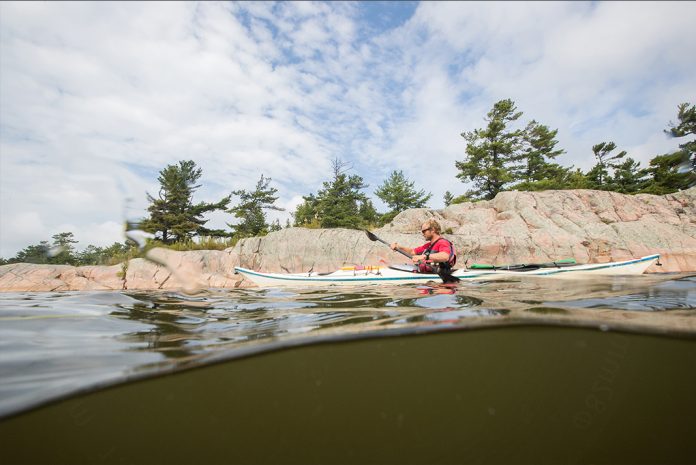
Person kayaking along a rocky shoreline
Keep this list handy for quick-packing when an impromptu trip arises.

There’s nothing better than paddling with pals on your way to an epic spot for an overnight. But what do you bring for your kayak camping trip? Paddling Magazine has created the ultimate kayak camping packing list so you can be prepared and comfortable on your adventure.

Don’t forget to check your list twice.

Kayak accessory essentials

● Kayak
● Sprayskirt
● PFD for everyone
● Paddle, plus a spare
● Paddle float
● Drybags

[ Paddling Buyer’s Guide: View all kayak accessories]

Kayak camping gear

● Tent or hammock
● Sleeping bag
● Sleeping pad

What to wear kayaking

● Paddling top
● Warm baselayer
● Quick-dry pants and shirt
● Rain gear
● Extra socks
● Hat and sunglasses
● Immersion protection

[ Paddling Buyer’s Guide: View our selection of kayaking apparel ]

Camp kitchen equipment

● Water treatment and bottles
● Stove, fuel and cookset
● Food and snacks
● Mess kit
● Rope to hang bear bag overnight

Kayak safety gear

● Compass and map
● Bailer or bilge pump
● First aid kit
● Lighter/matches
● Sunscreen
● Communications/signalling device
● Weather/VHF Radio

[ Paddling Buyer’s Guide: View our selection of safety & rescue items ]

Camp supplies you don’t want to forget

● Headlamp
● Multi-tool
● Toilet paper
● Bug spray
● Emergency cash

Travel Photographer Paddles And Explores Sri Lanka

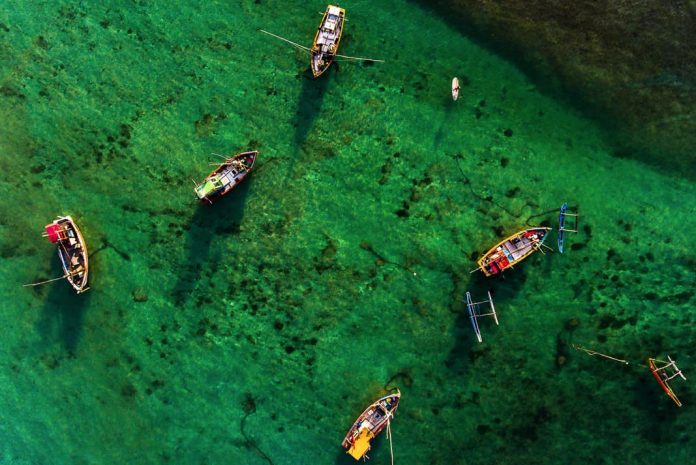
an aerial shot of several fishing boats paddling in Sri Lanka
Cory Leis is an adventure and travel photographer based in Whistler, British Columbia. | Photo: Cory Leis

Wonder and curiosity struck me the first time I set my eyes on photographer Steve McCurry’s image of four stilt Sri Lankan fishermen back in 1995.

The very act of fishing while perched atop a single pole was so foreign to me. It’s one of many travel photographs that remains with me and fuels my inner wanderlust.

For years, intrepid travelers skipped over the small island of Sri Lanka in favor of bustling India or the jaw-dropping atolls of the Maldives.

Following a 30-year civil war, it’s only the last 10 years tourists have landed in the busy hub of Colombo and trekked deeper into the rolling hillsides, exploring centuries-old Buddhist temples, tea plantations and wildlife sanctuaries.

Now it’s one of the top emerging travel destinations. As a photographer, I do oodles of research into a destination before my bags are packed.

As I dug deeper, I realized for an area the size of Ireland, Sri Lanka seemed to offer more outdoor and cultural experiences than many other places I’ve visited.

[ Paddling Trip Guide: Explore more adventures ]

Most of the decades-long civil war concentrated in the north and interior of the island, but the 2004 Indian Ocean earthquake and resulting tsunami decimated the southern coast.

Livelihoods tightly woven into the tides were torn apart, buildings and boats close to the ocean were destroyed, people lost their loved ones, and the rest of the world scrambled to provide aid to the beach communities in the south.

One of the many acts of kindness came from small fishing towns throughout the Netherlands, like the famous herring city of Vlaardingen, which donated fishing boats to coastal fishing families so they could sustain themselves.

These colorful boats sparked my curiosity—on closer look they are adorned with the names and locations of the donors.

As the morning sun rises over the horizon, this particular little spot on the south coast lights up as the fishermen’s boats full of color and texture contrast the clear Indian Ocean.

The bay is shallow, fringed by a massive reef protecting the boats during large swells, and also funneling a right-handed wave perfect for long boarding and SUP surfing. Photographing the ocean, and particularly a coastline with a shallow reef, provides the opportunity to fly a drone and offer a unique perspective.

Though the drone is cumbersome when traveling and I only pull it out occasionally, all the hassle is worthwhile when I get back and see the images.

Travel adventure photography is more than just the photo. It’s the people, sounds, smells and culture, all wrapped up in a digital capture. One of the first days we surfed this wave, we exited to the beach as the fishermen were returning from a night’s outing.

Rama, who seemed to captain a vessel, came over with his big welcoming smile and introduced himself. He offered us some fresh catch and we sat and spoke with him for the better part of an hour.

He explained what had happened to the families after the tsunami, answered our queries about the unique names of the local fishing boats, and became a friendly face on our surf sessions down at what we took to calling Fishermans.

With my own photography, I hope to strike a little wonder in the viewer’s eyes, inspiring someone else to book a ticket, travel a little deeper and snap an image you’ll never forget.

Cory Leis is an adventure and travel photographer based in Whistler, British Columbia. | Feature Photo: Cory Leis


The Paddleboarder’s Guide To Falling In Love With Surfing

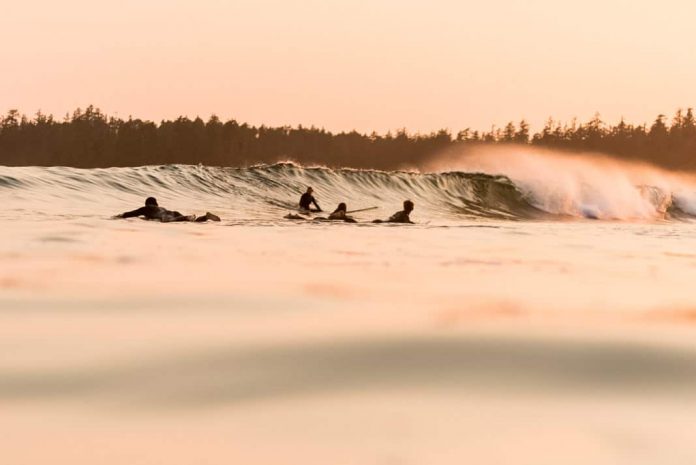
several paddleboarders catching waves to surf on a breaking wave
"The sea, once it casts its spell, holds one in its net of wonder forever." —Jacques Cousteau Photo: Keenan Bush

“Waves were the playing field. They were the goal. They were the object of your deepest desire and adoration. At the same time, they were your adversary, your nemesis, even your mortal enemy. The surf was your refuge, your happy hiding place, but it was also a hostile wilderness — a dynamic, indifferent world.”

Two years ago, these words, written by William Finnegan in his Pulitzer Prize-winning surfing memoir Barbarian Days, would have meant nothing to me. I was born and raised in Toronto, Ontario, and have spent the past 20 years living in a pair of cities, Edmonton and now Ottawa, far from any ocean.

To me, waves were not a dynamic object of desire; they were entirely foreign, traversed only on big boats and entered only on brief forays from the beach. Surfing, meanwhile, was as alien and abstract as astrophysics or Sunday school—a passion or a pastime for people whose circles rarely crossed mine. Then I got my first standup paddleboard, and over a couple summers progressed from lakes and flatwater rivers to whitewater and ocean touring. And then I caught a wave.

Finnegan’s formative experiences as a surfer were in California and Hawaii. I first tasted the thrill at Sandbanks Provincial Park, near the tip of a headland that juts into Lake Ontario just west of Kingston, three hours by car from home. Sandbanks—site of the world’s largest bay mouth barrier dune formation—has clear water and long sandy beaches. When a swell rolls in or the wind kicks up, the waves are rideable. Even the ankle biters. Especially on a paddleboard.

During a late-September heat wave, no wetsuit required, on my 10-foot hardshell, I pivoted onto a three-foot breaker and rocketed back toward the shore. And then did it again. And again.

Despite the speed, time slowed while balanced on the board. I understood, waiting for the next set, looking over my shoulder and squinting into the sun, why people devote their lives to chasing this intoxicating alchemy of energy and serenity; why I, a middle-aged geographically challenged dad on a family camping trip, felt suddenly compelled to do the same.

[ Paddling Buyer’s Guide: See all surf paddleboards ]

My next session, a month later at the same beach, with wind gusts topping 60 miles an hour, revealed the extent of those challenges. I had to battle into the onshore wind to reach the water from the parking lot, but it was the only surf in the forecast during a holiday weekend visit to a nearby cabin, and those brief seconds of flying atop the water were worth it.

A few factors prevented me from relocating to a tropical surf break for a month to get the hang of my new obsession. My family. My job. My bank account. Throughout the ensuing winter, watching surfing videos online and reading about the sport stoked an inexorable yearning to get back onto a wave.

When the ice on the rivers that run through Ottawa broke apart, I completed my now-traditional spring ritual: an after-work, one-way, 10-kilometer paddle down the Rideau River on my inflatable SUP, propelled by the current through a patch of class I bumps, and then a rush-hour bus ride home. It feels defiant and deeply satisfying to be standing amid commuters with a paddle in hand and a PFD strapped to an oversized pack. Yet still, it wasn’t enough.

Salvation came a couple weeks later on the Ottawa River. I had heard about locals who river surfed on standing waves that rise with the freshet. Kayakers, conventional surfers and now SUP surfers congregate at Bate Island, near the middle of the river, where an eddy snug tight to a retaining wall provides access to a series of waves that are rideable for maybe two months every spring. I joined the lineup on a crisp Saturday afternoon wearing a borrowed too-thin wetsuit and asked the only other paddleboarder for advice.

“There’s an extra helmet in my car,” he said. “Go get it and put it on.”

When my protective new pal crossed the eddyline and slipped onto the wave, he made it look comically easy, cutting and sliding back and forth across the face for as long as he wanted to remain upright. A half dozen prone surfers did the same. My turns were shorter. Within a second or two, I’d be down and tumbling through the rest of the rapids. When I finally managed to catch the wave for about half a minute, either the next day or the one after that—the sessions blurred together, one turbulent ice bath after another—I knew river surfing would also be part of my future.

Summer is usually considered prime paddleboarding season, but when water levels dropped and the wave at Bate Island disappeared, it felt like I had lost a friend. A really frustrating friend, mind you—the type who might not be good for you, but you just can’t stay away from. Fortunately, trips over the next few months took me to both coasts.

In Newfoundland, a tip from a local sent me to a rocky harbor at dawn to catch the incoming swell. I hoped to build on that success last fall in Tofino, with, for the first time, a proper SUP surf board and, probably more important, proper coaching. And though I did get some waves, the longer I stayed on the water, the more I fell and failed. Which reminded me of a saying I’ve heard about complicated places. Visit for one day and the country will be totally confusing. After a month, you’ll start to figure it out. After a year, you’ll be baffled again. That captures my relationship with surfing. I’m in head over heels, often literally, and can’t wait for more.

Ottawa-based writer Dan Rubinstein loves all forms of paddleboarding. His first book, Born to Walk: The Transformative Power of a Pedestrian Act, was published in 2015, and he’s now working on a non-fiction book about paddleboarding.

“The sea, once it casts its spell, holds one in its net of wonder forever.” —Jacques Cousteau | Feature photo: Keenan Bush


Why The Real River Story Is In The Little Details

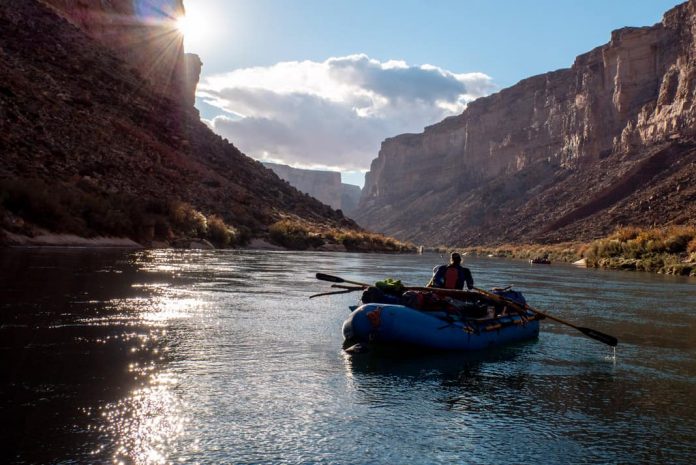
person paddling a raft down a scenic canyon
“Too much of anything is bad, but too much good whiskey is barely enough.”—Mark Twain Photo: Caleb Roberts

I’ve taken to drinking scotch. I’ve never been much of a drinker, really, and I’m still not. I became interested in scotch on a bit of a whim, tagging along on a tasting evening hosted by a kilted guy with a thick brogue. It is an acquired taste, but Mr. MacKilt neatly opened the door to understanding the drink.

There were many samples to taste as one would expect, but there was also wood from the barrels, maps of the different regions, a thousand years of cultural history told with humor, and photos of 100-year-old distilleries still operating today.

There was a whole story. I felt like I understood what I was holding in my hand, even if it tasted like smoky leather and burned my throat. I knew the story of the lovely amber liquid in my glass, and that made all the difference.

How drinking scotch relates to running rivers

Let me explain.

I love river trips—the whole trip though, not just the exciting bits or the paddling parts. I love the early possibilities and preliminary ideas, finding the maps and digging for the info I need to connect the dots.

[ Plan your next great adventure with the Paddling Trip Guide ]

I love the gear lists and sorting and garage floor covered in equipment and food bags; closing my eyes trying to envision where everything will get rigged. I love loading the trucks and figuring out the shuttle.

The importance of details was hammered into me as a guide. One of my early mentors, a trip leader by the name of Walt Wolfe, would quote Laurence Bell: “Show me a person who cannot bother to do the little things and I will show you a person who can’t be trusted to do the big things.”

It’s all about the little things

I grew to take pride in my ability to deliver on the little things. Importantly, though, I grew to realize how big things are made up of so many small details. Which is how it is with rivers.

I love reading about where I’m going. The seasons, the geology, the fish, and who owns the land. Where does this river come from and where does it go, who ran it first and, more importantly, why.

What else is going on upstream and down, how the locals make a living, or who lived there before my people showed up. The whole story. Not just logistics of a trip, but the story of a whole place. All of the little things assembled into a big, meaningful thing.

This all occurred to me while looking at the large wall map of Scottish distilleries. In those early days, I was somewhat ambivalent about the flavor of what was in my glass, but even then, I really appreciated and felt connected to everything about it.

The real river story

The details of barley and water and a cultural history combined into something much bigger. Likewise, it is for this connection I sow the seeds on my river trips, something I look forward to as much as the river running itself.

Make no mistake, I love rigging the boats every morning, and being pulled by the current, and rapids spice up the adventure.

But it is the story of the river that makes the whole endeavor absorbing and worthwhile.

The thousand details of putting a trip together means the travel goes smoothly; the thousands of details of what makes a place a place provides some meaning to what I see and experience.

Paddling downstream is connecting the dots on the map, combining the little things into something bigger.

Jeff Jackson is an outdoor education professor at Algonquin College and a risk management consultant. His regular column, Alchemy, shares lessons learned from a life on the river.

“Too much of anything is bad, but too much good whiskey is barely enough.”—Mark Twain
Photo: Caleb Roberts

It Is Never Too Cold To Go Paddleboarding

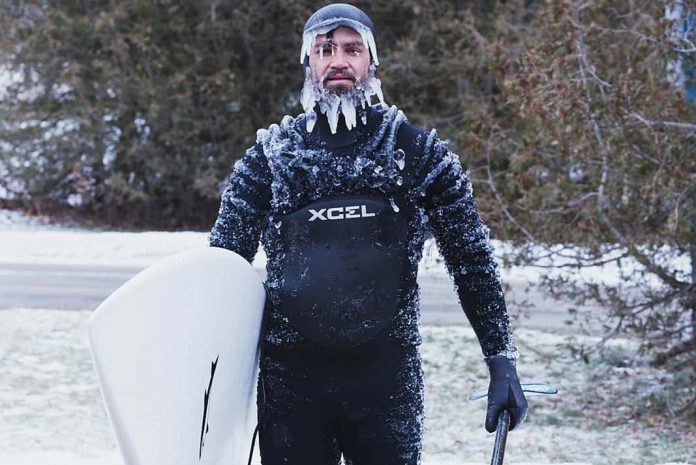
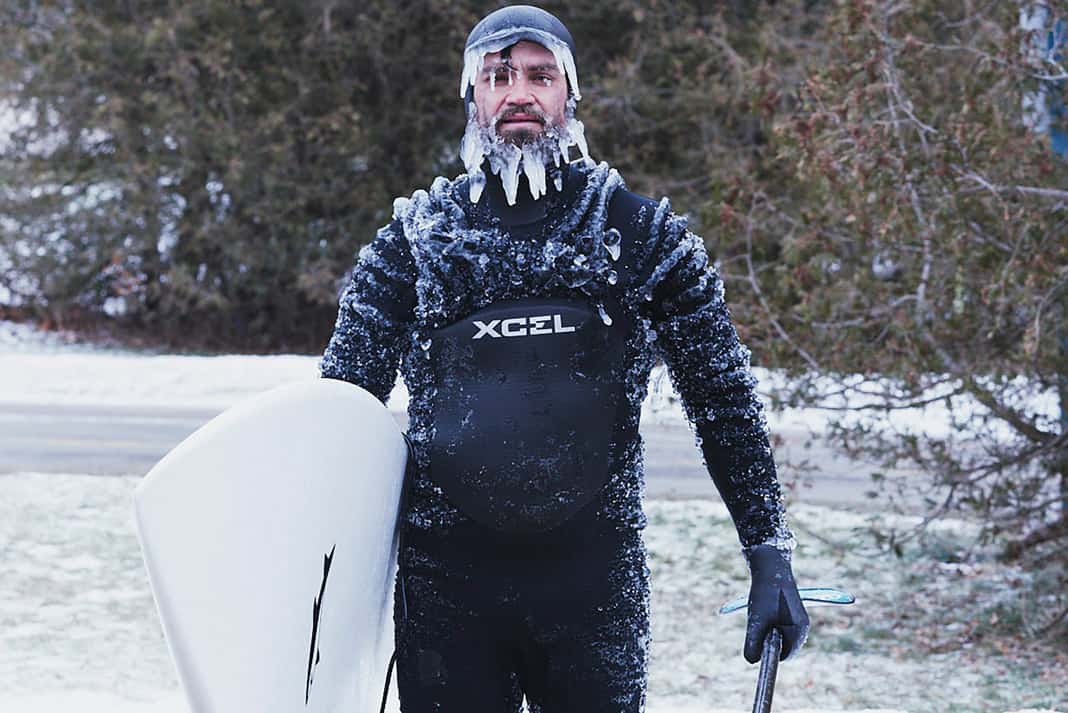
man standing with his paddleboard in the winter covered with icicles on his face
Tougher than Sub-Zero. Photo: Sandy Nicholson

One of the first times Geoff Ortiz surfed the Great Lakes was back in 2007 in Toronto. It was December and cold. Ortiz had learned to surf in Costa Rica seven years earlier and was fully addicted. Once he realized he could surf in his hometown of Toronto, he started watching the weather and heading to Bluffer’s Park on the city’s east side whenever the swell was up.

One morning, as he crossed the road in his wetsuit with his board under his arm, a police officer approached him.

“He goes, ‘what are you doing?’” recalls Ortiz. “I told him I was going surfing. He said, ‘what do you mean you’re going surfing?’ And he just had to clarify. He had to make sure I was sound of mind.”

Since then, Ortiz has surfed Ontario, Huron and Erie whenever possible. One look at his Instagram feed shows that if there are waves, he’s out there. The self-employed contractor regularly drops everything to chase the freshwater swell.

“I’ll drop the kids at school and go straight from there. If I’m going to Lake Erie, my wife will drop the kids off at school a little earlier. On those days, I’ll make lunches for the kids and leave as early as possible to beat traffic,” he says of the two-hour drive.

Four years ago, Ortiz stopped taking his surfboards with him and began standup paddleboarding instead.

“I realized I’d be able to catch more waves and spend more time on the water with a SUP. But early on, I wasn’t catching many waves at all. It was quite difficult,” he recalls. “I was always dealing with chop and falling a lot. But I was stubborn. Once I got the hang of it, I got more waves and the rides tended to be a lot longer than on a surfboard.”

Despite the sub-zero temperatures, winter is a great time to surf the Great Lakes. At any given wind speed, waves build higher in cold weather because cold air over warm water transfers more wind energy than warm air over cold water.

[Paddling Buyer’s Guide: View All Standup Paddleboards]

When the water temperature is close to zero, and the air temperature is below zero, a mild 15-kilometer wind will generate two- to three-foot waves. Lower wind speed makes for cleaner waves too.

But how does Ortiz motivate himself to get in the water when it’s -15°C, before factoring in the windchill?

“I’ve done it enough times now I’ve normalized it,” he says. “For the first while it was harder to motivate myself to get out there. And as a paddleboarder, it can actually be quite cold until you get some water in the suit. Even though I know it’ll be warmer once I get in the water, I still avoid it while up on my board. But once I fall in, I warm right up.”

man standing with his paddleboard in the winter covered with icicles on his face
Tougher than Sub-Zero. Photo: Sandy Nicholson

Now an ambassador for Xcel wetsuits, Ortiz wears a 5/4/3 suit—five-millimeter thick neoprene on the body, four-millimeter on the arms and three-millimeter on the hood—and rubs “wind and weather” cream on his face.

He’s usually the only standup paddleboarder out in the dead of winter, but he’s often not alone. There’s a small but mighty band of Great Lakes surfers who claim as long as the lake isn’t iced-over, it’s never too cold to surf.

“With wetsuit technology, it’s really not crazy at all,” says Ortiz. “I can pull my hand out of my glove and shake hands with somebody and my hand will be warmer than someone walking on the beach. It’s not crazy once you start. The session doesn’t end because I’m cold, it ends because I’m exhausted.”

Tougher than Sub-Zero. Photo: Sandy Nicholson

How Human Activity Is Impacting The Great Bear Rainforest

Photo: Dustin Silvey
The Great Bear Rainforest extends from the Discovery Islands in the south to the British Columbia-Alaska boundary in the north. Photo: Dustin Silvey

Last summer, our small group of paddlers set off from the northern tip of Vancouver Island into British Columbia’s Great Bear Rainforest. We were in search of the fish farms spreading out across the area, which had become a source of political debate between the provincial government and the Indigenous communities.

The farms were not hard to find. The eyesores dotted the area closest to Vancouver Island, right up to the border of the famous Broughton Archipelago Provincial Park. One moment we saw humpback whales breaching around us, surrounded by huge forested islands, and the next we turned a corner to see a massive chain-link fence in the middle of the ocean. These fenced-in perimeters host thousands of Atlantic salmon, swimming in circles, in what is considered by many to be unsustainable fish farms.

We paddled deep into the Great Bear Rainforest to see how far the farms penetrated. During our search, we circumnavigated Gilford Island and as we did, the farms ceased for a time. The break from the farms was a feeling of freedom; our eyes were free to wander the landscape with what we thought would be uninterrupted beauty. Unfortunately, we were wrong.

Human Impact On The Great Bear Rainforest

The area around Gilford Island, like many areas of the Great Bear Rainforest, has tracts of ongoing logging. Roads dotted the landscape, almost all of the forest was second or third growth with little old growth remaining. Most nights smoke from forest fires roaring across the province turned the sun into a blazing red ball in the sky.

Do not misunderstand me. The area is beautiful—dolphins jumped next to our boats, we saw orcas breeding, witnessed bears feeding on beaches and eagles diving for fish. But it was difficult not to feel regret when thinking about how much more beautiful this area must have been before the human impact.

Most mornings, I crawled out of my tent already dressed in my drysuit while the morning rain pelted my face. My companions reminded me, “If you are going to paddle in a rainforest, you should expect regular rains.” But on one morning, we woke up to the sun beaming down on us. A bear was digging for food down the beach, and it being warm and bright, and us excited to see our first bear, we were slow to act.

This backdrop is what I had imagined the whole of the Great Bear Rainforest to be—green, lush, and deceivingly inviting.

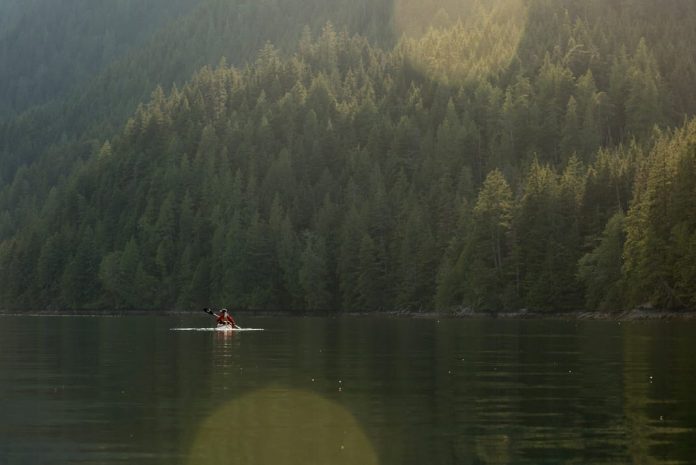
As some of our team was packing our stuff sacks into our Boreal Design kayaks, we realized it was already early afternoon. We had a short crossing that day and arrived at camp as the sun was setting after a 20-kilometer paddle. This was when I snapped this shot. The forest behind the kayak was the perfect backdrop, with the sun just over the cusp of Gilford Island, causing a small amount of flare on the lens.

[ Paddling Buyer’s Guide: See all touring kayaks ]

This backdrop is what I had imagined the whole of the Great Bear Rainforest to be—green, lush, and deceivingly inviting. Vast areas of the Great Bear Rainforest were out-of-this-world beautiful, but if I just turned my head slightly, too often I saw the devastation in the mountains and on the ocean. For me, this photo represents what the area could be in entirety, rather than just when your eyes are facing the correct direction.

Gearlab Offers Full Line of Kayak Accessories for Spring 2019

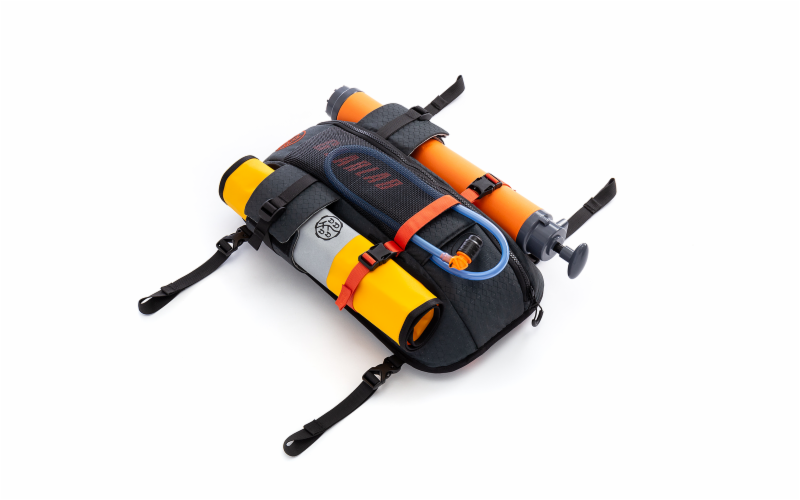
Gearlab, pioneer of the first modern carbon fiber Greenland-style paddle with exchangeable tips, debuts their new accessories collections in bags and paddle float. The deck bag is designed to revolutionize a paddlers’ deck with order, convenience and critical safety features. With the deck bag, paddle bag, paddle float, and cabin bag, Gearlab offers the ultimate kayak accessory collection for summer 2019.

The Gearlab Deck Bag

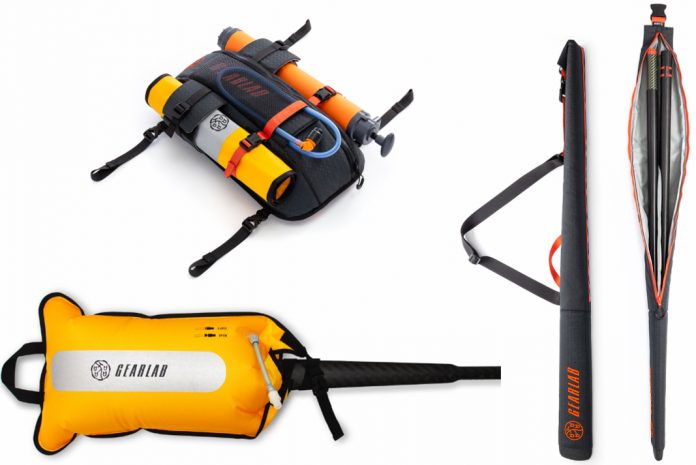
Created by a team of award-winning industrial designers, the Gearlab Deck Bag is designed for integrated kayaking safety, and features custom made slots for pump, paddle float, and a hydration system. All operations can be completed with one hand..
Both sides of the bag have one solid holder; paddlers can simply put in their pump and paddle float without adjusting sloppy mesh. To remove gear, simply click the strap to release the buckle. Bag can fit 3 liter hydration system, with tube hole design that provides easy access. A hidden handle beneath the bag eliminates the possibility of confusing spray skirt with deck bag when capsized. Mesh compartment proves storage inside deck bag and allows water to easily drain out when taking the bag up. Bag fastens to the deck with four buckles. The buckles allow for installing and unleashing with ease, with no need to pair and route for the buckle like conventional deck bags. Dimensions: 44 x 25 x 10 cm.

Paddle Bag

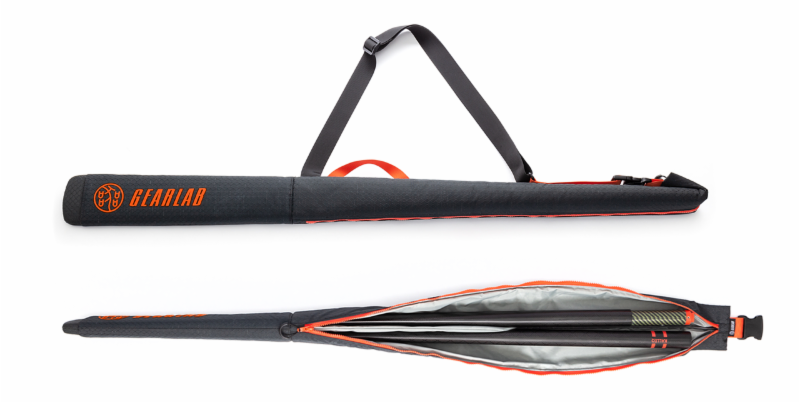
Gearlab Outdoors’ third generation Paddle Bag is made to fit most Greenland style paddles. Featuring an EVA hard bottom shaped into the brand’s signature ProTek Tip silhouette that provides significant improved protection. Full padding with a perfect width is designed to provide a 360° protection. Side zipper, and webbing adjuster improved paddlers’ user experience. Paddlers can now take their paddles on a plane trip without worrying damage the paddles. Full protection, and better traveling experience with Gearlab sticks!
Dimensions: 130 x 9 cm
The Gearlab paddle bag, with one internal divider separates the two paddles, allowing blades to be placed on each side of the divider. Length 130 cm.

The Gearlab Paddle Float

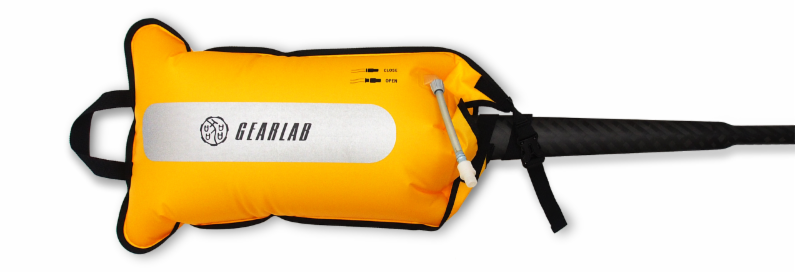
Gearlab’s Paddle Float is an essential safety tool to carry on every kayak outing. The Paddle Float meets all safety requirements for both Greenland style and Euro-blade paddles. Constructed with quality materials, it provides excellent buoyancy and leverage to re-enter a kayak. Pump and Paddle float are essential life savers when paddlers encounter difficulties on the water. With its innovative new design, Gearlab has taken the deck bag to the next level of safety. A key safety tool, Gearlab’s Paddle Float is ideal for self-rescue, as well as for practice learning new rolls and mastering a balance brace. It is adaptable for use with both Greenland and Euro-style blades. A single blow-up valve inflates both chambers of the float, making it quick and easy to deploy. The float is constructed with quality materials, and the bright yellow color and reflective strip provide greater visibility in the water. USD $49

The Gearlab Kayak Dry Bag (KDB)

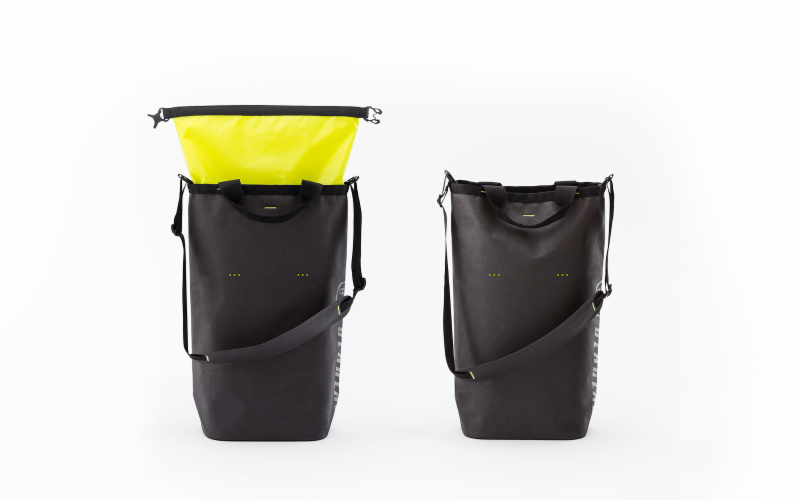
Gearlab Kayak Dry Bag (KDB) is both lightweight and durable, making it ideal for sea kayaking and long expeditions. The Kayak Dry Bag is shaped and tapered for efficient storage. It offers less weight at the top of the bag, allowing for an easy roll-top closure. The lower shell is fashioned from a more durable TPU fabric. The KDB is available in three sizes: 10 Liter, 14 Liter, and 18 Liter.
The Kayak Dry Bag includes tote-style handles with top webbing and a bottom handle designed for quick cabin grab and removal. The KDB’s unique design also allows dual zones for dry and wet storage. The bag’s bottom half enclosure is designed for dry goods, and the top half provides an open-air stuffing zone for wet goods. The two-tone heather fabric features dual sides coated with TPU and a PU top to allow for a quick spray-down cleaning. While its innovative high-tech design makes it perfectly suited for outdoor pursuits on the water, the Cabin Dry Bag also features a handsome two-tone design that will allow it to carry over for urban lifestyles.

About Gearlab

For the past eight years, Gearlab has designed and manufactured Greenland-style carbon-fiber paddles for ocean kayakers around the world. Created by a team of award-winning industrial designers and outdoor enthusiasts, the paddles are adapted from indigenous Inuit designs. Greenland paddles allow kayakers to travel farther with greater efficiency and precision, while reducing injury and fatigue. Made from 100 percent continuous carbon-fiber material,Gearlab paddles perfect thousand-year-old ergonomics with advanced material strength and durability. Gearlab paddles will open up a new realm of adventure for both recreational and advanced kayakers. Discover the benefits of Gearlabpaddles at GearlabOutdoors.com.

Yakima Unveils New Fishing And Truck Racks

Yakima LockNLoad Racks
Yakima LockNLoad Racks | Photo: Courtesy Yakima

For 40 years, Yakima has built its reputation as the global leader in vehicle racks by providing innovative and reliable cargo solutions for outdoor enthusiasts of all kinds.

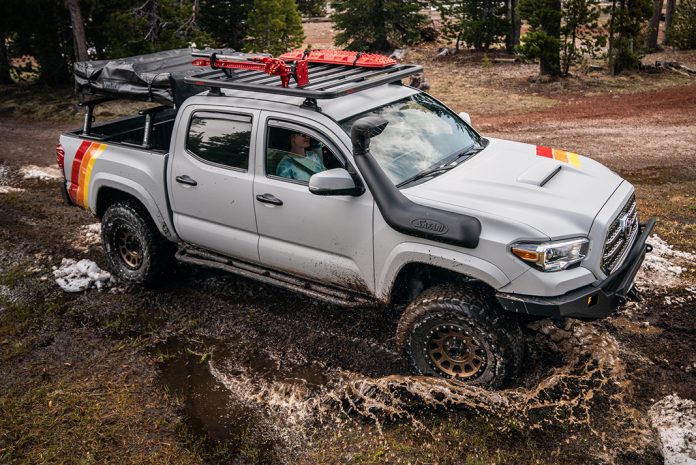
For Fall 2019, the brand is excited to announce its long-anticipated entry into the recreational fishing market, with three all-new rooftop fishing rod holders. Also debuting in Fall 2019 is LockNLoad, a platform roof rack and accessories collection that will appeal to overlanders and weekend warriors, alike.

The new products will be introduced at Outdoor Retailer Summer Market, June 18–20, in Denver, Colorado. To book an appointment at Outdoor Retailer to see the new products firsthand, please contact John Taranto at the information above.

The Fish Collection by Yakima

The new line of rod holders consists of three products. The DoubleHaul is a premium, precision-designed rod carrier made specifically for fly and spey rods. The TopWater is a purpose-built storage box for conventional rods and reels with room for tackle and other gear. The ReelDeal is a simple and economical solution for transporting up to eight fully rigged rods on any style of roof rack.

“With 49 million anglers in the United States, many of whom are already Yakima consumers, it only made sense to bring our expertise in cargo management to the world of fishing,” said Garrett Barnum, Category Director – Top of Car, Truck, Camp. “However, this was never going to be an ‘us too’ play.

Instead, we’ve gone all-in right out of the gate, with three smartly designed and well-built products for a wide range of anglers.”

Yakima Overland Adventure

Born and rigorously tested in the Australian Outback, the new LockNLoad Heavy Duty Platform Roof Rack combines smart looks and even smarter engineering for hauling overlanding equipment as far off road as your vehicle will take you. LockNLoad accessories include side rails, a bracket for mounting lights, a high-lift jack holder, a spare tire holder and more. The LockNLoad system offers tremendous utility beyond the overland market, though. With its side-to-side slats, it’s perfectly suited for hauling bikes, boats, boards, and skis, too.

“The LockNLoad platform racks represent a natural extension of Yakima’s existing rooftop offerings,” said Barnum. “With adventurers going farther and farther off the grid, we’re able to provide them the versatility they demand with this low-profile roof rack and line of rugged accessories. At the same time, LockNLoad will also appeal to those simply looking to haul their favorite gear to the trail, mountain, or coast.”

The new fishing rod carriers and LockNLoad platform rack and accessories will be available at retail and on Yakima.com in August.

Yakima’s Fall 2019 Products

Yakima DoubleHaul

Designed with avid flyfishers in mind, the DoubleHaul offers superior protection for up to four fly rods or two fly rods and two spey rods. The DoubleHaul accommodates rods up to 10 feet in length and most reels up to size 12. The best part? Rods can be stored fully strung up for fast and easy access. The four aluminum rod tubes that comprise the carrier each contain a plastic sleeve to securely hold a fly rod and prevent wear and abrasion on the blank and guides. Felt padding prevents marring on the reels, and the reel box features a Yakima SKS lock for worry-free security. The DoubleHaul easily mounts to any vehicle crossbars with its tool-free, low-profile universal mounting hardware, and the carrier can be configured to half its length for smaller vehicles. MSRP: $699

Yakima TopWater

The super-versatile TopWater is easily mounted to a roof rack or trailer for on-the-go access to as many as eight fully rigged baitcasting and spinning rods up to 8 feet in length (or 20 bare rods). The TopWater keeps rods and reels secure and organized during transit thanks to protective foam pads and rubber straps that ensure everything stays in place. Additional space under the rods accommodates low-profile tackle boxes and other gear.

The durable hard-plastic shell features Carbonite, the industry-proven, American-made material used in Yakima’s SkyBox products. With a Yakima SKS lock included, the TopWater is equipped to keep cargo secure. As with the DoubleHaul, the TopWater is compatible with any crossbar style and shape. MSRP: $549

Yakima ReelDeal

For a simple and cost-effective way of transporting fully rigged rods to any fishing hole, look no further than the ReelDeal. This two-piece rod carrier features tool-free mounting to any roof rack, including factory and aftermarket racks. The included Yakima SKS locks secure the rods and rack to the vehicle and the rack opens from the side for easy access to up to eight rods. Full-length rubber padding securely holds and protects rods during transit. MSRP: $169

Yakima LockNLoad

Bringing versatility and customization to far-flung adventures and weekend trips alike, the all-new LockNLoad platform rack was conceived by Yakima’s team in Australia and torture-tested for months in the extreme conditions of the Outback. Its low-profile design with side-to-side slats enables it to haul anything from a rooftop bike or ski rack to jerry cans or a rooftop tent; a series of accessories allow the user to truly maximize the rack’s utility.

The LockNLoad is built to last with corrosion-resistant aluminum construction and powder coating for durability and style. The LockNLoad is available in six different sizes with load ratings of 165 to 440 pounds depending on the vehicle. MSRP: $699–$949

Additionally, Yakima will preview its Spring 2020 collection at Outdoor Retailer, which includes innovative new bike products and a collection of premium rooftop cargo boxes.

About Yakima

A pioneer in vehicle racks and cargo management solutions since 1979, Yakima is known for its rugged and dependable products. Built for a wide variety of recreationists, Yakima products embody the company’s commitment to quality and safety and its passion for the outdoors. Yakima Products, Inc. is headquartered outside of Portland, Oregon. For more information, visit www.yakima.com and follow Yakima on social media: facebook.com/yakimaracks, YakimaRacks on Instagram and Twitter, and youtube.com/yakimaproducts.


Helle Introduces Its Most Compact Knife Ever

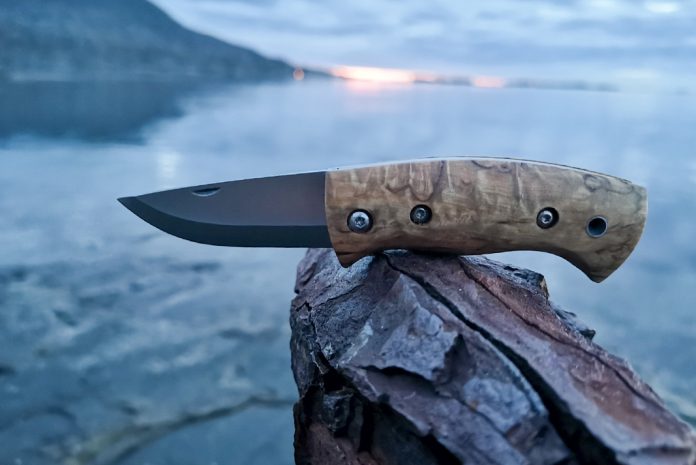
Helle Kletten Knife
Helle Kletten Knife | Photo: Courtesy of Helle

Helle of Norway is proud to announce the Kletten, the smallest knife ever made by the 87 year-old-brand. Debuting at the 2019 Outdoor Retailer Summer Market in Denver, Colorado this June, the Kletten will be available at retail stores this fall.

Helle Kletten Specifications:
Name: Kletten
Weight: 84 g / 2.96 oz
Blade material: triple laminated stainless steel
Blade thickness: 2.7mm
Blade length: 55mm / 2.16-inches
Handle material: Curly birchwood
Handle length: 80 mm / 3.14-inches
Total length (open): 135 mm / 5.31-inches
Style: Folding, lockback
MSRP: $199

In development for several years, Helle’s smallest folding knife to date weighs less than 3 ounces. Measuring only 3.1-inches long folded, its compact size doesn’t compromise on capability. Tucked inside the 2.1-inch drop point blade, Helle’s renowned triple laminated stainless steel features a razor-sharp Scandinavian flat ground edge.

This heirloom-quality gentleman’s knife takes its name from a small but rugged hill near the Helle factory where locals go to enjoy nature. The knife’s striking curly birchwood scales are handcrafted to match the forests of Norway.

“The outdoors always provides our inspiration, from the natural materials we use to how we create our designs,” explains Jan Steffen Helle, production manager. “Our first everyday carry knife needed to be a small yet functional design, one that stays true to our Nordic heritage and craft.”

For over 80 years, Helle’s production focused on traditional fixed-blade knives. In 2010 Helle introduced the best selling Dokka, the brand’s first folding knife. In 2017, Helle released a second larger folding knife with the Bleja. To address the demand for a smaller Scandinavian style knife, the Kletten is designed as an everyday carry, pocket-sized knife for outdoor enthusiasts.

“Getting outside is often a spontaneous act, a short walk at lunch or a bike commute home, activities that don’t require a fixed blade knife,” says Svein-Erik Helle, Helle’s managing director. “We designed the Kletten as a small knife for small trips, a pocket-sized companion for simple, everyday tasks.”

Kletten tiny 1.jpg

Since 1932 Helle makes knives for international markets from the small village of Holmedal, situated on Norway’s rugged northern coast. Please contact Matt Huff (matthuff@sport-hansa.com) for retailer inquiries in the U.S., or James Graven for press inquiries (james@treehousepr.com). Visit helle.com for distributors outside the USA.

About Helle of Norway

Founded in 1932 by brothers Steinar and Sigmund, Helle is a family-owned, world-renowned brand known for producing aesthetically stunning, highly functional knives. Each Helle knife is handcrafted in Holmedal, Norway using natural materials and strict adherence to the art and tradition of Scandinavian knife making. Skilled hands play a major role in Helle’s knife production, and each knife takes up to 45 manual processes to complete. By finishing each knife individually, craftsmen bring out the best qualities of Helle’s past, place, people, and production. The result is a one-of-a-kind knife, worthy of passing down through generations. Please visit www.helle.com to learn more and follow @helleknives on Instagram and Facebook.

Lighting Innovator’s Newest Creation Counters Common Dissatisfaction with New Products

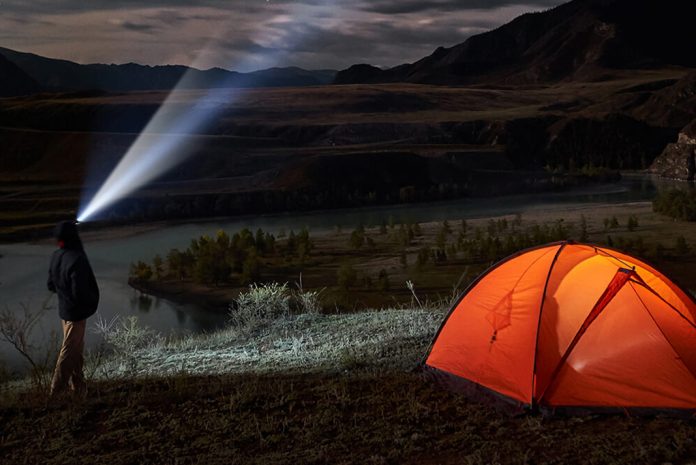
Camper standing next to tent with hat that has LED lights built into it
Hat with built in LED lights. | Photo: Courtesy of Panther Vision

Campers planning their summer excursions should be aware of a new survey showing that 25 percent of self-described outdoor enthusiasts admit to regretting at least half of the outdoor gear purchases they’ve made within the last 12 months.

The Outdoor Industry Association estimates that every year, the outdoor recreation economy generates $887 billion in consumer spending; $184.5 billion of that spending is strictly on gear. Based on survey results, if a quarter of those product purchases ended in regret at least half the time, the result is an astonishing $23 billion spent annually on outdoor gear the consumer later regrets buying.

“Overall, the number one reason for regret is that the product did not work as advertised, followed by the product being cheaply constructed, or of limited use,” said Amit Bhatnagar, an Associate Professor of Marketing at the University of Wisconsin-Milwaukee, who performed an analysis of the survey results.

To combat this rampant buyer’s remorse, Panther Vision commissioned a nationwide survey to better understand the problem as the company designs and launches the revamped version of its “headlamp-in-a-hat,” the POWERCAP 2.0.

“In our shop, we refer to those regretful purchases as PUIs – Purchasing Under the Influence – which most people call impulse buying,” said Chas Waters, Panther Vision’s Director of Sales and Marketing. “We’re all guilty of it, and as outdoorsmen ourselves who’ve felt let down by products that fail to meet our expectations, our team wanted to know just how common this feeling is among others.”

From its creation, Panther Vision has sought to reimagine the use of LED products. After a lifetime of inventing with more than 25 patents to date, founder Mike Waters has focused his energy on lighting innovation. The POWERCAP is at the core of Waters’ creativity, providing reliable hands-free lighting by embedding LED lights in the front of caps and beanies. Building on the original model, the 2.0 puts out four times as much light, offers three different light settings, and runs on AAA batteries that slide neatly into the hat’s lining, offering a design that seamlessly combines comfort, style, and function.

“From these survey results, we’re able to launch a better product that not only draws on the practical innovations that have made our products successful, but are also at the core of Panther Vision’s design strategy,” said Mike Waters. “At the end of the day, we want to ensure our products never let anyone down, no matter what they’re doing or where they’re doing it.” Because Panther Vision believes it will benefit from an outdoor consumer base that is more
knowledgeable and thoughtful in its purchasing, the company also consulted with Dr. Lars Perner, an Assistant Professor of Clinical Marketing at the University of Southern California, to better understand ways consumers can save themselves from these regrettable purchases.

Perner shared these five tips for outdoor enthusiasts to consider before purchasing a piece of new gear:

  • Perception Is Not Reality – Product makers lure you in with catchy marketing or “sweet deals”, so you have to focus on buying items you know you have a use for as opposed to just taking advantage of a perceived “deal.”
  • Deliberate Decision Making – Don’t get sucked into the hype or your impulse to buy!
    Sometimes “sleeping” on a decision, especially if it’s an expensive one; will help you avoid
    purchases that you will regret later.
  • In It For The Long Run – If you determine you “have to have it,” buyers should take a second to consider not just the initial cost of the item, but also the cost of maintenance and operations over time. In the case of lighting, some types need much more maintenance and additional costs to keep them running such as batteries.
  • Spouse Approved Spending – Listen, if you can’t easily explain to your spouse why you need the item and the costs associated with it, then maybe you should reconsider. A good rule of thumb before you throw it on your credit card and get hit with high interest rates is if you cannot pay cash, it may be better to wait until you can do so.
  • Healing The Camping Blues – As the seasons begin to change it’s hard not to start daydreaming about getting outdoors. Going online to browse around and get your “outdoor gear fix” is exactly when outdoor enthusiasts are most vulnerable. Take a breath, take inventory of what you already own, and make sure you are buying items you actually need, when you need them. “If outdoor enthusiasts keep these simple tips in mind, we’re confident it will save them from unwanted purchase regrets as well as lead them to understanding Panther Vision’s commitment to quality, functional design, and our obsession with creating innovative lighting solutions,” said Chas Waters. “We
    want to ensure that anyone who buys the POWERCAP 2.0, or any of our other products, never feels even a hint of PUI symptoms.”

About Panther Vision

Panther Vision is an Illinois-based company that designs, manufactures and distributes advanced engineered LED lighting solutions. Our more than 25 patented designs offer consumers unparalleled performance and provide them with uncommon solutions to common everyday problems. Panther Vision products are sold all over the world, but can be found in the U.S. at Lowes, Best Buy, Dick’s Sporting Goods, Gander Outdoors, Fred Meyer, AutoZone, LL Bean, Bass Pro, Cabelas, Academy Sports + Outdoors, Amazon and Big 5 Sporting Goods stores.