Home Blog Page 194

Globalstar partners with the Alpine Club Of Canada

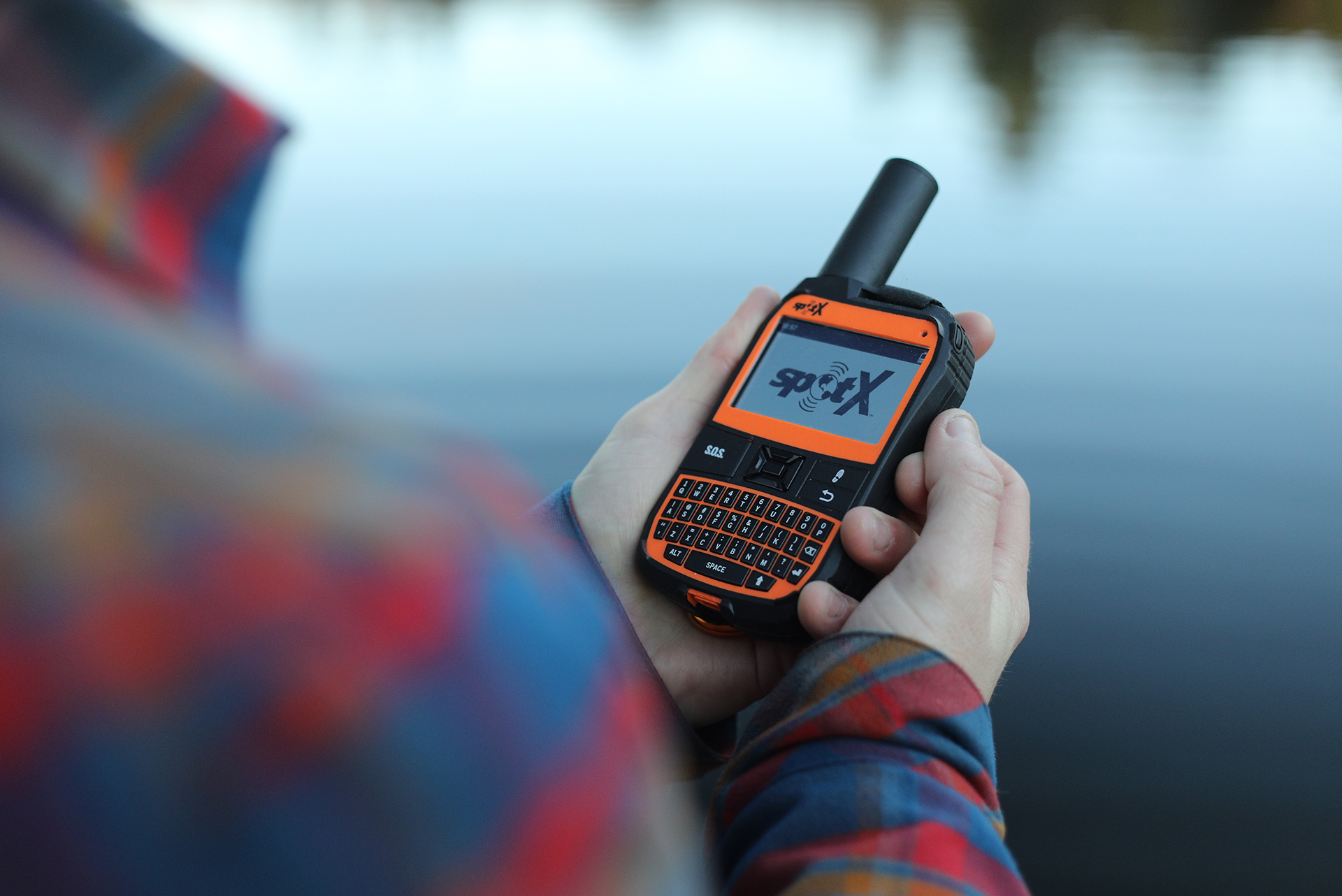
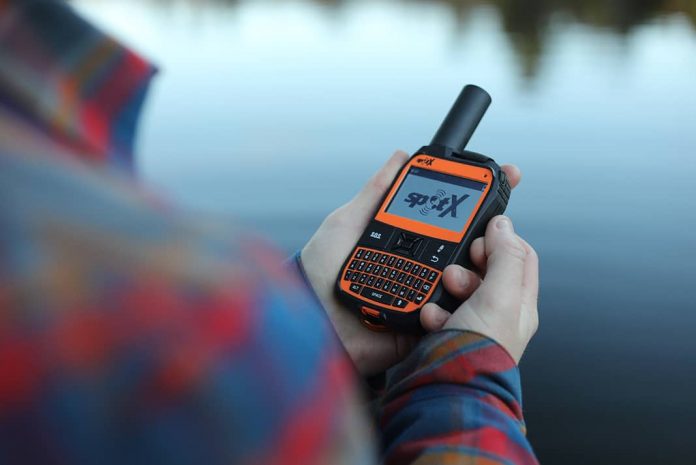
man holds SPOT X 2-way satellite messenger device
Globalstar has partnered with the Alpine Club of Canada

Coinciding with Canada’s Emergency Preparedness Week, Globalstar Canada Satellite Co., a wholly owned subsidiary of Globalstar Inc. and the leader in satellite messaging and emergency notification technologies, today announced it has partnered with The Alpine Club of Canada (ACC) to promote safety and security for alpine adventurers and remote workers.

The partnership was established out of the mutual objectives shared by ACC and Globalstar, including the encouragement and practice of outdoor activities and exploration and the promotion of those skills among Canadians. As part of the partnership arrangement, Globalstar Canada is providing the ACC with SPOT X 2-Way Satellite Messengers as well as access to satellite services, for use by adventure guides and alpine maintenance teams.

SPOT is trusted and proven satellite technology used By outdoor enthusiasts and remote workers who need to stay connected when venturing beyond cellular

“We are excited to be partnering with Globalstar Canada this year as part of our safety mandate, adding the SPOT X 2-Way Satellite Messenger to our safety and communications gear,” said Keith Haberl, Marketing Manager, Alpine Club of Canada. “The ACC is passionate about adventure. Every year we run more than 50 guided adventures in remote alpine locations and maintain the largest network of backcountry huts in North America. It is essential that we ensure our guides and hut maintenance teams have a reliable way to keep in touch with our office, for both safety and logistical reasons. In case an emergency arises in a remote location being able to communicate isn’t optional, it’s essential. With SPOT X we’ll be able to ensure this for our workers.”

“SPOT is trusted and proven satellite technology used around the world by tens of thousands of outdoor enthusiasts and remote workers who need to stay connected when venturing beyond cellular,” said Fintan Robb, Senior Director of Marketing, Globalstar Canada Satellite Co. “Through our partnership with the ACC, adventure guides and hut maintenance teams can now easily access the 2-way connectivity and security of SOS that the SPOT X 2-Way Satellite Messenger provides. As the official satellite communications provider for the ACC, we proudly support a 100-year old organization that is part of the fabric of Canada’s mountaineering community. Announcing this partnership during Emergency Preparedness Week underscores how passionate we are about safety in the outdoors and the importance of including SPOT as part of adventure planning and essential safety gear.”

With 2-way text messaging capabilities, SPOT X users can better communicate during their adventures to keep in touch with family and friends, or if necessary, emergency personnel

SPOT X is the latest addition to the award-winning SPOT family of products, providing affordable, off-the-grid messaging and tracking for hundreds of thousands of outdoor enthusiasts. Through a direct connection to the GEOS International Emergency Coordination Center, SPOT has triggered more than 6,200 rescues around the globe within the last ten years, approximately one-third of which have taken place in Canada. With 2-way text messaging capabilities, SPOT X users can better communicate during their adventures to keep in touch with family and friends, or if necessary, emergency personnel. Lone workers can check-in and provide detailed status of their situation when working in remote locations and receive direct replies back with updates.

Established in 1906, the ACC is Canada’s national mountaineering club with more than 17,000 members. Its vision is to bring together, and give voice to, Canada’s mountaineering community. Its mission is to promote alpine experiences, knowledge and culture, responsible access and excellence in mountain skills and leadership. The organization operates the largest network of backcountry huts in North America, from the Neil Colgan Hut in Banff’s Valley of the Ten Peaks (highest hut located at 9,700 feet) to the Keene Farm Hut (lowest hut located at 1,115 feet). The ACC runs guided adventures out of its national office in Canmore, which last year had 54 adventures and 634 participants. It also runs a General Mountaineering Camp every year in the high alpine.

About Globalstar, Inc.

Globalstar is a leading provider of customizable satellite IoT solutions for customers around the world in industries such as government, oil and gas, emergency management, transportation, maritime and outdoor recreation. As a pioneer of mobile satellite voice and data services, Globalstar allows businesses to streamline operations via the Globalstar Satellite Network by connecting people to their devices, supplying personal safety and communication and automating data to more easily monitor and manage mobile assets. The Company’s product portfolio includes the industry-acclaimed SmartOne asset tracking products, Commercial IoT satellite transmitters and Duplex satellite data modems, the innovative Sat-Fi2 satellite wireless IP hotspot and the SPOT® product line of personal safety, asset and communication devices, all offered with a variety of data service plans.

Note that all SPOT products described in this press release are the products of SPOT LLC, which is not affiliated in any manner with Spot Image of Toulouse, France or Spot Image Corporation of Chantilly, Virginia. SPOT Connect is a trademark of Spot LLC. All other trademarks are the property of their respective owners.
Pedal Kayak Review: Hobie’s Mirage Passport

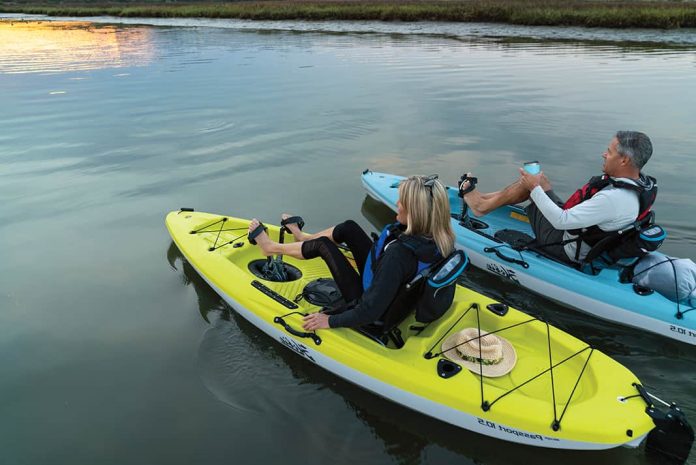
A young couple are seen pedalling around each in a Hobie Mirage Passport kayak
Experience ease-of-use on the water. | Photo: Hobie

Hobie has introduced the Mirage Passport as the newest addition to its renowned lineup of pedal kayaks, powered by the brand’s signature MirageDrive – the original pedal propulsion system for kayaking. Maintaining Hobie’s acclaimed quality and durability, the Passport was built with simplicity in mind, delivering efficiency, ease of use, versatility and comfort in a highly accessible package.

“The Passport has been thoughtfully designed to help break down those barriers of entry that may be keeping people off the water, and make pedal kayaking both more accessible and even more approachable,” said Jason Kardas, Director of Engineering Product Management for Hobie. “The ultimate goal of the Passport is to be able to bring the premium experience that Hobie’s MirageDrive technology has delivered for more than 20 years to a broader audience than ever before.”

Hobie Mirage Passport Overview
Hobie’s Mirage Passport Kayak | Photo: Hobie

With its excellent value, transportability, simple and sleek design and durable Thermoform construction, the Passport is a well-rounded boat that truly offers something for everyone, from novice to experienced kayakers alike. It is the ideal kayak for casual recreation and family outings but is ready for all kinds of adventures on the water.

[ Paddling Buyer’s Guide: See all recreational kayaks ]

Designed to accept most of Hobie’s vast array of accessories, the Passport is also a great, low-impact cross-training and fitness tool for fitness enthusiasts, and can be easily outfitted with additional angling equipment for recreational kayak fishing.

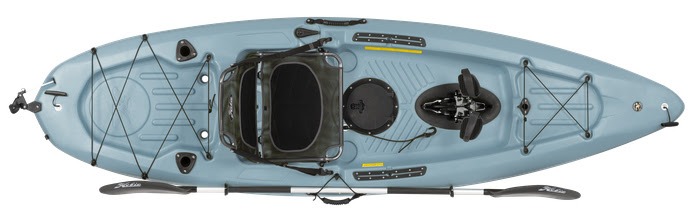
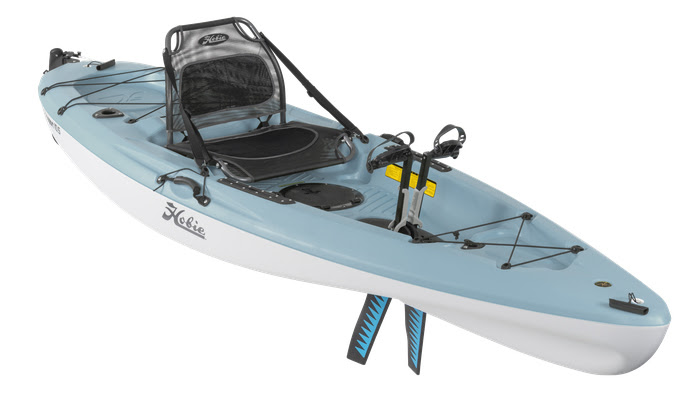
Top view of the Hobie Mirage Passport
Top view of the Hobie Mirage Passport | Photo: Hobie

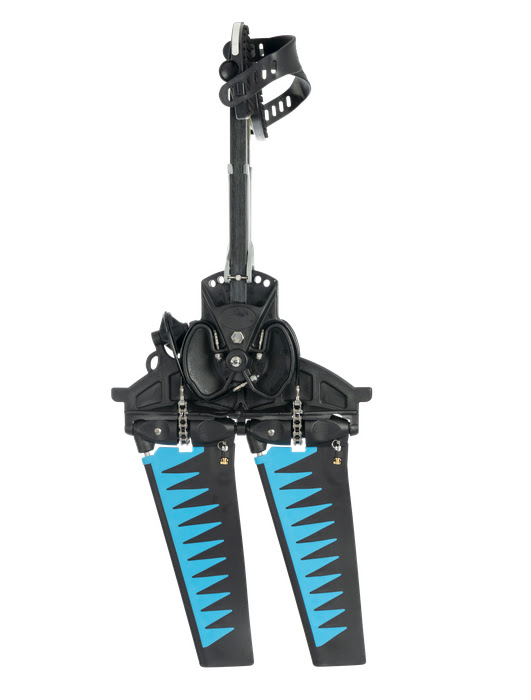
Powered by Hobie’s first-of-its-kind Classic MirageDrive pedal system, the Passport makes kayaking smooth and efficient, cruising seamlessly through the water. The shorter hull length and wider body provide superior stability, while the intuitive steering system and stowable rudder enable easy maneuvering.

Standard equipment on the Passport includes a suspended mesh-back, aluminum-frame seat, two-piece aluminum paddle, two rod holders, accessory mounting tracks and the accessory mount that accepts the kayak sail and new Bimini. Kayakers will also enjoy ample storage space on the Passport, with molded-in, cross-bungee cargo areas on the bow and stern, as well as Hobie’s ‘twist-n-seal’ hatch.

Hobie's MirageDrive pedal drive system
Hobie’s MirageDrive pedal drive system | Photo: Hobie

The new Hobie Mirage Passport will begin arriving at Hobie authorized dealers on Friday, April 26, at an introductory MSRP of $1,299 (excluding taxes and shipping).

About Hobie

Since 1950, Hobie has been in the business of shaping a unique lifestyle based around fun, water and quality products. From their headquarters in Oceanside, California, Hobie Cat Company manufactures, distributes and markets an impressive collection of watercraft worldwide. These include an ever-expanding line of recreation and racing sailboats, pedal-driven and paddle sit-on-top recreation and fishing kayaks, inflatable kayaks and fishing boats, plus a complementary array of parts and accessories. To learn more, visit www.hobie.com.

Wenonah Canoe Review: Wee Lassie Solo Canoe

Wenonah's Wee Lassie solo canoe reviewed by Kaydi Pyette
Go light, go solo, go right now. The 16-pound Wee Lassie is ready for your next pint-sized adventure. Photo: Joel Clifton

According to Leonardo da Vinci, “Simplicity is the ultimate sophistication.” This quote rang true when I first set eyes on the sleek, new and tiny 10.5-foot Wenonah Canoe Wee Lassie in Paddling Magazine’s New Product Showcase at last year’s Paddlesports Retailer event in Oklahoma City.

Wenonah Canoe’s Wee Lassie Specs
Length: 10 ft 6 in
Width: 27 in
Weight: 16 lbs
Material: Ultra-light Kevlar
MSRP: $1,649 USD
wenonah.com

By the end of the show, the Wee Lassie had been crowned Best New Canoe in the Paddling Magazine Industry Awards, as voted by on-site media, retailers and paddling enthusiasts casting votes from home. All this hype and nobody had even paddled it. This only amped up my desire to try it out.

[ View more solo lakewater and touring canoes in our Paddling Buyer’s Guide ]

For much of the winter, however, the diminutive Wee Lassie haunted my daydreams from where it rested on my canoe tree, still wrapped in its shipping plastics after a late December delivery.

When a warm, sunny morning was forecast a couple days before spring officially arrived, I gleefully freed it from its wintery cocoon.

Wenonah’s Wee Lassie is a lightweight canoe for epic adventures

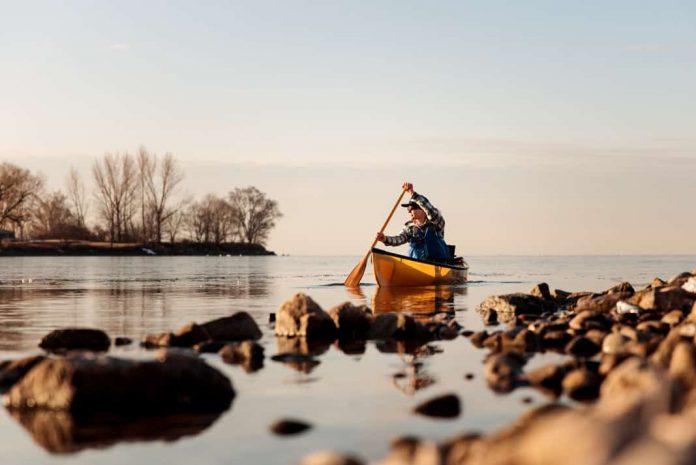
Weighing just 16 pounds, I marched the Wee Lassie a kilometer through my sleepy suburban neighborhood to the lonely waterfront launch. I tiptoed around some shore ice and settled for my first paddle of the season. Bliss.

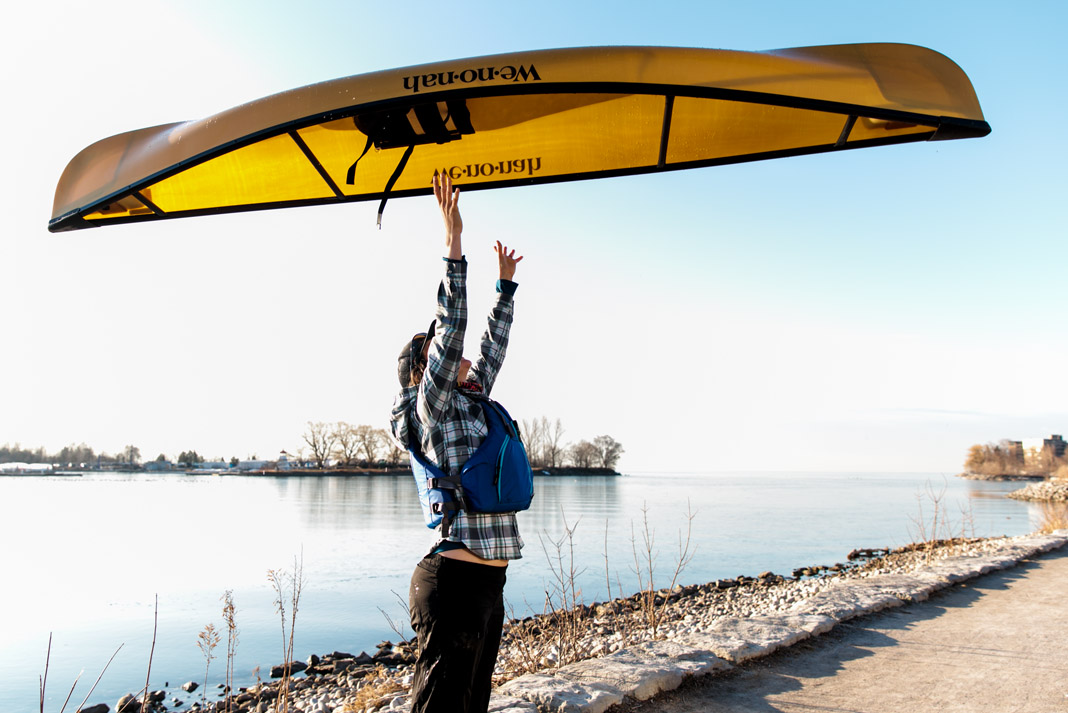
woman tossing a canoe over her head
At just 16 pounds, the Wee Lassie is so light we could play catch. | Photo: Joel Clifton

Dawn patrols, sunset sessions, and sneaking out for lunchtime paddles are precisely the sorts of adventures the Wee Lassie is designed for. Wenonah markets it as a roomier, more portage-friendly alternative to a solo recreational kayak.

[ View other lightweight canoes in our Paddling Buyer’s Guide ]

“The Wee Lassie is aimed at the segment of the market looking for a smaller, ridiculously lightweight boat. The pick-it-up-I-just-want-to-go-float type,” says Mike Looman, Wenonah’s head of North American sales.

A century-old Wenonah solo canoe design

Wenonah is aiming this packboat-style canoe at middle-aged weekend warriors and folks interested in its unique blend of weight and comfort.

The Wee Lassie design—which has a century-old history and has been made by a dozen other manufacturers—plays on the popularity of packboats in upstate New York and the Adirondacks, adds Looman.

“It’s performance-inspired to a point, but the Wee Lassie is solidly in the sport and leisure category.”

At just 16 pounds, this is Wenonah’s lightest canoe—it’s a grab-and-go boat on a diet. Other things also weighing 16 pounds include: a 12-pin bowling ball, a 12-week old Labrador puppy, and a family-sized Easter ham.

My lazy housecat actually outweighs the Wee Lassie by four-and-a-half pounds. Sure, Sampson is a little overweight, but you get the point. The Wee Lassie is so light, you and I could play a high-stakes game of catch.

To create this 10.5-foot version, Wenonah took their larger Wee Lassie, which is 12.5 feet long, 24 pounds and debuted in 2012, and “proportionally shrank it down, keeping the lines consistent and symmetrical,” says Looman.

The larger model is popular with larger paddlers of course, as well as anglers and anyone else looking to bring a bit of gear.

Wenonah’s first 10-foot canoe

The 10.5-foot Wee Lassie is all about minimalism.

Maybe ultralight, thru-hiking legend Ray Jardine could squeeze in an overnight pack, but this is a true grab-and-float boat—“you’re not going to go paddle five or six miles in it,” says Looman. Wenonah makes lots of other boats for that.

“The challenge for us was the Wee Lassie doesn’t necessarily fit our pedigree of making performance, touring and race designs,” says Looman.

“It’s performance-inspired to a point, but the Wee Lassie is solidly in the sport and leisure category.”

Just because it’s featherweight, don’t make the mistake of assuming the Wee Lassie is fragile.

The Wee Lassie immediately charmed me. With a center depth of just 10 inches, it’s most comfortable exploring the nooks and crannies of sparkling ponds, serene lakes and calm shorelines.

There’s really no rocker to speak of, which maximizes the waterline and helps give this little boat good glide for its length. With either a single blade or a double, the Wee Lassie is nimble and responsive—an enjoyably easy paddle.

A Wenonah kevlar canoe for superb strength to weight

Just because it’s featherweight, don’t make the mistake of assuming the Wee Lassie is fragile. I think most paddlers would be inclined to baby it—I know I was—but I also contend it’s stronger than its delicate looks suggest.

The Wee Lassie only comes in Wenonah’s Ultra-light Kevlar layup. This hull is used for many of Wenonah’s boats designed for speed, distance and much tougher conditions than the Wee Lassie is likely to experience.

[ View other Aramid i.e. Kevlar, Nomex and Twaron material canoe’s in our Paddling Buyer’s Guide ]

The hand layup construction uses Wenonah’s proven core-mat material, which “allows for superb strength to weight,” according to Looman.

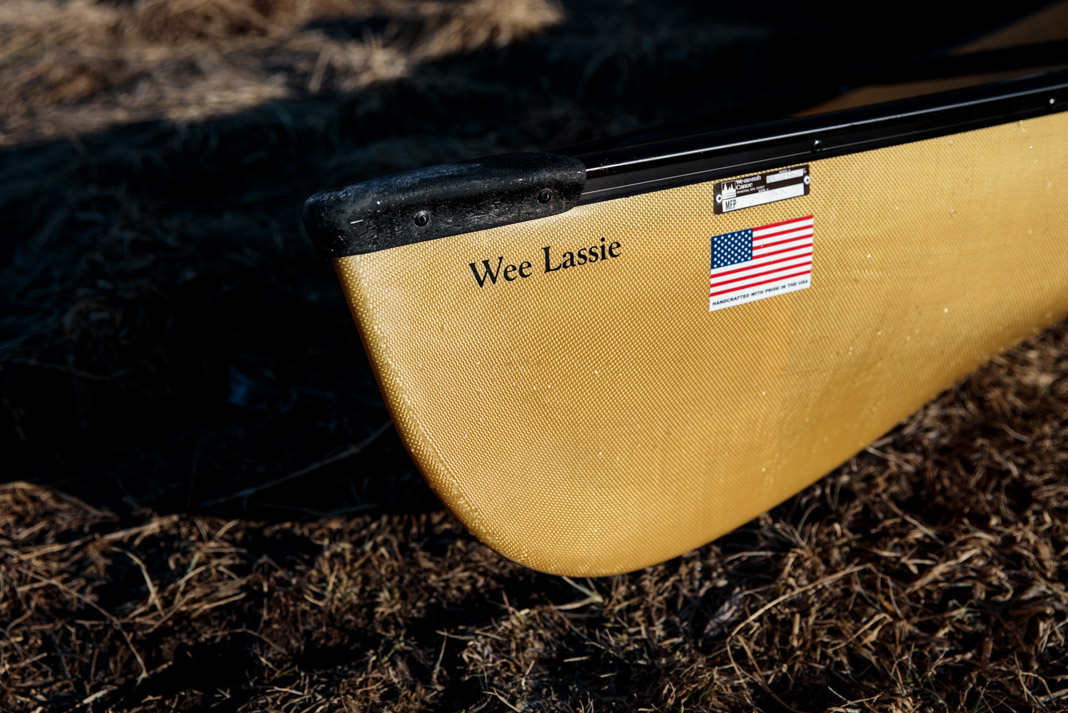
Small aluminum plates are laminated into the hull and the seat is riveted into these plates. This eliminates rivet heads on the exterior for a glossy and unmarred finish.

The Wee Lassie’s black aluminum trim comes standard, as do the tiny vinyl deck plates and a floor-mounted fiberglass seat with the Cushgear Backsaver back rest, which features an inflatable backpad for added comfort.

The thwart was at a perfect distance for resting my feet. In terms of bells and whistles—that’s about all 16 pounds worth.

There’s an attractive minimalism about the Wenonah Wee Lassie. Many canoes and kayaks in the recreation category come with a plethora of features—cup holders, dashboards, even ports for charging smartphones—but the Wee Lassie eschews all that.

It’s just me and the water open to the air—truly, there’s not much room for much else. The no-frills simplicity is refreshing. Simple sophistication indeed.

Go light, go solo, go right now. The 16-pound Wee Lassie is ready for your next pint-sized adventure. Feature Photo: Joel Clifton

Folding Canoe Review: MyCanoe’s Recreational Plus

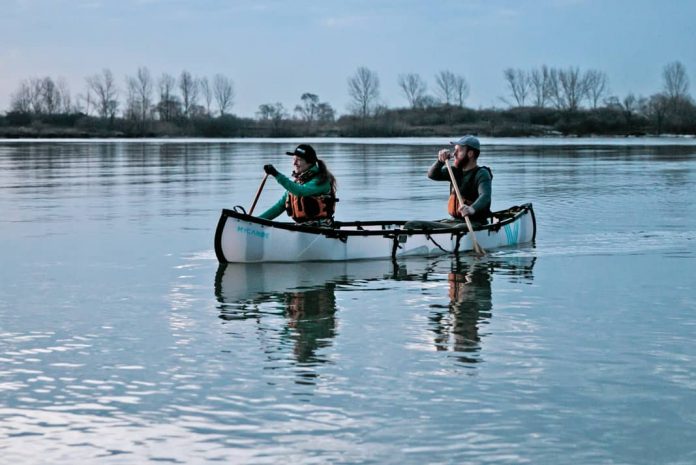
Kaydi Pyette and Geoff Whitlock paddling MyCanoe's folding Plus Model Canoe
Some assembly required. | Photo: Joel Clifton

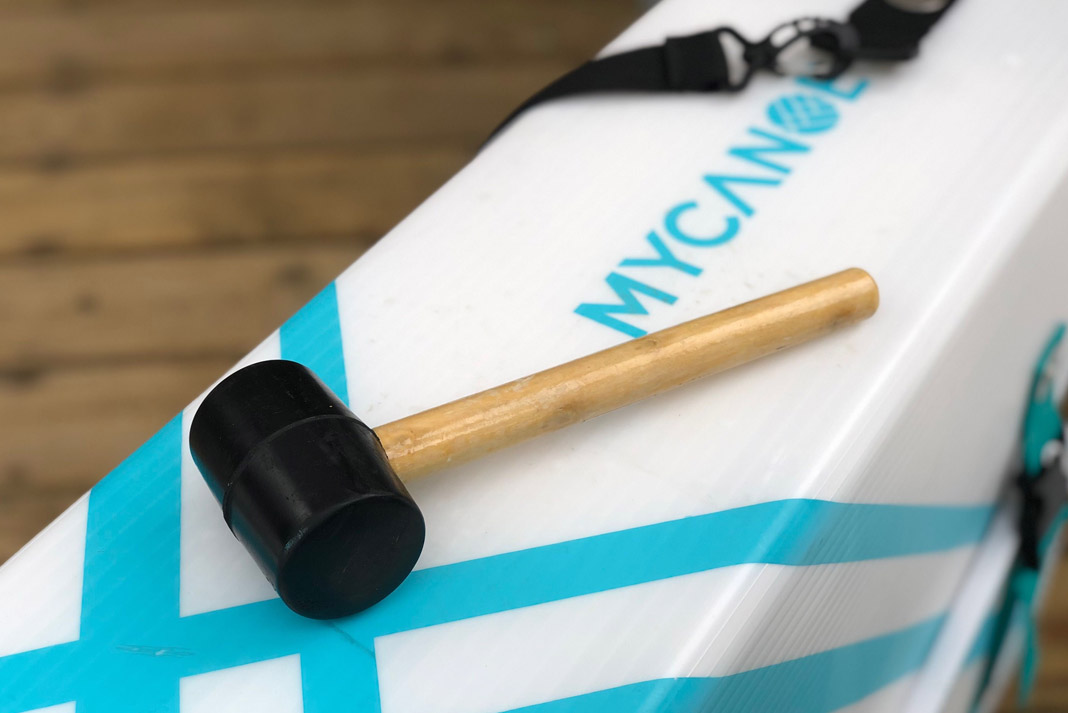
MyCanoe’s folding recreational Plus model has the distinction of being the only boat reviewed by Paddling Magazine shipped with its own rubber mallet for assembly.

MyCanoe’s Plus Folding Canoe Specs
Length: 14 ft 8 in
Width: 35 in
Weight: 52 lbs
Capacity: 440 lbs
MSRP: $1,390 USD
oricanoe.com

I got my first, in-person look at the MyCanoe at last year’s Paddlesports Retailer in Oklahoma City. On the tradeshow floor, marketing manager Jay Lee offered a demonstration, making construction look fluid and easy.

He’d had some practice. Months later, in my backyard with an unfolded hull draped across my back deck, I picked up my mallet trying to remember back to his simple step-by-step instructions.

A durable and lightweight canoe that can travel anywhere

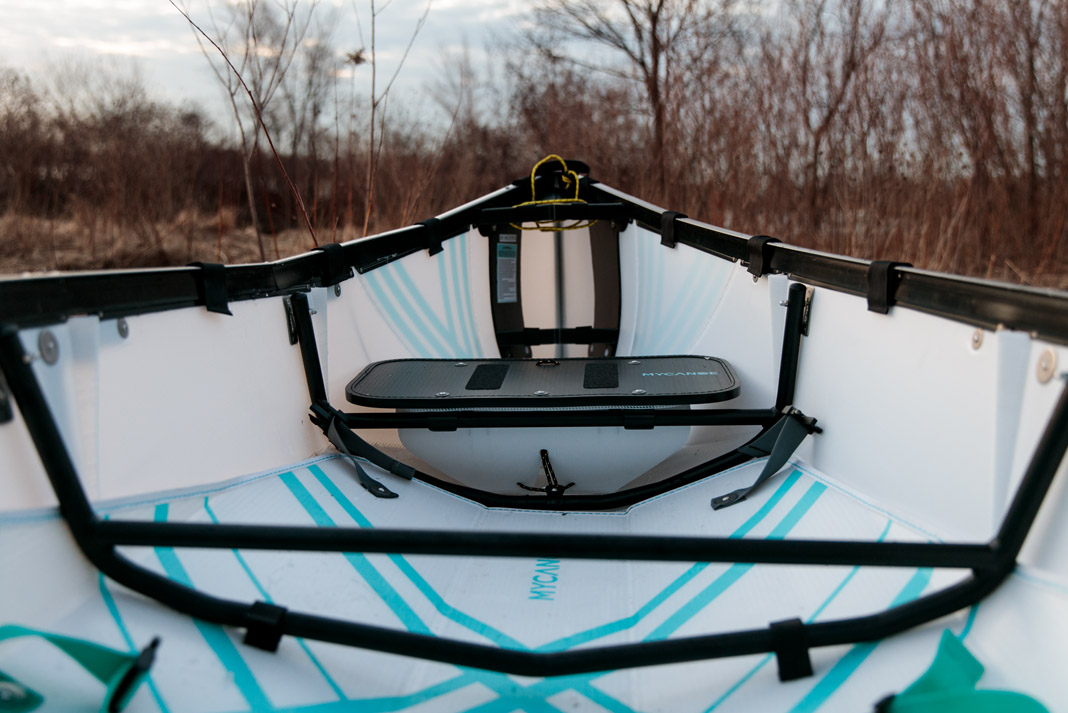
The hull of the MyCanoe is constructed of a five-millimeter, double-layer polypropylene. Lightweight and durable, it looks and feels a bit like plastic, corrugated cardboard.

The material is manufactured custom for MyCanoe at a factory in Korea. The material is then shipped to the company’s headquarters near Nashville, Tennessee.

I didn’t drag it to the shore or smash it into rocks, but I certainly didn’t need to baby it.

Once there the sheets get cut to size, folded and customized in-house. More than 60 pieces make up the MyCanoe Plus and its accessories. There are three models MyCanoe offers, Basic, 3.0 and Plus, which differ mostly based on the accessories offered.

Our Plus model loaner comes standard with an attachable rowing kit. The process to go from raw material to folding canoe takes between four to six hours, says Lee. Last year OriCanoe produced 1,000 canoes.

MyCanoe’s Plus is comparable to other top folding canoe models

Many similarities have been drawn between MyCanoe’s models and Oru Kayak, and for good reason.

Not only are both brands inspired by origami and boast a similar-looking hull material, but the two brands have been helping each other along the way, says Lee.

“Oru Kayak started at the same time as we developed, but they issued the patent first. We were thinking very similar things at the same time and exchanged a lot of ideas,” Lee adds. “We’re still helping each other—and also competing, of course.”

From concept to launch took Lee’s team two-and-a-half years. “Lots of trial and error,” is how he describes the effort. “But it’s fun for our team. We’re all 40 to 50 years old, we enjoy this, and a lot of us are doing it in our free time.”

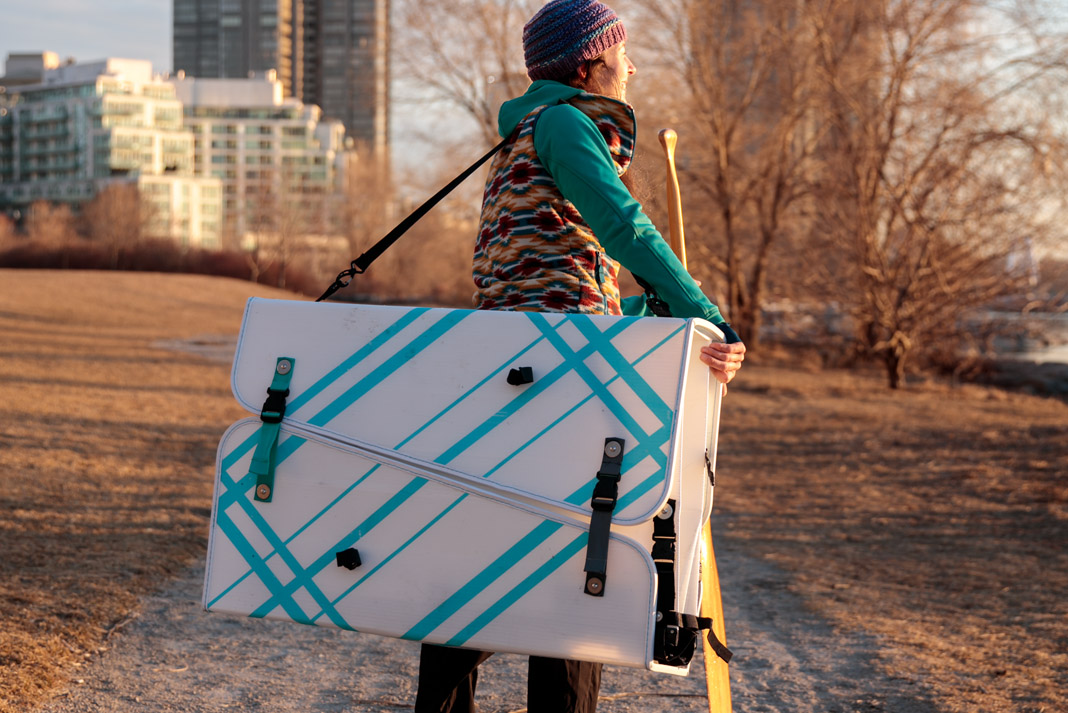
Kaydi Pyette carrying MyCanoe's Plus Model folding canoe and a wooden paddle in Toronto, Ontario, Canada.
When MyCanoe is folded up, the hull of the 14.5-foot canoe is the size of a large suitcase at 37 x 8 x 25 inches.
| Photo: Joel Clifton

Building MyCanoe’s folding canoe is easier the second time around

But back to the construction mallet. The MyCanoe Plus hull unfolds as one piece, so there’s really no chance of putting it together wrong.

Still, my first attempt took about 30 minutes, mostly because it seemed counter-intuitive and I was shy to use so much force to bend the stiff polypropylene into shape.

Red-faced and cursing, I looked back to consult the instructions multiple times. I must be doing something wrong. Nope—the first few times the MyCanoe is set up, you just need to use some muscle.

It’s especially suited to urbanites, and others who might not have a place to store a hardshell canoe or a way to transport it.

Some tasks, like sliding on the gunwales, which come in 12 pieces, are much easier with a friend—one set of hands can straighten angles, while the other can slip the gunwales on, piece by piece.

Once familiar with the process, construction should only take 10 minutes, according to Lee.

That’s an impressive time frame as some other folding canoes and folding kayaks we’ve reviewed here at Paddling Magazine take 30-plus minutes to set-up. Of course, like with any folding design, expect set-up time to double if you’re at a public beach—crowds of curious onlookers will pepper you with questions and slow you down.

Dismantling the MyCanoe and folding it back into its suitcase is simple after you’ve done it once. This is where the mallet comes in—a hearty tap with the mallet helps the canoe fold back along its crease lines.

The plastic hull retains some memory once you’ve set-up and dismantled it a few times, and the whole process speeds up as the folds break in and become more flexible.

MyCanoe’s Plus makes canoe storage simple

Refreshingly, the MyCanoe Plus isn’t trying to be a do-it-all design. With a 440-pound recommended maximum carrying capacity and no optional yoke on offer, few paddlers would make this their dedicated tripper.

However, for anyone who wants a unique boat to explore local waters—and as a shoreside conversation starter—it’s perfect. It’s especially suited to urbanites, and others who might not have a place to store a hardshell canoe or a way to transport it, confirms Lee.

A 14-foot two-person canoe

In terms of performance, this MyCanoe paddles like you’d expect from a recreational canoe of its 14.7-foot length and beamy 35-inch width.

It’s not the speediest boat, but it maneuvers well and is far more confidence-inspiring on the water than you’d imagine when you see its suitcase riding on public transit.

The shallow-V hull rolls a bit in chop, but the MyCanoe’s sharp chines provide excellent stability if you’re ever to edge it over that far.

Carry less, explore more.

The seats affix to the ribs of the canoe allowing for eight different tandem positions. However, the seats hover just a couple inches above the bottom of the hull, which means kneeling and tucking my feet under the seat aren’t an option.

As for durability, the special material is rated to withstand 20,000 folds. To put this in perspective I did some math.

I could hypothetically set it up and dismantle it once a day, every day, for more than 25 years. And by my mid-50s I may want a new canoe anyway. As for general paddling, basically, I’d treat it as I would a fiberglass canoe.

I didn’t drag it to the shore or smash it into rocks, but I certainly didn’t need to baby it.

Unfold this portable canoe for your next paddling adventure

The portability of the MyCanoe could lend itself to international travel—the slogan on the website is, “Carry less, explore more.”

Iced in all of February, I wanted to bring this boat on a family trip to Mexico to get some shots to accompany this review.

However, when the time came, I couldn’t wrap my head around traveling around with two additional pieces of luggage for a single, sun-kissed Instagram photo.

The MyCanoe’s hull folds up into a tidy 36-pound package, but the extra 16-pound duffel, containing seats, gunwales, ribs and more, cinched the decision to leave it behind.

To be fair, I didn’t take my 16-foot Prospector by Nova Craft Canoe to Cancun either.

Lee’s team plans to launch a third-generation version of the MyCanoe later this year, which I think may address portability.

Lee couldn’t say much yet, but he hinted the next generation is taking its inspiration from pop-up tent ingenuity. Lee’s goal is to create a canoe able to go from folded hull to full canoe in less than five minutes.

We can’t wait to test that one. In the meantime, the MyCanoe Plus is a fun, novel and innovative vessel for exploration for urban adventurers and it’s waiting in my front hall closet for my next waterfront day trip.

Some assembly required. Feature Photo: Joel Clifton

Top 18 Things Paddlers Should Keep In Their Car

In this video Paul Mason gives an overview of the paddling gear he likes to leave in his vehicle.

Most paddlers are familiar with the feeling of reaching into your bag looking for some piece of gear that you swear you packed that morning. Unfortunately more times than not this bag was packed while you were throwing back your breakfast, feeding the dog and running out the door.

The reality is that this has happened to all of us, and it is going to happen again whether it is you or one of your friends. Since many of us have extra gear kicking around the house, maybe this is the time to pack it up and put it in a bin that now lives in your car instead. You might just save the day at the put-in.

Some of these items are worse to forget than others. Forgetting to bring gorilla tape might not be the end of the world but forgetting a life jacket could kibosh the expedition. Also, a friend who forgets their dry top might still be able to paddle and it will only be cold for them. If your friend forgets a throw bag, it will be you paying for it.

[View the latest boats and gear in the Paddling Buyer’s Guide]

Paul Mason’s Top 18 Pieces Of Gear To Keep In The Car

1) Life Jacket
2) Garbage Bagpotential rain jacket, garbage collection or inflation device.
3) Air Bags 
4) Helmet
5) Baseball Capto hide that gnarly post paddle hair.
6) Electrical Tape
7) Duct Tape (or Gorilla Tape)quick and dirty repairs.
8) Paddling Dry Jacket
9) Throw Bagif your friends forget this, it is you that pays for it.
10) Extra Piece Of Foam
11) Contact Cementgreat for patch work.
12) Webbing
13) Wirefor the muffler that fell off on the way to the put-in.
14) Vice Grips
15) Lightersecure the ends of cut rope or for the spontaneous post-paddle campfire.
16) Pencil with Duct Tape
17) Sandpaper – remove rough patches before patching.
18) Zip Ties – endless uses.

Other Items You Might Consider Adding:

1) Paddle
2) Cam Strapsyou can never have too many.
3) Carabiner
4) Granola Bars
5) Water Bottle

Four Places More Valuable Than A House

4 Places More Valuable Than A House

Four walls and a roof often don’t accommodate the semi-nomadic lifestyle that kayakers, canoeists, rafters and pedal boaters alike find themselves falling into.

Indeed, there are many places more valuable to those chasing falling water:

 1) A Car

If it rolls and carries boats on the roof, it fits the bill. It’s a bed, a gear closet, and a way to get from A to B. As an accomplice in escapes from the city, packing a paddler’s car is usually something between a game of tetris and a game of Jenga, with game pieces made of wooden shelves, plastic bins and stinky gear. It doesn’t hold grudges for the routine abandonment that occurs at the put-in to a river, at the airport or at the trailhead.

If it makes it from A to B in one piece, it’s a good day. If not, call it an adventure, group bonding, or #epic. There’s probably a paddler who can pick you up on their way to the river.

2) The Greasy Spoon, Wherever The Water Is

From local diners to the closest Tim Hortons, wherever the rain is falling and the rivers are running, there will be a gaggle of paddlers hunkered down in the corner, hogging the wifi, curating the next sick edit, or sending long-awaited updates to the loved ones whose perfume of choice isn’t wet neoprene.

Clad in down jackets and toques, cut-offs and tank tops, devouring breakfast combos and fueling up on dirt-tasting coffee (made tolerable only by Canadian pride) before heading into the frigid air for a rainy day adventure, or into the sunshine in search of running water.

The wifi’s better than any house we’ve lived in, the fridge is definitely better stocked, and there’s a high probability that the bathrooms are cleaner.

[Also Read: The ABC’s Of Dirtbags]

3) The Bar 

Savouring the first gulp after a multi-day, or stunting the next hangover before this one begins, kindred spirits can inevitably be recognized by sunburns and helmet hair. In dive bars and trendy microbreweries, paddlers will be nursing sore blisters and egos, reliving the sharpest lines and the best beatering of a glorious day spent on the river.

4) The Tent

A safe haven. Safe from weather and from bugs. Safe from tripmates, when day 5 becomes just a little too much. Safe from the hustle and bustle. Where a house would keep one home with the temptation of crossing something off the fix-it list, a tent solely asks for duct tape and an adventure. Plopped amongst trees, rapids, or inebriated festival-goers, it’s a (relatively) dry place to rest a head, a shelter for introverted minds.

Here’s to the places that fill our lives, fuel adventure, and don’t keep us in one place.

Folding Kayak Review: TRAK 2.0 Touring Kayak

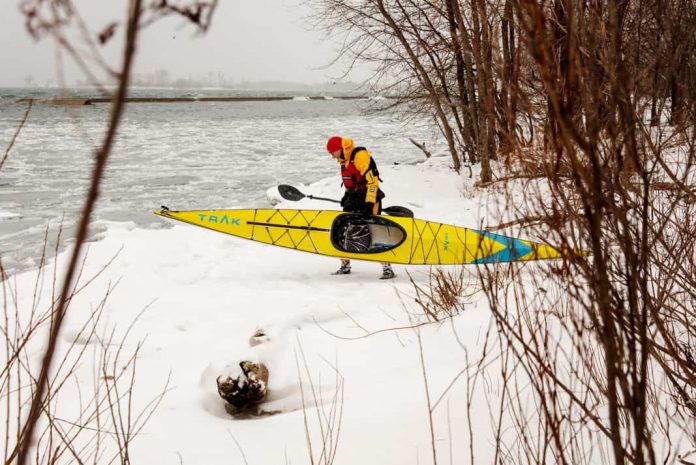
Man walking on snow carrying yellow kayak
Transform and roll out! The redesign of the TRAK will please day tourers and far-flung adventurers alike. | Photo: Joel Clifton

When I first reviewed the TRAK kayak over a decade ago, TRAK was an audacious startup with a knack for marketing but little experience in business or paddling. It set out to change the game with a unique gimmick—a hull with jacks in the folding frame, letting the paddler change its shape on the fly.

TRAK 2.0 Specs
Length: 16 ft
Width: 22.5 in
Weight: 42 lbs
Cockpit: 16.5 x 30.5 in
Packed: 53 lbs
Size Packed: 41 x 19 x 9 in
Payload Capacity: 350 lbs
MSRP: $3,599 USD

Why would I want a shape-shifting watercraft, I had wondered. And if I really wanted a folding kayak, wouldn’t I eschew TRAK for a company with a track record? The kayak itself was pretty neat, but I didn’t expect to hear much more from its makers in the ensuing years.

Easy urban kayak storage

Fast forward to 2019 and the landscape has transformed. In the folding kayak space TRAK Kayaks is now the established brand and natural heir to the stalwarts such as Feathercraft and Folbot, which have, well, folded.

The company’s target demographic ranges from younger professionals to baby boomers at their peak of discretionary time and income looking to rediscover themselves outdoors.

Meanwhile, high real-estate prices, denser cities, lower car ownership and the popularity of inflatable SUPs and novelty watercraft, like the Oru Kayak, are ripening the North American market for folding craft, which have never been a fixture here as they have been in Europe.

A performance alternative to Oru Kayaks

A few years ago, TRAK decided instead of improving incrementally on its original design it would apply all the lessons of its first decade into a completely overhauled 2.0 edition, focusing on ease of assembly, portability and convenience.

The company amassed 500 pre-orders primarily through Kickstarter and Indiegogo backers in 2017 and early 2018. After some unexpected delays, the first batch of TRAK Kayaks’ TRAK 2.0 are shipping from TRAK’s factory in the Philippines.

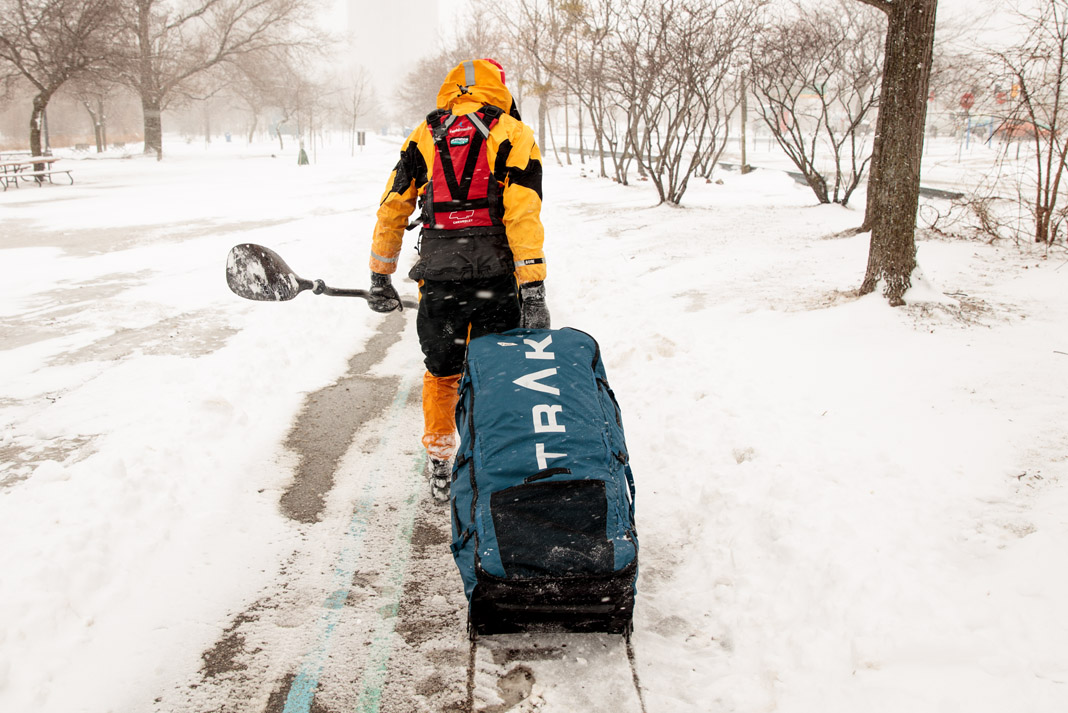
Trak Kayaks 2.0 Touring Kayak. Man pulling folding kayak bag through the streets of Toronto, Ontario, Canada.
Everything packs effortlessly into the rolling travel bag. TRAK makes a harness that turns the bag into a backpack for rough terrain. | Photo: Joel Clifton

A lightweight kayak is the best kayak for travel

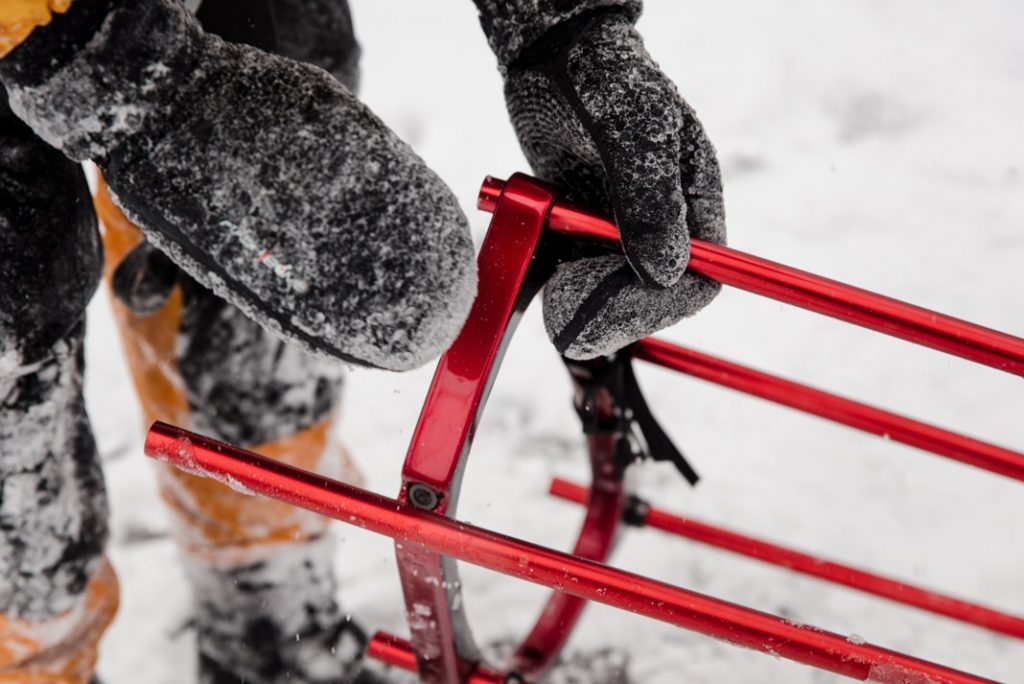
Highlights include lighter materials—upgrading from 6000 to 7000 series aircraft-grade aluminum for some of the frame and carbon fiber for the ribs—resulting in a weight loss of about 10 pounds and a packed size that’s a foot shorter.

The frame snaps together more quickly and easily. And TRAK’s marketing message has matured from something like “the kayak that changes shape!” to “the ultimate general-purpose touring kayak (that just happens to change shape and fold into a rolling suitcase too).”

In a few seconds, I reached a Goldilocks level of maneuverability that normally would have required trying out different boats.

TRAK now transcends the folding-kayak niche and is gunning for mass appeal, promoting a vehicle that is transformative in both a mechanical and spiritual sense.

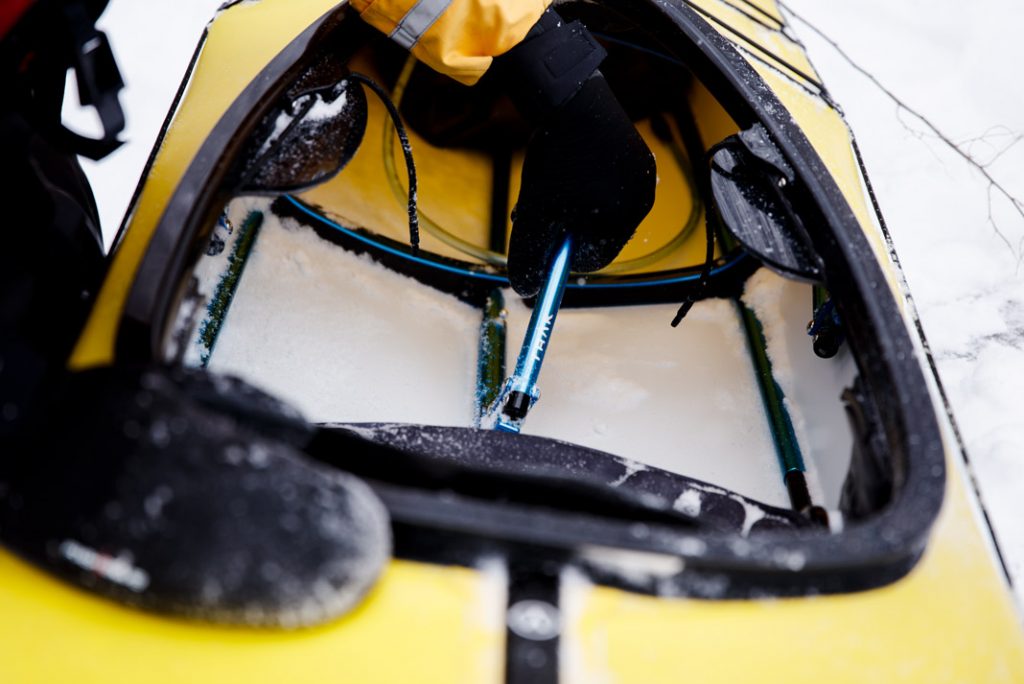
The TRAK arrived at my door in a large cardboard box. Setup flows intuitively. The color-coded frame, blue for bow and red for stern, snaps together with shock cords, just like tent poles.

A high-performance skin-on-frame kayak

Aided by online videos and instructions, my first setup took an hour. Popping the sleek frame together elicited both an atavistic and space-age joy—kayaking’s skin-and-frame deep past mashed up with aerospace technology.

I wouldn’t mind reenacting this ritual before every paddle. I felt I’d performed a magic trick or created modern art. The second time I built it waterside in under 20 minutes, half expecting applause, and went back from kayak-to-bag even faster without struggle.

The final stage upon launch is to expand three hydraulic jacks in the hull, one on each side and the keel, to tension the skin and adjust the rocker, which changes the waterline length to anywhere between 12 and 15 feet.

I simply cranked up the keel jack until the kayak felt right. In a few seconds, I reached a Goldilocks level of maneuverability that normally would have required trying out different boats. The included sprayskirt has an opening with a roll-down waterproof closure for reaching in and adjusting the jacks.

The TRAK 2.0 is a rocket in the surf, maybe because of its lightness or some unknowable skin-on-frame Zen principle.

The stern is shaped like a skeg, providing for very straight tracking unless you really shorten the waterline with the jack or put the kayak on edge, then it turns instantly.

The hard-chine, shallow-V hull has a high-performance feel, with moderate initial stability and very smooth edging, with no flop or point of no return before the cockpit coaming is well underwater.

There’s no integrated rudder or skeg, but anytime you’d want one—an extreme crosswind maybe—you can adjust the side jacks to give the hull a compensatory zig or zag.

TRAK cites affinity with water as its underlying inspiration and purpose, which their new creation seems to share.

I have no metrics to support any of the aficionados’ claims of skin-on-frame outperforming in rough water by mystically absorbing or smoothing out the energy of the waves; however, from personal experience, I wouldn’t be surprised if there was something to the theory.

A foldable sea kayak that performs like a hard-shell

The TRAK 2.0 is a beautiful, smooth ride, gliding easily through waves, while chop tickles my heels through the subtly vibrating skin and frame.

Acceleration is quick, especially in a following sea, where it catches waves incredibly fast; the 2.0 is a rocket in the surf, maybe because of its lightness or some unknowable skin-on-frame Zen principle.

Apply an edge or a paddle stroke and the 2.0 responds instantly, a trait TRAK attributes to the new carbon-fiber ribs, which makes it stiffer and more responsive overall than previous versions with plastic ribs.

Detracting only slightly from the TRAK’s graceful appearance is the boxiness of the hull around the cockpit where the three jacks are, forming a straight section in the otherwise gently curving frame.

Otherwise, the deck is in many ways sleeker and more beautiful than a hardshell kayak, owing to the low profile of the attachment points for the many bungees and full-length deck-lines; they’re simply sewn into the skin. I wouldn’t be surprised if these attachments are stronger than the plastic fittings on a conventional kayak.

TRAK says its polyurethane skin, which is reinforced with an extra layer at the keel, can withstand just about any abrasion or puncture. An unconditional five-year warranty covers the entire craft.

The comfortable kayak seat isn’t the only feature we love

Many thoughtful design details show off years of engineering: the robust end toggles are screwed right into the hard plastic bow and stern inserts and are coated with rubber, so they are easy to grab; the large rubber handle on the deck zipper doubles as an extra carrying point; the ultra-comfortable padded seat; and the infinitely adjustable padded thigh braces are available in two thicknesses.

Loading the TRAK is tricky because there are no deck hatches, but it can be done. The included two gear and flotation bags hold 55 liters each. TRAK pegs the payload at about 350 pounds, including paddler, and recommends trips of up to 10 days.

At 16 feet, an all-arounder dimension falling squarely between an ocean day/playboat and dedicated tourer, plus a hull that changes shape to accommodate all uses, the TRAK 2.0 really is a paragon of versatility and tradition-meets-technology that will meet most paddlers’ every need.

If you’re interested in ordering one, 50 percent down this spring will get you in line for October or November delivery.

By early 2020 TRAK expects to be caught up and ready to deliver on impulse purchases, with free shipping worldwide to make wild dreams possible. Just fly to some exotic destination and order a TRAK to your hotel.


Tim Shuff lives with his family of four in a small downtown house with no basement or garage. | Feature Photo: Joel Clifton

Why Adding Ballast Is Efficient For Canoe Tripping

Weight on the water but not the portage. | Photo: Ontario Tourism

So, you just bought a lightweight canoe. Good. Now, let’s make it heavier.It seems counter-intuitive, but while the featherweight layup of your canoe is designed to make portaging easier, it might actually be working against you on the water.

Most canoes are designed to paddle on a 180-degree plane, which means your canoe wants to sit flat on the water.

What’s ballast?

Placing extra weight—called ballast—correctly in your boat helps return the canoe to an even trim, especially when there’s a weight disparity between paddlers, or in the case of a solo paddler.

Ballast can correct the attitude of the hull along the keel line, and help keep the canoe on an even keel, whether lightly loaded or filled with gear.

By no means is the need for additional weight in a canoe a characteristic of a design flaw, nor a failure of material or manufacturing processes—it’s simply a by-product of just how light modern canoes have become.

[ Paddling Buyer’s Guide: See all light-weight canoes ]

With modern high-capacity, shallow-draft, high-freeboard, 30-to 40-pound hulls, the need for a little extra weight for optimum handling characteristics is more of a necessity than it used to be.

Adding ballast was common decades ago when canoes were used for work instead of play. Back then, the hulls weighed between 50 and 120 pounds. In those days, skilled woodsmen, guides, trappers, sportsmen and others who lived out of their canoes knew to add weight when they weren’t paddling loaded.

Fast forward to today, and canoes have shed a third of their weight, gained much larger capacities and are often expected to be paddled empty as often as they are loaded to the gunwales.

Weight on the water but not the portage. | Photo: Ontario Tourism

The benefits of ballast for canoe tripping

Adding ballast lowers the center of gravity of a canoe. By adding just 40 pounds, a solo paddler will drastically increase stability, and remove the reverse pendulum effect stokes tend to have on a hull.

Another benefit a paddler will notice is increased speed and better tracking—momentum and inertia will keep the canoe gliding between paddle strokes and make the hull less apt to be swayed from course by wind and wave.

You’re more likely to stay on your desired line and slice through waves.

The best way to add ballast to your canoe is by using water bags. Use two large drybags in a 20- and 30-liter size. Fill the 20-liter bag with water, roll the top down and clasp it shut.

Then, take the water-filled 20-liter bag and drop it into the 30-liter bag and clasp it shut. Water will leak out the of the first bag slowly, but not out of the second.

Lower the drybags into the center of the canoe. Adjust the bag fore and aft or side to side as necessary. With just 20 liters of water you will have gained 40 pounds of weight to use as a counterbalance, and in an unloaded boat you’ll notice a significant change in how your canoe handles.

When you hit land and it’s time to portage, dump the water out of your ballast bags, clip the empty bags to your canoe and portage your lightweight canoe.

Weight on the water but not the portage.| Feature Photo: Ontario Tourism

Poem: The Shuttle

The Shuttle Poem
The Shuttle Poem

The Shuttle

Back of a pickup
Crushed bodies down low
Catching a ride to the top, sometimes below

Why I love the shuttle?
Wind in your hair, a river coming into view
Sometimes an old one, sometimes new

Laughter; nerves for some if bigger water than before
Butterflies fluttering in their core

Companionship of kindred spirits, encouragement from your crew
Anticipation builds and excitement brews

By the time the shuttle is complete, reassurances to the nervous ones replete

Why I love the shuttle?
I get to know the driver too
Like being invited into someone’s home
You can learn a lot about who transports you

What music plays on their radio, how crazy they drive, fast or slow
The route and way they prefer to go

What tools or odds and ends are lying on their floor
All the little clues that helps me get to know them more

So much more than just a shuttle~
A time to bond and learn names and faces
For when we finally get on that river
We are no longer strangers but forever river friends from all over places


JoAndra (Jo) Proia is an L2 ACA Certified Coastal/River and L2 SUP Instructor, L1 Yoga Teacher and Director of Women’s Programming for Get Outdoors Paddlesports in Greensboro, NC. In 2012 Jo founded the dynamic women’s paddling organization GET:OUTDOORS WOMEN ON THE WATER. She is also a published author of the guidebook: “Piedmont Lakes, A Practical Guide for Boating in the North Carolina Piedmont” and she is the monthly outdoor writer for Natural Triad Magazine.

Gear Review: SPOT X Two-Way Satellite Messaging Device

SPOT X Two-Way Satellite Messaging System
Photo Credit: Michael Hewis

In May of 2018, SPOT released its newest device called SPOT X which is their first venture into a two-way satellite messaging system. I had an opportunity to test this device while doing a 10-day canoe trip circumnavigating Algonquin Park on a route known as The Meanest Link.

On this challenging 424-kilometer route it was not only important to have this device for safety, but it allowed us to provide real-time updates to those who wanted to follow along online. SPOT is known for its tracking feature that allows users to set up a landing page for friends and family to follow their adventures in real-time.

Previous models, including the GEN 3, featured the ability to send custom messages you could set up before your trip, in addition to the important SOS button a paddler could press in the event of an emergency to initiate a rescue.

SPOT X Two-Way satellite messaging system
SPOT X Two-Way satellite messaging system | Photo: Michael Hewis

In using the previous GEN 3 model, I struggled to decide what to set the messages to. How do you protect yourself against every possible scenario with only two custom messages? This is one of our favorite things about the new SPOT X with two-way communication.

What we liked about the SPOT X:

SPOT X Feature Overview:
  • Messaging: Exchange 2-way messages with any cell phone number or email address from anywhere in the world
  • Tracking: Available on 2.5, 5, 10, 30- or 60-minute intervals to ping your current location.
  • Compass: Built-in compass with programmable waypoints to help you navigate
  • S.O.S.: Send and S.O.S. to the 24/7 search and rescue center
  • Social Integration: Link to social accounts to keep friends and family up-to-date
  • Check-in: Quickly and easily let everyone know you are okay.
  • Battery: Rechargeable Lithium Battery. 240 hours (10 days) in continuous 10-minute tracking mode
  • Durability: Impact, dust and water resistant
  • Display: 2.7” Backlit Display
  • Ports: Micro USB

The new SPOT X worked perfectly for our messaging needs. While on our trip, we shared daily text updates to keep family and friends informed on our distance traveled, number of portages and exciting experiences along the way. We added contacts to the device before we left and could send and receive messages from either text or email. We chose to send these directly to a friend who was publishing them to our Facebook page on our behalf.

[ See the largest selection of boats and gear in the Paddling Buyer’s Guide ]

You are currently able to send messages directly to a Twitter account but unfortunately, due to a Facebook update, the X cannot publish directly to your Facebook page. We are unsure if this is something that they will be able to remedy in the future.

The two-way messaging is ideal in circumstances where you require non-emergency assistance. Rather than being forced to use a catch-all message like in previous models, this would allow you to email your friends with the specific help you need. This will also ensure you are not rallying a helicopter for a non-life-threatening emergency.

The daily text updates were a nice addition to give context to the tracking link we had shared before leaving. The tracking link allows you to set up an interval for which the device will ping your location and send it to a page where people can follow online.

[ Plan your next paddling adventure with the Paddling Trip Guide ]

Intervals can ping at 2.5, 5, 10, 30 or 60-minute intervals and you can set your page to display all pings for up to seven days. We were happy with both of these functions and, of course, for the SOS functionality, which we were thankful not to have to use.

The interfaces on both the device and online are very user friendly and there is a lot of support available online including the ability to call their support team to ask questions directly.

We like the rechargeable battery and we recharged on the go with our portable battery power bank. We didn’t quite get 10 days of battery out of a single charge, but we were tracking at a high interval (every 10 minutes) which uses more battery. We were also sending out a high number of messages each day.

Improvements we would like to see:

Where we would like to see improvement is in the ability to resend messages. There were a few times that the interface would show an exclamation mark next to a sent message, indicating that the message had not been sent. This can be a challenge with satellite-based devices since you need an unobstructed view to the sky in order to successfully send a message.

In our situation, many of our campsites were in densely forested areas. Ideally SPOT would add an option to resend or alternatively allow you to copy and paste your last message so you can send it again, rather than retyping it a second time. As it turns out, all of our messages that had the exclamation mark had actually been delivered.

SPOT X Device and Plan Pricing:

SPOT X Device Cost: $249.99 USD | $359.90 CDN

SPOT X Plans:

SPOT offers a variety of different coverage packages. Similar to a cell phone, after buying the device there is a cost to receive service. If you are someone who will regularly need access to your device there are monthly plans between $12 and $30 per month (based on a 12-month contract) depending on how many messages you would like to send.

Alternatively, if you are someone who goes on one or two big trips per year that you would like to be covered on, SPOT offers flex packages. These packages cost between $15 and $40, again depending on how many messages you want to send, they allow you to purchase only a month of coverage at a time. Something that SPOT previously did not offer.

Photo credit: Michael Hewis