Home Blog Page 195

Kokopelli Showcases Recon Packraft, Animas River Bag And Delta Inflatable Dry Bag

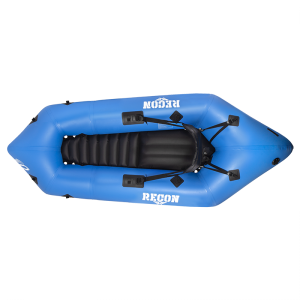
Kelley Smith with Kokopelli Packraft takes us through the new Recon Packraft targeted at avid whitewater paddlers. The Recon differentiates itself from the rest of the Kokopelli lineup with a reinforced PVC construction making it ultra durable and slightly heavier than other models that are five to 10 pounds. The Kokopelli Recon comes in at 18.5 pounds and is meant for road-to-river day trips and whitewater laps after work.

Kokopelli Recon Packraft
Kokopelli Recon Packraft | Photo: Courtesy Kokopelli Packraft

Similar to the Nirvana series, this is a self-bailing packraft with holes in the floor and a nine inch inflatable floor and seat combo, keeping you elevated above the water line. Thigh-strap attachment points allow added control for ultimate whitewater performance.

View Kokopelli Recon

Kokopelli Animas River Bag
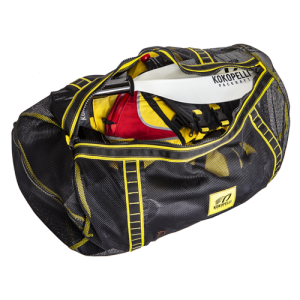
Kokopelli Animas River Bag | Photo: Courtesy Kokopelli Packraft

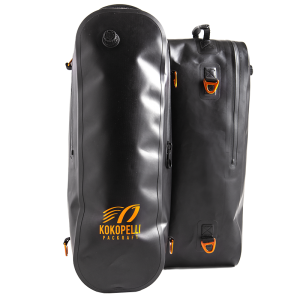
Also new to the Kokopelli lineup is their Animas River Bag, a mesh duffle bag with multiple attachment points and their Delta Inflatable Dry Bags. Stuff your gear into the Delta Dry Bags, inflate and keep your gear buoyant on the river. The Animas River Bag will fit two of the Delta Dry Bags.

Kokopelli Delta Inflatable Dry Bags
Kokopelli Delta Inflatable Dry Bags | Photo: Courtesy Kokopelli Packraft

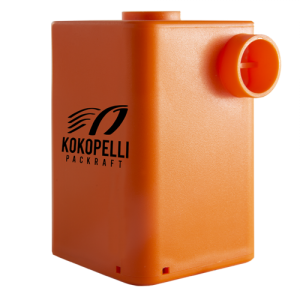
Finally, they also introduced their Feather Pump which is a USB rechargeable pump that only weighs six ounces and will inflate your raft in 60 seconds. They mention on the website that the Feather Pump has a 60-minute battery life which works out to 50 inflations and deflations.

Kokopelli Feather Pump
Kokopelli Feather Pump | Photo: Courtesy Kokopelli Packraft

Visit Kokopelli Packraft

Video: Canoeist Stars In Beer Ad

Cross-Canada canoeist Mike Ranta can now add beer star to his resume. Ranta recently made a surprise appearance paddling a voyageur canoe in a commercial for Manitoulin Brewing Company’s new Killarney Cream Ale.

Manitoulin Brewing Company made the first delivery of Killarney Cream Ale via a 30-foot cedar-strip voyageur canoe. A small group departed from the brewery in Little Current on Manitoulin Island and paddled 25 miles of Lake Huron’s Georgian Bay to the quaint town of Killarney.

Photo essay from Mike Ranta’s third cross-Canada voyage 

“This epic voyage transcended the odds. We succeeded in paddling through high winds, three-foot waves, rain, snow, and thankfully a little sun,” the company posted to its Facebook page after the frigid November journey.

The publicity stunt inspired a new canoe and kayak race called the Current To Killarney. It follows the same route and debuted on July 6, 2019.

Borderlands

After completing a 62-day, 1,200-mile traverse of the contentious United States-Mexico border, Ben Masters came to a simple conclusion: “I don’t see how you could build a border wall more difficult to cross than this landscape,” says the Austin, Texas-based filmmaker.

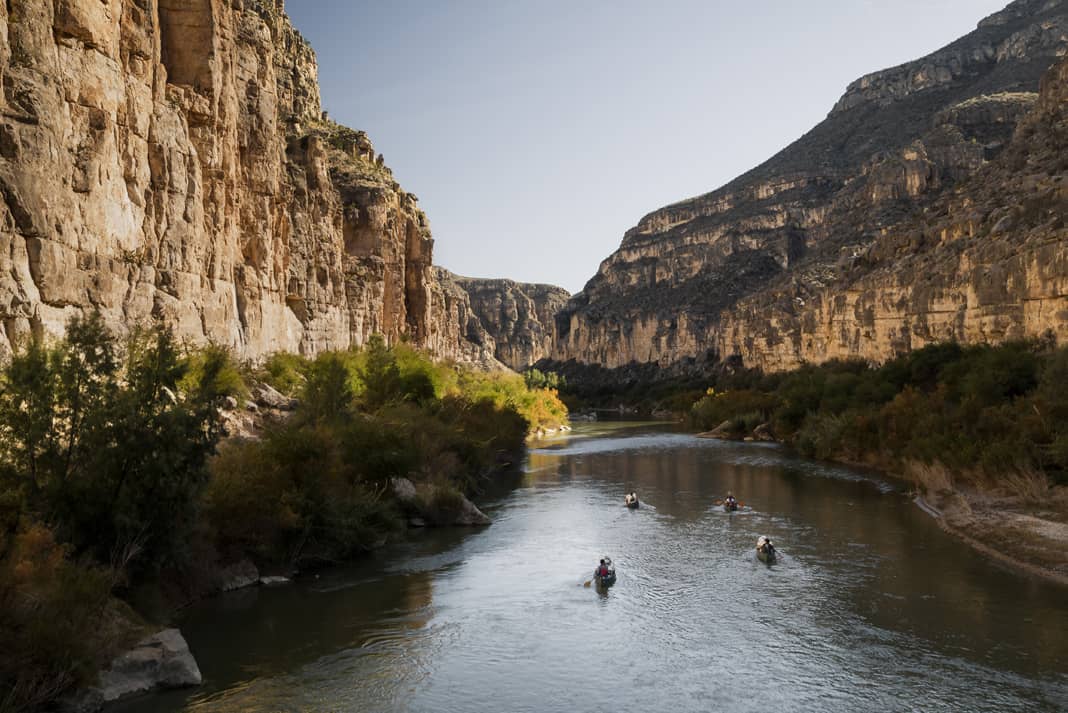
The natural canyon walls of the Rio Grande were formed by tectonics and erosion, free of charge. | Photo: Courtesy The River and The Wall

Masters made the journey in the winter of 2018 with National Geographic wildlife photographer Filipe DeAndrade, Rio Grande River guide Austin Alverado, ornithologist Heather MacKay and parks and wildlife activist Jay Kleberg. The team traced the length of the Rio Grande from El Paso to the Gulf of Mexico, mountain biking muddy terrain, testing the limits of Masters’ trail horses on mountains of loose rock, and surviving numerous close calls while paddling overloaded canoes in the whitewater canyons of Big Bend National Park. Masters describes the expedition as a fact-finding mission “to explore how a 30-foot wall built on the U.S. side of the river would impact wildlife dispersals, water access, private property rights, immigration, public lands, and border culture.”

The resulting cinematic documentary, The River and The Wall, premiered at the 2019 South by Southwest Film Festival in March. “For hundreds of miles, the Rio Grande and the border is flanked by massive canyons and gnarly mountains,” says Masters. “Constructing a man-made wall anywhere close to the river in many of these stretches is not physically feasible.” 

Large swathes of the rugged borderlands are devoid of human life and provide habitat for some of the greatest biological diversity on the continent, including wolves, black bears and hundreds of bird species, all of which travel freely between the U.S. and Mexico. The borderlands also contain some of the last remaining public lands in Texas. Masters presents the scenic, incredibly biodiverse Big Bend as an ideal candidate for a binational peace park—initially envisioned by former U.S. president Franklin Roosevelt—similar to existing protected areas along the Canada-U.S. border, to preserve the unique landforms and wildlife that do not recognize political boundaries.

Masters includes interviews with Texas Congressmen representing both sides of the political aisle; both Republican Will Hurd and Democrat Beto O’Rourke describe integrative solutions to immigration and border security rather than constructing a monumental wall. Near the Gulf of Mexico, where the Rio Grande supports some of the continent’s most fertile agricultural lands, Masters speaks with multi-generational farmers who recoil at the prospect of a federal “land grab.” Since the wall would be constructed on American soil, it would effectively relinquish a corridor of land to Mexico.

Washington is already extending the existing 700 miles of border fence. Masters says his team was among the last people to experience parts of the Rio Grande where new barriers are currently under construction. “When we filmed the documentary, we often thought ‘I wonder if this will be the last image of this place before a wall is built?’” he says. “Hopefully, people in the future will be able to look at our images and see how incredible the Rio Grande and the landscapes she carved were before a wall was constructed.”

“I wish people would go down to the border and see it for themselves,” adds Masters. “It’s an amazing place with beautiful landscapes, beautiful wildlife, and rich culture. The border I see in the media isn’t the border we witnessed on our journey or the border I know. You should go there.”

The River and the Wall from Gravitas Ventures on Vimeo.


The natural canyon walls of the Rio Grande were formed by tectonics and erosion, free of charge. Photo: Courtesy The River and The Wall


Umingmaq Paddle Touring Center Showcases Greenland Style Gram Kajak Paddles

Matt Magolan with Umingmaq Paddle Touring Center in central Wisconsin takes us through the Gram Kajak paddles. These are a Greenland style of paddle made by Lars Gram in Denmark. A avid kayaker himself, Gram found he was finding ordinary paddles to cause back problems and sore joints and set out on a mission to create what he believed to be the perfect kayak paddle. Paddles from Gram Kajak are targeted at those who want to paddle without any sound and with as little fatigue as possible.

These paddles are made in both composite and wood layups and are designed to be a two piece paddle. A cool feature of these paddles is the hexagonal ferrule that takes strain off the button holding the ferrule in place. Umingmaq is the only US dealer of these paddles.

Umingmaq is also a dealer for Tiderace Sea Kayaks, Venture Sea Kayaks, Scott Canoes, Bluewater Canoes, Impex Kayaks and a variety of other paddling accessories brands.

Roll Back: How To Regain Your Forgotten Whitewater Skills

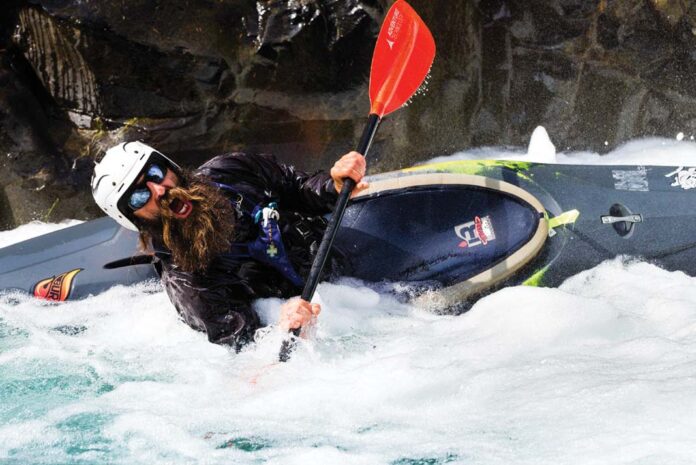
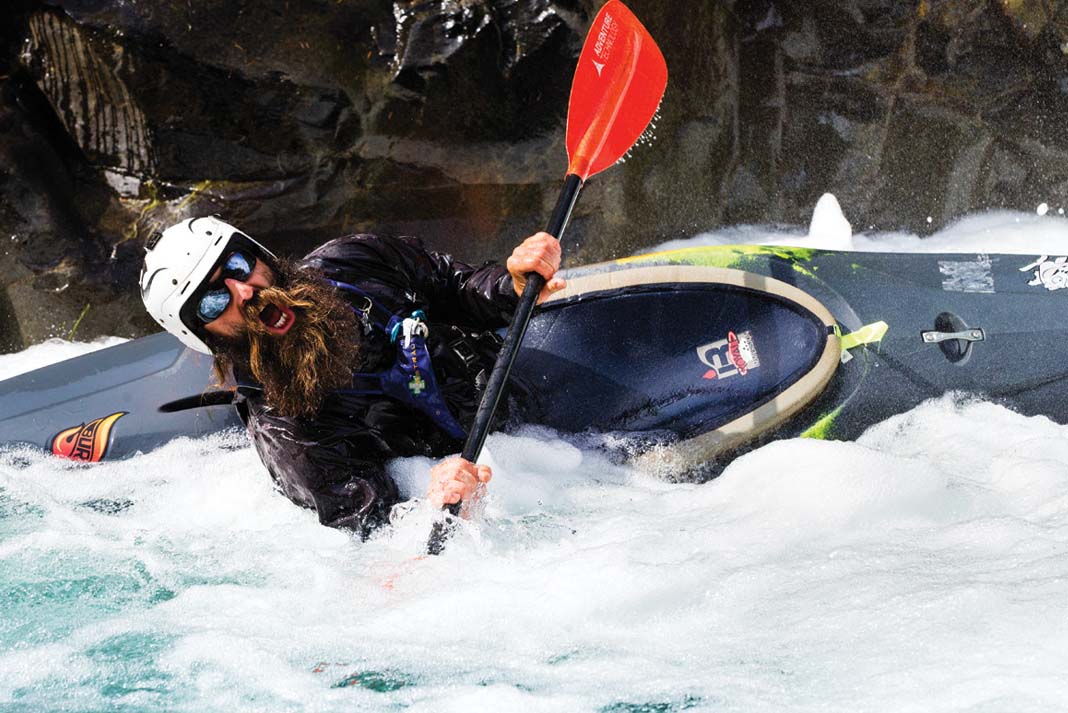
whitewater kayaker with beard opens his mouth as he leans hard through whitewater

A friend recently called me frustrated and wondering what was wrong with his paddling. In the past, he had kayaked class IV to V rivers, but demands from his business had cut his time on the river to nothing for the last four years. Determined to pick up the sport again, he found a couple partners, and launched onto a solid class IV run on which he used to feel comfortable. It was a nightmare. He used the wrong strokes, caught edges and flipped. He thrashed until out of breath then swam. Frustrated, he felt he’d lost every skill he ever had. He’s a smart, self-made business success, and accustomed to learning easily. However, whitewater had been difficult for him and the skills he had to regain symbolized a slow, hard-won struggle. Failure hit him hard. “Will I ever be able to paddle again?” he asked me.

Roll back: How to regain your forgotten whitewater skills

Whitewater kayaking can present surprises where suddenly all your hard work and practice seem to vanish. Your bomber roll doesn’t work. Fun and confidence quickly become frustration and even fear.

This is a common experience and happens to excellent athletes and intelligent people. The good news is that it is relatively easily dealt with once you understand the dynamic nature of how your skills are learned and retained.

Fragmentation can occur for all kinds of skills, like shaving. Paddler: Trevor Sheehan | Feature photo: Tyler Roemer

My friend’s struggle illustrates what few people understand: the fragmentation of already learned skills. This is distinct from “forgetting.” Fragmentation refers to the breakdown of our skill into the subparts we originally practiced while building technique. The skill literally falls apart. This can happen from over-practice, insufficient rest or a paddling hiatus.

Jumping into a situation that is too difficult—like my friend’s class IV run—is the worst thing you can do. The overall skill is already fragmented into sub-skills, so the difficulty forces mistakes and you cannot resurrect the moves you need in the moment. Every mistake generates a cascade of errors and in the worst case, a total break down of technique.

Practice puts the pieces back together

Fragmentation of learned skills can be reversed by reinstating the original practice schedule. This creates a process called consolidation, the opposite of fragmentation. One can reverse fragmentation in some simple skills, after periods of one month to as long as 15 years, in one practice and rest cycle. Research has shown that after 28 years of not doing the simple skill, people regained 100 percent of their prior performance levels with just two practice and rest cycles. Anything you practiced is fully retained regardless of time elapsed, but you have to reinstate the practice schedule to see it.

Of course, whitewater kayaking is not a simple skill. Consolidation and fragmentation take longer due to its complexity, but the principles are the same. For easy whitewater skills, performance can be regained in a few outings, while many outings or even a season are required for higher level skills on difficult whitewater.

Fragmentation that occurs with non-use degrades skill. This is not “forgetting.” Coming back to the sport after a lapse, you need to reinstate your technique, reflexes, and judgment by doing a graded sequence of runs, carefully practicing all the basics. Learning is not static; it is always changing.

Getting on a roll again

In particular, the roll requires the coordination of at least three dissimilar, difficult to time and coordinated sub-skills (paddle slash/sweep, rolling hips and knee engagement), done in an awkward, upside-down position. Rolling is uniquely prone to fragmentation, and so it is typically the first skill that disappears.

whitewater kayaker surfs wave

However, your skills are never lost, they are just abiding, waiting for you to reinstate them. Each spring, take care to reverse any fragmentation that occurs by non-use. Or if you come back after a decade, don’t despair, because all of it will return. Be especially careful to reinstate your roll. It is the key to safety and fun. The roll allows you to make mistakes and get flushed, but pop back up to try again.

No other adventure sport comes so loaded with learning as our game of flow with the rivers of the world. Your learning is as dynamic as the river, which is precisely why we can leave the solid world behind and find such joy adapting to the new fluid one.

Doug Ammons is a world-class kayaker, PhD in psychology, author and speaker. He is known for making the first solo descent of the Grand Canyon of the Stikine.

cover of Rapid Magazine, Spring 2017 issueThis article was first published in the Spring 2017 issue of Rapid Magazine. Subscribe to Paddling Magazine’s print and digital editions, or browse the archives.


Fragmentation can occur for all kinds of skills, like shaving. Paddler: Trevor Sheehan | Feature photo: Tyler Roemer


What Was The Trick You Were Most Proud Of Learning ?

Photo by: Daniel Stewart
A person flipping in a whitewater kayak.

I learned to handroll in 1973 or 1974. At that point, at least around the Chattooga, it was a rare enough stunt my friends would often gather other people around and have me roll, and sometimes bet a beer over whether or not I could do it. —Joe Pulliam

I did my first blunt on Garburator in 2005. I was so excited, I talked about it for years. —Adriene Levknecht

The front loop. I spent months working on it in inlet gate at Nottingham. Trying to be superman and jump for the sky or a basketball being dunked through a hoop upstream of the hole. When it finally began to work it was the best feeling ever. —Claire O’Hara

Thirteen years old on the Ottawa River, with some guidance from Nick Troutman, landing straight airscrews for the first time. —Dane Jackson

Tailies. The first time I managed to get my kayak vertical. I couldn’t get enough of them. —Bren Orton

Putting on my spray skirt. —Tyler Bradt

When I was seven and did my first freestyle competition ever, I made a trick and I called it the Tricky Horse. I remember running up to Emily Jackson, who was the head judge for the cadet competition, bubbling with excitement to tell her to keep an eye out for it and find out how many points it would be worth. —Sage Donnelly

I was really stoked when I learned how to air loop my Disco around 2001 or 2002. The Disco was way ahead of its time and most pro kayakers couldn’t loop their slicey boats. —Chris Gratmans

All of them, but it started with the stoke when I learned to spin. I still get fired up any time I learn a new trick, or even just do a hard one. —Nick Troutman

Probably the first time I did a legit roll in whitewater. I was eight or nine and it was just before a slalom competition so there was a lot of people around. I was very proud because no one knew I could roll and they were all expecting me to swim. —Nouria Newman

The third end. When you are learning to cartwheel, the third end is the hardest to gain. It means you have done more than just used the momentum of the initiation to gain a stern end, you have balance and used technique to get the third. I’ll never forget my first third end. It was in a small hole on the Madawaska River, while my dad and his friend watched as they ate lunch. My dad yelled, while holding up three fingers, “That’s three, that’s three!” —Ben Marr

Good old-fashioned ender. I’d seen my childhood hero, Jerome Truran, doing them and I really wanted to do it. I was about 13 or 14 at the time and was in a Dancer. I did the first one just messing about at this rapid up the road from my house in Durban, South Africa. I was beside myself with happiness. —Corran Addison

Backsurfing my Perception Dancer was one of my prouder moments. —Erik Boomer

Why You Must Paddle Western Newfoundland

Photo: Dru Kennedy
Unlike the 1996 thriller starring Sean Connery and Nicolas Cage, this is one Rock you won’t want to escape. Photo: Dru Kennedy

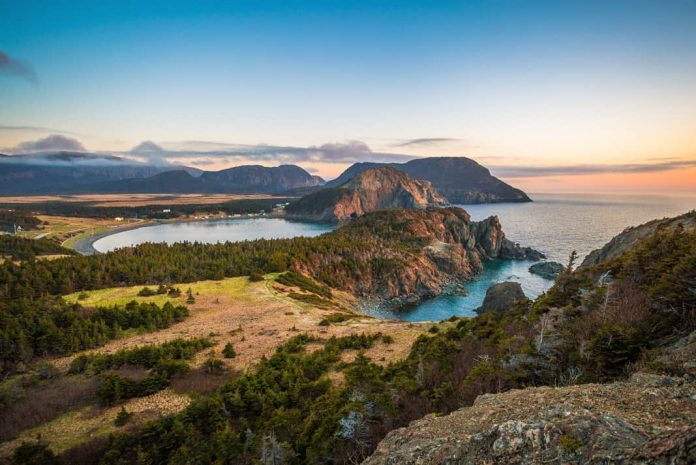
When most people conjure an image of Newfoundland’s coastline, they see waves crashing into rocks. Big cold waves. Big jagged rocks. While there’s certainly some truth to this picture, the west coast of the island is an epic place to experience on a paddleboard—as long as you know how to read the tides and winds and waves, and aren’t afraid to ask locals for advice.

[ Paddling Trip Guide: View all paddling adventures in Newfoundland & Labrador ]

Gros Morne National Park is the main attraction in western Newfoundland

Towering cliffs rise from the Gulf of St. Lawrence, humpback whales and orcas migrate through, bald eagles and ospreys soar overhead, and laidback harbor towns have the essentials—fish and chips, and beer. On Bonne Bay, a double-armed fjord carved out by a pair of glaciers, a sill protects the inner bays and provides generally calmer waters. The scenery here is no less majestic than the open ocean, especially if you’re paddling beneath the Tablelands, a barren, rust- colored, flat-topped mountain formed when the earth’s mantle was forced skyward millions of years ago.

At 1,805 square kilometers, the park can easily keep you in paddleboarding bliss for a week—two if you’ve got the gear for cold-water SUP surfing. There are also inland rivers and lakes, and thousands of kilometers of coastline to explore.

Plan Your Trip To Gros Morne National Park

IF YOU HAVE HALF A DAY:

For a challenging paddle in the national park, hit the shoreline below the Green Point campground. You’ll need booties to negotiate the slippery rocky entry, and a wetsuit if you plan to ride some waves. If you want to surf, take stock of the bigger boulders beforehand at low tide, and bail before you reach the impact zone. Or hit the sandy beach further north at Cow Head instead.

IF YOU HAVE A DAY:

Norris Point, a small town perched on the promontory where the two arms of Bonne Bay meet, is home to Gros Morne Adventures. The beach behind the outfitter’s cozy office and café offers access to the water, and proprietors Kristen and Robbie Hickey can help you map out a route, which could include a stop for lunch across the fjord in Woody Point.The Hickeys plan to add SUPs to their rental fleet of kayaks for the 2019 season.

IF YOU HAVE A WEEKEND:

The Humber River flows past the back lawn of the Marble Inn Resort in Steady Brook. With due diligence on water levels, currents, rapids and other obstacles, an upstream overnighter in the deep green river valley is magical. Stop in at the resort first for a chat with owner Joe Dicks, who runs Explorenewfoundland.com and is a veteran kayak guide. Ask for info about any spot on the island. If he hasn’t paddled there himself, he probably knows somebody who has.

IF YOU HAVE A WEEK:

The problem with talking to Joe Dicks about paddleboarding destinations is you’ll want to visit every place he mentions. Barasway Bay, just west of the town of Burgeo on the south coast, is about three hours from Steady Brook, which qualifies as a short drive in Newfoundland. Here, you can paddle and camp among abandoned outport villages in sheltered waters and, if you’re lucky, spot a local trifecta: an eagle, seal, and caribou in a single glance.

Other Things To Note:

WEATHER

July and August are your best bets for sun and warmth, but with neoprene and fortitude, you’re good from May until at least November.

STAY

Parks Canada’s oTENTiks—half tent, half rustic cabin—at Green Point is worth the splurge for a heavenly home after a day on the water.

DON’T MISS

Western Brook Pond, a freshwater fjord hemmed in by sheer 600-meter cliffs, is a three-kilometer walk from the highway. Unfortunately, paddling is discouraged here.

DIVERSIONS

Icebergs are common early in the season, and whale watching heats up by mid-summer. Hike to the 806-meter summit of Gros Morne Mountain.

LEARN MORE

Parks Canada doesn’t offer SUP-specific info for Gros Morne, but their kayak page will give you all the basics, www.pc.gc.ca.

Casper Steinfath SUPs Across The Skagerrak Ocean

Casper Steinfath Paddleboards Skagerrak Ocean
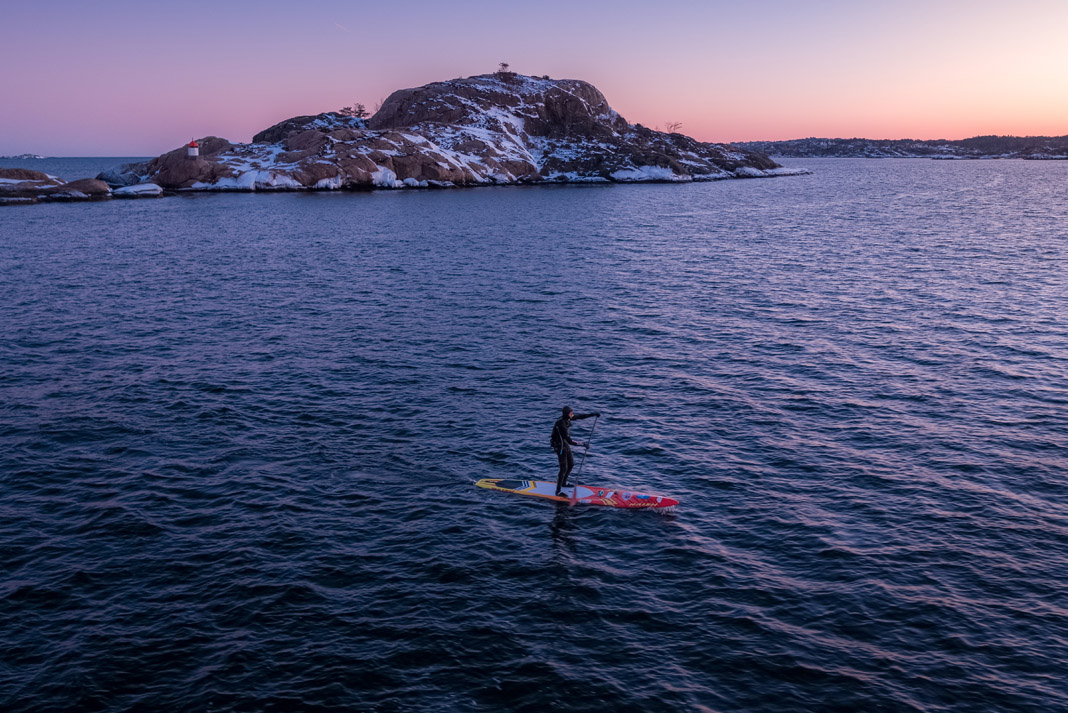
If at first you don’t succeed. Casper Steinfath on his second attempt of the Viking Crossing expedition. Photo: Fredrick Clements

Why did Casper Steinfath cross the Skagerrak Ocean? Growing up on the shores of Jutland, Denmark, paddleboard champion Casper Steinfath dreamed of following in the steps of the Vikings and crossing the 80-mile-wide Skagerrak strait to the coast of Norway.

On February 1, 2017, at the age of 24, Steinfath attempted his first Viking Crossing and failed.

“It was a disaster,” he says. “I was cocky and jumped into something I wasn’t prepared for.”

On his first attempt, Steinfath came up just 12 kilometers short. After 16 hours and 20 minutes, he could see the lighthouse on the Norwegian shore, but wind and waves denied him access. “I just wasn’t getting any closer,” he says.

Steinfath is no stranger to challenge. He’s a four-time International Surfing Association SUP world champion and 2017 Red Bull Heavy Water Champion. Unused to failing at something, this became Steinfath’s motivation to try the crossing again.

[ Paddling Buyer’s Guide: See all paddleboards ]

It was a personal dream, and a challenge,” he says. “What it became was a lesson about accepting failure. I walked in with one perspective and walked out with another. It was a learning process, and the fact I was defeated motivated me to learn from my mistakes.

Steinfath’s second attempt at the Viking Crossing became a personal quest to show humans are capable of anything, as long as we can accept our failure and grow from it.

Photo: Fredrick Clements
If at first you don’t succeed. Casper Steinfath on his second attempt of the Viking Crossing expedition. Photo: Fredrick Clements

After his first attempt, he changed his approach to training. Instead of going to Hawaii to train in similar but warmer conditions, he stayed in Denmark to acclimatize to the cold and the darkness. He woke up at 3 a.m. every day to paddle waves in the dark, so he wouldn’t get seasick like in his first attempt. Preparation consumed him.

[ Plan your next paddling adventure with the Paddling Trip Guide ]

Steinfath couldn’t do it alone. In training for the second attempt, his brother, Peter, was a constant support. He also had a dozen people advising on safety, navigation, nutrition and media.

“I realized I could achieve so much more asking for help,” says Steinfath. The most intimate task a friend helped with was lubing him up with Vaseline so his wetsuit wouldn’t give him a rash.

My world was turned upside down

At 2 a.m. on March 18, 2018, Steinfath launched his second attempt. He says he worried the entire 19 hours something would go wrong, and he would have to abort. His team followed on a fishing boat and helped him navigate in the dark. Knowing these people were standing by helped maintain his focus, he says.

Twelve kilometers from Norway, the conditions were similar to the first attempt, but this time Steinfath was better prepared. “Instead of fighting the ocean and the current, I came in sideways,” he says. After almost a full day at sea, he arrived on the shore of Norway, the first paddleboarder to cross the frigid Skagerrak strait.

Nine months later, Steinfath is still reflecting on the experience. “My world was turned upside down. It’s cliché, but I learned I’m capable of a lot more than I thought I was,” he says. The crossing has changed how Steinfath approaches competition as well. Where he was once scared of losing, now, “it’s not what defines me.”

Steinfath hopes expeditions like his challenge conceptions about personal and physical limits. “If I see one person question the limits about what he or she can do based on what I did, then that’s amazing,” he says.

Steinfath doesn’t know what’s next for him in the expedition world, but he’s hungry for the next challenge. And without a doubt, if he gets knocked down, he will surely get back up again.

Why Paddling Is Vital For Human Survival

Photo: Scott MacGregor
And we see here the elusive magazine publisher in summer plumage with his offspring in their natural habitat self-medicating and pumping up their immune systems. Photo: Scott MacGregor

For most of the last two million years, humans lived in a natural world. Living in a natural world one relies on nature for food and shelter, and early peoples would have spent a good part of their days outside. By comparison, the time we’ve spent indoors clumped together like lab rats in urban dwellings is just a sliver of the time we’ve spent on Earth. This shift from following caribou migration to picking up a box of microwavable lemon chicken in the freezer aisle of the supermarket is very recent and very dramatic. And it’s having powerful effects on our lives and our well-being.

Why Paddling Is Vital For Human Survival

Kuo isn’t a paddler, but she walks to her office on the lush University of Illinois campus where for 30 years she has been studying the effects of nature on humans. Humans living in today’s urban dwellings are like early zoo animals living in captivity, she says. When we are provided just the basics of food and shelter, we get by, but we fail to thrive.

According to habitat selection theory, animals are wired for whatever habitat we evolved in. Humans, just like the rest of the animals on the planet, thrive in a natural habitat physically, psychologically and socially. Kuo equates life in a two-bedroom condo to a 1950s circus zebra living in a cage.

Whether we are conscious of it or not, living in an unfit habitat we undergo social, physiological and physical breakdown.

Society has changed at extraordinary speed. Our DNA hasn’t. If you’re reading this magazine, you are probably getting enough water, food, shelter and feel reasonably safe from predators. We used to believe this was enough for animals in captivity, and anything else was a nice bonus.

It turns out, small perks like access to nature make both zoo animals and magazine publishers less mentally fatigued and better at handling stressful deadlines and challenging social situations.

Without access to nature, humans become more irritable and have difficulty handling conflict in productive ways.

In the podcast, Kuo shared results from studies where researchers looking at two identical urban housing projects—identical except one had mostly concrete

surroundings and the other a more natural landscape with trees, rocks and grass. Two years’ worth of police records show significantly higher reports of conflict and violence in the paved-over neighborhood than the more natural environment. A similar study looking at local drugstore prescriptions saw substantially fewer mood-related medications administered in greener urban areas. Residents exposed to a more natural world showed fewer signs of dissension, anxiety and depression.

Spending time in the natural world also strengthens our bodies’ natural immune systems.

After spending a few days in nature, researchers find measurable increases in what are known as natural killer cells. Natural killer cells are our bodies’ biological rapid response to viruses.Three-days in a forest reserve boasted these harmful cell crushers by 50 percent. Three days relaxing in an urban setting did nothing. Even better, 30 days later researches still found elevated immune levels of 25 percent in the bloodstream. What family doctor wouldn’t prescribe simple daily exposure to nature and a weekend paddling adventure at least every 30 days?

It’s possible to stimulate some of the positive health effects by misting natural fragrances, listening to the recordings of chirping crickets and changing your screensaver from flying toasters to a lush, green rainforest wallpaper. But the real thing is better. I’m no penned-in zebra but even I know watching an episode of Mutual of Omaha’s Wild Kingdom isn’t the same as running free on the arid grasslands of Ethiopia.

My modern, desk-bound urban-dwelling lifestyle doesn’t afford me the time to carve my paddles, craft my boats or hunt my own food. And so, my physical and mental health relies on getting outside using paddling gear like you’ll find on the following pages. Research would suggest yours does too. Thank you, Ming Kuo. I’m beginning to feel better already.

Scott MacGregor is the co-founder and publisher of Paddling Magazine. In the wild, zebras usually live to be between 20 to 30 years old; creekboaters about the same; lakewater canoeists, much longer; standup paddleboarders, too early to tell.


Why The SUP Resale Market Is About To Change

Photo: Rob Kavcic
Brand consolidation and better industry forecasting will eliminate the glut and overproduction of boards and will support the resale market, according to experts. Photo: Rob Kavcic

There’s a scene in Barbarian Days, William Finnegan’s Pulitzer Prize-winning surfing memoir, when he witnesses two friends huck their mint-condition long-boards off a high cliff.

It’s 1968 and the shortboard revolution has transformed board design overnight. The goal was to use the insurance money from the “stolen” longboards to upgrade to the new design.

Why The SUP Resale Market Is About To Change

In the past decade, a similar quake in the paddleboarding industry hasn’t quite resulted in boards being sacrificed off cliffs, but it’s had a depressing effect on resale, particularly for race boards.

A recent listing on a Distressed Mullet online classified it had a lightly used 2017 Starboard All Star, one of the most popular race boards, selling for $1,000—less than 30 percent of its $3,399 retail price. Compared with the kayak and canoe market, where old boats sell for a healthy percentage of new, this is nuts.

The seller, an Eden, Utah-based paddler named Eric, reveals some of the factors at play. Like a lot of SUP racers, Eric likes to be on the latest model because board designs are constantly changing. In the traditional paddling marketplace, a good canoe or kayak design would retain its resale values for years, even decades.

The SUP industry is more like the ski, bike and automotive sectors.

Each production cycle brings distinct models promising to be faster, lighter, more stable and more durable. Eric buys his boards slightly used from dealers or reps—he picked up his 2017 as a demo from a California retailer for $2,200—hangs onto them for a year and then resells the boards before the models depreciate too much.

This way I never get stuck with a board three or four years old worth almost nothing. I can get something out of it and put it towards a new board.

Being a brand-new sport, paddleboard racing designs have changed markedly over the past few years, creating a kind of arms race in the top echelons, not unlike the surfboard design shift in 1968.

Five years ago, popular race models were 27 inches wide. Today’s top paddlers are on 21-inchers. The racing market is also relatively small and, anecdotally, appears to have plateaued. Big events like the Pacific Paddle Games and the Carolina Cup are seeing reduced numbers after an initial surge in participation.

Steve Martin, owner of the shop Boardsports down the street from me in Toronto, Ontario, estimates the total population of avid SUP racers in his home province is 200, and the entire market for race boards is probably 30 annually– “and very few of those are sold at retail.”

The SUP industry is fairly lax when giving out pro deals, according to Doug Hopkins, president of Boards & More Inc., which distributes Fanatic SUPs in North America.

“The brands tend to sell a lot of race boards direct to people they perceive are valuable ambassadors to their brand because they want to see a lot of boards on race courses,” says Hopkins. “The manufacturers are making good money on the deal because they’re selling it directly to the racer for a similar price they would have sold it to a dealer. I think this was overdone in the past few years. And those people getting good deals on the boards were able to flip them and get new ones and flood the market.”

On my home waters, there’s probably at least half-a-dozen sponsored paddlers reselling two boards a year into a market of 200 paddlers. This alone is enough to saturate the local market with discount boards over a few years. Even if every racer replaces his or her board in that time, the used board market quickly bot- toms out. Selling a three-year-old board becomes virtually impossible.

Since race boards are so specialized, there’s a schism between what racers want to paddle and what can be sold to non-racers—even with recreational paddlers increasingly being steered towards sleeker touring boards with displacement hulls and pointed noses. The standard race width is now about 21 to 24 inches, whereas so-called performance touring models start around 27 inches, with 29 inches being the most popular, according to Hopkins.

“If you’re trying to sell a used race board your market is limited to racers and they tend to want the latest boards,” says Hopkins. “They know exactly what they want and it’s not a used one from two years ago, or even last year.”

Another factor is the SUP industry’s booming growth over the past decade, which saw boards overproduced, forcing inventory clearouts, which further depressed the market.

Boardsports, for example, has new race boards going back to 2013, some listed for nearly a quarter of the original price; a new 2014 Naish Javelin LE 14’ x 26” is marked down from $5,400 to $1,499.

Outside of racing, the recreational SUP resale market isn’t quite so bad, but it’s still prey to many of the same factors—too many competing brands, the influx of cheap boards from big box stores, and an overproduction of boards due to poor sales forecasting.

“There’s a lot of product out there that isn’t very expensive, which is driving down the end user price,” says Charlie Burwell, general manager for Naish.

However, the market should firm up soon.

Designs are not changing as quickly. “Most of the major brands are down to subtle improvements,” says Burwell— boards aren’t likely to get any narrower. And better industry forecasting will eliminate the glut and overproduction of boards.

“That’s definitely going to be cleaned up and that might be one of the biggest influencers out there. It takes a while. Things don’t happen overnight. But as brands go out of business, stores go out of business, brands get more careful about what they build and the technology slows down, it will all come under control,” predicts Hopkins.

In the meantime, now is a great time to buy a SUP.

[View all SUPs in the Paddling Buyer’s Guide]

The entry point to high- end race equipment has never been lower, hopefully encouraging new entrants. And maybe someday, all the used SUP boards out there will realize their true value, like in Barbarian Days, when Finnegan admits he has no idea if his friends’ insurance scam worked, but he knows those doomed longboards, “simply left in a garage, would be worth thousands of dollars today.”

Author: Tim Shuff